By Mass Communications Specialist 1st Class Bryan Niegel, Navy Office of Community Outreach
Millington, Tenn. – Ensign Jacob Ponchot, a native of Loveland, Ohio, is serving aboard USS Essex, a U.S. Navy Wasp class amphibious assault ship.
Ponchot joined the Navy one years ago to follow in family footsteps.
“I joined the Navy to utilize and sharpen my seafaring skills as well as explore the world and be able to see new things and experiences,” said Ponchot. “It was also an opportunity to follow in the footsteps of my grandpas, Disbursing Clerk Second Class Charles Horan and Electrician’s Mate Second Class William Ponchot.”
Ponchot grew up in Loveland, attended Loveland High School, and graduated in 2016. He earned a degree from Texas A&M University at Galveston in 2020. Today, Ponchot uses the same skills and values learned in Loveland to succeed in the military.
“Growing up in Loveland, the biggest lesson I learned is to always make time for friends and family,” said Ponchot. “Although the time I spend at home is not as much as I would like it to be, I have learned to maximize time with my loved ones whenever there is an opportunity. Military life can bring long and hard days, but there is no better remedy than time with the people we care about, and that precious time refreshes me for when the time comes to return back out to sea.”
Homeported in San Diego, California, USS Essex is the second ship in the Wasp-class of multipurpose amphibious assault ships and the fifth ship named for Essex County, Massachusetts. Essex was a 1000-ton ironclad river gunboat of the U.S. Army and later U.S. Navy during the American Civil War.
According to Navy officials, amphibious assault ships are designed to deliver U.S. Marines and their equipment where they are needed to support a variety of missions ranging from amphibious assaults to humanitarian relief efforts. Designed to be versatile, the ship has the option of simultaneously using helicopters, Harrier jets, and Landing Craft Air Cushioned, as well as conventional landing craft and assault vehicles in various combinations.
Serving in the Navy means Ponchot is part of a team that is taking on new importance in America’s focus on rebuilding military readiness, strengthening alliances and reforming business practices in support of the National Defense Strategy.
While there are many opportunities for sailors to earn recognition in their command, community and careers, Ponchot is most proud of successfully completing a conning officer evolution.
“Since joining the Navy, my most proud accomplishment was successfully conning the ESSEX during an approach for an underway replenishment with an oil tanker,” said Ponchot. “To receive fuel, our ship comes alongside another ship less than 200 yards away, which is incredibly close for large seagoing vessels. This is a highly technical evolution, and I was proud to be able to execute it.”
As a member of the U.S. Navy, Ponchot, as well as other sailors, know they are a part of a service tradition providing unforgettable experiences through leadership development, world affairs and humanitarian assistance. Their efforts will have a lasting effect around the globe and for generations of sailors who will follow.
“While serving in the Navy I have learned to be flexible,” added Ponchot. “It seems more often than not, things don’t go as planned due to variable factors and that is all right. The Navy has taught me to adapt to evolving situations and have multiple plans of action prepared.”
Ohio House lawmakers are running back a fight over trans youth in the state. But this time, instead of focusing on school sports, the proposal would prohibit offering minors any kind of gender affirming treatment — from hormones to surgery. The measure, H.B. 454, puts the onus on health care providers by defining that treatment as “unprofessional conduct” for state licensing boards, and making “actual or threatened violations” of the bill grounds for a lawsuit.
Erin Upchurch, executive director of Columbus’ Kaleidoscope Youth Center, calls the bill dehumanizing.
“I feel frustrated and angry and extremely disappointed that people who were voted into office to protect all Ohioans are using their platform and their power to actually attack a really specific portion of our communities,” she said. “It is a gross misuse of power and completely an overreach.”
The bill’s sponsors, Rep. Gary Click, R-Vickery, and Diane Grendell, R-Chesterland, begin by enumerating a series of legislative findings—a laundry list of dubious assertions meant to cast doubt on trans identities and the safety of medical procedures.
“The risks of gender transition procedures far outweigh any benefit at this stage of clinical study on these procedures,” the legislation claims.
Upchurch disputes that, noting national organizations like the American Academy of Pediatrics support gender affirming care.
In a 2018 policy statement on the issue, the organization’s very first recommendation contends transgender youth should have access, “to comprehensive, gender-affirming, and developmentally appropriate health care that is provided in a safe and inclusive clinical space.”
In addition to punishing providers who offer care, H.B. 454 threatens school workers including teachers, nurses and counselors. The bill says they can’t “withhold” information about a student who is questioning their gender identity from that child’s parent or guardian. But Upchurch, who is a licensed social worker, explained the ethical standard is to maintain confidentiality unless a minor is harming themselves or others.
“Are you withholding or are you protecting the young person’s confidentiality?” Upchurch asked. “So when we look at what’s accurate and what’s in there, language can be used in a lot of ways to serve our agendas.”
The bill’s sponsors did not respond to a request for comment, but Sen. Nickie Antonio, D-Lakewood, was quick to condemn the move.
“I am incredibly frustrated that some members of the General Assembly continue to challenge our most vulnerable children’s right to exist for a political soundbite,” she wrote in a statement.
Antonio argued lawmakers do not have a role in the health care decisions of individual children.
“Those decisions must be made in concert with medical experts and physicians,” Antonio said. “Frankly, it is time for the legislature to stop these unnecessary and hateful attacks on transgender youth once and for all.”
Earlier this year, lawmakers put forward a so-called “Save Women’s Sports Act.” The bill would limit a student’s participation in sports to the team corresponding with the sex they were assigned at birth. Although the proposal got a few hearings, it never passed a committee.
In June, bill sponsor Rep. Jena Powell (R-Arcanum) tried to force the issue by tacking the language onto an unrelated Senate bill dealing with name, image and likeness policy for college athletes. Her move scuttled the bill, and Gov. Mike DeWine instead issued an executive order giving athletes the green light to sign sponsorship deals.
The latest proposal has yet to be assigned to a committee.
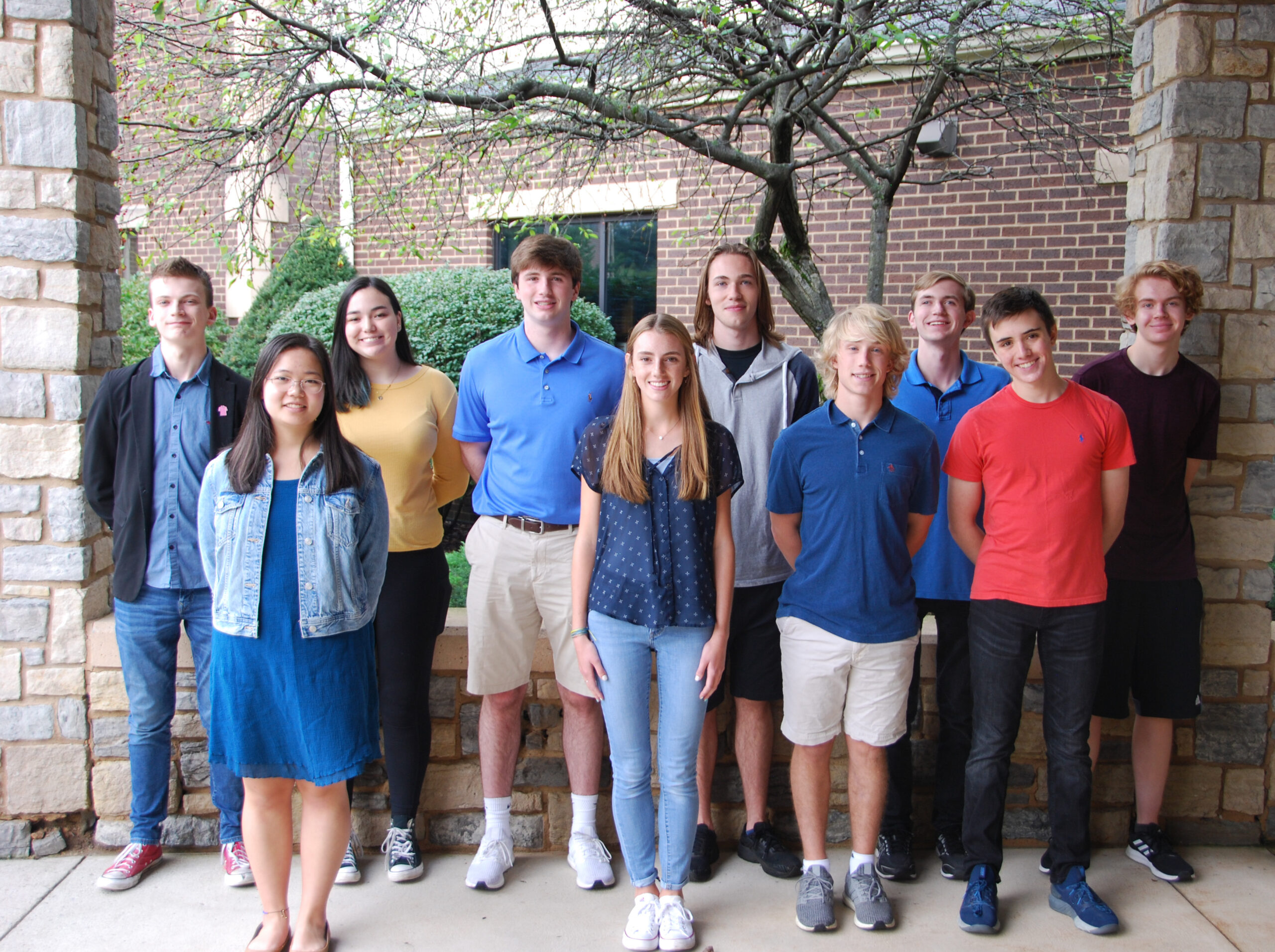
(Back Row L-R) Henry Heimlich, Parker Johnson, Jason Legault, Luke Sikkema, Will Reuter
(Front Row) L-R Izzy Li, Ava Schwan, Garrett Huffstetler, Colin Swayze (Photo by Tammy Rosenfeldt)
Submitted by Tammy Rosenfeldt
Symmes Township, Ohio – In addition to Cincinnati Hills Christian Academy (CHCA) students Connor Espenshade (of Mason), Will Rueter (of Liberty Township), Ava Schwan (of Loveland), and Luke Sikkema (of Loveland) who were all recently named National Merit Semifinalists, the school has now announced that Henry Heimlich (of Loveland), Garrett Huffstetler (of Mason), Parker Johnson (of West Chester), Jason Legault (of Mason), Izzy Li (of Mason), and Colin Swayze (of West Chester) have been recognized as National Merit Commended Students. A certificate from the National Merit Scholarship Cooperation will be presented to these students at CHCA’s Academic Awards Night in April 2022.
High school juniors entered the 2022 National Merit Scholarship Program by taking the 2020 Preliminary SAT/National Merit Scholarship Qualifying Test (PSAT/NMSQT), which served as an initial screen of program entrants. The nationwide pool of Semifinalists, representing less than one percent of U.S. high school seniors, includes the highest scoring entrants in each state. The number of Semifinalists in a state is proportional to the state’s percentage of the national total of graduating seniors.
To become a Finalist, the Semifinalist and a high school official must submit a detailed scholarship application, in which they provide information about the Semifinalist’s academic record, participation in school and community activities, demonstrated leadership abilities, employment, and honors and rewards received. A Semifinalist must have an outstanding academic record throughout high school, be endorsed and recommended by a high school official, write an essay, and earn SAT or ACT scores that confirm the student’s earlier performance on the qualifying test.
About 34,000 Commended Students throughout the nation are being recognized for their exceptional academic promise. Although they will not continue in the 2022 competition for National Merit Scholarship awards, Commended Students placed among the top 50,000 scorers who entered the 2022 competition by taking the 2020 Preliminary SAT/National Merit Scholarship Qualifying Test (PSAT/NMSQT®).
“I am thrilled to announce these students as National Merit Semifinalists and Commended,” shared Heather Wilkowski the school Principal. “Their commitment to excellence in both academics and extracurricular exemplifies the very essence of CHCA. I look forward to the incredible things they will accomplish now and in the future.”
A new bill specifying “blended learning” for the 2021-2022 school year has been approved by an Ohio Senate committee.
Senate Bill 229 is yet another bill meant to address the impact of the COVID-19 pandemic on student success and education, and was favorably passed in Senate Primary & Secondary Education Committee on Tuesday.
In the bill, school districts, including traditional public schools, STEM schools and community and charter schools, would have to have approval by the Ohio Department of Education to implement or discontinue a “blended learning model” by April 20, 2022. This is an extension of current law, which required the approval through July 1 of this year.
The blended learning model requires a school district to provide internet access and devices to each student using the model, and monitor and assess student achievement and progress while also communicating with parents or guardians about the progress.
A report must be submitted to the ODE by March 15 showing each school district’s total number of students in blended learning in 2021-22.
The bill also resets a measure passed through the budget bill, House Bill 110, which discounted standardized testing because of the pandemic’s disruption to education. Under current law, e-schools are required to disenroll a student who fails to take a state assessment for two consecutive years.
Under H.B. 110, that standardized testing rule was set aside and under the new bill, the exception would be extended through the 2022-2023 school year. This applies to any school who has an online school component.
Sen. Theresa Fedor, D-Toledo, accused legislators of creating the standardized testing amendment for e-schools as “problematic double-standard e-school favoritism.”
“If we’re going to provide flexibility and exemptions from standardized testing, it must be for all students no matter where they attend school,” Fedor said.
She brought up the latest court ruling requiring the defunct Electronic Classroom of Tomorrow (ECOT) to pay back $60 million in state funding it received after an investigation showed student engagement amounted to about an hour a day.
Fedor was the leader of a bill that attempted to change education laws in response to the pandemic, but her bill didn’t make it past the Ohio Senate.
She also attempted to add a provision to the blended learning bill on Tuesday that would allow public bodies, including school boards, to meet virtually if they chose to, but that measure was quickly tabled by the committee.
“I think people should be meeting in person,” state Sen. Andrew Brenner, R-Powell, the committee’s chair said. “I think that is pretty much what we’ve had conversations internally about, so I think we should leave it as it is.”
The amendment was tabled along party lines, but the bill itself was passed unanimously.
Both chambers of the Ohio General Assembly are plodding forward on legislation to waive training requirements to carry a concealed weapon.
While current law allows state residents to openly carry a weapon, it only allows those 21-and-up to obtain a concealed carry permit after completing an 8-hour training course and passing a background check.
House Bill 227 and Senate Bill 215, which contain some important differences, would waive these permitting requirements, including the training
The effort, if successful, would continue Ohio’s steady relaxing of its gun laws over the last 20 years, which has included launching the concealed carry program in 2004 that required 12 hours of training; passing “pre-emption” legislation in 2006 which blocks cities from enacting gun laws stricter than those at the state level; and removing the duty to retreat (passing “stand your ground”) in 2020, which removed the requirement for a person to seek retreat before responding to a perceived attack with deadly force.
On Thursday, the House Government Oversight Committee held its fourth hearing on the permitless concealed carry legislation.
Over several hours, members of Moms Demand Action, an anti-gun violence advocacy group, made their case against the bill. They argued it will inevitably increase rates of gun violence. The Ohio Attorney General’s Office reports roughly 1,200 concealed carry applications are denied each year for reasons set in code, like criminal histories, civil or temporary protective orders, or others.
What, they asked, will happen to those applicants if there’s no more licensing process?
“It allows guns in the pockets of lowlifes,” said Sieglinde Martin, an MDA member.
Micaela Deming, an attorney with the Ohio Domestic Violence Network, said domestic violence misdemeanor convictions and protective orders are the second highest reason that would-be gun owners fail background checks. Waiving the permitting requirements, she said, would mean the loss of a key screening mechanism to remove guns from these domestic offenders.
Gun lobbyists and enthusiasts argued that the public safety threat is overblown. Law breaking gun possessors, they said, will continue to break laws regardless of how strict or lax they are. The bill is about enshrining Ohioans rights under the Second Amendment of the U.S. Constitution.
“I don’t think there’s anything in the bill that says, ‘If you’re prohibited from carrying a [concealed] firearm, suddenly now you can’ — if you’re prohibited, you’re prohibited,” said Rep. Shane Wilkin, a cosponsor of the bill and committee chairman overseeing its hearings, in an interview.
“Those that are going to carry that are not mindful of the law regardless of what it is, are going to carry regardless.”
After the hearing, Wilkin said he didn’t know if the bill would be up for a vote at its next hearing but said he wouldn’t rule it out.
Lawmakers on the committee were generally warm to the legislation. Rep. Phil Plummer, R-Butler Twp., said it’s “kind of bizarre” that it’s legal to openly carry a weapon in Ohio, but becomes illegal if you put on a jacket that covers it.
Rep. Don Jones, R-Freeport, needled one witness who said states that legalized permitless concealed carry experienced higher levels of violent crime than those that did not. He asked whether that could be the effect of other legislation like legalizing marijuana for recreational use.
The Senate Veterans and Public Safety Committee, meanwhile, has held two hearings on similar legislation from Sen. Terry Johnson, R-McDermott.
A key difference from the House version: The Senate bill would also establish procedures for a pretrial immunity hearing for people facing criminal charges or a civil lawsuit related to their use of force in purported self-defense.
The hearing, which would come before any trial, provides a substantial advantage to the accused: It would tell the court to assume the accused used force in self-defense and requires prosecutors (in a criminal case) to prove beyond a reasonable doubt or plaintiffs (in a civil lawsuit) to provide “substantial evidence” that the person did not use force in self-defense.
If the prosecutor or plaintiff fails in this, the accused would be considered immune from the charge or lawsuit. If they succeed, the proceedings will then move toward a trial.
Although bill proponents say otherwise, courts have generally held that licensing requirements to carry concealed weapons do not violate the Second Amendment.
In a 2003 Ohio Supreme Court opinion (that preceded Ohio’s first concealed carry law), Justice Paul Pfeifer, writing for the majority, was blunt in a majority opinion.
“(The law) does not unconstitutionally infringe the right to bear arms; there is no constitutional right to bear concealed weapons,” he wrote.
“Like most rights, the right secured by the Second Amendment is not unlimited,” he wrote.
“(There is no constitutional) right to keep and carry any weapon whatsoever in any manner whatsoever and for whatever purpose.”
Ohio Attorney General Dave Yost is responsible by law to handle some of the administrative work in Ohio’s concealed carry program. In a statement, a spokesman said Yost has not yet taken a position on either bill and is actively monitoring them.
“By any measure, Ohio’s concealed-carry licensing system has succeeded in combining safeguards that protect the public and provisions that uphold Americans’ right to bear arms and protect themselves,” he wrote in the 2020 annual report on the program.
Twenty-one states allow inhabitants (residents only in North Dakota) to carry a concealed weapon without a permit, according to a count from the U.S Concealed Carry Association. This includes neighboring states of West Virginia and Kentucky.
Loveland, Ohio – With Halloween just around the corner, many people are in search of frights, pumpkin festivals, and costume celebrations to bring in the holiday the right way! This year Loveland has a little something special up their sleeve for this Halloween; introducing Loveland’s Wonka-Land Halloween Edition!
In year’s past, the city of Loveland has celebrated Halloween with costume contests, special live entertainment at Downtown’s local restaurants, and spooky vendors that typically set up along the Loveland Bike Trail, but this year Little Miami River Chamber of Alliance Board President Doug Portmann envisioned something a little different…Loveland decked out in its very own Wonka-Land!
“As my wife and I were brainstorming as to what Loveland’s theme should be this year for Halloween my daughter said, ‘It’s Halloween so why don’t you do a Willy Wonka theme?” Portmann explained, “From there all we really needed to do was fill in the details!”
On Saturday, October 30th from 6 PM-8 PM teams of 4 will go on a hunt through Loveland’s impromptu candy land in search of Willy Wonka’s Golden Ticket! Teams will participate in “sweet” games in this ultimate Halloween scavenger hunt in order to find the grand prize. Those that will be participating are asked to please eat dinner beforehand as beer and food discount tickets will not be given out to teams until after the games have ended.
Teams and those that attend Loveland’s Wonka-Land Halloween Edition are asked to dress in their absolute best Willy Wonka-themed attire, but ARE NOT REQUIRED to dress in a costume to participate in the games! Some of the Willy Wonka characters are as follows: Willy Wonka, Charlie Buckett, Grandpa Joe, Veruka Salt, Mike Teave, Arthur Slugworth, Augustus Gloop, Violet Beauregarde, Mr. Salt, Mrs. Teavee, Oompa-Lumpas, Mrs. Gloop, Mr. Turkentine, and The Tinker. Here are a few links to places where you can purchase Willy Wonka character-inspired costumes, HalloweenCostumes.com, Walmart, and Amazon.
Need more Wonka inspiration? Check out the original Willy Wonka movie trailer from 1971 starring the legendary Gene Wilder!
Excited and ready to sign up yet?! We have included the link to sign up below, but before you do so here are a few simple rules to adhere to before you enter into the search for the Golden Ticket!
All those participating must be 21 years old.
It is recommended that all participants eat dinner beforehand as the event will be very crowded and hard to order a full dinner quickly!
Due to COVID-19 restrictions, there will be no food tastings this year, but restaurants will be offering food and drink discount tickets to all participants after the games!
The most important rule is…HAVE FUN!
Loveland’s Wonka-Land Halloween Edition is already half sold out so we encourage you to grab your team and sign up before it’s too late!
According to the Loveland Athletic Boosters, due to the forecasted bad weather scheduled for Friday, the Loveland vs Anderson football game start time has moved up one hour.
The game is at Anderson and game time is now 6 PM.