Two Ohio House Republicans on Tuesday proposed legalizing marijuana for recreational use in Ohio.
In legislation that has not yet been formally introduced, Reps. Jamie Callender and Ron Ferguson pitched a program that would allow Ohioans 21 and older to purchase marijuana from licensed distributors or grow up to six plants in their home.
“Adults should be able to make decisions for themselves,” Ferguson said. “That’s what this bill is about.”
The bill would impose a 10% sales tax on marijuana. As drafted, 25% of the revenue would go to support law enforcement, and another 25% would go toward mental health services with a focus on substance use recovery efforts. Adults could lawfully possess up to five ounces of marijuana.
The sponsors acknowledged the bill’s trajectory would be somewhat dicey: They said the House Speaker is hesitant on the issue; the governor and Senate President have expressed more explicit opposition.
“[The Speaker] is generally unfavorable to recreational use,” Callender said. “However, he does read the tea leaves, and he is giving us a chance to prove that this is a reasonable option.”
Callender said there would be an expungement process outlined in the bill for people who have previously been convicted of certain crimes related to marijuana. He didn’t immediately offer specifics.
Outside organizers, in an industry-backed effort, are seeking to force the Legislature’s hand. In August, they received the green light from state officials to begin collecting the 133,000 signatures required to force lawmakers to consider the issue. Should lawmakers decline to do so, the issue would then be placed on the ballot for voters to directly weigh in.
Callender said his proposal could be a means to get ahead of the ballot referendum and give lawmakers more control over the final outcome, though he acknowledged the principal ideas in both are similar.
The idea can be lucrative for the state. Colorado, roughly half the population of Ohio, levies a 15% sales tax on retail marijuana, plus a 2.9% sales tax on marijuana sold in stores and a 15% wholesale sales tax. The state earned $387 million in marijuana tax revenue from calendar year 2020, according to state data. Michigan, which launched its recreational program in late 2019, received $45.7 million in tax revenue in fiscal year 2020.
The 1st Place map created by John Hagner of Yellow Springs, Ohio
Today, Fair District Ohio announced that they have officially submitted winners from their Fair Districts Mapping Competition to the Ohio Redistricting Commission for consideration. Each of these maps were evaluated by the Princeton Gerrymandering Project and garnered Bs — the highest grade awarded to any Ohio map so far. The Princeton project grades maps using the following criteria: geography, as measured by compactness and county splits; competitiveness; partisan fairness; and minority composition.
The congressional maps approved by the state legislature in 2011 divided communities and split counties unnecessarily. In 2018, Ohio voters overwhelmingly passed congressional redistricting reform which focused on keeping counties whole as much as possible.
Congressional Map
Number of County Splits
1st place map by John Hagner
14 county splits a total of 14 times
2nd place map by Paul Nieves
12 county splits a total of 12 times
3rd place map by Riley Jones
14 county splits a total of 15 times
2012-2020 congressional maps
23 county splits a total of 32 times
“Each of the winning maps has much to like and all are far superior to the existing Ohio congressional map. The winning maps make thoughtful and deliberate choices in establishing districts that are highly proportional while minimizing county and community splits,” said Dr. Chris Cusack, technical manager of the Fair Districts Mapping Competition. “Indeed, they serve as exemplars for the Ohio Redistricting Commission to match or surpass.”
Districts identified as “competitive” fall within the 45-55% competitive range. Fair Districts Ohio identifies as “hypercompetitive” those where the difference between Republican and Democratic shares of the total vote is less than 3%.
Congressional Map
Districts that lean Republican
Districts that lean Democratic
District falls within the 45-55% competitive range
1st place map by John Hagner
6
3
6
2nd place map by Paul Nieves
6
4
5
3rd place map by Riley Jones
6
3
6
2012-2020 congressional maps
12
3
1
Congressional Map
Districts that lean Republican
Districts that lean Democratic
District falls within the hypercompetitive range
1st place map by John Hagner
8
6
1
2nd place map by Paul Nieves
7
7
1
3rd place map by Riley Jones
7
5
3
2012-2020 congressional maps
12
4
0
“Each of the winners provided clear overviews explaining the choices that they made in the creation of the congressional maps. The upcoming webinars are an opportunity to take a deeper dive and explore how these maps can be improved,” said Catherine Turcer, executive director of Common Cause Ohio. “The Ohio Redistricting Commission is now tasked with drawing congressional maps. We call for the Commission to review and discuss any proposed voting districts in detail in a similar fashion.”
Fair Districts Ohio has two webinars to dig deeper into the map-making process and give our competition winners a chance to explain their choices, receive feedback, and adapt their maps. Please join us for what we’re sure will be fascinating discussions, as follows:
Fair Districts Congressional Map Winners: Our Maps & Choices, Weds, 10/13, Noon. Register HERE. Join competition winners as they discuss their congressional maps and talk us through the choices and tradeoffs they made when drawing lines. Come with your questions and comments about the winning maps. This webinar is only 60 minutes.
Fair Districts Congressional Map Winners: Updates Based on Public Input, Weds, 10/20, Noon. Register HERE. Join competition winners as they show us updated congressional maps based on public comment and input from our 10/13 webinar. This webinar is only 60 minutes.
Despite hearing public, firsthand accounts of sexual abuse from eight of at least 177 victims of Ohio State sports physician Dr. Richard Strauss, state Republican leaders indicated they never planned to pass introduced legislation that would allow his victims to hold the university accountable in court.
Both former House Speaker Larry Householder, R-Glenford, and current House Majority Leader Bill Seitz, R-Green Twp., said in recent statements they used the legislation and high-profile hearings to apply pressure on OSU to generate a larger out-of-court settlement for victims — not to guarantee anyone their right to a trial.
In interviews, five victims of Strauss’ abuse and several of their attorneys say they were never told of the purported strategy.
“Why f**k with victims in that way? That’s the most irresponsible thing I’ve ever heard.”
Mike Schyck, a two-time all-American wrestler for Ohio State
“Why f**k with victims in that way? That’s the most irresponsible thing I’ve ever heard,” said Mike Schyck, a two-time all-American wrestler for Ohio State, in a recent interview.
Schyck testified before lawmakers in 2019, recounting how Strauss sexually abused him during physical examinations. He said he thought the bill was an honest effort to change the law, not some kind of legal strategy.
“Why would you consider putting us through that?” he said.
Ohio law sets a two-year window within which adult victims of sexual abuse must file any civil lawsuits (child victims get a longer window). Strauss’ conduct occurred between 1979 and 1996, according to an OSU-commissioned, independent investigation.
“We [found] that university personnel had knowledge of Strauss’ sexually abusive treatment of male student-patients as early as 1979, but that complaints and reports about Strauss’ conduct were not elevated beyond the Athletics Department or Student Health until 1996,” the report states.
Victims filed a class action lawsuit that the Associated Press reports would grow to include about 400 plaintiffs. After the filing, an Ohio Republican introduced House Bill 249 in 2019 to allow a special exemption to this statute of limitations for Strauss victims. Last month, long after the bill died, U.S. District Judge Michael Watson dismissed the lawsuit, citing the statute of limitations. However, he lambasted Strauss’ “unspeakable sexual abuse” and how OSU “failed to protect these victims” in his opinion.
He placed much of the blame for his ruling at state lawmakers’ feet.
“If there is a viable path forward for plaintiffs on their claim against Ohio State, it starts with the legislature, rather than the judiciary,” he said.
Legislative leaders now admit they never planned to pass the bill.
The House Civil Justice Committee held six hearings on HB 249, hearing out victims, their wives, and parents. However, legislative leaders now admit they never planned to pass the bill.
“The reality is that the bill was introduced to provide the victims with a public forum to tell their stories and hope to persuade the university to settle with victims and bring some degree of closure to a very bad situation,” said Householder, then House speaker, in a statement.
Shawn Dailey, a former OSU wrestler and Strauss victim who testified before lawakers, said he was never told of this plan.
“That was someone else’s intent, perhaps, but it was never our intent,” he said.
Rocky Ratliff, an attorney representing Strauss victims and a victim and former wrestler himself, said he didn’t know of the strategy. Discussing it in an interview, he called Ohio lawmakers “pathetic.”
Rocky Ratliff, an attorney representing Strauss victims and a victim and former wrestler himself, said he didn’t know of the strategy. Discussing it in an interview, he called Ohio lawmakers “pathetic.”
During the hearings in 2019 and early 2020, athlete after athlete told lawmakers about how Strauss abused them, and the university failed to act on their complaints. Most all of them cried in front of strangers, lawmakers, TV cameras, and legislative staff.
They described to lawmakers abuses from Strauss like sodomy, forced masturbation, groping and fondling, usually during routine physicals required as a term of participating as a varsity athlete. Some described dealing with PTSD, broken relationships with parents and wives stemming from the abuse, trust issues causing fissures in personal relationships, alcoholism and more.
One former wrestler, Daniel Ritchie, described a series of escalating, unwanted advances from Strauss during annual physicals. When coaches ordered Ritchie to see Strauss for a shoulder injury his junior year, the appointment descended into Strauss stroking Ritchie’s genitals.
It was his first time telling his story publicly — until that point, he was only identified as a John Doe in the OSU lawsuit.
Ritchie explained to lawmakers how the abuse prompted him to quit wrestling. He couldn’t bring himself to tell his parents why. He lost his scholarship and his grades suffered, prompting him to take time from school.
In an interview, he expressed cycles of frustration at telling lawmakers his story on two occasions, retraumatizing himself for nothing.
“You have state government officials, and their sole job is to represent the people of their state,” he said. “When those people come before them and say, ‘We need your help,’ they didn’t help.”
Excerpt from Richard Strauss’ personnel file at Ohio State University. From Ohio State public records via public domain.
Applying pressure
The bill sponsor, Rep. Brett Hudson Hillyer, R-Uhrichsville, said he, in tandem with the victims, tried in good faith to pass House Bill 249. The legislation is extraordinarily narrow — it allows the Strauss victims, not any other sexual abuse or assault victims, to bring civil lawsuits against OSU even if the statute of limitations has passed.
In an interview, Hillyer said neither he nor the legislature should be blamed for the bill’s failure and Watson’s ruling against the plaintiffs. He insisted he fought in earnest to pass the bill but the votes just weren’t there. The bill never came up for a vote, which is usually a decision of the committee chairman in consultation with House leadership.
“I don’t think there was ever a time that leadership was heavily involved other than encouraging more hearings and asking Ohio State to do the right thing,” Hillyer said.
The chairman at the time, now-former Rep. Steve Hambley, R-New Brunswick, declined to answer questions and referred comment to Householder. He terminated a phone call when asked why he didn’t put the bill up for a vote.
Seitz, a powerful House Republican and Householder’s lieutenant overseeing the judicial committees at the time, didn’t play any public role regarding the bill. However, he recently wrote a letter, which he provided to the Ohio Capital Journal, in response to requests from Strauss victims to resurrect HB 249 in the current legislative session.
While he described Strauss’ conduct as “deplorable,” he said he opposed HB 249, which was “intended to apply pressure to Ohio State to come to the table and make meaningful settlement offers.”
Statutes of limitations, he said, ensure claims are brought when memories are fresh, evidence has not yet been lost, and defendants have a fairer opportunity to defend themselves against allegations that may be “tainted” by faded memories or misremembered events. Plus, he said, if lawmakers grant this extension, where does it end?
“It would have led to a flood of similar demands that the civil statute of limitations for damages be lifted as to lawsuits against churches, the Boy Scouts, the Girl Scouts, and any number of charitable institutions whose past practices facilitated abuse similar to the abuse that you suffered,” he wrote.
Householder rejected the notion that lawmakers failed on the bill; the votes just weren’t there, he said.
“The intent was to pass the bill if it had support. I guess the obvious questions are, why didn’t [the victims] settle once it was extremely obvious the bill was out of oxygen?” he said.
State Rep. Bill Seitz, R-Green Twp. Screenshot courtesy The Ohio Channel.
A heinous precedent
With a statute of limitations as a shield and a legislature signaling its unwillingness to get rid of it, OSU faced a lower liability risk than universities that recently found themselves in similar positions.
After a former OSU wrestler blew the whistle on Strauss’ conduct in 2018, a university-commissioned investigation by the Perkins Coie law firm established that Strauss abused at least 177 victims over 20 years. Even after the university forced Strauss out in 1997, it allowed him to voluntarily retire and keep his “emeritus” honorific.
Ohio State settled lawsuits with 185 Strauss victims, paying out a total of $46.7 million, about $252,000 per victim. They settled another roughly 45 claims through its “Strauss Individual Settlement Program,” according to a university spokesman. The settlement program contains a term that it’s not “an admission or evidence of any wrongdoing or liability on the part of Ohio State or of the truth of any of the allegations in the lawsuits.”
The terms of the settlement allow victims to speak about their abuse but prohibits them from any “disparagement of Ohio State’s handling of this matter since March 2018, of the terms of this settlement, or of the Program.”
The Michigan Legislature passed legislation that year to extend the state’s statutes of limitation, giving sexual assault victims more time to report and sue their accusers, according to Michigan Live.
The OSU saga, however, is unique in that Strauss died by suicide in 2005 — Tyndall and Nassar are still alive.
Robert Allard, an attorney representing several Strauss victims, said his clients were victims of direct contact abuse. He accused Wright and Schulte, an Ohio firm representing other victims who led negotiations with OSU for the settlement, of only representing voyeurism victims. The cheap settlements, he said, took pressure off state lawmakers to pass HB 249.
“The truth is that virtually all of those … who suffered actual sex abuse, i.e. forced masturbation, digital penetration and sodomy, have yet to receive anything remotely close to a fair offer for settlement,” he said. “OSU concocted a scheme designed to screw over true sex abuse victims and found a lackey to pull it off. The whole thing makes me ill. I have never before in my 25 years seen such Machiavellian behavior designed to violate sex abuse victims all over again.”
“The truth is that virtually all of those … who suffered actual sex abuse, i.e. forced masturbation, digital penetration and sodomy, have yet to receive anything remotely close to a fair offer for settlement,” he said. “OSU concocted a scheme designed to screw over true sex abuse victims and found a lackey to pull it off. The whole thing makes me ill. I have never before in my 25 years seen such Machiavellian behavior designed to violate sex abuse victims all over again.”
OSU spokesman Chris Booker called Allard’s allegation “patently false,” noting that individual settlement amounts are determined by an independent party without input from the university. He didn’t offer specifics as to what kinds of claims have been settled.
Richard Schulte, of the namesake firm, did not respond to repeated inquiries. He now represents sexual abuse survivors at a similar scandal emerging out of the University of Michigan.
“Our ongoing negotiations with Ohio State have resulted in a fair settlement process that acknowledges the harm inflicted on individual survivors and provides a pathway to healing,” he said in an OSU news release announcing some of the settlements. “Once again, Ohio State has stepped forward and done the right thing.”
Justice for some?
In 2019, House Democrats introduced more comprehensive legislation to address sexual assault in Ohio. It would have removed the criminal statute of limitations to prosecute rape, along with the civil statute of limitations. It also would have closed a loophole in Ohio law that shields men from prosecution if they rape their spouses.
The bill received one, perfunctory hearing in December 2020 with mere days left in the legislative session. House Democrats controlled 38 of 99 seats at the time, meaning they couldn’t pass any bills for the most part without GOP buy-in and acquiescence from the speaker.
Rep. Kristin Boggs, D-Columbus, sponsored that bill. She said the Democrats likely would have opposed HB 249.
“I 100% believe the victims of Strauss deserve justice, but so does everyone else,” she said. “The fact that this was only being carved out for a specific subset of victims, who by all accounts have suffered greatly due to these horrendous experiences perpetrated by this awful human, I don’t think that justified opening access to justice for them and denying it for everyone else.”
But Rep. Rich Brown, the ranking Democrat on the House Civil Justice Committee, said he figured Democrats likely would have voted for the Strauss bill, although they preferred Boggs’ bill. He said he regularly prodded Hambley to put the Strauss bill up for a vote, only to be told the “powers that be” weren’t having it.
“I feel sorry for the victims,” he said in an interview. “Their testimony in committee was powerful.”
The hearings
Over the course of six hearings, athlete after athlete recounted their abuse; how coaches and administrators ignored their complaints; and how the abuse caused lasting damage.
A swimmer detailed abuse that started with unwanted and inappropriate touching of his genitals. His career ended when Strauss attempted to forcibly sodomize him. He quit swimming, then quit school. He doesn’t trust doctors and won’t see them without his wife present.
A hockey player described how Strauss’ abuse started small and escalated over the years, culminating in the doctor touching and stroking his penis during a required physical. He told an athletic trainer who did nothing. He described himself as a “train wreck” afterward, losing an NHL deal before being diagnosed with PTSD.
“If someone had done something when I reported this 30 years ago, none of these other men here would have been abused,” he said. “Not a single one.”
A wrestler said he was molested 15 times by Strauss in the 1990s, sometimes at the doctor’s personal home. He said he has sought out therapy and contemplated suicide. He said he hasn’t had a physical in more than 20 years now.
“In my mind, I was raped, 15 times. Everybody knew,” he said. “I don’t know why this has taken so long, and all I can ask is just, please, vote and pass and say yes to 249 so this doesn’t happen again.”
A non-athlete student and former major in the U.S. Army said he was abused at Strauss’ clinic and complained to the university as late as 1995. Administrators, he said, told him no one had ever complained before about Strauss.
Brian Noethlich, an attorney representing an anonymous victim in the lawsuit, said his client was drugged and sodomized by Strauss.
“I’m haunted to this day by the image of all the blood,” he said, reading a statement his client wrote. “I was shocked and scared, in tremendous pain and didn’t know what to do.”
Courtesy of Mike Schyck, seen second from the left.
Lobbying
State lobbying records show Ohio State University registered two lobbyists to work on the bill; the Inter-University Council of Ohio, which represents Ohio schools, had another three.
Some of the plaintiffs’ firms followed suit.
Sharp Law, a firm representing several Strauss victims, hired GOP powerhouse lobbyist Neil Clark to lobby on its behalf. Clark would later be charged alongside Householder in the summer of 2020 for his alleged role in a bribery scheme operated through the House Speaker’s office. Prosecutors say he served as Householder’s proxy, controlling a dark money nonprofit. Both Householder and Clark (who died by suicide earlier this year) pleaded not guilty and denied accusations of bribery.
Clark represented a wide range of clients, and there’s no evidence to link the criminal scandal (mostly involving coal and nuclear bailouts) to the Strauss legislation.
However, Householder made statements through the media at the time calling on OSU to “do the right thing” and settle with the Strauss victims.
The groups do not disclose the sources of their funding.
An email obtained by the Ohio Capital Journal, written by a lobbyist registered alongside Clark to various attorneys representing Strauss victims, with the subject line “The Ohio State Accountability Project,” details a phone call from Kevin DeWine — a former lawmaker and cousin of the governor. The email states DeWine is a neighbor of Rick Schulte, who was the lead negotiator settling with OSU.
The email describes a “robo text” that went out to undisclosed recipients, and other strategies.
“Their PR focus is on making OSU uncomfortable rather than pushing for legislation although they understand that HB 249 provides a forum for more attention on the issue as well as increases in media coverage,” the email states.
Large insurance firms like AIG and Liberty Mutual Group registered to lobby as well; insurers generally oppose expansions of liability of institutions they cover. They didn’t respond to inquiries from the Capital Journal.
The Catholic Church, which has its own history of sexual abuse and subsequent coverups, registered two lobbyists on the bill as well. Jerry Freewalt, executive director of the Catholic Conference of Ohio, said they didn’t take a position for or against the bill.
“The Conference made some inquiries about the legislation and monitored it as we do with many other bills covering a wide-range of issues,” he said.
“A disservice to survivors”
Camille Cooper, vice president of public policy for the Rape, Abuse and Incest National Network, lobbies state legislatures around the U.S. to eliminate or extend their statutes of limitation for rape charges.
She said she has never heard of a bill used as leverage, as House GOP leaders described.
“It’s quite a disservice to survivors,” she said. “It takes a lot when they come down to the General Assembly to tell their story. That’s a little — I would call it cynical.”
She said there are complicated reasons victims don’t immediately come forward. Extensions of statutes of limitation don’t lower plaintiffs’ burden of proof, she said, they just let them come forward when ready.
“There are a lot of survivors who do not come forward for years, or even decades, especially if it’s due to power,” she said. “We shouldn’t leave the doors of justice open only just a crack.”
Camille Crary testified in support of the bill on behalf of the Ohio Alliance to End Sexual Violence. In an interview, however, she acknowledged constitutional problems with only extending the statute of limitation for Strauss victims instead of all victims of abuse.
She said among the problems with lawmakers’ inaction: it sends a signal to institutions that if they learn of a monster within their ranks, they only need to run out the clock a few years to escape liability. There’s no incentive to immediately correct problematic conduct as it arises.
She said among the problems with lawmakers’ inaction: it sends a signal to institutions that if they learn of a monster within their ranks, they only need to run out the clock a few years to escape liability. There’s no incentive to immediately correct problematic conduct as it arises.
Ratliff, the Strauss victim who sued the university as an attorney, explained the OSU strategy another way: “Deny it, cover it up, hope it never comes out, and if it does, just argue the statute of limitations.”
As for the lawmakers’ pressure play, Crary said it seems to assume that victims want to talk about their abuse publicly, which is not always true.
“I think it’s extremely presumptuous for any lawmakers … especially who didn’t work for victims, to say what is or is not beneficial for them,” she said.
Only one person publicly opposed the bill: Kevin Shimp, representing the Ohio Alliance for Civil Justice, which is comprised of the Ohio Chamber of Commerce, the Ohio Manufacturers Association and others.
“The alliance believes creating the potential for endless liability is not the appropriate balance because it only considers one party’s interest,” he said. “Passage of House Bill 249 would undermine the important goals of statutes of limitation by reviving claims that were not filed in criminal or civil court within the time frame required by statute.”
Predictable failure
Part of the plaintiff’s argument was that the statute of limitations on Strauss victims didn’t start at the time of their abuse, given OSU’s role concealing Strauss’ conduct.
But as Watson, the judge, ruled in his dismissal, plaintiffs knew of their injury, the identity of the perpetrator and his employee.
The lawmakers who could have solved the plaintiffs’ statute of limitations problem said they figured the lawsuit would fail without legislative action.
Seitz noted that the victims who held out against OSU’s settlement offer were left with nothing, “as most lawyers could have predicted.”
“Under the current statute of limitations, they would have expired, and unfortunately, these victims would not have an opportunity to have their day in court,” Hillyer said.
An analysis by an Ohio-based think tank says the expanded child tax credit has given life to families who were already struggling before the pandemic began, but sank further amid job losses and increased child care needs.
The child tax credit was expanded temporarily in March as part of the federal American Rescue Plan, raising the per-child credit from $2,000 per child in 2020 to $3,600 for each child younger than six, and from $2,000 to $3,000 per child for children age six to 16.
There is also a $3,000 credit for households with 17-year-old children.
Monthly payments started going out in July, but the credit is only effective for 2021, with a deadline of Nov. 15 for families to sign up for the tax credit.
So far, $1.6 billion has been given to more than 2.1 million Ohio children since July 15, federal data from the U.S. Department of the Treasury shows, averaging $437 per month per family.
The think tank said this expansion brought minority communities and children in rural communities funding they needed and didn’t have even before the pandemic.
“Years of policy choices have held down wages and limited opportunities for many Black and brown and rural families, draining resources from their communities,” the Policy Matters analysis stated.
As the pandemic continued, the analysis estimated 1.15 million adults with children reported struggling to pay for basic household expenses before the child tax credit, and after the tax credit, that number decreased by 26%.
Citing data from the Center on Budget and Policy Priorities, Policy Matters said an estimated 84% of households who make less than $35,000 per year used the refundable child tax credit to pay for “basic needs, including food, clothing, rent, mortgage, phone and internet, to support their family.”
The CBPP said 60% of those making more than $35,000 per year would also be using the credit for the same basic needs.
Financial recovery from the pandemic is still going on, as is the COVID-19 pandemic, so having the temporary boost has allowed more financial security and stability.
A report on child poverty by the National Academies of Sciences, Engineering and Medicine said child poverty costs America an estimated $800 billion and $1.1 trillion in “lost adult productivity, the increased costs of crime and increased health expenditures.”
Because of the increased financial stability and food security with the expanded child tax credit, among other reasons, Policy Matters recommended that Congress make the expansion permanent.
“When we as a society prioritize the health and well-being of kids and families, we all benefit,” the thinktank stated.
Loveland, Ohio – Do you have records in your closet or basement you no longer listen to? Plaid Room Records is a Loveland-owned shop right in Historic Downtown that will pay you fairly for your gently used lP’s, 45’s, and 78’s.
Why don’t you spend some time gathering your collection and then call or text (513) 580-8945 and ask about what it’s worth?
Plaid Room Records in Historic Downtown Loveland is the go-to place to shop for new and used vinyl records in the region.
Hit Terry or Bob up anytime and they’ll be glad to help. If you have any questions about an order, record availability or anything else, just call us. There are humans that will answer the phone and talk to you!
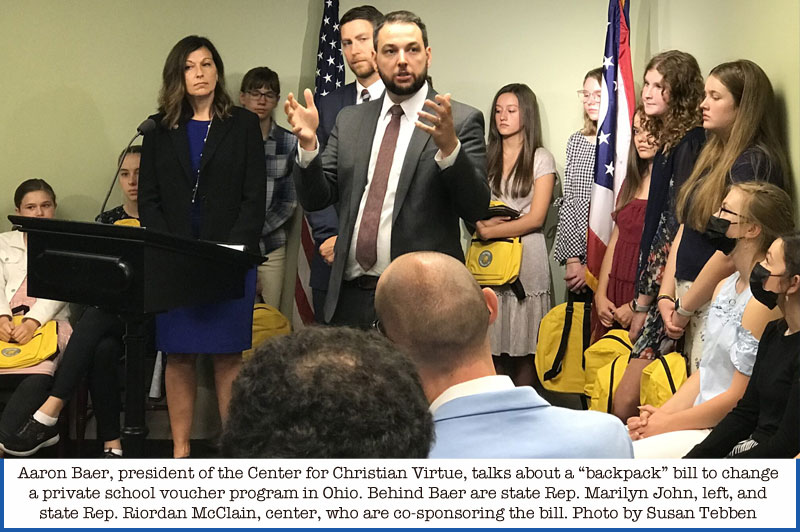
The sponsors of a bill that would promote the use of private school vouchers and “school choice” came together on Wednesday with a religious lobby group to bring the bill back up.
House Bill 290 was originally introduced in May as a “legislative intent” bill aiming to allow students to have the funding they need “follow them” to private schools of their choice, should parents decide the public school system is not working for them.
“We want to fund students, not systems, and empower parents to make the best decision for their children,” said bill cosponsor state Rep. Riordan McClain, R-Upper Sandusky.
The bill came before passage of the new budget bill, which included the Fair School Funding plan, an overhaul of the public school funding model.
Under the new budget, EdChoice private school vouchers, along with the EdChoice expansion, the Cleveland Scholarship Program, the Jon Peterson Special Needs Scholarship Program and the Autism Scholarship Program, are all directly funded by the state, rather than being deducted from monies distributed to public school districts.
“Ohio parents and students overwhelmingly want quality local public schools. They don’t want the radical defunding of public schools that this bill would likely cause.”
Melissa Cropper, president of the Ohio Federation of Teachers
In the new language being added to the bill, if a family applies to be a part of the private school voucher program, sponsors say the taxpayer money the state would use to fund EdChoice or Cleveland scholarships would be put in individual educational savings accounts for the students use.
The bill’s other cosponsor, state Rep. Marilyn John, R-Richland County, said the bill isn’t meant to discredit public education, but to allow student who learn differently to be able to have different options.
“One size fits all doesn’t work,” John said. “It certainly doesn’t work for education.”
McClain said they don’t have an estimate of how many students would be impacted by the so-called backpack bill, though they don’t expect to see a mass exodus of students headed to private schools, more of a gradual upward trend.
“It’s something that, once we set the agenda for where we want the future of the state to be, the hope is that that network gets built up and those opportunities are created,” McClain said.
Included in the press conference was religious advocacy and lobbying group Center for Christian Virtue, which backs the bill because of its focus on school choice and to make public school districts perhaps think twice about instituting what they see as controversial policies.
Aaron Baer, president of the Center for Christian Virtue, said amidst debate in the General Assembly on critical race theory — which CCV has called “a racist ideological grandchild of Marxism that’s being taught in schools across the state” in a fundraising email in support of anti-CRT legislation — parents should be able to take the lead in their student’s education.
Baer also brought up the Upper Arlington school district, which tried to implement some bathrooms at their schools that were gender neutral, before the city of Columbus said that was against city code. The school district had said students who used the gender-neutral bathrooms had been doing so without incident.
“A bill like this would be able to say: Look, Upper Arlington, if this is what you want to do, if this is the policy you want to have, okay,” Baer said. “But now…those families are allowed to go elsewhere and maybe you’re going to think twice about doing something that parents don’t like.”
The bill was already spurned by education associations and public school advocates when it was introduced, but the new language has done nothing to change minds.
“Ohio parents and students overwhelmingly want quality local public schools,” said Melissa Cropper, president of the Ohio Federation of Teachers. “They don’t want the radical defunding of public schools that this bill would likely cause.”
The backpack bill current sits in the House Finance Committee, but has not been scheduled for a hearing.
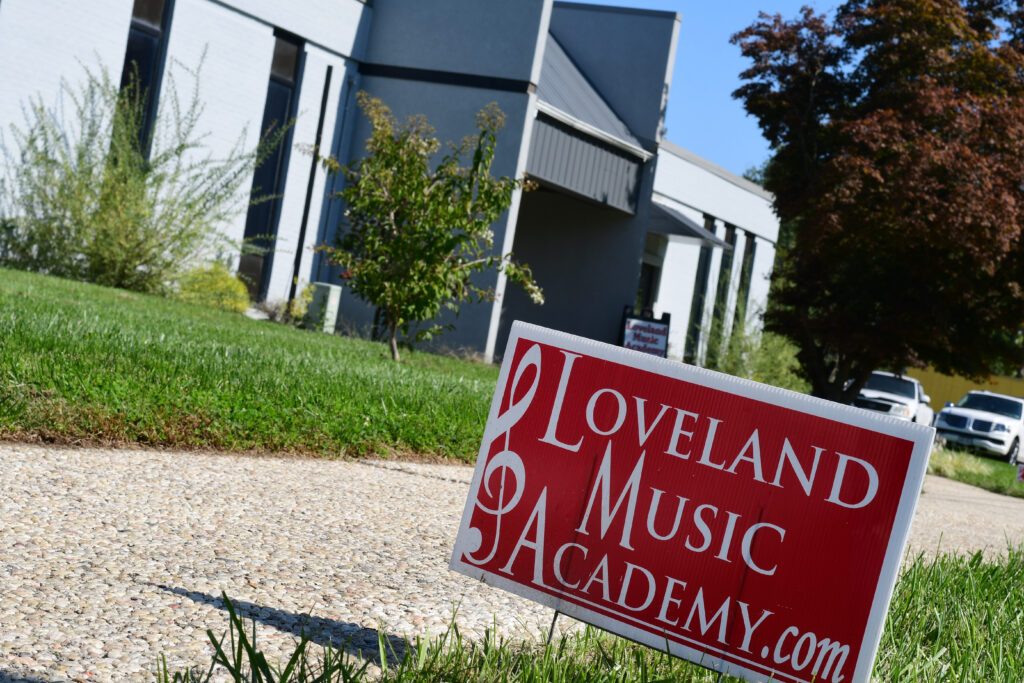
Symmes Township, Ohio – Loveland is full of so many wonderful things for families to get involved in and for parents to get their children involved within the community. The Loveland Music Academy (LMA) is one of those places that welcomes anyone that has a passion for music or simply wants to learn something new that is entirely community-oriented!
LMA came into conception in 2007 when Linda Bergholz and Aaron O’Keefe found a need within the Loveland community for a music academy that could provide quality instruction based on the need of the student. LMA began its journey by offering private lessons for guitar, piano, strings, woodwinds, brass, harp, percussion, voice, and acting in the heart of Downtown Loveland. LMA’s goal was to provide students with a solid musical education and lessons tailored to each student’s interests and goals. With that motto in mind LMA grew rapidly!
LMA quickly began to be known as the go-to place in Loveland and beyond for fantastic music education and instruction at a very reasonable price. In 2009, LMA moved into the Brown Building at 209 W Loveland Ave (which was across the street from LMA’s original location) because they were growing so fast and needed more space for studios. Within 5 years LMA gained 26 instructors educating 400-500 students per week!
“I teach from age six through adults; each lesson is tailored to the individual student. I believe that it is important for students to be exposed to all types and styles of music–from classical to jazz, rock to gospel, country to blues, broadway to reggae, we all find our ‘niche’–and learn to make the music we love. My goal in teaching a student is not that they win awards, but that they carry the love of listening to and playing music for a lifetime. You can’t always find someone to play a game of soccer or basketball or tennis with you, but you can always sit down to a piano (or keyboard, or pick up the flute) and make music yourself.” – Linda Bergholz
Bergholz started to make plans to both expand and improve the LMA building due to the influx of new students, instructors, and much-needed renovations putting in a significant amount of money to a building that LMA didn’t own. Over the course of 10 plus years that LMA called 209 W Loveland home, they paid over 200,000 dollars in rent to the Loveland Community Firefighters’ Association (LCFA), a non-profit organization that owns the Brown Building off the Loveland Bike Trail in Downtown Loveland’s Historic District where LMA resided.
The LCFA according to their website, “works year round to raise funds to help supplement the department and many other community services. Most of the members of the LCFA are also members of the fire department or their families. These individuals work diligently year-round at fundraisers to raise money to donate to the fire department and other causes around the community. The LCFA has always tried to give as much back to the community as possible that we serve.”
Because of the LCFA motto, Bergholz thought that LMA would be in Downtown Loveland forever as it not only served the community, and supplied local music instructors with jobs, but also brought in a lot of money for both local restaurants and shopping boutiques from its 400 plus students and their parents. Unfortunately, this was not the case.
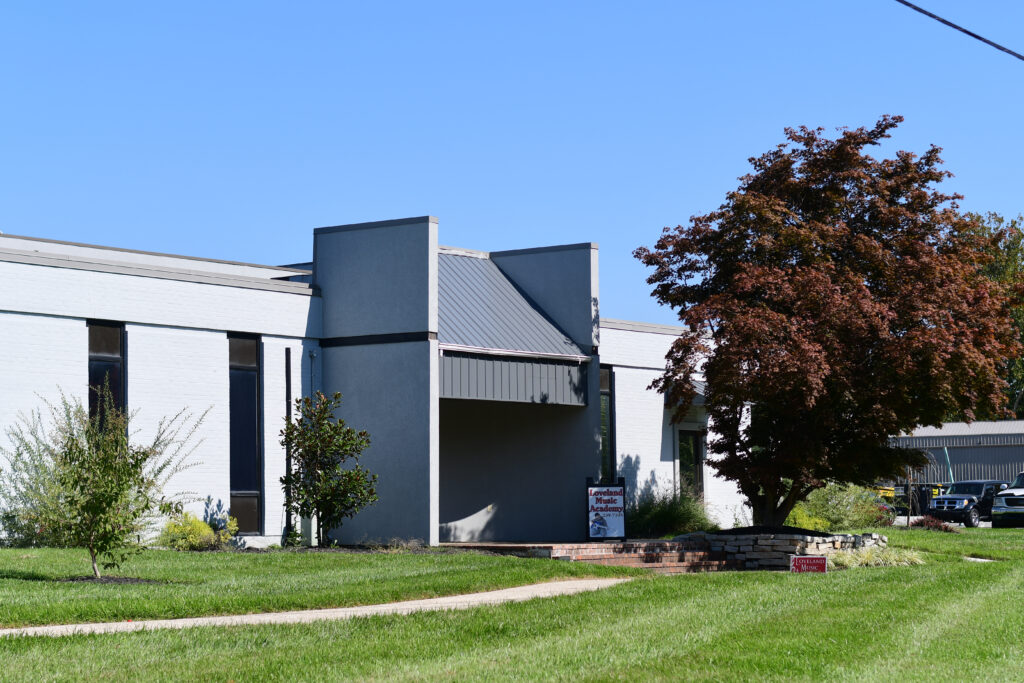
LMA’s new home at 10084 East Kemper Road, just outside of the Loveland City limit in Symmes Township.
In September of this year, LMA moved to 10084 East Kemper Road, just outside of the Loveland City limit in Symmes Township because they were notified that their lease would not be renewed by the LCFA. Bergholz along with LMA’s music instructors and students were devastated as they thought this would be the end of Loveland’s only music academy.
Bergholz coincidentally came into Mile42 Coffee the day she was notified that LMA was being kicked out of the Brown Building and ran into me. I could tell by the look in her eyes that she was not okay and that something major had happened. Bergholz sat with me and told me what had happened and said she just couldn’t let this be the end of LMA. I agreed and encouraged her to keep on fighting because hundreds of local students, parents, and music instructors depended on her strength and dedication. That’s just what Bergholz decided to do. Not only did she write a letter to LCFA asking why LMA’s lease wasn’t going to be renewed and if they would reconsider, she began to work as hard she could to find a new location for LMA. Bergholz later found out that LMA’s lease was not being renewed because LCFA wanted to acrue more income from the Brown Building i.e they wanted to put in a new bar or restaurant. Although Bergholz felt she could prove that LMA did provide a significant amount of income, she decided to move forward in search of a new building.
The search for a new LMA building was tough for Bergholz being that America was in the midst of a pandemic, the cost to move LMA would be extravagant due to all the heavy music equipment (LMA has several Grand Pianos), and LMA would have to stop doing business for however long it took to move. Bergholz was determined to make it work, and she did just that.
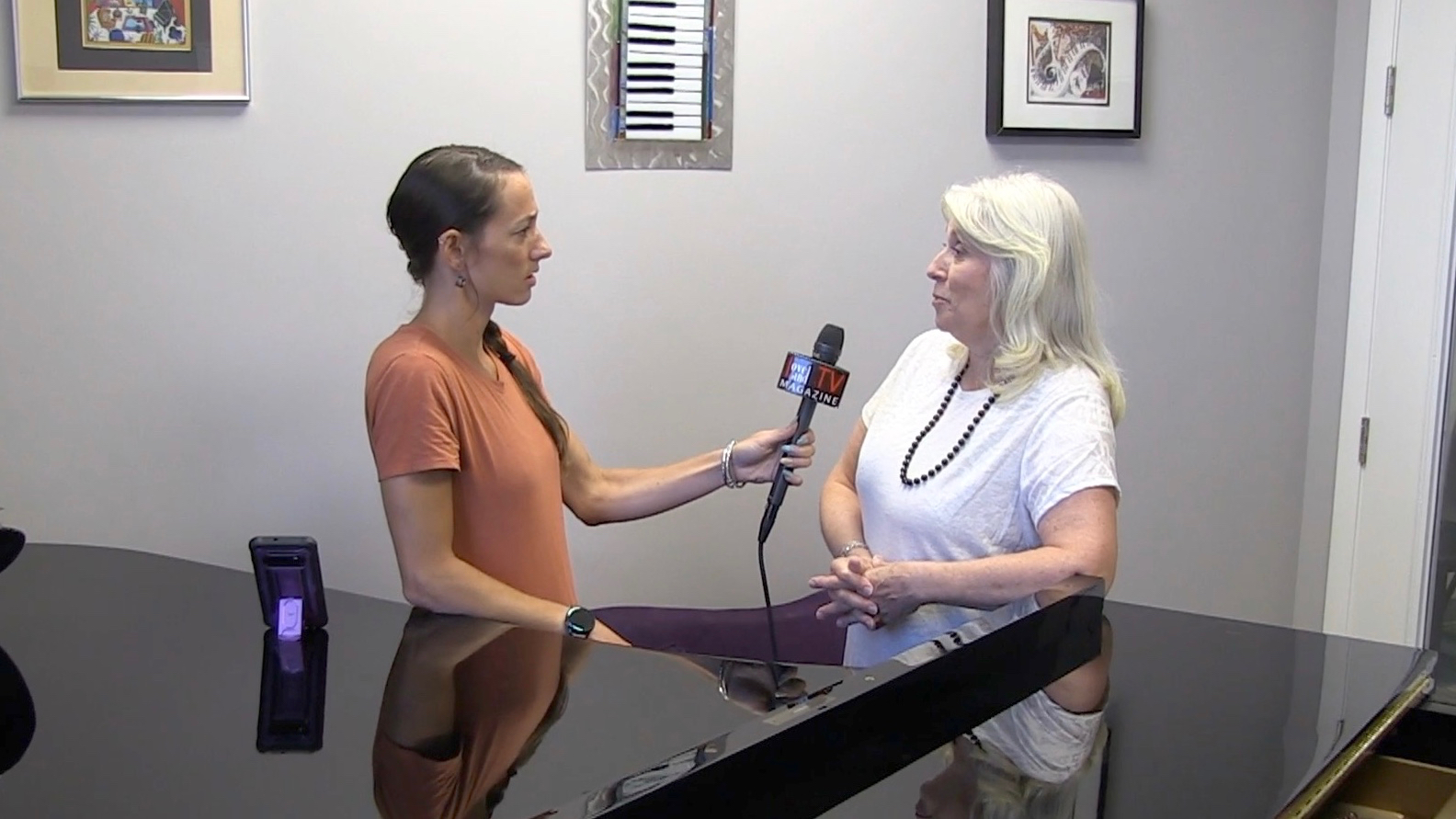
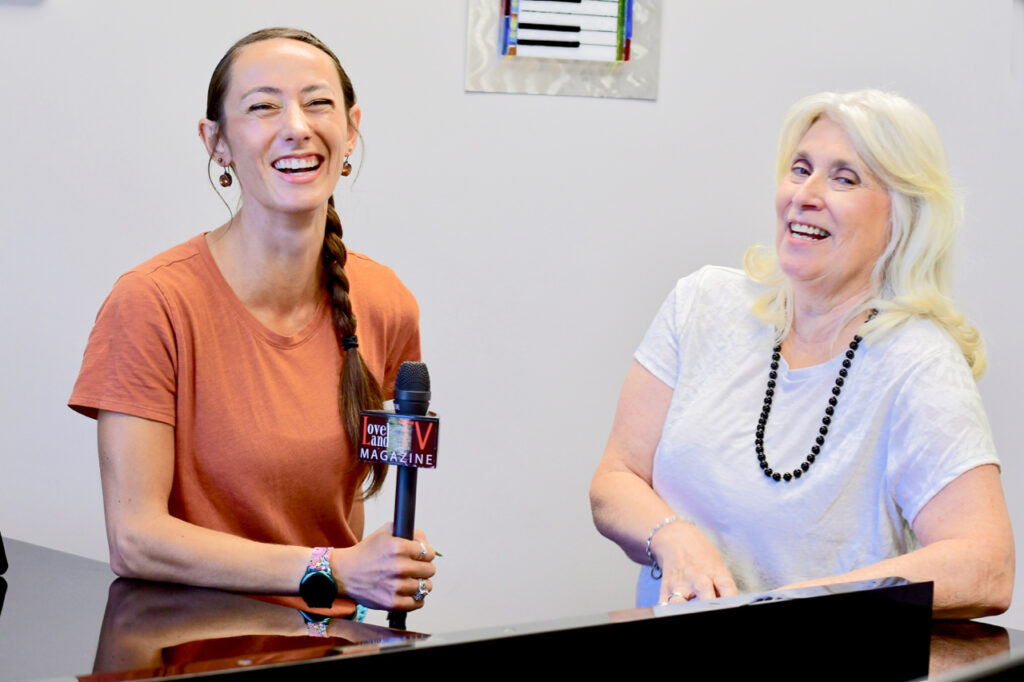
I decided to take a trip to the LMA’s new location to see how the moving progress was going and to talk to Bergholz about the journey that led to the new building! So without further ado, I bring to you a one-on-one EXCLUSIVE Loveland Magazine TV Interview with Linda Bergholz! Believe me you won’t want to miss this one!
If you would like to take music lessons or you would like to get involved with LMA you can call them at 513-239-7105 or send LMA an email.
In September of this year, LMA moved to 10084 East Kemper Road, just outside of the Loveland City limit in Symmes Township.
c
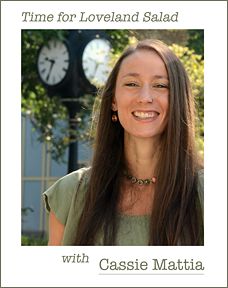
For more heart-felt Loveland stories stay tuned to the Loveland Salad With ME, Cassie Mattia!
A group representing small pharmacists says large chains, especially CVS, are moving patients’ prescriptions to their own stores without consent. CVS adamantly denies that. Photo by Marty Schladen, Ohio Capital Journal.
It’s unclear if she disclosed potential conflict during massive procurement
Since she became director of the Ohio Department of Medicaid in January 2019, Maureen Corcoran has owned stock in some of the department’s biggest contractors. Given the size of those contracts, they could have increased the value of the stock Corcoran owned.
Ohio Medicaid Director Maureen Corcoran. Official photo.
But while she complied with one set of state disclosure requirements, Corcoran won’t say just how much stock she owns in such companies as CVS Health, UnitedHealth Group and Express Scripts — each of which has done billions of dollars worth of business with the Medicaid department since Corcoran started running it.
In addition, Corcoran won’t say if she filed legally required affidavits disclosing that she had an ownership stake in corporations the department hired earlier this year as part of its $20 billion managed-care re-procurement or the company the state hired to run its $1 billion OhioRISE program. Should they be found, violations of the law could carry criminal penalties and invalidate contracts signed without proper disclosures.
Big money
When Corcoran took the reins of the Medicaid department, she held a stake in some companies that were getting a lot of scrutiny over their business with the state. Two were CVS Caremark and OptumRX, pharmacy middlemen that together were handling more than $2 billion a year in prescription-drug transactions for the department.
Ohio’s independent pharmacists and others accused the companies of several questionable practices — including charging a lot more for drugs than they were paying pharmacists. A state-commissioned analysis showed that in 2017, CVS and Optum charged almost a quarter-billion dollars more for drugs than they reimbursed the pharmacies that had bought and dispensed them.
The findings were still big news — and the companies were suing the Medicaid department — when Corcoran took control just after Gov. Mike DeWine took office at the start of 2019. Even so, Corcoran held onto stocks in CVS Caremark owner CVS Health and in OptumRX owner UnitedHealth.
According to disclosures filed with the Ohio Ethics Commission, Corcoran owned at least $1,000 worth of those companies’ stock.
Given that they were among 180 stocks and mutual funds she disclosed owning as of Jan. 31, 2019, it’s possible that Corcoran wasn’t even aware that she held stakes in companies that did such high-profile business with her agency. Whatever the case, Corcoran held onto shares in the companies through 2019 and 2020, her ethics filings show.
Under Ohio’s aging ethics laws, agency bigwigs like Corcoran are allowed to own stock in companies with which their departments do business so long as their holdings don’t exceed 5% of the company’s outstanding stock. In the case of Medicaid’s big contractors, that would mean the director would have to be one of the wealthiest people in Ohio to violate the provision.
CVS and UnitedHealth are the fourth and fifth-largest corporations in the country by revenue. In order to violate the ethics provision, Corcoran would have to have owned a combined $18 billion worth of the companies’ stock in 2019.
Potential for conflict
That’s a clear sign that the state’s ethics laws need to be updated, said Catherine Turcer, executive director of Common Cause Ohio, a watchdog group.
“Five percent of a company’s stock in the 70s, 80s or even the 90s wasn’t anywhere near what it is now,” Turcer said.
In addition, knowing just how much Corcoran’s investments with Medicaid contractors were worth would go a long way toward showing how big a conflict of interest she has. If it’s just over $1,000, the conflict might seem nominal, but if it’s much more, it would be a lot more serious, Turcer said.
“There are two things Maureen Corcoran could do,” Turcer said. “One would be to publicly identify how much over the $1,000 she owns and allow the public to weigh in. The other thing she could do so the public didn’t worry about the conflict of interest is actually divest herself of these stocks.”
Last Friday, the Medicaid department was asked the value of Corcoran’s investments in CVS, UnitedHealth and Express Scripts, a third pharmacy middleman with which the department has done business.
A spokeswoman for the department said it would respond to those and other questions, but as of Tuesday afternoon, it hadn’t. The spokeswoman also didn’t answer questions about when responses would be forthcoming.
Bigger problem?
Potentially more ominous for Corcoran and her department is another question they haven’t responded to: Whether Corcoran filed affidavits disclosing her interest in companies with whom the department recently entered into huge contracts.
This year, the Medicaid department implemented a big redesign of its managed care program.
To gain more insight into drug transactions, the department will work next year with a single drug middleman contracted directly with the department — instead of being hired by managed-care providers as they have in the past.
But while UnitedHealthcare’s OptumRx might be losing that business, the Medicaid department is hiring UnitedHealthcare Community Plan of Ohio to be one of six companies administering the state’s $20 billion-a-year managed-care program.
The re-procurement has raised other questions. Also hired was a plan owned by managed-care giant Centene, which agreed earlier this year to pay out more than $1 billion to Ohio and 21 other states after being accused by Attorney General Dave Yost of fleecing taxpayers. Corcoran has struggled to explain why her department would keep doing business with the company.
The state also is creating OhioRISE, an ambitious program intended to help 60,000 Ohio children with the most complex behavioral health and other needs. Aetna Better Health of Ohio was selected in April to administer the $1 billion program.
It’s unclear whether Corcoran continues to own stock in UnitedHealth or CVS, or whether she disclosed any ownership when contracts were let this year.
But the state law governing such disclosures spells out potential criminal penalties for violations and it says any contract so made “is void and unenforceable.”
Loveland, Ohio – Road repairs have started this week along State Route 48 near the downtown area. Curb repairs, pavement milling, and re-paving will be completed.
Repairs will be near 250 East Broadway, work west toward the Five Points intersection, and then north toward the O’Bannon Creek Bridge between Harrison Avenue. and Lyon Avenue.