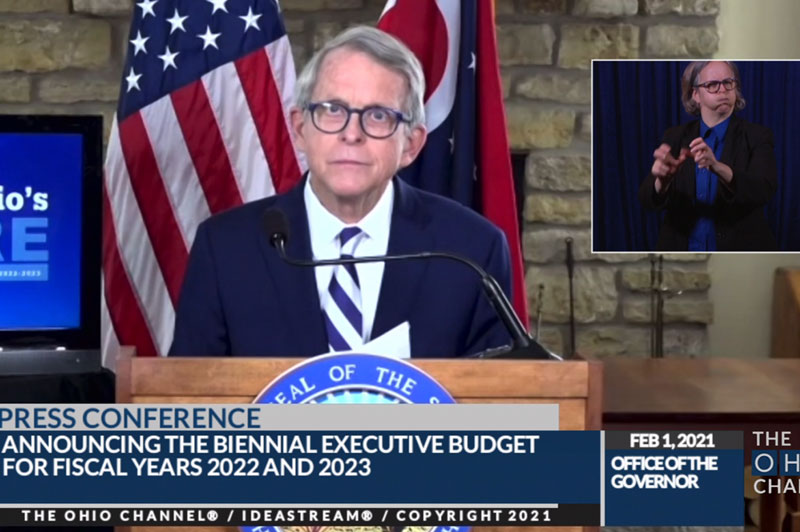
Some are questioning Gov. Mike DeWine’s sincerity when he says he’s doing all he can to fight the spread of coronavirus among children.
DeWine and the leaders of children’s hospitals are in a panic over the lack of masking in Ohio schools. Hospital admissions of children with covid are up 536% since July and the hospitals report that they’re being overwhelmed by the surging delta variant and an unusual jump in other respiratory illnesses.
DeWine and the hospitals are pleading with local school officials to enact their own mask mandates because DeWine says his hands are tied by Senate Bill 22 — a law the GOP-controlled legislature passed in March over his veto.
It circumscribes the governor’s ability to issue health orders such as his 2020 statewide mask mandate by limiting them to 30 days. After that, the legislature would have to sign off in order to continue them.
Asked on Tuesday why he wouldn’t impose a mask mandate as a temporary measure, DeWine said he didn’t want to muddy the issue.
“All that will do is cause a great deal of confusion and then I think people would say, ‘Well there’s no mandate on, there’s no requirement on, we can go back, there’s really no reason to keep masks on,” the governor said. “I’m afraid what would happen is we would slide backwards, we would go the wrong way.”
However, some noted that when SB 22 was passed, the governor, who is a lawyer, didn’t believe it would stand up in court.
Lots of talk out there excusing @GovMikeDeWine's refusal to issue a school mask mandate.
His hands are NOT tied. He could issue a mandate today and if the legislature fights it, he could take them to court.
“Lots of talk out there excusing @GovMikeDeWine‘s refusal to issue a school mask mandate,” Katie Paris, founder of the group Red Wine and Blue, tweeted. “His hands are NOT tied. He could issue a mandate today and if the legislature fights it, he could take them to court.”
She followed up with a thread that included the statement DeWine issued when he vetoed SB 22.
“We believe that significant portions of SB 22 are unconstitutional,” the statement says. “Parts of the bill violate the separation of powers doctrine embedded in our Ohio Constitution; other parts violate Article II, Section 15 of the Ohio Constitution, proscribing how laws must be made; and even other parts of the bill likely violate Article IV, Section 5 of the Ohio Constitution, by exercising power reserved to the judiciary.”
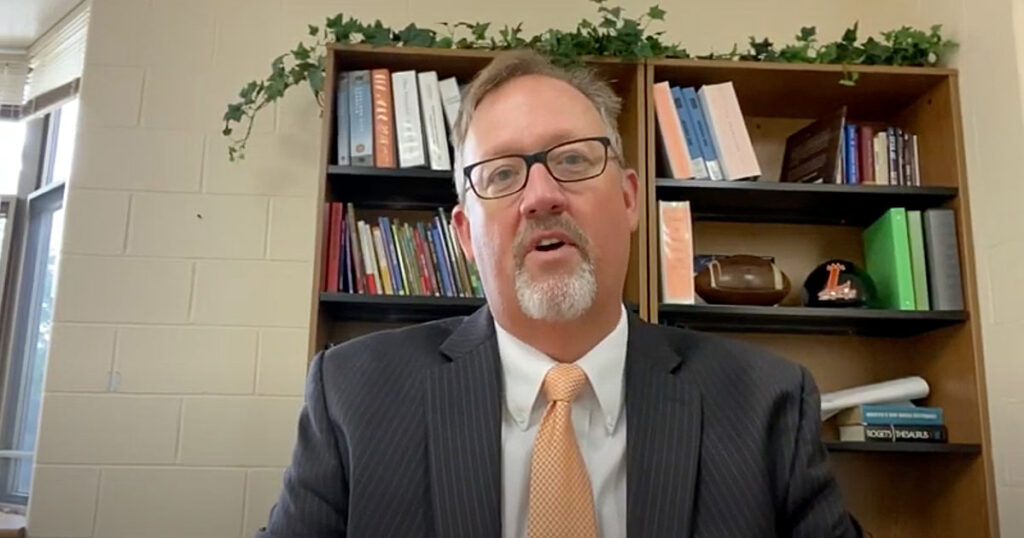
Loveland School Superintendant Mike Broadwater
Loveland School Superintendant Mike Broadwater told Loveland Magazine on Thursday, “It is unfortunate that Governor DeWine no longer has the power to issue health orders that would put every school district across the state in the same situation if that’s what he feels is best. But by leaving it to local control, he’s allowing each district to make the decision that fits best for their community.”
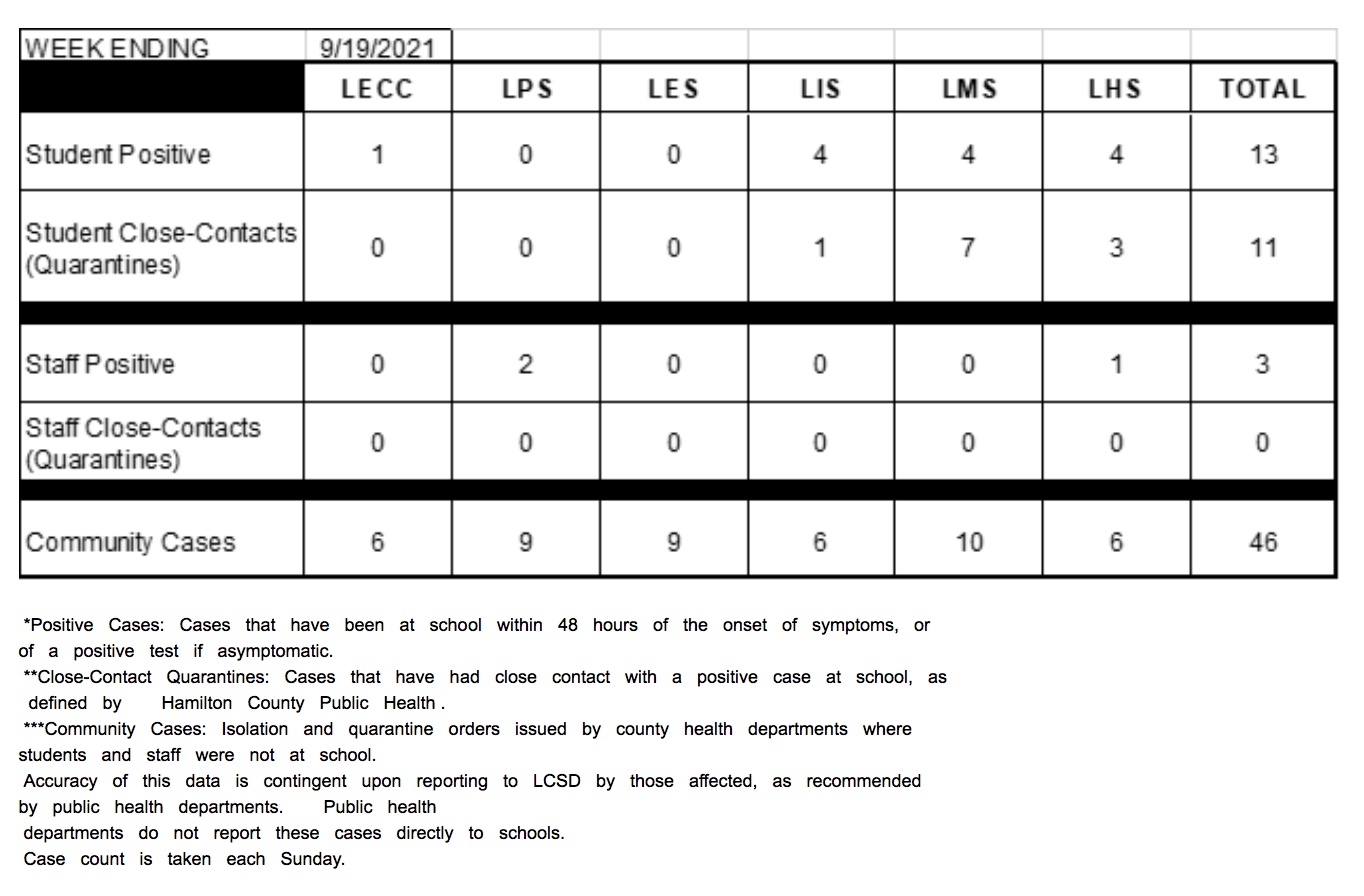
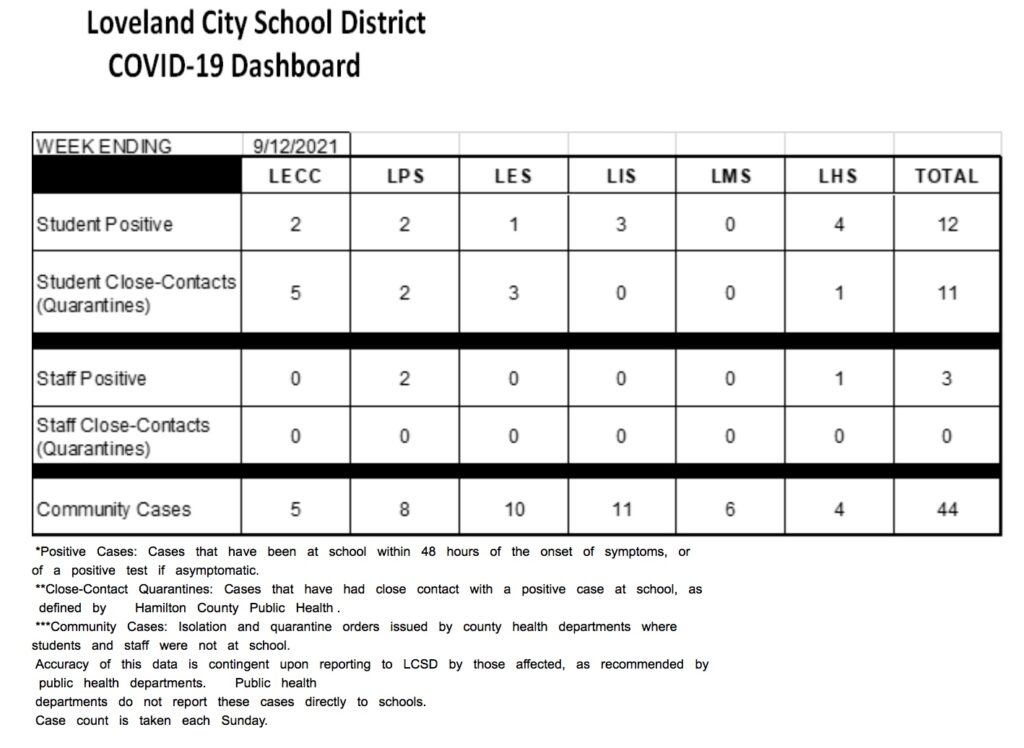
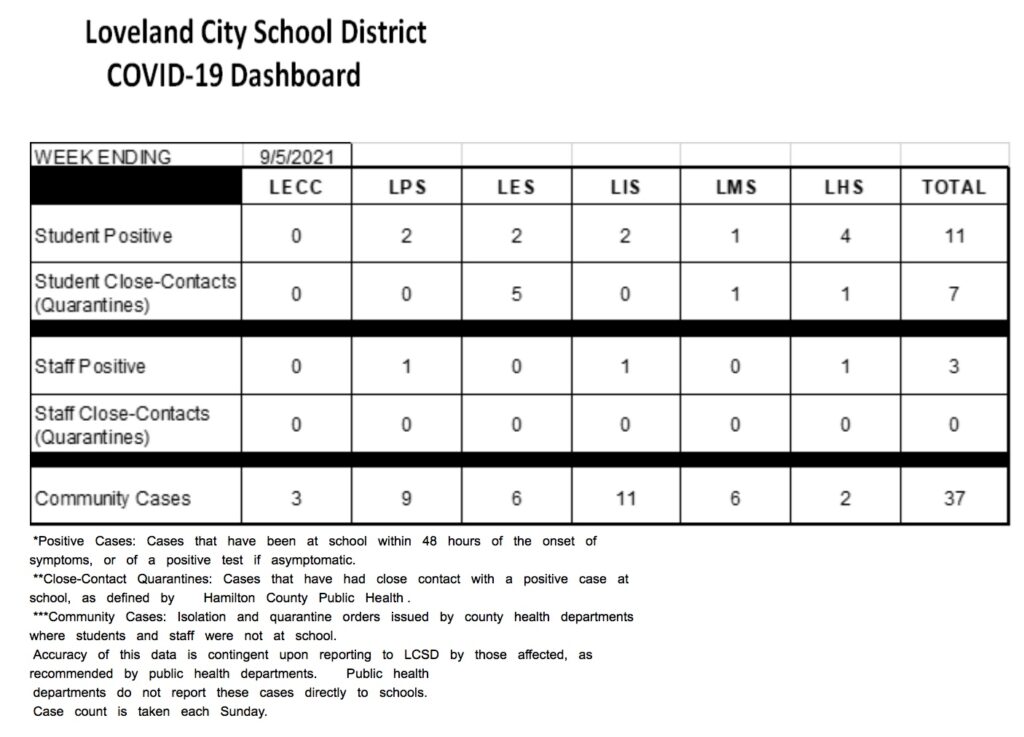
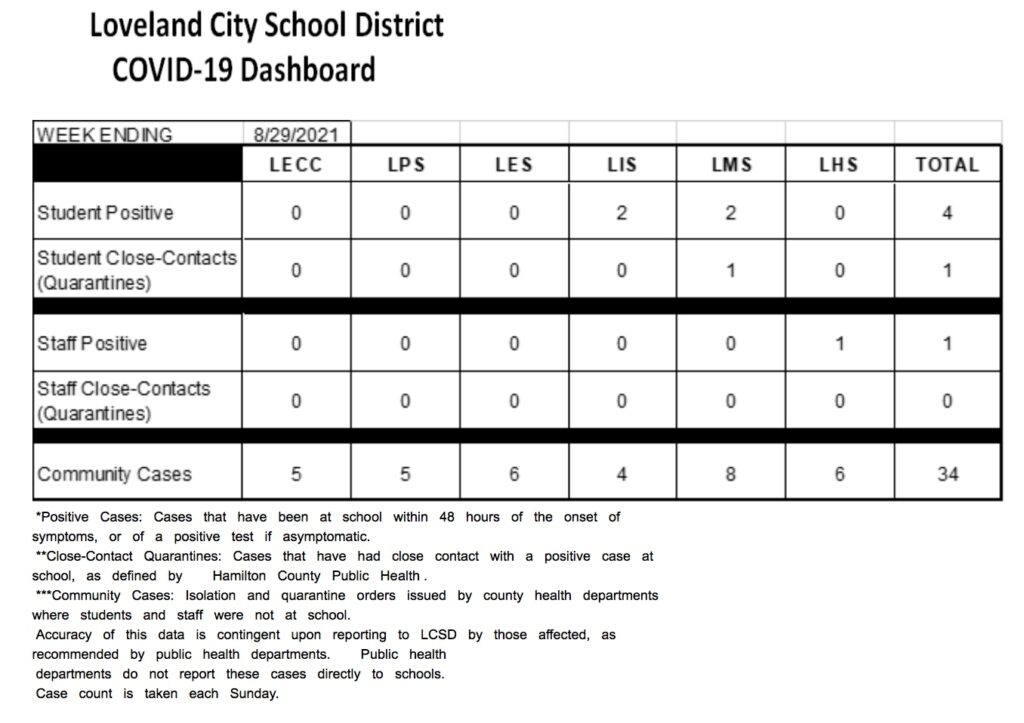
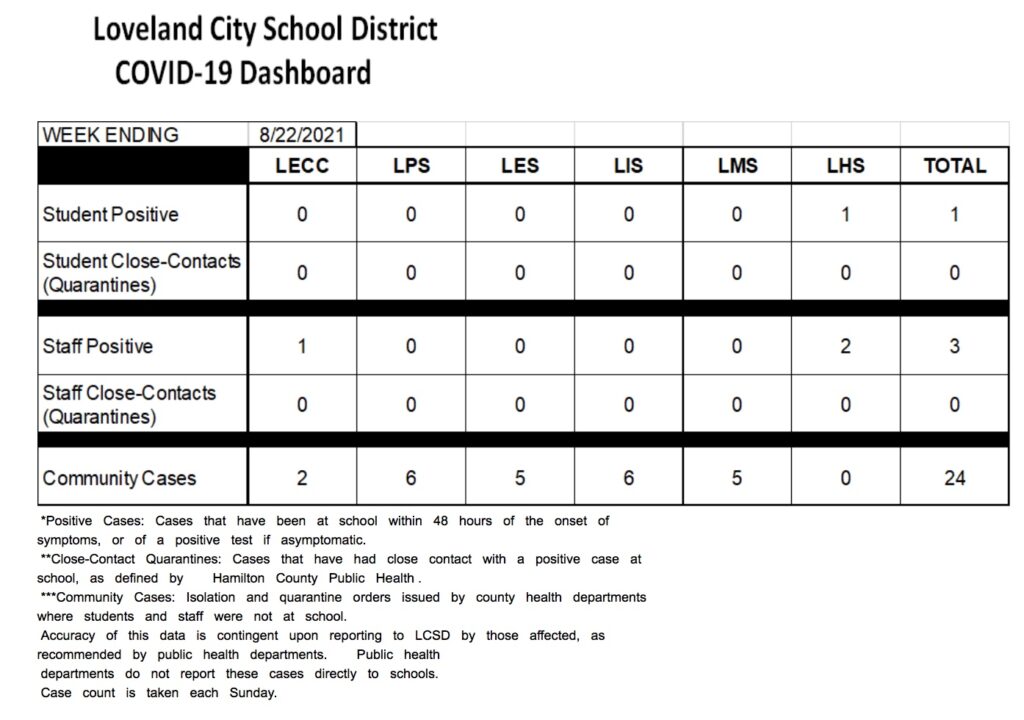
The current policy of the Loveland City School District is that students in grades PreK-6 are required to wear a mask indoors. Students in grades 7-12 do not have to wear face coverings. All others, while in the buildings must wear masks.
The Legislative Service Commission also questioned the legality of a draft of the bill, writing that it “might be vulnerable to a constitutional challenge on the grounds that the legislature cannot take such an action by resolution.” But for some reason, it was dropped from the final version of the bill, which was otherwise unchanged.
Asked why DeWine doesn’t just impose a mask order and fight it out in court, Press Secretary Dan Tierney on Wednesday said it was too risky.
“Somebody who’s advocating for that is hoping that a judge puts on an immediate restraining order that would allow (the mask mandate) to continue, but you also have to weigh the chance that a judge could rule the other way: that the legislative recision is perfectly valid,” Tierney said.
He added that DeWine’s current approach — persuading local officials to put on their own mask mandates — is making rapid progress. The portion of students in schools with mask mandates has jumped from 35% on Sept. 1 to 54% on Tuesday, Tierney said.
“We went from a little over a third to a little over a half of students being in a school where everybody wears a mask in less than two weeks,” he said.
But while DeWine is blaming the GOP supermajority in the legislature for sapping his ability to fight his coronavirus, on Wednesday he signed off on legislative maps that would preserve that supermajority. Even as DeWine helped to approve the maps, he questioned whether they would survive a court challenge, Gannett journalist Haley BeMiller reported.
.@GovMikeDeWine told reporters in Circleville that he voted for maps he wasn’t happy with because he didn’t think there would be an agreement, even if they kept working.
“I felt we needed just to get it over with and move on.”
The move by DeWine — who has also criticized President Joe Biden’s vaccination-or-test mandate — prompted a blast from John Hagner, campaign manager for Dayton Mayor Nan Whaley, who is seeking the 2022 Democratic gubernatorial nomination.
“Mike DeWine on Tuesday: the gerrymandered Republican supermajority is keeping me from protecting kids and keeping them in school,” Hagner tweeted. “Mike DeWine on Wednesday: ok, let’s have four more years of an even more gerrymandered Republican supermajority.”
Reporter Jake Zuckerman of the Ohio Capital Journal and David Miller, Editor of Loveland Magazine contributed to this rstory.
Despite several plea deals with federal prosecutors regarding bribery on a massive scale to pass legislation providing a windfall to nuclear and coal companies, Ohio utility customers continue to fund bailouts of failing coal-fired power plants in Ohio and Indiana.
In the first half of 2021, Ohio utility customers paid $51 million to subsidize the plants, which are jointly owned by Ohio utility companies like American Electric Power, Duke Energy, AES Ohio and others. That’s on top of the $115 million ratepayers paid last year, according to data from state utility regulators.
Sen. Mark Romanchuk, R-Ontario, has spearheaded efforts within the GOP on a piece-by-piece strategy to repeal the remnants of House Bill 6, which codified the coal bailout through 2030.
HB 6 passed via the muscle of $61 million that utility giant FirstEnergy Corp. paid into an account secretly controlled by House Speaker Larry Householder, R-Glenford. That money funded the bill’s passage and enriched those in on the scheme, according to a statement of facts the company proffered to the U.S. Department of Justice. (Householder has pleaded not guilty to a count of racketeering and awaits trial.)
Romanchuk said Tuesday he’s facing resistance from his counterparts on the Senate Energy and Public Utilities Committee as far as repealing the coal plant bailouts.
“You need votes to get it out of committee; the votes probably aren’t there right now,” he said to reporters after a hearing.
State Sen. Mark Romanchuk, R-Ontario. Official photo.
“The legislation has some other things in it like refunds that are probably, in the minds of committee members, not what they want to vote for.”
Senate Energy Chairman Rob McColley, R-Napoleon, said Tuesday he has no update on timing regarding a vote to repeal the coal bailouts. He said Romanchuk is working behind the scenes to prepare the bill for a vote, but he’s not involved in specific details.
“You know how I feel about House Bill 6. I voted no because I thought it stunk from the very beginning,” he said. “But at the same time, we’ve got to work this through the committee process and that’s what we’re trying to do.”
Tuesday’s hearing: solar credits
The Senate Energy and Public Utilities Committee met Tuesday to consider Senate Bill 118, a Romanchuk bill that would repeal a lesser-discussed piece of HB 6: a $20 million annual credit, funded by utility customers, for certain solar projects.
SB 118 has support from opponents of HB 6: the conservative group Americans for Prosperity, the Ohio Manufacturing Association, and the Ohio Consumers Counsel, which represents ratepayers.
Lobbyists representing OMA and AFP described the credit structure as a form of cronyism, alleging HB 6 was narrowly tailored to ensure the payments made it to a select few solar projects.
A spokeswoman from the Ohio Air Quality Development Authority, which oversees the solar credit program, confirmed collections from consumers won’t begin until Nov. 1. Five projects in Highland, Brown, Hardin and Vinton counties have been approved to receive payments within the program.
He has maintained his innocence throughout. He’s scheduled to appear for a status conference before a federal judge Oct. 5.
“I have not, not have I ever, taken a bribe or solicited or been solicited for taking a bribe. Never,” Householder said.
Two alleged Householder co-conspirators — his political strategist Jeff Longstreth and lobbyist Juan Cespedes — pleaded guilty in October 2020 to one count each of racketeering. Neil Clark, a high power GOP lobbyist, was charged as well. He died by suicide earlier this year.
In July, FirstEnergy admitted in court documents that it paid $61 million into an account that Householder controlled to pass HB 6. The company agreed to pay a $230 million penalty and plead guilty to a charge of wire fraud.
The documents state the company paid $22 million to Sam Randazzo, an energy lawyer appointed by Gov. Mike DeWine to lead the PUCO, in the decade before his appointment. This includes a $4.3 million payment just before he assumed the post.
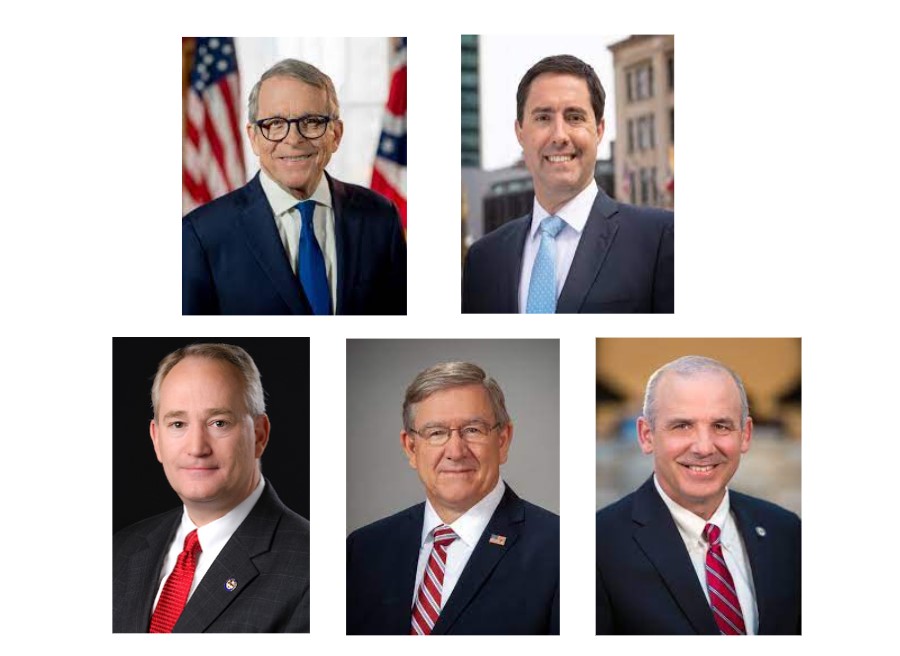
The Republican majority members of the Ohio Redistricting Commission. Top row from left, Ohio Gov. Mike DeWine and Secretary of State Frank LaRose. Bottom row from left Ohio Auditor Keith Faber, House Speaker Bob Cupp, and Senate President Matt Huffman. Official photos.
With some using words like “disappointment” and “unease,” Republican majority members of the Ohio Redistricting Commission passed maps of General Assembly districts on Thursday heavily favoring GOP supermajorities that will last four years, if they make it through the courts.
In a process that bypassed the midnight deadline by minutes, the commission split along party lines 5-2 and passed GOP-produced maps that they said were presented to the commission the night before.
Currently, Republicans hold a 64-35 supermajority in the Ohio House, and a 25-8 supermajority in the Ohio Senate. The new maps continue the supermajorities, which require 60+ seats and 22+ seats respectively.
Republicans said the maps for the House and Senate approved early Thursday morning reduced the GOP stronghold with a House breakdown of 62 seats to 37 Dems, and 23 to 10 in the Senate. Democrats and Dave’s Redistricting App project a 65-seat GOP supermajority in the House.
As of 2020, 1.9 million Ohioans were registered Republican while 1.6 million were registered Democratic, for a ratio also of 54% to 46%. More than 4.5 million voters remain unaffiliated.
Nevertheless, the Republican majority said in a statement that because they’ve won 13 of 16 statewide elections they could be entitled to up to 81% of representation of the people, despite them only winning the average of 54% of the votes in those elections.
The GOP committee majority includes Ohio Gov. Mike DeWine, Secretary of State Frank LaRose, Auditor Keith Faber, Ohio House Speaker Bob Cupp and Ohio Senate President Matt Huffman. Voting against the maps were Democratic House Leader Emilia Sykes and Democratic state Sen. Vernon Sykes.
The Republican majority’s four-year Ohio House map. The Republican majority’s four-year Ohio Senate map.
The only bipartisan agreement was a condemnation of how the process had gone, and the fact that there seemed to be no way to reach a 10-year map.
“Tonight, it has become clear to me that there will not be a compromise,” said DeWine. “It’s clear in talking to both sides that there’s not going to be an agreement, and that we could go tomorrow or the next day or the next day, and it simply was not going to occur.”
The Democratic legislators on the commission both objected to the maps as presented, with commission co-chair Sen. Vernon Sykes saying the map proposal “falls far below what’s considered to be fair.”
House Minority Leader Emilia Sykes said the maps were an affront to women who had to earn the right to vote, and minorities who are protected by the Voting Rights Act.
“To have before today a map that summarily and arrogantly eliminates the ability for women like me…to engage in a process and have their votes heard is not only offensive, it is plain wrong,” Sykes said.
The criticism of the process was broad, with Auditor Faber and Secretary of State LaRose both urging the commission to learn from its mistakes before congressional redistricting begins next month.
“I’m casting my ‘yes’ vote with great unease,” LaRose said. “I fear we’ll be back in this room very soon.”
The expectation of lawsuits was brought up quickly and early, with DeWine and others acknowledging that the courts would ultimately decide whether the maps fit the bill, or if the process was constitutional.
“I’m not judging the bill one way or another, that’s up for a court to do,” DeWine said.
The condemnation from redistricting advocacy groups was also swift, though analysis of the maps is still ongoing.
“The Commission didn’t reconvene until forty-five minutes before the midnight deadline and then enacted a map along party lines that disregards the letter and spirit of the reforms passed in 2015,” wrote Common Cause Ohio executive director Catherine Turcer in a statement sent out by the Fair Districts Ohio coalition. “We are disappointed in both the process and the result.”
Past court challenges, the discussion now turns to congressional districts representing the state, a process that should start in the next few weeks.
Computer science…engineering…policy…business…communications…chemistry. These are the fields of study five Cincinnati Area National Merit Semifinalists hope to enter when they attend college next year.
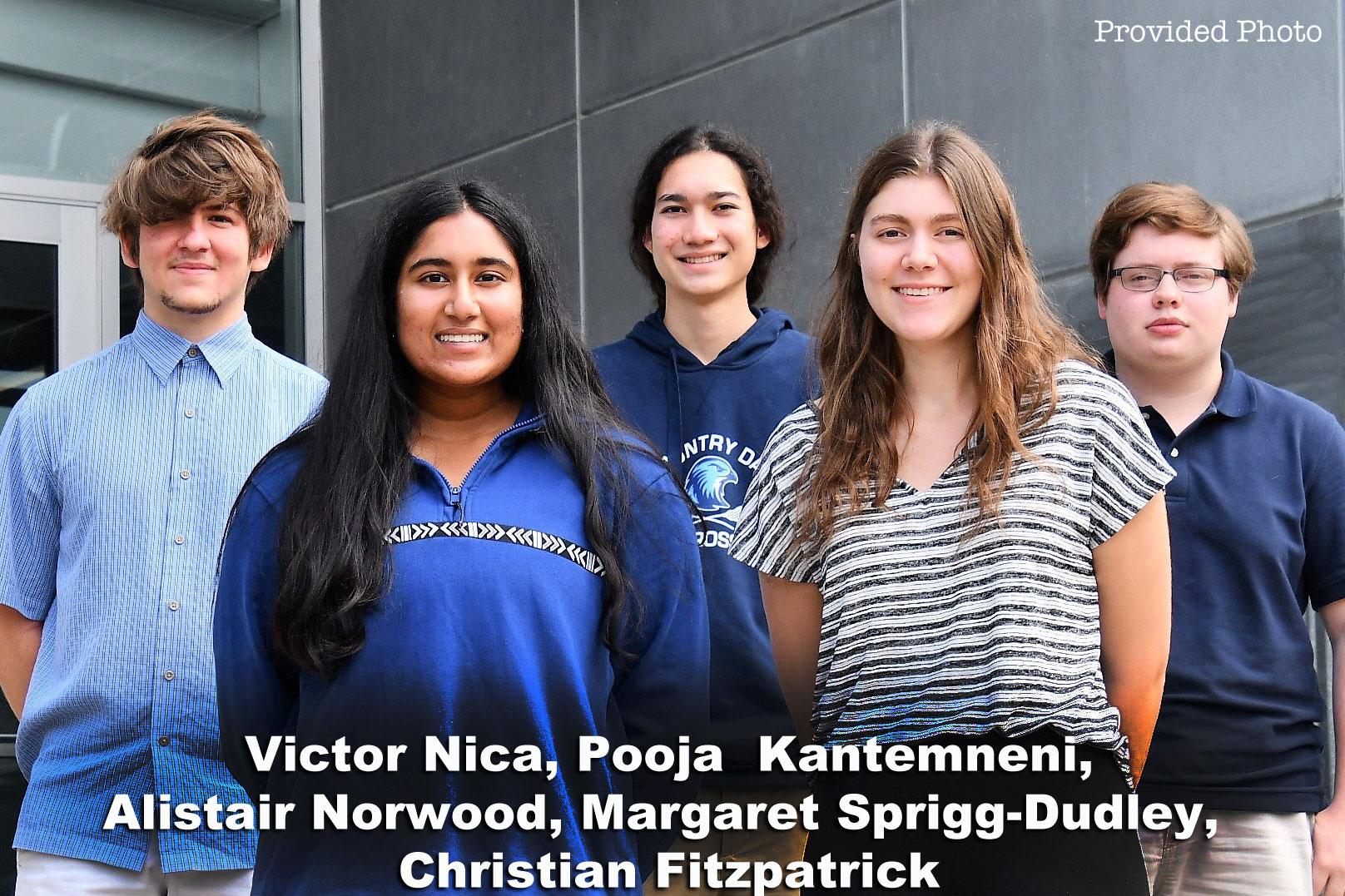
“It’s no secret that Country Day is academically rigorous and that certainly helped me prepare for the test, but being such a small school we also get more individualized attention from our teachers and that is invaluable,” said Loveland resident Margaret Sprigg-Dudley ’22.
Cincinnati Country Day School seniors Christian Fitzpatrick (Kenwood), Pooja Kantemneni (Mason), Victor Nica (Anderson), Alistair Norwood (Coldstream), and Margaret Sprigg-Dudley (Loveland) were recently named among the approximately 16,000 Semifinalists in the 2022 National Merit Scholarship Program.
These academically talented high school seniors have an opportunity to continue in the competition for approximately 7,600 National Merit scholarships worth more than $31 million that will be offered in the spring.
Christian Fitzpatrick ’22 added, “The quality of teachers is also really important. If you have quality teachers that go beyond the required material like we do here [at Country Day] I’m sure that increases the likelihood that you would be prepared for something like standardized testing.”
Over 1.5 million juniors in about 21,000 high schools entered the 2022 National Merit Scholarship Program. The nationwide pool of Semifinalists, representing less than one percent of U.S. high school seniors, includes the highest-scoring entrants in each state.
To be considered for a Merit Scholarship award, Semifinalists must fulfill several requirements to advance to the Finalist level of the competition. Over 90% of the Semifinalists are expected to attain Finalist standing, and about half of the Finalists will win a National Merit Scholarship, earning the Merit Scholar title.
These academically talented high school seniors now have an opportunity to continue in the competition for some 7,500 National Merit Scholarships worth nearly $30 million that will be offered next spring. To be considered for a Merit Scholarship award, Semifinalists must fulfill several requirements to advance to the Finalist level of the competition. About 95 percent of the Semifinalists are expected to attain Finalist standing, and approximately half of the Finalists will win a National Merit Scholarship, earning the Merit Scholar title.
High school juniors entered the 2022 National Merit Scholarship Program by taking the 2020 Preliminary SAT/National Merit Scholarship Qualifying Test (PSAT/NMSQT), which served as an initial screen of program entrants. The nationwide pool of Semifinalists, representing less than one percent of U.S. high school seniors, includes the highest scoring entrants in each state. The number of Semifinalists in a state is proportional to the state’s percentage of the national total of graduating seniors.
To become a Finalist, the Semifinalist and a high school official must submit a detailed scholarship application, in which they provide information about the Semifinalist’s academic record, participation in school and community activities, demonstrated leadership abilities, employment, and honors and rewards received. A Semifinalist must have an outstanding academic record throughout high school, be endorsed and recommended by a high school official, write an essay, and earn SAT or ACT scores that confirm the student’s earlier performance on the qualifying test.
Loveland, Ohio – For pet lovers and others who find sudden and unexpected explosions alarming, there will be fireworks set off in downtown Loveland on Saturday evening, September, 11 at 9 PM.
Also, as a reminder for the same day, traffic in and out of downtown will be on a gridlock alert when a 5 PM parade leaves from the Loveland Elementary School, travels along West Loveland Avenue, and ends at 220 East Loveland Avenue at the Moose Lodge.
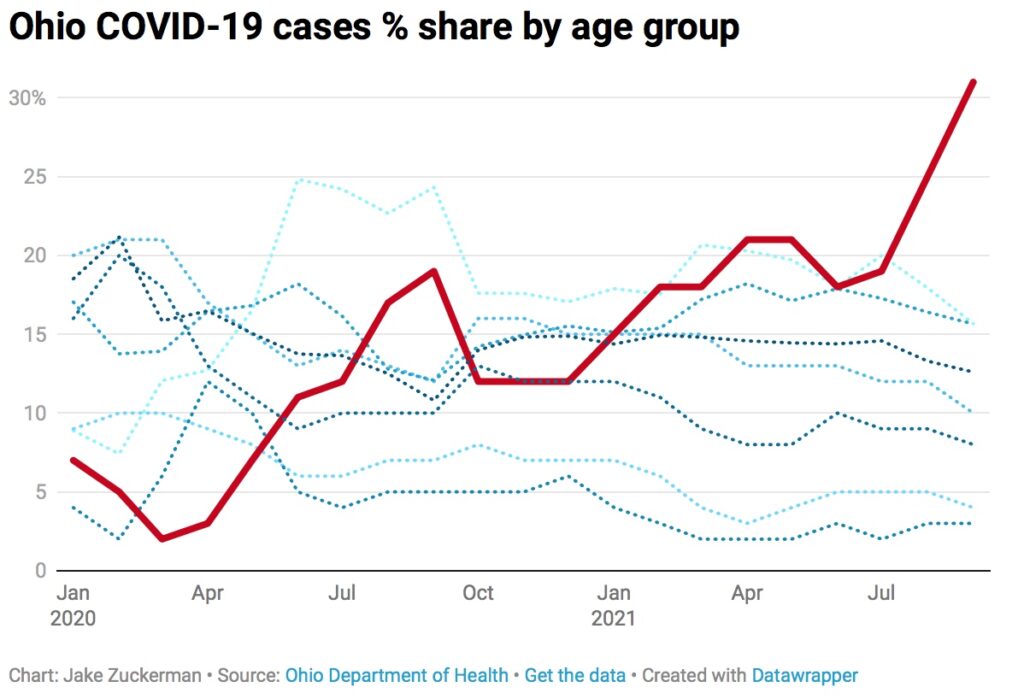
Ohioans 19 and younger are now driving the state’s COVID-19 pandemic, comprising a larger share of cases than any other age group.
Roughly one in three people who have contracted COVID-19 this month are 18 or younger, according to an analysis of state data. Those aged 20-29 are the next most prevalent cohort, comprising 16% of the month’s cases.
This comes as many schools struggle to remain open amid spiking infection and quarantine rates of students, and children’s hospitals raise the alarm about strained capacity.
At Akron Children’s Hospital, roughly 12-15 kids are being hospitalized with COVID-19 per day, according to remarks from hospital CEO Grace Wakulchik at a press briefing by members of Ohio’s children’s hospitals. At Nationwide Children’s Hospital in Columbus, 26 kids are hospitalized with the disease. Nine are in intensive care, including five on ventilators.
Several children’s hospital administrators warned Tuesday of increasingly fatigued staff and crowded facilities.
“The delta variant is not only more contagious, it is impacting kids in a fundamentally higher level than we’ve seen to date,” said Nick Lashutka, CEO of the Ohio Children’s Hospital Association.
Through most of the pandemic to date, adults 20- to 29-years old have driven the bulk of the COVID-19 caseload. Cases in children began to overtake their elder counterparts in July. Infections in September are twice as prevalent now among Ohio children as those in their 20s and three times as high as those in their 50s.
The rising prevalence of cases in children is likely a reflection of a return to school, sometimes without masks depending on the school district. State officials have declined to impose any statewide mask mandate in schools. Additionally, children 12 and under are not yet eligible for vaccination.
“It’s really clear to us as pediatricians that the risk of not wearing a mask if you’re a child in school is much greater than the risk of wearing a mask,” said Dr. Patricia Manning-Courtney, the chief of staff at Cincinnati Children’s.
“For some reason, we’re prioritizing kids not wearing masks over kids not getting COVID.”
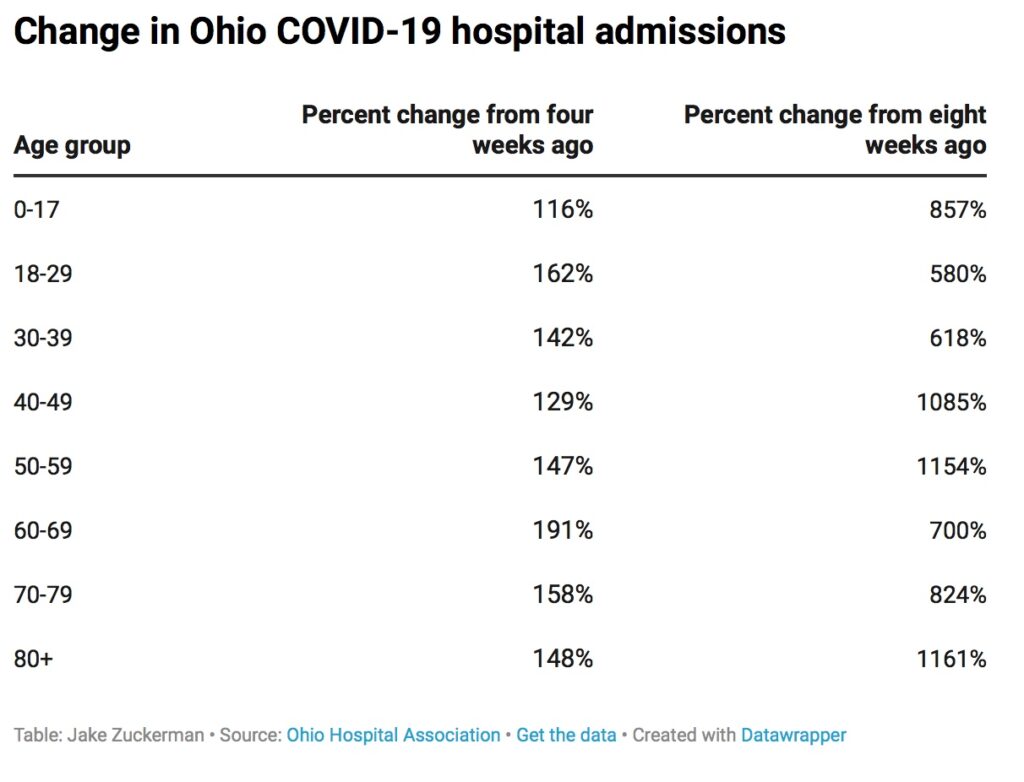
Data from the Ohio Hospital Association shows COVID-19 hospitalizations among Ohioans 17 and younger has increased 857% over the last eight weeks.
Alongside the kids, COVID-19 is surging in Ohio across all ages. More than 3,100 Ohioans are hospitalized with COVID-19, a rate not seen since January.
New case rates, positivity rates on tests, total test and other indicators reflect a case surge as well.
An analysis from Stat, a health news outlet, found Ohio ranks fourth among states in terms of how fast COVID-19 case rates are accelerating.
LIFE is Loveland’s faith and community-supported organization that provides food, financial assistance, and programs to those experiencing hardship in the greater Loveland area.
The Move2 Team represents the region’s finest properties with exceptional skill using the most innovative technologies currently available. The full-service team strives to guide clients through every step of the buying and selling journey, and their years of full-time experience have given them a clear understanding of the mindset of client needs and a thorough understanding of the regional marketplace.
The team is led by Ellie Kowalchik, who has been a consistent office sales leader for the past 20 years. She was just once again recognized as one of America’s Best Real Estate Agents by RealTrends, a Real Estate All Star by Cincinnati Magazine, and a Five-Star Real Estate Professional.
This week’s infographics show the good news for buyers.
Experience Matters
Especially Now
You deserve nothing but the best when it comes to buying or selling your home. Put our local market knowledge and expertise to work for you.