Customer service and satisfaction is paramount to my success in real estate since I began this career in 1999. My vast client base with consistent repeat and referral business supports this focus. Balance between home life, with a husband and three children and two dogs, and a business is a crucial element. Forming a family-run team in the last few years has enabled me to support the real estate needs of my clientele while still providing attention at home and in the community. You are sure to see me or my signs in Loveland where I reside and in the surrounding three county area.
Fun Fact: My husband Bryan & I trained and ran together in the Columbus Marathon in 2004. Running, traveling, and being involved in church and school related activities are my other areas of interest.
I have a passion for people, for beauty, and for Real Estate. My past career as an interior designer helps me bring my three “loves” together in serving my clients… All in a city that has become home to me over the past 18 years. Let me help make it home for you!
I am a hands-on type of agent who will gladly use my experience of rehabbing homes to get down to the details in making sure the home you want is solid and structurally sound. My former corporate business skills help me identify good investments and bring a set if strong negotiating tools to get you the best possible deal.
Homes by Email
Be the first to see new listings as soon as they hit the market!
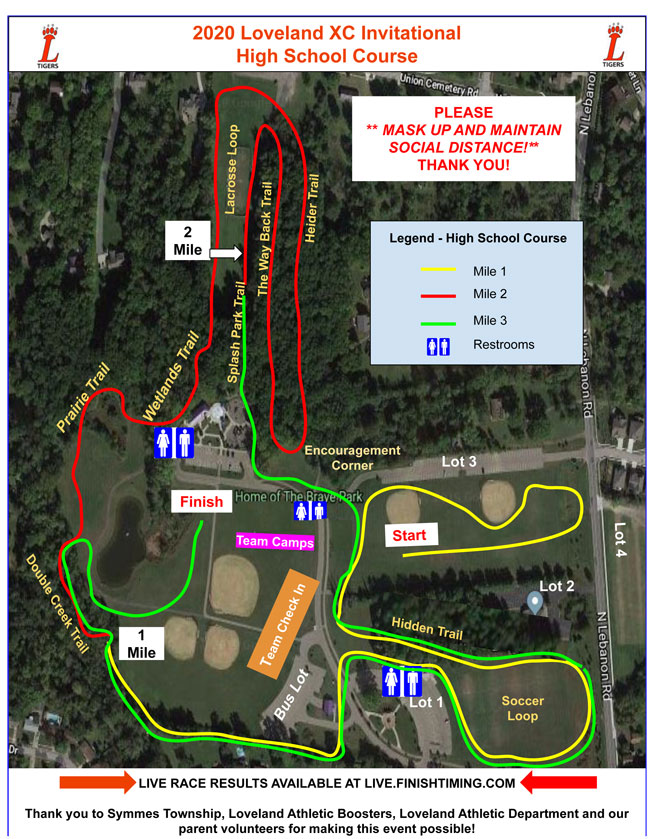
Loveland, Ohio – The Loveland High School Cross Country teams are looking forward to hosting their first of four meets this season beginning with the Loveland Invite this Saturday at Home of the Brave Park. 18 teams will compete.
The Loveland Women will compete on their home field as the just-announced, Ohio Association of Track and Cross Country Coaches, #1 Division team in Ohio. The Men are currently ranked 14.
The #1 ranking should come as no surprise. In their season opener on August 25 at the Ohio High School Athletics Association (OHSAA) Cross Country Season Opener the women beat a field of elite teams from all across the state. (Read that story below)
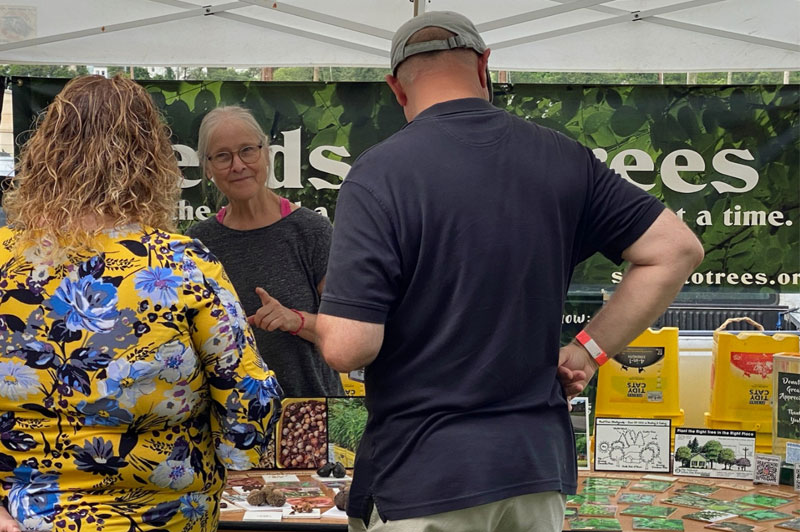
Loveland, Ohio – Resident, Cindy Kessler recently set up her Seeds to Trees booth at Paddlefest. The Ohio River Paddlefest is a project of Adventure Crew, an organization that provides outdoor recreation opportunities to inner-city teens in 24 high schools in Cincinnati and Northern Kentucky.
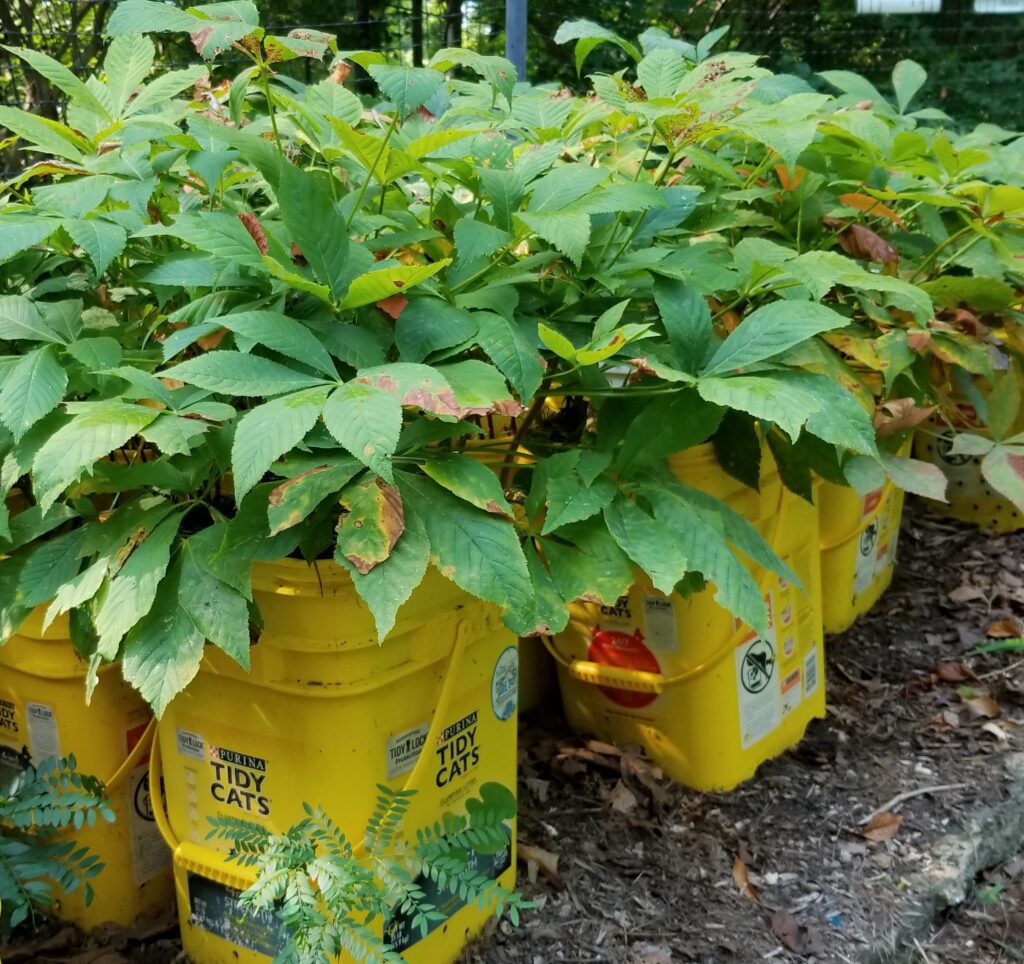
For seven years Cindy has grown trees from seed, giving the seedlings away – for free – around Loveland. With the help of three friends, over 800 seedlings were given away last year at Starbucks, Mile 42 Coffee, Graeter’s, LaRosa Pizzeria, and Narrow Path Brewery. This grassroots effort is their way of combating climate change, one tree at a time.
Cindy says that It’s easy to feel powerless considering today’s environmental degradation, but this is something tangible that anyone can do, right in their own backyard. If you want to join her project Cindy will walk you through the process.
“If many people, ideally worldwide, grew a few buckets of seedlings, and gave them away within their communities, collectively, we can make a huge impact. As the saying goes, ‘Think Globally, Act Locally,” said Cindy.
A Butler County judge ruled in favor of a woman last week who sought to force a hospital to administer Ivermectin — an animal dewormer that federal regulators have warned against using in COVID-19 patients — to her husband after several weeks in the ICU with the disease.
Butler County Common Pleas Judge Gregory Howard ordered West Chester Hospital, part of the University of Cincinnati network, to treat Jeffrey Smith, 51, with Ivermectin. The order, filed Aug. 23, compels the hospital to provide Smith with 30mg of Ivermectin daily for three weeks.
The drug was originally developed to deworm livestock animals before doctors began using it against parasitic diseases among humans. Several researchers won a Nobel Prize in 2015 for establishing its efficacy in humans. It’s used to treat head lice, onchocerciasis (river blindness) and others.
Estimated number of outpatient ivermectin prescriptions dispensed from retail pharmacies — United States, March 16, 2019–August 13, 2021. Data are from the IQVIA National Prescription Audit Weekly (NPA Weekly) database. NPA Weekly collects data from a sample of approximately 48,900 U.S. retail pharmacies, representing 92% of all retail prescription activity. Source: CDC.
Julie Smith filed the lawsuit on behalf of her husband of 24 years. He tested positive for COVID-19 July 9, was hospitalized and admitted to the ICU July 15, and was sedated and intubated and placed on a ventilator Aug. 1. He later developed a secondary infection he’s still wrestling with as of Aug. 23, court records say.
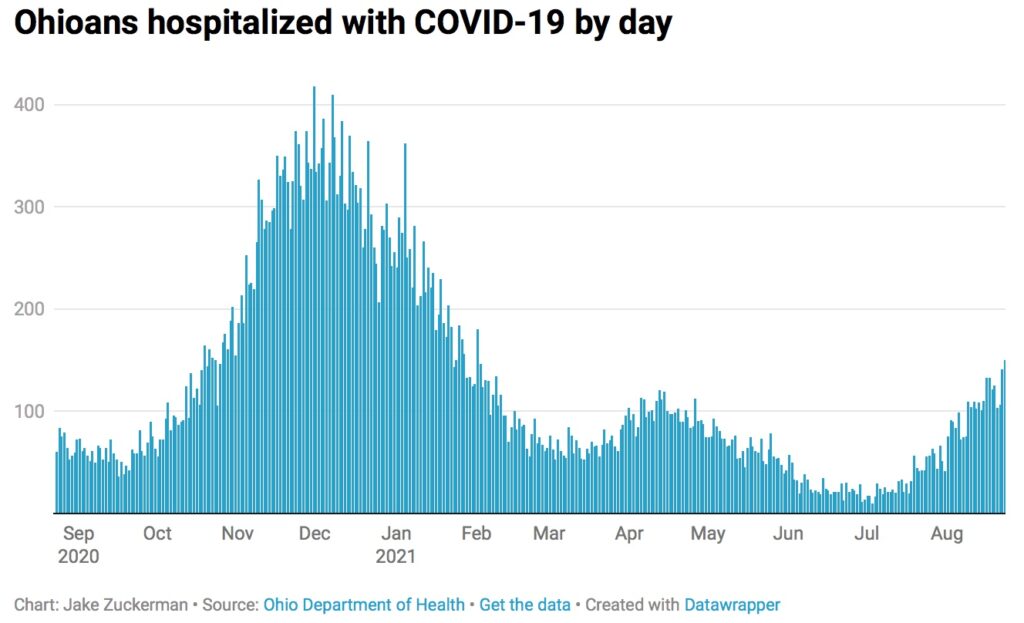
The lawsuit doesn’t mention whether Jeffrey Smith is vaccinated against COVID-19. However, overwhelming majorities of people currently hospitalized with COVID-19 are unvaccinated — data from the Ohio Department of Health shows of roughly 21,000 Ohioans hospitalized with COVID-19 since Jan. 1, only about 500 were vaccinated.
Julie Smith found Ivermectin on her own and connected with Dr. Fred Wagshul, an Ohio physician who her lawsuit identifies as “one of the foremost experts on using Ivermectin in treating COVID-19.” He prescribed the drug, and the hospital refused to administer it.
A hospital spokeswoman said she can’t comment on litigation and federal patient privacy laws prevent her from commenting on any specifics of patient care.
The Ohio lawsuit makes reference to the Front Line Covid-19 Critical Care Alliance, a nonprofit of which Wagshul is listed as a founding physician. The organization touts Ivermectin as both a preventative and treatment for COVID-19. Its “How To Get Ivermectin” section includes prices and locations of pharmacies that will supply it, from Afghanistan to Fort Lauderdale to Pennsylvania to Sao Paulo, Brazil.
In an interview, Wagshul said the science behind Ivermectin’s use in COVID-19 patients is “irrefutable.” The CDC and FDA engaged in a “conspiracy,” he said, to block its use to protect the FDA’s emergency use authorization for COVID-19 vaccines. He said the mainstream media and social media companies have been engaging in “censorship” on Ivermectin’s merits, and that the U.S. government’s refusal to acknowledge its benefits amounts to genocide.
“If we were a country looking at another country allowing those [COVID-19] deaths daily … we would have been screaming, ‘Genocide!’” he said.
Wagshul said he had no financial interest in the sale of Ivermectin.
Dr. Leanne Chrisman-Khawam, a physician and professor at the Ohio University Heritage College of Osteopathic Medicine, called the FLCCCA “snake oil salesmen.” She reviewed the association’s research on the drug’s uses and said there are some serious problems with its cited studies: many of them don’t show positive results, and those that do bear design flaws like small control groups, unaccounted for variables, non-blinded studies, not accounting for mitigations like vaccines and masking practices, and others.
“Based on evidence-based medicine and my read on this large number of small studies, I would find this very suspect, even the positive outcomes,” she said.
Several state authorities declined to comment on the matter. Cameron McNamee, a spokesman for the state Board of Pharmacy, referred inquiries to the state Medical Board, the attorney general, and the Ohio Hospital Association.
A spokesman for the state Medical Board, which licenses physicians, said its jurisdiction is over the practice of doctors and how they uphold standards of care — not lawsuits.
A spokeswoman for Attorney General Dave Yost declined comment and referred inquiries to the Board of Pharmacy and Veterinary Board.
An Ohio Hospital Association spokesman called the lawsuit “interesting” but said he’d need to confer with his legal team before commenting.
It’s unclear why the hospital didn’t mount any defense under a new law passed in the state budget this summer that grants health care providers the “freedom to decline to perform” any service which violates their “conscience,” as informed by moral, ethical or religious beliefs.
No attorney information for West Chester Hospital was available on the court docket as of Friday afternoon.
More than 3,000 Ohioans per day are contracting COVID-19 on average, the highest the rate has been since early February.
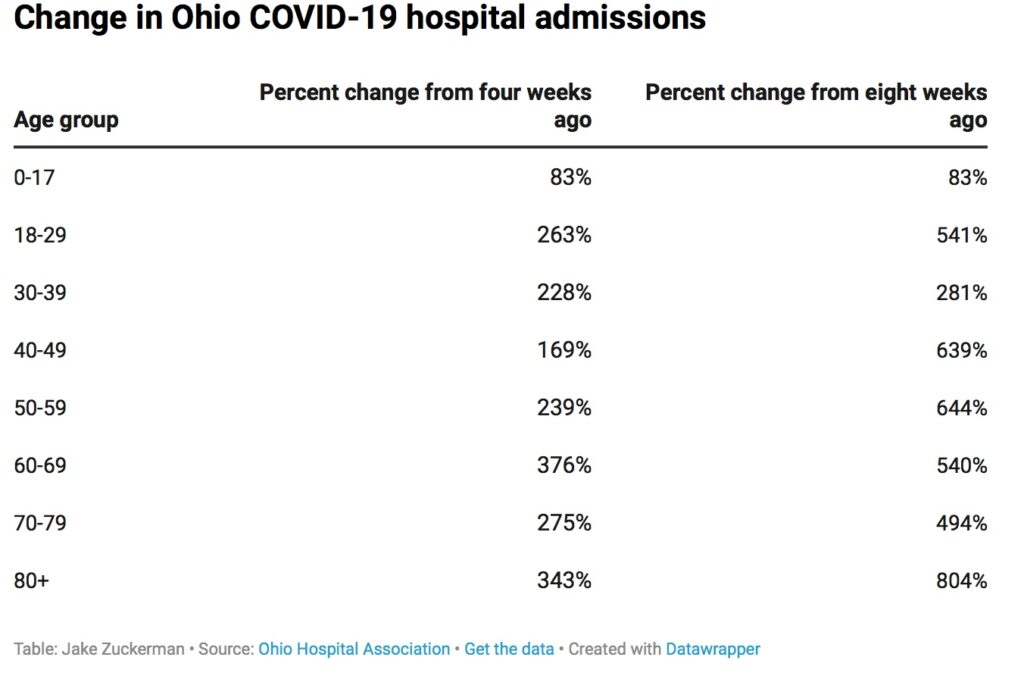
Over the last month, hospitalizations increased by between 83% and 375% by age group, according to data from the Ohio Hospital Association.
As children go back to school, more students are testing positive. Comparing the week of July 4 with the week of August 25, COVID-19 infections leapt by 909% among all Ohioans and 827% among school-age Ohioans, according to separate data from the Ohio Department of Health.
While vaccination has modestly picked up pace, Ohio’s coverage sags well below the national average. About 52% of the state has received at least one vaccine dose, compared to 61% nationally, according to a New York Times data tracker. Only 12 states have a lower rate.
The state’s hottest spots for infection are toward the southern border, where the vaccination rate sits between 30% and 40%.
All told, more than 65,000 Ohioans have been hospitalized with COVID-19. More than 20,700 have died.
“With many districts going back to school last week, the number of illnesses from Monday, Aug. 23 is troubling,” said ODH Director Dr. Bruce Vanderhoff in a news release. “As students statewide continue to return to their classrooms, this high figure should be yet another indicator to parents and families that the best protection from COVID-19 is for those 12 and older to choose to be vaccinated, and for those who aren’t vaccinated to wear masks.”
Loveland, Ohio “Today’s the day”, said Sara Dowden Wolf.
“Grant’s leg of The Cure Starts Now Relay for Research. Wolf Pack, thank you for always stepping up and supporting us and this important cause. Nothing like waking up this morning and already being halfway to our goal… and now more than halfway,” continues Sara in her FaceBook post this morning.
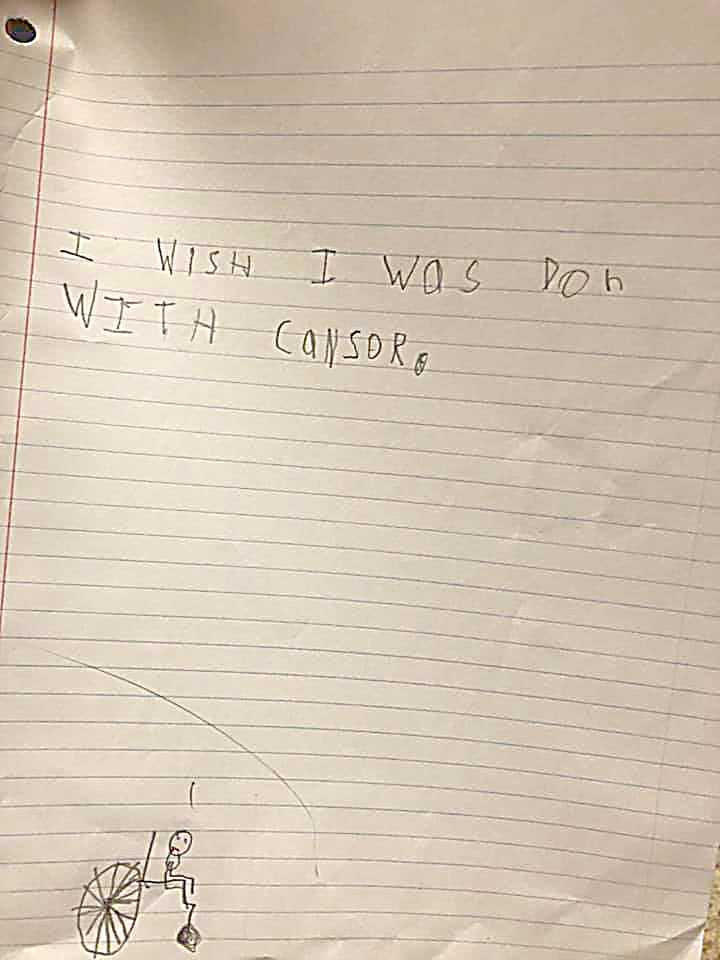
We know Grant is “done with cancer” but not in the way any of us hoped for. Funding research is essential, so one day no other families have to know this pain. My Facebook feed is filled with kids and families facing the same heartbreaking path. Progress is being made, but there are still miles to go. I’m determined to keep telling his story, so he lives on and I’m so thankful to have you all to back us again and again. Let’s keep changing the world for Grant
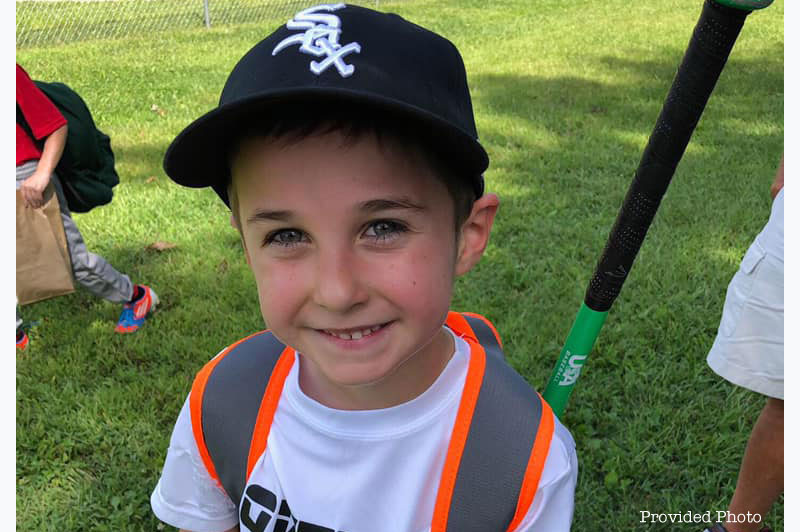
Grant Wolf was a Loveland School student and a kind-hearted, athletic 7-year-old boy who had Medulloblastoma. He loved any and all sports especially playing baseball, basketball, and golf.
In September 2019, as first grade began, Grant’s parents were concerned when he was regularly vomiting in the mornings. After several appointments and referrals, he had an MRI which revealed a brain tumor. After 9 months of Medulloblastoma treatment- proton radiation and chemo, Grant’s scans were stable and he was able to enjoy a wonderful summer. Unfortunately by September 2020, his cancer had returned in his brain and spine. He began immunotherapy and more radiation but died on January 22, 2021.
Throughout treatment, Grant bravely took on many hard things. He went through a total of 60 proton radiation treatments. Grant relearned to walk and run following brain surgery and was able to get back on the golf course with his dad and best friend several times the summer before he relapsed. He had the kindest heart and was always thinking of others.
Grant loved to build roller coasters and sports fields out of things he found around the house. He could turn any piece of cardboard into some new game or activity. He often watched videos of all the Kings Island roller coasters and knew all about them, but didn’t want to ride any of them! Grant had a special collection of stuffed dogs who accompanied him to all his appointments.
His big brother and twin sister were two of his very best friends. He found comfort in music and especially enjoyed Jack Johnson and Ed Sheeran.
Grant’s strength, courage, and smile inspired many. His family and friends, known as Grant’s Wolf Pack, are determined to make a difference in cancer research in memory of Grant.
Did you know that the moon is 238,900 miles away from the Earth?
We want to turn those miles into donations! Every $1 equals 1 mile closer to our goal, and 100% of your donations after credit card processing fees go directly to funding pediatric brain cancer research. Cancer doesn’t take a break and neither do we. There is still vital research that needs to be funded this year.
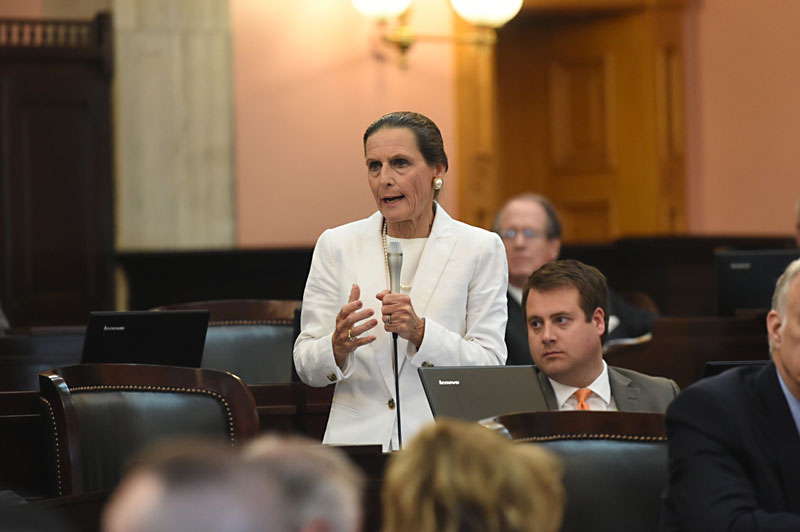
In the photo above is Rep. Schmidt speaking on the House floor regarding transgender women in sports. (Photo from Ohio House of Representatives)
State Reps. Jean Schmidt (R-Loveland) and Mike Loychik (R-Bazetta) announced on August 25 they have introduced House Bill 400, which would prohibit public schools from mandating students to wear a mask. The bill introduction comes as statewide concerns from parents have heightened as several public schools have implemented school mask mandates for children.
The Loveland City School District has mandated mask wearing for teachers, staff, all visitors, and all students below 7th grade when inside buildings. The 7-12 students are exempt from Loveland’s mask mandate.
“I’ve seen and heard constituent concerns across my district from these mask orders from public schools receiving public taxpayer dollars,” said Loychik. “Through this bill, we are reiterating their opposition as it should be up to the discretion of parents on whether their kids should wear a mask or not.”
House Bill 400 only pertains to students wearing masks and does not prohibit faculty, staff, and guests from wearing masks or from the school imposing a mandate on them, according to Schmidt’s press release about her sponsorship.
Schmidt is sponsoring the bill amid local residents upset over certain schools implementing student mask mandates.
“I’m disheartened that local school boards are mandating masks for students within the 65th House District and across our state,” said Schmidt. “I anticipate working with Rep. Loychik and several interested parties closely in the coming weeks to move this bill forward in the Legislature to address these rising concerns of Ohioans.”
The incentive is being expanded as children return to classrooms and COVID-19 cases rise dramatically in Ohio and nationwide, with the Delta variant becoming the dominant strain identified in new cases. Delta also appears more highly transmissible than previous variants and more likely to infect younger adults and children.
“Getting students 12 and up vaccinated will provide peace of mind to parents, caregivers and educators,” said Kelly O’Reilly, president and chief executive officer of the Ohio Association of Health Plans. “Vaccination is the surest way to protect teens against COVID-19.”
Working together, Ohio’s Medicaid Managed Care plans — Aetna, Buckeye Health Plan, CareSource, Molina Healthcare, Paramount Advantage and UnitedHealthcare — have made finding and getting the vaccine easier than ever with Vax on the Spot(www.covidvaxonthespot.com), a website with information on community vaccine events and walk-in opportunities at pharmacies. The site also gives details on how members can get the $100 incentive. In some locations, including many pharmacies and Federally Qualified Health Centers, gift cards are available on-site.
The campaign and the incentive are working. Ohio Medicaid Director Maureen Corcoran announced recently that the number of Medicaid members getting their first dose rose by 49% in the first week of August compared with the week before.
Since Gov. Mike DeWine challenged the Medicaid Managed Care plans in June to do more to encourage vaccination, Ohio has seen a 57% increase in the number of Medicaid members who have completed vaccination. As of Aug. 8, the number that had received at least one shot was more than 800,000.
Medicaid vaccine gift cards will continue to be available to eligible Ohioans through Dec. 31, 2021.
According to the health plans’ medical directors, shrinking the population of unvaccinated people is the most important front in the battle to contain the pandemic. So far, available vaccines have proven highly effective at preventing people from contracting COVID-19 and even more effective at preventing serious illness and hospitalization, even among Delta cases. According to the U.S. Centers for Disease Control and Prevention, almost everyone — 97% — who contracts a COVID-19 case serious enough to require hospitalization is unvaccinated.
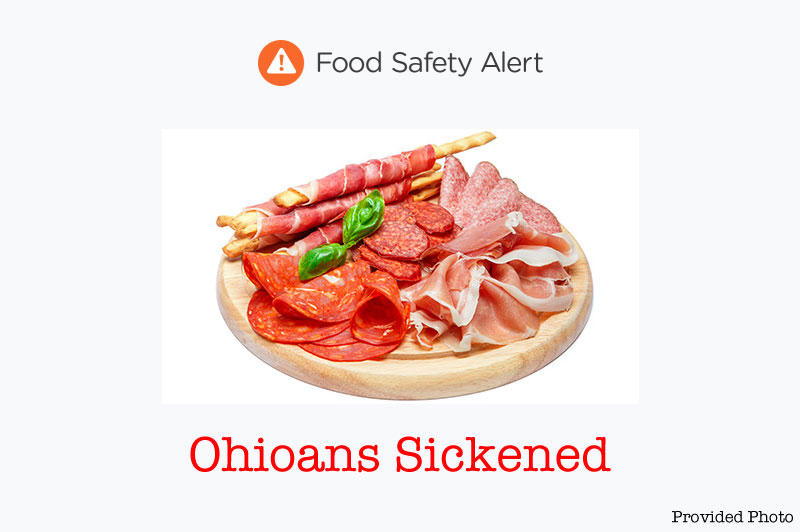
Can include uncured salami, prosciutto, coppa, or soppressata
With “best by” dates on or before February 11, 2022
This does not include Italian-style meats sliced at a deli
Ill people reported eating Fratelli Beretta brand Uncured Antipasto trays before they got sick. The investigation is ongoing to determine if additional products are linked to illness.What Everyone Should Do
Do not eat these products.
Throw them away, even if some of them were eaten and no one got sick.
If you don’t know the brand of prepackaged Italian-style meats you have at home, don’t eat them and throw them away.
Wash items, containers, and surfaces that may have touched the products using hot soapy water or a dishwasher.
Call your healthcare provider if you have any of these severe Salmonella symptoms:
Diarrhea and a fever higher than 102°F
Diarrhea for more than 3 days that is not improving
Bloody diarrhea
So much vomiting that you cannot keep liquids down
Signs of dehydration, such as:
Not peeing much
Dry mouth and throat
Feeling dizzy when standing up
What Businesses Should Do
Do not sell or serve these products.
Italian-style meats sliced at a deli are not affected by this advisory.
Wash and sanitize containers and surfaces that may have come in contact with them.
Symptoms of Salmonella
Most people infected with Salmonella experience diarrhea, fever, and stomach cramps.
Symptoms usually start 6 hours to 6 days after swallowing the bacteria.
Most people recover without treatment after 4 to 7 days.
Some people—especially children younger than 5 years, adults 65 years and older, and people with weakened immune systems—may experience more severe illnesses that require medical treatment or hospitalization.











 Funding research is essential, so one day no other families have to know this pain. My Facebook feed is filled with kids and families facing the same heartbreaking path. Progress is being made, but there are still miles to go. I’m determined to keep telling his story, so he lives on and I’m so thankful to have you all to back us again and again. Let’s keep changing the world for Grant