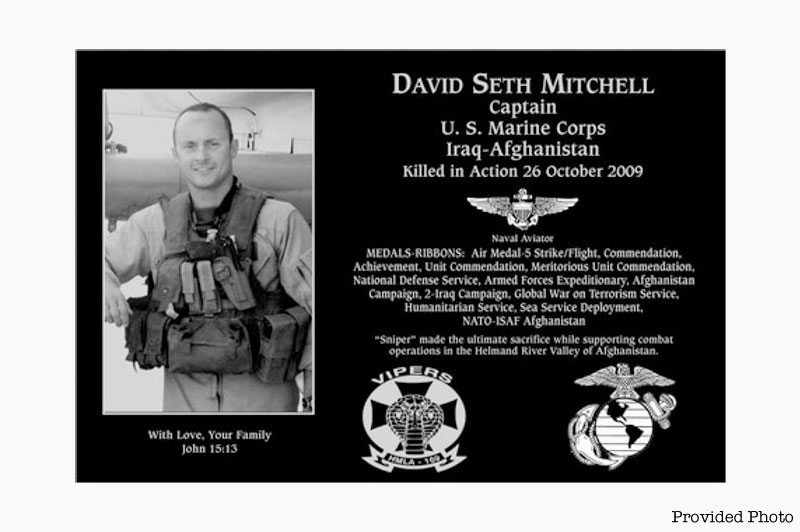
by the family and friends of Captain Seth Mitchell
Happy summer 2021 contributors to the Seth Mitchell Hero 5K. We hope your summer is going well. We are all blessed that it is going differently than last year! As always we want to keep you updated on how your investment in the scholarship campaigns are going.
Due to Covid 19 we held the 5K virtually in 2020. You guys made the event fun and meaningful. We had over 100 participants and raised a significant amount of funds, even for a challenging year.
Our scholarship committee thanks you. Each year we hope to raise enough to fund scholarships for deserving seniors from Loveland High School where Seth graduated in 1997. Because of you, we have been successful again.
Let us introduce the recipients for 2021.
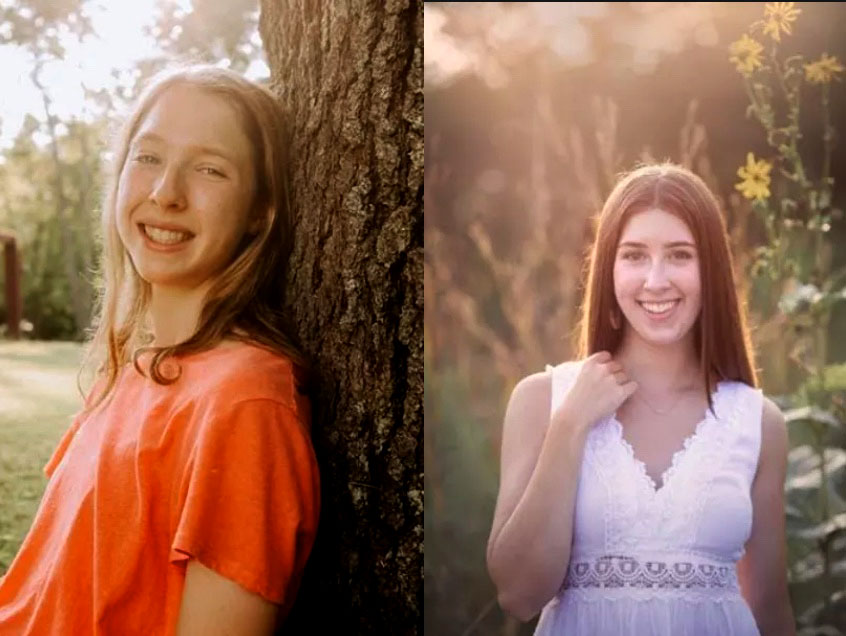
Teri Clark and Madeline Schamel (provided photos)
The Seth Mitchell Memorial Scholarship: Teri Clark has a keen interest in science and math. According to her application essay, her goal is to “treat my friends the same way Seth treated his friends, with kindness and loyalty”. Teri said that she was humbled by the opportunity to apply for the scholarship in Seth’s name. In our interview with Teri we found that she has overcome personal hardships that strengthened her and helped her find a passion to serve others by pursuing a career in the medical field.
Let Us Never Forget/Mitchell Family Scholarship: Madeline Schamel has used hard work, positivity and determination to overcome medical challenges during her high school years. One letter of reference said of Maddie, “while many teenagers facing those obstacles would choose flight, Maddie embraced the uncertainty and fights with poise and maturity beyond her years”.
Like Seth, these young women are known for hard work, determination, selflessness, kindness and loyalty. We are proud to have them pursue their dreams with a financial boost from all of you that have contributed to the Hero 5k in honor of Seth’s service and sacrifice.
Lastly, we do want to announce that the 12th Annual Cpt. Seth Mitchell Hero 5K (www.sethmitchellhero5k.org) will be held on October 16 at 11 AM in beautiful Nisbet Park in Historic Downtown Loveland Ohio.
We will also offer a virtual run again. You’ll be able to do your run/walk during the month of October from any location. The website will open soon for registrations and donations.
Thank you all and blessings be upon you,
Steve, Connie and Drew Mitchell, Family of Captain Seth Mitchell, USMC
Volunteers Katy Riehle and her sister Nancy Bolander were presented with engraved desk clocks as Volunteers of the Year for their service to the Residents of St. Paul’s Home for the Aged in Clifton.
Mother Superior Marie Edward Quinn, lsp and the Sisters who work and care for the Residents gathered to offer their gratitude and appreciation for over 15 years of volunteer service.
Katy and Nancy’s motto is similar to the US Postal Service: Neither snow nor rain nor heat nor gloom of night stays these couriers from the swift completion of their Resident Donut Tray Preparation.
They also specialize in Christmas creations which are sold at the Christmas Boutique every November at the Home.
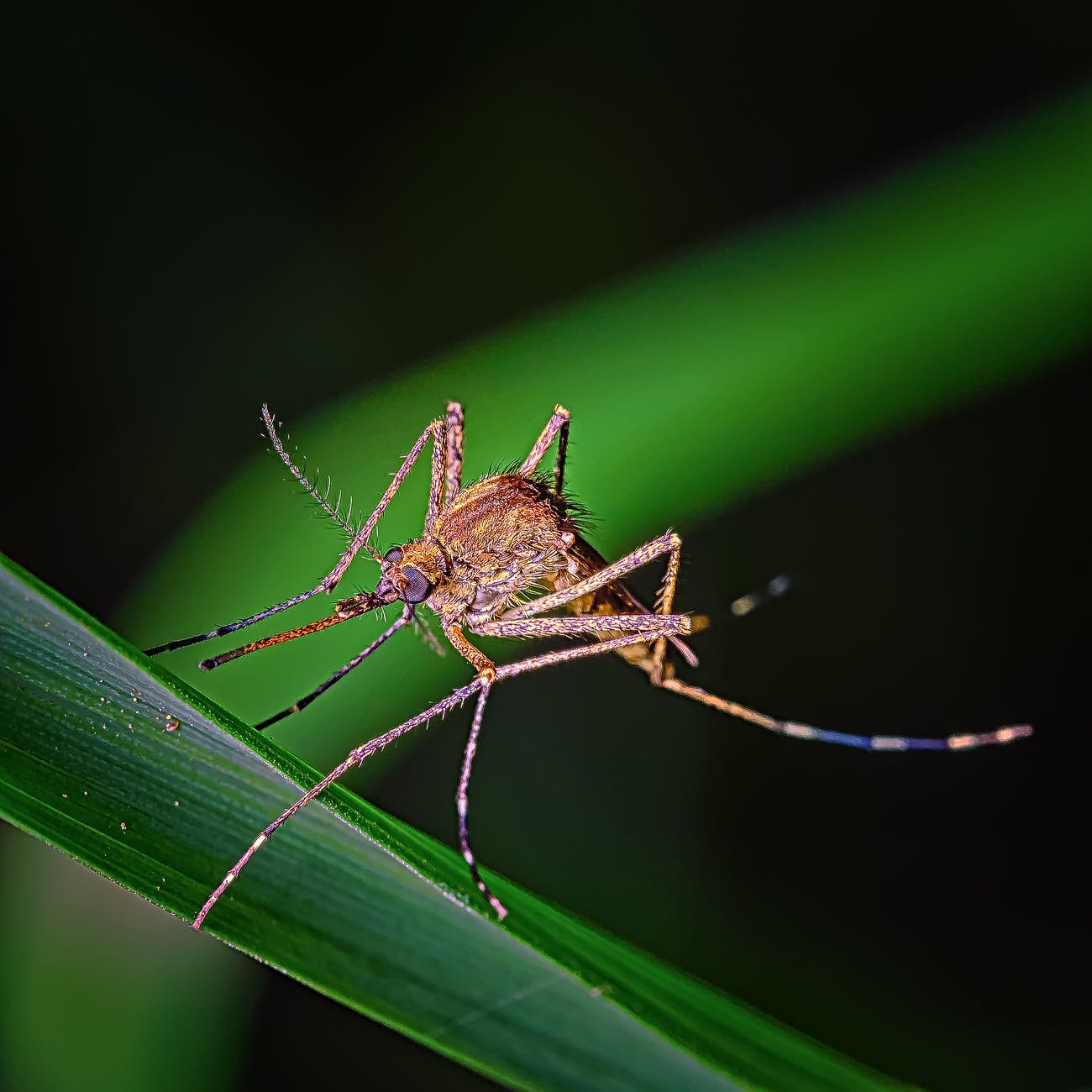
Hamilton County is reminding everyone to continue to take summertime precautions against mosquito bites after mosquitoes that were recently trapped at the Columbia Township compost facility on Hill and Dale Dr. tested positive for West Nile virus (WNV). West Nile Virus is a viral disease that can be passed from mosquitoes to humans. Hamilton County Public Health (HCPH) maintains traps throughout the County during the summer to test for the presence of disease. While this is the first positive identification in HCPH’s jurisdiction, other positive pools have been identified elsewhere in the County.
People over age 50 have the highest risk of developing severe WNV infections
Hamilton County Public Health staff will be conducting surveillance activities in the neighborhoods and commercial areas around where the mosquitoes were collected. They will be looking for areas of standing water, applying larvicide, making sure swimming pools are operating properly and advising residents on precautions they can take to avoid mosquito bites.
“We can all take action to eliminate mosquito breeding sites and take precautions to avoid mosquito bites,” Greg Kesterman, Hamilton County Health Commissioner says. “West Nile was first identified in Ohio in 2001, so it’s not new to our area, but we like to take the opportunity to remind everyone to take precautions.”
Hamilton County Public Health advises all Hamilton County residents to DRAIN, DUNK and PROTECT in an effort to reduce the mosquito population and prevent West Nile Virus:
DRAIN
Look for and drain sources of standing water on your property – litter, tires, buckets, flower pots, wading pools and similar items that could create standing water and become mosquito breeding sites.
Frequently change water in bird baths and pet bowls.
Drain small puddles after heavy rainstorms.
DUNK
Apply mosquito larvicide, sometimes called mosquito “dunks,” to areas of standing water that cannot be drained. The “dunks” are environmentally safe and won’t harm pets. Purchase them at your local hardware store.
PROTECT
Cut your grass and trim shrubbery.
Make sure screens in windows and doors are tight-fitting and free from defect.
Wear long sleeves and pants during peak mosquito hours – dawn and dusk.
Use an EPA-registered insect repellent such as those containing DEET, picaridin or oil of lemon or eucalyptus. Always follow the directions on the package.
WNV is a viral disease affecting the central nervous system that can be transmitted to humans by mosquitoes. It is important to note that most people who are bitten by an infected mosquito will never become sick. Everyone, however, should be aware of the symptoms of WNV. Symptoms may develop two to 14 days after someone is bitten by an infected mosquito.
No Symptoms in Most People. Approximately 70-80 percent of people who are infected with WNV will not show any symptoms at all.
Milder Symptoms in Some People. Up to 20 percent of the people who become infected will display symptoms which can include fever, headache, and body aches, nausea, vomiting, and sometimes swollen lymph glands or a skin rash on the chest, stomach and back. Symptoms can last for as short as a few days, though even healthy people have been sick for several weeks.
Serious Symptoms in a Few People. Less than one percent of people infected with WNV will develop severe illness. The severe symptoms can include high fever, headache, neck stiffness, stupor, disorientation, coma, tremors, convulsions, muscle weakness, vision loss, numbness and paralysis. These symptoms may last several weeks, and neurological effects may be permanent.
While all residents of areas where virus activity has been identified are at risk, people over age 50 have the highest risk of developing severe WNV infections. Anyone experiencing any of these symptoms should contact their healthcare provider for evaluation.
For more information on West Nile Virus, please contact Hamilton County Public Health at (513) 946-7800 or visit us online at www.hamiltoncountyhealth.org.
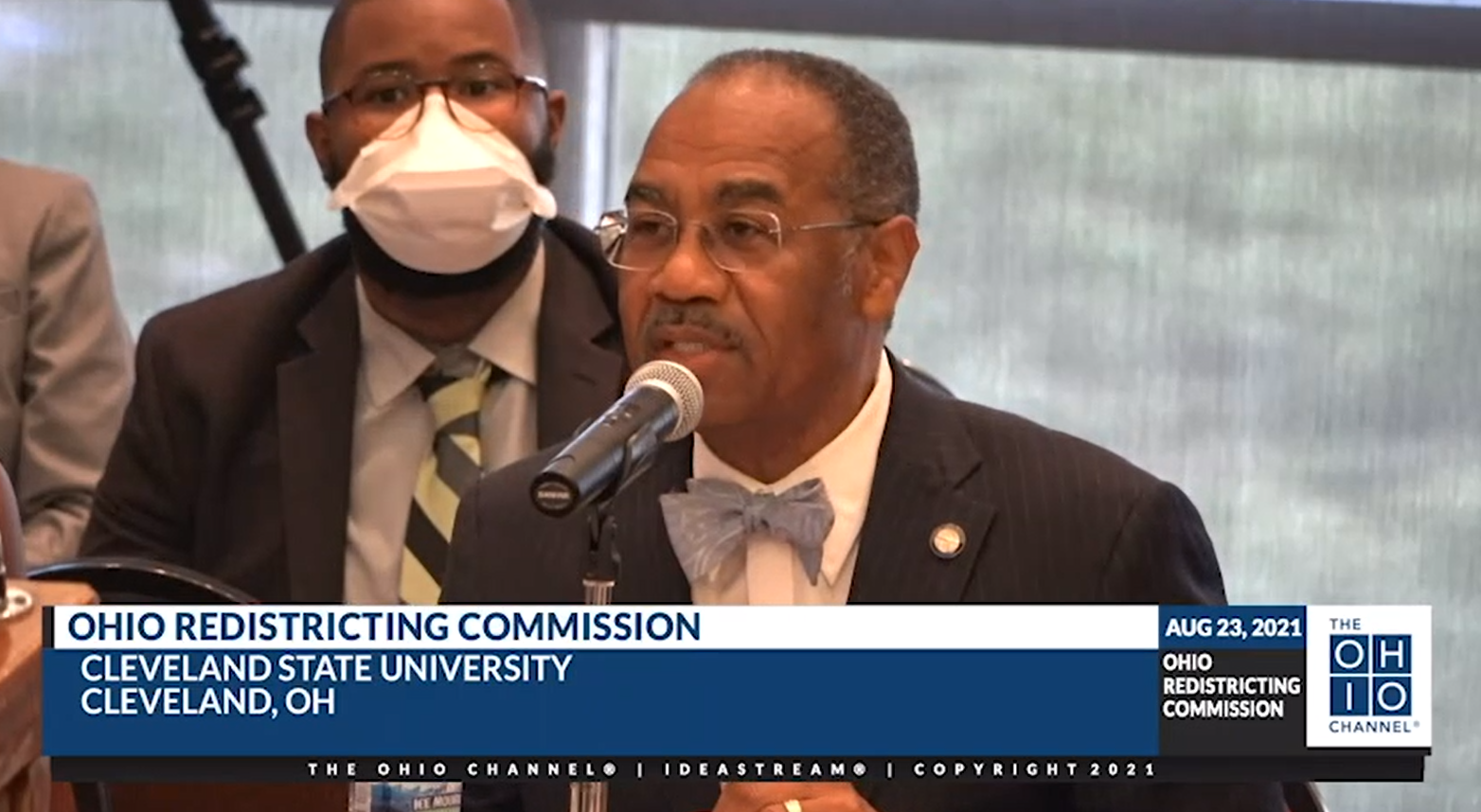
State Sen. Vernon Sykes, co-chair of the Ohio Redistricting Commission, opens Monday morning’s public hearing on redistricting on the campus of Cleveland State University. A full week of hearings will be held across the state to discuss gerrymandering in the state. Photo: The Ohio Channel
A week of double-header public hearings on redistricting began Monday in Cleveland and Youngstown, with members of the public calling for more fair districts.
Ohioans shared with the Ohio Redistricting Commission stories of unrepresentative and oddly-drawn districts (including the “snake on the lake” of Ohio’s 9th district, so-called because of it’s long, skinny appearance on the map), and urged the commission to keep the process transparent and the mapmaking fair.
“There are things that we like and things that we don’t like, but no matter how you slice it, you need to slice it fairly,” said Rita Mayhew, a retired teacher from Lorain.
Speakers at the hearings on the Cleveland State University and Youngstown State University campuses, touched on the impact of redistricting and gerrymandering on everything from education to abortion rights and being an informed voter.
Former Democratic state representative, John Patterson, co-author of the Fair School Funding Plan and Ashtabula County resident, said at the Youngstown hearing that the current legislative districts “lend themselves to candidates who either lean left or lean right, and in the extreme, force potential candidates to run further left or further right.”
“We need to work together, but we need the opportunity to do just that,” Patterson said. “And fairly drawn districts give us that opportunity.”
Some in the packed meeting rooms expressed outrage as members of the commission sent proxies, rather than attending themselves.
“We have put aside everything to come here today, and we are not getting the same response from the people who are supposed to be on this commission,” said Cleveland Heights resident Sue Dyke.
At Monday morning’s Cleveland hearing, Auditor of State Keith Faber attended, along with House Minority Leader Emilia Sykes, D-Akron, and commission co-chair, state Sen. Vernon Sykes, D-Akron.
House Speaker Bob Cupp, Secretary of State Frank LaRose, Gov. Mike DeWine and Senate President Matt Huffman all sent designees in their place.
For Cupp, state Rep. Scott Oelslager, R-North Canton, stood in; LaRose sent chief of staff Merle Madrid. DeWine’s chief legal counsel Matthew Donahue sat in on his behalf, and Huffman sent state Sen. Theresa Gavarone, R-Bowling Green.
At the afternoon meeting in Youngstown, Faber and Sen. Sykes were both in attendance, but stand-ins were still present for Cupp, DeWine, LaRose and Huffman. State Rep. Timothy Ginter, R-Salem, was in for Cupp this time and state Sen. Kirk Schuring, R-Canton, was in for Huffman.
Donahue was again in for DeWine, and Madrid repeated his proxy appearance for LaRose.
Minority Leader Emilia Sykes also sent a proxy to that meeting, state Rep. Michele Lepore-Hagan, D-Youngstown.
One speaker at the Youngstown hearing noted that DeWine was attending a practice with the Cincinnati Bengals. A number of sports reporters posted pictures and videos of DeWine on the sidelines of Monday’s practice.
Official statement (from Governor's press secretary) on Governor Mike DeWine's visit to #Bengals camp:
The Governor enjoys supporting all Ohio professional sports teams. He visited Browns camp last week and was looking forward to his visit to Bengals camp today. pic.twitter.com/cCTrG0ph5H
DeWine’s spokesperson Dan Tierney said the governor intends to take into consideration the information given at the hearings, but also said the hearings “are not official committee hearings, these are listening sessions.”
Asked whether the DeWine will attend any of the hearings, Tierney said that is “yet to be determined” and his calendar has not been finalized.
A spokesperson for Huffman said the Senate president chose to let representatives from the districts where the hearings were occurring to attend in his place.
“President Huffman believes this is an important opportunity to give members from the regions around the state where the hearings are held to participate in a process that only happens once in a decade,” said spokesperson John Fortney.
Fortney said Huffman plans to attend the hearing set to happen Thursday at Ohio State University’s Lima campus, in his district.
LaRose’s office said the secretary “was supposed to be on orders from the U.S. Army, but as with many things with the Army, those are constantly changing and we expect him to be able to attend upcoming hearings.”
A spokesperson Cupp did not respond to a request for comment.
Another criticism hitting commission members was the time of the meetings, which some speakers said kept those who work during the day and can’t afford to take a day off from being able to speak at their local meetings.
“The hope is that you all understand that their interests need to be represented even though they’re not here, even though they may not have voted for you, even though they may not have voted,” said Reginald Williams, an attorney and Shaker Heights resident.
Even the one person in either hearing who publicly denied the idea of gerrymandering and charged that Republicans had instead “dominated” elections in the past, causing their supermajority, said the commission should have more hearings. Those hearings should be held at locations other than universities, he said.
“You do not have a representative cross-section of Ohio in this room,” said Thomas Hach, a Concord resident. “This is wrong, you need to have another week of hearing from the people.”
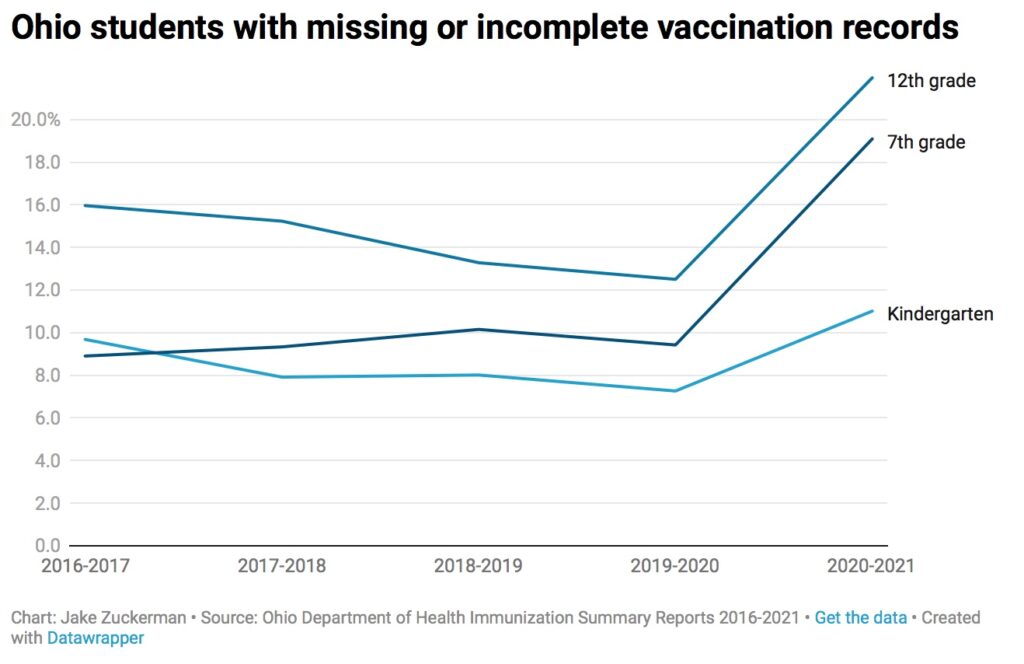
School vaccination records were missing or incomplete among roughly 1 in 5 sampled Ohio middle and high school students last year, despite state law requiring local boards of education to track immunizations records of all enrolled students.
All Ohio students, per state law, must be vaccinated against mumps, tetanus, polio, measles, Hepatitis B, chicken pox and meningococcal diseases. They can claim exemptions in writing due to natural immunity from prior infection; a medical contraindication; or for “reasons of conscience, including religious convictions.”
Though the law requires local boards of education to keep immunization summaries available on request for inquiring parents, schools statewide are failing to track vaccination among tens of thousands of students.
“The question is, why are the schools not collecting this data?” said Madhav Bhatta, an epidemiologist at Kent State University. “If it’s required by law that every child either get vaccinated or have a medical exemption … then why is there missing data?”
In the 2020-2021 school year, when a nascent pandemic shuttered schools and doctors’ offices, only 76% of 12th grade students submitted proof of receiving the meningococcal vaccine, according to immunization data obtained in a public records request from the Ohio Department of Health. The vaccine protects against meningitis and other, sometimes-lethal illnesses caused by the same bacteria.
About 22% of 12th graders had no exemption on file, leaving the picture unclear whether communities have high enough vaccination coverage to protect students.
That same year, only 78% of 7th grade school students statewide showed proof of receiving all vaccinations. Data was missing or incomplete on 19% of all 7th graders.
The missing data spans beyond the threshold for herd immunity for some vaccines. For instance, in the 2019-2020 year, 7.2% of kindergarteners and 9.4% of 7th grade students didn’t have all vaccination records or exemptions on file.
According to the World Health Organization, a community loses “herd immunity” — a threshold of community protection where a disease lacks viable hosts to spread — against measles when coverage falls below 95%. About 2.5% of students claimed a “conscience” objection, and a fraction of a percent claimed medical contraindications — which means they have diagnosed conditions where certain medical treatments such as a vaccine may cause harm.
“If [students with incomplete data] don’t have it on file because they are not vaccinated, that’s a problem,” Bhatta said. “We want as high a level of vaccination as possible to reduce the risk of transmission within a community.”
CDC research shows childhood immunization rates dropped significantly in 2020. However, the problem predates the pandemic. State data shows between 7.2% and 12.5% of sampled Ohio students did not show proof of vaccination or claim any exemption in 2019-2020 either.
The reports also lack data on vaccination by race or socioeconomic status, two major social determinants of health.
When contacted, different state agencies passed the blame or pointed fingers at county school boards, which are responsible for collecting data at the local level.
The COVID-19 vaccine data stands in stark contrast to the roughly 3% of public-school students who formally claim a nonmedical exemption year over year, raising more questions about the missing data.
Concerns about outbreaks of rare diseases among unvaccinated communities isn’t just a hypothetical.
Widespread vaccination eradicated measles in the U.S., but the virus can cause outbreaks when a host imports and spreads it among unvaccinated people. In early 2014, two unvaccinated Amish men returned to Knox County from the Philippines, unknowingly carrying measles, a highly infectious but vaccine-preventable disease. Amish communities tend to abstain from vaccination.
The two men seeded an outbreak that caused 383 infections in nine counties over four months, according to a report in the New England Journal of Medicine. About 90% of the victims were unvaccinated. Health officials mounted an awareness campaign and surged in more than 12,000 MMR vaccine doses for some 10,600 people to eventually smother the outbreak.
Researchers also note that unvaccinated people are not randomly distributed. Rather, they tend to concentrate in certain areas. Thus, statewide vaccination numbers can mask the vulnerability of some specific counties.
The missing data is a “significant concern,” according to Amy Bush Stevens, vice president of the Health Policy Institute of Ohio.
HPIO analyzed the data obtained from the Ohio Department of Health. According to its analysis, students in non-Appalachian, rural communities are most likely to claim exemptions to vaccination mandates. Students in metropolitan counties are most likely to not submit their vaccination records.
Screenshot from Health Policy Institute of Ohio analysis of Ohio Department of Health Immunization Summary Report data.
The missing data blurs a critical picture of whether students are protected, she said.
“Childhood vaccinations are a highly effective way to prevent infectious diseases among kids that have killed many children in the past,” she said.
Who’s to blame?
The law requires local boards of education to provide a summary of student immunizations to the state health director every year.
When contacted, both the Ohio Department of Education and the Ohio Department of Health sidestepped blame and pointed at the local schools.
Alicia Shoults, an ODH spokeswoman, said ODH provides funds for local health departments to do “assessment site visits for compliance.” The pandemic, however, limited this practice, and officials are still reviewing data to determine why so many students’ immunization records were missing last year.
“Ultimately, at the local level, schools are responsible for enforcement,” she said.
The Ohio Capital Journal requested data on school vaccination exemptions in May from the Ohio Department of Education. Spokeswoman Mandy Minick initially stated no such data exists. When asked about the data later obtained from ODH, its missing components, and the state law that requires it, she deflected blame.
The law prescribes roles to local schools and the state health director, not ODE, she said.
“The Department of Education does not have a prescribed role in the collection of this data,” Minick said.
A spokesman for the Ohio School Boards Association reviewed the immunization data but said he didn’t have anything to add.
OCJ contacted six county school boards overseeing schools with high rates of incomplete data. Only Youngstown City School District responded.
Of 152 seniors at Chaney High School in 2020-2021, 122 didn’t submit proof of vaccination or notice of exemption for the meningococcal vaccine — the only vaccine students must receive while in high school.
In the 2018-2019 school year (the 2019-2020 data is not broken out by high school), 89 of 158 students were missing meningococcal vaccine records.
If a meningitis outbreak emerged, officials wouldn’t immediately know who’s protected and who isn’t, costing precious time as vaccines are surged in.
Denise Dick, communications director for Youngstown City Schools, said while the pandemic worsened things, there has been a historical problem getting families to submit paperwork related to vaccination. However, the district is establishing in-school, optional vaccination appointments for a full spectrum of shots.
No one is forced to vaccinate, she said, but the goal is to make it as easy as possible for students. In the meantime, she acknowledged the district is flying blind as far as protection against infectious disease.
“Whether they’re not getting them, or they’re not giving us the record, we just don’t know that,” she said.
Solutions?
Amy Bush Stevens, from HPIO, has the fixes large and small.
On the mechanical side, HPIO analyzed a 2012 CDC survey of states and found Ohio is one of 18 states that doesn’t require health care providers and payers to report immunization data.
Some choose to, but others don’t. Mandatory reporting, she said, would clear the air on who’s vaccinated and who isn’t. (An ODH spokeswoman did not respond to an interview request with an administrator of ImpactSIIS, the state’s immunization information system.)
The current system, Stevens said, puts the burden on parents to submit records. For parents, especially those with lower incomes who move more often or change physicians, it’s too easy for documentation to get lost in the shuffle.
Another idea: tie reimbursement funding from Medicaid managed care plans more strongly to vaccination rates. More vaccination now equals lower costs of care down the line. And more outreach to eligible families to the Children’s Health Insurance Plan, which covers childhood vaccination, would help as the rate of uninsured children ticks up in Ohio.
And then there are structural changes. Public health departments are chronically underfunded in Ohio and one of the few fail safes for low-income, undocumented, or uninsured families. The Columbus Dispatch reported last year that Ohio spends less per capita on public health than all but three states.
“Anything we can do to increase the public health workforce will help with that and make sure that kids with no other source of care get their childhood immunizations,” Stevens said.
Other pending legislation would ban “vaccine passports” related to COVID-19. Discussion of the bills among proponents often dubiously characterizes a heavy-handed government forcing vaccines on the unwilling.
Among health experts, however, the reality is simple: Less vaccination equals more infectious disease.
“If you don’t rely on the school system to report — that’s the only way we could get a semblance of aggregated data,” Bhatta said.
Dr. Stephanie K. Siddens Photo by the Ohio Department of Education
A new interim state superintendent will hold down the fort at the Ohio Department of Education, following the departure of the previous interim superintendent.
Dr. Stephanie K. Siddens, currently the senior executive for the state’s Center for Student Supports, will take over in September, after current superintendent Paolo DeMaria officially retires. The Ohio State Board of Education approved Siddens as interim head at a special meeting on Monday.
Siddens has been with the Ohio Department of Education since 2006, working as assistant director and director for the Office of Early Learning and School Readiness, and as senior executive director for the Center for Curriculum and Assessment, before taking her current job.
Deputy State Superintendent John Richard had previously been picked by the state school board to fill the interim spot, but on August 10, Richard announced he’d be leaving the department.
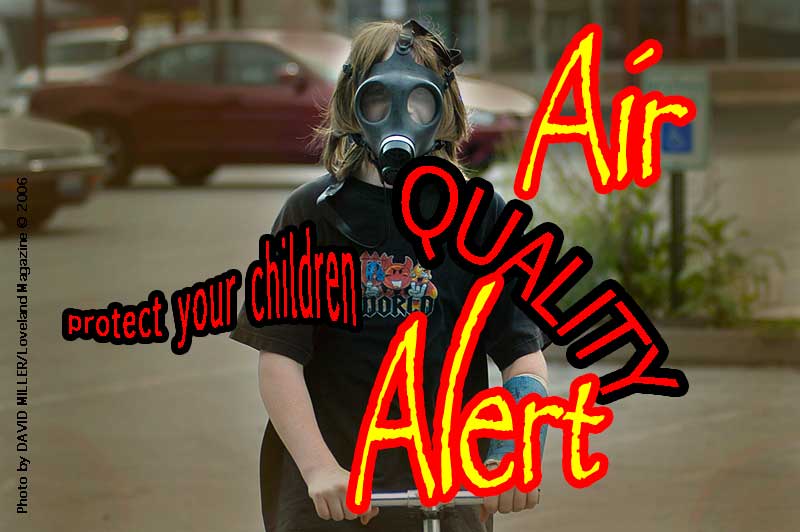
Loveland, Ohio – The Southwest Ohio Air Quality Agency has issued an Air Quality Alert for Wednesday, August 25 for the Loveland, Ohio Area.
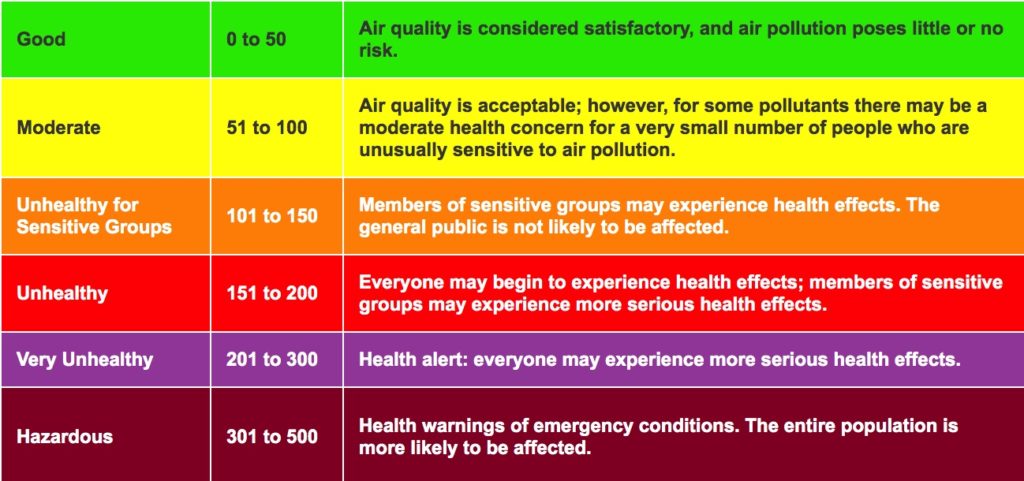
The Air Quality Index is predicted to reach 105.
The Agency expects to see levels of ozone in the “unhealthy for sensitive groups” range on the Air Quality Index.
Active children and adults, and people with respiratory diseases, such as asthma, should be avoiding all outdoor exertion; everyone else, especially children, should limit outdoor exertion.
Activities for children, who can be especially harmed by high levels of ozone because of their developing lungs and that some activities such as sports result in them breathing in quite a large amount of the chemical irritants should be suspended.
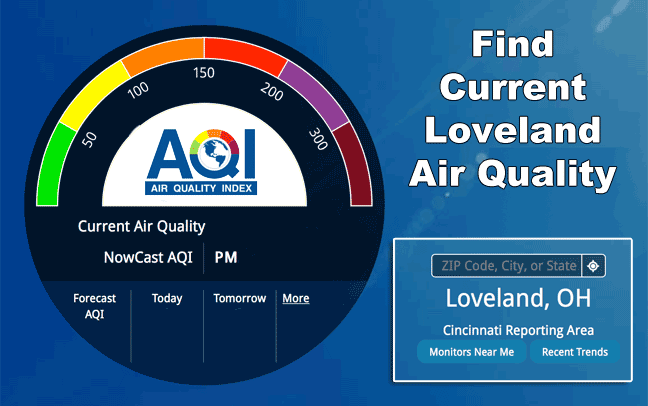
To keep informed about Loveland’s hour-by-hour air quality you can always look for this image on our Home Page or use this LINK.
On Air Quality Alert days, everyone can help reduce ozone formation by taking the following actions:
• Take the bus, carpool, bike, or walk instead of drive.
• Refuel your vehicle after 8 p.m.; do not top off when refueling and tighten the gas cap.
• Do not idle your vehicle; exhaust contributes considerably to ozone formation.
• Combine trips or eliminating unnecessary vehicle trips.
• Keep your vehicle maintained with properly inflated tires and timely oil changes.
• Avoid use of gasoline-powered lawn equipment on Air Quality Alert days.
• Avoid use of oil-based paints and stains on Air Quality Alert days.
• Never burn leaves or other yard trimmings.
• Suspend use of fire pits, campfires and charcoal grills on Air Quality Alert days.
• Conserve electricity by turning out lights and unplugging unused appliances and electronics.
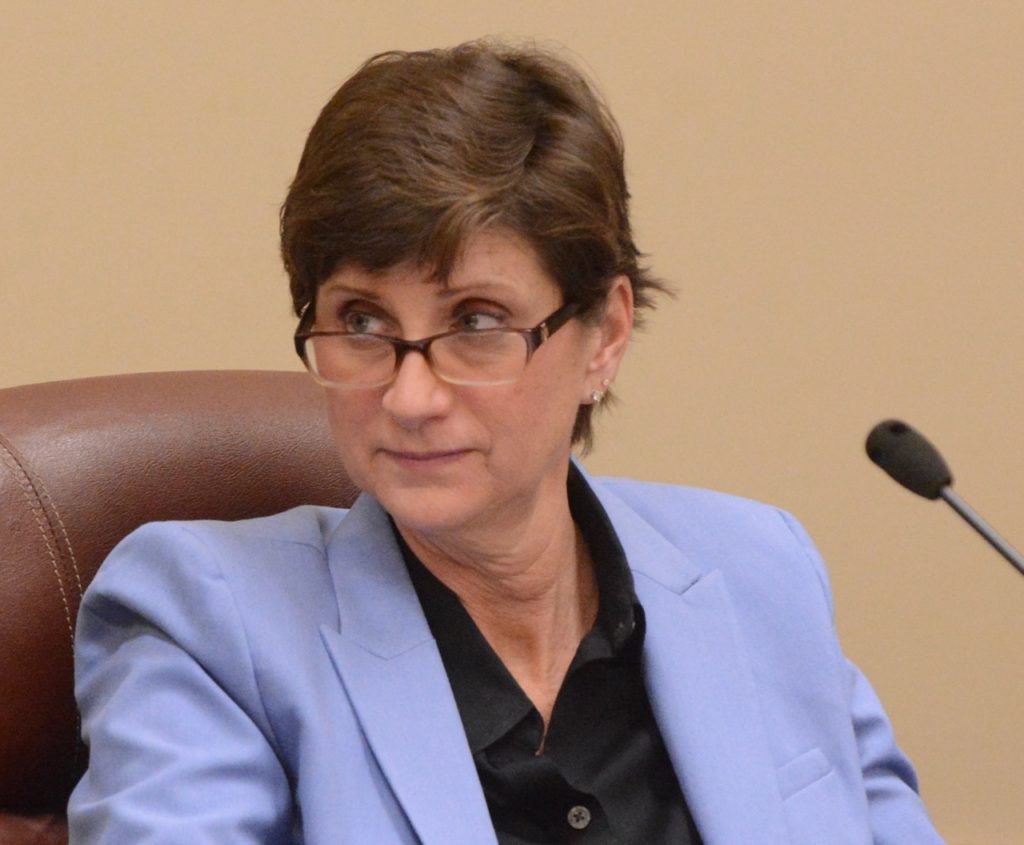
Loveland, Ohio – “I have reviewed the CED application and the benefits it represents to the Loveland Madeira Road Business Corridor. Based on this review, I am submitting the application to City Council with a recommendation of approval and request that City Council schedule a public hearing to be held on September 28, 2021, to allow for public comment on the application,” Mayor Kathy Bailey said in a recent memo to Council.
Loveland Mayor Kathy Bailey (Loveland Magazine File Photo)
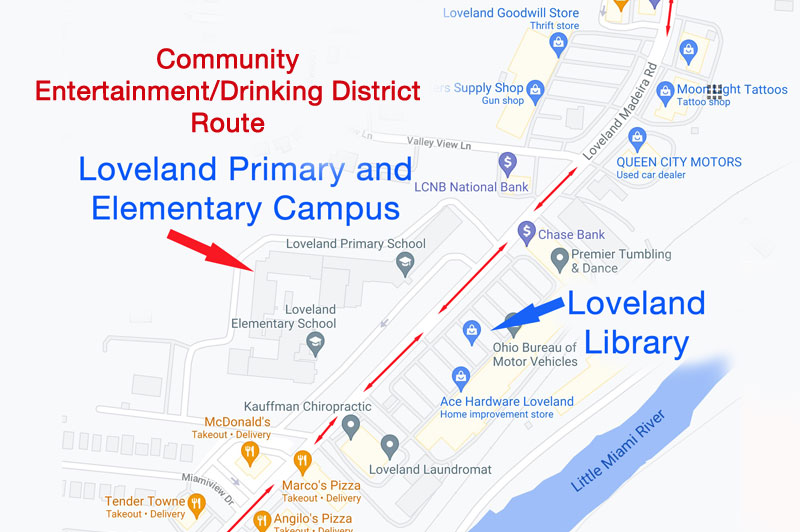
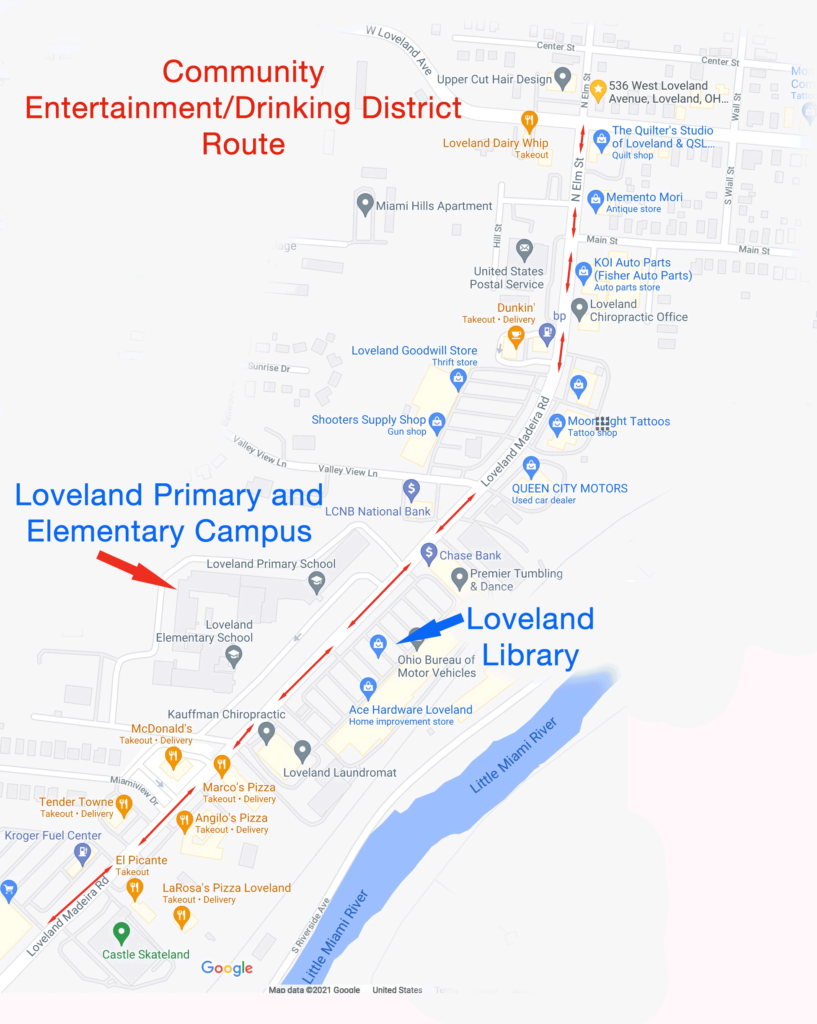
The drinking district, or “Community Entertainment District” (CED) within the Loveland Madeira Road business corridor would create 10 new D-5J liquor permits.
At the August 24 council meeting, City Manager Dave Kennedy described the effort as a new pool of liquor licenses, called D5-J, “…to help create a long and sustained turnaround for the Loveland Madeira Road business corridor.” He said it could expand the corridor’s opportunities for dining and entertainment-type businesses.
Mr. Kennedy added that, if a CED is created, a D5-J would cost the applicant a $100 processing fee and a permit fee of $2,344, a savings of $27,000.
The proposed district would encompass 54.029 acres between the intersection of West Loveland Avenue to Kroger, including all of the city’s Chestnut Street parcels. If approved, it would allow for ten D5-J liquor permits to be available in the district. The City council must: approve or disapprove the application.
If Council moves forward with the process they will set a date and time for a public hearing regarding the application.
Kennedy told Council that the CED could easily be expanded in the future. He said there would be a maximum of fifteen D5-J licenses in one district.
Nearly two in three age-eligible teenagers remain unvaccinated against COVID-19 as summer ends and the disease looms over its third consecutive school year.
Spokespersons for the state departments of health and education said they did not know what percentage of students enrolled in public schools are vaccinated.
However, looking at the total population (which would include homeschooled students), more than 62% remain unvaccinated.
“As of today, there are 390,903 Ohioans age 12-18 who have started the vaccination process,” said Ohio Department of Health spokeswoman Alicia Shoults. “This represents 37.5% of that age group.”
Despite plans to attend classes in close contact with their peers several days per week, teenagers are the least vaccinated age cohort — surpassing 20-29-year-olds (44%) and 30-39-year-olds (51%).
The Pfizer/BioNTech vaccine was authorized for use in people aged 16-and-up in mid-December, though most states restricted access for elder and sicker residents through early 2021. The U.S. Food and Drug Administration authorized its use on children 12-15 on May 11.
At a press conference last week, Gov. Mike DeWine said a communal goal of keeping students in school for in-person learning is “threatened” by the hyper-transmissible Delta variant of COVID-19. He repeated a recommendation from ODH that students either seek vaccination or wear a mask at school.
“The best way to make sure a child can stay in school and not have his or her classes interrupted, is for that child to be vaccinated,” he said. “If that child cannot be vaccinated, the best way to ensure a good school year for that child is for that child to wear a mask while in class.”
Loveland, Ohio – The Southwest Ohio Air Quality Agency has issued an Air Quality Alert for Tuesday, August 24 for the Loveland, Ohio Area.
The Air Quality Index is predicted to reach 105.
The Agency expects to see levels of ozone in the “unhealthy for sensitive groups” range on the Air Quality Index.
Active children and adults, and people with respiratory diseases, such as asthma, should be avoiding all outdoor exertion; everyone else, especially children, should limit outdoor exertion.
Activities for children, who can be especially harmed by high levels of ozone because of their developing lungs and that some activities such as sports result in them breathing in quite a large amount of the chemical irritants should be suspended.
To keep informed about Loveland’s hour-by-hour air quality you can always look for this image on our Home Page or use this LINK.
On Air Quality Alert days, everyone can help reduce ozone formation by taking the following actions:
• Take the bus, carpool, bike, or walk instead of drive.
• Refuel your vehicle after 8 p.m.; do not top off when refueling and tighten the gas cap.
• Do not idle your vehicle; exhaust contributes considerably to ozone formation.
• Combine trips or eliminating unnecessary vehicle trips.
• Keep your vehicle maintained with properly inflated tires and timely oil changes.
• Avoid use of gasoline-powered lawn equipment on Air Quality Alert days.
• Avoid use of oil-based paints and stains on Air Quality Alert days.
• Never burn leaves or other yard trimmings.
• Suspend use of fire pits, campfires and charcoal grills on Air Quality Alert days.
• Conserve electricity by turning out lights and unplugging unused appliances and electronics.