Author: Ohio Capital Journal

  • Ohio Republicans start the year by throwing public education under the school bus

    Ohio Republicans start the year by throwing public education under the school bus

    Ohio Gov. Mike DeWine gets off a school bus as part of the first Ohio School Bus Safety Working Group meeting at the Ohio Department of Public Safety Atrium on Sept. 11, 2023. (Photo by Megan Henry, Ohio Capital Journal).

    Commentary

    by Marilou Johanek – Ohio Capital Journal

    It didn’t take long. The new legislative session began in Columbus with Republican chieftains in the state throwing the future of public education in Ohio under the school bus.

    First it was the billion-dollar voucher king, Ohio House Speaker Matt Huffman, to hedge his bets on giving Ohio’s 611 school districts what they need to provide a quality education to the 1.7 million students they serve.

    Then it was Huffman’s patsy in the executive branch, Ohio Gov. Mike DeWine, who added his two cents worth of wishy-washy about how a leaner state budget ahead means something’s gotta give — like fully funding the education system used by the vast majority of Ohio families and their children. “Sometimes these are very, very difficult, difficult choices,” said the gutless wonder. What leadership.

    Educating future generations of Ohioans with high-quality public schools is your job, governor. It’s the No. 1 responsibility of the state to ensure a thorough and efficient system of funding for public schools. ‘Says so right in the Ohio Constitution. It also says, “no religious or other sect, or sects, shall ever have any exclusive right to, control of, any part of the school funds of this state.” But DeWine and his puppet master in the Ohio House ignored that part years ago when the state began diverting hundreds of millions of education funds to private and mostly religious schools.

    Clearly, the politicians calling the shots in state government have no regard for the state constitution. Adhering to the rule of law is optional when political power is absolute. Huffman, who thumbed his nose at the Ohio Constitution on fair redistricting (to pull off even more egregious gerrymandering in legislative and congressional districts) is doing the same thing on adequately funding public education.

    He’s looking to cut revenue to public schools while spending a ton of tax dollars on private school vouchers — with aspirations to fund more private school facilities to increase demand for those vouchers. Call it the Great GOP Phase-out of Public Education. Last week, Huffman dropped a calculated bombshell to prepare Ohio’s public-school districts for another financial hit from the state.

    YOU MAKE OUR WORK POSSIBLE.


    The Lima Republican said the state couldn’t afford to fully fund public schools or finally fix a school funding formula ruled unconstitutional nearly three decades ago. The Ohio Supreme Court’s 1997 ruling said the state’s failure to provide and distribute sufficient resources for public education and its over-reliance on local property taxes to cover that shortcoming violated the law.

    Yet Ohio lawmakers never remedied the problem. School districts had to keep going back to voters just to maintain and operate local schools. Homeowners carried the weight of school funding, not the state. They were/are understandably tapped out on school levies, especially as changes in property evaluations jack up tax bills.

    But in 2021, after years of collaboration between former Republican Ohio House Speaker Bob Cupp, former Democratic state Rep. John Patterson and scores of public education stakeholders, Ohio came close to meeting its constitutional obligation of ensuring a thorough and efficient system of funding for public schools. “What we really wanted to do was figure out what it really costs to educate a student and then what a district can really do to support its fair share, and then the state would compensate with the rest,” said Patterson.

    The Cupp-Patterson spending formula, known as the Fair School Funding Plan, was enacted as part of the 2021-23 state budget. The new system weighed a district’s expenses to come up with the base per-pupil funding amount — instead of a blanket amount of state funding for all schools — and changed the way the local community’s share was measured depending on property tax value and the income of local residents.

    That was a big deal and a significant step forward to address the long-running inequities of an unconstitutional school funding system that had failed generations of K-12 students. The quality of their education often depended on where they lived. Wealthy school districts in Ohio had every advantage over high poverty districts that struggled to pay for even basics in the classroom.

    The Fair School Funding Plan initiated a level of fairness and reliability in state support that past spending programs lacked. Complete state funding of the FSFP (around $2 billion altogether) was to be phased in over a six-year period through two-year budget cycles. The goal was to continue expanding state funding for districts in successive biennial state budgets until the Fair School Funding Plan was fully funded.

    The last installation, or third phase, was to be paid in full in the upcoming 2026-2027 operating budget. But that expectation hit a wall when Huffman nixed increased spending to public schools as “unsustainable.”

    His excuses for not making good on fully funding Cupp-Patterson — less state revenue to work with, less federal pandemic relief money, more scrutiny needed for school money already allocate — don’t apply to his expansive voucher outlays to religious schools that reached $966.2 million for the 2023-2024 school year. Enough to fully fund Fair School Funding Plan.

    But Huffman is laying the ground to shave more off the FSFP and showing his utter indifference to the acute financial challenges facing countless districts. Tough luck for the nearly 90% of Ohio students who attend public schools with slashed opportunities. It didn’t take long.


    GET THE MORNING HEADLINES.

    __________
    Marilou Johanek
    Marilou Johanek

    Marilou Johanek is a veteran Ohio print and broadcast journalist who has covered state and national politics as a longtime newspaper editorial writer and columnist.

    MORE FROM AUTHOR

  • After a year of voter fraud concerns Ohio’s election audit lands north of 99%, again

    After a year of voter fraud concerns Ohio’s election audit lands north of 99%, again

    Getty Image

    By:  Ohio Capital Journal

    Throughout 2024, Republican officials in Ohio and around the country raised alarms about potential voter fraud ahead of November’s election. But Election Day came and went without a hiccup and a post-election audit released late last month reiterated what many advocates have been saying all along — Ohio’s election system is extremely safe and accurate.

    “Ohioans deserve to know that their elections are transparent, accessible, and accountable,” Secretary of State Frank LaRose said in a press release. “As 2024 comes to a close, I am proud to announce yet another 99.9% audit accuracy rate and am grateful for the hard work and dedication of Ohio’s bipartisan election officials who make it happen.”

    LaRose went on to note that for the Presidential race in particular all 88 counties reported a 100% accuracy rate.

    How it works

    County boards have to audit three races — whatever is at the top of the ticket, another statewide race selected by the secretary and a local race selected by the county board. The review has to include at least 5% of the total votes cast in the county.

    In addition to the presidential race, in the latest audit counties reviewed the U.S. Senate race and a range of local contests like county commissioner or prosecutor. The Senate race accuracy rate was 99.997% and local races came in at 99.998%.

    GET THE MORNING HEADLINES.


    Those figures align with the results officials have turned in following every election in recent memory. Secretary LaRose bragged that since taking office, he has required a post-election audit after every election and thanked state lawmakers for codifying that practice going forward.

    Reality and rhetoric

    Those strong audit results are a big reason why LaRose and other officials routinely describe Ohio as “the gold standard” for election integrity. But LaRose himself spent much of the past year fanning suspicions about election fraud.

    In May, LaRose identified 137 potential noncitizens in the statewide voter registration database as part of an annual audit. Although his announcement acknowledged the registrations could be “the result of an honest mistake,” he took the opportunity to share his findings in conservative media as an example of his efforts to fight fraud and the recalcitrance of federal agencies for not giving him access to certain databases.

    LaRose’s allegations got quoted as fact by U.S. House Speaker Mike Johnson in lobbying for a bill requiring proof of citizenship to vote. A handful of state lawmakers in Ohio have recently floated the same idea.

    As it happens, LaRose’s audit wound up sweeping in a handful of recently naturalized citizens. Some of them argued the secretary was taking shortcuts to include individuals who hadn’t met the specific statutory requirements for getting flagged.

    Still, in the run up to last year’s election, those concerns resulted in some Ohio counties fielding thousands of voter registration challenges — sometimes over discrepancies as trivial as an extra space in their name.

    Just two weeks before the election, Attorney General Dave Yost announced his office had investigated the hundreds of cases flagged by LaRose and turned up six cases of illegal voting. Yost grumbled about being asked to investigate several cases that amounted to simple registration errors, and it turned out one of the people they indicted was already dead. The other cases, meanwhile, read like honest misunderstandings rather than willful fraud.

    In addition, LaRose got into a running battle over access to ballot drop boxes. After a federal court ruled that people with disabilities must be allowed to get assistance from a broader range of people than the list of close family laid out in state law, he instituted a new policy requiring those assisting others sign a form stating they’re doing so in compliance with state law. In the name of fighting “ballot harvesting” those changes took access to drop boxes off the table for anyone not dropping their own ballot — whether they were assisting someone with disabilities or one of the close family members specifically outlined in state law.

    LaRose went to so far as to send a letter to state lawmakers encouraging them to scrap drop boxes altogether. A pair of state lawmakers have included that provision in a measure requiring proof of citizenship to vote.

    Reactions

    In response to the latest election audit, Ohio Association of Election Officials executive director Aaron Ockerman said, “Once again Ohio election officials have risen to the occasion and provided an efficient, trustworthy and fair election.”

    “The post-election audits of the 2024 Presidential election confirm what we have known to be true for many years,” he added. “Ohioans can trust their election results.”

    Jen Miller, who heads up the League of Women Voters of Ohio praised the work of election officials.

    “We commend Ohio’s diligent elections officials for once again running secure, accurate elections,” she said. “They are public servants who deserve raises in Ohio’s next budget.”

    Miller went on to underscore the implications of yet another sterling audit.

    “The audit results prove that fraud is exceedingly rare in Ohio, and we caution Secretary LaRose and lawmakers against changing voting laws, which would likely decrease access without improving security at all.”

    Follow OCJ Reporter Nick Evans on Twitter.

    YOU MAKE OUR WORK POSSIBLE.

    __________
    Nick Evans
    Nick Evans

    Nick Evans has spent the past seven years reporting for NPR member stations in Florida and Ohio. He got his start in Tallahassee, covering issues like redistricting, same sex marriage and medical marijuana. Since arriving in Columbus in 2018, he has covered everything from city council to football. His work on Ohio politics and local policing have been featured numerous times on NPR.

    Ohio Capital Journal is part of States Newsroom, the nation’s largest state-focused nonprofit news organization.

    MORE FROM AUTHOR

  • Trump to be sentenced in hush money case but avoid jail time

    Trump to be sentenced in hush money case but avoid jail time

     President-elect Donald Trump prepares to speak at the conservative gathering AmericaFest in Phoenix on Dec. 29, 2024. (Photo by Gage Skidmore | CC BY-SA 2.0)

    By:  – Ohio Capital Journal

    WASHINGTON — President-elect Donald Trump is scheduled to be sentenced in New York on 34 felony convictions on Jan. 10, just days ahead of his presidential inauguration, according to an order issued Friday by New York Justice Juan Merchan.

    Merchan wrote he won’t seek incarceration for Trump but rather an “unconditional discharge” that would leave Trump with a criminal record in New York but avoids any serious penalties. A Trump spokesperson on Friday indicated the president-elect would fight the sentencing.

    Trump, who is set to be sworn in as the 47th president on Jan. 20, has all but seen his multiple criminal cases go quiet after winning the 2024 presidential election in November.

    Trump made history in May as the first former president to become a convicted felon after a jury found him guilty of falsifying business records to hide a hush-money scheme involving his personal lawyer Michael Cohen and adult film actress Stormy Daniels ahead of the 2016 presidential election.

    Trump’s New York sentencing date was delayed multiple times, including shortly after Trump’s win on Nov. 5 prompted Merchan to pause and examine moving forward with sentencing a president-elect.

    Trump’s attorneys also held up their client’s sentencing as they fought evidence presented in the case after the U.S. Supreme Court ruled in July that former presidents are shielded from criminal prosecution for official acts.

    Merchan ultimately ruled on Dec. 16 that the majority of Trump’s case “related entirely to unofficial conduct entitled to no immunity protection.”

    No jail time for Trump

    In his Friday order, Merchan said the complex situation involving Trump likely will never be seen again.

    “Finding no legal impediment to sentencing and recognizing that Presidential immunity will likely attach once Defendant takes his Oath of Office, it is incumbent upon this Court to set this matter down for the imposition of sentence prior to January 20, 2025,” Merchan wrote, adding that all further avenues have been exhausted “in what is an unprecedented, and likely never to be repeated legal scenario.”

    “This Court must sentence Defendant within a reasonable time following verdict; and Defendant must be permitted to avail himself of every available appeal, a path he has made clear he intends to pursue but which only becomes fully available upon sentencing,” Merchan continued.

    Merchan has given Trump the option to appear in person or virtually for the sentencing.

    Merchan’s order comes as the U.S. Department of Justice special counsel Jack Smith, citing a longstanding protocol of not prosecuting sitting presidents, closed Trump’s two federal cases — one alleging election interference in the 2020 presidential election, and the other focused on classified documents illegally stashed at Trump’s Florida resort after his first presidency.

    ‘Witch Hunt’

    Steven Cheung, Trump communications director, issued a statement Friday criticizing Merchan as “deeply conflicted” and alleging the judge is in “direct violation of the Supreme Court’s Immunity decision and other longstanding jurisprudence.”

    “This lawless case should have never been brought and the Constitution demands that it be immediately dismissed,” Cheung continued. “President Trump must be allowed to continue the Presidential Transition process and to execute the vital duties of the presidency, unobstructed by the remains of this or any remnants of the Witch Hunts. There should be no sentencing, and President Trump will continue fighting against these hoaxes until they are all dead.”

    ______

    Ashley Murray
    Ashley Murray

    Ashley Murray covers the nation’s capital as a senior reporter for States Newsroom. Her coverage areas include domestic policy and appropriations.

    Ohio Capital Journal is part of States Newsroom, the nation’s largest state-focused nonprofit news organization.

    MORE FROM AUTHOR

  • Ohio coal plant said to be nation’s most deadly. New owners seem likely to keep it open

    Ohio coal plant said to be nation’s most deadly. New owners seem likely to keep it open

    By:  Ohio Capital Journal

    Environmental activists have been pressing the company buying an Ohio coal plant said to be the nation’s deadliest to retire the facility. But that seems unlikely, given statements it made in a regulatory filing that it provided to the Ohio Capital Journal.

    The buyer, Energy Capital Partners, has boasted of helping plants make the transition away from coal. It hasn’t answered questions about its plans for Gavin, but in a Dec. 11 filing before the Federal Energy Regulatory Commission, it expressed no such plans for the Gavin Plant.

    “As with any electric generation facility, (Energy Capital Partners) and Javelin expect that the Gavin facility… will continue to operate for so long as they are legally able to do so on an economic basis,” it said.

    Energy Capital Partners, or ECP, and Javelin are private-equity firms that are in the process of buying the 50-year-old plant from another private-equity firm, Blackstone. The 2,600 megawatt plant along the Ohio River near Cheshire has stirred controversy for years.

    To settle lawsuits in 2002, a former owner, American Electric Power, bought out residents around the plant for more than three times the value of their property.

    The generating facility had been dumping toxic coal ash into unlined pits, creating worries that it would contaminate groundwater. The U.S. Environmental Protection Agency in 2022 ordered it to stop, and now its owners face a $40 million cleanup liability.

    And a 2023 analysis by the Sierra Club looked at coal-plant emissions and weather patterns. It concluded that because it sends a plume of toxins over populous areas in the eastern United States, the Gavin plant is the deadliest in the country, killing an estimated 244 people a year.

    Many investors have been turning away from fossil fuels — and especially coal — as a method of powering electricity generation. But private-equity investors have been taking up some of the slack, with nearly 80% of their power plant investments being in those fueled by coal or gas.

    Private equity has been stigmatized over claims that it practices one of the harshest forms of capitalism. They often buy assets in deals that quickly recoup their investments, then frequently sell off the most valuable parts of an enterprise, and then walk away either by selling or declaring bankruptcy. Whether people needlessly lose jobs or consumers lose choices is not a consideration, critics say.

    That has left environmentalists and private-equity critics worried that Gavin’s owners will continue to operate it as a polluting coal plant, then close it, and find a way to stick taxpayers with any cleanup costs.

    However, Energy Capital Partners bills itself as a company that helps utilities convert from using coal.

    “Energy Capital Partners (ECP) is a leading credit and equity investor across energy transition infrastructure, with a focus on investing in electricity and sustainability infrastructure, providing reliable, affordable clean energy,” its website says.

    The company last week declined to respond to questions, other than to send the Dec. 11 filing it made in a FERC proceeding. In it, ECP made several statements that seem to indicate the company plans to keep the Gavin plant operating as it is.

    “Notably, the Gavin facility has an existing long-term contract for coal supply with a supplier unaffiliated with Javelin, and ECP and Javelin have no intention of altering those arrangements,” it says.

    The filing also said that it’s just speculation that the new owners plan to retire the plant.

    “… regarding a secondhand, unnamed source’s speculation regarding plans to retire the Gavin facility, ECP and Javelin confirm that there are no such plans,” it said. “Notably, even the post cited by the Joint Protesters for the proposition that Gavin may be retired ‘in the coming years’ simply states (again, based on an unnamed source) that the facility may close or be converted to run on a different fuel by 2031, which is well outside of the forward-looking view on which the Commission relies in reviewing Section 203 applications.”

    A group critical of the practices of private-equity investors asked what it would take to close the Gavin Plant

    “Whether owned by Blackstone or ECP, every day that private equity firms continue to operate the deadly Gavin coal plant is another day that private equity executives are choosing to put communities at greater health risk,” Alissa Jean Schafer, Climate Director of the Private Equity Stakeholder Project said in a statement. “Gavin is one of the worst polluting power plants in the nation, and as emission plumes travel downwind, these negative health impacts reach far beyond Ohio. How many more premature deaths will be linked to Gavin before this plant is shut down?”
    _______________
    Marty Schladen
    Marty Schladen

    Marty Schladen has been a reporter for decades, working in Indiana, Texas and other places before returning to his native Ohio to work at The Columbus Dispatch in 2017. He’s won state and national journalism awards for investigations into utility regulation, public corruption, the environment, prescription drug spending and other matters.

    Ohio Capital Journal is part of States Newsroom, the nation’s largest state-focused nonprofit news organization.

    MORE FROM AUTHOR

  • Government watchdogs, Black lawmakers urge DeWine to veto police video changes

    Government watchdogs, Black lawmakers urge DeWine to veto police video changes

    (Photo by Brandon Bell/Getty Images.)

    By:  Ohio Capital Journal

    Among the dozens of measures sitting on Ohio Gov. Mike DeWine’s desk, is one proposal that would allow police departments to charge $75 per hour of body camera footage with a cap of $750.

    The provision showed up late as part of House Bill 315 — a measure originally meant to revise Ohio Township laws, like allowing public notices to be published digitally or for trustees to establish preservation commissions. But in the last-minute rush, that bill wound up as a lifeboat for only loosely connected proposals unlikely to pass on their own.

    The township bill, for instance, includes a provision defining antisemitism and another giving the Secretary of State greater latitude in disciplining notaries. Both changes crib from similar measures that didn’t quite make it.

    The public records changes, however, came out of left field. No previous piece of legislation sought to codify the right of law enforcement agencies to take their time reviewing, redacting and producing video footage or specifying the cost those agencies could charge for their efforts.

    Gov. Mike DeWine has yet to take action on the bill, but in a press conference he expressed sympathy for small police agencies. Pressed on the potential ramifications of making it more costly and time consuming to get video after incidents like police shootings, DeWine insisted he has yet to decide on the bill. But he argued the changes aren’t a question of whether and how fast the public can access records, but rather “as a matter of public policy, are we going to require some reimbursement for that?”

    What the changes look like

    The proposal gives cover to law enforcement agencies in terms of the time and cost of producing video records.

    Gov. DeWine’s concerns about reimbursement notwithstanding, Ohio law already allows agencies to charge requesters the “actual cost” of copying and mailing public records. What current law doesn’t allow is for agencies to bill requesters for staff time.

    The latest proposal changes that.

    GET THE MORNING HEADLINES.


    House Bill 315Under the measure, law enforcement agencies would be allowed to charge the cost of “reviewing, blurring or otherwise obscuring, redacting, uploading, or producing” video records up to $75 for each hour of video provided. The measure also places an overall cap of $750 per request.

    Additionally, the bill directs courts to weigh the time involved in preparing video for release when considering whether an agency is providing records in a “reasonable” amount of time as required by law.

    There are a handful of other administrative hurdles built in, too. Like current law, agencies can ask for payment of actual costs up front, but under the current proposal agencies can demand prepayment of an estimate before beginning work on a request. If the actual cost is higher they can charge as much as 20% more. The bill is silent on what happens if the actual cost is less.

    The provision also gives agencies extra time to act. They could take as much as five business days simply to produce the cost estimate.

    Pushback

    The Ohio Legislative Black Caucus issued a statement urging the governor to use a line-item veto on the police video provisions.

    Rep. Terrence Upchurch, D-Cleveland, argued “Taxpayers have already funded these cameras and footage. Charging additional fees for access is wrong and undermines transparency.”

    The OLBC president insisted the changes would disproportionately affect Black and minority communities.

    “When families seek answers or communities demand accountability, these records provide clarity,” Upchurch said. “Charging the public for access erodes trust and justice.”

    Several government watchdog groups including the Ohio branches of the ACLU, Common Cause and the NAACP sent DeWine a letter urging him to veto the changes. In addition to opposing the policy, they criticized the measure on procedural grounds too.

    They argued it was amended into the bill “at the very end of the legislative session with zero notice to the public.”

    “As a result,” the letter continued, “Ohioans had no opportunity to air concerns, to discuss these changes with lawmakers and other stakeholders, or to formally appear as witnesses before a committee(s), as would happen during the normal legislative process.”

    The groups argued vetoing the provisions wouldn’t necessarily close the door on the issue either.

    “Your veto will still allow legislators, if they wish, to pursue these changes,” they wrote, “but instead with an open, deliberative, and cooperative process. This would allow Ohioans to properly express their opinions and concerns without such sudden and secretive changes with huge impacts on policing and the public’s right to know.”

    Follow OCJ Reporter Nick Evans on Twitter.

    YOU MAKE OUR WORK POSSIBLE.

    ______________
    Nick Evans
    Nick Evans

    Nick Evans has spent the past seven years reporting for NPR member stations in Florida and Ohio. He got his start in Tallahassee, covering issues like redistricting, same sex marriage and medical marijuana. Since arriving in Columbus in 2018, he has covered everything from city council to football. His work on Ohio politics and local policing have been featured numerous times on NPR.

    Ohio Capital Journal is part of States Newsroom, the nation’s largest state-focused nonprofit news organization.

    MORE FROM AUTHOR

  • Before leaving Washington, Ohio Sen. Sherrod Brown restores retirement benefits for public workers

    Before leaving Washington, Ohio Sen. Sherrod Brown restores retirement benefits for public workers

    By:  Ohio Capital Journal

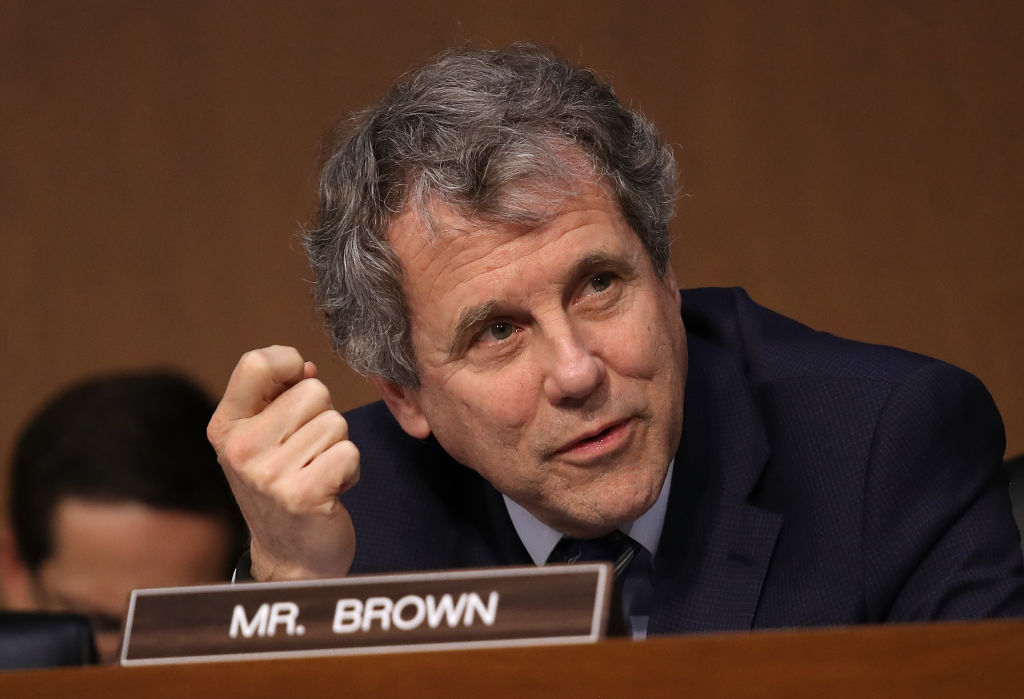
    On his way out of town, Ohio Democratic U.S. Sen. Sherrod Brown was able to notch one final long-sought legislative victory that will benefit public sector workers in Ohio and around the country. The Social Security Fairness Act ensures former government workers like police, firefighters and teachers can collect their full retirement benefits by repealing two provisions that reduce social security payouts.

    Many public sector workers aren’t covered by Social Security because their employer runs a pension program for their retirement. But eventually, a lot of those workers move on to other jobs that do pay into the Social Security system. Even though many of them end up working the requisite 40 quarters to be fully eligible for Social Security benefits, the program reduces their payouts because they’re also collecting retirement benefits from their other pension program.

    GET THE MORNING HEADLINES.


    William Johnson, who heads up the National Association of Police Organizations explained, “Most police officers must retire after specific time served, usually in their early to mid-fifties, (but) many look for new opportunities to serve their community.”

    Those workers are penalized by what’s known as the Windfall Elimination Provision, he explained.

    “Instead of receiving full support from their rightfully earned Social Security retirement benefit, their pension heavily offsets it, thus vastly reducing the amount they receive,” Johnson said.

    Surviving spouses can come off even worse though. The Government Pension Offset requires reductions in Social Security dependent benefits if one spouse receives benefits from a public pension. Johnson argued that offset often results in “eliminating most or all of the payment.”

    Those provision were approved by lawmakers in the 1970s and 80s in a bid to keep the program solvent.

    In all, Brown’s office said, the reductions affect 3 million Americans including almost a quarter million Ohioans.

     U.S. Sen. Sherrod Brown, D-OH, leading a panel discussion on public workers’ Social Security benefits. (Photo by Nick Evans for Ohio Capital Journal.) 

    How we got here

    Following an election in which Republicans criticized Brown’s long service in Washington, passage of the Social Security Fairness Act offers one data point in favor of experience. Brown held a field hearing in Columbus discussing the proposal earlier this year and he’s been working to pass it since serving in the U.S. House of Representatives.

    He last served in that chamber 17 years ago.

    In a press release following the vote Brown described working for years to eventually cobble together more than 60 cosponsors.

    “We have spent decades working to pass this legislation and tonight is a victory for all the public servants who will finally get the Social Security they have earned,” he said. “Tonight, Congress ensured that police officers, firefighters, teachers, and public servants across Ohio will be able to retire with the Social Security they spent their lives paying into.”

    Brown’s effort has also been the beneficiary of shifting attitudes in the Republican Party. For many, many years, a core tenet of Republican politics was searching for a way to get Social Security spending under control. Former House Speaker Paul Ryan’s chief legislative goal was privatizing the program. More recently U.S. Sen. Rick Scott, R-FL, proposed a Rescue America Plan in 2023 that would sunset Social Security and Medicare.

    But since the emergence of Donald Trump as the leader of the Republican Party, efforts to overhaul the retirement program have largely taken a back seat. Within weeks of introducing his plan, for instance, Scott backtracked on sunsetting Social Security and Medicare. Last week, he even voted in favor of the Social Security Fairness Act.

    It’s not hard to see why. With Trump leading the party there’s no longer a top-down rhetorical push for cutting spending on a popular program. At the same time, traditionally Republican-leaning constituencies like police have a strong case that it’s unfair to limit Social Security benefits they earned simply because they earned other benefits from a different career.

    All the same, the measure does nothing to improve the long-term balance sheet for Social Security. The most recent report on the Social Security Trust Fund puts its depletion date at 2033. Meanwhile, although Trump has not proposed cutting retirement benefits he has proposed cutting the taxes that pay for that trust fund—potentially burning through its reserves more quickly.

    Reactions

    In the moment however, passage of the bill was met with praise from organizations representing public sector workers. National Fraternal Order of Police President Patrick Yoes argued the WEP and GPO are “inherently unfair provisions that unjustly penalize our nation’s public employees.”

    “No one, even those who did not vote for our bill today, argued that the provisions treated workers fairly,” he went on. “If this scheme were being run by a pension board or private money management group, instead of the social security administration, they would not call it an elimination of a windfall or an offset — it would be considered embezzlement.”

    International Association of Fire Fighters General President Edward Kelly chimed in that “for over 40 years,” firefighters and other public workers have had retirement benefits “stolen” by Congress.

    “But today,” he said, “the United States Senate, in a rarely seen bipartisan effort, stood up to say, ‘No more,’ voting to ensure retirees finally get the benefits they paid into and earned.”

    Ohio Education Association President Scott DiMauro said, “for too long, the federal government has failed to provide the full Social Security benefits many public school educators earned.”

    “For too long,” he added, “potentially great educators have chosen not to enter this profession because they would lose much of the Social Security benefits they had previously earned if they entered a life of public service. That changes now.”

    Follow OCJ Reporter Nick Evans on Twitter.

    YOU MAKE OUR WORK POSSIBLE.

    ______________
    Nick Evans
    Nick Evans

    Nick Evans has spent the past seven years reporting for NPR member stations in Florida and Ohio. He got his start in Tallahassee, covering issues like redistricting, same sex marriage and medical marijuana. Since arriving in Columbus in 2018, he has covered everything from city council to football. His work on Ohio politics and local policing have been featured numerous times on NPR.

    Ohio Capital Journal is part of States Newsroom, the nation’s largest state-focused nonprofit news organization.

    MORE FROM AUTHOR

  • Ohio law aims to reduce license suspensions

    Ohio law aims to reduce license suspensions

    By:  Ohio Capital Journal

    The Ohio Poverty Law Center is praising a bill passed in the lame-duck session of the Ohio General Assembly that is intended to reduce the huge number of Ohioans whose driver’s licenses are suspended because of unpaid debts or drug offenses. The bill awaits Gov. Mike DeWine’s signature.

    In a state so poor that a fourth of Ohioans are on Medicaid, 1 million have suspended licenses because of debts from things such as a lack of insurance, unpaid fines and court costs, according to a 2022 analysis by the Legal Aid Society of Cleveland.

    “Debt-related suspensions trap drivers with limited resources in a vicious cycle,” the report said. “Fines and fees related to seemingly minor traffic stops can easily spiral into thousands of dollars owed to the state. Drivers unable to pay these debts cannot get their licenses back, which for most Ohioans means they cannot drive to work to earn the money needed to pay down the debt, without risking even more driving restrictions, fines, fees, or even jail.”

    The suspensions are concentrated most heavily in impoverished urban communities of color, the analysis found. Not only is that bad news for poor people needing to get to work and businesses in need of employees, it risks disenfranchising thousands under Ohio’s strict voter ID law.

    But new legislation, House Bill 29, prevents many debt and drug-related license suspensions. The bill, sponsored by Reps. Latyna Humphrey, D-Columbus, and Darnell T. Brewer, D-Cleveland, mandates several measures aimed at reducing license suspensions:

    • It eliminates suspensions for failure to pay court fines or fees both retroactively and automatically, without reinstatement fees.
    • It ends suspensions for drug-abuse offenses, unless they involve manufacture or trafficking with the offender using a vehicle in the commission of the offense.
    • It reduces the lookback period for driving without insurance offenses. Where previously drivers could be charged as repeat offenders if caught driving without insurance twice in five years, they would have to be caught twice in 12 months to be charged as repeat offender under the bill just passed.
    • It eliminates school truancy as a reason to deny licenses or to suspend them.
    • It allows people whose licenses are suspended for failure to pay child support to ask a judge to allow limited driving privileges in all circumstances, not just when the motion is made during contempt proceedings.

    In a statement, the Ohio Poverty Law Center said provisions from a separate Senate bill were amended into H.B. 29, making it much stronger.

    “In Ohio, 1 million drivers currently have suspended driver’s licenses. Approximately 60% of these suspensions are the result of debt-related and issues other than dangerous driving,” it said. “With the inclusion of the provisions from Senate Bill 37, House Bill 29 goes a long way toward ensuring that a person’s ability to pay a fine or fee should not determine whether they are free to drive. In fact, the bill will help hundreds of thousands of Ohioans get their licenses back immediately and dramatically reduce the number of suspensions in the future.”

    The statement added, “We thank Senate Bill 37’s co-sponsors, Sen. Louis Blessing III (R-Colerain Township) and Senator Catherine Ingram (D-Cincinnati) for their dedication to eliminating debt-related driver’s license suspensions. We also thank Senate Judiciary Committee Chairman Nathan Manning (R-North Ridgeville) for his efforts to advance the legislation through the amendment process. They all have continually demonstrated their understanding that eliminating debt-related suspensions will put Ohioans back on track to a more productive future.”

    GET THE MORNING HEADLINES.

    YOU MAKE OUR WORK POSSIBLE.

    _____________
    Marty Schladen
    Marty Schladen

    Marty Schladen has been a reporter for decades, working in Indiana, Texas and other places before returning to his native Ohio to work at The Columbus Dispatch in 2017. He’s won state and national journalism awards for investigations into utility regulation, public corruption, the environment, prescription drug spending and other matters.

    Ohio Capital Journal is part of States Newsroom, the nation’s largest state-focused nonprofit news organization.

    MORE FROM AUTHOR

  • Justice Department sues CVS over opioid practices, including some in Ohio

    Justice Department sues CVS over opioid practices, including some in Ohio

    A CVS store. (Photo by Lynne Terry, Oregon Capital Chronicle, States Newsroom.)

    By:  Ohio Capital Journal

    The U.S. Justice Department is suing pharmacy giant CVS, accusing it of putting profits over patient safety and thus fueling the opioid crisis. The accusations bear similarities to violations for which the Ohio Board of Pharmacy last year fined the company, and the DOJ complaint cites some of board’s findings in its suit.

    The complaint was unsealed last week in Providence, R.I.

    In essence, it accuses CVS of understaffing its pharmacies to such an extent that pharmacists and technicians could not ensure they were filling opioid prescriptions properly. Additionally, it accuses CVS of even graver conduct.

    “CVS also allegedly filled large quantities of prescriptions for controlled substances written by prescribers it knew to be engaged in ‘pill mill practices’ — that is, prescribers who issue large numbers of controlled substance prescriptions without any medical purpose,” a statement announcing the lawsuit said. “According to the complaint, CVS ignored substantial evidence from multiple sources, including its own pharmacists and internal data, indicating that its stores were dispensing unlawful prescriptions.”

    Particularly notorious pill mills were located in and around Portsmouth, Ohio, in a region that was particularly hard hit by the opioid epidemic.

    In a statement, CVS said it has already worked law enforcement on opioids.

    “We have cooperated with the DOJ’s investigation for more than four years, and we strongly disagree with the allegations and false narrative within this complaint,” it said. “We will defend ourselves vigorously against this misguided federal lawsuit, which follows on the heels of years of litigation over these issues by state and local governments—claims that already have been largely resolved by a global agreement with the participating state Attorneys General.”

    CVS added that it has taken extensive action to stop overprescription of opioids.

    “CVS Health has been an industry leader in developing innovative programs to fight opioid misuse,” the statement said. “As one example, 12 years ago CVS Pharmacy pioneered a first-of-its-kind program to block controlled-substance prescriptions written by doctors of potential concern. To date, we have blocked more than 1,250 practitioners, including nearly 600 prescribers who the government continues to license. This program is not required by any statute or regulation, and CVS Health repeatedly has defended lawsuits from those alleging we go too far in blocking opioid prescribers. “

    However, the Justice Department is accusing CVS of not wanting to spend enough money to staff its pharmacies adequately to operate safely. The Ohio Board of Pharmacy concluded the same thing in February, when it fined the company $250,000, placed a CVS store in Canton on indefinite probation and imposed sweeping new rules in an attempt to ensure adequate staffing. CVS later paid $1.25 million in fines to settle violations the Board of Pharmacy said it found at 22 Ohio CVS stores.

    Inspection reports from those stores described waits as long as a month to fill prescriptions, expired and adulterated drugs on shelves and a lack of controls as hundreds of doses of opioids such as oxycodone and hydromorphone went missing. Current and former CVS employees told the Capital Journal that upper management didn’t listen when pharmacy workers pleaded for extra help. They added that the problems weren’t limited to CVS’s Ohio stores.

    The Justice Department suit cited the Ohio findings and leveled similar charges.

    “The complaint alleges that CVS’ violations resulted from corporate-mandated performance metrics, incentive compensation, and staffing policies that prioritized corporate profits over patient safety,” it said in the statement announcing the suit. “CVS set staffing levels far too low for pharmacists to both meet their performance metrics and comply with their legal obligations. CVS also allegedly deprived its pharmacists of crucial information (including, for example, by preventing pharmacists from warning one another about certain prescribers) that could have reduced the number of unlawful prescriptions filled. The complaint alleges that CVS’ actions helped to fuel the opioid crisis and that, in some particularly tragic instances, patients died after overdosing on opioids shortly after filling unlawful prescriptions at CVS.”

    The suit was brought as a result of a whistleblower complaint by a former employee. Under federal law, whistleblowers are entitled to a share of the money recovered in such suits.

    Among its demands, the Justice Department suit asks for triple damages, other financial penalties and a permanent injunction requiring it to dispense opioids in accordance with its legal obligations.


    Marty Schladen
    Marty Schladen

    Marty Schladen has been a reporter for decades, working in Indiana, Texas and other places before returning to his native Ohio to work at The Columbus Dispatch in 2017. He’s won state and national journalism awards for investigations into utility regulation, public corruption, the environment, prescription drug spending and other matters.

    Ohio Capital Journal is part of States Newsroom, the nation’s largest state-focused nonprofit news organization.

    MORE FROM AUTHOR

  • Bill to address issues from Ohio’s infant mortality to early childhood education passes legislature

    Bill to address issues from Ohio’s infant mortality to early childhood education passes legislature

    Getty Image

    By:  Ohio Capital Journal

    Legislation to make improvements to systems ranging from infant care to early childhood education throughout the state of Ohio was passed by the Ohio General Assembly on Wednesday.

    House Bill 7 made it through the lame duck session with passage the day after the measure was favorably passed in the Senate Finance Committee with amendments to remove funding provisions within the bill.

    “We raised awareness, and we are asking to up our game next year,” said co-sponsor state Rep. Andrea White, R-Kettering, when the House concurred in Senate amendments late on Wednesday night.

    Co-sponsor state Rep. Latyna Humphrey, D-Columbus, called it “a good step in the right direction,” and said supporters would be pushing for the funding in the budget.

    “We want people to know that we’re not done,” Humphrey said.

    Other amendments to the bill eliminated doula services for the Ohio Department of Rehabilitation and Corrections, and though advocates were disappointed to see funding removed, they expressed hope that next year’s budget would include items to help move forward with improvements to infant and maternal mortality and community resource engagement to bring about better child outcomes in the state.

    The bill still contains a directive for an Ohio Department of Medicaid-led study regarding “reimbursement of evidence-based peer-to-peer programming that supports infant vitality,” and a requirement that the Ohio Department of Children & Youth streamline it’s processes, including central intake and referral to focus on home visiting programs and “encourage early prenatal and well-baby care” as well as parenting education.

    The ODCY will also be required to “rate” licensed child daycare centers and family daycare home operations for Head Start or Early Head Start in the same rating system as Step Up to Quality.

    The bill had bipartisan co-sponsors, unlike other child care bills that seem doomed as the lame duck session comes to an end, including a Democrat-led bill that would have created a tax credit similar to the federal tax credit seen during the COVID pandemic, and a Republican proposal to split costs for child care in Ohio between employers, employees and the state.

    The child care system in Ohio has been criticized as highly flawed, unaffordable and inaccessible to many Ohioans who need the ability to place their children in quality facilities in order to contribute to the workforce.

    YOU MAKE OUR WORK POSSIBLE.

    _____________
    Susan Tebben
    Susan Tebben

    Susan Tebben is an award-winning journalist with a decade of experience covering Ohio news, including courts and crime, Appalachian social issues, government, education, diversity and culture. She has worked for The Newark Advocate, The Glasgow (KY) Daily Times, The Athens Messenger, and WOUB Public Media. She has also had work featured on National Public Radio.

    Ohio Capital Journal is part of States Newsroom, the nation’s largest state-focused nonprofit news organization.

    MORE FROM AUTHOR

  • Ohio Senate committee approves child welfare bill, leaves out money to fund it

    Ohio Senate committee approves child welfare bill, leaves out money to fund it

    Getty Images

    By:  Ohio Capital Journal

    The Ohio Senate Finance Committee approved long-awaited changes to child welfare processes and agencies in the state, but the bill no longer includes appropriations to fund provisions in the measure.

    Ohio House Bill 7 moved on from the committee on Tuesday, and may see a full Ohio Senate vote on Wednesday. The session on Wednesday could be one of the last of the year, meaning if the bill didn’t see passage, it would need to be reintroduced as new legislation in the new year.

    The bill would also need renewed approval from the Ohio House before the end of the year, since the Senate committee made changes to the original bill. Committee members and advocates are hoping some of the funding no longer included in the bill as it is now may end up in next year’s state operating budget.

    H.B. 7, a bipartisan-sponsored bill, aims to address child welfare from pregnancy to early childhood education. The bill contains a host of goals, including aims to modernize the state’s use of the Women, Infants and Children (WIC) nutrition assistance program, a pilot grant program “to assist in the development of comprehensive child care programs like Early Head Start,” the increased use of home visits to boost infant outcomes and bring more resources to address poor infant and maternal mortality rates statewide. The bill even touches on issues like mental health and child homelessness.

    According to Danielle Firsich, director of public policy for Planned Parenthood Advocates of Ohio and Planned Parenthood of Greater Ohio, 13 Ohio counties are classified as “maternal health care deserts,” though the maternal and infant mortality rates are “entirely preventable with affordable, widespread and comprehensive public health services.”

    “The most common pregnancy-related deaths include delay or lack of diagnosis, failure to screen, inadequate assessment for risk and inadequately trained/unavailable personnel,” Firsich wrote in testimony to the committee, citing Ohio Department of Health data.

    The original bill asked for an appropriation of $34 million over two fiscal years, but appropriations were left out of the bill when it was passed by the finance committee. Committee Chair Sen. Matt Dolan, R-Chagrin Falls, said discussions about funding are “better left” to discussions next year, when the overall state operating budget will see its biannual approval.

    Dolan said there were “no subjective decisions made” on the programs in the bill, just a re-tailoring that he said will make it clear that agencies who provide new strategies or corrections related to child care and health will need to approach the legislature with cost proposals, instead of the funding coming ahead of time.

    “There’s no mandate that we are going to be responsible for paying in this bill,” Dolan said.

    Sen. Paula Hicks-Hudson, D-Toledo, also said a provision that would have established a program with the state Department of Rehabilitation and Corrections to provide doula services to inmates in a prison nursery program was also removed. Hicks-Hudson said that was a step back from an opportunity “to move the needle” on progress when it comes to infant and maternal outcomes.

    GET THE MORNING HEADLINES.


    Amendments made to the bill during Tuesday’s committee hearing also removed the ability for tele-health home visits for those participating in the Help Me Grow program, a program through the Ohio Department of Children & Youth that provides services like home visits, developmental screenings and resource connections.

    In the program’s 2024 annual report, the ODCY reported more than 51,000 system referrals for home visits in the that fiscal year, and more than 45,000 system referrals for early intervention to meet developmental milestones through the Help Me Grow program. Home visit referrals were up 2.5% from the previous year, with 51% of those receiving home referrals identifying as Black/African American, according to the annual report.

    Referrals for early intervention saw increases, particular in referrals from early care or child care programs (up 21%) and from WIC (up 17%).

    But Dolan said there are “concerns” that the Help Me Grow program is not working, something the legislature may look into improving in the new year.

    Despite the lack of appropriations, proponents of the bill who testified on Tuesday said the measure still represents a step forward in filling gaps and responding to the needs of Ohio’s children and families.

    Danielle Tong, executive director of CelebrateOne, a Columbus initiative to reduce infant mortality and improve conditions for families, said she knows all too well the costs around stays in the neonatal ICU, and the educational delays that can impact a child, as the mother of a child born premature eight years ago.

    “I’m going through that right now with my own son, and I have resources to support that, but what about the Ohioans who don’t,” she asked the committee.

    She and CelebrateOne see H.B. 7 as a “crucial” bill for “supporting and elevating the health of the families that look to us and our partners for health.”

    The collaborative aspect of the bill is a progressive one, according to Caitlin Feldman, policy director for the child welfare advocacy group Groundwork Ohio.

    “By encouraging agencies to work together more effectively, this bill strengthens the connections between comprehensive screening and service referrals, reducing the risk of families falling through the cracks,” Feldman said.

    The bill has the potential to address challenges, despite the fact that the approach of the budget year means “many of the transformative investments included in the original bill are not possible at this time.”

    Feldman and others like the Ohio Psychological Association praised the provisions that direct the Ohio Department of Medicaid to “explore and establish reimbursement pathways” for mental health needs in Ohio’s youngest children.

    “This represents a critical step toward addressing a long-standing gap in how our systems recognize and respond to the mental health needs of infants, toddlers and their families,” Feldman said.

    YOU MAKE OUR WORK POSSIBLE.


    Susan Tebben
    Susan Tebben

    Susan Tebben is an award-winning journalist with a decade of experience covering Ohio news, including courts and crime, Appalachian social issues, government, education, diversity and culture. She has worked for The Newark Advocate, The Glasgow (KY) Daily Times, The Athens Messenger, and WOUB Public Media. She has also had work featured on National Public Radio.

    Ohio Capital Journal is part of States Newsroom, the nation’s largest state-focused nonprofit news organization.

    MORE FROM AUTHOR