
Author: Ohio Capital Journal

  • Ohio Senate bill would automatically close low-performing public schools

    Ohio Senate bill would automatically close low-performing public schools

    Getty Image

    Republican State Sen. Andrew Brenner introduced Senate Bill 295 which would revise the state’s automatic school closure language.

    By:  Ohio Capital Journal

    A Republican bill in the state Senate would automatically shut down low-performing Ohio public schools.

    State Sen. Andrew Brenner, R-Delaware, introduced Senate Bill 295 over the summer, which would revise the state’s automatic school closure language. The bill has a fourth hearing scheduled Tuesday in the Senate Education Committee.

    The bill defines a poor performing school as a school, serving grades four and older, that has performed in the bottom 5% among public schools based on their Performance Index Score for three consecutive years. A school would also be considered a poor performing school if they are in the bottom 10% based on their Value-Added Progress for three consecutive years.

    “It is my hope that this bill will help to standardize the law surrounding school closures for public and community schools and help ensure that each student in Ohio receives the best education possible,” Brenner said.

    Ohio charter schools are automatically closed if they have three straight years of poor performance.

    “We right now have an existing law where charter schools can be shut down if they don’t perform, and just the threat of that has actually forced the turn around with many of these charter schools,” Brenner said.

    Seventeen people submitted opponent testimony against S.B. 295 during last week’s committee meeting. Only one person submitted supporter testimony.

    “Because the requirements for closure or restructuring are based upon bottom percentages, there will always be schools that meet the criteria, even if those schools are meeting state standards,” Ohio Federation of Teachers President Melissa Cropper said in her testimony. “As low performing schools are closed, other schools that are higher ranked will now be in the bottom 5% even if they show no decline in their own rating. This cut-off is arbitrary and its potential effect is that eventually well-performing schools will also be subject to closure.”

    GET THE MORNING HEADLINES.


    As an alternative to closing, Brenner said a school can replace the principal and 60% of their licensed staff, but Cropper wonders where the replacement educators would come from.

    “There is already a shortage of teachers and other licensed personnel in schools and positions in low performing schools are especially hard to fill,” she said. “This will also create a further disincentive for teachers to teach in challenging schools.”

    Ohio Education Association President Scott DiMauro said the bill would harm students.

    “S.B. 295 proposes a heavy handed and overreaching state approach to local schools that receive low ratings on state report cards,” he said in his opponent testimony.

    The Ohio Department of Education and Workforce uses 1 to 5 star ratings in half increments based on five categories: achievement, progress, early literacy, gap closing and graduation. 10% percent of Ohio school districts are below state standards, according to the latest state report cards ODEW released earlier this year.

    Schools and school districts that receive one star need “significant support to meet state standards.”

    “S.B. 295 does not do this,” DiMauro said. “Instead of offering significant support, S.B. 295 proposes significant punishments that will most likely destabilize schools where many great things are happening, even if those successes are not revealed on data printouts of standardized test scores.”

    Sen. Catherine Ingram, D-Cincinnati, asked where the students would go if their school closed.

    “The school would be closed and all the students would have to go to another school, which is what happens right now in our charter school law,” Brenner said.

    The two-year General Assembly ends this week, so any bills that don’t pass will die and would have to be reintroduced in the next General Assembly.

    Follow OCJ Reporter Megan Henry on X.

    YOU MAKE OUR WORK POSSIBLE.

    _____________
    Megan Henry
    Megan Henry

    Megan Henry is a reporter for the Ohio Capital Journal and has spent the past five years reporting in Ohio on various topics including education, healthcare, business and crime. She previously worked at The Columbus Dispatch, part of the USA Today Network.

    Ohio Capital Journal is part of States Newsroom, the nation’s largest state-focused nonprofit news organization.

    MORE FROM AUTHOR

  • Religious release time bill added to parents’ bill of rights during Ohio Senate Education Committee

    Religious release time bill added to parents’ bill of rights during Ohio Senate Education Committee

    LifeWise Academy is a Hilliard-based religious instruction program that started in 2019 and now enrolls 50,000 students across 29 states. (Photo by Megan Henry, Ohio Capital Journal.)

    House Bill 8 passed the Ohio House last summer

    By:  Ohio Capital Journal

    Ohio Senators have added a public school mandatory religious release time policy bill to a piece of legislation that would force educators to out a students’ sexuality to their parents.

    The amendment to require Ohio public school districts to put a policy in place to release students for religious instruction was added to House Bill 8 during last Tuesday’s Senate Education Committee Meeting. The two Democrats on the committee, Catherine Ingram and Vernon Sykes, voted against the amendment.

    “A school district shall, rather than may, have a policy governing religious release time instruction,” said state Sen. Sandra O’Brien, R-Ashtabula.

    Ohio law currently permits school district boards of education to make a policy to let students go to a course in religious instruction, but this would change the wording in the Ohio Revised Code from “may” to “shall” — meaning this would be a mandate for Ohio school districts.

    State Reps. D.J. Swearingen, R-Huron, and Sara Carruthers, R-Hamilton, introduced H.B. 8, which passed in the Ohio House last year. The bill would require public schools to let parents know about sexuality content materials ahead of time and give them the option to request alternative instructions.

    GET THE MORNING HEADLINES.


    It would also ban any sexuality content from being taught to students in kindergarten through third grade. The bill defines sexuality content as “oral or written instruction, presentation, image, or description of sexual concepts or gender ideology.”

    Senate Minority Leader Nickie Antonio, D-Lakewood, said H.B. 8 is not what Ohio needs.

    “It’s certainly not what the children and the teachers and the parents of Ohio need,” she said. “I think we need to maintain the ability of children to be able to talk to teachers, social workers, counselors, with some confidentiality, and parents need to be able to be involved with their children, but also know that sometimes children need somebody to talk to.”

    There were 62 parental-rights bills in 24 states last year, according to FutureEd, an independent think tank at Georgetown University’s McCourt School of Public Policy.

    More amendments were added to H.B. 8 during Wednesday’s Senate Education Committee meeting.

    “This amendment creates exceptions for disclosure requirements where they would conflict with federal law,” O’Brien said. “It also clarifies that nothing in House Bill 8 prohibits mandatory reporting under state law. Lastly, the amendment clarifies that nothing in House Bill 8 prohibits or limits career and academic mentoring between a teacher and student.”

    Religious release time

    The amendment language was taken from two companion bills regarding religious release time — Senate Bill 293 and House Bill 445. Hundreds of people have submitted opponent testimony against both bills, which are in committee.

    Two central Ohio school districts, Westerville and Worthington, recently rescinded their religious release time policy. Both districts formerly allowed LifeWise Academy to take public school students off-campus for Bible classes during school hours.

    LifeWise Academy is a Hilliard-based religious instruction program that enrolls 50,000 students across 29 states — including  about 160 Ohio school districts.

    The United States Supreme Court upheld released time laws during the 1952 Zorach v. Clauson case, which allowed a school district to have students leave school for part of the day to receive religious instruction.

    Release time in the middle of the school day is problematic, Antonio said.

    “It disrupts the flow of (students) dealing with their studies,” she said. “I think it needs to be on an individual school district basis to make those kinds of decisions.”

    About 170 people submitted opponent testimony against the newly amended H.B. 8 at Tuesday’s Senate Education Committee. H.B. 8 was up for a possible committee vote, but no vote was taken. The bill has had six hearings in the Senate Education Committee.

    The two-year General Assembly wraps up at the end of the month, so any bill that doesn’t pass will die and would have to be reintroduced in the next General Assembly. The final House and Senate sessions of the year are currently scheduled for next week.

    Follow OCJ Reporter Megan Henry on X.

    YOU MAKE OUR WORK POSSIBLE.

  • Bill that would expand fracking leases on state property is going to Ohio Gov. Mike DeWine

    Bill that would expand fracking leases on state property is going to Ohio Gov. Mike DeWine

    By:  Ohio Capital Journal

    A bill that would expand fracking leases in state public lands, parks, and wildlife areas from three years to five is going to Ohio Gov. Mike DeWine’s desk for his signature.

    Once he receives the bill, DeWine will have 10 days to sign the bill into law or veto it.

    State Reps. Dick Stein, R-Norwalk, and Patrick Brennan, D-Parma, introduced House Bill 308 last year and it originally defines nuclear energy as green energy in Ohio.

    Ohio has two nuclear reactors — Davis–Besse Nuclear Power Station in Northwest Ohio and the Perry Nuclear Power Plant in Northeast Ohio.

    The bill passed the Ohio House this summer, with ten Democrats voting against it.

    The Ohio Senate added a few amendments to the bill — including one that increases a standard lease for fracking under state parks to five years. The current law is three years.

    “We need to continue to frack, and allowing the extension of that is also important,” Sen. Andrew Brenner, R-Delaware, said during last week’s Senate session.

    State Sen. Kent Smith, D-Euclid, had many issues with the bill.

    “This is perhaps the least popular thing that we will do in the entire General Assembly,” Smith said. “Why are we extending the lease in this amendment again without public consideration?”

    The U.S. Department of Energy defines renewable energy as coming from “unlimited, naturally replenished resources, such as the sun, tides, and wind.”

    “This bill would designate nuclear energy as green energy, which is kind of mystifying to me, because it’s clearly not,” Smith said. “It has so much radioactive waste, it’s clearly not clean. It’s certainly not renewable.”

    H.B. 308 passed last week in the Ohio Senate with a 24-6 vote. Sen. Catherine Ingram was the only Democrat to vote for the bill.

    House concurrence

    The Ohio House voted 65-26 to concur with the changes made to the bill later that same day. Brennan voted against concurrence on his own bill, saying he hoped it would play out in conference committee.

    “I remain steadfast in favor of nuclear expansion in the state of Ohio,” he said. “… I am not anti-fracking, but I believe our state parks are sacrosanct,” he said. “I think when we created our state parks, we created a contract with the people that we would leave our state parks alone. I’m just a purist when it comes to our state parks.”

    Only three Democrats voted for concurrence — state Reps. Richard Dell’Aquila, Joe Miller, and Elgin Rogers, Jr.

    GET THE MORNING HEADLINES.


    State Rep. Don Jones, R-Freeport, lives where fracking takes place in eastern Ohio and said the fracking process has been refined over the years.

    “You will never know where fracking has occurred,” he said. “We’re not going to damage our state parks. We’re not going to hurt our state parks.”

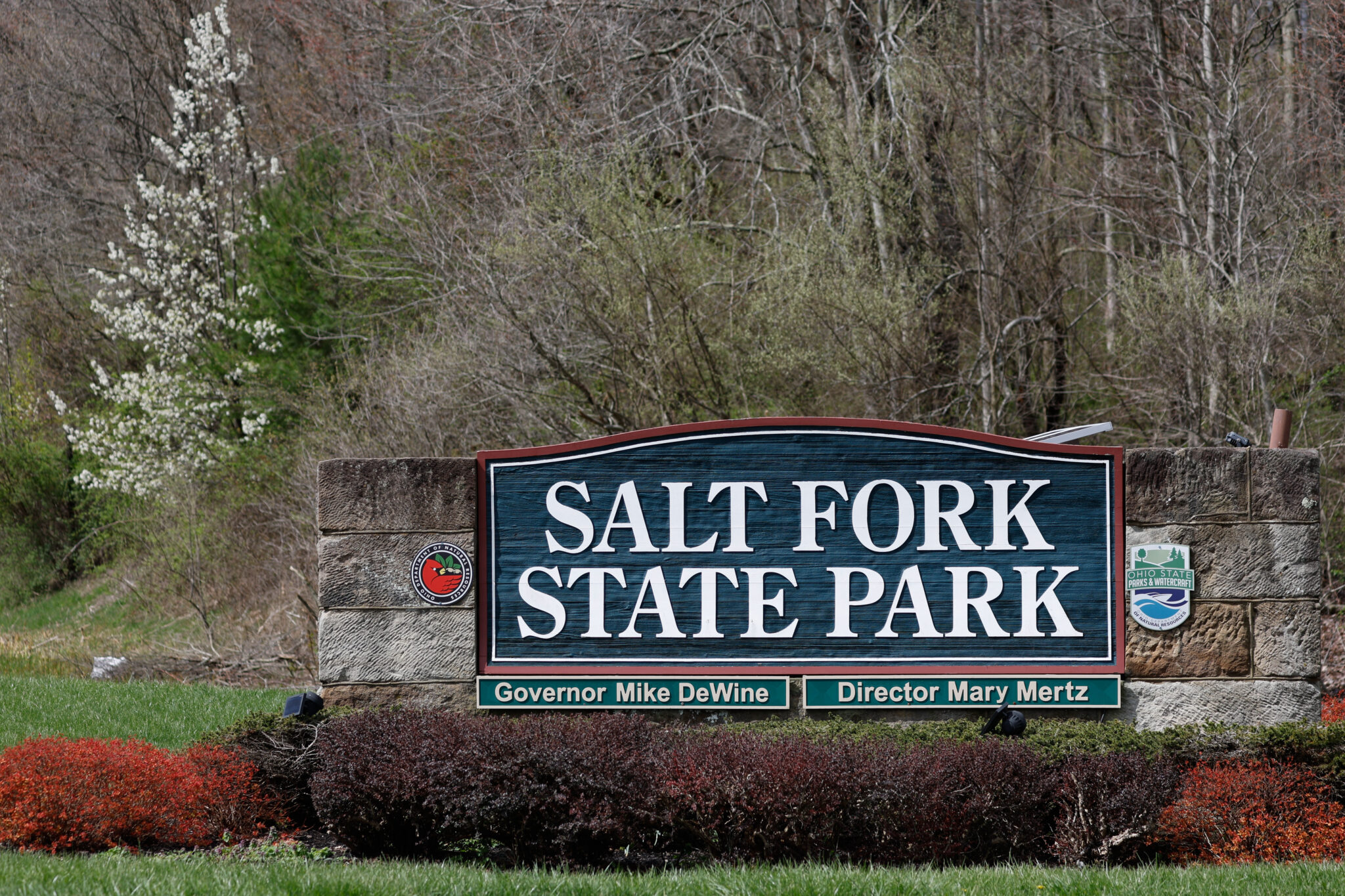
    The Ohio Oil and Gas Land Management Commission has selected various bidders to frack Salt Fork State Park, Valley Run Wildlife Area and Zepernick Wildlife Area. The vote on this bill comes days after OGLMC selected an Oklahoma-based company to lease about 30 acres of land in Egypt Valley in Belmont County for fracking.

    “This expansion of fracking is going to industrialize our beautiful parks and transform them into places people avoid, not enjoy,” Cathy Cowan Becker, steering committee member of Save Ohio Parks, said about H.B. 308.

    Former Ohio Gov. John Kasich signed a law allowing drilling companies to frack in state parks in 2011. Potential drillers need to get permission from the Oil and Gas Commission, but Kasich never appointed anyone to the committee.

    A fracking amendment was added to a bill during the last lame duck two years that passed and Gov. Mike DeWine signed it into law in January 2023. The law requires the Ohio Department of Natural Resources to allow fracking for natural gas in Ohio’s public land and state parks.

    “Ohio legislators have once again sold out our state parks and public lands to the oil and gas industry through an amendment to an unrelated bill during the lame duck session, with no notice or chance for public testimony,” Becker said.

    Follow OCJ Reporter Megan Henry on Bluesky.


    Megan Henry
    Megan Henry

    Megan Henry is a reporter for the Ohio Capital Journal and has spent the past five years reporting in Ohio on various topics including education, healthcare, business and crime. She previously worked at The Columbus Dispatch, part of the USA Today Network.

    Ohio Capital Journal is part of States Newsroom, the nation’s largest state-focused nonprofit news organization.

    MORE FROM AUTHOR

  • Ohio Supreme Court: Opioid judgment against pharmacy chains not allowed under product liability law

    Ohio Supreme Court: Opioid judgment against pharmacy chains not allowed under product liability law

    By:  Ohio Capital Journal

    An Ohio Supreme Court decision could bring about challenges to those hoping to keep pharmaceutical companies accountable for the opioid crisis, and others who hope to file claims of a “public nuisance.”

    The Ohio Supreme Court ruled that lawsuits in Ohio can’t claim pharmaceutical chains “caused a public nuisance” by selling opioids, in a recently released decision which could have impacts on a $650 million judgment for two Ohio counties.

    “It really only impacts litigation in Ohio, but it does reach a broad conclusion about the ability of plaintiffs to assert public nuisance claims,” said Sharona Hoffman, professor of law and bioethics at Case Western Reserve University.

    The Ohio Supreme Court was asked to determine whether “common-law public nuisance claims arising from the sale of a product” are precluded by the Ohio Product Liability Act, a part of Ohio law used for claims such as manufacturing defects, design defects, and failures to give warnings about risks or hazards in products.

    Plaintiffs in the case argued that the dispensing of opioids lies outside the purview of the OPLA, which has more to do with the design, manufacture, marketing, promotion, and sale of a product.

    GET THE MORNING HEADLINES.


    Justice Joe Deters was joined by Chief Justice Sharon Kennedy, Justice Patrick DeWine, and Justice Jennifer Brunner in ruling that those types of public nuisance claims are indeed eliminated by the OPLA.

    “This is straightforward: product-liability claims brought at common law – such as the counties’ claims – have been abrogated,” Deters wrote.

    The counties Deters references in the majority opinion are Lake and Trumbull counties, where the state supreme court’s ruling may cause the U.S. Sixth Circuit Court to deny a judgment in favor of the counties. In 2022, $650.9 million was awarded to them for a “public nuisance” perpetrated by national companies including CVS Health, Walmart, and retail pharmacy Walgreens Boot Alliance in exacerbating the opioid crisis in those counties.

    After a federal jury made their decision finding the chains responsible, U.S. District Judge Dan Polster ordered the $650 million judgment, saying the companies’ actions brought on addiction, overdose and a strain on community resources related to the opioid crisis.

    The Sixth Circuit asked the Ohio Supreme Court to interpret state law regarding public nuisance claims and the Ohio Product Liability Act, and with the state’s highest court’s interpretation of state law leaning in favor of the pharmaceutical chains, those millions may be up in smoke.

    “Now that the Ohio Supreme Court has done that, the Sixth Circuit will apply the answer to the case before it and probably deny the counties’ recovery,” Hoffman told the Ohio Capital Journal.

    Justices Melody Stewart and Michael Donnelly agreed with the majority decision in part, but Stewart argued that the counties were not asking for compensatory damages as part of their product liability claim, rather “equitable relief,” which the justice said meant the claim was not barred by the OPLA.

    “The equitable relief awarded by the federal court was designed, and has been used, to abate the nuisance caused by the flood of opioids into the market, not to compensate the counties for the loss of life or economic consequences of opioid addiction,” Stewart wrote in her opinion.

    Deters used the majority opinion to recognize that the opioid crisis “has touched the lives of people in every corner of Ohio,” and the damage from the crisis “undoubtedly has far-reaching consequences for their communities and for the state as a whole.”

    “Creating a solution to this crisis out of whole cloth is, however, beyond this court’s authority,” Deters wrote. “We must yield to the branch of government with the constitutional authority to weigh policy considerations and craft an appropriate remedy.”

    The General Assembly has spoken “plainly and unambiguously” that public nuisance claims are not that remedy, he added.

    Co-counsel for the plaintiff in the case said the ruling “will have a devastating impact on communities and their ability to police corporate misconduct.”

    “We have used public nuisance claims across the country to obtain nearly $60 billion in opioid settlements, including nearly $1 billion in Ohio alone, and the Ohio Supreme Court’s ruling undermines the very legal basis that drove this result,” said Peter H. Weinberger, co-liaison counsel in the case and trial counsel to Lake and Trumbull counties, in a statement.

    Weinberger said the fight will continue, and the parties in the case “remain steadfast in our commitment to holding all responsible parties to account as this litigation continues nationwide.”

    “This ruling is not the end of these cases … and our team will continue to fight for these counties through other legal avenues,” Weinberger said.


    Susan Tebben
    Susan Tebben

    Susan Tebben is an award-winning journalist with a decade of experience covering Ohio news, including courts and crime, Appalachian social issues, government, education, diversity and culture. She has worked for The Newark Advocate, The Glasgow (KY) Daily Times, The Athens Messenger, and WOUB Public Media. She has also had work featured on National Public Radio.

    Ohio Capital Journal is part of States Newsroom, the nation’s largest state-focused nonprofit news organization.

    MORE FROM AUTHOR

  • New polling shows people of all stripes want immigrants treated with dignity

    New polling shows people of all stripes want immigrants treated with dignity

    By:  Ohio Capital Journal

    A poll conducted last week indicates that large majorities of Americans don’t hold views of immigrants that are as harsh of those of President-elect Donald Trump. They include many who voted for him.

    The poll found that Americans overwhelmingly think that deportations should focus on immigrants who commit violent crime, that the persecuted should be protected, and that families should be kept intact.

    The survey of 1,200 adults was conducted between Dec. 3 and Dec. 7 by the National Immigration Forum, which works with the business community, police, and the clergy as it advocates for immigrants.

    There are an estimated 11 million undocumented immigrants in the United States. Trump has vowed to deport millions and his allies say he’ll “seal the border.”

    Respondents were asked whether they believe deportation efforts should focus on “violent criminals and those with final orders of removal,” or “all individuals without legal status, including those who have otherwise followed laws and have U.S. citizen family.”

    Two-thirds, 66%, said violent criminals and those with deportation orders should be the focus, while 34% said efforts should target all undocumented immigrants.

    Those sentiments were remarkably consistent across political ideologies. Of self-described liberals, 69% said deportations should target violent criminals and those with final removal orders. So did 66% of moderates and 65% of self-identified conservatives.

    YOU MAKE OUR WORK POSSIBLE.


    However, deportations of those with criminal convictions or final removal orders are nothing new, with the number this century peaking under the Obama administration and then falling off under Trump and Biden. When it comes to criminal deportations, those numbers peaked under Obama as well.

    Many immigrants come seeking economic opportunity. But many of their impoverished countries are also torn by dysfunctional, oppressive governmentscorruption and gang violence. Two leaders of Springfield’s Haitian community last month said that if one has a good job there, that fact alone is reason for criminal gangs to target them.

    The National Immigration Forum survey conducted last week tried to get a sense of whether Americans think people who fled such circumstances should be deported. They were asked if they agreed that “In accordance with American values, family unity, respect for human dignity, and protection for the persecuted must remain key priorities as the government increases border security and border enforcement.”

    Of all those surveyed, 73% either somewhat or strongly agreed.

    And again, there was little divergence along ideological lines. Of self-identified liberals, 78% agreed. Of moderates, 72% agreed. That was identical to the rate at which conservatives agreed.

    Trump should take note, said Jennie Murray, president and CEO of the National Immigration Forum.

    “Key Trump constituencies want his administration to preserve American values and set enforcement priorities,” she said in an email. “The president-elect should respond accordingly and work with Congress on immigration solutions that boost our security, honor human dignity and preserve family unity. The administration should not take Americans’ immigration concerns to mean they support mass deportations for people who are here and contributing.”

    The findings might seem at odds with the findings of a separate survey conducted in October — or at least show cognitive dissonance about immigrants among some Americans.

    That survey, conducted by the Public Religion Research Institute, asked “Do you agree or disagree that immigrants who are entering the country today are poisoning the blood of our country?”

    A full 61% of Republicans agreed with the statement. That stands in stark contrast to 33% of independents, and just 13% of Democrats.

    The same survey found a 50-point gap between Republicans and Democrats over how pressing an issue immigration is for the country.

    GET THE MORNING HEADLINES.

    ________________
    Marty Schladen
    Marty Schladen

    Marty Schladen has been a reporter for decades, working in Indiana, Texas and other places before returning to his native Ohio to work at The Columbus Dispatch in 2017. He’s won state and national journalism awards for investigations into utility regulation, public corruption, the environment, prescription drug spending and other matters.

    Ohio Capital Journal is part of States Newsroom, the nation’s largest state-focused nonprofit news organization.

    MORE FROM AUTHOR

  • Death penalty opponents push for elimination in Ohio

    Death penalty opponents push for elimination in Ohio

    By:  Ohio Capital Journal

    Opponents of the death penalty are once again urging the Ohio legislature to eliminate the practice in the state.

    In a hearing with the Senate Judiciary Committee, advocacy groups and family members of murder victims alike came together to ask for passage of a bill that would abolish the death penalty.

    “This is a question of overall public policy; it’s a question of is the system applying the death penalty consistently across a wide range of cases,” said Robert Dunham, director of the Death Penalty Policy Project.

    Senate Bill 101 would ban the death penalty, a practice that in Ohio has been few and far between in recent years, and has essentially stopped during the DeWine administration as the state has been unable to obtain lethal injection drugs from pharmaceutical companies. With Republicans controlling supermajorities in both chambers of the Ohio General Assembly, the effort faces an uphill battle even with some bipartisan support.

    The Death Penalty Policy Project did an analysis of more than three decades of FBI homicide data and law enforcement officers killed in the line of duty, and found that after 50 years and 1,600 executions nationwide, “the public and police are actually safer in states that don’t have the death penalty, or have recently abolished the death penalty, than they are in states that have the death penalty.”

    “Moreover, the states that are now most actively carrying out executions are among the least safe for the public and the most dangerous for police,” Dunham told the committee. “They have failed to execute their way into violence prevention.”

    Jonathan Mann has the unique perspective of going through the murder of his father in 2017, and asking the state not to use the death penalty to punish his father’s killer. He said he believed in the death penalty before his father’s death, but as his experience continued, he found the process “does not represent family members of murder victims.”

    “You are not representing family members of victims adequately, whether they believe in the death penalty or not,” Mann said. “The death penalty is not working. It is not working; you can not say it’s working.”

    Bryan Corbett saw one of his family members wrongfully accused of murder, and the reputation and potential of this member of his family was damaged after spending more than six years on death row before being exonerated. Corbett said the conviction was lifted after it was found “junk science,” “hypnotized witnesses,” and other evidence deemed inadmissible was used in the case. That, and two men confessed to the crime after more than a decade.

    GET THE MORNING HEADLINES.


    As a Christian pastor and a man who has witnessed the flaws in the justice system, Corbett said the state can’t continue to use the death penalty as an option.

    “I would simply ask: who among us is qualified to cast that stone,” Corbett said to the committee. “Who among us is qualified to flip that switch and end a life?”

    State Rep. Matt Dolan, R-Chagrin Falls, pondered whether it was up to the legislature to decide whether or not the death penalty should be an option, when the state leaves those decisions up to a jury of peers.

    “Should this legislature take that away from the individuals or should we look to whether this should be a statewide issue and let Ohioans … make that decision,” Dolan asked Dunham.

    Dunham pushed back, saying juries are only deciding cases based on the information at hand, and can’t consider the factors of, for example, withheld evidence or evidence that “the defense had failed to investigate because of poor representation.”

    “(Legislators) are the ones who set public policy, so when we look at the death penalty as a policy, I think you are the people who should be making that determination,” Dunham said.

    The measure is one of many similar bills that have been introduced in the state over the years, but while the measure has been the subject of much testimony in support of death penalty elimination, the legislature has not shown much support for the issue.

    One group stood in opposition to the current bill in last week’s committee hearing. The Ohio Prosecuting Attorneys Association submitted written testimony saying the association “continues to believe that this topic is important enough that the public should be given the opportunity to decide whether or not Ohio continues to have capital punishment.”

    Louis Tobin, executive director of the Ohio Prosecuting Attorneys Association cited a study by Claremont McKenna College in response to Gallup and Pew Research Center polls showing support for the repeal of the death penalty and diminishing support for the practice in the United States.

    In the Claremont McKenna poll, survey-takers were asked if they supported the death penalty when considering specific crimes, rather than general opposition or support for the death penalty.

    “What they found was that support for the death penalty is much more widespread than either Gallup or Pew have reported,” Tobin wrote.

    Statistics from the poll cited by Tobin show 10 of the 15 murder types selected as part of the survey — including raping and murdering a child and being a part of a terrorist attack — “garnered at least 60% support.”

    The only true measure of support is “a vote of the people,” Tobin concluded.

    “If the proponents of Senate Bill 101 believe their own polling and their own argument that there is not majority support for the death penalty, then they should have no problem agreeing to allow the public to vote and to decide on the future of the death penalty in Ohio,” Tobin wrote.

    The OPAA executive director has expressed support for a bill that would change the way capital punishment is done in Ohio, which would add nitrogen hypoxia to the list of protocols that can be used. The method asphyxiates a condemned person by replacing the air they breathe, a mixture of mostly nitrogen and oxygen, with pure nitrogen.

    With the current General Assembly term expiring at the end of the month, the bill may not have much chance of getting by this time around without a last-minute burst of legislative support. Along with its bipartisan sponsors, Senate Minority Leader Nickie Antonio, D-Lakewood, and state Sen. Steve Huffman, R-Tipp City, the bill only has 10 cosponsors signed on in support.

    Any bills that aren’t approved by the end of the month will need to be reintroduced and restart the legislative process in the new year.

    YOU MAKE OUR WORK POSSIBLE.

    ___________
    Susan Tebben
    Susan Tebben

    Susan Tebben is an award-winning journalist with a decade of experience covering Ohio news, including courts and crime, Appalachian social issues, government, education, diversity and culture. She has worked for The Newark Advocate, The Glasgow (KY) Daily Times, The Athens Messenger, and WOUB Public Media. She has also had work featured on National Public Radio.

    Ohio Capital Journal is part of States Newsroom, the nation’s largest state-focused nonprofit news organization.

    MORE FROM AUTHOR

  • Hemp industry workers testify against bill that would ban intoxicating hemp products

    Hemp industry workers testify against bill that would ban intoxicating hemp products

    People who spoke out against Senate Bill 326 bill called for regulations, not a ban on sales — arguing that would cause the illicit market to flourish.

    By:  Ohio Capital Journal

    Workers in the hemp industry spoke out against a bill that would ban intoxicating hemp products in Ohio, effectively putting them out of business. These are known as delta-8 THC products that are often sold at smoke shops and corner stores.

    Those who spoke out against Senate Bill 326 during last week’s Senate Government Committee Meeting called for regulations, not a ban on sales — arguing that would cause the black market to flourish.

    “Strict bans will only support illicit sales of these products, with no enforceable safety or age requirements, which does nothing to address the issues legislators have cited as the need for new hemp legislation,” said Jonathan Miller, general counsel for the U.S. Hemp Roundtable.

    Ohio Gov. Mike DeWine has been asking lawmakers to regulate or ban delta-8 THC products and State Sen. Steve Huffman, R-Tipp City, introduced S.B. 326 last month.

    Twenty-five people submitted opponent testimony on S.B. 326 last week and nearly 20 people submitted proponent testimony on the bill last month.

    Marijuana is legal in Ohio and is not considered an intoxicating hemp product. The 2018 Farm Bill says hemp can be grown legally if it contains less than 0.3% THC.

    “Senate Bill 326 aims to make illegal an industry made up of thousands of small businesses but in fact it will simply strengthen the black market,” said JD McCormick, president of the American Healthy Alternatives Association.

    Several Ohioans have turned to hemp as an alternative to opioid pain prescriptions, he said.

    “A 2023 economic impact report on the United States cannabinoid industry indicates that Ohio’s hemp-derived cannabinoid market is responsible for $704,782,000.00 in revenue,” he said. “It also estimates the hemp-derived product industry provides 8,157 jobs with $327,448,000.00 in wages for the employees of the industry, and approximately $40,524,970.00 in annual sales tax receipts.”

    GET THE MORNING HEADLINES.


    Mo Dayem owns six smoke shops across the state that sells hemp products.

    “S.B. 326 bill would jeopardize my business and my employees,” he said. “I assure you that the industry is in support of reasonable regulations. We want the responsible businesses to continue to operate and ensure there are not bad actors, and unsafe products, in the market.”

    The hemp industry supports banning sales to people under 21, testing products, labeling requirements, and restrictions, Dayem said.

    “Some products that have garnered media attention are packaged like known children’s candy brands,” he said. “This should be prohibited, and the industry agrees they should be off the market.”

     Delta-8 products purchased from a gas station. (Photo by Megan Henry, Ohio Capital Journal). 

    Doug Strahm owns two CBD stores — Happy Harvest Delaware and Happy Harvest Marion — and he said this bill would destroy his business.

    “My family’s financial stability and well-being, as well as the jobs of our employees, are all tied to this industry,” he said.

    About 80% of their sales come from delta products, which they only sell to customers 21 and older.

    “The median age of our customers is actually around 45 years old,” Strahm said.

    Jaimee Courtney owns a CBD store in Bellefontaine where most of their customers are over 55.

    “These are responsible adults seeking relief and wellness without the intoxicating effects of marijuana,” she said.

    Courtney shared the story of a 90-year-old customer who says taking CBD gummies has helped her stop having seizures.

    “I think this ban would hurt people more than it would actually help,” she said.

    Lawmakers are trying to get their bills passed before the current General Assembly comes to a close at the end of the month, meaning any bills that don’t pass will die and would have to be reintroduced in the next General Assembly, which starts in January.

    Follow OCJ Reporter Megan Henry on X.

    Megan Henry
    Megan Henry

    Megan Henry is a reporter for the Ohio Capital Journal and has spent the past five years reporting in Ohio on various topics including education, healthcare, business and crime. She previously worked at The Columbus Dispatch, part of the USA Today Network.

    Ohio Capital Journal is part of States Newsroom, the nation’s largest state-focused nonprofit news organization.

    MORE FROM AUTHOR

  • Ohio House passes bill that could cause expelled students to undergo a psychiatric assessment

    Ohio House passes bill that could cause expelled students to undergo a psychiatric assessment

    By:  Ohio Capital Journal

    The Ohio House passed a bill that would allow school districts to create a policy to expel a student that poses an “imminent and severe endangerment” to the safety of other students or school staff for 180 school days, and possibly longer.

    House Bill 206 passed with a 65-15 vote during Wednesday’s session. The bill now heads to the Ohio Senate for consideration. Any bill that does not pass by the end of the year will die and would have to be reintroduced next General Assembly.

    State Reps. Gary Click, R-Vickery, and Monica Robb Blasdel, R-Columbiana, introduced H.B. 206 last summer, which passed in the Ohio House Primary and Secondary Committee a little over a year ago.

    “House Bill 206 will grant greater flexibility to schools when expelling dangerous individuals, while also producing a re-entry plan designed to promote the safety and protection of all students and staff,” Robb Blasdel said.

    She said the bill will give more control to school administrators, parents and mental health professionals “when dealing with the most difficult and stressful cases they encounter, understanding that these decisions are best made at the local level.”

    H.B. 206 defines “imminent and severe endangerment” as bringing a firearm or a knife “capable of causing serious bodily injury” to school, making a bomb threat to a school building, causing serious physical harm to someone at school or making an “articulated or verbalized threat, including a hit list, threatening manifesto, or social media post, that would lead a reasonable person to conclude that the pupil poses a serious threat,” according to the bill’s language.

    The bill would allow a district school board to create a policy that would authorize the superintendent to create conditions for an expelled student to meet before being reinstated — including an assessment by a psychiatrist, licensed psychologist, or licensed school psychologist to evaluate if the student poses a danger.

    GET THE MORNING HEADLINES.

    After the assessment, the expelled student can be reinstated “if the superintendent determines that the pupil has shown sufficient rehabilitation,” according to the bill.

    A student’s expulsion can be extended 90 days at a time and there is no limit on how many times a student’s expulsion may be extended, according to the bill.

    “Our current law says that you can only be expelled for 180 days, and then you must be permitted to return to school, readmitted unconditionally,” Click said. “And while we do believe in rehabilitation, we also think that there ought to be safety first. We ought to consider the safety of our students, safety of our teachers, the safety of the faculty and everyone that’s on that property. This just allows flexibility for schools to make sure that the student has been rehabilitated and that the students and the teachers are safe when the student returns to school.”

    There are about 180 school days in an average school year and the bill would require the superintendent to come up with a list of alternative educational options for the expelled student.

    While all of the votes against the bill came from Democrats, 10 Democrats voted for the bill. Ohio House Minority Leader Allison Russo, D-Upper Arlington, was one of the 15 Democrats who voted against the bill.

    “For me, it was the disproportionate impact that expulsions have on children of color,” Russo said on why she voted against the bill. “I don’t think that there are enough safeguards in that bill to protect and provide necessary mental health and behavioral health support for children who are in … crisis. I think there’s a more thoughtful way to do that.”

    Children’s Defense Fund Ohio released a report earlier this year that found that Black male students were 4.3 times more likely to be suspended or expelled than their white peers.

    The report discovered that Black students represented 39.7 per 100 students with “discipline occurrences.” Disabled students who were suspended or expelled accounted for 22.2 of every 100 students and students considered economically disadvantaged saw 21.5 discipline occurrences per 100 students.

    The Ohio Poverty Law Center said the bill is well-intentioned, but needs work.

    “HB 206 … still places far too much discretion in the hands of school officials to expel a student indefinitely,” Ohio Poverty Law said in a statement. “One of the greatest predictors of academic success is being present in the classroom, and we must exercise extreme caution when giving schools the power to remove students from school for extended periods.”

    Follow OCJ Reporter Megan Henry on X.

    YOU MAKE OUR WORK POSSIBLE.

    ______________
    Megan Henry
    Megan Henry

    Megan Henry is a reporter for the Ohio Capital Journal and has spent the past five years reporting in Ohio on various topics including education, healthcare, business and crime. She previously worked at The Columbus Dispatch, part of the USA Today Network.

    Ohio Capital Journal is part of States Newsroom, the nation’s largest state-focused nonprofit news organization.

    MORE FROM AUTHOR

  • Jewish groups, Ohio Attorney General, support bill to define anti-semitism

    Jewish groups, Ohio Attorney General, support bill to define anti-semitism

    The Ohio Holocaust and Liberators Monument is seen on the Statehouse grounds. (Photo courtesy of the official Ohio Statehouse website.)

    By:  Ohio Capital Journal

    Religious groups and advocates across the state signaled their support for a bill that would cement a definition of anti-semitism into Ohio law.

    In a recent meeting of the Ohio Senate Judiciary Committee, state-level and national groups praised Senate Bill 297, a GOP-led bill that was introduced in June.

    S.B. 297 seeks to insert a definition of anti-semitism into the Ohio Revised Code, one that was adopted by the International Holocaust Remembrance Alliance in 2016.

    “Antisemitism is a certain perception of Jews, which may be expressed as hatred toward Jews,” the definition states. “Rhetorical and physical manifestations of antisemitism are directed toward Jewish or non-Jewish individuals and/or their property, toward Jewish community institutions and religious facilities.”

    The definition is already in use by Ohio’s state agencies, along with departments, boards and commissions, including public colleges and universities, after Gov. Mike DeWine released an executive order in 2022 encouraging its use.

    GET THE MORNING HEADLINES.


    What the legislation would add is “contemporary examples” identified by the IHRA to support the anti-semitism definition.

    “The scope and utility of the IHRA definition lie in the examples it provides, which capture not only traditional anti-Jewish hatred and Holocaust denial but also modern antisemitism that targets the State of Israel based on its Jewish foundations and character,” said William Daroff, the CEO of the Conference of Presidents of Major American Jewish Organizations, during the Senate Judiciary Committee meeting.

    In support of the bill, Daroff cited Anti-Defamation League data, which showed an increase in “antisemitism incidents” of more than 300% since Oct. 7, 2023, when the militant group Hamas attacked Israel, causing the deaths of 1,200 people, including 46 Americans, according to the U.S. Department of State.

    “Time and again, time and again, and time and again, especially since October 7, those with responsibility, those with authority to act on incidents, have said ‘I don’t know if this rises to the level of actual antisemitism,’” said Howie Beigelman, president and CEO of Ohio Jewish Communities. “This definition provides that for them.”

    GET THE MORNING HEADLINES.


    The bill would also expand the criminal offense of “ethnic intimidation” to add “riot and aggravated riot committed by reason of the race, color, religion or national origin of another person or group of persons,” according to an analysis by the Ohio Legislative Service Commission.

    Ohio law considers a riot five or more people participating “in a course of disorderly conduct” with certain purposes, such as committing a misdemeanor offense, intimidation of a public official or employee or “to hinder, impede or obstruct the orderly process of administration or instruction at an educational institution.”

    A riot rises to the level of “aggravated riot” when a group of five or more people commit or help in the commission of a felony or violent offense, or when a deadly weapon is used.

    The state’s chief law officer agreed with those wanting to see the bill passed. Ohio Attorney General Dave Yost submitted written testimony in favor of the measure, saying it is “astonishing that such legislation is necessary in America today, but, sadly, such a definition is needed.”

    “The targeting of Jews has consistently been reported as the most likely of all religious groups to be victimized, and the rates of these despicable acts are on the rise,” Yost wrote.

    He said the IHRA definition “has become the authoritative definition for use by governments and international organizations across the globe.”

    Supporters of the bill also expressed confidence that while the bill would ensure antisemitism is identified in the state, First Amendment rights would still be assured.

    “However, when that hatred morphs into a crime or other action covered by a school or work policy, only then can penalties be assessed,” Beigelman said in his testimony to the committee.

    In order for the measure to become law, it will need to be passed by the committee, then sent to the floor for approval before the end of the month, which also marks the end of the current General Assembly.

    Should the bill not go through before then, it will need to be reintroduced in the new year, and go through the committee process once again.

    YOU MAKE OUR WORK POSSIBLE.

    __________
    Susan Tebben
    Susan Tebben

    Susan Tebben is an award-winning journalist with a decade of experience covering Ohio news, including courts and crime, Appalachian social issues, government, education, diversity and culture. She has worked for The Newark Advocate, The Glasgow (KY) Daily Times, The Athens Messenger, and WOUB Public Media. She has also had work featured on National Public Radio.

    Ohio Capital Journal is part of States Newsroom, the nation’s largest state-focused nonprofit news organization.

    MORE FROM AUTHOR

  • Ohio Dems try to repeal laws conflicting with reproductive rights amendment during lame duck

    Ohio Dems try to repeal laws conflicting with reproductive rights amendment during lame duck

    By:  Ohio Capital Journal

    Ohio Democratic lawmakers are asking the state legislature to undo laws on the books that they say conflict with the reproductive rights amendment passed by voters in 2023 that’s now part of the Ohio Constitution.

    Several of those laws have been struck down by judges, either temporarily as a lawsuit continues or in official court rulings, but the laws remain part of the Ohio Revised Code.

    Sponsors of the bills say the constitutional amendment passed last year negates these laws, therefore necessitating the repeal of regulations that require 24-hour waiting periods for abortions and transfer agreements of certain distances for physicians and hospitals who work with abortion clinics, for example.

    “We, the legislature, should not be making choices for all women in the state,” said state Rep. Beth Liston, D-Dublin. “The people of Ohio have said they want these decisions for themselves.”

    Republicans hold a 67-32 majority in the Ohio House and a 25-7 majority in the Ohio Senate, and state Republican leaders opposed the amendment.

     State Rep. Beth Liston, D-Dublin, speaks at a rally to protect abortion rights. (Photo from General Assembly website.) 

    Liston and fellow state Rep. Anita Somani, D-Dublin, both of whom are physicians, brought House Bill 343 to the House Public Health Policy Committee in hopes of “simply ensuring that all of our state laws are now in agreement with that amendment.”

    “Removing these barriers to care will reduce delays in care and actually allow health care providers to serve their patients properly,” Somani told the committee on Wednesday. “We have a health care access problem in Ohio and restrictive laws like these are part of the problem.”

    H.B. 343 wasn’t the only bill Somani presented to the Public Health Policy Committee in an effort to protect reproductive rights.

    House Bill 502, which also saw its first hearing in the committee on Wednesday, would protect access to “assistive reproductive technology,” which includes in-vitro fertilization. Fertility treatments were also listed as one of the rights covered by the constitutional amendment approved by 57% of Ohio voters last year.

    But an Alabama Supreme Court case from this year has caused nationwide concerns about the future of IVF and embryos saved by individuals going through fertility treatments. State supreme court justices in that case ruled that frozen embryos could still be considered children, an issue that has come to be known as “personhood” as federal and state-level entities debate fetal viability and regulation as a whole.

    The “personhood” issue is not foreign to Ohio, which saw a 2022 bill in which state Rep. Gary Click, R-Vickery, said “the unborn” is a “class of people” who have “erroneously been denied their constitutional rights.”

    Click said his legislation would consider a “zygote, embryo or whichever depersonalizing term you choose” a “human with potential” from the moment of fertilization.

    That bill died in the previous General Assembly, though Click has not ruled out bringing the idea back in a future GA.

    Back in March, after the Alabama decision came about, Senate President Matt Huffman, who will soon become Ohio’s House Speaker, said there hadn’t been “any discussion by any member of my caucus or anybody else as far as in the state of Ohio as far as I know” regarding “personhood” or IVF regulations.

    GET THE MORNING HEADLINES.


    But Somani said protection of the technology around IVF “should be explicitly stated in state law so that there is no confusion about the legality of the practice.”

    “We don’t want to make the same mistakes as other states,” she told the committee on Wednesday. “Equating embryos with people confuses those who practice evidence-based medicine and the reproductive care that they can provide.”

    The sponsors cited CDC statistics which showed 2,226 births in Ohio in which IVF was used in 2021. In that same year, more than 86,000 births nationally were attributed to IVF, with 42% of adults saying they have used fertility treatments or know someone who has, according to the CDC.

    “Experiencing infertility can be a mentally, emotionally and physically exhausting journey and we as lawmakers should not be doing anything to increase that stress,” Somani said.

    H.B. 502 would also prevent health care providers from “being compelled to release patient records to third parties, including out-of-state entities or law enforcement,’ and allow lawsuits from individuals who feel their privacy rights are violate with regard to medical information.

    The bill’s co-sponsor, state Rep. Beryl Brown Piccolantonio, D-Gahanna, acknowledged the tight timeline the bill is now under with less than a month before the current General Assembly ends, and all unapproved bills must be reintroduced in the new year. But, she said she hoped the committee would allow supporters of the bill to speak on IVF’s importance, especially with the possible impact of the Alabama Supreme Court ruling.

    “This decision has significant implications for reproductive rights and the legal status of embryos, influencing legislation and public policy across multiple states, including Ohio,” Piccolantonio said.

    YOU MAKE OUR WORK POSSIBLE.

    ____________
    Susan Tebben
    Susan Tebben

    Susan Tebben is an award-winning journalist with a decade of experience covering Ohio news, including courts and crime, Appalachian social issues, government, education, diversity and culture. She has worked for The Newark Advocate, The Glasgow (KY) Daily Times, The Athens Messenger, and WOUB Public Media. She has also had work featured on National Public Radio.

    Ohio Capital Journal is part of States Newsroom, the nation’s largest state-focused nonprofit news organization.

    MORE FROM AUTHOR