Author: Ohio Capital Journal

  • Poison control center workers support Ohio Senate bill that would ban intoxicating hemp products

    Poison control center workers support Ohio Senate bill that would ban intoxicating hemp products

    Chris Lindsey, director of state advocacy and public policy for the American Trade Association for Cannabis and Hemp, holds up a bag of Delta-9 THC smashers as part of proponent testimony for Senate Bill 326 during the Senate General Government Committee on Nov. 19, 2024. (Screenshot courtesy of The Ohio Channel).

    Ohio Gov. Mike DeWine called on lawmakers earlier this year to regulate or prohibit delta-8 THC products.

    By:  Ohio Capital Journal

    Health care workers and some folks in the hemp and cannabis industry spoke at the Statehouse in favor of a bill that would ban intoxicating hemp products in Ohio.

    Nearly 20 people submitted proponent testimony for Senate Bill 326 during Tuesday’s Senate General Government Committee meeting. State Sen. Steve Huffman, R-Tipp City, introduced the bill earlier this month after Ohio Gov. Mike DeWine called on lawmakers earlier this year to regulate or ban delta-8 THC products.

    “Currently in Ohio, delta-8 and other intoxicating hemp products are frequently sold in places where young people have easy access such as convenience stores, gas stations, and online marketplaces without any age limits,” said Maggie Lutterus, the advocacy and public policy coordinator of Prevention Action Alliance. “These products are often in the form of gummies, cookies, vapor products, even breakfast cereals, and other consumables that are particularly appealing to younger individuals.”

    SB 326 is necessary for the health and safety of consumers, she said.

    “Unlike traditional cannabis, hemp products— often marketed as “natural” or “wellness” products, are not manufactured or packaged consistently,” Lutterus said.

    Eleven percent of high school seniors nationwide and 15% of high school seniors from the Midwest reported using delta-8 products in the last year, according to a study published earlier this year by the Keck School of Medicine of the University of Southern California.

    GET THE MORNING HEADLINES.


    The bill defines intoxicating hemp products as containing more than 0.5 of a milligram of delta-9 THC per serving, two milligrams of delta-9 THC per package, or 0.5 of a milligram of total non-delta-9 THC per package, according to the bill’s language. Marijuana is not considered an intoxicating hemp product and is legal in Ohio.

    The 2018 Farm Bill says hemp can be grown legally if it contains less than 0.3% THC.

    “The problem is that the Farm Bill was never intended to set up a system for consumer products,” said Chris Lindsey, director of state advocacy and public policy for the American Trade Association for Cannabis and Hemp.

    An adult serving of marijuana is generally considered to be about 10 milligrams of delta-9 THC, he said.

    “You buy a gummy in a licensed dispensary in Ohio, and there’s a limit to how potent that gummy can be,” Lindsey said. “That’s to protect consumers so they don’t consume too much.”

    He went to a Columbus convenience store before the committee meeting and bought some intoxicating hemp products, including a bag of Delta-9 smashers that says it has 500 milligrams of THC per piece of candy and 10,000 milligrams in one package.

    “This would cause an overdose in any adult,” he said, holding up the product. “How you can get a product like this out to the market, I don’t understand. The good news is this is almost certainly not accurate, that’s the best version of this, this is simply lying.”

    Not having clear labeling leaves customers in the dark about what they are buying and the potential dangers involved, Lutterus said.

    “If we are to allow them to continue selling THC, they would need the same oversight as our adult-use marijuana facilities,” said Mike Getlin, director of licensing & public Affairs, of Nectar Markets of Ohio. “We must have extensive camera coverage of every square foot of every gas station, convenience store, and vape shop in the state. … There must be state sanctioned and regulated labs testing all products throughout the supply chain and product tracking systems capable of tracing back to origin sources.”

    Accidental poisonings reported to the Ohio Poison Center have increased 280% since 2021, around the time when hemp products containing delta-8 THC became more accessible, said Dr. Hannah Hays, medical director of the Central Ohio Poison Center and Chief of Toxicology at Nationwide Children’s Hospital.

    “When children access these products, they can experience severe symptoms including hallucinations, confusion, loss of consciousness, and respiratory failure,” she said. “We currently receive several calls each day for exposures to cannabinoids, including intoxicating hemp products, in children under 6 years. A quarter of children who consume intoxicating hemp products require admission to the hospital, and more than a third of those admitted require ICU level care.”

    Follow OCJ Reporter Megan Henry on X.


    Megan Henry
    Megan Henry

    Megan Henry is a reporter for the Ohio Capital Journal and has spent the past five years reporting in Ohio on various topics including education, healthcare, business and crime. She previously worked at The Columbus Dispatch, part of the USA Today Network.

    Ohio Capital Journal is part of States Newsroom, the nation’s largest state-focused nonprofit news organization.

    MORE FROM AUTHOR

  • What would “mass deportations” do to Ohio’s economy?

    What would “mass deportations” do to Ohio’s economy?

    COMMENTARY

    by Rob Moore Ohio Capital Journal

    The dust has settled on the 2024 presidential election and we now know that Donald Trump will once again be President of the United States.

    Trump has promised many things for his second term in office: deregulation, tax cuts, an end to Russia’s war with Ukraine, tariffs on all goods from other countries. The step he could take that could have the most immediate impact on both human rights and Ohio’s economy, however, would be on immigration.

    Trump has promised to conduct mass deportations of unauthorized migrants, rounding up immigrants in workplaces, schools, homes, and places of worship to send them back to their countries of origin. Local law enforcement will be a key player in determining how “mass deportations” will be carried out in the state of Ohio.

    Municipal police departments, county sheriffs offices, and the state highway patrol will have to decide how much to defer their work from policing violent crimes and property crimes to carry out federal immigration policy. What decisions local law enforcement make around prioritization could have a significant impact on Ohio’s economy.

    Earlier this week, Ohio Capital Journal Reporter Marty Schladen wrote about the important role immigrants play in Ohio’s economy. Immigrants in Ohio are taxpayers, consumers, business owners, doctors, software developers, professors, cooks, health care workers, and college students.

    GET THE MORNING HEADLINES.


    An analysis done by researchers at the American Enterprise Institute, Brookings Institution, and Niskanen Center released before the election shines some light on what the new administration’s immigration policy could do to immigration. Trump’s immigration plan is estimated to reduce both authorized and unauthorized immigration, increase removals from the interior, increase adjudication of current cases leading to more removals, and encourage others to leave on their own.

    These researchers estimate this would mean as many as 740,000 fewer immigrants in the United States in the first year of Trump’s presidency. Weighted for Ohio’s foreign-born population as reported in the American Community Survey, that could mean as many as 9,700 fewer immigrants in Ohio in about a year.

    The AEI/Brookings/Niskanen study reports this massive reduction in the number of immigrants in the United States would cost the country 0.1 to 0.4 percentage points in GDP in 2025. In Ohio, weighted for Ohio’s foreign-born population, that would mean somewhere between $330 million and $1.3 billion in lost gross state product.

    For comparison, the Ohio Department of Development estimates 21 counties in Ohio have a gross domestic product of $1.3 billion or less. So if these policies are carried out as planned, Ohio could lose a small county’s worth of its economy in fewer consumers, business owners, and workers. On a per capita basis, this means a cost of $28 to $110 per person in the state. So you can consider this a head tax of $28 to $110 per person to pay for having fewer immigrants living in this state.

    Just because something shrinks the economy doesn’t mean it is bad. We might decide it appropriate to institute policies that trade off economic growth for reductions in poverty and inequality, improvements in environmental quality, or more time for people to spend with their children or elderly parents. But what exactly are we buying for this immigration crackdown? After all the national conversation on this topic, I still don’t have an answer to this question.

    YOU MAKE OUR WORK POSSIBLE.

    ___________
    Rob Moore
    Rob Moore

    Rob Moore is the principal for Scioto Analysis, a public policy analysis firm based in Columbus. Moore has worked as an analyst in the public and nonprofit sectors and has analyzed diverse issue areas such as economic development, environment, education, and public health. He holds a Master of Public Policy from the University of California Berkeley’s Goldman School of Public Policy and a Bachelor of Arts in Philosophy from Denison University.

    MORE FROM AUTHOR

  • Majority of Ohioans are in favor of universal free school meal program, according to poll

    Majority of Ohioans are in favor of universal free school meal program, according to poll

    Students getting their l lunch at a primary school. Photo by Amanda Mills/Centers for Disease Control and Prevention.

    By:  Ohio Capital Journal

    Two-thirds of Ohioans support a universal free school breakfast and lunch program for all public school children, according to a Republican research firm.

    “This is extremely rare in a time where voters are really reluctant to support further spending, either at the state or federal level,” Alexi Donovan, vice president of Tarrance Group Polling, said Monday during the Ohio Legislative Children’s Caucus monthly meeting.

    This month’s meeting heard testimony on the importance of universal school meals and Tarrance Group Polling surveyed 600 Ohio voters about this topic in May.

    “It is clear from the research and the data over the years, universal school meals help students thrive, physically, mentally, socially and educationally,” said John Stanford, director of Children’s Defense Fund–Ohio.

    In Ohio, 1 in 6 children, or about 413,000 kids, live in a household that experiences hunger. Despite that, more than 1 in 3 children who live in a food insecure household do not qualify for school meals, according to a 2023 report from Children’s Defense Fund-Ohio.

    “We believe that in a country as wealthy as we are, we should not have hungry children,” said Lisa Quigley, director of Solving Hunger.

    Exposing students to various fruits and vegetables through school meals helps them get a taste for “food that’s far more nutritious than what a lot of them are bringing to school,” she said.

    “What we’re finding in the schools that are doing universal school meals, the food is getting better,” Quigley said.

    National security

    Children’s hunger is a national security issue, said Cynthia Rees, Ohio’s director for the Council for a Strong America.

    The U.S. Department of Defense conducted a study in 2020 that found 77% of young people between the ages of 17 and 24 are ineligible for military service without a waiver. The most prevalent disqualification rate was for being overweight at 11%, above drug and alcohol abuse (8%) and medical/physical health (7%).

    “It is critical to recognize that overweight and obesity can often be manifestations of malnutrition, food insecurity or the lack of access to affordable healthy foods often result in consuming cheaper and more accessible food, which often lack nutritional value,” Rees said.

    GET THE MORNING HEADLINES.


    The food insecurity rate for Ohio children is 15%, with some counties having rates up to 24%, Rees said.

    “Increasing children’s access to fresh and nutritious food now, including through free school meals for all students, could help America recover from the present challenges and bolster national security in the future,” she said. “The military has a long standing interest in the health and nutrition of our nation’s youth.”

    Universal school meals would eliminate the stigma of categorizing students who receive free and reduced meals and those that don’t, Rees said.

    “Instead, all students can just have a meal together,” she said. “When we make school meals accessible to all, we remove that stigma.”

    Ohio legislation

    Last year’s budget bill allowed any student who qualified for free or reduced school breakfast or lunch got those meals for free during the 2023-24 school year.

    Currently in Ohio, children are eligible for free or reduced school meals if their household income is up to 185% of the federal poverty line, which is $57,720 for a family of four, according to the United States Department of Health and Human Services.

    State Reps. Darnell Brewer, D-Cleveland, and Ismail Mohamed, D-Columbus, introduced a bill earlier this year that would require public schools to provide a meal to any student that asks.

    House Bill 408 would also ban a district from throwing away a meal after it was served “because of a student’s inability to pay for the meal or because money is owed for previously provided meals.” The has only had sponsor testimony so far in the House Primary and Secondary Education Committee.

    Follow OCJ Reporter Megan Henry on X.


    Megan Henry
    Megan Henry

    Megan Henry is a reporter for the Ohio Capital Journal and has spent the past five years reporting in Ohio on various topics including education, healthcare, business and crime. She previously worked at The Columbus Dispatch, part of the USA Today Network.

    Ohio Capital Journal is part of States Newsroom, the nation’s largest state-focused nonprofit news organization.

    MORE FROM AUTHOR

  • Pursuit of quick profits makes hospice care worse, new research says

    Pursuit of quick profits makes hospice care worse, new research says

     (Getty Images)

    By:  Ohio Capital Journal

    Private equity firms — high-dollar investors known for aggressively seeking profit — and publicly traded health conglomerates have been buying up businesses that provide hospice care. But when it comes to caring for patients facing the end of their lives, those businesses perform worst, according to a research letter published Monday in the Journal of the American Medical Association.

    Since private equity firms and publicly traded companies thirst for short-term profit, the researchers wanted to see if they sacrificed quality to get it.

    Publicly traded behemoths such as UnitedHealth Group and CVS Health are already the subject of investigations and lawsuits by federal and state government over allegedly anticompetitive actions as drug middlemen. At the same time, both provide hospice care.

    Meanwhile, the business practices of private equity groups have been coming under increasing scrutiny over the past decade. They often buy businesses in deals structured so they can quickly recoup their investment, identify the most profitable assets, sell them and then sell the resulting business or declare bankruptcy. Indeed, private equity funds were behind 65% of billion-dollar bankruptcies in the first half of 2024, the Private Equity Stakeholder Project reported in September.

    GET THE MORNING HEADLINES.


    The firms also have been accused of being predatory toward consumers.

    In her book “These are the Plunderers,” journalist Gretchen Morgenson reported how they sought profit by purchasing medical providers such as emergency rooms, sometimes engaging in surprise billing, and then fighting legislation intended to stop the practice.

    In the case of hospice care, researchers at Emory, Vanderbilt, and Cornell universities, plus the Department of Veterans Affairs, looked at four different ownership models for hospice providers and evaluated the quality of care provided by each. It classified providers as for-profit private equity, publicly traded for-profit companies, for-profit companies that are neither publicly traded or private equity, and nonprofit.

    To evaluate quality, they looked at datasets of eight indices — “communication, timely care, treating family member with respect, emotional and religious support, help for symptoms, hospice care training, hospice rating, and willingness to recommend.”

    When they ran the numbers, the researchers’ suspicions were confirmed.

    “Across all… measures, (private equity and publicly traded company) owned hospices demonstrated the lowest performance and not-for-profit hospices the highest performance,” the research letter said.

    Placed on a scale of one to 100, private equity and publicly traded company-owned hospice providers scored 79.8 points, other for-profit companies scored 81.2 points, and nonprofits scored 83.1 points.

    “Although prior research has highlighted poorer user experiences in for-profit vs not-for-profit hospices, this study found that (private equity or publicly traded company) ownership was an especially problematic category of for-profit hospice,” the report said.

    Another issue that critics of private equity have been raising is that some of its biggest investors — pension funds — represent people private equity is hurting. For example, the Ohio State Teachers Retirement System has plowed $1.3 billion into private equity groups that are heavily invested in big fossil fuel producers and users.

    YOU MAKE OUR WORK POSSIBLE.

    ____________
    Marty Schladen
    Marty Schladen

    Marty Schladen has been a reporter for decades, working in Indiana, Texas and other places before returning to his native Ohio to work at The Columbus Dispatch in 2017. He’s won state and national journalism awards for investigations into utility regulation, public corruption, the environment, prescription drug spending and other matters.

    Ohio Capital Journal is part of States Newsroom, the nation’s largest state-focused nonprofit news organization.

    MORE FROM AUTHOR

  • Trump picks Dr. Oz to run mammoth Centers for Medicare and Medicaid Services

    Trump picks Dr. Oz to run mammoth Centers for Medicare and Medicaid Services

    President-elect Donald Trump on Tuesday announced his intent to nominate Dr. Mehmet Oz as administrator of the Centers for Medicare and Medicaid Services. In this photo, Oz speaks at a March 15, 2022 press conference in Harrisburg, Pennsylvania. (Photo by Pennsylvania Capital-Star).

    By:  Ohio Capital Journal

    WASHINGTON — Former TV personality and onetime U.S. Senate candidate Mehmet Oz could become the next administrator for the Centers for Medicare and Medicaid Services, an expansive government agency that is responsible for large swaths of the country’s health care.

    President-elect Donald Trump announced his intent to nominate Oz on Tuesday, writing in a statement “there may be no Physician more qualified and capable than Dr. Oz to Make America Healthy Again.”

    Oz won the Republican primary in the 2022 Pennsylvania U.S. Senate race but was defeated during the general election by Democratic Sen. John Fetterman.

    Trump wrote that Oz would “work closely” with Robert F. Kennedy Jr., who will be nominated for Health and Human Services secretary, “to take on the illness industrial complex, and all the horrible chronic diseases left in its wake.”

    “He will also cut waste and fraud within our Country’s most expensive Government Agency, which is a third of our Nation’s Healthcare spend, and a quarter of our entire National Budget,” Trump wrote in the announcement.

    The Center for Medicare and Medicaid Services manages the country’s largest health care programs, including Medicare, Medicaid, the Children’s Health Insurance Program, or CHIP, and the health insurance marketplaces created by the Affordable Care Act, or Obamacare.

    There are 67.7 million people enrolled in Medicare, with nearly 90% of those enrollees over the age of 65. The program also provides health care coverage for younger people with severe illnesses or disabilities.

    Medicaid, a state-federal program that provides health coverage for low-income people, has about 72.4 million enrollees.

    There are 7.1 million CHIP program participants.

    And 21.3 million people purchased health insurance through the ACA marketplace during the 2024 open enrollment period.

    When added together, the Center for Medicare and Medicaid Services provides health care coverage to 1 in 4 Americans, according to its latest financial report.

    The agency spent about $1.516 trillion during the last fiscal year and has more than 6,700 federal employees as well as contractors to handle the workload.

    “CMS and its contractors process over one billion Medicare claims annually, monitor quality of care, provide the states with matching funds for Medicaid benefits, and develop policies and procedures designed to give the best possible service to beneficiaries,” according to the report.

    “CMS also assures the safety and quality of medical facilities, provides

    health insurance protection to workers changing jobs, and maintains

    the largest collection of healthcare data in the United States.”

    Oz received his undergraduate degree from Harvard University before earning a joint M.D. and MBA from the University of Pennsylvania School of Medicine and Wharton Business School.

    He starred in the daytime show “Dr. Oz,” which ran from 2009 until 2022.

    Oz’s nomination is subject to Senate confirmation and is under the jurisdiction of the Finance Committee, currently led by Oregon Democratic Sen. Ron Wyden and Idaho Republican Sen. Mike Crapo.

    Oz’s confirmation hearing won’t be the first time he’s testified before a Senate committee. More than 10 years ago, he testified in front of a Senate panel that his comments on his TV show about certain weight loss supplements were “flowery.”

    Last updated 5:50 p.m., Nov. 19, 2024


    Jennifer Shutt
    Jennifer Shutt

    Jennifer covers the nation’s capital as a senior reporter for States Newsroom. Her coverage areas include congressional policy, politics and legal challenges with a focus on health care, unemployment, housing and aid to families.

    Ohio Capital Journal is part of States Newsroom, the nation’s largest state-focused nonprofit news organization.

    MORE FROM AUTHOR

  • Attorney: ex-Ohio Speaker Larry Householder using Trump ‘connections’ to try to get out of prison

    Attorney: ex-Ohio Speaker Larry Householder using Trump ‘connections’ to try to get out of prison

     Former Ohio House Speaker Larry Householder gives the thumbs up as he enters a federal courthouse in Cincinnati. (Photo from WEWS.)

    By:  Ohio Capital Journal

    The attorney for former Ohio House Speaker Larry Householder said that his team is using the convicted felon’s power — and his connections to President-elect Donald Trump — to get out of prison.

    The jury foreman from the speaker’s case is furious, arguing that this is the exact kind of corruption for which Householder was convicted.

    Back in 2019, Householder took a $61 million bribe in exchange for legislation to give FirstEnergy a $1 billion bailout, named H.B. 6, all at the expense of the taxpayers.

    In March 2023, a jury found that Householder and former GOP leader Matt Borges participated in the racketeering scheme that left four men guilty and another dead by suicide.

    Read on at News5 Cleveland…

  • Trump taps vaccine skeptic RFK Jr. to lead Department of Health and Human Services

    Trump taps vaccine skeptic RFK Jr. to lead Department of Health and Human Services

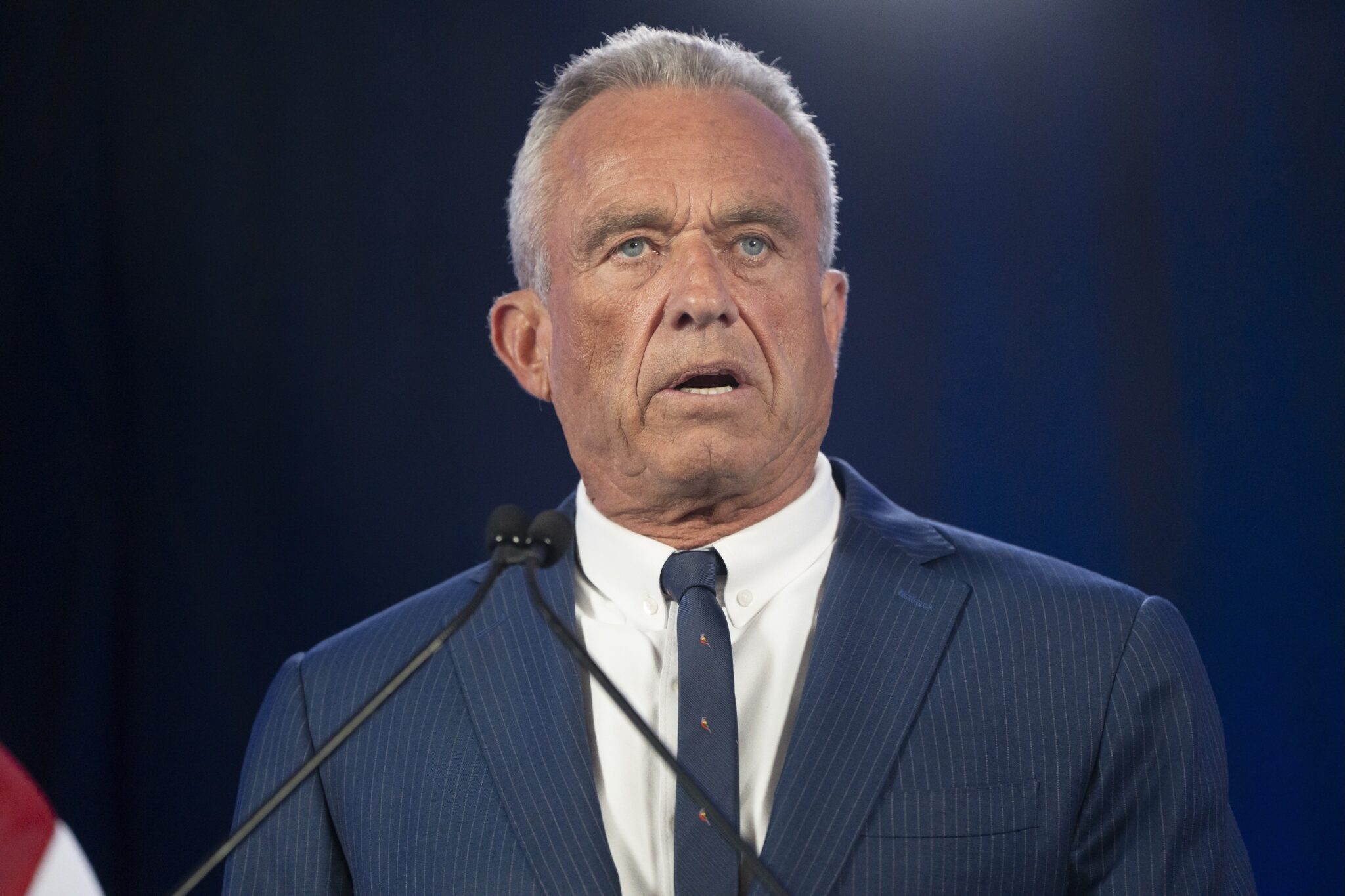
    Robert F. Kennedy Jr. gives remarks at the Renaissance Phoenix Downtown Hotel on Aug. 23, 2024 in Phoenix, Arizona. (Photo by Rebecca Noble/Getty Images)

    By:  Ohio Capital Journal

    WASHINGTON — President-elect Donald Trump announced Thursday he plans to nominate Robert F. Kennedy Jr. to head the Department of Health and Human Services, another controversial candidate who could face a challenging confirmation process in the U.S. Senate given his non-scientific beliefs about public health, including his anti-vaccine stance.

    “I am thrilled to announce Robert F. Kennedy Jr. as The United States Secretary of Health and Human Services (HHS),” Trump posted on social media. “For too long, Americans have been crushed by the industrial food complex and drug companies who have engaged in deception, misinformation, and disinformation when it comes to Public Health.

    “The Safety and Health of all Americans is the most important role of any Administration, and HHS will play a big role in helping ensure that everybody will be protected from harmful chemicals, pollutants, pesticides, pharmaceutical products, and food additives that have contributed to the overwhelming Health Crisis in this Country.”

    HHS receives about $116.8 billion in discretionary federal funds and about $1.7 trillion in mandatory spending each year and houses several big-name public health agencies, including the Administration for Strategic Preparedness and Response or ASPR, the Centers for Disease Control and Prevention, the Centers for Medicare & Medicaid Services, the Food and Drug Administration, the National Institutes of Health and the Substance Abuse and Mental Health Services Administration.

    Kennedy ran in this year’s presidential election as an independent candidate, often repeating inaccurate information about vaccines and spreading other conspiracy theories about public health.

    He has no background in science, research, or medicine. He graduated from Harvard University before going on to receive a law degree from the University of Virginia Law School.

    He pleaded guilty to felony heroin possession in Rapid City, S.D., in February 1984, before receiving two years of probation, which ended a year early. He volunteered with the Natural Resources Defense Council as part of that probation.

    Kennedy spent much of his career as an environmental lawyer and published several books.

    After ending his own presidential bid this year, Kennedy endorsed Trump and campaigned frequently for him.

    Criticism of the nomination began quickly after news broke Thursday, though far-right Republicans are expected to celebrate the nomination.

    Lisa Gilbert, co-president of the watchdog nonprofit organization Public Citizen, released a written statement saying, “Kennedy is a science-denying, morally-bankrupt conspiracy theorist who will endanger people’s lives if placed in a position of authority over health. The U.S. Senate should unanimously reject this nomination.”

    Louisiana Republican Sen. Bill Cassidy, ranking member on the Health, Education, Labor, and Pensions Committee, released a written statement that he’s interested in learning more about Kennedy during the confirmation process.

    “RFK Jr. has championed issues like healthy foods and the need for greater transparency in our public health infrastructure,” Cassidy wrote. “I look forward to learning more about his other policy positions and how they will support a conservative, pro-American agenda.”

    Washington state Democratic Sen. Patty Murray, a senior member of the HELP panel that will hold the confirmation hearing, wrote in a statement that Kennedy “could not be more dangerous — this is cause for deep concern for every American.”

    “There is no telling how far a fringe conspiracy theorist like RFK Jr. could set back America in terms of public health, reproductive rights, research and innovation, and so much else,” Murray wrote. “The consequences here are not theoretical or superficial — health care access, coverage, research, and public health are life or death issues for people — and the COVID pandemic was an all too recent, all too painful reminder.”

    Kentucky Republican Sen. Rand Paul congratulated Kennedy on social media, writing “Congratulations to @RobertKennedyJr on his nomination as Secretary of Health and Human Services. Finally, someone to detox the place after the Fauci era. Get ready for health care freedom and MAHA!”

    Colorado’s Democratic Gov. Jared Polis, a former member of Congress who previously criticized Kennedy’s anti-vaccine stance as a way to bring back polio and measles, cheered his nomination in a lengthy social media post.

    “I hope he leans into personal choice on vaccines rather than bans (which I think are terrible, just like mandates) but what I’m most optimistic about is taking on big pharma and the corporate ag oligopoly to improve our health.”

    Polis added another post about an hour later, writing that science “must remain THE cornerstone of our nation’s health policy and the science-backed decision to get vaccinated improves public health and safety.”

    “But if as a country we follow the science we would also be far more concerned about the impact of pesticides on public health, ag policy on nutrition, and the lack of access to prescription drugs due to drug high prices,” Polis added. “This is why I am for a major shake-up in institutions like the FDA that have been barriers to lowering drug costs and promoting healthy food choices. Lest there by any doubt, I am vaccinated as is my family. I will hold any HHS Secretary to the same high standard of protecting and improving public health.”

    _______

    Jennifer Shutt
    Jennifer Shutt

    Jennifer covers the nation’s capital as a senior reporter for States Newsroom. Her coverage areas include congressional policy, politics and legal challenges with a focus on health care, unemployment, housing and aid to families.

    Ohio Capital Journal is part of States Newsroom, the nation’s largest state-focused nonprofit news organization.

    MORE FROM AUTHOR

  • Ohio Republicans propose requiring proof of citizenship for voting, removal of dropboxes

    Ohio Republicans propose requiring proof of citizenship for voting, removal of dropboxes

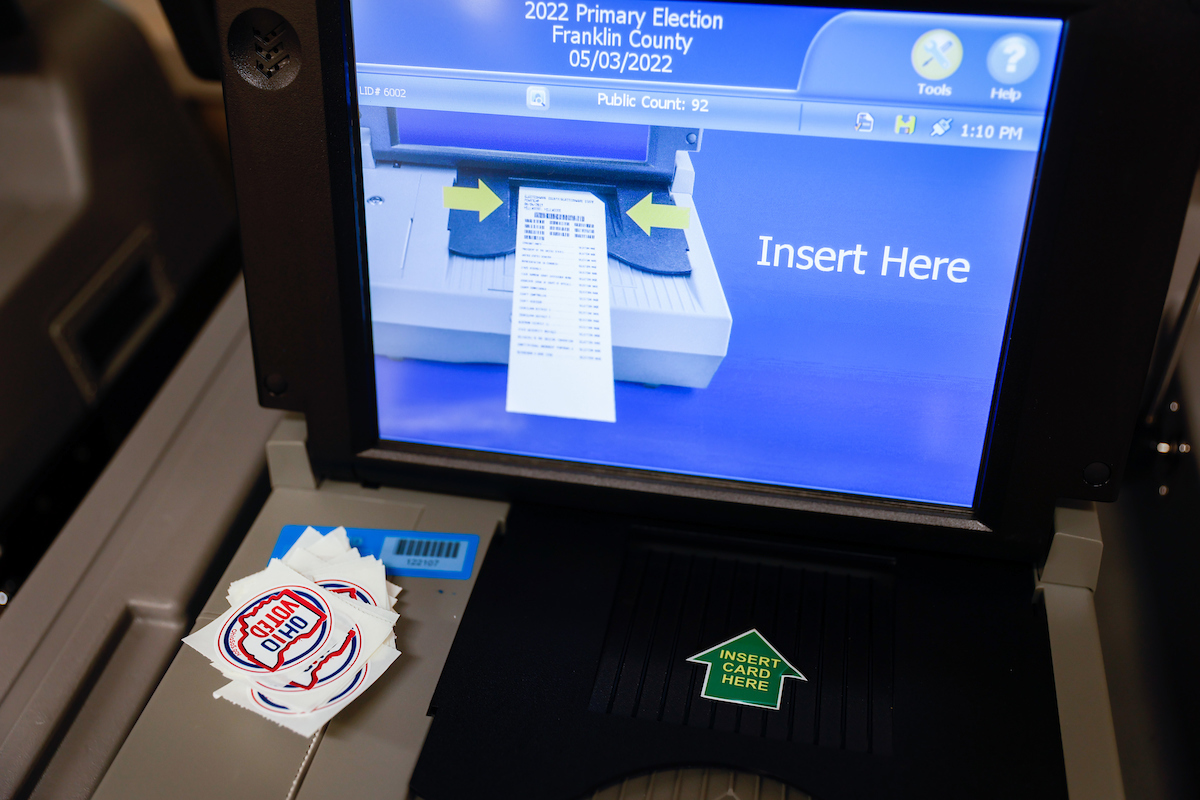
     A ballot counter machine. (Photo by Graham Stokes for the Ohio Capital Journal. Republish photo only with original story.)

    November’s election went off without a hitch and it was a great day for the GOP, but some members still want additional voting restrictions

    By:  Ohio Capital Journal

    Another election has come and gone in Ohio with no reports of widespread fraud. That hasn’t stopped a handful of Republican state senators from advancing legislation to place new restrictions on how Ohioans cast their ballots.

    State Sen. Niraj Antani, R-Miamisburg, has put forward a bill requiring Ohioans show proof of citizenship to register to vote or update their existing registration. Sens. Theresa Gavarone, R-Bowling Green, and Andrew Brenner, R-Delaware, filed another bill imposing proof of citizenship requirements, and the elimination of ballot drop boxes.

     COLUMBUS, OH — FEBRUARY 22: State Sen. Niraj Antani, R-Miamisburg. (Photo by Graham Stokes for Ohio Capital Journal) 

    That state legislation takes its cue from efforts at the federal level backed by U.S. House Speaker Mike Johnson. That proposal, known as the SAVE Act, had little chance of passage with Democrats in control of the U.S. Senate. Now, with a Republicans in control of all three branches of government, it stands a better chance of passing.

    It’s already illegal to register or vote as a non-citizen at the state and federal level. Despite that threat of criminal prosecution, backers still worry current law allows voters to register with little more than a promise.

    It appears that approach has worked exceptionally well, though. Actual reviews of the voter rolls have found cases of actual fraud are vanishingly rare and nowhere close to enough to affect the outcome of races.

    What’s more, the effort to protect voting by demanding citizenship documentation, risks disenfranchising eligible citizens. One University of Maryland study estimated 21 million Americans don’t have ready access to the required documents. After Kansas imposed similar requirements about a decade ago, more than 30,000 voters had their registration suspended or canceled.

    GET THE MORNING HEADLINES.

    Proof of citizenship

    Both measures lay out the same list of documents for verifying citizenship. A U.S. Passport, birth certificate or naturalization certificate will all work, but they lean heavily on existing records held by the Bureau of Motor Vehicles. Lawmakers seem to envision a system in which most initial registrations or updates get verified behind the scenes, with county boards checking with the BMV that it received citizenship documents when a voter got their license.

     COLUMBUS, Ohio — JUNE 07: State Sen. Andrew Brenner, R-Delaware. (Photo by Graham Stokes for Ohio Capital Journal) 

    For people whose information doesn’t match, for instance due to a name change, marriage or divorce, they’ll need to provide a court order or marriage certificate.

    In a press release, Brenner framed their proposal as strengthening laws and adding protections “so that Ohioans continue to know there is a reliable system in place when they cast their vote.”

    Gavarone insisted Ohio remains the “gold standard” for election integrity, but that her bill “addresses areas of the election law we can improve, including an extra layer of protection to enforce our state constitution’s citizenship requirement.”

    “This is a simple fix that strengthens trust and integrity in our institutions,” she added.

    But the proposals could actually see Ohio sacrificing simplicity in the name of security. Federal law does not require proof of citizenship to vote, and so even if lawmakers approve some version of the requirement, they can only really apply it to state forms and state elections. As in Arizona, Ohio voters would still be able to register with federal forms, but they would only be able to vote in federal elections, and ineligible to sign initiative petitions.

    Dropboxes

    While Antani’s proposal sticks to the citizenship requirements, Brenner and Gavarone go a step further and outlaw the use of ballot drop boxes. Although there have been no credible allegations of voter fraud tied to drop boxes, they have been a persistent bugaboo for skeptics.

     COLUMBUS, Ohio — MAY 31: State Sen. Theresa Gavarone, R-Bowling Green. (Photo by Graham Stokes for Ohio Capital Journal) 

    In the most recent election, Ohio Secretary of State Frank LaRose imposed rules effectively limiting their use to individual voters dropping off their own ballot. In an August letter, he urged state lawmakers to consider removing drop boxes altogether.

    Apparently Brenner and Gavarone were listening.

    Their legislation restricts ballot drop-offs to hand delivery — explicitly prohibiting board from accepting ballots “returned by personal delivery to an unattended receptacle.”

    According to the Secretary of State’s early vote dashboard, voters aiming to get their ballot in early were far more likely to vote early in person or mail in their absentee ballot. The roughly 181,000 ballots returned by drop box represented less than 7% of the total. Mail ballots and early in person ballots accounted for 31% and 59% respectively.

    Gavarone justified the drop box rollback with reference to incidents in Oregon and Washington where incendiary devices were placed in drop boxes.

    Follow Ohio Capital Journal Reporter Nick Evans on Twitter.


    Nick Evans
    Nick Evans

    Nick Evans has spent the past seven years reporting for NPR member stations in Florida and Ohio. He got his start in Tallahassee, covering issues like redistricting, same sex marriage and medical marijuana. Since arriving in Columbus in 2018, he has covered everything from city council to football. His work on Ohio politics and local policing have been featured numerous times on NPR.

    Ohio Capital Journal is part of States Newsroom, the nation’s largest state-focused nonprofit news organization.

    MORE FROM AUTHOR

  • Transgender Ohioans and allies are asking Gov. Mike DeWine to veto bathroom ban bill

    Transgender Ohioans and allies are asking Gov. Mike DeWine to veto bathroom ban bill

    By:  Ohio Capital Journal

    Transgender Ohioans, allies and educators are calling on Ohio Gov. Mike DeWine to veto a transgender bathroom ban bill.

    The Ohio Senate voted along party lines to concur Senate Bill 104 Wednesday during their first session back from break. The Ohio House added House Bill 183 (the bathroom bill) to Senate Bill 104 and passed S.B. 104 in June during the last House session before going on break.

    DeWine will have 10 days to sign the bill into law or veto it once he receives it, but he has previously indicated he would sign the bill.

    If the bill is signed into law, it would require Ohio K-12 schools and colleges to mandate people use the bathroom or locker room that aligns with their gender assigned at birth. It would also prevent students from sharing overnight accommodations with people of the opposite sex from their sex assigned at birth for K-12 schools.

    “Trans students are just like students everywhere,” Equality Ohio Executive Director Dwayne Steward said in a statement. “They just want to feel safe and secure in their schools. S.B. 104 is a dangerous bill that puts vulnerable trans youth at risk for abuse and harassment.”

    Anne Anderson, the mom of a transgender high school student, said her family plans on moving out of Ohio because of the anti-transgender legislation.

    “I’m not going to let my daughter suffer through their bigotry,” she said. “My daughter is the shell of a person she once was because of all of this.”

    Anderson said her daughter did not want to go to school the morning after the Senate passed S.B. 104.

    “She will not be going in the boys bathroom,” Anderson said. “It’s just not happening.”

    The American Medical Association officially opposes policies preventing transgender individuals from accessing basic human services and public facilities consistent with gender identity.

    GET THE MORNING HEADLINES.


    “This bill ignores the material reality that transgender people endure higher rates of sexual violence and assaults, particularly while using public restrooms, than people who are not transgender,” Jocelyn Rosnick, policy director for the American Civil Liberties Union of Ohio, said in a statement. “All Ohioans deserve to access the facilities they need, in alignment with their gender identity, without fear of harassment or bullying.”

    Slightly more than half of transgender and nonbinary youth in Ohio considered suicide in 2022, according to the Trevor Project.

    Several organizations are encouraging people to contact DeWine and ask him to veto S.B. 104.

    “Governor DeWine can veto this anti-trans bathroom bill,” Christina Collins, executive director of Honesty for Ohio Education, said in a statement. “It is necessary now more than ever to show our trans community that this is not the will of the people but rather the disposition of extremists in our state legislature that do not represent our communities.”

    Mallory Golski with Kaleidoscope Youth Center said she is hearing people wonder if they will need to start carrying around their birth certificates.

    “It leaves it up to individual school districts to create their own policy, so there’s a lot of uncertainty of what if one school district does it one way and one does it another,” she said. “Will I be penalized for using the bathroom that is allegedly the wrong bathroom?”

    Another question she is hearing is who would enforce the policy?

    “Is it that local community’s law enforcement?” Golski asked. “Is it the principal?”

    People have told her DeWine’s voicemail has been full a couple of times since S.B. 104 passed.

    “It’s clear that Ohioans are overwhelmingly contacting the governor and urging him to veto this legislation,” Golski said.

    Transgender people will always be part of Ohio, said TransOhio Executive Director Dara Adkison.

    “Ohio is a state that held over a hundred prides this year, with thousands and thousands in attendance, that is Ohio,” Adkison said in a statement. “To trans Ohioans and our allies remember that this is our state too, do not seed its story to a bigoted minority.”

    Ohio Federation of Teachers President Melissa Cropper said there are real safety issues that need to be addressed.

    “There is no epidemic of student assaults in bathrooms and locker rooms,” Cropper said in a statement. “There is however an epidemic of gun violence in our schools and communities; firearms are the leading cause of death for American children and teens.”

    State Sen. Jerry Cirino, R-Kirtland, originally introduced S.B. 104 to revise the College Credit Plus Program. Sen. Andrew Brenner, R-Delaware, is also a sponsor of the bill. State Reps. Beth Lear, R-Galena, and Adam Bird, R-New Richmond, introduced the bathroom bill last year.

    Follow OCJ Reporter Megan Henry on X.

    YOU MAKE OUR WORK POSSIBLE.

    __________________
    Megan Henry
    Megan Henry

    Megan Henry is a reporter for the Ohio Capital Journal and has spent the past five years reporting in Ohio on various topics including education, healthcare, business and crime. She previously worked at The Columbus Dispatch, part of the USA Today Network.

    Ohio Capital Journal is part of States Newsroom, the nation’s largest state-focused nonprofit news organization.

    MORE FROM AUTHOR

  • Abortion opponents back measure barring local support programs

    Abortion opponents back measure barring local support programs

    Getty Images

    The bill would claw back public funding for expenses like transportation, lodging or lost wages for people seeking reproductive healthcare

    By:  Ohio Capital Journal

    State lawmakers in Ohio want to prohibit local governments from using public dollars in support of abortion. They’re casting a wide net.

    Legislation sponsored by state Rep. Josh Williams, R-Sylvania, bars public funds from being given directly or indirectly to an organization that provides abortions that aren’t necessary to protect the life of the mother.

    In addition, the bill prohibits funding going to any group providing services for people seeking such abortions like transportation, housing or wage reimbursement. Williams’ measure also takes an apparent swing at public employees by explicitly including paid time off as a prohibited expenditure.

    The bill uses a claw back provision as its enforcement mechanism. If a municipality expends funds in violation of the act, the state would reduce its share of the local government fund appropriation. Dollars withheld under the law would then be directed to a new fund supporting crisis pregnancy centers.

    Williams’ bill requires local governments to report relevant spending on a monthly basis. If they don’t report — or don’t report accurately — they risk losing their entire local government fund appropriation.

    GET THE MORNING HEADLINES.

    Proponents

    In the House Government Oversight committee, the usual representatives of the anti-abortion movement showed up to testify in favor of Williams’ bill.

    Will Kuehnle from the Catholic Conference of Ohio argued, “In no circumstance should state dollars, even by subsidy, bring about the termination of a human life.”

    He highlighted programs like one in Columbus granting half a million dollars to support women seeking abortions by reimbursing travel and childcare costs rather than the procedure itself. The appropriation was made with federal dollars from the American Rescue Plan, and it was approved by Columbus City Council shortly after the U.S. Supreme Court overturned Roe v. Wade triggering Ohio’s earlier 6-week abortion ban to snap into effect.

    In his sponsor testimony, Williams cited initiatives in other cities as well — all backed by federal rather than state dollars, and none of which paid for medical procedures.

    Kuehnle insisted if the city wants to offer assistance like paying for travel it should be spending that money supporting mothers rather than people seeking abortions. He argued in many circumstances, people seek an abortion because they’re not receiving some critical service from their community.

    “What this bill seeks to do is to take every dollar that we can give to a woman in need and make sure that’s where it’s going,” he said.

    Notably, while the measure punishes cities for supporting services connected to some abortions, it doesn’t actually provide services to pregnant people or young parents. Although some crisis pregnancy centers provide things like diapers, their primary mission is to discourage abortion.

    Emma Martinez from Ohio Right to Life criticized the same Columbus grant and cast her organization’s support for Williams’ bill in moral terms.

    “This legislature has drafted numerous laws that not only protect taxpayers from paying for abortions, but also that protect taxpayers’ conscience rights,” she argued.

    And Nilani Jawahar from the Center for Christian Virtue emphasized the legislation’s punitive approach to local governments.

    “This legislation is simple,” she said. “Counties and municipalities may spend their money as they please, but if they receive state funds for a specific purpose and they choose to spend it funding elective procedures, they are demonstrating to the state that they do not need that money, and therefore the state has a right to withhold it and direct it to where it may be put to better use.”

    Skeptical Democrats

    The measure’s proponents were met with pushback from the committee’s Democratic members.

    State Rep. Latyna Humphrey, D-Columbus, emphasized unintended consequences. Cutting off funds to entities that provide elective abortions risks cutting off access to other healthcare services those organizations provide, like screening for sexually transmitted infections.

    “You all understand that health care is a necessity, specifically in communities where there are health care deserts.” Humphrey pressed Kuehnle. “So I understand you all don’t believe in abortions, but entities like Planned Parenthood and others do provide health care services outside of that.”

    Meanwhile, Rep. Dani Isaacsohn, D-Cincinnati, asked Jawahar how lawmakers could square the bill’s approach with Ohio voters’ support for protecting reproductive rights in the vote for Issue 1.

    “What I’m asking is, how would you summarize the will of the voters as expressed in Issue 1 last year?” he said. “What did the voters express with Issue 1’s passage last year?”

    After a bit of back-and-forth Jawahar replied, “I’m not here to talk about the will of the voters, I’m here to talk about this bill and why we support it.”

    Follow Ohio Capital Journal Reporter Nick Evans on Twitter.

    YOU MAKE OUR WORK POSSIBLE.


    Nick Evans
    Nick Evans

    Nick Evans has spent the past seven years reporting for NPR member stations in Florida and Ohio. He got his start in Tallahassee, covering issues like redistricting, same sex marriage and medical marijuana. Since arriving in Columbus in 2018, he has covered everything from city council to football. His work on Ohio politics and local policing have been featured numerous times on NPR.

    Ohio Capital Journal is part of States Newsroom, the nation’s largest state-focused nonprofit news organization.

    MORE FROM AUTHOR