Author: Ohio Capital Journal

  • Ohio transgender bathroom ban bill heads to Gov. Mike DeWine’s desk

    Ohio transgender bathroom ban bill heads to Gov. Mike DeWine’s desk

    (Getty Images)

    Ohio transgender bathroom ban bill heads to Gov. Mike DeWine’s desk

    Southwest Ohio lawmakers, Senator George Lang and Representative Jennifer Gross are Cosponsors of the legislation.

    By:  Ohio Capital Journal

    A bill that would ban transgender students from using school bathrooms and locker rooms that align with their gender identity is going to Ohio Gov. Mike DeWine’s desk.

    The Ohio Senate voted to concur on Senate Bill 104 in a 24-7 party-line vote Wednesday afternoon. The Ohio House wove House Bill 183 (the bathroom ban bill) into S.B. 104 and passed the bill before going on break at the end of June.

    Once DeWine receives S.B. 104, he will have 10 days to sign the bill into law or veto it.

    “We have no new comments today,” DeWine’s press secretary Dan Tierney said in an email Wednesday afternoon. “As far as receipt, sometimes that can take a week or more.”

    The bill would require students at Ohio K-12 schools and colleges use the bathroom or locker room that aligns with their gender assigned at birth. It would not prevent a school from having single-occupancy facilities. The bill would not apply to someone helping a person with a disability or a child younger than 10 years old being assisted by a parent, guardian or family member.

    About 3% of high school students identify as transgender, according to recent data from the Centers for Disease Control and Prevention.

    The American Medical Association officially opposes policies preventing transgender individuals from accessing basic human services and public facilities consistent with gender identity.

    State Sen. Jerry Cirino, R-Kirtland, introduced S.B. 104, which revises the College Credit Plus Program, and he spoke about the House adding the bathroom bill to his bill.

    “It revolves around safety, security and, I think, common sense,” he said. “It protects our children and grandchildren in private spaces where they are most vulnerable. It is us using our legislative authority to ensure schools are, in fact, safe environments. After all, bathrooms, showers, changing rooms should all be safe places for our students.”

    Senate Democrats spoke in opposition to weaving the bathroom ban into S.B. 104.

    “We could not wait one week, not one single week before we start attacking children once again in this legislative body,” said state sen. Bill DeMora, D-Columbus.

    State Sen. Kent Smith, D-Euclid, said S.B. 104 started off as a good piece of legislation “that got turned into something that’s certainly not what was intended when this chamber last heard it.”

    “Lame duck often takes good legislation and makes it terrible,” he said.

    If the bill becomes law, Ohio Senate Minority Leader Nickie Antonio, D-Lakewood, said it “is destined for litigation.”

    “I am in disbelief that this is a top priority on our first session back from recess,” Antonio said. “This bill is not about bathrooms. It’s about demonizing those who are different, and our children are watching and listening to the fearmongering.”

    State Reps. Beth Lear, R-Galena, and Adam Bird, R-New Richmond, introduced H.B. 183 last year and it has received lots of pushback from the LGBTQ+ community. More than 100 people testified against the bill in committee.

    GET THE MORNING HEADLINES.


    Nearly a third of LGBTQ+ students said they were prevented from using the bathroom that aligned with their gender, and 26% were stopped from using the locker room that aligned with their gender, according to Ohio’s 2021 state snapshot by GLSEN, which examines the school experiences of LGBTQ middle and high school students.

    When looking specifically at transgender and nonbinary students, 42% were prevented from using the bathroom that aligned with their gender and 36% couldn’t use the locker room that aligned with their gender, according to the Ohio GLSEN report.

    A 2019 study published in the journal Pediatrics reported transgender youth are at greater risk of sexual violence when they are unable to use the bathroom that aligns with their gender.

    About a quarter of the 3,673 trans and nonbinary middle and high school students surveyed in the United States reported being sexually assaulted in the last 12 months, according to the 2019 study. The number went up to 35% among students who attended schools that limited their bathroom and locker room access.

    Other states with bathroom bans

    Arkansas, Idaho, IowaKentuckyOklahoma, Tennessee, AlabamaLouisianaMississippiNorth Dakota, Florida, and Utah all have laws on the books that ban transgender people from using the bathroom that aligns with their gender identity in schools.

    These laws, however, have been challenged in Florida, Oklahoma, Idaho, and Tennessee. The U.S. Court of Appeals for the 9th Circuit blocked Idaho’s law last year.

    North Carolina was the first state to limit bathroom access to transgender people in 2016, but the law was repealed in 2017 and ultimately settled in federal court in 2019. The law cost the state hundreds of millions of dollars.

    “Everybody deserves to pee”

    LGBTQ+ advocates held a press conference in opposition to the bathroom bill before the Senate session.

    “Everybody deserves to be able to pee, and everyone deserves to pee,” said Dara Adkison, executive director of TransOhio.

    This bill would directly affect transgender college student Leo Duru.

    “What if I was forced to use the bathroom of my assigned sex at birth, a women’s restroom?” Duru said. “As a 21-year-old trans man, I can’t believe adult students would be subjected to restroom policies decided by politicians forcing teachers, professors and administrators to invade trans students’ personal privacy.”

    Mallory Golski with Kaleidoscope Youth Center shared concerns she hears from students who are already worried about using the bathroom in school.

    “I realized that it’s not uncommon for them to feel fatigued or even dizzy at times during (swim) practice, because they’re often dehydrated,” she said. “It is not because they’re not thirsty or because they don’t know the reason that they should be drinking water. It’s because they don’t feel comfortable or safe using the gendered restrooms at school.”

    Organizations are calling on DeWine to veto S.B. 104.

    “Everyone should be able to use the bathroom without being the target of bullying – from their peers, and especially from state legislators,” Kaleidoscope Executive Director Erin Upchurch said in a statement.

    “This bill has nothing to do with student safety and everything to do with political opportunism,” Ohio Federation of Teachers President Melissa Cropper said in a statement. “There is no epidemic of student assaults in bathrooms and locker rooms.”

    This is the second bill related to transgender issues that has gone to DeWine’s desk so far this General Assembly. Last December, DeWine vetoed House Bill 68, the ban on gender-affirming care for trans youth, but the House and Senate quickly voted to override his veto.

    Antonio is not optimistic DeWine will veto S.B. 104.

    “I don’t expect that,” Antonio said. “I think this bill was framed in a way that was very, very different.”

    DeWine previously indicated he would sign the bill.

    Follow OCJ Reporter Megan Henry on X.

    YOU MAKE OUR WORK POSSIBLE.

    ______________
    Megan Henry
    Megan Henry

    Megan Henry is a reporter for the Ohio Capital Journal and has spent the past five years reporting in Ohio on various topics including education, healthcare, business and crime. She previously worked at The Columbus Dispatch, part of the USA Today Network.

    Ohio Capital Journal is part of States Newsroom, the nation’s largest state-focused nonprofit news organization.

    MORE FROM AUTHOR

  • Ohio AG Yost allows voting amendment to proceed, other proposals might not be far behind

    Ohio AG Yost allows voting amendment to proceed, other proposals might not be far behind

    Ohio Attorney General Dave Yost. (Photo by Morgan Trau, WEWS.)

    By:  Ohio Capital Journal

    Last week, Ohio Attorney General Dave Yost allowed a state constitutional amendment to go forward after previously rejecting it.

    His approval was a formality — the Ohio Supreme Court recently ruled he could not reject the Ohio Voters Bill of Rights simply because of its title — but it could open to door to another amendment Yost has repeatedly blocked.

    In Ohio’s ballot initiative process the Attorney General plays a crucial gatekeeping role. After a committee has drafted its amendment and collected an initial 1,000 signatures, the AG gets to decide if what they’ve got down on paper represents a “fair and truthful” statement of what their proposal would actually do.

    It gives the AG significant power over whether a petition eventually winds up on the ballot.

    His approval, under court order, of the Ohio Voters Bill of Rights came after two previous rejections. A different measure to end qualified immunity received rejection letters seven times. But following the recent decision, the AG and the committee pushing to restrict legal protections for public employees like police officers are asking the state Supreme Court how its ruling impacts their proposal.

    The Ohio Voters Bill of Rights

    The amendment covers all the basics — voting is a fundamental right for anyone 18 years and older who is citizen of the U.S. and Ohio — and enshrines them in the state constitution. By establishing those rights in the state charter, procedures like early voting or absentee voting couldn’t be rolled back by a simple act of the General Assembly; those rights would become the floor rather than the ceiling.

    GET THE MORNING HEADLINES.


    However, the bill of rights goes a few steps further to make voter registration and casting a ballot far easier. The amendment would establish an automatic voter registration process which would update or register eligible voters anytime they interact with the Ohio Bureau of Motor Vehicles.  In addition, the proposal would establish same-day voter registration and grant counties the ability to open up additional ballot drop boxes or early voting sites.

    Although Republican Secretary of State Frank LaRose previously supported the idea of automatic voter registration, he derided the proposed amendment late last year.

    “Let me be clear: there will be nothing secure and fair about the way we vote in this state if this amendment is passed,” he said in a press release. “It’s a direct assault on the integrity of our voting process and the safeguards we’ve put in place to hold that process accountable.”

    Yost objected to the use of “bill of rights” to describe a series of provisions related to voting administration rather than “an articulation of specific, discrete rights that may be enforced by individuals against the government.” The Supreme Court wasn’t buying it, and noted in 2014 then-AG Mike DeWine advanced a proposal with the exact same name.

    But Yost didn’t give his approval without a parting shot. In his letter to the committee, he insisted, “the fact that the recent decision of the Supreme Court of Ohio concludes the relevant statute does not grant me authority to review the title does not change my determination that it is misleading.”

    “The Court did not reach a decision on the merits of that determination,” he went on. “I stand by it. I urge you to consider a more accurate and less misleading title.”

    The amendment formerly known as…

    Qualified immunity is a judicial doctrine holding that public officials should have protection from personal liability for their official conduct. Essentially, if an official is operating in good faith in murky legal waters they should be given the benefit of the doubt. The idea has been around since the late-1960s, but in recent years it has been used to shield police officers in excessive force cases.

    The Ohio Coalition to End Qualified Immunity has been working to get an amendment on the ballot, and in the last two years the state attorney general has rejected seven iterations of their amendment. The most recent proposal, submitted last July, has no title at all after Yost criticized the “Protecting Ohioans’ Constitutional Rights” name they’d given the earlier proposal.

    Yost rejected the untitled amendment, too — insisting the title “is an indispensable piece to determining whether the summary of it is fair and truthful.”

    But following the Ohio Supreme Court ruling that Yost couldn’t reject the Ohio Voters Bill of Rights based solely on the title, the AG and the committee backing the qualified immunity rollback are asking the court how the decision impacts their case.

    Last week both parties filed a joint motion with court to set aside the existing fight over the title and order the attorney general to go forward with his “fair and truthful” review of the underlying amendment summary.

    Last Wednesday, the court put briefing on hold for that underlying case, while it decides whether to order Yost go forward with his review.

    Follow OCJ Reporter Nick Evans on Twitter.


    Nick Evans
    Nick Evans

    Nick Evans has spent the past seven years reporting for NPR member stations in Florida and Ohio. He got his start in Tallahassee, covering issues like redistricting, same sex marriage and medical marijuana. Since arriving in Columbus in 2018, he has covered everything from city council to football. His work on Ohio politics and local policing have been featured numerous times on NPR.

    Ohio Capital Journal is part of States Newsroom, the nation’s largest state-focused nonprofit news organization.

    MORE FROM AUTHOR

  • What Ohio’s new GOP Senator and prominent Trump ally see ahead in 2025

    What Ohio’s new GOP Senator and prominent Trump ally see ahead in 2025

    By:  Ohio Capital Journal

    Senator-elect Bernie Moreno and former presidential candidate Vivek Ramaswamy are touting the Trump’s policy proposals in softer tones

    At an Ohio Chamber of Commerce conference last week Trump allies struck a conciliatory tone at odds with the increasingly hostile rhetoric of the president-elect. Donald Trump has promised sweeping deportations, to mobilize police or even military force against a perceived “enemy within,” and to serve as a kind of avatar of “retribution” on behalf of his supporters.

    But to hear Senator-elect Bernie Moreno and former presidential candidate Vivek Ramaswamy tell it, the incoming Trump administration will be an open hand rather than a closed fist. Their message? “Give him a chance,” instead of woe to the vanquished.

    “I’m confident that he is eager to harness the learnings of that first term to go even further in this second term than anybody imagined even in uniting the nation,” Ramaswamy said of Trump.

    In the very next breath he added the caveat, “Maybe not through words, through cheap verbiage — that doesn’t really unite people. But action does. Success is unified.”

    Moreno offered a similar ‘tired of winning’ message, and committed to establishing a presence for his office in places that didn’t vote for him.

    But even if both men struck a softer tone, that shift in tenor appears to be extent of the changes they expect. There was little to suggest they believe Trump will moderate on his stated policy priorities.

    GET THE MORNING HEADLINES.

    A mandate

    After ousting three-term Democratic Sen. Sherrod Brown, and in light of Republican gains across the country, Moreno argued his party has “a mandate to lead.” But he was also circumspect.

    “Look, I did not win the vote in Franklin County,” he said. “I did not win the vote in Cuyahoga County, Hamilton, Lucas, Summit, Athens or Montgomery — not that I’m keeping track.”

    “But that means that’s my fault,” Moreno added. “I look at that as my failure. I failed to explain to the people in those counties why I would best represent them, and I will fix that over the next six years.”

    He argued you won’t find a more pro-immigration Republican than him, “but I’m not pro-invasion.” Moreno said he wants to see a system that prioritizes people who add to the economy and don’t bring down wages, and suggested the country could even expand the number of visas and temporary work permits. But he said there should be “zero tolerance” for illegal immigrants.

    Moreno said he’d work to “drive down the cost of everything.” The recipe, he argued, is to “massively cut” federal spending and to expand energy production.

    “For those of you who care about the planet, like I do, us building coal mines here, and coal fired plants and natural gas is better for the planet because we do it safer, cleaner and much more efficiently than any other place on earth,” Moreno argued. He added that although there’s room for solar and wind, without subsidies they wouldn’t be viable sources.

    The U.S. is already the world’s largest producer of oil and natural gas, and the fourth largest producer of coal — all of which benefit from federal subsidies.

    Moreno argued we need a “renaissance of automobile manufacturing” in the United States, and that the way to do it is eliminating subsides for purchasing electric vehicles or mandates on EV production or fuel efficiency.

    But while he expressed skepticism toward government intervention in energy production or automobile manufacturing, one place he doesn’t want to see federal officials step back is the Intel project in Licking County. Trump has criticized the CHIPS Act legislation that helped spur the project along, and Moreno acknowledged “maybe I don’t love the exact way the bill is structured.” He’d be more comfortable with tax incentives than grants, Moreno explained.

    All the same, he argued, “the federal government made promises to Intel (that) they’ve not kept. The federal government said they’d give them billions of dollars in exchange for an investment. Not one cent of federal money has flowed into Intel.”

    “We cannot lose that project,” Moreno said, adding “too many businesses in central Ohio are relying on that project to go forward.”

    He emphasized the national security implications of bringing semiconductor production on shore and said he’d press the commerce secretary personally if necessary to get money flowing.

     Republican presidential candidate Vivek Ramaswamy delivers remarks at the Faith and Freedom Road to Majority conference at the Washington Hilton on June 23, 2023 in Washington, DC. (Photo by Drew Angerer/Getty Images) 

    Rooting for them

    Ramaswamy founded a biotech startup before gaining prominence in conservative circles as an author criticizing “woke” politics. He launched a longshot presidential campaign that saw his star rise even further, and he’s now seen as a possible Trump administration appointee or a future candidate for statewide office in Ohio.

    He told the crowd he’s “rooting” for Democrats to step away from the cultural issues he’s railed against and argued the country would be stronger for it with both parties “pushing the other to be the best version of itself.” He argued for restoring a political discourse where “we can disagree like hell as Americans and still get together at the dinner table.”

    “And if you give them a chance,” he said, “even if you’re on the left, I’m confident that that is the America that Donald Trump and our fellow Ohioan and good friend J.D. Vance, I think, are going to work hard to revive from the top and set an example for this country.”

    But if Democrats don’t, he warned, they could be headed for “the dustbin of history.”

    Ramaswamy readily defended one of Trump’s biggest policy promises.

    “If we had the largest influx of illegals into this country in American history, it stands to reason that we ought to have the largest mass deportation in American history,” he insisted. “That’s not xenophobic, that’s not racist. That’s what it means to stand for the rule of law in the United States of America.”

    He criticized independent federal agencies as a “fourth branch of government.” In truth, agencies generally are part of the executive branch of government, with top staff selected by the president. Their authority in a particular field like employment (National Labor Relations Board), trade (Federal Trade Commission) or communications (Federal Communications Commission) is delegated to them by an act of Congress.

    But Ramaswamy argued a pair of recent Supreme Court rulings offer “a one-two punch” that could severely restrict their ability to act.

    “It is a century-long sin in the United States of America,” he said, “that we now have a historic and generational opportunity to correct.”

    Follow OCJ Reporter Nick Evans on Twitter.


    Nick Evans
    Nick Evans

    Nick Evans has spent the past seven years reporting for NPR member stations in Florida and Ohio. He got his start in Tallahassee, covering issues like redistricting, same sex marriage and medical marijuana. Since arriving in Columbus in 2018, he has covered everything from city council to football. His work on Ohio politics and local policing have been featured numerous times on NPR.

    Ohio Capital Journal is part of States Newsroom, the nation’s largest state-focused nonprofit news organization.

    MORE FROM AUTHOR

  • Panel of Ohio lawmakers from both parties talk next moves for legislature in lame duck and beyond

    Panel of Ohio lawmakers from both parties talk next moves for legislature in lame duck and beyond

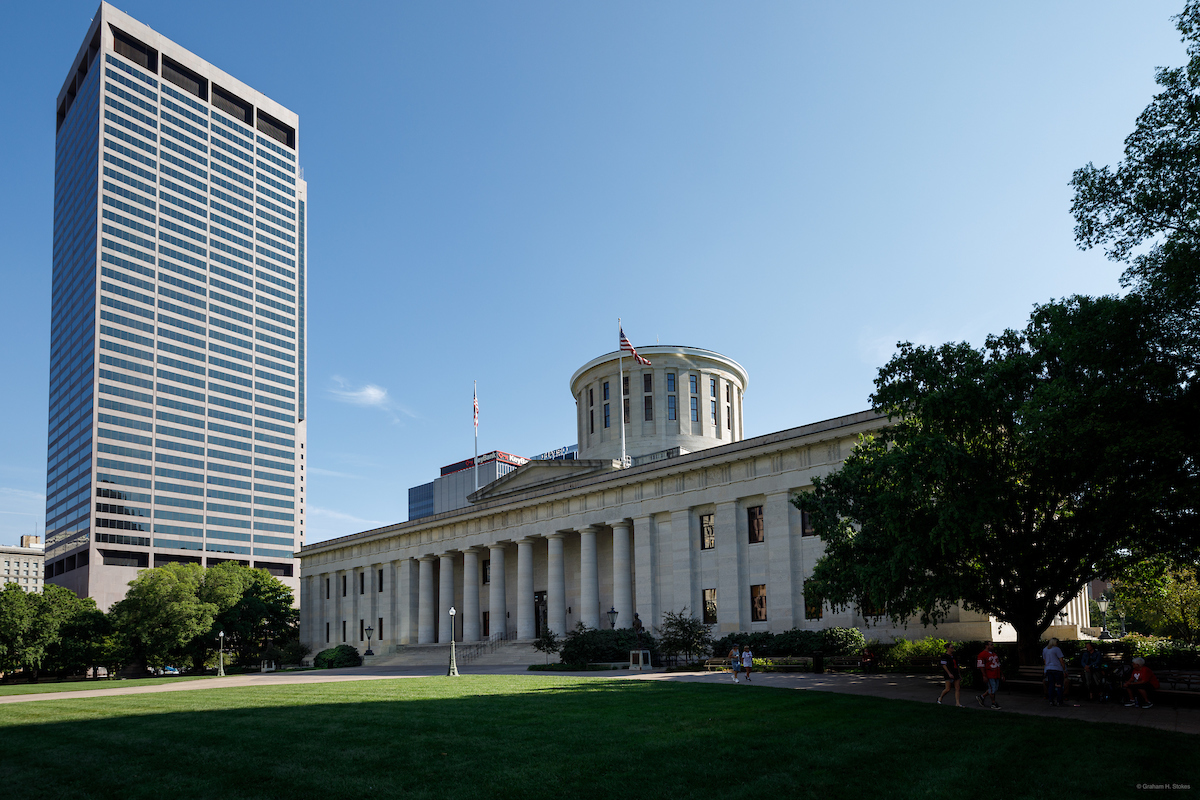
    The Oho Statehouse, Columbus, Ohio. (Photo by Graham Stokes for the Ohio Capital Journal. Only republish photo with original story.)

    By:  Ohio Capital Journal

    Following an election which brought two more Democrats to the Ohio Senate and Ohio House each, but struck down redistricting reforms and maintained Republican supermajorities, lawmakers are planning their next moves when it comes to policy.

    The Ohio General Assembly has two more months of its current term before the year begins with a state operating budget to be developed and approved, and other policy priorities to address without federal COVID funding boosts the GA had in previous years.

    Four members of the legislature met at a Thursday post-election event hosted by the Ohio Chamber of Commerce to discuss the way forward in addressing topics like education and property taxes, while balancing a need for economic goals alongside social issues.

    Lame duck

     The Ohio Chamber of Commerce’s Rick Carfagna, far left, speaks with state Sen. Bill DeMora, state Rep. Scott Oelslager, state Rep. Dani Isaacsohn and state Sen. Rob McColley during a Thursday panel on the future term of the Ohio General Assembly. (Photo by Susan Tebben/Ohio CapitalJournal) 

    State Sen. Rob McColley, R-Napoleon, sat alongside fellow Sen. Bill DeMora, D-Columbus, and state Reps. Dani Isaacsohn, D-Cincinnati, and Scott Oelslager, R-North Canton, at the panel discussion.

    All the men said bipartisanship should be an aim for the legislature, despite the Republican supermajority, and they all anticipated the usual late nights as the upcoming lame duck legislative session ties up loose ends by the end of the year.

    “I can tell you, it won’t be fun,” McColley told his colleagues. “Don’t fall asleep at your desk.”

    The Ohio House has four sessions scheduled between now and the end of December, with another three “if needed” sessions set aside, just in case. The Ohio Senate has scheduled five sessions for the rest of 2024.

    “I’m actually hopeful we don’t have any sessions, so we can’t screw the state over like we normally do with lame duck every two years,” DeMora said at Thursday’s chamber event.

    But DeMora and others do have some bipartisan-sponsored bills to push before they must be reintroduced at the beginning of the new GA.

    Specifically for DeMora, he hopes to see passage of a bill mandating insurance coverage for children’s hearing aids, along with an election worker protection bill.

    Isaacsohn said he wants to see relief in the area of property taxes, calling it “outrageous” that there hasn’t been legislative movement to stem the “skyrocketing” taxes without impacting local schools who rely on those taxes.

    “It’s what our constituents are calling our offices about, it’s what people are feeling,” Isaacsohn said. “And it should not come at the expense of our public schools.”

    McColley agreed that property taxes are something the legislature “needs to take a serious look at.”

    “I do think Ohioans who are looking at it would be fine if it was just simply more predictable and easy to understand as to how these property tax rates are calculated, and maybe even if there was a cap on the level of increase that can happen going forward,” McColley said.

    Redistricting and the general election

    The results of Tuesday’s election did not go unspoken by the four legislators. Isaacsohn said it was worth mentioning that the Democrats picked up two more seats in an Ohio Senate that is still strongly held by a Republican majority, and McColley used the fact that Democrats made gains in an otherwise GOP-dominated election as an argument for the current redistricting system in Ohio.

    “That is, in my opinion, largely as a result of – not only were there candidates and good races won – but primarily the redistricting bipartisan unanimous map that we came up with in the last cycle,” McColley said.

    Tuesday’s elections results mean Republican supermajorities go from 67-32 in the Ohio House to 65-34, and from 26-7 in the Ohio Senate to 24-9.

    In unofficial results as they stand now from Tuesday night, President-elect Donald Trump won Ohio 55-44. In an average of the results for the statewide races for President, U.S. Senate, and the three Ohio Supreme Court races, Republican candidates earned 54.22% of Ohioans’ votes, while Democrats earned 44.76%.

     Senate Majority Floor Leader Rob McColley, R-Napoleon, speaks at the Ohio Redistricting Commission meeting, September 20, 2023. (Photo by Graham Stokes for Ohio Capital Journal) 

    McColley was on the Ohio Redistricting Commission when the most recent Statehouse map was adopted – the sixth revision made by the commission in two years – and he said the creation of that map with bipartisan support was proof that a map could be drawn that was “something that may have been intended when the initial amendments were passed in 2015 and 2018.”

    The two Democrats on the commission have said they agreed to the map adoption because if they didn’t Republicans said they would’ve drawn something even more unfavorable to Democrats, and in hopes that voters would end the ORC’s map-making with Issue 1 this year.

    Oelslager agreed with McColley, saying Ohioans’ the defeat of Issue 1 on Tuesday with 54% of the vote “sent a clear message that they did not want to change the process.”

    Isaacsohn pushed back, saying the fact that every single incumbent who ran was reelected in the House and the Senate shows “something is off there.”

    “Every incumbent should not win in any year for any party. That’s not a healthy democracy,” Isaacsohn said. “There is no way that 132 of them are doing a good enough job and that voters don’t want a change there.”

    He added that even with the “red wave year all over the country, including in Ohio,” the voter trends still didn’t match the partisan makeup drawn into the Statehouse maps by the ORC.

    “We should continue to at least be honest with ourselves about how disproportionate and imbalanced the partisan makeup of the legislature is,” Isaacsohn said.

    DeMora mirrored arguments made by Citizens Not Politicians and other supporters after Issue 1 was defeated, saying some of the Ohioans who voted against the measure were “confused” by summary ballot language approved by the Ohio Ballot Board, and actually supported the measure itself.

    Moving forward, McColley and Oelslager said conversations could begin within the legislature as to what changes could be made to the state’s redistricting process, including if Gov. Mike DeWine’s preference that the state look to something like the process Iowa has could go forward.

    Iowa’s process relies on legislative and gubernatorial approval of maps drawn by a nonpartisan governmental group, in Ohio’s case, possibly the Ohio Legislative Service Commission.

    “I do think there will probably be discussions about whether we can improve upon our existing process, and that may very well involve discussions around who sits on the commission,” McColley said.

    Funding the state

    As for policy decisions in the new year, legislators are hopeful to put forth a budget that addresses the basic needs of Ohioans, even if they disagree on what those basic needs are.

    “From a general standpoint, (the Republican caucus) will continue our philosophy of doing all we can to make Ohio a good place to raise a family, begin a business, have a culture where people take a look at our great place and say ‘I want to come there,” Oelslager said.

    Those priorities for Oelslager include the three biggest budget items they see for the state: health care, education and the state’s prisons system.

    As far as education, Oelslager said implementing the Fair School Funding Plan is “again part of the discussion for renewal,” but so, too, is the EdChoice private school voucher program, “and I’m sure that’ll be part of the K-12 education proposal,” he said.

    Priorities may remain largely the same as in other years for the GOP, but the revenues with which to pay for those policies will be impacted by the fading-out of federal funding from the COVID-19 pandemic.

    “This could be a different budget cycle depending on how a lot of this plays out,” McColley said. “Obviously, the economy’s in a little bit different shape now than it was two years ago, four years ago, six years ago.”

    Policy priorities in the new year

    McColley said the Senate still plans to work on reducing tax burdens, de-regulation “across the board” and expansion of “education options” for Ohioans.

    DeMora had what he saw as an easy fix for the money problems that could show up in the state over the next few years.

    “I can find a billion dollars in the budget if we get rid of vouchers,” DeMora said. “We’ll have a billion dollars more to spend in the budget right there.”

    Earlier this year, the Ohio Department of Education and Workforce found that the state spent $970.7 million on private school scholarship programs in the 2024 fiscal year, the first year of eligibility for nearly all Ohio students.

    Other money sources could come from recreational marijuana sales and the expansion of gaming, DeMora said, if the governor was willing to support it.

    “We’re going to see if the governor is more into fiscal responsibility or if his opposition to both gaming and marijuana is going to not have him look at those two sources of funding for the state when all this federal money is no longer here,” DeMora said.

    Isaacsohn said it wasn’t a bad idea to grab the revenue possible from those sources, but when taxes could be raised on the richest Ohioans instead, he didn’t see the logic.

     Ohio State Rep. Dani Isaacsohn (D-Cincinnati) speaking at a press conference. (Photo by Morgan Trau, WEWS.) 

    “Instead of taxing the wealthiest people, we are going to try and raise revenue by hoping people gamble more or do more substances,” Isaacsohn said. “That’s an odd choice, I think, for policymakers to make.”

    One thing that will arise despite discussions about the need for more economic goals in the legislature is “cultural issues,” which McColley and Oelslager defended as issues that are important to their constituents.

    The Ohio Chamber’s Senior Vice President of Government Affairs, Rick Carfagna, moderated the Thursday panel, and said there’s been “this opportunity cost of time, energy and resources that seems to have been spent on divisive social issues at the expense of economic policies.”

    He asked legislators if there was a path to refocus on those issues. McColley said it’s possible to do both.

    “Frankly, some of these social issues, people look to us and say what other avenue or what other remedy do I have if my state government is not willing to step in and take care of these things,” McColley said.

    He said the law that Ohio passed to keep transgender students from playing sports with the group that aligns with their gender identity played into a “central campaign issue,” both nationally and at the state level, one that he said voters supported.

    “That’s something that I would say Ohioans want to see happen by and large,” McColley said.

    The Washington Post reported Tuesday that Republican spent at least $215 million on anti-trans ads during the 2024 campaign cycle.

    YOU MAKE OUR WORK POSSIBLE.

  • Ohio Republican lawmaker wants to prohibit selling intoxicating hemp products

    Ohio Republican lawmaker wants to prohibit selling intoxicating hemp products

    Getty Images

    By:  Ohio Capital Journal

    State Sen. Steve Huffman, R-Tipp City, introduced a bill that would ban the sale of intoxicating hemp products in Ohio.

    The Republican lawmaker introduced Senate Bill 326 on Thursday. State lawmakers are set to return to the Ohio Statehouse next week for the start of lame duck.

    S.B. 326 defines intoxicating hemp products as containing more than 0.5 of a milligram of delta-9 THC per serving, two milligrams of delta-9 THC per package, or 0.5 of a milligram of total non-delta-9 THC per package, according to the bill’s language.

    “This act is hereby declared to be an emergency measure necessary for the immediate preservation of the public peace, health, and safety,” the bill said. “The reason for such necessity is to protect Ohioans, especially Ohio’s youth, from untested, unregulated dangerous tetrahydrocannabinol (THC) products. Therefore, this act shall go into immediate effect.”

    Marijuana, which is legal in Ohio, is not included as an intoxicating hemp product, according to the bill’s language. Ohio recreational marijuana sales recently topped $143.4 million since sales started three months ago, according to the the Ohio Department of Commerce Division of Cannabis Control.

    The 2018 Farm Bill says hemp can be grown legally if it contains less than 0.3% THC. Intoxicating hemp products can come in many forms including edibles, beverages, vaping cartridges or oils, among other things.

    Delta-9 THC is the main naturally occurring intoxicating part of the cannabis plant and people typically experience a high after consuming or smoking delta-9 THC beyond a certain threshold.

    Under S.B. 326, the Ohio Investigative Unit would enforce this piece of legislation if it were to become law, with the assistance of the Ohio Department of Public Safety.

    GET THE MORNING HEADLINES.


    The Ohio Department of Commerce Director (who is currently Sheryl Maxfield) could impose an administrative penalty against someone who sells intoxicating hemp products — $10,000 for a first violation, $25,000 for a second violation and $50,000 for a third violation.

    Violating the proposed law would be a first degree misdemeanor on a first offense and a fifth degree felony for a second offense, according to the bill’s language. It would be a fifth degree felony if someone sold intoxicating hemp to someone under 21.

    Other hemp legislation

    This is not the first bill Huffman has introduced this year that has to do with hemp products.

    State Sen. Kirk Schuring, R-Canton, and Huffman introduced S.B. 278 in May that would ban selling adult-use hemp products to people under 21. The bill would also require stores to keep adult-use hemp products behind the counter and ID customers who want to purchase those products.

    Over in the House, State Rep. Sara Carruthers, R-Hamilton, introduced House Bill 642 over the summer which would require the Ohio Director of Agriculture to issue recommendations for adult-use hemp products.

    These bills all come after Ohio Gov. Mike DeWine called on lawmakers earlier this year to prohibit or regulate delta-8 THC products. Delta-8 is made from hemp, but since it has 0.3% THC or less, it is not currently regulated. There is no age restriction when it comes to purchasing delta-8 products.

    Seventeen states have banned delta-8 and seven more have restrictions around it, according to the National Cannabis Industry Association.

    Follow OCJ Reporter Megan Henry on X.
    YOU MAKE OUR WORK POSSIBLE.

    _____________
    Megan Henry
    Megan Henry

    Megan Henry is a reporter for the Ohio Capital Journal and has spent the past five years reporting in Ohio on various topics including education, healthcare, business and crime. She previously worked at The Columbus Dispatch, part of the USA Today Network.

    Ohio Capital Journal is part of States Newsroom, the nation’s largest state-focused nonprofit news organization.

    MORE FROM AUTHOR

  • Ohio Gov. DeWine won’t name names, but preparing to fill U.S. Senate vacancy

    Ohio Gov. DeWine won’t name names, but preparing to fill U.S. Senate vacancy

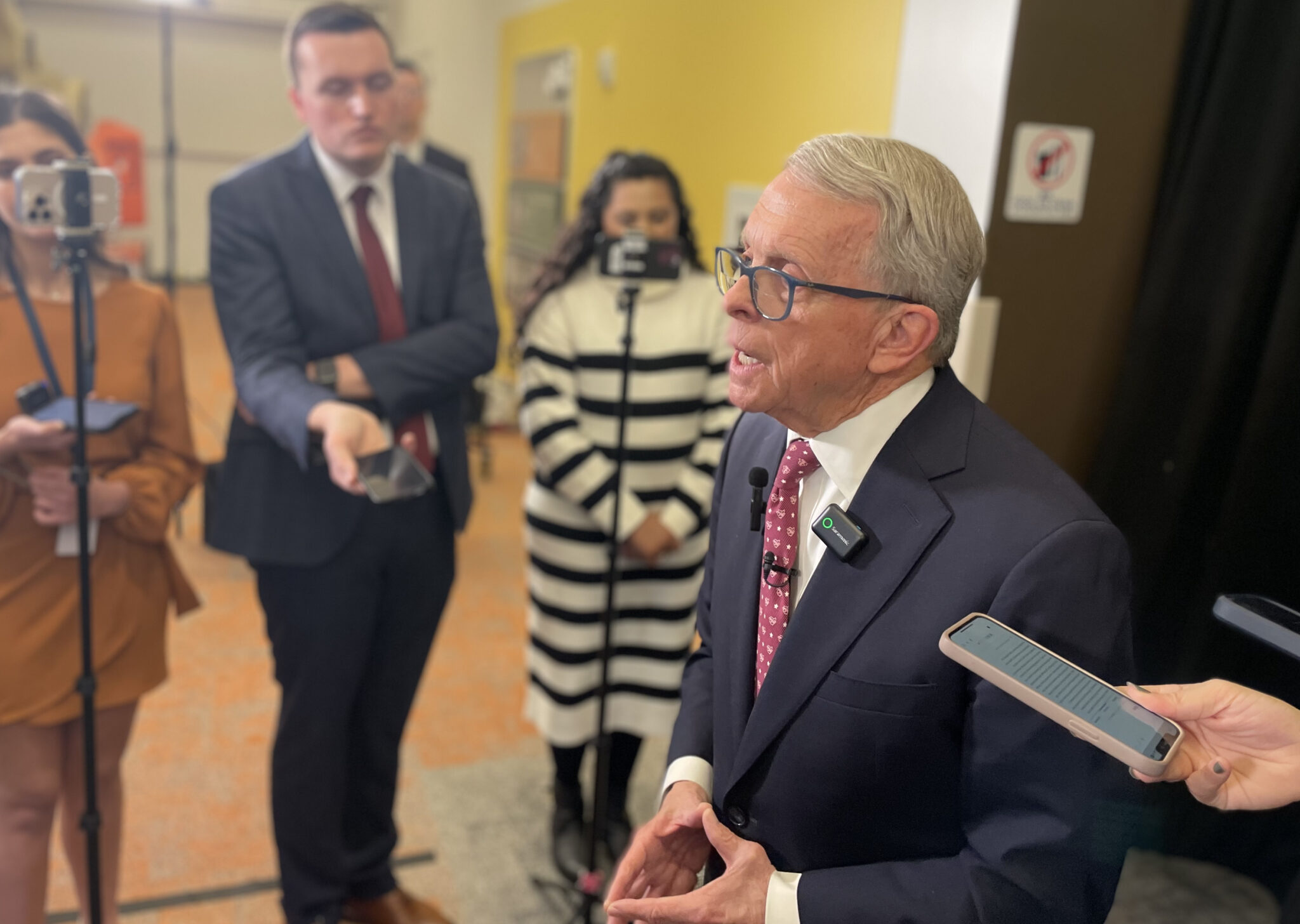
    Gov. Mike DeWine speaking to reporters. (Photo by Nick Evans, Ohio Capital Journal.)

    By:  Ohio Capital Journal

    Ballots in some districts are still being tallied, but the broad strokes of the 2024 election are clear, and the results mean Ohio Gov. Mike DeWine has a big decision to make. J.D. Vance is jumping from U.S. Senator to Vice President-elect leaving a vacancy DeWine needs to fill.

    Whoever he chooses will serve for the next two years, with the opportunity to defend the seat in the next federal election in 2026. And since Vance was elected in 2022, his replacement would have to turn around and do it all over again in 2028.

    “It’s got to be someone who wants to spend the next four years not just doing the job, but running for office,” DeWine explained at post-election conference hosted by the Ohio Chamber of Commerce.


    On the other hand, incumbency means DeWine’s appointee could enter the race with a bit of wind in their sails.

    And DeWine has important strategic factors to consider. The Republican party currently controls each state office in Ohio. But in each case — Governor, Lt. Governor, Attorney General, Secretary of State, Auditor and Treasurer — the politicians occupying those offices are term-limited. That means a broad array of open seats, and several experienced candidates who can make a case reasonable for their nomination to a new post.

    That game of musical chairs could easily tip into an intraparty knife fight. DeWine’s pick for the U.S. Senate could help keep it from getting out of hand.

    But it’s not clear if that will work. One potential recipient, Attorney General Dave Yost, has already said he’d turn down the nomination. Yost is eyeing a run for governor, as is Lt. Gov. Jon Husted.

    With DeWine’s political career likely nearing an end, it’s also one of his last opportunities to put his stamp on Ohio politics. In the most recent U.S. Senate primary, the governor endorsed state Sen. Matt Dolan, R-Chagrin Falls, instead of the eventual victor, U.S. Senator-elect Bernie Moreno.

    While DeWine has yet to give any indication as to who he is considering as a replacement to fill Vance’s Senate seat, but there are several potential names that have been circulating among strategists.

    How the governor views things

    At the Ohio Chamber conference, DeWine refused to discuss names but laid out the considerations that will drive his decision making. He noted with 12 years’ experience in the U.S. Senate himself, he wants to appoint someone “who actually does get things done.”

    GET THE MORNING HEADLINES.


    DeWine also said he’s not interested in a placeholder.

    “I want someone who will hold that seat — I hope for a long time,” DeWine said. “I think it’s in the interest of the state for them to do that.”

    And in addition to someone willing to mount back-to-back statewide campaigns, he’s concerned with finding someone who’s capable of actually winning those races.

    “Someone who can win a primary,” DeWine described, “because they will be faced with a primary in two years. They’re going to be in the primary election in less than that, and also someone who can win the general election.”

    After two contentious Republican U.S. Senate primaries it may be difficult to balance all of those priorities. But even if the final decision is challenging, DeWine said he won’t suffer from a lack of viable choices.

    “Well, yesterday I got a lot of calls,” DeWine said with smile. “Look, we have great people in the state of Ohio who could serve very well in the United States Senate. So, we’re just going through the process of starting to think about this and see who would be the best person.”

    As far as who he’s sounding out for opinions, DeWine said “certainly” Vance’s opinion about who should replace him matters.

    “Frankly I’m reaching out to a lot of people, I’m not going to talk about names, again,” DeWine said, “But I’m consulting a lot of people who I know are not interested, but who might have ideas about who should be.”

    Although Yost has publicly said he’s not interested, that news may not have reached the governor. Asked whether anyone has taken their name out of the running he said, “well, I don’t know about that.”

    “But I wouldn’t tell you anyway,” he quipped.

     Ohio U.S. Senator-elect Bernie Moreno addressing an Ohio Chamber of Commerce crowd. (Photo by Nick Evans, Ohio Capital Journal.) 

    What Moreno wants in a colleague

    A few hours after DeWine spoke, Senator-elect Bernie Moreno took the stage, and described how he wants to promote Ohio businesses in the Senate and earn the trust of voters who didn’t support him. He’s hoping whoever DeWine selects will be a partner in that effort.

    Like DeWine, Moreno said he has thoughts on who’d be a good pick but declined to go into specifics. He also stressed that the decision is ultimately the governor’s to make and that he and DeWine are “100% on the same page” about the kind of person who should get the nod.

    After what he described as “a grueling two years,” Moreno said finding an effective campaigner is very important.

    “It’s got to be somebody who has a proven record of actually doing the work,” he said. “Because if you are too lazy to campaign, you’re probably going to be too lazy to be an effective senator.”

    He added it’s important that the appointee really believes in Trump’s agenda rather than someone who would say you agree with it “and then stab us in the back in Washington, D.C.”

    Moreno said he wants to work alongside someone who’s decent and works well with others — he mentioned the job isn’t an executive role and will require a collaborative approach. And lastly Moreno hopes the governor avoids “publicity seeker(s).”

    “Because you have to be able to trust each other,” he said, “and you can’t be somebody who’s just constantly trying to make a name, out for themselves, and is looking at the next steppingstone.”

    “It’s a weighty job,” Moreno added. “I mean, 11, 12 million people look to you and say, hey, I want you to represent me properly.”

    Follow OCJ Reporter Nick Evans on Twitter.


    Nick Evans
    Nick Evans

    Nick Evans has spent the past seven years reporting for NPR member stations in Florida and Ohio. He got his start in Tallahassee, covering issues like redistricting, same sex marriage and medical marijuana. Since arriving in Columbus in 2018, he has covered everything from city council to football. His work on Ohio politics and local policing have been featured numerous times on NPR.

    Ohio Capital Journal is part of States Newsroom, the nation’s largest state-focused nonprofit news organization.

    MORE FROM AUTHOR

  • What will happen to J.D. Vance’s Ohio U.S. Senate seat?

    What will happen to J.D. Vance’s Ohio U.S. Senate seat?

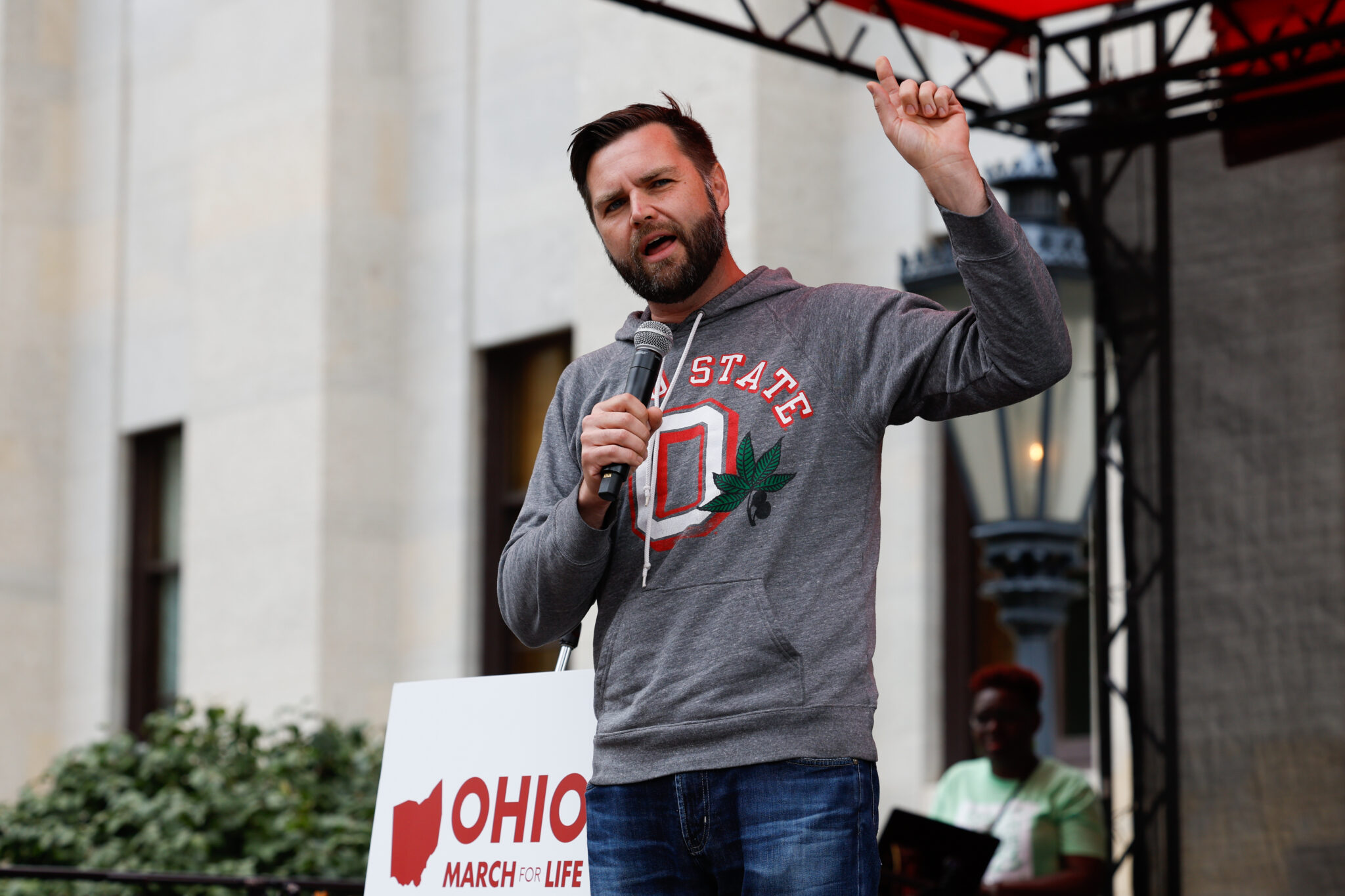
     COLUMBUS, Ohio — OCTOBER 06: Republican Ohio U.S. Sen. J.D. Vance speaks during the Ohio March for Life rally against November’s Issue 1 reproductive rights amendment, October 6, 2023, outside the Statehouse in Columbus, Ohio. (Photo by Graham Stokes for Ohio Capital Journal. Republish photo only with original article.)

    By:  Ohio Capital Journal

    Ohio U.S. Sen. J.D. Vance will become the next vice president, thus creating a vacancy in the U.S. Senate.

    Former President Donald Trump and his running mate Vance defeated Vice President Kamala Harris and Minnesota Gov. Tim Walz in the presidential election that was called Wednesday morning by the Associated Press. Vance will have to resign from his Senate seat before being sworn in as vice president during Inauguration Day on Jan. 20.

    It is now up to Ohio Gov. Mike DeWine to pick a Republican to fill Vance’s open Senate seat until a special election is held in 2026. Whoever DeWine appoints must run in the 2026 special election if they want to keep their seat.

    Vance is currently serving his first term in the U.S. Senate after being elected over Democratic Rep. Tim Ryan in 2022. Whoever wins the 2026 special election will serve the remainder of Vance’s term, which expires in 2028.

    DeWine has yet to give any indication as to who he is considering as a replacement to fill Vance’s Senate seat, but there are several potential names that have been circulating including state Sen. Matt Dolan, Lt. Gov. Jon Husted, Republican National Committee Committeewoman for Ohio Jane Timken, former Republican presidential candidate Vivek Ramaswamy, and Ohio Sec. of State Frank LaRose, among others.

    Republican Bernie Moreno defeated incumbent Democratic U.S. Sen. Sherrod Brown in a hotly contested Senate race on Tuesday. Some have speculated whether Brown might seek the Ohio U.S. Senate seat in 2026.

    Follow OCJ Reporter Megan Henry on X.


    Megan Henry
    Megan Henry

    Megan Henry is a reporter for the Ohio Capital Journal and has spent the past five years reporting in Ohio on various topics including education, healthcare, business and crime. She previously worked at The Columbus Dispatch, part of the USA Today Network.

    Ohio Capital Journal is part of States Newsroom, the nation’s largest state-focused nonprofit news organization.

    MORE FROM AUTHOR

  • University of Akron poll shows comfortable lead for Trump in Ohio, dead heat U.S. Senate race

    University of Akron poll shows comfortable lead for Trump in Ohio, dead heat U.S. Senate race

    Getty Images.

    The 2024 Buckeye Poll depicts sharp partisan divisions, but U.S. Sen. Sherrod Brown continues to draw votes from Republicans

    By: Ohio Capital Journal

    A University of Akron Bliss Institute poll released Thursday found Donald Trump running ahead of Kamala Harris in Ohio by seven points, and U.S. Sen. Sherrod Brown holding a slight advantage against his Republican challenger Bernie Moreno.

    The findings are part of the school’s 2024 Buckeye Poll conducted from Sept. 12 to Oct. 24. The survey included 1,241 registered voters with a margin of error of +/- 2.8 percentage points.

    Digging into the details, pollsters noted the wide gender gap many expect to see in the presidential contest nationally didn’t really show up at the state level. They even note Trump holds a nominal 1-point lead among women, although that’s well within the margin of error and 3% remain undecided.

    The poll found independents in Ohio lean toward Trump in the presidential race, but almost a quarter of that group is still undecided. In the Senate race a third of independents still hadn’t made up their mind.

    The survey also sheds light on stark divides in voters’ vision of the country. Partisans on both sides are far apart on issues like economic policy, immigration, abortion, and trans rights.

     U.S. Senator Sherrod Brown speaks to a supporter at a Democratic Party campaign event for Franklin County voters. (Photo by Graham Stokes for Ohio Capital Journal. Republish photo only with original article.) 

    Presidential race

    The Buckeye Poll found 51% of respondents support Donald Trump compared with 44% backing Kamala Harris. Those results include respondents leaning toward a particular candidate — 4% in Trump’s case and 6% for Harris, while another 5% of voters were backing a third party or remained undecided. Trump’s seven-point advantage is beyond the poll’s margin of error, and roughly in line with his actual performance in Ohio in 2016 and 2020, which he won by eight points each time.

    “We’re not surprised at all by the numbers in the presidential race showing Donald trump with a healthy lead over Harris at seven points,” Bliss Institute director and political scientist Cherie Stachan said.

    The poll also broke down respondents’ partisanship on a spectrum running from ‘strong’ to ‘lean’-ing for both parties with independents in the middle. Among voters who identified as independents, 39% are backing Trump as compared to 24% supporting Harris. Another 23% said they were backing neither.

     VANDALIA, OHIO – MARCH 16: Ohio Senate candidate Bernie Moreno greets former President Donald Trump in Vandalia earlier this year. (Photo by Scott Olson/Getty Images) 

    U.S. Senate race

    Strachan described the contest between Brown and Moreno as a “margin of error race.” The Buckeye Poll’s topline result had Brown leading Moreno 46% to 44% — neck and neck given the poll’s margin for error.

    “The one thing that is interesting about the Senate race,” she said, “is that you do have, still, at least in this poll, enough people willing to split their ticket and support the incumbent senator for whatever reason to make it a margin of error race.”

    Based on the overlaps they saw in the poll, Brown earned about three points from respondents who support Trump, but nevertheless plan to vote for the Democratic senator.

    It’s notable, Strachan said, that “Trump’s endorsement has not pushed that challenger over the edge — Moreno has not solidified all of the Republicans despite the Trump endorsement.”

    That shows up a bit in the quality of their responses in the Senate race. Voters’ preferences were a bit squishier, with significantly more ‘lean’ voters than in the presidential race. Brown got strong support from 37% of respondents with another 9% leaning his way. But for Moreno, 30% of respondents said they’re strong supporters, and 14% said they’re only leaning his way.

    “I think that’s just another signal that he may have done some things that may have not been as successful in persuading people that he’s a good candidate,” Strachan said, “or that he’s a candidate that people feel comfortable supporting.”

    As an anecdotal example, she pointed to television ads. Although Moreno and outside groups supporting him have spent heavily attacking Brown, they’ve spent substantially less promoting Moreno — a relative newcomer politically. According to FEC data, independent groups have plowed more than $114 million into attacking Brown, but less than $66 million supporting Moreno.

    GET THE MORNING HEADLINES.

    Polarization

    The Buckeye Poll found Republicans and Democrats sharply divided on several major policy issues. On abortion, immigration, and trans-rights the parties are mirror images of one another in terms of support or opposition.

    Strachan noted those cleavages have become so pronounced and widespread in recent years that political scientists describe the phenomenon as negative partisanship: “I dislike the other side more than maybe I like my own,” Strachan described. “The animosity toward the other side is driving us to stay in our partisan silos more than liking our own.”

    That’s part of what makes Brown’s continued appeal across party lines significant, even if that appeal has put him in a statistical tie.

    “In American politics writ large, it’s becoming increasingly harder to pull off what Brown is doing and getting those voters to split their ticket.”

    Follow OCJ Reporter Nick Evans on Twitter.


    Nick Evans
    Nick Evans

    Nick Evans has spent the past seven years reporting for NPR member stations in Florida and Ohio. He got his start in Tallahassee, covering issues like redistricting, same sex marriage and medical marijuana. Since arriving in Columbus in 2018, he has covered everything from city council to football. His work on Ohio politics and local policing have been featured numerous times on NPR.

    Ohio Capital Journal is part of States Newsroom, the nation’s largest state-focused nonprofit news organization.

    MORE FROM AUTHOR


  • Ohio economists strongly agree that sliding-scale public benefits are best

    Ohio economists strongly agree that sliding-scale public benefits are best

    Photo by Scott Heins/Getty Images.

    By:  Ohio Capital Journal

    It seems like it should be common sense: When you provide a benefit only up to a certain, hard income level, it creates a cliff that gives a strong disincentive for a person to try to earn more.

    The Ohio Department of Job and Family Services recently took steps away from that approach and a panel of economists strongly agreed with the move.

    Previously, Ohioans were eligible for the state’s Supplemental Nutrition Assistance program, or SNAP, only if they earned 130% or less of federal poverty guidelines. For a family of four, that’s $40,560.

    Earlier this month, the Department of Job and Family Services adjusted that, stepping down food stamp benefits along a sliding scale until a family is making 200% of federal poverty guidelines, or $62,400 for a family of four.

    “Fear of losing food benefits can be a deterrent to taking a new job, working more hours, or even accepting a promotion,” ODJFS Director Matt Damschroder said in a statement announcing the change. “Instead of an all-or-nothing approach, we are creating a sliding scale that encourages people to earn more by slowly reducing their benefits as their income grows. This provides an incentive to accept promotions and pay raises knowing they won’t immediately lose benefits.”

    A panel of Ohio economists appear to heartily agree, according to a survey that was released on Oct. 28. They were asked about “benefits cliffs,” or providing them at a certain level then abruptly cutting them off once an income threshold is reached.

    GET THE MORNING HEADLINES.

    Asked if benefit cliffs “caused by strict income requirements for public benefits create significant barriers to career advancement for low-income workers,” all 19 economists agreed, according to the survey conducted by Scioto Analysis.

    “People make an economically rational decision, at least in the short run, to turn down raises or promotions that result in loss of a much more significant public benefit,” Bill Lafayette of Regionomics said in the comments section of the survey.

    The economists were somewhat more mixed when asked if the changes enacted by ODJFs would “lower barriers to work for low-income people.”

    Thirteen agreed, while six were uncertain or had no opinion.

    “Eliminating the ‘benefits cliff’ is an efficient policy that reduces disincentives to work,” wrote Kevin Egan of the University of Toledo. “Moreover, it is a fair policy change to gradually reduce SNAP benefits so no households find themselves in such an unfair position.”

    But Kay Strong, an independent economist, said barriers to work extend well beyond facing benefits cliffs.

    “Barriers to work for low-income workers don’t occur solely on the supply side of the market,” she said. “Employers create barriers through their choice of workers, scheduling of workers, and willingness to assist employees over and around occasional personal obstacles that hinder workers.”

    YOU MAKE OUR WORK POSSIBLE.

    ____________
    Marty Schladen
    Marty Schladen

    Marty Schladen has been a reporter for decades, working in Indiana, Texas and other places before returning to his native Ohio to work at The Columbus Dispatch in 2017. He’s won state and national journalism awards for investigations into utility regulation, public corruption, the environment, prescription drug spending and other matters.

    Ohio Capital Journal is part of States Newsroom, the nation’s largest state-focused nonprofit news organization.

    MORE FROM AUTHOR

  • Paid family leave benefits Ohio economy as well as families, group says

    Paid family leave benefits Ohio economy as well as families, group says

    Thanasis Zovoilis/Getty Images

    By:  Ohio Capital Journal

    An Ohio child advocacy group is making a push for paid family leave, one of many that have been made over the years as child care costs continue to rise.

    Groundwork Ohio used its newest report to encourage implementation of paid leave policies in a state where the vast majority of residents have jobs that don’t offer paid family leave.

    “The benefits are vast, including improved health outcomes for mothers and babies, reduced infant mortality rates and diminished emotional and financial stress,” according to Lynne Gutierrez, president and CEO of Groundwork Ohio.

    One of the other types of leave that exists in the U.S. is the federal Family and Medical Leave Act (FMLA), which provides leave that keeps individuals from losing their jobs for specific family and medical reasons, but that leave is unpaid. Groundwork Ohio’s analysis estimated 8.4 million people, about 5.3% of eligible workers – those in companies with 50 employees or more who have worked for at least a year –  use FMLA annually, but also found that FMLA “has significant limitations forcing over 40% of the total U.S. workforce to the fringes of a benefit made accessible due to legal technicalities.”

    Under FMLA, “family” is categorized as spouses, children and parents, but excludes “modern families and LGBTQ+ populations,” the study stated.

    To fill the gaps in FMLA coverage, the report argued support for paid family leave should be taken up by state legislatures to not only support families in better ways, but also to bring the U.S. up to par with other countries. Currently, the U.S. is one of only six countries globally without national paid maternity leave, according to Groundwork, an “abysmally far cry from the average 29 weeks of paid maternity leave sanctified in most other countries.”

    GET THE MORNING HEADLINES.


    “In the absence of a functioning paid leave insurance system, U.S. workers are likely to repurpose earned vacation or sick time for family and health care reasons, leading to increased burnout, turnover and poorer mental health outcomes,” the study stated.

    The paid family leave gaps come amid a child care landscape that is also considered inaccessible and unaffordable to many in Ohio and across the country.

    Some state legislatures have already taken steps to fill the paid leave gap, with 21 states and D.C. enacting paid leave laws in 2023.

    A study of state-level programs conducted by the National Partnership for Women & Families in 2023 found improved labor force participation, less need for the Supplemental Nutrition Assistance Program (SNAP) or other public assistance programs, and improvements in health outcomes for children and parents.

    “People’s access to paid leave should not depend on where they live or work or what kind of job they hold,” the NPWF stated. “The success of paid family and medical leave programs at the state level demonstrates that there is an effective, affordable and proven model that works for families, businesses and the economy.”

    Ohio’s economy could see boosts with the implementation of paid leave policies, according to Groundwork’s analysis. A full-time employee in Ohio gives up about $3,100 in income if they take one month of unpaid leave.

    “If women in Ohio could participate in the labor force at the same rate as women in countries with paid leave policies, the state would see approximately $3.9 billion more in wages statewide, simultaneously boosting the state economy and helping to stabilize families,” the study stated.

    Citing Federal Reserve estimates, the research stated Ohio’s overall GDP would have been $67 billion higher between 2005 and 2019 “if gender and racial wealth gaps were closed.”

    YOU MAKE OUR WORK POSSIBLE.

    _______________
    Susan Tebben
    Susan Tebben

    Susan Tebben is an award-winning journalist with a decade of experience covering Ohio news, including courts and crime, Appalachian social issues, government, education, diversity and culture. She has worked for The Newark Advocate, The Glasgow (KY) Daily Times, The Athens Messenger, and WOUB Public Media. She has also had work featured on National Public Radio.

    Ohio Capital Journal is part of States Newsroom, the nation’s largest state-focused nonprofit news organization.

    MORE FROM AUTHOR