Author: Ohio Capital Journal

  • Amid two days of Springfield bomb threats, Ohio’s Lieutenant Governor Jon Husted posts a joke

    Amid two days of Springfield bomb threats, Ohio’s Lieutenant Governor Jon Husted posts a joke

    By:  Ohio Capital Journal

    A social media post by Ohio Lt. Gov. Jon Husted on Friday appeared to joke about a racist conspiracy theory that continues to rock an Ohio community.

    A day after a Springfield school and other public buildings were evacuated and closed due to bomb threats, and the same day that two other Springfield elementary schools were evacuated and one middle school closed due to a new, separate bomb threat, Husted posted a photo of two geese on X Friday morning with the comment, “Most Americans agree that these migrants should be deported.”

    That was an obvious reference to a conspiracy theory about Haitian immigrants in Springfield. It was made three days after former President Donald Trump amplified the claim that Haitian immigrants who are legally in Springfield are stealing their neighbors’ pets and eating them.

    They’re eating the dogs. They’re eating the cats. They’re eating the pets of the people that live there,” an angry Trump said during Tuesday’s debate with Vice President Kamala Harris.

    A day earlier, on Monday, Trump’s running mate, Ohio Sen. J.D. Vance, posted on X that “Reports now show that people have had their pets abducted and eaten by people who shouldn’t be in this country.”

    The Springfield mayorcity manager and chief of police, as well Ohio Gov. Mike DeWine, have all debunked the claims.

    Springfield City Hall, a school and county buildings were closed Thursday after bomb threats related to the influx of Haitian immigrants to the community. In addition, there have been reports of vandalism of immigrant property and widespread fear among the Haitian community.

    On Friday, two more Springfield elementary schools were evacuated due to a bomb threat, the city manager’s office has confirmed, Cleveland.com reported. A middle school was also closed Friday before school started. Police didn’t provide more details but said the Friday threats were separate from the Thursday ones.

    Springfield Mayor Bob Rue confirmed that at least one of the bomb threats also disparaged Haitian immigrants, WSYX reported Friday.

    In the absence of any evidence that dogs and cats have been stolen and eaten, figures such as Ohio Attorney General Dave Yost and Fox News personality Jesse Watters have focused on unverified reports that Haitians in Springfield are hunting and eating wild geese.

    With a population of 58,000, Springfield has been strained by the influx of 15,000 to 20,000 Haitian immigrants, most of whom have come over the past five years under temporary protective status due to the chaos in their home country. Schools, health care facilities and other resources have been swamped by the rapid population growth.

    Earlier this week, Gov. DeWine announced he would send state highway patrol troopers to Springfield to help, as well as $2.5 million to help with health care resources.

    But on the other hand, the influx has been credited with revitalizing a community which has been declining in population at least since 1990.

    Anti-immigrant rhetoric has been linked to mass violence. Experts say that whipping up fears of an “immigrant invasion” and “terror” and conspiracy theories of a “great replacement” have helped motivate racist massacres over the past six years in El PasoBuffalo, and Pittsburgh.

    Husted, the lieutenant governor who joked about the situation in Springfield, is expected to vie with Yost, the attorney general, for the Republican gubernatorial nomination in 2026.

    His spokeswoman, Hayley Carducci, was asked Friday if Husted had any evidence that Haitian immigrants in Springfield were eating pets or geese, and if he didn’t, did he think it was a funny thing to joke about. She was also asked if Husted was concerned that amplifying the conspiracy theory will make a target of yet another vulnerable population, one in the state he wants to govern.

    “I don’t have an additional comment,” Carducci said.


    Marty Schladen

    Marty Schladen

    Marty Schladen has been a reporter for decades, working in Indiana, Texas and other places before returning to his native Ohio to work at The Columbus Dispatch in 2017. He’s won state and national journalism awards for investigations into utility regulation, public corruption, the environment, prescription drug spending and other matters.

    Ohio Capital Journal is part of States Newsroom, the nation’s largest state-focused nonprofit news organization.

    MORE FROM AUTHOR


  • Outcome of Ohio Supreme Court races will affect private school vouchers

    Outcome of Ohio Supreme Court races will affect private school vouchers

    By:  Ohio Capital Journal

    A school voucher lawsuit currently in the Franklin County Court of Common Pleas will likely make its way before the Ohio Supreme Court eventually — meaning whichever candidates are elected to the state’s high court this fall could end up ruling on this pivotal school funding case.

    Six candidates are running for three seats on the Ohio Supreme Court. Republicans currently hold a 4-3 majority. If Democrats win all three races, the court would flip 4-3 Democratic. However, if Republicans win all three races, it would become a 6-1 Republican court.

    Incumbent Democratic Justice Michael P. Donnelly is being challenged by Republican Hamilton County Court of Common Pleas Judge Megan Shanahan.

    Incumbent Democratic Justice Melody Stewart is being challenged by incumbent Republican Justice Joseph Deters, who decided not to run for his current seat and instead chose to go up against Stewart.

    Democratic candidate Lisa Forbes, of the Eighth District Court of Appeals, and Republican candidate Dan Hawkins, of the Franklin County Court of Common Pleas, are fighting for Deters’ open seat.

    Vouchers Hurt Ohio lawsuit

    Vouchers Hurt Ohio filed a lawsuit in 2022 targeting the EdChoice private school voucher program, arguing the program has grown disproportionately while resources for public school districts have dwindled. The lawsuit has gone on to gain support from more than 200 Ohio school districts. Since filing the lawsuit, Ohio enacted universal school vouchers through last year’s state budget.

    “Everybody has an interest in the school voucher case,” Ohio Education Association President Scott DiMauro said. “I’m sure, regardless of who prevails in the lower courts, that case is going to make its way to the Supreme Court, and so composition on the court that’s going to be open to looking at that issue fairly, and looking at what the constitution says is really important for the future of public education in Ohio.”

    The lawsuit has a Nov. 4 court date, the day before the election.

    “Having a court that will heed the words of our State Constitution that calls for a thorough and efficient system of common schools across the state is really important to us in a court that’s going to be balanced, that’s going to be fair, that is going to exercise good judgment and not act in the way that suggests that it’s in the pocket of interest,” DiMauro said.

    The Ohio Supreme Court has been under Republican control since 1986. Partisan labels were added to the previously-nonpartisan races by the state legislature in 2021.

    “When you have a court now that is unbalanced, and that is partisan, I think you’re less likely to have that kind of outcome that is really looking at the text of the constitution, and fundamentally is going to act in a way that’s in the best interest of all students across the state, including the close to 90% of kids who attend our public schools,” DiMauro said.

    The Buckeye Institute, a public policy think tank, supports private school vouchers.

    “We think vouchers are clearly constitutional from the national standpoint as it relates to the Federal Constitution,” said Buckeye Institute Research Fellow Greg Lawson. “I think the makeup of the (Ohio Supreme) Court would have potentially some impact on what the outcome of that case could be. But again, it’s highly questioned. We don’t know how the election is going to turn out, so it’s hard to read the tea leaves until after the dust settles.”

    It’s vital the Ohio Supreme Court remains independent, DiMauro said.

    “I think what this Republican legislature has done over the past years … is that they want a court that’s going to be an extension of their political power,” DiMauro said.  “They’ve very deliberately tried to make this a partisan court, and we need a court that will be above partisan politics in order to serve as a check and balance on the legislature and a check and balance on the governor.”

    Follow OCJ Reporter Megan Henry on X.


    Megan Henry
    Megan Henry

    Megan Henry is a reporter for the Ohio Capital Journal and has spent the past five years reporting in Ohio on various topics including education, healthcare, business and crime. She previously worked at The Columbus Dispatch, part of the USA Today Network.

    Ohio Capital Journal is part of States Newsroom, the nation’s largest state-focused nonprofit news organization.

    MORE FROM AUTHOR

  • Ohio US Senate candidate Bernie Moreno doesn’t hold an MBA, but bio and application claimed he does

    Ohio US Senate candidate Bernie Moreno doesn’t hold an MBA, but bio and application claimed he does

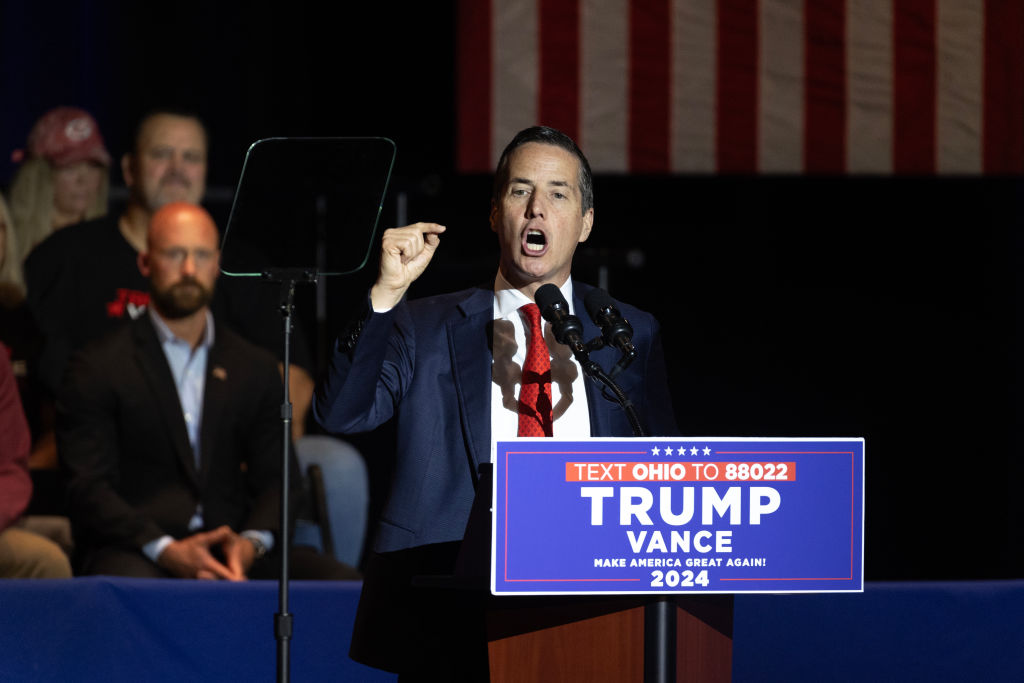
    U.S. Senate candidate Bernie Moreno (R-OH) speaks to guests during a campaign rally with Republican vice presidential nominee Sen. JD Vance (R-OH) at Middletown High School on July 22, 2024 in Middletown, Ohio. (Photo by Scott Olson/Getty Images)

    By:  Ohio Capital Journal

    The claim that car dealer and Republican U.S. Senate candidate Bernie Moreno held an MBA from the University of Michigan has appeared in both a car dealership application and in a short biography of Moreno when he joined the board of the Cleveland Foundation. However, a spokeswoman for the university on Monday said all Moreno has is a bachelor’s degree in business that was awarded in 1989.

    Moreno’s campaign on Tuesday afternoon blamed the first instance on “a staffer who made a mistake.” It said it didn’t know how the claimed credential made its way into the Cleveland Foundation bio.

    Moreno is in the middle of what is expected to be a close race against incumbent Democrat Sherrod Brown for a pivotal U.S. Senate seat.

    The first appearance of the claim Moreno held an MBA from Michigan came as part of a Nov. 25, 2011 application to open an Infiniti car dealership in Coral Gables, Florida. The document was entered into evidence as part of a Florida lawsuit and provided to the Capital Journal.

    It lists the now-57-year-old Moreno’s birthdate, his Westlake, Ohio address, his Social Security and driver’s license numbers, and it lists his academic credentials. It says that in 1985 he graduated from Pinecrest Academy in Florida, and that he received a bachelor’s degree in business from the University of Michigan in 1988.

    Then it says, “Graduate Degree, 88-91, Univ. of Michigan, MBA, Business.”

    However, when asked what credentials Moreno had earned from the school, the University of Michigan Office of Public Affairs on Monday said Moreno held only a bachelor’s degree in business that was awarded with “High Distinction” on April 28, 1989.

    Moreno’s campaign responded by pointing to a separate document filed on April 23, 2010. It didn’t list a post-graduate degree and Moreno’s campaign said, “The first (2010) application to Infiniti was produced by Bernie.”

    But the claimed credential did appear on the document filed more than a year later that the Moreno campaign says was “prepared by a staffer who made a mistake.”

    The campaign provided a quote from Rob Kistler, whom it said was Moreno’s chief financial officer at the time.

    “This was a clerical mistake on the subsequent form not made by Bernie,” it said.

    In another instance, the Moreno campaign said it didn’t know how a University of Michigan MBA was attributed to Moreno in 2014, when he joined the Cleveland Foundation Board of Directors. His bio said, “Moreno launched his career in the automotive industry after earning his Master of Business Administration from the University of Michigan.”

     Screenshot from the Cleveland Foundation Fall/Winter 2024 “Gift of Giving” donors magazine. 

    Moreno “never told the foundation that he held an MBA. I’m not sure why they listed that, you’d have to ask them,” campaign spokeswoman Reagan McCarthy said in an email.

    She didn’t respond to a question asking whether Moreno took any steps to correct the claim.

    A 2018 biography of Moreno while he chaired the Cleveland State University Board of Trustees said he held multiple degrees from Michigan. His bio at the time said, “Mr. Moreno holds a business degree and a liberal arts degree from the University of Michigan.”

    That bio is no longer on the university’s website. What remains is one describing Moreno as founder of Cleveland State’s Center for Sales Excellence. That bio doesn’t claim multiple degrees from the University of Michigan.

    “After graduating from the University of Michigan with a bachelor’s degree in Business Administration, (Moreno) began his career in the automotive industry with the Saturn Corporation,” it says.

    Cleveland State on Tuesday said it removed Moreno’s earlier bio when he left the board of trustees in 2018.

    Moreno also appears to have claimed multiple degrees from the University of Michigan in an archived bio that appeared on the website of Mercedes Benz of North Olmstead.

    His campaign said, however, that when Moreno was an undergraduate, U of M business students first spent two years earning an associate’s degree in liberal arts before spending the next two getting a bachelor’s in business.

    “There is not a single example you can point to in which Bernie himself claims to have an MBA,” McCarthy said, notwithstanding the fact that the Infiniti dealership application making the claim went out over his signature. “Any example you cited is from another individual or entity.”


    Marty Schladen
    Marty Schladen

    Marty Schladen has been a reporter for decades, working in Indiana, Texas and other places before returning to his native Ohio to work at The Columbus Dispatch in 2017. He’s won state and national journalism awards for investigations into utility regulation, public corruption, the environment, prescription drug spending and other matters.

    Ohio Capital Journal is part of States Newsroom, the nation’s largest state-focused nonprofit news organization.

  • Teaching about race is good, actually. States need to stop banning it.

    Teaching about race is good, actually. States need to stop banning it.

    Getty Images

    by Ian Wright

    In this back to school season, millions of American students are returning to classrooms where the wrong course, lesson, or textbook can lead to deep trouble. Why? Because for the last several years, conservative activists and lawmakers have been waging a crusade against “critical race theory,” or CRT.

    Critical race theory is an academic concept acknowledging that racism isn’t simply the result of individual prejudice but is also embedded in our institutions through laws, regulations, and rules.

    As school districts have emphasized, it’s a higher education concept rarely taught in K-12 schools. But cynical activists have used CRT as a catch-all term to target a broad range of diversity, equity, and inclusion initiatives — and seemingly any discussion about race and racism in the classroom.

    Since January 2021, 44 states have “introduced bills or taken other steps that would restrict teaching critical race theory or limit how teachers can discuss racism and sexism,” according to Education Weekly. And as of this writing, UCLA has identified 807 anti-CRT “bills, resolutions, executive orders, opinion letters, statements, and other measures” since September 2020.

    ________________

    IN OHIO

    Bills that would have prohibited discussion of certain topics related to race and sex, forbid schools from awarding credit for student service learning with advocacy groups, and ban “any textbook, instructional material, or academic curriculum that promotes any divisive or inherently racist concept” all failed to pass during the 2021 and 2022 sessions.

    ________________

    Critics claim — falsely — that CRT teaches that all white people are oppressors, while Black people are simply oppressed victims. Many opponents claim it teaches white students to “hate their own race,” or to feel guilty about events that happened before they were born.

    In reality, CRT gives students of every race the tools to understand how our institutions treat people of different races unequally — and how we can make those systems fairer. That’s learning students of every race would be better off with.

    But instead, this barrage of draconian legislation is having a chilling effect on speech in the classroom.

    In 2022, Florida passed the “Stop W.O.K.E. Act,” which prohibits teaching that could lead to a student feeling “discomfort” because of their race, sex, or nationality. But the law’s vague language makes it difficult for educators to determine what they can or cannot teach, ultimately restricting classroom instruction. In my home state of Texas, SB3 similarly restricts these classroom discussions.

    Running afoul of these laws can get teachers and school administrators in trouble. As a result of this hostile environment, the RAND Corporation found that two-thirds of K-12 school teachers have decided “to limit instruction about political and social issues in the classroom.”

    Notably, this self-censorship extends beyond states with such policies: 55 percent of teachers without state or local restrictions on CRT have still decided to limit classroom discussions of race and history.

    As a student, I find this distressing.

    My high school history classes gave me a much richer understanding of race in our history, especially the discussions we had at the height of the Black Lives Matter protests. And in college, I’ve gotten to learn about racial inequalities in everything from housing and real estate to health care, politics, education, and immigration policy.

    As a person of color, I can’t imagine where I’d be without this understanding. Neither white students nor students of color will benefit from laws designed to censor their understanding of history, critical thinking, and open dialogue in the classroom.

    The fight against CRT is a fight against the principles of education that encourage us to question, learn, and grow. Rather than shielding students from uncomfortable truths, which they can certainly handle, we should seek to equip them with the knowledge to navigate the world, think critically about our history and institutions, and push for a more inclusive country.

    This column was originally published at OtherWords.org.


    Ian Wright
    Ian Wright

    Ian Wright is a Henry A. Wallace Fellow at the Institute for Policy Studies and a student at Rice University from Dallas, Texas.

    MORE FROM AUTHOR


  • Citizens Not Politicians: Ohio Supreme Court should tell ballot board to ‘start over’

    Citizens Not Politicians: Ohio Supreme Court should tell ballot board to ‘start over’

    A July 1 rally of Citizens Not Politicians at the Ohio Statehouse. (Photo by Graham Stokes for Ohio Capital Journal. Only republish photo with original story.)

    By  Ohio Capital Journal

    Advocates pushing an anti-gerrymandering amendment in Ohio to remove politicians from mapmaking in favor of a citizen commission said the state’s ballot board should be forced to start over on summary language for the November proposal.

    Attorneys said the proposed amendment would ban partisan gerrymandering “by setting forth robust redistricting criteria to ensure fair maps, selection standards to ensure the new commission’s impartiality and accountability, and transparency measures to ensure public information and participation,” according to a merit brief filed Thursday.

    But they say the summary language written by Ohio Secretary of State Frank LaRose and adopted by a majority of the Ohio Ballot Board on Aug. 16 “would have voters believe exactly the opposite.”

    The Ohio Ballot Board decides what language voters will see on their ballots when they go to vote, but that summary language does not change what the proposed amendment would actually do. In a 3-2 vote, the Ohio Ballot Board approved summary language that supporters of the anti-gerrymandering amendment say is intentionally misleading and biased against the amendment. They have filed a lawsuit with the Ohio Supreme Court opposing the summary language.

    The merit brief is part of that lawsuit filed by Citizens Not Politicians, the group who has led the charge for the anti-gerrymandering amendment. The lawsuit asks the state’s highest court to order changes to the summary language made by the ballot board, chaired by Ohio Sec. of State LaRose.

    The proposed amendment signed by more than 535,000 verified Ohio voters would replace the current Ohio Redistricting Commission made up of seven politicians, including LaRose, with a 15-member citizens commission made up of Republicans, Democrats, and independents.

    Citizens Not Politicians Attorney Don McTigue pointed to a change made by state Sen. Theresa Gavarone, R-Bowling Green, during the ballot board’s meeting, in which she changed the word “manipulate” to “gerrymander” when describing the methods of redrawing congressional and statehouse district lines within the amendment.

    “Earlier this year, Attorney General Dave Yost certified that the Amendment’s summary was ‘fair and truthful,’” McTigue wrote. “That summary states, consistent with the amendment’s plain text, that the amendment would ‘ban partisan gerrymandering.’”

    The brief emphasizes what the original complaint filed on Aug. 19 asserted, which is that the opinion of whether or not the proposed amendment “offers better policy than the existing system” should be left up to the voters in November.

    “The Ballot Board’s job is to provide ballot language that gives voters the facts so that they can make up their own minds,” the brief states.

    That language should follow constitutional rules dictating the language and the title, something the LaRose language doesn’t do, according to Citizens Not Politicians.

    The Ohio Constitution states ballot language “shall properly identify the substance of the proposal to be voted upon,” and the language “shall not be held invalid unless it is such as to mislead, deceive or defraud the voters.”

    The Ohio Revised Code says the secretary of state or the ballot board is required to “give a true and impartial statement of the measures in such language that the ballot title shall not be likely to create prejudice for or against the measure.”

    The title of the redistricting amendment, as approved by the board majority, is “to create an appointed redistricting commission not elected by or subject to removal by the voters of the state.”

    “The Ballot Board’s attempt to put a thumb on the scale against the amendment is a thumb in the eye of Ohioans who expect their representatives on the Board to carry out their mandatory duties impartially,” McTigue wrote.

    The Ohio Attorney General has filed an answer to the complaint, but the filing has already received criticism from the Democratic members of the ballot board, who say they were not consulted on the legal document, nor have they been given outside counsel to speak on their behalf, despite the fact that the the two Democrats, state Sen. Paula Hicks-Hudson and state Rep. Terrence Upchurch, voted against the ballot board language.

    Hicks-Hudson and Upchurch ended up filing a brief themselves on Wednesday night, in which they did not fight arguments that the ballot board “as a whole violated its constitutional duty,” and said the “chosen ballot title is inaccurate, biased, argumentative and misrepresents the proposed amendment’s procedures for removing commissioners who fail to comply with their duties.”

    McTigue said the court “has never hesitated to strictly enforce the legal requirements for the text that appears on the ballot, in recognition of Ohioans’ century-old right to amend their constitution and laws through direct democracy.”

    “The court should do the same here, by directing (the ballot board) to start over and adopt ballot language and a ballot title that are consistent with their clear legal duties.”

    The Ohio Supreme Court was asked just last year to make changes to a ballot board-approved summary, in that case for the reproductive rights constitutional amendment that would eventually pass with 57% of the vote.

    The coalition that sued took issue with ballot language that used the phrases “unborn child” and “reproductive medical treatment,” along with using the phrase “the citizens of the State of Ohio” rather than just “the State of Ohio” when speaking of the prohibitions against “indirectly burdening, penalizing or prohibiting abortion.”

    In a similar way to the redistricting amendment author’s arguments that the LaRose language could mislead voters as to the intentions of the proposed amendment, the lawsuit against the reproductive rights amendment summary said it could mislead voters about the rights the amendment created, the restrictions in the amendment, discretion when it comes to fetal viability and state regulation of the amendment.

    The Ohio Supreme Court said they agreed “that the ballot language approved by the ballot board misleads the average voter about whose actions the amendment restricts.”

    “But the ballot language is not defective in any other respect,” the court wrote.

    The court asked the ballot board only to change the phrase “citizens of the State of Ohio” to “State of Ohio,” and approved the rest.

    Justice Michael O’Donnelly wrote in his concurring opinion that it was “unfortunate that advocacy seems to have infiltrated a process that is meant to be objective and neutral.”


    Susan Tebben
    Susan Tebben

    Susan Tebben is an award-winning journalist with a decade of experience covering Ohio news, including courts and crime, Appalachian social issues, government, education, diversity and culture. She has worked for The Newark Advocate, The Glasgow (KY) Daily Times, The Athens Messenger, and WOUB Public Media. She has also had work featured on National Public Radio.

    Ohio Capital Journal is part of States Newsroom, the nation’s largest state-focused nonprofit news organization.

    MORE FROM AUTHOR

  • Three Ohio Supreme Court races on the November ballot will have a huge impact in the coming years

    Three Ohio Supreme Court races on the November ballot will have a huge impact in the coming years

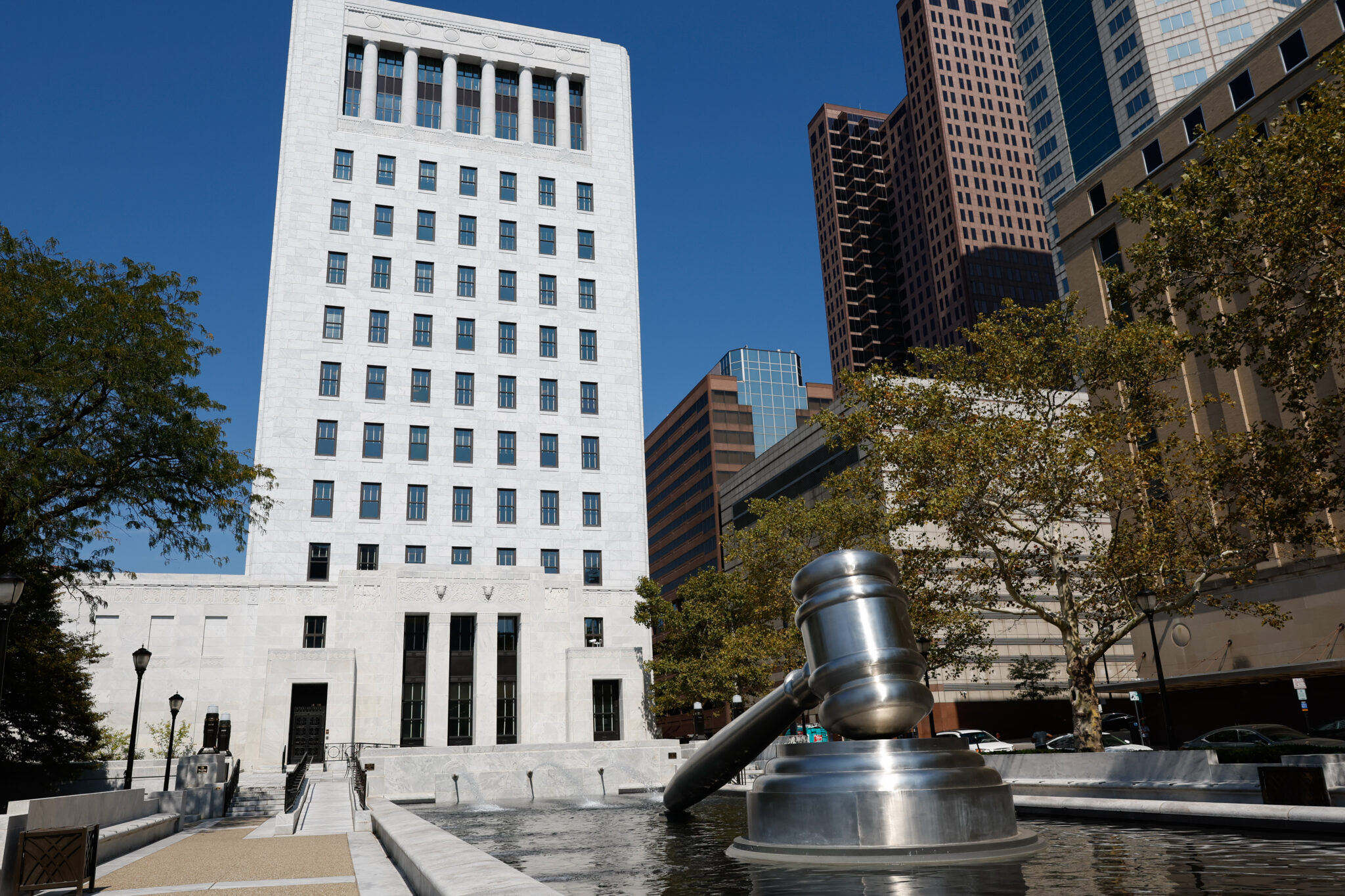
    The Gavel outside the Supreme Court of the State of Ohio, September 20, 2023, at 65 S. Front Street, Columbus, Ohio. (Photo by Graham Stokes for Ohio Capital Journal. Republish photo only with original article.)

    Ohio’s highest court currently has a 4-3 Republican majority

    By:  Ohio Capital Journal

    Three Ohio Supreme Court seats will be up for grabs during the November election. The outcomes will decide the balance of the court and have major impacts on a wide variety of issues that affect the lives of Ohioans, from education and environmental issues to gerrymandering and elections to civil and reproductive rights.

    Partisan labels were added to the previously-nonpartisan races by the state legislature in 2021.

    This year, incumbent Democratic Justice Michael P. Donnelly is being challenged by Republican Hamilton County Court of Common Pleas Judge Megan Shanahan.

    Incumbent Democrat Justice Melody Stewart is being challenged by incumbent Republican Justice Joseph Deters, who opted not to run for his current seat and decided to go up against Stewart.

    Vying for Deters’ open seat is Democratic candidate Lisa Forbes, of the Eighth District Court of Appeals, and Republican candidate Dan Hawkins, of the Franklin County Court of Common Pleas.

    Deters decided to run for a full-term seat by challenging Stewart, rather than a partial term for the seat Ohio Gov. Mike DeWine appointed him to on Jan. 7, 2023. Because of this, whichever candidate wins Deters’ current seat will have to run again in 2026 for a full six-year term.

    Ohio’s highest court currently has a 4-3 Republican majority. If all three Republicans are elected, the Republicans would hold all but one seat on the bench, for a 6-1 majority. On the flip side, if all three Democrats win their elections, the Democrats would hold a 4-3 majority. The Ohio Supreme Court has been under Republican control since 1986.

    Democratic Justice Jennifer Brunner’s seat will be up in 2026. Republican Chief Justice Sharon Kennedy, Republican Justice Pat DeWine and Republican Justice Pat Fischer’s seats will be up in 2028.

    The Ohio Supreme Court could make decisions on a plethora of critical issues: reproductive rights, gerrymandering, school vouchers, home rule, and environmental issues, among others.

    “If there’s a law around it, it could end up in the Supreme Court and have a real, tangible impact on each of our lives,” said Elisabeth Warner, spokesperson for the League of Women Voters of Ohio.

    Even though 57% of Ohio voters approved an amendment last year to enshrine reproductive rights in the state’s constitution, the court will inevitably rule on abortion access.

    “There are still a lot of anti-abortion laws on the books, so that’s something that the Supreme Court is going to be ruling on,” Warner said.

    Ohio’s anti-abortion laws were not automatically nullified when last year’s amendment passed, so abortion advocates are working to undo those laws.

    Franklin County Court of Common Pleas recently issued a temporary pause on Ohio’s 24-hour waiting period and the minimum two in-person visits required before an abortion.

    Another lawsuit is currently pending in Hamilton County Court of Common Pleas over whether Ohio’s six-week abortion ban is unconstitutional after voters passed last year’s amendment.

    Those lawsuits will likely make their way to the Ohio Supreme Court — meaning the seven justices will end up deciding to what extent reproductive rights are protected.

    “At the end of the day, the Ohio Supreme Court will determine whatever’s in the Ohio Constitution that voters put into the Ohio Constitution,” said Catherine Turcer, Common Cause Ohio’s executive director. “It is interpreted by the Ohio Supreme Court.”

    The Ohio Supreme Court has made many rulings on redistricting before and it will likely come before the court again — especially with the amendment on this year’s ballot to create a citizen commission to redraw districts.

    A lawsuit against school vouchers is making its way through the court system and will likely go before the state’s high court.

    Even boneless chicken wings wound up in front of Ohio’s seven justices. The court recently made national headlines with their 4-3 ruling that boneless chicken wings can have bones in them — appearing in a bit on “The Late Show with Stephen Colbert.”

    Turcer and Warner both criticized the 2021 law that requires party affiliation listed on the ballot for Ohio Supreme Court candidates. More than 1 million Ohio voters left the two Supreme Court races blank during the 2020 election.

    “We shouldn’t actually be thinking Democrats and Republicans because at the end of the day, what you want is a referee who’s independent and impartial,” Turcer said.

    Follow OCJ Reporter Megan Henry on X.


    Megan Henry
    Megan Henry

    Megan Henry is a reporter for the Ohio Capital Journal and has spent the past five years reporting in Ohio on various topics including education, healthcare, business and crime. She previously worked at The Columbus Dispatch, part of the USA Today Network.

    Ohio Capital Journal is part of States Newsroom, the nation’s largest state-focused nonprofit news organization.

    MORE FROM AUTHOR

  • State Board of Education of Ohio gets emergency funding, avoids upping teacher license fees

    State Board of Education of Ohio gets emergency funding, avoids upping teacher license fees

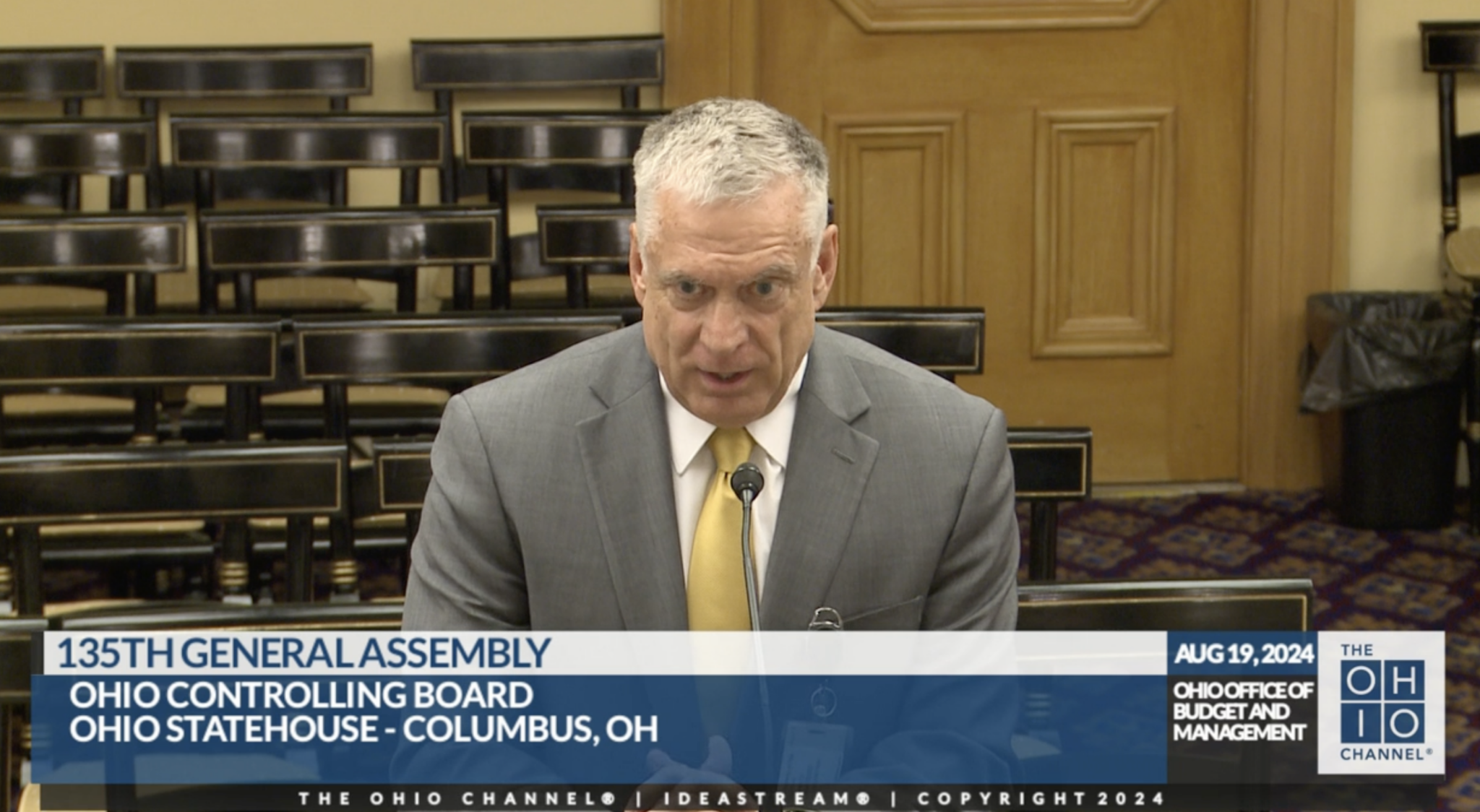
    Ohio Superintendent of Public Instruction Paul Craft speaks before the Ohio Controlling Board on Aug. 19. Screenshot via The Ohio Channel/Ideastream

    By:  Ohio Capital Journal

    Ohio’s State Board of Education will still be living lean on a bare-bones budget, but an influx of cash from the state will keep it going through the fiscal year.

    The Ohio Controlling Board, which directs appropriations and funding to state agencies, approved a $4.66 million emergency funding request last week for the board of education, to avoid having to raise teacher licensure fees and to cover a $3 million shortfall that may have impacted school staff background checks.

    “4.66 (million) is a number that gets us through this fiscal year,” State Superintendent of Public Instruction Paul Craft told the Capital Journal. “We’re still going to have some tough times.”

    The controlling board approval was amended from the original request made by the state’s Office of Budget and Management, which asked for only $1.85 million after working with the board of education on service sharing and funding cuts to get them through the year.

    “We completely were supportive of what OBM was doing,” Craft said. “That certainly keeps us where we are right now, which is extremely tight.”

    The SBOE has been warning of increasing and imminent shortfalls in their funding since they were separated from the Ohio Department of Education and Workforce, and left with only the teacher licensure fund to pay for all operating expenses.

    The funding they receive from the licensure fund isn’t year-round revenue, causing blocks of time during the year when the board has to sustain itself on very little incoming funds.

    “While we continue to strive for operational savings, because the majority of the revenue for this fund is received in the spring, the fund is projected to run a deficit starting this fall and continue until spring, when it will be back in a positive position,” the request to the controlling board stated.

    The split from the ODEW caused the board to reduce staffing by almost 20%, which included payroll and budget personnel, Craft told the Controlling Board at their Aug. 19 meeting to consider the emergency funds.

    “(Payroll and budget) are now being done as shared services through the Office of Budget and Management,” Craft said. “None of the money we requested brings back any of those staff.”

    The SBOE has also reduced board meetings to one day, instituted freezes on travel expenses and out-of-state conference costs. But the emergency funding is still needed to make sure teacher licensure fees can stay at their current rates, and the contract for Retained Applicant Fingerprint Database (RAPBACK) background checks can be paid.

    “I’ll tell you, I’ve never seen an agency in my 35 years in state government and military that’s running as lean as we are,” Craft said. “I’m so proud of what our staff has done in terms of making sure that Ohio’s 1.6 million kids interact with educators every day who are well-qualified and who show good moral character and judgment.”

    Some legislators on the controlling board expressed hesitation in using the funds from the controlling board’s “emergency purpose fund,” with state Sen. Shane Wilkins, R-Hillsboro, worrying that approving the emergency funds could cause the agency to come back next year for a request of the same amount.

    “For me, I would feel better if I knew, ‘hey, we really gave this a shot, the $1.8 (million original request) is not going to cut it,’” he said at the controlling board meeting.

    State Sen. Bob Hackett, R-London, questioned the need to push the funds specifically for the background checks, when Craft said the background checks would continue with or without the funding, and with the SBOE in contact with the Ohio Attorney General to find a solution to the funding shortage impacting the background check service.

    “It doesn’t really change our day-to-day at all,” Craft told Hackett and the controlling board. “On the other hand, I’ve signed (memorandums of understanding) with these agencies, and it would make me sleep better at night knowing that I agreed to these and they’re being made whole.”

    In offering the amendment that raised the funding provided for the SBOE to $4.66 million, state Rep. Jay Edwards, R-Nelsonville, said discussions have been going on for months about a solution to the SBOE funding issues. With the work the SBOE has already done to make cuts, the proposed funding number went from $10 million down to the $4.66 million that was eventually approved. He said it was incumbent upon state leaders make sure the funds were there to hold teacher licensure fees at current levels and maintain background checks.

    “The people that have been part of the discussion have heard that we will figure out how to pay for the background checks later,” Edwards said. “I don’t think it’s responsible of the people who hold the purse strings to allow the background checks to be figured out later.”

    He said the “mistake that was done during the budget … of the transfer to the Department of Education and Workforce,” should be corrected, not to mention he didn’t want “to be hearing from angry school teachers” if licensure fees increased.

    “We’re a conservative legislature that is constantly trying to cut taxes and cut fees and cut regulations for people out there,” Edwards said. “I don’t think teachers are getting rich in our state, I don’t want to see us raising teacher licensure fees.”

    Ohio House Democrats, including controlling board member state Rep. Beryl Brown Piccolantonio, D-Gahanna, said the funding “is a crucial lifeline that staves off a potential 75% increase in mandatory licensure fees.”

    “I look forward to addressing the remaining SBOE budget uncertainty on a more permanent basis in the next budget,” Piccolantonio said in a statement.

    Craft said the funding approval now allows the SBOE and the OBM to work together over the course of the fall to put together a plan for next year, as they await the governor’s executive budget plan and the state operating budget numbers.

    “It’s pretty early in the process and we’re looking at some other approaches, but this should get us through,” Craft told the Capital Journal.


    Susan Tebben
    Susan Tebben

    Susan Tebben is an award-winning journalist with a decade of experience covering Ohio news, including courts and crime, Appalachian social issues, government, education, diversity and culture. She has worked for The Newark Advocate, The Glasgow (KY) Daily Times, The Athens Messenger, and WOUB Public Media. She has also had work featured on National Public Radio.

    Ohio Capital Journal is part of States Newsroom, the nation’s largest state-focused nonprofit news organization.

    MORE FROM AUTHOR

  • Ohio’s 24-hour waiting period abortion law paused by judge

    Ohio’s 24-hour waiting period abortion law paused by judge

    (Getty Images)

    By:  Ohio Capital Journal

    An Ohio law requiring a 24-hour waiting period before abortion services will not be enforced as a lawsuit seeking to eliminate the law entirely sees its way through court, a judge ruled on Friday.

    Franklin County Court of Common Pleas Judge David C. Young not only put a temporary pause on the 24-hour waiting period, but also a minimum of two in-person visits and certain information about abortion that the state required doctors to provide before an abortion.

    That information includes the “probable gestational age of the zygote, blastocyte, embryo or fetus” and “nature and purpose of the particular abortion procedure to be used,” according to state law.

    Young cited the newest amendment to the state constitution as reason to rule in favor of the clinics and physicians.

    “The plain language of the amendment clearly sets forth the applicable legal standard,” Young wrote. “This language is easily understood and clear.”

    The decision comes following an oral argument hearing last week, in which Young heard from the Ohio Attorney General’s Office representing the state, and an attorney for abortion clinics and a physician party in the case.

    The state said by legal definition, the “status quo” should be maintained in a preliminary injunction, and according to the AG’s office’s arguments, that would leave state law as it is and the regulations in place. The office of Ohio Attorney General Dave Yost issues a release Friday saying they plan to appeal the ruling and that they disagree with the judge that the waiting period and extra appointments constitute a burden.

    According to Jessie Hill, attorney for the parties attempting to eliminate the laws, the status quo is now the constitutional amendment that placed reproductive rights including abortion into the Ohio Constitution after being passed by 57% of Ohio voters last November.

    The amendment bars any state laws that “burden, penalize, prohibit, interfere with or discriminate” against abortion care and abortion providers.

    The state also argued that the Dr. Catharine Romanos didn’t have standing to sue because there were no specific patients under Romanos’ care connected to the lawsuit.

    Young ruled that the new reproductive rights amendment “confers rights” to Romanos “because she is a person assisting individuals exercising their reproductive rights.”

    “The challenged statutes interfere with Dr. Romanos’s ability to provide high quality, trauma informed abortion care, they negatively impact Dr. Romanos’s relationship with pregnant patients and cause emotional distress,” the ruling wrote.

    The judge also cited Attorney General Dave Yost’s legal analysis of the amendment, written before the measure’s passage as an effort to explain the impact of the amendment on abortion regulation in the state.

    “Prior to the amendment passing, Attorney Yost agreed with Plaintiffs’ argument as to the applicable legal standard,” Young wrote. “Now, instead of following the plain language of the amendment, defendants argue that the pre-Dobbs legal standard applies.”

    But Young said the “pre-Dobbs standard” – referring to abortion standards prior to the U.S. Supreme Court’s decision to undo national abortion legalization and return the decision to the states – is “unpersuasive.”

    “Defendants attempt to create ambiguity where it does not exist,” the judge wrote. “The people of Ohio voted to enshrine their reproductive freedom in the constitution through the clear language of the amendment. Doing so followed the path set forth by the (U.S.) Supreme Court in Dobbs.

    Hill called the Franklin County decision “an historic victory for abortion patients and for all Ohio voters who voiced support for the constitutional amendment to protect reproductive freedom and bodily autonomy.”

    “This decision is the first step in removing unnecessary barriers to care,” Hill wrote in a statement with the ACLU of Ohio.


    Susan Tebben
    Susan Tebben

    Susan Tebben is an award-winning journalist with a decade of experience covering Ohio news, including courts and crime, Appalachian social issues, government, education, diversity and culture. She has worked for The Newark Advocate, The Glasgow (KY) Daily Times, The Athens Messenger, and WOUB Public Media. She has also had work featured on National Public Radio.

    Ohio Capital Journal is part of States Newsroom, the nation’s largest state-focused nonprofit news organization.

    MORE FROM AUTHOR

  • Ohio Gov. Mike DeWine tests positive for COVID as cases rise

    Ohio Gov. Mike DeWine tests positive for COVID as cases rise

    By:  Ohio Capital Journal

    Ohio Gov. Mike DeWine announced he was positive for COVID-19 on Tuesday, noting the rising levels of the virus throughout the state.

    DeWine’s office announced the governor had tested positive Tuesday morning, after experiencing “mild, cold-like symptoms … including sneezing and a runny nose.”

    Under the advice of his doctor, DeWine’s office said he has started a round of Paxlovid, an anti-retroviral used to treat COVID-19.

    The press release from the governor said the predominant COVID-19 variant going around in the country is KP.3.1.1., in the omicron family of the virus, and cases have been increasing for months, DeWine’s office stated.

    “COVID-19 cases and wastewater detections of COVID-19 have been on the rise in Ohio since late June,” DeWine’s office stated in the release. “Though hospitalizations, which are a good indicator of disease severity, have risen modestly in much of the United States, they are not currently rising in Ohio.”

    The CDC estimated the KP.3.1.1. variant represented 36.8% of all cases in the U.S. in the two weeks ending Aug. 17.

    State data shows a rise in hospitalizations due to COVID, with 238 reports in the last week, and a three-week average of 190. In the last three weeks, hospitalizations have gone from 141 to 192, up to the most recent report of 238.

    The Ohio Department of Health said case levels “have not approached those of earlier this year,” for example in January when there were 41,344 cases reported, and “certainly not anywhere near the levels seen during the last major surge” of January 2022, according to a spokesperson for the department.

    While the omicron variants are attributed to the recent rise, press secretary Ken Gordon said “there is no evidence that these variants are causing more severe levels of disease.”

    “That said, COVID remains a very real health threat, and any increase in cases reaffirms the importance of staying up to date with vaccination,” Gordon wrote in a statement.

    When DeWine announced he had tested positive (and then negative) back in August 2020, right before he was set to accompany then-President Donald Trump in Cleveland, reported cases were at a 21-day average of 1,280. DeWine also tested positive for COVID in April 2022 and in September 2023.

    According to the most recent reports from the ODH, which releases COVID data once a week, reported cases in the last week were up to 7,347, a number that has steady risen to a three-week average of 6,656 cases.

    In November of 2020, months after shutdowns began in the country and DeWine had implemented closures of restaurants and bars but before vaccines were available, the governor had announced additional mask order enforcement and was again debating closing restaurants and other public facilities. On the day he announced further mask enforcement measures, the state saw a new record for COVID cases: 7,101.

    Nationally, the CDC reported 18.1% COVID-19 test positivity for the week ending Aug. 10, up from 17.9% the previous week. As of that same week, 1.9% of all deaths in the United States were due to COVID-19, up from 1.6% the week before.

    The governor’s office encouraged Ohioans to update their COVID vaccines when they are available this fall, and for those who haven’t been vaccinated or have not received the most recent booster dose to “talk to their health care provider about the current vaccine.”

    As of August. 15, less than 12% of Ohioans had updated their COVID-19 vaccine. The CDC recommends everyone six months or older to receive an updated vaccine “to protect against the potentially serious outcomes of COVID-19 this fall and winter whether or not they have ever previously been vaccinated with a COVID-19 vaccine.”

    “To date, hundreds of millions of people have safely received a COVID-19 vaccine under the most intense vaccine safety monitoring in United States history,” the CDC said in a release.

    According to the ODH, the U.S. Food and Drug Administration could approve an updated vaccine “as soon as this week,” after which the CDC will give specific recommendations.

    “It’s reasonable to anticipate the new vaccine may start to be available to the public in September,” the ODH stated.


    Susan Tebben
    Susan Tebben

    Susan Tebben is an award-winning journalist with a decade of experience covering Ohio news, including courts and crime, Appalachian social issues, government, education, diversity and culture. She has worked for The Newark Advocate, The Glasgow (KY) Daily Times, The Athens Messenger, and WOUB Public Media. She has also had work featured on National Public Radio.

    Ohio Capital Journal is part of States Newsroom, the nation’s largest state-focused nonprofit news organization.

    MORE FROM AUTHOR

  • Attorneys argue for and against Ohio 24-hour abortion care waiting period pause

    Attorneys argue for and against Ohio 24-hour abortion care waiting period pause

    Getty Images

    By:  Ohio Capital Journal

    Attorneys challenging Ohio’s 24-hour abortion waiting period and minimum in-person visit regulations made their arguments last Friday as to why enforcement of the laws should be paused as they fight to get them eliminated entirely.

    Jessie Hill represented the ACLU of Ohio, the Planned Parenthood Federation of America, abortion clinics, and a physician in the Franklin County case, and said the constitutional amendment passed last November that legalized reproductive rights statewide “is expansive and clear,” protecting the rights that she says the state laws hinder.

    “Being prevented from doing something that you want to do and have a legal entitlement to do is injury, if prevented by a law that provides sanctions,” Hill told Judge David Young during a preliminary injunction hearing.

    Based on arguments heard at Friday’s hearing, the judge will decide whether a 24-hour waiting period and a minimum of two in-person visits will continue to be required before abortion services can be provided as the lawsuit continues.

    The law challengers are entitled to a preliminary injunction “because the challenged requirements facially discriminate against abortion patients and providers,” Hill said.

    Hill claimed that the state does not disagree that the courts must apply the amendment to “test” other laws in place regarding abortion. She went on to cite the legal analysis Ohio Attorney General Dave Yost released prior to the November election, in which he explained the impact the amendment would have on abortion services throughout the state.

    In that analysis, which Yost wrote was “designed only to describe what the legal effects of Issue 1 will be on our state,” he listed several laws that “I expect will most certainly be challenged at some point,” and said the amendment “would create a new standard  … and will make it harder for Ohio to maintain the kinds of law already upheld as valid prior to (2022’s) decision in Dobbs.”

    “In other words, the amendment would give greater protection to abortion to be free from regulation than at any time in Ohio’s history,” Yost wrote.

    The 24-hour waiting period was one law listed in his legal analysis and potentially impacted by the amendment, along with “informed consent” laws.

    “It is possible to foresee a court decision that said a waiting period was a ‘burden,’ but that informed consent is not,” Yost wrote. “If so, neither provision would be likely to survive the ‘exclusive scrutiny’ test.”

    Yost also notes that the state “can regulate only for the purpose of” advancing a pregnant individual’s health.

    “That means that the state cannot regulate for any other purpose or interest at all, no matter how mild the regulation,” Yost wrote. “So the long-recognized interests in fetal life or in medical ethics cannot be protected, making the laws previously upheld on those grounds no longer valid, even if the interests rise to the level of ‘compelling.’”

    The attorney general has since changed his tune, fighting against lawsuits that seek to undo the laws, and saying abortion clinics can’t challenge laws like the 24-hour waiting period regulation.

    The Attorney General’s Office argued Friday that taking away enforcement of the laws would be the opposite of the goal of a preliminary injunction, which is to keep the “status quo,” according to Amanda Narog, senior legal counsel for the AG’s office.

    “We’re talking about upwards of three decades of law that has regulated the conduct of abortions in this state,” Narog told the judge.

    But Hill pushed back, saying the status quo had changed when voters approved the reproductive rights constitutional amendment and it went into effect in December 2023. Therefore, of course the laws they consider in violation of the amendment would be challenged.

    “That was the whole purpose of the amendment,” Hill said.

    The state “can regulate the practice of medicine in Ohio,” Narog argued, and pointed to Hill’s arguments that physicians provide informed consent (in abortion care and in any other sector of medicine) because of their medical training, and will continue to do so no matter what the law states.

    The attorney general’s office didn’t fight back against the language of the amendment and its weight in the state, even as Narog argued that the 24-hour waiting period and the in-person requirements should stay in place.

    “It is well known that women have a right to a pre-viability abortion under the Ohio Constitution,” Narog said. “There’s no reason to think that women can’t do it.”

    Young did not give a timeline on when he might render his decision on the preliminary injunction or a motion to dismiss that the state filed.


    Susan Tebben
    Susan Tebben

    Susan Tebben is an award-winning journalist with a decade of experience covering Ohio news, including courts and crime, Appalachian social issues, government, education, diversity and culture. She has worked for The Newark Advocate, The Glasgow (KY) Daily Times, The Athens Messenger, and WOUB Public Media. She has also had work featured on National Public Radio.

    Ohio Capital Journal is part of States Newsroom, the nation’s largest state-focused nonprofit news organization.

    MORE FROM AUTHOR