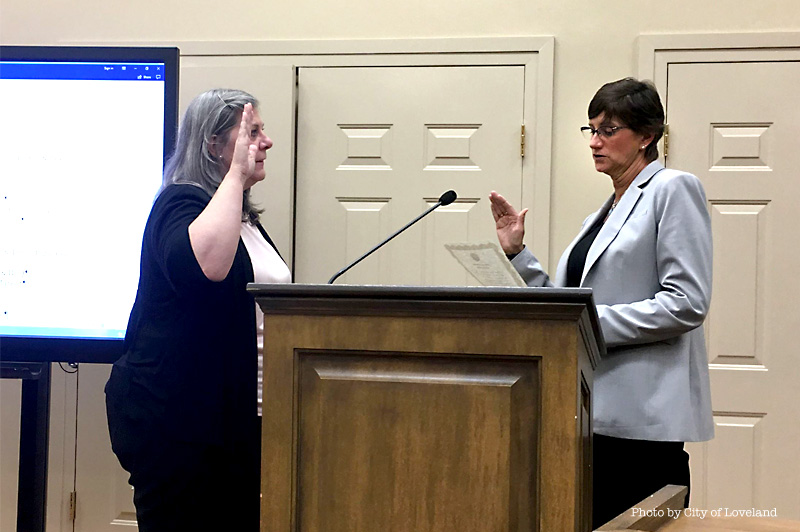
Loveland, Ohio – During the City Council meeting of June 11, Police Officer Amy Campbell was promoted to the position of Lieutenant in the Loveland Police Department.
Campbell was introduced by Chief Sean Rahe and sworn in by Mayor Kathy Bailey. Her mother put her new badge on her uniform and fellow officer Scott Humphrey pined Lieutenant bars on her collar.
Campbell was hired by Loveland in 2014 and has spent the last five years as a field training officer, evidence technician, bike officer, and crime prevention officer. She began her career in law enforcement with the Springdale Police Department in 2008.
What is ?
Did you know that you can watch this movie on the Loveland Magazine Youtube Channel in high definition on your television in your living room? It’s where we have published all of our videos since 2014!
Most TV’s have the YouTube app built-in. Go to the app and search for Loveland Magazine TV. Bookmark us so you can easily return to see new videos! Thanks for watching!
Loveland, Ohio – On February 26, City Engineer, Cindy Klopfenstein, said that during the first nine months of 2018, the City experienced 33 reported vehicle crashes into the low clearance, train trestle on Karl Brown Way in Historic Downtown Loveland.* To reduce the number of wrecks and traffic congestion they cause, the City hired Choice One Engineering to complete a safety study of the area.
Based on the study, Klopfenstein reported on her evaluation of the findings. This LOVELAND MAGAZINE TV video is Klopfenstein’s report to City Council.
* From the minutes of the Council meeting: “City Engineer, Cindy Klopfenstein, noted that during the first nine months of 2018, the City experienced 33 reported crashes at the train trestle on Karl Brown Way.” We should have paid more attention to what the City Engineer actually said, rather than what the minutes reported she said. Klopfenstein says in the video, that the 33 crashes occurred from 2016 through the first 9 months of 2018, not just the first 9 months of 2018.
Loveland Magazine photo from the May, 2017 Memorial Day Weekend fire
Loveland, Ohio – At their October 23 meeting, City Council approved a program that would incentivize owners of commercial, office, and industrial structures to retrofit existing buildings with fire sprinkler systems by waiving connection, permit, and inspection fees.
The purpose of this program is to protect structures within the City by offsetting a portion of the expenses related to installing a sprinkler system into an existing building. City Manager David Kennedy said, “Any added fire protection to the City’s commercial, industrial, or office building stock is added safety to the community, it’s occupants, and our firefighters.”
Following the May, 2017 Memorial Day Weekend fire in Historic Downtown that almost destroyed the two affected buildings that did not have sprinklers, City Council waived all fees associated with the installation of sprinkler systems including water connection and inspection fees for the damaged buildings when they were remodeled.
After the fire, Loveland/Symmes Fire Chief, Otto Huber reinforced the importance of sprinkler systems and the need to incentivize more building owners within the Downtown Historic District and the adjacent West Loveland Historic District to retrofit their buildings to include sprinklers. This led to discussions of the feasibility of creating a Fire Sprinkler Installation Assistance Program. At a recent City Council meeting, Huber said that a sprinkler system typically utilize a six-inch water tap/connection which based on the City’s current fee schedule would cost $21,500. Additional city costs include a building permit fee of $210 plus $.63 per square feet. Huber said that these city fees, along with the owner’s installation costs are largely the reason why very few existing buildings are retrofitted with sprinkler systems.
The intent of the proposed program would be to waive city fees for existing commercial, office, and mixed-use structures if approved Fire Sprinkler Systems are installed within the designated area.
The program is not for new construction.
Anyone can apply. To qualify for participation in the assistance program, a completed application is required and submitted to the Office of the City Manager. All applications for participation in the city’s Fire Sprinkler Installation Assistance Program are to be reviewed by a three (3) person panel consisting of the following:
Assistant City Manager
Fire Chief
Chief Building Official (CBO)
Applications will be reviewed based upon the age and condition of the building and its economic contributions to the City. Appeals of the decisions made by the three (3) person panel shall be submitted within forty-five (45) days in a written form to the City Manager.
Accounting Plus–Bingaman Accounting and Tax Service, LLC is a tax preparation, payroll and bookkeeping company locally based in Loveland, OH.
Loveland City Council will hold a special meeting on Wednesday, October 17, 2018, at 7:00 p.m. at City Hall, located at 120 W. Loveland Avenue.The purpose of the meeting is to consider the following legislation:
Ordinance authorizing the City’s participation in financing special energy improvement projects in cooperation with the Suburban Communities Energy Special Improvement District; authorizing the execution of documents to effectuate such financing; and declaring an emergency
Ordinance determining to proceed with the acquisition, construction, and improvement of certain public improvements in the City of Loveland, Ohio in cooperation with the Suburban Communities Energy Special Improvement District and declaring an emergency
Ordinance levying Special Assessments for the purpose of acquiring, constructing and improving certain public improvements in the City of Loveland, Ohio in cooperation with the Suburban Communities Energy Special Improvements District, and declaring an emergency
An executive session pursuant to Ohio Revised Code 121.22 (G)(1) to discuss the terms and conditions of employment, hiring, or discipline of a public employee.
And any other business as may properly come before the municipal body at the meeting may be considered and acted on.
Michelle Byrde (on left) taking the oath of office on September 11
Loveland, Ohio – City Council has appointed Michelle Byrde as the City’s new Director of Finance. Byrde has been with the City of Loveland since
2012 and was appointed as Assistant Finance Director in February of 2015. She has also served as Acting Director of Finance multiple times. Mayor Bailey who administered the Oath of Office to Michelle said, “Michelle has served the City with commitment over the last several years as our Assistant Finance Director, this new position is a natural transition and we all look forward to working with her in this new capacity.”
Byrde’s annual base salary will be $80,000. Council agreed to purchase and to pay the premiums on a term life insurance policy equal to three times her base salary. Council also agreed to continue to provide hospitalization, surgical and comprehensive medical insurance for Byrde and her dependents as well as make required premium payments on behalf of Byrde for insurance policies for life, accident, sickness, major medical and dependents coverage group insurance covering her and her dependents. Coverage shall be the same as that provided to all other non-union employees.
Byrde replaces Peter Rancatore who resigned on August 14. Rancatore was being paid a base salary of $90,000.
“Based on the information in the packet your reporting was accurate. At this point they have not committed and I should have corrected that memorandum and legislation. That was my mistake. I will contact Jeff and explain the error.” – City Manager Dave Kennedy
EDITOR’S CORRECTION: This story has been corrected to reflect the correct date of the council meeting which is June 26. Also corrected to reflect that Angie Settell voted against the expenditure. Thanks you Councilwoman Settell for alerting us to these factual errors.
Almost immediately, he immediately emailed Loveland Magazine and said, “LAB has not agreed on doing the water tower. I received a text message that you reported that LAB is paying for the painting of the water tower. That would not be accurate.”
Background
The story was generated from a memorandum to City Council from Clerk of Council, Misty Cheshire about awarding a contract for painting and maintenance of two City water tanks, one in the White Pillars subdivision and one in the Loveland Commerce Park. The memorandum said, “Jeff Williams has been consulted and he has verbally agreed that the Loveland Athletic Boosters will fund $12,200 total for painting a logo on each of the two tanks.” Trouble is it was not true.
In addition, in the packet of information included in the agenda for the June 26 Council Meeting is a piece of legislation for Council to consider – a “Resolution authorizing the City Manager to enter into a contract with Utility Service Co., Inc. for the 2018 Commerce Park and White Pillars Tank Maintenance.” A whereas clause in this formal document reads:
WHEREAS, the Loveland Athletic Boosters has verbally agreed to fund $12,200.00 for the painting of the school logo on each tank, which was bid as alternates number one and two.
Getting closer to the truth
Following the email from Williams, Loveland Magazine emailed Loveland City Manager Dave Kennedy about Williams concerns. He said, “No we did an alternate bid for them to add their logo to one or both towers but they have not agreed to anything yet. We gave them the cost but it would be separate from the contract to paint the towers.”
After showing Kennedy the City documents that stated as fact that Williams had made the verbal commitment and asking the City Manager to clarify, he emailed back saying “Based on the information in the packet your reporting was accurate. At this point they have not committed and I should have corrected that memorandum and legislation. That was my mistake. I will contact Jeff and explain the error.”
Williams said that he did discuss the painting project with City officials, but at the time no one knew what it might cost. He was told that the City would put the cost of painting the school logo into the bidding documents as an “alternative” bid item and when the bids were received they would let him know. Williams did receive the estimate for $12,200, but said, that’s where the discussion ended. “It was my intention all along to see if I couldn’t raise the money separately by making a few phone calls to some people I thought might be interested in helping with such a project.” Williams said he had often used this approach for the millions of dollars he has helped raise for school projects, giving potential donors a specific project to donate toward and avoiding dipping into LAB general funds.
At the June 26 council meeting, Kennedy announced he removed the language from the Resolution about Williams giving the verbal commitment. Council then voted 6-1 to approve the ordinance which will result in painting the City Logo on the tanks, and the school logo – if the Boosters later decide to donate $12,200. Angie Settell voted against the expenditure.
Opposition from Loveland’s neighbors
Miami Township residents, Bob Rutter and Lisa Proctor who own homes near to the White Pillars elevated water tank spoke at the council meeting against painting any logos on the tank. The tank is now free of any advertising and they do not want any because of aesthetic concerns and the potential to lower property values. They commended the City for painting the tanks because of their deteriorating condition, however, want the tank in their neighborhood to remain the sky-blue paint color it is today so it blends with the sky.
Proctor says, “Loveland should not spend $6,100 per logo to spread ill will with these communities that would prefer to not have attention called to the tower.”
EDITOR’S NOTE: In reaction to this editorial, City Council voted on Tuesday, April 24 to have a public hearing on this proposal during the City Council meeting of May 9.
It’s past time City Hall start a dialogue with those most affected
by David Miller, Publisher
Come take a walk with me while I tell you a story
It’s just my opinion, but I believe City Hall should start talking to people about this before it gets so far along people will need 1.6 million dollars worth of arguments against it. Once City Hall gets the funding for what they will describe as “Free Money” it will be extremely hard to turn council members to “No” votes. Residents should be given a fighting chance.
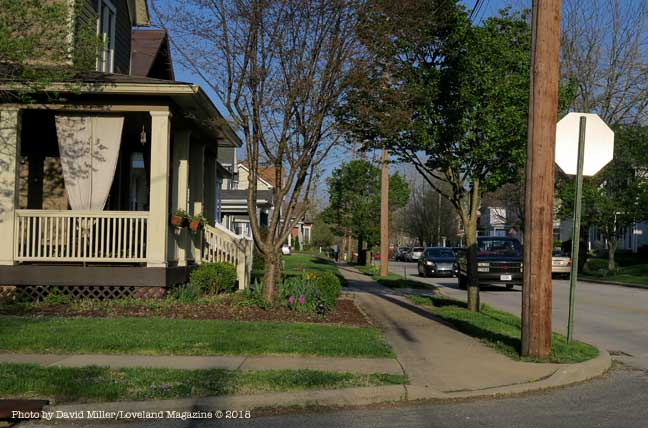
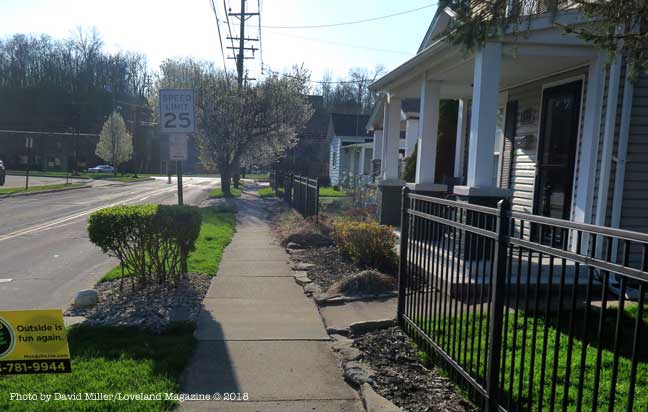
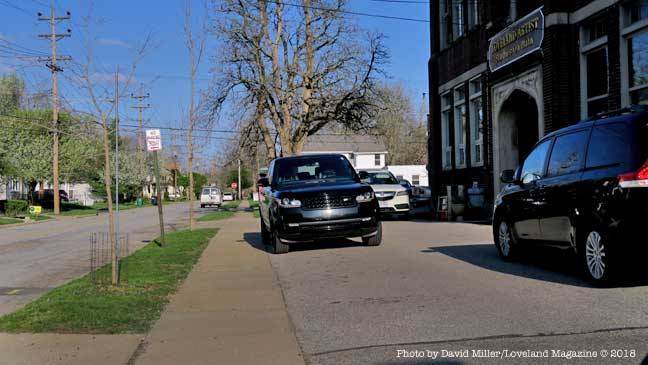
As the equivalent of a one-lane asphalt road that will cozy within feet of the front doors of homes and businesses in the West Loveland Historic District and along Loveland Madeira Road, and City Hall moves closer to securing funding, property, and homeowners have yet been asked their opinion. Almost all do not yet know the proposal has already been partially funded by Hamilton County and the Ohio, Kentucky, Indiana Council of Governments has committed their resources to finding 80 percent of the $1,623,000 and growing price tag for construction.
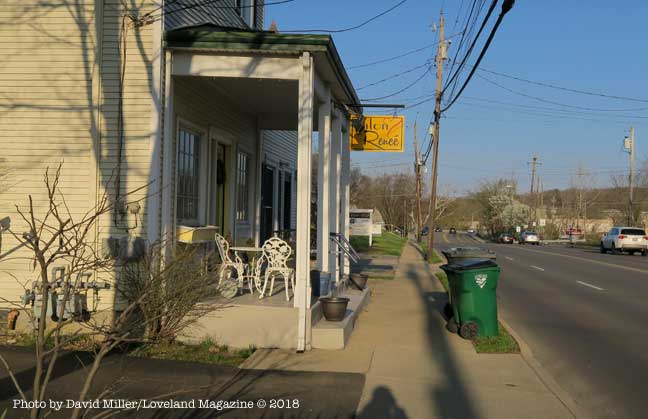
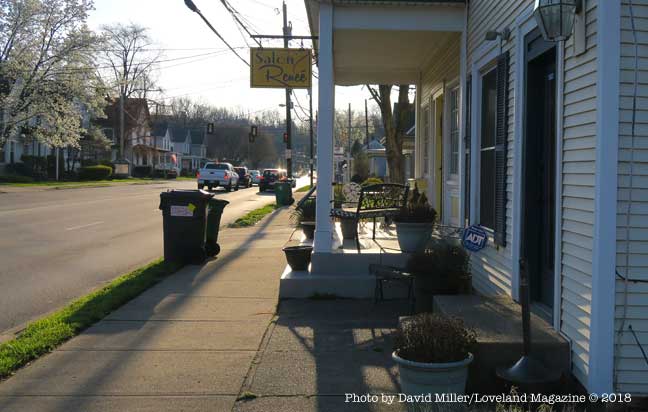
This is a view of the North side of West Loveland Avenue where construction of a 12′ wide swath of asphalt would require the removal of the front porch of this business. The entry to the basement of this business is through the porch floor.
Some front porches would have to be removed to accommodate the 12’ wide asphalt bicycle road. The road will be reduced to 10’ wide only where construction proves difficult.
As the City Hall proposal gets yet more expensive and closer to fruition there is still no initiative from the Council table to ask the thoughts and suggestions of citizens, home-owners, affected businesses, property owners, or pertinent City Commissions and Committees.
As the City Hall proposal gets yet more expensive and closer to fruition there is still no initiative from the Council table to ask the thoughts and suggestions of citizens, home-owners, affected businesses, property owners, or pertinent City Commissions and Committees.
One property and business owner along the proposed route wrote to City Hall. Paul Elliott said, “I am under the impression that such a proposal ‘has legs’, and city officials are even seeking funding sources. First, as a taxpaying resident and longtime business/property owner on West Loveland Avenue, I am disappointed that no city official has approached either the public in general nor us property owners who may be affected by such a bike corridor.”
The project, called the Loveland Connector Trail, will be approximately 1.4 miles long and will begin at the Deer Ridge II Apartments being built next to New Hope Baptist Church. It will continue along Loveland Madeira Road to Main Street, to the southern part of Wall Street, then to West Loveland Avenue, crossing over the Little Miami River at the Col. Paxton Bridge ending in Historic Downtown.
“I am disappointed that no city official has approached either the public in general nor us property owners who may be affected by such a bike corridor.” – Resident and affected business owner, Paul Elliott.
The goal and impetus for the project are to reduce congested parking in the Downtown Historic District by encouraging Loveland Bike Trail users to park somewhere along the new bike road and ride their bikes into Historic Downtown.
City Manager, Dave Kennedy announced in February that he was confident he will find 80% of the $1,623,000 cost from the Federal Government. He has since announced changes that will raise the price tag an undetermined amount.
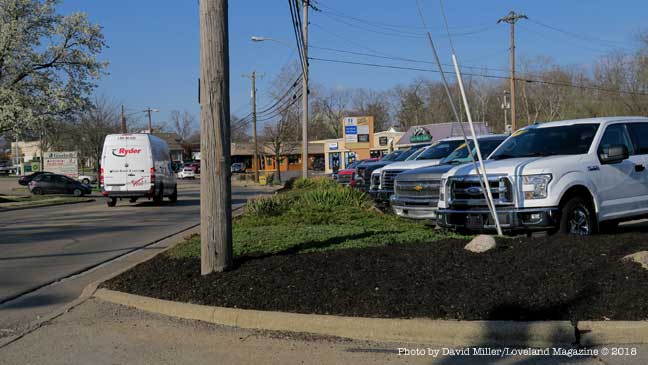
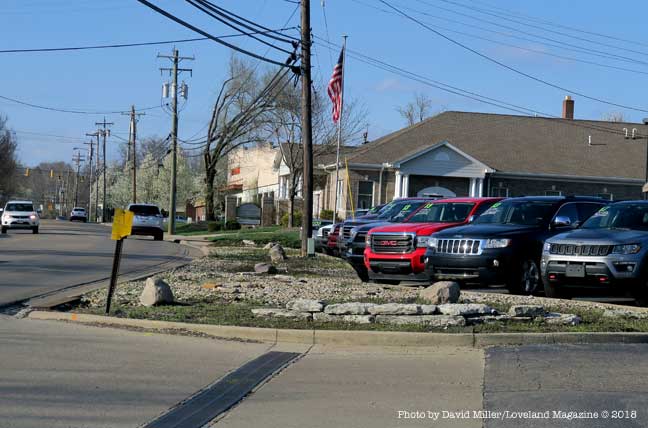
A view of an automobile dealership that has softened their business frontage. Something will have to give way for the proposed 12′ asphalt bike road.
The study does not contain any data on the potential number of users, nor potential customers to Loveland Madeira Road businesses. The study also does not address any repercussions on the residential neighborhood of Main Street or the Business/Residential neighborhood on West Loveland Avenue. For instance, it does not address future maintenance or whether property owners will be responsible for snow and ice removal on a path that replaces their current sidewalks. It’s right to ask when residents are left without sidewalks, “When will the bike road be cleared of snow? Who will do it, with what type of equipment, and when will it happen?”
A close look at what is described as a “Detailed Cost Estimate” appears to be grossly underestimated in terms of things that are absent consideration such as acquiring private property, relocating business signs, and replacing private parking,
Light colored 4′ tree-shaded concrete sidewalks where children can walk without shoes, and people walk their dogs will be replaced with a 12’ barren swath of black, heat-absorbing asphalt the width of a one-lane road just feet from homes.
Light colored 4′ tree-shaded concrete sidewalks where children can walk without shoes, and people walk their dogs will be replaced with a 12’ barren swath of black, heat-absorbing asphalt the width of a one-lane road just feet from homes where owners will pay higher air-conditioning costs.
There has been no recommendation to forward the proposal to the Planning and Zoning Commission, Tree and Environment Committee, Beautification Committee, or Safety Service & Street Improvement Committee for review. No public hearings are scheduled. None have been suggested.
Phelps and City Manager Dave Kennedy have attended workshop/training on a Federal grant program along with a meeting with OKI officials to discuss the city’s project in more detail. While the updated cost estimate is being secured, the grant application is being reviewed and various needed documents are prepared. They plan to ask City Council in May to move forward seeking funding.
Phelps said that people who are using the bike trail are using too many of the downtown parking spots and using them for too long a period of time. “This is going to give them another place to get on the trail, better parking, easier on and off.” He believes the bike road will bring in new customers to Loveland Madeira Road businesses when they park nearby but head into Historic Downtown. The study does not contain any data on the potential number of users, nor potential customers to Loveland Madeira Road businesses. The study also does not address any potential negative repercussions on the residential neighborhood of Main Street or the Business/Residential neighborhood on West Loveland Avenue.
Some “Progressives” may love the idea, some may like it but believe it ill-considered given the impact on individuals who live or have invested in the impacted area. Some money conservatives may believe it an economic boon to both the Historic District and Loveland Madeira Road. Some money crunchers may ask, where is the cost-benefit analysis and just how many people will actually use it and spend money along Loveland Madeira Road. Some may ask if all costs factors have been included in the early estimate and if the price tag goes north after a grant is awarded – who will get stuck.
Elliott said his email to City Hall, that included the City Manager, Mayor and Council, the Planning and Zoning Commission, the Recreation Commission, and the Streets and Public Safety Committee was his attempt to open a dialogue between the decision makers, and those “of us” who will be financially and personally affected.
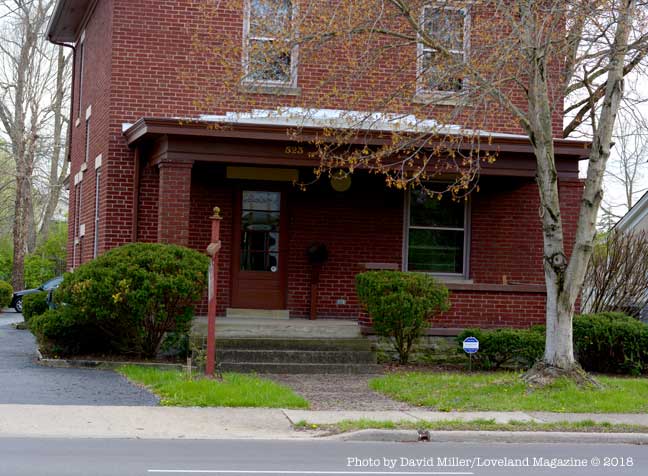
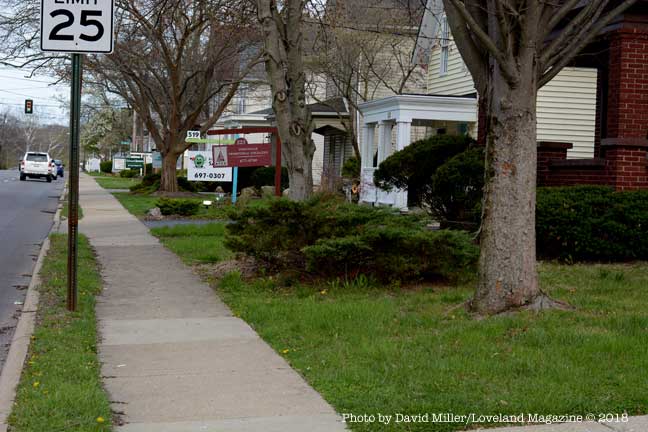
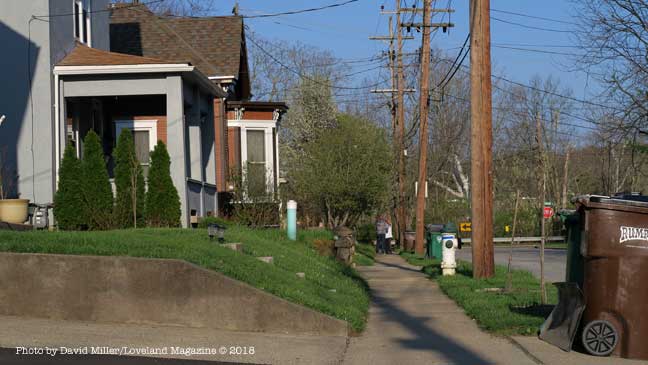
Resident and business owner Paul Elliott bought this business building on West Loveland Avenue in 1997. He has asked City Hall how the proposed connector path will affect the front yard of his property.This is a view of business and residential properties on the South side of West Loveland Avenue. Although the proposal isn’t clear, presumably this 4′ concrete sidewalk will be replaced by a 12′ wide swath of asphalt, equivalent to a one-lane road. These street trees will with be cut down or have their roots severely damaged by the excavation. It is not clear whether the grassy strip will remain.
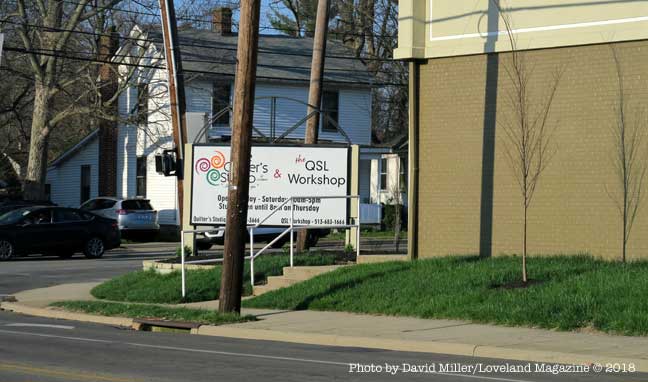
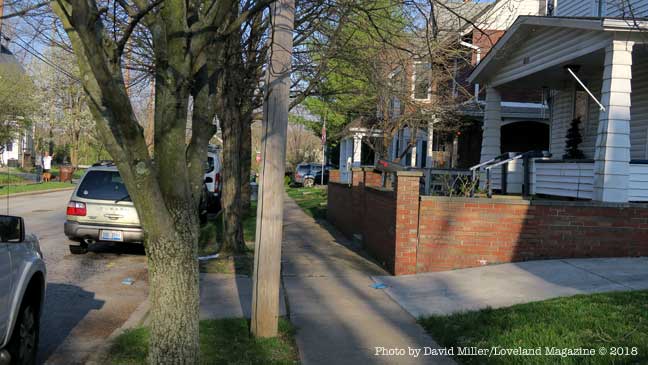
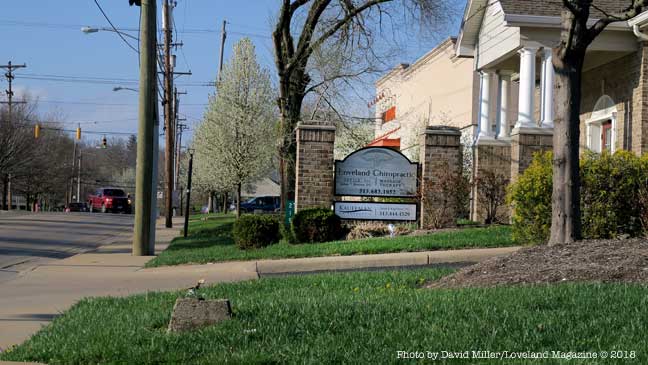
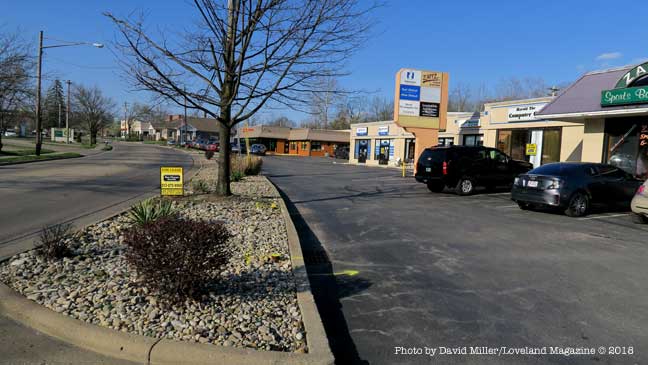
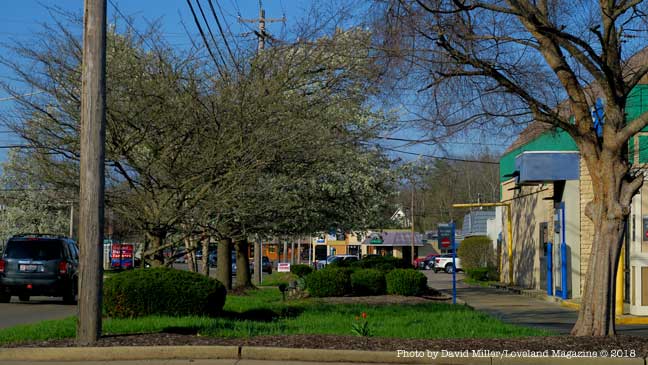
Another view of the beauty salon on the North side of West Loveland Avenue where construction of a 12′ wide swath of asphalt would require the removal of the front porch of this business. The entry to the basement of this business is through the porch floor.If the 12′ wide bike road wraps around this building this sign and landscaping will have to go. The sign may need to be replaced with two signs to satisfy the business owner, yet there is no apparent budget item for moving or replacing business signs in the proposal.Depending whether the 12′ bike road goes down this side of Main Street, these street trees may be removed. These utility poles if moved to the left would might result in fatal topping of the trees. If the poles remain in place it puts the asphalt even closer to the house. If the road goes on top of the tree roots the trees will shortly die. The owners will pay higher air-conditioning cost without their shade trees. If the trees die because of the location of the bike road, the home owner will then be required to pay to have the tree removed. Will the homeowner’s brick wall survive the project?This is another problem area on Main Street where homeowners will lose a good portion of their already small front yard.The 12′ bike road could cut across the front yard of this Main Street home taking out a tree and landscaping.Another front porch, this one on Main Street may stand in the way of the 12′ wide asphalt bike road or end up only inches away.If the 12′ wide asphalt bike road goes down this side of Main Street it will leave the Artists Studios on Main without street trees and much needed parking.The landscaping, street trees, utility polls, and sign at this business on Loveland Madeira Road appear to be in the path of the 12′ wide bike road.This landscaping area that softens the appearance of this automobile dealership on Loveland Madeira Road will be replaced with a 12″ asphalt bike road.This is more of the landscaping along Loveland Madeira Road that will be removed (or most of the parking lot) to make room for a 12′ asphalt bike road.
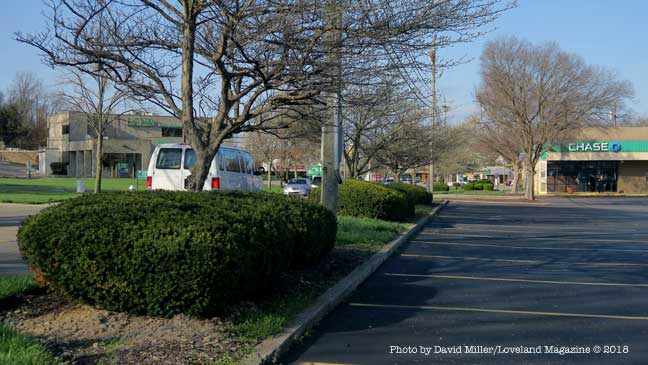
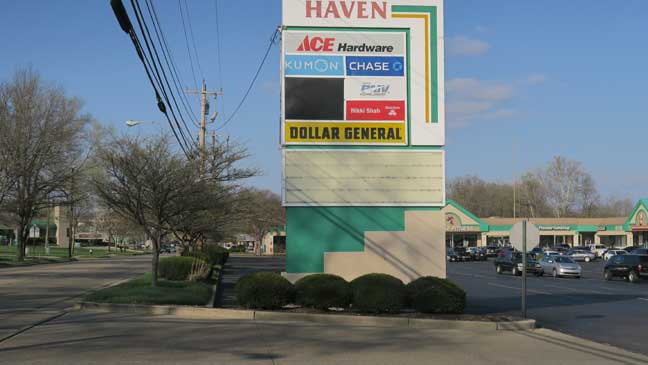
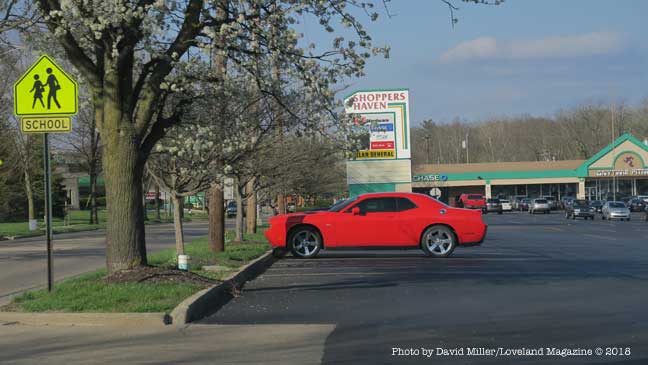
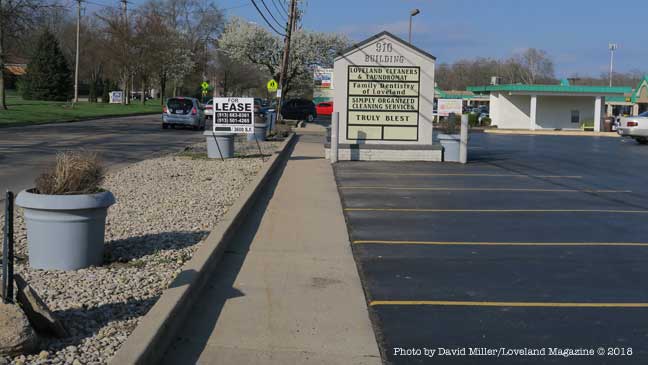
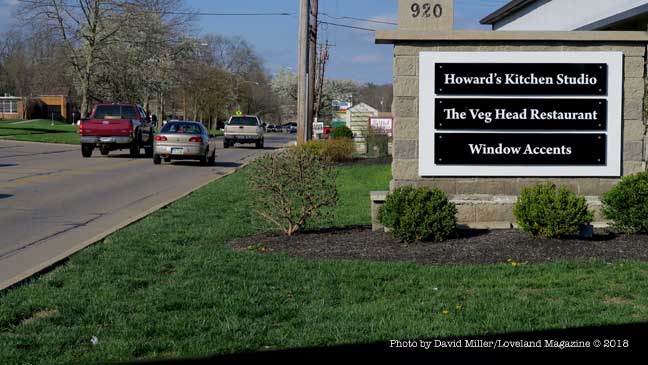
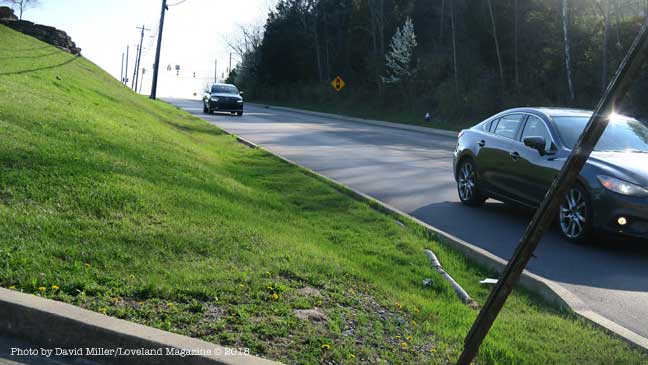
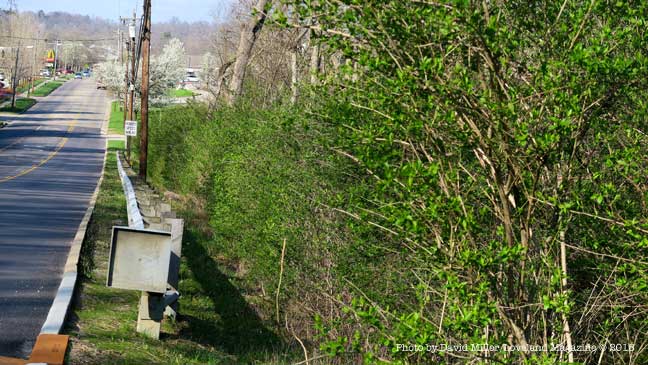
This is the only green space at the Chase Bank on Loveland Madeira Road. There will be a 12′ asphalt bike road running down the middle of it.If a proposed 12′ wide asphalt bike road goes past Shoppers Haven shopping center these street trees may be removed, utility lines moved, parking spaces removed, or all three. Private property may have to be acquired through “willing seller – willing buyer” agreements or “taking” by eminent domain and associated legal costs. In the end, these parking spaces used by local businesses and the schools may be eliminated for the prospect of freeing up parking spaces a mile away in Historic Downtown.There does not appear to be a budget item for moving this business sign out of the path of the proposed 12′ wide asphalt bike road, nor is there any discussion of whether the owner and the businesses would want their sign moved further away from the visibility of automobiles on Loveland Madeira Road.If a proposed 12′ wide asphalt bike road goes past Shoppers Haven shopping center these street trees may be removed, utility lines moved, parking spaces removed, or all three. Private property may have to be acquired through “willing seller – willing buyer” agreements or “taking” by eminent domain and associated legal costs. In the end, these parking spaces used by local businesses and the schools may be eliminated for the prospect of freeing up parking spaces one mile away in Historic Downtown.Will the landscaping and street buffer, the business sign and the parking at the 910 Building be sacrificed to free up an un-estimated number of parking spaces for the businesses one mile away in Historic Downtown?Another Loveland Madeira Road business sign in the way of a proposed 12′ asphalt bike road. Is this sign still going to have the same visibility if it is relocated? Is there enough room to just push it closer to the building or will it need to be re-engineered, and reconstructed smaller?This is the hillside in front of New Hope Baptist Church where City Hall wants to build a 12′ wide asphalt bike road. Its there money in the estimate of cost to build a retaining wall or will the hill just get steeper?This is Loveland Madeira Road looking North from New Hope Baptist Church toward Kroger. The guard rail protects motorists from a steep immediate drop into a very deep ravine. The 350′ long stretch quickly drops 50′ below the grade of the road. It is not clear if the budget estimate has taken into consideration the expense of building a 12′ wide bike road at the edge of this ravine.
Loveland, Ohio – The City of Loveland is accepting applications for a Charter Review Commission through February 12. The commission will review and possibly recommend changes to Loveland’s Charter. Any changes proposed will be presented to City Council for their vote on placing the changes on a General Election ballot.
According to City officials, the commission will be appointed by the Mayor and will meet approximately twice a month for four to six months .
Applicants are being asked to commit the required volunteer time for board service as well as show an interest in the specific workings of the commission. Commission members must be qualified voters of the City.
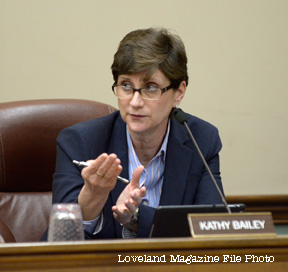
Loveland, Ohio – On Wednesday, Mayor Kathy Bailey announced she has selected Kent Blair to fill the vacant seat on City Council. The council seat has been vacant since the resignation of Mark Fitzgerald on August 14 of last year. Blair will serve the remaining two-year’s of Fitzgerald’s term. Blair is expected to be sworn into office at the next council meeting scheduled for January 9.
In a press release, Bailey said she conducted personal interviews with several candidates before making her decision. “I selected Kent because he shares my commitment to community engagement and transparency,” Bailey said. “The voters made clear this November what qualities they want in their council members, and Kent exemplifies them all. He is committed to working with this new council to make the City proud of the work we do, and the manner in which we do it.”
Blair had submitted petitions to run for one of the four, four-year open council seats in last November’s election but withdrew from the race when Neal Oury submitted petitions to run.
The Back Story
On August 11 the Hamilton County Board of Elections ruled that Oury and the Loveland Community Heartbeat Political Action Committee (LCHPAC) had submitted sufficient petitions to recall Fitzgerald. The petition effort was successful, and could have resulted in a head-to-head race, Oury vs. Fitzgerald, however instead of facing the voters to retain his seat, resigned. That left Fitzgerald’s seat open and Loveland without a Mayor.
Oury then submitted petitions to run for one of the regular open seats on Council and that is when Blair withdrew his petitions to run. It was an apparent deal with LCHPAC who endorsed five candidates. If there was not a recall election, Blair would withdraw making room for Oury’s name on the ballot. Others receiving the LCHPAC endorsement were incumbents, Rob Weisgerber, Ted Phelps, and newcomer Tim Butler.
Fitzgerald stepped down as Mayor at an August 14 meeting so that he could still cast a vote on who would be the next mayor and vice-mayor. The votes were 4-3 in favor of then vice-mayor Angie Settell and then, council member, Pam Gross. After the meeting was over, Fitzgerald distributed a letter that he was resigning from Council. The attempt to elevate Settell to Mayor was later ruled illegal by City Solicitor Joe Braun because there wasn’t proper public notice of the meeting. Braun also ruled that the council seat would remain open until new council members were sworn in on December 4 and a new Mayor elected. Bailey was elected Mayor.
About Kent Blair
Kent Blair is expected to be sworn into office at the next council meeting scheduled for January 9.
In announcing his withdrawal from the ballot, Blair said on August 18, “I was one of nine candidates on the ballot for four City Council seats. When I was first asked to consider running, I made it clear to all that, while I want to serve, and believe that I would do a good job, the main outcome of the election must be removing the existing majority on Council. To help achieve that, if necessary, I would withdraw my own candidacy so that the full support of those in Loveland who share my goal could be focused, laser-like, on four candidates for four seats. With the recall election no longer a possible ballot question, the mathematics of the race have changed. It is in celebration of that victory, and in keeping with my commitment, that I have withdrawn my name for the ballot for November, and strongly urge any and all who share my views of the future of our city to support now and cast your votes when the time comes for Rob Weisgerber, Ted Phelps, Neal Oury, and Tim Butler.”
Blair is employed at U.S. Bank where he is an investment advisor and broker. He is a 12-year resident of Loveland and dad to a senior at Loveland High School. He has been a member of the Amazing Charity Race Committee since its inception and as a 7-year coach of SAY Soccer.
In announcing his candidacy Blair said he would advocate for transparency and resident engagement. At the top of his list for reform is the makeup of the Community Improvement Corporation. Blair added, “I am a strong supporter of accountability of elected officials to the people they serve. I believe in process, good stewardship of resources, an expectation of inclusion, and sensible growth. Loveland should stand for all of the residents, not the few who lead it. Development of a future master plan must be approached with an emphasis on community representation, not strategic power plays that benefit only a few.”
Bailey added, “I appreciate and thank all of those candidates who applied. This was a very tough decision, but I think Kent will be a great addition to the new council, and I am excited to work with him.”
It was quarter to ten tonite, when what did I hear……..a train whistle in Loveland! I think it was ridiculous to silence the train whistles because they are for the safety of all going through Loveland. I moved here to be near the train as it went through the little city, I now call home.
I hope the new council will turn things around.
Several years ago I attended a meeting about silencing the whistles. The council had a truck brought in with some whistles for the people to hear. Nothing more was done until the train crossings silenced the whistles altogether. Now everyone you ask blames it on the former council!
I don’t know the laws about train crossings but wait until something happens and who will take the blame? I hope the new council will turn things around and bring the whistles back!


![[Video] Officer Amy Campbell promoted to Lieutenant with the Loveland Police Department](https://lovelandmagazine.com/wp-content/uploads/2019/06/maxresdefault-14.jpg)
 ?
?










 by David Miller, Publisher