Tag: Columbus

  • Thousands show up again on Saturday to protest Trump in Ohio

    Thousands show up again on Saturday to protest Trump in Ohio

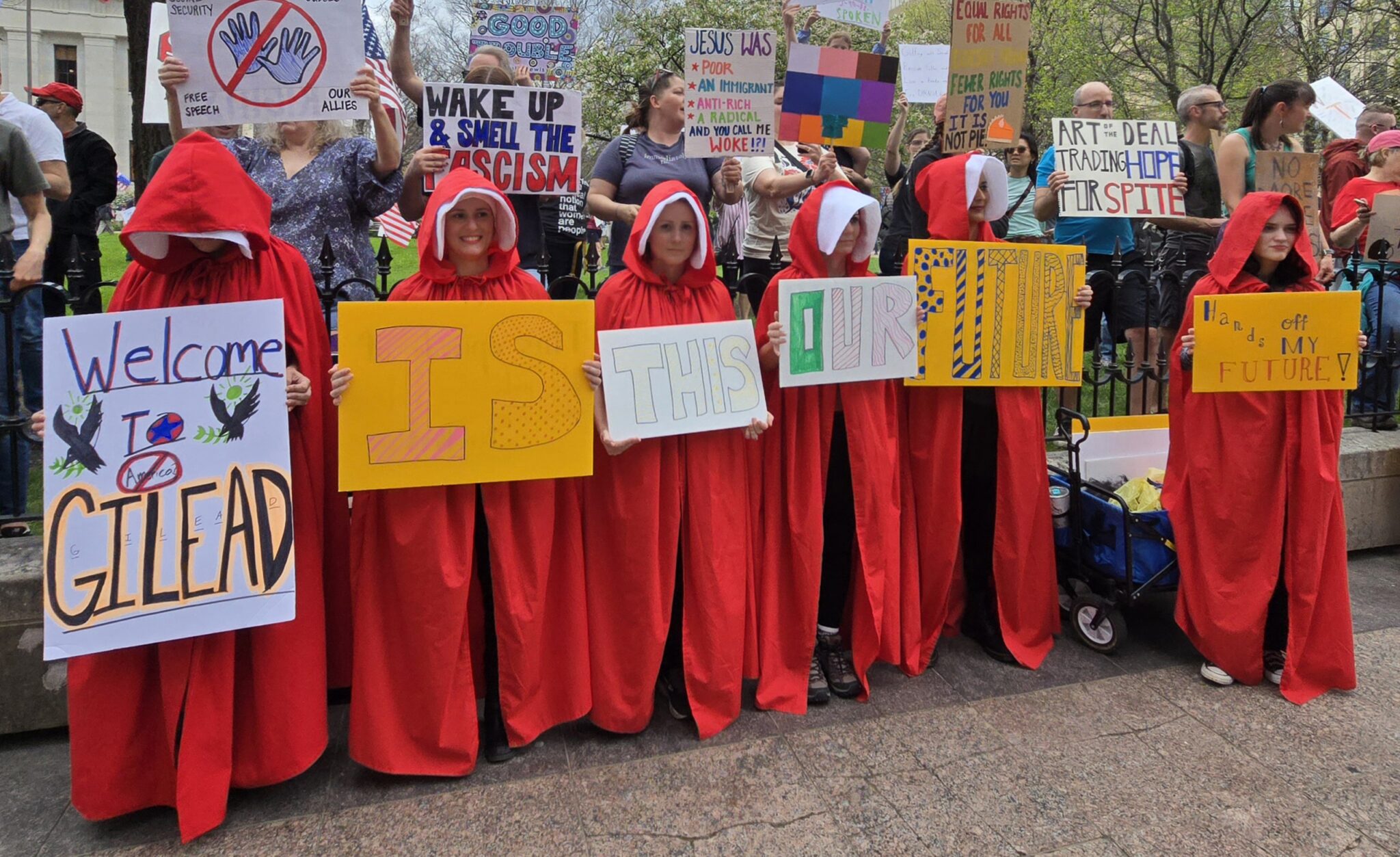
    Protesters dressed as characters in “The Handmaid’s Tale,” a dystopian novel about life under a totalitarian regime. They were protesting President Donald Trump at the Ohio Capitol on April 19. (Photo by Marty Schladen, Ohio Capital Journal.)

    By: Ohio Capital Journal

    A larger-than-expected crowd went to the Ohio capitol on Saturday to protest President Donald Trump and the many controversial actions of his young administration. It was one of at least 47 across Ohio and more than 700 across the United States.

    Columbus police said that the crowd appeared to approach 3,000. That was smaller than the roughly 5,000 who turned out on April 5, when millions protested nationwide. But with the Easter holiday and fewer sponsoring organizations, smaller crowds were expected on Saturday.

    Large crowds also gathered in Cincinnatirainy Akron, and other cities across the Buckeye State. They were sponsored by the group 50501.

     Photo by Marty Schladen, Ohio Capital Journal. 

    Organizers chose April 19 to protest in part for its symbolic value. On that day in 1775, the first battles of the Revolutionary War were fought in Lexington and Concord, Mass.

    Playing off of that theme, many carried signs Saturday denouncing Trump and accusing him of trying to be a king.

    Trump has been raising such concerns in several ways. They include by trying to gut the independent federal antitrust watchdog, and by empowering the world’s richest man to fire tens of thousands from the Social Security and Veterans administrations, the National Park Service, and numerous other agencies.

    But perhaps more concerning is that his administration has been invoking a law not used in 80 years, accusing some migrants of membership in gangs, and deporting them to a notorious Salvadorean prison. He has defied court orders — including one to bring back a man whom the administration admitted was deported in error.

    The U.S. Supreme Court early Saturday morning ordered a temporary halt to the deportations. So the stage seems to be setting for a confrontation between the judiciary — which has no army to enforce its orders — and an executive who sometimes has been disinclined to heed them.

    That was on the minds of many at the Columbus protest. Chuck Ardo of Lancaster said that his family migrated to the United States from Slovakia when he was a child, and that his parents survived the Holocaust.

    “Fascism is something I’ve always been aware of,” he said. “Due process and the Constitution, that’s what matters. I don’t know if these people are deportable or not. But they all deserve due process and that’s what’s missing here. They’ve labeled them ‘terrorists,’ but on what grounds? What proof have they shown?”

    Sen. Chris Van Hollen, D-Md., last week visited the wrongly deported man, Kilmar Armando Abrego Garcia, at the Salvadorean prison. He said that if Trump has evidence that Abrego Garcia is in a gang, he needs to present it court — not just claim it on social media.

    For Ardo, Trump’s actions have a disturbing historical echo.

    “Donald Trump is doing many of the things Hitler did as he rose to power,” he said. “Hitler attacked the courts. He attacked the universities. I’m not accusing anybody of being a Nazi here, but while history doesn’t repeat itself, it rhymes.”

    Debbie Wood of Powell said the president has been acting like a king in other ways as well.

    “Trump did not win in a landslide,” she said. “More people voted for someone else than for him. He does not have a mandate. Even the people who voted for him did not vote to ruin the VA. They didn’t vote to fire people who do cancer research. They didn’t vote to take food out of the mouths of hungry people. Ruining the national parks. Nobody voted for any of that stuff.”

    She added, “People are getting more and more angry. He’s sending people away to concentration camps without due process. Ignoring court orders. Who does that? We would be in jail.”

     Photo by Marty Schladen, Ohio Capital Journal. 

    Gary Bennett of St. Clairsville stood at the base of a monument to former President William McKinley holding a sign that mocked Trump and slammed him for gutting the staff at the National Park Service. He said that’s just one problem among many he has with the new administration.

    “We could make signs every day of the week and there would still be signs to make,” he said. “Me and my wife just retired, and we don’t want him to take away our Social Security. That’s just one thing.”

    Chris Glass of Delaware said she’s also upset about many things Trump is doing, and that protesting helps.

    “There is something very nice about the camaraderie,” she said. “It’s a sense that people do care. I think we represent the country better than our current government does.”

    Last updated 5:03 a.m., Apr. 21, 2025


    Marty Schladen
    Marty Schladen

    Marty Schladen has been a reporter for decades, working in Indiana, Texas and other places before returning to his native Ohio to work at The Columbus Dispatch in 2017. He’s won state and national journalism awards for investigations into utility regulation, public corruption, the environment, prescription drug spending and other matters.

    Ohio Capital Journal is part of States Newsroom, the nation’s largest state-focused nonprofit news organization.

    MORE FROM AUTHOR

  • Ohio higher ed overhaul to ban diversity efforts and regulate classroom discussion heads to governor

    Ohio higher ed overhaul to ban diversity efforts and regulate classroom discussion heads to governor

    Ohio college students and protesters rally at the Statehouse on March 19, 2025, against Senate Bill 1, a higher education overhaul that bans diversity efforts and faculty strikes, and sets rules around classroom discussion, among other things. (Photo by David DeWitt, Ohio Capital Journal.)

    By:  Ohio Capital Journal

    A controversial bill to overhaul Ohio higher education, ban diversity and inclusion efforts, prohibit faculty from striking, and regulate classroom discussion is heading to Ohio Gov. Mike DeWine’s desk for his signature.

    The Ohio Senate concurred with changes made to Senate Bill 1 by the Ohio House during Wednesday’s session. The vote was 20-11 with only two Republicans voting against it, state Sens. Louis W. Blessing III, of Colerain Township, and Thomas F. Patton, of Strongsville, voting against it. DeWine has previously said he would sign S.B. 1 into law.

    DeWine will have 10 days to sign the bill into law or veto it once he receives it. If DeWine vetoes the bill, lawmakers would need a 3/5 vote from each chamber to override it.

    GET THE MORNING HEADLINES.


    S.B. 1 would set rules around classroom discussion, create post-tenure reviews, put diversity scholarships at risk, create a retrenchment provision that block unions from negotiating on tenure, shorten university board of trustees terms from nine years down to six years, and require students take an American history course, among other things.

    For classroom discussion, the bill would set rules around topics involving “controversial beliefs” such as climate policies, electoral politics, foreign policy, diversity and inclusion programs, immigration policy, marriage, or abortion. S.B. 1 would only affect Ohio’s public universities.

    State Sen. Jerry Cirino, R-Kirtland, introduced S.B. 1, which passed the Ohio Senate last month and the Ohio House last week.

    “I am delighted, of course, as I always believed this is a great bill for the state of Ohio, for students and for higher education, so I’m delighted that we’ve been able to get past this next hurdle and send the bill to the governor’s desk,” Cirino said.

    S.B. 1 has received significant pushback. More than 1,500 people have submitted opponent testimony against the bill. Hundreds of students around the state have protested against the bill. Students and faculty have said they would leave Ohio if the bill becomes law.

    “We decided on a different approach than many, many of them would like,” Cirino said when asked about the bill’s overwhelming opposition. “But this isn’t about how many people show up to protest or to testify in hearings. A lot of those students that were showing up where, I believe, they were being paid or getting extra credit. And we don’t make policy here based on the number of people that show up to protest or testify.”

    Senate President Rob McColley, R-Napoleon, said the passing of S.B. 1 is long overdue.

    “It’s something that, frankly, should have been done sooner, but I’m happy we put the work in to get to where we are right now,” he said. “I do think it’s something that’s supported by Ohioans.”

    Before voting to concur on S.B. 1, lawmakers debated the bill for about 35 minutes.

    “Senate Bill 1 will enrich the learning experience of students at our public universities and colleges — places where our best and brightest will be able to learn without prejudice, speak their minds without being canceled, be honest about their positions without fear of faculty retaliation, and consider all sides of an issue and make up their own minds,” said Sen. Kristina Roegner, R-Hudson.

    State Sen. Michele Reynolds, R-Canal Winchester, acknowledged that some people are afraid of what will happen if DEI on college campuses is ended through this bill, but said the time has come to remove DEI labels.

    “This is not about censure or erasure,” she said. “It’s not about exclusion. It’s about inclusion that transcends labels, because DEI has become a system that sorts us. It sorts us by race, by gender and by identity, creating a culture where we are defined by our categories instead of our character, where we look at each other’s faces instead of listening to each other’s hearts.”

    State Sen. Kyle Koehler, R-Springfield, said this bill ends the micromanaging of instruction in higher education.

    “All Ohio college students and parents will now have a more comfortable feeling that their public institution of higher learning will foster an environment of open and free expression for everyone,” he said.

    Senate Minority Leader Nickie Antonio, D-Lakewood, said not everyone is celebrating the concurrence of S.B. 1.

    “Instead of tackling the real barriers to higher education — skyrocketing tuition costs and student debt — again, the majority are focused on dictating what’s taught in our colleges and universities and who teaches,” she said.

    State Sent. Kent Smith, D-Euclid, said this bill will inhibit Ohio universities from attracting top-tier professors.

    “If Senate Bill 1 becomes law, this legislation is the worst attack on academic freedom in Ohio in modern history,” Smith said.

    Follow Capital Journal Reporter Megan Henry on Bluesky.

    YOU MAKE OUR WORK POSSIBLE.

    ____________
    Megan Henry
    Megan Henry

    Megan Henry is a reporter for the Ohio Capital Journal and has spent the past five years reporting in Ohio on various topics including education, healthcare, business and crime. She previously worked at The Columbus Dispatch, part of the USA Today Network.

    Ohio Capital Journal is part of States Newsroom, the nation’s largest state-focused nonprofit news organization.

    MORE FROM AUTHOR

    _____________

    BECOME A LOVELAND MAGAZINE SUPERFAN BY DONATING NOW!

    Editor’s note: Open and free local reporting is critical to having well-informed community. Loveland Magazine has published a free newspaper and website for the last 20 years for our community. If you would like us to continue, kindly contribute to this service. It would be greatly appreciated. Donations may be made to: Loveland Magazine, 243 Wall Street, Loveland, Ohio 45140. Or, donations can be made through PayPal using a credit card. (https://bit.ly/4j1ju3k) Advertisers do not nearly cover all of our expenses.

  • Peer-Led sources of strength program creates healthier school cultures, drastically reducing suicide attempts by 29%

    Peer-Led sources of strength program creates healthier school cultures, drastically reducing suicide attempts by 29%

    Learn more about these Loveland based resources:

    Ben Morrison Fund

    NAMI Southwest Ohio

    Columbus, Ohio – Peer leadership and meaningful connections can save lives. According to a new study funded by the Centers for Disease Control and Prevention and published in the American Journal of Preventive Medicine, Sources of Strength’s (Sources) prevention model helps reduce suicide attempts among high school students by an astonishing 29%.

    For nearly 30 years, Sources has worked with both youth and adults to build resilience, promote mental well-being, and prevent suicide. By training diverse student leaders and leveraging peer influence, Sources transforms school environments and fosters cultures of hope and support, according to a new report released by the Ohio Suicide Prevention Foundation.

    Sources of Strength Ohio (SourcesOH) is an initiative of the Ohio Suicide Prevention Foundation (OSPF) and PreventionFIRST! with funding and support from the Ohio Department of Mental Health and Addiction Services.

    Tony Coder

    “We hear from so many people how Sources positively impacts the well-being of students, teachers, and communities across Ohio,” said OSPF Executive Director Tony Coder. “This new study provides further evidence of the life-saving potential of this program. We are so thankful to be a part of providing Sources at no- or low-cost to as many Ohio schools and communities as possible.”

    Considered one of the first suicide prevention programs to demonstrate effectiveness using Peer Leaders, SourcesOH has been implemented in 62 Ohio counties and 399 Ohio schools since December 2020 and has reached 174,000 Ohio students, including 218 middle and high schools.

    Nicole Schiesler

    “PreventionFIRST! supports Ohio schools in implementing and adopting Sources of Strength Ohio. When we meet with administrators and teachers, sharing positive outcomes, supported by national and state-level data, adds incredible value to this successful program,” said PreventionFIRST! President and CEO Nicole Schiesler. “Schools want to make informed decisions, and this evidence-based research elevates Sources of Strength as a beneficial and exceptional choice for the mental wellness of their students and teachers.”

    The new study involved 20 high schools in Colorado and over 6,500 students, with 226 peer leaders and 79 adult advisors trained by certified Sources staff.

    Key findings from the study include:

    • 29% Fewer Suicide Attempts: The program helped reduce suicide attempts among high school students by nearly a third.
    • Students Create Big Change: By empowering students to foster healthy and protective cultures, the program builds stronger, more connected schools where students feel seen, valued and supported.
    • Innovative Public Health Approach: According to the CDC, suicide is the second leading cause of death among young people aged 10–24, making it a pressing public health issue. This approach is promising for being able to reduce suicide at a population level.
    • Support for Students Facing Trauma: The study was funded to examine Source’s potential impact on sexual violence and harassment prevention. A cautious interpretation of the evidence suggests that Sources may not prevent suicide attempts among students who have recently experienced sexual violence, highlighting the need for additional intervention support for this high-risk group.

    An independent evaluation of Sources Secondary Program conducted in Ohio schools during the 2023-2024 school year showed that nearly half of the students felt equipped to recognize the warning signs of suicide and step in to help a friend in need; fewer students experienced prolonged periods of sadness, many used the coping strategies learned through Sources; and the number of students involved in physical fights on school property decreased from 8.7 to 4.8%.

    The Ohio Department of Education and Workforce has approved the Sources Secondary Program as a suicide and violence prevention program for HB123/the SAVE Students Act. For more information, please visit SourcesofStrengthOhio.org or email SourcesOH@Prevention-First.org.

  • Yost Seeks Freeze on EPA emissions rule

    Yost Seeks Freeze on EPA emissions rule

    Columbus, Ohio – Ohio Attorney General Dave Yost has asked the U.S. Supreme Court to pause a federal rule that forces states and power plants to comply with “unrealistic” and “unlawful” regulations targeting air pollution.

    In a filing with the court, Yost and the attorney general of Kansas oppose a recent Environmental Protection Agency rule that gives coal-fired power plants an ultimatum: Capture and store 90% of carbon emissions or shut down within eight years.

    “The EPA has resorted to ‘take it or leave it’ tactics to force its climate agenda on states and their power industries,” Yost said. “Protecting the air we breathe shouldn’t cost us our rights.”

    The attorneys general assert that the EPA lacks authority under the Clean Air Act to impose such regulations, noting a court ruling in a separate case that blocked the agency from forcing power plants to shift from fossil-fuel power to other types of energy.

    The EPA is taking an indirect approach to achieve the same unlawful outcome, the filing says, by giving states and power plants “impossible choices” that inevitably favor the agency’s climate agenda and strip states of their rights.

    Under the rule, the filing says, the EPA presents power plants with the no-win option to either risk billions of dollars on unproven emissions technology to meet unachievable benchmarks or shut down.

    Likewise, states can choose to immediately expend significant resources to comply with a rule that is likely to prove illegal or stand by as the federal government infringes on their sovereignty, the attorney generals write.

    In July, the U.S. Court of Appeals for the D.C. Circuit allowed the EPA’s rule to take effect as legal challenges continue. Yost and Kansas Attorney General Kris Kobach seek a stay from the U.S. Supreme Court to put a hold on the rule while the case proceeds.

  • CancerFree KIDS is expanding to Columbus!

    CancerFree KIDS is expanding to Columbus!

    Loveland, Ohio – In a newsletter sent today CancerFree KIDS announced, they have been proud to invest in pediatric cancer research at Nationwide Children’s Hospital in Columbus for nearly 15 years and are excited to expand the organization’s presence in the Columbus community under the leadership of their newest team member, Melissa Jackson.

    _______________________

    Please help us build our CancerFree KIDS community in Columbus! If you or a friend live in the Columbus area and would like to receive more information about events, volunteer opportunities and research impact in Columbus, please let us know!

    _______________________

    CancerFree KIDS would like to welcome our newest team member, Melissa Jackson, who will serve as our market director in Columbus! CancerFree KIDS has been proud to invest in pediatric cancer research at Nationwide Children’s Hospital for nearly 15 years and we are excited to expand our organization’s presence in the Columbus community under Melissa’s leadership.
    Melissa has extensive experience in public health and non-profit management and has served the cancer community directly through numerous state and national non-profits. As the mother of a pediatric cancer survivor herself, she also founded a local non-profit and support group for parents who have children with cancer.
    Volunteer on Jersey Mike’s Day of Giving! On Jersey Mike’s Day of Giving on March 27th, 100% of sales in Greater Cincinnati and NKY are donated to CancerFree KIDS! Help us make this day a success by volunteering in your local store!
    Learn More and Register to Volunteer


    Join the the Paxton’s Grill Golf Outing

    Save the date for the 19th Annual Paxton’s Grill Golf Outing benefiting CancerFree KIDS on Friday, June 7th, Saturday, June 8th and the Corporate Outing on Monday, July 15th! Sponsor registration is also open! Register your foursome and view sponsorship opportunities here.

    19th Annual Paxton’s Grill Golf Outing Benefitting CancerFree KIDS

    About CancerFree KIDS

    CancerFree KIDS aims to find gentler, more effective childhood cancer treatments by funding innovative research projects in the early stages of development. New ideas need money to grow, yet potential breakthrough treatment methods often go nowhere because pediatric cancer research is drastically underfunded.

    CancerFree KIDS provides grants to high-risk/high-reward childhood cancer research projects in these crucial early stages, which allows researchers to prove their concept, secure additional funding, find new treatment therapies and eventually end childhood cancer.


  • LaRose uses state newsletter to promote Senate campaign

    LaRose uses state newsletter to promote Senate campaign

    Loveland, Ohio via Ohio Capital Journal

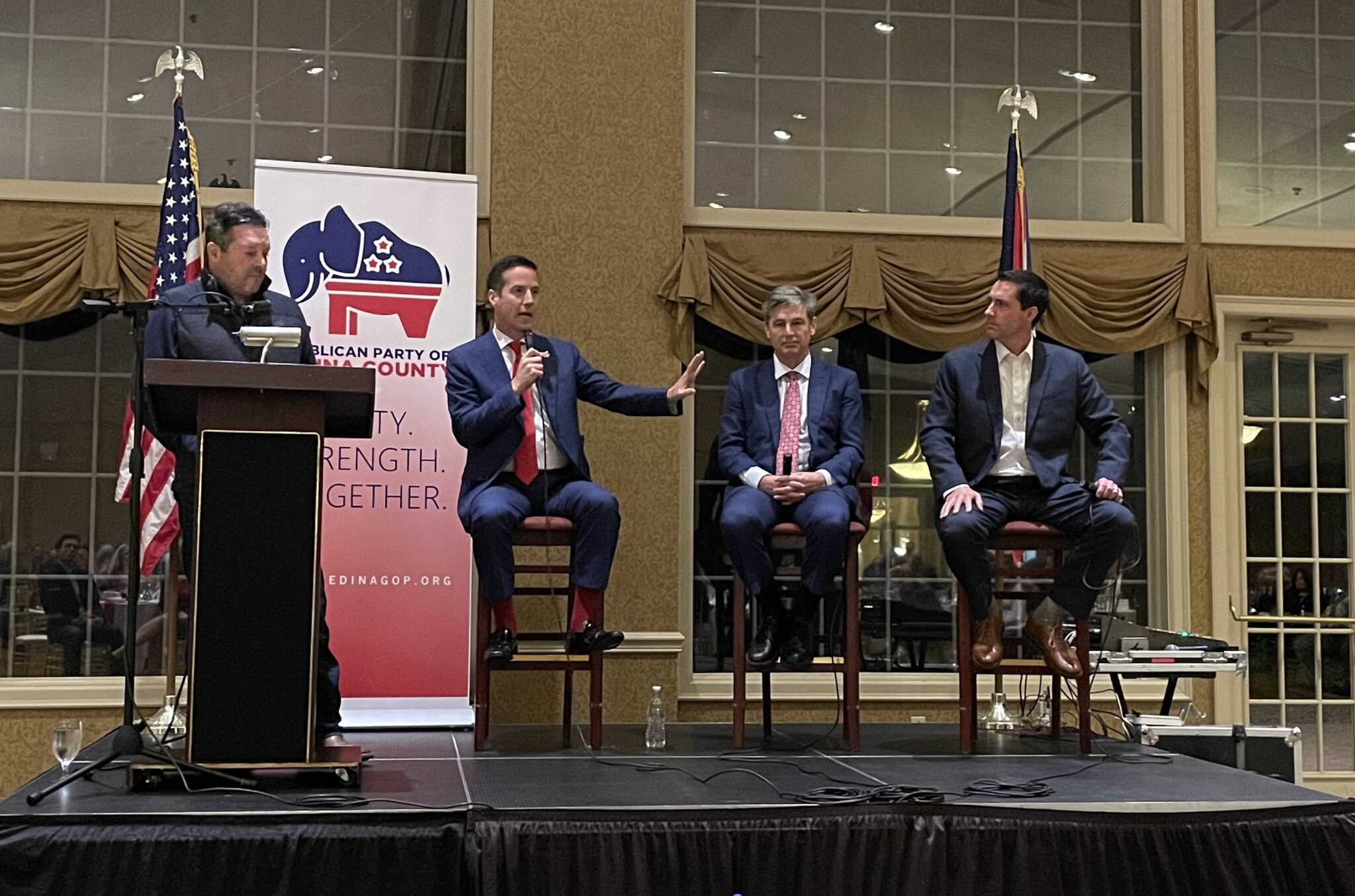
    Left to right, forum moderator, Bloomdaddy from WTAM Radio, Bernie Moreno, Sen. Matt Dolan, R-Chagrin Falls, OH Sec. of State Frank LaRose. (Photo by Nick Evans, Ohio Capital Journal.)

    BY:  

    Frustrated former employees told the press that in their office “everything revolved around” Secretary of State Frank LaRose’s run for U.S. Senate. Now LaRose appears to be using the taxpayer-funded office’s newsletter in that campaign.

    As a state official, LaRose isn’t supposed to use state resources in his political campaigns. And as secretary of state, it’s especially important that he wall off politics from his official duties because LaRose administers elections — including those in which he’s running.

    However, as he seeks the Republican nomination to take on Democratic U.S. Sen. Sherrod Brown next year, LaRose has become an increasingly hard-edged partisan as he seeks the endorsement of former President Donald Trump, who continues to attack the underpinnings of democracy itself.

    In addition to ignoring state Supreme Court orders regarding partisan gerrymandering, LaRose championed a measure in an August special election that would have made it almost impossible for citizen-initiated amendments to make it onto the ballot, much less into the Ohio Constitution. The measure failed badly, but LaRose and his allies tried to force it through ahead of a vote on an amendment protecting abortion rights that takes place a week from tomorrow, and an anti-gerrymandering amendment that is expected to be on the ballot in 2024.

    Substantial ethical questions also have arisen as LaRose juggles his senatorial ambitions with his duty to conduct secure, fair elections in Ohio.

    The Columbus Dispatch earlier this month reported on high staff turnover, with one former staffer telling the paper “Everything (in the secretary of state’s office) revolved around the Senate run.”

    Last month, NBC4 reported that LaRose was moving the secretary of state’s office from its location of 20 years and into a building where he had also registered his campaign with the Federal Election Commission.

    Then earlier this month, the Capital Journal reported that LaRose almost certainly recorded a campaign interview with election denier and conspiracy theorist Steve Bannon from the same building.

    LaRose refuses to answer questions about such activities. But he claims to have no campaign headquarters while he soon will be running his state office from the building where his campaign is registered.

    If LaRose uses people working on state time or uses state offices in his campaign, it could violate a section of Ohio law prohibiting the use of state resources to raise funds for a campaign.

    Paul Nick, executive director of the Ohio Ethics Commission, this week said his agency needs to know more about LaRose’s new office arrangements.

    “The Commission doesn’t pass judgment without first gathering and evaluating all of the facts,” Nick said in an email. “Determining whether a public official’s agency may relocate to the same office building as that official’s campaign headquarters requires deeper inquiry. We would encourage the Secretary of State to contact us for guidance on such questions.”

    Philip Richter, executive director of the Ohio Elections Commission, said his agency would have to be asked in order to look into the matter.

    “The only way for the Commission to take action on the statute is if an affidavit of complaint is filed with the Commission that would start the Commission’s processes on addressing those types of allegations,” Richter said in an email Thursday.  “The Commission cannot simply commence an investigation without the filing of a complaint.”

    Now LaRose appears to have used his office’s newsletter to promote his campaign.

    The Oct. 20 edition of the Secretary of State’s “Week in Review” offers updates about the coming election and it notes that October is Domestic Violence Awareness Month. There are also blurbs about LaRose’s travels and activities during the week.

    But the newsletter also has an “In Case You Missed It” section. It contained the top of an article by The Marietta Times that prominently featured the political message LaRose wants to convey to people who will be voting in the GOP Senate Primary.

    The second paragraph said LaRose “also confirmed his credentials as a conservative Republican who wants to make Sherrod Brown a former U.S. Senator, not the incumbent. Brown has been Ohio’s senior U.S. senator for a dozen years and the only Democratic statewide elected official in Ohio, with the exception of a few nonpartisan judicial races.”

    The newsletter then linked to the full story, which quoted LaRose bashing Brown for allegedly helping to make the country “weaker, poorer and less secure,” and the Biden administration over the economy and border security.

    LaRose’s office didn’t respond to questions about the newsletter.

    The state auditor is responsible for policing misuse of state resources. A spokesman said Thursday that a law regarding politicking in taxpayer-funded newsletters applies only to officials with “political subdivisions” such as counties. The law prohibits them from publishing a newsletter that “supports or opposes the nomination or election of a candidate for public office.”


    Marty Schladen
    MARTY SCHLADEN

    Marty Schladen has been a reporter for decades, working in Indiana, Texas and other places before returning to his native Ohio to work at The Columbus Dispatch in 2017. He’s won state and national journalism awards for investigations into utility regulation, public corruption, the environment, prescription drug spending and other matters.

    MORE FROM AUTHOR

     

  • Money paid, favors done. Messages detail relationship between Ohio regulator and energy executives

    Money paid, favors done. Messages detail relationship between Ohio regulator and energy executives

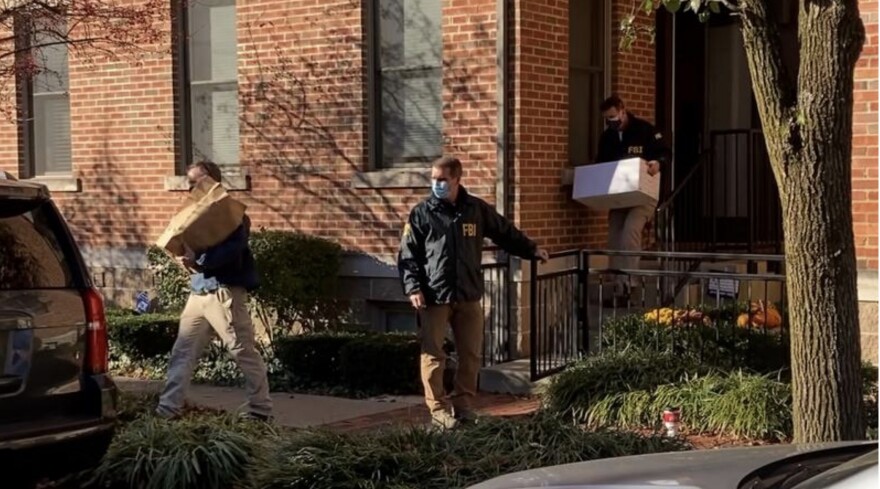
    FBI agents remove boxes of materials from PUCO Chairman Sam Randazzo’s condo in Columbus Nov. 17, 2020. Photo courtesy of Daniel Konik/Statehouse News Bureau.
    BY:  Ohio Capital Journal

    In early 2019, news of financial ties between Akron-based FirstEnergy and the man incoming-Gov. Mike DeWine had named to lead the Public Utilities Commission of Ohio began to spread. And as it did, FirstEnergy’s top executives feared they wouldn’t have a regulator they could control, according to documents filed in federal court late last week.

    “Great. Now we have none on the list” of nominees, then-CEO Chuck Jones texted Vice President Michael Dowling. Jones later added, ruefully, “Always need a backup plan.”

    As it happened, the nominee, Sam Randazzo, ended up being appointed to the commission after being paid $4.3 million by FirstEnergy. He proceeded to help draft a law providing the utility with a $1.3 billion bailout. The company spent another $60 million to pass and then to protect it from a citizen-initiated repeal in what law-enforcement officials have called one of the biggest bribery and money-laundering scandals in state history.

    Randazzo, Jones and Dowling haven’t been charged in the scandal, but after a jury trial that convicted two others, two guilty pleas, and a suicide, the three men could be the next targets as federal authorities continue their probe.

    If authentic, the communications filed on Friday indicate that the three met in Randazzo’s Columbus condo in December 2018. And they appear to show that the FirstEnergy executives agreed to pay Randazzo a large sum in exchange for favors when Randazzo became the state’s chief regulator.

    Another communication 23 months later — just after the FBI searched the condo in November 2020 — shows Randazzo providing a friend “the number for my home which the FBI does not have.”

    Demanding records

    Lawyers for Randazzo, Jones and Dowling didn’t immediately respond to requests for comment Monday, but attorneys for the former executives have said in separate court filings that they believe the feds are investigating their clients.

    The documents filed in federal court on Friday are part of a huge class-action suit against FirstEnergy, Jones, Dowling and a number of other defendants.

    In a deferred prosecution agreement, FirstEnergy in 2021 agreed to pay $230 million and admitted wrongdoing, including by bribing Randazzo. But the class-action plaintiffs — large pension and investment funds — are arguing that the company violated securities law by not disclosing its corrupt conduct. And, they argue, the company lost much of its value when that conduct came to light, leaving investors holding the bag.

    Randazzo has denied wrongdoing and he isn’t a defendant in the case, but the class-action plaintiffs want him to produce all communications relating to how he spent the $4.3 million he got from FirstEnergy just as he was poised to become its most powerful regulator.

    The plaintiffs have been accusing Randazzo since April of foot-dragging. They obtained the messages they filed Friday from a third party and are pointing to them as examples of Randazzo’s lack of cooperation.

    Early arrangements

    The earliest of the messages was on Dec. 18, 2018, and it appears that the three men had recently met in the residence that the FBI later searched.

    “Got it, Sam,” Dowling, then the FirstEnergy vice president, texted Randazzo. “Good seeing you as well. Thanks for the hospitality. Cool condo.”

    The “got it” was in response to a column of numbers Randazzo sent that appear to indicate that he was expecting payments from FirstEnergy through 2024:

    • 2019 — 1,633,333
    • 2020 — 600,000
    • 2021 — 600,000
    • 2022 — 600,000
    • 2023 — 600,000
    • 2024 — 300,000

    A seventh entry said “Total 4,333,333” — an amount equal to what FirstEnergy said was a bribe.

    The following day, Jones, the CEO, told Randazzo that he wouldn’t have to wait that long for the money, according to the filings. Jones also made it clear that he expected access to Randazzo.

    “We’re going to get this handled this year, paid in full, no discount,” the message says. “Don’t forget about us or Hurricane Chuck may show up on your doorstep! Of course, no guarantee he won’t show up sometime anyway.”

    Randazzo’s response seemed to be meant to reassure — and he linked the money to favors.

    “Made me laugh — you guys are welcome anytime and anywhere I can open the door,” he said. “Let me know how you want me to structure the invoices. Thanks.”

    Connections

    But on Jan. 30, 2019, problems popped up with Randazzo’s nomination.

    FirstEnergy’s nuclear-owning subsidiary, FirstEnergy Solutions, was going through bankruptcy and it had listed the Sustainability Funding Alliance of Ohio on one of its disclosures. Randazzo controlled the group and FirstEnergy had paid him millions through it in the past. Now the press was on to the matter.

    “Chuck — Sam Randazzo is going to pull out of the PUCO process ASAP and it’s related to a disclosure on a (FirstEnergy Solutions) bankruptcy filing,” Dowling texted Jones, according to the documents filed Friday. “Reporters called (FirstEnergy) today inquiring about the relationship between (FirstEnergy Solutions) and a group called the Sustainability Funding Alliance of Ohio. You can guess the rest.”

    That’s when Jones lamented not having a “backup plan” in the event that Randazzo was not seated on the utility commission. Dowling agreed.

    “This is awful,” he wrote. “The FirstEnergy Solutions bankruptcy filing names that group and Sam names the same group on a financial disclosure statement. Unreal. I don’t know why it was listed in the (FirstEnergy Solutions) bankruptcy filing. The payments we made year-end ’18 came from (FirstEnergy) Corp. Services.”

    Dowling was ready to throw Randazzo under the bus if the connection proved to be an embarrassment to the incoming DeWine administration.

    “They’re going to be mad at Sam (and hopefully not us) for not disclosing the financial relationship,” Dowling wrote. “That’s Sam’s responsibility.”

    A day later, however, the financial connection between FirstEnergy and Randazzo apparently wasn’t sufficiently embarrassing and he was picked to head up the PUCO.

    “A bullet grazed the temple,” Dowling told Jones, according to one of the texts filed last week.

    “Forced DeWine/Husted to perform battlefield triage,” Jones responded, referring to Lt. Gov. Jon Husted. “It’s a rough game.”

    A still rougher game

    In a trial held in Cincinnati from late January to mid-March, prosecutors put on witnesses and displayed communications describing Randazzo’s 2019 role in drafting House Bill 6, the bailout bill. Not only did it provide $1 billion to prop up two failing nuclear plants FirstEnergy was spinning off, it charged ratepayers about $100 million a year to insulate the company from an economic downturn. For FirstEnergy, it was easy money, in other words.

    In June, U.S. District Judge Timothy Black sentenced former Ohio House Speaker Larry Householder, R-Glenford, to 20 years in prison for orchestrating the racketeering scandal. Former state GOP Chairman Matt Borges got five years for his role.

    By November of 2019, HB 6 was on the books after FirstEnergy and a subsidiary plowed $36 million into a brutal, dishonest effort to turn back a citizen-initiated repeal. But the FirstEnergy executives weren’t done with Randazzo.

    On Nov. 10, 2019, Jones texted a coal executive that another cloud loomed for FirstEnergy.

    “And the (FirstEnergy) rescue project is not over,” Jones said, according to documents filed as part of the class-action suit. “At (Edison Electric Institute) financial conference. Stock is gonna get hit with Ohio 2024. Need Sam to get rid of the ‘Ohio 2024’ hole.”

    That was an apparent reference to a requirement that FirstEnergy file a “rate case” with the PUCO in 2024. In such a proceeding, regulators assess a utility’s operations and make a judgment about whether its rates and revenues are reasonable.

    FirstEnergy was apparently afraid they wouldn’t be. On Nov. 21, 2019, just 11 days after Jones expressed his concerns, the PUCO under Randazzo’s leadership issued an order saying it was “no longer necessary or appropriate” to require FirstEnergy to file a rate case.

    The next day, Jones wanted to express his appreciation to Randazzo. He did so by sending the erstwhile regulator a list of prices for six energy stocks that day. FirstEnergy stocks were up 1.5%. The next highest was Avangrid, which was up 0.86%.

    “Thank you!!” Jones wrote.

    Randazzo replied, “Ha — as you know, what comes up may come down… Thanks for the note. Spoke to Mike (Dowling) last night.”

    Then Jones said, “My Mom taught me to say Thank you.”

    Flying high

    By the start of 2020, things seemed to be going well for those who orchestrated the bailout.

    FirstEnergy Solutions would emerge from bankruptcy in February as a separate company, Energy Harbor. The class-action plaintiffs argue that one of FirstEnergy’s major goals in the scheme was to prop up the nuclear plants, get them off their books and shed the liability of having to pay for a decades-long process to close and clean up after them.

    At the same time, FirstEnergy was funneling millions more dark-money dollars into an effort to get the state’s legislature to put a constitutional amendment on the ballot. It would change the state’s term-limits so Householder could stay speaker for another 16 years — and presumably continue to do the utilities’ bidding.

    But then in July 2020, it all crashed down.

    On July 21, the FBI arrested Householder, Borges and other conspirators. By the next day, FirstEnergy stock had lost 34% of its value, the class-action plaintiffs contend.

    FirstEnergy fired Jones and Dowling the following October. And then in November, 2020, Randazzo was forced to resign from the PUCO after the FBI searched his condo.

    “Pretty stressful few days which started Monday at 6:00 when 10-12 FBI agents with their guns drawn announced their arrival at our home,” Randazzo emailed a friend on Nov. 21, according to the documents filed by the class-action plaintiffs. “But, Carol and I are handling it and doing better each day. Neighbors, friends (like you) family, PUCO staff and people I have worked for over the years have been great. Roger Sugarman (his attorney) is my new hero. So onward!”

    Then Randazzo encouraged the friend to call him on the number he believed that the FBI didn’t have.

    _________________________

    Marty Schladen
    MARTY SCHLADEN

    Marty Schladen has been a reporter for decades, working in Indiana, Texas and other places before returning to his native Ohio to work at The Columbus Dispatch in 2017. He’s won state and national journalism awards for investigations into utility regulation, public corruption, the environment, prescription drug spending and other matters.

    MORE FROM AUTHOR

  • Ohio redistricting slated for later this summer, maps in September, Senate president predicts

    Ohio redistricting slated for later this summer, maps in September, Senate president predicts

    Redistricting ahead with budget cycle’s end, Alabama decision could have impacts

    BY:  Ohio Capital Journal

    Once the Ohio two-year budget cycle is finished by June 30, Ohio Senate President Matt Huffman expects work to begin again on redistricting for Statehouse maps, with September as a likely date for them, he told reporters recently.

    Both Ohio’s U.S. Congressional district maps and Statehouse maps were declared unconstitutional gerrymanders multiple times by a bipartisan majority of the former Ohio Supreme Court, but voters were nevertheless forced to vote under them in 2022 after Republicans on the Ohio Redistricting Commission ran out the clock and appealed to a federal court.

    With swing vote former Ohio Supreme Court Republican Chief Justice Maureen O’Connor forced to retired due to age, Republicans added partisan labels to the 2022 Ohio Supreme Court races and won a majority of justices. Gov. Mike DeWine then appointed a family friend to an open seats after Justice Sharon Kennedy was elected chief justice.

    The new right-wing 4-3 majority on the court is not expected by analysts to have a swing vote on the issue of gerrymandering going forward. O’Connor has called for further anti-gerrymandering reform by Ohio voters, which had passed such reform in 2015 and 2018 with more than 70% of the vote. That system left politicians in charge of the process, however. O’Connor has since called for an independent commission.

    Ohio Republicans have also brought a case to the U.S. Supreme Court over the congressional district maps, seeking the court to declare under a theory called “independent state legislature doctrine” that the Ohio General Assembly has total control over the maps and the Ohio Supreme Court does not have jurisdiction.

    Because the high court has yet to decide whether or not it will review the case, Huffman told reporters last week that the congressional maps could stay the same for the 2024 election.

    “(The congressional map’s) a little bit more uncertain, it may simply be that we have the same congressional districts for the 2024 race as the one we have now,” Huffman said.

    As for the Statehouse maps, it’s up to the governor to call the Ohio Redistricting Commission back into session, Huffman said. The commission is made up of a majority of Republican leaders, including the governor, Auditor of State Keith Faber and Secretary of State Frank LaRose, as well as a Republican and Democrat from each chamber of the state legislature.

    Huffman – who was on the commission until he and then-House Speaker Bob Cupp removed themselves, saying they were needed for other legislative duties – sees a mid-September date as a likely end date for the Statehouse district discussion.

    “The plan in my head…is that we would start in earnest after June 30, have hearings and all of the other negotiations and things that are to be done and to try to have a map by mid-September,” Huffman said.

    He said he doesn’t know “how much all the districts will change” in the General Assembly maps, but action will be needed on them.

    One change that could come into play for the Statehouse maps has to do with a recent U.S. Supreme Court decision in an Alabama redistricting case.

    In the case, the court upheld a lower court decision that the state had likely violated the Voting Rights Act with a congressional map that had one majority Black district.

    Amid redistricting deliberations in Ohio, a staffer who helped draw some of the earliest maps in the process said he was directed to ignore racial data in drawing state districts.

    A lawsuit was filed by two Youngstown residents accusing redistricting officials of racial discrimination. The lawsuit did not see further action as maps were redrawn several times, and a federal court ordered the commission to redraw maps after they were used for the 2022 election.

    Though the Alabama decision was considered a general win for the Voting Rights Act, it’s not clear how much change it will make in Ohio.

    “It may prompt the legislature or the commission to approach the redraw differently, but I don’t see anything in the lawsuit that necessitates that change,” said Yurij Rudensky, senior counsel for the Democracy Program at the Brennan Center for Justice.

    The Alabama decision upheld existing Voting Rights Act language that bars states from ignoring demographics.

    “If it is such that the conditions on the ground could lock out voters of color from being able to participate in the process … there has to be an eye to how voters of different races are being grouped together,” Rudensky said.

    Rudensky is also counsel in a lawsuit between the Ohio Organizing Collaborative and the ORC challenging district maps in the state.

    A spokesperson for Ohio House Speaker Jason Stephens did not respond to requests for comment on the status of the redistricting process.

    Asked whether Gov. Mike DeWine had a plan when it came to redistricting post-budget cycle, a spokesperson said “it is accurate we are focused on the biennial budget due June 30th, as is the General Assembly.”


    Susan Tebben
    SUSAN TEBBEN

    Susan Tebben is an award-winning journalist with a decade of experience covering Ohio news, including courts and crime, Appalachian social issues, government, education, diversity and culture. She has worked for The Newark Advocate, The Glasgow (KY) Daily Times, The Athens Messenger, and WOUB Public Media. She has also had work featured on National Public Radio.

    MORE FROM AUTHOR

  • House leaders tee up supermajority amendment measure for floor vote

    House leaders tee up supermajority amendment measure for floor vote

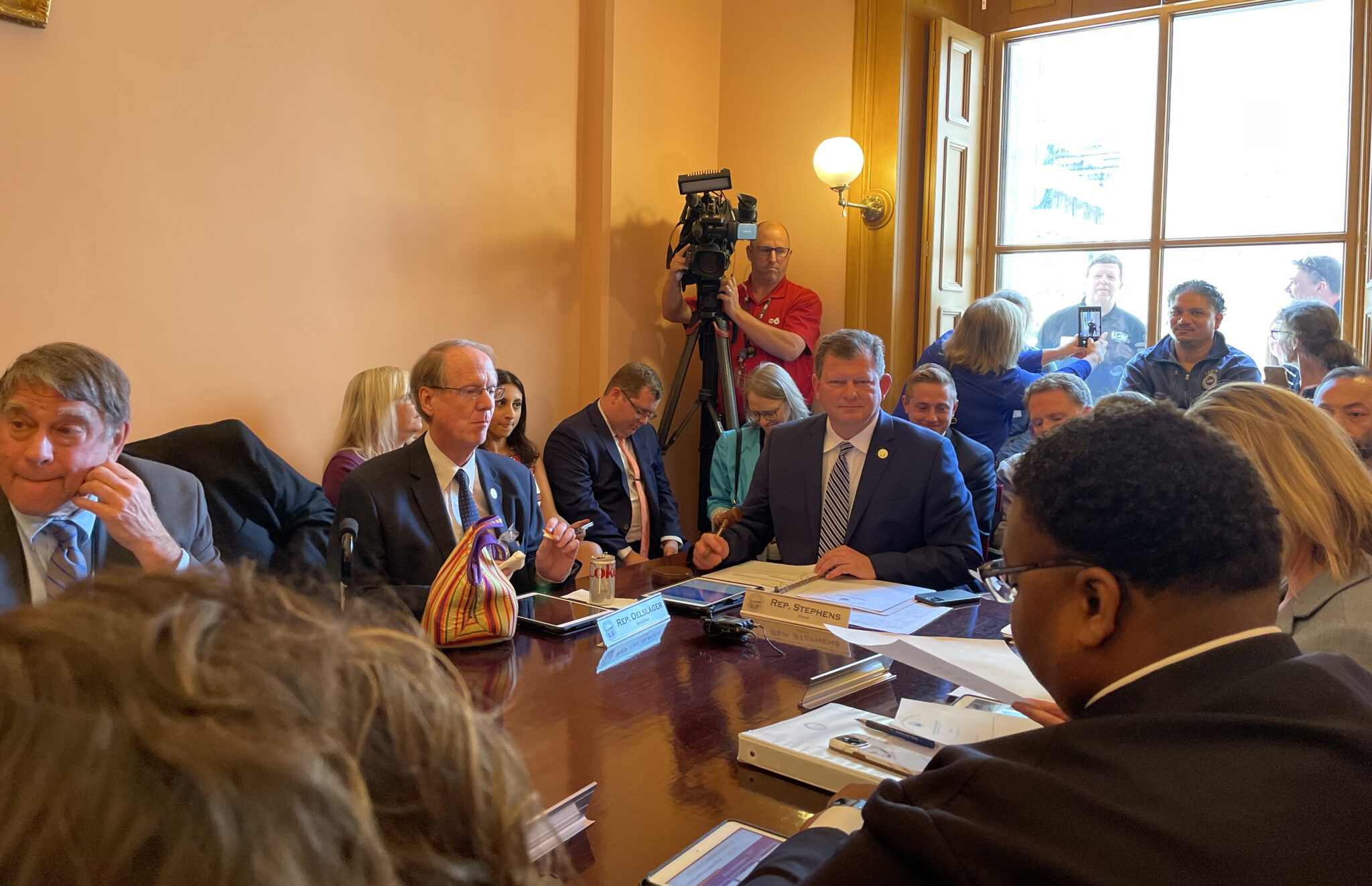
    House Speaker Jason Stephens presiding over an uncharacteristically packed Rules Committee hearing. Some members of the public forced to leave, watched through the windows from outside. (photo by Nick Evans)

    It remains an open question, however, just when voters might weigh in on the issue

    BY:  – MAY 10, 2023 5:00 AM Ohio Capital Journal

    The stage is set for a long-awaited House vote on SJR 2. The resolution would ask voters whether the threshold for amending the constitution should be 60% rather than a simple majority.

    But lawmakers pushing the plan may not be celebrating yet. A parallel effort to send the question to voters before they consider an abortion rights amendment seems to have fallen short.

    Supermajority amendment backers are now left to decide whether to accept half a loaf, or to try some last-minute maneuver to set up an August special election.

    Speaking after the vote to place SJR 2 on the House calendar, the House speaker and the minority leader said they expected the latter. But it’s not clear what that gambit might look like, or if it would succeed.

    Killing August

    Placing the 60% amendment on the ballot in August was never part of the plan. Lawmakers voted to get rid of those elections around the same time the first attempt at imposing a supermajority threshold fell apart. They only thought to revive August elections after the latest supermajority effort missed the deadline for the May primary.

    Lawmakers pursued a May and then an August election to ensure an abortion rights amendment would have to clear a higher bar. But that argument didn’t move everyone in the Republican caucus.

    Rep. Sharon Ray, R-Wadsworth, offered an amendment to SJR 2 stripping out reference to August elections.

    “When we did away with August special elections last year after we put our precinct election officials through a very difficult year, you know, we said we were not going to do this anymore,” Ray explained.

    She added the upcoming calendar is a bit of a disaster for boards of elections. In addition to conducting a special election, they have to manage filings for local candidates running for school board, city council or mayor this November.

    Election day in August would be August 8. The deadline for those local filings? August 9.

    “In addition to two different election calendars that are overlapping they’ll have all these filings and I just don’t think it’s fair,” Ray said.

    Still, Ray said her reticence only extends to the August elections—not the underlying supermajority proposal.

    “I think August, to spend $20 million for an election that’s going to have probably an 8% turnout is really not our best option,” Ray said. “A November election, I will vote to put it on the ballot so people can decide then.”

     Rep. Sharon Ray, R-Wadsworth, arguing for her amendment. (photo by Nick Evans) 

    The Rules committee

    Ray’s amendment is unusual for its timing, coming up in the Rules and Reference Committee. It’s typically the last stop for legislation before going to the House floor. It gives House Speaker Jason Stephens, who leads the committee, significant control over when and if a proposal goes before the chamber.

    But while the Rules committee sets the agenda, it rarely deals with policy amendments. Tuesday, after a two-and-a-half-hour delay, the committee met, and approved Ray’s changes. Every Republican on the committee – with the exception of state Rep. Jay Edwards, R-Nelsonville – voted to advance the proposal to the floor.

    “We’re close to this being jammed down our throats and I think it’s wrong, and I don’t think there was enough discussion had on this entire premise,” Edwards argued.

    Every Democrat voted against advancing SJR 2.

    Notably, if the House approves changes to SJR 2, the Senate would have to agree before it makes the ballot.

    Shenanigans

    Despite Ray’s amendment excising August election provisions, Republican and Democratic leaders had no illusions about the issue being dead. House Minority Leader Allison Russo said she expects an amendment when the resolution comes up for a floor vote.

    “Well, certainly they can get on the floor tomorrow and take that language right back out and amend it, which I wouldn’t be surprised if that happens,” Russo said. “So, you know, some of this is theatrics, I think.”

    Russo argued that even if Republicans are successful, the proposition is a loser at the ballot box — regardless of when it goes before voters.

    She also criticized Speaker Stephens for letting the resolution advance. Stephens only won the speakership with the support of Democrats, and his reluctance to advance a supermajority measure was a big reason why. But Russo sidestepped questions of whether Stephens had violated a deal with Democrats.

    “This isn’t about reneging on Democrats,” she said. “It’s about reneging on the people of Ohio and taking away a right that they have had for over a century.”

    For Stephens’ part, he echoed Russo’s expectations about last minute floor amendments.

    “There will probably be more than one amendment, I guess, on this resolution tomorrow, one of the amendments will probably be for an August election,” Stephens said. “So, we’ll have that debate tomorrow.”

    And the August election is not a problem, Stephens said. He offered the dubious assertion they can hold one without passing any additional legislation at all.

    “Yeah, the legislature has the constitutional authority to create an election day,” Stephens argued.

    This despite lawmakers passing a bill just months ago limiting August elections to municipalities in fiscal emergencies or primaries for Congressional vacancies. And despite lawmakers working, and eventually failing, to pass legislation this session to explicitly allow special elections for amendments offered by the general assembly.

    Can he do that?

    Steven Steinglass, dean emeritus at Cleveland State’s law school and one of the foremost experts on the Ohio Constitution, flatly rejected Stephens’ contention.

    “The answer is they do not have that power, and if that is what he said he’s getting bad advice from his lawyers or whoever he seeks advice from,” Steinglass said.

    The problem, he explained, is that recent legislation restricting the circumstances under which an August election can happen. Those restrictions are in statute, and a joint resolution doesn’t change statutes. In the end it boils down to a separation of powers issue.

    “It’s been clear for 125 years that you cannot add statutory type language to a joint resolution,” Steinglass explained. “They’re two different legal instruments, if you will. The point is that the governor has no role regarding joint resolutions, but the governor could veto a statutory change.”

    He cited the relevant case law from 1897, as well.

    “The Ohio Supreme Court said, and I quote, the statute law of the state can neither be repealed nor amended by a joint resolution of the General Assembly,” Steinglass said.

    Follow OCJ Reporter Nick Evans on Twitter.

    _________________________

    NICK EVANS

    Nick Evans has spent the past seven years reporting for NPR member stations in Florida and Ohio. He got his start in Tallahassee, covering issues like redistricting, same sex marriage and medical marijuana. Since arriving in Columbus in 2018, he has covered everything from city council to football. His work on Ohio politics and local policing have been featured numerous times on NPR.

    MORE FROM AUTHOR

  • Prohibition on gun insurance requirements getting first Ohio House hearing

    Prohibition on gun insurance requirements getting first Ohio House hearing

    Loveland, Ohio
    State Sen. Terry Johnson – Photo by Graham Stokes for Ohio Capital Journal.

    BY:  – Ohio Capital Journal

    A consequential firearms measure cruised through the Ohio Senate and is currently waiting on a hearing in the House Insurance committee. The proposal, like numerous previous measures, preempts local action, this time by prohibiting fees or liability insurance for gun owners.

    Cities around Ohio are wrestling with increases in violent crime since the pandemic, but many local leaders argue they’re hamstrung by state laws barring most local firearm restrictions.

    Columbus, for instance, is currently locked in a court battle with the state to impose three local firearm ordinances. Those laws aren’t particularly draconian — they prohibit high-capacity magazines, criminalize straw sales, and require safe storage. Nevertheless, state officials insist they violate state law preempting local restrictions.

    The insurance proposal would extend those preemptions further.

     Sen. Theresa Gavarone, R-Huron. Photo from OhioSenate.gov 

    Liability insurance

    Sens. Terry Johnson, R-McDermott, and Theresa Gavarone, R-Bowling Green, insist an insurance requirement for gun owners would infringe on their constitutional rights. They filed a similar bill in the previous general assembly.

    “The right of the American citizens to keep and bear arms is as clear as day,” Johnson said on the Senate floor. “And attempts to make it so it’s difficult for law abiding citizens to exercise this right, that’s guaranteed, blazoned into the Constitution, that’s wrong.”

    The sponsors aren’t particularly concerned about the fact that they can’t identify a single Ohio municipality that has proposed an insurance requirement. Instead, they point to legislation elsewhere.

    “There is a trend of extreme anti-gun measures that directly contradict the Constitution,” Gavarone argued. “In places like California, Illinois, and New Jersey. So we can never discount the fact that it could and probably will be attempted in Ohio.”

    “Senator Johnson and I wanted to slam the door shut on present and future attempts on infringement on this particular constitutional right,” Gavarone added.

    The sum total of gun owner liability requirements in the U.S. are a state law in New Jersey and a local ordinance in San Jose, California. Both laws are the subject of federal litigation. Illinois lawmakers have proposed insurance requirements in the past, but those measures haven’t made it through the legislature.

     COLUMBUS, OH — FEBRUARY 15: Senate Minority Leader Nickie J. Antonio, D-Lakewood. (Photo by Graham Stokes for Ohio Capital Journal. Republish photo only with original story.) 

    Pushback

    In committee, Powell resident Michelle Lee Heym questioned the logic driving the legislation.

    “Why would you make access to a lethal weapon easier by prohibiting payment of insurance for normal people?” she asked. “Normal people get insurance when they buy a car, for protecting themselves against sickness or injury. It is almost comical to think one would not buy liability insurance when purchasing a firearm.”

    Sen. Hearcel Craig, D-Columbus, criticized the bill as “a performative action that undermines the home rule of Ohio cities and townships.”

    Craig argued the prohibition removes a tool for incentivizing safer conduct — like locking up firearms or reporting them as stolen.

    More fundamentally, Senate minority leader Nickie Antonio argued the sponsors have their priorities backward. She cited a string of recent victims shot for banal misunderstandings.

    “We’re preemptively protecting something that might happen down the road,” she said, “instead of addressing the things that have already happened, and providing some kind of solutions — common sense solutions to address gun violence.”

    The measure passed the Senate on a party line vote. The House has referred the bill to the Insurance Committee. The current schedule has it slated for its first hearing May 10.

    Follow OCJ Reporter Nick Evans on Twitter.

    ____________________________

    Nick Evans
    NICK EVANS

    Nick Evans has spent the past seven years reporting for NPR member stations in Florida and Ohio. He got his start in Tallahassee, covering issues like redistricting, same sex marriage and medical marijuana. Since arriving in Columbus in 2018, he has covered everything from city council to football. His work on Ohio politics and local policing have been featured numerous times on NPR.

    MORE FROM AUTHOR