Tag: Columbus

  • 227 Ohio-based Organizations Denied Opportunity to Voice Opposition of Minority Rule Bill

    227 Ohio-based Organizations Denied Opportunity to Voice Opposition of Minority Rule Bill

    GettyImages
    Columbus, Ohio –  In a narrow 7-6 vote, the Ohio House Constitutional Resolutions Committee passed a resolution allowing HJR 1 — a bill that seeks to increase the ballot threshold for amending the constitution from a simple majority to 60% — to a floor vote.
    Following the resolution’s passage, a denial of 111 years of direct democracy right, Catherine Turcer, executive director of Common Cause Ohio, made the following statement representing a coalition of 227 organizations in opposition to a 60 percent threshold and an August special election for special interests.
    “Since 1912, Ohioans from across the political spectrum have utilized the right to amend our Constitution via the petition process. Direct democracy gives voters the ability to make a real impact and has helped engage Ohioans in the political process. There is no justifiable reason, after over 100 years, to make this already challenging process even harder.
    “Today, a sham committee shut down public testimony in opposition. This is not what democracy should look like. Extreme lawmakers turned away over 100 Ohioans who took time from their day to show up and testify in opposition. Committee Chair Phil Plummer clearly did not want to hear from voters. He and an ultra-slim margin of his anti-voter colleagues had already made up their minds, and they bullied this bad idea out of committee.
    “We have a growing coalition of 227 organizations representing hundreds of thousands of voters who will not compromise the sacred principle of one person, one vote. In Ohio and this country, a simple majority means 50 plus one equals democracy. We will not allow this undemocratic, unfair, unnecessary, and unpopular attack on voting rights and freedom to stand.”
    Additionally, the Ohio Senate passed Senate Joint Resolution 2 this afternoon, which also changes the threshold for passage of amendments to the Ohio Constitution to 60 percent. Similar to HJR 1, this measure makes the citizen initiative process more difficult by requiring 5% of the gubernatorial vote in all 88 counties. These proposals also remove the “cure period” for collecting additional signatures if a campaign falls short.
  • Ohio Ballot Board fights back against abortion amendment lawsuit

    Ohio Ballot Board fights back against abortion amendment lawsuit

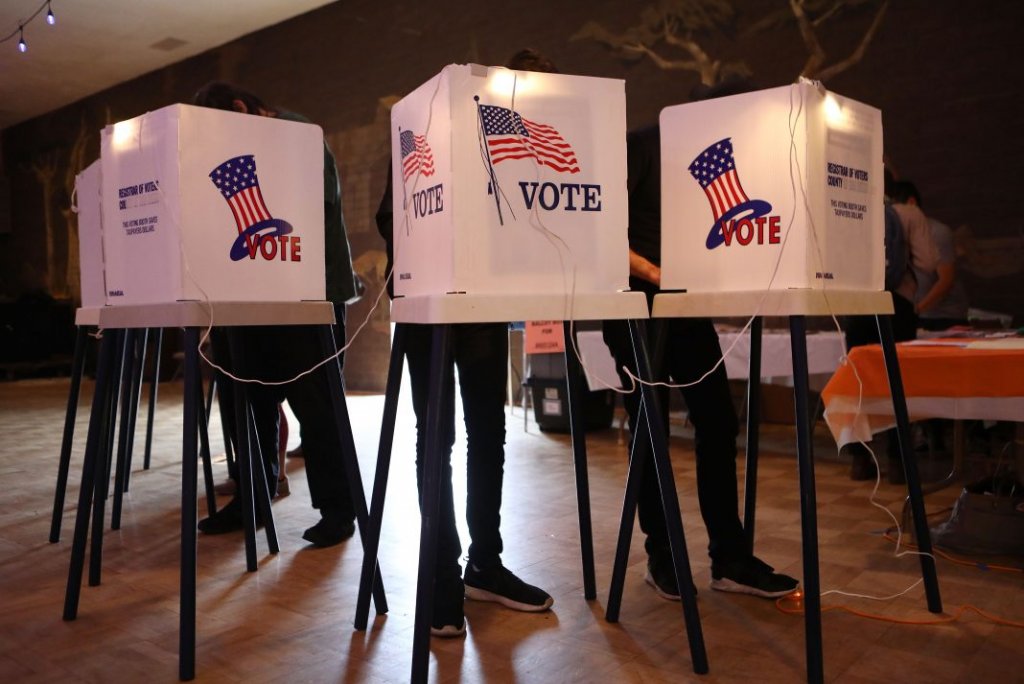
    Voters casting ballots. | Mario Tama/Getty Images

    BY:  Ohio Capital Journal

    The Ohio Ballot Board submitted its comments to the Ohio Supreme Court, pushing back against claims they abused their power in verifying a proposed abortion amendment to the state constitution.

    The Ohio Attorney General’s Office wrote a brief on behalf of the ballot board, saying its members “correctly refused to usurp the people’s power by splitting the petition … into multiple amendments.”

    The lawsuit, filed on behalf of two members of Cincinnati Right to Life, argued that the amendment contains more than one constitutional issue, therefore should be split, and should not have been unanimously approved by the ballot board.

    The ballot board’s OK allowed pro-abortion rights groups to move forward with signature collection, in which they must collect more than 400,000 valid voter signatures by July 5.

    Because the proposed amendment mentions reproductive health and abortion, attorney Curt Hartman argued the ballot measure involved two different issues, a claim pro-abortion rights groups and the Ohio Ballot Board members deny.

    “The weakness of (Right to Life members Margaret DeBlase and John Giroux’s) claim is best exemplified by their failure to argue how many proposed amendments are supposedly included within the petition and what those amendments are,” Assistant Attorney General Julie Pfeiffer wrote on behalf of the ballot board.

    The ballot board is made up of legislative members, citizens, and the Ohio Secretary of State, who chairs the board. Currently, the legislative members are state Sen. Theresa Gavarone, R-Bowling Green; state Sen. Paula Hicks-Hudson, D-Toledo; and state Rep. Elliot Forhan, D-South Euclid.

    Secretary of State Frank LaRose is the chair, and Stoutsville resident William Morgan completes the board.

    One of the arguments made in the lawsuit is that no discussion was held when the board met to consider the amendment. LaRose asked for discussion before he asked for a vote, and none happened.

    Gavarone was the only one to make a comment, speaking against the amendment, but voting yes to the move, calling it a “procedural” vote.

    “(Giroux and DeBlase) fail to show how any alleged failure by the ballot board members to conduct a fulsome discussion amongst themselves before voting to certify the proposed amendment led to a decision that was ‘unreasonable, arbitrary or unconscionable,” the AG’s office wrote in defense of the board.

    LaRose made several comments during the meeting explaining that the vote did not represent any comments on the merits of the initiative, and instructed the public not to speak on the merits, as the vote was only to decide whether the measure only involved one constitutional issue.

    In response to the lawsuit, Pfeiffer brought up Giroux, who spoke during the public comment portion of the meeting. Giroux called the amendment “intentionally unjust and misleading,” but he “did not offer any specific proposal splitting up the petition or further opine as to the number or content of the separate amendments contained therein,” the board argued to the court.

    The ballot board did not need to analyze facts in the case, Pfeiffer argued, only whether the petition contains one amendment “on the face of the document.”

    ____________________________

    Susan Tebben
    SUSAN TEBBEN

    Susan Tebben is an award-winning journalist with a decade of experience covering Ohio news, including courts and crime, Appalachian social issues, government, education, diversity and culture. She has worked for The Newark Advocate, The Glasgow (KY) Daily Times, The Athens Messenger, and WOUB Public Media. She has also had work featured on National Public Radio.

    MORE FROM AUTHOR

  • OHSAA rejects Name, Image, and Likeness proposal

    OHSAA rejects Name, Image, and Likeness proposal

    Columbus, Ohio – The Name, Image, and Likeness (NIL) proposal failed by a margin of 538 to 254 in voting conducted by the Ohio High School Athletic Association to amend their Constitution and Bylaws.

    The proposal mirrored recent changes made at the collegiate level and would have allowed student-athletes to sign endorsement agreements so long as their teams, schools and/or the OHSAA logo were not used, the endorsements did not happen on school property or in school uniform, and provided there were no endorsements with companies that do not support the mission of education-based athletics, such as casinos, gambling, alcohol, drugs and tobacco. By rejecting the proposal, Ohio’s student-athletes remain unable sign endorsement deals without losing their amateur status.

  • Dackin Selected as Ohio’s Next Superintendent of Public Instruction

    Dackin Selected as Ohio’s Next Superintendent of Public Instruction

    Stephen Dackin (photo from Fordham Institute)

    Columbus, Ohio – The State Board of Education of Ohio on May 10 selected Stephen Dackin as the 39thsuperintendent of public instruction for Ohio and leader of the Ohio Department of Education.
     
    With more than 40 years of service in education, Dackin has experience in both postsecondary and preK-12 education settings having served as a school district superintendent, school principal, and classroom teacher. He recently served as superintendent of School and Community Partnerships at Columbus State Community College and, prior to that, superintendent of Reynoldsburg City Schools. Dackin and his wife Susan live in Columbus and have two daughters, Jessica and Erika.
     
    The State Board of Education selected Dackin by a vote of 14 to 4, with one abstention. The start date is yet to be determined.

  • Should courts limit jury awards for child rape victims? Supreme Court weighs arguments

    Should courts limit jury awards for child rape victims? Supreme Court weighs arguments

    Photo Courtesy of the Ohio Supreme Court

    BY: JAKE ZUCKERMAN – Ohio Capital Journal

    Columbus, Ohio – Lawyers for a woman who was repeatedly raped and sexually abused as a child argued Wednesday the Ohio Supreme Court should overturn or at least pare down a law that limits millions in damages a jury awarded her.

    In 2005, Ohio lawmakers passed a “tort reform” law that among other provisions, sets a limit of $250,000 on non-economic damages, which are awarded to victims to cover more intangible harms like pain, suffering, stress, anxiety, etc.

    Amanda Brandt was awarded $34 million in noneconomic damages after Roy Pompa, her friend’s father, abused her repeatedly over 18 months starting when she was 11. Court records show he would drug and rape her and record the abuse. Brandt won full damages for abuse that occurred before the tort reform law passed ($14 million), though the other $20 million in punitive damages for abuse after the law passed was cut down to $250,000.

    She still won $100 million in punitive damages — which are only available because Pompa was convicted of a felony (17 counts of rape, five counts of kidnapping, 55 counts of pandering sexually oriented material involving a minor, and 21 counts of gross sexual imposition).

    The Supreme Court has previously denied an effort to nix damage caps as they were applied to another child who was raped by her priest in Delaware County. Her $3.5 million in noneconomic caps was reduced to $350,000 (the law also creates a formula that can provide up to $350,000 pending economic damages like missed days of work and medical bills).

    Brandt’s attorneys asked the court for one of two remedies. The justices could overturn the damage caps outright and restore juries with the power to set damage maximums, as opposed to state lawmakers. Or, the justices could determine that the trauma Brandt sustained should apply to an exception to the damage caps within the law available to people who become deformed or disabled by an injury.

    “These kinds of injuries meet the same level,” said Robert Peck, an attorney representing Brandt.

    Damage caps, he said, infringe on the U.S. Constitution’s right to trial by jury. It’s a jury that hears the facts of a case and decides what kind of penalty is appropriate.

    “With a cap, you’re saying that that cap overrides that jury decision,” he said.

    Pompa, via attorney Marion Little, said it’s untrue that anyone was denied a right to trial by jury. Brandt still won $114 million. The intent of tort reform, he argued, was to create more legal predictability and consistency, which it accomplished without infringing on anyone’s rights.

    As for the reduced non-economic damages, Little said the evidence suggests Brandt has recovered. She still requires counseling, but she has a family, a job and stability and should be “applauded for her success” moving forward.

    In court filings supporting Brandt, lawyers with the Ohio Alliance to End Sexual Violence criticized this line of thinking.

    “[It] puts Ohio judges in the unenviable and morally fraught position of holding against child abuse victims the moments in their life where they have made progress — where they have taken the most basic steps to achieve normalcy despite the abuse they suffered,” wrote attorney Camille Crary in a brief.

    Outside interests 

    Overturning Ohio’s noneconomic damage would significantly reshape Ohio’s legal climate in favor plaintiffs. It applies far beyond the narrow realm of child sex abuse and into products liability and other genres of lawsuits that can result in huge payouts, often from large corporations and institutions.

    As such, the case generated tremendous outside interest. Attorney General Dave Yost argued the law should be upheld. He said it’s perhaps surprising — “some might even say callous” — that Ohio law limits available damages for a child victim of sexual abuse. But “foolish policy” is not necessarily unconstitutional, he argued. He urged lawmakers, as some have tried to do, to lift damage caps in claims against rapists. But that change should come from the legislature, not the Supreme Court, he said.

    The Chamber of Commerce, which represents business interests, said the unpredictability of “runaway” jury awards creates huge risks for businesses. Ohio’s damage caps, its lawyers argued, are reasonable and within the mainstream compared with other states.

    “The extremely sympathetic facts of this case should not blind this Court to the enormous consequences of that invitation: Invalidating the law or opening the door to a vague new exception will expose businesses, nonprofits, and others to unlimited and unpredictable awards and excessive settlement demands in personal injury lawsuits when no more than negligence is alleged,” its lawyers wrote.

    The Product Liability Advisory Council — an association representing large car, tobacco, chemical, firearms, pharmaceutical and other companies — filed arguments in the case supporting the noneconomic damage caps and emphasizing Brandt’s current jury award.

    One mystery in the case, homed in on briefly during oral arguments, is whether Pompa can even pay the $114 million judgement — let alone the additional $20 million if the court overturns the damage cap. Peck, during arguments, said the plaintiffs have not yet sought to collect from him until the court finalizes the issue.

    In an interview after oral arguments, Little said there’s no evidence in the record suggesting Pompa can pay either $114 million or $134 million. He said the plaintiffs’ target is more likely the law and precedent than the specific case at hand.

    Little — a prominent defense attorney currently working on high-profile, white collar cases — declined to answer whether Pompa is paying for his legal services.

    “I think that the, as a practical matter, the plaintiff does not have a financial stake in the results of this case,” he said. “There may be others outside the case, such as the plaintiff’s bar, that have interest in this.”

    Organizations representing trial attorneys argued the right to trial by jury and that jury’s autonomy to set awards for plaintiffs who have been harmed are inextricably tied. Juries, they wrote, are the fact finders in court cases — not policy makers.

    “The General Assembly has not demonstrated a willingness to protect the right to trial by jury, nor is it the role of legislators to draw boundaries around the legislative power,” they wrote. “As a result, it falls on this Court to jealously safeguard that right and protect all Ohioans, not just those with the most lobbying power.”


  • Ohio first state to implement two technology tools from Connect Our Kids to help children services professionals

    Ohio first state to implement two technology tools from Connect Our Kids to help children services professionals

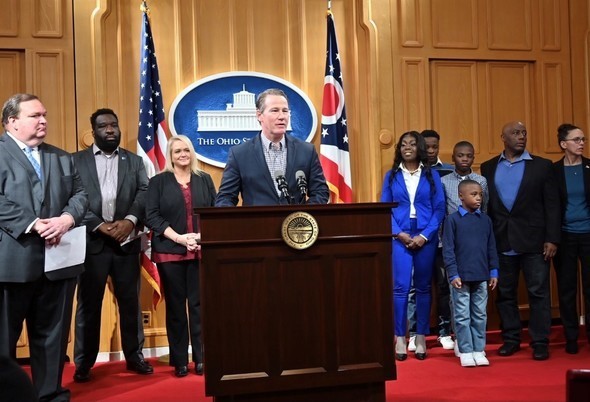
    Columbus, Ohio – Lt. Governor Jon Husted and Ohio Department of Job and Family Services Director Matt Damschroder announced Tuesday that Ohio is the first state to implement two technology tools from Connect Our Kids. The tools will help children services professionals connect Ohio’s 3,100 foster youth with their forever family. They were joined by partners from InnovateOhio, Kinnect, the Dave Thomas Foundation, and Ohio CASA.

    The Family Connections tool is a genogram or a digital diagram that illustrates an individual’s family members. Professionals can use the desktop or mobile app versions to build family trees, find family contact information and engage family and supporters of children in foster care. The People Search tool uses public information from over 300 sources and covers over 3 billion people to exponentially expand the pool of potential kinship caregivers, far beyond just those in current contact with the child’s parents.

    “Using this technology is data sharing at its best to help find forever homes for kids in foster care. It’s going to save children’s services professionals time and resources,” said Lt. Governor Jon Husted. “Gone are the days of them having to map out family trees and contact information on their own. This technology does it for them, and then makes it widely available to other professionals.”

  • PUCO orders refunds and debt forgiveness for customers of PALMco Energy (dba Indra Energy)

    PUCO orders refunds and debt forgiveness for customers of PALMco Energy (dba Indra Energy)

    Columbus, Ohio – The Public Utilities Commission of Ohio (PUCO) today adopted a settlement agreement requiring refunds of overcharges to customers of PALMco Energy OH, LLC and PALMco Power OH, LLC, which are retail energy providers doing business as Indra Energy. The companies will also waive any outstanding unpaid bills.

    “Today we are happy to provide more than $1 million in relief to customers impacted by PALMco’s misleading rates,” stated PUCO Chair Jenifer French. “At the PUCO we take allegations of misleading marketing or customer enrollment very seriously and we will continue to work to ensure fairness in Ohio’s competitive energy marketplace.”

    Under the terms of the agreement, PALMco will refund customers whose rates increased by more than 50% from August – December 2019, totaling more than $215,000. PALMco will also waive uncollected bills of approximately $832,000. Any remaining balances after PALMco issues refunds will be donated to a charity chosen by the Ohio Consumers’ Counsel (OCC).

    PALMco’s current owners, officers or partners are barred from doing business in Ohio’s retail energy markets for seven years by the terms of the agreement.

    A copy of today’s opinion and order is available on the PUCO’s website at www.PUCO.ohio.gov. Click on the link to Docketing Information Service and search for case 19-2153-GE-COI.

    Case background

    On December 19, 2019, PUCO staff filed a notice stating it received 51 complaints from PALMco customers between Aug. 1, 2019 and Dec. 10, 2019 about abnormally high electricity and natural gas bills. In its letter, PUCO staff noted concern that PALMco was already under investigation for nearly identical allegations of misleading and deceptive practices to market to and enroll customers with “competitive” and “the best” rates, however charged customers more than 4 times the regulated utilities’ prices. 

    On Sept. 21, 2021, PUCO staff, OCC and PALMco filed a joint settlement agreement and recommendation for the Commission’s consideration. 

    PUCO regulations

    The PUCO is charged with adopting and enforcing regulations to protect consumers from any misleading or deceptive acts or practices by competitive retail electric and natural gas providers.

    The PUCO maintains its Energy Choice Ohio website to provide helpful tools to assist consumers in evaluating their electric and natural gas supply options. The PUCO’s Apples to Apples comparison charts provide customers with a snapshot comparison of rates if they do not choose to enroll with a competitive supplier, versus current electric and natural gas supplier offers, and contract terms. The charts are updated daily.

    For more information, please visit www.energychoice.ohio.gov or www.PUCO.ohio.gov, or call the PUCO Consumer Call Center at (800) 686-PUCO (7826).

  • DeWine signs bill to temporarily ban school COVID-19 vaccine mandates

    DeWine signs bill to temporarily ban school COVID-19 vaccine mandates

    By Jake Zuckerman and Ohio Capital Journal

    His signature on the bill seems to violate his pledge to veto any legislation that would “discourage vaccination.”

    Columbus, Ohio – Ohio Gov. Mike DeWine signed legislation Wednesday that could block schools from mandating vaccination against COVID-19 for the fall.

    In the dying moments of the final legislative session before a summer recess, lawmakers tacked the vaccine provision as an amendment onto an unrelated bill regarding educational opportunities for military children. The amendment:

    • Forbids public K-12 schools and colleges from requiring any vaccine that has not yet received “full approval” from the U.S. Food and Drug Administration.
    • Forbids the schools from “discriminating” against anyone who has not been vaccinated, which includes infection control provisions like masks and social distancing.
    • Does not apply to hospitals or health care facilities operated by or affiliated with universities.

    It passed on party lines in both chambers, with Republicans in support and Democrats in opposition.

    All three vaccines available for use against COVID-19 are approved under an “emergency use authorization.” The FDA uses this streamlined regulatory process for drugs and vaccines that can be used against an ongoing emergency such as the pandemic, which has killed more than 608,000 Americans to date. The regulators issued the temporary authorization after reviewing clinical trial data on tens of thousands of recipients. The FDA, along with the Centers for Disease Control and Prevention (CDC), continues to monitor safety and efficacy profiles of all three vaccines.

    DeWine announced his approval of the bill without any public comment or fanfare. His signature on the bill seems to violate his pledge to veto any legislation that would “discourage vaccination.”

    Dan Tierney, a spokesman for the governor, played up the bill’s original aims in an email and said DeWine expects looming regulatory approval to nix the issue.

    “The primary purpose of the bill was to enhance educational opportunities for children in military families — a worthy goal,” he said. “The provision you are referring to is limited to vaccines that do not have full FDA approval. We are confident that these vaccines, proven repeatedly to be very safe and very effective, will be approved by the FDA, thus rendering this issue moot.”

    Passage comes amid an ongoing clash between DeWine and fellow Republicans in the legislature regarding public health policy. Earlier this year, lawmakers overrode DeWine’s veto on a broad weakening of state public health laws.

    Meanwhile, Republicans in the House Health Committee are considering legislation that would weaken state vaccination laws and prevent employers, nursing homes, hospitals, colleges and more from requiring vaccination of students and employees. DeWine has said he would veto the bill if it made it to his desk.

    During a hearing on that bill, lawmakers — many of whom have announced their refusal to seek vaccination against COVID-19 and aligned themselves with anti-vaccination activists — invited testimony from a discredited doctor who has claimed vaccines are a “depopulation” and “mass destruction” tool.

    DeWine’s signature furthers an emerging anti-vaccination push from Republican-controlled state legislatures. For instance, the Tennessee Department of Health halted all adolescent vaccine outreach and forced out its top vaccine official this monthunder pressure from Republican lawmakers, according to recent reporting from The Tennessean. Florida Gov. Ron DeSantis recently signed legislation to ban “vaccine passports,”which do not exist in most areas of the country but would theoretically be used by institutions to validate people’s vaccination status.

    Under the new Ohio law signed by DeWine on Wednesday, schools can still technically require immunization against COVID-19 once the federal regulators issue a full-blown authorization. However, Ohio is one of about a dozen states that allows exemptions to school immunization requirements for “reasons of conscience” — something of a catchall term.

    The new law’s sponsors, state Reps. Andrea White, R-Kettering, and Brian Lampton, R-Beavercreek, issued a lengthy statement regarding the help the bill will deliver for military children. They briefly addressed the vaccination issue.

    “By prohibiting our educational institutions from requiring vaccines that are not fully approved by the FDA, we are ensuring that safety is at the forefront of our priorities,” they said.

    The sponsors did not answer whether this means they consider the vaccines to be unsafe.

    Two Democrats on the House Health Committee issued a statement Wednesday evening criticizing the new law, saying it puts “political self-interests” ahead of good health policy.

    “With the arrival of the delta variant, this country is still in the midst of a dangerous pandemic and unvaccinated individuals are at highest risk,” said Rep. Allison Russo, D-Columbus.

    “Public schools and universities deserve to have the flexibility to either require COVID-19 vaccines or establish mitigation procedures they deem appropriate for the circumstances in their communities. Instead, this bill further undermines trust in science and a vaccine that has saved the lives of thousands of Ohioans.”

    This article was updated to reflect the legislation only applies to public schools and universities.

  • State COVID 19 emergency gone – New guidelines for visitation to nursing homes

    State COVID 19 emergency gone – New guidelines for visitation to nursing homes

    Columbus, Ohio – On Thursday, Governor Mike DeWine announced that the state emergency in Ohio caused by the COVID-19 pandemic will be lifted as of Friday. He urged those who have not yet received the vaccine to find a clinic near them by visiting gettheshot.coronavirus.ohio.gov

    Governor DeWine also released new information regarding visitation to nursing homes and assisted living facilities.

    On Friday, the state regulations which describe how visits should occur were removed. This will allow residents to have more than two visitors, and there is no longer a scheduling requirement. According to the Governor, Ohio nursing homes are expected to continue to follow federal guidance from the Center for Medicare & Medicaid Services, and both nursing homes and assisted living facilities will be expected to follow CDC guidance. A testing requirement still remains for staff members who are unvaccinated, and they will need to continue to be tested twice per week.

    The Ohio Department of Aging will be hosting a series of webinars to ensure facilities have access to all the information and resources necessary for safe and healthy operations. More information about these webinars can be found on the department’s website at aging.ohio.gov.

  • DeWine announced that the Ohio School Safety Center will award a total of $10 million in grants

    DeWine announced that the Ohio School Safety Center will award a total of $10 million in grants

    Columbus, Ohio – On Wednesday, Governor Mike DeWine announced that the Ohio School Safety Center will award a total of $10 million in grants to fund security enhancements at K-12 public schools and institutions of higher education in Ohio.

    “It’s important that we work proactively to ensure that our school buildings and grounds are as safe as possible to protect both students and staff,” said Governor DeWine. “Two new grant programs offered through the Ohio School Safety Center will help schools and universities pinpoint any weaknesses in their physical security and make needed improvements and upgrades.”

    The 2021 Campus Safety Grant Program, which began accepting applications today, will award $5 million to qualifying public colleges and universities for improvements to physical security on their campuses. The 2021 K-12 Safety Grant Program, administered by the Ohio Facilities Construction Commission (OFCC), will award an additional $5 million to qualifying public K-12 schools for similar school safety expenses.

    Both grant programs were funded as part of Senate Bill 310 of the 133rd General Assembly.

    Governor DeWine created the Ohio School Safety Center in 2019. It is housed in the Ohio Homeland Security Division of the Ohio Department of Public Safety and works to assist local schools and law enforcement agencies to prevent, prepare for, and respond to threats and acts of violence, including self-harm, through a holistic, solutions-based approach to improving school safety.