Tag: Columbus

  • Honoring Black history and fighting for the future of education in Ohio

    Honoring Black history and fighting for the future of education in Ohio

    A Guest Column by Melissa Cropper and Ohio Capital Journal

    On Feb. 1, as Black History Month began in Ohio’s classrooms and virtual classrooms, Gov. Mike DeWine unveiled his proposed budget for the next two years, which continues the education funding policies that systematically underfund public schools that educate Black students and even shift some of that funding away toward unaccountable, for-profit private schools. 

    Black History Month is an important time for our nation’s educators to focus their curriculum around the contributions that African Americans have made in government, industry, art, science, literature, and every field of human endeavor. However, we do a disservice to our students if we don’t also teach about the harder, more painful history of slavery, segregation, disenfranchisement, and racist violence, and if we do not weave it into our everyday curriculum as deeply as it is woven into the fabric of our country.

    Even then, we are not telling the full story if we teach about these topics as relics of the past, as dark chapters of our country’s past that have ended. Racist structures in our society didn’t cease to exist when the Thirteenth, Fourteenth and Fifteenth Amendments were ratified following the Civil War, or after Brown vs. the Board of Education desegregated schools, or after the 1964 Civil Rights Act, or even after Barack Obama’s historic election. 

    Each of those events has been an important step along the way, but as we are reminded all too often, the vestiges of white supremacy live on in our current institutions. We see it in the over-policing and incarceration of Black, brown, and immigrant communities, we see it in our city neighborhoods that were shaped by redlining, and we see it in Ohio’s school funding system. 

    When we teach Black history, educators can make the connections about how the racial injustices of the past have turned into the systemic racial disparities of the present, and how we can demolish the underpinnings of injustice. There is no better place to start than with our broken school funding policies which underfund and segregate schools with large populations of Black students.

    In Ohio, we underfund schools in Black communities with a school funding formula that was found unconstitutional by the Ohio Supreme Court more than 20 years ago because it relied so heavily on local property taxes that it denied an equitable and adequate education to students in low-income areas. 

    We segregate schools in Black communities with voucher and charter policies that divert students and drain funding from local public schools. Often cloaked in the language of racial justice, vouchers and charter schools have the opposite effect when put into practice. The NAACP has often opposed these policies because they “divert much needed funding for public education to private or charter schools, thereby further dismantling the viability of the public education system and limiting the number of children who would be afforded the opportunity of an adequate and effective education.”

    This vicious cycle of underfunding schools in communities of color, and then punishing them for not being able to meet their students’ needs by underfunding them further, must end. We must stop pitting parents and communities against one another, and instead renew our commitment for high quality public schools for all Ohio students. 

    Last year, the Ohio House passed the Fair School Funding Plan with an overwhelming bipartisan majority, yet the Senate refused to take the issue up. The Plan would have put Ohio on a six-year path toward equitable funding of public schools in Ohio, and would have immediately ended punitive and harmful deductions for vouchers and charter schools from local public school funds. 

    This would ensure that public school districts receive money only for the students who are enrolled to attend but without the added penalty of deducting money due to students opting for private or charter schools. These changes would strengthen schools in Ohio’s cities and in our rural areas, giving students from all backgrounds increased opportunities. Despite the Fair School Funding Plan receiving an 84-8 vote in the House, the Ohio Senate allowed the bill to die without even receiving a vote. 

    DeWine had the opportunity to take the hard work and bipartisan agreement for this new school funding formula and insert it as a framework into his budget proposal. Instead, his proposal continues the status quo which is actively undermining our ability to provide an equitable education.  

    As educators, we can not teach Black History without also being activists in our own realm, fighting for an education system that gives every child, no matter their race or where they live, equal access to a high quality, free public education.
  • 2021 Brings Reforms to Ohio Redistricting Process

    2021 Brings Reforms to Ohio Redistricting Process

    by Mary Schuermann Kuhlman, Public News Service – OH

    Columbus, Ohio – Ohio’s 134th General Assembly opens today, and a key task for 2021 is congressional redistricting.

    Voters approved a constitutional amendment in 2018 that creates a multi-step, transparent process for drawing congressional districts. New maps are made every 10 years.

    Catherine Turcer, executive director for Common Cause Ohio, said the reforms were badly needed to prevent lines from being manipulated to favor one party.

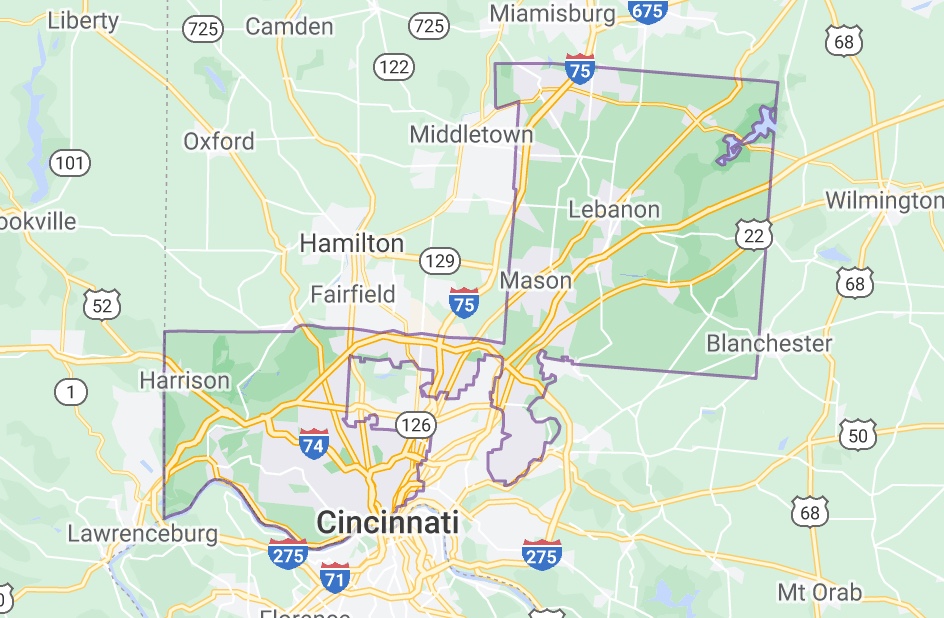
    “Map-making in the past was like the wild, wild West,” Turcer asserted. “They created a district that looks like a duck. The beak is in Lorain County, which is on Lake Erie, and the tailfeathers are on the Indiana border. So, there’s these really unusually-shaped districts.”

    State legislative maps will also be redrawn under a new process this year.

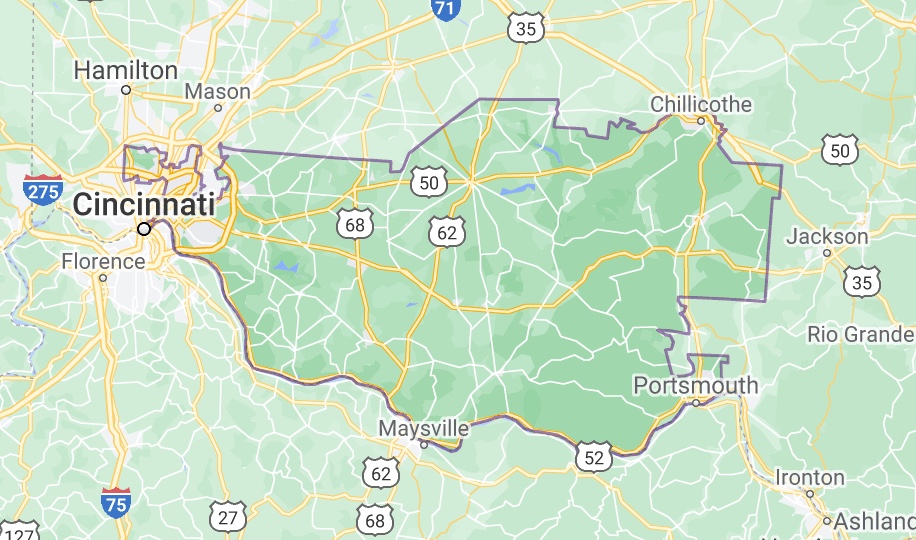
    Ohio 1st U.S. Congressional District Map (Chabot)

    Voters in 2015 approved creating the Ohio Redistricting Commission, a bipartisan group focused on creating maps that keep communities together and also increasing transparency. 

    Turcer explained the map-making process will be somewhat delayed, since the U.S. Census Bureau missed a Dec. 31 deadline to turn in the apportionment numbers used to determine congressional seats.

    “We don’t have all the information that we would normally have,” Turcer maintained. “As we begin this process, we need to be patient, because we really want the census to do a good job. You want those numbers to be right, so that there’s fair representation across the country.”

    Turcer contended gerrymandering has been a powerful political tool since 1812. And while the new rules encourage good behavior, she noted there are no guarantees. 

    Ohio 2nd U.S. Congressional District Map (Wenstrup)

    “We will need to watchdog the process and be as engaged as possible,” Turcer confirmed. “Because it’s much easier to do damage if people are not paying attention.”

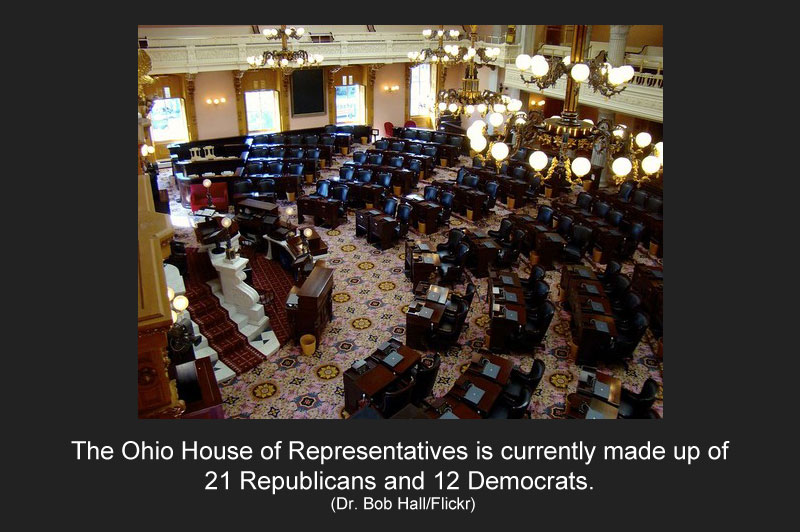
    Ohio is expected to lose one of its 16 congressional seats, 12 of which are currently held by Republicans. And at present, the 33 state legislative districts are held by 21 Republicans and 12 Democrats. 

    This story was produced in association with Media in the Public Interest and funded in part by the George Gund Foundation.

  • Ohio officials not tracking rate of vaccine refusals

    Ohio officials not tracking rate of vaccine refusals

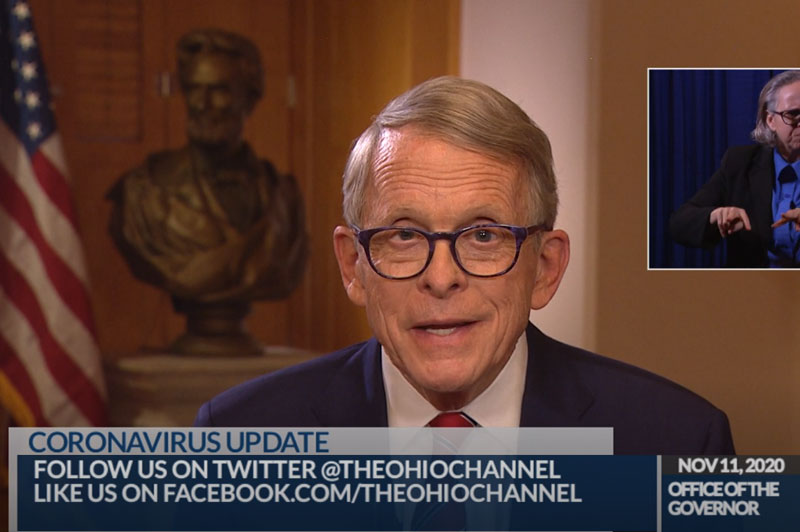
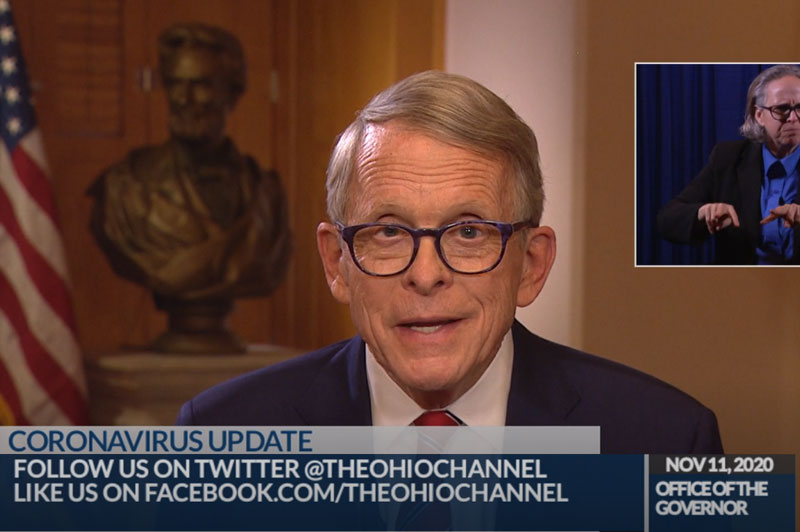
    Gov. Mike DeWine is pictured during his statewide address on Wednesday, Nov. 11. Photo courtesy Ohio Channel.

    By Marty Schladen and Ohio Capital Journal

    Columbus, Ohio – Ohio Gov. Mike DeWine got a lot of attention Wednesday when he said that 60% of nursing home workers who were offered a coronavirus vaccine refused to take it

    DeWine: 60% of Ohio nursing home workers are refusing vaccine

    But state health officials on Thursday said there’s no organized effort to track refusals among people they consider so critical that they’ve been given first crack at the scarce vaccines.

    In a press conference, DeWine implored people who are eligible for the vaccine to accept it, warning that it could be a long time before they get another chance. That argument might seem pretty compelling, given that a fast-spreading variant of the virus has popped up in two statesICU beds are filling and the two approved vaccines have trickled out at a rate far lower than the Trump administration promised.

    But DeWine lamented that many nursing home workers are passing on the vaccines anyway.

    “Our bigger concern is the amount of staff who are not taking it,” he said. “I don’t have data in front of me, but anecdotally, it looks like somewhere around 40% of staff at nursing homes are taking the vaccines and 60% are not taking it.”

    The statement went viral. A tweet about it generated more than 5 million impressions as of Thursday evening.

    Despite the obvious interest in how many people are refusing to be vaccinated, that’s not something the state is measuring.

    DeWine made his statement about nursing home workers “from some reports we have been hearing from our pharmacy partners,” Ohio Department of Health spokeswoman Melanie Amato said in an email Thursday. “It ranges in facilities, but this is a rough average. Remember the nursing home are largely being vaccinated by Walgreens/CVS as part of the federal program. We rely on them for the information. Same with hospitals. We track vaccines that have been given. We don’t track who would have refused.”

    Neither CVS nor Walgreens could immediately be reached for comment. While they are handling vaccinations in congregate settings such as nursing homes, they aren’t in charge of vaccinating hospital staff, paramedics and the like. Ohio health officials apparently aren’t tracking the rate at which those groups are refusing the vaccine, either.

    Dan Tierney, DeWine’s press secretary, said that despite the low level of nursing home workers agreeing to be vaccinated, the governor isn’t considering a mandate — at least for now.

    “On mandating the vaccine for these groups, we are still in the rollout of this phase, and our message to Ohioans is that if you are in group 1A, we urge you to take the vaccine now, because it may be months before there is another opportunity available to you,” he said. “We believe that increasing awareness will help increase the utilization rate. Ultimately, it is up to each health care provider to determine which workers they employ meets the criteria in group 1A to receive the vaccine in this phase.”

  • DeWine relaxes guidance for COVID 19 classroom quarantine

    DeWine relaxes guidance for COVID 19 classroom quarantine

    “Students and teachers exposed to a COVID-positive person in school are no longer required to quarantine as long as the exposure occurred in a classroom setting and all students/teachers were wearing masks and following other appropriate protocols.”

    by David Miller

    Loveland, Ohio – Governor Mike DeWine announced Wednesday that Ohio is changing its guidance regarding quarantines following an in-classroom exposure in K-12 schools. The Ohio Department of Health said, “Moving forward, students and teachers exposed to a COVID-positive person in school are no longer required to quarantine as long as the exposure occurred in a classroom setting and all students/teachers were wearing masks and following other appropriate protocols.”

    The change follows an evaluation of virus spread in Ohio schools conducted by researchers with the Ohio Schools COVID-19 Evaluation Team. Preliminary results of the evaluation found no discernable difference in the risk of contracting the coronavirus between those in close contact with a COVID-positive person in the classroom and those who were farther away.  

    Loveland Magazine has reached out to Loveland Superintendent, Dr. Amy Crouse and the District health team to inquire whether the District will adopt DeWine’s newest protocol, however, neither are available for immediate response. (Thank you for your email. Our offices are closed through Sunday, January 3, 2021.  I am out of the office with limited access to email.)

    Loveland school students return to the classroom on Monday, January 4.

    “This evaluation confirms for us that Ohio’s classrooms are a safe place for our students and that the commitment our schools have made to keeping kids safe in the classroom is working,” said DeWine.

    Schools should continue to require quarantines for exposed students in situations where masking and distancing protocols were not followed. The updated quarantine guidance does not apply to after-school activities, including sports, according to the new guidelines.

    The Centers for Disease Control and Prevention announced in early December new quarantine guidelines for people who were exposed to coronavirus, reducing the length of time from 14 days to 10 days without symptoms or seven days with no symptoms and a negative test. The Loveland School District announced on December 4 that they would implement these less stringent quarantine requirements.

    Meanwhile: The Associated Press reports that California has the nation’s 2nd confirmed case of a new and apparently more contagious variant of the coronavirus. Read on…

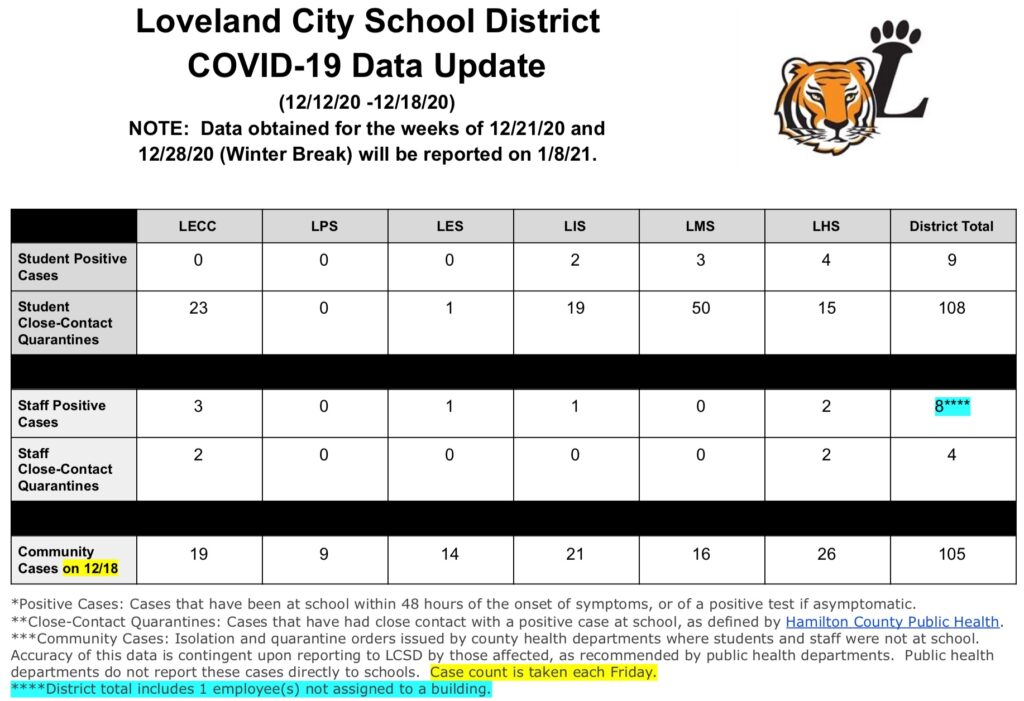
    Here is the last Covid 19 Dashboard that was published by the District (12/12/20 -12/18/20) right after classes dismissed for Winter Break:


    Statewide Curfew extended for another three weeks

    The Ohio Department of Health is extending the 10 PM to 5 AM statewide curfew for another three weeks until January 23. Governor Mike DeWine said, “This is b/c we don’t yet know what effect the holidays may have on our hospitals and health care systems, so we must continue to be cautious.”

  • Unfinished business: 5 legislative priorities in Ohio pushed to 2021

    Unfinished business: 5 legislative priorities in Ohio pushed to 2021

    By Tyler Buchanan and Ohio Capital Journal

    Columbus, Ohio – The 133rd Ohio General Assembly wrapped up its term with a flurry of lame-duck activity last week, closing out a challenging year of legislating amid a global pandemic. 

    Lawmakers hurried to get priority bills passed and sent to Gov. Mike DeWine’s desk for a signature before the two-year term ended. There were, however, a number of major legislative projects that did not get passed.

    Here are some of the priorities falling to the 134th General Assembly, which starts in January:

    What to do with House Bill 6?

    After months of deliberation about House Bill 6, lawmakers have decided to punt any repeal or replacement effort to 2021.

    HB 6 is the $1.3 billion nuclear bailout bill at the center of what has been called the largest corruption scheme in state history. 

    In the days after Speaker Larry Householder and four other political operatives were arrested in July, one thing was clear: Ohio lawmakers needed to do something about the tainted bill. 

    DeWine, who signed the bill into law in 2019, called for its repeal. Householder was removed as House Speaker. His replacement, Rep. Robert Cupp, R-Lima, said one of the first priorities of his speakership would be addressing HB 6. 

    Davis Bees Nuclear Power Station with electricity pylons, Ohio. Getty images.

    Cupp did create a new “House Select Committee on Energy Policy and Oversight,” which met nine times between September and December to hear testimony on various attempts to repeal HB 6.

    Members could not come to an agreement on how to best approach HB 6; some wanted a full repeal, others wanted only certain portions replaced and a few defended the whole bill as being good public policy, even if it did come about through sordid means. 

    Two of those involved have already pleaded guilty in federal court; the cases against Householder and two others are ongoing.

    Householder was reelected to another term and it remains to be seen if the chamber will take a vote in 2021 to expel him. When Cupp was elected as speaker in July, he indicated such a vote would wait until after the new term starts.

    School spending reform will take more time

    The Ohio Supreme Court ruled the state’s school funding model was unconstitutional back in 1997. Decades later, lawmakers are still working to figure out a constitutional and equitable substitute.

    A bipartisan funding overhaul passed the House in early December, but did not make it through the Senate. 

    Sen. Matt Dolan, R-Chagrin Falls, who chairs the Senate Finance Committee, wrote in a December letter “there is not enough time in the legislative session for the Senate to have the in-depth hearings this bill deserves.” Dolan suggested the new formula could be passed as a piece of the next state budget, which will be decided in the first half of 2021.

    Republicans still concerned about pandemic authority

    For all the condemnation leveled against Ohio’s pandemic response by Republican lawmakers in 2020, the legislature achieved little this year in the way of curbing the government’s executive powers.

    Between May and December, Republicans introduced numerous bills targeting the pandemic authority of the governor and the Ohio Department of Health (ODH). Only a few of them passed, and DeWine followed through on a pledge to veto any bill restricting ODH’s ability to issue health orders meant to stem the spread of COVID-19.

    DeWine vetoed a bill over the summer which would have reduced the penalties for violating a public health order. Lawmakers did not seek a veto override. 

    Gov. Mike DeWine is pictured during his statewide address on Wednesday, Nov. 11. Photo courtesy Ohio Channel.

    More recently, DeWine vetoed a bill to prevent ODH from issuing widespread quarantine orders (it also would’ve given lawmakers authority to vote down any public health orders). Despite protests and pressure from conservative lawmakers to override the veto, such a vote was not taken during the lame-duck session.

    Late in the term, lawmakers debated efforts to make future health orders more fair to business owners, should they be necessary. At other points this year, legislators said they wanted to address the state’s pandemic authority for future crises beyond the coronavirus. Those efforts may come up again in 2021.

    Campaign finance and election reform

    These were two hotly-debated topics this year in large part because of the presidential election cycle and the House Bill 6 scandal.

    As the Ohio Capital Journal has reported, lawmakers proposed a wide array of improvements to the state’s election system over the past term — from automated voter registration to online absentee ballot requests. Some legislators expressed worry about approving reforms during an election year, which may provide an opportunity for reforms to be heard during an “off year” like 2021. 

    The HB6 scandal involved allegations of bribery money being funneled through “dark money” groups in order to influence Ohio elections and public policy. These groups are registered nonprofits which are not required to disclose who funds them. 

    Ohio Secretary of State Frank LaRose, whose office oversees campaign finance in the state, came out in favor of improved transparency when it comes to “dark money groups.” He supported legislative efforts which followed Householder’s arrests to require such groups to publicly disclose their financial activity. 

    Secretary of State Frank LaRose is flanked by state Reps. Gayle Manning and Jessica Miranda during a press conference in support of HB 737.

    A bipartisan bill proposing reforms to the state’s campaign finance system did not receive a hearing in 2020, but these efforts may carry over to the new term.

    Split opinions on criminal justice reform

    There was much attention paid to the legislature’s work to reform the Ohio criminal justice system, with plenty of disagreements leading to mixed results.

    Lawmakers passed Senate Bill 1, which expands access to drug treatment programs in lieu of convictions and broadens the description for criminal records that may be sealed. 

    A separate bill to reclassify low-level drug offenses from felonies to misdemeanors passed the Senate last June, but was not taken up for a vote during the House’s lame-duck session. The bill sought to divert drug offenders into treatment rather than criminal punishment.

    Despite bipartisan support in the Statehouse and among civil rights groups, the bill remained controversial among law enforcement groups and prosecutors. The Ohio State Bar Association came out against the bill, arguing in testimony that some drug offenders “must have serious consequences hanging over their heads like the threat of a felony and prison time” in order to commit to a treatment program. 

    Rep. Bill Seitz, R-Green Twp., a supporter of the bill who will serve as Majority Floor Leader next term, told The Cincinnati Enquirer that work will continue in 2021 on criminal justice reform.

  • DeWine authorizes National Guard to provide security support at local jails

    DeWine authorizes National Guard to provide security support at local jails

    Columbus, Ohio – Governor Mike DeWine issued a proclamation yesterday that authorizes the Ohio National Guard to provide security support at local jails if needed.

    The proclamation was issued in response to the significant number of COVID-19 infections amongst state, county, and local corrections officers that has reduced staffing levels required to maintain safe and adequate security at some facilities. 

    Governor DeWine previously ordered the Ohio National Guard into state active duty to assist the Ohio Department of Rehabilitation and Correction with security at state prisons, and today’s proclamation amends that order to also permit Guard members to maintain security at any correctional facility, county jail, or confinement facility in the state. 

    More information can be found in the proclamation at governor.ohio.gov

  • Groups ramp up work on budget agenda for Ohio children

    Groups ramp up work on budget agenda for Ohio children

    by Mary Schuermann Kuhlman, Public News Service – OH

    Columbus, Ohio – More than a dozen groups are banding together to make sure Ohio does right by its children in the next state budget cycle.

    The Ohio Children’s Budget Coalition is ramping up efforts to maintain, protect and strengthen public resources that support children.

    The Coalition on Homelessness and Housing in Ohio is among the organizations involved.

    Gina Wilt, advocacy director for the housing group, said they’ll use their collective voice to outline policy priorities in the coming months.

    Gina Wilt is Advocacy Director for the Coalition on Homelessness and Housing in Ohio

    “All of our issues intersect,” Wilt noted. “And sometimes we get into these silos, and we can’t afford to be in silos right now. There’s a potential $2 billion shortfall. The governor, he’s going to have a lot to look through, and we must be in sync.”

    Wilt said they hope to build on their success of the last budget cycle, when funding was increased for seven of 11 issues in the coalition’s agenda for children.

    Specifically, Wilt said the last budget improved support for evidence-based home visiting, for mitigating children’s lead exposure, and for wrap-around support in schools. 

    “Really being able to focus on families and children is a top priority,” Wilt explained. “That’s something that we think Gov. DeWine can get on board with. And he has shown that this is a top priority in work that he’s already done. We need to make sure that that’s continued.”

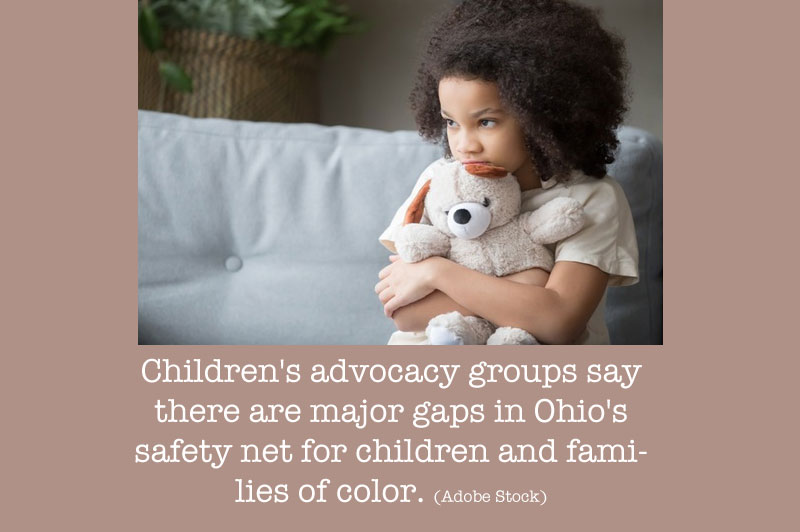
    Wilt added longstanding structural barriers and public-policy choices have created an uneven playing field for Ohio children. She noted the economic downturn has disproportionately affected children and families of color. 

    “We have seen huge gaps in our safety net for children and families of color,” Wilt contended. “That will definitely be a priority as we talk about all of these issues; child health, child care, education, justice issues related to our youth, housing and homelessness, and food security.”

    Gov. Mike DeWine is expected to release his budget recommendations for Fiscal Years 2022 to 2023 by mid-March, and the budget bill must be signed by June 30 to take effect July 1.

  • Governor DeWine signs Ohio Certificate of Ascertainment

    Governor DeWine signs Ohio Certificate of Ascertainment

    Columbus, Ohio – Ohio Governor Mike DeWine today signed Ohio’s Certificate of Ascertainment, which identifies the appointed electors and final vote count in Ohio for each candidate in the U.S. Presidential Election held on November 3, 2020.

    Ohio’s Certificate of Ascertainment shows the most popular votes went to Donald J. Trump and Michael R. Pence.

    “As Chief Executive of the State of Ohio, I certified today the Certificate of Ascertainment, which is a part of the electoral process in our state,” said Ohio Governor Mike DeWine. “I want to thank Ohio voters for exercising their right to vote, as well as all of our poll workers, local election officials, and Ohio Secretary of State Frank LaRose for a smooth democratic election process in Ohio.”

    The Certificate of Ascertainment is the legal document that links the popular vote in Ohio to the electoral process. Federal law requires the Chief Executive of each state to certify the Certificate of Ascertainment.

    The State meetings of the electors will be held on December 14, 2020. At the meetings, the electors vote for President and Vice President.

    Under Ohio law, the candidate with the most popular votes in Ohio receives all 18 of Ohio’s electoral college votes, which will be cast by these electors:

    • Ken Blackwell
    • Bonnie Ward
    • Barbara Clark
    • Keith Cheney
    • Mark Wagoner
    • Dave Johnson
    • Joy Padgett
    • Patti Alderson
    • Steve Loomis
    • Rob Scott
    • Patricia Weber
    • Robert Paduchik
    • Karen Arshinkoff
    • James Wert
    • Jim Canepa
    • Jane Timken
    • Darrell Scott
    • Madison Gesiotto
  • DeWine announces new curfew to try to slow covid spread

    DeWine announces new curfew to try to slow covid spread

    Gov. Mike DeWine is pictured during his statewide address on Wednesday, Nov. 11. Photo courtesy Ohio Channel.


    By Marty Schladen and the Ohio Capital Journal


    Desperate to slow the spread of coronavirus, Ohio Gov. Mike DeWine on Tuesday announced a new curfew intended to decrease person-to-person contacts and new infections.

    The move was greeted with skepticism in some quarters.

    DeWine said that starting at 10 p.m. on Thursday, there will be a 21-day statewide curfew from 10 p.m. to 5 a.m. Bars, restaurants and retail stores will have to close. But there will be exceptions for pharmacies, grocery stores, food delivery, drive-through and pickup service.

    Technically, people who violate the curfew could be charged with a second-degree misdemeanor, punishable by 90 days in jail and a $750 fine. But as he has with other covid-related health orders, DeWine said he he’s not eager to see people charged.

    “We do not expect law enforcement to go pull people over because they’re out beyond 10 o’clock,” he said. “But if they’re seeing something going on, this is a way they can walk up and say, ‘Hey guys, you’re here… there’s a curfew. Why don’t you just go home?’”

    The governor added, “No one’s been charged under these health orders,” he said. “That doesn’t mean they couldn’t be, but they haven’t so far.”

    The curfew comes as Ohio experiences its most alarming spike in coronavirus infections and hospitalizations since the start of the pandemic early this year.

    On Tuesday, state health authorities reported 7,079 new cases over the past 24 hours, a 36% increase over the 21-day average. They also reported 368 new coronavirus hospitalizations, only a little less than the state record of 386 set on Nov. 10.

    The swelling numbers have placed Ohio hospital staffs in a “precarious situation,” said Bruce Vanderhoff, chief medical officer for the Ohio Department of Health. He said medical workers are fatigued from fighting the disease since March and they have to balance that work with living in communities and with families where the virus is increasingly prevalent.

    DeWine said his goal was to reduce the number of person-to-person contacts and thereby stop the virus from spreading. He asked Ohioans to voluntarily do that through such measures as condensing the number of trips they make to the grocery and buying more when they do. At the same time, he urged people to do what they can to remotely maintain emotional connections.

    However, critics noted that the curfew doesn’t go as far as one imposed in the spring. For example, the earlier order imposed limits on how many people can be in stores when they’re open.

    Asked what scientific basis he used in issuing the order, DeWine said, “We know the basic science. The basic science is fewer contacts, less spread.”

    The likely effectiveness of the curfew was disputed by at least one scientist in the field. Kent State epidemiologist Tara C. Smith tweeted that she didn’t know any professionals who thought it would work.

    DeWine, however, might have felt the curfew was as far as he could go. It had the support of the Ohio Restaurant Association, likely meaning that there was some negotiation behind it.

    Also, DeWine is a member of a party led by president who in October visited Circleville and said the media were hyping the virus to hurt his reelection chances. The president predicted the media would stop covering coronavirus on Nov. 4 — the day after the election.

    Covid skepticism runs so deep in elements of the Republican Party that at the same time that DeWine was announcing the curfew, Ohio Senate President Larry Obhof, R-Medina, was testifying in favor of his bill to repeal an earlier health order requiring bars to stop serving at 10 p.m.

    For his part, DeWine said he hopes the curfew will “push more people toward home.”

    “I think if we do these things it gives us a shot at slowing (the coronavirus) down,” the governor said. “Most of what we’re doing and the decisions I’m making are between two bad choices.”


    Marty Schladen

    Marty Schladen has been a reporter for decades, working in Indiana, Texas and other places before returning to his native Ohio to work at The Columbus Dispatch in 2017. He’s won state and national journalism awards for investigations into utility regulation, public corruption, the environment, prescription drug spending and other matters.

  • Record-Breaking Cases & Hospitalizations, Statewide High Incidence

    Record-Breaking Cases & Hospitalizations, Statewide High Incidence

    CURRENT COVID-19 DATA
    There are 235,170 confirmed and probable cases of COVID-19 in Ohio and 5,461 confirmed and probable COVID-19 deaths. A total of 20,015 people have been hospitalized, including 3,969 admissions to intensive care units. In-depth data can be accessed by visiting coronavirus.ohio.gov.  Video of today’s full update, including versions with foreign language translation, can be viewed on the Ohio Channel’s YouTube page.  For more information on Ohio’s response to COVID-19, visit coronavirus.ohio.gov or call 1-833-4-ASK-ODH.

    Columbus, Ohio – Ohio Governor Mike DeWine and Lt. Governor Jon Husted today provided the following updates on Ohio’s response to the COVID-19 pandemic. 

    RECORD-BREAKING CASES & HOSPITALIZATIONS
    DeWine announced today that Ohio is once again breaking records in regard to COVID-19 cases and hospitalizations.

    • Between yesterday and today, health officials have reported a total of 4,961 new positive coronavirus cases in Ohio, the highest number of new cases in a 24-hour period to date.

    • There are currently 2,075 patients hospitalized with COVID-19 which is a 55 percent increase in hospitalized patients compared to two weeks ago. 

    • Of the hospitalized patients, 541 people are in intensive care. The previous record for intensive care admissions was 533 in April. 


    “This virus is flaring up, and we have to push it down – the economy depends on it,” said Governor DeWine. “If the virus continues to aggressively spread, people will lose confidence in their ability to safely go to stores, restaurants, and other businesses. If we want to keep our economy moving, we must all live with this virus and we must all be more careful.”

    Governor DeWine stressed that the new record number of cases is not due to increased testing capacity in the state. Since September 24, the total number of tests in Ohio has increased by approximately 44 percent, but positive cases have increased 280 percent in the same time period. If a person is tested multiple times, they are only counted once.

    STATEWIDE HIGH INCIDENCE 

    New health data compiled by the Ohio Department of Health revealed today that all 88 counties in Ohio are now considered “high incidence” as defined by the Centers for Disease Control and Prevention. 

    “There have been so many cases in the past two weeks that the risk of catching this virus in every county of this state is very real and very concerning,” said Governor DeWine. “Again, I ask everyone to recognize their personal responsibility in slowing the spread of this deadly disease. It’s up to every citizen in Ohio to choose to slow the spread by wearing masks, distancing, and making overall smart decisions.”

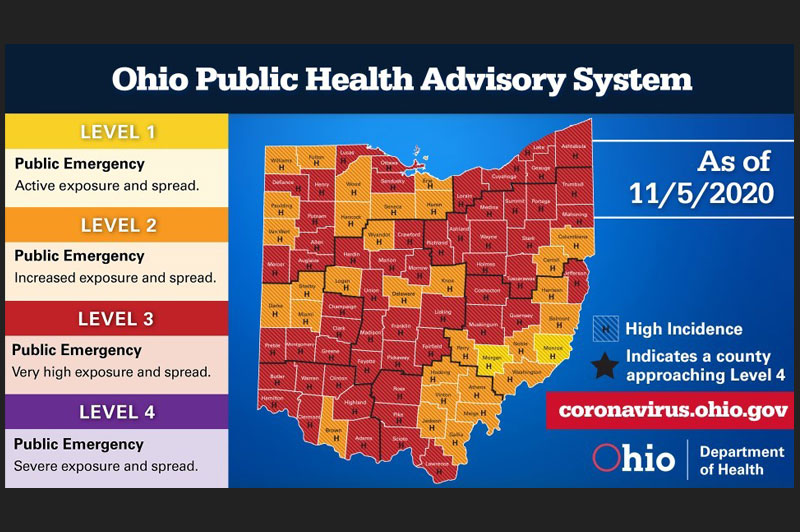
    According to today’s updated Ohio Public Health Advisory System map, 56 counties are currently rated as having a very high risk of exposure and spread (Red Level 3), up from 43 counties last week. This represents the highest number of Red Level 3 counties since the launch of the advisory system in July. As of today, 86 percent of Ohioans are living in a Red Level 3 county. 

    A county-by-county breakdown outlining the presence of COVID-19 in all of Ohio’s 88 counties can be found on the Ohio Public Health Advisory System’s website.


    NEW OHIO DEPARTMENT OF HEALTH STRUCTURE

    Governor DeWine announced multiple key additions to the existing administration at the Ohio Department of Health (ODH). 


    Chief Medical Officer Dr. Bruce Vanderhoff: 
    Dr. Vanderhoff previously served for more than a decade as a Senior Vice President and as the Chief Medical Officer at OhioHealth. He has years of experience leading large teams in successfully dealing with important healthcare issues in Ohio and prepared OhioHealth to deal with the threat of Ebola and the H1N1 flu pandemic.  

    Director Stephanie McCloud: 
    Director McCloud previously served as Governor DeWine’s administrator of the Ohio Bureau of Workers’ Compensation, managing an agency of 1,800 colleagues and over $28 billion in assets. She has considerable experience in the area of mental health and addiction treatment which is a priority in Ohio’s health improvement plan. 

    Senior Deputy Lance Himes: 
    Himes had previously served as the interim director of ODH where he has played an integral role in running and managing many aspects of the pandemic response operation. He will lead the coordination of the state’s vaccine distribution plan and will continue to work directly with Ohio’s local health commissioners.

    Chief of Staff Kathleen Madden: 
    Madden had previously served as Assistant Director at the Ohio Office of Budget and Management and will now play a key role in keeping ODH’s pandemic and non-pandemic programs and operations on track. She will work to prioritize and resolve critical issues, provide oversight and guidance to ODH staff, and ensure that ODH funds are spent responsibly and strategically. Other key members of the ongoing COVID-19 response who will continue their roles in assisting ODH are: 

    Adjutant General Maj. Gen. John Harris, Ohio National Guard: 
    Maj. Gen. Harris will continue work to ensure complex operations, such as COVID testing and contact tracing, are well-coordinated, monitored, and improved when necessary.  He will also work directly with Senior Deputy Himes on the planning and logistics of the forthcoming vaccine distribution program.  

    Director Ursel McElroy, Ohio Department of Aging: 
    Director McElroy will continue to direct virus prevention efforts for older adults in the community and in long-term settings, including nursing homes and assisted living facilities.  

    Director Lori Criss, Ohio Department of Mental Health and Addiction Services: 
    Director Criss will continue to lead efforts to address the increasing mental health needs of citizens during the pandemic.

    NEW OHIO BWC ADMINISTRATOR
    Governor DeWine announced that John Logue, the Ohio Bureau of Workers’ Compensation’s (BWC) Chief of Strategic Direction, will become the new administrator of Ohio BWC effective on November 16. Logue has worked for 26 years in the industry. Before returning to BWC in 2019, he most recently served as the vice president of client services for International Absence Management Company where he focused on Ohio workers’ compensation.