Columbus, Ohio – On Monday, September 14, 2020, the Ohio Department of Administrative Services sent voter registration forms to 59,000 individuals who previously requested these forms through the Ohio Benefits system but had not yet received them due to a system error.
Ohio Benefits provides online services for Ohioans who receive benefits through programs within Ohio Medicaid and Ohio Department of Job and Family Services. Pursuant to legal requirements, Ohio Benefits offers users an opportunity to receive a voter registration form at their request.
Of the 59,000 Ohioans affected by the error, a review determined that approximately 18,900 were already registered to vote, 7,500 received voter registration forms from Ohio Benefits through other transactions, and 32,400 had not yet received a form at the time of the review.
The deadline to register to vote is October 5, 2020. Citizens can register online at VoteOhio.gov.
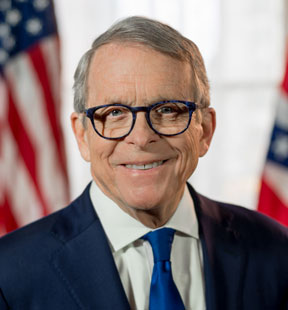
Columbus, Ohio – Gov. Mike DeWine acknowledges that whoever takes over as state health director may face a torrent of criticism just as Dr. Amy Acton did earlier this year.
That’s not a challenge unique to Ohio, the governor also said, vowing the state would continue searching for a permanent replacement to lead the department of health.
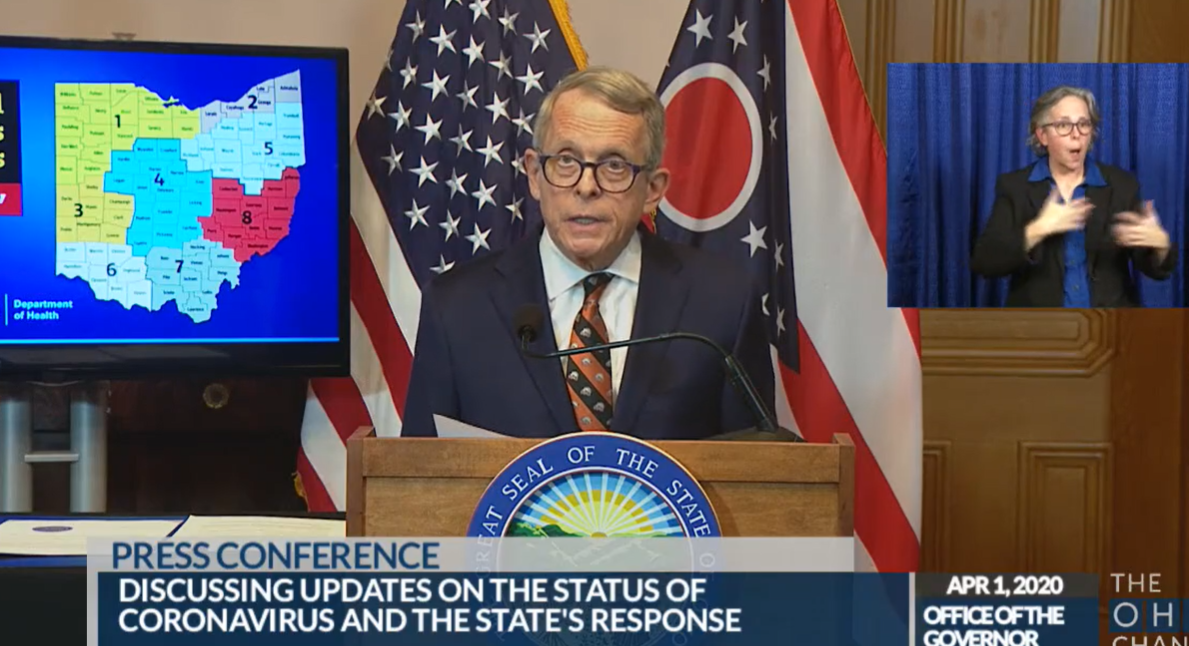
DeWine faced his own scrutiny about the hiring process from reporters at Tuesday’s (September 15 )press conference, the first held since the governor saw his appointed replacement step aside within hours of the hire being made public.
The governor announced on Sept. 10 that Dr. Joan Duwve, an Ohio native, would soon take over as the new state health director. Duwve had been serving as director of public health in South Carolina.
That evening, DeWine later said, he learned that Duwve planned to withdraw from consideration, citing “personal reasons.”
In a statement reported by the Associated Press, Duwve said she had learned about harassment faced by Acton and her family only after having accepted the position. In learning about that, she described making the quick decision to step aside.
Acton was the target of protests held outside her house in Franklin County, with some of the criticism leveled against her fueled by anti-Semitism.
“My family is off limits. I withdrew my name from consideration to protect my family from similar treatment,” Duwve said in her statement.
On Tuesday, DeWine contended that he and members of his team had in fact discussed the Acton harassment issue with Duwve prior to the appointment.
Nevertheless, the governor said his office has moved on and will continue searching for a replacement. The Ohio Department of Health has been led by interim director Lance Himes since the day Acton resigned on June 11. For a time, Acton remained employed as a chief health advisor to DeWine before leaving government entirely in early August.
Dr. Amy Acton addresses reporters at a news conference earlier this year. Capital Journal photo by Jake Zuckerman
There are currently two open leadership positions: for state health director (heading the department of health) and for state medical director.
DeWine said he did not want Ohioans to be worried about the delays in securing a permanent replacement to those posts. He said the department has many other hardworking professionals, and that the Ohio government continues to seek advice and resources from health experts throughout the state.
Does Ohio’s difficulty in finding a replacement reflect poorly on the state? No, said DeWine.
“I don’t think Ohio’s unique,” he said, referencing public protests against health officials elsewhere in America during the coronavirus pandemic.
“We know these are issues that can be divisive,” he continued. “I’ve tried to do everything I can so that we are not divided as a state, because I think we need to be together and fight this battle together.
“I know we’re getting tired,” he later said, “but we have to continue to rally. We have to continue to fight this.”
Tyler Buchanan is an award-winning journalist who has covered Ohio politics and government for the past decade. A Bellevue native and graduate of Bowling Green State University, he most recently spent 6 1/2 years as a reporter and editor of The Athens Messenger and Vinton-Jackson Courier newspapers. He is a member of the BG News Alumni Society Board and was a 2019 fellow in the Kiplinger Program in Public Affairs Journalism.
Clermont, Hamilton, and Warren are three of 78 Ohio Counties Offering this Free Book Program for Children
Ohio First Lady Fran DeWine (Provided Photo)
Columbus, Ohio – Ohio First Lady Fran DeWine has announced what she describes as amazing progress in reaching young Ohio readers in the Ohio Governor’s Imagination Library (OGIL) Program’s first year.
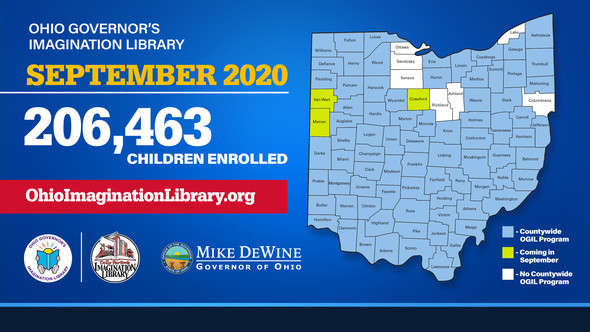
Now, 206,463 Ohio children from birth to age 5 are enrolled to receive a free Imagination Library book in the mail every single month. The program is currently offered countywide to children in 78 of Ohio’s counties, with an additional three – Crawford, Van Wert, and Mercer – launching the OGIL Program in September.
“Thanks to dedicated Ohio lawmakers, who are investing in our kids with matching funding, and our wonderful local partners, the Ohio Governor’s Imagination Library has made outstanding progress in its first year,” said Ohio First Lady Fran DeWine. “But we still have more work to do. Mike and I look forward to the day that every young child in Ohio– no matter what city, county, village or township that child lives in — has access to the Ohio Governor’s Imagination Library books.”
Last summer, the Dolly Parton Imagination Library Program was available in pockets of Ohio when the Ohio Governor’s Imagination Library partnered with the Dolly Parton program. 93,483 children were enrolled in August 2019. In September 2020 enrollment will more than double to 206,463.
First Lady DeWine in Lawrence County on February 3, 2020 (Provided Photo)
“I really enjoyed visiting with our local partners and families in 16 Ohio counties between January and March of this year,” said Mrs. DeWine. “Of course, that was before the COVID-19 pandemic. But we’ve continued working to find county partners during these recent months, because we know this program works. Young children are excited to receive the book each month in the mail, which is addressed to them. And just having these books in the home promotes a love of learning and family bonding that we know adds up to preparing children for kindergarten. I encourage all Ohio children to sign up for these free books!”
Only seven Ohio counties — Ashland, Columbiana, Lake, Ottawa, Richland, Sandusky, and Seneca – remain without a countywide program.
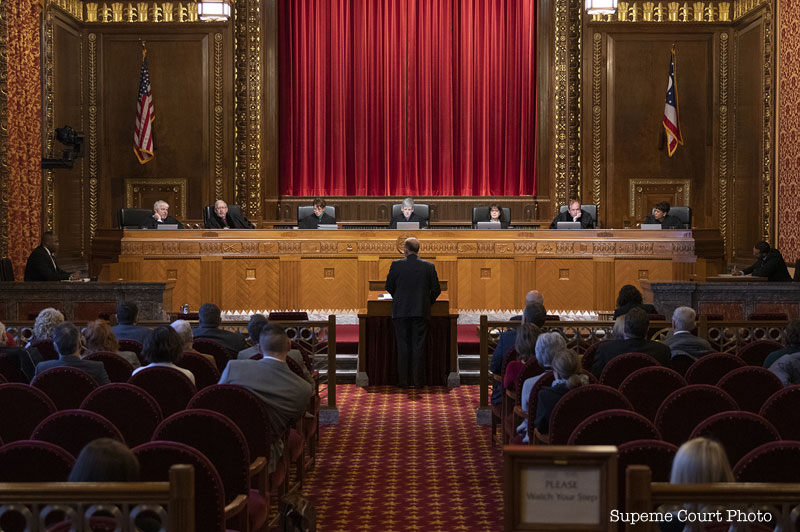
Columbus, Ohio – The Ohio Supreme Court has said a school district can go ahead with a firearm policy for personnel while the state’s highest court decides on their case.
The Ohio Supreme Court granted Madison Local School District’s request to allow the implementation of a policy allowing trained personnel including teachers to be armed on the Butler County district’s grounds Wednesday.
The amount of training the personnel must receive is still up for debate as the Ohio Senate considers a bill to lower that training level.
But just as they allowed the motion, they also sped up the schedule for their own deliberation.
“No stipulations or requests for extension of time shall be permitted, and the clerk of court shall refuse to file any stipulations or requests for extension of time,” the court said in a filing.
The district asked for an expedited timeline because of the upcoming school year, which started Aug. 13. The appeals court decision had “no practical effect” before then, because Ohio Gov. Mike DeWine had already closed schools due to the COVID-19 pandemic.
Attorneys for the school district parents who filed the initial lawsuit said a last-minute halt to the appeals court decision “threatens to upend the expectations of parents who have used the intervening months to make time-sensitive decisions — and commitments — about how to safely educate their children this fall.”
“While parents face a variety of safety concerns when deciding how to school their children in a global pandemic, Madison’s last-minute request would add to the confusion and concerns that parents are currently grappling with, and have already made decisions about,” attorneys for the families wrote in a response to the motion, filed Aug. 12.
The parents disagreed with the district’s argument that allowing the school to implement the policy before the supreme court makes its final decision is “necessary to prevent irreparable injury.”
While both parties want to avoid a school shooting like the one that sparked the policy in the first place, attorneys for the parents said, being barred from implementing the firearm policy “does not prevent Madison from deploying almost any conceivable option to enhance school safety; it simply bars the use of armed staff whose few days of training fall far short of the state mandate.”
The school district has 20 days to file their arguments with the court, and the families have 20 days following that to respond.
Chief Justice Maureen O’Connor and Justice Michael Donnelly disagreed with the decision to expedite the case and temporarily halt the appeals court decision, and Justice Patrick Fischer noted he would have specifically denied the portion of the motion to allow the district’s firearms policy.
Susan Tebben is an award-winning journalist with a decade of experience covering Ohio news, including courts and crime, Appalachian social issues, government, education, diversity and culture. She has worked for The Newark Advocate, The Glasgow Daily Times, The Athens Messenger, and WOUB Public Media. She has also had work featured on National Public Radio.
Columbus, Ohio – AARP Ohio delivered more than 4,000 petitions today to Governor Mike DeWine and the Director of Ohio’s Department of Administrative Services Matthew Damschroder, urging the Administration’s support of two essential policy solutions to lower prescription drug costs in Ohio.
Collected from residents across the state, the petitions call for drug price transparency and for Ohio to leverage its full purchasing power during negotiations.
Director Damschroder heads the special council established in House Bill 166, tasked with providing recommendations to the General Assembly, Governor DeWine, and the Joint Medicaid Oversight Committee regarding Ohio’s best path forward to decrease the high cost of prescription drugs in Ohio.
The petition delivery coincides with the council’s last public participation meeting before preparing their final report and recommendations to Governor Mike DeWine.
“We applaud Governor DeWine’s focus on improving Ohio’s prescription drug price transparency, affordability payment models, and health care efficiency. Creating the council was a step in the right direction and now we need to see action to hold drug makers accountable,” said AARP State Director Holly Holtzen. “Older Ohioans are struggling with rising prescription drug prices and cannot afford to wait any longer, especially now.”
Urges using state buying power to negotiate lower drug prices.
Requiring drug makers to provide transparency and justification for price increases is one of the two solutions Ohioans who signed the petition are urging. Using state buying power to negotiate lower drug prices is the second.
“Promoting transparency around drug prices exposes unfair price gouging practices, forces accountability for dramatic prices increases and drives costs down,” said AARP Ohio’s Associate State Director of Advocacy Latoya Peterson. Peterson represents AARP and their 1.5 million members in Ohio on the prescription drug council.
Negotiation is a commonsense, but powerful approach.
“Negotiation is a commonsense, but powerful approach. Some states have begun buying prescription drugs in bulk for some residents, including Medicaid beneficiaries, state employees and retirees, and prisoners. And some states are joining with each other to create even larger buying pools as a way to bring down the high costs of medicines, ” said Peterson.
AARP has been tracking drug prices for 12 years in their Rx Price Watch Report. For each year, the price for prescription drugs has increased much faster than inflation. Here in Ohio, the average annual cost of prescription drug treatment increased 57.8% between 2012 and 2017, while the annual income for Ohioans only increased 13%.
“No American should be forced to choose between paying for the medicines they need and paying for food, rent, or other necessities,” said Peterson.
Columbus, Ohio – Ohio Attorney General Dave Yost today announced a more than $85 million multistate settlement with American Honda Motor Co., Inc. and Honda of America Mfg., Inc. over allegations the automaker concealed safety issues related to defective airbag systems in certain Honda and Acura vehicles. The systems were designed and manufactured by Takata Corp., a longtime Honda supplier, and were first installed in vehicles sold in the United States in the 2001 model year.
The frontal airbags posed a significant risk of rupture, which could cause metal fragments to fly into the passenger compartments of vehicles.
The settlement, reached between Honda and the attorneys general of 48 states, territories and the District of Columbia, concludes a multistate investigation into Honda’s failure to inform regulators and consumers that the frontal airbags posed a significant risk of rupture, which could cause metal fragments to fly into the passenger compartments of vehicles. The ruptures resulted in at least 14 deaths and 200 injuries in the U.S. alone.
“I’d never buy a car if I knew systems meant to save me and my family could actually hurt us,” Yost said. “That is what Honda denied Ohio consumers – the chance to make the best decisions for their families. This agreement will ensure that doesn’t happen again.”
“I’d never buy a car if I knew systems meant to save me and my family could actually hurt us,” Yost said.
The states made the case that Honda engineers suspected that the airbags’ propellant, ammonium nitrate, could burn aggressively and cause the inflator to burst. Despite these concerns, Honda delayed warning consumers and safety officials, even as it began partial recalls in 2008 and 2009. Further, Honda continued to represent to consumers that its vehicles, including its airbags, were safe. Since 2008, Honda has recalled approximately 12.9 million Honda and Acura vehicles equipped with the suspect inflators.
Ohio Attorney General Dave Yost
The states alleged that Honda’s actions, or perhaps more accurately its failures to act, as well as its misrepresentations about the safety of its vehicles, were unfair and deceptive, and that Honda’s conduct violated state consumer protection laws, including Ohio’s Consumer Sales Practices Act, O.R.C 1345.01 et seq.
Under the terms of the consent judgment, which will be filed with the Franklin County Court of Common Pleas, Honda has agreed to strong injunctive relief which, among other things, requires it to:
Take steps to ensure that future airbag designs include “fail-safe” features to protect passengers in the event the inflator ruptures.
Adopt changes to its procurement process for frontal airbags, ensure that its suppliers have the appropriate industry certifications and satisfy key industry performance standards, as well as improve record-keeping and parts tracking.
Implement recurrence prevention procedures designed to prevent a tragedy like this from happening again, such as requiring that Honda approve all new frontal airbag designs before the company will consider them for use in new vehicles.
Abide by prohibitions on misleading advertisements and point of sale representations regarding the safety of Honda’s vehicles, including the airbags.
Make improvements in critical areas such as risk management, quality control, supplier oversight, training and certifications, and implement mandatory whistleblower protections.
Honda also agreed to pay the participating attorneys general a total of $85,151,210.15, of which Ohio’s share is $2,367,714.89.
In addition to Ohio, the multistate group includes Alabama, Alaska, Arkansas, Colorado, Connecticut, Delaware, the District of Columbia, Florida, Georgia, Guam, Idaho, Illinois, Indiana, Iowa, Kansas, Kentucky, Louisiana, Maine, Maryland, Massachusetts, Michigan, Minnesota, Mississippi, Missouri, Montana, Nebraska, Nevada, New Hampshire, New Jersey, New York, North Carolina, North Dakota, Northern Mariana Islands, Oregon, Pennsylvania, Rhode Island, South Carolina, South Dakota, Tennessee, Texas, Utah, Vermont, Virginia, Washington, West Virginia, Wisconsin, and Wyoming.
Consumers who own a Honda or Acura vehicle are strongly encouraged to visit Honda’s airbag recall website at Hondaairbaginfo.com, or call its customer service toll-free number at 1-888-234-2138, to see if the vehicle is subject to a recall. Consumers may also check for open recalls by going to Safercar.gov. All safety recall repairs are free at authorized Honda dealers.
Columbus, Ohio – An Ohio school district hoping to enact a policy to arm teachers is asking the Ohio Supreme Court to speed up their decision in light of an approaching school year.
ss
Last week, the state’s highest court agreed to hear the appeal of the Madison Local School District in Butler County, after an appeals court ruled they did not have the right to enact a “firearms authorization policy” that would allow armed teachers in schools.
ss
Several parents sued the district in 2018 seeking an injunction blocking the district from arming teachers and other staff without the training required of law enforcement officials.
cc
When the court of appeals made that ruling in March 2020, it had “no practical effect” on the district, attorneys for the district said in court documents. The decision came after Ohio Gov. Mike DeWine closed schools throughout the state due to the COVID-19 pandemic.
cc
“That changes (Aug. 13), when the 2020-21 school year begins for Madison with in-person classroom instruction,” attorneys for the district said in their motion.
Due to the upcoming school year, the school district is asking the court to “expedite” the schedule and consideration for the ruling.
Due to the upcoming school year, the school district is asking the court to “expedite” the schedule and consideration for the ruling. They submitted the request two days after the state supreme court agreed to hear the case.
The request to speed up a ruling also included an argument that the school should be able to go forward with their firearms policy as the appeals court decision is appealed.
Attorneys for the district said the fact that the Ohio Supreme Court accepted the case “implies serious questions going to the merits of the Twelfth District’s decision and that Madison has at least a reasonable prospect of success on the merits.”
The firearms policy was agreed to after a shooting at the junior/senior high school in which four students were injured, and the shooter, James Austin Hancock was sentenced to juvenile detention until he turns 21.
The district also said barring the firearms policy as the school year begins could become a safety issue.
“To be sure, everyone can hope that Madison does not ever experience another school shooting, and it is possible that the absence of this deterrent effect during the upcoming school year might turn out not to have mattered,” the school district said in court documents. “But it might matter, and Madison has made the policy decision that its students and staff are safer with its policy in place.”
The firearms policy was agreed to after a shooting at the junior/senior high school in which four students were injured, and the shooter, James Austin Hancock was sentenced to juvenile detention until he turns 21.
The district noted in its statement to the court that there were no “situations or incidents” during the 2018-19 school year or the part of the 2019-20 school year in which the schools were open.
The court battle is also the subject of a bill currently in the Ohio Senate. Butler County resident and state Sen. Bill Coley introduced Senate Bill 317 in May with the aim to reduce the amount of training needed for school personnel to be armed in schools.
An amendment has been brought up to include a “school marshal program” within the bill. The last hearing on the bill was held July 21.
Susan Tebben is an award-winning journalist with a decade of experience covering Ohio news, including courts and crime, Appalachian social issues, government, education, diversity and culture. She has worked for The Newark Advocate, The Glasgow Daily Times, The Athens Messenger, and WOUB Public Media. She has also had work featured on National Public Radio.
OHSAA adjusts high school season if football is approved by Governor
by Cassie Mattia
COLUMBUS, Ohio – The Governor’s recommendation to shorten Ohio’s High School Football seasons has been approved! The Ohio High School Athletic Association (OHSAA) announced Friday that due to concerns COVID-19 may spike in the early winter, all Ohio HS football teams will enter into the playoffs on October 9th. The HS State Championship games would be played no later than November 21st. This is only in the event that the Governor’s Office approves Ohio HS Football being played this year.
The proposal for a shorter football regular season was approved by the OHSAA Board of Directors with a 9-0 vote. OHSAA released a press release after the vote saying that they considered the proposal a win-win situation for all schools because it would then not matter how many games each team played leading up to the playoffs.
So how will it be determined which HS football teams qualify for the playoffs you may be asking yourself? Well, instead of using the traditional computer ratings system, coaches in each region will conduct a tournament seed meeting the week of September 28th in order to form the regional brackets. This is very similar to how several other team sports within the OHSAA determine which teams qualify for playoffs.
Loveland High School is apart of the Eastern Cincinnati Conference.
The shortened football season guidelines state that schools may keep their first six previously scheduled games, but all regular-season football contracts will be now voidable by either school. This is especially important in the event that conferences redo their league schedules so that games will fit into the first six weeks. The OHSAA will also determine new playoff regions in September. Teams that are eliminated from the playoffs may continue to schedule regular-season games up until November 14.
MAC Announces Postponement of Fall Sports
The Mid-American Conference (MAC) has announced the postponement of all scheduled fall contests, as well as MAC championships, due to continuing concerns related to the COVID-19 global pandemic. Read on…
The Big 10 is expected to announce the cancelation of the Fall football season on Tuesday.
Those schools that have paused sports due to COVID-19 are still able to begin their season in September or early October as well as compete in the playoffs. If a school finds that they would rather play regular-season games up until November 14th and not compete in playoffs they are able to do so.
“To both ensure we can offer students the opportunity to participate in education-based athletics but do so with their best interests in mind, we believe this modified plan offers a positive solution by addressing many of the concerns of our member schools,” President of the OHSAA Board of Directors and Athletic Administrator at Mentor High School, Jeff Cassella said, “Those that are able to start their seasons on time will be able to do so. Those that are starting later can still have a season. Add in the option of all schools entering the playoffs and the possibility of schools still being able to play 10 regular-season contests, and this plan is helpful to virtually all of our schools.”
Here are the most important details in regards to the OHSAA’s modified Ohio HS Football season and changes to the Playoffs process:
Regular-season games will begin the week of August 24 (same regular-season starting date).
All teams are eligible to enter the OHSAA playoffs. New regions will be determined in September.
The number of playoff rounds is dependent upon the number of schools entering the playoffs in each division. Coaches in each region will seed all playoff teams in the region to form a bracket, similar to other OHSAA sports.
Schools eliminated from the OHSAA playoffs or those schools that choose not to enter the OHSAA playoffs have the option to schedule additional regular-season contests through Saturday, November 14 (maximum of 10 regular season contests permitted).
Playoff seeding will be determined via a vote of the coaches the week of September 28 (Harbin Ratings is suspended for the 2020 season).
All playoff contests through the regional semifinals (and possibly the regional finals) will be hosted by the higher-seeded team.
Schools must commit to participating in the playoffs by 11:59 PM on Thursday, September 17.
Playoff regions will be drawn on Friday, September 18.
Schools may withdraw from the playoffs without a penalty until Thursday, September 24.
Below is what the new modified Ohio HS Football season will look like:
Regular season Week 1: Week of August 24
Regular season Week 2: Week of August 31
Regular season Week 3: Week of September 7
Regular season Week 4: Week of September 14
Regular season Week 5: Week of September 21
Regular season Week 6: Week of September 28
Playoffs begin Friday, October 9
State Finals end no later than Saturday, Nov. 21
Still, have questions on OHSAA’s modified football season and the new Playoffs process? Click HERE for all of the Q&A’s!
Thus far the decision on whether or not spectators will be allowed to be present at contact sports this year has not been made yet. The OHSAA stated that “At a minimum, parents should be permitted to attend.”
Luckily four of the OHSAA’s Fall sports, golf, tennis, volleyball, and cross country, have been determined to be low-contact by the Governor’s Office which means these particular sports will be permitted to have contests with other schools. The remaining Fall sports, field hockey, soccer, and football, have been determined to be high-contact, so the OHSAA, the Governor’s Office and the Ohio Department of Health are working together to create a safe game plan so that these three sports may participate in contests with other schools as well.
To get the latest 411 on which of Ohio’s High School sports will be competing this year and the most up to date COVID-19 sports safety protocols stay tuned to the Sports 411 With me, Cassie Mattia!
Columbus, Ohio – The ACLU of Ohio (ACLU) sent a letter on August 4 to over 450 criminal legal stakeholders in Ohio with urgent recommendations to mitigate the ongoing risks associated with COVID-19 for incarcerated populations, specifically people in Ohio’s county jails. The ACLU said, “The ripple effect of the deadly virus is, and will continue to be, ongoing, but decreasing local jail populations will save lives and lessen community-spread.”
The ACLU urges stakeholders to immediately eliminate or decrease money bonds that hold pretrial individuals in jail, and also to release certain categories of people through a collaborative systems approach.
Specifically, release should be prioritized for:
People held on certain offenses
People who would be sentenced to probation
People who have six months or less remaining on their sentence
Medically-vulnerable people
“The crisis is far from over. This past week Ohio set a one-day record for new cases and public health experts predict a second wave of the pandemic later this year. We must act now to mitigate widespread infection and death in our county jails. The decarceration strategies we offer will enhance public safety, reduce harm, and potentially save countless lives,” said Sabrina Harris, Policy Strategist for the ACLU of Ohio.
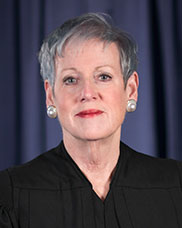
Ohio Chief Justice Maureen O’Connor
In March, Supreme Court of Ohio Chief Justice O’Connor recommended that judges reduce money bonds to decrease jail populations – and at least four counties implemented this practice during the first wave of the pandemic. The ACLU noted that approximately two-thirds of people in Ohio’s jails are legally innocent and held pretrial, which can be as many as 12,000 people on any given day.
“We commend the stakeholders that took action to reduce jail populations during phase one of the pandemic, but it is imperative that every actor in our criminal legal system – from courts to county jails – remain vigilant and alert to the devastation that COVID-19 holds over incarcerated populations. People in Ohio jails remain at a heightened risk of potentially fatal outcomes due to overcrowding, the lack of social distancing, and subpar conditions,” added Jocelyn Rosnick, Policy Director for the ACLU of Ohio.
Ohio saw the second highest number of COVID-19 deaths in state prisons, and while there is not comprehensive data for jail deaths, the ACLU of Ohio reminds Ohio stakeholders that they have the ability to make and influence policy changes to save lives in the future, and rewrite the narrative.
First Lady Fran DeWine and Ohio Governor Mike DeWine
Columbus, Ohio – In a second test administered yesterday afternoon in Columbus, Governor Mike DeWine has now tested negative for COVID-19. First Lady Fran DeWine and staff members have also all tested negative for COVID-19.
Governor Mike DeWine – Provided Photo
According to a press release issued by his office, A PCR test was administered to the Governor and members of his staff this afternoon. The PCR test looks for the specific RNA for the SARS CoV-2. “In other words, the genetic material specific for the virus that causes COVID-19. This test is known to be extremely sensitive, as well as specific, for the virus,” the release said.
The PCR tests for the Governor, First Lady, and staff were run two times. They came back negative the first time and came back negative when they were run on a second diagnostic platform.
Dewine said, “We feel confident in the results from Wexner Medical Center. This is the same PCR test that has been used over 1.6 million times in Ohio by hospitals and labs all over the state.”
The release also said:
The test administered this morning to the Governor in Cleveland, as part of the protocol required to meet the President, was an antigen test. These tests represent an exciting new technology to reduce the cost and improve the turnaround time for COVID-19 testing, but they are quite new, and we do not have much experience with them here in Ohio. We will be working with the manufacturer to have a better understanding of how the discrepancy between these two tests could have occurred.
Out of an abundance of caution, and at the direction of medical professionals, the Governor and First Lady plan on having another PCR test on Saturday. Results of these tests will also be released.
On August 6, DeWine took a test for COVID-19 as part of the standard protocol to greet President Donald Trump on the tarmac at Burke Lakefront Airport in Cleveland.
Governor DeWine tested positive. DeWine said he had no symptoms at the time.
The Governor returned to Columbus where he and First Lady Fran DeWine, who also has no symptoms, were both tested.
DeWine had planed to follow protocol for COVID-19 and quarantine at his home in Cedarville for the next 14 days.
















 MAC Announces Postponement of Fall Sports
 The Big 10 is expected to announce the cancelation of the Fall football season on Tuesday.