Columbus, Ohio – Ohio’s schools can now apply for their share of $10 million in school safety grants awarded by Attorney General Dave Yost’s office for the 2019-20 school year.
All public schools, chartered nonpublic school and schools operated by county boards of developmental disabilities are eligible to receive either $2,500 or $4.49 per student, whichever amount is greater.
“Our kids learn and grow best in an environment free from fear and violence,” Yost said. “These grants will help bring that goal closer to reality.”
Funding for the grants comes from dollars that legislators set aside for school safety in House Bill 166. The law gives school leaders flexibility to decide how the grant funds can best benefit school safety and security efforts. These efforts may include:
The support of school resource officer certification training;
Any type of active shooter and school safety training or equipment;
All grade level type educational resources;
Training to identify and assist students with mental health issues;
School supplies or equipment related to school safety or for implementing the school’s safety plan;
Any other training related to school safety.
The attorney general’s office notified superintendents today of their eligibility and provided instructions for accessing the funds. All applications are due by Dec. 13.
Columbus, Ohio – Ohio Legal Help, a website created to help all Ohioans access the civil justice system by providing free information on common legal issues, details about court and other legal forms and referrals to legal aid and bar association referral programs, formally launched on Aug. 27.
Ohio Legal Help provides plain language legal information, interactive self-help tools, and connections to local legal and community resources to help Ohioans resolve their legal issues. All content is reviewed by lawyers, to ensure the website is easy to understand, action-oriented and accurate.
“The Supreme Court’s Task Force on Access to Justice recommended in 2015 that Ohio develop a statewide website that provides free and accurate legal information and standardized forms,” said Supreme Court of Ohio Chief Justice Maureen O’Connor. “Ohio Legal Help is that website and will increase access to justice for all Ohioans.”
“Following from the recommendation of the Supreme Court’s Task Force on Access to Justice, a steering committee of judges, private lawyers, legal aid lawyers, librarians, clerks of court and domestic violence advocates representing various Ohio stakeholder organizations was convened to develop a website for Ohioans who needed legal information,” said David Kutik, Ohio Legal Help board president. “This comprehensive process, which resulted in the creation of the Ohio Legal Help website, has ensured that Ohio Legal Help will meet the diverse needs of potential users.”
To lay the groundwork for Ohio Legal Help, the steering committee commissioned a survey of potential users. Eight hundred Ohioans responded to the survey. Half of the respondents made less than $30,000 per year. The survey showed that costs and confusion of dealing with legal issues were most frequently cited as barriers to accessing the legal system. Sixty-one percent of survey respondents believed that they needed more legal education and 68 percent strongly supported a legal access portal website.
Ohio Legal Help addresses these concerns with straightforward legal information that helps Ohioans resolve legal problems in common, critical legal areas, such as housing, family, consumer, and income maintenance. The website’s mobile-first design will meet users where they are, and the tailored, personalized approach will ensure that users only receive information and referrals specific to their individual needs.
The information available on Ohio Legal Help is free. Ohioans can visit the site at www.ohiolegalhelp.org.
According to the CDC, patient respiratory symptoms have included cough, shortness of breath, and fatigue. In some cases, symptoms worsened over a period of days or weeks and required hospitalization. Other symptoms reported by some patients included fever, chest pain, weight loss, nausea, and diarrhea.
Columbus, Ohio – State and local public health officials in Ohio have concluded that three reports of severe pulmonary illness after vaping are likely due to vaping and are investigating an additional 11 reports of illness. Additionally, the Centers for Disease Control and Prevention (CDC) has issued updated recommendations on vaping for the public.
The Ohio Department of Health (ODH) issued a health alert to healthcare providers on Aug. 23 asking them to report to local or state public health officials for investigation of all suspected cases of serious pulmonary illness where the cause is unclear and there is a history of vaping.
ODH reports that the three confirmed cases range in age from 18 to 26 years old, including two females and one male, and that they all required hospitalization. The confirmed cases are from Lucas, Richland, and Union counties. Investigations continue into Ohio’s additional reports of illness and no further information about them is available at this time.
ODH says that the CDC is reporting more than 200 possible cases from 25 states, and its updated recommendations on vaping for the public include:
• While the investigation is ongoing, people should consider refraining from using an e-cigarette or vaping products if they are concerned about health risks.
• Regardless of the investigation, e-cigarette and vaping products should not be used by youth, young adults, pregnant women, or adults who do not currently use tobacco products.
• Do not buy vaping products off the street – you do not know what they really contain that could be harmful to your health.
– Vaping products bought on the street may contain THC or other cannabinoids.
– Do not modify e-cigarette or vaping products or add any substances to them not intended by the manufacturer.
• If you use e-cigarette products, monitor yourself for symptoms and promptly seek medical attention if you have concerns about your health.
ODH has advised that if you need help quitting tobacco products, including e-cigarettes, to contact your doctor or go to the ODH website for information about resources, including the Ohio Tobacco Quit Line (1-800-QUIT-NOW).
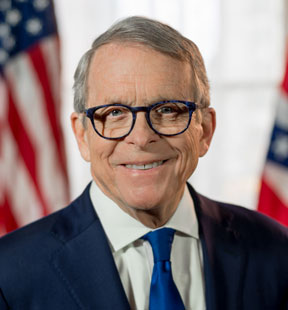
Columbus, Ohio – Ohio Governor Mike DeWine today announced a series of legislative reforms to address gun violence and outlined further action to increase mental health prevention, identification, and treatment to better protect Ohioans.
“Gun violence doesn’t just take the form of mass shootings, people are victims every day in Ohio and across the country,” said Governor DeWine. “I believe that this is both a public safety issue and an individual wellness issue – we must address both sides to help solve the problem. It’s time to do something, and that is exactly what we are going to do.”
This series of solid, workable reforms will help get guns out of the hands of people who should not have them under the law while protecting the rights of law-abiding citizens who are entitled to the right to bear arms and will help prevent and treat those struggling with mental illness.
Governor DeWine’s proposals include:
Safety Protection Orders
Governor DeWine is asking the legislature to pass a law to allow courts to issue Safety Protection Orders which would remove firearms from potentially dangerous individuals and get them the mental health treatment they need all while maintaining an individual’s right to due process.
Increased Access to Inpatient Psychiatric Care
Over the past several years, Ohio’s state psychiatric hospitals have become predominantly used by patients who are court-ordered there for restoration to competency to stand trial. This week 79% of the adults in our state psychiatric hospitals are under court order. The Ohio Department of Mental Health and Addiction Services (OhioMHAS) is working to create a process where courts and community-based providers can work together to restore competency for those to stand trial in an outpatient setting which will free more hospital beds and decrease wait time for admission. The Ohio General Assembly will need to pass legislation to create this community-based misdemeanor competency restoration process.
Early Intervention
As part of the 2019-2020 biennium operating budget, the state is investing $675 million in wrap-around services for schools to design individualized programs, working with local mental health providers or social service organizations, to address the social and emotional challenges our students face.
Access to Behavioral Health Services
The Ohio Department of Medicaid is investing $15 million in telehealth mental health services to students, so no matter where a child lives, they have access to high-quality mental health care.
Risk Factor and Resource Identification
OhioMHAS will be working with communities to increase knowledge of risk factors, help parents identify when their child is showing warning signs of a mental illness. The department will share screening tools with clinicians and help connect community-based services to link parents, families, and schools with proven supports and strategies to manage a child’s wellness over the child’s lifetime.
Background Checks
Governor DeWine is calling on the Ohio General Assembly to pass a law requiring background checks for all firearms sales in the state of Ohio with certain limited, reasonable exceptions, including gifts between family members.
Increased Penalties for Felons Who Illegally Possess Firearms
Gun violence occurs in neighborhoods and communities every day across Ohio and the nation. Law enforcement reports that the majority of this violence is perpetrated by a relatively small number of individuals who don’t have the right to possess a gun. Governor DeWine is calling on the General Assembly to increase penalties on felons who illegally possess or use guns.
Increased Penalties for Violent Felons Who Illegally Possess Firearms
Governor DeWine is calling on the General Assembly to increase penalties violent felons and other people found with a gun they do not have the legal right to possess. The crime of having a weapon while under a disability is currently a third-degree felony punishable by a maximum of three years in prison. On a first offense, the crime should be a second-degree felony punishable by two-to eight-years in prison, and for subsequent offenses, it should be a first-degree felony punishable by three- to eleven-years incarceration.
Increased Penalties for People Who Commit Felonies while in Possessing Firearms
This proposal would increase penalties for people who commit felonies with a firearm or who possess a firearm while committing a felony to a mandatory additional one- to three-year sentence.
Increased Penalties for Brandishing a Gun
The General Assembly should pass a law that increases the penalty for those who commit a felony while brandishing a firearm to a mandatory three- to five-year sentence.
Increased Penalties for Straw Purchases
So-called “straw” purchases, the act of purchasing guns for or giving guns to another individual are currently illegal under Ohio and federal law. However, this practice is far too common, so Governor DeWine is calling on the General Assembly to increase the penalty for a straw purchase to a second-degree felony punishable by two to eight years in prison.
Increased Penalties for Illegally Obtained Guns
We should increase the penalty for a person who possesses a firearm that they know was obtained through an illegal or fraudulent purchase in order to avoid a federal background check. A person who possesses the gun should be punished in the same manner as a person who bought the firearm, increasing the penalty to a second-degree felony punishable by two- to- eight years in prison.
Increased Penalties for Those Who Improperly Provide Firearms to Minors
Too many kids are carrying guns on the streets often with tragic consequences. Adults who furnish firearms to minors must be held accountable. Governor DeWine proposes that the General Assembly increase the penalty for improperly providing a firearm to a minor to and a third-degree felony punishable by up to three years in prison.
School Tip Line
The DeWine administration is expanding the state’s school safety tip line, where kids and adults can call or text anonymously to 844-723-3764 with tips about potential school violence.
Social Media Monitoring
In a 24-7 world of social media, threats can arise at any time. The Hub at the Ohio Department of Public Safety is expanding its ability to monitor and track potential threats on social media and will share that information with local school and local law enforcement.
Community Safety
The operating budget provides nearly $9 million to help harden soft targets like non-profits and religious organizations to make their facilities more secure.
School Safety and Intervention Programs
Working closely with Sandy Hook Promise, Ohio’s schools are implementing their “Know the Signs” safety program across the state. This program equips school staff with knowledge and skills to identify potential threats of violent action and take steps to intervene. There are 23 training dates already scheduled.
“I believe these proposals fulfill three important requirements. They can pass the legislature, they make meaningful progress toward safer communities, and they are Constitutional. Passing them won’t be easy, but this is the right thing to do and this is the right time to do it,” Governor DeWine added. “We can pull together to do meaningful things to protect lives. It won’t be easy, but I believe in this state, and I believe in our people.”
Columbus, Ohio – Ohio Governor Mike DeWine has released recommendations from the Governor’s Advisory Committee on Home Visitation about how to increase the state’s investment in proven home visitation programs and announced a new pilot program to expand home visiting programs.
“Evidence-based home visiting programs help give children the best possible start in life and increasing participation can help lower infant mortality rates, increase kindergarten readiness and improve parenting skills,” said Governor DeWine. “Strong children grow into strong adults, so an investment in these proven programs is an investment in our state’s future.”
The advisory committee, formed the day after Governor DeWine took office, is made up of leaders from the Ohio Children’s Hospital Association, home visiting programs, and area health officials. The group met six times to form this collaborative report that makes 20 recommendations aimed at tripling the number of families served through evidence-based home visiting.
The recommendations include:
Make race and ethnicity foundational elements of the state’s infant mortality efforts.
Expand and streamline eligibility requirements so more at-risk families can be served.
Create a central point of intake for all home visiting programs.
Create a central data warehouse for all home visiting programs.
Promote collaboration among healthcare payers, children’s hospitals, birthing hospitals, and other community-based providers.
Leverage the Medicaid program to reimburse for eligible services in a more cost-effective manner.
Align the Department of Medicaid infant mortality reduction funds to complement the Help Me Grow program.
Increase the frequency of the Ohio Department of Health incentive payments.
To implement these recommendations, Governor DeWine will be asking the legislature to double the funding of Ohio’s home visiting programs, investing an additional $50 million over the biennium into evidence-based home visiting programs, bringing the total state funding for home visiting to $90 million over two years.
To help triple participation in home visiting programs, Governor DeWine also announced the formation of a pilot program, Pay for Success, a public-private partnership aimed at increasing the availability of, and participation in, home visiting programs.
Participating communities fundraise to contribute the upfront capital for the programs and then receive incentive payments from the Ohio Department of Health based on a custom Outcomes Rate Card, to be released in the coming weeks, every time a participating family meets a performance metric. Once communities reach goals set by the Ohio Department of Health, they will receive enhanced payments for their success.
“This innovative approach is one way to encourage expansion of these programs. Working together communities can invest in their own success.” said Governor DeWine. “By leveraging private dollars, we can work to address some of our most pressing health needs.”
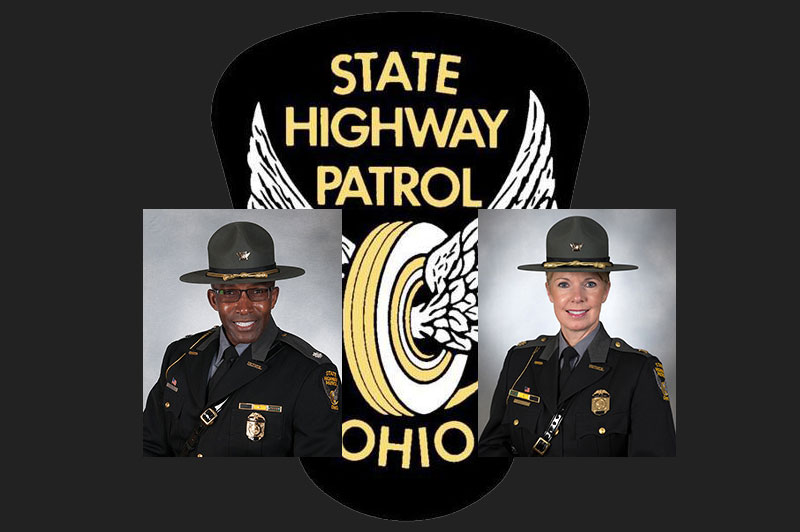
Columbus, Ohio –Ohio Governor Mike DeWine has announced the appointments of the superintendent and assistant superintendent of the Ohio State Highway Patrol.
Effective on March 16, Lieutenant Colonel Richard S. Fambro will assume the responsibilities of the superintendent of the Ohio State Highway Patrol and will be promoted to the rank of colonel. Lieutenant Colonel Fambro will replace the outgoing superintendent, Colonel Paul Pride, who will retire on March 15 after nearly 30 years of service.
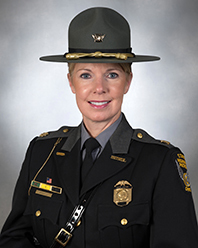
Governor DeWine also announced the appointment of Major Marla Gaskill as a new assistant superintendent of the Ohio State Highway Patrol. She will fill the position vacated by Lieutenant Colonel Fambro and will be promoted to the rank of lieutenant colonel.
“The new superintendent and assistant superintendent have both maintained distinguished careers in the Patrol, and they share my vision that puts protecting Ohio families at the forefront of everything we do,” said Governor DeWine. “Their commitment to Ohio and passion for public safety will help the Ohio State Highway Patrol thrive under their leadership.”
Lieutenant Colonel Fambro began his Patrol career in August 1989 as a cadet dispatcher at the Patrol’s Lancaster Post. He became a member of the 119th Academy Class in January 1990. He earned his commission in June of that year and was assigned to the Dayton Post, where he was selected as Post Trooper of the Year in 1994.
In 1997, he was promoted to the rank of sergeant and transferred to the Springfield Post to serve as assistant post commander. In 2000, he was promoted to the rank of lieutenant and transferred to the Lancaster Post to serve as post commander. In 2003, he was selected to serve as the Patrol’s spokesperson in the Public Affairs Unit. In 2004, he was promoted to the rank of staff lieutenant and transferred to the Office of Logistics and Security Services. As a staff lieutenant, he also served at the Columbus District Headquarters as an assistant district commander.
In 2010, he was promoted to the rank of captain and transferred to the Office of Investigative Services. As a captain, he also served in the Office of Special Operations and in the Office of Criminal Investigations. In 2014, he was promoted to the rank of major and transferred to the Office of Planning and Analysis. As a major, he also served in the Office of Personnel.
Lieutenant Colonel Fambro completed advance leadership training at Northwestern University’s School of Police Staff and Command and attended the U.S. Army War College. He completed advance leadership training at Northwestern University’s School of Police Staff and Command in 2002. He earned a Bachelor of Science degree in Business Administration from Ohio Dominican University in 2004 and will complete his studies to obtain a Master of Science in Management degree from Mount Vernon Nazarene University in May of 2019.
Major Marla Gaskill began her Patrol career in May 1989 as a cadet. She began her training as a member of the 119thAcademy Class in January 1990. She earned her commission in June of that year and was assigned to the Wooster Post. In 1995, she transferred to the Aviation Unit to serve as the first female pilot for the Patrol.
In 1997, she was promoted to the rank of sergeant and transferred to the Norwalk Post to serve as an assistant post commander, later transferring to the Delaware Post and then the Administrative Investigation Unit. In 2001, she was promoted to the rank of lieutenant and transferred to the Marysville Post to serve as a post commander. In 2006, she was promoted to the rank of staff lieutenant and served in the Offices of Personnel, Field Operations, and Capital Operations. In 2011, she was promoted to the rank of captain and assumed command of the Fiscal Services Section. In 2016, she was promoted to the rank of major and transferred to Office of Planning and Finance.
Major Gaskill is a graduate of The University of Louisville, Southern Police Institute and attended executive leadership training at the U.S. Army War College. She earned her Bachelor of Arts degree from Capital University in 2001, a Master of Business Administration degree from Franklin University in 2008 and is currently pursuing a Masters of Public Administration degree from Ohio University.
Law Enforcement Classes
Great communities need people who can protect and serve. It’s a career that requires people skills, courage, the ability to collect facts and evidence to solve problems/crimes, and a desire to help. The Law Enforcement program can give you the skills you need for a lifelong career.
Learn:
Skills to respond to civil emergencies.
Legal aspects of law enforcement, including the Ohio Revised Code, Ohio Rules of Evidence, and rules for criminal and court procedures.
How to develop positive relations with citizens, supervisors, and co-workers.
Ohio Secretary of State Jon Husted certifies the results of the 2018 General Election.
Columbus, Ohio – Ohio Secretary of State Jon Husted has certified the results of the 2018 General Election. The official results are now available via the link below and on the Secretary of State’s website.
“Once again, election officials across Ohio stepped up to the plate and delivered another well-run election,” Secretary Husted said. “I am proud of the work we have done to make smooth and efficient elections the norm in Ohio, and I look forward to seeing the next administration build on our successes.”
Reports for provisional and absentee ballots cast in the 2018 November General are available via the links below and on the Secretary of State’s website.
Certified results for local races are available by contacting the corresponding county board of elections. A list of all 88 county boards of election is available online. The Local Issues Report will be available in the coming days.
On October 26th, Loveland Magazine published, Patricia Lawrence: I’m running because our community deserves effective leadership. My liberal Democrat opponent repeatedly misrepresented, mischaracterized, fabricated, and twisted facts beyond recognition. But hey, that can be expected from a desperate politician.
John Becker has been serving as the State Representative for Ohio’s 65th House District since January 2013. It includes the cities of Milford and Loveland (inside Clermont County) and the townships of Union, Miami, Goshen, Stonelick, and Wayne.
Rather than picking apart her statements and correcting the record line-by-line, I’m going to reintroduce myself and then compare and contrast our positions and values:
It is my honor and privilege to serve as your State Representative. I’ve been involved with the Clermont County Republican Party since 1993, served southern Ohio as a State Committeeman for the Ohio Republican Party from 2004-2012, and I’ve been a member of the Ohio General Assembly since January 2013.
My MBA, with an emphasis in Taxation, was earned at Xavier University. I also have a Bachelor of Science degree in Business Management with a minor in Psychology from Northern Kentucky University. Additionally, I also hold a Certified Treasury Professional (CTP) designation, a school district treasurer’s license, and am a graduate of the Union Township Citizens Police Academy.
I am running for re-election to continue being a champion in Columbus for our shared conservative values. My platform is very simple: Pro-Life, Pro-Gun, Limited Government, and Lower Taxes.
With a 30-year career in the private sector, my experience has spanned four major industries including Manufacturing, Health Care Insurance, Banking/Financial, and Charter Education. The companies I’ve worked for include household names like GE, Ford, MetLife, Prudential, Provident Bank, Fifth Third Bank, and Check ‘n Go. I’ve held positions such as supervisor, manager of health care information systems, senior financial analyst, finance officer, assistant vice president, business analyst, and treasurer.
I am running for re-election to continue being a champion in Columbus for our shared conservative values. My platform is very simple: Pro-Life, Pro-Gun, Limited Government, and Lower Taxes.
Endorsements are a key indicator of a candidate’s values and effectiveness. My growing list are as follows:
Party Endorsements
Clermont County Republican Party
Ohio Republican Party
Business Endorsements
NFIB Ohio – National Federation of Independent Business (small business)
Ohio Chamber of Commerce
The Ohio Society of CPAs
Ohio Valley Associated Builders and Contractors ABC-PAC
Ohio State Medical Association PAC
2018 Ohio Farm Bureau “Friend of Agriculture”
Ohio State Chiropractors Association
Cincinnati Area Board of REALTORS® and the Ohio REALTORS®
Pro-Life and Grass Roots Values Voters Endorsements
Cincinnati Right to Life – PAC
Ohio Right to Life – PAC
Ohio Value Voters
Family First PAC
Janet Folger Porter
“Very Conservative” from iVoterGuide. (This is their highest rating.)
Gun Voters
NRA with the highly exclusive A+ rating
Buckeye Firearms PAC with the highly exclusive A+ rating
Ohioans for Concealed Carry (OFCC)
TEA Party, Liberty, and Tax Voters
Ohio Citizens PAC
Republican Liberty Caucus of Ohio
Coalition Opposed to Additional Sending and Taxes (COAST)
Military and Veterans Voters
“Highly Recommended” by Ohio Veterans United
In contrast, my liberal Democrat opponent boasts of her endorsements by a collective of labor unions, gun control, and left-wing, pink hat-wearing, feminist pro-abortion groups, including Planned Parenthood.
If the people of Clermont County want to continue winning with a pro-life, pro-gun, fiscal conservative, they will send me back to Columbus.
If the people of Clermont County are tired of winning, they will vote for my liberal Democrat opponent. If they want to continue winning with a pro-life, pro-gun, fiscal conservative, they will send me back to Columbus.
To learn more about me and my candidacy for state representative, please visit my website at www.BeckerGOP.com. If you’d like to subscribe to my monthly newsletter, The Becker Report, email me at John@BeckerGOP.com.
Election Day is quickly approaching. I’m a conservative Republican who is vetted, tested, and proven. I humbly ask for your vote on November 6, 2018.
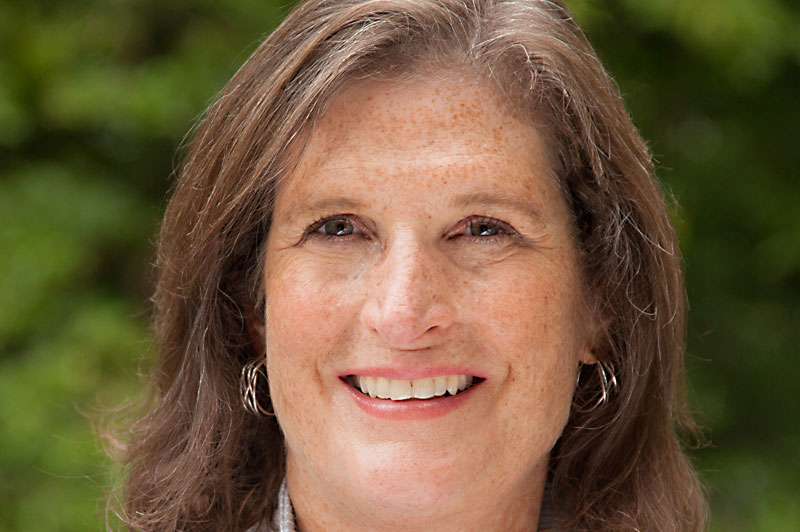
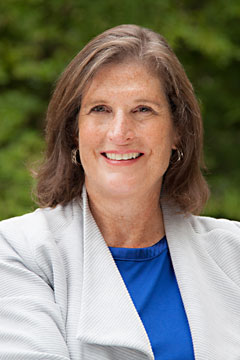
I’m Patricia Lawrence, candidate for Ohio House District 65 (Goshen, Miami, Stonelick, Union, and Wayne Townships.) I’m a wife, mother, former teacher, and deeply concerned citizen. My decision to run is not about ego. I’m running because our community deserves effective leadership.
Patricia Lawrence is running for Ohio House District 65
My opponent John Becker rode the Tea Party train to the statehouse where he has been sitting on a sidetrack for the past six years. He asserts that spending money is bad. He voted against supporting our school resource officers, yet proposes arming our teachers. I want our teachers armed, not with guns but with the resources they need for student success. District 65 is scheduled to receive $130,000 for school resource officer and teacher training. The first House vote for the bill to authorize this money was 92-2. Becker voted no! As a former teacher and school board president, I am acutely aware of the balance our schools face in providing a safe and nurturing environment. I will vote for our students.
Here are the facts. In 2010, Ohio ranked fifth in the nation for education. Today we rank 22nd. The fault of this in large part lies at the door of the state legislators like Becker who have failed our schools and students. It is time to reverse this trend with better school funding, less testing, and innovative career training.
My opponent John Becker rode the Tea Party train to the statehouse where he has been sitting on a sidetrack for the past six years.
Healthcare is another critical issue, especially Medicaid expansion, which Becker voted against. As a breast cancer survivor, I am grateful for health care coverage I had and the good care I received. Nearly 700,000 Ohio residents (20,000 in our county) depend on Medicaid expansion and that enables them to work, a step-up from out-right poverty. My opponent not only voted against Medicaid expansion, but also proposes to do away with the minimum wage. I will fight for and vote to support the healthcare and economic needs of working families, children, and seniors.
These are proposals that lift people up. I believe hard working people deserve a living wage. I know that what people truly want is the means to care for their families and have a little change in their pockets at the end of the week.
When tribal politics prevail, we do not get the best candidate. A GOP friend told me, “When Democrats don’t run, Republicans are not pushed to put forward their best candidates.” My opponent proposes radical, fringe ideas such as the strange notion of Ohio seceding from the Union (he said the “so-called ‘Civil War’ is the historical precedent”). Regarding due process about a troubling case, Becker’s comment was, “justice was delivered to the dead punk.” Regarding healthcare Becker’s attitude is that hospital ERs should not have to help “non-paying customers.”
Cancer taught me that time is short. I do not take one day for granted and I will not waste time on fringe legislation.
I have served on six boards, including two national boards, and served as president of two of those boards. I know how to set meaningful goals and to work in committees with multiple points of view. Accomplishing meaningful work is what I do. My opponent has the reputation in Columbus where not even his own party will touch his outlandish proposals.
Cancer taught me that time is short. I do not take one day for granted and I will not waste time on fringe legislation.
Political stereotypes have driven an enormous wedge in our world and we cannot abide by that any longer. Real leadership is curious, thoughtful, and responsive to the needs of the community. I will deliver.
The database includes criminal conviction sentences, protection orders, and mental health records that, in Ohio, should be inputted.
Columbus, Ohio – On Monday, Governor John R. Kasich took action to begin implementing recommendations of a working group he reconvened in April to improve the background check system that helps make sure guns stay out of the hands of people prohibited by law from having them.
The group reached unanimous agreement on a proposal that has been introduced as legislation in the General Assembly HB 585/SB 288. Those bills include closing gaps in the background check system.
The working group developed a 39-page report that assessed the current level of compliance in Ohio and identified barriers that exist to achieving comprehensive, up-to-date reporting. Those recommendations include ways to expand training and training to those responsible for submitting data into the system, reforms to reduce duplicative or unclear reporting responsibilities and ensure greater coordination among entities.
In addition, the working group published a reporting compliance manual for local governments and elected officials who have responsibility for inputting data into the background check system and ways they can overcome compliance barriers.
By signing Executive Order 2018-10K, Kasich permanently established the National Instant Criminal Background Check System (NICS) Compliance Working Group to continue working to ensure that gaps in the system are closed. Kasich also signed Executive Order 2018-11K to adopt emergency rules to require law enforcement agencies to upload protection order and warrants into theLaw Enforcement Automated Data System (LEADS) to close an existing reporting gap identified by the working group.
“By closing gaps in the gun-buyer background check system, we can make it less likely that dangerous people are able to purchase firearms,” said Kasich.
“By closing gaps in the gun-buyer background check system, we can make it less likely that dangerous people are able to purchase firearms,” said Kasich. “I’m grateful to the working group for putting together such a thorough report and Ohioans will be safer as result of their continued work.”
Anyone buying a firearm must undergo a background check to make sure they are not prohibited by federal or state law from possessing a firearm. Those background checks only protect the public if the information in the National Instant Criminal Background Check System is complete, accurate, and up to date. The database includes criminal conviction sentences, protection orders, and mental health records that, in Ohio, should be inputted.
Earlier this year, Gov. Kasich brought together leaders with a variety of backgrounds to search for common ground on new policies that can protect Ohioans’ lives and respect their constitutional rights. The group reached unanimous agreement on a proposal that has been introduced as legislation in the General Assembly HB 585/SB 288. Those bills include closing gaps in the background check system.
The two executive orders can be viewed here and the full report from the working group is available here.
Take Home Tano is about fresh, wholesome food for the frenzied family Our goal is to meet the needs of busy families.