Tag: COVID-19 pandemic

  • Former Ohio teacher, State Board of Ed member sees literacy as ‘key civil rights issue’

    Former Ohio teacher, State Board of Ed member sees literacy as ‘key civil rights issue’

    BY:  Ohio Capital Journal

    Christina Collins’ journey to become an educator started when she helped her grandfather read his mail.

    He had dropped out in middle school, and had trouble with reading and understanding words, even ones specifically written for him.

    Collins’ dad and brother both struggled in school as well, and it was through their struggles that she saw “how hard it was for some people to be successful.”

    “So, those moments all kind of led to, for me, believing that literacy is a key civil rights issue,” Collins told the Capital Journal. “I mean, the ability to participate in the world around you is to be a literate human being.”

    The Gahanna native became a high school English teacher, and cherished the interactions she’d have with students, the kids who seemed to be doing fine and the kids who struggled or made trouble.

    “I was always very driven about recognizing every student, and getting other people to recognize every student to help support every student,” Collins said.

    To this day, she gets messages from students who have moved on to become educators themselves.

    That new generation of teachers is facing a whole host of new challenges, from culture war battles to ever-changing education standards, and Collins sees the developments in education statewide and nationally as a departure from the true aims of the field.

    “Our pendulum has swung way too far over to seeing kids as test scores,” she said. “We should be finding every kid’s talents and getting them going in the right direction.”

    Joining the board

    While Collins was an educator, she taught her classes, kept up with the curriculum and all the other everyday roles of a high school teacher.

    But she realized that, for other teachers, those roles didn’t include staying up all night reading legislation.

    “I thought that was just a thing all teachers did,” she said. “I thought ‘well this is part of education, everybody’s reading legislation.’”

    When her colleagues dispelled that belief, she realized perhaps her next move might be toward honing the policy that came from the statehouse into local school districts.

    She became an administrator with the purpose of “being a filter for the noise” coming out of Columbus via policy mandates and standard changes, from Race to the Top and performance evaluations to the third-grade reading guarantee.

    “There was a time when I was in a district as curriculum director where in five years there were four different sets of graduation requirements,” Collins said.

    Feeling the impact of constant and rapid changes coming from legislative bodies who included many non-educators compelled Collins to run for a spot on the Ohio State Board of Education. She took her spot on the board right as one of the biggest level-sets ever to happen to Ohio education unfolded: the COVID-19 pandemic.

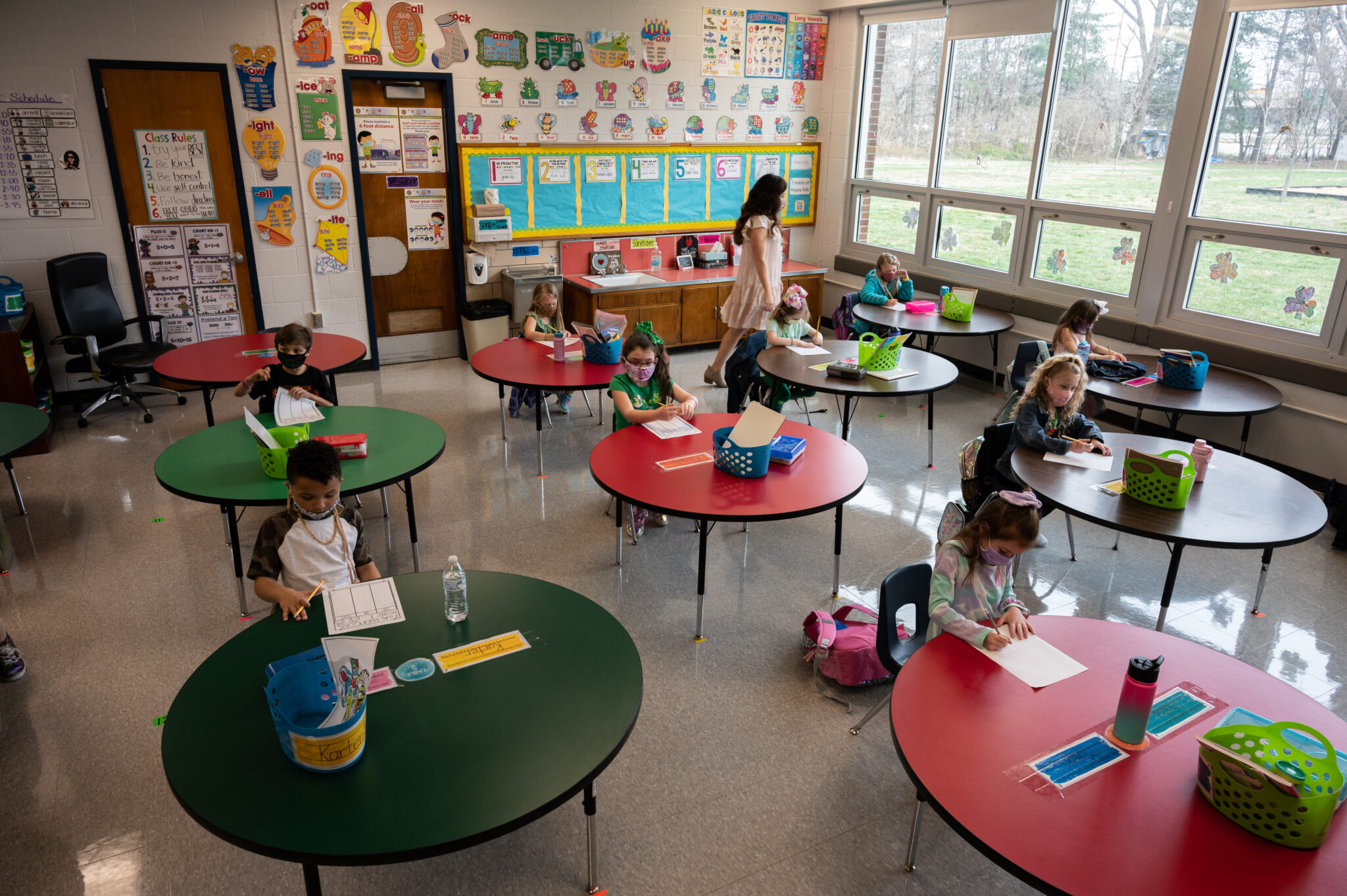
    The pandemic brought school closures, virtual learning, a scramble to decide whether testing made sense among uncertain learning environments, and a reckoning when it came to what kids really needed from their educational facilities.

    Amid the stress of teachers learning new roles, and parents learning what it takes to be a teacher, Collins saw the era as a point of hope, as a needed reflection period for policymakers and districts alike.

    “I saw it as a key moment where we could just blank-slate reset and think differently about our education system,” she said.

    Surely, she thought, the adaptation that students had gone through in their methods of socialization and learning will lead to changes in the way education is conducted. Surely things like student hunger and poverty that were so starkly spotlighted amid a global pandemic would stay at the forefront of the minds of leadership as they move forward.

    “My experience on the board, especially that first year, I was like ‘can we think differently, can we think about competency-based learning models, how can we meet their needs?’”

    As a member of the board, she was part of many discussions when it came to coming out of the pandemic and the needs of the education system. But those discussions didn’t go the way she’d hoped.

    “It was like the rush to return to normal was the sole focus, and that was coming straight from the statehouse,” she said.

    She wasn’t naive to the fact that the state Board of Education, whose candidates appear on nonpartisan ballots, had its conservative and liberal members. But discussions during the pandemic were markedly bipartisan, with some “more known conservative members” hearing the ideas of education reform related to pandemic-era impacts and thinking “maybe we should think differently,” according to Collins.

    “Coming out of the pandemic, this culture of kids has changed, and I don’t think that we’re focused on the right things to meet their needs,” she said.

    But the pressure coming from legislators was becoming too great for the board to fight.

    The tune coming to Collins and the rest of the board was the return of state testing and the return of “normal” in-person instruction, despite a years-long pivot to learning alternatives.

    “At no point did (the state) slow down and address how we’re throwing (the students) all back together,” Collins said.

    The legislature paused testing amid the pandemic, and policymakers sought to allow schools to move forward without reflection on the tests that were conducted, some through federal mandate, at least for a while. But as 2022 rolled around, the restart of testing became a discussion at the legislative level again, a decision Collins thinks should have been put on the back-burner a little longer.

    “That was a moment where we should have delayed, there should have been a bit longer before that happened again,” she said.

    Culture wars over change

    When the pandemic seemed to be in the rearview mirror, the board’s work didn’t slow down, instead shifting to an area Collins wasn’t quite expecting: culture wars.

    She hadn’t been fully caught off-guard when anti-racism resolutions brought white-hot debate to the board’s door, or when proposed Title IX language changes brought along talk of transgender rights in schools. Her seat on the board was barely warm when she started receiving emails accusing her of being anti-American and even socialist, all based purely on the fact that she was an educator, she said.

    But she was surprised to see such push-back on a non-binding resolution that sought to recognize disparate educational outcomes among students of different racial and socio-economic backgrounds.

    “I think I’m still a little shocked that in Ohio we’re at a point where we’ve had those kinds of culture war issues,” Collins said. “I don’t believe the majority of Ohioans want those issues to be at the forefront.”

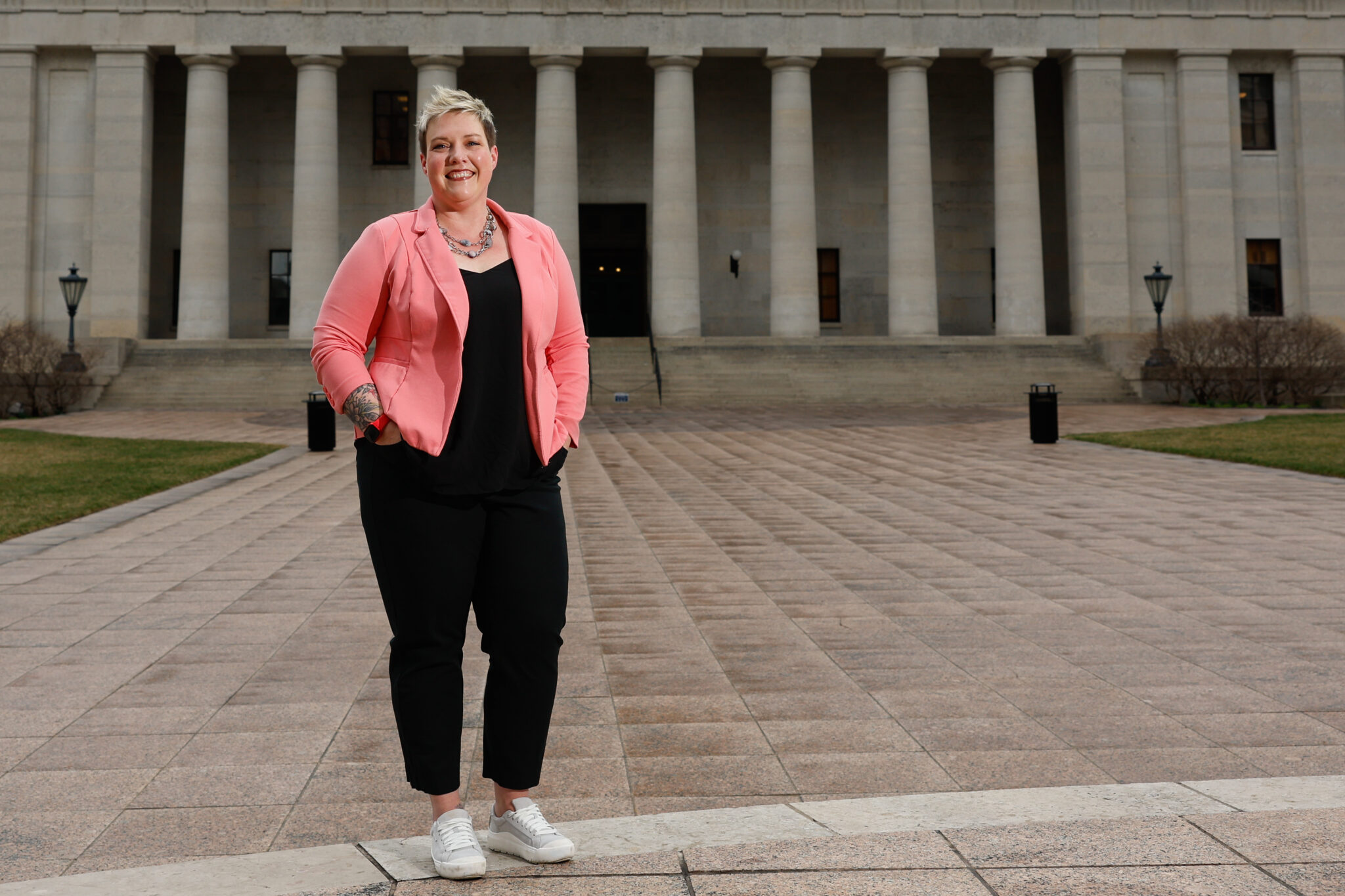
     COLUMBUS, OH — MARCH 05: Christina Collins, former State Board of Education member and currently the head of Honesty for Ohio Education a pro-public schools organization that testifies in favor of fair school funding, March 5, 2024, outside the Statehouse in Columbus, Ohio. (Photo by Graham Stokes for Ohio Capital Journal. Republish photo only with original article.)

    Having those issues, which Collins acknowledged weren’t necessarily within the board’s purview, become months-long debates with resolution approval, then reversal, meant other things that the board could have been doing within the education space weren’t seeing the light of day.

    “All of that was happening at the same time, which I think is how we lost that potential for change,” she said.

    A bigger change was headed for the board, that would remove many of its responsibilities, and cause a shift that would eventually convince Collins to move on.

    A bill had been floating in the Ohio legislature for more than a year. The more than 2,000-page policy would not only change the name of the Ohio Department of Education to the Ohio Department of Education and Workforce, but it would restructure the department to have two leaders under the umbrella of the governor’s cabinet, one for education and another for workforce.

    The ODEW would still include the State Board of Education, but board members would be mainly focused on teacher licensure, educator disciplinary actions and district territory disputes.

    State Sen. Andrew Brenner, R-Delaware, an ex-officio member of the board of education, was not the main sponsor of the bill, but pushed hard for it as chairman of the Ohio Senate Education Committee.

    Arguments were made that the board was ineffectual and inefficient. Collins sees no reason to place blame for the way the board has worked, but from her perspective, the board filters legislative measures to the local districts as another cog in a wheel that needs improvement.

    “The board’s seeming inability to get things done – which I don’t believe, but the rhetoric around it – I think that’s a reflection of what our local districts are dealing with because they are struggling to implement all of the things,” Collins said.

    During committee hearings on the bill, members of the state board, including Collins, submitted testimony against the changes, saying putting the leaders under the governor’s cabinet would decrease the level of accountability they could have to districts and voters.

    Collins brought up the many mandates under which the board had guided local districts, and the source of any and all of those mandates.

    “These were all legislated efforts, but you’re still saying our schools are failing,” she wrote in her testimony. “I ask, who holds this (General) Assembly accountable when the unending educational initiatives it doles out do not work?”

    The overhaul of the ODE did not play out in the first General Assembly in which it was introduced, but shortly after a new General Assembly came to work, the push for Senate Bill 1 and the changes to the department were introduced again.

    Teachers unions, board of education members and advocacy groups alike all came out in opposition to the bill, representing hours of testimony in committee. Supporters of the bill included the Ohio Chamber of Commerce.

    The bill passed the Senate last March, but it wasn’t until it was inserted into the state budget in the summer of 2023 that it saw full passage.

    Collins was one of a number of board members who signed a letter asking Gov. Mike DeWine to line-item veto the changes to the state board’s roles in the budget document.

    “From my experience being on the board, I think the way that (SB 1) was shoved through and how it was shoved through and when it was shoved through was a little bit unbelievable,” Collins told the Capital Journal. “Something that had essentially stalled in process was added (to the budget) and pushed through the way it was, and then that quickly it was (passed).”

    Honesty for Ohio Education

    As the board faced drastic legislative changes and a significant reduction in the authority it held, Collins started to wonder if being a member would help her make the most change, something she says she looks for in any career move she makes.

    Armed with a superintendent’s license, she debated going back into schools. Ultimately, the departure of Honesty for Ohio Education’s executive director at the end of 2023, and the fact that she’d just had a baby that November made Collins reflect on all the aspects of education and the changes needed.

    “It’s a scary time as a parent, it’s a scary time for education,” she said. “I’m worried about my own kids, I’m worried about everyone else’s kids.”

    As a staunch supporter of public education, the changes being made on a state level with the transformation of the ODEW and the implementation of near-universal private school vouchers made her nervous about the future of her chosen field.

    But like the times with her grandfather years ago, the connection between education and civic duty floated to the top of her mind.

    “On a grander scale, I’m really, really, really worried that we’re losing our democracy, and for me education and democracy are in this reciprocal relationship,” Collins said.

    Honesty for Ohio Education started in 2021 as a reaction to “critical race theory” bills that sought to keep children from learning the connection between race and American history, with claims that the bills would protect children from feeling guilt for history.

    The group started small, but as they began testifying against CRT bills, among others, the group’s numbers grew, and now the coalition “has outgrown itself” from its nascent days, according to Collins.

    “That’s a response to the attacks on education, it’s the attacks on LGBTQ+ kids, it’s the attacks on multi-racial education, it’s the attacks on honest history,” she said. “All of that … has created this avalanche with Honesty where we’re at this influx, where we have to decide how we step into adulthood, essentially.”

    But as the coalition makes its next moves, Collins said it plans to stay focused on things like state curriculum, fights against book bans and how schools can work better, even for the 10% of students outside of the public school system.

    “It’s not just public education … it’s about the kids everywhere in any educational environment who deserve to be safe and have honest and diverse, inclusive education,” Collins told the Capital Journal.

    The coalition focuses on content in schools, but Collins said the ability for school districts to succeed certainly comes down to how well they’re funded and supported by state and local sources.

    Public education is a “common good” for Collins, and that means the 90% of Ohio children in public education should be taken care of in the way the Ohio Constitution dictates. For public education unions, advocacy groups and for Collins, that includes full implementation of the Fair School Funding Plan.

    That reform of the state’s public school funding model emphasizes a formula based around the needs of individual school districts, to allow schools who have more need than others to build up their performance.

    The plan as it is now began it’s push through the legislature in August 2020 but negotiations and the hesitance of legislative leaders like Senate President Matt Huffman to push out the entire $10 billion per year plan in one shot led to a six-year phase-in. The plan is currently up to about 66% implementation.

    Meanwhile, however, the General Assembly fully funded what amounts to a near-universal private school voucher program in the last budget cycle, allowing students in what are considered under-performing public school districts to leave and take state-funded scholarships with them to nearby private schools if their household income is up to 450% of the federal poverty level, or $135,000 for a family of four.

    “When we pass universal voucher bills that give more money to students when they leave the school than a lot of the schools receive for that student, that’s a sign of the value that at least our legislature places on public education kids,” Collins said.


    Susan Tebben
    SUSAN TEBBEN

    Susan Tebben is an award-winning journalist with a decade of experience covering Ohio news, including courts and crime, Appalachian social issues, government, education, diversity and culture. She has worked for The Newark Advocate, The Glasgow (KY) Daily Times, The Athens Messenger, and WOUB Public Media. She has also had work featured on National Public Radio.

    MORE FROM AUTHOR

  • [VIDEO INTERVIEW] Ben’s Way a new initiative of the Ben Morrison Fund

    [VIDEO INTERVIEW] Ben’s Way a new initiative of the Ben Morrison Fund

    David Miller is the Managing Editor of Loveland Magazine

    Listen to the emotional account as Tori Morrison tells you how she finally summed up the emotional courage to meet the man who received Ben’s liver and kidneys

    by David Miller

    On September 22, Tori Morrison and Kate Jackson came to the LOVELAND MAGAZINE TV studio at the Simpson Farmhouse to talk about a new initiative of the Ben Morrison Fund. Morrison is the President and Treasurer of the Fund and Jackson is a member of the Board.

    The fund was established after Morrison lost her son Ben and his battle with his hidden mental health problems. Ben took his life by suicide in 2021. To honor Ben and help erase the stigma of pain and struggles with mental health, the fund was established to fight for others and fight against that stigma to help make sure no one feels alone.

    __________________

    “Ben’s continuing legacy will not be one of loss, but as a lifesaver through organ donation, as a loyal friend and stalwart teammate and a man of deep compassion for others.  His legacy will go on through the Ben Morrison Fund and through those of us who serve that cause and carry him with us to take care to light the way out of darkness for others and spark hope to always continue your story.”

    __________________

    The Ben Morrison Memorial Fund is committed to providing scholarships to graduating seniors from Loveland High School. They are dedicated to erasing the stigma of mental health struggles, opening conversations, and offering lifelines to help save the lives of young people in crisis.

    The Ben Morrison Memorial Fund is a 501(c)(3) nonprofit organization.

    In this interview, my guests will tell you about Ben and the life of giving and kindness he led, most of it not obvious to his mother Tori. She tells how “onery” Ben could be, typical of teenagers not allowing parents to know their true selves.

    Tori tells you that when Ben got his driver’s license she encouraged him to sign up to be an organ donor and asked him if he would. Ben would never answer her, his cantankerous nature was a tease. Tori and Ben’s father never knew he had signed the form until in the hospital after Ben took his life they asked them if it would be OK to harvest some of Ben’s organs. Realizing then that to their surprise Ben wanted that too, without hesitation they agreed.

    Listen as Tori reveals for the first time how the donor process works and how she became emotionally strong enough to agree to meet the man who received Ben’s liver and kidneys.

    Tori has now determined, because of the suggestion by Kate, that the current Loveland High School students don’t know what attributes Ben had that so enamored his class and teammates to him, and Ben’s Way would be a good vehicle to keep his legacy alive.

    • Ben spoke up for others.

    • He was unselfish.

    • A leader, and protector.

    • A young person who led by example and modeled hard work and resilience.

    • Ben treated others with acceptance, kindness, and encouragement.

    These attributes were revealed to them through the applications and actual words of the students who applied for the 21 scholarships the fund has awarded. Kate tells a story about being inspired after witnessing a young student one day that reminded her of Ben in the kind way he was treating a “special needs” child. Kate says, “Well number one, this is something Ben would do, and number two, this child should be recognized for doing something so positive in a world that’s not always so positive.” The child had done something, Ben’s way.

    Watch Tori and Kate tell you how Ben’s Way will transform life and lives at Loveland High School.

    __________________

    Ben may have been one of those unrecognized/uncounted victims of the COVID-19 Pandemic

    Covid was hard for Ben, as for all those seniors. He didn’t get his final lacrosse season, prom, graduation, or grad parties, and life changed in so many ways.  He didn’t know what his next chapter should be. But later that year, he decided to become a Firefighter and go to community college. He didn’t get to start those chapters. For some reason we will never know, maybe a bad day, a moment of self-doubt, an offhand comment that cut too deep, some inner turmoil or unspoken conflict, our Ben, a boy who never expressed depression nor showed signs of any form of struggle with mental illness, was suddenly and without explanation gone from our lives forever.

    __________________

    Kate Jackson was a football “Team Mom” and her son was a teammate of Ben when they played for Loveland High School. Ben also competed in lacrosse. Jackson said, “Ben was an important part of my son’s life and an important part of my life and Tori became likewise an important part of my life.”

    ______________

    Become a Ben’s Way Sponsor

    As a sponsor of Ben’s Way, you will help us bring this initiative to more schools. Students that are chosen will receive a $25 gift card.

    if you would like to sponsor Ben’s Way at a school, or you would like to bring Ben’s Way to your school, please send an email to BensWayInitiative@gmail.com

    On Saturday, September 29 Cappy’s Wine and Spirits is hosting a fundraiser for the Ben Morrison Fund featuring the Chuckies in Love band playing the “ultimate throwback tunes, bringing you the iconic sounds of the 70s & 80s”.

    Watch Chuckies in Love…

    Become a Ben’s Way Sponsor

    As a sponsor of Ben’s Way, you will help us bring this initiative to more schools. Students that are chosen will receive a $25 gift card.

    if you would like to sponsor Ben’s Way at a school, or you would like to bring Ben’s Way to your school, please send an email to BensWayInitiative@gmail.com

    Follow the Ben Morrison Memorial Fund on Facebook

  • Federal Government to End SNAP Emergency Allotments After February

    Federal Government to End SNAP Emergency Allotments After February

    Ohio Department of Job and Family Services (ODJFS) Director Matt Damschroder has announced that changes in federal law mean that February will be the last month of emergency Supplemental Nutrition Assistance Program (SNAP) allotments. These are extra monthly payments the federal government created in response to the COVID-19 pandemic. In general, it ensures all households receive the maximum allotment for their household size. Beginning in March, recipients will receive only their one, normal monthly payment.

    Here are examples of how the change will impact people:

    • Individual normally entitled to the minimum allotment of $23 per month has been receiving an additional $258 per month to receive the maximum allotment of $281.
    • Household of 3 normally entitled to $180 per month has been receiving an additional $560 per month to receive the maximum allotment of $740.
    • Household of 4 normally entitled to $939 per month (maximum allotment) has been receiving an additional $95 per month, for a total of $1,034.

    “Recently passed federal legislation is bringing the temporary SNAP allotment to an end after February,” said Damschroder. “We will be communicating to recipients, county agencies, and our partners such as foodbanks, that normal SNAP payment will resume in March.”

    The Supplemental Nutrition Assistance Program is a federally funded program meant to supplement the food budget of families in need so they can purchase healthy food and move towards self-sufficiency.
    Eligibility, as well as the normal monthly allotments, vary based on factors such as income and household size.

    The Families First Coronavirus Response Act allowed states to request emergency allotments for households participating in SNAP. As a result, ODJFS has been providing emergency allotments to SNAP households since March 2020. Congress recently passed the Consolidated Appropriations Act of 2023, which ended the program.

    The federal announcement means the last emergency allotment will be paid in late February, and beginning in March, recipients will receive only their one, normal monthly payment, which is typically loaded onto an electronic benefits card. As this is a federal change, there are no fair hearing rights or fair hearing benefits on the ending of the SNAP emergency allotments.

    Recipient can manage their benefits by going to https://benefits.ohio.gov/ or by contacting their county Department of Job and Family Services (JFS).

  • Study shows Ohio K-12 teacher burnout rates higher than any other industry

    Study shows Ohio K-12 teacher burnout rates higher than any other industry

    BY: SUSAN TEBBEN – Ohio Capital Journal


    Ohio educators say burnout is real, but with pending legislation regulating lesson-plan choices and security roles in schools, they feel “demoralized” as well.

    A national survey showed 44% of K-12 teachers in the U.S. “always” or “very often” feel burned out, a stat that has surpassed other industries.

    The Gallup poll showed more than 4 in 10 K-12 workers felt that way, topping college/university employees, retail workers and the government/public policy industry in the survey, conducted in February but released this week.

    Researchers found that K-12 workers have “consistently” been leaders in burn-out in the country, but the COVID-19 pandemic “exacerbated existing challenges,” while also introducing new ones.

    Female teachers reporter higher burnout levels than male teachers, at a split of 55% to 44%.

    “The result is a workforce that is burned out and unfortunately leaving the profession at a high rate,” according to the Gallup poll.

    Those who teach in Ohio agree that the increased workload has taken its toll, but to also see mounting legislation regulating their careers and what they see as a continued lack of appropriate support from the state adds a new amount of weight to educators’ shoulders.

    “When you talk about burnout, you’re talking about when you’ve extinguished a flame,” said Wendi Davis, band director and music teacher at Cory-Rawson Local Schools in northwest Ohio. “Teachers, they love what they do, and when they’re put in situations like what they’re dealing with right now, it’s more demoralization than burnout.”

    Teachers have had to don ever-multiplying caps: as teachers, as standardized test guides, as social workers and as guidance counselors. Faced with all those issues already, teachers then faced a pandemic, according to Shari Obrenski, president of the Cleveland Teachers Union.

    “What the pandemic did was essentially lay bare all of the problems that existed in education,” Obrenski said. “More and more is being put on (a teacher’s) plate and nothing is being taken off.”

    When pandemic learning is combined with legislation currently being considered in the Ohio legislature that would dictate the subjects that teachers can discuss, and a recently passed and governor-signed law that allows teachers to carry weapons in school, Obrenski said educators get pushed to their limits.

    That is, the teachers that are still there. Cleveland is short about 200 teachers going into the new school year, not to mention the ongoing shortage of substitute teachers, in the hundreds as well.

    “And we’re not as bad off as other districts,” Obrenski said.

    As school districts struggle to recruit and retain teachers and substitute teachers, teachers also struggle to be heard in their own districts and in their state government.

    “Teachers need to be empowered at the local level by their administrators,” Davis said. “They need to have a voice at the table.”

    Paying teachers more and funding schools in a way that supports the role they play is definitely a need, according to Obrenski, but so, too, is respecting teachers as professionals in order to keep them in schools.

    “Something that is really important is a teacher’s voice in decision-making; Having teachers be part of the solution instead of condemning them as part of the problem,” Obrenski said.

  • Trailside Provisions; a little “pop” of Loveland paradise!

    Trailside Provisions; a little “pop” of Loveland paradise!

    Sean Behling
    Sean Behling

    by Sean Behling

    Loveland, Ohio – Loveland is known for many unique and authentic experiences! People from all over Cincinnati come down to the “Sweetheart of Ohio” just to experience the local delicacies Loveland has to offer. One shop located right off the Loveland Bike Trail specializes in all things homemade and local, encompassing what Loveland is really all about. 

    Introducing Trailside Provisions; a little pop of Loveland paradise!

    Trailside Provisions is a family-owned store that specializes in homemade treats and features local vendors’ handcrafted products. Trailside opened in Loveland two and a half years ago, in a more expansive location after operating in Mason for 13 years. Owner Vickie Larcomb has an extensive background in the food industry, as she grew up in her family’s butcher shop. 

    “I’ve always been in the food business. I was a caterer and grew up in my family’s butcher shop. We were just looking for something that there wasn’t. There was not a popcorn shop, nor was there a chocolate shop in Mason, so that’s where we started and we just kept getting bigger.”

    After working in the food business for such a long time, Larcomb wanted a shop of her own. She said, “Instead of running around catering for others and planning events, doing everybody else’s stuff, I wanted my own place.”

    After looking for a market in Mason that didn’t exist, she settled upon owning a shop that sold popcorn and sweets, opening Main Street Sweets and Popcorn in 2006. Though it was tough to start her business in Mason, she kept adapting and growing further and further. After 13 successful years, Main Street Sweets and Popcorn closed in Mason, reopening as Trailside Provisions in a larger building here in Loveland.

    “You know, whenever you start, not everything works, and we had to make changes and adjustments as we went along, so it made it easier when we made the change from Mason to Loveland because we already had 13 years behind us in this business,” said Larcomb.

    Unfortunately, the COVID-19 pandemic started flaring up after Trailside Provisions had only been in business for two months. However, Larcomb managed to keep the business running using an online order system through Facebook. Larcomb established “pickup days” outside of the storefront, which carried Trailside through until its full reopening in late May of 2020.

    Larcomb said, “The pandemic hit us a little differently because we had only been open 2 months before it hit. So we were open for 2 months and then closed down. But, Loveland being Loveland, we did Facebook business.”

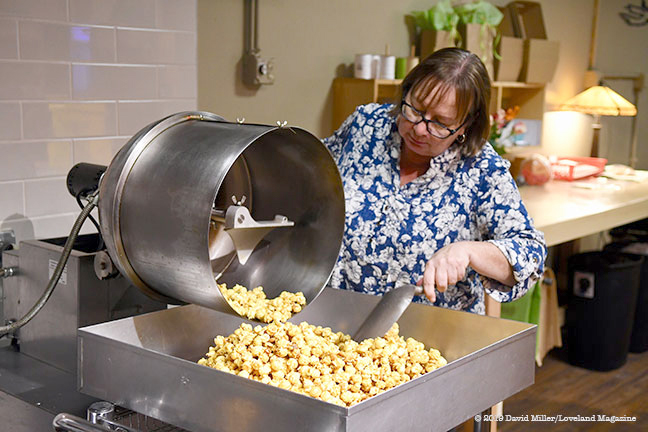
    When I arrived at Trailside Provisions, Larcomb was hands-deep in chocolate preparing treats for the Easter season, which only enticed me more about what the local shop had to offer. Trailside Provisions is most well known for its delicious selection of chocolate treats, and scrumptious array of gourmet popcorn. Their most popular popcorn is the caramel corn, which Larcomb makes fresh and serves warm every day. Luckily I got the opportunity to personally try Trailside’s caramel corn, and I found it to be a delectable combination of sweet and salty.

    Trailside Provisions is also known for its locally sourced products. The shop carries Wolf’s Honey Bee Farm honey from Goshen, Thomas Ireland Smith Farm maple syrup from Morrow, La Crema Coffee Company coffee from West Chester, and The Jam and Jelly Lady jams and jellies from Lebanon just to name a few.

    “When you start with one local product, they talk to you about somebody else that they know. It’s sort of like a network”, said Larcomb.

    To my surprise, Trailside Provisions not only sells local businesses’ products, but they also sell small businesses’ products from all over the country.

    “What other things we buy we try and buy from small businesses, women-owned businesses, and family-owned businesses from across the country. So we’ve got stuff from the East Coast, West Coast, North and South,” said Larcomb.

    On top of supporting small businesses from all over the country, Trailside Provisions also plays a part in many community events. Whenever there is a City or Chamber of Commerce event or fundraiser, you can be sure that Trailside Provisions will participate. On top of that, they also help with other events as well, such as giving out samples and holding giveaways at events to lend a helping hand to the people running them.

    Larcomb is always trying to find new products to add to her shelves, scouring food shows looking for great new products to sell. Not only is she always searching for new local products, but she’s always coming up with new and interesting popcorn recipes to line their shelves as well. Soon, they’re planning to roll out a seasonal assorted mix of glazed popcorn to celebrate Easter.

    “So I went to a food show in January, found new things and they’re starting to come in now. We found a few new things that will go with what we have here, and we’ll just keep adding to it as long as I’ve got room,” said Larcomb.

    Trailside Provisions is located at 120 Karl Brown Way, Loveland, OH 45140, and is open from 10 AM until 6 PM on Tuesdays, Wednesdays, Thursdays, and Saturdays, 10 AM until noon on Fridays, and noon until 5 PM on Sundays. 

    If you’re craving some delectable local treats, head on down to the Loveland Bike Trail to taste and see what Trailside Provisions has in store for you.

  • Ohio Hospital Association and Ohio Children’s Hospital Association ask schools to implement a masking requirement after holiday break

    Ohio Hospital Association and Ohio Children’s Hospital Association ask schools to implement a masking requirement after holiday break

    Getty Image

    “As we have learned during the past two years, things shift quickly with COVID-19.”

    – Ohio Hospital Association and Ohio Children’s Hospital Association

    Today, the Ohio Hospital Association also distributed a letter from the Ohio Hospital Association and Ohio Children’s Hospital Association to Ohio school superintendents, administrators, and school board members encouraging them to implement a masking requirement when students return from the holiday break.


    Dear School Superintendents, Administrators and School Board members: 

    Each of you has done a remarkable job in the face of the COVID-19 pandemic, working hard each day to keep your students safe and in school. We recognize the importance of in-person learning for the cognitive, social, and emotional development of our children, and share your belief that the best place for kids is in school, full-time, in the classroom learning with their peers.

    As we have learned during the past two years, things shift quickly with COVID-19. Today, we are faced with a new variant, Omicron, which is more contagious than previous variants. This variant is spreading rapidly through Ohio and is expected to become the dominant variant within the coming weeks. In other parts of the country, where Omicron already has spread rapidly, pediatric hospitalizations have spiked. In New York City and the surrounding areas, pediatric hospitalizations jumped by 395% during December.

    With adult hospitalizations already nearing an all-time high, and the positivity rate for those being tested for COVID-19 nearing 25%, we are reminding all Ohioans of the severity of our current situation.

    The best protection against developing severe illness from COVID-19, for both school-aged children and adults, remains getting vaccinated. While younger, school-aged Ohioans continue to get vaccinated, it is critical that we keep following protocols to protect students, teachers, staff, and their families at home. To those of you who are continuing to require masks in school – thank you. This simple step is one of the best ways that we can slow the spread of the virus. To those who do not currently have a mask requirement, we respectfully ask that you consider one as your students return after holiday break. Health experts around Ohio have recommended Ohio schools have masking policies until more students get vaccinated, and that remains their recommendation as students return to school next week. This is even more urgent now because of the rapid spread of the Omicron variant.

    We know that the virus that causes COVID-19 is spread when you cough, sneeze, talk, or sing. We know that masks work and are effective at slowing the spread of this virus. The best way to keep kids in school is to slow the spread of the virus. The best ways to slow the spread of the virus are to get vaccinated and wear a mask.

    Even students who are asymptomatic or who have relatively mild symptoms have the ability to spread the virus to others. Their fellow students might then carry the virus home, spreading it to brothers and sisters, parents, and grandparents. If those family members are unvaccinated, they are at risk for severe illness and hospitalization while vaccinated family members can remain confident that their risk of severe illness is low.

    Our healthcare system already is taxed, with one out of every four patients in the hospital with COVID-19. We’re fighting hard to save their lives, while treating other Ohioans who need our help, like children with broken bones, people suffering from strokes, or those needing emergency care after a car accident. We can’t do this alone. With Omicron spreading quickly through Ohio, we need everyone’s help to make it through the coming weeks. Please help us by requiring students to wear masks when they return to school.


    Meanwhile from December 19 in Loveland…

    Superintendent announces new mask policy

  • As if COVID wasn’t bad enough, experts warn of lingering symptoms

    As if COVID wasn’t bad enough, experts warn of lingering symptoms

    BY: MARTY SCHLADEN –  Ohio Capital Journal

    With nearly 5,000 new cases of COVID per day, Ohio and the rest of the world are still dealing with a pandemic that started nearly two years ago. What we’ve barely begun to deal with, two experts said last week, is the long hangover many experience as “long COVID.”

    That expression refers to a set of symptoms that linger for months after a person is infected with coronavirus. They include maladies of the lungs, heart, eyes, liver, brain, bladder, kidneys and pancreas. They also include problems of a less tangible nature, such as a loss of smell, chronic brain fog, headache and fatigue.

    And, according to an October study published by the Journal of the American Medical Association, many, many people are likely affected by long COVID. The review of 57 studies found that more than half of the coronavirus patients followed were still suffering from symptoms of long COVID more than six months after they were infected. 

    With 78% having been hospitalized with COVID, that group appeared to have suffered worse infections than did the general population. Conversely, people who are fully vaccinated are far less likely to be hospitalized, and 49% less likely to develop long COVID, according to a study conducted in the United Kingdom.

    Even so, the consequences of the condition are likely to be huge.

    Ohio, for example, has seen more than 84,000 COVID hospitalizations, so it seems plausible that well over 40,000 Ohioans have suffered — or are still suffering — long COVID.

    Nationally, “you’re talking about 30, 40, 70 million people,” Brett Giroir, who early in the pandemic was assistant secretary of the U.S. Department of Health and Human Services, said last week during a webinar organized by the National Institute for Healthcare Management Foundation. 

    As they were during the early days of the pandemic, policy makers are groping for ways to deal with long COVID without much in the way of scientific information to work with so far.

    “We’re unfortunately dealing with from a position of a real lack of knowledge,” Walter Koroshetz, director of the National Institutes of Health’s Institute of Neurological Disorders and Stroke, said during the webinar.

    “We’re really trying hard to understand what is the biological basis for the problems that people are experiencing and hoping to get some answers very quickly that can then be used to help patients,” Koroshetz added.

    Giroir now is working with the health consulting firm Leavitt Partners on several issues, including problems related to the pandemic. He offered a broad framework for dealing with long covid.

    “How do we organize the healthcare sector” in response to long COVID? he asked. “Do we have long COVID clinics. Do we have telehealth triage? How do we care for this 30 to 50% of 140 million people who potentially have long COVID?”

    Giroir is proposing several steps to deal with the issue. Among them are helping medically underserved populations through grants to federally qualified health centers and primary-care practices, a national survey on the condition and by working to raise public awareness of it.

  • Ohio gov thinks a law is making kids sick and says it’s unconstitutional. He won’t challenge it

    Ohio gov thinks a law is making kids sick and says it’s unconstitutional. He won’t challenge it

    DeWine spokesman says risks are too high

    BY: MARTY SCHLADEN and Ohio Capital Journal

    Some are questioning Gov. Mike DeWine’s sincerity when he says he’s doing all he can to fight the spread of coronavirus among children.

    DeWine and the leaders of children’s hospitals are in a panic over the lack of masking in Ohio schools. Hospital admissions of children with covid are up 536% since July and the hospitals report that they’re being overwhelmed by the surging delta variant and an unusual jump in other respiratory illnesses.

    [Watch video] Ohio Children’s Hospital leaders briefing for school administrators –…

    DeWine and the hospitals are pleading with local school officials to enact their own mask mandates because DeWine says his hands are tied by Senate Bill 22 — a law the GOP-controlled legislature passed in March over his veto. 

    It circumscribes the governor’s ability to issue health orders such as his 2020 statewide mask mandate by limiting them to 30 days. After that, the legislature would have to sign off in order to continue them.

    Asked on Tuesday why he wouldn’t impose a mask mandate as a temporary measure, DeWine said he didn’t want to muddy the issue.

    “All that will do is cause a great deal of confusion and then I think people would say, ‘Well there’s no mandate on, there’s no requirement on, we can go back, there’s really no reason to keep masks on,” the governor said. “I’m afraid what would happen is we would slide backwards, we would go the wrong way.”

    However, some noted that when SB 22 was passed, the governor, who is a lawyer, didn’t believe it would stand up in court.

    “Lots of talk out there excusing @GovMikeDeWine‘s refusal to issue a school mask mandate,” Katie Paris, founder of the group Red Wine and Blue, tweeted. “His hands are NOT tied. He could issue a mandate today and if the legislature fights it, he could take them to court.”

    She followed up with a thread that included the statement DeWine issued when he vetoed SB 22.

    “We believe that significant portions of SB 22 are unconstitutional,” the statement says. “Parts of the bill violate the separation of powers doctrine embedded in our Ohio Constitution; other parts violate Article II, Section 15 of the Ohio Constitution, proscribing how laws must be made; and even other parts of the bill likely violate Article IV, Section 5 of the Ohio Constitution, by exercising power reserved to the judiciary.” 

    Loveland School Superintendant Mike Broadwater

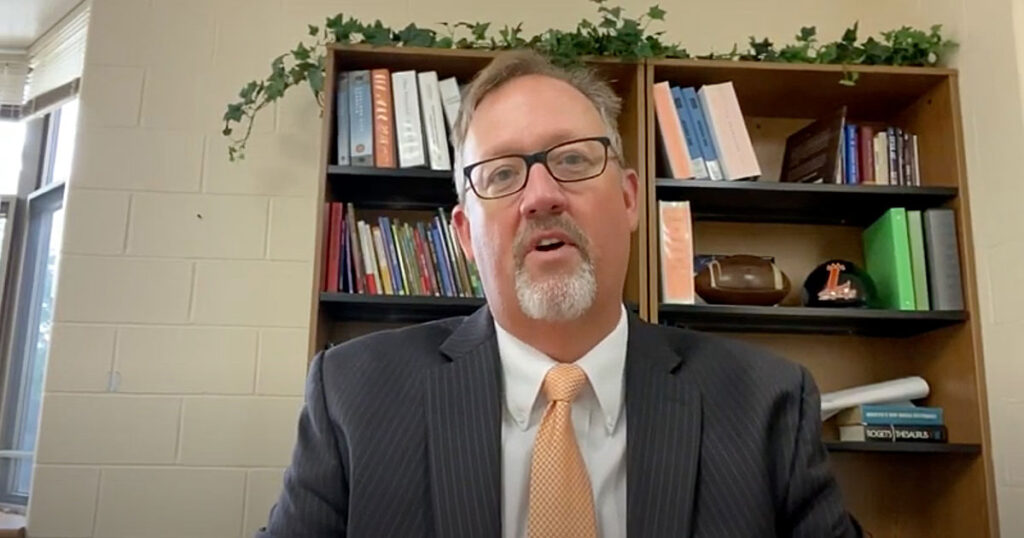
    Loveland School Superintendant Mike Broadwater told Loveland Magazine on Thursday, “It is unfortunate that Governor DeWine no longer has the power to issue health orders that would put every school district across the state in the same situation if that’s what he feels is best. But by leaving it to local control, he’s allowing each district to make the decision that fits best for their community.”

    The current policy of the Loveland City School District is that students in grades PreK-6 are required to wear a mask indoors. Students in grades 7-12 do not have to wear face coverings. All others, while in the buildings must wear masks.

    The Legislative Service Commission also questioned the legality of a draft of the bill, writing that it “might be vulnerable to a constitutional challenge on the grounds that the legislature cannot take such an action by resolution.” But for some reason, it was dropped from the final version of the bill, which was otherwise unchanged.

    Asked why DeWine doesn’t just impose a mask order and fight it out in court, Press Secretary Dan Tierney on Wednesday said it was too risky.

    “Somebody who’s advocating for that is hoping that a judge puts on an immediate restraining order that would allow (the mask mandate) to continue, but you also have to weigh the chance that a judge could rule the other way: that the legislative recision is perfectly valid,” Tierney said.

    He added that DeWine’s current approach — persuading local officials to put on their own mask mandates — is making rapid progress. The portion of students in schools with mask mandates has jumped from 35% on Sept. 1 to 54% on Tuesday, Tierney said.

    “We went from a little over a third to a little over a half of students being in a school where everybody wears a mask in less than two weeks,” he said.

    But while DeWine is blaming the GOP supermajority in the legislature for sapping his ability to fight his coronavirus, on Wednesday he signed off on legislative maps that would preserve that supermajority. Even as DeWine helped to approve the maps, he questioned whether they would survive a court challenge, Gannett journalist Haley BeMiller reported.

    The move by DeWine — who has also criticized President Joe Biden’s vaccination-or-test mandate — prompted a blast from John Hagner, campaign manager for Dayton Mayor Nan Whaley, who is seeking the 2022 Democratic gubernatorial nomination.

    https://twitter.com/JHagner/status/1438485210811748356

    “Mike DeWine on Tuesday: the gerrymandered Republican supermajority is keeping me from protecting kids and keeping them in school,” Hagner tweeted. “Mike DeWine on Wednesday: ok, let’s have four more years of an even more gerrymandered Republican supermajority.”

    Reporter Jake Zuckerman of the Ohio Capital Journal and David Miller, Editor of Loveland Magazine contributed to this rstory.

  • Ohio kids’ COVID-19 cases overtake other age groups

    Ohio kids’ COVID-19 cases overtake other age groups

    BY: JAKE ZUCKERMAN and Ohio Capital Journal

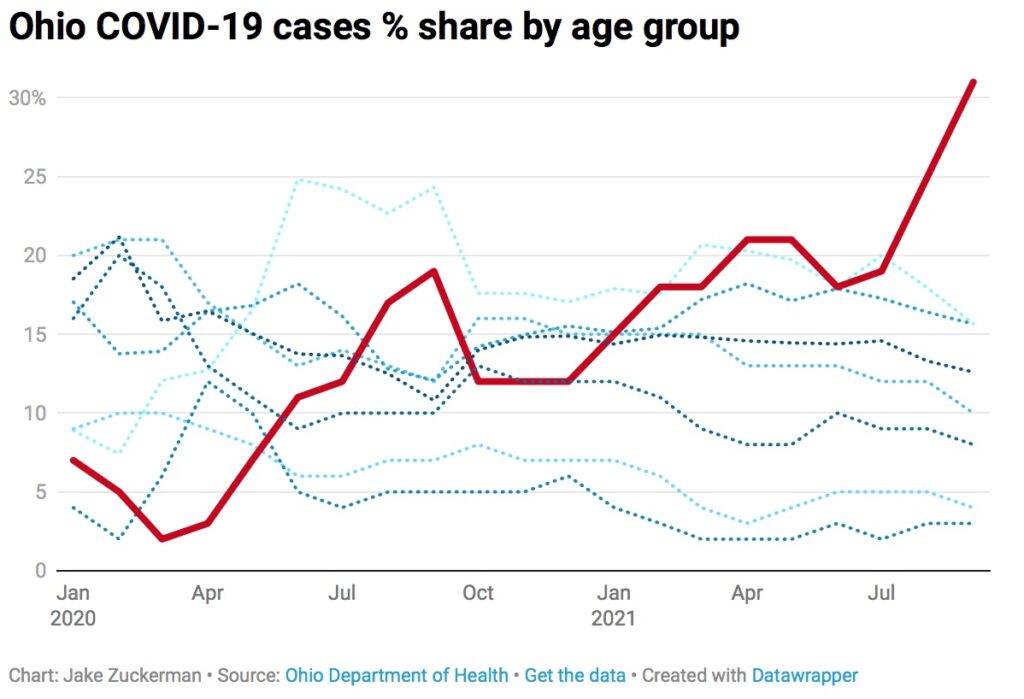
    Ohioans 19 and younger are now driving the state’s COVID-19 pandemic, comprising a larger share of cases than any other age group.

    Roughly one in three people who have contracted COVID-19 this month are 18 or younger, according to an analysis of state data. Those aged 20-29 are the next most prevalent cohort, comprising 16% of the month’s cases.

    This comes as many schools struggle to remain open amid spiking infection and quarantine rates of students, and children’s hospitals raise the alarm about strained capacity.

    At Akron Children’s Hospital, roughly 12-15 kids are being hospitalized with COVID-19 per day, according to remarks from hospital CEO Grace Wakulchik at a press briefing by members of Ohio’s children’s hospitals. At Nationwide Children’s Hospital in Columbus, 26 kids are hospitalized with the disease. Nine are in intensive care, including five on ventilators.

    Several children’s hospital administrators warned Tuesday of increasingly fatigued staff and crowded facilities.

    “The delta variant is not only more contagious, it is impacting kids in a fundamentally higher level than we’ve seen to date,” said Nick Lashutka, CEO of the Ohio Children’s Hospital Association.

    Through most of the pandemic to date, adults 20- to 29-years old have driven the bulk of the COVID-19 caseload. Cases in children began to overtake their elder counterparts in July. Infections in September are twice as prevalent now among Ohio children as those in their 20s and three times as high as those in their 50s.

    The rising prevalence of cases in children is likely a reflection of a return to school, sometimes without masks depending on the school district. State officials have declined to impose any statewide mask mandate in schools. Additionally, children 12 and under are not yet eligible for vaccination.

    “It’s really clear to us as pediatricians that the risk of not wearing a mask if you’re a child in school is much greater than the risk of wearing a mask,” said Dr. Patricia Manning-Courtney, the chief of staff at Cincinnati Children’s.

    “For some reason, we’re prioritizing kids not wearing masks over kids not getting COVID.”

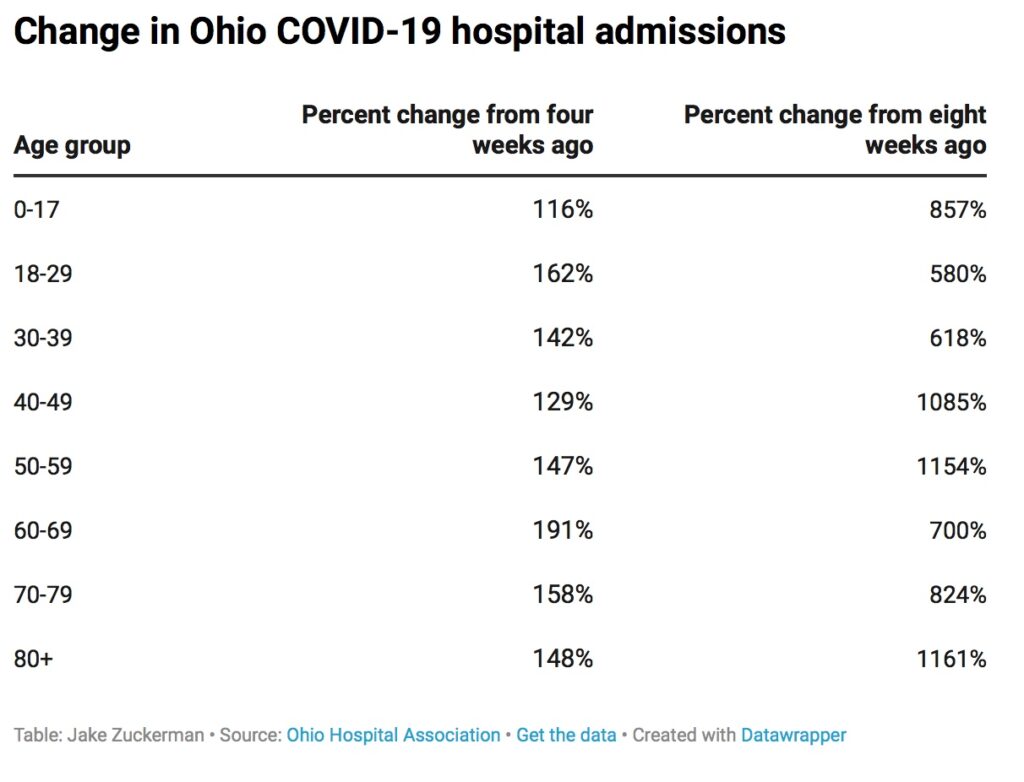
    Data from the Ohio Hospital Association shows COVID-19 hospitalizations among Ohioans 17 and younger has increased 857% over the last eight weeks.

    Alongside the kids, COVID-19 is surging in Ohio across all ages. More than 3,100 Ohioans are hospitalized with COVID-19, a rate not seen since January.

    New case rates, positivity rates on tests, total test and other indicators reflect a case surge as well.

    An analysis from Stat, a health news outlet, found Ohio ranks fourth among states in terms of how fast COVID-19 case rates are accelerating.

    Ohio has the 13th lowest vaccination rate of any state in the nation, according to a tracker from The New York Times.

  • FDA Authorizes Additional Vaccine Dose for Certain Immunocompromised Individuals

    FDA Authorizes Additional Vaccine Dose for Certain Immunocompromised Individuals

    Yesterday, the U.S. Food and Drug Administration amended the emergency use authorizations (EUAs) for both the Pfizer-BioNTech COVID-19 Vaccine and the Moderna COVID-19 Vaccine to allow for the use of an additional dose in certain immunocompromised individuals, specifically, solid organ transplant recipients or those who are diagnosed with conditions that are considered to have an equivalent level of immunocompromise. The Centers for Disease Control and Prevention’s Advisory Committee on Immunization Practices is scheduled to meet Friday to discuss further clinical recommendations regarding immunocompromised individuals. Today’s action does not apply to people who are not immunocompromised.

    Read more from the announcement…

    “The country has entered yet another wave of the COVID-19 pandemic, and the FDA is especially cognizant that immunocompromised people are particularly at risk for severe disease. After a thorough review of the available data, the FDA determined that this small, vulnerable group may benefit from a third dose of the Pfizer-BioNTech or Moderna Vaccines,” said Acting FDA Commissioner Janet Woodcock, M.D. “Today’s action allows doctors to boost immunity in certain immunocompromised individuals who need extra protection from COVID-19. As we’ve previously stated, other individuals who are fully vaccinated are adequately protected and do not need an additional dose of COVID-19 vaccine at this time. The FDA is actively engaged in a science-based, rigorous process with our federal partners to consider whether an additional dose may be needed in the future.”

    People who are immunocompromised in a manner similar to those who have undergone solid organ transplantation have a reduced ability to fight infections and other diseases, and they are especially vulnerable to infections, including COVID-19. The FDA evaluated information on the use of a third dose of the Pfizer-BioNTech or Moderna Vaccines in these individuals and determined that the administration of third vaccine doses may increase protection in this population. These patients should be counseled to maintain physical precautions to help prevent COVID-19. In addition, close contacts of immunocompromised persons should get vaccinated, as appropriate for their health status, to provide increased protection to their loved ones.

    It is recommended that immunocompromised individuals discuss monoclonal antibody treatment options with their health care provider should they contract or be exposed to COVID-19. The FDA has authorized monoclonal antibody treatments for emergency use during this public health emergency for adults and pediatric patients (ages 12 and older weighing at least 40 kilograms or about 88 pounds) with positive results of direct SARS-CoV-2 viral testing, and who are at high risk for progressing to severe COVID-19 and/or hospitalization. One authorized product includes use for preventative (prophylaxis) treatment after being exposed to SARS-CoV-2; however, this product is not a substitute for vaccination. 

    The Pfizer-BioNTech COVID-19 Vaccine is currently authorized for emergency use in individuals ages 12 and older, and the Moderna COVID-19 Vaccine is authorized for emergency use in individuals ages 18 and older. Both vaccines are administered as a series of two shots: the Pfizer-BioNTech COVID-19 Vaccine is administered three weeks apart, and the Moderna COVID-19 Vaccine is administered one month apart. The authorizations for these vaccines have been amended to allow for an additional, or third, dose to be administered at least 28 days following the two-dose regimen of the same vaccine to individuals 18 years of age or older (ages 12 or older for Pfizer-BioNTech) who have undergone solid organ transplantation, or who are diagnosed with conditions that are considered to have an equivalent level of immunocompromise.

    The EUA amendments for the Pfizer-BioNTech COVID-19 Vaccine and the Moderna COVID-19 Vaccine were issued to Pfizer Inc. and ModernaTX Inc., respectively.

    Related Information