Tag: COVID-19

  • Loveland Schools release COVID 19 up-date but won’t release the Pandemic Preparedness report

    Loveland Schools release COVID 19 up-date but won’t release the Pandemic Preparedness report

    On October 21 Loveland Magazine asked the Loveland school superintendent why they only release quarantine numbers on Fridays. She said that she has forwarded the question about quarantines and the procedures for sharing those on a single day to her health team. Loveland Magazine is awaiting the response.

    Loveland, Ohio – On Friday the Loveland School District published a new Covid-19 Data Up-Date even as in their Loveland Reopening Plan FAQs they continue to state:

    Is COVID-19 spreading in our schools?

    When positive cases have been reported to the district, there have been no instances of other students or staff becoming symptomatic or testing positive which means the virus is not being spread at school.

    And;

    What should I do if I’ve been told my child has been in close contact with someone who tested positive?

    Current Ohio Department of Health and Centers for Disease Control guidance calls for quarantine for 14 days for people who are in close contact with an infected person. Close contact is defined as being within 6 feet of a confirmed case for 15 minutes or more. Since students are not allowed to come to school when quarantined, we have grade-specific family and student instructions when quarantined information you can access here.

    And as;

    The Centers for Disease Control and Prevention (CDC) has updated language for the close contact definition, the Loveland School District continues to define “Close Contact” as being within 6 feet of a confirmed case for 15 minutes or more.

    Centers for Disease Control and Prevention (CDC) has new guidance clarifying what exactly “close contact” means when it comes to transmission of SARS-Cov-2, the virus that causes COVID-19. The previous guidance suggested that a close contact occurred when a person was within six feet of an infectious individual for 15 consecutive minutes. Now, the CDC is acknowledging that even brief contact can lead to transmission. Specifically, the new guidance suggests that those spending a total of 15 minutes of contact with an infectious person over the course of a 24-hour period should be considered in close contact. (Read full article)

    Close Contact as now defined by the CDC

    Someone who was within 6 feet of an infected person for a cumulative total of 15 minutes or more over a 24-hour period* starting from 2 days before illness onset (or, for asymptomatic patients, 2 days prior to test specimen collection) until the time the patient is isolated.

    * Individual exposures added together over a 24-hour period (e.g., three 5-minute exposures for a total of 15 minutes). Data are limited, making it difficult to precisely define “close contact;” however, 15 cumulative minutes of exposure at a distance of 6 feet or less can be used as an operational definition for contact investigation. Factors to consider when defining close contact include proximity (closer distance likely increases exposure risk), the duration of exposure (longer exposure time likely increases exposure risk), whether the infected individual has symptoms (the period around onset of symptoms is associated with the highest levels of viral shedding), if the infected person was likely to generate respiratory aerosols (e.g., was coughing, singing, shouting), and other environmental factors (crowding, adequacy of ventilation, whether exposure was indoors or outdoors). Because the general public has not received training on proper selection and use of respiratory PPE, such as an N95, the determination of close contact should generally be made irrespective of whether the contact was wearing respiratory PPE.  At this time, differential determination of close contact for those using fabric face coverings is not recommended.

    Quarantine is used to keep someone who might have been exposed to COVID-19 away from others. Quarantine helps prevent spread of disease that can occur before a person knows they are sick or if they are infected with the virus without feeling symptoms. People in quarantine should stay home, separate themselves from others, monitor their health, and follow directions from their state or local health department. (Source CDC)

    On Oct 15 Loveland Magazine asked Superintendent, Dr. Amy Crouse,”Can you tell me how the District is defining ‘Close Contact’ in the buildings, on buses, on athletic fields/athletic courts, or administrative offices?” We asked because the District moved to double the number of students in the classrooms in PK-8. Those schools returned to “full in-person” learning on Monday, October 12.

    Dr. Crouse responded, “The district maintains updated definitions and protocols on our website here:  https://www.lovelandschools.org/NewHealthProtocols.aspx. Contact tracing protocols do not change with a change in capacity. Those protocols still say, ‘Close contact is defined as being within 6 feet of a confirmed case for 15 minutes or more.”

    At the same time we asked the Superintendent to provide Loveland Magazine with the report “Pandemic Preparedness and Planning” that LJB Inc. prepared for the District. LJB was awarded a contract in July for $66,250 for “Pandemic Preparedness and Planning” services. The report was prepared under the previous CDC definition of “close contact”.

    Last Friday, following a Loveland Magazine editorial that criticized the Superintendent for not answering questions, not releasing COVID 19 quarantine data, and not releasing the LJB report, the District released a “Tiger Talk” that heavily relied on the LJB report to assure the public that the District is taking an appropriate response to the pandemic. 

    Loveland Magazine is still awaiting the LJB report and the explanation has been that it is the Business Manager’s office and Superintendent can not send it until he returns to work. Crouse sent our request for the public document to the Treasure who responded, “The documents that you are requesting are in the Business Manager’s office and he is currently out of the office. I will get them to you as soon as I can.”

    The report belongs to the public. District taxpayers funded the report and it will show what the experts recommended when they studied how many students and teachers should be in classrooms under the hybrid and full capacity models. Students, parents, teachers, staff, and the community have a right to know exactly how many students are not attending classes on a timely basis , what the quarantine guidelines are, and what the LJB report recommended at the time it was prepared .


    Tiger Talk

    News from Loveland Schools – October 23, 2020
    COVID-19 Communication

    Loveland Tiger Families,

    The decisions we are all tasked with during this difficult time provide no easy answers. We have provided weekly updates, while increasing our understanding of how this virus spreads and how to best protect the health and safety of our students, staff, teachers and community. We have many parents who have expressed their concerns about student safety, and others who want students to have the most possible access to in-class instruction.

    These decisions are not made lightly and our decision making process was developed in collaboration with outside help. This summer we contracted with LJB to gather professional health and safety expertise, work through decision-making to manage and mitigate risk, and develop a comprehensive safety plan. This plan was constructed with the goal of maintaining staff and student safety, while avoiding going fully remote.

    With their guidance and ongoing counsel, Loveland City School District was able to create and maintain a healthy and safe environment for teachers, staff and students, identify any potential health and safety hazards and make appropriate purchasing decisions for materials and supplies.

    Our work with LJB helped us reduce costs by more efficiently scheduling our existing staff which eliminated the need to hire additional cleaning staff. We increased face-to-face time during our hybrid plan by eliminating the full remote day during hybrid for cleaning. Our proactive health and safety measures were the primary reason we avoided many financial and resource strains when we began experiencing positive COVID cases and concerns. The benefits of this work are evident each day, and will continue serving us in the months ahead.

    Our goal has been to return to 5 day, in-person learning, but only if it did not present unacceptable risk levels. So far, we have moved to bring our youngest students back to 5 day, in-person learning and are currently waiting on bringing back our high school students, because of concerns around an increasing and on-going spread that is taking place outside of school involving our high school students.

    Through October 23, we have had 18 students or staff test positive for COVID-19, and that has resulted in 50 close-contact quarantines. All indications are that people are contracting COVID outside of our schools, and that because of our masking, distancing and hygiene bundle, it is not being spread inside our schools.

    Now that we have made it through the first quarter, we can see that our students are learning and performing well. Our MAP fall benchmark scores for grades 1-8 consistently show that students this fall are on par with where students were last fall. The education of our students is going strong. Students are actively participating in their areas of specialty in interest beyond the classroom, with students active in fall sports, music and performing. Clubs have started and continue to work on creative ways to provide the full Tiger experience for our students and families.


    COVID-19 Update From the District COVID-19 Update Newsletters
    • In the evening on 10/23/20, the district was notified that a student at Loveland High School tested positive for COVID-19. This student was last present at school on Monday, 10/19/20.
    • On 10/23/20, the district was notified that a student at Loveland High School tested positive for COVID-19. This student was last present at school on Tuesday, 10/20/20.
    • On 10/23/20, the district was notified that a non-teaching staff member at Loveland High School tested positive for COVID-19. This staff member was last present at school on Tuesday, 10/20/20.
    • In the evening on 10/21/20, the district was notified that a student at Loveland High School tested positive for COVID-19.
    • On 10/22/20, the district was notified that a student at Loveland High School tested positive for COVID-19.
    • On 10/22/20, the district was notified that a student at Loveland Middle School tested positive for COVID-19.
    • In the evening on 10/19/20, the district was notified that a student at Loveland High School tested positive for COVID-19.
    • On 10/20/20, the district was also notified that two additional students at Loveland High School tested positive for COVID-19.
    • On 10/19/20, the district was notified that a student at Loveland High School tested positive for COVID-19.
    • On 10/13/20, the district was notified that a student at Loveland High School tested positive for COVID-19.
    • The district was notified that a student at Loveland Primary School tested positive for COVID-19.
    • On Thursday, 10/8/20, the district was notified that a student at Loveland High School tested positive for COVID-19.
    • On Tuesday evening, 10/6/20, the district was notified that two students at Loveland High School tested positive for COVID-19.
    • On Sunday, 10/4/20, the district was notified that a non-teaching staff member at Loveland Elementary School has tested positive for COVID-19.
    • On Monday, 10/5/20, the district was notified that a student at Loveland High School has also tested positive for COVID-19.
    • On Saturday, September 19, 2020, the district was notified that a student member of Loveland Middle School tested positive for COVID-19.
    • (September 14) This weekend, the district was notified that one of our bus drivers has tested positive for COVID-19.
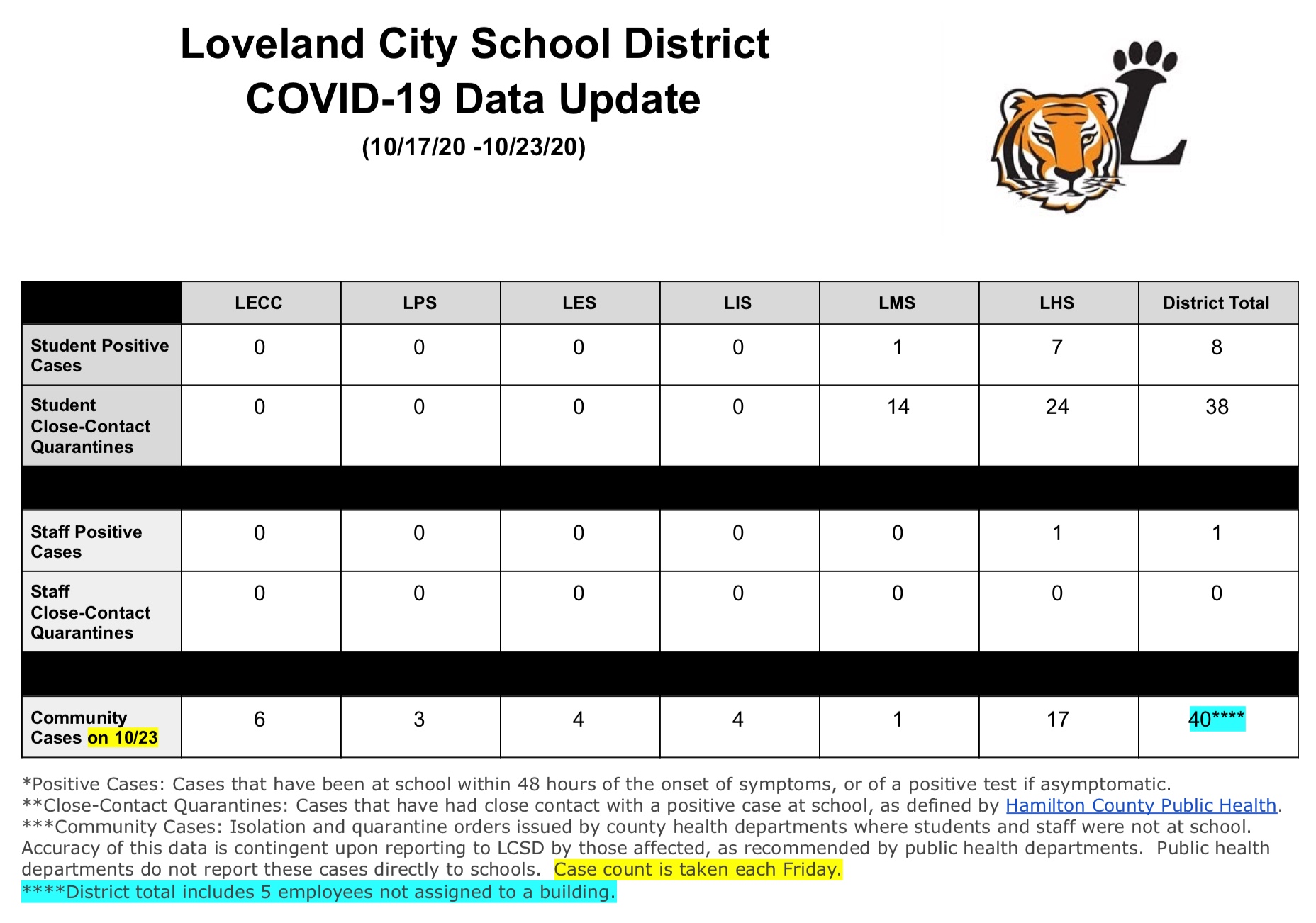
    *Community cases (isolation and quarantine orders issued by county boards of health for students and staff who have not been at school within 48 hours of the onset of symptoms, or of a positive test if asymptomatic)


  • Ohioan reports being recruited for plot targeting Gov. DeWine at his home

    Ohioan reports being recruited for plot targeting Gov. DeWine at his home

    Piqua, Ohio – A Miami County resident reported to police being recruited to take part in a citizen’s arrest of Gov. Mike DeWine at his Cedarville home a week ago, but the plot evidently never materialized.

    The plot is alleged to have involved Renea Turner, a former write-in candidate for governor who ran against DeWine in 2018. A state representative says he recently met with Turner prior to the alleged call and she inquired about the governor’s home, the Ohio Capital Journal has learned. 

    The Ohio State Highway Patrol, which handles security for the governor and his residences, was notified of the report by local law enforcement and is investigating. 

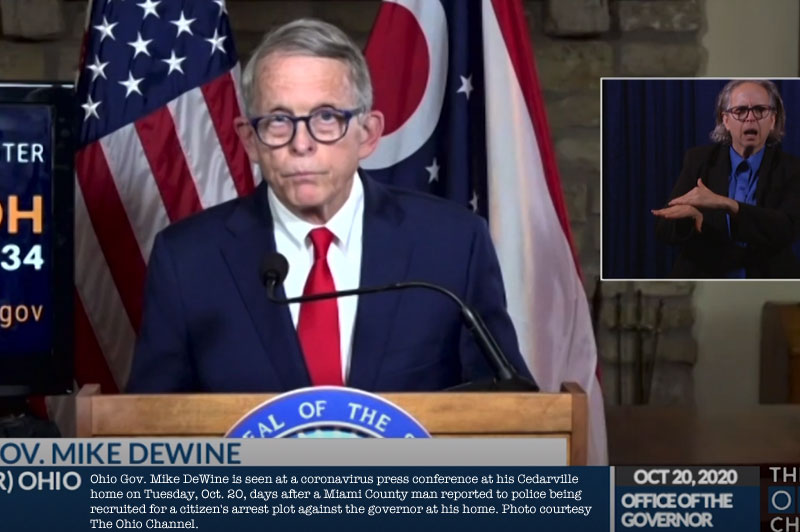
    At a press conference Friday afternoon to discuss allocation of CARES Act funding in Ohio, DeWine told reporters he was unaware of the alleged plot and had not been briefed on it to that point.

    This report to police came just a week after 13 men were arrested for reportedly planning to kidnap Michigan Gov. Gretchen Whitmer and it follows months of protests against DeWine and state health officials. 

    According to a Piqua Police Department report from Oct. 16, a citizen told an officer about being called earlier that morning by Turner, a Springfield native who is an outspoken critic of DeWine. Turner reportedly asked if they wanted to take part in an attempt to arrest the governor at his home later that weekend and try him for allegations of tyranny.

    The Ohio Capital Journal initially declined to identify Turner as the alleged caller, as law enforcement would not confirm if she had been under investigation or charged with a crime and she could not be reached by the Ohio Capital Journal for comment.

    The Ohio State Highway Patrol has been made aware of the police report but would not say if an investigation has been launched.

    Since the original publication of this story, Turner has spoken on the record with cleveland.com about the call, which she confirmed took place. She told the outlet that she did speak to the Miami County person about placing DeWine under house arrest, but reportedly denied discussing any specific plans. 

    The Capital Journal is not identifying the person who reported the incident to police after the person asked to remain anonymous for safety reasons, having already followed up with Piqua law enforcement about a threat made against them online.

    The person who reported the call told Ohio Capital News that the plot stemmed from anger toward the governor’s response to the COVID-19 pandemic. The person said they too are a critic of DeWine and claimed to have recently filed a citizen affidavit seeking criminal charges against the governor. State Rep. John Becker, R-Union Twp., who has led an impeachment effort against DeWine in the Statehouse, has urged Ohioans to submit such affidavits about the governor.

    “Do I think (DeWine) needs to be arrested? Absolutely,” the person said. “But all that needs to happen within the confines of the law.”

    They claimed they were initially excited when receiving the call last Friday, thinking the conversation would be about the ongoing search from DeWine critics to find a prosecutor willing to bring charges against him.

    “(The caller) said ‘no, we the people, we’re going to arrest him,’” the source said.

    According to this person, the caller described several supposed penalties for a citizen’s trial on tyranny — permanent exile or execution.

    According to this person, the caller described several supposed penalties for a citizen’s trial on tyranny — permanent exile or execution.

    Soon after the call, they decided to contact the police.

    “If I don’t do something about this and something happens, I’m either legally culpable or at least I’m going to feel bad,” they said. “Not that I have any love lost between me and Gov. Mike DeWine. Again, I think he needs to be in prison. But again, if (the caller) had done something … I would have felt ethically responsible, right?”

    State legislator says Turner recently asked about DeWine’s home in private chat

    Becker told the Capital Journal he met with Turner a few weeks ago in Columbus at her request to speak about theoretical criminal charges against the governor. While his focus has been on locating a willing prosecutor, he said Turner spoke about finding a county sheriff to make the arrest.

    “I just kind of shrugged my shoulders and said, ‘good luck with that,’” Becker recalled.

    Then came an unusual change in subject: Turner wanted to know more about the governor’s residence in Cedarville. Becker said Turner asked whether the personal residence constituted public property during DeWine’s term as governor.

    “It was kind of a strange question,” Becker said.

    John Becker aided Turner by providing information about DeWine’s residence and if it constituted public property.

    After the conversation ended, Becker asked Turner’s question to the Legislative Service Commission, a nonpartisan group which gives private law research to lawmakers. He learned the home remains a private residence, and passed that information along to her.

    Becker did not hear again from Turner after that. Earlier this week, he heard from the Miami County resident about the alleged plot. The person told him about Turner and Becker recognized her name from their recent meeting.

    Becker said he informed the Statehouse’s sergeant at arms about the situation when returning to work earlier this week. He later posted a YouTube video about the incident, referring to the person who reported the call to police as a “hero.”

    Becker confirmed to the Capital Journal he was contacted by the Ohio State Highway Patrol on Friday. The lawmaker said he described to the Patrol his interactions with Turner and the Miami County resident.

    Piqua Police Chief Rick Byron told the Capital Journal on Thursday the citizen’s report was turned over to the Patrol.

    “At this point, we have not followed up with them and have no plans to do so,” Byron said, noting the alleged caller is not from Piqua and therefore his department does not have jurisdiction. “We’re pretty confident that (the Patrol is) going to handle this situation.”

    Dan Tierney, a spokesperson for the governor’s office, referred questions about the situation to the Patrol.

    In a brief statement on Thursday, Lt. Tiffany Meeks told the Capital Journal: “For security, the Patrol does not discuss threats or security operations involving the governor.” The Patrol later confirmed to the Dayton Daily News it was “currently investigating the incident.”

    Cleveland.com quoted Turner on Friday as saying officials with the Patrol came to her home that morning “to check out my temperament and what my plans are.”

    Since the report was made on Oct. 16, the governor has hosted three press conferences at his Cedarville home: his traditional virus-related updates on Oct. 20 and 22, and the CARES Act press conference with legislative leaders on Friday.

    After this story was first published, reporters asked DeWine during his CARES Act press conference about his reaction to the alleged plot.

    “I don’t know the details of the so-called plan,” he said. “I can’t really comment on that.”

    Asked if he was shocked to learn about such a plot, DeWine answered: “No. I’m not shocked by it. At this point in my life, not much shocks me anymore. It’s a sad thing.”

    This is the latest in a series of alleged plots targeting political leaders in 2020 for their responses to the pandemic. In Michigan, state and federal law enforcement foiled a plot to kidnap and try Gov. Whitmer, with seven of the men being charged under the state’s anti-terrorism law. 

    Police in that case have alleged the Whitmer plot was hatched in a meeting held in Dublin, Ohio this summer. The same groupof men also hoped to target Virginia Gov. Ralph Northam. 

    There is no known connection between these plots and the one reported in Piqua.

    Turner is former governor candidate

    Turner, of Springfield in Clark County, campaigned for governor as a write-in candidate in 2018. 

    Turner encountered DeWine on the campaign trail, later posting a picture of themselves together to social media. A post on her Facebook page claims she pretended to be a supporter of DeWine’s, then told him after the picture was taken she was actually campaigning against him.

    Turner received 185 votes in the 2018 general election, including one from the person who later reported her call to Piqua police. 

    Turner has shared several posts from state Rep. Nino Vitale, R-Urbana, who has made headlines throughout 2020 for posting falsehoods about the virus — such as an April claim that it may have been created by Bill Gates. 

    Turner received 128 more votes as a write-in candidate for Springfield mayor in 2019 before turning her attention back to DeWine amid the coronavirus pandemic. 

    Her social media pages are littered with conspiracy theories involving the virus, government microchips and vaccine mandates. Many of the posts have been flagged by Facebook as spreading misinformation.

    Turner has shared several posts from state Rep. Nino Vitale, R-Urbana, who has made headlines throughout 2020 for posting falsehoods about the virus such as an April claim that it may have been created by Bill Gates. 

    Turner shared one post by Vitale from May 18, in which he accused DeWine of “giving himself total dictatorial power.” Vitale also falsely suggested the governor knew about the virus in March 2019, many months before the novel coronavirus was ever discovered. 

    In July, Turner posted photos of herself protesting health orders at the Ohio Statehouse with a signs referring to the governor as Hitler. 

    Turner took to the Statehouse again on Thursday, proclaiming she had removed the governor from office through a self-issued declaration. A video shared to Facebook shows Turner taking an oath of office, with a signed sheet of paper claiming her to be the next governor of Ohio. 

    Turner did not address the Thursday incident in her interview with cleveland.com.

    ‘It’s wrong morally, it’s wrong legally’

    DeWine reiterated on Friday that the plot against Whitmer was “despicable” and added he denounced any effort by people to subvert the legal system and target public officials.

    “We are seeing people out there who believe that,” the governor said. “We have an obligation, each one of us as elected officials, opinion leaders, to denounce that and say ‘that is wrong.’ It’s wrong morally, it’s wrong legally, it’s anti-democratic, it’s anti-everything this country stands for.”

    While DeWine has enjoyed widespread, bipartisan support throughout 2020 for his response to the pandemic, his administration has also been the subject of intense condemnation. Four legislators have endorsed his impeachment, and dozens of others have supported various bills seeking to limit the executive’s power to handle an infectious disease.

    Ohio Gov. Mike DeWine in a Zoom call with reporters in August outside his Cedarville home. Screenshot by Marty Schladen, Ohio Capital Journal.

    Repeated protests at the Statehouse led DeWine to move his press conferences from Capitol Square to a government building elsewhere due to “security reasons,” WKYC reported in April.

    That same month, Cleveland.com reported that Ohioans protesting the state’s public health orders were seen “driving by DeWine’s Greene County house, filming it and counting cars.” The outlet quoted a DeWine spokesperson as saying security officials were aware of this surveillance but could not comment further.

    In May, protesters repeatedly targeted the home of Dr. Amy Acton, who was then serving as director of the Ohio Department of Health. There were reports that some of the protesters were armed with guns, and one person was photographed carrying an anti-Semitic sign. Not long after, Acton resigned as state health director.

    In May, protesters repeatedly targeted the home of Dr. Amy Acton, who was then serving as director of the Ohio Department of Health. There were reports that some of the protesters were armed with guns, and one person was photographed carrying an anti-Semitic sign. Not long after, Acton resigned as state health director.

    The state has been without a permanent health director in the months since. A replacement was announced in September, but the person selected withdrew from consideration after learning of the harassment leveled against Acton. The Ohio Department of Health continues to be led by an interim director.

    Also in May, Democratic House Minority Leader Emilia Sykes reported a phone call to police threatening to kill her father, state Sen. Vernon Sykes, if she did not “step aside” politically.


    (This story was edited by Loveland Magazine)


    Tyler Buchanan

    Tyler Buchanan is an award-winning journalist who has covered Ohio politics and government for the past decade. A Bellevue native and graduate of Bowling Green State University, he most recently spent 6 1/2 years as a reporter and editor of The Athens Messenger and Vinton-Jackson Courier newspapers. He is a member of the BG News Alumni Society Board and was a 2019 fellow in the Kiplinger Program in Public Affairs Journalism.
  • Exercising your right to vote on Election Day

    Exercising your right to vote on Election Day

    Commentary by Michael Hamper III

    Michael Hamper III is a partner at Lemire & Hamper LLC, a firm in Jefferson, Ohio that focuses on the areas of bankruptcy, oil and gas, probate, real estate, and municipal law. Michael has served as the Solicitor for the Village of Jefferson since 2016 and has a passion for helping his local community that inspired him to run for office in 2018.

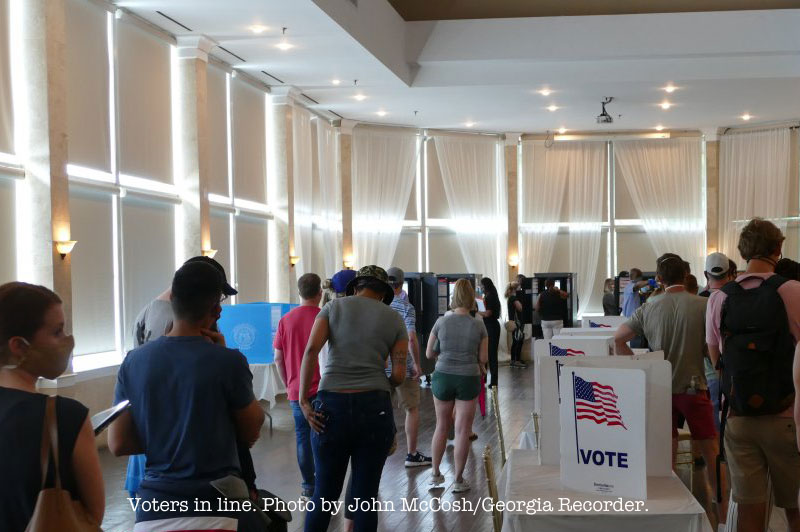
    Turn on the news or read a newspaper today and you will see political candidates and public officials making the rounds throughout the country trying to earn your vote. While the issues and formats are much different today, those candidates and public officials are participating in America’s time-honored tradition of democracy.

    When it comes to elections, both the voter and precinct election officials have responsibilities to protect voting rights. It is important to be prepared when you vote and to know what your rights are at the polling place in order to ensure a smooth Election Day.

    Voter Responsibilities

    In Ohio, you are generally eligible to vote if you are a citizen of the United States, a resident of Ohio for at least 30 days prior to the election in which you desire to vote, at least 18 years old on or before the next general election, and if you are not currently incarcerated for a felony conviction.

    You must be registered 30 days prior to Election Day to be able to vote. You can register to vote in future elections online at the Ohio Secretary of State’s website or visit your office, local Board of Elections office, Bureau of Motor Vehicles, or public library, among other places.

    In order to cast your ballot on Election Day, you must bring one of the following proofs of identification (note, though an option, it does not have to be a photo ID):

    • Current photo ID card with your name and address, such as a driver’s license or state ID;
    • Other government ID (but not a U.S. Passport or student ID as those do not prove current address);
    • S. Military ID card with your name and photo (address is not required); or
    • A form of identification that shows your name and address, such as a utility bill, bank statement, paycheck, government check or other government document, such as a benefits letter from the Social Security Administration or the Ohio Department of Job & Family Services.

    On Election Day, it is also your responsibility to show up at the correct precinct to vote. If you do not know this information, you can look it up on the Ohio Secretary of State’s website.

    Precinct Responsibilities: Protecting Your Rights

    If you are at the proper precinct, have registered to vote at least 30 days before the election and brought a proper form of identification (see list above), then you should have no problems at the polling place. However, it is still helpful to know some more details about your rights and the duty of precinct election officials to enforce them.

    If you are at the correct precinct and are eligible to vote, but you do not have the proper identification or are not on the poll list, then the precinct election official has the responsibility to allow you to vote by provisional ballot. You also have the right to vote by provisional ballot if you moved to a different precinct within Ohio in the 30 days before the election. A provisional ballot is like a regular ballot, except the board of elections will review the information for the voter and determine if the voter was eligible and should have their vote counted. Each provisional ballot voter must receive a provisional ballot notice that details how a voter can determine if their vote was counted and why or why not.

    There are several other voting rights that you should also be aware of, such as:

    • It is the responsibility of the polling place to allow you to vote as long as you are in line before the polls are scheduled to close.
    • You are not required to provide proof of citizenship in order to vote.
    • If you need assistance to vote due to blindness, disability or illiteracy, you are permitted to receive assistance from a person of your choice, so long as that person is not your employer, representing your union or a candidate whose name is on the ballot. You can also receive assistance from two precinct election officials (one from each political party).

    It is also important for you to know that polling places are neutral ground. This means there should be no election official wearing campaign materials, attire or paraphernalia. Election officials cannot advise, instruct or educate voters on candidates or the issues. They are there to ensure a fair, unbiased voting process, and it is not their goal to influence voters in any way. Voters should also follow these rules and should not wear campaign materials, attire or paraphernalia. Candidates and volunteers are also not permitted to campaign within 100 feet of the polling place, which is often marked by small American flags.

    What Should You Do if You Believe Your Rights Are Being Violated?

    If you believe you are being wrongfully denied the ability to vote, ask to speak to the voting location manager and they will work with you to fill out the form to report the issue (Form 10-U) and then have you vote by provisional ballot.

    If you believe there are violations of voting laws occurring at a polling place, whether by candidates, advocates, precinct election officials or voters, you should report the violations to the local board of elections.

    How an Attorney Can Help

    Should you run into problems, an attorney can help you determine whether your voting rights have been violated and to decide on an appropriate course of action. An attorney can also help you make contact with the appropriate local and state officials to notify them of how your rights were violated and seek to resolve the matter and correct the issues before the next election so that no other voter experiences the same hardship. An attorney will also be able to advise you of the different methods of reporting election complaints to the local board of elections, Ohio Secretary of State and United States Department of Justice.

    A Note on COVID-19 and Voting

    In-person voting may look different this year in response to COVID-19. Be sure to check your polling place in advance, as it may have changed. You may also be required to wear a face mask, and there will likely be markers to keep you distant from the other voters. If you have questions, be sure to check with your county’s Board of Elections. For more information about voting by an absentee ballot, read this article.


    Clermont County Board of Elections

    Hamilton County Board of Elections

    Warren County Board of Elections


  • Lovelanders Pat, Norah Jane, and Becky Hill connect with their trees amid COVID-19 Pandenic

    Lovelanders Pat, Norah Jane, and Becky Hill connect with their trees amid COVID-19 Pandenic

    By Joe Timmerman

    “When we try to pick out anything by itself, we find it hitched to everything else in the Universe,” John Muir, a transcendentalist, wrote of nature’s connectedness in his 1911 book, My First Summer in the Sierra.

    In 1997, Nature journal published ecologist Suzanne Simard’s Ph.D. theses, describing newfound proof of how plants within communities can be interconnected through an underground system, called a mycorrhizal network, to interact with each other.

    This is Part 1 of a series Loveland resident and Ohio University student, Joe Timmerman wrote for The Post in Athens, Ohio. The Post is an award-winning, student-run media outlet that publishes online daily and also prints a weekly tabloid. They cover local and Ohio University news, sports, Athens life, entertainment and everything in between. The series is re-published here in Loveland Magazine with permission of The Post and Loveland High School graduate, Joe Timmerman a frequent contributor to Loveland Magazine.

    “All trees all over the world, including paper birch and Douglas fir, form a symbiotic association with below-ground fungi … They compete with each other, but our work shows that they also cooperate with each other by sending nutrients and carbon back and forth through mycorrhizal networks,” Simard said in an interview with Yale Environment 360.

    In this sense, trees communicate with one another on a deeper level than what is seen in the overstory and the understory of a forest.

    From mothers and fathers sharing memories of trees they have grown to love with their kids to a lifelong woodworker who discovered a new relationship with wood as time went by, people are connecting with nature in new and old ways, as COVID-19 has brought a global feeling of social disconnection. People and their trees alike have a story to be told.


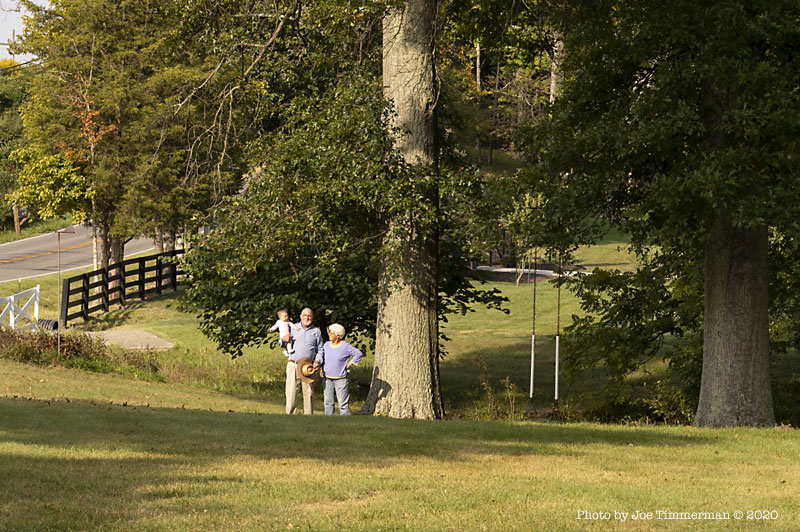
    Pat Hill, 66, Norah Jane Hill, 9 months, and Becky Hill, 69, of Loveland, Ohio, with their Oak Trees on Wednesday, Sept. 23, 2020.

    Pat, Norah Jane and Becky Hill of Loveland, Ohio, with their oak trees. Pat Hill grew up in the house next door and used to farm the land across the street.

    “I’ve always wanted to name this property ‘Twin Oaks,’ one for her and one for me,” Hill said. “As a kid, I always liked a good swing, so I had that swing put up by a tree company. The cable goes from one oak to the other. I’ve always thought that the swing hung from the two parents, and it was a symbol of the family that we created. Our boys all thrived and spent a lot of time on that swing. I bought excellent chains and a high-quality steel cable to create that swing because I want it to last for a long, long time. I think the trees are about 60 years old.”


    Part 2 will introduce you to Phil Ping and his dog, Bandit, of Loveland and their logs and boards of maple, oak, walnut and pine.


  • School District delays return to full in-person learning for PK-4 students

    School District delays return to full in-person learning for PK-4 students

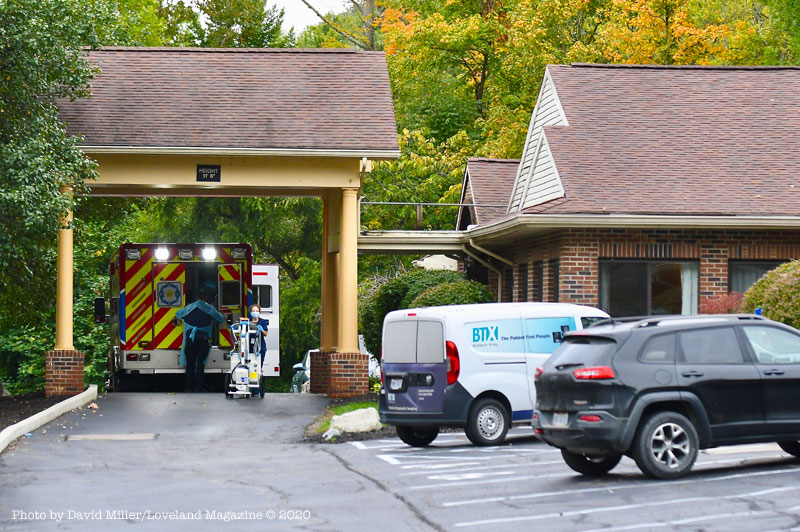
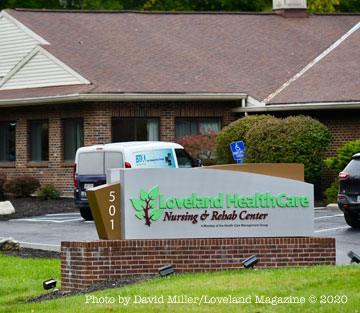
    Loveland, Ohio – After learning from Loveland Magazine of the number of COVID 19 cases at the Loveland Health Care Center (Cumulative cases of COVID 19 at Loveland Health Care go from 60 to 85) and citing that Hamilton and Clermont Counties have returned to the RED “Very High Exposure and Spread” level of the Ohio Public Health Advisory System the Loveland School District has just announced that the return to a full in-person learning schedule for PK-4 students will be delayed. They have decided to “temporarily pause any changes and remain on the blended learning model for now for all students, to allow us additional time to evaluate.”

    The Board of Education had previously approved (September 22) that PK-4 grades would return on Monday, October 5 to a full in-person learning schedule. (Board approves schedule for 5-day full capacity learning)

    “Transportation will not change at any grade level including grades 5-8 as has been communicated this week. Next week will operate like this week,” the District said in a release.

    The District also said, “The time is not right to take a step toward bringing more students together. Maintaining the schedule that our families, students and teachers have been operating under will allow us to maintain student and staff safety while we await more data.”

    The District said in a release. “After the state updates their COVID-19 data on Thursday of next week, a decision will be made about our PK-4 and grades 5-8 students and whether to continue on blended learning or transition to full capacity (5-day) in-person for those grades beginning Monday, October 12,” the release also said.

    “We have 11 red counties, which is more than we’ve seen at any point in September,” said Governor DeWine on Thursday. “Although many Ohioans are working hard to keep this virus in check, unfortunately, we are seeing a rebound in some areas of the state. This pandemic isn’t over, so please continue to stay home if you’re sick, wear a mask when you’re out, and keep at least six feet between you and those outside of your household.”

    On Thursday DeWine also announced:

    There are 155,314 confirmed and probable cases of COVID-19 in Ohio and 4,817 confirmed and probable COVID-19 deaths. A total of 15,606 people have been hospitalized, including 3,297 admissions to intensive care units. In-depth data can be accessed by visiting coronavirus.ohio.gov

    There is no change for the Loveland Remote Learning Academy.

    Below is the timeline to return to full capacity (5-day) in-person previously approved (September 22) and is apparently completely put on pause after today’s announcement:


  • Media statement from the Loveland Health Care Center about COVID 19 “crisis”

    Media statement from the Loveland Health Care Center about COVID 19 “crisis”

    We know that this crisis is particularly challenging for our residents and their families. – Greg Miller

    Loveland, Ohio – After Loveland Magazine learned of the high number of COVID 19 cases at the Loveland Health Care Center, their spokesperson Greg Miller with Health Care Management Group said he would send an email response to our questions. (60 cases of COVID 19 at Loveland Health Care Center)
    Miller responded by sending this statement to Loveland Magazine this evening at 8:01 PM.


    Loveland Health Care Center

    MEDIA STATEMENT

    September 29, 2020

    Our facility appreciates the interest in the COVID-19 status of our residents. We can confirm that we do have staff and/or residents who have tested positive, or who are deemed positive, for COVID-19.

    Please note that out of respect to those impacted and, in accordance with privacy laws, we will not be sharing any details regarding the positive cases publicly.

    When these cases first developed, we notified our residents and their families, and we immediately involved the appropriate authorities. We continue to work with our local and state departments of health to monitor our active cases, and we have a plan in place to try to limit additional exposures. Our plan includes continuing our no visitor policy, enhanced health screening of residents and staff, and other measures informed by guidance from federal agencies, such as the Centers for Disease Control (CDC). New cases are reported to residents, families and local and federal agencies as required by law. 

    We know that this crisis is particularly challenging for our residents and their families. We empathize with their feelings of separation and vulnerability, and we want to thank them for their ongoing support and trust. The positive energy they provide to us every day is invaluable.

    We also want to thank and acknowledge our heroic staff. While many people are staying home during this crisis, our staff show up every day to do the essential work of caring for our vulnerable residents with dedication and purpose for the greater good.

    Thank you as well to our broader community for your concern for the well-being of our residents and our staff. It means so much to us to have the backing of our community at this difficult time.


    Here are the questions posed to Miller earlier this afternoon:

    How many patients are normally at LHCC? (bed count?)

    How many staff are normally at LHCC?

    The stats from the Ohio Department of Health from the last reporting date (9/23/20)are – 37 residents and 11 staff members with COVID 19. The cumulative case report reveals 39 residents and 21 staff members.

    • Are those the current numbers?

    • Has the count increased since that report (9/23/20)?

    • Can you give an update on the numbers as of today?

    • Can you tell us how you or LHCC reports cases? Who do you report to? Ohio Department of Health? Hamilton County Health? Warren County Health? Other?

    • Have there been deaths from COVID 19 among residents or staff?

    • It is our understanding that Ohio has eased visiting restrictions for Ohio nursing homes. Have you eased or otherwise changed visiting protocol at LHCC in light of the State’s new orders or the case count at LHCC?

    • Are you currently accepting new residents?


  • Introducing LHS Homecoming 2020 COVID-19 Style!

    Introducing LHS Homecoming 2020 COVID-19 Style!

    Cassie Mattia is a resident of Historic Downtown Loveland and the Associate Editor of Loveland Magazine

    by Cassie Mattia

    Loveland, Ohio – This Loveland Tiger Homecoming was one for the history books! Although many locals pray to never have to orchestrate a “COVID-19” Homecoming again here at Loveland Magazine we felt as though we should still celebrate and document the memorable event for those who were not able to get a glimpse of what it was like.

    Loveland High School and the Loveland Athletic Boosters tried their best to make the 2020 Homecoming Game as normal as possible despite COVID 19 restrictions that “Ruled Sovereign” over the evening that had no crowning of a Queen or King. Loveland’s Principal Peggy Johnson after the Homecoming event assured families, students, friends, and Tiger fans that she hopes to make up for students missing the traditional Homecoming experience and would like to hold the Homecoming Saturday night dance this winter if the pandemic restrictions ease.

    Even though there wasn’t a tradition Homecoming Saturday night dance Loveland Magazine’s David Miller did catch the Tiger Band busting a move for a few seconds at the Homecoming game against Little Miami!

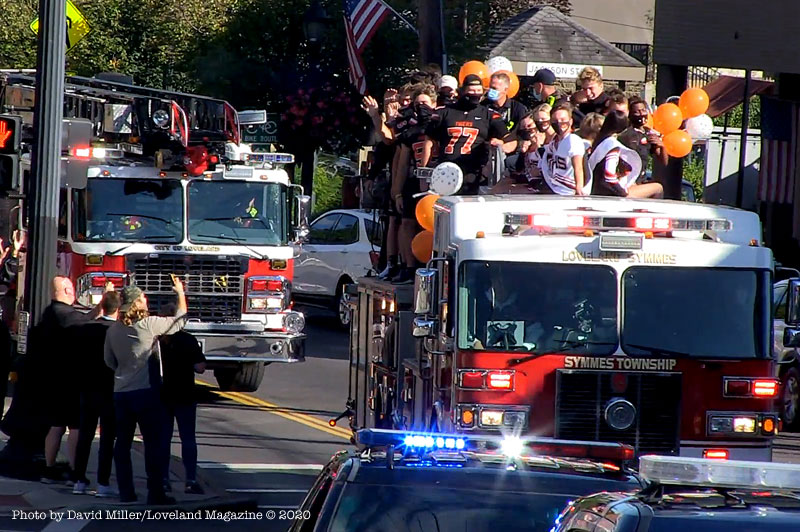
    The “non-traditional” Homecoming  Parade consisted of cheerleaders and players escorted to the High School upon the red chariot of a local fire truck provided by the Loveland-Symmes Fire Department! Luckily we captured the impromptu Homecoming parade on video for you our loyal readers as it left Historic Downtown and crossed over the Little Miami River.

    The tradition of delivering the game ball via helicopter did continue as Grand Marshall Otto Huber, the Loveland-Symmes Fire Chief, landed mid-field to hand off the ball to the officiating crew.

    In the video below Loveland Magazine’s David Miller captured the Marching Band and Color Guard during the opening ceremony playing the fight song and the National Anthem. The video also includes some action clips from the game including the opening kick-off and the traditional pre-game fireworks as the Loveland Tigers ran onto the field!

    The visiting Little Miami Panthers ruled the field of play, beating our Tigers 55-20.

    Our Tigers traveled to Covington, Kentucky on Friday, September 25th to play the Holmes Bulldogs. Loveland grabbed their first win of the season, 48-14! The Tigers are now 1-3 overall and 0-3 in the ECC. The Loveland Football team will play again on Friday, October 2nd at Kings at 7 p.m.


    55

    Little Miami
        1 2 3 4 T  
      LM 42 0 6 7 55  
      LVL 20  

    20

    Loveland

    Scoring Summary
    Team Stat Comparison
      LM LVL
    1st Downs 0 0
    Total Yards 547 267
    Passing Completions 14 16
    Passing Attempts 24 35
    Passing Yards 336 214
    Passing Average 14.0 6.1
    Rushing Attempts 36 18
    Rushing Yards 211 53
    Rushing Average 5.9 2.9
    3rd Down Efficiency 0-0 0-0
    4th Down Efficiency 0-0 0-0
    Penalties 0-0 0-0
    Turnovers 0 3
    Possession N/A 22:54
     
    Little Miami Stats
    PASSING
      CP/AT YDS AVG TD INT
    Aidan JONES 13/24 328 13.7 5 0
    Colton BLANKENSHIP 1/1 13 13.0 0 0
    Team 14/25 341 13.6 5 0
    Loveland Stats
    PASSING
      CP/AT YDS AVG TD INT
    Calvin Cloud 16/35 214 6.1 3 1
     
    RUSHING
      ATT YDS AVG LG TD
    Riley PRINGLE 16 107 6.7 0 2
    Aidan JONES 4 31 7.8 0 0
    Colton BLANKENSHIP 4 28 7.0 0 1
    Ashton MIDDLEKAMP 4 34 8.5 0 0
    Jack COOPER 3 2 0.7 0 0
    Nathan REBMAN 3 1 0.3 0 0
    Reis STOCKSDALE 2 2 1.0 0 0
    Chandler OTT 1 5 5.0 0 0
    Team 37 210 5.7 0 3
    RUSHING
      ATT YDS AVG LG TD
    Calvin Cloud 10 22 2.2 0 0
    Mason Moore 3 18 6.0 0 0
    Aaron Morton 2 6 3.0 0 0
    D’Marqo Johnson 2 9 4.5 0 0
    Jack Bergman 1 -2 -2.0 0 0
    Team 18 53 2.9 0 0
     
    RECEIVING
      REC YDS AVG LG TD
    Reis STOCKSDALE 5 125 25.0 0 2
    Trey WILLIAMS 3 58 19.3 0 0
    Ty WILLIAMS 2 70 35.0 0 2
    Riley PRINGLE 1 11 11.0 0 0
    Ashton MIDDLEKAMP 1 20 20.0 0 0
    Dylan FRITH 1 13 13.0 0 0
    Brayden BISCHOFF 1 44 44.0 0 1
    Team 14 341 24.4 0 5
    RECEIVING
      REC YDS AVG LG TD
    Aaron Morton 4 95 23.8 0 0
    Ethan Lund 3 29 9.7 0 0
    Jack Bergman 3 52 17.3 0 0
    Austin Lodor 2 24 12.0 0 0
    Reece Hatfield 1 -2 -2.0 0 0
    Luca Aquilino 1 5 5.0 0 0
    D’Marqo Johnson 1 -3 -3.0 0 0
    Tyler Lake 1 14 14.0 0 0
    Team 16 214 13.4 0 3
     
    KICKING
      FG PCT LNG XP PTS
    Colton BLANKENSHIP 0/0 0.0 0 2/2 2
    Wyatt ALBERS 0/0 0.0 0 1/1 1
    Team 0/0 0.0 0 3/3 3
    KICKING
      FG PCT LNG XP PTS
    Adam Koscielicki 0/0 0.0 0 2/2 2
     
    PUNTING
      NO YDS AVG TB -20 LNG
    Ty WILLIAMS 1 41 41.0 0 0 41
    PUNTING
      NO YDS AVG TB -20 LNG
    Ethan Lund 2 75 37.5 0 1 0
     
    PUNT RETURNS
      NO YDS AVG LNG TD
    PUNT RETURNS
      NO YDS AVG LNG TD
    Aaron Morton 2 14 7.0 0 0
     
    KICKOFF RETURNS
      NO YDS AVG LNG TD
    Ben GAST 1 1 1.0 0 0
    Reis STOCKSDALE 1 17 17.0 0 0
    Nathan REBMAN 1 22 22.0 0 0
    Team 3 40 13.3 0 0
    KICKOFF RETURNS
      NO YDS AVG LNG TD
      3 66 22.0 0 0
    Luca Aquilino 2 16 8.0 0 0
    Ethan Lund 1 7 7.0 0 0
    Aaron Morton 1 18 18.0 0 0
    Sean O’Donnell 1 1 1.0 0 0
    D’Marqo Johnson 1 0 0.0 0 0
    Team 9 108 12.0 0 0
     
    DEFENSE
      SCK FF FR TD INT YDS TD
    Nathan GORDON 1.0 1 0 0 0 0 0
    Collin STREUER 1.0 0 0 0 0 0 0
    Nick GREENWELL 0.0 0 0 0 1 5 0
    KC DUNCAN 0.0 1 0 0 0 0 0
    Brentan SIMMERMAN 1.0 0 0 0 0 0 0
    Joey BECK 0.0 0 1 0 0 0 0
    Dom SITEK 0.0 0 1 0 0 0 0
    Team 3.0 2 2 0 1 5 0

    No Defense Stats Available for Loveland

    For more of your latest Loveland High School sports 411 stay tuned with me, Cassie Mattia!

  • Coronavirus death toll surpasses 100 in Ohio prisons

    Coronavirus death toll surpasses 100 in Ohio prisons

    Belmont Correctional Institution. Source: ODRC

    More than 100 inmates and workers in Ohio’s prison system have died from COVID-19, state data shows.

    Jake ZuckermanJake Zuckerman is a statehouse reporter. He spent three years chronicling the West Virginia Legislature for The Charleston Gazette-Mail after covering cops and courts for The Northern Virginia Daily.

    Five prison workers (three corrections officers and two nurses) and 96 inmates have died from the disease that has clobbered the Ohio Department of Rehabilitation and Correction since late March when it was first detected in the system.

    Nearly 6,200 inmates have contracted COVID-19, the disease caused by the new coronavirus, though the figure is likely an undercount. After mass testing at Marion and Pickaway correctional institutions detected infections in 80% of inmates, ODRC shifted its strategy away from blanket testing and toward symptom-based testing.

    An ODRC spokeswoman said 461 inmates with COVID-19 have been admitted to the hospital, but those people may have been admitted for other causes.

    The dead inmates were 66 years old, on average.

    At Marion, nearly 2,000 inmates have been infected, 12 of whom died.

    At Pickaway, nearly 1,400 inmates have been infected, 35 of whom died.

    The two prisons are the third and fourth largest COVID-19 clusters in the nation respectively, according to data from The New York Times.

    The virus hit prison workers in force as well, though with much lower morbidity rates. More than 1,100 prison workers were infected, and the union representing them alleged workers were provided insufficient protective equipment.

    Gary Daniels, a lobbyist for the ACLU, said there’s more than just a death toll. As more information emerges about long term damage from COVID-19, including “long haulers” who report debilitating symptoms even six months after infection, he questioned the health services ODRC is providing.

    According to the CDC, coronavirus infections can cause myocarditis (heart inflammation) among other long term symptoms. While the science is still emerging, the heart damage could explain reported long-term symptoms like shortness of breath, chest pain and heart palpitations.

    “How many people in Ohio prisons face this right now?” he said. “You’ve got these 100 people who have died, but that’s nowhere near the whole story.”

    The ACLU has pushed for a broad decarceration that would remove people convicted for drug possession or parole violations — at least temporarily.

    In February, there were nearly 49,000 inmates in Ohio prisons, which were populated well beyond their design capacity even before the pandemic. That figure decreased to slightly above 45,000 by August.

    “It does appear to have plateaued,” Daniels said. “Whether that continues, who knows. Our concern is that after a certain amount of time, we’re going to see that population rise.”

    In mid-May, four inmates filed a class action lawsuit in federal court seeking the forced depopulation of Ohio prisons.

    U.S. District Judge Edmund Sargus Jr., in a ruling last month, rejected motions to dismiss the lawsuit. In a blow to the inmates, however, he also struck down a request for a preliminary injunction. He has not ruled on the issue at large.

    Though it amounted to a loss for the inmates, Sargus signaled some sympathy for the conditions inside.

    “This Court agrees with the other district courts across the country who have found COVID-19 to be an objectively intolerable risk of harm to prisoners when it enters a prison,” Sargus wrote.

    Prisons and jails are near ideal places for the coronavirus to spread given the overcrowding, poor sanitation, and preexisting health complications inside.

    In April, the Ohio Supreme Court dismissed a lawsuit from an HIV-positive inmate who sought release due to COVID-19.

    At the time there were only 272 inmate infections. However, Justice Michael Donnelly wrote in an opinion that Ohio needs to take drastic action to prevent “catastrophe” looming down the line.

    “The whole of Ohio’s government needs to take serious, unprecedented steps to prevent the catastrophe of unmitigated spread of COVID-19 to the tens of thousands of prisoners in Ohio as well as to the tens of thousands of people who are prison employees along with those living in the households of prison employees,” he said.

  • How an Ohio state senator and 33 family members caught COVID-19

    How an Ohio state senator and 33 family members caught COVID-19

    Senator Tina Maharath (Ohio Senate photo)

    Jake ZuckermanJake Zuckerman is a statehouse reporter. He spent three years chronicling the West Virginia Legislature for The Charleston Gazette-Mail after covering cops and courts for The Northern Virginia Daily.

    It started with a funeral.

    Tina Maharath, a Democratic state senator from Canal Winchester, attended a wake Aug. 9 after her brother-in-law’s funeral, who died of non-COVID-19 illness.

    Two of his family members, who Maharath said tested positive for COVID-19, came to the wake. Maharath described them as skeptical of the gravity of the COVID-19 pandemic.

    “Slowly, one by one, we started getting the phone calls from each one of our family members,” she said in an interview.

    Maharath comes from a big family — common, she said, among Laotians. Her husband has 19 siblings, she has 16. The new coronavirus, which causes COVID-19, left from the wake to invade 11 different family households, infecting 33 family members including a 9-month-old baby.

    As of Thursday, two have died: Maharath’s 44-year-old sister-in-law, who had been battling brain cancer for a year, and her sister-in-law’s father-in-law.

    Five family members were hospitalized, including one who Maharath said is likely to die soon from COVID-19. The five people hospitalized are between 34- and 76-years old. They were hospitalized anywhere from two to six weeks. Mahrath’s sister-in-law was ventilated for three weeks.

    All five had underlying health conditions like asthma, high blood pressure and diabetes, all common conditions in Ohio.

    The familial outbreak, Maharath said, is hopefully over. But uncertainty over longevity of symptoms or long term damage is frightening.

    “We’re concerned because of the five people who were hospitalized, they still have lingering symptoms too, and another sister-in-law who was pregnant, she has lingering symptoms too,” Maharath said. “I don’t have underlying conditions, I’m not pregnant. So why do I have symptoms?”

    Patient groups, calling themselves “long haulers,” have insisted they’ve been experiencing COVID-19 symptoms for month. The CDC has found COVID-19 can result in prolonged illness, even among younger and healthier adults.

    Six weeks out from the positive test result, Maharath said she still feels COVID-19’s symptoms. She said she feels dehydrated, experiences coughing spells, and headaches.

    Her lungs, she said, take most the heat.

    “I just feel weak,” she said. “My lungs feel like something is just punching them. Randomly, it feels like something is just stabbing my lungs.”

    Nearly 148,000 Ohioans have contracted COVID-19 according to state data, which officials believe to be an undercount. At least 4,715 have died.

    Maharath’s diagnosis drew headlines in August. On Wednesday, however, Maharath shared the story of the outbreak through her family in a floor speech opposing Senate Bill 311.

    The legislation, which Senate Republicans passed, would forbid the Ohio Department of Health from issuing anything like the stay-at-home order it issued in March, which closed “non-essential” businesses in an effort to slow the spread of the recently-detected coronavirus.

    It would also allow lawmakers — who have repeatedly expressed skepticism about the virus, ODH’s data tracking the virus, and non-pharmaceutical interventions to control the virus like masks and social distancing — to rescind ODH orders.

    However, a COVID-19 diagnosis did not prove to be a proxy vote against the legislation.

    Sen. Bob Peterson, R-Washington C.H., who contracted the disease earlier this month, voted in favor.

    Sen. Frank Hoagland, R-Adena, did as well. He contracted a mild case of the disease in August. According to a Herald Star report, Hoagland’s wife was hospitalized with the disease as well. Both his wife’s parents reportedly died from COVID-19.

    With what they hope to be the worst of the outbreak behind them, Maharath said her family is planning funerals for the deceased. They plan stricter social distancing and mask requirements.

    Maharath said she’s not planning to attend.

  • Trick or Treat’s a go in Loveland

    Trick or Treat’s a go in Loveland

    -This story has been corrected to reflect that Halloween is on Saturday October 31.

    Loveland Police Chief Sean Rahe

    Loveland, Ohio – City Manager Dave Kennedy announced at last night’s council meeting that Halloween Trick or Treating in Loveland is a go. He said that Police Chief Sean Rahe is reviewing an advisory that was issued by the Ohio Department of health and the City will issue a statement after it has been reviewed.

    Kennedy said, “We hope to move forward full steam and certainly encourage people to follow the rules. We are not going to mess with changing times or dates.”

    Photo by Olivia Smith © 2020

    Although not announced at the meeting, Trick or Treating hours in Loveland have been between 6 and 8 PM for many consecutive years.

    Halloween is on Saturday October 31.

    DeWine recommends children wear masks on Halloween!

    In Ohio Governor Mike DeWine’s announcement of the health department orders he reminded parents that Halloween activities will be different this year than in years past. He encouraged, “parents and children to wear a mask, practice social distancing, avoid large groups, and to stay home if sick.” Dewine also said, “Final decisions on whether to hold or participate in trick-or-treating or other events should be made by local communities, individuals, and parents.”

    The state has developed guidance for Halloween and it can be found at coronavirus.ohio.gov.


    Celebrating Halloween at Re-Start Ohio

    Amid the COVID-19 pandemic, it is important to use caution and plan ahead for Halloween festivities. Decisions on whether to participate should be made by local communities, individuals, and parents/ guardians.

    Always follow current state public health orders and rules/regulations established by your local community, and check the Ohio Public Health Advisory System to determine COVID-19 risk levels in your county before making decisions about Halloween activities. Some communities may choose to cancel Halloween events, so check with local sources before making plans.

    This guidance is designed to help curb the spread of COVID-19. It will be reassessed and updated as the situation evolves and we learn more in the weeks leading up to Halloween.

    Recommended Best Practices

    General Guidance

    • It is strongly recommended that hayrides and haunted houses be canceled/avoided.

    • It is strongly recommended that Ohioans exercise caution when deciding to participate in trick-or-treating and events that put them in close contact with people outside their households. To lower risk, consider safer, socially distant ways to celebrate, such as:

    • Holding a drive-through or drive-in trick-or-treat event, with children in costume and face coverings staying in cars and collecting treats from individuals spaced at least 6 feet apart.

    • Holding drive-by costume or car-decorating contests with judges who are physically distanced.

    • Leaving treats for friends and neighbors.

    • Decorating your home and hide treats as an alternative to trick-or-treating.

    • Holding costume parties or pumpkin carving events or contests online, such as by video conference.

    • Do not hold large in-person Halloween parties. If holding smaller parties, limit attendance to 10 or fewer people and hold the event in an outdoor area where social distancing is possible. Avoid activities, such as bobbing for apples, that foster the spread of infection.

    • Always wear a face covering and stay 6 feet away from people who are not from your household, whether trick-or- treating, passing out treats, or attending attractions or events. Stay home if you are sick. (NOTE: Face coverings should never be placed on children younger than 2 or anyone who cannot easily remove them.)

    • Carry hand sanitizer and use it often, especially after coming into contact with frequently touched surfaces and before eating candy.

    • Select events/attractions that are held outdoors and allow attendees to stay in their cars (such as drive-through event with displays) or socially distance. Avoid events that involve being crowded in a small area or coming into contact with/being touched by others.

    • Consider the people in your household who may be at greater risk of complications if COVID-19 is brought into the home, such as those with certain health conditions, women who are pregnant, or older family members.

    For Parents/ Guardians

    • If taking your children trick-or-treating, limit the number of houses you visit and ask your children to stay as far from treat-givers as possible. For small children, consider holding the bag for them.

    • Wipe off candy wrappers with sanitizing wipes when you arrive home. (NOTE: Never wipe unpackaged food with wipes.) • Allow children to eat only factory-wrapped treats. Avoid homemade treats made by strangers.

    • If your child is at greater risk of complications from COVID-19, contact your doctor before allowing participation in Halloween activities.

    For Community Members

    • For trick-or-treating, reach out to neighbors to discuss ways to ensure 6-foot social distancing, how candy can most safely be distributed, and the need for face coverings.
    • Refrain from having children select their own treats from a bowl/common container or set up a hand-sanitizing station. Consider placing treats on porch steps or a table in the driveway with a sign asking children to take only one. Or use other creative ways to distribute treats, such as using a candy “slide” made of PVC pipe, or hanging treats from a wall or fence.