Cassie Mattia lives in Historic Downtown Loveland and is the Associate Editor of Loveland Magazine
by Cassie Mattia
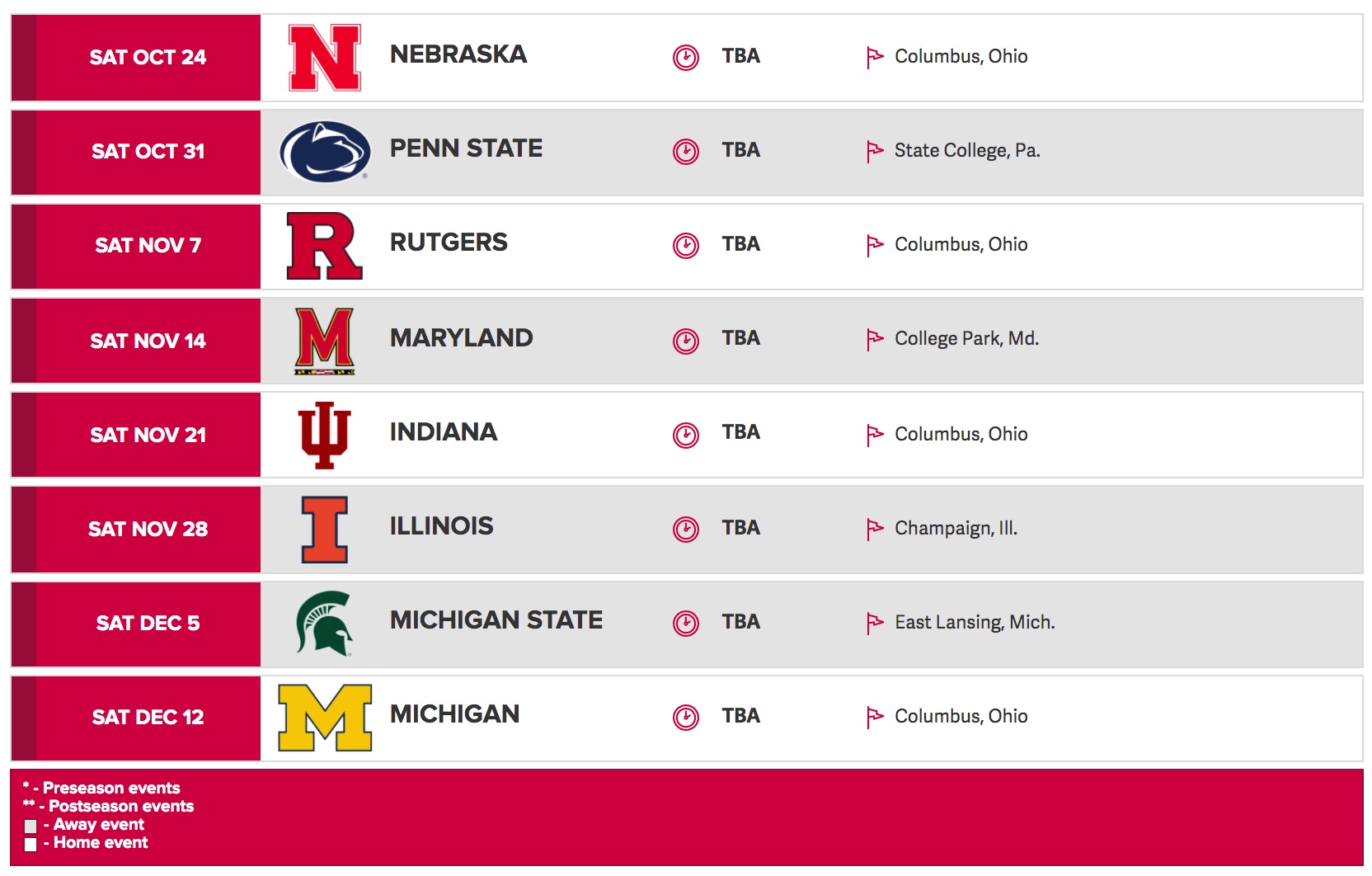
Loveland, Ohio – Football season is back in session for the Big Ten Conference! The Big Ten Council of Presidents and Chancellors (COP/C) voted unanimously to continue the Big Ten football season beginning October 23rd and 24th.
In addition to the big announcement, the COP/C also stated that they would be implementing specific medical protocols for the student-athletes in order for them to continue their season. Some of the medical protocols include daily antigen testing for the student-athletes, coaches, trainers, and all others who are present daily for practices and games as well as enhanced cardiac screening, and a new “data-driven” approach when it comes to making decisions about both practices and competitions.
All testing and results have to be completed and recorded before each individual practice and game. Those student-athletes who test positive for the coronavirus through point of contact (POC) daily testing would require a polymerase chain reaction (PCR) test to confirm the result of the POC test, according to the COP/C. All those student-athletes who test positive will have to complete a comprehensive cardiac exam, which will include labs and biomarkers, ECG, Echocardiogram, and a Cardiac MRI. Before being allowed to return to play after a positive COVID-19 test, the student-athlete has to sit out for a minimum of 21 days and MUST also get the okay from the cardiologist selected by the university.
The COP/C said in the press release on the Big Ten website that each Big Ten school will select a Chief Infection Officer (CInO) who will be in charge of gathering and reporting COVID-19 data. The data given by each CInO will be used to make decisions about both practices and competitions.
Both Morton Schapiro, Chair of the Big Ten Council of Presidents/Chancellors, Northwestern University President, and Chair of the Return to Competition Task Force Steering Committee, and Kevin Warren, Big Ten Commissioner, spoke about how important their new medical protocols are and how much they appreciate the Big Ten’s dedication to its student-athletes.
“From the onset of the pandemic, our highest priority has been the health and the safety of our students. The new medical protocols and standards put into place by the Big Ten Return To Competition Task Force were pivotal in the decision to move forward with sports in the conference,” Morton Schapiro said, “We appreciate the conference’s dedication to developing the necessary safety procedures for our students and the communities that embrace them.”
“Our focus with the Task Force over the last six weeks was to ensure the health and safety of our student-athletes. Our goal has always been to return to competition so all student-athletes can realize their dream of competing in the sports they love,” Kevin Warren said, “We are incredibly grateful for the collaborative work that our Return to Competition Task Force has accomplished to ensure the health, safety, and wellness of student-athletes, coaches and administrators.”
Daily testing for Big Ten student-athletes is set to begin on September 30th.
To read the full press release on the resuming of Big Ten football click here.
Stay tuned for more of the Sports 411 With Me, Cassie Mattia!
With his impeachment effort against the governor making little progress, state Rep. John Becker pulled up his email and brainstormed a late-night solution.
It was almost 2 a.m. when Becker typed out a request to the Legislative Service Commission, a nonpartisan group that conducts law and policy research for lawmakers.
Becker is among the biggest critics of DeWine in the state legislature
“I believe that Governor DeWine is in violation of (Ohio Revised Code) 2921.45,” Becker wrote in the Sept. 1 email. “What is the process for criminal charges to be filed? Can the (Attorney General) do that? Other options?”
Still waiting for an answer, Becker sent another 2 a.m. request a few days later. He sought more “legislative history and legal case law” involving the 2921.45 section of code.
The law states: “No public servant, under color of his office, employment, or authority, shall knowingly deprive, or conspire or attempt to deprive any person of a constitutional or statutory right.” Violators are guilty of a first-degree misdemeanor, punishable by up to 180 days in jail and a $1,000 fine.
Becker is among the biggest critics of DeWine in the state legislature and views the governor’s response to COVID-19 as amounting to a “constitutional crisis.” The decision to delay primary election voting, the temporary closure of some businesses, the mask mandate — to Becker, these are the instances of DeWine assuming “dictatorial powers” and violating Ohioans’ constitutional rights.
Becker wants to see if DeWine can face criminal punishment for his pandemic response.
“My goal is to get the state opened up and the abuse of power to come to an end,” Becker said to the Ohio Capital Journal.
Impeachment and criminal charges?
Throughout 2020, DeWine has relied on a separate section of state law which gives the Ohio Department of Health authority to make “special or standing orders … for preventing the spread of contagious or infectious diseases.”
On Aug. 24, Becker announced he had drafted articles of impeachment against DeWine. Three fellow Republican legislators immediately gave support for impeachment: Reps. Nino Vitale of Urbana, Candice Keller of Middletown and Paul Zeltwanger of Urbana.
There have been a slew of lawsuits and legislative challenges to that authority. Becker sponsored one of the first bills seeking to limit the power of the state health director and many other Republican-sponsored bills have followed. DeWine has vowed to veto any such bill which interferes with the state’s pandemic response.
On Aug. 24, Becker announced he had drafted articles of impeachment against DeWine. Three fellow Republican legislators immediately gave support for impeachment: Reps. Nino Vitale of Urbana, Candice Keller of Middletown and Paul Zeltwanger of Urbana.
“For my colleagues, it’s put up or shut up,” Becker said.
Becker claims there was support for impeachment from at least one Republican member who wound up not joining as a sponsor.
There was swift backlash from Ohio Republican leaders the day articles were drafted, which Becker thinks quashed any desire for others to join the effort.
“Nobody wants to touch it,” Becker said.
Becker had planned to officially file the articles a week or so after drafting them, but instead is holding off. Once they are filed, no one else can sign on as a sponsor. He’s holding out hope that legislative sentiments may change before the end of 2020.
It would take a majority vote from the Ohio House of Representatives to impeach DeWine, then a two-thirds vote from the Ohio Senate to convict him. With only four representatives currently on board, they are 46 supporters short.
Speaker of the House Bob Cupp, R-Lima, has come out against the impeachment effort, saying that policy disagreements do not rise to the level of removing the governor.
“For my colleagues, it’s put up or shut up,” Becker said.
In a recent YouTube video, Becker acknowledged his colleagues believe the disagreements should be resolved legislatively rather through impeachment.
“Frankly I agree,” Becker said. “Legislation was the way to do it and we have tried that, and the governor has promised to veto everything that we’ve put out there attempting to roll back his power.”
Beyond impeachment, Becker alleges the governor has committed a number of crimes. Among them: that DeWine illegally canceled and rescheduled the primary election.
Hours before the polls were set to open Ohio Department of Health Director Dr. Amy Acton signed an order preventing the polling places from opening. DeWine and Acton feared holding an in-person election would lead to the virus spreading.
Ohio primary election dates are set by the state legislature. Lawmakers unanimously approved a new primary election plan involving an all-mail vote conducted throughout all of April. Becker voted for that plan.
Becker also alleges the mask mandates at churches, public places and businesses are in violation of Ohioans’ civil liberties.
Becker also alleges the mask mandates at churches, public places and businesses are in violation of Ohioans’ civil liberties.
Chief Justice John Roberts, an appointee of President George W. Bush, wrote in the majority opinion that the church restrictions were level with social distancing requirements at other public gatherings. Given the lack of treatment, cure, vaccine or sufficient knowledge about the new disease, he wrote, it’s too early to deem the restrictions unconstitutional.
“Although California’s guidelines place restrictions on places of worship, the restrictions appear consistent with the Free Exercise Clause of the First Amendment,” he wrote.
Tyler Buchanan is an award-winning journalist who has covered Ohio politics and government for the past decade. A Bellevue native and graduate of Bowling Green State University, he most recently spent 6 1/2 years as a reporter and editor of The Athens Messenger and Vinton-Jackson Courier newspapers. He is a member of the BG News Alumni Society Board and was a 2019 fellow in the Kiplinger Program in Public Affairs Journalism.
Maggie Schildmeyer-Mischenko, Riverveiw Monuments with Rob Geiger, President Ramsey Paxton Cemetery Association
by Rob Geiger
It’s been almost a year since the work was started on the historical cemetery, Ramsey Paxton Cemetery, located on Ramsey Court in the White Pillars Subdivision.
To recap the series of events: December, 2018 the city of Loveland reinstalled the Clermont County Bicentennial sign next to the cemetery and cleared trees and brush on city owned property away from the cemetery property line; September, 2019 dead and decaying trees were removed, the old fence taken down by Rainey Tree service; fence was replaced with a new black aluminum spear fence, and May, 2020 the new refurbished antique gates were installed by Eads Fence Company.
Rob Geiger is the President of the Ramsey Paxton Cemetery Association
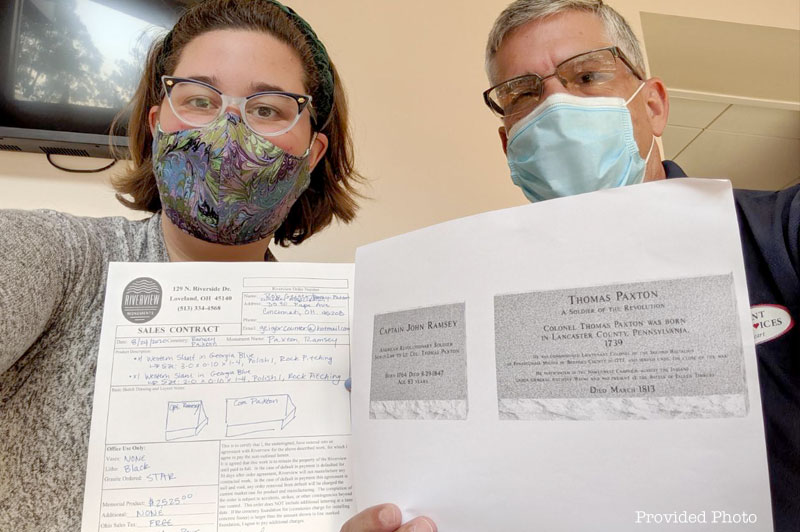
Our next project we have partnered with Riverview Monuments. “This is a privilege and an honor for our company to be involved in this project” stated Maggie Schildmeyer-Mischenko. “We are excited to donate our services to sandblast the death date on Minerva Arbuckle Ramsey who died in 1913 and place a marker on each unknown burial in the cemetery to commemorate the farmhands that lost their lives due to an epidemic that swept through this area sometime between 1910 to 1912.”
The story was passed down through the years: the farmhands working on farms in the area lost their loved ones during that time due to sickness and since they could not afford to have a proper burial, they asked Minerva Arbuckle Ramsey if they could bury their dead in the Ramsey Paxton Cemetery, to which she agreed. The only reminder of the loved ones are field stones and in some cases a depression in the ground where a person was buried.
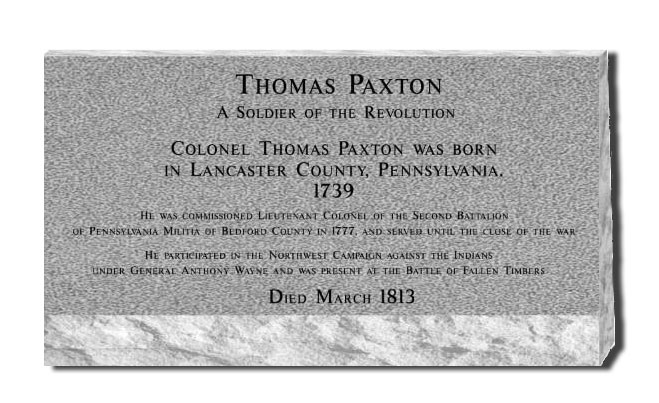
Riverview Monuments also designed the two new headstones that will be added to the two Revolutionary War Soldiers’ graves, Lt. Col. Thomas Paxton (founder of Loveland, and credited as the first permanent white settler in the Virginia Military Track, 1795) and his son-in-law Capt. John Ramsey.
The original stones have weathered to the point that you cannot read the inscriptions. The new headstones have the same verbiage as the original stones for future generations to know the historical significance of these two men.
Design of the new headstones for Col. Thomas Paxton for the Ramsey Paxton Cemetery
The new headstones have been ordered and hopefully will be installed in October with the other work completed before Thanksgiving, 2020.
“How exciting this project is turning out and knowing Riverview Monuments have collaborated with the Ramsey Paxton Cemetery by preserving this great sacred spot in our hometown of Loveland. Our family business started 180 years ago and has been in Loveland for the last 120 years. We (Riverview Monuments, Tufts Scheildmeyer Funeral Home, and Ramsey Paxton Cemetery Association) share the same passion to preserve, protect, and educate about our historical sites in Loveland, Ohio,” said Schildmeyer-Mischenko
Design of the new headstones for Capt. John Ramsey for the Ramsey Paxton Cemetery
The Ramsey Paxton Cemetery has some seed money to buy supplies for getting some much needed ground work completed by leveling out areas in the cemetery, controlling the crabgrass, and planting grass seed in areas of the cemetery. We have been reaching out to some lawn professionals and hope to find a local company that will provide an in-kind donation, literally labor of love, to supply the manpower to accomplish this task before winter sets in.
If your company would like to help with the project, please contact Rob Geiger at 513-677-3303.
The Cemetery would like to hold a rededication of the cemetery sometime in the year 2021 or when Covid-19 pandemic is over. Please keep up to date with Loveland Magazine for more information.
Loveland Magazine is the Media Sponsor for the Ramsey Paxton Cemetery Restoration Project
Along with diseases known to increase risk, the CDC lists 12 other conditions that “might” increase the risk of people who have them. These include other massively common conditions like hypertension, liver disease, pregnancy, smoking and others.
The underlying health conditions that lay a path for severe COVID-19 complications are widespread in Ohio, potentially affecting as much as half the population, according to experts, state data and government research.
Take obesity: Ohio Department of Health 2017 survey data estimates that 34% of Ohioans are obese. Similarly, more than 74,000 Ohioans were diagnosed with cancer that same year.
Dr. Peter Pronovost (Photo by University Hospitals)
“The statistics are about 60% of the public has one or more chronic diseases,” said Dr. Peter Pronovost, a University Hospitals physician. “Four in 10 have two or more diseases.”
The ubiquity of chronic disease in Ohio complicates any policy response when there’s no easy-to-draw line between people at low-risk for COVID-19 and those at higher risk levels.
It also illuminates the reality of a “herd immunity” strategy, as reportedlyoffered by an influential adviser to President Donald Trump.This would entail allowing the virus to run its course through the population unimpeded, purportedly allowing healthier people to develop antibodies at a large enough volume to break down chains of transmission.
The CDC listseight diseases known to increase risk of severe illness from COVID-19. The list, coupled with data from theOhio Annual Cancer Report, Behavioral Risk Factor Surveillance Systemannual report from 2018, and other state and federal sources, shows how deep chronic disease runs in the Buckeye state.
Cancer: 74,000 cases diagnosed in 2017
Chronic kidney disease: About 15% of U.S. adults have chronic kidney disease, per the CDC
COPD (chronic obstructive pulmonary disease): 8.3% of Ohio adults have COPD
Immunocompromised state from solid organ transplant:1,916 Ohioans received organ transplants in 2019
Obesity: 34% of Ohio adults are obese. An additional 34% are overweight
Dr. Nirav Vakharia (Photo by the Cleveland Clinic)
“When we go beyond age as a risk factor … if we’re just thinking about these chronic diseases, they’re so prevalent, it’s hard to isolate a young, healthy cohort,” said Dr. Nirav Vakharia, a physician from the Cleveland Clinic.
Health care groups in Ohio are undertaking different efforts to help residents with some of these conditions to stay at home.
LifeCare Alliance, an in-home health care agency, has seen a spike in the number of meals it has delivered to the homes of its diabetic patients since the pandemic began.
“If you have diabetes, the chances of you having a mild case of the coronavirus is much less — you’re gonna have a harder case, because your immune system just can’t fight it off,” said CEO Charles Gehring. “Patients have been scared to death by coronavirus.”
Similarly, Pronovost, the chief clinical transformation officer with University Hospitals, said the health care network recently accelerated its efforts to provide proactive care for people with chronic diseases.
He said staff is reaching out to patients to ensure they’re properly managing and controlling their diseases, like keeping insulin or blood pressure at healthy levels.
“The idea is we want to make sure chronic disease people are doing all they can to avoid being hospitalized and avoid needing to go to the [emergency room],” he said.
Early data shows the network reduced hospital admissions of certain chronic disease patients by 28%, and emergency visits by 79%, he said.
“The idea is we want to make sure chronic disease people are doing all they can to avoid being hospitalized and avoid needing to go to the [emergency room],” he said.
Along with diseases known to increase risk, the CDC lists 12 conditions that “might” increase the risk of people who have them. These include other massively common conditions like hypertension, liver disease, pregnancy, smoking and others.
As of Wednesday, COVID-19 has killed 4,176 Ohioans. The virus has infected nearly 120,000 state residents and put more than 13,500 in the hospital.
Jake Zuckerman is a statehouse reporter. He spent three years chronicling the West Virginia Legislature for The Charleston Gazette-Mail after covering cops and courts for The Northern Virginia Daily.
Oxford, Ohio – Following our report of 4 days ago that since the start of classes, that they had 10 positive COVID-19 tests among students and 2 among employees on the Oxford campus, Miami University now has announced that it learned on August 24, that twenty-seven student-athletes from various teams have now tested positive for COVID-19.
Fall classes began on Monday, August 17, mostly remote, with graduate students and some programs in person. Students who will be living off campus have been encouraged to stay home, if they can, until face-to-face courses start on Monday, September 21.
The university said, “Many, but not all, had attended an off-campus social gathering, over a week ago. The Butler County General Health District “out of an abundance of caution” is quarantining all Miami University student-athletes who have returned to Oxford, and any coaches and staff who were in contact with them.
The Butler County General Health District issued the blanket quarantine order to ensure no student-athletes would be missed through the normal method of contact tracing.
In the announcement by the university, Jennifer Bailer, Health Commissioner for Butler County General Health District, said, “As we know, the COVID-19 virus can spread quickly between people and infect groups of people in a hurry. This disease is serious. In young adults it is often mild, but has the potential to become critical for those with underlying disease or other risk factors.”
“One of the main functions of public health is to identify persons who have been in contact with COVID-19 cases as quickly as possible and ask them to quarantine for 14 days and monitor themselves for symptoms. This helps in preventing the disease to spread any further,” stated Bailer.
“My concern for the health of all of our student-athletes is paramount,” said David Sayler, director of athletics. “I am disappointed that poor judgment has led to this quarantine order and put in jeopardy our efforts to have our teams study and practice together.”
The announcement by the university did not say the total number of student-athletes who have been ordered to quarantine.
While the world anxiously awaits the day a vaccine becomes available to help prevent COVID-19, I wanted to take a moment for a more general vaccine discussion.
xxx
As has been evidenced through the COVID-19 pandemic, vaccination is perhaps the most valuable public health tool available. Some of us are old enough to remember friends, relatives and classmates stricken by polio. Many of us remember chicken pox, mumps and measles – the disease staples of childhoods past.
xxx
Greg Kesterman is the Hamilton County Health Commissioner
xxx
When is the last time you heard about a child with polio? For young parents, how many of you have comforted your sick children through chicken pox, mumps or measles. My guess is that there are not many parents, if any at all, who have had to deal with these issues in the last 25 years.
xxx
The reason we hear so little about these diseases today is simple – immunization has significantly reduced these illnesses in the United States. However, without continued immunization programs, these diseases, many of which are still prevalent in less-developed countries, can quickly return.
xxx
That is what makes our current trend of vaccinations disturbing. Hamilton County Public Health has experienced a decline of more than 50 percent in the number of vaccines administered in our clinics as compared to the same time period last year. Our trend mirrors current national vaccination numbers.
For the upcoming influenza (flu) season, influenza vaccination will be more important than ever.
xxx
Efforts to reduce transmission of COVID-19, such as stay-at-home and shelter-in-place orders, have led to decreased use of routine preventive medical services, including immunizations. Ensuring that routine vaccination is maintained during the COVID-19 pandemic is essential for protecting individuals and communities from vaccine-preventable diseases and outbreaks. Routine vaccination prevents illnesses that lead to unnecessary medical visits, hospitalizations and further strain the healthcare system.
xxx
For the upcoming influenza (flu) season, influenza vaccination will be more important than ever to reduce the impact of respiratory illnesses in the population and resulting burdens on the healthcare system during the COVID-19 pandemic.
Vaccination is most effective when the majority of a community receives it.
xxx
Many parents are concerned about vaccine safety. After all, if these diseases are truly things of the past, why do we need to vaccinate our children? Vaccination is most effective when the majority of a community receives it. No vaccine is 100 percent effective and for this reason, immunization of the majority of a community helps prevent communicable disease from spreading. This theory is called “herd immunity” and is particularly effective in protecting the most vulnerable in our society, such as infants and those with compromised immune systems.
xxx
There has also been considerable misinformation about potential side effects of various vaccines. According to the Centers for Disease Control and Prevention (CDC), the United States has the safest vaccine supply in its history. The United States’ long-standing vaccine safety system ensures that vaccines are as safe as possible. It detects problems rapidly and allows us to respond.
xxx
Please make certain vaccinations for you and your children are up-to-date.
The U.S. Food and Drug Administration (FDA) ensures the safety, effectiveness, and availability of vaccines for the United States. Before the FDA licenses (approves) a vaccine, the vaccine is tested extensively by its manufacturer. FDA scientists and medical professionals carefully evaluate all the available information about the vaccine to determine its safety and effectiveness.
xxx
As we enter the fall, back-to-school season and of course, flu season, I urge everyone to get a flu shot. In addition, please make certain vaccinations for you and your children are up-to-date. Need help with vaccination? We can help those either under-insured or with no insurance, as well as those on Medicaid or in a Medicaid HMO to get properly immunized. Call us at 513-946-7882 for information.
There are 4 vaccines recommended for preteens. These vaccines can prevent very serious diseases like meningitis and HPV cancers.
Call the Hamilton County Public Health Clinic at 513-946-7600
Immunizations play an important role in the health of children and adults. Vaccines help prevent diseases that were once common in this country, including polio, measles and whooping cough. The Centers for Disease Control and Prevention (CDC) estimates that each year, 43,000 U.S. adults die from vaccine-preventable diseases.
Hamilton County Public Health holds immunization clinics across the county. No one is turned away based on ability to pay.
We are living in the age of fake news. No, not the “deep state is out to get the president” kind. The real “fake news” is all around us, spreading partially by word of mouth and at certain political rallies, and much more so on Facebook and Instagram, as people pass along rumors and myths that fit their world view.
So what?
Scott DiMauro, a high school social studies teacher from Worthington, was elected President of the Ohio Education Association in 2019 after having served as vice president for six years. Over his 29-year career as an educator, Scott has worked to provide students the critical thinking and decision-making skills they need to be successful citizens in our democratic society. He has likewise advocated for students, educators and strong public schools at all levels of his union.
Well, for one thing, it is frustrating. As educators, we teach facts — the laws of physics, the branches of government, grammar rules, math formulas — things that don’t change, no matter how you feel about them. More importantly, we teach critical thinking. It is a reflection of the era in which we live that the children in our classrooms can separate fact from fiction better than some adults.
The widespread misinformation circulating among adults is threatening the foundation of our democracy. There is a chance a considerable number of Americans will not vote in the coming election or will cry foul over the results because of lies they have read online.
To be clear, the long-standing method of absentee voting by mail is safe and secure, and any attempt to say otherwise is misinformation.
In one recent Facebook post I came across, a well-respected community leader falsely claimed that a) there was no way of ensuring that someone who votes by mail can’t also vote in person, b) ballots sent to wrong addresses based on voter records could be cast by the current resident, and c) someone who receives a ballot they shouldn’t have could cast a second vote for their candidate of choice if that candidate was behind in votes.
None of this is true.
Ohio keeps track of who requests absentee ballots and those voters are not allowed to vote on Election Day. If you requested an absentee ballot and still show up to vote in person — whether because you never received your
The widespread misinformation circulating among adults is threatening the foundation of our democracy.
ballot, never mailed your ballot or, as some would claim, you’re trying to vote a second time in the same election — you would need to cast a provisional paper ballot which goes through layers of verification before it is counted after Election Day. Any attempt to vote twice will be caught and that person would likely face prosecution.
Procedures in Ohio prevent ballots from being sent to the wrong addresses. Voters must submit an absentee ballot application by mail or in-person at their local board of elections. The absentee ballot application requires voters to provide their address, as well as their name, date of birth, and either their driver’s license number or the last four digits of their Social Security number. Each application is compared with voter registration records to ensure the person requesting the ballot is who they say they are and is eligible to vote.
The notion that someone would cast a second ballot based on the current vote tally is ludicrous. While absentee ballots can be scanned into the system before Election Day in Ohio, they are not tabulated until polls close at 7:30 p.m. on Nov. 3. Absentee ballots must be postmarked by Nov. 2.
Bottom line: For as long as there has been absentee voting, there have been safeguards in place to prevent fraud.
It is worth noting, though, that ballots sent by the correct deadline will be accepted and counted up to ten days after Election Day to allow for delivery time. Because of the high volume of absentee ballots expected to be cast this year, we probably will not receive the full election results until at least mid-November. This does not mean the final, certified tally is not legitimate; it simply means every legitimate vote counts.
Bottom line: For as long as there has been absentee voting, there have been safeguards in place to prevent fraud. Ohio has had no-fault absentee voting since the 2006 Gubernatorial Election, and members of both political parties have enjoyed using it since then. Incidents of voter fraud are exceedingly rare to the point of being essentially non-existent in Ohio, despite the calumny on the internet claiming otherwise.
What is true is that there will be more absentee ballot applications and returns going through the mail this fall than usual because of safety concerns amid the global pandemic. Couple that with operational changes handed down from a political appointee who has vowed to run the U.S. Postal Service like a business, rather than the public service it was always intended to be, and it’s not hard not to envision delivery delays this election season.
That makes it absolutely critical that you request and return your absentee ballot as early as possible, if you intend to vote by mail.
You can apply now to receive a ballot in the first batch of mailings, which will go out Oct. 6. Fill it out and return it right away, taking care to fully complete the information on the ID envelope, which will again be compared with voter registration records to ensure no nonsense has occurred. Ballots can be returned by mail or in secure drop boxes provided by every county board of elections the state.
I’m alarmed by the current misinformation epidemic that will dissuade some Americans from casting their ballots and the resulting impact that will have on our system of government.
Ohio will also offer four weeks of early in-person voting in every county, for those who do not want to contend with the process by mail but want to avoid long Election Day lines that could be COVID-19 hotbeds.
Ohio’s educators care deeply about ensuring free and fair elections. As a social studies teacher with three decades of experience, I’m alarmed by the current misinformation epidemic that will dissuade some Americans from casting their ballots and the resulting impact that will have on our system of government.
No matter how you choose to vote – absentee by mail, early in-person, or on Nov. 3 — the most important thing is that you cast your ballot. Our democracy depends on it.
Check out these two voter guides recently published by Loveland Magazine with information about requesting absentee ballots. Keep in mind that Ohio officials are recommending you stay ahead of these absolute dates to ensure your mail coming to and from the post office is delivered in time for your vote to count.
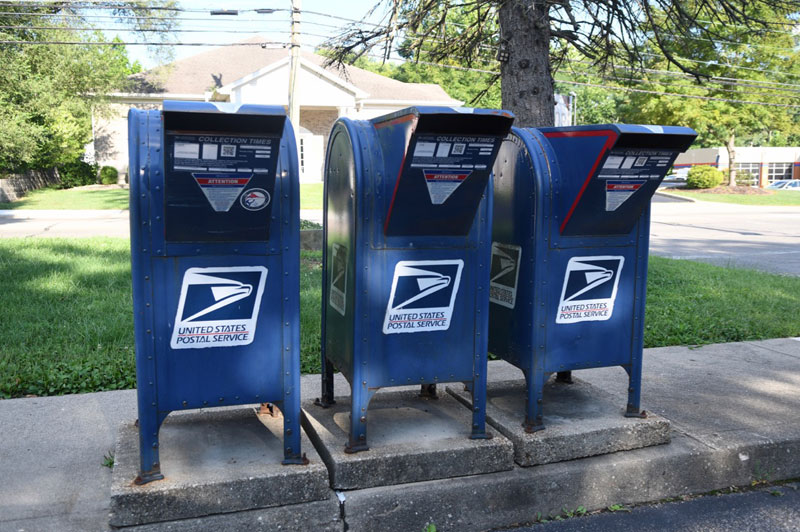
Loveland, Ohio – To supplement the story below (4 Ohio Republicans join House Dems to pass bill to boost post office funding by $25B) from the Ohio Capital Journal, Loveland Magazine visited two of the closest local U.S. Post Offices to document the number of mailboxes placed outside the buildings. We also documented the days and hours of operation of each.
While unlikely that the Trump Administration would attempt to interfere with the delivery of election-related mail in our heavily Republican voting area, nearly all Loveland mail does go to or from the Dalton Street processing center in Cincinnati. Interfering with mail delivery in the heavily Democratic voting urban areas of Cincinnati’s urban core is not beyond reasonable suspicion. And, the President may use mail problems in any part of the country to delegitimize and dispute the November election results.
One day ago the President tweeted, “The greatest Election Fraud in our history is about to happen. This may top the Democrats illegally spying on my campaign!”
On August 20 the President tweeted this, “They are sending out 51,000,000 Ballots to people who haven’t even requested a Ballot. Many of those people don’t even exist. They are trying to STEAL this election. This should not be allowed!”
Trump said last week on Fox News that he opposes some funding because he doesn’t want it used for mail-in votes, repeating his claim that it would lead to “fraudulent” election results.
WCPO has reported that processing machines from Cincinnati’s Dalton Street post office have been removed and remain offline and unusable.
The Cincinnati Enquirer recently reported that according to Jim Sizemore, president of the American Postal Workers Union in Cincinnati that in May and June, the USPS “pulled the plug on eight mail processing machines in Cincinnati, accounting for 19% of the processing center’s capacity.” The eight machines could process collectively 243,000 pieces of mail an hour according to the Enquirer. Mail is piling up on the floor at the Queensgate facility according to Sizemore.
WCPO’s John Matarese says the VA is now notifying veterans that they should order their medicine earlier than usual because at this time it cannot guarantee on-time delivery. And, by law, it cannot ship medication via private services.
Sen. Rob Portman said on August 21 on his FaceBook page, “A number of veterans have reached out to my office recently expressing concern about delays in the USPS delivery of their critical prescription medications. This is not acceptable. This morning I pressed Postmaster General DeJoy for answers.” And on August 19 Portman said, “We must protect Ohioans right to vote during to the ongoing COVID-19 pandemic. That’s why I sent a letter to the Postmaster General with Congressman Bob Latta calling on the USPS to ensure the timely & accurate delivery of election-related materials in Ohio.”
Rep. Brad Wenstrup told constituents in an email on Monday that the postal service has enough money on hand, “$14 billion cash” and that he voted to “open a $10 billion line of credit through the CARES Act” to help with any COVID-19 issues. Wenstrup said the USPS has enough money on hand to remain “fully function” until August of next year and that Speaker Pelosi has “manufactured a crisis and rushed the House back to vote on an irresponsible and unneeded amount of money on a problem that does not currently exist.”
Paige Pfleger reported in a Cincinnati Public Radio story on August 20 that, “Since the pandemic, even more Ohioans have opted to receive their medications by mail, to avoid possible exposure or to save money.”
Antonio Ciaccia of the Ohio Pharmacists Association is quoted in the story, “We have heard some extreme anecdotes over the last couple weeks where patients are waiting one, two, three weeks for their medications,” and adds that he’s never heard so many complaints about delivery delays.
On August 18, Senator Sherrod Brown is quoted in a Cleveland.com article about mail sorting equipment being dismantled in Cleveland. Brown said, “As the U.S. Postal Service has warned Ohio and other states that it may not be able to meet mail-voting deadlines this November, the visibly idle equipment along with mail delays and post office budget shortfalls have fueled fears that the upcoming election will be undermined.”
Reporter Sabrina Eaton writes in the Cleveland.com article:
President Donald Trump’s assaults on mail-in balloting, even as he has requested an absentee ballot to vote from his new residence in Florida, have raised questions over whether he’s deliberately trying to sabotage an election that will likely have more mail-in ballots than ever because of reluctance to vote in person during the coronavirus pandemic.
In a news conference over the weekend, Trump said universal mail-in voting would be “catastrophic. It’s going to make our country a laughingstock all over the world.”
“The ballots are lost, there’s fraud, there’s theft, it’s happening all over the place,” said Trump. “Now we’re going to do it with this whole, vast, big section of the country? It’s crazy.
Check out these two voter guides recently published by Loveland Magazine with information about requesting absentee ballots. Keep in mind that Ohio officials are recommending you stay ahead of these absolute dates to ensure your mail coming to and from the post office is delivered in time for your vote to count.
Loveland Magazine is interested in hearing from readers if they have experienced any delays in receiving mail (timely delivery of medicine, paychecks and other essentials) or about concerns they may have about receiving absent ballot requests or sending their ballot back to the local Boards of Elections. Please send us your thoughts.
These photos were taken on the evening of August 16 at the Loveland and Symmes post offices. We do not know if any additional boxes were recently removed but is does not appear so. Although the quantity of mailboxes and hours of operation at these locations would not necessarily reflect current delays in mail delivery, we did want to document current conditions in advance of the November 3rd Presidential Election.
Mail boxes at the Symmes Township Post Office at 9370 Fields Ertel Road
Mail boxes at the Loveland Post Office at 200 Loveland Madeira Road
Loveland Post Office at 200 Loveland Madeira Road
Collection times on the mailboxes at the Loveland Post Office at 200 Loveland Madeira Road
Service times at the Symmes Township Post Office at 9370 Fields Ertel Road
Service times at the Loveland Post Office
4 Ohio Republicans join House Dems to pass bill to boost post office funding by $25B
House Speaker Nancy Pelosi said Saturday that mail delays are depriving Americans of timely delivery of medicine, paychecks and other essentials. Photo by Justin Sullivan | Getty Images
WASHINGTON — The U.S. House convened a rare weekend session Saturday in an attempt to stop the U.S. Postal Service from allegedly disrupting mail service to sabotage the November elections.
The Democratic-led chamber passed a bill 257-150 that would infuse $25 billion into the agency as it prepares for a surge in mail-in ballots and bar it from changing operations or service levels in place at the beginning of the year.
The prohibition would remain in effect through January 2021 or for the duration of the coronavirus crisis — whichever is later.
The bill passed largely along party lines, though more than two dozen Republicans joined Democrats in backing the legislation, including four Ohio Republicans: Reps. Troy Balderson (12th District), David Joyce (14th District), Steve Stivers (15th District) and Mike Turner (10th District). Rep. Bob Gibbs (R-7th District) did not vote. No Democrats voted against the bill.
One Republican in favor was Rep. Brian Fitzpatrick of Pennsylvania, who said the post office needed to be funded so his constituents could get their mail delivered on time. “Republicans and Democrats must come together and address the serious challenges that USPS has been facing for some time now,” he said.
Senate Majority Leader Mitch McConnell (R-Ky.) is not expected to take up the measure. He told his hometown paper Tuesday that he doesn’t think a stand-alone bill funding the postal service would pass the chamber.
The White House threatened Friday to veto the post office boost, calling it “an overreaction to sensationalized media reports that have made evidence-free accusations that USPS has undertaken reforms to achieve political rather than operational objectives.”
But House Speaker Nancy Pelosi (D-Calif.) maintains that the administration is trying to suppress votes as the nation heads into a fraught election season in which the postal service will serve as “election central.”
In addition to undermining the integrity of the elections, the delays are depriving Americans of timely delivery of medicine, paychecks and other essentials, Pelosi said at a press conference Saturday.
Democratic lawmakers made similar allegations on the House floor.
The administration has mounted a “sabotage campaign” to manipulate the vote, Rep. Debbie Dingell, a Michigan Democrat, said Saturday morning.
Democratic Rep. Brenda Lawrence of Michigan and a member of the House Oversight and Reform Committee, said the bill would prohibit the postmaster general from making any changes that would undermine the post office. She said the postmaster general has “tried to rip it apart from the inside” and “our democracy is hinging” on delivery of the mail.
“Don’t mess with the USPS,” said Rep. Debbie Wasserman Schultz (D-Fla.).
Republicans charged Democrats with ginning up a manufactured crisis intended to deny the president a second term. House Minority Leader Kevin McCarthy (R-Calif.) said postal problems predate 2020 and the Trump administration.
GOP Rep. Rob Woodall of Georgia called Saturday’s vote a “punctuation mark” at the close of last week’s Democratic National Convention. This “wasteful partisan exercise” will “go nowhere” in the GOP-controlled Senate and “help no one,” he added.
Rep. Debbie Lesko, a Republican from Arizona, echoed the sentiment, calling the controversy “phony political theater.” Pelosi has gone “politically postal,” she said, quoting a recent Wall Street Journaleditorial.
The House approved $25 billion for the postal service in a $3 trillion coronavirus relief package approved in May. Pelosi pointed out Saturday that the USPS board of governors — a bipartisan group of members appointed by Trump — backs the funding.
Trump said last week on Fox News that he opposes some funding because he doesn’t want it used for mail-in votes, repeating his claim that it would lead to “fraudulent” election results.
He said changes to overtime, retail hours and the location of mail processing machines and blue mailboxes were made to save costs and streamline operations but said earlier this week he would suspend some of his moves until after the elections to avoid the appearance of impropriety. He also said he wouldn’t close existing mail processing facilities and would use “standby” resources in October to meet mail surges.
On Friday, he insisted that secure elections are his “sacred duty” and top priority this fall.
But Pelosi on Saturday called DeJoy’s promise into question, pointing to his decision not to replace mail infrastructure that has already been removed. She also pointed to Trump’s comment earlier this week calling for law enforcement officers at polling places.
“It is all designed to suppress the vote,” Pelosi said.
DeJoy is slated to testify again on Monday in a hearing before the Democratic-led House Oversight and Reform Committee, where he is expected to face more withering questioning. Robert Duncan, chair of the U.S. Postal Service Board of Governors, will also appear before the committee.
Allison Stevens is a Washington D.C. reporter for States Newsroom, a network of state-based nonprofit news outlets that includes the Ohio Capital Journal.
A look at how overcrowding and poor design contributed to two of the worst national outbreaks
This article was provided by Eye on Ohio, the nonprofit, nonpartisan Ohio Center for Journalism. Please join their free mailing list as this helps us provide more public service reporting.
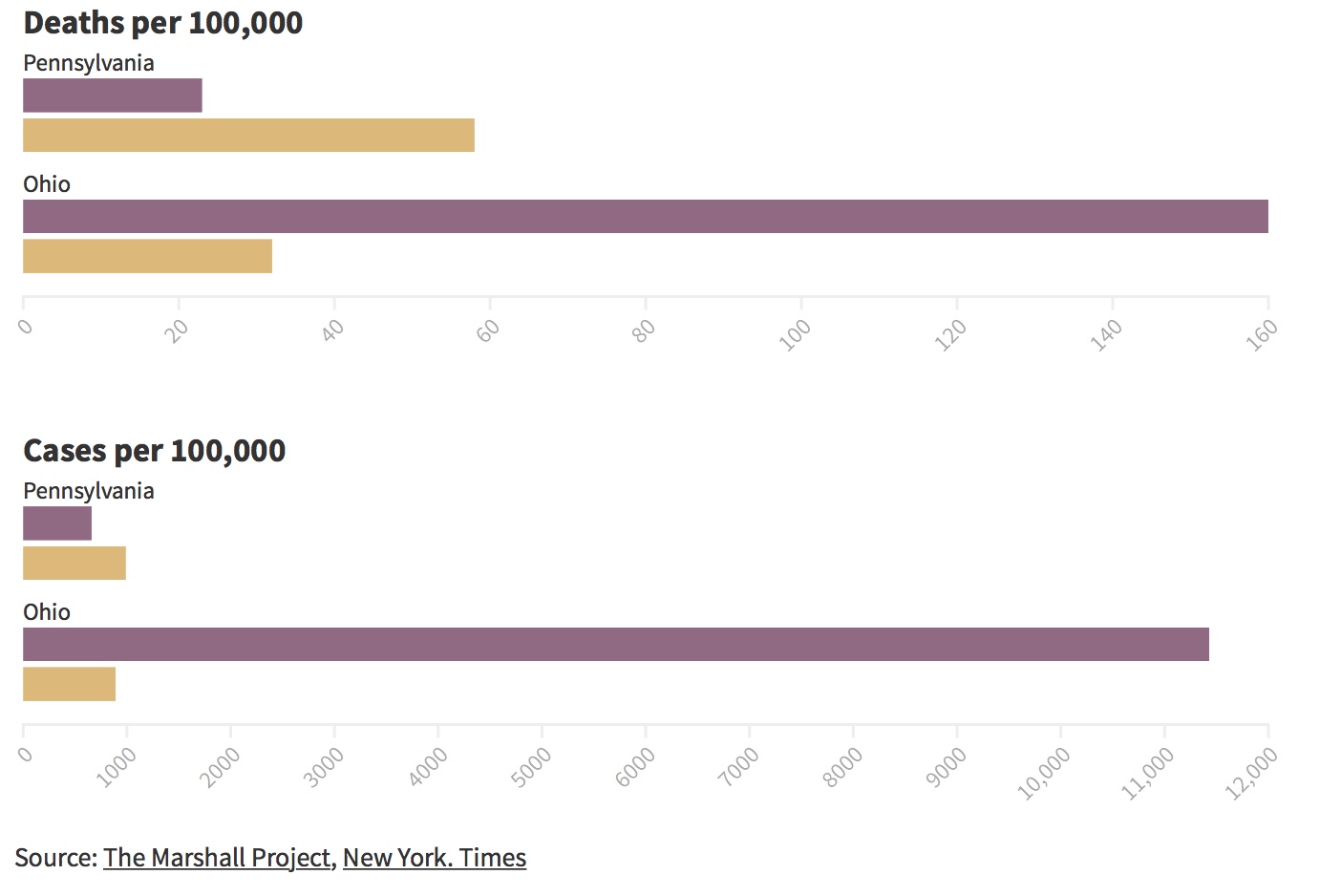
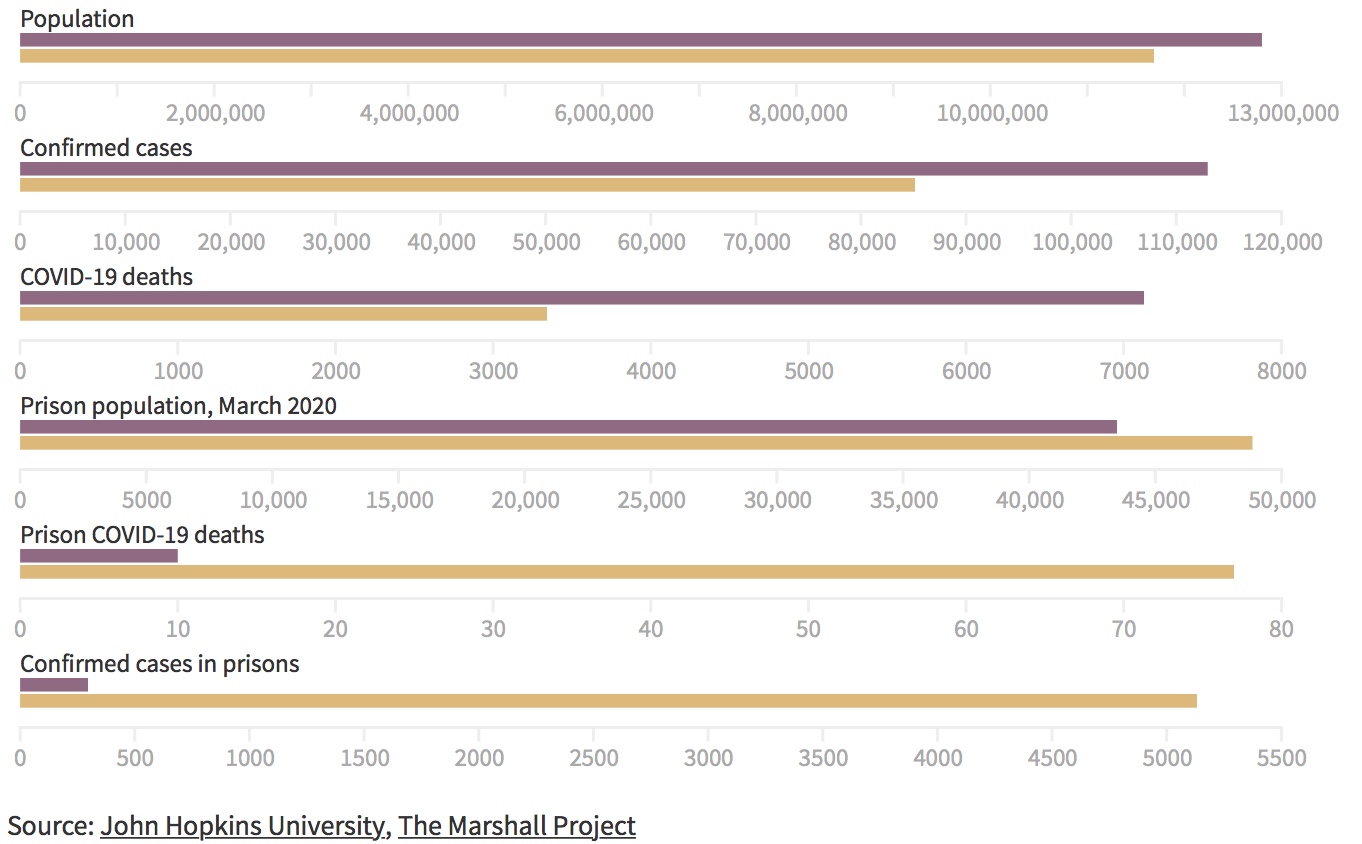
For the first two months after the COVID-19 pandemic hit the U.S., Ohio’s response set an example. Thanks to an early shutdown order, the state’s per-capita deaths from the virus as of late April were less than half of those in neighboring Pennsylvania, a state with similar demographics.
But inside the two states’ prison systems, it was a different story.
By late April , the death rate from COVID-19 in Ohio prisons was 22 per 100,000, a rate more than 4 ½ times the overall Ohio rate and nearly twice the national rate.
As of August 14, there have been 77 inmate deaths known to be caused by COVID-19, and another 10 suspected— a rate of 160 deaths per 100,000 people. Ohio’s prisons have incubated two of the four largest COVID outbreaks in the nation.
In Pennsylvania’s prison system, which houses about 44,000 inmates at 25 facilities, the death rate was comparatively low— 10 incarcerated people have died as of mid August, for a death rate of 23 per 100,000 people, despite the virus showing up in each state just a few days apart. In fact, a Pennsylvania inmate is less than half as likely to die of COVID-19 as a free Pennsylvanian.
Why have Ohio’s prisons failed so thoroughly to control the spread of COVID-19 when Pennsylvania fared far better?
No state has had a model approach for controlling the virus in prisons. All have made missteps that put inmates’ and staff members’ lives at risk, according to prisoners and prisoner advocates. Prison outbreaks have also spread into the communities outside their walls. But, whether through foresight or luck, factors in some states have kept the virus from running rampant as it has in Ohio prisons. As the country faces new waves of cases, corrections departments may be able to learn from what helped or harmed some states during the first stage of the pandemic.
While advocates for incarcerated people in Pennsylvania caution against holding that state’s experience as a model for how to respond to the pandemic, they agree that the answer may lie both in how crowded the prisons are, and how inmates are housed.
Crowded prisons spread disease
Controlling an outbreak of infectious disease in a prison is never easy. As with other communal living facilities such as nursing homes, once a respiratory illness enters, close quarters gives a virus ample opportunity to spread.
Overcrowding only makes the situation worse.
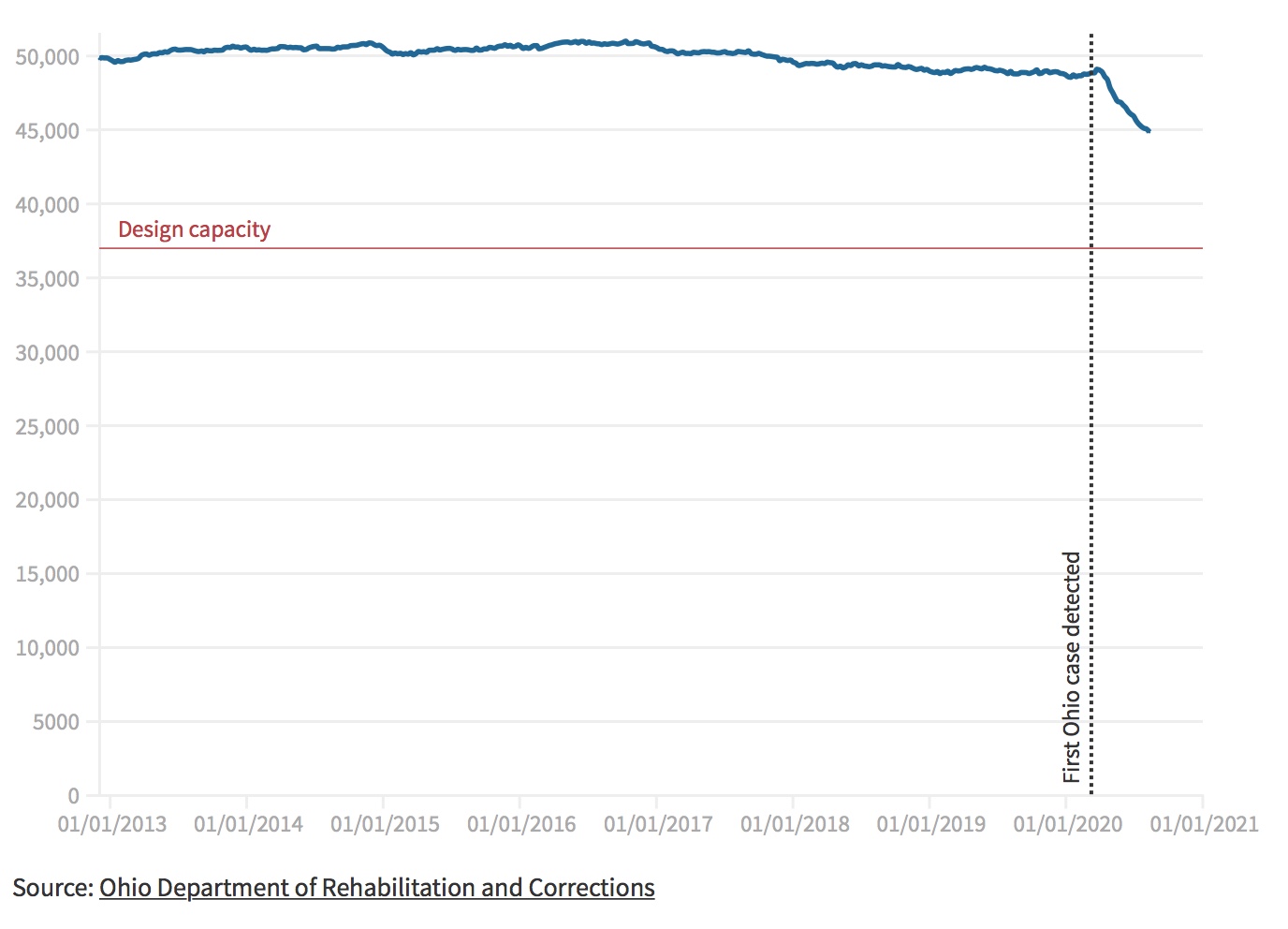
In Ohio, where the prisons were 32% above capacity in February, the virus spread rapidly.
In Pennsylvania’s prisons, at 95% of capacity in February, there were outbreaks in several prisons, but far fewer deaths.
That state’s biggest outbreak to date—183 infections and five deaths among inmates— happened at its oldest prison facility, the 131-year-old State Correctional Institution (SCI) Huntingdon in central Pennsylvania.
“SCI Huntingdon dates from the late 1800’s and has cells with open bars, and four-story housing units with open air shafts to all of the cells,” said Claire Shubik-Richards, executive director of the Pennsylvania Prison Society, a non-profit inmate advocacy organization. “So when the virus came in it spread like wildfire.”
In other, newer Pennsylvania prisons with significant outbreaks, such as SCI Phoenix, the virus proved easier to control. Only 49 inmates at Phoenix, which opened about 2 years ago, have tested positive, and four have died, despite being located in hotspot Montgomery county, just north of Philadelphia.
“The thing about that facility was that the outbreak went up and then went down pretty quickly because it’s a facility where isolating people is pretty easy,” Shubik-Richards said, because it has more single and double-occupancy cells than open dorm units.
In Ohio’s more crowded prison system, the virus was first detected in a staff member in the 66-year-old Marion Correctional Institution on March 29. Less than a month later, nearly 4,000 inmates across the state had tested positive for the virus; 10 were dead, as was one staff member.
Now, the death count is approaching 80. Ohio’s prison system is home to two of the four largest COVID-19 outbreaks in the nation, with 2,440 cases at Marion Correctional Institution in rural central Ohio, and 1,792 at Pickaway Correctional Institution outside Columbus.
Pickaway, built in the 1920s as a mental hospital and converted to a prison in 1984, was designed to hold 1,328 people. As the pandemic began in Mid-March, it held 2,047– 54 percent over capacity.
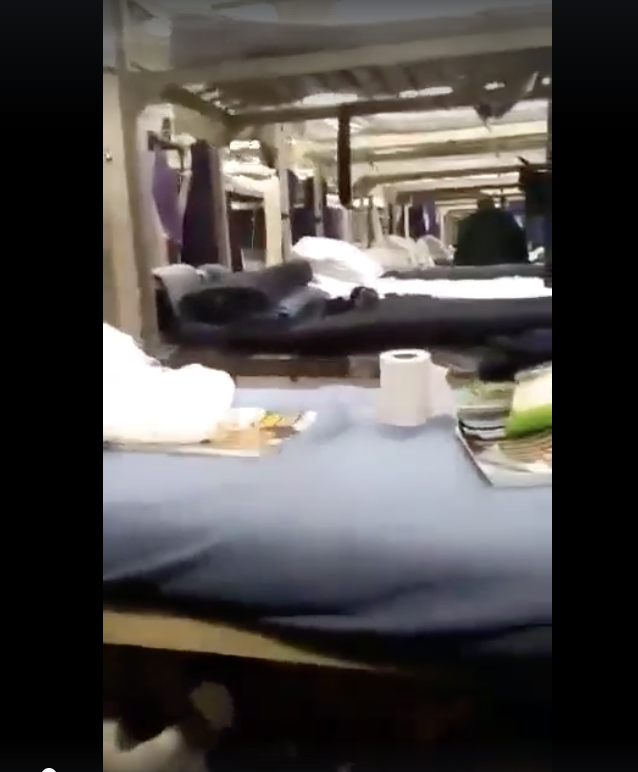
In one cell phone video that purportedly shows the inside of Pickaway, seemingly endless racks of double-bunked beds are visible, with no barriers and little space between.
“Everybody’s stacked on top of each other, man,” says the person wielding the camera. “Ain’t no social distancing in here….They’re playing with our lives, man.”
Picture of Ohio dorms
Virus runs amok in dorms
Pickaway was designed to have 87% of its beds in open double-bunk dorms, described in a 2015 state prison renovation plan as “barrack-style” (sic), where beds were typically three feet apart. When prisons are overcrowded, staff often squeeze even more beds into the dorms than they were designed to hold, said Meghan Novisky, a Cleveland State University professor who studies how prisons impact health.
In the 2015 master plan, state officials acknowledged that the prison’s dorm-style housing was a problem, not because of disease, but because it elevated prisoners’ stress, setting the stage for unrest.
“A critical need is to improve the dormitory living conditions and reduce the very high levels of crowding,” the report said. “The [Strategic Capital Master Plan] recommends the phased conversion of all dormitory living units to a cubicle-type configuration where inmates will have a higher degree of personal space and privacy.”
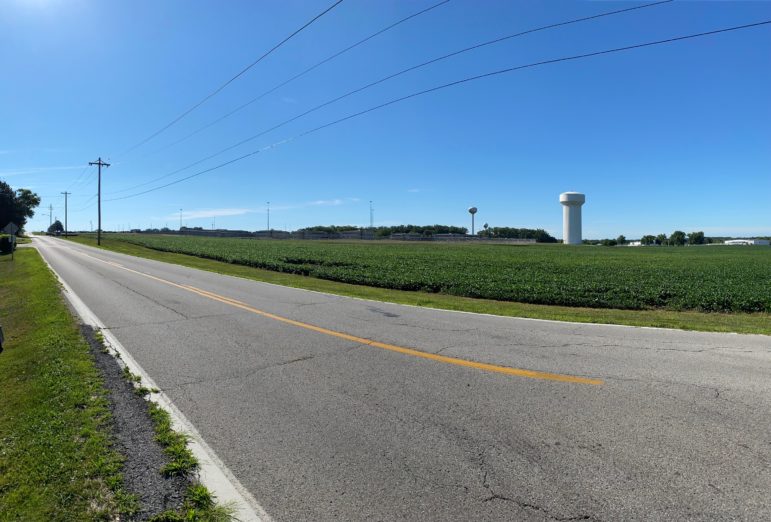
Outside Pickaway Correctional Institution. (Photo Credit Eye on Ohio)
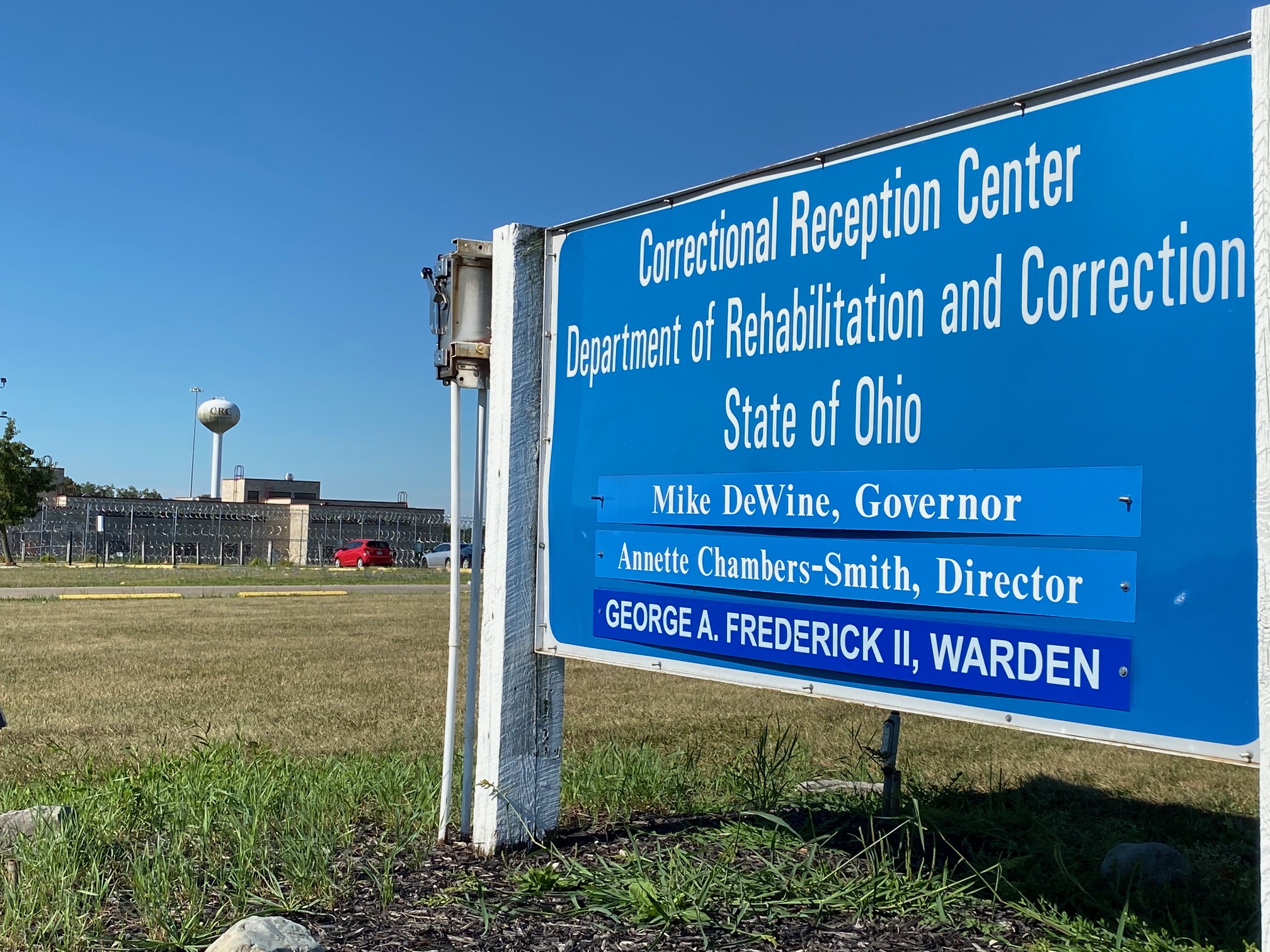
Ohio Department of Rehabilitation and Correction (DRC) spokesperson JoEllen Smith said that some of the plan’s recommendations for Pickaway have been implemented. The Orient Correctional Institution, a prison adjoining Pickaway that hasn’t been used since 2001, was demolished, as was Pickaway’s dilapidated E block of dorms. But construction of a new unit with over a thousand beds is on hold due to the pandemic.
Around March 29, leadership at Marion – designed to hold 73% of its inmates in dorms – declared that prisoners in dorms would sleep arranged head-to-foot. That way their faces would be more than three feet apart, according to an email between the prison’s medical services director and the Marion County public health department, obtained by the Documenting COVID-19project at The Brown Institute for Media Innovation.
According to daily statistics released from Ohio DRC, on April 21, more than 28,000 of the state’s 48,396 inmates were either “isolated” or “quarantined.” But in overcrowded prisons where most inmates lived in dorms, both happened in groups, according to numerous inmates.
Daily coronavirus reports from DRC noted that “isolation” meant keeping infected inmates away from those who weren’t sick, while “quarantine” meant “limiting the movements” of someone who may have been exposed to the virus. Guidance issued by the DRC early in the pandemic said it was preferable to quarantine inmates in the infirmary, but if not enough cells were available, they could be “quarantined” in “an area large enough to hold beds and equipment for a minimum of 50 patients.”
Marion was designed to hold 450 inmates in cells. On April 16, 2,417 inmates there were listed as “in quarantine.”
The close quarters of dorm-style housing is a problem in other Ohio prisons, too, inmates reported.
Javalen Wolfe, an inmate incarcerated in dormitory-style housing at Belmont Correctional Institution in southeastern Ohio, said that every time a flu or a cold enters the prison, there’s no stopping it.
“This is how it works because we live so close together. If one person gets sick, everybody gets sick,” he said. “We are literally two feet, maybe two and a half feet between the next person, and there’s no divider, no wall.”
At least nine Belmont inmates had died of COVID-19 as of Aug. 10. Belmont was designed to have 1,855 beds, over 90% of which would be in dorms. As of March 17, near the beginning of the outbreak in Ohio, 2,719 inmates were crammed into the prison— 146% of the population it was meant to hold.
Of the 77 confirmed COVID-19 deaths in Ohio prisons as of mid-July, 67 of them were in prisons that were designed to hold at least half their inmates in dorms. Of the deaths in prisons made up mostly of cells, 10 were in Franklin Medical Center, a small prison dedicated to caring for the system’s most seriously ill inmates.
The worst Pennsylvania outbreaks were at two prisons where inmates were housed almost exclusively in cells – Huntingdon and Phoenix. But the system overall houses just 19% of its inmates in dorms. Roughly 60% of Ohio’s inmates live in dorms, according to Department of Rehabilitation and Corrections Director Annette Chambers-Smith. Each dorm can hold anywhere from 40 to 300 inmates.
And even Pennsylvania’s worst prison outbreaks paled in comparison to Ohio’s. At Huntingdon, the prison with the most deaths, 359 coronavirus cases were confirmed, out of 1,835 inmates. Phoenix housed 2,825 inmates as of late July, 89 of whom tested positive for COVID-19 at some point.
Since mass testing wasn’t conducted at any of the Pennsylvania prisons, the death toll is probably a more faithful indicator of the spread of the disease. The inmate death rate at Huntingdon was 272 COVID-19 deaths per 100,000 people. At Pickaway, it was 1,709, and at Franklin Medical Center, it was over 2,000.
In an interview with Eye on Ohio, DRC Director Annette Chambers-Smith acknowledged that the open bays make it difficult to control the virus. She said they have attempted to mitigate dorm crowding by spreading inmates out in other areas that aren’t normally used for housing, such as gymnasiums and classrooms.
”They literally installed lavatories and facilities in a building so that it could be used overnight to house people,” she said.
And administrators are experimenting with makeshift barriers between dormitory beds at most of its prisons to reduce transmission.
Reducing overcrowding– release of prisoners
Pennsylvania started the pandemic in a relatively good position in terms of space after years of modest, gradual population reduction. They freed up more space after the pandemic hit by giving 3,500 people sentence reprieves and shutting down the county court system.
Several other states have taken steps to free up space in their prisons since the pandemic began, with 15 reducing their prison populations 10% or more between March and June, according to data from The Marshall Project.
Connecticut has taken the most drastic measures, cutting its inmate population by more than 22%, from 12,364 on March 8, the day the virus was first detected in a Connecticut prison, to 9,604 on August 12. Six inmates have died so far in the Connecticut system, which houses only 12,000 inmates thanks to a decade-long pre-pandemic decarceration effort that reduced the population from about 20,000 in 2008.
Compared to the state’s prison population in March, its per-capita death rate has been less than half that of Ohio’s prisons.
That’s despite the fact that, according to prisoner advocate groups in Connecticut, the state made many of the same missteps as Ohio in their attempts to quarantine and isolate inmates.
Melvin Medina, public policy and advocacy director for the ACLU of Connecticut, said that the CDC has recommended isolating people with laboratory-confirmed COVID-19 together and quarantining close contacts together as a group due to limited space in prisons, but did not indicate how large these groups can or should be.
“Our DOC took that to say that in dorm-style settings if there was one sick person in a dorm of 100 people, that meant that whole block was quarantined together,” he said. “They locked sick and healthy people in together and let the virus run its course. In hindsight, I’m deeply thankful that our death count was really low. We could have had a disaster, and we got very lucky.”
Advocates like Novisky say releasing inmates is the best way to protect them from COVID-19, since any group housing makes it hard to control the spread of disease. Even in places where prison populations have dropped by double-digit percentages, advocates say it’s not enough.
“They need to release those that are medically vulnerable,” based on the CDC’s criteria, not just those who are close to the end of their sentences or incarcerated for non-violent offenses, said Nyssa Taylor, criminal justice policy counsel for the American Civil Liberties Union of Pennsylvania. The state is home to about 4,000 older adults serving life sentences, she said, one of the highest such populations in the country.
“I don’t think we should be politicizing who to release,” she said. “I think it’s really important to look at how to save lives, not just ‘release all the non-violent.”’
Meanwhile, Ohio’s prison population fell by about 5.2% between March and June. By August 11, it had fallen 9%.
“I think part of the problem that they’re running into is we really haven’t taken advantage of options to reduce our population size,” said Novisky.
On April 15, Ohio Gov. Mike DeWine announced he was invoking an overcrowding statute to release some prisoners early. Inmates who were within 90 days of their planned release date could be eligible for early release, but only if they met a list of criteria. That excluded people convicted of most types of violent crime, who had served more than one sentence, who had previously been denied judicial release, or who had committed a serious infraction while in prison.
“It basically eliminated everyone,” Novisky said.
Chambers-Smith said the department has taken multiple steps to reduce the population, including reviewing cases of elderly inmates or those with health conditions that make them especially vulnerable to COVID-19. The list of crimes that disqualify inmates for early release under Ohio’s emergency overcrowding law, she noted, is set by the Ohio legislature. The law would have to be amended to loosen those criteria.
“There are more serious crimes where you wouldn’t want to think about people getting out before they’re ready,” she said. “There’s a balancing act here between keeping the public safe and keeping the people in prisons safe.”
Of the 77 Ohio inmates who have died of COVID-19, 34 — more than half— were in prison for sex offenses. Another 18 had been convicted of murder. The average sentences for rape or murder are more than 20 years. Many of the men killed by the coronavirus had grown old in prison.
But most Ohio inmates are serving time for lesser crimes. Only about 12% of Ohio’s inmates were convicted of murder, and 16% were sex offenders. Meanwhile, 15% of Ohio’s inmates were in prison for drug offenses, with 10% serving time for burglary.
But almost a third of Ohio’s inmates released in 2014 ended up back in prison within three years, according to the most recent recidivism study published by the state. All of those prisoners would have been disqualified by DeWine’s exemptions. And with the prisons packed full of repeat offenders, even low-level ones, it would have been difficult to keep older, more vulnerable inmates serving long sentences for more serious crimes isolated.
A spokesperson clarified that it was a joint decision of the governor’s office and the DRC to disqualify repeat offenders, not a stipulation of the emergency overcrowding law.
The day of his announcement, DeWine said he had found 105 people who were eligible for early release, though he noted that more would be considered as they came within 90 days of the end of their sentence.
Since then, the number of inmates has declined slightly, but more due to court shutdowns meaning fewer people sentenced than the slow trickle of early releases. As of August 11, Ohio’s prison population was still nearly 8,000 people over capacity.
Putting the community at risk
Ohio’s prison pandemics also put those outside of prison walls at risk.
As prisons were cut off from visitors, it may have created the false impression that diseases that spread in prisons would stay in prisons. But the Marion outbreak demonstrated otherwise. County health officials and residents voiced concerns in emails that both staff and inmates who finished their sentences were capable of spreading the virus across multiple counties.
In one email obtained by the Documenting COVID-19 project, Traci Kinsler, the Marion County health commissioner, noted that the Marion prison was not isolating inmates before releasing them. Marion released at least one inmate who was known to be infected with COVID-19. He moved to Ashland County.
Chambers-Smith said the department initially offered staff members the option of staying at the facility where they worked to avoid infecting their families. When that offer had few takers, they contracted with hotels to give prison workers a place to sleep, or at least shower before they went home.
Inmates are tested before their release dates, she said, and those who were selected for early release have their release dates pushed back if they test positive until they are considered recovered— officially defined by the department as 14 days past the onset of symptoms, and 72 hours symptom-free. If they reach their regularly scheduled release date, the department has no authority to keep them incarcerated, but will release COVID-positive people with a quarantine order. She said the department collaborates with health departments and religious organizations to give them a place to liveand supplies so they can self-isolate.
Kinsler told Eye on Ohio that the Marion prison outbreak flooded the Marion Public Health Department with cases all at once, and at first officials in various departments struggled with contact tracing. They were able to contact most of the infected people who were released, though, and alerted the county health departments where they settled.
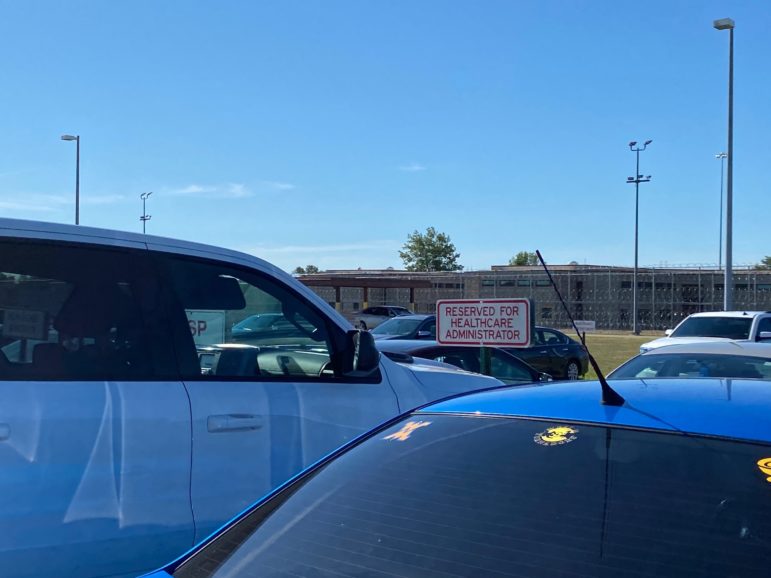
Parking Spot for the Healthcare Administrator at Pickaway Correctional Institution. (Photo Credit Eye on Ohio)
Ultimately, most of the 2,532 people known to be connected to the outbreak at Marion Correctional were either inmates or staff. But the virus made its way to an additional 58 people outside the prison, including family members, health care workers and food workers.
And there could be other cases where health workers simply forgot to label the infection as related to the Marion prison outbreak in the database.
Chambers-Smith said the danger works both ways.
”If there’s COVID out in the community, there’s COVID in the prisons,” she said.
This story is sponsored by the Northeast Ohio Solutions Journalism Collaborative, composed of 16-plus Greater Cleveland news outlets including Eye on Ohio, which covers the whole state.
Oxford, Ohio – Miami University President Gregory Crawford said in an announcement Friday, “This week we have all been witnessing a troubling spread of COVID-19 on university campuses across the nation, and we will continue to monitor developments as many more schools begin to reopen next week so we can learn from their challenges and decisions.”
Miami University President Gregory Crawford(Photo Miami University)
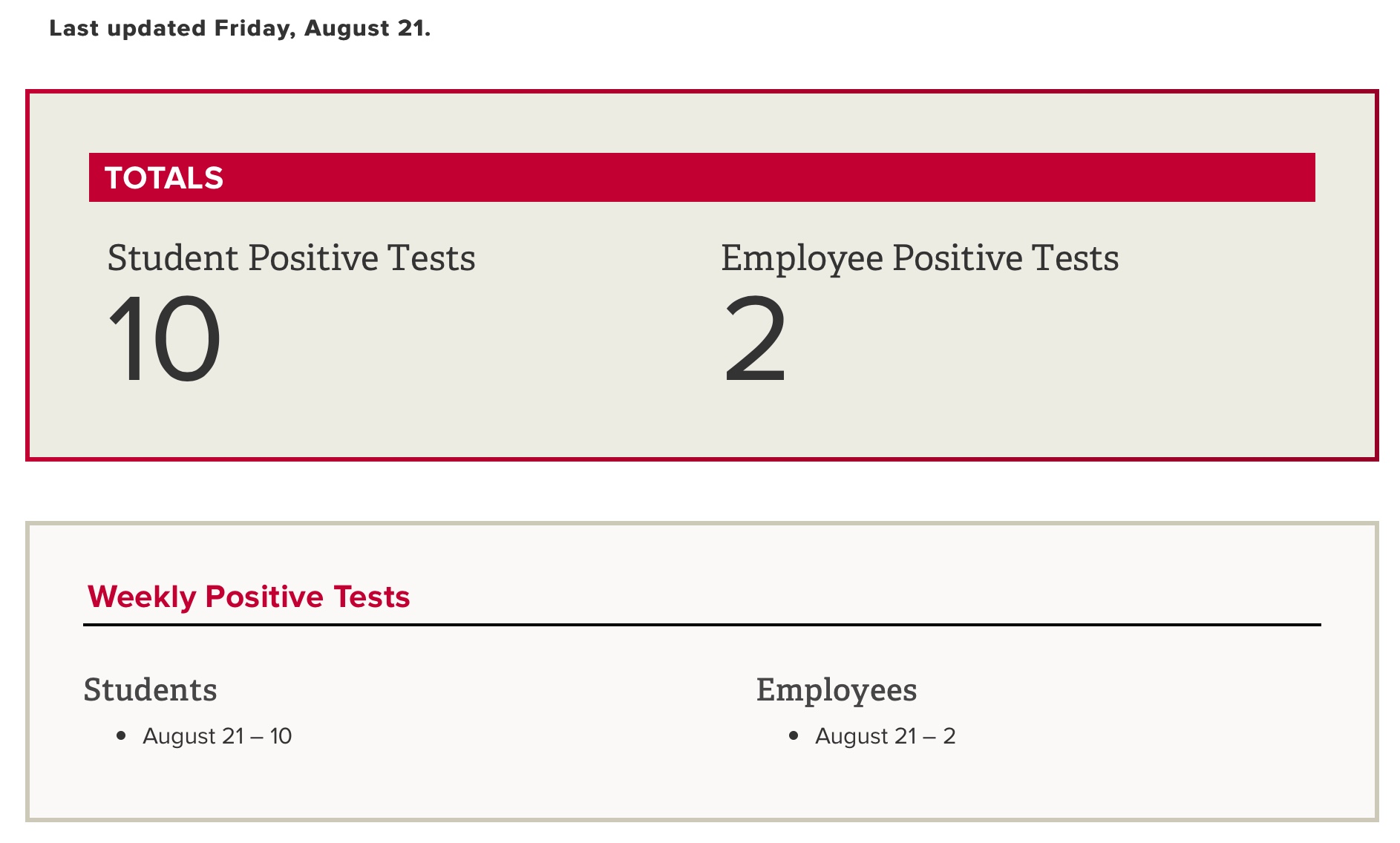
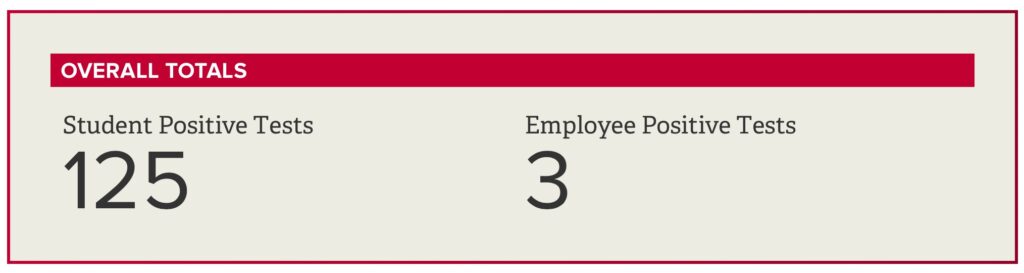
Along with the statement Crawford reported that on the Oxford campus, since the start of classes, they have had 10 positive COVID-19 tests among students and 2 among employees.
Miami has now created a dashboard to track positive results from tests conducted at the Employee Health Center and Student Health Service managed by TriHealth.
The announcement also introduced a symptom tracking app, Campus Clear (available for download from the app store on a mobile device), which must be completed daily if coming to campus. An illness/absence reporting system is also in place to help track potential outbreaks in the Oxford community.
Buildings on all campuses have reopened. Miami has begun to phase-in on-campus operations, and in the coming weeks students will be returning in stages.
Fall classes began on Monday, August 17, mostly remote, with graduate students and some programs in person.
Classrooms are organized to maintain six-foot physical distancing, and cleaning materials are available to clean desks and common spaces before and after each use.
Students who will be living off campus are encouraged to stay home, if they can, until face-to-face courses start on Monday, September 21. All students are expected to follow health and safety protocols, “like those in our residence halls, in their off-campus living arrangements.”
All returning students must sign the Healthy Together Community Pledge, committing to take responsibility for their health and others’ through recommended precautions to help prevent the spread of COVID-19 on campus and in the community. The pledge focuses on preventative measures such as social distancing, face coverings, cleaning practices, handwashing and sanitation, daily symptom assessment, limiting indoor or outdoor gatherings to fewer than 10 people, and not attending or hosting any gathering where physical distancing is not possible. It also asks students to pledge to participate in testing, contact tracing, and quarantine or isolation if they or their close contacts become ill with COVID-19.
The phased-in strategy will culminate with the students residing on campus moving into the residence halls during the week of September 14. Face-to-face and hybrid offerings will begin on campus on Monday, September 21.
























![[12 positive cases] COVID-19 Oxford Campus Dashboard now available](https://lovelandmagazine.com/wp-content/uploads/2020/08/EZWQ_4AXkAAzUIf.jpeg)