Tag: COVID-19

  • Here is how the Great Oaks campuses will open in the Fall

    Here is how the Great Oaks campuses will open in the Fall

    Here is how the Great Oaks campuses will open in the Fall.

    Please note:  The following information applies only to high school students at Great Oaks campuses.

    Our community, and the world, continues to adapt to the ongoing pandemic. In all that we do at Great Oaks, the safety and health of our students, staff and visitors is our highest priority. Whenever students, staff and visitors are together in a Great Oaks building, we expect that social distancing (at a minimum of 6 feet) is practiced, face coverings will be worn by all, and the buildings and equipment will be frequently cleaned and sanitized. We also encourage such healthy personal habits as regular hand-washing. 

    The following information reflects the most recent planning; information can change if circumstances change.

    Update July 20, 2020

    Academic classes will be held online

    In order to maximize the amount of hands-on, career-technical education available to students, all in-person classes will be in the career lab with the career-technical instructor.  English, mathematics, social studies, and science classes will be held remotely.  Students will spend all day two days per week in their career-technical program.

    As part of this schedule, students will have time to meet individually with academic instructors while on campus, which will support their online learning.  It also means that the same group of students will stay in the same room—their career lab—for the full day, reducing the number of times per day needed to sanitize rooms as we would if students changed classes for multiple periods daily.

    Students will attend the campus on Mondays and Thursdays as part of the A group, or Tuesdays and Fridays as part of the B group.  During the remaining three days, students will work remotely on academic work and other homework, with Wednesday set aside for one-on-one remote assistance.

    This schedule will run for the first quarter, until October 16.


  • LHS’s Andy Cruse Gives Preview of up and Coming Football Season!

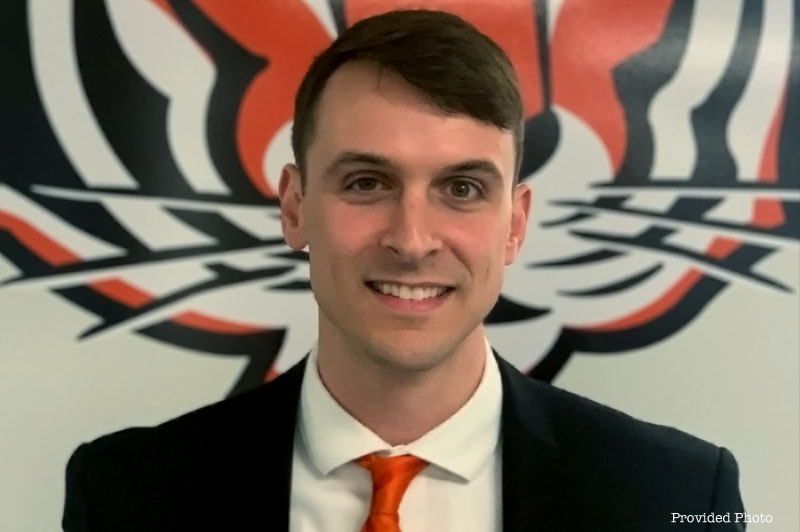
    LHS’s Andy Cruse Gives Preview of up and Coming Football Season!

    by Cassie Mattia

    Loveland, Ohio – As student-athletes across Ohio are gearing up to start practicing and competing, the Loveland Tigers Football Coach, Andy Cruse, is more than excited to get his team ready for the 2020-2021 season!

    Over the past several months, all contact sports in the state of Ohio were put on hold due to the COVID-19 pandemic, forcing student-athletes to take it upon themselves to prepare for their up and coming sports seasons. Ohio coaches of course tried to impact their student-athletes as much as possible virtually, but for many high school athletes having coaches physically there motivating them through tough practices is what the athletes are saying they both want and need!

    Recently OHSAA released guidelines for all Ohio High School sports programs in regards to what the protocol will be once practices and competitions begin. With that being said I decided to check in with LHS’s Head Football Coach Andy Cruse to see just how these guidelines will affect the football program, the student-athletes, the coaches, and the loyal Tiger spectators. Here is the Loveland Tiger Football 411 featuring Coach Andy Cruse!

    Cassie   Have you started in-person practices yet with the team and coaches and if so are there any restrictions?
    Coach Cruse   We began workouts with restrictions on June 1st. We have done football-related activities for a while now, but just recently started having limited contact during on-field training. We officially begin our season on August 1st.
    Cassie Have you had fewer players come out for the team because of COVID-19 and the Pay-to-Play implementation?
    Coach Cruse   Surprisingly, no. We have had the best attendance since I’ve been the Head Coach at Loveland. I truly believe that quarantine made our athletes appreciate football and being together more. Many of them had to be very creative in their workouts without a weight room, so being able to train in our beautiful weight room has been great for all of them.
    Cassie Have you named team captains and if so who are they?
    Coach Cruse  We have not. This is something we will do early on in August. We have many players that have really emerged as leaders since last December.
    Cassie How are you and your staff handling the COVID-19 pandemic and restrictions? Has it been tough or have you successfully managed the situation?
    Coach Cruse Our staff has handled it very well. Head Coaches did a walk thru on everything with Brian Conatser, our AD before we started workouts and then my staff and I did a walk-thru of how the workouts would go before we started back up on June 1st. My staff and I, like the rest of the athletic department, are taking every precaution necessary and are following the guidelines that the state has put out. Initially, it was very different than what we were used to. We have told our players from the beginning of quarantine that we must adjust and adapt moving forward and that is exactly what we have done.
    Cassie Do you have any returning Seniors or stand-out players from last year? What are your expectations for this year in regards to wins and losses?
    Coach Cruse We return 9 out of 11 starters on offense and many defensive players return with varsity experience. This team is quietly gaining more and more confidence. It has been a joy to be around them since June 1st as it is very clear they enjoy working hard and being around each other. My expectations are to be competitive in every game we play and to respond to adversity that is thrown our way this season. Senior standouts include QB Calvin Cloud, OL Zach DeWitt, WR Tyler Lake, WR Aaron Morton, DE Gabe Ogdan, and TE/LB Austin Lodor. There are a number of other players we expect big things from this season too. As a whole, we are seeing a lot of competition for playing time, which is what we want.
    Cassie The ECC recently added 3 more schools to the conference making the conference that much more competitive! This year who are you excited to compete against and who do you think will be challenging to compete against?
    Coach Cruse The ECC is a terrific conference and will continue to be even more challenging. In our conference for football, every week is an absolute battle. There are no easy games on our schedule but we embrace that challenge and are excited about it!
    Cassie Are you able to hold any fundraisers for the athletes or events to help with the pay-to-play fees?
    Coach Cruse Unfortunately we missed out on a couple of things we had planned due to COVID-19. We will be selling discount cards until July 30th around the community. Be on the lookout for our players and please help support Loveland Athletics!
    Cassie In your own words, talk about your experience with the quarantine, COVID-19, and trying to be the best coach you can be during this time.
    Coach Cruse Quarantine was a unique time for all people for a lot of reasons. For me personally, I really enjoyed the time with my family, especially being with my daughter every single day! She is 8 months old now, so seeing how much she has changed in a few months and being with her every step of the way has been a blast. It was time I would’ve never gotten had COVID-19 not happened.
    Overall, I looked at quarantine as an opportunity to get better every day. Just like we stressed with our players, I tried to have a routine every day to make sure I was productive.  I am not a huge reader, but during quarantine, I quickly became one. I read about a book every 1-2 weeks and really enjoyed it. There were also a number of virtual football clinics that my staff and I attended as well.
    Aside from that, we had a team meeting every week, at least one position meeting a week with players and a number of staff meetings. I grew to really look forward to these interactions with our players and coaches. When it all started, we decided as a staff that we wanted to make sure we were in constant communication with our players. We felt that checking in with them to see how things were going at home, how school was going, and then how workouts were going was going to be very important. We also took it as an opportunity to get closer as a team by getting to know each other better.
    Check out the Loveland Tigers football schedule for this up and coming season!
    2020-2021 Loveland Tigers Football Schedule
    8/28 Sycamore
    9/4 at Princeton
    9/11 Turpin
    9/18 West Clermont
    9/25 at Milford
    10/2 Little Miami
    10/9 at Walnut Hills
    10/16 at Kings
    10/23 Anderson
    10/30 at Winton Woods
    For more of your latest local sports news stay tuned to the Sports 411 With Me, Cassie Mattia! Oh and by the way…GO TIGERS!
  • Clermont County seeks items for COVID-19 time capsule

    Clermont County seeks items for COVID-19 time capsule

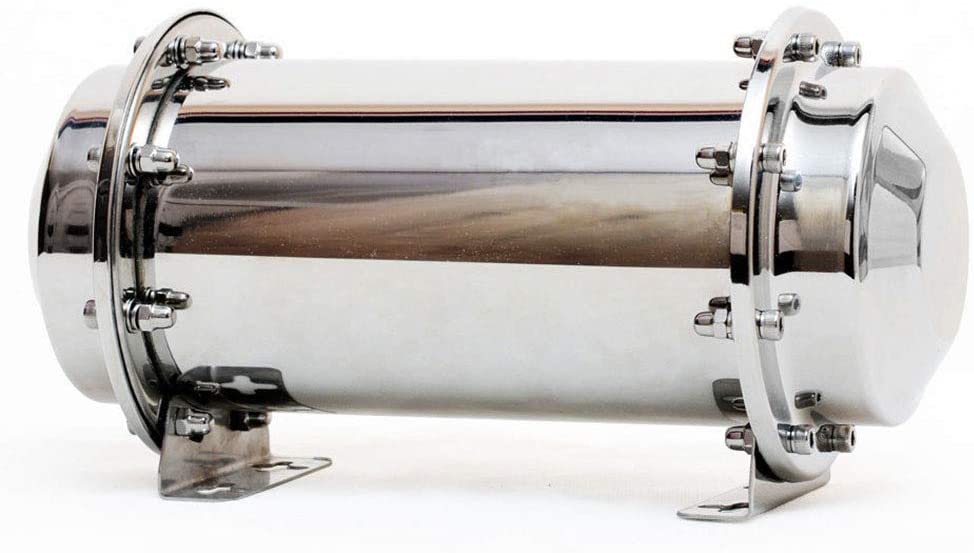
    Clermont County, Ohio – Clermont County residents can help preserve history by contributing their thoughts in writing and other remembrances to a COVID-19 pandemic time capsule. The project is co-sponsored by the Board of County Commissioners and the Coalition for a Drug-Free Clermont County.

    The time capsule will be placed in Municipal Court during a ceremony later this year.

    “We’ve been impressed at how Clermont County residents have come together during this extremely challenging period in our history,” Commissioner Claire Corcoran said. “We will honor their efforts with this special time capsule. We want people in the future to better understand the difficulties that people faced, and how they worked to overcome them.”

    Mary Wolff, director of the Coalition for a Drug-Free Clermont County, added: “We’re very excited to have the community join us in this positive endeavor, helping preserve history for future Clermont County residents. I can’t wait to see what people provide for the time capsule.”

    The time capsule will be placed in Municipal Court during a ceremony later this year with representatives from County Government and the Coalition for a Drug-Free Clermont County. Plans call for opening the capsule in 10 years.

    You can help preserve this time in history by submitting photos and writeups via email to mboehmer@clermontcountyohio.gov. Clermont County residents also may mail items to COVID-19 Time Capsule, 101 East Main St. 3rd Floor, Batavia, OH 45103.

    Here are some prompts the County provided to help those wanting to submit something in writing:

    • What does the COVID-19 pandemic mean to you?
    • What are you excited about?
      What are you nervous about?
    • Write a note to the future you.
  • Additional CARES Act funding available for Ohio Cultural Nonprofits

    Additional CARES Act funding available for Ohio Cultural Nonprofits


    Available to assist nonprofit organizations that serve the public by offering programs in history, literature, philosophy, or other humanities topics.

    Columbus, Ohio – Ohio Humanities announced the availability of additional OH CARES funding to help cultural nonprofit organizations affected by COVID-19 health crisis.  According to Pat Williamsen, Ohio Humanities executive director, up to $60,000 is available to assist nonprofit organizations that serve the public by offering programs in history, literature, philosophy, or other humanities topics.  Grants of up to $5,000 will be awarded through a competitive application process.

    Funded by the Coronavirus Aid, Relief, and Economic Security Act (CARES Act), the grants will help Ohio’s cultural community maintain staffing and provide programming for audiences affected by continuing pandemic restrictions. OH CARES grants may be used for digital programming, humanities education staff, and supplies to maintain the safety of employees and patrons. Organizations that received OH CARES grants in the first round of funding are ineligible.

    Do you belong to or support a Loveland organization that may be eligible?

    Applications for OH CARES II grants will be available beginning on Friday, July 31; the deadline for submission will be Friday, August 14.  A webinar about this funding initiative will be held on July 29 at 10 a.m. To register for the webinar, go to ohiohumanities.org/CARES.

    The CARES Act, passed by Congress on March 27, included $75 million of emergency funding for the National Endowment for the Humanities (NEH). Forty percent of that amount was distributed to the 56 state and territorial humanities councils to support local relief efforts. In late March, NEH reported that the anchors of the creative economy such as museums and historical societies were reporting losses of $1 billion every month as facilities were closed and educational programs were canceled.

    Art museums, local historical societies, preservation societies, and other organizations that preserve and promote Ohio history, heritage, and culture.

    Announcing the emergency appropriations available through the CARES Act, NEH Chairman Jon Parrish Peede observed, “To the extent that healing is to come during and after this pandemic, it will be through humanities fields from philosophy to literature to history to religious studies—through the act of documenting, preserving, sharing, and reflecting— that our communities will move toward a greater sense of wholeness.”

    In its first call for OH CARES grants, Ohio Humanities awarded $690,000 to 91 organizations throughout Ohio. Recipients included art museums, local historical societies, preservation societies, and other organizations that preserve and promote Ohio history, heritage, and culture.

    Ohio Humanities staff are available by email to help applicants navigate the application process to access emergency funding. Ohio Humanities will continue accepting grant applications for regular projects at deadlines listed at http://www.ohiohumanities.org/grants-2/.

    Additional information about OH CARES funding can be found at ohiohumanities.org/CARES.

  • Teens can get ready for college or a career with a leg up from the Library

    Teens can get ready for college or a career with a leg up from the Library

    Written by Kelly Sheehy, Content Specialist, Downtown Main Library

    With COVID-19 still keeping us all at a social distance for the time being, Teen Librarians from across our Library system put their heads together to help connect teens with college and career readiness resources as they graduate, move into summer employment, or think about college.

    Teen Librarians Jacob Glemaker and Michelle Kanis, unable to meet with students in person due to the pandemic, compiled several lists of quick links and tutorial videos so teens can explore and get connected to useful information.

    “We hope that teens from all over our Library system will learn about new digital resources like OhioMeansJobs in order to map out potential career paths, explore different career choices, and also look at local colleges that will help them achieve these goals of breaking int degree or certificate programs,” said Glemaker.  “John Lortie, Teen Librarian at the Anderson Branch, compiled a list of digital tours for colleges in Ohio. This is great for students who were thinking about physically touring a school, but could not because of the pandemic.  This way they are still able to learn about what options are available to them.”

    Check out these helpful resources they compiled, with the assistance of Teen Librarians throughout the Library system:

    Education Resources

    Guide to Planning High School Courses  

    College Resources 

    Virtual College Visits

    Ohio Technical Center Programs 

    Community Resources

    Career Resources 

    Get Your First Job, presented by Teen Librarians Liz Weigand and Lauren Smallwood

    8 Red Flags Employers See on Your Résumé 

    Career Clusters

    OhioMeansJobs Quick Links to Resources

    Guide to Budgeting

    Guide to Researching Occupations 

    Guide to Résumés 

    Job Readiness Guide  

    Job Search Log  

    Transferrable Skills Checklist

    RELATED POSTS

  • As we reopen Loveland Schools: CDC director blocked from appearing before Congress to testify about reopening schools

    As we reopen Loveland Schools: CDC director blocked from appearing before Congress to testify about reopening schools

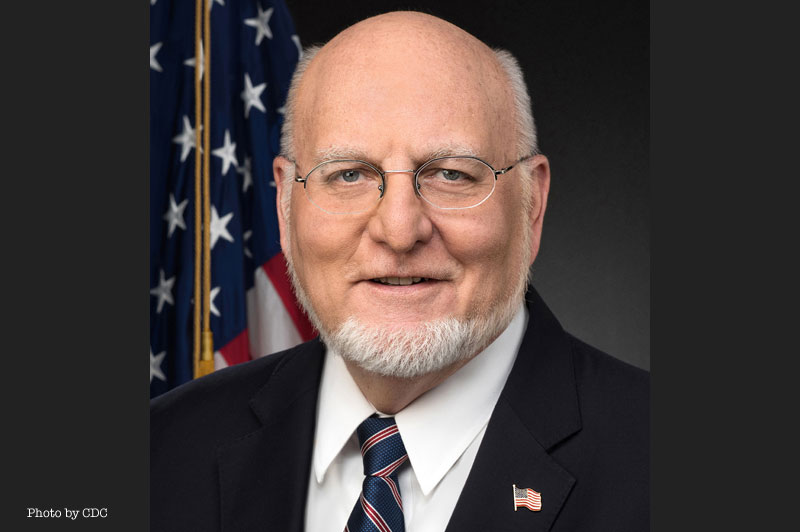
    CDC Director Robert Redfield

    The Loveland Board of Education voted unanimously on Wednesday to fully re-open schools. During their discussion, we heard repeatedly how the devil’s daily details are not yet known because staff and administrators are waiting for advice and guidelines from various local, State, and Federal agencies that have yet to be released. (In unanimous vote Loveland Board of Education approves reopening plan)

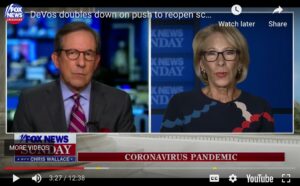
    Chris Wallace asks Education Secretary Betsy DeVos if she has authority to pull funding from schools that don’t reopen and about safely re-opening schools

    Meanwhile, we find out today as Bianca Quilantan reports in Politico that the White House is blocking CDC officials from testifying next week at a hearing on reopening schools.

    Separately, the CDC confirmed that more guidance for opening schools won’t be released until later this month. The report was expected to already be available.

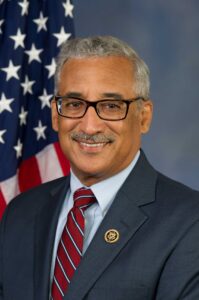
    House Education and Labor Committee Chair Bobby Scott (VA-03) had invited CDC Director Robert Redfield, or a designee, to testify before the Early Childhood, Elementary and Secondary Education Subcommittee on July 23 at a hearing on safely reopening schools.

    CNN’s Dana Bash speaks to Education Secretary Betsy DeVos about whether or not she has a plan for schools to safely reopen for students as Covid-19 cases surge in the US.

    Scott asked Redfield to discuss the immediate needs of K-12 public schools as many districts, including Loveland, Ohio schools, prepare to reopen in a few weeks.

    “It is alarming that the Trump Administration is preventing the CDC from appearing before the Committee at a time when its expertise and guidance is so critical to the health and safety of students, parents, and educators,” Scott said in a statement to Politico. “This lack of transparency does a great disservice to the many communities across the country facing difficult decisions about reopening schools this fall.”

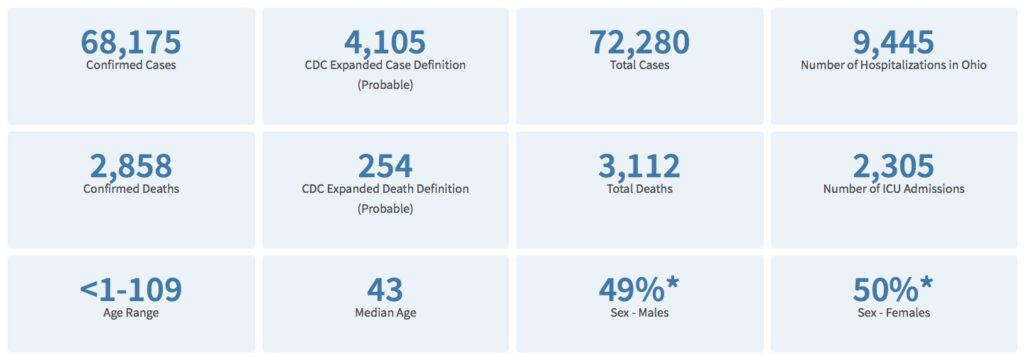
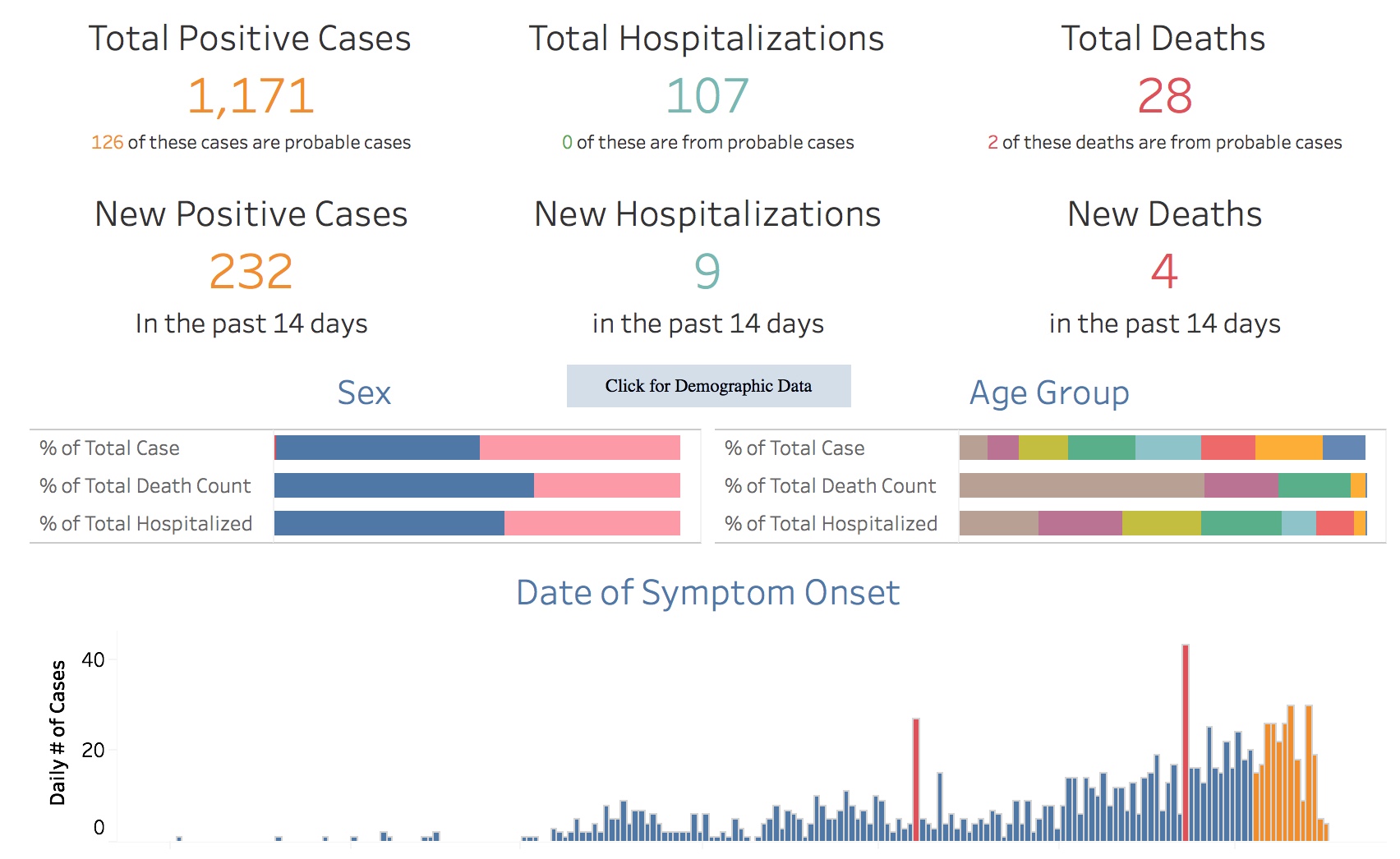
    Ohio’s COVID 19 DASHBOARD today at 7:48 AM

    Aides, speaking on background, said the committee was told that Redfield would not appear, at the direction of the White House according to Politico.

    Science and evidence-based resources and tools could provide additional information for administrators, teachers and staff, parents, caregivers and guardians in Loveland, as they work towards the public health-oriented goal of safely opening schools this fall.

    House Education and Labor Committee Chair Bobby Scott

    Scott released this statement on Friday:

    “School reopening plans must be guided by the advice of public health experts. For that reason, we asked the Centers for Disease Control and Prevention (CDC) to testify in a public hearing to provide greater clarity on the steps we can take to help schools reopen safely.

    “It is alarming that the Trump administration is preventing the CDC from appearing before the Committee at a time when its expertise and guidance is so critical to the health and safety of students, parents, and educators. This lack of transparency does a great disservice to the many communities across the country facing difficult decisions about reopening schools this fall. 

    “The administration’s strategy of prioritizing politics over science has had a devastating impact on our country throughout this pandemic. It should not make that same mistake when it comes to reopening schools.”


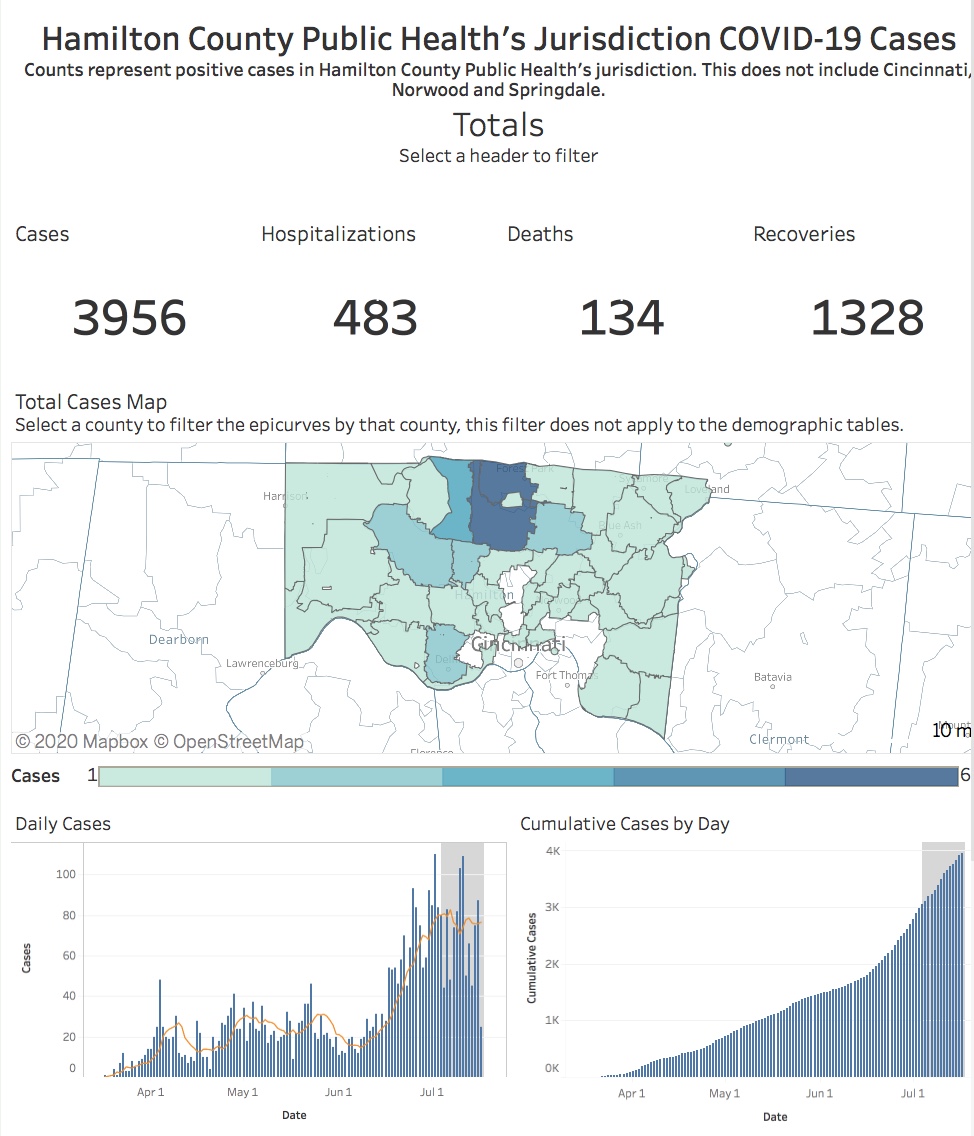
    Hamilton County COVID 19 Dashboard today at 7:55 AM


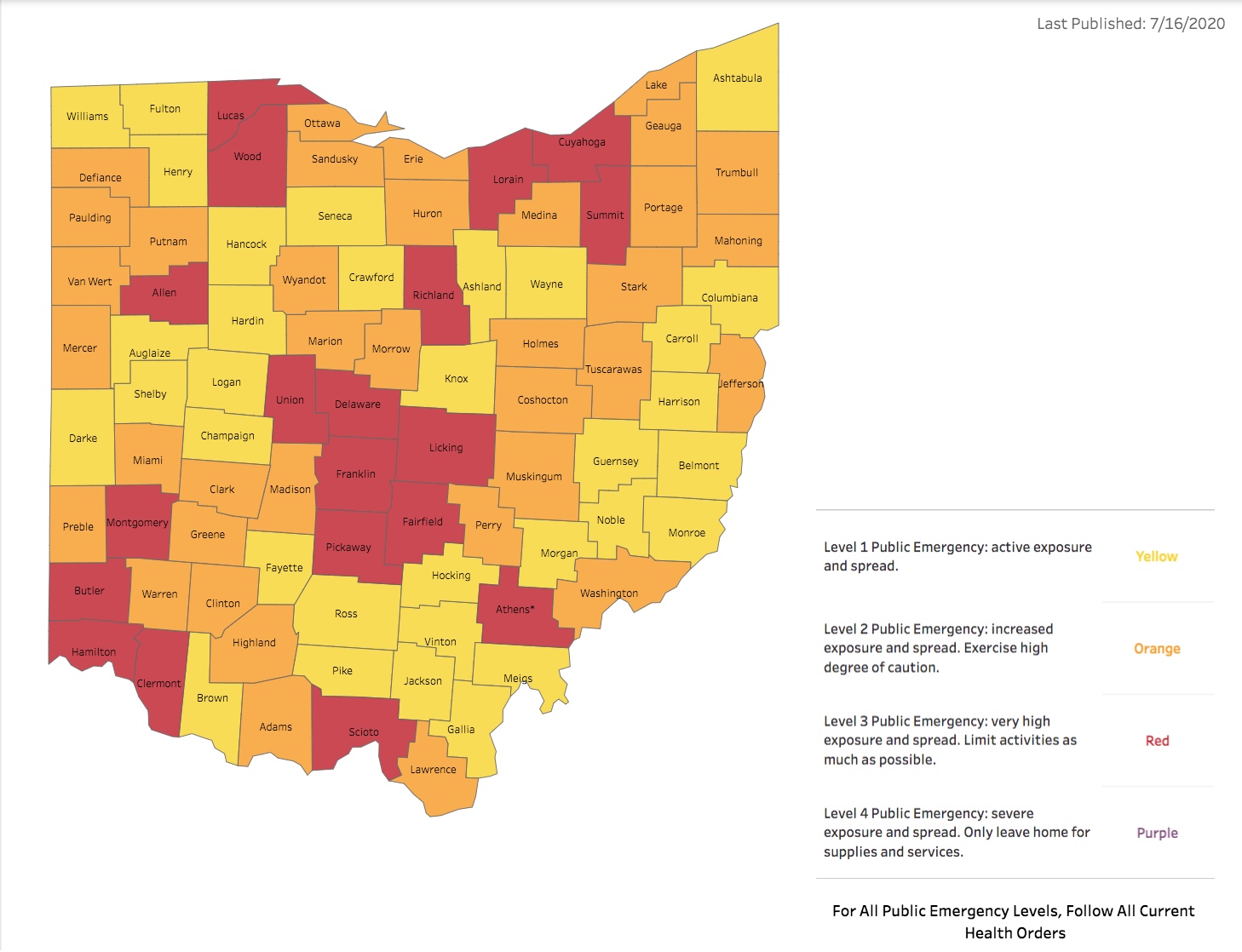
    Ohio Public Health Advisory System The Public Health Advisory Alert System is a color-coded system designed to supplement existing statewide orders through a data-driven framework to assess the degree of the virus’ spread and to engage and empower individuals, businesses, communities, local governments, and others in their response and actions. (7-18-2020)


    Warren County COVID 19 Dashboard today at 8:02 AM


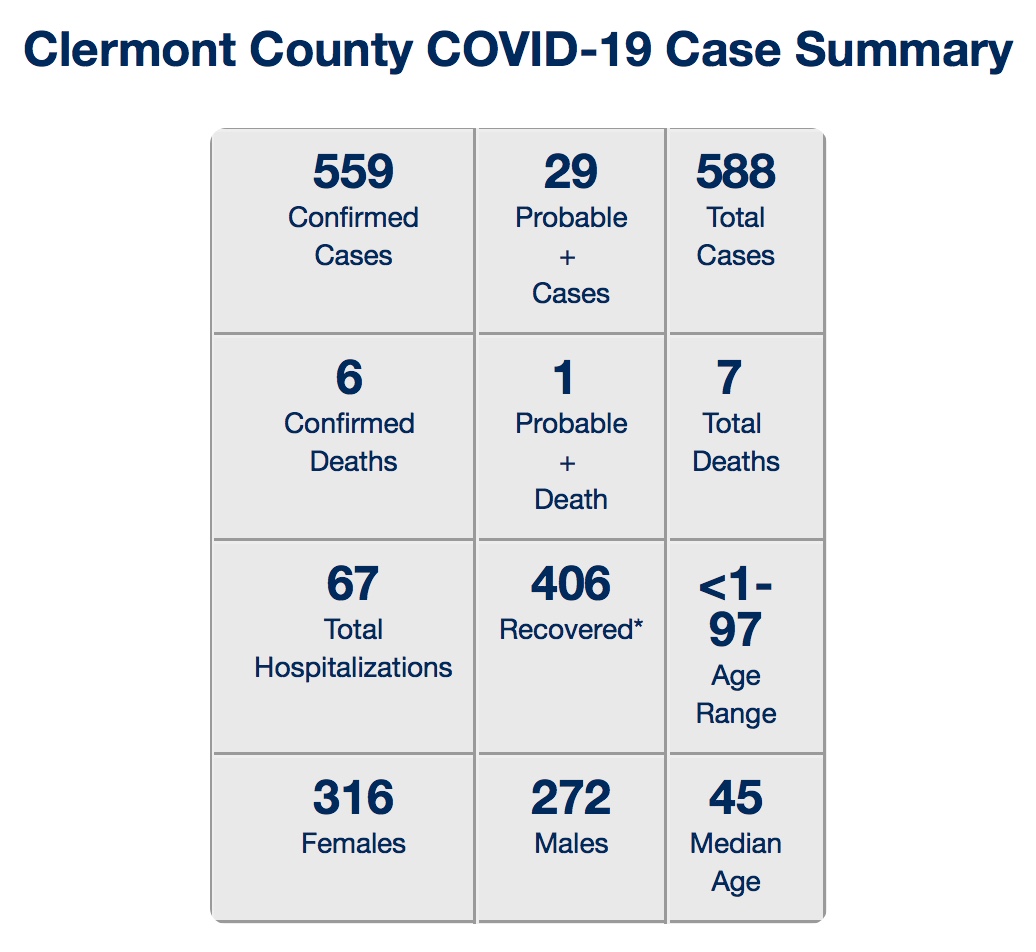
    Clermont County COVID 19 Dashboard today at 8:02 AM


  • Ohio Department of Health stresses that teens and young adults are crucial in fight against COVID-19

    Ohio Department of Health stresses that teens and young adults are crucial in fight against COVID-19

    Columbus, Ohio – Lance D. Himes, interim director of the Ohio Department of Health (ODH), is calling on Ohio teens and young adults to take precautions to protect themselves and others against the dangers of COVID-19.

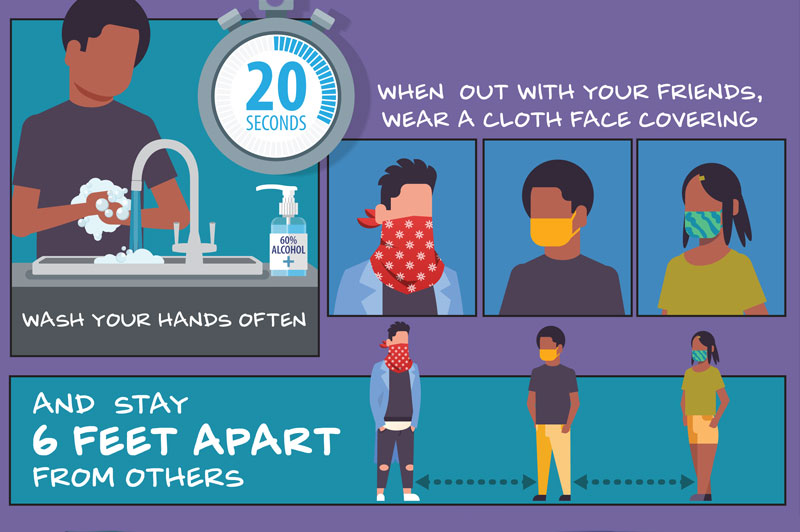
    Himes said it is essential that young people stay home and away from others if they are sick, adhere to 6-foot social distancing, and wear facial coverings when they go out. Avoid gathering in large crowds, huddling in groups, and sharing hugs or drinks.

    “Young people have given up a great deal since this pandemic first hit and are eager to get back to normal,” Himes said. “I thank them for their sacrifices and urge them to create a new normal in which they find ways to safely socialize, wear masks, keep a safe distance, and look out for one another.”

    ODH has prepared guidelines for parents and others for talking with young people about COVID-19. The guidelines include tips for preventing the spread and navigating new social norms. The Centers for Disease Control and Prevention also has produced a series of fact sheets for young adults:

    The average age of people with COVID-19 in Ohio has been steadily decreasing, showing that more and more young people are being exposed, and have become ill. Even those who don’t experience symptoms or only mild ones can unknowingly carry the disease and pass it to parents, grandparents, or other family and friends who may become seriously ill.

    “Teens and young people must do everything in their power to protect themselves, their families and friends, and all Ohioans against this very real and very serious threat,” Himes said.

    Taking steps to prevent COVID-19 also shows appreciation and offers protection for essential workers who provide healthcare and deliver food, packages, and other items. Further, reducing the spread of the pandemic is critical to prevent hospitals from becoming overcrowded. Overcrowded hospitals and overburdened healthcare workers make it more difficult to care for patients in critical need—a grandparent suffering from COVID-19, an aunt having complications delivering a baby, a father with chest pain, or a friend hurt in a car crash.

    “Teens and young people must do everything in their power to protect themselves, their families and friends, and all Ohioans against this very real and very serious threat,” Himes said. “You will save lives, prevent suffering, and help tame a pandemic that places all of us at risk.”

  • Ohio Republicans slammed over coronavirus enforcementBy Marty Schladen – July 13, 2020

    Ohio Republicans slammed over coronavirus enforcementBy Marty Schladen – July 13, 2020

    Columbus, OhioThe coronavirus is raging in Ohio, but the state’s Republican leaders seem disinclined to enforce rules intended to protect against it. (How does Hamilton County avoid Level 4 Alert)

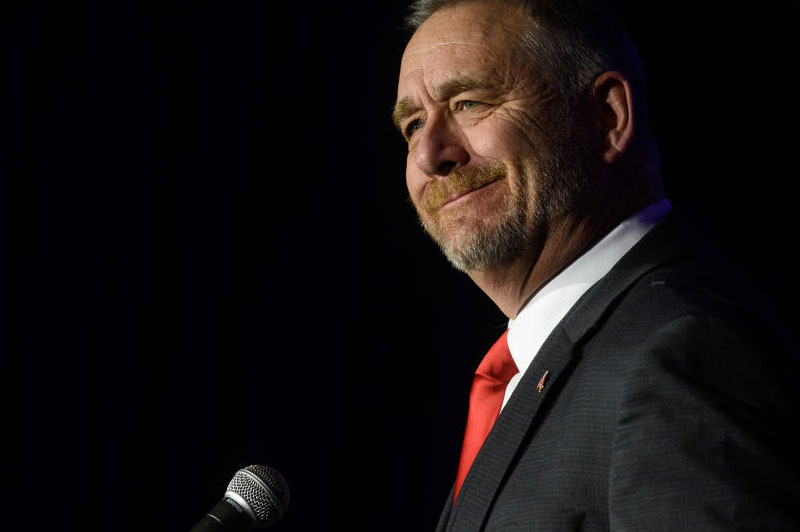
    Attorney General Dave Yost won’t say whether he’ll support enforcement of new orders to wear masks in the state’s hardest-hit counties. And the official who issued them, Gov. Mike DeWine, has made several statements indicating that he doesn’t want to see anybody punished for not following measures intended to slow the spread of the deadly disease.

    Mike Samet the Public Information Officer for Hamilton County Public Health told Loveland Magazine on Friday that from an enforcement perspective, as a county agency, the Health Department is not able to issue citations. “Nobody wants to be the mask police. This is education over enforcement, he said. Samet added that he wants people to understand why masks are important now, not punish them for non-compliance.

    Ohio set a record for new cases Friday — 1,525 — after seeing them trend sharply upward over the past few weeks. The case count was nearly triple the three-week average of 531.

    Gov. Mike DeWine, has made several statements indicating that he doesn’t want to see anybody punished for not following measures intended to slow the spread of the deadly disease.

    The news comes as six other states — Alabama, Idaho, Missouri, Montana, Oregon and Texas — set new single-day records of their own on Thursday. It also was the sixth day out of the past 10 in which the United States set one-day records for new cases of the coronavirus, which now has killed more than 3,000 in Ohio and more than 130,000 nationwide.

    Also last week, a New York Times data analysis showed that the disease in the United States is taking on a disturbing racial dimension, with Blacks and Latinos around three times as likely as whites to get the new coronavirus.

    The World Health Organization and the U.S. Centers for Disease Control both have said that widespread mask wearing would reduce the spread of the disease. One study indicated that if 80% of people wore them, the spread would plummet to one twelfth what it would be if nobody did.

    Yet Yost, the state’s top law-enforcement officer, last week didn’t respond to questions about whether he supports enforcement of last week’s orders that people in Ohio’s 12 hardest-hit counties must wear masks inside public buildings.

    In late March, Yost ordered that many abortions be halted in Ohio, arguing that the move was intended to conserve healthcare resources in the face of the coronavirus pandemic.

    In June, he urged a municipal court to drop charges against a couple accused of opening their Cambridge-area restaurant in defiance of an earlier, DeWine-issued health order that it remain closed.

    Then earlier this week, Yost said that the Columbus city government doesn’t have the power to enforce mask orders in state buildings — places where many Republican lawmakers have refused to wear them.

    On Monday, a spokeswoman for Yost explained that the attorney general can’t have any official involvement in cases relating to health orders unless asked by local prosecutors. “We don’t have the authority,” the spokeswoman, Bethany McCorkle, said in a text message.

    She added, however, that Yost has worn a mask since before there was a health order and encourages others to do the same.

    The attorney general and his staff haven’t responded to subsequent questions about the order DeWine issued on Wednesday evening requiring masks in the worst-hit counties.

    David Pepper (Photo from Ballotpedia)

    Ohio Democrats are already up in arms about Republican legislative leaders’ refusal to share details about the spread of coronavirus in the Statehouse and surrounding office towers. David Pepper, the party chairman, on Friday slammed the attorney general for his apparent reluctance to support the enforcement of mask orders.

    “As far as Dave Yost is concerned, refusing to enforce health orders is just one more example that the Ohio GOP has become the party of Donald Trump, Nino Vitale and John Becker,” Pepper said in a text message. “Sadly Ohio COVID cases are spiking because of it.”

    “Even though initially it appeared that Mike DeWine was being guided by scientists and public health experts, it seems that politics and the desires of the business community are driving more of the governor’s decision making now,” party chairman David Pepper said.

    President Donald Trump has repeatedly downplayed the pandemic, floated unproven cures for it and refused to appear in public wearing a mask. Among his other statements, Ohio Rep. Nino Vitale, R-Urbana, last Tuesday took to Facebook to urge Ohioans to stop even getting tested for coronavirus. And Ohio Rep. John Becker, R-Union Township, has introduced legislation that would strip state officials of the power to enforce any health order.

    Meanwhile, in the absence of much support from his party, DeWine has said he doesn’t plan to use his authority under his mask order to arrest people for not following it.

    Ohio Governor Mike DeWine

    “We’re not talking about throwing people in jail,” DeWine said during a press conference Thursday. “This is a law to advise people what to do.”

    DeWine has enjoyed overwhelming, bipartisan support over his handling of the coronavirus. But at least for Ohio’s top Democrat, patience might be wearing thin.

    “Even though initially it appeared that Mike DeWine was being guided by scientists and public health experts, it seems that politics and the desires of the business community are driving more of the governor’s decision making now,” Pepper said. “Even with fewer cases, even West Virginia and Kentucky are being more proactive in addressing the pandemic.”


    The Ohio Capital Journal is a hard-hitting, independent, nonprofit news organization dedicated to connecting Ohioans to their state government and its impact on their lives. The Capital Journal combines Ohio state government coverage with relentless investigative journalism, deep dives into the consequences of policy, political insight and principled commentary.

  • Current local COVID 19 data: How does Hamilton County avoid Level 4 Alert

    Current local COVID 19 data: How does Hamilton County avoid Level 4 Alert

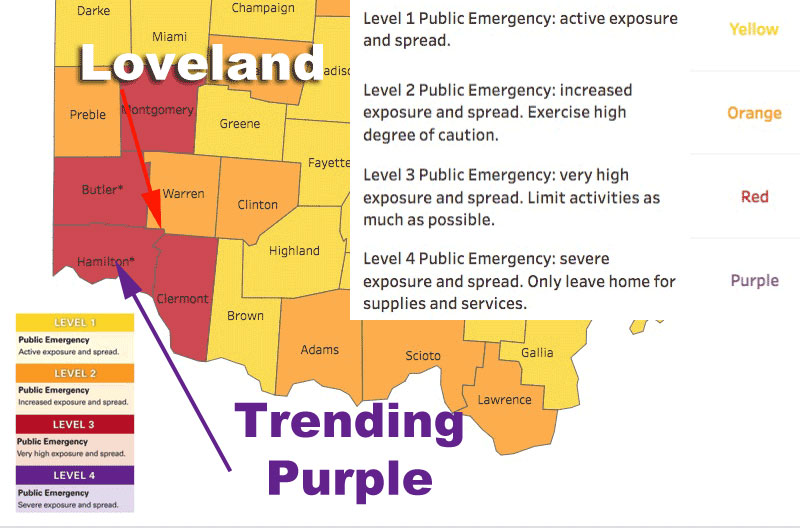
    Loveland, Ohio – Mike Samet the Public Information Officer for Hamilton County Public Health told Loveland Magazine on Friday, “As a ‘red’ county, most of our “indicators” are trending upward, hence the potential designation as ‘purple.”

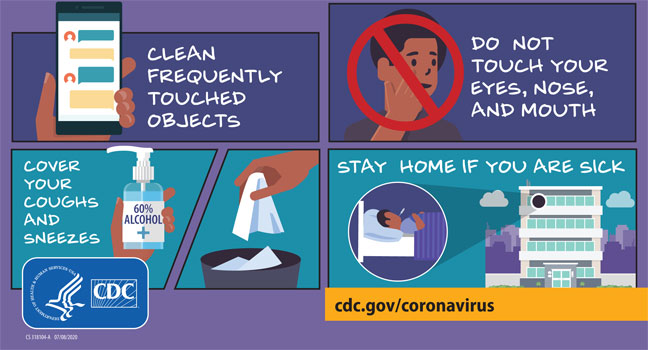
    The message to county residents is a simple one said Samet in response to the question of how does Hamilton County avert escalating to Level 4. “The one we’ve been talking about since February. Until we have a vaccine and/or treatment for COVID-19, the only way to slow down transmission is: physical distance (6 ft. plus); wear a mask when out; stay home if you are ill; wash hands often and thoroughly; cover coughs/sneezes.”

    Samet added, “Wearing a mask is not a political statement. The mask shows care and respect for others in that we’re trying to reduce their risk of infection, as well as ours. It’s summer, it’s hot, no one likes wearing a mask, but it’s what we have to do to protect each other.”

    Samet said that from an enforcement perspective, as a county agency, the Health Department is not able to issue citations. “Nobody wants to be the mask police. This is education over enforcement, he said.  Samet added that he wants people to understand why masks are important now, not punish them for non-compliance. “In any event, our enforcement system is complaint-driven. People may register complaints with us at www.hcph.org. We follow-up on each complaint received,” said Samet. Read how to file a complaint in Clermont County below.

    Both Hamilton and Clermont counties are currently under the State RED Alert for COVID 19 spread. Clermont County was elevated from ORANGE to RED last Thursday. Warren County remains in the ORANGE Alert designation.

    What does it mean if Hamilton County goes to the highest Alert level?

    Hamilton County is on the State Watch list to possibly be elevated from the current RED Level Alert to the highest, PURPLE Level Alert. That destination would mean that the county is experiencing “Severe exposure and spread.” The order from the state would be, “Only leave home for supplies and services and Stay at home/necessary travel only.”

    Why was Hamilton County put under a RED Alert?

    As of July 7, Hamilton County during the 3 weeks prior had COVID 19 cases increase along with several other healthcare indicators.

    Between June 24 and June 30, Hamilton County had 1,124 cases, the largest number of COVID 19 cases in any week since the beginning of the pandemic.

    From June 16 until June 30, the average new cases per day doubled from 82 to 161. Due to clinical and reporting lags, these numbers may continue to grow for this reporting period.

    The community continued to experience early signs that more people are seeking medical care for COVID 19 symptoms.

    From June 16 to June 30, visits for COVID 19 to the emergency department doubled from an average of 11 per day to 22. More people are also visiting their doctors and being diagnosed with COVID 19.

    Between June 16 and July 2, the average outpatient visits more than tripled from 52 to 172 visits per day.

    In recent weeks, more than 86% of the cases are not in congregate settings, signaling significant transmission in the broader community.

    Hamilton County also hit a new threshold for the overall utilization rate for regional intensive care unit beds, which exceeded 80% during 5 of those past 7 days.
    Why was Clermont County put under a RED Alert?

    As of July 7, Clermont County during the 3 weeks prior had COVID 19 cases increase along with several other healthcare indicators.

    From June 16 until June 30, the average new cases per day doubled from 4 to 9. Due to clinical and reporting lags, these numbers may continue to grow for this reporting period.

    The community continued to experience early signs that more people are seeking medical care for COVID 19 symptoms.

    More people are also visiting their doctors and being diagnosed with COVID 19.

    Between June 16 and July 2, the average outpatient visits nearly tripled from 9 to 25 visits per day.

    In recent weeks, more than 94% of the cases are not in congregate settings, signaling significant transmission in the broader community.

    Clermont County also hit a new threshold for the overall utilization rate for regional intensive care unit beds, which exceeded 80% during 5 of those past 7 days.

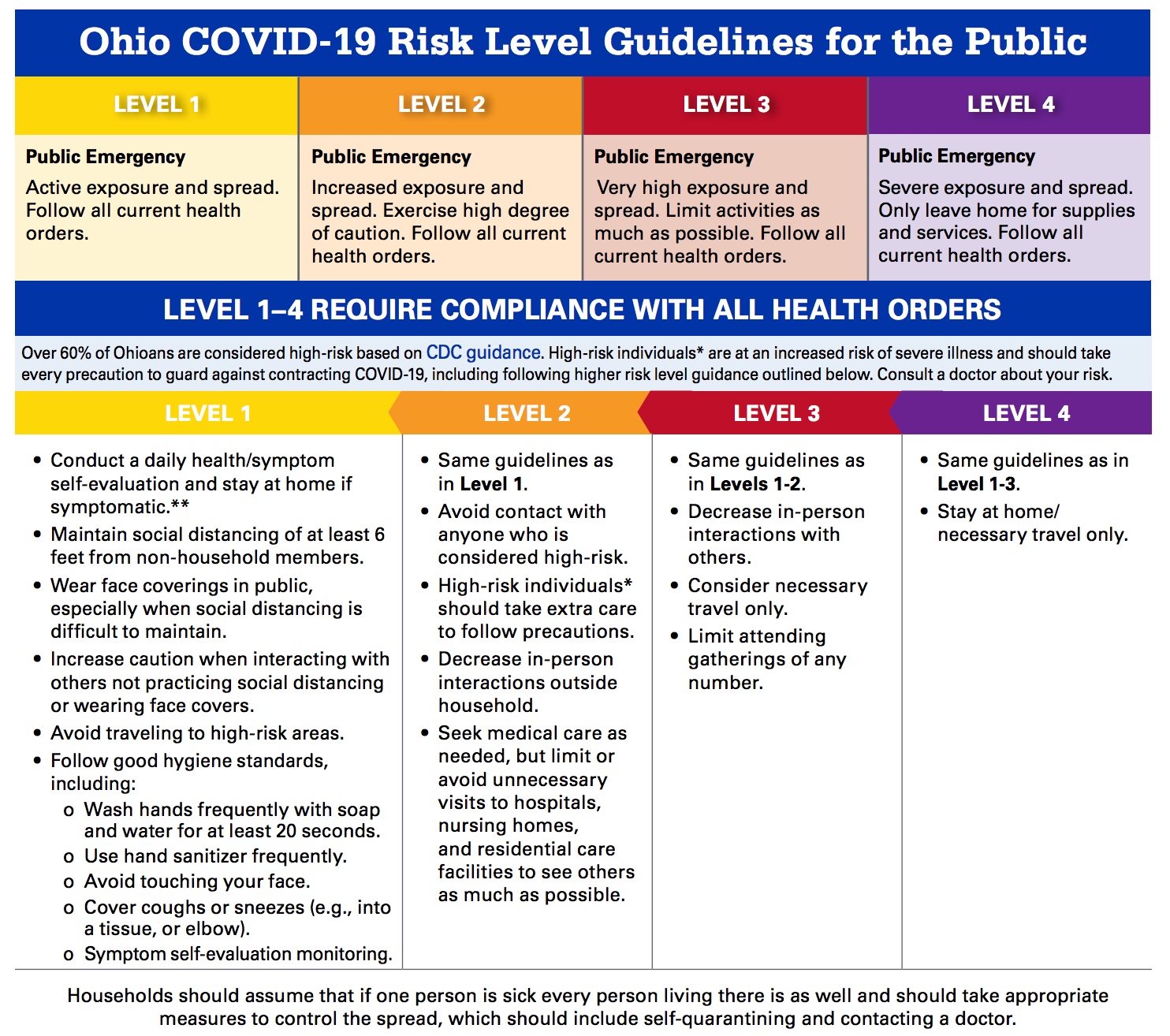
    LEVEL 1   0–1 Indicators Triggered

    Active exposure and spread. Follow all current health orders.

    LEVEL 2   2–3 Indicators Triggered

    Increased exposure and spread. Exercise high degree of caution. Follow all current health orders.

    LEVEL 3   4–5 Indicators Triggered

    Very high exposure and spread. Limit activities as much as possible. Follow all current health orders.

    LEVEL 4   6–7 Indicators Triggered

    Severe exposure and spread. Only leave home for supplies and services. Follow all current health orders.

    Summary of Alert Indicators


    As of today, Monday, July 13:

    The number of hospitalizations in Ohio is 8,842. Total Deaths in Ohio is 3,058.

    There are 462 hospitalizations and 131 deaths in Hamilton County. There have been 3,657 cases and 1,154 recoveries.

    There have been 497 confirmed and probable cases of COVID 19 in Clermont County and 7 confirmed and probable death. There are currently 60 hospitalizations. 341 people are being reported as recovered.

    In Warren County there have been 945 positive and probable cases and 25 positive and probable deaths. Warren County is reporting 120 new positive cases, 5 new hospitalizations, and 3 new deaths in the last 14 days.


    Clermont County Public Health has issued these 5 Protocols for All Businesses and these Frequently Asked Questions and Answers

    1. Require face coverings for employers and recommend them for clients/customers at all times.

    2. Conduct daily health assessments by employers and employees (self-evaluation) to determine if “fit-for-duty”.

    3. Maintain good hygiene at all times -hand washing, sanitizing, and social distancing.

    4. Clean and sanitize workplaces throughout the workday and at the close of business or between shifts.

    5. Limit capacity to meet social distancing guidelines.

    •Establish maximum capacity at 50% of the fire code.
    • And, use appointment setting where possible to limit congestion.

    Q. Will I have to wear a mask or face covering while I am at work?
    A. Yes. Face coverings are required for employees except if any of the following apply:

    1. Facial coverings in the work setting are prohibited by law or regulation;

    2. Facial coverings are in violation of documented industry standards;

    3. Facial coverings are not advisable for health reasons;

    4. Facial coverings are in violation of the business’ documented safety policies;

    5. Facial coverings are not required when the employee works alone in an assigned work area; or There is a functional (practical) reason for an employee not to wear a facial covering in the workplace.

    Q. Will I have to wear a mask or face covering if I am a customer at a business?
    A. Yes. Under the level 3 Public Health Emergency issued on July 10, customers must wear masks while inside businesses or other buildings.

    Q. Will I need to take my temperature before coming to work?
    A. Yes. Employees must take their temperature and watch for other symptoms such as coughing or difficulty breathing. Sick employees should stay at home.

    Q. What safety precautions should my employer be taking?
    A. All businesses should follow these protocols

    1. Require face coverings for employers and customers.

    2. Conduct daily health assessments by employers and employees (self-evaluation) to determine if “fit-for-duty”.

    3. Maintain good hygiene at all times -hand washing, sanitizing, and social distancing.

    4. Clean and sanitize workplaces throughout the workday and at the close of business or between shifts.

    5. Limit capacity to meet social distancing guidelines.

    •Establish maximum capacity at 50% of the fire code.
    • And, use appointment setting where possible to limit congestion.

    Q. What should I do if my co-workers aren’t wearing facial coverings at work?
    A. If an employee of a business is not wearing a facial covering, ask the employer/business for written justification on why the employee isn’t wearing a face covering.

    Q. What should I do if my employer is not following proper safety precautions?
    A. If an employer is not following the above safety protocols, you can file an online complaint here.

    To File a complaint about a business you think is in violation of the Stay Safe Ohio Order, click here.

    To check the status of a complaint click here. (Choose “Code Case” in the search drop-down box).

    Full Ohio Department of Health Stay Safe Ohio Order 

    More information from the Ohio Department of Health on the Responsible RestartOhio page

  • [VIDEO] Bob Kessler gets intimate with 6″ shells on the 4th of July!

    [VIDEO] Bob Kessler gets intimate with 6″ shells on the 4th of July!

    Cassie Mattia is the Associate Editor of Loveland Magazine and lives in Historic Downtown.

    by Cassie Mattia

    Loveland, Ohio – Loveland videographer Bob Kessler wanted to get a unique perspective of this year’s 4th of July fireworks by getting up close and personal with the launch zone! Kessler was able to not only show the launch of the fireworks but the explosions as well in one wide-angle shot. Loveland Magazine and Kessler teamed up this year for the 4th so that he could receive credentials to be on the actual launch site. By doing this, Kessler was able to witness the firework preparations and be there when the fuses were lit.

    Loveland’s and Symmes Township’s annual Independence Day celebrations were canceled this year, however, the City and Township were able to hold two simultaneous, “park and watch” firework shows on Saturday, July 4th.

    Kessler positioned himself at Loveland’s launch site inside Philips Park which was closed to the public for the day. Symmes Park, which was also closed to the public for the day, acted as the launchpad for the Township.

    Kessler explained that previously he shot video from various street views in Downtown Loveland and on the bridge of the Little Miami River. Typically, Loveland launches its annual show from inside Kiwanis Park on Wall Street but, this year, because of COVID 19 the City was concerned about having thousands of people crowd into Historic Downtown, which is known as the best viewing spot for the fireworks. City Hall ended up deciding to move the launch to a higher location in order to take advantage of the area’s church and school parking lots. Spectators were either encouraged to watch the shows, drive-in movie style and practice social distancing, or residents who lived near the parks were asked to stay at home to enjoy the show. Those that decided to watch the fireworks from their cars went to Loveland High School, Home of the Brave Park, church parking lots, and surrounding subdivisions while of course remaining socially distant.

    Kessler told us that the launch locations were chosen to accommodate the use of larger shells, which go higher into the air and allow spectators to watch from a much wider area.

    Here is Kessler’s favorite still shot from his vantage point at the launch pad inside Phillips Park. “This is my favorite picture from the batch I shot last night. I was about 250′ from the launch site, behind the exhibitors running the show. Nikon D850, 14mm, ISO 400, f/10, 8 seconds,” said Bob Kessler.

    Kessler said he was excited about the addition of a second launch site at Symmes Park this year.

    “The second launch site promised to make for a unique experience. That’s why I settled on Phillips Park as the best location for me to photograph both stills and video images.”

    Dave Miller, Loveland Magazine’s Editor-in-Chief, covered the wide shots from the top of the stands at LHS’s stadium where he was able to view both Loveland’s and Symmes’ fireworks. He used two cameras, one acted as a live feed so LOVELAND MAGAZINE TV could have a live broadcast of the shows.

    Kessler and Miller were in constant communication in the days leading up to the show as times and locations rapidly changed with not much notice to the public. Luckily Loveland Magazine had a firework “inside man,” which allowed us to communicate quick and accurate firework updates to the public.

    A few minutes before launch time Kessler sent a message to Miller saying, “I passed the cop-test. The patrol came through and the Rozzi guy said, ‘He’s with us!”

    Some of the camera equipment Bob Kessler used at the launch site of the Loveland Fireworks show.

    Loveland was the first to set off their rockets, then Symmes followed shortly after. Each firework show lasted about fifteen minutes. After the two shows finished both launch pads put on a simultaneous Grand Finale.

    “I first contacted the Loveland Symmes Fire Department about getting permission to be close, as they previously ran the show and knew me and my work with Loveland Magazine,” Kessler explained, “I then approached Rozzi’s Famous Fireworks and got the permission of the exhibitor running the show to shoot within the normally closed firing zone.”

    Kessler positioned himself in a ditch behind the show operator. Using a wide-angle lens and shooting 4K, he was able to capture a high definition video that allowed him to digitally “zoom-in” on the image without compromising quality. “I concurrently shot digital images with my still camera, the equivalent to an 8K image,” Kessler said.

    Kessler experimented with various settings on his camera as the show progressed, mostly shooting still frames at various time exposures of 4, 6, 8, 10, and 12 seconds. “All this fussing had to be done quickly, as I knew the show would only last 15-20 minutes. I managed to get about 75 images and several videos,” Kessler said, “Out of that, I ended up with 11 shots that I liked enough to post on Facebook.”

    Kessler learned from the Rozzi folks that the firework shells are able to go up to 100′ in the air for each inch of shell diameter. For example, a 4′ shell would go 400′ feet into the air while a 6′ shell would go about 600 feet into the air.

    “I always look forward to working with Bob Kessler on video projects because I learn so much,” David Miller said, “My only regret is there wasn’t enough of him to go around that night so he couldn’t be in the stadium with me to adjust my camera. If he could have been there then all I would have had to do was hit the record button. My video would have been so much better!”

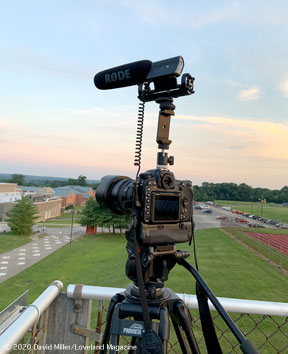
    Some of the video equipment David Miller used to shoot video and live-stream the fireworks show from the high vantage point of the stands at Tiger Stadium

    Miller also said that when Kessler offered to shoot the show he knew that he would expend countless hours readying his equipment and making adjustments. “Doing something like shooting fireworks is seat-of-pants. There are so many variables such as the rapidly setting sun. Will it be completely dark, well it will be if it’s a cloudy day. If the sun is out and going over the horizon which way will it be heading in relation to where the camera is? Fifteen minutes can make a huge difference in the ambient light that time of day,” Miller explained, “Bob sees all these variables in the days before and has the brainpower to take most of the guesswork out of the equation.”

    Miller said he really enjoyed watching the evening unfold from the highest elevation in town. “When I got to the stadium there were already about 20 teens playing frisbee football and before the show, someone new showed up with a cooler of water balloons to cool them off with.”

    At showtime, many of the teens and some adults joined Miller at the top of LHS’s bleachers to enjoy the vantage point of seeing both shows. “The pre-show of all the neighborhood fireworks displays going off from the high vantage point I had was pretty cool as well,” Miller added.

    Did you miss the 4th of July firework shows this year? Well, we have you covered! Click below to relive Bob Kessler’s 4th of July Fireworks video production!

    Kessler also produced a short clip of Loveland’s Finale which Loveland Magazine ended up using as an experiment of a “Video Cover Photo”.

    Loveland Magazine sends out a special thanks to Rozzi’s Famous Fireworks for giving us access to the launch site and showing us such wonderful hospitality!


    Check out these previous firework shows that Bob Kessler produced for Loveland Magazine TV. In this first video from 2015, Bob showed close-ups as the fuses were lit by a crew of Loveland Firefighters in full protective gear. Deputy Fire Chief Don Books talks about the show and how safe it was for the crew.

    VIDEO: Setting off your 4th of July fireworks was no job for the timid

    VIDEO: Loveland’s Firecracker Festival