Tag: education

  • Brian Conatser will be Loveland High School’s New Assistant Principal

    Brian Conatser will be Loveland High School’s New Assistant Principal

    Loveland Magazine file photo

    Loveland, Ohio – Current Loveland High School District Director of Student Athletics Brian Conatser will move into the role of LHS Assistant Principal beginning in the 2022-2023 school year. Conatser will take over as Assistant Principal as Eric Fry moves to a similar position at Oak Hills High School. 

    “I am excited and grateful for the opportunity to serve Loveland City School District in a new capacity. We have an incredible student body, staff, and community, and I am very fortunate to have experienced this as a Loveland classroom teacher, coach, Athletic Director, and now as an Assistant Principal. I look forward to the new challenge and am thrilled to continue to be a part of an amazing district,” Conatser said.

    Conatser has served as the District Director of Student Athletics for four years. He was Loveland’s Assistant Director of Student Athletics for two years and spent 15 years as a science teacher and coach at Loveland and Sycamore High Schools. 

    A search will now begin for the next Athletic Director. 

    In the meantime, it has also just been announced that Clay George, the current Assistant Athletic Director will be leaving to become the head athletic director at Ansonia JH/HS.

  • How to: Surviving your first year of college

    How to: Surviving your first year of college

    Olivia Rohling

    by Olivia Rohling

    As of April 29th my freshman year of college officially came to a close. I have compiled a list of handy dandy advice for the typical freshman that I’d like to share. First, I want to start off with a little background.

    As a senior in high school, I was so incredibly excited to start my college career. I was excited for the dorm experience, to have a roommate, and meet girls on my floor during move in and all that. Friends the year ahead of me looked to be having an amazing time in college and I hoped the same for me.

    My freshman year did not start off the way I would have hoped. I didn’t hit it off with my roommate and in fact she moved out a few months into the semester. All the doors in my hall were always kept shut despite me keeping mine open in hopes of meeting other people, and I didn’t have the luck of being a part of one of those friend groups that form the first few weeks of the semester. I was so overwhelmed with the whole college experience that I didn’t join any clubs, and I didn’t have the money to join a sorority. Everyone always talked about college being the best four years of your life, but as I sat in my dorm nearly every day in tears, I very quickly did not believe anyone who said this. So, take it from me, the girl whose college experience started out being pretty less than desirable and the girl who just wanted to drop out.

    1. Join a learning community if your school offers them! – Joining a learning community was one of the better decisions I made as a freshman. You get put in a learning community class that essentially teaches you how to be a freshman and you have all the same classes as the other students in the community so faces become familiar. The first few friends I made were from my learning community and I still talk to some of them. The learning community leader can also be an incredible role model and someone you can ask questions to about certain classes and college life in general. Join a learning community.
    2. Get a darn planner. – College is different than high school in the sense that syllabi are thrown at you the first week of class and you are then responsible for knowing all the important dates and deadlines. Get a planner. Put those dates in there and color-code them by class. Thank me later.
    3. Check your email frequently, and it wouldn’t be a bad idea to have your email go to your phone as well. Some professors can and do cancel class at the last minute and you’ll want to be in the know.
    4. Save yourself the embarrassment and don’t ask your professor to go to the bathroom in the middle of class. Just get up and go.
    5. Seniors can be your friend! They aren’t scary. – Yes they’re seniors, but get this: They’re also humans. You can find some really nice ones. Bonus points if you find one within your same major who can help you with what classes to take with what professor. Don’t be afraid to reach out. The whole reason I ended up writing for a publication, didn’t spend all of homecoming weekend and my birthday alone in my dorm, and didn’t transfer schools was because of simple kindness shown to me by a senior who took me under her wing.
    6. DO NOT live on a floor above the 2nd floor if your building doesn’t have an elevator. Move in and out is guaranteed to be hell otherwise.
    7. FOR MOVING IN AND OUT: BAGS NOT BOXES!
    8. Kind of a given but walk your schedule a day or two before, so you know where you are going! Your GPS is going to be an even better friend to you than it was in high school.
    9. At some schools, breakfast isn’t offered through the dining halls, but that doesn’t mean you should skip it! Buy some instant oatmeal or at the very least some breakfast bars.
    10. Literally no one will judge you and literally no one cares if you are eating alone in the dining hall.
    11. Syllabus week is going to be very overwhelming so be prepared. You can take things one day at a time and still be in the know about upcoming assignments and due dates.
    12. Sometimes you’ll be more productive if you’re doing work some place other than your dorm. Do some exploring in the library or find a coffee shop you can claim as your workspace.
    13. End every email with “thank you.”
    14. As far as shower caddies go, don’t get a bulky hard plastic one. Get one like this.
    15. For laundry, get a hamper that has straps on it. Like this. You’ll want this, especially if you go against tip number 6.
    16. GET AND USE SHOWER SHOES.
    17. Research your professors on ratemyproffesor.com before making your schedule
    18. There’s no need to buy a brand-new textbook, renting or buying used will work just fine
    19. Ctrl + F. Enough said.
    20. Take a deep breath and take it one day at a time. You got this!
  • GOP passes bill aiming to root out ‘suspected’ transgender female athletes with genital inspection

    GOP passes bill aiming to root out ‘suspected’ transgender female athletes with genital inspection

    BY: MORGAN TRAU –  Ohio Capital Journal

    The following article was originally published on News5Cleveland.com and is published in the Ohio Capital Journal under a content-sharing agreement. Unlike other OCJ articles, it is not available for free republication by other news outlets as it is owned by WEWS in Cleveland.

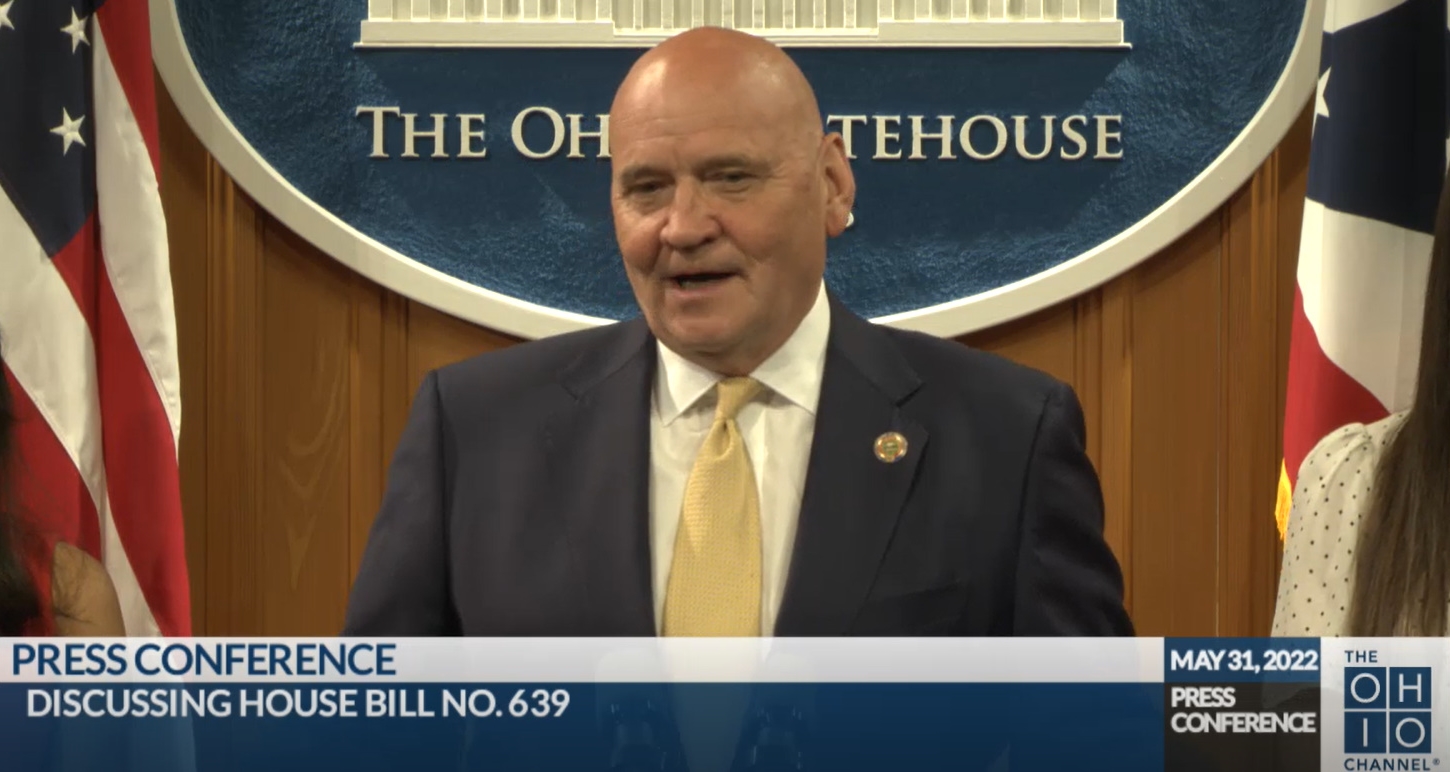
    House Republican lawmakers in Ohio passed a bill at 11:15 p.m. Wednesday night that would ban transgender girls and women from participating in high school and college athletics. It also comes with a “verification process” of checking the genitals of those “accused” of being trans.

    “I struggle to understand why we keep discussing bills focusing on children’s genitals.”

    Rep. Dr. Beth Liston

    The ‘Save Women’s Sports Act,’ or House Bill 61, wasn’t supposed to be on the schedule for legislators originally. However, at the last minute, Republican representatives added the language to a completely different bill.

    Read on at Ohio Capital Journal…

  • Jean Schmidt’s newest ‘divisive concepts’ bill enters Ohio House

    Jean Schmidt’s newest ‘divisive concepts’ bill enters Ohio House

    Prohibits all Ohio schools from “teaching or providing training that promotes or endorses divisive or inherently racist concepts.”

    BY: SUSAN TEBBEN –  Ohio Capital Journal

    The newest bill to regulate school curriculums and keep out what legislators see as “divisive concepts” entered the Ohio House on Tuesday.

    State Reps. Jean Schmidt, R-Loveland, and Mike Loychik, R-Bazetta, brought House Bill 616 to the State and Local Committee, which prohibits all Ohio schools from “teaching or providing training that promotes or endorses divisive or inherently racist concepts.”

    Though the co-sponsors said they want to deputize the State Board of Education with making decisions about what those concepts would be, the bill includes “critical race theory,” a misnomer used by conservatives to refer to the teaching of race in American history, and name the “1619 Project,” a New York Times project that laid out the chronology of slavery and racism, as concepts that would be prohibited under the bill.

    “Diversity, equity and inclusion learning outcomes” (DEI) are also named as “divisive or inherently racist concepts” under the bill. When asked to explain DEI and why it’s being prohibited, Loychik connected DEI to “critical race theory,” saying the two are connected based on research he and Schmidt had made.

    “The word ‘critical race theory’ was not very well accepted at that point in time, so it was re-developed into DEI – diversity, equity and inclusion – and based off our research, like I said before, it’s very, very similar to the teachings under critical race theory,” Loychik told the committee.

    DEI trainings have been used in schools to train employees about learning disparities that can happen in education.

    The well-known conservative public policy think tank The Heritage Foundation connects CRT and DEI, saying diversity trainings “pressure employees to become activists or to discuss controversial topics in the workplace.”

    Part of the bill prohibits teaching kindergartners about topics related to gender.

    “It ensures that sexual orientation and gender ideology are not taught in kindergarten through third grade,” Loychik said. “Starting in fourth grade it must be age appropriate.”

    Loychik has made his feelings on gender in schools clear through posts on his Twitter, in which he said “the left thinks a 6-year-old should be able to change their gender but an 18-year-old shouldn’t be able to buy a firearm,” and asks for support not to allow “teaching transgenderism or allowing teachers to discuss their sex life with kindergarteners.”

    Under the newest bill, the State Board of Education would also be required to “establish a procedure by which individuals may file complaints against a teacher, school, administrator, or school district superintendent alleging a violation of the bill’s prohibitions and to adopt rules to govern the implementation of and monitor compliance with the bill’s provisions,” according to Legislative Service Commission analysis of the bill.

    Democratic committee members pushed back on the bill’s language, decrying it as “censorship” and questioning the vague language used, and the state board of education’s role in defining the off-limits topics in school curricula.

    “That’s the responsibility of legislators to define these terms,” said state Rep. Mike Skindell, D-Lakewood.

    The co-sponsors said they would be willing to consider amendments to the bill, but said the focus of the bill is on curriculum, not disciplinary regulations or hallway disagreements.

    Loychik said the school district’s role would be to address disciplinary problems, and “hall monitors” could deal with school-day disagreements regarding “divisive concepts.”

    Schmidt said “invited guests,” such as state legislators, would be allowed to “talk about what they want to talk about,” because it’s not a part of the curriculum, answering a question from state Rep. Tavia Galonski, D-Akron.

    “There is a lot to discuss in the schools, and by no means would any kind of prohibition or any type of censorship be the answer for it,” Galonski said.

    Education groups like Honesty for Ohio Education have criticized the bill as a “nationally coordinated educational gag order.”

    This is the third “divisive concepts” bill to come through the Ohio legislature, with the last bill receiving heavy criticism after one of the co-sponsors said equal time should be given on both sides of Holocaust lessons. Neither bill has passed through the General Assembly.

  • After Uvalde massacre, Ohio GOP hurtles toward arming state’s teachers

    After Uvalde massacre, Ohio GOP hurtles toward arming state’s teachers

    BY: JAKE ZUCKERMAN Ohio Capital Journal

    The Ohio Senate advanced fast-tracked legislation Tuesday that would allow local boards of education to permit teachers to carry guns in classrooms.

    Passage would eviscerate current law in Ohio that allows teachers to arm themselves only after completing more than 700 hours of police training and receiving approval from their local school board.

    Under House Bill 99 — which was largely rewritten and unveiled at the hearing — a school board could allow teachers to arm themselves. The latest version doesn’t specify any minimum amount of training hours, although it states that four hours must be “scenario-based or simulated training exercises.” Instead, it says teachers would need to undergo “initial instruction and training” to carry a weapon that “shall not exceed” 24 hours. From there, the teacher would need annual recertification training which “shall not exceed” eight hours.

    A local board of education would need to opt in to allow its teachers to arm themselves. That board could choose to mandate additional training, but it wouldn’t be required. The training required in the legislation includes the “scenario-based” training, “tactical live firearms training,” and “realistic urban training.”

    Earlier versions of the bill established a minimum of 20 hours of training, plus concealed carry training (another eight hours). It also called for more specific, somewhat warrior-like training requirements.

    “On signal, take a flanking step while drawing and fire three rounds into the preferred area. Upon completion, take appropriate post-shooting actions,” reads a training requirement of the House-passed version of the bill. “The distance from the target shall be thirty feet, the time allowed shall be eight seconds, and the number of rounds allowed shall be three.”

    The Senate committee vote comes on the heels of the May 24 shooting in Uvalde, Texas, in which a teenager purchased two assault style rifles that he used to kill 19 young children and two teachers. Seventeen others were wounded.

    At Tuesday’s hearing, two men spoke in support of the bill. The rest of the four hours were occupied by dozens of teachers, teachers’ union officials, anti-gun violence activists, and a Fraternal Order of Police lobbyist, all testifying in opposition.

    The teachers who testified argued it’s unrealistic to think an educator would react prudently and fire accurately at a shooter in a chaotic and precarious situation after mere hours of training. They’d need to execute keen marksmanship in a fraught situation to avoid hitting their own students. Several noted the bill makes no consideration as to how teachers must store the weapon, which could yield a flood of gun violence of its own.

    At times, Sen. Frank Hoagland, a Republican who chairs the committee that reviewed the bill, struggled to rein in the testy crowd. After hearing the hours of testimony in opposition to the bill, Republican Senators passed it regardless. The vote was a flex of political power, and drew shouts of “Shame! Shame!” from the crowd.

    Hoagland, and Sen. Terry Johnson, the number two Republican on the committee, both declined interview requests after the hearing. The legislation will likely go to the Senate floor for a vote Wednesday. The House could, in theory, accept the Senate’s changes on the same day and send the bill to Gov. Mike DeWine.

    Republicans in the Ohio House passed HB 99 earlier this year on a 59-33 vote (Republican Rep. Gayle Manning joined Democrats in opposition). Tuesday’s vote came in lieu of the typical process of holding several hearings on a bill before a roll call. Several speakers said they were unable to procure a copy of the latest version of the bill before Tuesday’s hearing.

    As of 2019, 18 states allow anyone with permission from school authority to carry a weapon, according to the National Conference of State Legislatures.

    The idea, which gained popularity after a spate of school shootings in the U.S., is broadly unpopular with educators. In a 2019 national survey of 2,926 teachers, more than 95% indicated they don’t believe teachers should carry a gun in the classroom. Even among the 16% of respondents who were gun owners, only 11.5% of them said being armed while teaching should be a part of teacher’s duties. Gallup polling from 2018 found 73% of teachers oppose the idea.

    More Ohioans died from guns last year than any year on record from the Ohio Department of Health’s data warehouse. Earlier this year, analysis in the New England Journal of Medicine found that firearms have overtaken vehicle crashes as the leading cause of death for American children, teens and young adults.

    In the gun friendly and Republican-dominated legislature, the policy response has included eliminating training and background check requirements to carry a concealed weapon; and eliminating a duty to retreat before responding to a perceived attack with deadly force.

    At Tuesday’s hearing, Rob Sexton, a lobbyist with the Buckeye Firearms Association, argued in support of the bill. He said it gives students a “fighting chance” in the face of a shooter. Rep. Thomas Hall, R-Madison Twp., who sponsored the bill, told Senators at a previous hearing the legislation is about clearing up Ohio law.

    “I’m not here to argue whether or not guns should be in schools,” he said. “I’m here to help clarify a gray area in law that will give schools the tools to protect their students if they wish to utilize them.”


  • Lawmakers propose new ‘self-defense’ high school graduation requirement

    Lawmakers propose new ‘self-defense’ high school graduation requirement

    State Rep. Tom Young, R-Washington Township.

    BY: NICK EVANS –  Ohio Capital Journal

    New legislation from Ohio state Reps. Tom Young, R-Washington Township, and Andrea White, R-Kettering, would require next year’s class of high school freshmen to take a course on recognizing and responding to threatening situations in order to graduate. The idea for the so-called “Student Protection Act” came from a number of recent high school graduates as part of an extracurricular project.

    Abby Purdy described how the proposal came from conversations she had with fellow Olentangy High School students Sydney Schultz and Vaidehi Patel about walking to their cars after work in the dark.

    “Everyone had very similar fears, and it kind of just sprouted from there,” Purdy explained. “We had a survey and many of the responses conveyed the same fears and we felt that self-defense would be the best way to help people feel that they have the tools to protect themselves.”

    Patel, Purdy and Schultz repeatedly invoked the idea of self-defense, as did the bill’s sponsors, but that’s a bit of a misnomer. Speaking afterward, Young acknowledged they struggled with how best to describe the course’s aims, but he was clear they’re not envisioning some sort of martial arts training.

    “No, this is not Tae Kwon Do, throwing people across a mat or anything like that,” he explained. “It’s raising an awareness on how to prevent and then respond to an aggressive situation — mentally, and perhaps a way to get out of a situation.”

    Rep. White emphasized the importance of teaching students how to respond to bullying and assault.

    “These behaviors should never be tolerated or allowed to go unreported,” she said. “And reinforcing this message with our young people while equipping them with the defensive tactics and proactive strategies that they can use to help protect themselves and avoid dangerous situations is critical.”

    Although the measure isn’t explicitly meant to teach students how to respond to a school shooting, last week’s shooting at an elementary school in Uvalde, Texas looms large. Young offered hopes that the coursework they’re proposing might discourage violence indirectly.

    “I would hope that this would not only raise awareness to prevent things happening to yourself and how to de-escalate, but also hopefully being aware of their classmates or somebody who’s struggling, that it opens up a dialog.”

    Young and White want districts to bring in school resource officers or certified self-defense instructors to provide demonstrations of self-defense. The legislation is silent, however, on who qualifies as an outside instructor or what form their demonstrations should take. Because the course will be part of the health class, teachers will also have to complete a course in self-defense training, but it’s up to the districts to determine which programs qualify.

  • [Video] The Loveland High School Graduation ceremony

    [Video] The Loveland High School Graduation ceremony

    Here is the Loveland High School Graduation ceremony that was held May 21 at Xavier University’s Cintas Center.


    Loveland High School Senior’s awards and scholarships

    David Miller –  May 22, 2022

    Loveland, Ohio – 366 Loveland High School Seniors are members of the Class of 2022 and they graduated yesterday, May, 21, at…

  • Loveland High School Senior’s awards and scholarships

    Loveland High School Senior’s awards and scholarships

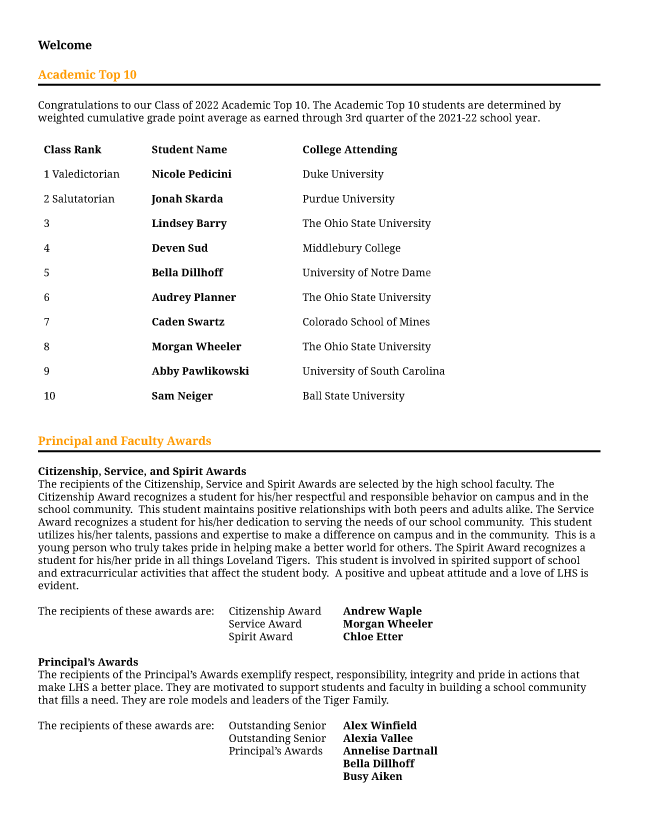
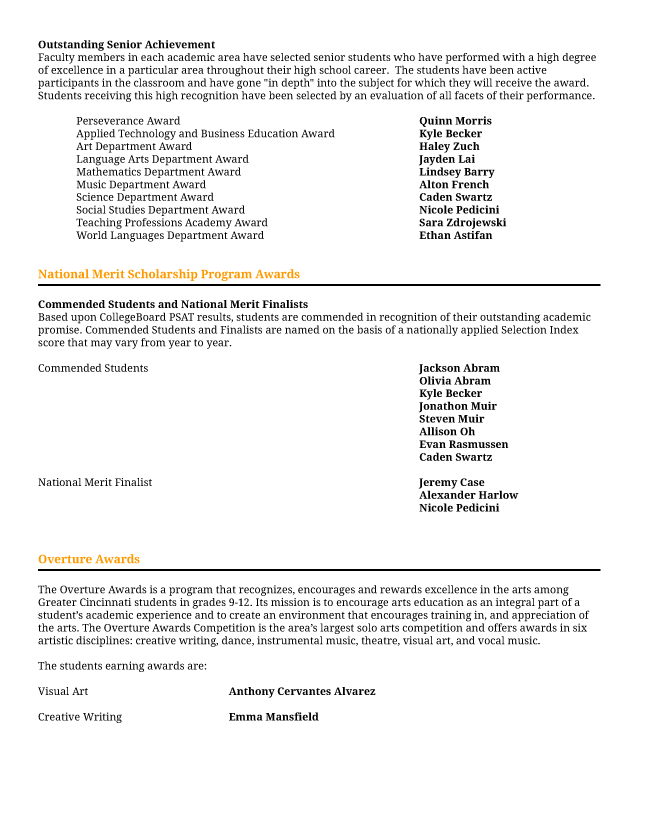
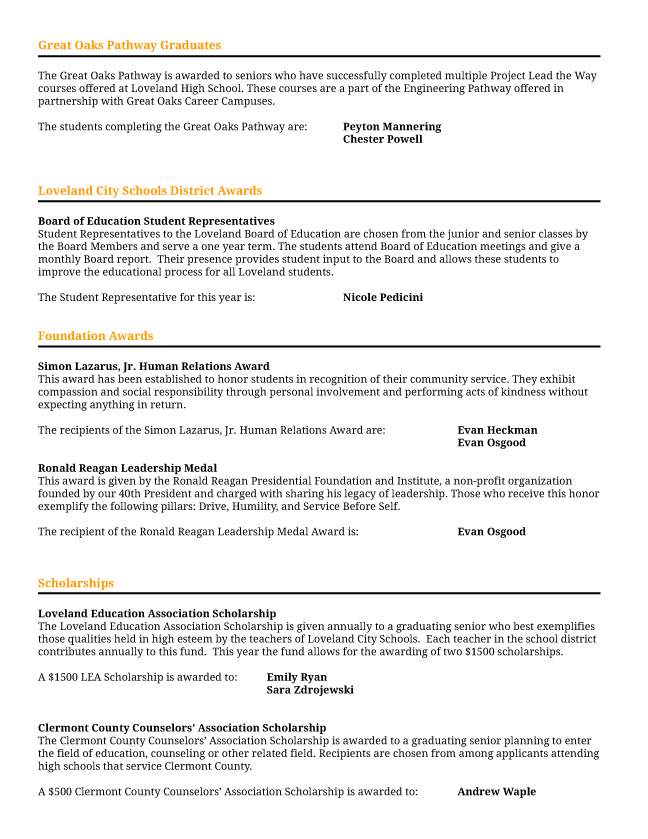
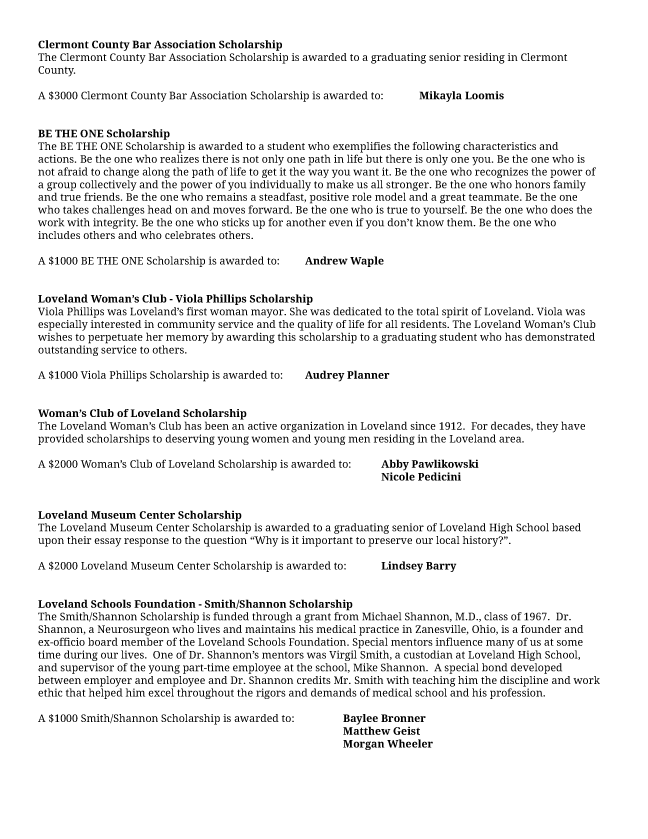
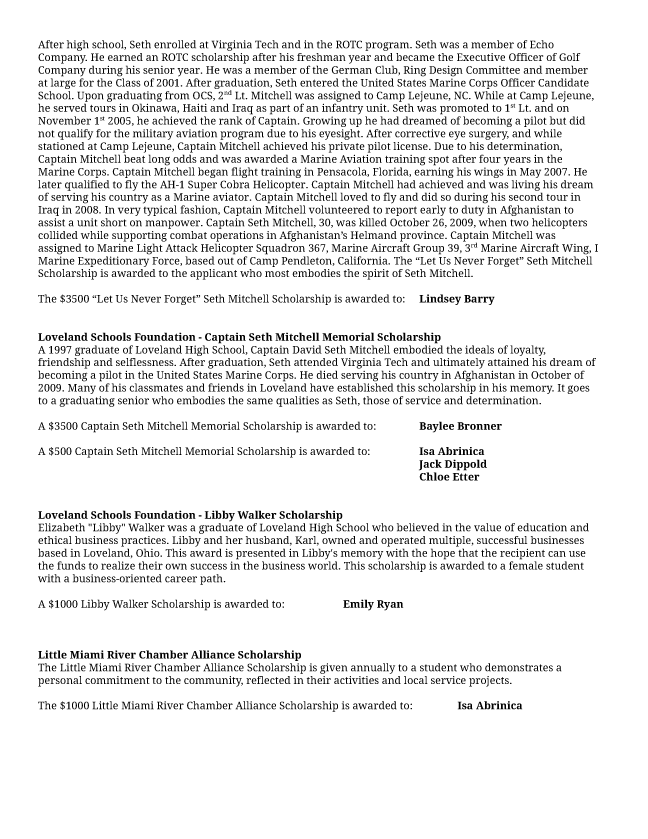
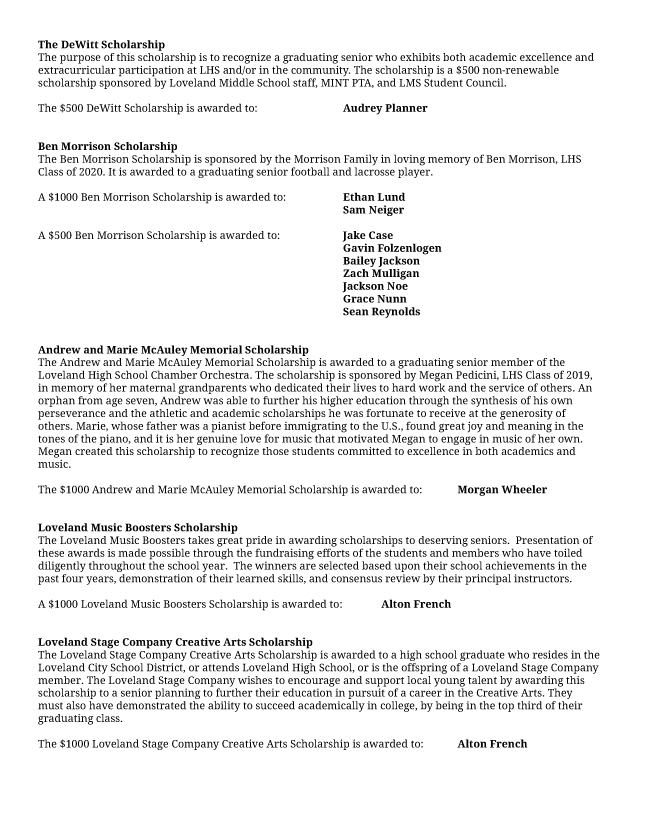
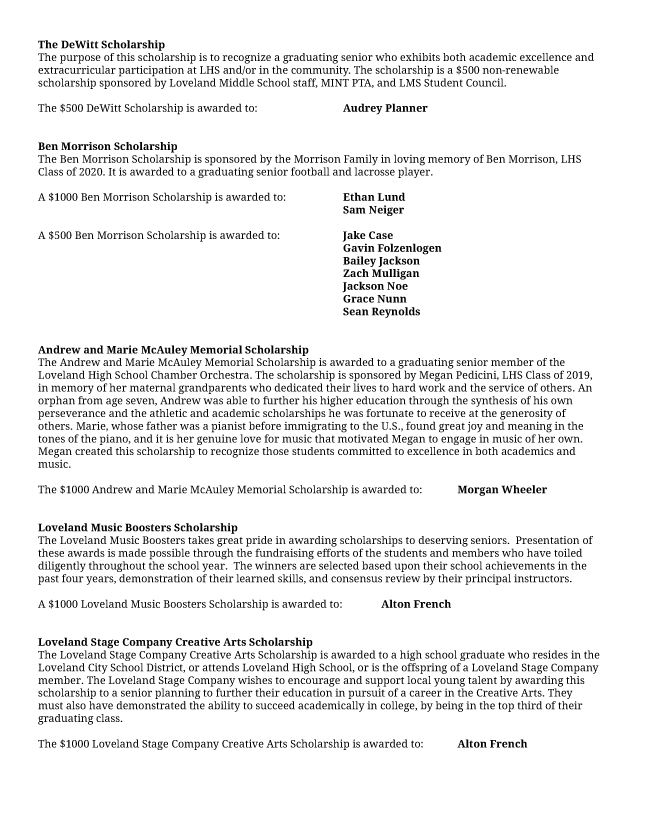
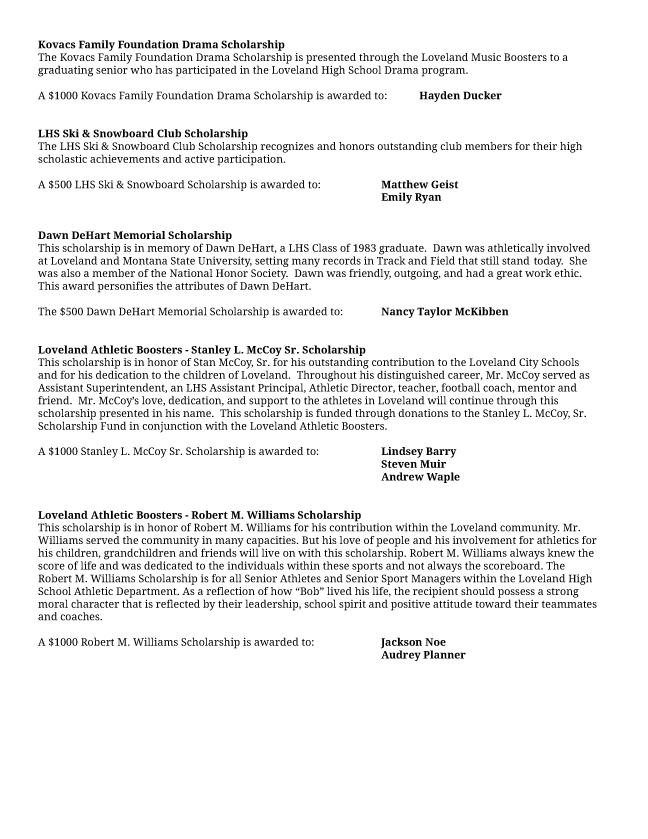
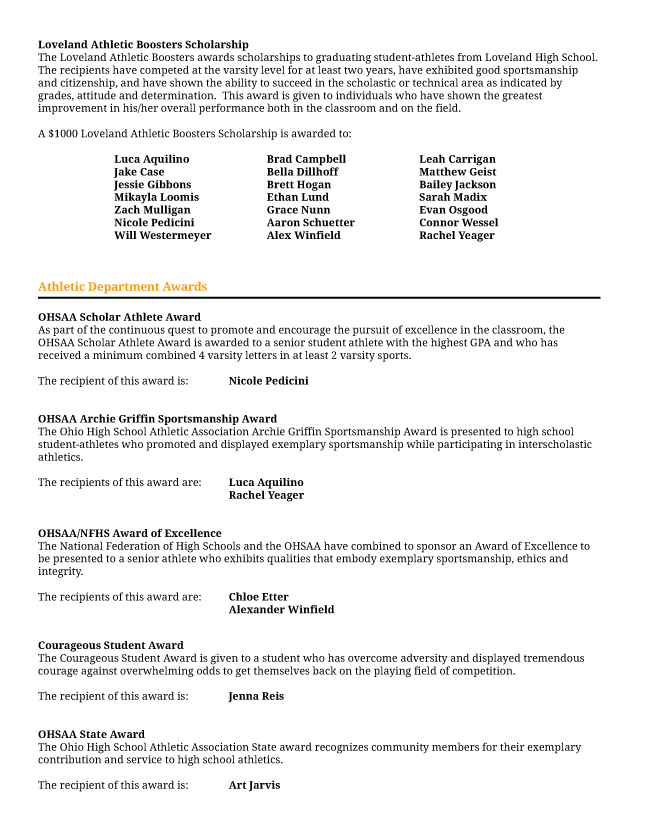
    Loveland, Ohio – 366 Loveland High School Seniors are members of the Class of 2022 and they graduated yesterday, May, 21, at the Cintas Center at Xavier University.

    The Senior Awards Ceremony for the class happened on May 3. The school celebrated the Top 10 Seniors, called out accomplishments in everything from citizenship to spirit, and presented many scholarships, including the ones awarded by local individuals and organizations.

    Photo Credit to Loveland Schools
  • OHSAA rejects Name, Image, and Likeness proposal

    OHSAA rejects Name, Image, and Likeness proposal

    Columbus, Ohio – The Name, Image, and Likeness (NIL) proposal failed by a margin of 538 to 254 in voting conducted by the Ohio High School Athletic Association to amend their Constitution and Bylaws.

    The proposal mirrored recent changes made at the collegiate level and would have allowed student-athletes to sign endorsement agreements so long as their teams, schools and/or the OHSAA logo were not used, the endorsements did not happen on school property or in school uniform, and provided there were no endorsements with companies that do not support the mission of education-based athletics, such as casinos, gambling, alcohol, drugs and tobacco. By rejecting the proposal, Ohio’s student-athletes remain unable sign endorsement deals without losing their amateur status.

  • F.D.A approves COVID 19 booster dose for children 5 through 11

    F.D.A approves COVID 19 booster dose for children 5 through 11

    A Press Release of the FDA:

    On Tuesday, the U.S. Food and Drug Administration amended the emergency use authorization (EUA) for the Pfizer-BioNTech COVID-19 Vaccine, authorizing the use of a single booster dose for administration to individuals 5 through 11 years of age at least five months after completion of a primary series with the Pfizer-BioNTech COVID-19 Vaccine. 

    “While it has largely been the case that COVID-19 tends to be less severe in children than adults, the omicron wave has seen more kids getting sick with the disease and being hospitalized, and children may also experience longer term effects, even following initially mild disease,” said FDA Commissioner Robert M. Califf, M.D. “The FDA is authorizing the use of a single booster dose of the Pfizer-BioNTech COVID-19 Vaccine for children 5 through 11 years of age to provide continued protection against COVID-19. Vaccination continues to be the most effective way to prevent COVID-19 and its severe consequences, and it is safe. If your child is eligible for the Pfizer-BioNTech COVID-19 Vaccine and has not yet received their primary series, getting them vaccinated can help protect them from the potentially severe consequences that can occur, such as hospitalization and death.”   

    On Jan. 3, the FDA authorized the use of a single booster dose of the Pfizer-BioNTech COVID-19 Vaccine for administration to individuals 12 through 15 years of age after completion of primary vaccination with the Pfizer-BioNTech COVID-19 Vaccine. Today’s action expands the use of a single booster dose of the vaccine for administration to individuals 5 through 11 years age at least five months after completion of a primary series of the Pfizer-BioNTech COVID-19 Vaccine. The FDA has authorized the Pfizer-BioNTech COVID-19 Vaccine for use in individuals 5 years of age and older and has approved Comirnaty (COVID-19 Vaccine, mRNA) for use in individuals 16 years of age and older.

    “The Pfizer-BioNTech COVID-19 Vaccine is effective in helping to prevent the most severe consequences of COVID-19 in individuals 5 years of age and older,” said Peter Marks, M.D., Ph.D., director of the FDA’s Center for Biologics Evaluation and Research. “Since authorizing the vaccine for children down to 5 years of age in October 2021, emerging data suggest that vaccine effectiveness against COVID-19 wanes after the second dose of the vaccine in all authorized populations. The FDA has determined that the known and potential benefits of a single booster dose of the Pfizer-BioNTech COVID-19 Vaccine for children 5 through 11 years of age at least five months after completing a primary series outweigh its known and potential risks and that a booster dose can help provide continued protection against COVID-19 in this and older age groups.”

    Data Supporting Effectiveness

    The EUA for a single booster dose of the Pfizer-BioNTech COVID-19 Vaccine for children 5 through 11 years of age is based on FDA’s analysis of immune response data in a subset of children from the ongoing randomized placebo-controlled trial that supported the October 2021 authorization of the Pfizer-BioNTech COVID-19 Vaccine primary series in this age group. Antibody responses were evaluated in 67 study participants who received a booster dose 7 to 9 months after completing a two-dose primary series of the Pfizer-BioNTech COVID-19 Vaccine. The antibody level against the SARS-CoV-2 virus one month after the booster dose was increased compared to before the booster dose.

    FDA Evaluation of Safety

    The safety of a single booster dose of the Pfizer-BioNTech COVID-19 Vaccine in this age group was assessed in approximately 400 children who received a booster dose at least five months (range 5 to 9 months) after completing a two-dose primary series. The most commonly reported side effects were pain, redness and swelling at the injection site, as well as fatigue, headache, muscle or joint pain and chills and fever.

    The FDA did not hold a meeting of its Vaccines and Related Biological Products Advisory Committee on today’s action, as the agency previously convened the committee for extensive discussions regarding the use of booster doses of COVID-19 vaccines and, after review of Pfizer’s EUA request, the FDA concluded that the request did not raise questions that would benefit from additional discussion by committee members. The FDA will make available on its website relevant documents regarding today’s authorization. 

    The amendment to the EUA was granted to Pfizer Inc.
     

    Related Information