Statement from CINCINNATI CHILDREN’S HOSPITAL MEDICAL CENTER:
Guidance Also Applies to Teachers and Staff
Cincinnati Children’s recommends that all children returning to in-person school wear masks, regardless of vaccination status. Many children are not yet eligible to be vaccinated against COVID-19, and others should mask because no vaccine is 100% effective at preventing infection.
In addition, teachers and staff should continue to wear masks, regardless of vaccination status.
While each school district must decide the best way to safeguard students, it’s important to note that masks are about 85% effective in preventing the spread of the virus that causes COVID-19.
Vaccines can provide even greater protection, but the federal government’s ongoing review of data from clinical trials may mean that children 11 and younger won’t be eligible for vaccination until late this year or early next year.
Cincinnati Children’s agrees with recent guidance from the American Academy of Pediatrics that masks and vaccinations remain the most effective protection against severe illness, hospitalization, and risk of death from COVID-19. Hand washing and social distancing also can reduce the risk of transmitting COVID-19, influenza, and other respiratory viruses.
Cincinnati Children’s also agrees with the AAP on the importance of in-person learning for all children. Beyond academic instruction, the school environment plays a fundamental role in the healthy development of children – including social interaction, nutrition, mental health, social services and extracurricular activities.
Note that the impact of COVID-19 is evolving rapidly. This guidance reflects the current environment and will be updated as needed.
The Ohio Department of Health released updated recommendations for K-12 schools yesterday. The guidance strongly recommends COVID-19 vaccinations for staff and eligible students; consistent…
The Centers for Disease Control issued new guidance Tuesday for back to school protocol.
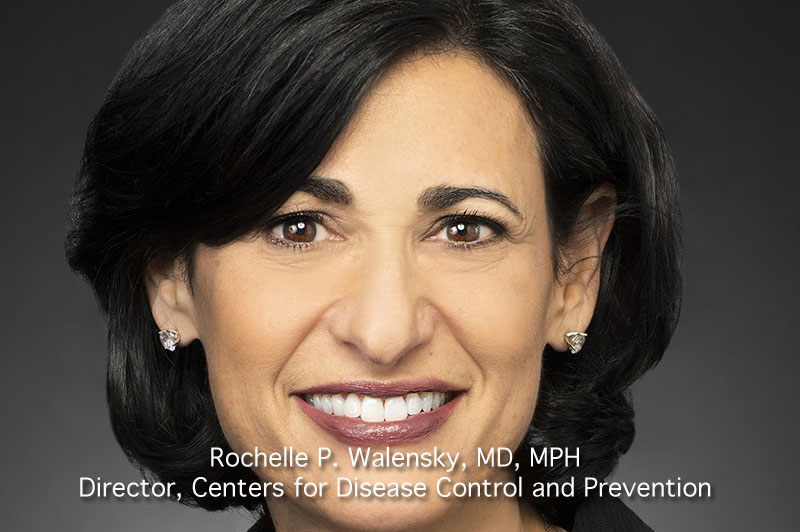
Rochelle P. Walensky, MD, MPH, Director, Centers for Disease Control and Prevention said in a news conference that new scientific data from recent outbreak investigations show the Delta Covid-19 variation is uniquely, differently from past strains of the virus. Even those who are fully vaccinated may become contagious and spread the Delta variant to others.
Walensky recommended:
1) Everyone should get vaccinated and continue masking until fully vaccinated. In high transmission areas of the country, vaccinated individuals should wear masks indoors. This includes schools.
2) Everyone in K-12 schools wears a mask indoors including students, teachers, staff, and visitors regardless of vaccination status.
3) Children should return to full-time/in-person learning in the Fall with proper prevention strategies in place.
4) Community leaders should encourage vaccination and universal masking to prevent further outbreaks in areas of substantial and high transmission.
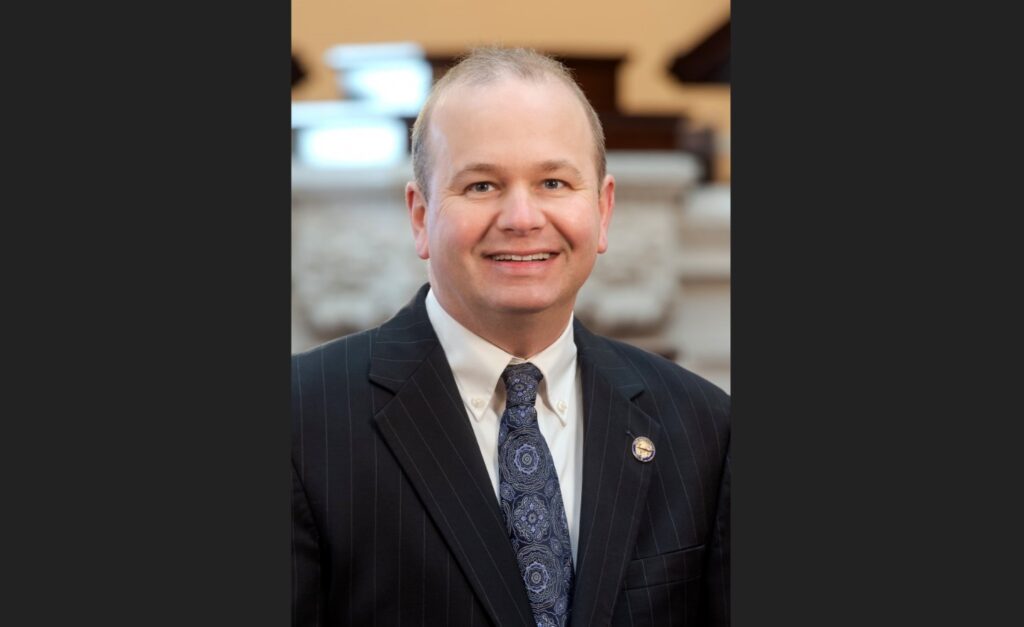
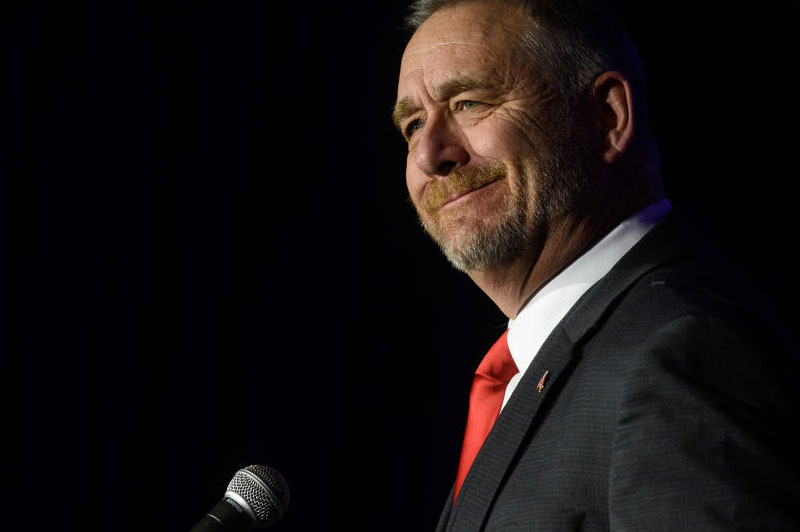
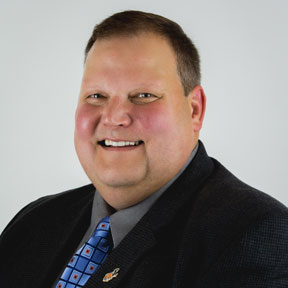
State Sen. Andrew Brenner, R-Powell. Photo from Ohio Senate website.
Ohio schools will soon be barred from mandating that students be vaccinated against COVID-19. A Republican state lawmaker wants to also prohibit schools from mandating students and others wear face masks.
State Sen. Andrew Brenner, R-Powell. (Photo from Ohio Senate website)
Senate Bill 209, introduced by state Sen. Andrew Brenner, R-Powell, is unlikely to impact school districts’ decisions for the fall, as lawmakers are on break until after most schools return to class. But the bill reflects continued attempts from those in the Ohio General Assembly to block public mitigation efforts of a virus that has killed more than 20,000 Ohioans to date.
SB 209 would prohibit the state school board, the Ohio Department of Education or individual school districts’ boards of education from requiring anyone to wear facial coverings in a public education setting.
K-12 schools and universities would not be able to require masks for students, teachers, staff members or visitors. Masks would not be required for in-class learning, any school athletic event or other school function.
“An individual may choose to wear a facial covering but shall not be required to do so,” the bill states.
Such mandates could still come from outside the education system, as SB 209 notes that health departments retain the authority to take “action to prevent the spread of a communicable or contagious disease.”
A separate provision in SB 209 deals with mask mandates imposed by private businesses. The businesses would be able to require masks, but “shall post notice of the requirement in a conspicuous place.” The notice must “state that an exemption to the requirement exists for individuals that have a documented medical condition that contraindicates the wearing of a facial covering.”
Brenner helped to enact the recent law barring public schools from issuing vaccine mandates — a law that does not go into effect until mid-October.
Shortly before lawmakers recessed for the summer, Brenner added the amendment to an unrelated bill involving education for children with parents in the military.
The Republican supermajorities, which have been critical of public mandates throughout the duration of the pandemic, swiftly approved that bill.
Ohio Gov. Mike DeWine is seen at a coronavirus press conference in 2020. He had pledged to veto bills that discouraged vaccination. Photo courtesy The Ohio Channel.
A year ago, when Ohio districts weighed a return to in-person instruction for the 2020-2021 school year, Brenner argued such decisions should be made at a local level, not by the state government.
“Why would you not trust your local school boards and superintendents who know their schools districts the best, taking information from state and local health departments to be able to determine whether or not their local school districts should be open?” Brenner asked in June 2020.
The legislature has since taken away local decision-making regarding school vaccine mandates, and under Brenner’s SB 209, the same would be true for mask requirements.
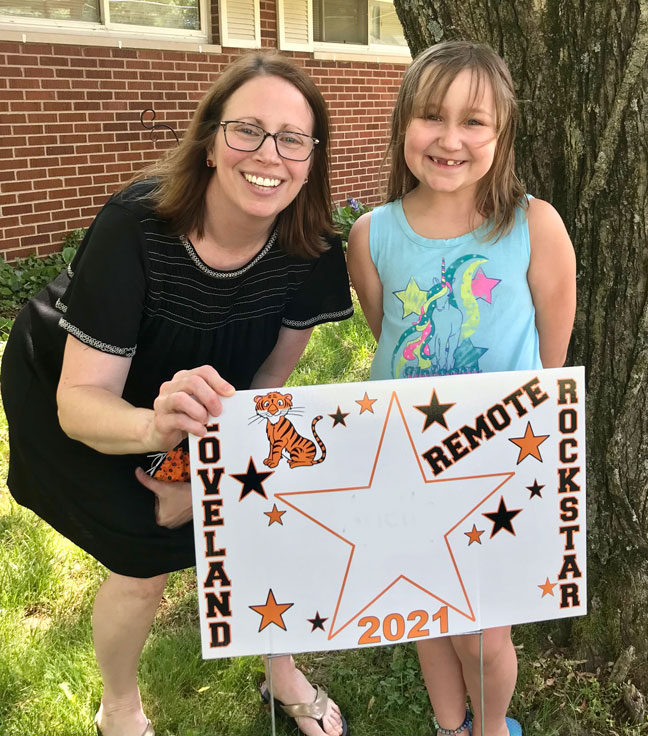
During this past year, I took on the challenge of teaching a remote section of first grade for Loveland Schools. To date, this has been the most difficult work situation that I have faced as a teacher during my twenty-three-year career. I started the school year with 38 first graders. Just that hurdle alone made this an imposing task from the start. I remember thinking to myself, “How will I ever be able to deliver meaningful instruction to that many six and seven-year-olds? How will I establish a relationship with each one of them? What if I let my students down?”
My remote teaching team and I immediately had to dig in and make this work for our students. I quickly figured out how to manage thirty-plus students on Zoom calls during the day and created a daily schedule. I did my best to find helpful answers to parent questions and concerns, even though I often didn’t have the answers because so much of what we were doing was new to us all. As the first few weeks turned into the first month of remote learning, I found my way and admitted to my parents that I may not have all the answers about all the new challenges of this unique school year, but what I do know about is the development of six and seven-year-olds. So I asked for their trust. And the rest, as they say, is history.
After many afternoons and nights of stress and reinventing my practices to meet the needs of the situation, I pulled up my bootstraps and really dug into the school year. I had a job to do and my students deserved and needed my very best. I became the technology and wifi expert at my home, I figured out routines such as bi-weekly supply pick-ups; monthly drive-ups at my home for treats, crafts, and encouragement; and I came up with a working schedule that would not overwhelm our district’s young remote learners – or their parents or caretakers, with whom I recognized the need to partner with more than ever. As the year progressed, I had many students transition back to in-person school and from late winter to the end of the school year, I had eighteen students.
I can say with confidence that my students had a wonderful and meaningful learning experience this school year. My parents, students and I worked hard to create a caring and respectful online learning environment. On any given day on any given zoom call, my students and I could be found laughing and learning and being silly. We knew the names of each other’s pets, siblings, and other family members. We even knew what everyone had for lunch. Simply put, we were a learning community and, by extension, a family.
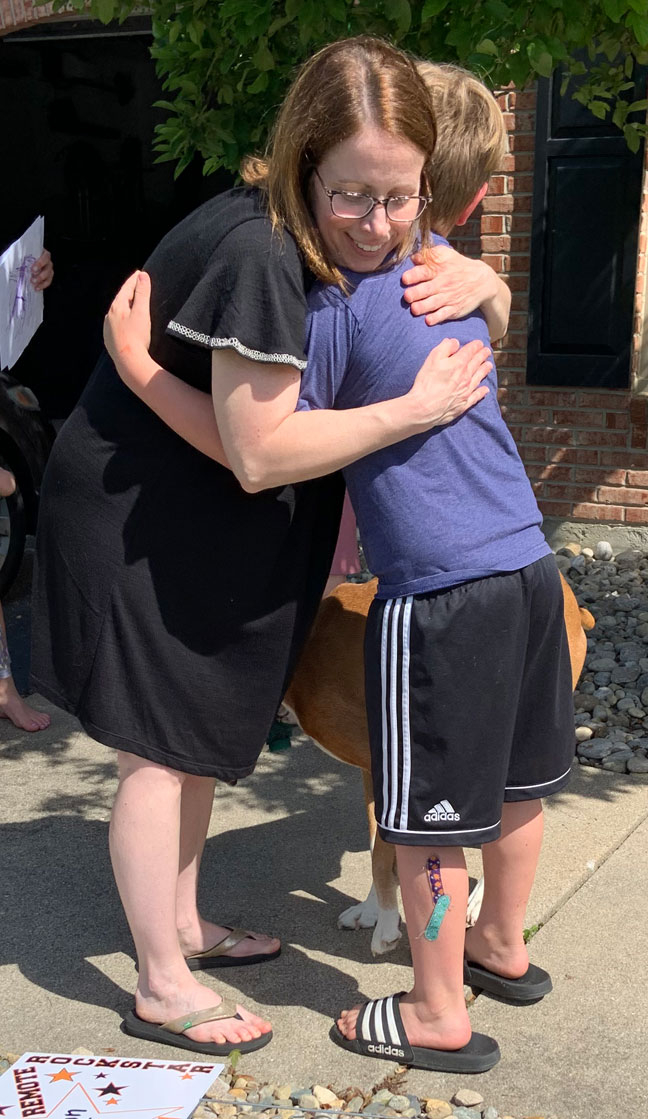
I invited my families to drive by my home in Loveland every month of this past school year so that we could say “hi” in person. I usually had a small treat for them, and I collected a lot of notes, cards, and flowers through the windows of their cars. Those drive-thrus proved to be one of the highlights of our school year together. A few even left me in tears afterward as I realized how awesome we all had made a difficult situation. To be honest, it was a great relief and extra rewarding to find that we could still have such a strong, supportive, and caring learning community in the midst of a pandemic while doing remote school from home. We celebrated birthdays, holidays, and milestones together such as the 50th and 100th days of school. During the Spring we celebrated being reunited with family members and friends as vaccines became available. And on a daily basis, we celebrated each other’s reading, writing, and goals scored over the weekend at soccer. And of course, lost teeth and new haircuts.
As I look back on our school year, I can safely say that we all had a wonderful school experience. Somewhere in between bad wifi connections and reminding them to “unmute,” all of our wrinkles and rough spots were smoothed over. My hope for my remote students is that when they look back on being a kid many years from now, that some of our memories will be there for them and spark joy. Maybe they will remember our renditions of the Gingerbread Man through reader’s theater. Or maybe the puppet shows put on with their siblings as they retold a story via video. Or maybe it was the simple joy of buddy-reading with a friend in a Zoom breakout room. I know for me, when I look back on this school year, I will remember the faces that greeted me each day with a smile during this pandemic and the trust they had in me all along.
To My Stay at Homies: Thank you for believing in me. Thank you for believing in yourselves. Thank you for always having a smile on your face even when you didn’t want to be on a Zoom Call. Thank you for letting me into your home each day. Thank you for sharing your funny stories and jokes with me. Thank you for finding humor in something each and every day. Thank you for laughing at how silly Frog and Toad were with me. Thank you for always asking how I was doing. Thank you for being my anchor during a tough and sometimes sad time. Thank you for being you.
I love all of you and I can’t wait for more hugs and to see you at LPS in August.
Washington — More than two dozen Republican attorneys general including Ohio’s Dave Yost are voicing their disapproval over the Department of Education’s proposed priorities for teaching K-12 students about American history and civics education because they would include references to systemic racism and how the history of slavery has shaped the U.S.
The state attorneys general argue in a May 19 letter to Education Secretary Miguel Cardona that public schools should not be given grant funds to teach about critical race theory, “including any projects that characterize the United States as irredeemably racist or founded on principles of racism (as opposed to principles of equality) or that purport to ascribe character traits, values, privileges, status, or beliefs, or that assign fault, blame, or bias, to a particular race or to an individual because of his or her race.”
Critical race theory says that racism is systematic and embedded in policies and the legal system. Scholars who study the issue focus on understanding how racism has shaped U.S. laws and how those actions have affected Black communities and communities of color.
“Though the Department does not overtly refer to (Critical Race Theory) in its priorities, it is prioritizing teaching this highly controversial ideology through the vehicle of this grant program,” the AGs wrote. “This is hardly what Congress intended when it authorized this program.”
The attorneys general also warn against approving grants for teachings of the Pulitzer Prize-winning 1619 project from the New York Times Magazine.
The Department of Education did not respond to requests for comment.
The attorneys general who signed the letter include Mark Brnovich of Arizona, Christopher Carr of Georgia, Lawrence Wasden of Idaho, Derek Schmidt of Kansas, Jeff Landry of Louisiana, Eric Schmitt of Missouri, Austin Knudsen of Montana and Dave Yost of Ohio, among others.
John Coburn is a Loveland Resident, a lifelong educator, and a founding member of the Loveland Diversity Advisory Board.
by John Coburn
In 1954 my father-in-law Everett enlisted in the US. Army stationed in Alaska. The base was a rugged area far removed from big cities like Anchorage, Fairbanks, or his hometown of St. Louis. Everett quickly found himself the odd man out; it became clear the men in the company were not accepting of Black folks. Fortunately, he was blessed with the gift of gab, enabling him to hold his own without fear of repercussion.
Everett met a young man in his platoon named Ken. Ken, being Jewish and from New York, also struggled with the new environment and described Alaska as “living in a foreign land.” Friendly and outgoing, Everett became like a brother to Ken. Eventually the two forged a friendship with Ken dubbing his new pal “Duke.” While Ken and Duke were an unlikely duo–it seemed incredulous that a Jewish man and a Black man could become friends and work together– the truth was Everett knew no strangers, and he never left anyone behind.
Everett’s strong sense of family instilled in him the importance of acceptance toward all people, regardless of their differences. As such, he helped Ken fit in with the rest of the company by reinforcing to Ken that he was special. By helping Ken to develop a sense of self-worth and demonstrating that he was a crucial member of the team, Duke enabled Ken to develop a sense of belonging. That was a favor Ken never forgot and after the tour in Alaska ended, Everett and Ken remained lifelong friends. Over the next 60 years, they continued to stay in touch via yearly phone calls. When Everett died in 2020, Ken remembered his friend’s kindness, stating he would never have made it out of basic training without his friend Duke.
By the 1970s, Everett was named the first Black employee at the St. Louis Corvette plant, working in security for General Motors. (Technically, he was the second Black employee, but GM didn’t know this; Everett’s cousin Bob who got him the job was the first, but Bob passed as white.)
The interview process was brutal and Everett was openly mocked for having taken college courses at the local business school. While cruel and demeaning, unfortunately the interview was only a small glimpse of what was to come.
GM was a toxic workplace during those days and fellow workers desperately tried to get Everett fired or intimidate him into quitting by placing nooses and tools in his locker. If you possessed company materials, you were subject to disciplinary action so those would be planted as well. Employees would drive to his home and sit in front of his house during the day, Everett recognizing the cars because of his position in security. He would come home after work crying tears of frustration. This pernicious behavior was against everything he believed and stood for. He’d initially believed his vivacious personality coupled with his gift of unconditional acceptance and love for others would help him navigate life’s challenges. He was starting to think it would not. Fortunately, his wife supported and encouraged him to continue to push forward. Eventually, Everett was the first black foreman at GM, receiving Quality awards for the work.
In the years since, I’ve taken Everett’s experiences to heart and they’ve shaped the way I live and the way I approach my career as an educator. At one point, I accepted a job in the city next to my hometown as an assistant principal. The principal was indifferent to the idea of Diversity, Equity, and Inclusion and its impact on the school environment. It was obvious: both the school environment and the surrounding community were incredibly toxic. Students that were deemed different were overly disciplined and behind academically. It was clear no one felt a sense of belonging or importance, not the students in the school or the members of the community surrounding it. And with no leader to inspire these feelings, things would only continue to get worse.
With the help of another teacher, I instituted plans to help students academically. I continued my work with students and parents providing social-emotional support while addressing underlying social-emotional needs. I started an ACT Prep program to help improve the students’ college acceptance.
In the spring, the community experienced a mass shooting that killed local government officials and police officers because of a community conflict. Those students that felt a sense of belonging began to seek social and emotional support. Despite the community upheaval, many students followed the academic plan and graduated with their classmates. The community has started to heal, and many community members have made it their mission to speak up and be more inclusive of others in their community.
I share these stories about my father-in-law’s and my experiences to illustrate that everyone wants to belong. The need for belonging is an innate sense of the human condition. If we cannot develop relationships and feel a sense of acceptance, we become isolated, withdrawn, and want to quit. A feeling of belonging, and having people around you who foster that feeling, is an essential component to success.
That said, because of Covid-19 and social injustice, many students don’t have that sense of belonging. They may feel excluded at school or in society in general. This, as we’ve seen, is neither conducive to a healthy self-esteem or academic success. The question is, how can we help our students feel like they belong?
Taking inspiration from Everett, as I have done, has been instrumental. We can ask ourselves:
As teachers, are we accepting of students and not hypercritical? Everett welcomed all people. He did not put people down, and he was not overly judgmental. No matter what others said, he never judged anyone.
As educators, do we allow students the opportunity to restart? Everett always gave everyone a fresh start. Once his nephew forged his signature on a document, and he received free service on his car. Everett forgave him.
Are we empathetic toward students? Everett displayed grace toward people even when people were unkind to him.
Finally, is our climate and culture inclusive, accepting, and inviting? It was not until the final years of working at GM that Everett felt a sense of belonging. Toward the end of life, Everett developed dementia. He recalled the names of most of his family and not much else. However, he remembered in detail his experiences at GM.
Though it has only recently been given a formal title, Diversity, Equity, and Inclusion is a concept that has always been important. And while there will always be outliers like Everett who persevere despite the odds, there are far more Kens, who need the camaraderie and encouragement of others to succeed. As educators, caregivers, and members of the community, we are uniquely poised to provide this encouragement and well-crafted DEI programming is the most impactful way to do it. It need not be a political or divisive issue–the fact is that when everyone feels they belong, everyone wins.
Regardless, I’ll continue to advocate for DEI not only because I’ve seen that it works, but also because I know that Everett wouldn’t have wanted it any other way.
This Guest Column by John Coburn is presented by Loveland Magazine in collaboration with the Loveland Diversity Advisory Board. Contact them if you’ve a story to share.
Loveland, Ohio – This is the livestream link for the Class of 2021 Commencement Exercise to be held at the Cintas Center on the campus of Xavier University today May 22nd at 11 AM. https://cintascenter.com/livestream
Loveland, Ohio – Several administrative staff resignations, including the resignation of former Superindant Dr. Amy Crouse, the re-arrangement of 1st grade classrooms, and additional full-day kindergarten opportunities will bring significant change to the Loveland City School District this Fall.
Julie Carter will be the next principal of Loveland Intermediate School
Julie Carter, will be the principal of Loveland Intermediate School beginning this fall. She is currently serving as the Assistant Principal and will be taking over for Garth Carlier, as he becomes the new Director of Human Resources for Loveland City Schools.
Carlier will fill the position vacant because of the resignation of the current Director of Human Resources, Charles Ogdan who has been hired by the Mt. Healthy School District for a similar position.
Garth Carlier is the current Principal of the Loveland Intermediate School and will become the new Director of Human Resources
Superintendent Finalists announced
CF Educational Solutions has been assisting the district in the search process for the next Superintendent. The District says they received broad interest in the position from across the country. Bradley Neavin was hired in January to lead the District after the resignation of Dr. Amy Crouse until a person could be hired to lead the District this Fall and into 2022.
Crouse resigned last December and was hired as the founding Principal of the new Citizens of the World Charter Schools in Madisonville.
The Board and members of a Community Advisory Group (CAG) were given a list of anonymous profiles to consider in a new Superintendent. They narrowed the list down to seven candidates who were interviewed by the Board in executive sessions this week. The Board and the Community Advisory Group also worked together on the interview format and questions to present to the candidates. The Community Advisory Group is made up of members of the Loveland community, district staff, and parents.
A release by the District said the Board and the CAG reached “very similar conclusions about which candidates to interview.”
A final pool of three caucasian, male candidates was released Wednesday afternoon to lead the outer-suburban Cincinnati school District and its all-White central office, school administrative team, and Board of Education. This announcement comes three weeks after the Board adopted a statement on diversity, equity, and inclusion. (Loveland City Schools adopt Statement on Diversity)
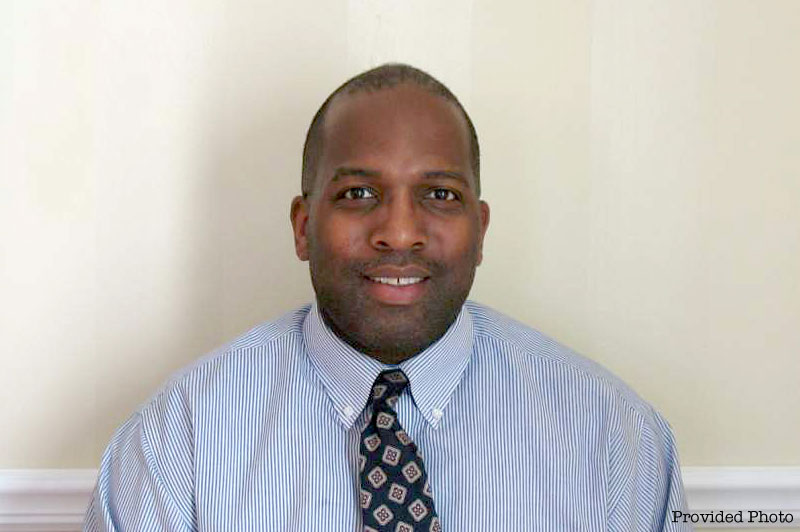
The finalists are:
The community is invited to a Virtual Community Engagement Session on Tuesday, May 18 at 6 PM. Each of the candidates will speak individually. The Board would like community members to submit questions for the candidates in advance of the meeting. Submit questions here.
Information about access to the Virtual Community Engagement Session will be posted on the Loveland City Schools Board of Education webpage prior to the Tuesday, May 18 meeting.
In-Person Learning For Fall
The District has announced that due to a lack of interest “from our families” there will be no Remote Academy for the 2021-2022 school year.
“In the months ahead, we will be watching for the latest state guidance on health and safety protocols and adapting as necessary. We will continue to accommodate students with special health concerns, as we have in prior years. Families with specific concerns should reach out to their building principal.”
Masking for Fall
The District said in a communication to parents that they have received several questions from parents about masking and other restrictions for the fall. The release said:
“It is simply too soon for us to predict what will be expected; however, based on the communication from parents, we are working on a strategy to engage decision-makers at the state level for more specific guidance to ensure that our parents’ voices are heard.”
“At this point, Governor Mike DeWine and the Ohio Department of Health have not issued any new orders or guidance for how schools should operate during the 2021-2022 school year. DeWine has stated that when COVID cases drop to fewer than 50 per 100,000 people for two weeks, all health orders will be lifted across Ohio.”
“With increasing vaccination rates and lower case numbers, many things can change between now and the new school year in mid-August. We have been committed to providing a safe learning environment while supporting our students’ academic growth. We are hopeful that when we welcome students back after the summer break, everyone will be able to see the smiles on our faces.”
Changes for Early Learners
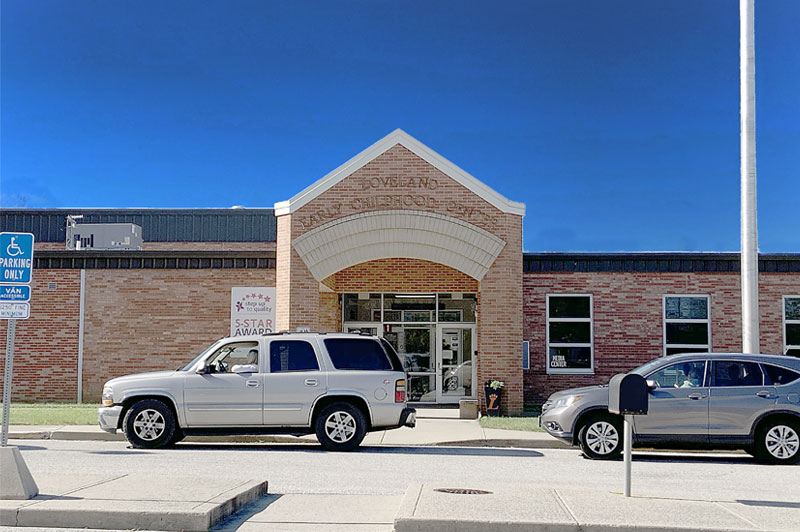
Loveland Early Childhood Center
At the Board of Education meeting on April 20 the district announced that they will be implementing an additional full-day kindergarten section for the 2021-2022 school year.
Immediately after students leave for summer break, work will begin at LPS and LES to accommodate the changes. Some classroom spaces will be remodeled and modular units will be used for classrooms and additional office space. The District plans to maximize every available space in LPS and LES to serve students of the same grade level all in one location.
Changes include the implementation of an additional full-day kindergarten section at LECC. This change will allow the district to eliminate the current lottery system that is now used for assigning access to full-day or half-day kindergarten offerings. For the 2021-2022 school year, LECC will be offering 7 sections of full-day kindergarten and 6 sections of half-day kindergarten.
Tuition for full-day kindergarten for the 2021-2022 school year will be $385 per month.
There will be a realignment of grades involving LECC and LPS. All of Loveland’s first-grade classrooms will be on the LPS campus beginning in the fall. Currently, there are first-graders at both LECC and LPS. After the realignment, the Head Start Program, our preschool, and our kindergarten students will all be together on the LECC campus, while our first and second-grade students will be together on the LPS campus.
Andrea Conner, Assistant Superintendent of Teaching and Learning said, “By bringing all of our first-grade students together on one campus, our first-grade staff will have more opportunities for a more collaborative approach in addressing the needs of our youngest learners while sharing valuable resources.”
Director of Student Services will leave
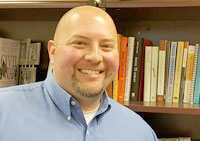
Eric Dool
Eric Dool, the Director of Student Services has announced that he will be taking another job. Dools job responsibilities included, Student Health and Wellness, Student Safety, Special Education and Related Services, Section 504 Accommodation PlansTitle I, Reading Intervention, English as a Second Language (ESL) – Title III, Homelessness, and Student Attendance.
New High School Principal
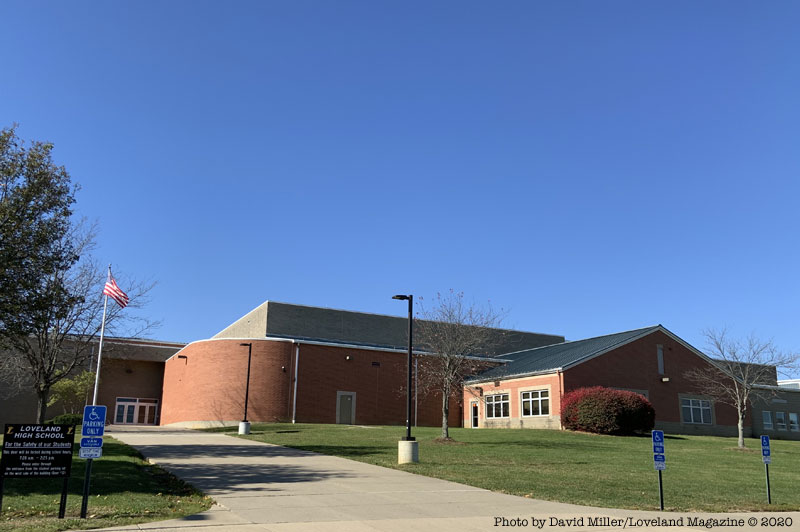
Loveland High School
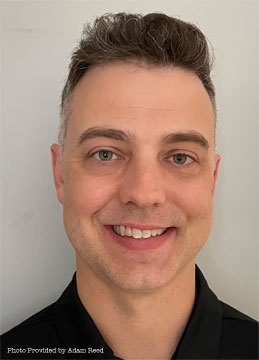
Adam Reed
Peggy Johnson announced her retirement at the end of January after 39 years in education and 6 years as Principal of Loveland High School (LHS).
Thirty-nine-year-old Wyoming High School Principal, Adam Reed, who is entering his 17th year in education was recently announced as Johnson’s successor for the 2021-2022 school year. (Meet Adam Reed the next leader for Loveland High School)
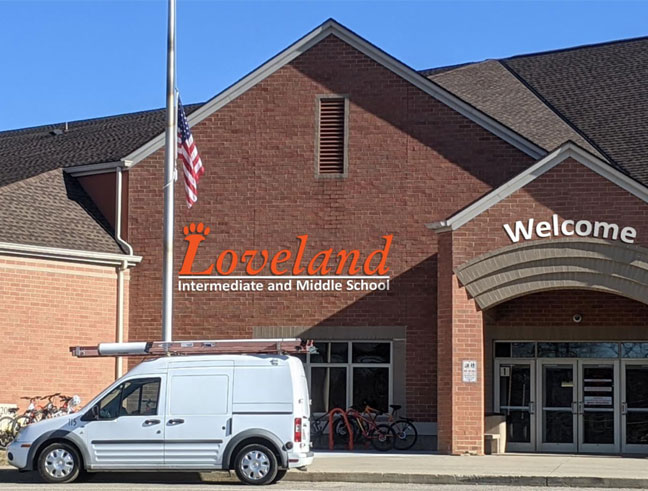
New common entrance branding proposed for Loveland Intermediate and Middle School Campus
A true story by a Loveland resident presented by Loveland Magazine in collaboration with the Loveland Diversity Advisory Board. Contact them if you’ve a story to share.
The family in this story has chosen to remain anonymous for fear of retaliation against their children.
You may want to read Part I first or re-read it to remember the story we are telling.
Part I of II
As the years passed our family had more brushes with racism and the talks my husband and I had with our sons became, both by choice and necessity, more regular. As they grew from children into tweens and teens, we had to remind them that in the eyes of others they were no longer perceived to be cute, unthreatening little boys. For a Black child, that shift in perception can be the difference between life and death. While their Caucasian friends were in the habit of wearing the hoods of their sweatshirts over their heads when walking around town, their dad and I recognized the danger inherent in this scenario for boys of color. And that was just the beginning. Every news story became another talk we had to have.
Still, despite the increasing frequency of our family talks and growing awareness of society’s bigotry, one can never quite be prepared when racism rears its ugly head.
She wanted to go to the park. My daughter, only five, was not yet included in these family conversations. The innocence my sons were cruelly stripped of that final day of school was still intact in her, as evidenced by her bright eyes, sweet giggles, and the ambient toothy grin she had for everyone she met. Like so many moms that day, I tied her soft brown curls in a ponytail, gave her breakfast and got her dressed before setting out for our walk to the park, just around the corner from our house. It was an unremarkable walk, one we’d taken a thousand times.
Upon arrival we encountered several boys. They appeared to be aged 12 or 13, and like so many boys their age they were roughhousing, laughing, and hollering. I half-smiled and shook my head remembering how boys that age could be, before turning my attention back to my little girl.
The rowdiness didn’t bother us, but I winced as one spewed a series of obscenities, hoping my daughter’s attention was focused on the playground and not the words her young ears were hearing. A quick glance around showed no parents or elder siblings in attendance and so apparently, as tween boys are apt to do, they were in relishing their temporary emancipation, saying things they knew better than to say.
They’ll stop this behavior now that I’m here. Kids don’t act like this in front of adults, I deduced. I’ll just keep her on the far side of the park where she’s less likely to hear them.
“ Mommy!” I was jerked back into reality by my daughter’s excitement. “Can you help me get up there?” she asked, motioning to the play structure.
I had done it a thousand times. I’d fit my hands around her waist, giving her a boost. I’d watch as her small hands smoothly and confidently scaled the rungs. But before I could lift her I heard a mocking shout coming from the direction of the boys.
“Why are YOU calling HER that? She’s not YOUR mom,” he chortled.
Now is the part of the story where I let you, the reader, know that I am, in fact, Caucasian. My husband is Black and, thus, our childrens’ richly hued complexions do not match mine. And while there has been more than one instance where children (and the occasional adult) are curious about how one pale-skinned mother comes to have three darker-skinned children, the tone in this boy’s voice told me this was not childhood confusion.
This was antagonistic.
This was unmistakable cruelty.
My daughter let go of the play structure, whipping her head around to face me. Loose curls softly grazed her cheek. We locked eyes. On her face was an eerily familiar expression. It was one I’d seen years earlier and in many nightmares since. It was the same look my sons had given me on the last day of school.
That last day of school.
“Have a good summer, you N——s!”
The feeling came rushing back, the unadulterated terror where my stomach flips, my heart drops, my breath quickens, and I can feel the color draining from my face.
Oh, not again.
“Mommy?” my daughter looked at me, baffled.
“Stop calling her your mom!” The boy scoffed. “She can’t be your mom. She’s white!” The boy sneered at us, before glancing at his buddies with a snicker and a smile, seeking approval for what he must have thought were his superior skills of observation. One of his friends joined in on the cackling. The other stood silently, head down.
The old adage of “sticks and stones” isn’t always accurate. One look at my daughter’s collapsed expression told me these words, while not breaking her proverbial bones, threatened to break her spirit.
“Don’t you talk to my daughter that way,” I snapped. “I am her mother.”
“Mom–”
“She’s not your mom! SHE”S NOT YOUR MOM! She’s white!”
Laughter. Jeers.
I walked toward the boys slowly, the soft earth yielding beneath my sandaled feet.
Imagine, for a moment, you are standing in my shoes.
What do you do in a situation like this? Do you unleash your wrath on someone else’s kids? Do you completely lose your composure in front of your daughter who is already visibly shaken? Or do you ignore such a blatant and dangerous transgression? And where did these kids learn this behavior anyway? Why would they think this sort of racially-charged rhetoric is acceptable? What emboldened them, still children, to speak this way around me, an adult? And of all places for this to happen, why did it have to be on a playground, a place of childhood innocence? A magical place meant to foster youthful wonder and unbridled imagination?
The questions rang in my ears while a whirlwind of emotions bubbled to the surface. Though seemingly intertwined, my feelings were in direct juxtaposition with each other. I felt sorrow, but also anger. Despair, but also rage.
“You know,” I began, measuring my words carefully, “I wish your moms were here so they could see how you’re behaving.”
I didn’t know what else to say. I still don’t. Would you?
I took my daughter’s small hand and led her out of the park, back to our house, back to the embrace of the four walls that felt comforting and familiar. The sun swelled in the sky, casting shadows as it fought to rise above the clouds.
As we walked, my daughter begged insistently for answers.
“Mommy, why are those boys saying you’re not my mommy?” The loose brown curls now stuck to her face, plastered in place by tears. “You are my mommy, right? You’re my mommy?”
Explaining a nuanced topic like racism to my school-aged sons felt like too soon and even then I felt guilty somehow. Like I hadn’t broached the subject enough and had somehow failed them. But my daughter was five. How do I explain this situation to a five year-old? And why should I have to? I resented those boys. I resented the situation. I resented everything that put me in the position of having to reassure a five year-old little girl that I am her mother, to explain why she and I look different, and to address how that will be an issue for her in the future.
If I have learned anything from the events involving my children it’s that everyone, regardless of the color of their skin, needs to be having conversations about race with their families. These talks, whether organic and casual in nature or full-fledged sitdown discussions, must happen regularly. Not only that, but the topic needs to be addressed in a manner that honors and celebrates our differences while still acknowledging our similarities. And because so much of racism is learned behavior, modeling acceptable treatment of others can’t start and end when the conversations do. It isn’t the sole responsibility of families of color to teach their kids about prejudice and racism; Eradicating hatred is a group effort that has to include everyone to be successful.
I have replayed that day in my mind a thousand times.
Fortunately, in the years since, my daughter’s memory of the incident has somewhat faded. I’m thankful that she doesn’t have to carry that burden around anymore, a veritable boulder on her tiny back.
But I carry it everyday.
I carry it when I see the news.
I carry it when I think of my own school experience. The cruel taunts of classmates calling me a “N—-rlover” leave me wondering what onslaught the teen years have in store for my own children.
I carry it when I see comments on social media that assert prejudice does not exist in Loveland, or does not exist in Loveland today, or does not exist with “my child.”
I carry it when I’m sitting on my porch watching my daughter play and from a yard within earshot I hear someone commenting on the election. Well I hope all those dumb Black people are happy now that they got what they wanted.
Racism is here, in Loveland, whether we want to admit it or not. It’s here today and everyday, and it’s all around us whether we want to admit it to others or to ourselves.
But what gives me hope is that once we acknowledge the issue, we can unburden ourselves of this unnecessary weight. By taking that first step, we can commit to doing better. We can do what is needed to learn and to grow, and we can do that learning and growing together. I hope that by sharing my family’s experiences others will be empowered to take that first step.
In Part I of this Diversity Story, we see that the trouble was only beginning.
Read our first installment of a true story by a Loveland resident presented by Loveland Magazine in collaboration with the Loveland Diversity Advisory Board
For engaging story times on diversity (including race) for young learners, join the Loveland Diversity Advisory Board and the Cincinnati Hamilton County Library the 2nd Monday of every month for Bedtime Book Talks.
Support for those feeling fearful, vulnerable, or uncomfortable upon reading these accounts:
Loveland, Ohio – Ohio took a step closer toward a constitutional school funding model with the passage Wednesday of a two-year operating budget in the Ohio House of Representatives, a sweeping bill that also proposes an across-the-board income tax cut, a broadband internet expansion plan and more spending to aid businesses struggling from the pandemic.
The House passed a two-year, $74.4 billion budget for Fiscal Years 2022 and 2023 by a vote of 70 to 27.
Democrats took issue with certain portions of the budget, but its education funding reforms helped lead a dozen of them to ultimately join the Republican majority in approving the bill.
The budget now heads to the Ohio Senate, which will negotiate its own version over the coming months. Members of both legislative chambers will eventually hash out disagreements before a final version is sent to Gov. Mike DeWine for approval this summer.
“We are investing in Ohio’s priorities and Ohio’s future,” said Rep. Scott Oeslager, R-North Canton, who serves as the House budget chairman as he has for several previous budget cycles.
Oeslager said the ongoing pandemic has presented a wide array of challenges for Ohio, and the ongoing needs associated with the crisis are evident. He complimented House members for crafting a “balanced, responsible and truly meaningful” budget.
This budget does not include any federal spending from the American Rescue Plan. Speaker Bob Cupp, R-Lima, said Ohio has not yet received this relief funding and a forthcoming committee would determine how best to spend it.
Here are budget highlights as approved by the Ohio House of Representatives.
Education funding model overhaul
Amesville Elementary in the Federal Hocking School District. Photo from district website. Lawmakers approved a new education funding model in the House budget passed on Wednesday.
It has been more than 24 years since the DeRolph v. State decision was handed down by the Ohio Supreme Court, which ruled Ohio’s state funding model does not provide an equal opportunity for all students to learn and is therefore unconstitutional.
Lawmakers were tasked with determining a more equitable, constitutional funding model — something they have failed to accomplish in the decades since.
Cupp has led a renewed push to reform the funding system in recent years and said after Wednesday’s vote he was glad this budget achieves that goal.
The House-approved budget includes a nearly $2 billion increase in school funding, with most districts expected to receive more funding over the next six years. (A spreadsheet showing the funding estimates for each individual district in Ohio was published by The Columbus Dispatch.)
The Loveland City School District may receive $941,996 additional State tax dollars according to the Columbus Dispatch.
Cupp said he did not want to speculate on potential disagreements the Senate may have with this funding plan, but hoped there would be more productive conversations between members of the two chambers on this subject.
“We think they will agree that it is a very good plan going forward,” he said.
Detailed Ohio Capital Journal reporting on the education reforms included in this budget is forthcoming.
More spending for COVID-19 relief, and vacating penalties for public health violations
The budget includes relief spending to benefit a variety of Ohio businesses.
Millions of dollars would go toward helping entertainment venues, bars, restaurants and hotels. Additionally, there is a “New Business Relief Grant” program to specifically help those businesses that opened after Jan. 1, 2020.
Republicans also inserted a budget provision that would vacate all public health violations incurred by Ohio businesses since March 2020.
A number of Ohio bars, including several on the island village of Put-In-Bay, were cited in 2020 for violating COVID-19 health orders. The House budget would expunge these violations and repay any fines levied against businesses. Photo from the Ohio Investigative Unit.
Businesses that have faced penalties for violating public health orders, such as not enforcing mask and distancing mandates, would have their violation records expunged. Any disciplinary actions currently in progress would be halted.
The state would be forced to repay any fines levied and reinstate licenses revoked. The Legislative Service Commission (LSC) estimates this would amount to $100,000 in fines repaid to health order offenders.
Cupp defended this provision by saying Ohio businesses failed to abide by public health orders because the virus was an “unknown” phenomenon in 2020.
“The restrictions were new, they were different, and a lot of businesses sort of got caught up in this administrative web. As we work our way out of the pandemic, we think it’s important to take another look at (the violations) and to give them some sort of the benefit of the doubt…,” Cupp said.
Tax cuts
Another main portion of the bill involves income tax cuts and deductions.
There is a 2% personal income tax cut for all earners, which LSC estimates would save taxpayers around $380 million in the coming two years.
“Once more, the wealthy and big businesses will fare far better than working families under this budget,” said Rep. Michael Skindell, D-Lakewood, who unsuccessfully proposed taking out the tax cut and diverting it to other priorities.
Those earning under $40,000 per year would receive virtually no benefit from this tax cut, the study found. Ohioans earning between $40,000-61,000 per year would see their taxes cut by an average of $7 over the course of an entire year.
The top 1% of Ohio earners, those making more than $490,000 per year, would comparatively see their taxes cut by an average of $612 each year.
Skindell said the tax cut shows a “huge disparity and continues the tax shift in this state.”
Separately, the House budget institutes an income tax deduction on capital gains earnings for Ohio-based “venture capital operating companies.” Such investors could deduct all of their earnings from investments in Ohio businesses and 50% of earnings from investments in businesses elsewhere.
LSC estimated this provision may cost the state tens of millions of dollars per year in income tax revenue lost.
Broadband internet expansion
The House budget includes $190 million in funding toward new broadband internet expansion projects. (Photo by Leonardo Fernandez Viloria/Getty Images).
Ohio lawmakers have worked toward a bipartisan effort this year of expanding broadband internet access in the state.
The budget allocates $190 million over the next two years toward grants to pay for new broadband expansion infrastructure projects.
Other pieces of the budget
Here are some other noteworthy provisions from the budget bill:
The governor had proposed changing antiquated language in Ohio law to clearly state all couples can adopt children (LGBTQ couples are legally allowed to in Ohio). The governor suggested changing the phrase “husband and wife” to read “legally married couple,” but Republican lawmakers took out this change to leave the original language in place.
The budget allocates millions of dollars for firefighting equipment and training, along with millions more for a law enforcement training program.
The budget provides $25,000 to Ohio domestic violence groups to give clients travel vouchers, gas cards and ridesharing credits.
Millions of dollars will go toward the Foundation for Appalachian Ohio, as well as money for workforce development around the state and in Appalachian communities.
The budget includes greater investments for maternal/infant health programs.
The budget does not include several major proposals from the governor, including gun safety reforms and a $50 million public relations campaign for Ohio.