Tag: education

  • There weren’t enough napkins to clean up the tears when my Loveland school-children were called N——s!

    There weren’t enough napkins to clean up the tears when my Loveland school-children were called N——s!

    A true story by a Loveland resident presented by Loveland Magazine in collaboration with the Loveland Diversity Advisory Board. Contact them if you’ve a story to share.

    The family in this story has chosen to remain anonymous for fear of retaliation against their children.

    Part I of 2

    We arrived at school bright and early, just as my sons had requested. It was their last day of 2nd and 4th grade and the anticipation they felt for the occasion was palpable. The dew collected on the toes of their sneakers as they ran to line up, the unmistakable scent of spring perfuming the air. It would be the kind of summer children dream about, with lazy mornings, afternoon trips to the park, and visits to the local Whippy Dip where the cones melted and dripped down their small arms onto the picnic tables. We never got enough napkins. It was going to be the kind of summer they’d look back on years from now with a hint of nostalgia, remembering the carefree innocence of childhood. 

    The school day went by without a hitch; games were played, awards were dispersed, maybe there was a hint of sorrow from the teachers as they retreated back to their now-empty classrooms. But on the faces of my sons and their friends after the final bell had rung, I saw nothing but pure elation. As they played on the front lawn of the school, one last farewell before loading them up, a car slowed to a cruise on Loveland-Madeira. It was all decked out, congratulatory chalk paint on the windows; apparently the driver and his passengers were recently graduated seniors.

    The passenger leaned out of his open window as the car passed my sons and me. 

    “Have a good summer,” he shouted. My sons smiled back, visibly excited a ‘cool’ older kid was acknowledging them.

    But his sentence didn’t end there. 

    I wish his sentence had ended there. 

    “Have a good summer, you N——s!

     My heart dropped. I felt as though I’d been punched in the stomach. And then instinct kicked in.

    “Get in the car, boys,” I frantically stammered.

    “But mom–what did he say?”

    “I said GET IN THE CAR. NOW.” 

    “What did he call us mom? Why did he say that?” 

    I met the puzzled gaze of my younger son who had no idea what had just transpired. 

    My older son looked equally befuddled. This wasn’t the first time he’d encountered that vile term. He knew what it meant. The confusion on his face told me he just hadn’t heard the slur over all the commotion. 

    And here I was, flushed, sweating, and doing everything I could to keep from melting into a puddle of tears in front of them.

    There weren’t enough napkins to clean up the mess.

    With a single word, our perfect day was shattered.

    I tried to see the car’s plate number, but they’d sped away too quickly. I called the school to report the transgression, but, being the last day of school, I never heard back. I met with a police officer, but unfortunately his hands were tied; with what little information we had there was no feasible way to determine the identity of the culprits. As a last ditch effort, I tried doing my own reconnaissance work on a local moms’ group page on social media where my post was promptly removed after group members began chastising me. This isn’t the place for this, I was scolded. Well, where was the place? In the midst of a travesty, I’d turned to my community and in turn I was brushed off and chided.

    That night, instead of eating ice cream that dribbled down their chins and staying up past bedtime, my sons, my husband, and I had to have “the talk.” This is the talk that all parents of Black children, boys in particular, dread. We’d had conversations before but this time they’d been called out. This time it was personal. 

    We had to explain what they were called. What it meant. Where it originated. We had to explain that not everyone saw them as an equal. That prejudice exists.That stereotypes, to some people, are the stuff of truth. We had to sit down, the first night of summer, at the end of what began as a day full of promise, to explain racism to our elementary school-aged children. We had to explain that there are people who hate them for no reason other than the color of their skin. We had to explain that sometimes, inexplicably, people will respond differently to things they do, even if those things are exactly the same as those their Caucasian friends are doing. We had to explain injustice, an intrinsically unfriendly concept, in the most child-friendly way possible. 

    We were determined not to let racism win. This would not ruin our summer; it would not ruin our family. And ultimately, we have triumphed. This event and others like them, as upsetting, maddening and sorrowful as they are, have only served as teachable moments and life lessons. We turn the negativity into chances to fortify our familial bond and bolster our pride. 

    But make no mistake, there have been tears. There have been lots of tears. 

    And there are never enough tissues.

    With this horrifying experience behind them, this family hoped the worst was over.

    In Part II of this Diversity Story, we see that the trouble was only beginning. 

    Stay tuned for Part 2


    Read our first installment of a true story by a Loveland resident presented by Loveland Magazine in collaboration with the Loveland Diversity Advisory Board

    I felt the tears welling behind my eyes and willed them…


    For more information on talking to your kids about race and racism:

    Teaching and talking to kids

    Its never too early talk children about race

    Parenting/talking to your kids about racism

    For engaging story times on diversity (including race) for young learners, join the Loveland Diversity Advisory Board and the Cincinnati Hamilton County Library the 2nd Monday of every month for Bedtime Book Talks.

    Support for those feeling fearful, vulnerable, or uncomfortable upon reading these accounts:

    https://brenebrown.com/podcast/brene-with-aiko-bethea-on-inclusivity-at-work-the-heart-of-hard-conversations/
  • [Video] Senior Miya Brines sets Loveland High School high jump record

    [Video] Senior Miya Brines sets Loveland High School high jump record

    by Grace Nunn

    Loveland, Ohio – Senior Miya Brines set a new Loveland High School high jump record on Saturday, March 27 clearing the bar at 5’6 1/2″ in the Loveland dual meet vs Princeton at Tiger Stadium. She placed 1st in the high jump.

    LHS Senior Miya Brines

    “I am very honored to be in the Loveland High School record books with so many other athletes. I believe hard work and dedication have a big impact on the way I perform and compete as an athlete,” Brines said.

    Miya also thanked her coaches for investing their time and effort into herself and the team and cannot wait for her future as an athlete.

    The previous record was 5’6 set in 2016 by Kendall Ewert.

    She also came in 1st in the long jump with a leap of 16′-10.75″, 1st in the 100-meter hurdles running a 14.59, and 1st in the 300 Meter hurdles at 48.67.

    Brines will continue her track and academic career at the University of Iowa.

  • Groups call for budget that “Cares for All Ohioans”

    Groups call for budget that “Cares for All Ohioans”

    By Mary Schuermann Kuhlman, Public News Service – OH

    Columbus, Ohio – As state lawmakers work on Ohio’s budget for fiscal years 2022 and 2023, there’s a grassroots call for the budget to reflect policies that protect and care for all Ohioans and communities.

    The Ohio Organizing Collaborative and Policy Matters Ohio unveiled their “People’s Budget” on Tuesday, which the groups say will ensure the government is working for its people. (You can read the People’s Budget below)


    Portage County Treasurer Brad Cromes joined the release, saying budgets are moral documents and should reflect that.

    “For too long, we have been saying that the financial wellness of a very few is more important than the financial wellness of everybody in the state,” he said, “and that’s got to change if we’re ever going to start moving our state forward.”

    The People’s Budget features seven demands: quality education, safe communities, economic dignity, care for caregivers, stability for families, a working health-care system, and a category known as “Funding Our Lives.” It’s an alternative to Gov. Mike DeWine’s budget proposal released in February.

    Tia Ferguson shared her struggles working as a substitute teacher in Columbus without paid leave. After giving birth to a stillborn son, Ferguson said she had to return to work before she was emotionally ready. She contended that with economic stability, other aspects of life will fall into place.

    “If your child care is funded, that’s a worry that you don’t have,” she said. “So, you can make sure that you’re taking the time to go back to school and get your education, so you can further your career. But if you don’t have that foundational piece set, then all the other aspects don’t even come into play.”

    State Rep. Stephanie Howse, D-Cleveland, said a “people’s budget” is about paying attention and being flexible enough to make adjustments when people really need them. She said she thinks state leaders should take the lead in addressing the discrimination faced by people of color in education, health care, housing, and more.

    “Declaring racism as a public health crisis is needed more now than any time, ever,” she said. “We could be on the forefront of what it really looks like to lift up racial equity and social justice.”

    Specific provisions of the People’s Budget include tax code reforms, increased funding for education, and investments in housing, anti-hunger programs, and maternal health.


    This story was produced in association with Media in the Public Interest and funded in part by the George Gund Foundation.

    A budget that cares for all of us

    The future of Ohio depends on a fair, equitable, and people-centered budget that cares for all of us — no exceptions.

    We Ohioans believe in taking care of one other, no matter our skin color, our ability, or how much money we have. But for nearly two decades, our elected officials have passed a state budget that does not meet our needs or provide us with opportunities to thrive.

    Instead, the wealthy few and corporations have hoarded wealth, lining their pockets at the expense of our schools, hospitals, and child care centers. That is why we are demanding a People’s Budget.

    Our Seven Demands

    1. Quality Education

    For all Ohio students to thrive and pursue their dreams, regardless of how much money they have or what they look like.OUR DEMANDS

    Photo by   Charlotte May   from   Pexels

    2. Safe Communities

    For Ohio to be a place of freedom and justice for all, where our families can be whole and safe.OUR DEMANDS

    Rights Reserved

    3. Economic Dignity

    For all Ohioans to have a home to make memories, see a doctor when we are sick, and put food on the table.OUR DEMANDS

    Rights reserved

    4. Care for Caregivers

    An Ohio that respects and lifts up BIPOC women and the people who care for our families.OUR DEMANDS

    Photo by  Hush Naidoo  on  Unsplash

    5. Stability For Our Families

    For every Ohioan regardless of color or income to be cared for if and when they fall on hard times.OUR DEMANDS

    Rights reserved

    6. A Working Health Care System

    For all Ohioans to receive the very best care and see a doctor when we are sick, no exceptions.OUR DEMANDS

    Rights Reserved

    7. Funding Our Lives

    An Ohio where everyone has the opportunity for a better life, no matter what we look like or how much money we have.OUR DEMANDS

    Rights Reserved

    Tell our elected state leaders why you support The People’s Budget

    SIGN OUR PETITION

  • Do you know: The man who used his wife’s fortune to fund the freedom of over 1,400 slaves.

    Do you know: The man who used his wife’s fortune to fund the freedom of over 1,400 slaves.

    by Barbara Kyles

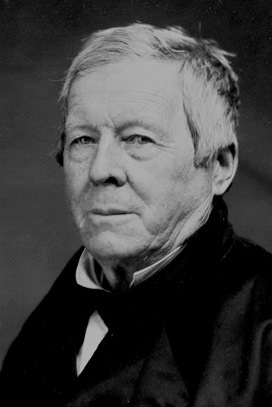
    Do you know that Thomas Garrett unabashedly gave life to his abolitionist ideals?

    Please read more about Garrett at Black Then…

    And read even more about this leader of abolitionism at Wikipedia, the free encyclopedia…

    Thomas Garrett ambrotype c1850 from Wikipedia

  • Meet Adam Reed the next leader for Loveland High School

    Meet Adam Reed the next leader for Loveland High School

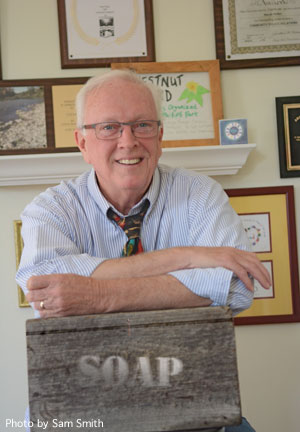
    David Miller is the Editor and Publisher of Loveland Magazine

    by David Miller

    Loveland, Ohio – Peggy Johnson announced her retirement at the end of January after 39 years in education and 6 years as Principal of Loveland High School (LHS).

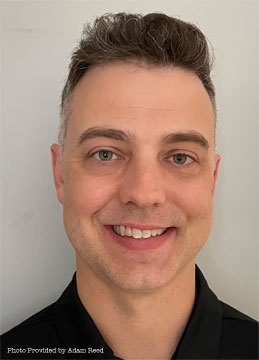
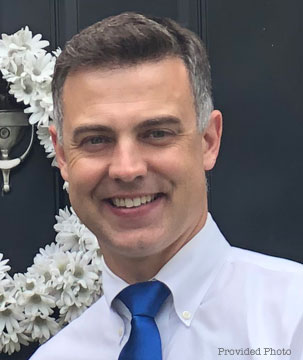
    Thirty-nine-year-old Wyoming High School Principal, Adam Reed, who is entering his 17th year in education was recently announced as Johnson’s successor for the 2021-2022 school year.

    Reed grew up in Fairfield and currently lives in Loveland with his family. “I enjoy spending time with my family, golfing, and traveling,” Reed told Loveland Magazine in an email exchange. Education has been his only career path.

    “My wife Kate and I have three sons. Nolan is 7 and attends the Loveland Primary School, Hunter is 5 and will attend the Loveland Early Childhood Center next year, and Carson just turned 2. 

    Adam Reed will be the next Principal at Loveland High School

    Reed earned both his B.A. and Masters in Education at the University of Cincinnati before earning his Administrative and Superintendent Licensure from Xavier University.

    He is a graduate of Fairfield High School, was a varsity baseball coach, and was an assistant coach on a final four basketball team while at Fairfield. 

    I asked Reed what were his proudest accomplishments with the Wyoming schools and mentioned that the school certainly has bragging rights in regards to academics. “Leading the high school through the pandemic. Supporting students and teachers academically and socially and emotionally while creating the safest learning environment possible,” was his answer. Reed added, “Being an instructional leader with my staff as we integrated technology into their teaching practices and making the high school a Google school.” Reed is also proud that he created a culture where students “felt heard and valued”. 

    Adam Reed will be the next Principal at Loveland High School

    I also asked Reed what does he feel are his best skills that he will bring to LHS. He said, “I am a student-focused administrator and educator. I believe in meeting our students where they are in order to support their learning and goals after high school. I look forward to creating a positive culture and environment to support our teachers and students.”

    “While at Wyoming, I participated in our district-wide One Degree Shift work surrounding diversity,” was Reed’s response to a question about the goals of the Loveland District’s Diversity Advisory Board. He further emphasized, “For the 2021-2022 school year, Wyoming High School has created two new courses, African American Studies, and Women’s Studies. As I transition to Loveland, I will continue to focus on our students and meet them where they are. The work of the Loveland Diversity Advisory Board will be instrumental in creating a safe, equitable, educational environment that celebrates diverse perspectives, identities, cultures, and worldviews for all our students.”

    In speaking about her retirement, Peggy Johnson said in a statement issued by the District, “Working with teenagers is an unbelievable honor and seeing how they pursue their interests, overcome challenges, and succeed is a most rewarding experience.”

    Johnson has spent 39 years in education, beginning her career as a student-teacher in the Fall of 1980 at Loveland High School. She went on to teach students with hearing and language impairments for 17 years and served as a Special Education Supervisor in Hamilton City Schools. She served as principal of Turpin High School for 13 years and spent the last 6 years leading Loveland High School.

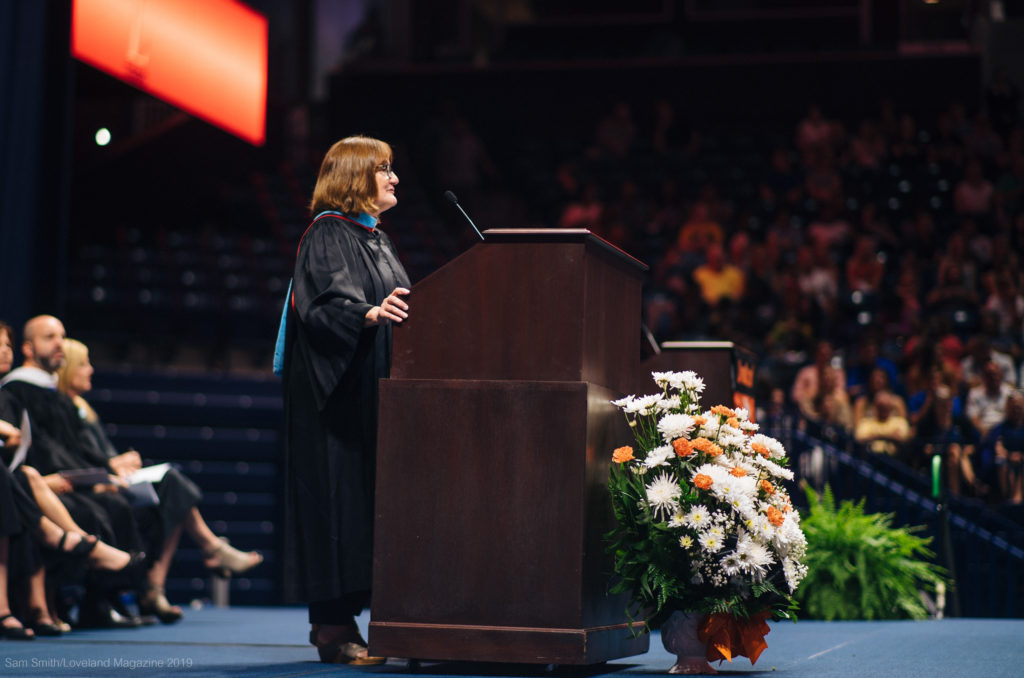
    Principal Peggy Johnson at the 2018 Commencement (Loveland Magazine file photo)

    A release by the District announcing her retirement said, “While at LHS, Johnson expanded the Advanced Placement program, business program, increased performance on state assessments, and “was dedicated to her students” according to Loveland Director of Human Resources Charles Ogdan. “There isn’t an event that happens where Ms. Johnson isn’t there mingling with students, taking pictures, and posting on Twitter in support of student success and growth,” Ogdan said. 

    “I wish to thank the LHS school community for the opportunity to work with talented, passionate, and dedicated educators and students and enthusiastic supportive parents and community,” Johnson said in the statement.

  • Do you know: DAVID RUGGLES, AN AGGRESSIVE ABOLITIONIST  WOULD FORCE HIS WAY INTO HOMES

    Do you know: DAVID RUGGLES, AN AGGRESSIVE ABOLITIONIST WOULD FORCE HIS WAY INTO HOMES

    by Barbara Kyles

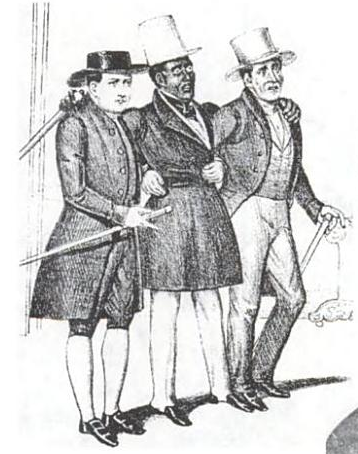
    Do you know that David Ruggles was an aggressive abolitionist who would force his way into homes to inform slaves that they were free?

    He also did his part by first opening a bookshop that was burned to the ground.

    Portrait of David Ruggles (center) with Isaac T. Hopper (left) and Barney Corse (right) confronting John P. Darg in 1838 (Artist unknown)

    Read more about Ruggles at Black Then – Discovering our history…

  • “We cannot thank you enough.”

    “We cannot thank you enough.”

    To the Loveland Community,
    
    We cannot thank you enough for your continued generosity. The Ben Morrison Memorial Fund at LCNB Bank has exceeded our expectations.  We will be able to give a scholarship in Ben’s name for many years to come. 
    
    I personally have felt all of your love and prayers. They continue to help me get through each and every day. 
    
    Again, thank you to all of you!
    
    Tori, Donnie, Ashlei and Kevin and Chelsei
  • I felt the tears welling behind my eyes and willed them not to escape

    I felt the tears welling behind my eyes and willed them not to escape

    There is value in having no child feel rejected and invisible in their own school. If I can help it, none of them will.

    A story by a Loveland resident presented by Loveland Magazine in collaboration with the Loveland Diversity Advisory Board
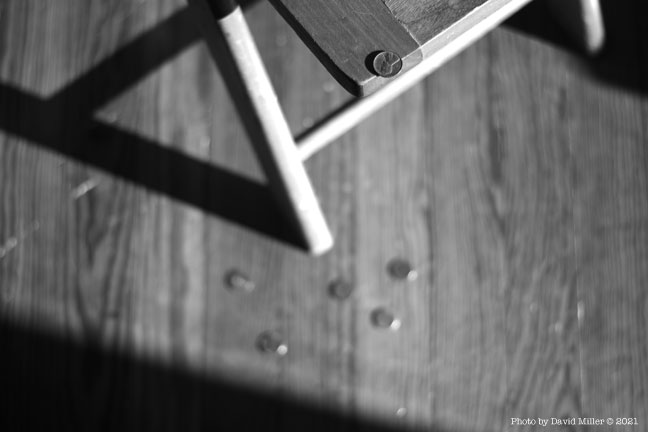
    A sharp pain startled me. Something had pelted my head. Whatever it was ricocheted to the floor with a hollow plink. I rubbed the back of my skull and looked around trying to determine what had hit me. As I did, I took another sharp blow, this time to the cheek, followed again by a distinct plinking sound. The next shot hit my shoulder. Then my neck. Finally one of the projectiles flew past my face and I was able to identify what was being hurled toward me. 

    It was a penny. 

    I looked in the direction from which the projectiles originated and saw a lunch table of my fifth grade peers laughing, trying to look inconspicuous in the conspicuous way guilty ten year-olds have a tendency to do.

    “Did she pick them up?” one whispered.

    “Shhhhh! She’s looking over here,” the other said, waving his hand in the universal sign to keep it down.

    More giggles.

    x

    I sheepishly rubbed my cheek, which by now was smarting and red. I looked down at the floor where several pennies lay in a telltale scatter at my feet. 

    Another sharp pain.

    “Pick up the pennies, Jew,” someone from the table jeered, just loud enough for me to hear.

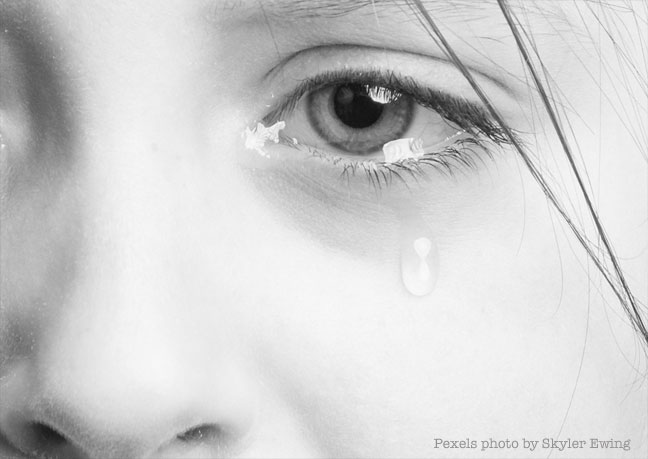
    I felt the tears welling behind my eyes and willed them not to escape. No one would see me cry. Despite my best intentions, a tear leaked out, betraying me as it rolled down my injured cheek. Its saltiness stung against the broken skin.  

    x

    The perpetrators weren’t the school’s “bad” kids. They weren’t the “troublemakers.” They weren’t the kids who wadded up the stiff brown paper towels, wet them, and threw them up on the bathroom ceiling where they’d stick and harden like cement. 

    These were the kids who raised their hands to read aloud from the social studies textbook when the teacher asked for volunteers.They attended PSR at the church down the street from my house where a giant tree sprouted pink blossoms each spring before dropping her petals in a sudden heap. These were the kids who, if I’d told a teacher, would elicit the response of ‘Well now that doesn’t sound like them. I’m sure they meant nothing by it. Have you tried ignoring it?’

    x

    The lone tear fell onto the lunch table, a solitary puddle on the faux wood facade. Pennies? What does that even mean? I pondered this question silently, focusing intently on the fallen tear to prevent more from spilling out. I felt ashamed and embarrassed. I never mentioned it again. 

    This was the first time it happened, but it wouldn’t be the last.  

    At ten years old, I didn’t understand the deeply anti-Semitic implications of these kids’ actions. As an adult, I know they picked up on these stereotypes somewhere. I feel confident that the hateful message was learned outside of school, however subtly transmitted. Maybe slips of the tongue by their parents. Maybe from the innuendos presented in the news channel their family watched. Maybe from friends whose families held biases. But what about what they learned–or didn’t learn–while they were in school? What was the message there?

    There was nary a mention of Jewish people in my elementary school. Despite a small population of Jewish students, the curriculum had settled into a comfortable rhythm they saw no need to update. I remember clearly how each year my teachers were startled when they learned that I didn’t have a Christmas tree. 

    “What do you mean?” my second grade teacher asked incredulously. “Everyone has a Christmas tree,”  And so it went. 

    x

    I accepted my lot early. I dutifully completed my “Letter to Santa” assignments each December prior to “Christmas Break” where I’d take home the ornament I had to make for my non-existent tree. In the spring, I mustered up fake gusto to color oil pastel Easter egg cut-outs. I completed the multiplication worksheets asking how much tinsel Jane needs to trim her Christmas tree and conducted the science experiments on decorating Easter eggs with various substances, bright red beet juice staining my hands for days. 

     The message coming from the school was clear: one specific religion was the universal norm. Obviously, I was different. That made me a target. 

    I share this with you to illustrate that representation matters. While some may disagree, they are likely the ones who have never been in a situation where they were the “other.”

    Representation doesn’t mean anyone has to alter their own convictions or feel put on the defensive. It doesn’t mean one side is right and the other is wrong, that there’s a hidden agenda, or that any one lifestyle is being attacked. 

    What it does do is allow students to learn that the world is full of people whose beliefs, values, and opinions differ from their own. It means the students who aren’t part of the status quo feel a sense of belonging. At its best, it fosters mutual understanding and civility. Representation neither promotes one lifestyle, race, or religion, nor detracts from another. All representation does is to allow students to see that there are different ways of being and that there is validity in who we ALL are. 

    x

    While I cannot change my school experience, we owe it to our own kids the opportunity to explore diversity through equal and prominent representation. If you’re a minority, there is value in seeing someone like yourself; if you’re in the majority, there is value in seeing that there’s an actual living, feeling human being behind the label. Most importantly, there is value in having no child feel rejected and invisible in their own school. If I can help it, none of them will.


  • Do you know Josephine Garis Cochrane from Ashtabula invented first commercially successful automatic dishwasher

    Do you know Josephine Garis Cochrane from Ashtabula invented first commercially successful automatic dishwasher

    by Barbara Kyles

    Do you know that Cochrane exhibited her invention at the 1893 World’s Columbian Exposition in Chicago? She won the highest prize for “best mechanical construction, durability, and adaptation to its line of work”.

    https://www.facebook.com/RandomHistoryoftheDay/posts/2594464494187252
  • Loveland school district wants your thoughts

    Loveland school district wants your thoughts

    Loveland, Ohio – This is the “Thought Exchange” survey to build the profile the Board of Education can use for the Loveland City School District superintendent search.

    https://my.thoughtexchange.com/#415463588/hub

    NOTE!  this will be open through tomorrow,  Wednesday afternoon, 3/24.

    You share your own thoughts and rate thoughts from other participants based on how much you agree 1 = strongly disagree or 5 = strongly agree.