Tag: environment

  • Council Continues to Choose the Most Expensive and Damaging Option for Parking, Ignoring Other Options – with No Explanation Why

    Council Continues to Choose the Most Expensive and Damaging Option for Parking, Ignoring Other Options – with No Explanation Why

    by Lauren Enda,

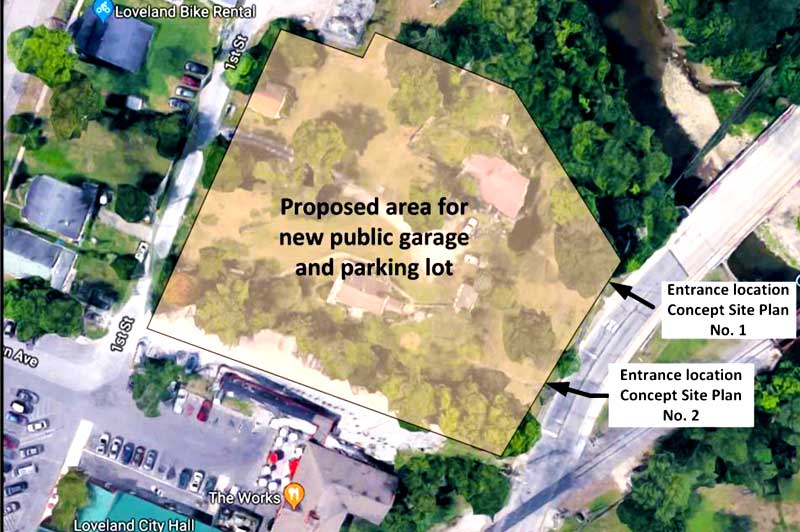
    For the last several months, I have been speaking at council about the need for more conversation, study, and transparency about the parking garage proposal. Loveland needs to do something about the parking issue, that much we can all agree upon. The proposed garage is one of many, many options available to Loveland. Every other option is less expensive, less permanent, less damaging to the environment and less jarring to the landscape. And every other option would enhance, rather than detract from, Loveland’s brand as a quaint and historic area.

    Here is a high-level overview of just one option that would be free to Loveland taxpayers, drastically cut down summer traffic levels in Loveland, provide Loveland businesses even more customers and clients, and maintain our natural, peaceful downtown landscape. The Miami Riverview Park is approximately one mile away from Loveland and it sits on the bike trail. There are hundreds of spaces available – all free of charge. Loveland could mount a marketing and communication plan, teaming with Miami Township, to divert cyclists and walkers coming from 275 to park there and then ride or walk into Loveland – which on a bike takes about a minute. Cyclists or walkers from the east or Route 48 could park there as well without entering Loveland’s downtown area at all. 

    To get the word out about the parking alternative, we could post temporary signs on the trail directing people to Miami Riverview next time they are in Loveland – we could even include a QR code with a map directing them. We could make up information cards to put on windshields and for businesses to give to their customers. Loveland has a Marketing and Communications Coordinator on staff who could design more ways to get the word out about this idea. If cyclists parked at Miami Riverview, it would free up dozens, if not hundreds, of parking spaces downtown for Loveland residents, and reduce traffic. Miami Riverview is just one option of many. And it is free, easy, available now, with no construction, no environmental damage, and no controversy. Let’s pursue this option first.

    A parking committee could outline further options, weighing cost, return on investment, environmental damage, number of spaces, etc… Residents would be happy to talk through more options with members of council at any time. We do not have to choose the most expensive option. In fact, why would we choose the most expensive option? Choosing to spend millions of dollars unnecessarily shows a lack of respect for taxpayers and their money. Council needs to explain their course of action when other options are available. Let’s spend our precious dollars on other higher priority issues – our aging water system, traffic issues, or sorting out the Chestnut property. There are plenty of priorities to choose from that would benefit everyone.

    “I chose Loveland as my retirement home. A large part of my decision to move here was the bike trail and the downtown area and I am determined to protect that. I will fight to protect it.”

    Lauren Enda

    To make speeches and write articles takes a lot of work – and a lot of courage.  Partnering with and learning from a wide variety of individuals and organizations helps to learn about the garage and its detrimental impacts. Two of those organizations spoke at City Council on February 8th – the Sierra Club and the Citizens for Rights of the Ohio River Watershed. Both organizations acknowledge that parking must be addressed but saying the issue must be fully studied and the Council must give residents the ability to vote on a parking garage. Contacting Ohio’s Environmental Protection Agency, The Ohio Department of Natural Resources, multiple elected officials, and The Economic Development Administration has also widened my knowledge of the issue. 

    I chose Loveland as my retirement home. A large part of my decision to move here was the bike trail and the downtown area and I am determined to protect that. I will fight to protect it. I want Loveland to succeed. I want Loveland businesses to succeed. I want visitors to enjoy my town as much as I do. And I want everyone to have a place to park. Together, let’s find ways to provide that parking using a rational, systematic approach. 

    If you want to show your support for a more reasoned approach to the parking issues in Loveland, sign this petition. Council needs to hear from us that we want more data on the parking issue. Thank you.

    Petition · Stop the Loveland Garage · Change.org

    Lauren Enda lives in Loveland at Hidden Creek.

    >

  • Let Loveland Heal – Create a Referendum for the Garage

    Let Loveland Heal – Create a Referendum for the Garage

    by Lauren Enda

    Loveland is a vibrant, bustling, and prosperous city. Which is why the question of increased parking space is an issue. People come to Loveland to live and visit because it is quaint and unique. Another asset that Loveland enjoys is an educated, engaged, and energized resident population. This is an asset that many towns would covet and that could be used to great advantage. Sadly, however, the mayor’s council continues to deny residents a vote on the parking garage, keeping them from actively participating in their own city. Instead of seeking a clear mandate through referendum to go forward with the plan, the council claims that all decisions, regardless of impact and cost, belong squarely with them. This lack of respect for residents’ role in Loveland’s future causes controversy and encourages mistrust of authority. A referendum would take away the controversy completely – the voters would have their say and all questions about the soundness of a garage and discord between residents on either side of the issue would simply dissolve.

    The council could easily calm this discord and start to heal the damage caused by the garage proposal. By creating a referendum for the garage, the council sends a clear, strong, unequivocal message that they care what voters think; that they listen to the will of the people; that they trust the residents to make wise, thoughtful decisions. There is a bonus to the referendum for newly elected council members. By voting in favor of the referendum, the new members would prove beyond doubt that they are living up to their campaign promises to listen to residents.

    Whether in favor of the garage or opposed to the garage, every resident in Loveland should have a voice in this momentous decision. And Loveland residents should not have to force the council into the referendum by collecting signatures. The path of pitting residents against council by collecting signatures to force a referendum is beneath Loveland city council and its constituency. This would only cause further distrust and anger among residents, which is not in Loveland’s best interest.

    According to Councilmember Bateman’s statement on 23 November 2021, democratic principles are alive and well in Loveland. This comment was seconded by Mayor Bailey. A referendum is your chance to prove it. Create a referendum and let democracy take its course. There is literally nothing to lose and everything to gain.

    Almost everyone agrees that the parking situation in Loveland needs attention. Let’s create a parking committee. Loveland has almost 20 committees and not one of them is tasked with parking. Let’s invite residents to investigate options and alternatives that will be cheaper, more flexible, and less intrusive. Let’s work together to gather data, define the problem, and come up with a range of solutions that can be openly discussed and debated. Working on this project could bring people together instead of causing strife.

    Myriad solutions are possible: institute valet parking; purchase an old-fashioned retro shuttle to get visitors to locations in downtown; increase use of Nature Preserve parking; use Loveland’s beautiful parks for events and gatherings instead of having every event in the downtown area. All of these could be accomplished for a fraction of what the garage would cost and keep our town quaint and unique. Each of these solutions would also greatly reduce traffic into the downtown area. Let’s take a breath, think outside the “parking garage” box, and have a conversation. Let’s work together to get it right.

    The decision on whether to build the proposed garage is too important to get wrong. And it isn’t important enough to tear the city apart.

    Do the right thing. Heal the conflict. Put the garage on a referendum.

    Lauren Enda lives in Loveland at Hidden Creek

  • Lauren Enda: Parking garage will harm Loveland’s heritage and the natural environment we love

    Lauren Enda: Parking garage will harm Loveland’s heritage and the natural environment we love

    by David Miller

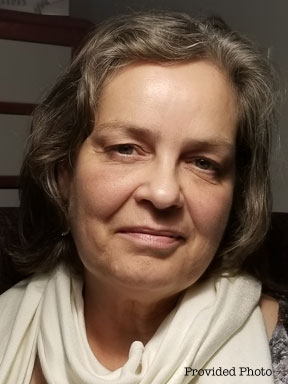
    Lauren Enda

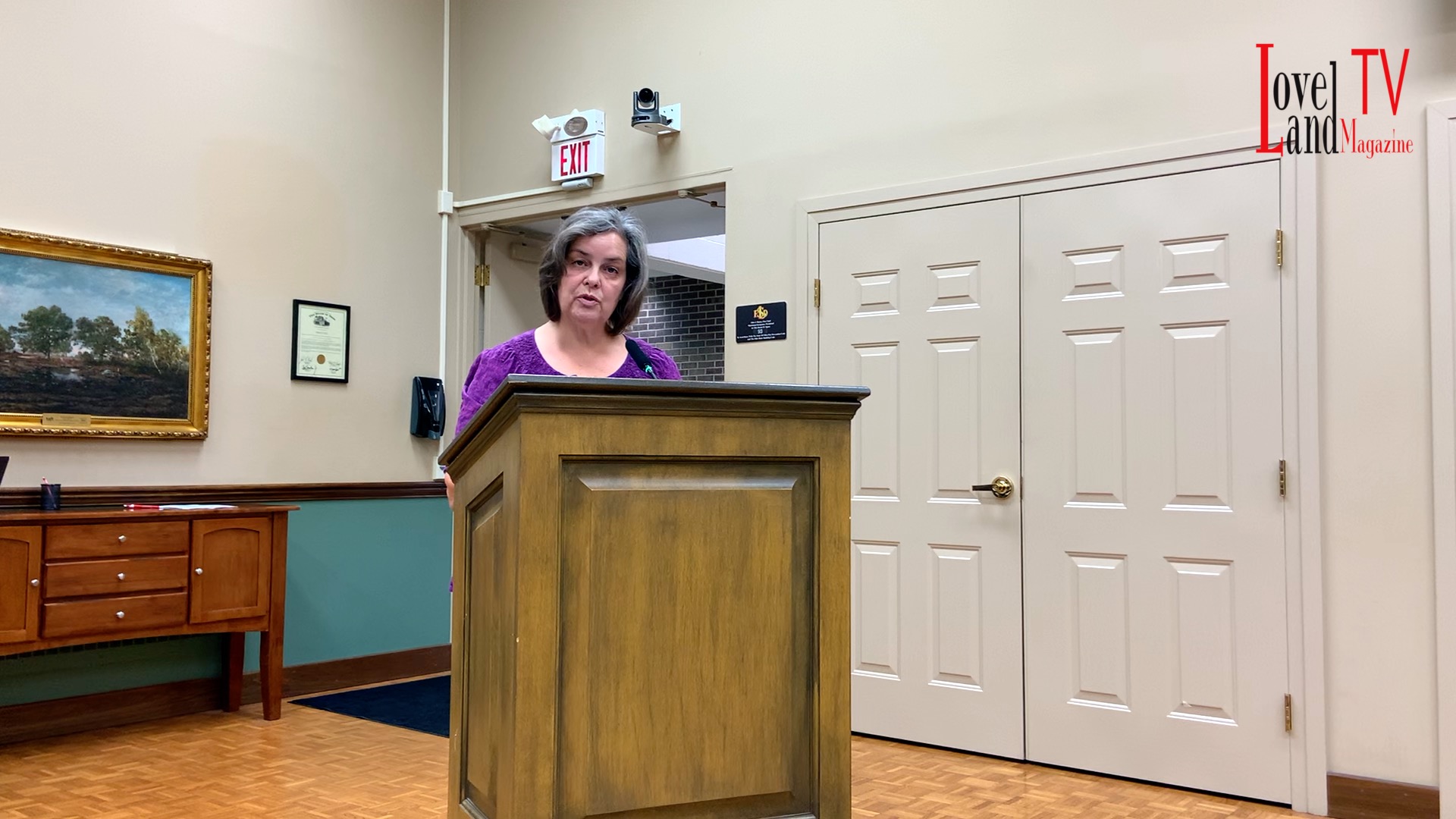
    Loveland, Ohio – Lauren Enda went to the Loveland City Council meeting Tuesday evening to talk about the proposed parking garage in Historic Downtown. Some of the concerns she expressed were about the negative impact she envisions for Loveland’s heritage and quaintness, and the environment.

    She proposes that Loveland residents should be allowed to vote at the ballot box on what she describes as a “big city solution” that will take from the town things it will never get back.

    She also suggestsed that an environmental impact study should be done to protect the “natural environment we love”.

  • How to Get Involved With The Loveland Learning Garden!

    How to Get Involved With The Loveland Learning Garden!

    by Cassie Mattia

    Loveland, Ohio – Would you like to make a difference and give back to the community? Local non-profit, The Loveland Learning Garden, provides the opportunity for anyone to volunteer to help teach local students about the environment, or maintain the vegetable garden, the flower garden, and the nature trail!

    The Loveland Learning Garden, located at 600 Loveland-Madeira Road (Loveland Primary and Loveland Elementary school grounds), dedicates everything to giving kids the opportunity to form “lifelong connections to the wonders of the natural world.” The non-profit outdoor education program not only strives to build awareness and community support but also maintains a vegetable garden, a flower garden, and a nature trail that is used for hands-on learning. The over 1,200 Loveland 1st-4th grade students involved are able to get an interactive experience, through a 20-week curriculum (taught by “Garden Educators” during the school day in the Spring and Fall), with nature while still adhering to the academics they are being taught in class. Seeing how food is grown, tasting fresh produce, and harvesting food that is eventually donated to local non-profit LIFE Food Pantry are just a few things students are able to get involved in at the Loveland Learning Garden.

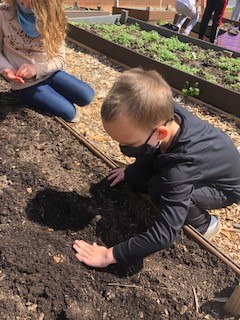
    Planting Kale in May at the Loveland Learning Garden

    Board President, Laurie Flanagan, chatted with us at the Loveland Learning Garden about why gaining dedicated volunteers is vital to keeping the non-profit education program running.

    “In order to successfully sustain our program, we seek people who want to share their talent and ‘dig in’ to join us by taking on leadership roles on our board or owning pieces of work that make the organization run,” Flanagan explained, “Our committees include education, communications, garden and trail maintenance, volunteer recruitment, and grants/fundraising. We have a diverse volunteer base of ages and backgrounds and welcome everyone! For example, we have students from the LHS National Honor Society, Tigers in Service, and the LHS Environmental Club who have helped us, University of Cincinnati students, workgroups, church groups, students from neighboring school districts, local parochial schools, and many individuals from across the Cincinnati area.

    Check out the video below to see Laurie Flanagan explain how you can help the Loveland Learning Garden!

    During the months of March-October volunteers are heavily needed at the Loveland Learning Garden. If you or your organization would like to volunteer email the Loveland Learning Garden.

    The Loveland Learning Garden will be a part of the 2021 Great Outdoor Weekend sponsored by Green Umbrella. On September 25th from 9 AM-1 PM, the Loveland Learning Garden will be holding a scavenger hunt for kids ages 4-10. For more information click the above Great Outdoor Weekend link!

    To stay informed on the Loveland Learning Garden’s upcoming events and volunteer opportunities you can visit their Instagram and/or Facebook.


    Loveland Learning Garden History
    The foundation for Loveland Learning Garden was planted in 2002 as a floral garden on grade school grounds thanks to the vision of a grandmother who wanted to share the joy of picking fresh flowers with children. With the addition of vegetable gardens and a nature trail in the woods behind the school, Granny’s Garden School grew to be one of the most comprehensive school garden programs in the country and was recognized as a model for nature-based education training. In 2016, the founder retired while a new group of leaders, believing in the value of the program to students and the community evolved the nonprofit to its next iteration. Today, with new energy and a refreshed identity, the Loveland Learning Garden operates with strong, collaborative school partnerships, diverse leadership, community involvement, and a continued passion to educate and inspire children to the lifelong benefits found through nature. 


    For more ways to get involved with the community stay tuned to the Loveland Salad With ME, Cassie Mattia!

  • Before You Light It… Know Ohio’s Open Burning Regulations

    Before You Light It… Know Ohio’s Open Burning Regulations

    Why is open burning a problem?

    Open burning can release many kinds of toxic fumes. Leaves and plant materials send aloft millions of spores when they catch fire, causing many people with allergies to have difficulty breathing.

    The pollutants released by open burning also make it more difficult to meet health-based air quality standards, especially in or near large cities. The gases released by open burning can also corrode metal siding and damage paint on buildings.


    Health Concerns

    Burning household waste produces many toxic chemicals and is one of the largest known sources of dioxin in the nation. Other air pollutants from open burning include particulate matter, sulfur dioxide, lead and mercury. These pollutants have been linked to several health problems, including asthma, respiratory illnesses, nervous system damage, kidney and liver damage, and reproductive or developmental disorders.

    Open burning is any time you light an outdoor fire without a chimney or stack. When burning refuse in burn barrels or open piles, the potential cost to your health, your home, your neighbors and your environment far exceeds the price of adequate collection services. Protect yourself, your neighbors and your wallet by knowing the rules—what you can burn and where.

    Open burning also adds co2 to the atmosphere and contributes to global climate change.

    Learn more in this Ohio EPA fact sheet…

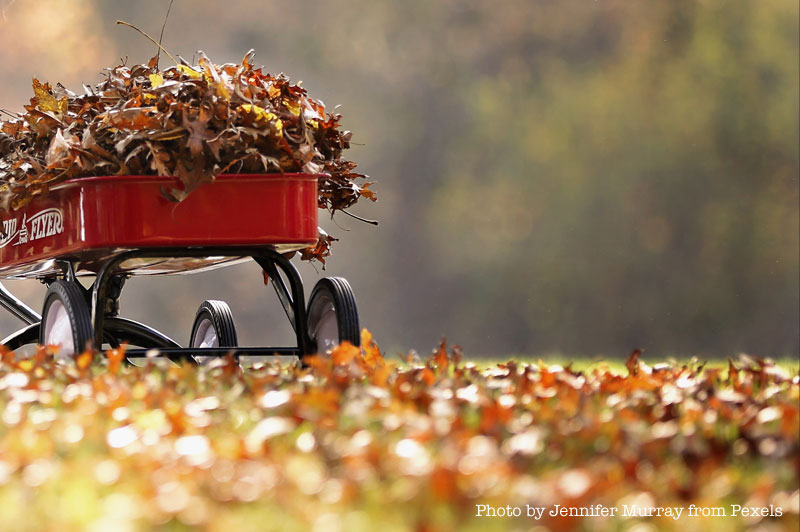
    Loveland’s Fall Brush Pickup Program

  • No detection of “forever chemicals” in Clermont County water system

    No detection of “forever chemicals” in Clermont County water system

    Batavia, Ohio – A recent sampling of Clermont County’s water system for chemicals called Per and Polyfluoroalkyl Substances (PFAS) found no detection of harmful substances in our water. As a real-life parallel to the movie Dark Waters, which portrayed a town in West Virginia whose groundwater is contaminated by a neighboring chemical company, the Ohio Environmental Protection Agency (OEPA) has been sampling water systems across the state.

    “This is very good news,” said Lyle Bloom, Director of Clermont County Water Resources. “All three of Clermont County’s water treatment plants were sampled as part of Ohio’s Statewide PFAS Action Plan for Drinking Water and there was no detection of PFAS from the raw or finished water at any of our treatment facilities.”

    The Ohio Environmental Protection Agency (OEPA) has been sampling water systems across the state.

    The plan calls for Ohio EPA to gather data from public water systems statewide to determine if PFAS are present in drinking water. The water system was sampled for six individual PFAS contaminants: PFOA, PFOS, GenX, PFBS, PFHxS, and PFNA.

    PFAS are a group of man-made chemicals applied to many consumer goods to make them waterproof, stain resistant, or nonstick. PFAS are also used in products like cosmetics, fast food packaging, and a type of firefighting foam called aqueous film forming foam (AFFF) (which are used mainly on large spills of flammable liquids, such as jet fuel).  PFAS is also called the “forever chemical” because they are not easily broken down by sunlight or other natural processes. They may remain in the environment for many years.

    Recent sampling of Clermont County’s water system for chemicals called Per and Polyfluoroalkyl Substances (PFAS) found no detection of PFAS

    PFAS can enter drinking water at sites where they are made, used, disposed of, or spilled. Some, but not all, studies in humans with PFAS exposure have shown that certain PFAS may: affect growth, learning and behavior of infants and children; lower a woman’s chance of getting pregnant; interfere with the body’s natural hormones; increase cholesterol levels; affect the immune system; or increase the risk of certain cancers. Scientists are still learning about the health effects of exposures to mixtures of PFAS.

    In 2013, Clermont County performed sampling and analysis at all three of its water treatment plants. At that time, there was also zero detection of PFAS.  There are currently no national drinking water standards (Maximum Contaminant Levels or MCLs) established for PFAS compounds; however, OEPA adopted Action Levels ranging from 21 to 140,000 ng/L for various PFAS chemicals. Ohio EPA will be establishing response protocols for public water systems in Ohio when action levels are exceeded, including public notification and issuance of drinking water advisories.

    Ohio EPA also has a website dedicated to PFAS with additional information:https://epa.ohio.gov/pfas

  • The Curse of ‘Both-Sidesism’: How Climate Denial Skewed Media Coverage for 30 Years/ Covering Climate Now

    The Curse of ‘Both-Sidesism’: How Climate Denial Skewed Media Coverage for 30 Years/ Covering Climate Now

    Loveland Magazine is one of the 400 news outlets worldwide, with a combined audience of over 2 billion people “Covering Climate Now”, a global journalism initiative committed to bringing more and better coverage to the defining story of our time.
    The initiative, was co-founded by The Nation and Columbia Journalism Review

    Mihaela Manova is “Covering Climate Now” in Loveland, Ohio as an editor for Loveland Magazine


  • [Interview] Joe Timmerman Founder of “A Neighborhood Cleanup”

    [Interview] Joe Timmerman Founder of “A Neighborhood Cleanup”

    David Miller is the Editor and Publisher of Loveland Magazine

    by David Miller

    Loveland, Ohio – Joe Timmerman seems to be awfully young to be so old-school, but he’s both. I got reacquainted with him underneath the home-team basket at a winter basketball game in the Chuck Schmidt Gymnasium at Loveland High School. A Senior at the time, Joe had also been taking photos of the action and he came over and sat down on the floor with me and introduced himself,

    He wanted to know if I would publish some of his photographs in Loveland Magazine.

    His old-schoolness was when he described his approach to using film cameras and in very creative ways.

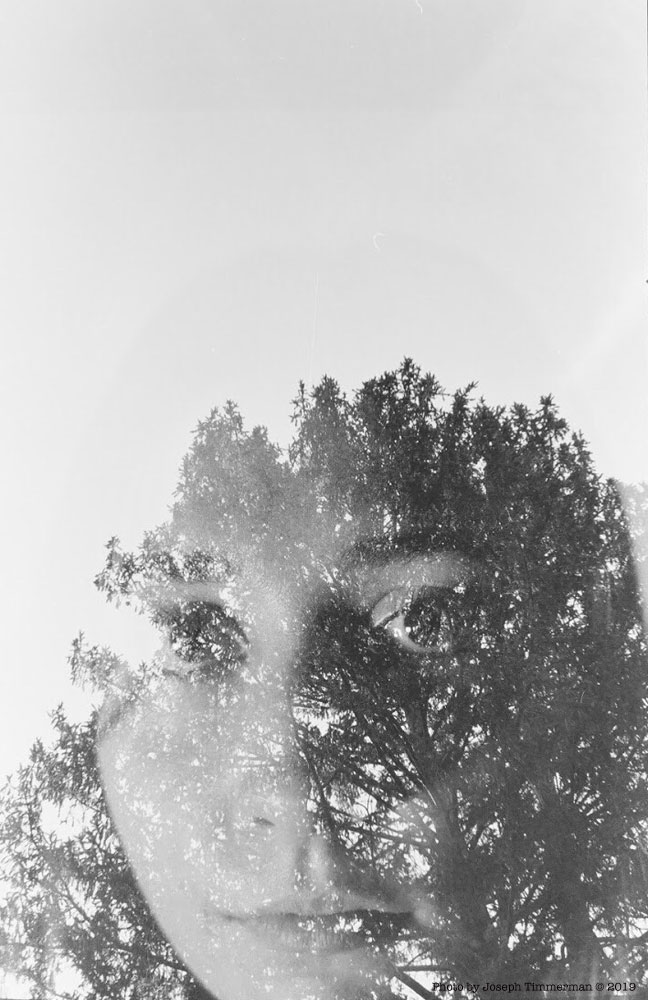
    ‘Liiife’ is within the borders of this black and white double exposure. I used Ilford HP5 Plus film when shooting these two photos — Laine’s face and a tree in my backyard — which share a single exposure. When I put the roll of film in my camera, I wanted to capture 24 portraits, underexposed in studio lighting, to fill the roll. Then, I chose to reel it back in to the point where the first exposure returned to the beginning, and capture 24 nature/lifestyle photos to randomly share a place on the film with the original portraits. The overarching risk factor of losing some personal pictures was left behind after developing the film and seeing what had come to life in the process. – Joseph Timmerman

    I was fascinated by his love of negative film and how sometimes he would be very deliberate in shooting a roll of 35 mm negatives in a way that each captured portrait could be used as the foreground for another image. The second image, a double exposure, involved Joe re-loading the already exposed roll of negatives back into his camera and then exposing a second image over the top of each of the portraits he shot on the first go-around.

    The results Joe showed me were a wonderful experiment in photography because of the hit/miss nature of composing a second image over the first. There is also the mastery of the correct exposure for each frame. Many of the double-exposures were taken of his girlfriend on their walks into Historic Downtown Loveland from his home. The final products have a rather ghost-like quality.

    I had given up film as soon as I purchased my first digital camera to use for Loveland Magazine reporting. It was out of the necessity to cut costs and be able to have the results almost instantly on my laptop and into a story. From my perspective after so many years of traveling to a camera store to buy the film, traveling back again to have the film developed and prints made, and back again for pick-up – Joe is old-school.

    Joe Timmerman smiles outside the Cintas Center after he graduated from Loveland High School in 2019. Timmerman is studying photojournalism at Ohio University

    I also discovered that night under the basketball hoop that I had known Joe since he was very little but didn’t recognize him. We once attended the same church. I was inspired by Joe that night and did some of my own experiments.

    Joe’s old-schoolness even involved making his own paper from scratch for a photo project during his first year at Ohio University.

    Joe’s old-schoolness is also how he will credit the way his parents raised him for his concern for the immediate environment around him. I think it more than just that though and appreciate another old-school quality he possesses – Joe is very humble always giving credit to others and he is generous with a “Thank you.”

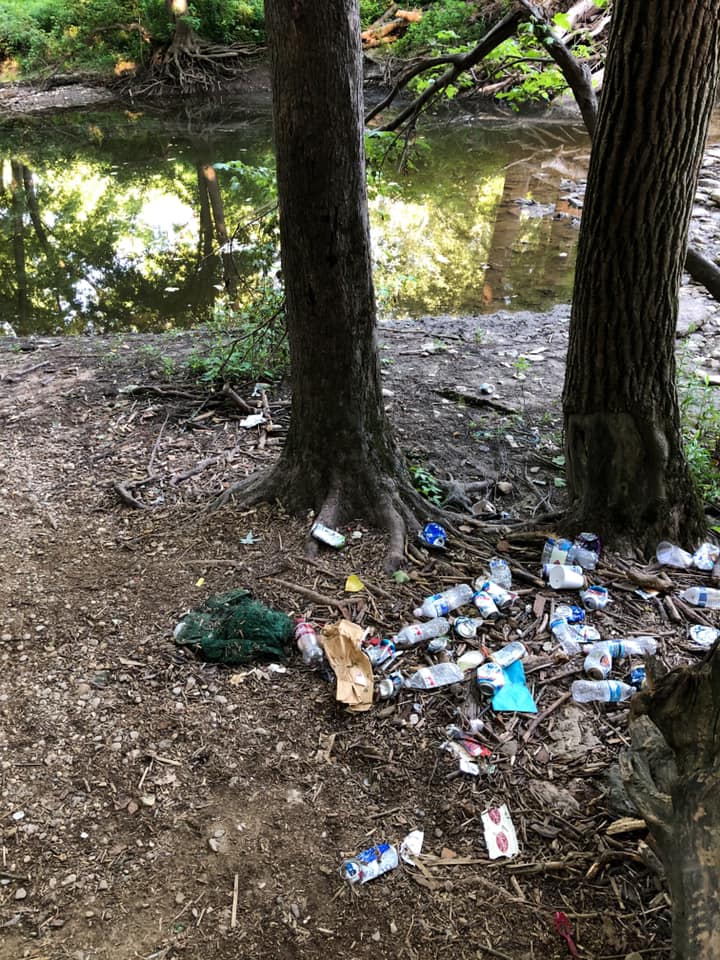
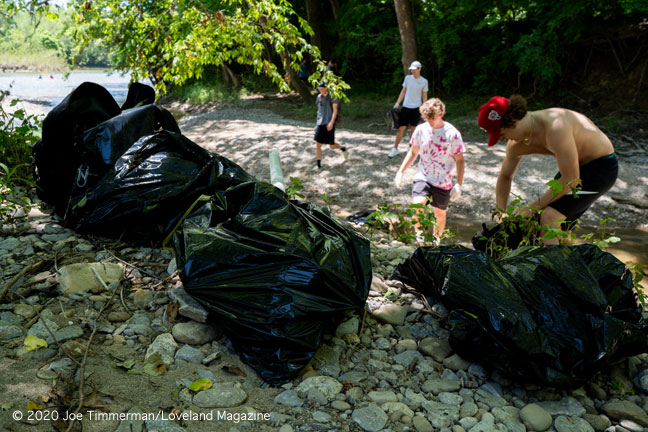
    Some of the trash A Neighborhood Cleanup removed from the Little Miami River on Saturday (photo by Joe Timmerman © 2020)

    Joe founded “A Neighborhood Cleanup” in 2019. The inspiration was walking in the East Loveland Nature Preserve with his mother and seeing so much trash left by other visitors. He says that growing up his father taught him to always pick up trash when he sees it, especially in his own neighborhood and the places he loves. Last August A Neighborhood Cleanup cleaned the nature preserve and another spot he loved, the rope swing on the bank of the Little Miami just north of Nisbet Park in Historic Downtown.

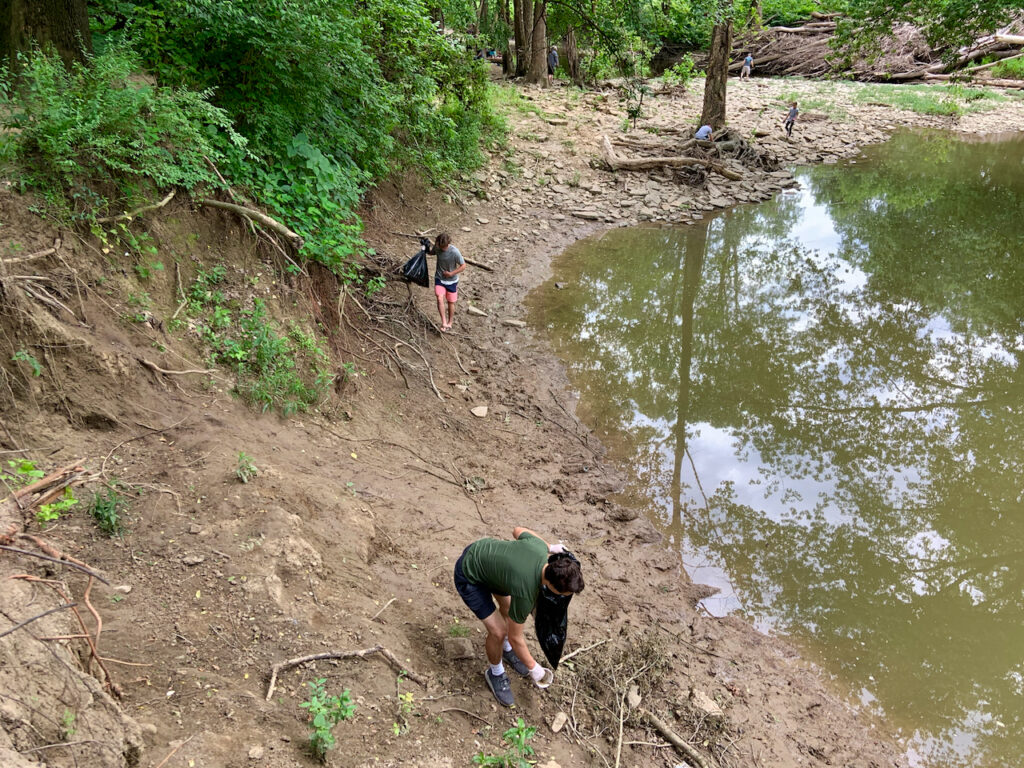
    Joe has been back to cleaning the rope swing area this spring and last Saturday expanded the cleanup to include the river from Nisbet Park to the rope swing on the opposite river bank – along Cones Road.

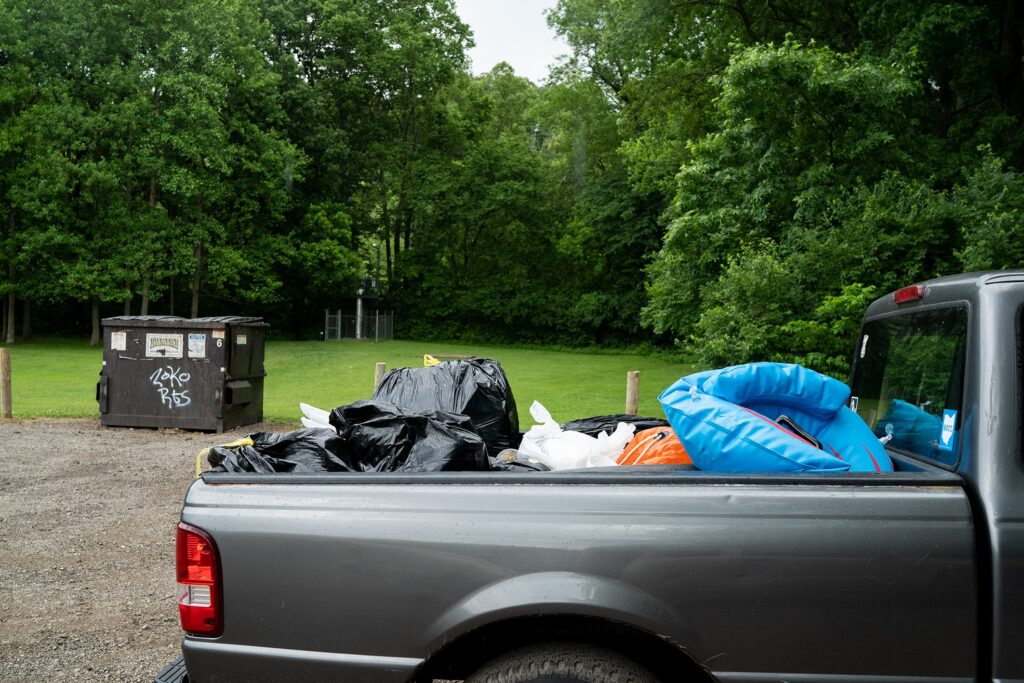
    A Neighborhood Cleanup filled a pickup with trash they removed from the Little Miami River on Saturday. The Little Miami River is one of 156 American rivers designated by the U.S. Congress or the Secretary of the Interior as a National Wild and Scenic River and runs through the middle of Loveland, Ohio. (photo by Joe Timmerman © 2020)

    An interesting note is that Loveland’s most famous old-school photographer Nancy Ford Cones once lived at the Roads Inn Farm on Cones Road when she took her famous Loveland photos, Her favorite subjects were family and friends she posed on those same river banks that Joe and friends are now restoring to their intended beauty. The Loveland Musem Center has a nice collection of Cone’s photos and many of them have an ethereal, ghost-like quality similar to Joe Timmerman’s double exposures.

    This interview took place along the riverbank Joe and volunteers were cleaning last Saturday afternoon.

    Joe inspires his own generation, those to come, and those beyond.


    “Like” and “follow” A Neighborhood Cleanup on FaceBook and you will be able to support the efforts and know when the next group cleanup is planned. You might also contact Joe and offer to donate garbage bags and gloves as a way of helping.

    Here is a link to Joe’s photography website where you can read more about him and see some of his inspiring art.

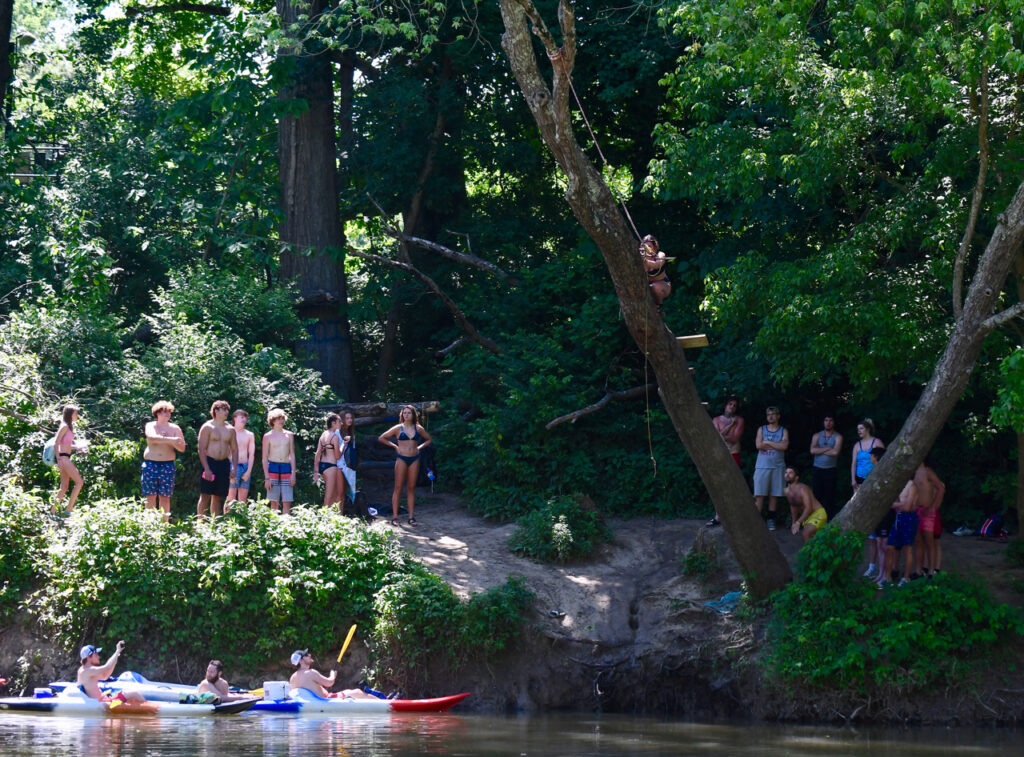
    This is the rope swing seen from the opposite side of the river that A Neighborhood Cleanup worked on last Saturday. As you can see, the river has become a very popular spot that many young people call home. Joe Timmerman and his supporters cleared the robe swing area of trash on June 2.

    Read about the June 2 cleanup at the rope swing…

    A Neighborhood Cleanup: be the change that you want to see…

    A Guest Column by Joe Timmerman

    This is some of the trash A Neighborhood Cleanup removed from the river on June 2.


  • Love-the-Land by Stephen McClanahan

    Love-the-Land by Stephen McClanahan

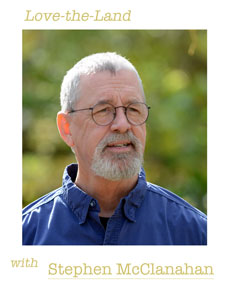
    Meet Loveland Magazine’s newest columnist. A long-time resident of Miami Township, Stephen McClanahan is retired from P&G and now active in environmental advocacy, search/rescue and emergency medical/disaster response. The title of his column will be Love-the Land.

    It’s interesting how experiences come into your life that forever alter who you are. Years ago, a group of friends backpacked the Elizabeth Pass trail in Sequoia National Park, about a 50-mile loop. One day when we decided we had found a good place for camp, John and I went for an early evening scramble up a nearby boulder-strewn hill. It was good to move without packs and we were enjoying the climb over chunks of rock the size of cars.

    When we summited, we discovered that we had stumbled upon a sizeable alpine lake, completely still in the fading sunlight of the cloudless day.

    We sat and tried to absorb the mirrored water that was in front of us, but the silence was overwhelming, crushing us in its utter tranquility. Nothing moved, absolutely nothing. No wind, bird in flight or ripple on the water existed, a lake as quiet as the boulders that rimmed it. The complete stillness washed over us, and we too became totally silent, trying to not to disturb the beautiful, holy moment in which we were immersed. No doubt that we were on sacred ground and were deeply blessed for being in its presence. 

    Twenty years in the passing and I remember that time as if it were now. It is seared into my brain. When I read ‘be still and know I am God’, I begin to have a deeper understanding of what it means. Nature has a way of doing that to you, if you will let yourself be exposed.  

    I certainly have not had every adventure that I dream of, but I cherish every one that has come my way. Each has taught me something about life and my place in it.

    In the coming weeks and months, I hope to share thoughts, experiences and moments with you that derive from my journeys out there.

    In the coming weeks and months, I hope to share thoughts, experiences and moments with you that derive from my journeys out there. I hope to paint pictures for you of what lies in store for those willing to experience what is sometimes referred to as the back country. Yes, it costs some creature comforts and demands some efforts to venture into the wilderness, but what it gives in return is priceless. 

    As you can probably surmise from my words, I am at home in the wild; it is so utterly beautiful and majestic, and I cannot help but want to share it. By doing so, I hope to create and embolden your desire to immerse yourself in a bit of the world out there.  So, let’s journey together.