Tag: FirstEnergy

  • Newly revealed texts suggest regulator knew rate hike was improper

    Newly revealed texts suggest regulator knew rate hike was improper

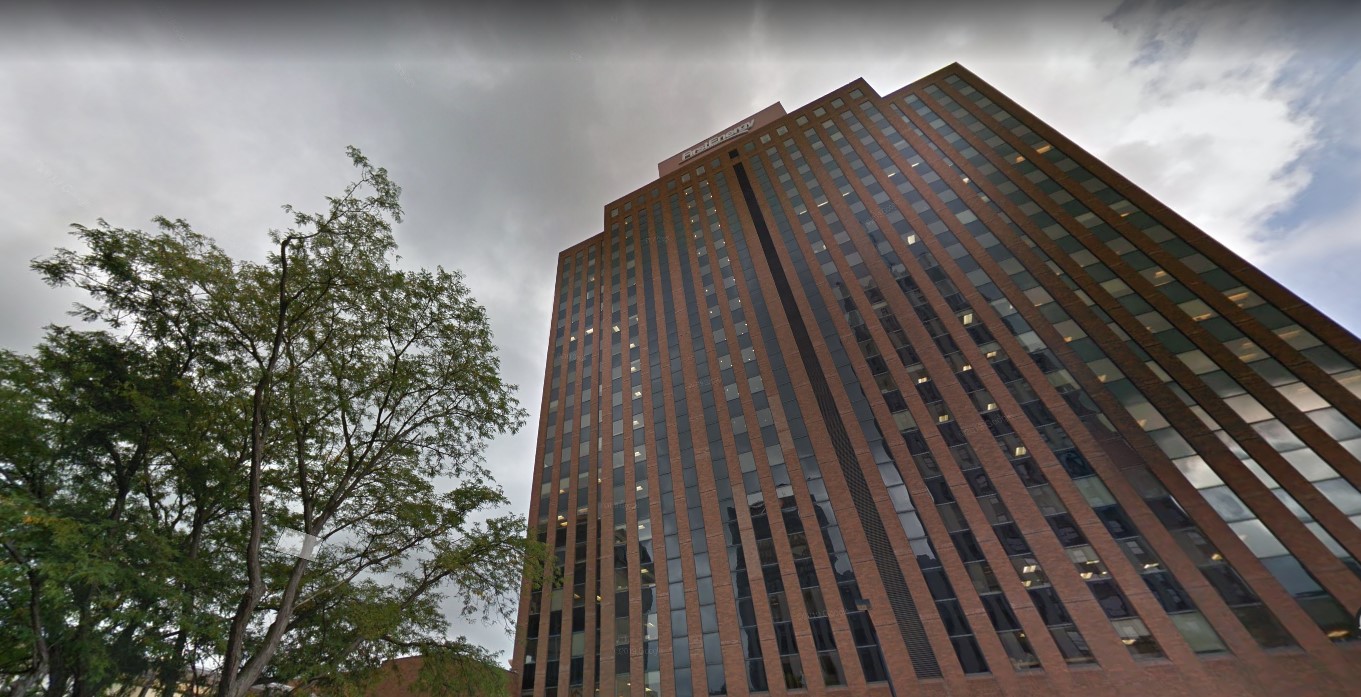
    FirstEnergy’s headquarters in Akron. Source: Google Maps.

    Former PUCO chair also said he knew FirstEnergy could keep the money

    BY: MARTY SCHLADEN – Ohio Capital Journal

    More evidence emerged Friday that Ohioans for years have faced questionable utility increases that were granted out of possibly dubious motives.

    On June 19, 2019, FirstEnergy’s leaders were furiously pushing what would later be called one of the biggest bribery and money laundering schemes in Ohio history. The same day, the Ohio Supreme Court struck down a big rate increase the Public Utility Commission of Ohio had granted to FirstEnergy three years earlier, saying it was illegal.

    In reference to the ruling, then-FirstEnergy Vice President Michael Dowling exchanged texts with Asim Haque, who until several months earlier had been chairman of the PUCO, the entity that regulates monopoly utilities such as FirstEnergy.

    One of Haque’s messages suggests that he knew a rate increase he voted to allow FirstEnergy to implement was illegal, but that the Akron-based utility would be allowed to keep the $460 million it had already collected.

    “And knowing that it would likely be found illegal and could not be refunded, I knew you would hold onto the funds,” Haque wrote in the text, which was first reported by Eye on Ohio and the Energy News Network.

    The news organizations received the texts as part of a records request. The Office of Ohio Consumer Counsel, the state’s official watchdog, first obtained the messages. It provided copies to the Capital Journal as part of a separate request.

    In an email, Haque said that he was only joking.

    “My text exchange with Mike Dowling was tongue-in-cheek based on my previous contentious interactions with him and the company,” he said. “You will see at the bottom of the text message(s) that I say that I’m kidding. FirstEnergy was not a fan of mine, and the notion of my picture in the halls of their Akron headquarters would have been especially absurd.”

    The last part was a reference to a separate text in which Haque told Dowling he “was the regulator who annoyed you most” but because of the rate increase Haque supported, “I should have a small picture in memoriam within those hallowed halls in Akron.”

    However, it’s hard to see comments about supporting a likely illegal, non-refundable rate increase as a joke, said Rob Kelter, an attorney with the Environmental Law and Policy Center, which has opposed many FirstEnergy revenue requests.

    “It’s one thing to make a joke about your picture being in the hallowed halls in Akron and he was kidding around,” Kelter said Friday. “But as far as that one key comment that he knew it would likely be declared illegal, that it couldn’t be refunded? That’s unacceptable.”

    In a regulatory filing, the consumers’ counsel said something similar.

    “Distressingly, we learned from FirstEnergy’s (text messages) that it apparently was known within the PUCO that the (rate increases) would likely be found illegal and that, even so, FirstEnergy would get to hold onto the funds because they could not be refunded to consumers.”

    FirstEnergy spokeswoman Jennifer Young said in an email that she couldn’t comment because of ongoing litigation.

    To justify his support for the increase, Haque, the former regulator, said FirstEnergy had asked for one worth $4.5 billion, while the one he supported was worth much less. He added, “it was above all a sensible decision and it was right for Ohio consumers, as I explained in my concurrence to the decision…”

    The Supreme Court, however, didn’t agree, and subsequent investigations of the increase raise even further questions.

    Called a “distribution modernization rider,” the increase was supposed to raise money to upgrade the electrical grid. But the order allowing it didn’t place many restrictions on how the money could be spent.

    It said that grid modernization could be expensive, and that the funds could be used to pay for it directly. But then it added that FirstEnergy could use the huge new pot of cash to support grid modernization “indirectly.”

    We “recognize that the (subsidiaries) and FirstEnergy Corp. may use revenue from Rider DMR to indirectly support grid modernization investments …,” the filing allowing the rate hike said. “Such steps should lower the cost of borrowing the funds needed to invest in grid modernization and may include reducing outstanding pension obligations, reducing debt, or taking other steps to reduce the long-term costs of accessing capital.”

    It’s not clear FirstEnergy did even that. It placed some of the funds into a pool from which utilities the company owned in other states could borrow. And a subsequent audit said that FirstEnergy didn’t track the money from the rate increase, so it’s impossible to say how it was spent.

    And, because the PUCO didn’t build in a refund mechanism, the $460 million FirstEnergy collected from the rate hike is part of $1.5 billioncollected from illegal, but non-refundable utility hikes granted by the PUCO since 2009.

    In not building in a refund mechanism, the PUCO said not that it was trying to protect consumers, but the monopoly utilities. Making the rate increases “subject to refund would be counterproductive and impose additional risks on the Companies,” the PUCO wrote in an order.

    Kelter, of the Environmental Policy Law Center, said he could only partly believe Haque’s claim that he was joking with Dowling the day the Supreme Court struck down the rate hike.

    “You can give Chairman Haque the benefit of the doubt that some of that was in jest,” Kelter said. “But not the part about what he did for them in terms of getting them the money knowing that their order was likely to be overturned — doing that anyway so that they could collect the money for a few years in the interim.”

    In the same message, Haque, an appointee of former Gov. John Kasich, hinted at worse things to come.

    Haque concluded the text by saying, “It’s up to chair Randazzo now to find a path for you.”

    That was a reference to Sam Randazzo, current Gov. Mike DeWine’s appointment to chair the PUCO. Randazzo later resigned after the FBI searched his Columbus condo amid revelations that FirstEnergy paid him more than $4 million just before he became the state’s top utility regulator. That was part of $22 million the utility had paid to entities controlled by Randazzo over the years.

    While he was supposed to be regulating utilities, FirstEnergy said Randazzo played a role in writing House Bill 6, of which federal investigators said FirstEnergy and its associates corruptly plowed $61 million into its passage and received a $1.3 billion ratepayer bailout in return.

    Former Ohio House Speaker Larry Householder, R-Glenford, and four associates were charged in the case. Dowling and Randazzo have not been charged and deny wrongdoing.
  • Both FirstEnergy and its shareholders seek secrecy around company’s bribes

    Both FirstEnergy and its shareholders seek secrecy around company’s bribes

    BY: JAKE ZUCKERMAN – Ohio Capital Journal

    Both FirstEnergy Corp. and its shareholders argued to a federal judge that they shouldn’t be forced to publicly disclose which executives ordered the payment of political bribes that the company admitted to in a related criminal case.

    The two parties are awaiting judicial approval of a proposed settlement from a derivative lawsuit filed by FirstEnergy’s shareholders. The settlement would call for FirstEnergy’s insurers to pay the company $180 million for damages incurred via the company’s role in what prosecutors have described as the largest public corruption manifestation in state history.

    In an agreement with prosecutors reached in July 2021, FirstEnergy as a company admitted to a $60 million bribery scheme anchored by the then-Speaker of the Ohio House, and another $4.3 million bribe to Ohio’s then top utility regulator.

    The statement of facts in that agreement, however, anonymizes the FirstEnergy officials involved in the scandal. The agreement also called for FirstEnergy to pay a $230 million penalty and cooperate with investigators to possibly avert a charge of wire fraud against the company.

    Delaying any possible approval in the shareholder’s derivative case, U.S. District Judge John A. Adams asked the shareholders’ attorneys last week to state who at FirstEnergy ordered the bribe payments,

    Jeroen van Kwawegen, an attorney representing the plaintiffs, demurred and didn’t answer the question, prompting Adams to cut short the hearing. Adams then issued an order calling for any “interested parties” to either provide an answer to his question or offer a good reason why they can’t divulge the information. He threatened the lawyers with contempt and possible expulsion from the case for failure to answer.

    The shareholders, in arguments submitted Wednesday, offered to privately tell the judge who at FirstEnergy ordered the bribes. They said they couldn’t do so publicly because doing so would breach confidentiality rules associated with discovery (the pre-trial evidence exchanging process) and mediation.

    The shareholders’ lawyers said their obligations are to their clients and to FirstEnergy itself — not the public.

    “Such public disclosure could also be harmful to FirstEnergy considering the myriad related criminal and civil proceedings, the ongoing regulatory investigations, and the securities class action pending in the Southern District of Ohio where FirstEnergy is a defendant,” they wrote.

    Kwawegen attached emails attached to the filing showing he asked lawyers FirstEnergy and its former executives if they’d agree to voluntarily disclose some of the information. He was rejected by the company, its former CEO Chuck Jones, Dennis Chack, and Mike Dowling (whose lawyer said they are not inclined to provide a “blanket waiver” but asked for specifics). Jones, Chack and Dowling were all fired in October 2020 amid an internal investigation.

    FirstEnergy made similar arguments. The lawsuit and settlement, its lawyers said, are aimed to recover for harm done to the company because of its actions. Any public accountability, they argued, “risks harm to the interests of FirstEnergy and its stockholders, which is exactly the opposite of what a derivative litigation is supposed to do.”

    Notably silent on the issue: federal prosecutors. They didn’t weigh in either way before the court. A spokeswoman for U.S. Attorney for the Southern District of Ohio Kenneth Parker didn’t respond to an inquiry.

    The derivative lawsuit traces back to the passage of House Bill 6 in 2019. The energy overhaul legislation, among other provisions, provided a massive bailout of two nuclear power plants owned at the time by a FirstEnergy subsidiary. Federal prosecutors said the legislation was worth $1.3 billion to the company.

    To ensure it passed and thwart a referendum attempt to repeal it, FirstEnergy admitted to providing $60 million to a nonprofit secretly controlled by then House Speaker Larry Householder, R-Glenford. Householder allegedly used the funds to elect a slate of candidates that would support his bid to become the House Speaker, engineer the bill’s passage, thwart a repeal effort, and enrich himself personally. He has pleaded not guilty and awaits trial, scheduled for January 2023.

    FirstEnergy also admitted to secretly paying $4.3 million to energy attorney Sam Randazzo just before Gov. Mike DeWine named him chairman of the Public Utilities Commission of Ohio. Randazzo has not been accused of a crime and has denied wrongdoing.

  • Utility regulators block watchdog’s requests for info about a buried audit of a $460 million fund

    Utility regulators block watchdog’s requests for info about a buried audit of a $460 million fund

    Photo by Getty Images.

    BY: JAKE ZUCKERMAN – Ohio Capital Journal

    An administrative judge blocked a watchdog’s attempt to obtain an audit that the Ohio utility regulatory agency’s former chairman, who has been accused of taking a $4.3 million bribe, allegedly tried to squash before publication.

    The ruling, released Friday evening, is a setback for the Ohio Consumers’ Counsel, a state funded agency representing residential ratepayers in utility cases. The OCC has pushed for investigations of FirstEnergy, especially since the company admitted to playing a central role in a massive public corruption scandal.

    The OCC asked the Public Utilities Commission of Ohio to grant it a subpoena to obtain a copy of any draft audit into a $458 million charge from FirstEnergy that started in 2017 collected called the “Distribution Modernization Rider.” The OCC also sought to depose an auditor who worked on report.

    The Ohio Supreme Court blocked FirstEnergy from continuing to charge customers for the DMR, two years after it was first applied on monthly bills. The court said the PUCO unlawfully failed to ensure the money is actually spent on modernizing the grid. A subsequent PUCO investigation was inconclusive as to whether the DMR monies were used to fund the bribery operations.

    The Supreme Court’s order questioned the value of leaving intact the audit when it overturned the rider, finding the reviews fail to properly protect ratepayers from the “possible misuse of DMR funds.” Additionally, the justices reasoned that any findings of misuse of the funds would be moot given the court had already blocked the charge and a state law blocked the court from ordering refunds unless PUCO explicitly allows for them, which it did not. The PUCO later nixed the audit, citing the court’s thinking.

    The OCC has previously obtained a text message from FirstEnergy’s CEO referencing former PUCO Chairman Sam Randazzo “burning the DMR final report.”

    The text partially came to light when FirstEnergy entered into a deferred prosecution agreement with the U.S. Department of Justice to possibly avert a charge of wire fraud. The company agreed to pay a $230 million penalty. It also admitted to paying Randazzo $22 million over nine years, including $4.3 million just before he started as PUCO chairman. The company also admitted to a separate $60 million bribery scheme ran through the state Legislature to pass House Bill 6 in 2019.

    Randazzo has not been charged with a crime and has maintained his innocence. The PUCO has received two subpoenas in connection with the investigation.

    PUCO Attorney Examiner Gregory Price denied both the OCC’s requests. He said the facts are clear that no such draft report exists in any form. Additionally, the question of FirstEnergy’s political spending is being “thoroughly addressed” in other PUCO cases.

    Price ruled OCC’s reliance on the Randazzo text shows its “obvious interest in investigating potential wrongdoing” as opposed to matters it “actually has jurisdiction over.”

    In December 2020, about two months after federal agents raided Randazzo’s home, the PUCO opted to resume the audit into the DMR. However, this time it hired Daymark Energy Advisors. That audit, released earlier this year, was inconclusive as to whether the DMR funds were used to fund the HB 6 campaign. FirstEnergy, the auditors said, pooled funds from all its 11 utilities in one pot, creating an “inability” for the auditors to track the funds.

    Price, however, said the final report “appears to fully address whether [FirstEnergy] properly expended the DMR funds.”

    In records the PUCO provided to federal prosecutors, Price is copied onto email threads regarding policy meetings before and after the passage of House Bill 6. As was first reported by Cleveland.com, one email shows Price was invited to one such meeting days before the House passed the bill.

    Other investigations into FirstEnergy, Randazzo and other alleged conspirators continue. Former House Speaker Larry Householder is expected to stand trial on a racketeering charge in connection with the scandal this fall. He recently asked a court to dismiss the charge against him. That motion has not yet received a ruling.

    Meanwhile, FirstEnergy shareholders have filed a class action lawsuit against the company as well.

  • DeWine can’t run from energy bailout bribery scandal as dirty laundry keeps piling up

    DeWine can’t run from energy bailout bribery scandal as dirty laundry keeps piling up


    COMMENTARY

    by MARILOU JOHANEK – Ohio Capital Journal

    Follow the money. Its corrupting influence runs through all the great scandals piling up in Ohio under Republican rule. From the biggest online charter school rip-off of tax dollars to the largest public corruption indictment in state history, money has paved the way to epic wrongdoing under GOP management. Find out who in Columbus is greasing palms, funding campaigns and writing public policy for private interests, and you’ll also discover who is standing in line with their hand out willing to reciprocate with public favors.  

    But when people in high places slip on hubris and expose brazen graft at public expense — and they always do — the swarm of politicians who were only too happy to pocket donor checks and look the other way scatter like insects under a rock that’s been lifted. Republican Gov. Mike DeWine is one of those spooked bugs racing away from his political entanglement in the blockbuster bribery and money-laundering case that goes to trial this year. Three of the four indicted individuals who will be in court on federal racketeering charges — in connection with a billion-dollar ratepayer bailout of two nuclear power plants to benefit FirstEnergy and its affiliates — donated thousands to DeWine’s gubernatorial campaign. 

    So did the Akron-based energy giant at the heart of the bailout scheme. FirstEnergy has legendary pull with pliable politicians. 

    The state’s largest electric utility pumped $1 million into groups backing DeWine in 2018, according to a Dayton Daily News investigation following the money. The company also pumped big bucks into groups helping his daughter’s failed campaign for county prosecutor. DeWine hired multiple administration staffers and advisors with close ties to FirstEnergy, including a former top aide linked to one of the dark money groups implicated in passage of the bailout legislation (House Bill 6) written for and by the utility. 

    The governor also appointed and steadfastly supported Ohio’s former top utility regulator, now accused of profiting in association with the FirstEnergy scandal. DeWine knew of Sam Randazzo’s deep business relationship with the utility when he chose him at the urging of company executives. In a seemingly flagrant quid pro quo, the governor’s pick for the powerful chair of the state utilities commission pocketed a massive sum of money from FirstEnergy just weeks before his appointment. 

    But even damning disclosures of Randazzo’s $4.3 million utility bribe and his blatant efforts on behalf of FirstEnergy — constructing House Bill 6, delaying a company rate case, lobbying for legislation to save the utility millions — didn’t dissuade DeWine from expressing “great confidence” in his regulator. Even after the FBI raided Randazzo’s home as part of the FirstEnergy bribery probe and he resigned under a cloud of suspicion, DeWine praised him for doing “very, very good work as chair.” 

    Perhaps anticipating incredulity with that assessment, the Republican later suggested he was “open” to reforming the process for choosing state utility regulators. Eighteen months on, the DeWine-appointed nominating council that recommends PUCO candidates to the governor includes members tied to passage of the notorious bailout bill. 

    Even after the FBI arrested former House Speaker Larry Householder, who engineered approval of House Bill 6 and was subsequently charged with taking money to pass it, DeWine rejected an effort to repeal the corruption-ridden legislation. 

    “We need balance in our energy,” was all he could say about a bill passed with more than $60 million in bribe money. DeWine reversed himself but reiterated his support for FirstEnergy’s ultimate bribery goal — giving $1.3 billion in public money to two unprofitable nuke plants with new surcharges paid by everyratepayer in the state. 

    He had put the full weight of the governor’s office behind the nuclear bailout bill and signed the corrupt measure into law the very day it passed. The “energy” legislation championed by DeWine also put ratepayers on the hook to bail out two money-losing, hyper-polluting coal plants (one in Indiana) partially owned by other utilities and two FirstEnergy subsidiaries. Plus, the bailout boondoggle the governor couldn’t sign fast enough thoroughly gutted renewable energy and energy efficiency standards and removed all incentive to build more renewable energy projects in the state. 

    Those utility-written provisions have still not been repealed under a 2019 embarrassment that should have been scrapped outright. But the Republican-controlled legislature, complicit in the worst scandal “ever perpetrated against the people of the state of Ohio,” is content to become synonymous with corruption and fleece Ohioans on their monthly electric bills if that makes utility donors happy. The Ohio Manufacturers Association estimated electricity customers will pay a total of $1.8 billion in coal plant subsidies by 2030 — more than the cost of the nuke bailout — unless integrity intrudes on the General Assembly and House Bill 6 is fully repealed. 

    Don’t hold your breath. But remember, this outrage happened on DeWine’s watch and with his blessing. Ohioans didn’t know how crooked House Bill 6 was or how many politicians, including the governor, were willing to look away until federal prosecutors blew the lid off the alleged criminal enterprise to screw ratepayers in return for boosted political careers. DeWine is understandably trying to put as much distance as possible between his reelection campaign and the biggest open investigation of Statehouse corruption in the country. 

    But it’s hard to escape dirty laundry that keeps piling up when you can’t hide under a rock anymore.  

  • Ohioans spent $211 million subsidizing two coal plants over last two years

    Ohioans spent $211 million subsidizing two coal plants over last two years

    BY: JAKE ZUCKERMAN – Ohio Capital Journal

    Electric customers across Ohio collectively spent an estimated $211 million via add-on bill charges over the last two years to cover for losses from two coal-fired power plants that continue to bleed millions annually, according to new data from state regulators.

    The money to the Ohio Valley Electric Corp. (OVEC) — an entity comprised of several investor-owned utilities from multiple states that operates the plants — flows thanks to a 2019 state law now at the center of a criminal bribery prosecution.

    The Public Utilities Commission of Ohio began to allow three of the utilities that own and are contractually obligated to buy power from OVEC — American Electric Power (43% equity stake), Duke Energy (9%), and AES Ohio (4.9%) — to pass on their losses on OVEC to their customers, starting in the mid-2010s. The payments were originally only allowed through 2024. Through 2019, the three utilities’ customers were charged an estimated $159 million on OVEC.

    House Bill 6, a law passed in 2019 that’s now the focal point of what prosecutors have said is the largest political corruption investigation in state history, extended the subsidies through 2030 and spread the three utilities’ (AEP, Duke and AES) losses to electric customers of all Ohio utilities (not just those that own OVEC).

    In 2020, Ohio electric customers statewide paid $115 million to OVEC’s owners to cover their losses on the deal, according to data provided by a PUCO spokesman. In 2021, they paid about $97 million (July through December 2021 costs are estimates). Under the law, residential customers pay a maximum $1.50 per month to utilities to cover their OVEC losses. Industrial customers pay a maximum of $1,500.

    OVEC operates two 1950s-era coal plants in Cheshire, Ohio and Madison, Indiana, originally built to power the federal government’s uranium enrichment facilities near Portsmouth. That agreement ended in 2003. The utility companies that own OVEC last renegotiated their contract in 2011 extending its life through 2040.

    Technically, the OVEC plants could save utility customers money if OVEC could generate and sell electricity at below-market costs. However, a mix of market forces, environmental regulations and recently spending more than $1 billion on a “scrubber” system designed to limit emissions have left the plants selling electricity at costs well above those of PJM, an energy marketplace serving utilities in 13 states including Ohio.

    “[Our] analysis shows that at this time, the OVEC plants cost customers more than the cost of energy and capacity that could be bought on the PJM wholesale markets,” wrote London Economics International, a firm the PUCO commissioned to audit the subsidies, in December.

    A draft version of a 2020 PUCO-commissioned audit by the same firm found that “keeping the plants running does not seem to be in the best interests of the ratepayers.” The line was removed from the final version at the request of a PUCO staffer who asked the auditors to use a “milder tone and intensity of language,” according to emails obtained by the Ohio Consumers’ Counsel (OCC), which represents ratepayers in PUCO cases and has advocated ending the OVEC subsidies.

    In a 2018 bankruptcy filing, FirstEnergy disclosed losing $12 million per year due to its 4.85% equity stake in OVEC. As lawmakers considered HB 6, legislative analysts estimated Ohio utilities paid $94 million above wholesale market costs in 2018 alone to purchase OVEC-generated electricity.

    Along with the raw finances, Ohio consumers are subsidizing plants that have belched nearly 21 million tons of carbon dioxide, 21,000 tons of nitrogen oxide, and 12,000 tons of sulfur dioxide into the atmosphere since January 2020, plus smaller discharges of arsenic, lead, and mercury, according to data from the U.S. Environmental Protection Agency provided by the OCC.

    “Why the hell is this still in place?” said Neil Waggoner, an advocate with the Sierra Club’s Beyond Coal campaign. “I think that this is utility capture in practice. This is the utilities in this state having a death grip on the regulators and people in power to the point that they’re getting exactly what they want.”

     The Clifty Creek Power Plant, in Madison, Indiana, which is operated by OVEC. Photo taken by Rep. Casey Weinstein, D-Hudson, who visited the plant and has called for a repeal of state law forcing Ohio ratepayers to subsidize it.

    A sticky bailout

    FirstEnergy Corp. admitted in July to paying more than $60 million to an account controlled by the former House Speaker and his allies to ensure passage of HB 6. The prosecutors’ allegations have focused in court documents on an estimated $1.3 billion nuclear bailout and other non-coal related provisions of the sweeping bill that are favorable FirstEnergy. Former speaker Larry Householder, accused of using the money to engineer passage of the bill and shore up his own political aims, has pleaded not guilty. Two Householder allies involved in the alleged scheme have pleaded guilty to racketeering.

    State lawmakers in early 2021 passed legislation repealing the nuclear bailout and “decoupling” provision (a ratepayer-backed revenue guarantee for FirstEnergy). However, the OVEC bailout was left intact.

    There are bipartisan efforts in the House and Senate to repeal the OVEC bailout from state law, and the narrower PUCO-approved bailout that preceded them. Neither has come up for a vote and the sponsors are pessimistic on their chances.

    Sen. Mark Romanchuk, R-Ontario, perhaps the plants’ most prominent critic and co-sponsor of the Senate legislation, said he is in negotiations with the utilities that own the plants and is not giving up. He declined an interview.

    “Not sure where things will go but we’re not giving up,” Romanchuk said.

    House Democrats have called for a repeal of the OVEC subsidies, though they only control 34 of 99 seats in the chamber. Rep. Jeff Crossman, a Parma Democrat who recently announced plans to run for attorney general, said the OVEC charges should be repealed but as much is unlikely.

    He said OVEC’s sponsors contribute tens of thousands in campaign contributions per year, mostly to Republicans. AEP, through a middleman, contributed $700,000 to Generation Now, the account prosecutors say Householder used to engineer passage of HB 6 in the first place.

    “There’s probably not a will to undo the OVEC charges,” he said. “They donate gobs of cash to the right folks. There’s just no other reason to support these plants.”

    House Speaker Bob Cupp, R-Lima, said in October he doesn’t believe there’s support in the House Republican caucus to repeal the coal bailout.

    House Majority Leader Bill Seitz, R-Green Twp., has told several state media outlets the bailouts aren’t going anywhere. He did not respond to written questions about the uneconomic nature of the plants, or why ratepayers should cover their owners’ losses on them.

    “We’ve beat this [OVEC] horse to death. It’s not going to change,” Seitz said to Cleveland.com in October. “They’ve introduced God knows how many bills — none of them are going anywhere, in my humble opinion.”

    Michigan takes action

    AEP is by far OVEC’s largest shareholder, with a roughly 43% equity stake in the company, and the two share several executives.

    While repeal efforts in Ohio are at a lull, other states have signaled resistance to allowing utilities to continue to pass OVEC’s owners’ losses to customers.

    The Michigan Public Service Commission in a November order noted that OVEC’s costs exceed the market price of electricity by tens of millions. It warned that AEP’s local utility may not be able to pass on all its OVEC losses to customers that are “incurred because of imprudent” decisions.

    “The order today put I&M [an AEP unit] on notice that the Michigan share of these excess costs are unlikely to be permitted without additional evidence that continuing to purchase power from the units was in the best interest of its customers,” the Michigan regulators said in a news release.

    AEP spokesman Scott Blake said in an email the OVEC plants are “critical resources that help ensure the reliability of the grid and offer protection from increases in the costs of other fuels.” He said AEP Ohio customers for decades benefitted from OVEC’s power via affordable electricity and good jobs. OVEC, he argued, insulates customers from cost spikes caused by things like a surge in natural gas prices or a shortfall of renewable energy supply.

    “AEP Ohio customers benefited for decades from the power provided by OVEC in the form of affordable electricity and good jobs,” he said. “While there may be years where power from OVEC is more expensive than the market, as generation from natural gas and other sources becomes more expensive, customers could see refunds from OVEC in the future.”

    Fitch Ratings determined OVEC’s outlook is “stable” in February — just one step above “speculative.” However, its analysts found that repealing HB 6 wouldn’t necessarily harm OVEC’s prospects. The analysts reasoned that for one, in the event of a repeal, AEP, Duke and AES would still be able to pass on their OVEC losses to customers. For two, the “sponsoring” utilities have already contractually agreed to purchase the power OVEC generates, regardless of who eats the losses.

    Meanwhile, in a Virginia appeal of a public service commission rate case, Virginia Attorney General Mark Herring accused OVEC of charging an AEP utility in Virginia well beyond market costs for electricity. The case is ongoing.

  • FirstEnergy admits it controlled dark money group started by DeWine aide

    FirstEnergy admits it controlled dark money group started by DeWine aide

    BY: MARTY SCHLADEN and Ohio Capital Journal

    Columbus, Ohio – The mammoth scandal surrounding a 2019 energy bailout appeared to creep closer on Thursday to the administration of Ohio Gov. Mike DeWine.

    FirstEnergy said in a deferred prosecution agreement that the man DeWine appointed to lead the Public Utility Commission of Ohio took a $4.3 million payment and then acted on behalf of the Akron-based power company instead of as the state’s top regulator. 

    That man, Sam Randazzo, has resigned. 

    But FirstEnergy also helped control a 501(c)(4) “dark-money” group started by a senior DeWine aide while he was still a FirstEnergy lobbyist, the agreement showed. The company passed a torrent of money through the secretive group as part of a successful $61 million effort to buy a $1.3 billion, ratepayer-funded bailout, the document FirstEnergy signed off on said.

    While Acting U.S. Attorney Vipal J. Patel slammed the dark money group, DeWine and the aide, Legislative Affairs Director Dan McCarthy, didn’t respond to requests for comment. DeWine has staunchly defended McCarthy since the scandal broke almost exactly a year ago.

    Patel held a press conference in Cincinnati on Thursday to announce that his office had entered into a deferred prosecution agreement with FirstEnergy. The company will pay $230 million and, if it lives up to the terms of the agreement, will have a charge of conspiracy dismissed.

    Former Ohio House Speaker Larry Householder, R-Glenford, has been charged in the case. He was stripped last year of his speakership and he was ejected from the House earlier this year.

    Two of Householder’s associates charged in the case have pleaded guilty and a third, Neil Clark, took his own life in March.

    For its part, FirstEnergy fired CEO Chuck Jones and two other executives and is conducting an investigation of its own.

    In Cincinnati Wednesday, Patel stressed that the investigation is continuing. But he wouldn’t comment on matters other than the agreement with FirstEnergy. 

    DeWine aide McCarthy hasn’t been charged and last summer, he denied wrongdoing. But Partners for Progress, the dark-money group he founded, was a topic of the prosecution agreement.

    Then still a FirstEnergy lobbyist, McCarthy founded it, “weeks after certain FirstEnergy Corp. senior executives traveled with (Householder) on the FirstEnergy Corp. jet to the presidential inauguration (of Donald Trump)  in January 2017,” the agreement said.

    The prosecution agreement added, “Although Partners for Progress appeared to be an independent 501(c)(4) on paper, in reality, it was controlled in part by certain former FirstEnergy Corp. executives, who funded it and directed its payments to entities associated with public officials. 

    “For example, FirstEnergy Corp. executives directed the formation of Partners for Progress and decided to incorporate the entity in Delaware, rather than Ohio, because Delaware law made it more difficult for third parties to learn background information about the entity. Certain FirstEnergy Corp. executives were also involved in choosing the three directors of Partners for Progress, two of whom were FirstEnergy Corp. lobbyists.”

    Millions would flow through Partners for Progress while McCarthy was its president and tens of millions more would later run through it and into the furious effort to pass the bailout after McCarthy resigned to become DeWine’s legislative affairs director in early 2019.

    The prosecution agreement also appears to refer to McCarthy as “Official Aide 1”  as he worked on DeWine’s behalf to help pass the bailout that DeWine would sign later that year.

    It cites emails among energy executives saying that Official Aide 1 and others were “fighting” to extend the term of a bailout of two failing nuclear reactors in Northern Ohio.  It also cites a text-message discussion between a FirstEnergy executive and the aide about language that would make the bailout harder to challenge in a referendum.

    And in the press conference, Patel said the scandal would never have happened if not for the dark-money group of which McCarthy was president and another, Generation Now, which has pleaded guilty.

    “This effort would not have been possible — both in the nature and the amount of the money provided — without the use of 501(c)(4)s,” Patel said.

    The acting U.S. attorney called the scheme, and even the name of McCarthy’s former dark-money group, dishonest.

    “These are supposed to be, according to the (tax) code, social welfare organizations. You all see a lot of social welfare going on? I don’t,” Patel said, adding, “What about these names? Partners for Progress? What are the partners here? The conspirators? What’s the progress? Passage of (the energy bailout) through bribery?”

    While DeWine’s office didn’t respond to questions on Thursday, the governor in February defended his legislative affairs director.

    “As far as I know, Dan McCarthy has been well-respected for many, many years, long before he started working for me as our legislative director and I have faith in his integrity,” DeWine said.

    For Dayton Mayor Nan Whaley, a Democrat challenging DeWine in the 2022 election, that’s not good enough.

    “Today’s charges make clear that this corruption case reaches the highest levels of government in Ohio,” she said in a statement. “Enough is enough. It’s time for Gov. DeWine to come clean about his knowledge and involvement in this scandal.”

  • Utility and fossil fuel influence in Ohio goes beyond passage of bailout

    Utility and fossil fuel influence in Ohio goes beyond passage of bailout

    Dark money loopholes remain, while people linked to utilities and fossil fuels hold public office or enjoy ongoing access to government officials.

    by Kathiann M. Kowalski

    Dark money loopholes remain in Ohio law, despite last month’s surgical repeal of part of the law at the heart of a $60 million corruption scandal. Meanwhile, more evidence has emerged in recent months, detailing the flow of money by groups engaged in the House Bill 6 scandal and showing close ties between current and former utility lobbyists and Gov. Mike DeWine, as well as various lawmakers.

    “We need to learn from our mistakes,” said Catherine Turcer, executive director of Common Cause Ohio, a group that advocates for more transparency and accountability in politics. She noted that the House Bill 6 case is just the latest in a line of corruption scandals that have rocked state politics in the past two decades.

    A federal complaint released last July alleged an unlawful conspiracy to elect lawmakers who would favor Rep. Larry Householder as House speaker, secure passage of House Bill 6 and defend it against a referendum. A court filing by FirstEnergy in March admits that millions of dollars went from one of its subsidiaries either directly or indirectly to Generation Now, the primary dark money group at the center of the alleged scheme, or to other entities alleged to have played roles. Some funds were paid at the direction of FirstEnergy Solutions, the document claims.

    In addition to promptly repealing the whole law, legislators should have pursued action to prevent such a situation from happening again, Turcer said. Instead, “there was not any indication in place during the summer of a path of how to make sure we don’t create a space for misdeeds.”

    Efforts by FirstEnergy and others to make political contributions through dark money organizations — 501(c)(4) nonprofits and some political for-profits that are not required to disclose their donors — have touched numerous entities with connections throughout the Ohio government, according to data from various sources.

    The Accountability Project is a national database that collects records of federal campaign contributions, grants from nonprofits, expenditures by political action committees and more. The database also identifies shared addresses and other links among individuals and organizations.

    Among other things, the database reveals that Generation Now’s address shown on a 2017 corporate filing was the same as that for co-defendant Jeff Longstreth and his business JPL & Associates. JPL & Associates was shown as the president and secretary on an October 2019 IRS filing by Generation Now.

    The Accountability Project information also indicates that in 2018 Generation Now and JPL & Associates did business at a Capitol Square office tower. The same suite address was used at various times that same year for Friends of Larry Householder, the Committee to Elect Bill Roemer, Harris for Ohio and  Barhorst for Ohio.

    In earlier years the same suite address had been used by the Coalition for Growth and Opportunity, which received money from an American Electric Power-funded group. The office suite is unoccupied now, but at some earlier point the suite also had been the office address for a bespoke tailoring business. (The company moved out of the space years ago, Eye on Ohio and the Energy News Network learned.)

    Nonetheless, utilities and fossil fuel interests seek to continue to tailor Ohio energy policies to their benefit. Among other things, most candidates elected in 2018 whose campaigns got money from the alleged HB 6 scheme were reelected in 2020. Their incumbent statuses would have given them a bump, according to David Anderson, policy and communications director for the Energy and Policy Institute. Federal filings indicate substantial additional spending for the last election cycle as well, he added.

    FirstEnergy and its political action committee reported more than $1.1 million in campaign donations for 2019 and 2020, primarily to Republicans, the National Institute on Money in Politics reports. Nearly half a million of that went to candidates in Ohio.

    Those reported amounts don’t include spending by any dark money groups the company or other energy companies with utilities in Ohio might have donated to. The Growth & Opportunity political action committee had spent money in early 2020 to influence several Ohio primaries, Anderson noted.

    Close ties

    DeWine signed HB 6 into law within hours of its passage in July 2019. Even after HB 6 passed, close ties have remained between utilities and fossil fuel interests, on the one hand, and leadership in Ohio’s legislative and executive branches.

    Since the federal complaint was released last July 21, DeWine has stood by Dan McCarthy, whom he appointed as his director of legislative affairs in early 2019. As a lobbyist at the Success Group in Columbus, McCarthy had long been active in state politics and has contributed to a variety of campaigns, as data from the Accountability Project shows.

    McCarthy was a registered lobbyist representing FirstEnergy in 2017 and 2018, when the events alleged in the HB 6 conspiracy began, according to data from the Ohio Lobbying Activity Center. He also was president of Partners for Progress, the FirstEnergy-funded “Energy Pass-Through” organization that allegedly funneled millions of dollars into efforts to pass and preserve HB 6.

    The bio released by DeWine’s office when he appointed McCarthy in 2019 shows that he had previously managed several political campaigns in addition to working for the Success Group. McCarthy resigned from Partners for Progress before assuming his current government position. 

    His former Success Group colleague McKenzie Davis was a director for Partners for Progress through at least 2019, according to a November 2020 IRS filing by the group. The report also shows R. Scott Davis as president and secretary, and lawyer Michael Van Buren at Calfee, Halter & Griswold in Cleveland as treasurer. 

    The IRS filing showed that $13 million went from Partners for Progress to Generation Now in 2019, plus additional amounts to other organizations for “political campaign intervention,” lobbying and “educating the public about utility options.” Funds from two of those dark money groups supported DeWine’s campaign, as well as an unsuccessful campaign by his daughter Alice DeWine, the Cincinnati Enquirer has reported.

    Other lawyers at Van Buren’s firm represented FirstEnergy in cases before the Public Utilities Commission of Ohio, including one begun after news of the HB 6 scandal broke, for the purpose of determining if funds from FirstEnergy’s utility ratepayers were spent on HB 6 activities. Attorneys from Jones Day are now counsel in some of those cases.

    “It looks a bit different when the lawyers who defend you work for the firm that was part of that political spending,” Anderson said. Van Buren and a colleague did not respond to an inquiry about the reason for the change.

    On call

    FirstEnergy was not the only utility with ongoing links to the governor’s office. An October 2019 email recently released by Common Cause Ohio last month shows that the DeWine-Husted campaign held a weekly finance call, even though they’re not up for reelection until next year. The call list included multiple people with ties to utilities and fossil fuels, including FirstEnergy lobbyist Josh Rubin of the CJR Group, Duke Energy Business Services lobbyist Chip Gerhardt of Government Strategies Group, and Ohio Coal Association lobbyist Richard Hillis of Governmental Policy Group. The Governmental Policy Group’s address has been used by several political action committees throughout the years, Accountability Project data show.

    Also on the DeWine-Husted finance call list was J.B. Hadden, who has been president of Empowering Ohio’s Economy, one of the dark money groups that had also paid money to Generation Now. As of last summer, American Electric Power had contributed a total of $8.7 million to Empowering Ohio’s Economy since 2015, including $700,000 in 2019, according to company spokesperson Scott Blake. “We will continue to legally and ethically advocate on behalf of our customers and our company,” Blake said.

    AEP’s vice president for external affairs, Tom Froehle, also has been a board member of Empowering Ohio’s Economy, dating back to 2016, Blake confirmed.

    Froehle and AEP Director of Government Affairs Maria Haberman met with Householder in February 2020, after HB 6 was law but before the scandal broke last summer, Anderson noted. Householder’s calendar didn’t indicate what the meeting was about.

    As for Empowering Ohio’s Economy, its 2019 tax filing showed more than half a million dollars going to Generation Now. Donations to several other organizations included a $25,000 contribution to the Ohio Governor’s Residence & Office Fund, which is yet another dark money group. It has spent nearly $200,000 on meetings at the residence “to promote better and more efficient government.”

    Another $2 million went from Empowering Ohio’s Economy to another dark money group, Open Road Path, in 2019 “to promote economic and business development within Ohio.” Hadden did not respond to a request for additional information for this article.

    Regulatory connections

    Anne Vogel, former managing director of AEP’s government affairs office, became DeWine’s assistant director for energy and natural resources starting in March 2019. By July, HB 6 was passed. 

    In December 2020, Vogel became a finalist to replace Sam Randazzo as chair of the Public Utilities Commission of Ohio. Randazzo resigned the day after a FirstEnergy government filing stated that the company had paid $4 million in early 2019 to an entity apparently linked to Randazzo. After criticisms surfaced about last December’s list of PUCO nominees, DeWine ultimately asked for additional names and appointed Jenifer French to the post.

    The PUCO nominating council likewise has connections to utilities and fossil fuel interests. Chair Michael Koren was a registered lobbyist for FirstEnergy through 2019. He chaired the committee that nominated Randazzo for the PUCO in 2019. Ohio Lobbying Activity Center data shows Koren also has been a lobbyist for Columbia Gas and Boich Companies, which made its fortune in the coal industry.

    Randazzo’s calendar for the time he was PUCO chair shows multiple meetings with people from utility companies or their parent corporations, as well as with coal fleet lobbyist Michelle Bloodworth

    “I am unaware of any meeting in which a commissioner held a discussion of pending proceedings,” said PUCO spokesperson Matt Schilling, noting that meetings otherwise “could have been regarding any number of general energy or commercial transportation matters relative [to] the delivery of adequate, safe and reliable utility service.”

    Nonetheless, the Energy and Policy Institute’s Anderson said, the absence of detailed notations in the calendar presents “definitely a lot of potential conflicts.”

    Accountability Project data also shows that AEP’s Froehle, Randazzo and Scott Elisar, the PUCO’s current legislative and policy director, all had worked at the same law firm, McNees, Wallace & Nurick. The firm has long represented Industrial Energy Users-Ohio, which has pushed for limiting clean energy standards, and whose members have long enjoyed favorable rates from utilities.

    Still ahead

    Dark money loopholes made the alleged HB 6 scheme possible. “Dark money is a breeding ground for corruption,” former U.S. attorney David DeVillers said when the indictment was filed last July. The federal investigation continues, although the pandemic delayed some grand jury proceedings, he told the Ohio Consumers’ Counsel Governing Board on March 16. In-person meetings of the grand jury have recently resumed, he noted.

    “[For] a lot of these cases that have been on the back burner, you can expect to see a lot more indictments coming,” DeVillers said.

    This year, House Bill 13 aims to address some dark money issues. A hearing will be held in the coming week, so there’s at least some potential for lawmakers to take action this session. But so far, Turcer said, “it’s just that they have completely dragged their feet.”

    __________________________________

    This story is part of a collaborative journalism project produced by the Energy News Network and Eye on Ohio, the Ohio Center for Investigative Journalism. Funding is provided by the Cleveland Foundation, the George Gund Foundation, and the Accountability Project at American University’s Investigative Reporting Workshop.

    This article first appeared on Eye on Ohio and is republished here under a Creative Commons license.


    This article provided by Eye on Ohio, the nonprofit, nonpartisan Ohio Center for Journalism in partnership with the nonprofit Energy News Network. Please join our free mailing list or the mailing list for the Energy New Network as this helps us provide more public service reporting.


  • After financing xenophobic campaign, FirstEnergy deplores anti-Asian bigotry

    After financing xenophobic campaign, FirstEnergy deplores anti-Asian bigotry

    By Marty Schladen and Ohio Capital Journal

    There has been a terrifying surge in violence against Asians over the past year, prompting one Ohio company to take a stand on an issue it was arguably on the other side of in 2019.

    Meanwhile, Ohio’s lieutenant governor is digging in over comments he made last week. (Ohio Lt. Gov. bashes China on coronavirus, won’t address Trump)

    There has been a drumbeat of random violence against Asians throughout the coronavirus pandemic. 

    Earlier this month, a man went on a shooting rampage in the Atlanta area, killing eight. Six of those victims were Asian women. Then on Monday, sickening surveillance footage showed a man in New York kicking a 65-year-old Asian woman in the stomach and then twice kicking her in the head and saying “you don’t belong here.

    The attacks are part of an alarming trend. Nearly 3,800 instances of anti-Asian hate — most of them verbal — were reported to Stop AAPI Hate over the past year. The organization said many more unreported incidents have undoubtedly taken place.

    Researchers have linked the increase in anti-Asian hate to former President Donald Trump’s rhetoric regarding the coronavirus. He repeatedly referred to it as the “China virus” and the “Kung flu.”

    Last Friday, one Ohio company condemned violence against Asians.

    “FirstEnergy condemns the rise in violence across the country and stands firm in our support of the Asian-American community — which includes many of our employees, customers, suppliers and stakeholders,” the company said in a tweet.

    As Dave Anderson of the Energy and Policy institute flagged over the weekend, that’s a far cry from the tone of FirstEnergy-financed advertising during the 2019 fight over House Bill 6 — a $1.3 billion energy bailout that morphed into one of the biggest corruption scandals in Ohio history.

    After Gov. Mike DeWine signed the bailout law, FirstEnergy and related interests funded a furious fight to stop a citizen initiative to repeal it. Much of the campaign consisted of bogus claims that the repeal effort was really a Chinese conspiracy to take over Ohio’s power grid. Some of the rhetoric in the million-dollar campaign might even have surpassed Trump’s.

    “They took our manufacturing jobs,” one spot ominously opens. “They shuttered our factories. Now they’re coming for our energy jobs. The Chinese government is quietly invading our electric grid.”

    As the ad makes these assertions, it flashes video of Chinese President Xi Jinping at a Communist Party function.

    In another ad meant to scare Ohioans from signing the petition to repeal the bailout, the FirstEnergy-funded effort again falsely linked bailout opponents to China.

    “Warning!” it said. “Don’t give your personal information to the Chinese government. Don’t sign their petition allowing China control over Ohio.” 

    Asked about the contrast between the stance FirstEnergy took last week and the advertising campaign it helped fund in 2019, a spokeswoman said that the company is under new management.

    “FirstEnergy’s new leadership team is fully committed to diversity and inclusion and condemning violence and discrimination against Asian Americans,” the spokeswoman, Jennifer Young, said in an email. “We stand behind our statement and will continue to support and foster a workplace and world where all races, ethnicities and other targeted groups are valued and respected.”

    Indeed, in October the company fired CEO Chuck Jones and other top executives after an internal investigation found that the company had made a $4 million payment to DeWine’s appointee to Ohio’s utility regulator just before the HB 6 fight heated up. 

    As FirstEnergy works to move past the rhetoric of 2019, Ohio’s lieutenant governor is digging in on rhetoric from last week.

    On Friday, as FirstEnergy was denouncing anti-Asian violence, Lt. Gov. Jon Husted tweeted a story about Robert Redfield, former director of the U.S. Centers for Disease Control and Prevention. Without providing evidence, Redfield claimed that the coronavirus had escaped from a laboratory in Wuhan, China — a claim the World Health Organization called “extremely unlikely.”

    Despite that information being in the Axios story, Husted tweeted the story with the question, “So it appears it was the Wuhan Virus after all?

    Ohio Sen. Tina Maharath, D-Columbus, is the daughter of Laotian refugees. She told the Associated Press that Husted’s comments echoed Trump’s and only aggravated anti-Asian sentiment.

    Husted denied that.

    “I was just pointing out that this is an international crisis, in my opinion, that the Chinese government is responsible for and I wanted an independent investigation,” he told the AP. “So I wasn’t trying to accomplish anything that the political left or political right thinks that I might have from that tweet other than to draw attention to the issue.”

    In an article in the prestigious journal Nature Medicine, virologist Angela L. Rasmussen said that the “virus probably evolved in a bat host until an unknown spillover event into humans occurred.”

    She called claims that the pandemic started with a laboratory accident or intentional engineering “outright ridiculous conspiracy theories.”

    As for placing blame for the pandemic on government responses, there seems to be plenty of that to go around. 

    Deborah Birx, Trump’s coronavirus response coordinator, last weekend suggested to CNN that Trump’s bungled response to the pandemic may have cost hundreds of thousands of lives. A Trump supporter, Husted has avoided criticizing Trump’s coronavirus response.

  • DeWine refuses to explain aide’s role in bailout scandal

    DeWine refuses to explain aide’s role in bailout scandal

    By Marty Schladen and Ohio Capital Journal

    If you asked most people to start up a dark money group and then funnel more than $1 million through it and into another such group, they’d probably want to know what it was going to be used for.

    But now that the second 501(c)(4) dark-money group, Generation Now, has pleaded guilty to being at the heart of one of the biggest bribery and money laundering scandals in Ohio history, Gov. Mike DeWine is refusing to discuss what one of his top aides was told when he formed the first dark money group, Partners for Progress.

    Generation Now pleaded guilty earlier this month to being the major conduit of money between Akron-based FirstEnergy and related organizations and the effort to pass House Bill 6, a $1.3 billion bailout that mostly went to two nuclear plants FirstEnergy started spinning off in 2016. DeWine signed the bill into law in 2019.

    Last summer, federal authorities arrested then-Speaker Larry Householder and four associates as part of the scandal and two of the associates later pleaded guilty.

    As he announced the arrests, U.S. Attorney David DeVillers stressed that the dark money made the massive scandal possible.

    “I don’t see how (the conspiracy) could possibly have happened” without it, DeVillers said.

    The feds haven’t accused DeWine’s aide, Legislative Affairs Director Dan McCarthy of wrongdoing, but they refer to his dark-money group in an affidavit supporting Householder’s arrest as “Energy Pass-Through.”

    Among the activities Generation Now pleaded guilty to was engaging in transactions “designed to conceal the nature, source, ownership and control of the payments” from FirstEnergy and associated companies.

    But DeWine and McCarthy don’t want to discuss whether McCarthy intended to obscure that FirstEnergy was bankrolling an effort to prop up nuclear plants it was spinning off.

    Asked last week about the matter, DeWine Press Secretary Dan Tierney pointed to a statement McCarthy issued last summer when The Cincinnati Enquirer first reported that he’d started a dark money group that helped fund the HB 6 effort.

    In it, McCarthy explained that in addition to his lobby work for FirstEnergy, he had also worked with people who had adversarial relationships with Householder and one of his indicted associates, Neil Clark, so “any insinuation I was involved in this disgusting scheme is without merit.” 

    But he didn’t explain why he founded Partners for Progress two days after the founding of Generation Now, or why a week later his dark money group got $5 million from FirstEnergy and within a month it was forwarding some of that money to Generation Now. 

    In early 2019, McCarthy stopped lobbying for FirstEnergy and resigned as president of Partners in Progress to become DeWine’s legislative affairs director. The following October, while McCarthy was advocating for HB 6 in that capacity, FirstEnergy and associates wired $20 million to McCarthy’s former money group and it forwarded $10 million of that to Generation Now the same month, the federal affidavit said.

    Despite these and other revelations about DeWine appointees, DeWine on Tuesday declined to give a more complete explanation of what McCarthy believed he was doing when he started Partners for Progress and began funneling money into a now-guilty dark money group.

    “As far as I know, Dan McCarthy has been well-respected for many, many years, long before he started working for me as our legislative director and I have faith in his integrity,” DeWine said.

  • Scandal-ridden FirstEnergy agrees to give up new upcharge

    Scandal-ridden FirstEnergy agrees to give up new upcharge

    By Marty Schladen and Ohio Capital Journal

    Many FirstEnergy customers weren’t recession-proofed when the coronavirus pandemic hit, but Akron-based FirstEnergy made sure that it was.

    Now, after firing its top management in the wake of a corruption-riddled 2019 law championed by the Akron-based company, FirstEnergy has agreed to stop collecting an upcharge that was part of it, Attorney General Dave Yost said Monday. As it currently stands, the charge is worth about $102 million a year to the company, Yost said.

    “A private company, probably as a matter of morality, shouldn’t be able to guarantee its profits against the marketplace by operation of the law,” Yost said in a virtual press conference.

    Yost last year sued FirstEnergy after federal authorities arrested then-House Speaker Larry Householder and four associates — two of whom later pleaded guilty — in connection with the 2019 passage of House Bill 6. The bill forced all Ohio utility customers to pay more than $1 billion over 10 years to bail out two failing nuclear reactors owned by a former FirstEnergy subsidiary. It also forces ratepayers to pay hundreds of millions propping up two aging, coal-fired power plants — including one that isn’t even in Ohio.

    Prosecutors say FirstEnergy and related groups funneled $61 million through 501(c)(4) “dark money” groups and into an effort to make Householder speaker and to pass and protect the utility bailout. U.S Attorney David DeVillers said it was likely the biggest bribery scandal in Ohio history.

    The bill also contained the mechanism that FirstEnergy agreed to stop collecting from on Monday. 

    In an email, FirstEnergy spokeswoman Jennifer Young said, “FirstEnergy’s Ohio utilities filed an application on Feb. 1 with the Public Utilities Commission of Ohio to end the collection of decoupling revenues permitted by HB 6. This will need to be considered and approved by the PUCO and is the first step toward a partial resolution with the Ohio Attorney General and other parties, subject to court approval. Working to constructively resolve this matter in cooperation with the Ohio Attorney General and other parties is part of decisive actions the board and management are taking to position FirstEnergy for the future and continue to deliver safe, reliable electric service to our customers. FirstEnergy’s leadership is committed to transparency and integrity in every aspect of its business.”

    Even by the standards of arcane utility regulation, “decoupling rider” can make the eyes glaze. But the context in which this one came about might make them pop.

    FirstEnergy’s board last year fired CEO Chuck Jones after an internal investigation found that the company in January 2019 had paid $4 million to a former lobbyist who had just taken a position with the state’s regulator — the Public Utilities Commission of Ohio. That’s when Gov. Mike DeWine appointed Sam Randazzo, a former FirstEnergy lobbyist, to chair the commission.

    Randazzo resigned after federal agents raided his Columbus house in November and DeWine is still looking for a successor. Even though he was supposed to be regulating utilities, emails released in January show that Randazzo played a role in shaping HB 6, the massive energy bill.

    Perhaps not coincidentally, bill’s decoupling rider guaranteed revenue for the company for which Randazzo had previously lobbied and from which Randazzo collected $4 million as he took his seat on the utility commission. 

    The decoupling mechanism was created in 2008 to offset electric company revenue losses due to energy efficiency programs. For example, if an electric company gives away or subsidizes things like LED light bulbs, such a rider would allow the company to recoup revenue it loses from selling less electricity. 

    The kicker with the FirstEnergy decoupling rider is that HB 6 gutted Ohio’s energy efficiency programs at the same time that it all but required the PUCO to approve it. The rider set the high-consumption year of 2018 as the baseline and allowed the company to upcharge its customers to meet that baseline.

    A tracker maintained by the state’s official utility watchdog, the Ohio Consumers’ Counsel, indicates that FirstEnergy has collected $27 million from the rider over the past year.

    “Two million consumers will be paying FirstEnergy about $310,722 per day in 2021, compared to about $51,259 per day in 2020,” consumer counsel spokesman J.P. Blackwood said in a statement issued before Monday’s news. “In other words, every day the legislature delays repealing HB 6, FirstEnergy gets another $310,722 from consumers. What a deal!”

    In a 2019 earnings call, then-First Energy CEO Jones seemed to think it was a good deal. He said the rider made the company “somewhat recession-proof.”

    In a statement issued after his press conference, Yost said the rider was the product of corruption plain and simple.

    “Under its now removed prior leadership, FirstEnergy built a feeding trough that it thought would guarantee it record profits year after year, filled with unearned money out of Ohioans’ pockets,” he said. “This agreement recognizes the corrupt influence used to guarantee a for-profit company above-market returns for years to come by operation of law.”

    Last Wednesday, as he introduced a bill to eliminate the decoupling charge, state Rep. Mark Romanchuk, R-Ontario, noted that it allowed FirstEnergy to lock in nearly $1 billion in annual revenue based on its best earnings in a decade. 

    “This transfers the risk of weather and economic conditions to the ratepayers,” Romanchuk said. “The nation and Ohio are currently experiencing an economic slowdown due to the pandemic. Because the decoupling rider did not account for weaker consumption due to economic conditions, the utility will continue to receive $978 million in distribution revenue at a time when businesses were shut down and families are struggling to make ends meet.”

    A judge has already stopped collection of nuclear bailout funds because of the criminal allegations against Householder and others. But that doesn’t mean FirstEnergy and other Ohio utilities haven’t profited from charges that were later declared to be unlawful.

    There’s no mechanism to recoup the $27 million FirstEnergy has already gotten from the decoupling rider. 

    That’s in addition to more than $1 billion collected from Ohio residents and businesses since 2009 that the state Supreme Court later ruled to be unlawful. Of that, more than $400 million was collected by FirstEnergy that was supposed to upgrade its distribution system but at least some of which was shared with out-of-state utilities.

    Yost said it’s up to the legislature to make well-connected utilities refund money from charges that are declared illegal.

    “It strikes me as fundamentally unjust,” he said. “The law is what it is and we’re stuck with the law until it’s changed.”