Tag: Gov. Mike DeWine

  • Ohio’s HB 6 utility scandal gets true-crime treatment in HBO film

    Ohio’s HB 6 utility scandal gets true-crime treatment in HBO film

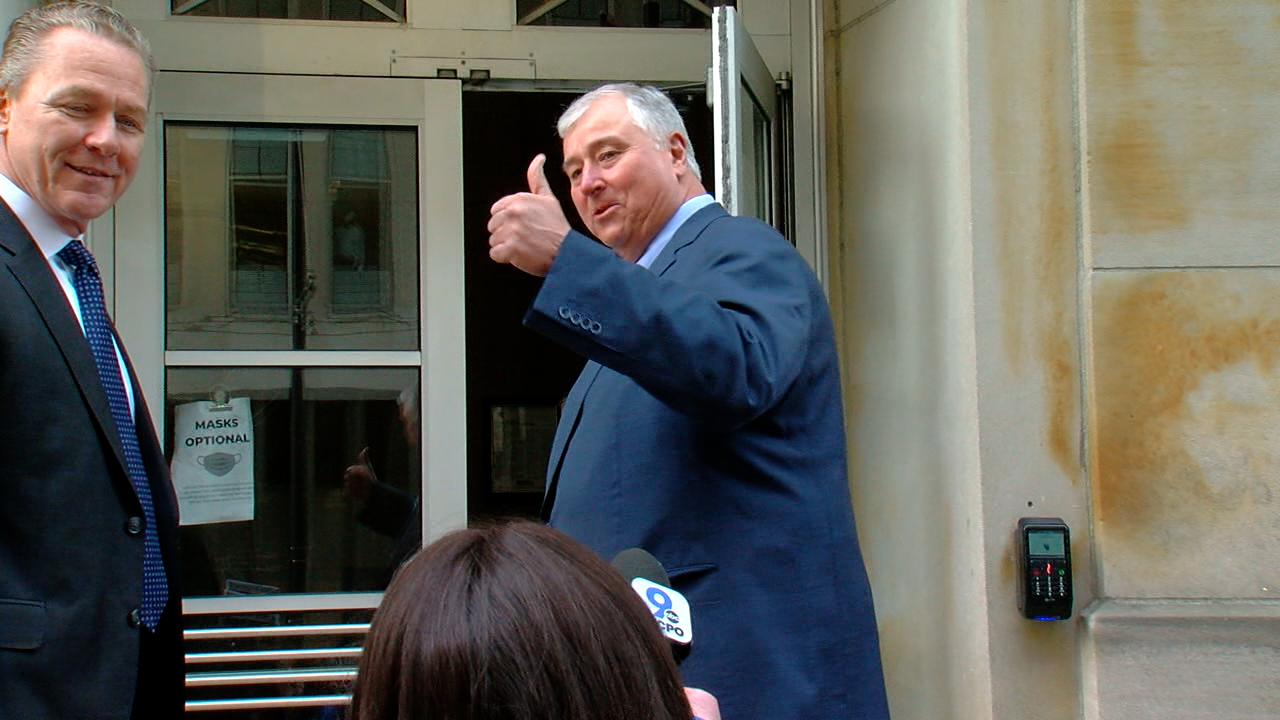
    Former Ohio House Speaker Larry Householder gives the thumbs up as he enters a federal courthouse in Cincinnati. (Photo from WEWS.)

    By:  and  Ohio Capital Journal

    This story was originally published by Canary Media.

    One of the largest utility scandals in U.S. history has remained largely unknown outside Ohio — until now.

    Last week, HBO released a documentary that covers the long, sordid saga, which led to the federal criminal convictions of a former speaker of the Ohio House of Representatives and a former head of the Ohio Republican Party.

    The Dark Money Game: Ohio Confidential” follows the story of how utility companies used roughly $60 million in bribes to public officials to secure more than $1.5 billion in ratepayer subsidies for aging, uneconomical coal and nuclear plants.

    Canary Media contributing reporter Kathiann Kowalski has spent more than a decade covering the House Bill 6 saga and Ohio utilities’ other efforts to get ratepayer-funded bailouts. Dan Haugen, a senior editor at Canary Media, recently spoke with Kowalski about her reactions to the new film.

    The following transcript has been edited slightly for length and clarity.

    Haugen: So, you watched this new HBO documentary ​Ohio Confidential” the other day. What about it is still on your mind today? 

    Kowalski: I was struck by the focus they used of how dark money and gerrymandering undermined voters’ will in the wake of a 2010 Supreme Court case that opened the door for unlimited corporate spending on political campaigns, subject to few conditions.

    Haugen: Was there any factual information that wasn’t previously reported by you or others?

    Kowalski: A lot of it was very familiar, given the fact that I had read through most of the exhibits, read Neil Clark’s book, gone to part of the trial, and been following this for years. There was an interesting scene where they were able to get footage of the FBI observing a private detective that former Ohio GOP Chair Matt Borges and company had apparently retained to follow Tyler Fehrman, who was a witness in the federal criminal case.

    Haugen: Did the film change your understanding of the HB 6 story in any way? 

    Kowalski: They did a decent job connecting some dots. I had not thought through how former Ohio House Speaker Larry Householder’s actions also enabled a far-right coalition in the Legislature to push through an anti-abortion law in 2019. It gave me a broader perspective on the anti-democracy angle of the public corruption, but my understanding of the basic story did not change.

    Haugen: Where did the abortion legislation appear on the timeline?

    Kowalski: The way that the filmmaker presents it is that once Householder helped these people get the anti-abortion legislation passed, he then had people who felt they owed him something. I looked at the timing, and Gov. Mike DeWine signed the anti-abortion legislation the day before House Bill 6 was introduced.

    Haugen: One of the biggest unknowns still today is what, if any, role the governor’s office had in all this. You and others have reported on a December 2018 dinner with FirstEnergy executives, DeWine, and Jon Husted, just weeks before the latter two took office as governor and lieutenant governor. Neither has been charged nor accused of any wrongdoing. Does the film shed any new light on their connections?

    Kowalski: The filmmakers include an allegation of $5 million going from FirstEnergy to help elect DeWine. And they note a disclaimer from DeWine’s office that it was all within the confines of what was allowed under the law. That’s basically about all they did. It was not a deep dive into the governor’s actions or Husted, who was recently appointed to fill Vice President JD Vance’s U.S. Senate seat. I think maybe they wanted to keep their story tightly focused on the legislature and what has been proven in the first federal criminal case. That also avoids having to include more disclaimers about how nothing’s been proven against others, everybody denies wrongdoing, etc., etc.

    Haugen: So is this something you would recommend that your readers watch? 

    Kowalski: Yes. It’s compelling storytelling. It does a good job of explaining things in plain terms. There’s a limited cast of characters, and you can follow the story. If House Bill 6 is new to you, it’s definitely worth watching. And it’s certainly important now as we’re looking at not only the continued use of dark money in politics through either nonprofits or limited liability corporations, but also, with technology, likely more ways to cover up potential bribes. So, yes, people should be aware of this.

    ________________

    Kathiann M. Kowalski, Canary Media
    Kathiann M. Kowalski, Canary Media

    Kathiann M. Kowalski is a contributing reporter at Canary Media who covers Ohio. She reports on energy, science, and policy issues and is the author of 25 books. In addition to her journalism career, Kathi is an alumna of Harvard Law School and has spent 15 years practicing law. She is a member of the Society of Environmental Journalists, the National Association of Science Writers, and the Society of Professional Journalists.

    MORE FROM AUTHOR

    Dan Haugen, Canary Media
    Dan Haugen, Canary Media

    Dan Haugen is a senior editor at Canary Media. He joined Canary Media as part of its 2025 merger with the Energy News Network, where he was managing editor and oversaw state and local reporting on clean energy policy. He previously worked as a newspaper reporter, freelance writer, and watchdog editor at a Gannett-owned newsroom in South Dakota. He currently lives with his wife and two kids in Minneapolis, where he enjoys reading books, collecting vinyl, and watching baseball.

    MORE FROM AUTHOR

  • Ohio University to close Pride Center, Women’s Center and Multicultural Center due to new law

    Ohio University to close Pride Center, Women’s Center and Multicultural Center due to new law

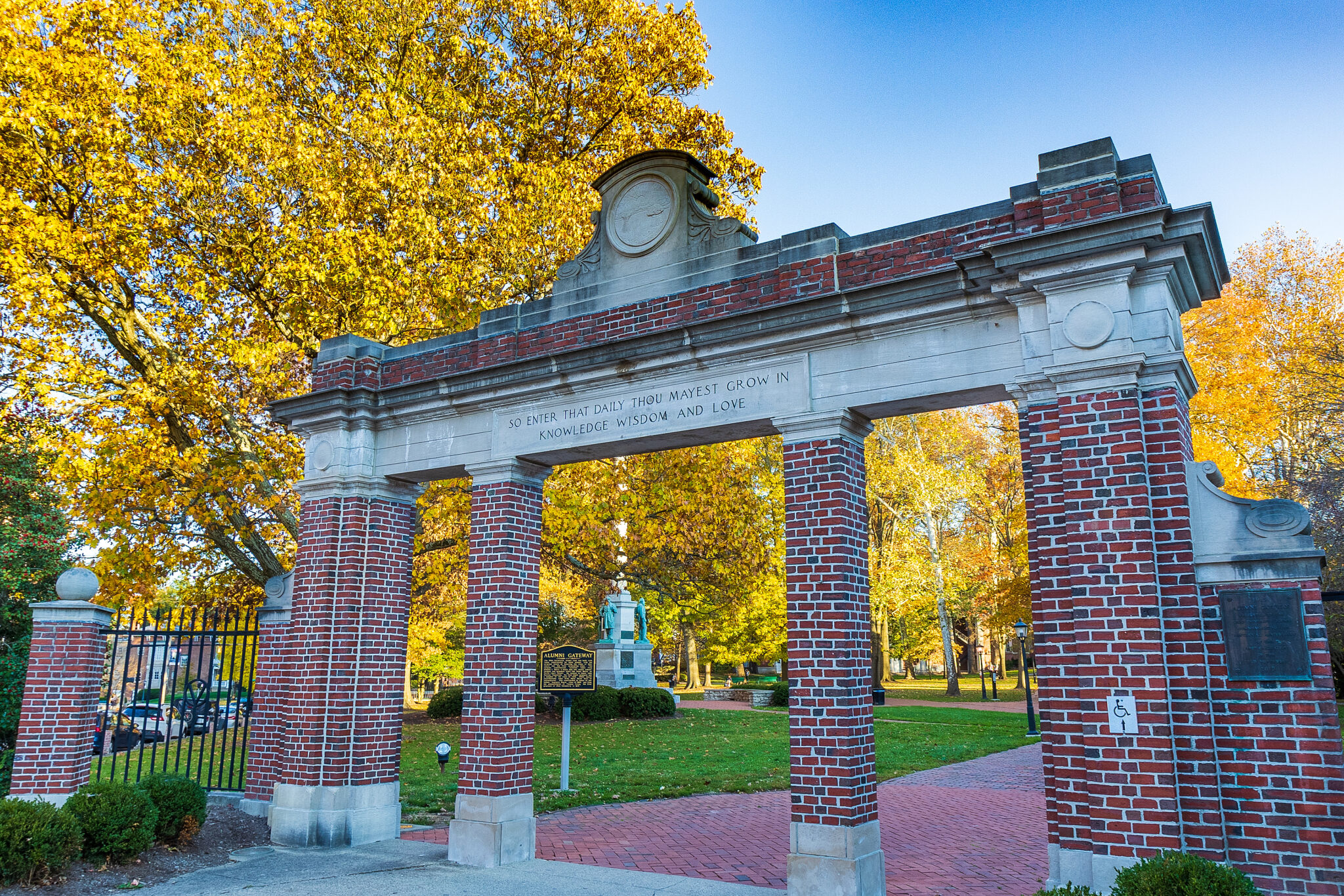
    Alumni Gateway at Ohio University in Athens, Ohio. (Stock photo from Getty Images.)

    By:  Ohio Capital Journal

    Ohio University will close the Pride Center, the Women’s Center and the Multicultural Center in response to a new higher education law banning diversity efforts that takes effect this summer, the university president announced Tuesday.

    OU will sunset the Division of Diversity and Inclusion — which includes those three centers — “over the next several weeks,” Ohio University President Lori Stewart Gonzalez said in a statement.

    GET THE MORNING HEADLINES.


    There is no definitive date for when the division or the centers will close, but the centers will not be open beyond when the law takes effect on June 23, according to university spokesperson Dan Pittman.

    “Work managed by the division that remains within the law will be moved to other areas of the university,” the university said.

    State Sen. Jerry Cirino, R-Kirtland, introduced Senate Bill 1 at the end of January, it quickly passed both chambers and Gov. Mike DeWine signed it into law on March 28. Youngstown State University faculty are trying to get a referendum on the November ballot to block S.B. 1. The law affects Ohio’s public universities and community colleges.

    The new law will also prohibit faculty strikes, regulate classroom discussion of “controversial” topics, create post-tenure reviews, put diversity scholarships at risk, create a retrenchment provision that blocks unions from negotiating on tenure, shorten university board of trustees terms from nine years down to six years, and require students take an American history course, among other things.

    “We must continue to ensure every person we invite to be a part of our university community finds their place here and develops connections,” Gonzalez said in her letter to the university. “Without forgetting that essential commitment, we must also follow the law.”

    All employee positions within the Division of Diversity and Inclusion will be eliminated. The three centers have eight full-time staffers, according to their websites. The centers also have student workers.

    “Employees will continue in their current roles for the next several weeks and will be given the opportunity to interview for any open university position for which they apply and meet minimum qualifications,” Gonzalez said.

    Employees who don’t continue to work at OU will receive full separation benefits, according to the university.

    Support for the university’s Templeton, Urban, Appalachian, and Margaret Boyd Scholars programs will move under the Honors Tutorial College.

    Ohio University’s Heritage College of Osteopathic Medicine’s Office of Inclusion will also close because of the new law.

    The university said it will be reaching out to students, faculty and staff for their input on inclusion and belonging moving forward.

    “I want to be clear that the task ahead for all of us is not to look for ways to recreate the same approaches under a different name,” Gonzalez said. “Rather, the charge is to invent something new that meets the moment and delivers results for our students.”

    The Capital Journal previously reported on how OU student Audrey Ansel has been preparing for Ohio University’s Pride Center to likely close as a result of the law.

    This comes as Ohio’s public universities are in the midst of figuring out how the controversial law affects them. The University of Toledo recently announced they are suspending nine undergraduate programs in response to S.B. 1.

    Follow Capital Journal Reporter Megan Henry on Bluesky.


    Megan Henry
    Megan Henry

    Megan Henry is a reporter for the Ohio Capital Journal and has spent the past five years reporting in Ohio on various topics including education, healthcare, business and crime. She previously worked at The Columbus Dispatch, part of the USA Today Network.

    Ohio Capital Journal is part of States Newsroom, the nation’s largest state-focused nonprofit news organization.

    MORE FROM AUTHOR

  • Students, faculty are asking Ohio Gov. Mike DeWine to veto massive higher ed overhaul bill

    Students, faculty are asking Ohio Gov. Mike DeWine to veto massive higher ed overhaul bill

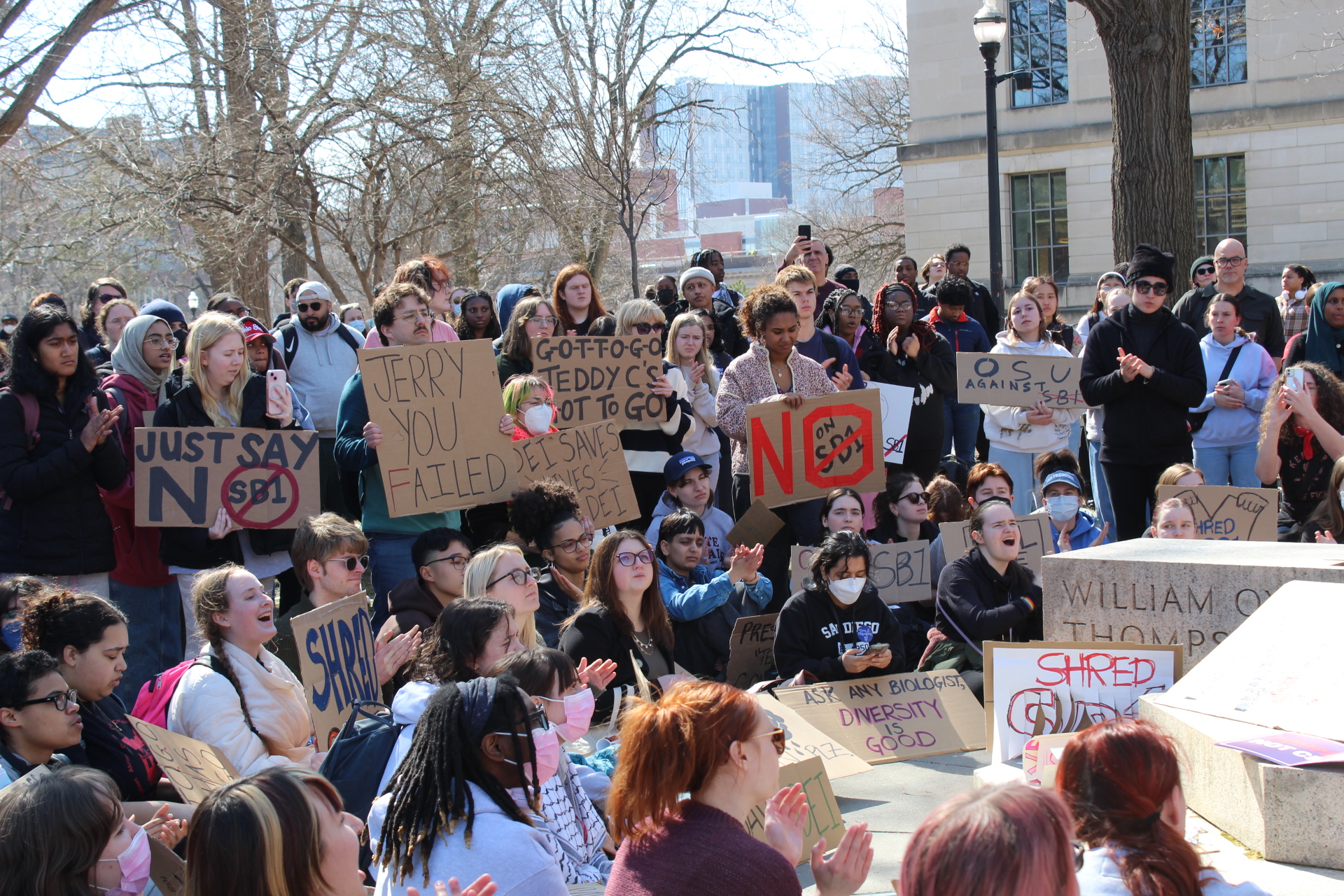
    Hundreds of students protested against Senate Bill 1 on Ohio State’s campus on March 4, 2025. (Photo by Megan Henry, Ohio Capital Journal).

    By:  Ohio Capital Journal

    Ohio college students, faculty and staff are calling on Gov. Mike DeWine to veto a massive higher education bill that would ban diversity and inclusion on campus and prevent faculty from striking.

    Lawmakers concurred with tweaks made to Senate Bill 1 during Wednesday’s Senate session, sending the bill to DeWine’s desk for his signature. DeWine received the bill Wednesday and has 10 days to sign the bill into law or veto it. If DeWine vetoes the bill, lawmakers would need a 3/5 vote from each chamber to override it.

    DeWine, however, has previously said he would sign the bill.

    GET THE MORNING HEADLINES.


    S.B. 1 would set rules around classroom discussion, create post-tenure reviews, put diversity scholarships at risk, create a retrenchment provision that blocks unions from negotiating on tenure, shorten university board of trustees terms from nine years down to six years, and require students take an American history course, among other things.

    For classroom discussion, the bill would set rules around topics involving “controversial beliefs” such as climate policies, electoral politics, foreign policy, diversity and inclusion programs, immigration policy, marriage, or abortion, and forbid “indoctrination,” though that remains undefined. S.B. 1 would only affect Ohio’s public universities.

    “Republicans showed us they’d rather gamble with our economic future than solve real problems in our state,” Ohio Democratic Party Chair Elizabeth Walters said in a statement. “Instead of growing our state, Republicans are driving students, young adults, and business away from Ohio. We’re urging Governor DeWine to do the right thing and veto this legislation.”

    The Ohio Senate Democratic Caucus sent a letter to DeWine urging him to veto S.B. 1.

    “This legislation is a misguided attempt by overreaching legislators to impose their ideological beliefs on our public universities,” the letter said. “The bill undermines academic freedom, attacks collective bargaining rights, and jeopardizes the future of higher education in our state.”

    The Ohio House Minority Caucus also sent a letter to DeWine asking him to veto the bill. 

    “You have an opportunity to protect the future of Ohio’s institutions of higher education, and your legacy as Ohio’s governor, by vetoing this bill and requiring the legislature to negate terms that are more amenable to the will of Ohioans,” the letter read.

    The ACLU of Ohio wants DeWine to veto S.B. 1 and protect free speech on campus.

    “By dismantling DEI structures, Senate Bill 1 sends a clear, harmful message to students that their unique backgrounds, experiences, and perspectives are not welcome in Ohio,” ACLU of Ohio Policy Director Jocelyn Rosnick said in a statement.

    Anticipating S.B. 1 would pass during Wednesday’s Senate session, members of the Ohio Legislative Black Caucus urged DeWine to veto S.B. 1 during a press conference earlier that day.

    “This is one of the worst government overhauls that I’ve seen to date,” said state Rep. Terrence Upchurch, D-Cleveland. “It will not only limit our First Amendment right to free speech, ban strikes and collective bargaining rights for professors, it threatens opportunities for our students, undermines workforce development and disproportionately harms black and minority communities.”

    State Rep. Desiree Tims, D-Dayton, said S.B. 1 is toxic, racist and a threat to free speech and academic freedom.

    “Since when is diversity, equity and inclusion a bad thing?” she asked. “Why is this necessary? The only answer is, so that we can move backwards, pre-civil rights … progress that this country and this nation has stood for. … Senate Bill 1 turns the ugly page back in history, somewhere we do not want to go, where we should not go.”

    Ohio University Journalism School Director Eddith Dashiell talked about how the university’s journalism school did not give out 12 race-based scholarships totaling $46,000 last year after the U.S. Supreme Court ruled against race-conscious admissions in 2023.

    “The diversity scholarships weren’t designed to discriminate against white students,” she said. “The diversity scholarships were designed to encourage more students of color to come to little old, white Athens, Ohio and get a quality education.”

    S.B. 1 will be detrimental to Ohio’s higher education, Dashiell said.

    “If it hadn’t been for an extra effort at Ohio University to diversify the faculty, I would still be in Tennessee,” she said. “We also urge that Governor DeWine veto this bill because it’s going to hurt our students. It’s going to hurt those who will benefit from diversity programs and benefit from these diversity scholarships.”

    Ohio State University’s Chair of the Undergraduate Black Caucus Jessica Asante-Tutu said this bill runs the risk of forcing Ohioans to move out of state.

    “Students learn best in environments that encourage exchanges, where ideas flow freely and where differences are respected,” she said. “This bill stifles all of that.”

    As an Olentangy Liberty High School student in Delaware County, Michelle Huang said S.B. 1 hangs over her head as she thinks about applying for colleges this fall.

    “The threat of this bill passing is a deterrent from us attending Ohio State in the first place,” she said. “What DEI is actually doing is actually promoting more discourse and promoting more intellectual diversity.”

    Follow Capital Journal Reporter Megan Henry on Bluesky.

    YOU MAKE OUR WORK POSSIBLE.

    _______________
    Megan Henry
    Megan Henry

    Megan Henry is a reporter for the Ohio Capital Journal and has spent the past five years reporting in Ohio on various topics including education, healthcare, business and crime. She previously worked at The Columbus Dispatch, part of the USA Today Network.

    Ohio Capital Journal is part of States Newsroom, the nation’s largest state-focused nonprofit news organization.

    MORE FROM AUTHOR

  • Gov. DeWine seeking more federal support for Ohio flocks reeling from bird flu

    Gov. DeWine seeking more federal support for Ohio flocks reeling from bird flu

    By:  Ohio Capital Journal

    Ohio Gov. Mike DeWine has promised to push federal officials to provide greater support to farmers affected by bird flu. The governor spoke alongside state Agriculture Director Brian Baldridge Thursday as well as the state veterinarian and poultry industry representatives.

    State impacts

    Highly pathogenic avian influenza, or HPAI, commonly known as bird flu, has been spreading throughout the country since the beginning of 2022, but a recent a recent spike has hit Ohio farmers particularly hard. According to the latest USDA data, Ohio has culled nearly 14.5 million birds since the beginning of this year alone. That’s more than double any other state over that timeframe.

    GET THE MORNING HEADLINES.


    “And to put it in perspective,” Baldridge said, “as far as the layer facilities, about over 30% of our layer birds here in Ohio have been depopulated. Those are the ones that are laying the eggs each and every day.”

    He noted that one facility raising ducks and a few raising turkeys have been impacted as well.

    DeWine explained that once farmers detect a case there’s little they can do besides cull the flock.

    “The doctor tells me the fatality rate is very, very, very high, right?” he said, looking to State Veterinarian Dennis Summers. “You could be as high as 90, 95, even 100%, so those birds are going to basically die anyway. The point, the point is you’re trying to either slow this thing down or, obviously the main goal is to stop it.”

    To that end, Summers noted, “One thing that we definitely want to make sure that we’re keeping an eye on is an effective way to use a vaccination strategy for poultry for HPAI. So that’s one thing that we’re going to be continuing to watch, and hopefully we have that as a tool in the toolbox here for Ohio.”

    Jim Chakeres, who heads up the Ohio Poultry Association, has made the same point with state lawmakers, but the idea of vaccinating flocks faces competing interests within the industry.

    Farmers who focus on meat production — known as broilers — could see their export business dry up following vaccination because buyers in other countries worry birds coming in could carry the virus and infect their domestic flocks.

    In a recently announced $1 billion response effort, USDA officials earmarked $100 million to research vaccines or other treatment, and the agency has awarded a conditional license to develop a bird flu vaccine. Despite that funding though, a vaccination program would be a significant step. The agency has stockpiled vaccines in the past without actually using them.

    What DeWine wants

    The governor said he would be an advocate for the state and its farmers but “one of the things that is clear, is the federal government is really going to have to accelerate the research that is being done in regard to bird flu.”

    The potential impacts extend beyond hot spots like poultry farms in Western Ohio, DeWine said — not explicitly referencing the risk of human infection but noting “obviously bigger ramifications in regard to bird flu.”

    Ohio reported its first case of human infection last month — one of 70 tallied so far. Although one person in the U.S. has died, there has been no indication of the virus spreading from person to person.

    DeWine said he’d convey the message to speed up research when he speaks to U.S. Secretary of Agriculture Brooke Rollins Friday.

    The governor added that he’d push for the secretary to extend the extra financial support she announced recently to farmers who have already been impacted.

    “One of the things that the federal government has done is up the amount of compensation,” DeWine said. “One of the things I’ll take up with the secretary is to see whether or not that could be backdated, basically retroactive, because some of these farmers’ (losses) obviously occurred before the date when it went into effect.”

    But even with greater support, Chakeres warned that egg prices wouldn’t come down right away.

    “Our farmers are working every day to get those barns cleaned and disinfected so they can repopulate and start producing eggs again,” he said. “That takes time. It takes that chick 21 days to hatch. It takes 18 weeks before that hen is going to start laying eggs again. So it just takes time to repopulate the facilities.”

    Follow Ohio Capital Journal Reporter Nick Evans on X or on Bluesky.

    YOU MAKE OUR WORK POSSIBLE.

    _______________
    Nick Evans
    Nick Evans

    Nick Evans has spent the past seven years reporting for NPR member stations in Florida and Ohio. He got his start in Tallahassee, covering issues like redistricting, same sex marriage and medical marijuana. Since arriving in Columbus in 2018, he has covered everything from city council to football. His work on Ohio politics and local policing have been featured numerous times on NPR.

    Ohio Capital Journal is part of States Newsroom, the nation’s largest state-focused nonprofit news organization.

    MORE FROM AUTHOR
  • LGBTQ Ohioans and advocates are asking Gov. Mike DeWine to veto ‘Don’t Say Gay’ bill

    LGBTQ Ohioans and advocates are asking Gov. Mike DeWine to veto ‘Don’t Say Gay’ bill

    Requires school districts to create a mandatory religious release time policy

    By:  – Ohio Capital Journal

    Advocates condemned Ohio lawmakers for passing another anti-LGBTQ bill as the General Assembly wrapped up late Wednesday night, urging Gov. Mike DeWine to veto the legislation, though DeWine has indicated he will sign it.

    The Ohio Senate passed House Bill 8 and the Ohio House concurred with changes made to the bill, sending it to DeWine’s desk. He will have 10 days to either sign the bill into law or veto it, once he receives it. DeWine has indicated he favors the legislation.

    The controversial bill requires educators to out a students’ sexuality to their parents, requires public schools to let parents know about sexuality content materials ahead of time so they can request alternative instructions, and requires school districts to create a mandatory religious release time policy.

    “We are deeply disappointed that the legislature decided once again to attack LGBTQIA+ youth by passing yet another bill that will make schools less safe and inclusive for queer and transgender people,” Kaleidoscope Youth Center, an organization that serves LGBTQIA+ youth, said in a statement.

    TransOhio said passing H.B. 8 is a “harmful step backward” for students.

    “By requiring a religious release program and restricting discussions on gender and sexuality, the law imposes a narrow worldview on public education and limits teachers’ ability to provide inclusive, fact-based instruction,” TransOhio said in a statement. “By mandating the reporting of students’ assumed gender identities and behaviors to parents, the law breaches student privacy, erodes trust, and puts vulnerable children at risk of harm.”

    Those who supported H.B. 8 called it the ‘Parents’ Bill of Rights’, but those who opposed it called it the ‘Don’t Say Gay Bill,’ due to its similar language to Florida’s ‘Don’t Say Gay’ law that passed in 2022.

    “While this bill is presented as a “Parents’ Bill of Rights,” its provisions pose significant risks to the well-being of LGBTQ+ youth and raise troubling questions about the separation of church and state in public education,” Stonewall Columbus said in a statement.

    The Ohio Education Association said this bill will take time away from educators being able to teach students and will create more challenges for marginalized students.

    “It unnecessarily entangles state government in regulating communications between parents and educators, sowing distrust rather than fostering the collaboration needed to ensure all students can learn, grow, and thrive,” OEA President Scott DiMauro said in a statement.

    The bill, which underwent several changes since it was first introduced in February 2023, received much opposition.

    “Despite the outcry from hundreds of students, parents, and social workers, conservatives want to broaden curriculum censorship, weaken current civil rights protections for LGBTQ+ individuals, and impose new disclosure and alternative curriculum mandates on teachers and counselors,” Lauren Blauvelt, executive director of Planned Parenthood Advocates of Ohio, said in a statement.

    “These requirements would create conflicting, burdensome obligations for educators, making it overly difficult for them to comply,” Blauvelt said.

    The Ohio Center for Sex Education said this bill is at odds with studies that show comprehensive sexuality education programs reduce the rates of sexual activity, sexual risk behaviors, sexually transmitted infections, and adolescent pregnancy.

    “This bill’s vague language creates an environment of fear and division, putting LGBTQ+ students at risk and eroding the trust that educators work hard to build with their students and families,” Jenna Wojdacz, the center’s assistant vice president, said in a statement.

    Equality Ohio, along with several other organizations, is asking DeWine to veto the bill.

    “Overnight when most school-age children are asleep, the legislature rushed through another shameful attack on LGBTQ+ youth,” Equality Ohio Executive Director Dwayne Steward said in a statement.

    LifeWise Academy, a Hilliard-based religious instruction program, celebrated the passage of H.B. 8.

    “Families understand the benefits of Bible-based character education during school hours, given the increasing demand for our program in communities throughout Ohio and the country,” LifeWise CEO Joel Penton said in a statement.

    LifeWise enrolls 50,000 students across 29 states, including about 160 Ohio school districts.

    Follow OCJ Reporter Megan Henry on Bluesky.

    YOU MAKE OUR WORK POSSIBLE.

    ___________
    Megan Henry
    Megan Henry

    Megan Henry is a reporter for the Ohio Capital Journal and has spent the past five years reporting in Ohio on various topics including education, healthcare, business and crime. She previously worked at The Columbus Dispatch, part of the USA Today Network.

    Ohio Capital Journal is part of States Newsroom, the nation’s largest state-focused nonprofit news organization.

    MORE FROM AUTHOR

  • Ohio Attorney General Dave Yost settles with FirstEnergy for $20 million

    Ohio Attorney General Dave Yost settles with FirstEnergy for $20 million

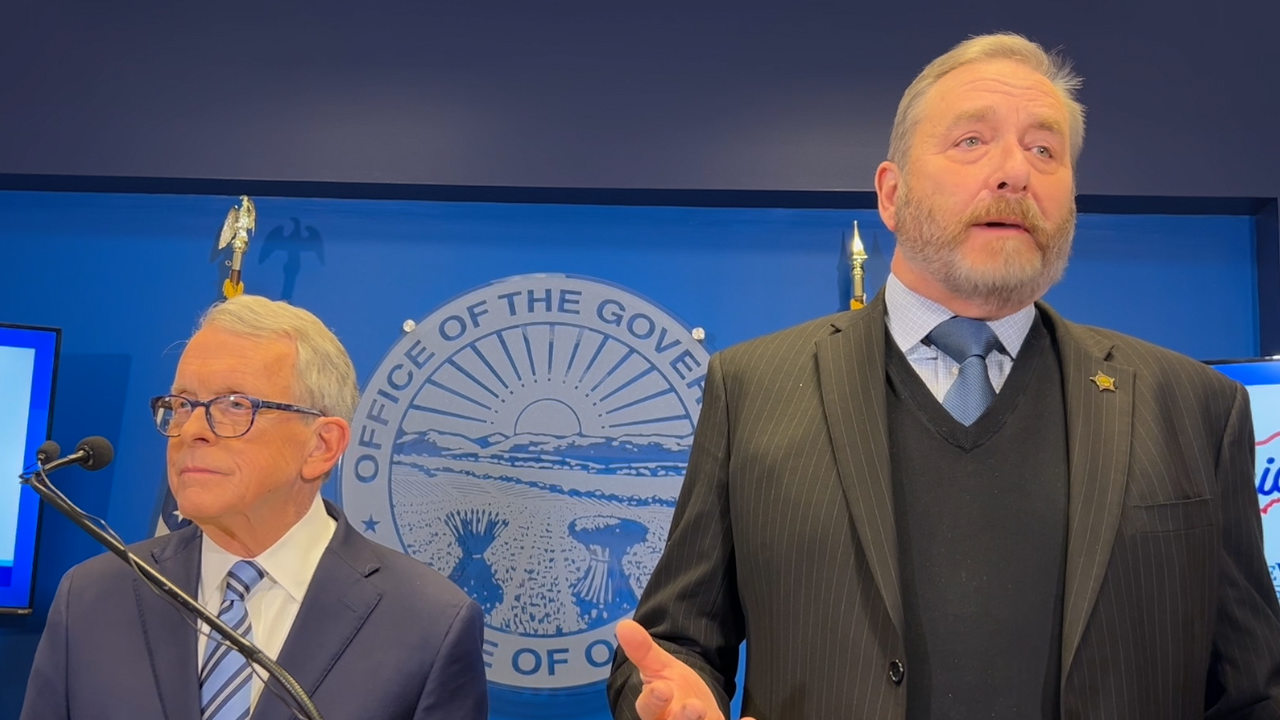
    Ohio Governor Mike DeWine (left) and Ohio Attorney General Dave Yost (right) answer questions during a press conference. (Photo by WEWS).

    Unannounced amount dwarfed by scale of epic utility ripoff that featured more than $61 million in bribes and a $1.3 billion bailout

    By:  Ohio Capital Journal

    Ohio Attorney General Dave Yost has agreed to settle the largest bribery and money laundering scandal in state history with the massive utility that funded it.

    At just $20 million, the settlement amounts only to less than a third of the bribes Akron-based FirstEnergy paid and it is dwarfed by the benefits Ohio utilities have received from ratepayers as a consequence of the corrupt legislation those bribes paid for.

    Yost’s office sends out frequent press releases, but not one regarding Monday’s settlement, which was first reported by the Cincinnati Enquirer, citing an SEC filing by FirstEnergy.

    In response to questions, his office said Yost had “voluntarily walled himself off from the case months ago to avoid any suggestion that the case was politically driven or any outcome was influenced by politics or political decision making.” But it didn’t explain how.

    The statement comes after more than a year of questions about the attorney general’s own involvement in the fight to pass and protect the $1.3 billion ratepayer bailout that mostly went to FirstEnergy.

    Yost’s office added that the company was cooperating in state prosecutions of two former executives, and that the company had reformed in the years since the scandal.

    “The non-prosecution agreement signed between FirstEnergy, the Ohio Attorney General’s Office and the Office of the Summit County Prosecuting Attorney requires FirstEnergy to provide evidence, access to witnesses and testimony in the ongoing criminal cases against (former CEO) Chuck Jones and (former Vice President) Michael Dowling, as well as in civil proceeding relating to the passage of” the corrupt bailout bill, spokesman Steve Irwin said in an email.

    By agreeing to the pact, FirstEnergy won’t be charged criminally. The company paid the federal government $230 million in 2021 to get criminal charges dropped in that instance.

    In dropping the charges, the state and federal governments allowed FirstEnergy to dodge a big financial hit. Consultants told the company it could face nearly $4 billion in fines if indicted, the Cleveland Plain Dealer reported Tuesday.

    According to weeks of testimony in federal court in Cincinnati last year, FirstEnergy executives began wooing Larry Householder and other state leaders in late 2016. The executives had bet heavily on coal and nuclear generation that was losing money because they failed to anticipate that the fracking boom would make gas-fired electricity generation cheaper.

    So the executives — CEO Jones and Vice President Dowling — undertook a frantic search for a bailout.

    They flooded $61 million in corporate money into 501(c)(4) dark money groups. From there, the money went to elect friendly Republicans who would vote to make Householder speaker of the Ohio House at the start of 2019.

    From that perch, Householder shepherded the corrupt bailout, House Bill 6.

    Sam Randazzo, Gov. Mike DeWine’s pick to chair the Public Utilities Commission, helped write and lobby for the bailout even though he was supposed to be a neutral regulator. FirstEnergy later said it paid a $4.3 million bribe to Randazzo, who died by suicide in April.

    DeWine, whose administration had several senior officials connected to FirstEnergy, signed the bill the same day that it passed. But it ran into instant opposition in the form of a fierce campaign to repeal the bailout.

    The FirstEnergy executives — who are now under state indictment — were so alarmed at the repeal effort that they put up $36 million to stop it. The resulting campaign included false, xenophobic TV commercials, bullying people gathering signatures to put a repeal on the ballot and even allegations of assault.

    Yost gave HB 6 supporters a big assist in the heat of the repeal fight.

    Before a repeal could go on the ballot, supporters had to gather 1,000 valid signatures from registered voters and submit a ballot summary to the attorney general. Yost had to approve that before repeal advocates could start gathering the necessary 265,000 additional voter signatures. And they had just 90 days after DeWine signed the corrupt bailout on July 23, 2019 to do it.

    The summary and 1,000 signatures were submitted within 10 days. But then Yost rejected the ballot language on the first go-round. By the time they had submitted different language and more signatures — and Yost approved it — their time to gather more than a quarter-million signatures had been cut by 40% and the repeal failed.

    While Yost — a hopeful to become governor in 2026 — hasn’t commented on his conduct during this period, some of the conspirators did.

    During last year’s trial, federal prosecutors presented messages between former Ohio GOP Chairman Matt Borges, who is serving a five-year prison sentence for his involvement, to Juan Cespedes, who has pleaded guilty to his.

    In one, Borges said the attorney general told him that he thought the bailout was a bad law, but he wasn’t speaking publicly as a favor to Borges and FirstEnergy. Yost “‘would be out front (in opposition) if not for (FirstEnergy) support and your involvement,’” Borges quoted Yost as supposedly saying.

    In another, Borges — who had run some of Yost’s past campaigns — said of the repeal summary, “If there’s any way the law will allow him to reject the language, he will do it.”

    Irwin, Yost’s spokesman, justified the settlement by saying FirstEnergy had reformed.

    “FirstEnergy today is not the company it was five years ago – the corporation has undertaken, and continues to undergo, reforms to strengthen its internal ethics programs, to increase transparency, and promote reporting of questionable conduct by its employees and leadership,” Irwin said. “It has also restructured its board and leadership to remove the individuals responsible for the conduct that gave rise to the House Bill 6 scandal. This is an important step in bringing the disgraced corporate leaders who used their positions of power to betray FirstEnergy’s ratepayers and employees and the people of Ohio to account for their crimes.”

    However, institutional investors are in court arguing that FirstEnergy is trying to limit the blast radius of the scandal. They accuse the company of trying to protect other executives and board members who might have been culpable — or at least might have known of the scheme.

    Indeed, the company is battling furiously not to turn over an internal investigation it commissioned in the wake of the scandal. After being denied an attempt to appeal an order to turn it over, the company filed a risky petition for a writ of mandamus on July 30.

    After the HB 6 scandal broke in 2020, Yost donated $24,000 in contributions from FirstEnergy and Cespedes to charity. It’s an open question when he’ll explain what he knew and did in a scandal that imprisoned Householder for 20 years and led to two suicides — including that of indicted lobbyist Neil Clark.

    Meanwhile, ratepayers are still paying big money as a consequence of HB 6. Its provisions solely benefitting FirstEnergy were repealed after the scandal broke. But the state’s leadership has refused to repeal the rest of the bill.

    It includes a measure that has so far paid $343,000,000 to subsidize two aging coal plants owned by a group of Ohio utilities. One’s not even in Ohio.


    Marty Schladen
    Marty Schladen

    Marty Schladen has been a reporter for decades, working in Indiana, Texas and other places before returning to his native Ohio to work at The Columbus Dispatch in 2017. He’s won state and national journalism awards for investigations into utility regulation, public corruption, the environment, prescription drug spending and other matters.

    Ohio Capital Journal is part of States Newsroom, the nation’s largest state-focused nonprofit news organization.

    MORE FROM AUTHOR

  • Donald Trump is a convicted felon. Some Ohio leaders react with fury, others silence

    Donald Trump is a convicted felon. Some Ohio leaders react with fury, others silence

    BY  Ohio Capital Journal

    A Manhattan jury made history Thursday when it convicted Donald Trump of 34 felonies. They relate to how he paid a porn star to stay quiet just before the 2016 election — and his actions cast doubt on Trump’s legitimacy during his one term as president.

    Despite now being a felon, Trump is for the third time the GOP nominee. Most of Ohio’s Republican leaders reacted with outrage to his conviction, while the governor didn’t have much to say, and the one statewide Democrat said the jury had spoken.

    Sen. J.D. Vance is on the shortlist to be Trump’s vice presidential pick and he took to the airwaves to call Trump’s prosecution political, and to say a lot of other stuff as well. On X Thursday, Vance falsely accused the Democratic Party of inventing a crime just to prosecute Trump and he made reference to a conspiracy theory with anti-semitic overtones.

    “This decision is a disgrace to the rule of law and our Constitution,” Vance wrote. “Dems invented a felony to ‘get Trump,’ with the help of a Soros funded prosecutor and a Biden donor Judge, who rigged the entire case to get this outcome. This isn’t justice, it’s election interference.”

    Actually, as the jury found, it was Trump who committed election interference. And legal experts pointed out that Trump’s lawyers helped pick the jury, put on witnesses and had input in the jury’s instructions. Trump himself could have taken the witness stand, but chose not to.

    Speaking from the White House Friday, President Joe Biden criticized Trump supporters for claiming that the justice system was rigged against Trump without providing any concrete evidence.

    “It’s reckless, it’s dangerous, it’s irresponsible for anyone to say this was rigged just because they don’t like the verdict,” Biden said.

    Ohio Attorney General Dave Yost, a likely contender for the GOP nomination to be governor in 2026, also slammed the proceedings that ended in Trump’s conviction.

    “This verdict is likely to be overturned. It is not the first unjust verdict, and it is why we have courts of appeals,” he said on X. “The aptly named (Manhattan District Attorney) Alvin Bragg picked his defendant and campaigned on prosecuting him — disreputable and unethical conduct that tarnished the justice system.”

    When it comes to courts of appeal, Yost has had his own difficulties. A panel of the 6th U.S. Circuit Court of Appeals on Wednesday ruled that Yost was improperly blocking signature gathering for a proposed amendment to the state Constitution that would reduce immunities the state has have from being sued. Yost on Thursday said he’d seek a ruling from the entire court.

    Some of the AG’s critics have accused him of stalling.

    He refused to approve a summary of the ballot language, which supporters need if they’re to gather 420,000 verified signatures from registered voters in time for the measure to make the November ballot. Yost is refusing to answer questions about a similar maneuver in 2019 that helped kill a voter-initiated repeal of a law at the center of the biggest bribery scandal in Ohio history.

    Lt. Gov. Jon Husted is likely to vie with Yost for the gubernatorial nomination. Like many other Ohio Republicans, he, too, said he was outraged over Trump’s conviction for having an extramarital tryst with a porn star, paying to silence her in order to improperly influence an election and then falsifying business records to cover it all up.

    “This quote from President Trump is ultimately the truth of the matter: ‘The real verdict is gonna be Nov. 5, by the people,’” Husted said on X. He then reposted that while saying further, “If you are mad about it, do something about it by donating, volunteering and voting.”

    Ever merciless, some commenters reminded the lieutenant governor that he was roundly booed at a 2020 Trump rally in Vandalia as he encouraged attendees to wear masks at the height of the coronavirus pandemic. Trump played a lead role in politicizing mask wearing and downplaying a scourge that has killed nearly 1.2 million Americans.

    Ohio’s top elections official also rushed onto social media to defend a newly minted felon who tried to overturn the results of the 2020 election and thereby steal the votes of 81 million Americans.

    “Partisan prosecutor,” Secretary of State Frank LaRose said on X. “Activist judge. Sham trial. Bogus verdict. It’s a sad day in America when a political party is so afraid of losing its grip on power that they’re willing to abuse justice to game an election. This will not stand.”

    LaRose is a key player in Ohio’s epic gerrymanderingquestionable voter purges and restriction of voting access, so it’s interesting that he’d accuse others of desperately clinging to power.

    One wag also pointed out that a jury had just found that Trump falsified numerous business records to further his conspiracy and that as Secretary of State, LaRose is in charge of Ohio’s business records. It’s unclear what — if anything — LaRose would have done if the former president faked them here in the Buckeye State.

    Cleveland businessman Bernie Moreno, who is challenging Democrat Sherrod Brown for Ohio’s other Senate seat, was also vociferous in his support of the only ex-president to also bear the title “felon.”

    “Today is a dark day for American democracy,” Moreno said on X. “Joe Biden and his leftwing allies engaged in election interference to prosecute their top political opponent on bogus charges. This verdict is representative of a banana republic, not a democracy. Sherrod Brown and DC Democrats should be ashamed of this weaponization of our justice system.”

    His statement ignores the fact that the Biden Justice Department declined to prosecute Trump on the charges of which the New York jurors found him guilty. It also ignores the fact that the Biden Justice Department is prosecuting the president’s own son and a sitting Democratic senator.

    Brown, his Democratic opponent, is facing a hard reelection in a Republican-leaning state. When asked to comment on Trump’s conviction Friday, Sen. Brown stuck to general principals.

    “I’m not a lawyer or a judge but I’ve said from the beginning that no one is above the law,” he said in an email. “Ultimately this is up to the legal system to sort out and for the American people to decide in November.”

    Gov. Mike DeWine’s office didn’t immediately respond to a request for comment. He’s a Republican who got on Trump’s bad side early in the pandemic, when DeWine implemented health orders that were recommended by experts.


    Marty Schladen
    MARTY SCHLADEN

    Marty Schladen has been a reporter for decades, working in Indiana, Texas and other places before returning to his native Ohio to work at The Columbus Dispatch in 2017. He’s won state and national journalism awards for investigations into utility regulation, public corruption, the environment, prescription drug spending and other matters.

    Ohio Capital Journal is part of States Newsroom, the nation’s largest state-focused nonprofit news organization.

    MORE FROM AUTHOR

  • Ohio AG Yost is prosecuting others in utility scandal, but he won’t discuss his own involvement

    Ohio AG Yost is prosecuting others in utility scandal, but he won’t discuss his own involvement

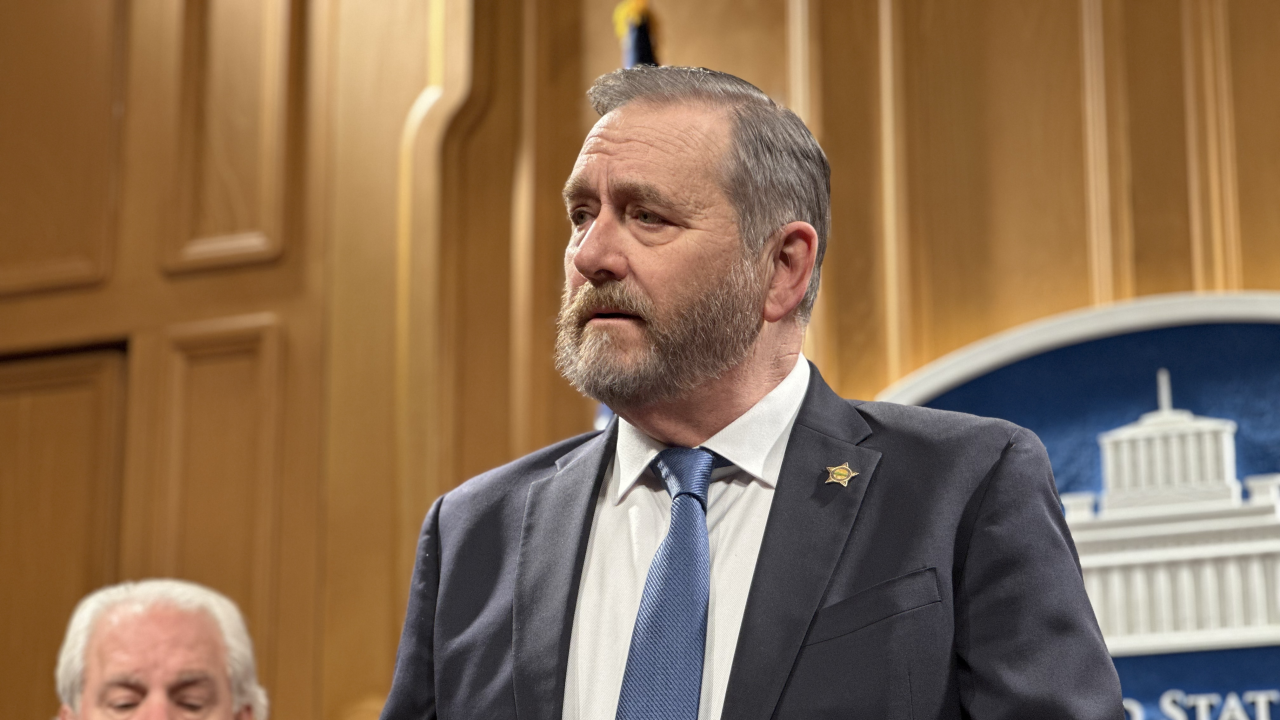
    Ohio Attorney General Dave Yost. (Photo by Morgan Trau, WEWS.)

    BY:  Ohio Capital Journal

    Ohio Attorney General Dave Yost this year brought criminal charges against four figures who were involved in the biggest bribery scandal in state history.

    Many thought they were long overdue. That’s especially true of cases filed against men accused of funding the conspiracy, but who still hadn’t been charged by federal prosecutors four years after the last of the alleged wrongdoing took place — and almost a year after two others began lengthy prison sentences.

    But Yost’s own name came up several times in the federal trial and his office last week again ignored detailed questions about the matter.

    The attorney general played an important role in the defeat of an attempted repeal of the corrupt bailout. And there were claims that he believed that the bailout was a bad law, but kept his mouth shut out of loyalty to one of the conspirators — and to the law’s major beneficiary.

    The issue is politically fraught for Yost because the state charges he filed this year have raised new questions about Lt. Gov. Jon Husted’s involvement in the scandal. Yost and Husted are widely expected to face each other in the 2026 race to be Ohio’s Republican nominee for governor.

    New charges

    Former House Speaker Larry Householder, R-Glenford, was sentenced to 20 years in federal prison last June for his role in a scheme in which Akron-based FirstEnergy paid more than $60 million to make him speaker in 2018 and to pass and protect a $1.3 billion ratepayer bailout the following year. It’s one of the biggest scandals in Ohio history, and so far it has also sent former GOP Chairman Matt Borges to prison for five years, resulted in two more guilty pleas — and seen two defendants die by suicide.

    But U.S. Attorney Kenneth Parker sidestepped a pretty important question last June when he stood in front of the federal courthouse in Cincinnati and boasted to the press about the convictions and sentences his assistants had just won. He was asked, what about the people who paid the bribes? Would they be charged? If so, when?

    All Parker would say was that the investigation was ongoing.

    In December, his team indicted Sam Randazzo, Gov. Mike DeWine’s nominee to be Ohio’s top utility regulator. In a deferred prosecution agreement, FirstEnergy said it paid Randazzo a $4.3 million bribe just before he became regulator. From that post, he did a number of lucrative favors for the company related to the bailout and he improperly helped with other matters as well, according to the indictment.

    But still uncharged by the feds are former FirstEnergy CEO Chuck Jones and Vice President Michael Dowling, the executives alleged to have directed truckloads of company money into 501(c)(4) dark money groups that financed the scandal.

    In February, a team of state prosecutors led by Yost stepped into the void by securing a grand jury indictment against Jones, Dowling and Randazzo. The charges relate to the bailout scandal, and also to a decade’s worth of shady dealings that allegedly paid Randazzo more than $10 million and ripped off industrial energy users and residential customers alike.

    In April, Randazzo died by suicide.

    Other questions

    The state indictment also raised new questions about the cozy relationships between the DeWine/Husted administration, FirstEnergy and Randazzo.

    Weeks before they were inaugurated, DeWine and Husted had dinner in downtown Columbus with Jones and Dowling — FirstEnergy’s top leadership — and discussed whether Randazzo would be acceptable to regulate the company. Jones and Dowling then drove about a mile to Randazzo’s German Village residence and negotiated the $4.3 million payoff, according to text messages that are being used in multiple court proceedings.

    The state indictment alleges that DeWine’s chief of staff, Laurel Dawson, knew about the payoff before the governor appointed Randazzo to chair the Public Utilities Commission of Ohio. But Dawson — whose husband was a FirstEnergy lobbyist who allegedly received a $10,000 loan from Randazzo — isn’t talking publicly about what she knew or what she told her boss.

    DeWine also continues to stand behind his former governmental affairs director, Dan McCarthy, who lobbied the legislature on DeWine’s behalf to pass the bailout law.

    Just before taking that job, McCarthy, too, was a FirstEnergy lobbyist — a job in which he set up a dark-money group that became a conduit for tens of millions in funding for the scandal. In last year’s trial, the prosecution presented evidence that FirstEnergy VP Dowling in 2019 ordered a subordinate to keep the then-DeWine aide’s name off of a $10 million infusion into the corrupt bailout even after being told that it would violate IRS rules to do so.

    DeWine and his staff haven’t explained what McCarthy and Dawson knew about the corrupt machinations as the bailout law was in the works — or when DeWine signed it mere hours after its passage.

    DeWine, Husted and their administration also haven’t explained what they knew about the long, shady relationship between Randazzo and FirstEnergy described in the state indictment. The governor’s spokesman has tried to suggest that it was common knowledge, but extensive evidence shows that Randazzo and FirstEnergy went to great lengths to conceal it.

    DeWine also has said he didn’t know about millions in dark money contributions FirstEnergy made in 2018 to support his gubernatorial bid. But a University of Cincinnati political scientist said it’s simply not believable that a company would make that kind of an expenditure and not make sure the beneficiary knew about it. That seems especially true for a company that subsequently admitted that it paid millions more in outright bribes.

    For his part, Husted won’t comment on the $1 million in dark money FirstEnergy spent supporting his 2018 bid for governor, or whether he  promoted Randazzo for the regulatory job when he dropped his bid and joined DeWine’s ticket.

    The two had history. As House speaker in 2007, Husted appointed Randazzo to the PUCO Nominating Council — a position he held until DeWine nominated him to chair the agency.

    Questions for the Attorney General

    Husted and Yost, the attorney general, are widely regarded as the frontrunners for the 2026 GOP gubernatorial nomination in a state that hasn’t elected a Democrat to that job since 2006.

    There hasn’t been any suggestion that Yost brought charges in the bailout scandal as a way of embarrassing his likely opponent. But at the same time, Yost’s office has avoided questions about his own involvement in the bailout controversy.

    According to text messages presented at last year’s federal court trial, Yost was drawn into the fight at a critical time. The bailout passed the Householder-run House at the end of May 2019, but a month later, opposition was growing in the state Senate.

    Borges, the former GOP chair who had run some of Yost’s political campaigns, had a June 26, 2019 text conversation with Juan Cespedes, who was also being paid to push the corrupt bailout law. Borges intimated that Yost believed that the law was a bad one.

    The AG “‘would be out front (in opposition) if not for (FirstEnergy) support and your involvement,’” Borges quoted Yost as saying.

    A spokesperson for Yost declined to comment at the time, citing the fact that he’d been subpoenaed in the case.

    Regardless of the AG’s view, so many people agreed that the bailout was a horrible law that an effort to undertake the cumbersome repeal process was getting underway even before it passed. Borges noted to Cespedes that Yost would have to give his approval before a repeal could get on the ballot. The AG would try to help them there, too, Borges said.

    If there’s any way the law will allow him to reject the language, he will do it,” Borges texted.

    Regardless of why, Yost ended up doing just that.

    Crucial lost time

    DeWine signed the bailout, House Bill 6, the day the Senate passed it — July 23, 2019. Six days later, repeal advocates had gathered 1,000 signatures from registered voters and submitted a summary of the repeal to Yost for his approval.

    Time was of the essence because under Ohio law, repeal advocates had to gather another 265,000 voters’ signatures within 90 days of the law’s passage to get it on the ballot. But first they had to wait for Yost to approve the ballot summary.

    The attorney general waited the full 10 days allotted him and then issued a rejection letter that seems at odds with any concept of “summary.”

    It was a six-page, 1,535-word document that picked apart the summary in excruciating detail.

    “He listed a lot of different things,” said Rachael Belz, CEO of Ohio Citizen Action, which was strongly opposed to the bailout. “It seemed like a lot to overcome. It didn’t seem very neutral.”

    The repeal was a referendum — the only one for which Yost has considered summary language since he’s been attorney general. Of the 26 other summaries he’s rejected, the vast majority were for proposed constitutional amendments and the rest were for initiated statutes.

    His rejection of the summary for the bailout repeal stands out for its length. It’s more than twice as long as his other rejections are on average, according to information available on the attorney general’s website.

    In the event, Yost’s initial rejection did heavy damage to the repeal effort.

    Proponents on Aug. 16, 2019 submitted a new summary, which Yost certified on Aug. 29, 2019. But by that time, the repeal team had only 54 days left of the original 90 to gather and submit more than a quarter-million valid signatures. Their time to complete the gargantuan task was cut almost in half, in other words.

    What followed was a lying, xenophobic and sometimes-violent campaign to defeat the repeal into which FirstEnergy plowed $36 million in dark money. Perhaps unsurprisingly, the repeal couldn’t get enough signatures and parts of the corrupt bailout law are still on the books.

    Yost’s office didn’t respond to questions about his role in the repeal — or Borge’s statements that were presented at the former political boss’s criminal trial. But for Belz of Citizen Action, there’s plenty of blame to spread among Ohio’s statewide leaders.

    “I don’t think Yost’s hands are clean,” she said. “I don’t think Husted’s hands are clean. I don’t think DeWine’s hands are clean. I don’t know whose hands are clean. Frankly, that’d be a shorter list.”


    Marty Schladen
    MARTY SCHLADEN

    Marty Schladen has been a reporter for decades, working in Indiana, Texas and other places before returning to his native Ohio to work at The Columbus Dispatch in 2017. He’s won state and national journalism awards for investigations into utility regulation, public corruption, the environment, prescription drug spending and other matters.

    Ohio Capital Journal is part of States Newsroom, the nation’s largest state-focused nonprofit news organization.

    MORE FROM AUTHOR

  • Gov. signals looming scandal at teachers’ pension fund

    Gov. signals looming scandal at teachers’ pension fund

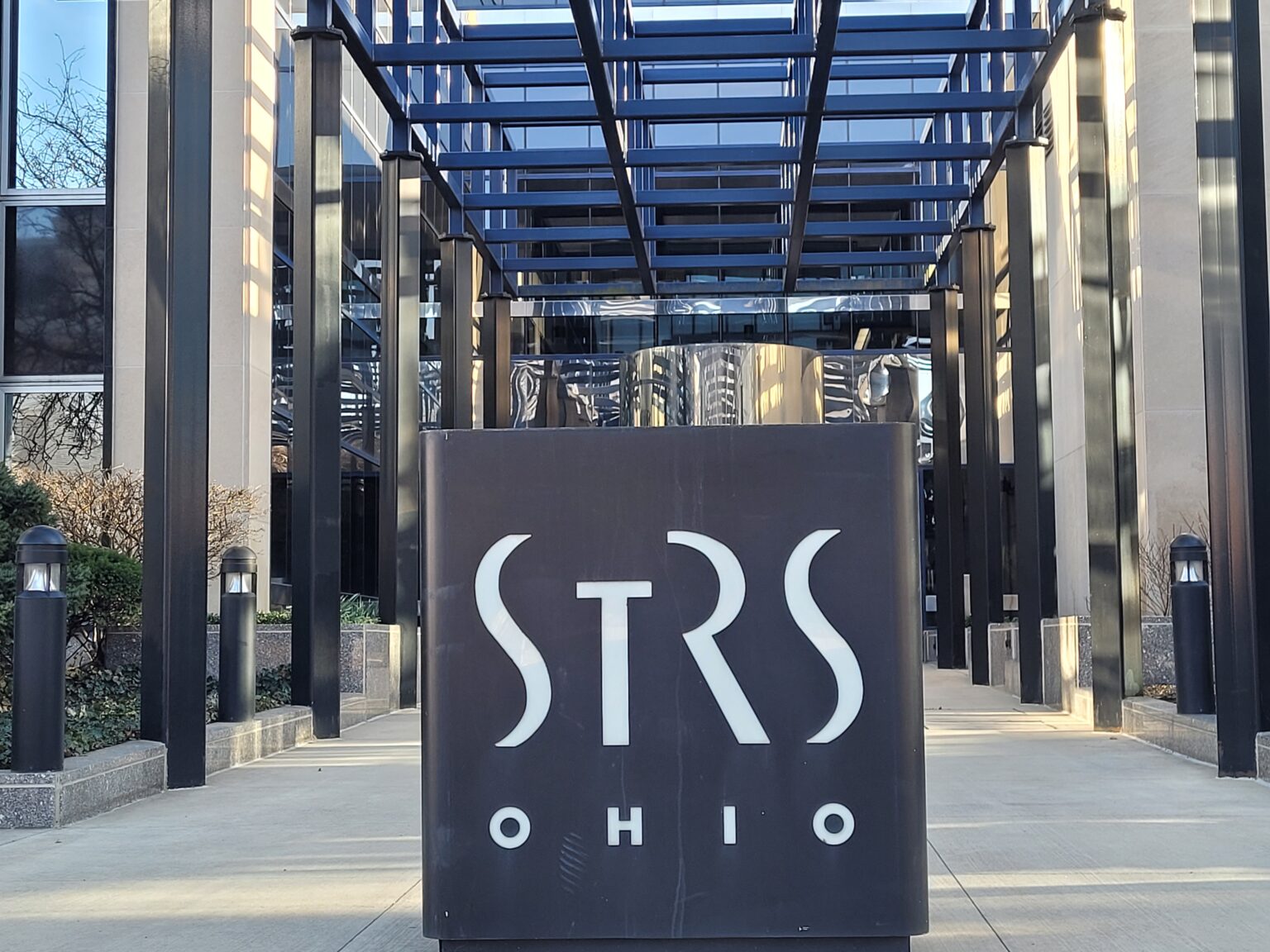
    The entrance to the Ohio State Teachers Retirement System headquarters in Columbus. Photo by Marty Schladen, Ohio Capital Journal.

    BY:  Ohio Capital Journal

    After years of complaints about gold-plated salaries, billions in investment fees and lackluster returns, things seem poised to hit the fan at Ohio’s State Teachers Retirement System.

    Gov. Mike DeWine on Wednesday issued a press release saying that he was alarmed at the news that a consultant for the $90 billion retirement plan, Aon, was severing its contract.

    “This is a huge red flag, calling into question how STRS is operating and providing oversight,” the press release said. “The unstated implication is that the governance issues at STRS are so concerning that Aon could not continue its contract in good faith. STRS may now be out of compliance with portions of audit recommendations due to Aon ending the contract.”

    The statement also cited unspecified allegations against members of the pension fund’s board, to which the governor appoints some members.

    “Additionally, my office has received documents containing some other disturbing allegations regarding the STRS board,” the statement said. “I have directed my staff to forward these documents to a number of relevant offices, including the Ohio Ethics Commission, the Ohio Retirement Study Council, Attorney General Yost, Auditor Faber, Treasurer Sprague, Secretary of State LaRose, and relevant members of the Ohio General Assembly. I encourage them to review the document and take any action that may be appropriate under any jurisdiction they may have.”

    Retirees have long complained of rarely getting cost-of-living increases while the retirement system awarded huge bonuses to already well-paid investment managers. For example, the system in 2022 handed out $10 million in bonuses just before announcing that the system’s investments  lost $5.3 billion that year.

    Last November, the system’s executive director, Bill Neville, was suspended amid employee complaints of inappropriate behavior.

    DeWine himself has fueled some of the controversy at the retirement system. Exactly a year ago, just as reformers were about to achieve a majority on the board, DeWine terminated a reform member.

    DeWine said the member, Wade Steen, didn’t attend board meetings regularly enough. But Steen countered that the charge was trumped up. The Ohio 10th District Court of Appeals said DeWine’s termination of Steen was unlawful and ordered that Steen be restored to his position.

    The turmoil at the teachers’ pension fund isn’t the only controversy facing the DeWine administration.

    DeWine and his lieutenant governor, Jon Hustedhaven’t explained their and their staffs’ involvement in an epic utility scandal that featured $61 million in bribes and a $1.3 billion ratepayer bailout as the payoff. A former house speaker and a former state GOP chairman are serving lengthy federal prison sentences in the scandal, which has also resulted in two suicides.


    Marty Schladen
    MARTY SCHLADEN

    Marty Schladen has been a reporter for decades, working in Indiana, Texas and other places before returning to his native Ohio to work at The Columbus Dispatch in 2017. He’s won state and national journalism awards for investigations into utility regulation, public corruption, the environment, prescription drug spending and other matters.

    Ohio Capital Journal is part of States Newsroom, the nation’s largest state-focused nonprofit news organization.

    MORE FROM AUTHOR

  • DeWine says Randazzo’s ties to First Energy were well known, but the evidence of this is lacking

    DeWine says Randazzo’s ties to First Energy were well known, but the evidence of this is lacking

    BY:  Ohio Capital Journal

    The office of Gov. Mike DeWine has for months been saying that connections between the guy he picked to be the state’s top regulator and a utility at the center of an epic bribery scandal were well known around Capitol Square when DeWine nominated him in January 2019.

    If the relationship were common knowledge, it might seem more innocent that some in DeWine’s administration knew the utility had paid the regulator $4.3 million just before the governor nominated him. However, the administration has provided scant evidence that the claim is true — and there’s considerable evidence suggesting it isn’t.

    The regulator, Sam Randazzo, died by suicide earlier this month and the utility, Akron-based FirstEnergy, has admitted to its role in a scandal that has sent one public official to prison for 20 years and seen yet another defendant die by suicide.

    Meanwhile, DeWine’s lieutenant governor, Jon Husted, won’t talk about a $1 million FirstEnergy contribution to a group supporting him. And DeWine himself hasn’t explained what senior people in his administration with FirstEnergy connections knew about the scheme — in which $61 million in bribes were paid for a $1.3 billion ratepayer bailout.

    Multiple ties

    Among them is Laurel Dawson, who was chief of staff of the incoming DeWine administration at the beginning of 2019. At the same time, her husband, Mike Dawson, was a lobbyist for FirstEnergy.

    A few weeks before, on Dec. 18, 2018, Gov.-elect DeWine and Lt. Gov.-elect Jon Husted had dinner at the Columbus Athletic Club with FirstEnergy CEO Chuck Jones and Vice President Micheal Dowling. At the dinner, they discussed whether Randazzo would be acceptable to head up the Public Utilities Commission of Ohio — the agency that was supposed to regulate the executives’ utility, according to a state indictment of Randazzo, Jones, and Dowling that was filed in February.

    After the dinner, the FirstEnergy executives drove about a mile to Randazzo’s condo and negotiated a $4.3 million payment to Randazzo, the indictment said. FirstEnergy later said the payment was a bribe in a deferred prosecution agreement with the U.S. Justice Department.

    As PUCO chairman, Randazzo helped draft and lobby for the bailout law and did several other lucrative favors for FirstEnergy. His indictment said it capped off a decade-long relationship in which he was a paid “consultant” for FirstEnergy unbeknownst to his law firm or a group of industrial energy users on whose behalf Randazzo was supposed to be negotiating concessions.

    The indictment says at least one person in the DeWine administration — Laurel Dawson — knew that Randazzo had gotten a huge payment from FirstEnergy in the weeks before DeWine nominated him to chair the PUCO at the beginning of February 2019.

    Randazzo told “the Governor-elect through his incoming Chief of Staff that he had received $4.3 million from FirstEnergy, which he claimed was final payment of a ‘consulting agreement,’” Randazzo’s indictment said.

    For her part, Laurel Dawson is cooperating with the state prosecution, but she isn’t commenting publicly.

    Common knowledge?

    In the months since the state indictment of Randazzo and the FirstEnergy executives, DeWine Press Secretary Dan Tierney has been saying that Randazzo’s ties to FirstEnergy weren’t news even at the time the governor was considering him in early 2019 to head the PUCO.

    In February, he told Cleveland’s News Channel 5, “it was well known that Randazzo was a paid consultant for FirstEnergy.”

    Tierney modified that somewhat, telling the Capital Journal earlier this month, “it was well known to our staff that Mr. Randazzo was an energy consultant, and it was well-known to them and many people that Mr. Randazzo was a consultant employed by First Energy.”

    However, it appears that Randazzo and FirstEnergy’s top leadership went to great lengths to keep their relationship secret.

    Many of the counts Randazzo was charged with have to do with his failure to report income from FirstEnergy on state ethics disclosures while he was PUCO chairman. A bill of particulars accompanying the indictment adds that Randazzo didn’t disclose a 2015 consulting agreement with FirstEnergy to the members of his own law firm, McNees, Wallace and Nurick. Randazzo’s membership agreement in the firm barred barred him from outside employment, the filing said.

    Pressed on the matter this week, Tierney said in an email, “Mr. Randazzo testified numerous times at the General Assembly prior to his appointment to the PUCO. In addition, Mr. Randazzo served on the PUCO Nominating Council, which requires ethics disclosures. These were among the reasons Mr. Randazzo’s relationships with utilities and FirstEnergy were well known at the Statehouse and on Capitol Square.”

    The Capital Journal obtained Randazzo’s disclosures from the Ohio Ethics Commission for the period he served on the PUCO Nominating Council — 2007 to 2017. “FirstEnergy” doesn’t appear on any of them.

    Tierney was informed of that and asked whether DeWine’s office could point to any testimony Randazzo gave to the General Assembly in which he divulged his long, profitable relationship with FirstEnergy. Tierney didn’t answer that question, saying instead, “My understanding is that Mr. Randazzo’s business entities are listed on the ethics form(s), and those business entities not only were well known to be associated with Mr. Randazzo on Capitol Square, but also well known to have First Energy as clients.”

    Shell game

    The entity that appears on Randazzo’s ethics disclosures is the Sustainability Funding Alliance of Ohio — a group prosecutors accused Randazzo of using as a shell corporation to skim millions in FirstEnergy money earmarked for his industrial clients. The group’s relationship with FirstEnergy was so secret that the corporation’s top executives feared that a partial disclosure would tank Randazzo’s nomination to the PUCO.

    FirstEnergy Solutions — a subsidiary Jones and Dowling desperately wanted ratepayers to bail out — was going through bankruptcy. One of its filings mentioned the Sustainability Funding Alliance, which Randazzo had also listed on his ethics disclosures.

    The FirstEnergy executives were in a panic about it and their communications show that the connection between their company and Randazzo’s entity was far from well known.

    The DeWine administration is “going to be mad at Sam (and hopefully not us) for not disclosing the financial relationship,” Dowling texted Jones on Jan. 30, 2019, less than a week before DeWine nominated Randazzo. “That’s Sam’s responsibility.”

    When the nomination went through anyway, Dowling told Jones, “A bullet grazed temple,” to which the FirstEnergy CEO replied, “Forced DeWine/Husted to perform battlefield triage.”

    “Secret for-profit entity”

    In his email Monday, Tierney also said, “What media has described as the ‘dossier’ regarding Randazzo’s relationship with First Energy, which is a collection of public domain documents from the time in 2019, shows that much of this was colloquially known on Capitol Square and within the energy advocacy community.”

    The “dossier” Tierney referred to was a 198-page document from a former aide warning DeWine about Randazzo’s murky relationships. It was delivered to Laurel Dawson on Jan. 28, 2019 — about a week before her boss nominated Randazzo.

    Tierney said the document shows that Randazzo’s ties to FirstEnergy were well known. But the first page of the dossier says something quite different.

    “Publicly available documents suggest that PUCO applicant Sam Randazzo has opaque, undisclosed financial ties to FirstEnergy that should be fully examined and made public,” it says. “The enclosed evidence demonstrates that Randazzo personally profits from a secret for-profit entity funded by FirstEnergy Solutions.”

    Catherine Turcer, executive director of Common Cause Ohio, said that it’s past time for DeWine, Husted and their staffs to be much more forthcoming about their involvement in the bailout and about what DeWine and Husted did to investigate whether any member of the administration acted improperly.

    “It makes sense to be as clear as possible about what actually happened,” she said. “And I don’t just want to hear from the governor. I want to hear from the lieutenant governor.”


    Marty Schladen
    MARTY SCHLADEN

    Marty Schladen has been a reporter for decades, working in Indiana, Texas and other places before returning to his native Ohio to work at The Columbus Dispatch in 2017. He’s won state and national journalism awards for investigations into utility regulation, public corruption, the environment, prescription drug spending and other matters.

    Ohio Capital Journal is part of States Newsroom, the nation’s largest state-focused nonprofit news organization.

    MORE FROM AUTHOR