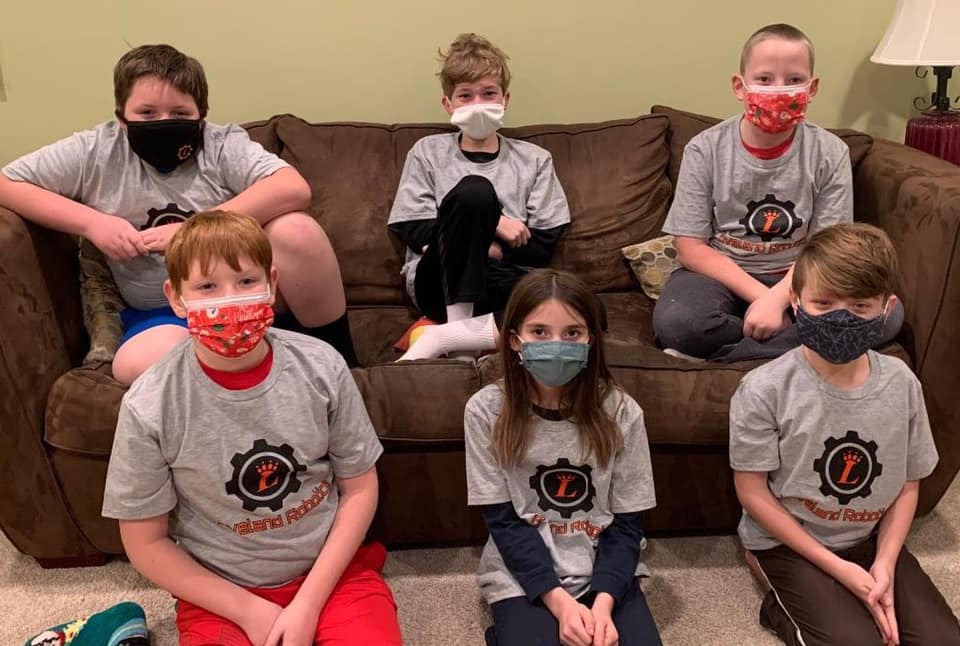
Loveland, Ohio – Anderson A., Logan P., Sam H., Hunter H., Maddie D., and Nicholas G. competed on the Loveland Robotics Team 51294 RobotActiveX and won the “Robot Design Award” which is given to a team that “uses outstanding programming principles and solid engineering practices to develop a robot that is mechanically sound, durable, efficient and highly capable of performing challenging missions.”
Ohio Governor Mike DeWine and Lt. Governor Jon Husted yesterday provided the following updates on Ohio’s response to the COVID-19 pandemic.
VACCINE DISTRIBUTION UPDATE
Governor DeWine announced today that Ohio received a total of 214,525 first doses of vaccine this week. A total of 223,025 first doses are scheduled to arrive in Ohio during the week of February 15.
The federal retail pharmacy program will soon begin allotting doses to Ohio’s more than 160 Rite Aid pharmacies. Vaccine distribution will also expand into all 194 Kroger pharmacies.
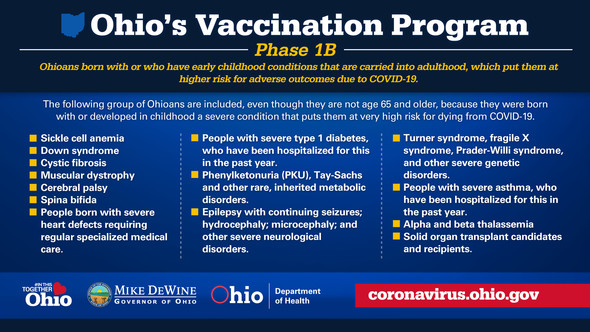
Those with specific medical conditions that put them at a very high risk of dying from COVID-19 will be eligible for vaccinations next week.
Ohioans born with the medical conditions outlined below, or those who were diagnosed in early childhood whose conditions continued into adulthood, will qualify to be vaccinated beginning on February 15.
Dr. Bruce Vanderhoff, chief medical officer at Ohio Department of Health, explained these conditions in more detail. His remarks are available on the Ohio Channel’s YouTube page.
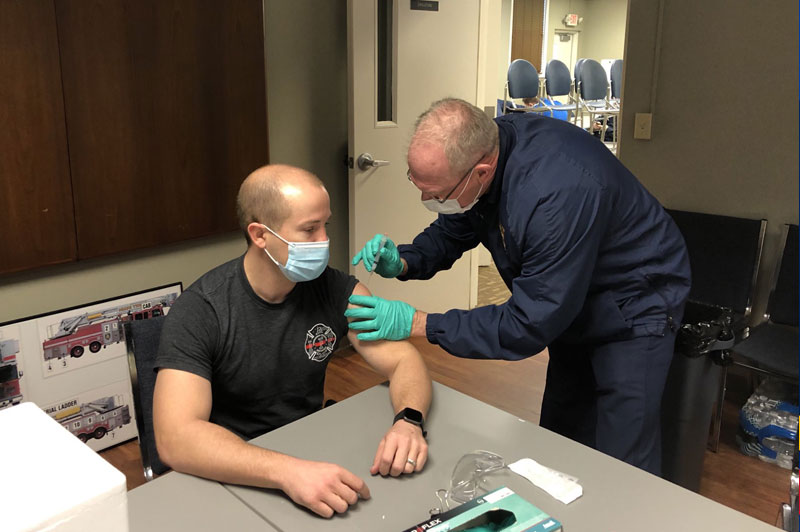
Approximately 12,000 individuals with these severe medical conditions and developmental disabilities have already been vaccinated, and vaccinations of those in this group will continue.
NURSING HOME CASES
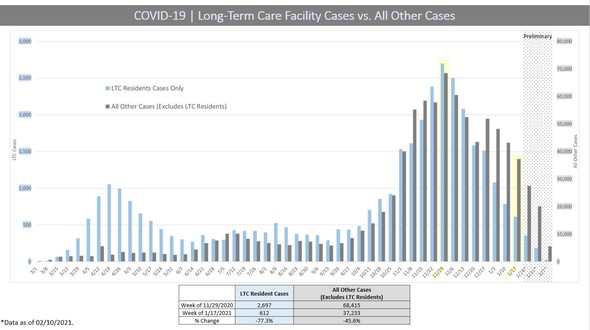
Governor DeWine announced today that the number of COVID-19 cases in Ohio’s nursing homes has dropped more than 77 percent since late November. This dramatic drop in cases follows Ohio’s aggressive efforts to vaccinate residents and staff in Ohio’s long-term care facilities.
As outlined in the chart below, there were 2,697 COVID-19 cases in long-term care facilities in Ohio during the week of November 29, 2021. During the week of January 17, there were 612 positive cases.
SCHOOL MODEL UPDATE
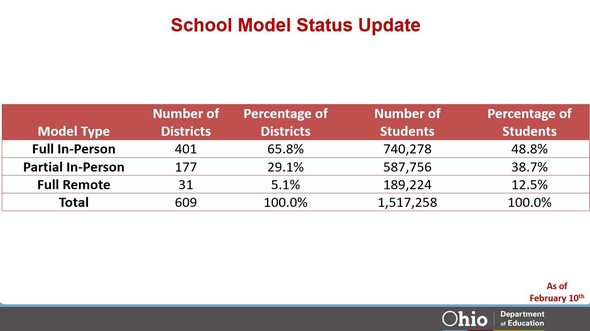
Governor DeWine shared the latest information on the number of school districts that are physically in school versus those that are fully or partially remote. As a condition to receive priority access to the vaccine, schools were required to commit to full or partial in-person learning by March 1. All but one school district in Ohio have committed to this plan.
OHIO PUBLIC HEALTH ADVISORY SYSTEM
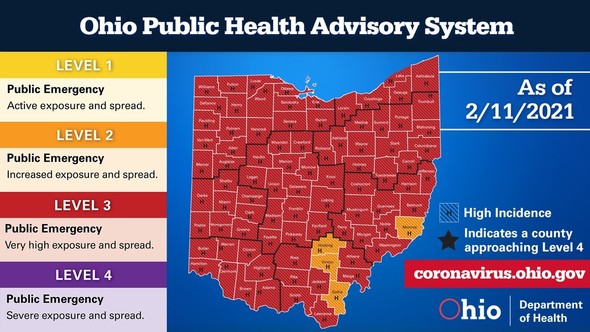
There was no change in this week’s Ohio Public Health Advisory System map. A county-by-county breakdown outlining the presence of COVID-19 in all of Ohio’s 88 counties can be found on the Ohio Public Health Advisory System’s website.
CURRENT CASE DATA (2-12-21)
In total, there are 931,437 confirmed and probable cases of COVID-19 reported in Ohio and 12,577 confirmed and probable COVID-19 deaths. A total of 48,269 people have been hospitalized throughout the pandemic, including 6,908 admissions to intensive care units. In-depth data can be accessed by visiting coronavirus.ohio.gov.
Video of today’s full update, including versions with foreign language translation, can be viewed on the Ohio Channel’s YouTube page.
For more information on Ohio’s response to COVID-19, visit coronavirus.ohio.gov or call 1-833-4-ASK-ODH.
Loveland, Ohio – Loveland School Superintendent Bradley Neavin has asked Loveland Magazine to send the below message to the community about a situation yesterday at the Loveland Middle School.
In a phone call, Neavin said, “The situation is being investigated. It is being handled. We’ve pulled our resources together, including our outside resources which include our resource officers and everybody is safe.”
LMS Safety Update
Tiger Family –
We wanted to update you on a situation involving Loveland Middle School. Yesterday, the school administration was informed of a safety concern involving one of our students. This situation was reported to the school administration and an investigation, involving school and central administration, student support personnel, and the school resource officer in collaboration with the Loveland City Police Department, was initiated.
In communication with the parents of the student, the situation was addressed and per the investigation, Loveland Middle School was determined to be safe.
Thank you for your continued cooperation and collaboration.
David Miller is the Publisher of Loveland Magazine
Loveland, Ohio – The Loveland City School District recently hired Bradley Neavin to serve as Superintendent. Neavin’s contract runs from February 10 until the Board hires a permanent superintendent, or until July 3.
Neavin’s first official day begins on Wednesday, however, he sat for an interview this morning from the Board office via Zoom so we could introduce him to the community and ask a few questions about his role in the District in the coming months.
The Steubenville native chatted with me about the Steelers/Browns/Bengals, and the Ohio University Marching 110. We also talked about the funding in Governor DeWine’s proposed K-12 education budget, the Ohio Legislature’s attempt to fix school funding, and DeWine’s goal of re-opening Ohio’s schools on March 1. And, more…
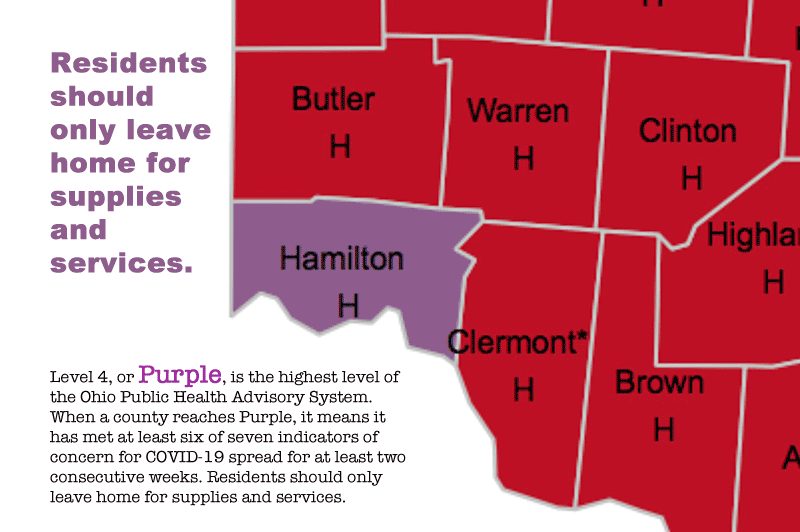
Loveland, Ohio – Hamilton County is now in the the highest level of the Ohio Public Health Advisory System.
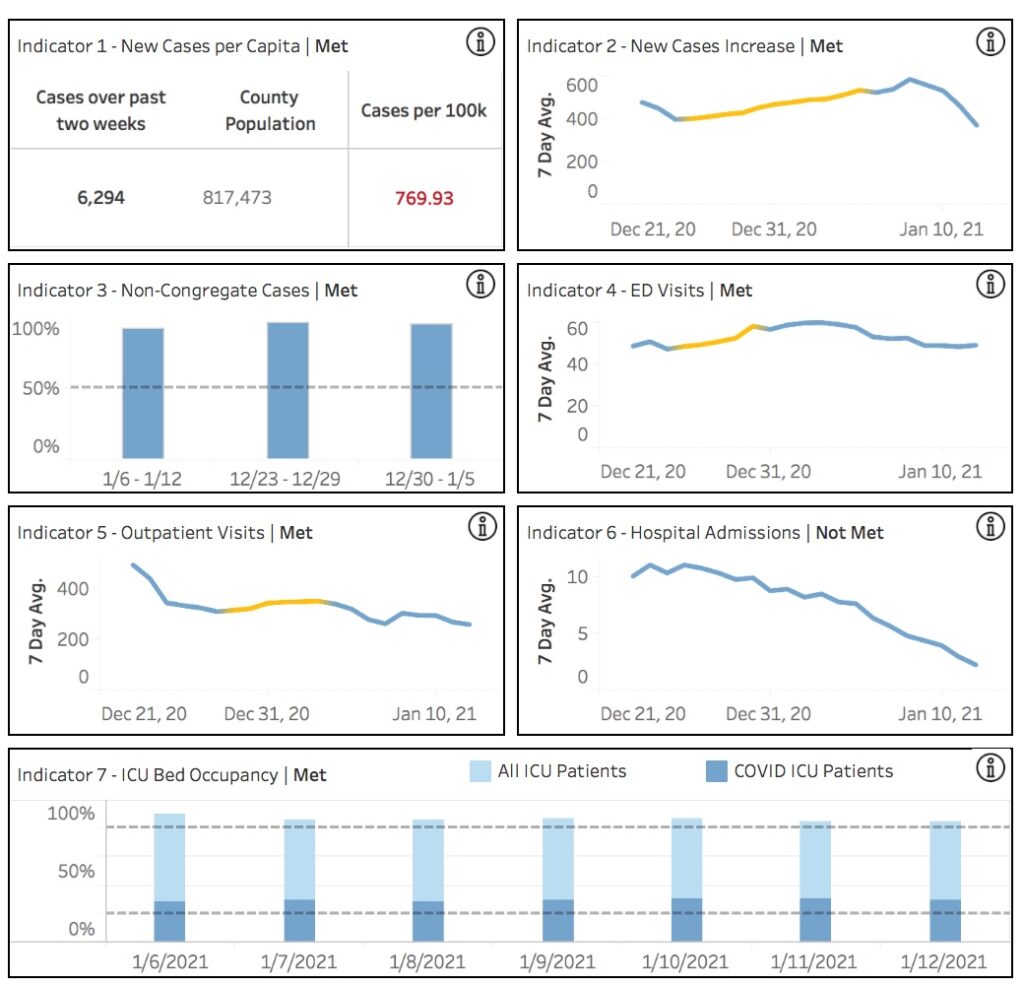
Level 4, or Purple, is the highest level of the Ohio Public Health Advisory System. When a county reaches Purple, it means it has met at least six of seven indicators of concern for COVID-19 spread for at least two consecutive weeks. Hamilton County has now met all seven indicators of concern.
“Residents should only leave home for supplies and services.“
These measures are indicators of disease spread in the community; disease severity; community concerns about health and the virus; hospital burden; and capacity to manage a possible surge in critical COVID-19 patients.
New cases per capita: There have been more than 50 cases per 100,000 residents over the past two weeks.
Sustained increase in new cases: At some time during the past three weeks, there were at least five consecutive days when the number of cases (by onset date) increased.
Proportion of cases not in a congregate setting: The proportion of cases among people who are not residents of long-term care facilities, group homes, jails or prisons has been more than 50% in at least one of the past three weeks.
Sustained increase in emergency department (ED) visits for COVID-19-like illness: At some time during the past three weeks, there were at least five consecutive days when the number of COVID-19 ED visits increased.
Sustained increase in outpatient visits for COVID-like illness: At some time during the past three weeks, there were at least five consecutive days when the number of people making COVID-19 healthcare visits increased.
Sustained increase in new COVID-19 hospital admissions: At some time during the past three weeks, there were at least five consecutive days when COVID-19 hospital admissions increased.
Intensive care unit (ICU):* The percentage of occupied ICU beds in the region was above 80% for at least three days during the past week, AND more than 20% of ICU beds were being used for COVID-19 patients for at least three days during the past week.
*Meeting this indicator has been rare because hospitals have been able to make accommodations to meet increased numbers of COVID-19 ICU patients. However, if COVID-19 cases and hospitalizations continue to increase, staffing and resources may not be able to keep up, putting the care of all hospitalized patients (COVID-19 and non-COVID-19) in jeopardy.
Ohio Governor Mike DeWine, and Lt. Governor Jon Husted today provided this updates on Ohio’s response to the COVID-19 pandemic.
PHASE 1B VACCINATIONS
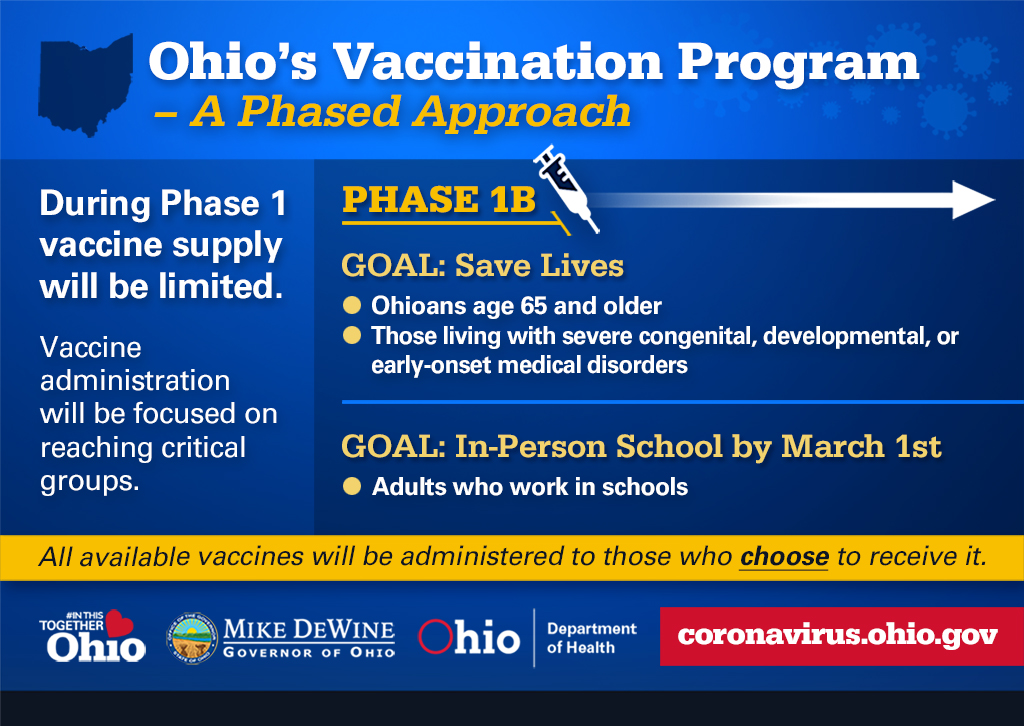
Governor DeWine today highlighted the vaccine distribution timeline for Phase 1B of Ohio’s vaccination program, which is set to begin next week for those ages 80 and up.
Week of January 18: Vaccine providers will begin receiving their first allotment of vaccines for those ages 80 and older. Vaccines will be delivered on Monday, Tuesday, and Wednesday. Each provider will begin administering vaccines the day after they receive their shipment. All vaccines must be distributed within seven days.
Week of January 25: Vaccinations are anticipated to begin for those ages 75 and up following the same process outlined above. Vaccinations will also be available to those with severe congenital, developmental, or early-onset medical disorders. Additional information on how these individuals can choose to receive their vaccines is forthcoming.
Week of February 1: Vaccinations are anticipated to begin for those ages 70 and up following the same process outlined above.
Week of February 8: Vaccinations are anticipated to begin for those ages 65 and up following the same process outlined above.
“When a new age range opens, that does not mean vaccinations will be complete for the previous age range,” said Governor DeWine. “Vaccinating Ohioans in Phase 1B will take a number of weeks given the limited doses available.”
Beginning tomorrow, Ohioans aged 80 and up can find additional information about providers administering vaccines by calling their local health department or visiting their local health department website.
Additionally, the Ohio Department of Health will launch a tool tomorrow morning on coronavirus.ohio.gov to assist residents looking for a provider that has been allotted vaccines.
The tool will be searchable by zip code or county, but it will not be updated in real-time. It is critical that those eligible to receive a vaccine consult local resources to determine up-to-date vaccine availability.
“Providers throughout the state are developing systems that work best for them in terms of scheduling and administering vaccinations,” said Governor DeWine. “As we continue to rollout additional vaccination groups, we will work with our local partners, and modify the process as needed.”
The Ohio Department of Health is in the process of developing a state vaccination scheduling system. Additional information is forthcoming.
NURSING HOME VACCINATIONS
Governor DeWine announced that Ohio is imminently close to completing the administration of the first round of COVID-19 vaccines in skilled nursing facilities.
“When we started distributing the vaccine in Ohio, one of our first goals was to vaccinate our most vulnerable in our nursing facilities,” said Governor DeWine.
Ohio partnered with four pharmacies through the Federal Pharmacy Partnership in distribution of the vaccine to skilled nursing facilities. These facilities are a part of Phase 1A.
Absolute has administered 100% of the first round of COVID-19 vaccines as assigned.
As of yesterday, CVS has administered 97% of the first round of COVID-19 vaccines at the 478 assigned facilities. It is anticipated CVS will finish the administration of doses this week.
Pharm Script has completed 61 of 63 assigned facilities, and will complete the administration of doses today.
Walgreens has completed 95% of the first round of COVID-19 vaccines at the 398 assigned facilities.
Within the Federal Pharmacy Partnership, Ohio, with 3.6% of the U.S population, has administered more than 8% of the vaccines in this program nationwide. This is above the anticipated pace of administering the vaccine.
All 88 counties have a level of spread that is at least three times more than what the Centers for Disease Control and Prevention (CDC) considers high incidence.
Governor DeWine also discussed key measurements regarding incidence cases per 100,000 residents over two weeks, as well as regional COVID-19 ICU utilization.
“We saw new cases per capita at the statewide level increase since last week, which indicates that COVID-19 continues to spread in both urban and rural communities throughout Ohio,” said Governor DeWine
CURRENT CASE DATA
In total, there are 807,293 confirmed and probable cases of COVID-19 reported in Ohio and 9,990 confirmed and probable COVID-19 deaths. A total of 42,491 people have been hospitalized throughout the pandemic, including 6,289 admissions to intensive care units. In-depth data can be accessed by visiting coronavirus.ohio.gov.
Video of today’s full update, including versions with foreign language translation, can be viewed on the Ohio Channel’s YouTube page.
For more information on Ohio’s response to COVID-19, visit coronavirus.ohio.gov or call 1-833-4-ASK-ODH.
Loveland, Ohio – Each year the Loveland Stage Company recognizes a graduating high school student with its Creative Arts Scholarship.
The Loveland Stage Company is offering a scholarship again this year in the amount of $1000. In order to qualify for the scholarship, the graduating student must reside in the Loveland City School District, attend Loveland High School, or be an offspring of a Loveland Stage Company member. This scholarship is intended to be used toward college or university tuition, room and board, or books.
The Loveland Stage Company wishes to encourage and support young local talent. Therefore, prospective applicants must be planning to further their education in the Creative Arts. Qualifying areas of study include, but are not limited to: art, music, theater, photography, film, dance, and majors that support these studies. Students are asked to submit examples of their talent in their chosen field and a high school transcript demonstrating the ability to succeed academically as part of the application process.
Applications are available on the Loveland Stage Company website and are due no later than Sunday March 14.
Loveland, Ohio – Julie Dunn the administrative assistant in the board of education office asked Loveland Magazine to share this information to the broader community.
The Board of Education is seeking input from staff, families and the community on their “commitments for the 2021-2022 school year”.
Dunn asks that you please review the current LCSD Board Commitments (below) and provide feedback through answering the questions. The survey will remain open until Wednesday, January 20 at 9 AM.
Loveland, Ohio – As more vaccine is produced more groups of people will be prioritized. However, it may be the middle of 2021 before the vaccine will be widely available to the Clermont County community.
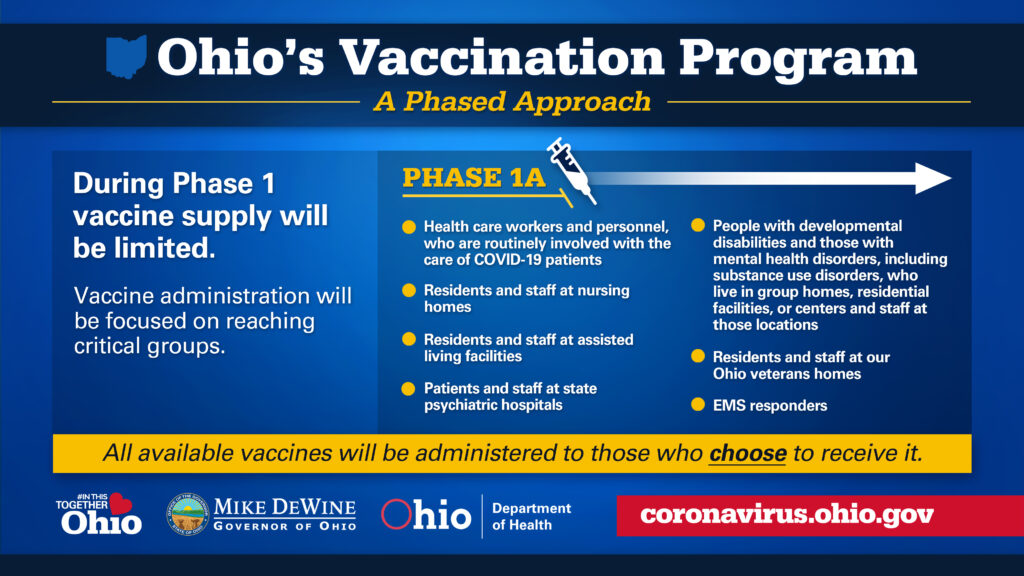
Beginning the week of January 18, Ohio will be vaccinating people who fall into phase 1B. That includes:
• Ohioans 65 and older • Those with severe congenital or developmental disorders • Employees of K-12 schools that wish to remain or return to in-person learning
Because the vaccine is still very limited in supply, Ohio will take a tiered approach to vaccinate group 1B. Ohio will follow this timeline for vaccinating group 1B.
Week of January 18 – Ohioans 80 years of age and older
Week of January 25 – Ohioans 75 years of age and older
Week of February 1 – Ohioans 70 years of age and older; K-12 school employees
Week of February 8 – Ohioans 65 years of age and older
If you or a loved one falls into group 1B and is eligible to be vaccinated, get on the:
Completing this survey will put you on the waiting list. A public health staff member will contact you to schedule an appointment or provide additional information about your vaccination options.
Hamilton County Public Health VACCINE REGISTRATION
LOVELAND, OHIO – Fill out this form to register for vaccine distribution through Hamilton County Public Health. They will be using this survey to prioritize distribution based on the Ohio Vaccination Program guidelines set by the Ohio Department of Health. If you already completed previous versions of the registration survey you do not need to do it again.
Hamilton County Public Health has jurisdictional responsibility for all of Hamilton County with the exceptions of the City of Cincinnati, Springdale and Norwood. If you fall under one of these health districts, please contact them directly.
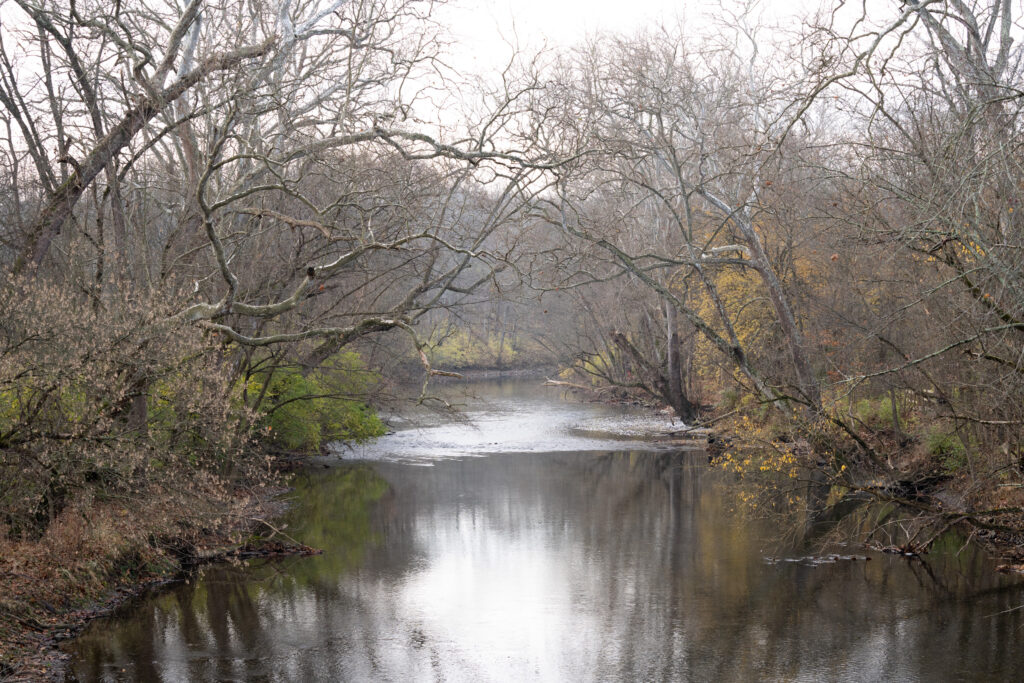
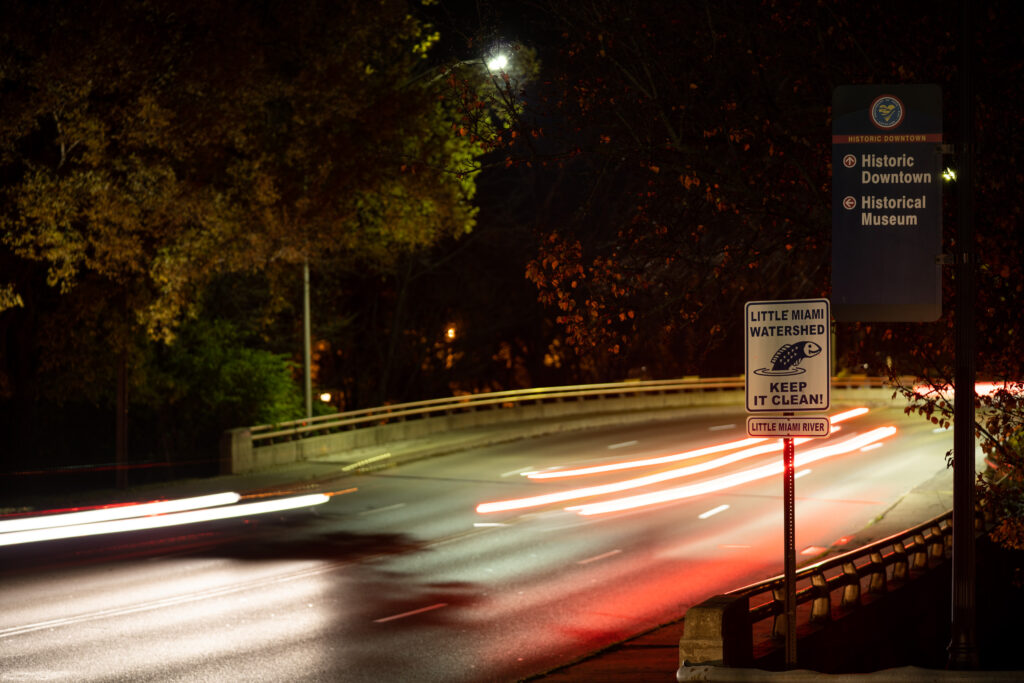
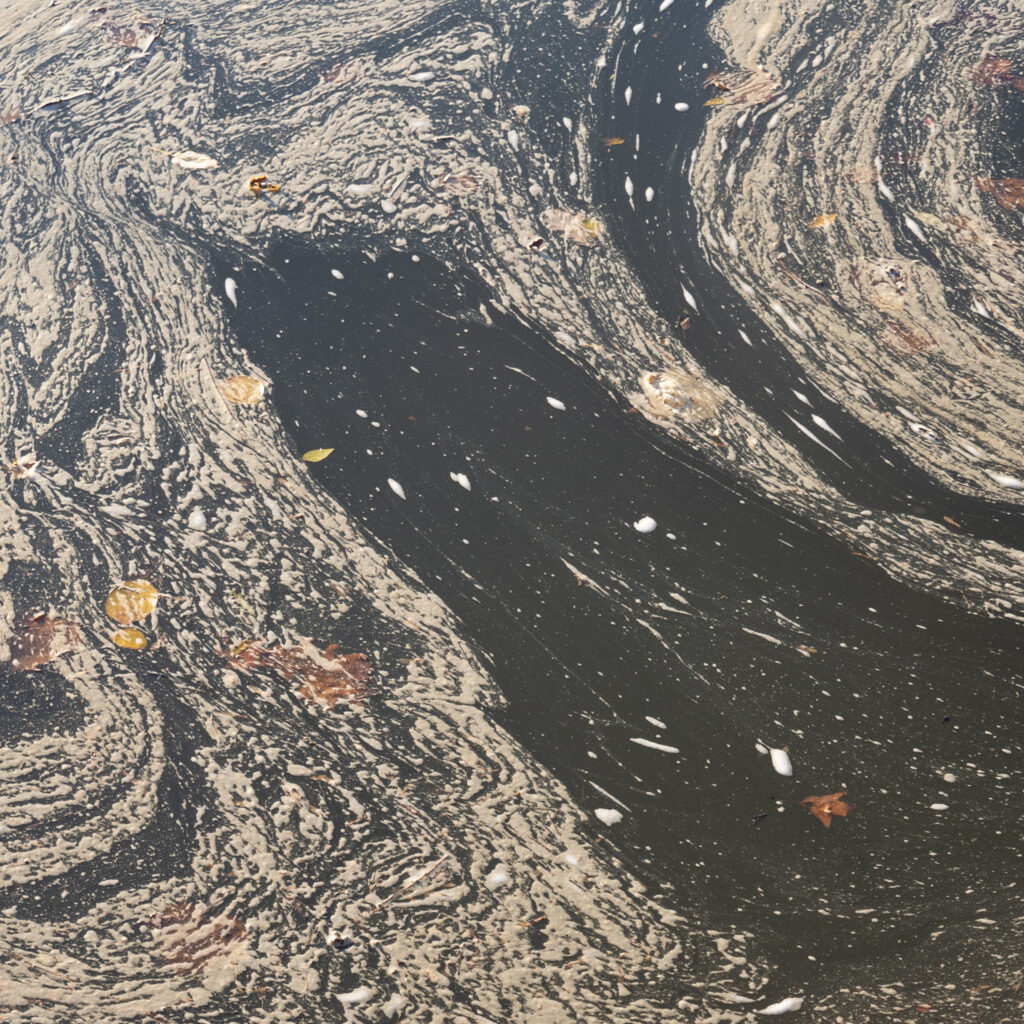
Few leaves are still falling off trees and down the ever-running water of the National Wild and Scenic Little Miami River, where they float through five counties and 111 miles of southwest Ohio, into the Ohio River and toward the Mississippi before eventually finding their way into the Gulf of Mexico. Today, these 111 miles of Little Miami River are the cleanest that they have been in the last 40 years, and as the world may seem largely disconnected due to the coronavirus pandemic, a connection between people over time is helping to create the river’s lasting sustainability.
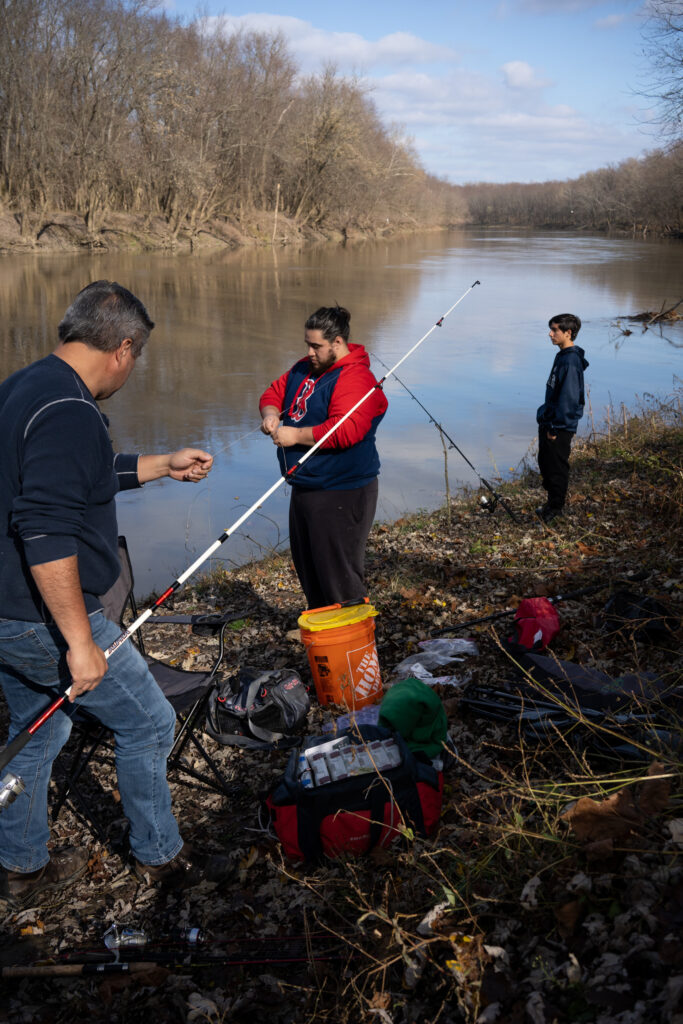
Since the end of the last Ice Age before this land was known as America, humans have lived along the Little Miami River and enjoyed the resources it provides — drinking the water alongside its banks while hunting for fish within, using the clay to build pottery or structures, and floating on the surface in kayaks or canoes like the leaves still do today. In that time, the river has seen many seasons of change, from shifts in human culture alongside its banks through community development to biological diversities in its rich, natural environment, according to the Little Miami Ecology and History report.
When the Little Miami was designated as Ohio’s first State Scenic River and included in the National Wild and Scenic River System in 1973, according to the Ohio Department of Natural Resources, locals had already been active in its conservation and return to sustainability for more than half a decade. The Little Miami Conservancy (LMC), a non-profit organization fueled by passion for the protection of the river, led the effort in Washington to recognize the importance of protecting the Little Miami River as not only a local hidden gem, but as a national treasure.
The lower section of the river runs right through the heart of Loveland, Ohio, where LMC and its current executive director, Eric Partee, is based. Partee’s passion roots from the original director of the conservancy, Glenn Thompson, who in 1967 embodied the idea that their effort isn’t about one single person, but rather about everyone coming together to save the river.
“Someday, a corridor of green will stretch from one end of the river to the other. Individuals and families will enjoy peace and quiet and restoration of spirit that comes with clean water, birds, and trees,” a quote from Glenn Thompson that Partee believes the conservancy has lived up to.
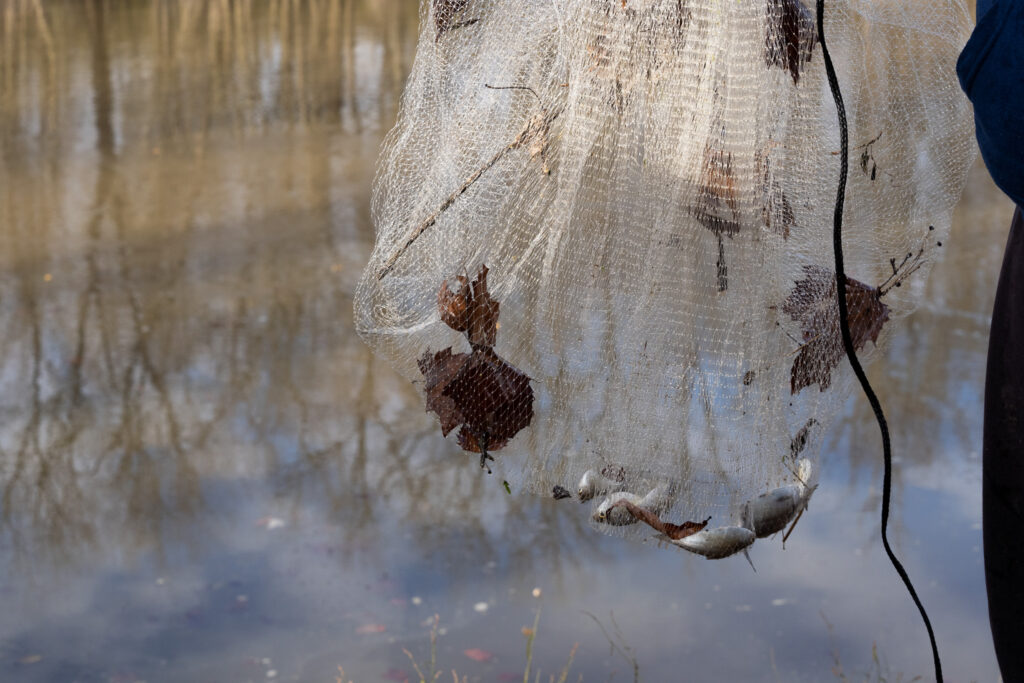
Since its origin, the conservancy has worked with agencies like the Ohio Environmental Protection Agency (OEPA), who records the condition of the Little Miami River every 10 years by sampling fish life. In the 1980s, only 4% of the Little Miami River was in full attainment of water quality health, but in recent years, the chart has flipped, and as of 2007, the river is at 96% attainment of health, according to OEPA research.
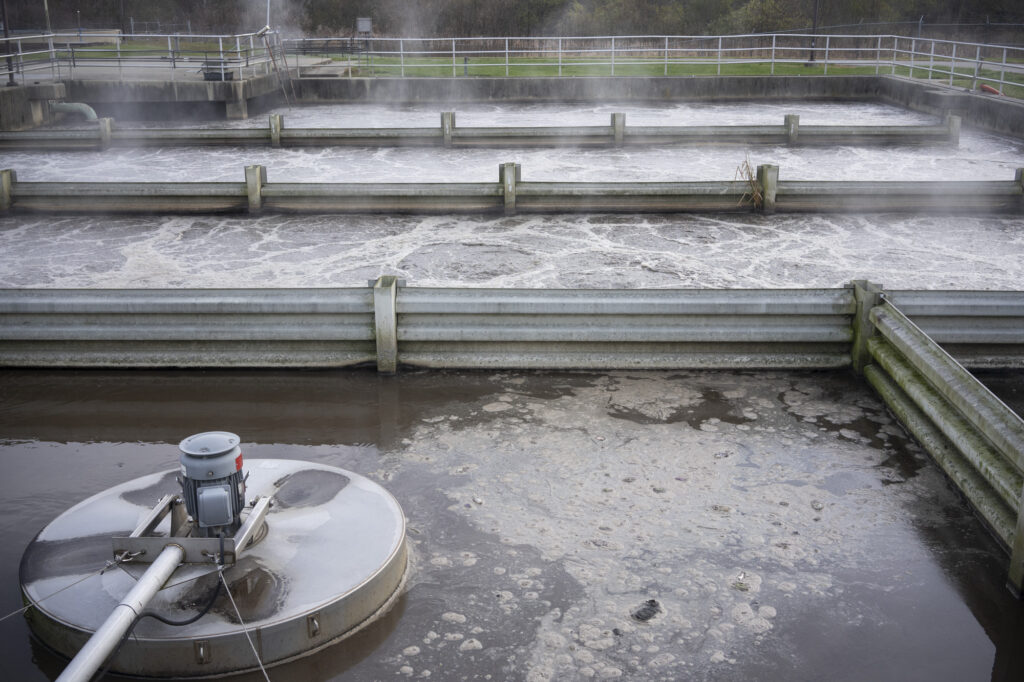
“As early as the turn of the century, this river was very well polluted. (There were) a lot of deformed fish, it was not anything close to exceptional,” Partee said in an interview. “It took a lot of discussion, a little bit of arm twisting, and some local funding to fund improvements to the sewage treatment plants to ratchet down on phosphorus, which was the main culprit … when we got the treatment plants to ratchet down on that, biology basically turned around on a dime —from terrible to exceptional.”
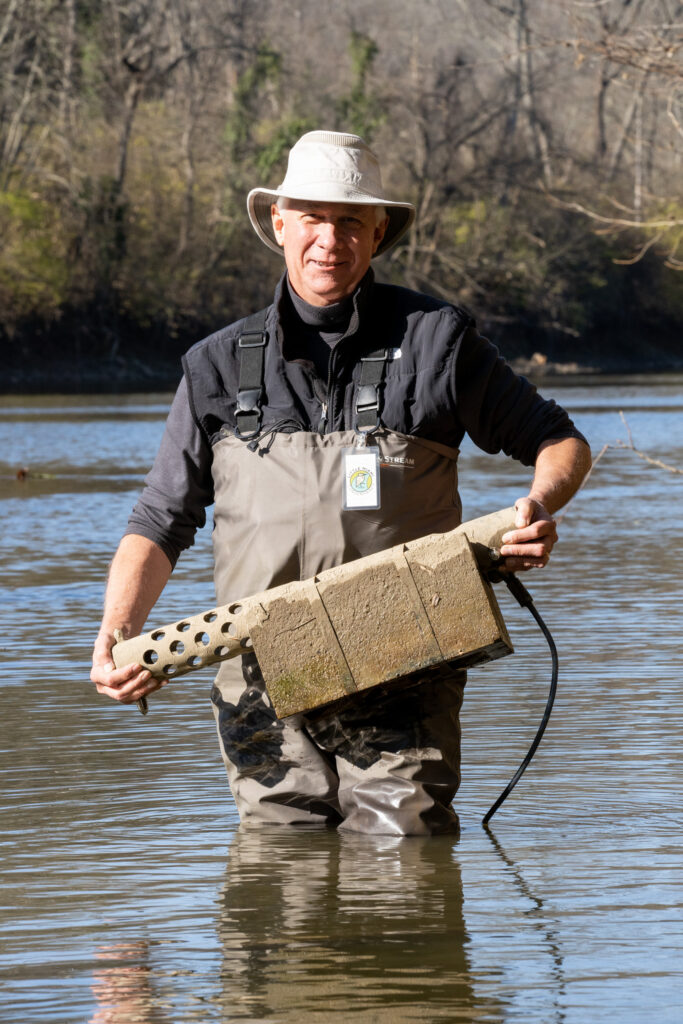
To make sure the river stays healthy, LMC introduced a set of equipment called YSI Water Quality Sondes, which monitor dissolved oxygen in nine locations throughout the length of the entire Little Miami, according to Partee. Each system monitors oxygen every 15 minutes, allowing for constant awareness of river health to prevent a reversion of quality. The conservancy also takes prides in their work on forest restoration through buying riverfront properties, planting trees, removing invasive species, and working collectively to clean up trash in the effort to grow closer to the initial goal of a corridor of green along the riverbank.
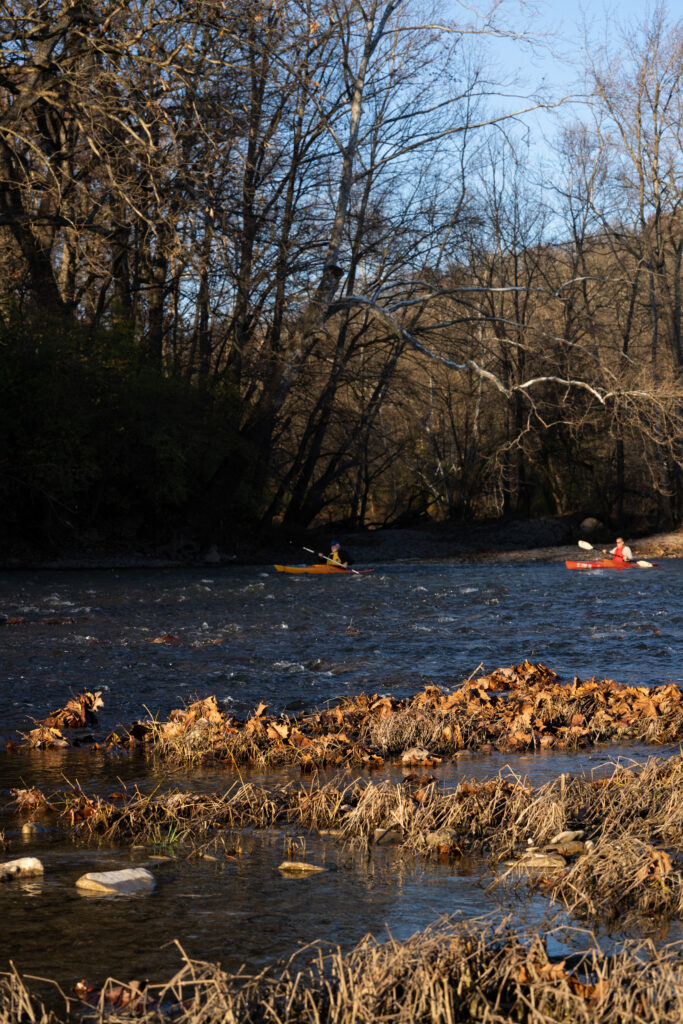
A short walk from the doors of the conservancy is the Loveland Canoe and Kayak Livery, owned by Mark and Robyn Bersani, which is just one of the many businesses along the Little Miami River that rely on its health as their main resource for income. The Bersanis work closely with the conservancy each year by offering and volunteering for cleanups as well as generous donations. This year, along with two other liveries including Rivers Edge and Scenic River, their combined donation to the Little Miami Conservancy’s effort was $56,000, according to Bersani.
“We’re involved from a grassroots portion, to actually helping with cleanups, to keeping an eye on the river, as well as donating and continuing to fund the good work that they do,” Bersani said in an interview. “It comes down to the people that live along the river, people that visit the river, the people in the community, if the river is going to stay clean. This river is very natural, it looks like it did 300 years ago … it is vital that the citizens all realize they have a role in this.”
Up the road at Loveland High School, Amy Aspenwall, an AP environmental science teacher teaches teenagers the importance of environmental awareness through hands-on experiences in places like the Little Miami River.
Perhaps half of the students attending Loveland High School cross over the Little Miami State and National Scenic Little Miami on their way to school each morning.
In an interview over Zoom, Aspenwall talked about the importance of students getting out into nature to actually see how humans fit in the environment, because “if you don’t see it, it’s really not your problem,” Aspenwall said. From understanding food waste to the water drinking system to sewer treatment facilities, her goal is to allow students the opportunity to realize a sense of civic responsibility.
“It’s important for students to start to think of themselves as a bigger picture rather than just someone following teacher instructions,” Aspenwall said. “I want them to start thinking on their own and realize how powerful they are as a consumer.”
Michelle Waller, an environmental specialist in the Division of Surface Water at OEPA, discussed the difficulties the river has faced through poor nutrients entering the river due to excess phosphorus from treatment plants and still faces through agricultural runoff from farms, in an interview over Zoom.
Waller said that placing phosphorus limits on the main stem’s water treatment plants in recent years proved to show major improvements in river nutrients after the OEPA performed sampling, but other negative sources are out of their reach. “We do not have authority over agriculture the way we do with what we call point sources, the treatment plants,” Waller said. “We try to work with local Soil and Water Conservation Districts, they try to get the word out about good farming practices … but there is no real regulatory authority which is a really big problem.”
The majority of land along the Little Miami River is agricultural, unlike other major rivers in Ohio that have industry running alongside their waters. And just like the branches of community that have come together to help preserve the river, many tributary streams and creeks branch out from the Little Miami, though those tributaries can be overlooked.
As most organizations, including the OEPA and LMC, focus their efforts on upholding the exceptional quality of the main stem of the Little Miami River, there is still work to be done in the tributaries. Partee talked about how there just isn’t enough time for LMC to visit every tributary and talk to every landowner. However, near Beaver Creek in Greene County, there is an organization called the Beaver Creek Wetlands Association, which has adopted that very issue. “I think that’s probably the best future for the watershed, to have local citizens dealing with multiple tributaries and try to restore or protect it,” said Partee.
Between the shared relationships of the Little Miami Conservancy, OEPA, local government officials, developers, landowners, non-profits, teachers, and local business owners, a community has come together and worked toward the common effort to make a positive, sustainable change in the health of the river.
The timelessness of the Little Miami River will carry on as long as its water continues to run. And as it always has been, it’s still up to the people alongside the riverbank to make sure that the water runs clean for generations to come. As the late author Nelson Henderson said, and Eric Partee paraphrased when we talked together, “The true meaning of life is to plant trees, under whose shade you do not expect to sit.”




![[VIDEO] Interview with Loveland’s new Superintendent of Schools](https://lovelandmagazine.com/wp-content/uploads/2021/02/neavin-3.jpg)