Tag: hamilton county

  • Land formerly set aside for a Loveland park to “pave” way for HOMEARAMA

    Land formerly set aside for a Loveland park to “pave” way for HOMEARAMA

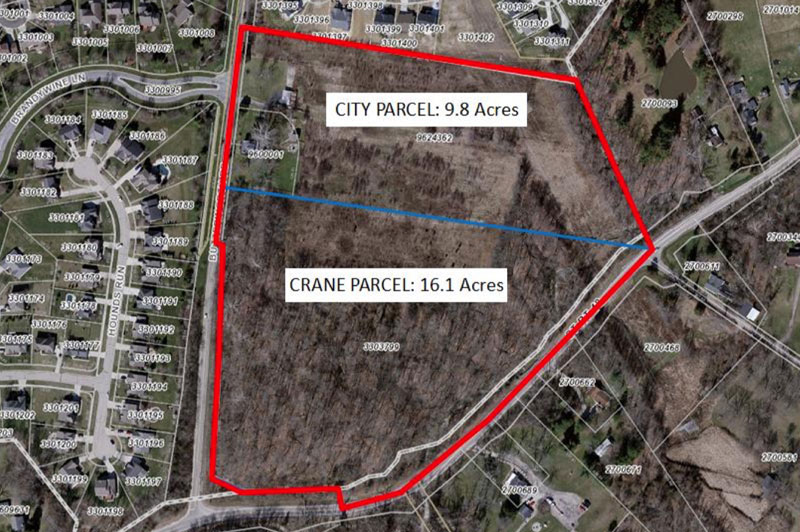
    Loveland, Ohio – City Council has scheduled a public hearing for October 13, at 7 PM to hear from the community on a proposed sale of city-owned property on Butterworth Road, in Warren County. Council voted in a special session on September 29 and voted unanimously to set the public hearing date after a motion by Tim Butler. The meeting lasted 141 seconds and there was no discussion about the sale.

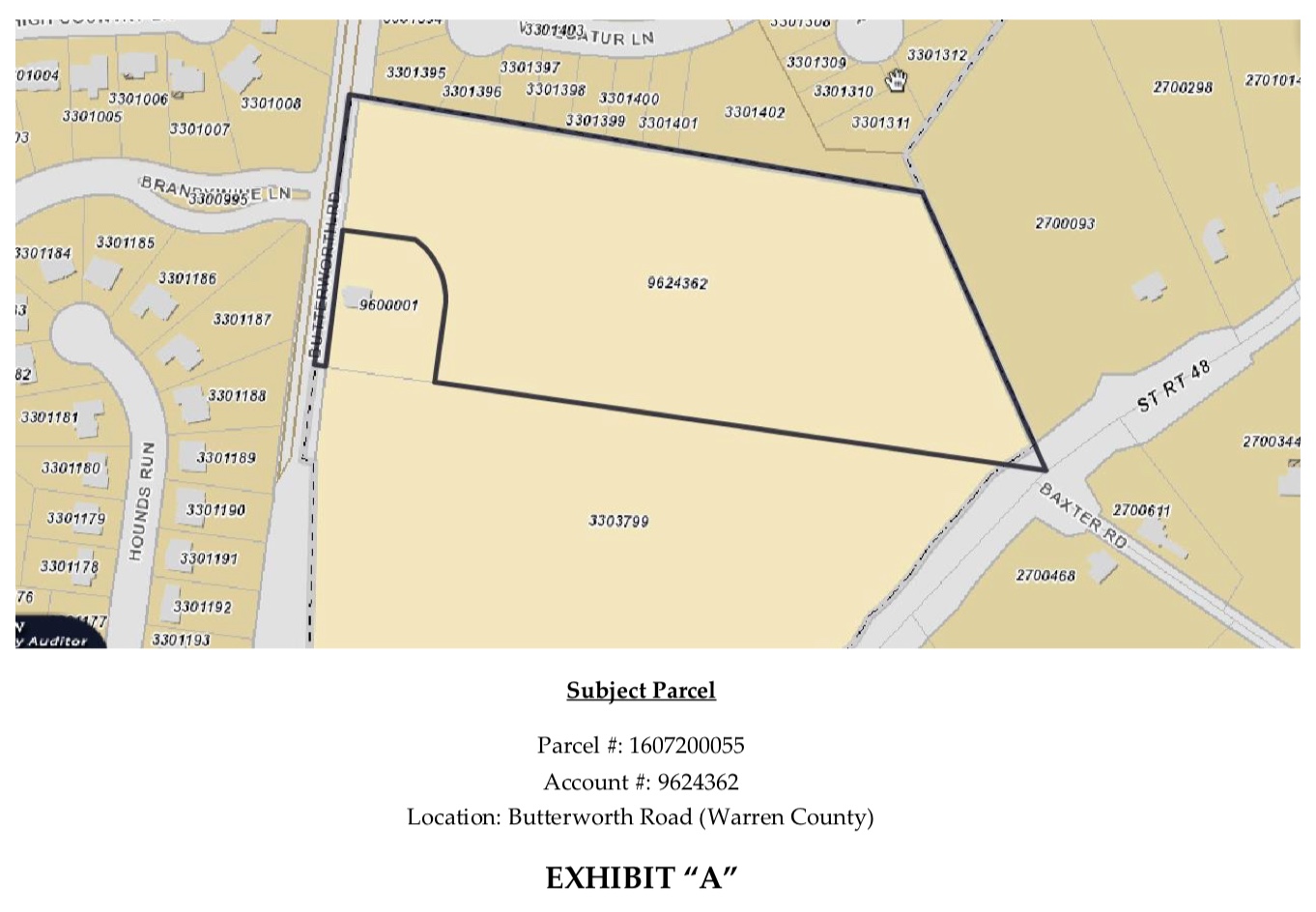
    The property consists of 9.8389 acres. The purchaser of the property would be the Campbell Berling Development Company. The proposed use of the property is to accommodate a single-family residential development of no more than 35 single-family homes. The company address is 333 Madison Pike, Suite C in Ft. Write Kentucky.

    (Right-Click to open these images in a new tab or window to see a larger view.)
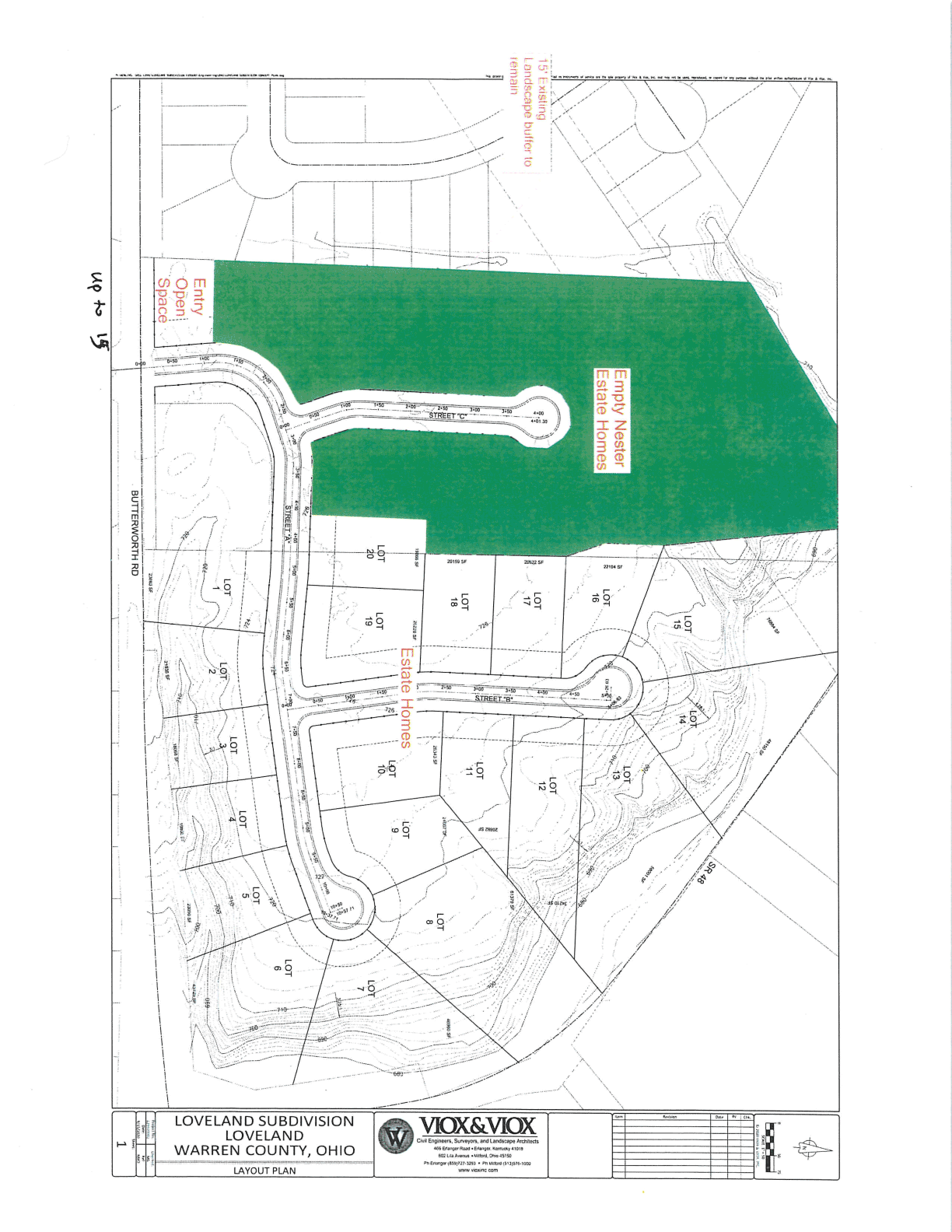
    Taxpayers originally bought a total of 10.737 acres. The justification given at the time for the $900,000 expenditure was that it would be the last chance for Loveland to have recreation space in fast-developing southern Warren County. In 2010, 0.8981 acres of the property, which included a home, was portioned off and sold to Judith Lund for $102,000.
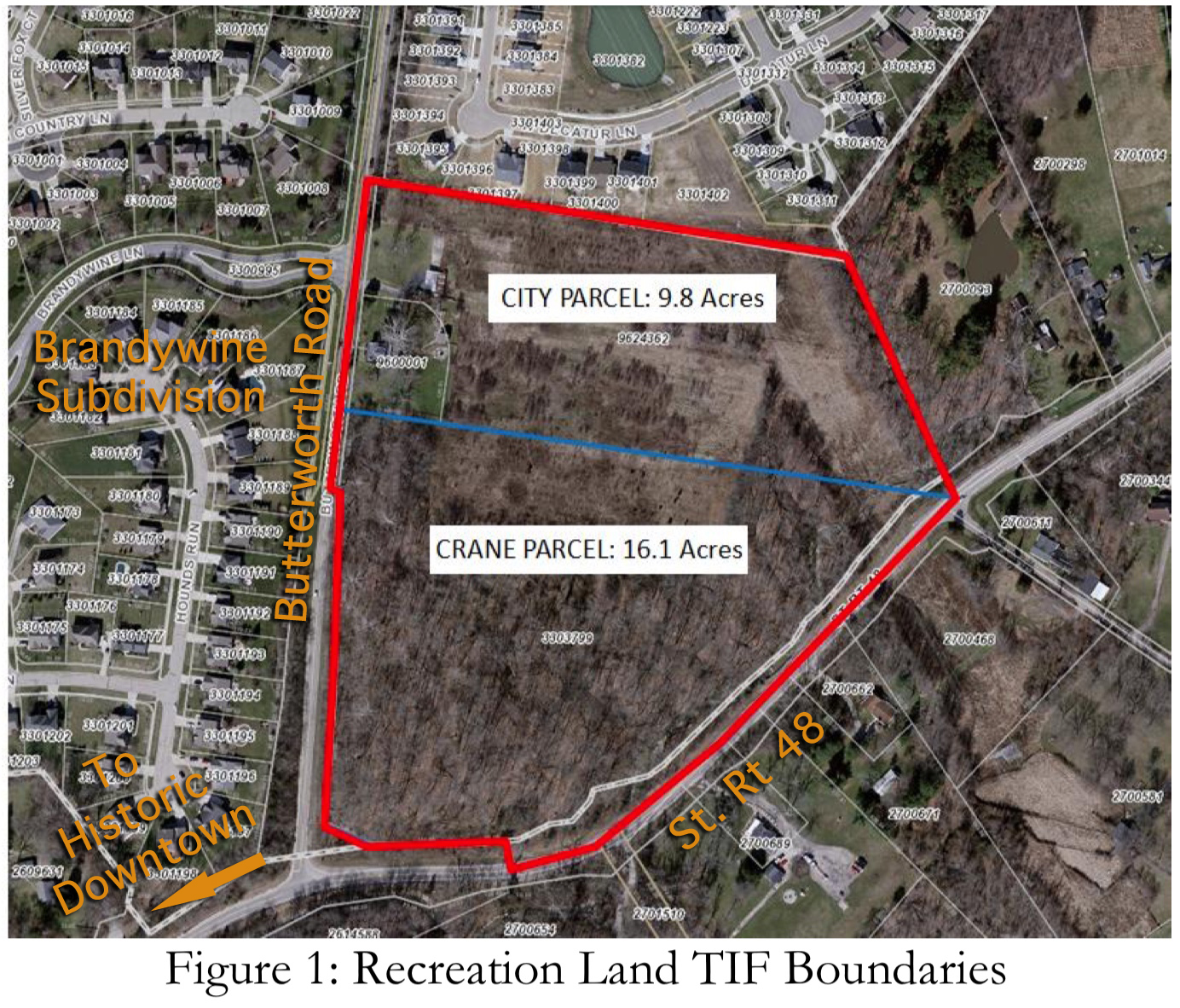
    A Recreation Tax Increment Financing District (TIF) was created by Ordinance 2008-38 to pay off financing of the $900.000. The TIF consists of approximately 27 acres and includes the property known generally as the Christman Farm as well as the Crane property.

    The TIF provides financing for the property purchase that the City recoups through increased property tax revenues generated from future development within its boundaries.

    Tom Carroll, the City Manager at the time said, “The City will continue to slowly retire the debt on this property and the remaining ten acres of the Christman Farm will be land-banked until the Crane property is developed and a municipal park can be constructed. Continued patience is therefore necessary before Loveland can build its first park in Warren County.”

    Taxpayers have been paying close to $48,000 annually in debt service for the Christman Farm purchase.

    In their offer letter, Campbell Berling says the development will have a buildout value of $25,250,00 with an assessed valuation of $6,860,000.

    Campbell Berling will be paying $350,000.00 for the land.

    Their plan is to build fifteen $550,000 and up “empty nester” homes on the parcel they would like to buy from Loveland taxpayers. The lots would be between 11,000 and 18,000 sq ft.

    The Crane property would have 20 homes and two styles of “Estate Homes” valued at $850,000 and up on lots that would average 32,000 sq ft.


    Campbell Berling is proposing that future homeowners be allowed to pay the cost of sewer line extensions over 20-years.

    Access to the development would be from Butterworth Road across from the Brandywine subdivision. The developer already has a “Crane family property”, parcel number 16074000240 under a purchase contract.

    There have been 57 previous HOMEARAMA showcases

    The 28th was in 1989 at The Glen of Claiborne (Loveland)

    The 29th was in 1990 at Chatham Woods (Symmes Township)

    There will be a request for a zone change to a Special Planning District and the “Estate” homes built on the Crane property will be a future HOMEARAMA site.

    HOMEARAMA is an annual event that is billed as the “latest and greatest” in home and landscape design.

    HOMEARAMA® offers you the opportunity to not only see the latest trends in home design and decorating, but also learn why buying a new home continues to represent an excellent value. Today’s new homes offer the latest trends in technology and more energy-saving features than ever before.

    City Manager Dave Kennedy proposes a transfer of the 9.8 acres to the Loveland Community Improvement Corporation (CIC) for purchase by CB Butterworth, LLC and has prepared legislation and it will be presented to City Council as an emergency measure. Emergency legislation cannot be overturned at the ballot box as they become effective immediately.

    Section 4 of the emergency legislation states:

    That this Ordinance is hereby declared to be an emergency measure necessary for the immediate preservation of the public peace, health, safety and general welfare and shall be effective immediately upon its passage. The reason for said declaration of emergency is to allow for the property to be transferred and sold as soon as possible so that infrastructure can be installed to allow for its development for the benefit of the City.

    The CIC is a quasi-government arm of the City. Once they take possession of the land their actions are not subject to Council approval and their actions cannot be overruled by a vote at the ballot box.

    A 2007 proposed development, Summit Pointe, was for 70 attached units, and later reduced to 58 units, however it never came to fruition.

    Kennedy in a memo to City Council today said, “Proposals also included multiple high-density townhome type projects which would be rental occupied. These proposals were never accepted, due to the fact that City Council and staff did not see high density, much less rental type projects, as a good fit for the surrounding neighborhoods of Brandywine on the Little Miami and Butterworth Glen.”

    Kennedy says in the memo that he and staff met with numerous Cincinnati area home builders in the hopes of creating a low density project, and that one message from the developers that continued to surface was that the cost of  bringing utilities to the properties was expensive. Therefore, most developers saw a higher density project as a way to recoup those expenses.

    “With that consistent message from developers, and a low-density project clearly being the choice of City Council and staff, a possible option was created,” said Kennedy. The option is to include the City extending the sanitary sewer collection main up State Route 48 to the properties and placing an assessment on the parcels within the residential development so that the City would be reimbursed for the project costs.

    An assessment on each parcel, for a period of 20 years would allow for Loveland taxpayers to recoup their subsidy of the sanitary sewer main extension and to the Campbell Berling Development Company. Kennedy has not said what what the sewer extension will cost nor said how the initial sewer construction will be financed. It remains unclear if Loveland taxpayers can recoup the cost of borrowing money for the sewer construction.

    After the taxpayers bought the land to be used as recreation and formal proposals for how it would be developed as ballfields and passive recreation came forward, opposition from many in the Brandywine subdivision doomed its development. Traffic concerns and “strangers” coming to a public park in their neighborhood distressed many homeowners. Many said they did not want to come across strangers as they were on walking trails and said they would not let their children play where strangers would be using the public park as well. Currently anyone wishing to use city or school recreational fields, tennis and basketball courts, etc., in the immediate neighborhood must drive through Historic Downtown to facilities in Clermont or Hamilton County.

    Kennedy told Council, “The proposed legislation, (was) being requested as an emergency to allow infrastructure work and planning to begin immediately.” Normally passed ordinances must be read at two separate council meetings and don’t become law until 30-days after the vote at the second meeting.

    The developer wants to rezone all of the property as a Special Planing District which would require Planing and Zoning Commission and City Council approval.
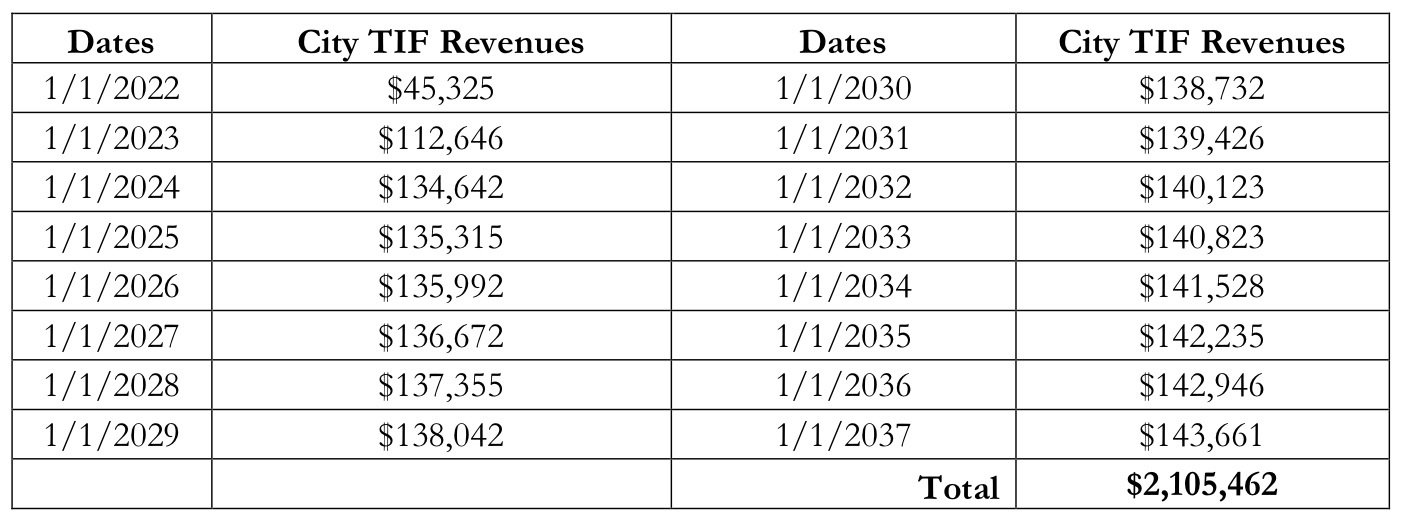
    Kennedy presented this “Fiscal Impact” study in the package of information he presented to City Council:

    The agreed purchase price for the property is $350,000. As the project begins to develop it will begin to produce TIF revenues until such time as the TIF expires in 2037. TIF revenue is calculated based upon an increasing scale as the development is completed and placed on the tax rolls. After the development is completed, TIF calculations includes a 0.5% to 1% appreciation over the life of the TIF. Based on these calculations, the TIF at buildout, will produce revenue for the City in the range of $135,000 to $143,000 annually. If the project goes as scheduled, it will produce a total revenue over $2,000,000 to the City over the life of the TIF. A summary of projected TIF revenues to the City is shown below.
    The Public Hearing is this Tuesday, October 13, at 7 PM at City Hall.


    Ordinance 2020-_____

    Ordinance transferring the real property on Butterworth Road located in the City of Loveland, Warren County, Ohio to the Community Improvement Corporation of Loveland and declaring an emergency

    WHEREAS, the City of Loveland (the “City”) desires to see certain undevelopedreal property owned by the City located on Butterworth Road known as Parcel No. 16072000550 used for a combination of residential and recreational purposes; and

    WHEREAS, the City has determined that the Property is no longer needed for municipal purposes; and

    WHEREAS, the Property should be transferred to the Community Improvement Corporation of Loveland without competitive bidding pursuant to Codified Ordinance Section 107.01(f) to dispose of as that organization shall best determine; and

    WHEREAS, City Council conducted a public hearing on October 13, 2020 as to the disposition of the Property.

    Now, Therefore, Be It Ordained by the Council of the City of Loveland, Hamilton, Clermont and Warren Counties, Ohio.

    Section 1. Council of the City of Loveland (“City Council”) hereby determinesthat the undeveloped real property located on Butterworth Road known as Parcel1607200055 and further described in Exhibit A attached hereto (the “Property”) is no longerneeded for municipal purposes.

    Section 2. City Council hereby authorizes the Property be transferred to the Community Improvement Corporation of Loveland to be used to promote the welfare of the people of the City, stabilize the economy, provide employment, assist in the development of industrial, commercial, distribution, and research activities to the benefit of the people of the City, provide additional opportunities for their gainful employment or will promote the reclamation, rehabilitation, and reutilization of vacant, abandoned, tax- foreclosed, or other real property in the City. The City Manager is authorized to execute any and all documents on behalf of the City consistent with this transfer.

    Section 3. Council hereby finds and determines that all formal actions relative to the passage of this legislation were taken in an open meeting of this Council, and that all deliberations of this Council and of its committees, if any, which resulted in formal action, were taken in meetings open to the public, in full compliance with applicable legal requirements, including Section 121.22 of the Ohio Revised Code.

    Section 4. That this Ordinance is hereby declared to be an emergency measure necessary for the immediate preservation of the public peace, health, safety and general welfare and shall be effective immediately upon its passage. The reason for said declaration of emergency is to allow for the property to be transferred and sold as soon as possible so that infrastructure can be installed to allow for its development for the benefit of the City.



  • Coming to a “Scream” near you – October 12th

    Coming to a “Scream” near you – October 12th

    A production of LOVELAND MAGAZINE TV staring Cassie Mattia as “Skeletor the Halloween Guru”.

  • Plot to kidnap Michigan’s governor started in a ritzy Columbus suburb, prosecutors say

    Plot to kidnap Michigan’s governor started in a ritzy Columbus suburb, prosecutors say

    A man protesting Ohio’s health orders at the state Capitol on May 1. Gov. Mike DeWine later repealed most of them only to start reimposing orders on Tuesday as coronavirus cases continued to surge. Capital Journal photo by Marty Schladen

    by Jake Zuckerman and the Ohio Capital Journal

    This summer, a cabal of a least 15 extremists meeting in Dublin, Ohio began crafting a violent plan to “storm” the Michigan state Capitol and kidnap Gov. Gretchen Whitmer, law enforcement officials say.

    Six men were federally charged with conspiring to kidnap Whitmer, and another seven were charged with violations of Michigan’s anti-terrorism laws connected to alleged involvement with the “Wolverine Watchmen” militia group.

    Jake ZuckermanJake Zuckerman is a statehouse reporter. He spent three years chronicling the West Virginia Legislature for The Charleston Gazette-Mail after covering cops and courts for The Northern Virginia Daily.

    The federal allegation, unsealed Thursday morning, details plans of armed assaults on the Michigan State Police, construction of improvised explosive devices, covert meetings held in a Grand Rapids basement accessible by secret trap door, nighttime surveillance of Whitmer’s home, and quasi-military “field training exercises” to prepare for an abduction sometime before the November elections.

    “When the time comes, there will be no need to try and strike fear through presence,” Brandon Caserta said Sept. 17, according to prosecutors, opting against attending an armed protest at the State Capitol. “The fear will be manifested through bullets.”

    Michigan Attorney General Dana Nessel said to reporters Thursday the group crafted “elaborate plans” that posed a “serious and credible threat to public safety.”

    What brought the men to two meetings in central Ohio is unclear: The suspects are all from Michigan and Delaware.

    However, the charging document states one paid informant assisted the FBI and secretly recorded the meetings in Dublin on June 6 and July 18. No threats were reported against Ohio government.

    At the first meeting, Michigan man Adam Fox and Delaware man Barry Croft huddled for a meeting at an undisclosed Dublin location with 13 other people, including a confidential informant.

    They discussed creating a society that followed the U.S. Bill of Rights where they could be “self-sufficient.” They discussed “state governments” they believed violated the U.S. Constitution, and specifically mentioned Whitmer.

    They also discussed murdering “tyrants” or “taking” a sitting governor. Fox then reached out to a “Michigan based militia group.” The charging document does not identify the group, though Nessel said affiliates of the “Wolverine Watchmen” were charged.

    Fox, working with Croft, met members of the militia group several times in June, including at a Second Amendment rally in Lansing. He later described the Dublin meeting and said he would need 200 men to storm the Capitol to abduct Whitmer.

    “Fox explained they would try the Governor of Michigan for ‘treason’ and he said they would execute the plan before the November 2020 elections,” the charging document states.

    The alleged conspirators engaged in “field training exercises” in rural Michigan including firearms training and combat drills, and unsuccessfully attempted to construct two improvised explosive devices.

    On July 18, the men again met, secretly recorded by an informant, in Ohio. They discussed attacking a Michigan State Police facility and floated the idea of shooting up Whitmer’s vacation home. They eventually settled on kidnapping.

    “Snatch and grab, man,” Fox allegedly said. “Grab the fuckin’ governor. Just grab the bitch. Because at that point, we do that, dude — it’s over.”

    Prosecutors detailed two episodes of “surveillance” of Whitmer’s home and determined the conspirators considered demolishing a bridge to stave off a police response. An informant provided the FBI with a map of the lake near Whitmer’s home, distance from nearest police departments and estimated response time.

    By mid-September, the men successfully detonated an explosive device at a field training exercise.

    “I can see several states takin’ their fuckin’ tyrants,” Fox allegedly said. “Everybody takes their tyrants.”

    The allegations come amid a time of unprecedented unrest and instability in the U.S., likely a combination of a pandemic, perceived overreach when governments responded, racial unrest, economic devastation of the pandemic, and extremism proliferating on various social media platforms.

    Whitmer attracted national attention during the spring and summer for a forceful response to the COVID-19 pandemic. She also drew ire from libertarian and small-government groups for what they saw as overly heavy-handed stay-at-home orders and mask mandates.

    In May, hundreds of protesters, many of whom were armed, stormed the Michigan Capitol. President Donald Trump only accelerated instability, calling for Whitmer to “LIBERATE MICHIGAN.”

    Political demonstrations this summer have consistently featured armed demonstrators and counter-demonstrators. In Ohio, a violent, self-described neo-Nazi wielded an anti-Semitic sign at a coronavirus protest. Another anti-Semitic sign appeared at a protest outside the home of Ohio’s health director, who is Jewish. She resigned in June.

    Earlier this month, the U.S. Department of Homeland Security issued a threat assessment warning of increased extremism in the country.

    “The domestic situation surrounding the COVID-19 pandemic creates an environment that could accelerate some individuals’ mobilization to targeted violence or radicalization to terrorism. Social distancing may lead to social isolation, which is associated with depression, increased anxiety, and social alienation, the assessment states.

    “Similarly, work disruptions, including unexpected unemployment and layoffs, can also increase risk factors associated with radicalization to violence and willingness to engage in acts of targeted violence.”

  • Fraternal Order of Police, teachers, former law enforcement against armed teacher policy

    Fraternal Order of Police, teachers, former law enforcement against armed teacher policy

     
    by Susan Tebben – and the Ohio Capital Journal
     

    An organization representing more than 23,000 police officers, including school resource officers, says allowing teachers to bring guns to school under only a concealed carry permit could do more harm than good.

    The Fraternal Order of Police of Ohio said this in a brief to the Ohio Supreme Court, which is considering a case that would keep schools from allowing a firearms authorization policy. The police organization said they were not taking a stand on whether teachers should be armed, but rather the training involved.

    Susan TebbenSusan Tebben is an award-winning journalist with a decade of experience covering Ohio news, including courts and crime, Appalachian social issues, government, education, diversity and culture. She has worked for The Newark Advocate, The Glasgow Daily Times, The Athens Messenger, and WOUB Public Media. She has also had work featured on National Public Radio.

    “An interpretation holding that a school resource officer or security guard needs extensive training to carry a gun in school, but the art teacher does not, is neither just nor reasonable,” the group said in a brief to the court.

    While 17 other school districts argued that the “plain language” in the Ohio Revised Code allowed them the right to bring guns to school when authorized, the FOP read the “plain language” as advising schools to the contrary.

    “A teacher who carries a weapon into a classroom while teaching is, quite

    literally, both ‘armed’ and ‘on duty,’” the organization stated. “There is no reason to depart from this plain language because it yields a ‘just and reasonable’ result, as the Revised Code demands.”

    Agreeing with the language, a group of 284 current or former Ohio teachers or school staff members said the law was “unambiguous” in its explanation of the training requirements needed to bring guns to schools. The teachers and staff don’t say school districts should be banned from creating weapons policies.

    “But the General Assembly has required that, should they elect to arm teachers, school districts must ensure that they have adequate training, which the legislature has determined was satisfactory completion of an approved basic peace officer training program,” the brief by the teachers and staff stated.

    The FOP even went so far as to say the Madison Board of Education’s interpretation “would get people killed.”

    In arguing against the firearms policy, the police officer’s group brought up gun-retention skills, accuracy in a gunfight and situational awareness that they say would decrease if teachers were given the responsibility of defending themselves and others in a school shooting.

    The brief to the court also said a lack of training would make armed teachers a liability, causing law enforcement to have more difficulty stopping an active shooter, and “may get themselves shot in the process.”

    “If nothing else, police officers train on the ‘mental preparedness’ necessary to take a life,” the brief stated. “But in the context of a school setting, undertrained teachers will be mentally unprepared to kill one of their own students.”

    Several others submitted document in support of a decisions that keeps gun policies out of the board’s hands, including the Ohio Education Association and the Ohio Federation of Teachers. A group of “experts in school safety and firearms training,” including Dayton Police Department Chief Richard Biehl, a former leader of the Columbus Division of Police Training Bureau and a former Madison Local School District teacher who became a police officer after the 2016 school shooting there, joined in the support of the parents against the firearms policies.

    The cities of Columbus and Cincinnati also filed briefs showing their interest in the case, and support of the present law on training of armed personnel in schools.

    If an Ohio Senator has his way, the law will change regarding armed personnel in school. The bill passed the Senate Government Oversight & Reform Committee, and is awaiting a full floor vote before moving on to the Ohio House.

  • Your “Tentative” 2020 Clermont County appraised values

    Your “Tentative” 2020 Clermont County appraised values

    Clermont County, Ohio – County Auditor Linda Fraley announced today that 2020 “Tentative Values” are now available. Read the following release from Auditor Fraley:

    “As County Auditor, I am required by Ohio law to reappraise real property every six years and 2020 is the year we are mandated to value your property. The primary purpose of a reappraisal is to set the value of each property so that everyone is only paying their fair share of real estate taxes. Clermont County’s last complete reappraisal was in 2014 with a statistical sales based update performed in 2017.

    “It is important to note that the process for this year’s property reappraisal began over three years ago and has been our most comprehensive review to date. To establish the 2020 appraised values, we utilized advanced technology to perform extensive reviews of property, conducted comprehensive sales analysis of comparable properties, collected information from on-site visits to your property, and updated current building costs.

    “The reappraisal of real property for tax purposes is an important and sensitive issue, especially in today’s environment. I want to assure you that every effort has been made to place a fair and equitable value on your property.

    “I think it is important to provide as much information as possible to our Clermont County property owners. We encourage you to review all of the 2020 Reappraisal information, through property search interactive maps and comparison tools and the 2020 Reappraisal Frequently Asked Questions that are provided in our newly redesigned website.

    “Many of your questions may be answered in the details provided, but remember you always have the opportunity to review and question your value and are welcome to contact us with those questions, concerns or objections.

    “If you have questions or would like to provide additional information concerning your valuation, please contact us at our 2020 Reappraisal HOTLINE 513-732-7700 or email us at reappraisal@clermontcountyohio.gov . Appointments to review property valuations will be conducted by phone or Zoom and will conclude by October 23, 2020.

    “Our goal is to provide all Clermont County residents with courteous, accurate and efficient services and to administer property tax laws in a fair and impartial manner.  I, along with my staff, am proud to serve the residents of our county and look forward to addressing any questions you may have regarding your property value.”


  • OHSAA Announces Tigers will play Little Miami in 1st-round of State Tournament

    OHSAA Announces Tigers will play Little Miami in 1st-round of State Tournament

    by Cassie Mattia

    Loveland, Ohio – The 2020 Ohio High School Athletic Association Football postseason is finally here! On October 1st, OHSAA announced the regional brackets for the football playoffs, which currently includes 648 schools.

    During a normal OHSAA Football season, 224 schools typically qualify for the playoffs, with eight schools from each of 28 regions earning a bid through the OHSAA’s Harbin computer ratings system. This season the Harbin system will not be used. Due to the COVID-19 pandemic, the playoffs will begin in Week 7 (Oct. 9-10) and all teams could potentially opt-in.

    The Loveland Tigers will travel to Little Miami High School this Friday, October 9. Game time is 7 PM. Little Miami has a 15 seed and Loveland is seeded 18.

    The Panthers beat the Tigers in Tiger Stadium on September 18th, 55-20.

    The Tigers lost at Kings last Friday night 63-32 and play the last game of their announced schedule on Friday, October 16th at Milford. All teams have the option of playing more games if or when they are eliminated from the State Tournament. The Milford game scenario would change depending on tournament first-round game results.

    Below is the Region 8 Bracket for Div II. (Right-Click the Bracket and open in a new tab or window for a larger view)

    (Continue reading about the State Tournament below the Bracket…)

    The head coaches in each region voted to determine the seeding in their region. OHSAA placed teams in particular brackets according to their seeds. In most regions, the higher seeds will have a first-round bye.

    All playoff tickets will be sold online through www.OHSAA.org/tickets and will be available starting Tuesday, October 6.

    Divisions, I, II, III, and VII will play on Friday nights. Divisions IV, V, and VI will play on Saturday nights. All games will kick-off at 7 p.m.

    For each game through at least the regional semifinals, the higher seeded team will have the first opportunity to host the game. If the higher-seeded team cannot host, the other team will host the game. The OHSAA will determine sites for the regional finals, state semifinals, and state championships. If a team is unable to play a playoff game on the assigned day according to the bracket, its opponent will advance on the bracket.

    Schools eliminated from the playoffs or that chose not to enter have the option to schedule additional regular-season contests through Saturday, November 14 (maximum of 10 regular season contests permitted).

    All sports in Ohio – at all levels – are under the direction of the latest Ohio Department of Health order, which was signed on August 19th by Governor DeWine. The order and additional guidance from the ODH and OHSAA are posted at:https://www.ohsaa.org/Home/OHSAA-COVID-19-Correspondence

    STATE CHAMPIONSHIP GAMES

    The Division I State Championship Game will be played Friday, November 13th. The specific dates and times for the state championship games in Divisions II through VII will be announced at a later date but will be played within the November 19th-22nd date range. Sites will be announced at a later date, as well, but it is unlikely that all seven games will be played at the same venue according to the OHSAA. There will be no state championship games that happen simultaneously, as each game will have its own time slot

    Spectrum News 1 will be the official television partner of the OHSAA and will select several playoff games each weekend to televise live. Only Spectrum can provide live television coverage of the OHSAA Football Playoff Games. All other television broadcasts can start at 10 P.M. on the same day as the game. Live video streaming will be permitted for games not selected by Spectrum News 1 at rates set by the OHSAA.


    For more of your Loveland Sports 411 With Me, Cassie Mattia, stay tuned!

  • [Photo Album] Loveland Men’s Soccer Team shuts-out Moeller

    [Photo Album] Loveland Men’s Soccer Team shuts-out Moeller

    by Cassie Mattia

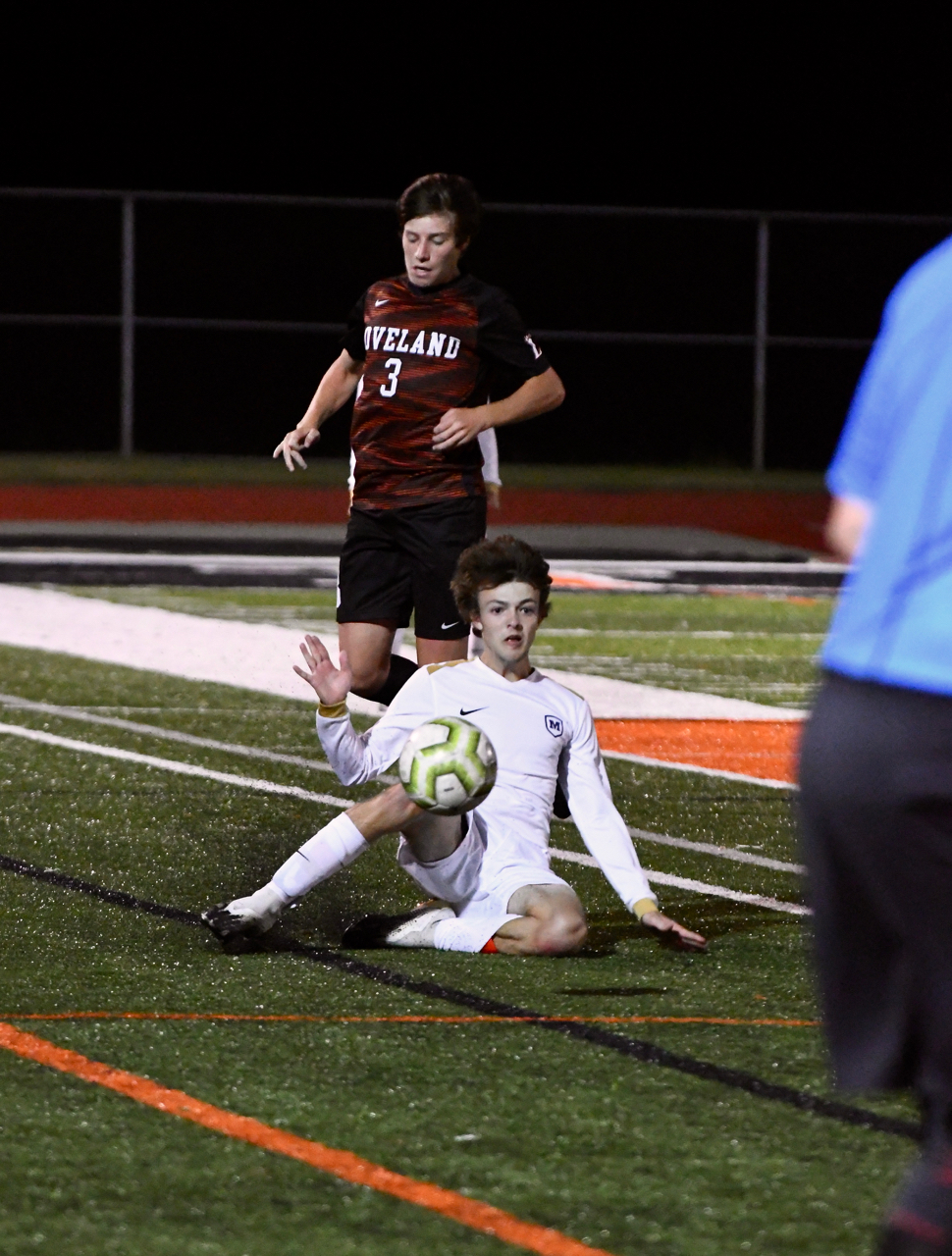
    Loveland, Ohio – Victory is ours! The Moeller Crusaders 1-1-2 in the Greater Catholic League, 2-3-3 overall traveled to Tiger Trail to face the Loveland Men’s Soccer Team on Thursday where the Tigers captured a win with a 0-4 shut-out!

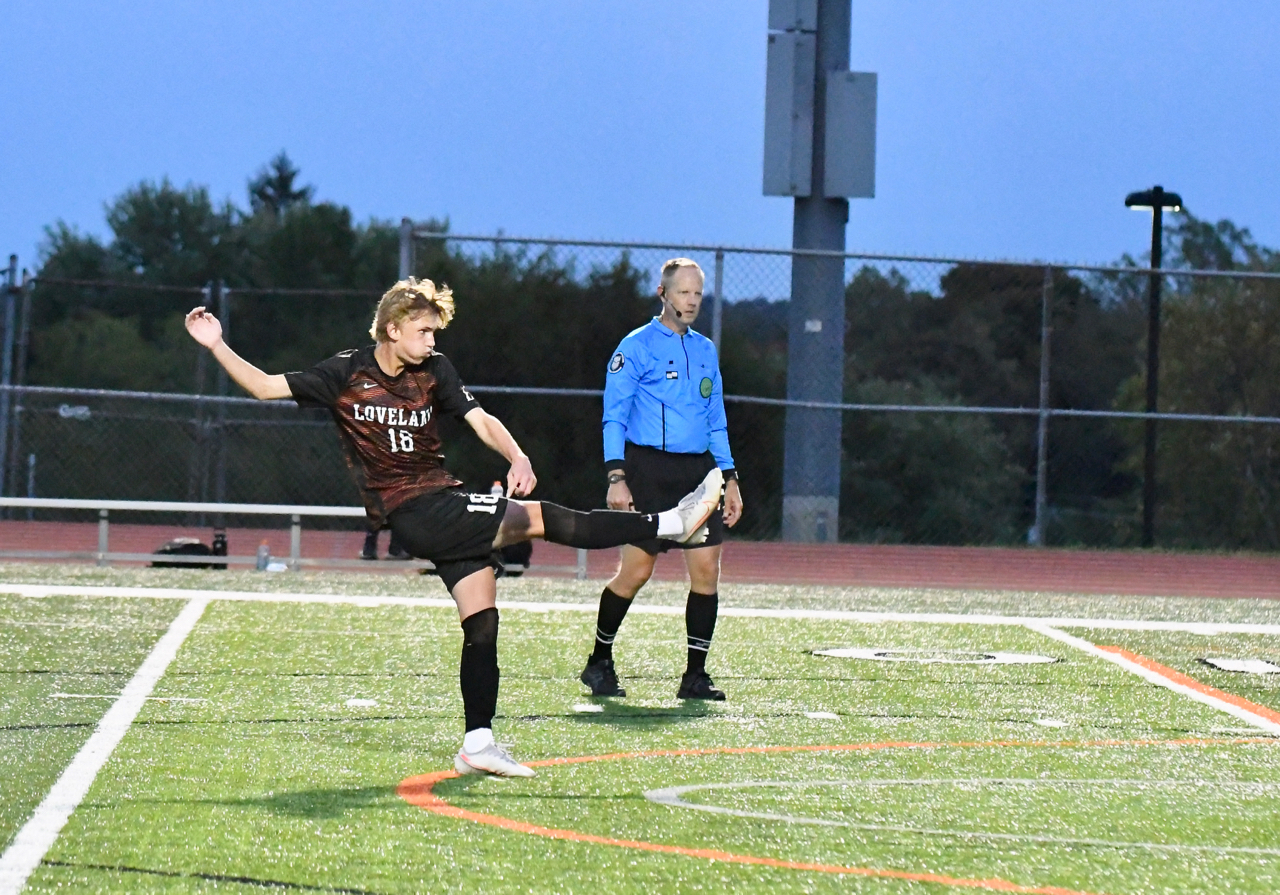
    Many of the Tigers contributed to the victory as Zach McHenry scored on a penalty kick with 19 minutes left in the 1st half, Kees Ciric scored twice and Helge Harris scored once in the 2nd half.

    The win against Moeller took the Tiger’s record to 8-1-2 (4-1-0 in the ECC). Loveland was scheduled to play Winton Woods on Saturday however because there was a shortage in officials the game was not played.

    Currently, in the ECC in regards to Men’s Soccer Walnut Hills is undefeated with 4 victories and both Anderson and Turpin are 5-1. Loveland is sitting in 4th place in the ECC out of 10 teams.

    On Tuesday the Tigers will host Anderson who is 8-2-2 overall (5-1-0 in the ECC) and on Thursday, September 15th Loveland will travel to Lebanon (0-5-0 in the ECC, 3-8-1 overall) to play another ECC match. 

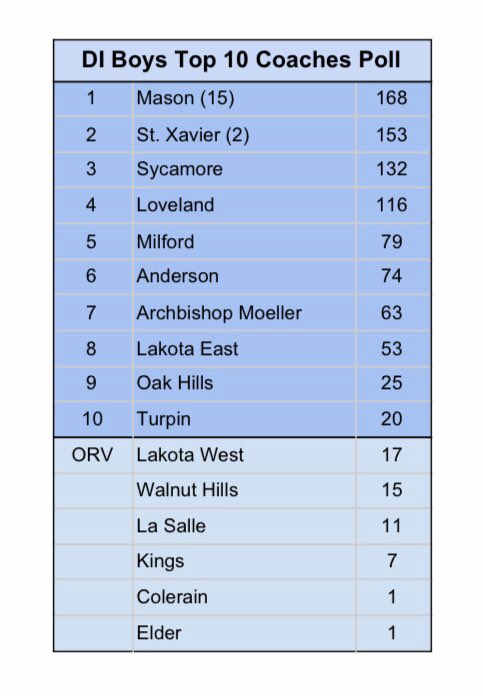
    The following is the Southwest Ohio D1 Men’s Soccer poll results for Week 7:

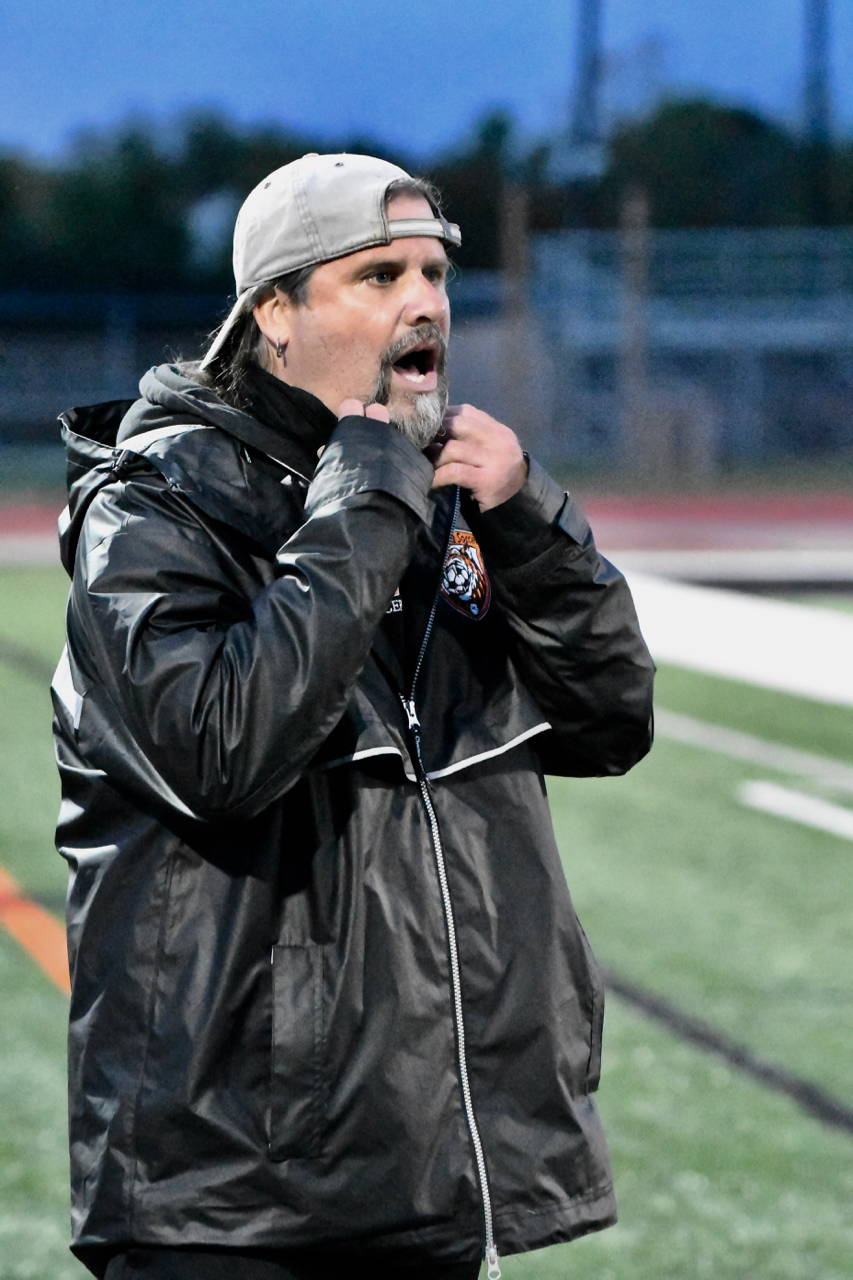
    Please enjoy the Tiger photo compilation below that Loveland Magazine’s very own David Miller put together from the Loveland Men’s Soccer Team’s big win against Moeller!

    These photos are © protected and all rights reserved. They can be purchased by contacting lovelandmagazine@cinci.rr.com.

    Want more Tiger sports updates?! Stay tuned to the Loveland Sports 411 With Me, Cassie Mattia!

  • School District delays return to full in-person learning for PK-4 students

    School District delays return to full in-person learning for PK-4 students

    Loveland, Ohio – After learning from Loveland Magazine of the number of COVID 19 cases at the Loveland Health Care Center (Cumulative cases of COVID 19 at Loveland Health Care go from 60 to 85) and citing that Hamilton and Clermont Counties have returned to the RED “Very High Exposure and Spread” level of the Ohio Public Health Advisory System the Loveland School District has just announced that the return to a full in-person learning schedule for PK-4 students will be delayed. They have decided to “temporarily pause any changes and remain on the blended learning model for now for all students, to allow us additional time to evaluate.”

    The Board of Education had previously approved (September 22) that PK-4 grades would return on Monday, October 5 to a full in-person learning schedule. (Board approves schedule for 5-day full capacity learning)

    “Transportation will not change at any grade level including grades 5-8 as has been communicated this week. Next week will operate like this week,” the District said in a release.

    The District also said, “The time is not right to take a step toward bringing more students together. Maintaining the schedule that our families, students and teachers have been operating under will allow us to maintain student and staff safety while we await more data.”

    The District said in a release. “After the state updates their COVID-19 data on Thursday of next week, a decision will be made about our PK-4 and grades 5-8 students and whether to continue on blended learning or transition to full capacity (5-day) in-person for those grades beginning Monday, October 12,” the release also said.

    “We have 11 red counties, which is more than we’ve seen at any point in September,” said Governor DeWine on Thursday. “Although many Ohioans are working hard to keep this virus in check, unfortunately, we are seeing a rebound in some areas of the state. This pandemic isn’t over, so please continue to stay home if you’re sick, wear a mask when you’re out, and keep at least six feet between you and those outside of your household.”

    On Thursday DeWine also announced:

    There are 155,314 confirmed and probable cases of COVID-19 in Ohio and 4,817 confirmed and probable COVID-19 deaths. A total of 15,606 people have been hospitalized, including 3,297 admissions to intensive care units. In-depth data can be accessed by visiting coronavirus.ohio.gov

    There is no change for the Loveland Remote Learning Academy.

    Below is the timeline to return to full capacity (5-day) in-person previously approved (September 22) and is apparently completely put on pause after today’s announcement:


  • Power company says utility commission has no power to investigate role in bailout scandal

    Power company says utility commission has no power to investigate role in bailout scandal

    An Akron-based utility company that figures prominently in a massive nuclear bailout scandal is saying that state regulators don’t have the authority to investigate whether the company improperly financed the bailout effort.

    Over the past week, FirstEnergy Corp. has filed two documents with the Public Utilities Commission of Ohio saying that the commission and the state’s consumer representative don’t have standing to investigate whether FirstEnergy and affiliated companies improperly used ratepayer money in what has been called the largest bribery scandal in state history. 

    Marty Schladen

    Marty Schladen has been a reporter for decades, working in Indiana, Texas and other places before returning to his native Ohio to work at The Columbus Dispatch in 2017. He’s won state and national journalism awards for investigations into utility regulation, public corruption, the environment, prescription drug spending and other matters.

    Federal prosecutors say $60 million in utility money was used to pass a $1.3 billion nuclear bailout into law. But FirstEnergy says the utility commission lacks the authority to investigate whether it improperly used ratepayer funds in the affair.

    “The commission lacks any statutory basis to conduct an investigation of FirstEnergy Corp. with respect to the alleged expenditures or to order FirstEnergy Corp. to show cause that it has not violated Ohio utility law,” FirstEnegy said in a Sept. 23 filing. 

    It was in response to an order by the utility commission that it show “that the costs of any political or charitable spending in support of (the bailout bill), or the subsequent referendum effort, were not included, directly or indirectly, in any rates or charges paid by ratepayers in this state.” 

    Federal prosecutors in July charged then-House Speaker Larry Householder and four associates with using $60 million from FirstEnergy and related interests in a scheme to make Householder speaker and pass a $1.3 bailout of two failing nuclear plants owned by FirstEnergy Solutions, a successor company to FirstEnergy Corp.

    The effort was successful, although there is an effort in the legislature to repeal it before the charge hits ratepayers’ bills on Jan. 1.

    FirstEnergy and associated companies haven’t been charged, but in announcing criminal charges against Householder, U.S. Attorney David M. DeVillers stressed that the investigation was far from over. An affidavit supporting the criminal complaint also refers repeatedly to “Company A,” or FirstEnergy, and it makes reference to its CEO.

    In addition, Ohio Attorney General Dave Yost last week filed a civil suit that names FirstEnergy, a subsidiary and its successors — as well as Householder and his associates — as defendants.

    The Ohio Consumers’ Counsel, the state’s official consumer representative in utility matters, has asked for an independent investigation into whether FirstEnergy improperly used ratepayer funds in the dark-money scheme to pass House Bill 6, the bailout legislation. The agency was disappointed when the utilities commission only directed the company to show that it had not acted improperly.

    But even that is too much for FirstEnergy.

    In documents filed on Monday with the utility commission, it said it was legally entitled to a reasonable profit. The company also seemed to argue that what it did with much of its money was nobody’s business.

    “Beyond the investment necessary to provide adequate service, a public utility may spend its funds in the best interests of the utility as determined by its management.,” the company argued, later adding, “To the extent the Companies use a portion of their revenues to make political or charitable contributions, this is not improper or illegal.”