WASHINGTON — The U.S. Capitol Police chief testified Tuesday that President Donald Trump’s decision to pardon people convicted of assaulting police officers on Jan. 6, 2021, had negative repercussions on morale within the department and for police across the country.
“I think there was an impact, not only to the Capitol Police, but an impact nationwide when you see folks that are pardoned — and I’m really referring to the ones that were convicted of assaulting police officers,” J. Thomas Manger said during a hearing on the department’s budget request.
“I think that’s what bothered most cops and it did certainly have an impact on the USCP,” Manger added. “We’ve got so much change that officers are experiencing over the last four years, so I’m trying to keep them focused on moving forward. But it certainly did have a negative impact. For cops all over this country, you wonder when you put your life on the line every day, and does it matter?”
On Trump’s first day in office, he pardoned nearly 1,500 people who were convicted of crimes related to attacking the U.S. Capitol on Jan. 6, 2021, while members of Congress moved through the process to certify President Joe Biden’s win of the Electoral College vote.
Many of those people went to the Capitol after attending a rally near the White House where Trump repeated false claims about winning the 2020 presidential election, despite numerous failed court cases and no evidence of widespread voter fraud.
Manger testified during the House Appropriations Legislative Branch Subcommittee hearing that the department has made numerous improvements since the attacks, but that its nearly $1 billion budget request is necessary to hire more officers and continue updating equipment.
“I recognize that there are other police departments of a similar size whose budget is not as large as ours. But we’re not an ordinary law enforcement agency,” Manger said. “The USCP is unlike any traditional police department. In fact, our mission incorporates elements similar to the FBI, U.S. Secret Service and the federal protective service.”
Manger said that in the four years since the Jan. 6 attack, USCP has made substantial changes to how it operates and that many of its “mission requirements simply did not exist four years ago.”
_____________
Jennifer Shutt
Jennifer covers the nation’s capital as a senior reporter for States Newsroom. Her coverage areas include congressional policy, politics and legal challenges with a focus on health care, unemployment, housing and aid to families.
Ohio Capital Journal is part of States Newsroom, the nation’s largest state-focused nonprofit news organization.
President Donald Trump attends inauguration ceremonies in the rotunda of the U.S. Capitol on Jan. 20, 2025, in Washington, D.C. (Photo by Chip Somodevilla/Getty Images)
WASHINGTON — A second federal judge appears ready to issue an order blocking the Trump administration from freezing funding on grant and loan programs, despite a move by the Office of Management and Budget to rescind a controversial memo Wednesday just before the hearing.
Chief Judge John J. McConnell Jr. of the U.S. District Court in Rhode Island opted not to issue his ruling during the virtual hearing, saying that he first wanted the Democratic attorneys general who filed the suit to suggest how such an order might be worded. He then wants to hear from the Justice Department lawyer arguing the case on behalf of the Trump administration about the scope of that possible order.
McConnell, who was appointed by former President Barack Obama, said the state attorneys general had convinced him that the Trump administration was likely to continue with the funding halt detailed in the now-revoked OMB memo in some way, based on a social media post from White House press secretary Karoline Leavitt.
“That hasn’t changed based on comments by the president’s press secretary,” McConnell said. “And so I’m inclined to grant the restraining order, though I’m struggling with how it would be worded and what effect it would have.”
A ruling from McConnell would be the second order blocking the Trump administration from implementing a spending pause on certain grant and loan programs.
District Judge Loren L. AliKhan on Tuesday issued a short-term administrative stay preventing President Donald Trump’s administration from starting the spending freeze. She then set a hearing in that case, brought by organizations that receive federal funding, for Feb. 3.
The original memo, released Monday evening by the Office of Management and Budget, led to widespread confusion and frustration among organizations like Meals on Wheels and grantees that rely on funding from the Department of Veterans’ Affairs, as well as members of Congress from both political parties.
Memo rescinded
The Trump administration’s Office of Management and Budget rescinded that memo Wednesday, though comments from Leavitt just afterward led to even more confusion just before the hearing began.
Leavitt wrote in a social media post that OMB rescinding the memo was “NOT a rescission of the federal funding freeze.”
“It is simply a rescission of the OMB memo,” Leavitt wrote. “Why? To end any confusion created by the court’s injunction.”
“The President’s EO’s on federal funding remain in full force and effect, and will be rigorously implemented,” she added.
Separately, Leavitt issued a written statement to reporters that seemed to suggest rescinding the OMB funding freeze memo was meant to get around AliKhan’s order.
“In light of the injunction, OMB has rescinded the memo to end any confusion on federal policy created by the court ruling and the dishonest media coverage,” Leavitt wrote in a statement. “The Executive Orders issued by the President on funding reviews remain in full force and effect and will be rigorously implemented by all agencies and departments. This action should effectively end the court case and allow the government to focus on enforcing the President’s orders on controlling federal spending. In the coming weeks and months, more executive action will continue to end the egregious waste of federal funding.”
Appropriators praise withdrawal of memo
Maine Republican Sen. Susan Collins, chairwoman of the Senate Appropriations Committee, welcomed OMB’s action before Leavitt’s post and the hearing.
“I am pleased that OMB is rescinding the memo imposing sweeping pauses in federal programs,” Collins wrote in a statement. “While it is not unusual for incoming administrations to review federal programs and policies, this memo was overreaching and created unnecessary confusion and consternation.”
Senate Appropriations Committee ranking member Patty Murray, D-Wash., released a statement that the Trump administration reversal was the right decision. That was also before Leavitt weighed in.
“This is an important victory for the American people whose voices were heard after massive pressure from every corner of this country — real people made a difference by speaking out,” Murray wrote. “Still, the Trump administration — through a combination of sheer incompetence, cruel intentions, and a willful disregard of the law — caused real harm and chaos for millions over the span of the last 48 hours which is still ongoing.”
White House assurances
OMB’s decision to rescind the memo Wednesday followed the White House making public assurances Tuesday that the spending freeze wouldn’t impact Social Security, Medicare, Medicaid and direct food assistance programs like the Supplemental Nutrition Assistance Program, or SNAP.
Two separate lawsuits seeking to block the OMB memo from taking effect on Tuesday evening at 5 p.m. were filed in federal district court.
The lawsuit filed by the National Council of Nonprofits, American Public Health Association and Main Street Alliance led to federal District Court Judge AliKhan placing a temporary hold on the planned spending freeze until Feb. 3 at 5 p.m.
The second lawsuit, heard Wednesday, was filed by Democratic attorneys general from New York, Arizona, California, Colorado, Connecticut, Delaware, Hawaii, Illinois, Maine, Maryland, Massachusetts, Michigan, Minnesota, Nevada, North Carolina, New Jersey, New Mexico, Oregon, Rhode Island, Vermont, Washington, Wisconsin, and the District of Columbia.
Last updated 5:42 p.m., Jan. 29, 2025
Jennifer Shutt
Jennifer covers the nation’s capital as a senior reporter for States Newsroom. Her coverage areas include congressional policy, politics and legal challenges with a focus on health care, unemployment, housing and aid to families.
Ohio Capital Journal is part of States Newsroom, the nation’s largest state-focused nonprofit news organization.
Donald Trump at his inauguration ceremony in the rotunda of the U.S. Capitol on Jan. 20, 2025 in Washington, D.C. Trump took office for his second term as the 47th president of the United States. (Photo by Chip Somodevilla/Getty Images)
WASHINGTON — Donald Trump took the presidential oath of office for the second time Monday during an inauguration ceremony inside the U.S. Capitol rotunda.
The swearing-in marked the culmination of a four-year journey for Trump, whom many Republicans distanced themselves from following the Jan. 6 attack on the Capitol, but nonetheless supported during his third campaign for the White House. Trump’s running mate, J.D. Vance of Ohio, was sworn in as vice president.
“Many people thought it was impossible for me to stage such a historic political comeback,” Trump said during his inaugural address following the swearing-in. “But as you see today, here I am — the American people have spoken.”
Trump spent much of his speech detailing the executive orders he plans to sign later Monday addressing immigration, energy and more.
“With these actions we will begin the complete restoration of America and the revolution of common sense,” he said.
He pledged to declare a national emergency at the southern border, which drew a standing ovation from the audience in the rotunda. He said all illegal entry into the United States would be “immediately halted” and vowed to begin the process of deporting “millions and millions” of undocumented immigrants.
“As commander in chief, I have no higher responsibility than to defend our country from threats and invasions, and that is exactly what I am going to do,” Trump said.
Trump defeated the Democratic presidential nominee, former Vice President Kamala Harris, in November’s general election, after receiving 312 Electoral College votes to her 226.
He also won the popular vote with 77.3 million votes, 49.9%, compared to Harris’ 75 million, 48.4%. Harris attended the inaugural ceremony with her husband, Doug Emhoff.
The inauguration was supposed to take place outside the Capitol building on the terrace overlooking the National Mall, but Trump announced Friday he wanted it moved indoors amid polar temperatures.
It was the first time since former President Ronald Reagan’s inauguration the ceremony was held in the rotunda. Looking on along with top government officials was a trio of billionaires — Mark Zuckerberg of Meta, Amazon’s Jeff Bezos and tech entrepreneur Elon Musk.
Some of the guests and supporters who couldn’t fit inside the rotunda watched on large screens inside the Capitol Visitor Center or at the Capital One Arena in downtown Washington, D.C.
Trump later in the afternoon was expected to return to the arena, where he rallied with supporters on Sunday, for the traditional inaugural parade that was moved inside.
‘The envy of every nation’
Trump’s first speech of the day, in the Capitol rotunda, focused extensively on his vision for the country, in which he sharply criticized the current condition of the United States while former President Joe Biden listened.
“The Golden Age of America begins right now,” Trump said, vowing to “put America first” during his next four years in the White House.
“From this day forward, our country will flourish and be respected again all over the world,” he said, noting that the United States “will be the envy of every nation, and we will not allow ourselves to be taken advantage of any longer.”
The president, who said he wants to be a “peacemaker” and a “unifier,” pointed to the hostage and ceasefire deal made between Israel and Hamas last week.
Trump said he would declare a “national energy emergency” later Monday and reiterated his “drill, baby, drill” approach when it comes to oil and gas production.
He also called for an “External Revenue Service” that would collect “all tariffs, duties and revenues.”
Trump said he would sign an executive order to “immediately stop all government censorship and bring back free speech to America.”
He said he wants to create a “color-blind” and “merit-based” society and said “it will henceforth be the official policy of the United States government that there are only two genders: male and female.”
He also echoed his pledge to take control of the Panama Canal, to rename the Gulf of Mexico to the “Gulf of America” as well as to revert Alaska’s Mount Denali back to “Mount McKinley.”
Back to campaign rhetoric
Trump bid farewell to Biden and former first lady Jill Biden after the rotunda ceremony, before they departed on a helicopter. The Bidens were scheduled to travel to California as they began their life after the White House.
Trump then gave a freewheeling, 35-minute speech in the Capitol Visitor Center’s Emancipation Hall, which event organizers used as an overflow room to accommodate governors, lawmakers’ spouses, the diplomatic corps and others who couldn’t fit inside the rotunda.
“I just want to say you’re a younger, far more beautiful audience than I just spoke to and I want to keep it off the record,” he said, later adding he gave them the “A+ treatment.”
Trump’s second speech was more reminiscent of his campaign rallies than the official speech he gave during the rotunda ceremony. He reiterated false claims he’s made about his 2020 election loss to Biden and the Jan. 6 attack on the Capitol that was spurred on by those false statements.
“I was going to talk about that. They said, ‘Please, don’t bring that up right now. You can bring it up tomorrow.’ I said how about now,” Trump said. “We’re giving you a little more information than we gave upstairs.”
Trump said he didn’t want to make his first speech “complicated,” he wanted to make it “beautiful and “unifying.”
“Then, when they said we have a group of people who are serious Trump fans, I said ‘This is the time to tell those stories,’” he said.
Trump also spoke at length about border security and immigration during his second speech, saying it has become a problem during Biden’s term as president.
“I think it probably was the number one issue for me back in 2015, 2016,” Trump said. “This border is much worse. We fixed the border. It was totally fixed. There was nothing to talk about.”
Flags at full staff
Trump signed several documents in the President’s Room by the U.S. Senate chamber Monday afternoon, including a proclamation that the U.S. flag be flown at full staff for this inauguration and all future inauguration days.
Then-President Biden ordered U.S. flags to be flown at half staff until Jan. 28, the customary 30-day period, to commemorate former President Jimmy Carter, who died in December.
Last week, U.S. House Speaker Mike Johnson of Louisiana ordered the flags at the U.S. Capitol to be flown at full staff on Inauguration Day. Some Republican-led states followed suit.
Last updated 3:46 p.m., Jan. 20, 2025
Jennifer Shutt
Jennifer covers the nation’s capital as a senior reporter for States Newsroom. Her coverage areas include congressional policy, politics and legal challenges with a focus on health care, unemployment, housing and aid to families.
Ohio Capital Journal is part of States Newsroom, the nation’s largest state-focused nonprofit news organization.
Shauneen Miranda is a reporter for States Newsroom’s Washington bureau. An alumna of the University of Maryland, she previously covered breaking news for Axios.
Ohio Capital Journal is part of States Newsroom, the nation’s largest state-focused nonprofit news organization.
The Biden administration is proposing to cover drugs like Ozempic, which is used to treat heart disease, diabetes and obesity, under Medicare and Medicaid. (Photo illustration by Mario Tama/Getty Images)
WASHINGTON — The Biden administration announced Tuesday it’s reinterpreting federal law to allow Medicare and Medicaid patients access to anti-obesity medications to reduce their weight over the long term.
The Centers for Medicare and Medicaid’s proposed rule, which the Trump administration would need to finalize before it would take effect, is expected to cost $25 billion for Medicare combined with $11 billion in federal spending and $3.8 billion in state spending for Medicaid coverage throughout the next decade.
CMS is encouraging states to submit comments to the proposed rule explaining when they could implement the Medicaid provision, since that health care program includes cost sharing between federal and state governments.
Medicare is the federal health insurance program for people 65 and older and some younger people with certain disabilities or conditions. Medicaid provides health care to some low-income individuals.
“People with obesity deserve to have affordable access to medical treatment and support, including anti-obesity medications for this disease; just as a person with type two diabetes can access these medications to get healthy,” CMS Administrator Chiquita Brooks-LaSure said on a call with reporters. “That’s why we’re proposing to revise our interpretation of the law and provide coverage of anti-obesity medications for the treatment of obesity.”
Brooks-LaSure said CMS was reinterpreting the law to view obesity as a chronic condition, which the agency believes provides a pathway for Medicare and Medicaid to cover anti-obesity medications.
“The medical community today agrees that obesity is a chronic disease,” Brooks-LaSure said. “It is a serious condition that increases the risk of premature death and can lead to other serious health issues, such as heart disease, stroke and diabetes.”
More than 40% of Americans have obesity and CMS data shows 22% of Medicare recipients were diagnosed with obesity during 2022, double the number from 10 years ago, she said.
CMS wrote in a fact sheet about the proposed rule that since creation of the Medicare Part D program, which provides prescription drug coverage, the agency has “interpreted the statutory exclusion of ‘agents when used for weight loss’ to mean that a drug, when used for weight loss, is excluded from the definition of a covered Part D drug.”
Kennedy was skeptical of studies showing the benefits of weight loss drugs during an appearance on Fox News last month, arguing the federal government would spend less money if it provided healthy meals to all Americans instead of coverage for weight loss drugs.
“If we spent about one-fifth of that giving good food, three meals a day, to every man, woman and child in our country, we could solve the obesity and diabetes epidemic overnight,” Kennedy said.
CMS expects that about 3.4 million people in the Medicare program would become eligible for anti-obesity medication coverage under the proposed rule that would take effect in 2026 if Trump decides to finalize it.
Dan Tsai, CMS deputy administrator and director for the Center for Medicaid and CHIP Services, said during the call the agency hopes states submit comments in the weeks and months ahead detailing “when states would be required to implement this provision.”
“We note in the rule that the rule reinterprets the Medicaid statute, which means this would govern all Medicaid programs,” Tsai said. “But we specifically invite comment on a range of implications and timing for states.”
Cost differs in CBO report
The total cost of the program during the next decade that CMS provided on the call for Medicare was somewhat different from a cost estimate the Congressional Budget Office released last month. CBO is a government agency that provides nonpartisan budget information to Congress.
CBO projected it would cost the federal government $35 billion between 2026 and 2034 to cover anti-obesity medications for Medicare patients.
“Relative to the direct costs of the medications, total savings from beneficiaries’ improved health would be small—less than $50 million in 2026 and rising to $1.0 billion in 2034,” CBO wrote in the analysis.
The report explained that Medicare currently covers “some obesity-related services, including screening, behavioral counseling, and bariatric surgery (a procedure performed on the stomach or intestines to induce weight loss).”
While Medicare does cover anti-obesity medications for recipients with diabetes or cardiovascular disease, CBO wrote, Medicare “is prohibited by law from covering medications for weight management as part of the standard prescription drug benefit.”
The CBO report didn’t include a cost estimate for Medicaid, but noted that weight management drug coverage within that program is optional.
“According to one study, of the 47 states with publicly available lists of preferred drugs, nine had Medicaid programs that covered Wegovy in the first quarter of 2023.”
The National Governors Association and National Conference of State Legislatures both declined to comment on the proposed rule and its effect on state Medicaid programs.
________
Jennifer Shutt
Jennifer covers the nation’s capital as a senior reporter for States Newsroom. Her coverage areas include congressional policy, politics and legal challenges with a focus on health care, unemployment, housing and aid to families.
Ohio Capital Journal is part of States Newsroom, the nation’s largest state-focused nonprofit news organization.
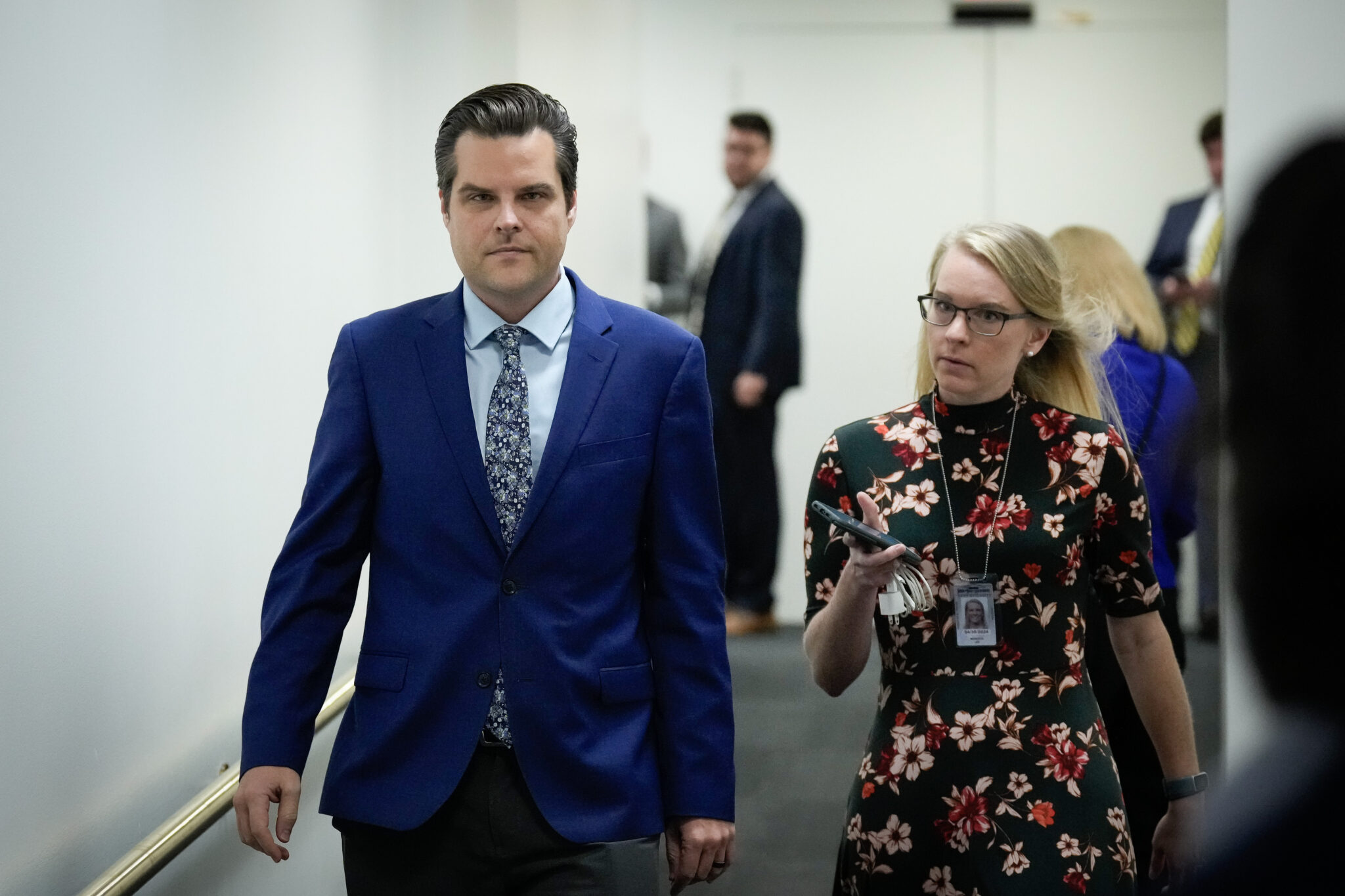
Former U.S. Rep. Matt Gaetz leaves a House Republican Conference meeting at the U.S. Capitol on Oct. 3, 2023 in Washington, D.C. (Photo by Drew Angerer/Getty Images)
WASHINGTON — Former Florida Congressman Matt Gaetz announced Thursday he’s withdrawing as President-elect Donald Trump’s planned nominee for attorney general days after securing the appointment.
Gaetz’s path to Senate confirmation was highly unlikely following years of investigations about alleged drug usage and payments for sex, including with an underage girl. He submitted his resignation to Congress last week.
“While the momentum was strong, it is clear that my confirmation was unfairly becoming a distraction to the critical work of the Trump/Vance Transition,” Gaetz wrote in a social media post. “There is no time to waste on a needlessly protracted Washington scuffle, thus I’ll be withdrawing my name from consideration to serve as Attorney General. Trump’s DOJ must be in place and ready on Day 1.”
Trump posted on social media afterward that he “greatly” appreciated “the recent efforts of Matt Gaetz in seeking approval to be Attorney General.”
“He was doing very well but, at the same time, did not want to be a distraction for the Administration, for which he has much respect,” Trump wrote. “Matt has a wonderful future, and I look forward to watching all of the great things he will do!”
When asked if the Trump-Vance transition team had another nominee choice lined up, and whether they viewed the Gaetz withdrawal as a setback, spokesperson Karoline Leavitt did not provide details.
“President Trump remains committed to choosing a leader for the Department of Justice who will strongly defend the Constitution and end the weaponization of our justice system. President Trump will announce his new decision when it is made,” Leavitt told States Newsroom in an emailed statement.
The House Ethics Committee voted along party lines Wednesday not to release its report on Gaetz, following more than three years of investigation. Gaetz has repeatedly denied any wrongdoing, including the allegations that he had sex with a minor.
Meetings with senators
Trump’s running mate, Ohio Sen. J.D. Vance, spent Wednesday shuffling Gaetz between meetings with Republicans on the Senate Judiciary Committee, which would have held his confirmation hearing. Republicans will control the Senate in the new session of Congress beginning in January.
South Carolina Sen. Lindsey Graham, the top Republican on the Judiciary Committee, wrote on social media that he respected Gaetz’s decision to withdraw his name from consideration as AG.
“I look forward to working with President Trump regarding future nominees to get this important job up and running,” Graham said.
GOP Sen. Chuck Grassley, incoming Judiciary Committee chair, posted the following on X: “I respect Gaetz decision &look fwd 2helping PresTrump confirm qualified noms 2reform Dept of Justice &bring TRANSPARENCY/ACCOUNTABILITY Trump’s mission = DRAIN THE SWAMP& I would add get some1 who will answer my hundreds of outstanding oversight letters sitting at Biden DOJ/FBI.”
Grassley’s staff referred States Newsroom to the social media post when the outlet reached out for comment.
The offices of Sens. John Kennedy of Louisiana and Tom Cotton of Arkansas, fellow Senate Judiciary Committee Republicans, declined to comment.
Gaetz’s future is unclear, given that he resigned from the U.S. House last week and notified the chamber he didn’t plan to take the oath of office for the upcoming 119th Congress.
He first joined the House in January 2017 and led efforts to remove former House Speaker Kevin McCarthy from that role last year, setting off a month-long stalemate within the House Republican Conference over who should lead the party.
The race to fill his empty seat in a special election has already attracted six candidates, mostly Republicans in a heavily conservative-leaning district.
Gaetz could jump into the race for his old seat, possibly winning a place back in the House of Representative next year following the special election.
He could also try to take the oath of office when the next session of Congress begins on Jan. 3, since he wrote in his resignation letter that he did “not intend to take the oath of office for the same office in the 119th Congress, to pursue the position of Attorney General in the Trump Administration.”
That would give the House Ethics Committee jurisdiction to complete its report on Gaetz and release it publicly.
AG oversees Department of Justice
The attorney general is responsible for overseeing the Department of Justice, which includes the federal government’s top law enforcement agencies as well as prosecutors.
The Bureau of Alcohol, Tobacco, Firearms and Explosives, or ATF, Drug Enforcement Administration, Federal Bureau of Investigation, Federal Bureau of Prisons, Office for Victims of Crime, Office on Violence Against Women and U.S. Attorneys’ offices are among the 40 entities within the DOJ and its 115,000-person workforce.
Congress approved $37.52 billion for the Department of Justice in the most recent full-year spending bill.
Trump had two attorneys general during his first term as president. He first nominated former Alabama Sen. Jeff Sessions, whom Trump later fired amid disputes, and then Bill Barr.
Ashley Murray contributed to this story.
Last updated 3:03 p.m., Nov. 21, 2024
Jennifer Shutt
Jennifer covers the nation’s capital as a senior reporter for States Newsroom. Her coverage areas include congressional policy, politics and legal challenges with a focus on health care, unemployment, housing and aid to families.
Ohio Capital Journal is part of States Newsroom, the nation’s largest state-focused nonprofit news organization.
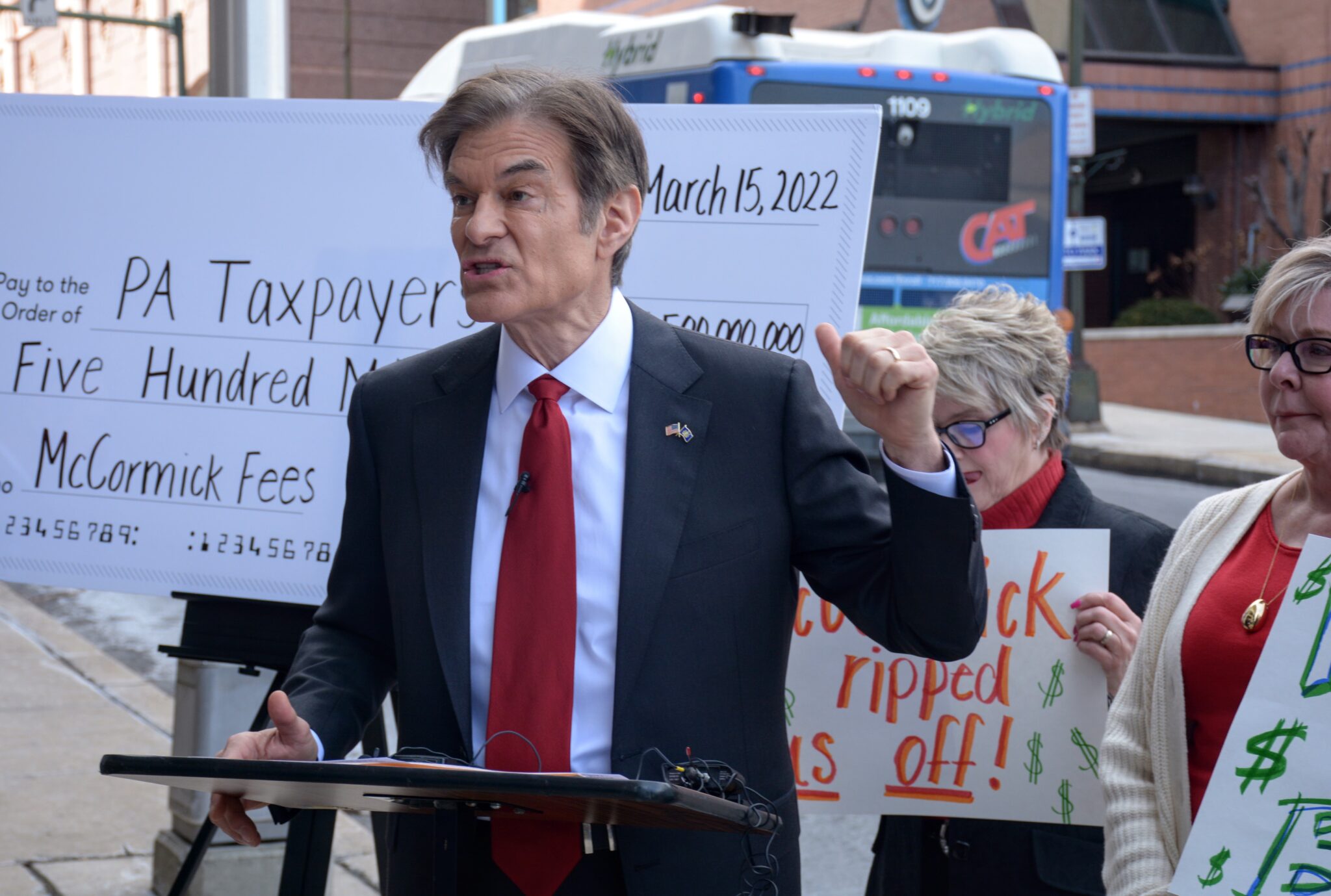
President-elect Donald Trump on Tuesday announced his intent to nominate Dr. Mehmet Oz as administrator of the Centers for Medicare and Medicaid Services. In this photo, Oz speaks at a March 15, 2022 press conference in Harrisburg, Pennsylvania. (Photo by Pennsylvania Capital-Star).
WASHINGTON — Former TV personality and onetime U.S. Senate candidate Mehmet Oz could become the next administrator for the Centers for Medicare and Medicaid Services, an expansive government agency that is responsible for large swaths of the country’s health care.
President-elect Donald Trump announced his intent to nominate Oz on Tuesday, writing in a statement “there may be no Physician more qualified and capable than Dr. Oz to Make America Healthy Again.”
Oz won the Republican primary in the 2022 Pennsylvania U.S. Senate race but was defeated during the general election by Democratic Sen. John Fetterman.
Trump wrote that Oz would “work closely” with Robert F. Kennedy Jr., who will be nominated for Health and Human Services secretary, “to take on the illness industrial complex, and all the horrible chronic diseases left in its wake.”
“He will also cut waste and fraud within our Country’s most expensive Government Agency, which is a third of our Nation’s Healthcare spend, and a quarter of our entire National Budget,” Trump wrote in the announcement.
The Center for Medicare and Medicaid Services manages the country’s largest health care programs, including Medicare, Medicaid, the Children’s Health Insurance Program, or CHIP, and the health insurance marketplaces created by the Affordable Care Act, or Obamacare.
There are 67.7 million people enrolled in Medicare, with nearly 90% of those enrollees over the age of 65. The program also provides health care coverage for younger people with severe illnesses or disabilities.
Medicaid, a state-federal program that provides health coverage for low-income people, has about 72.4 million enrollees.
There are 7.1 million CHIP program participants.
And 21.3 million people purchased health insurance through the ACA marketplace during the 2024 open enrollment period.
When added together, the Center for Medicare and Medicaid Services provides health care coverage to 1 in 4 Americans, according to its latest financial report.
The agency spent about $1.516 trillion during the last fiscal year and has more than 6,700 federal employees as well as contractors to handle the workload.
“CMS and its contractors process over one billion Medicare claims annually, monitor quality of care, provide the states with matching funds for Medicaid benefits, and develop policies and procedures designed to give the best possible service to beneficiaries,” according to the report.
“CMS also assures the safety and quality of medical facilities, provides
health insurance protection to workers changing jobs, and maintains
the largest collection of healthcare data in the United States.”
Oz received his undergraduate degree from Harvard University before earning a joint M.D. and MBA from the University of Pennsylvania School of Medicine and Wharton Business School.
He starred in the daytime show “Dr. Oz,” which ran from 2009 until 2022.
Oz’s nomination is subject to Senate confirmation and is under the jurisdiction of the Finance Committee, currently led by Oregon Democratic Sen. Ron Wyden and Idaho Republican Sen. Mike Crapo.
Oz’s confirmation hearing won’t be the first time he’s testified before a Senate committee. More than 10 years ago, he testified in front of a Senate panel that his comments on his TV show about certain weight loss supplements were “flowery.”
Last updated 5:50 p.m., Nov. 19, 2024
Jennifer Shutt
Jennifer covers the nation’s capital as a senior reporter for States Newsroom. Her coverage areas include congressional policy, politics and legal challenges with a focus on health care, unemployment, housing and aid to families.
Ohio Capital Journal is part of States Newsroom, the nation’s largest state-focused nonprofit news organization.
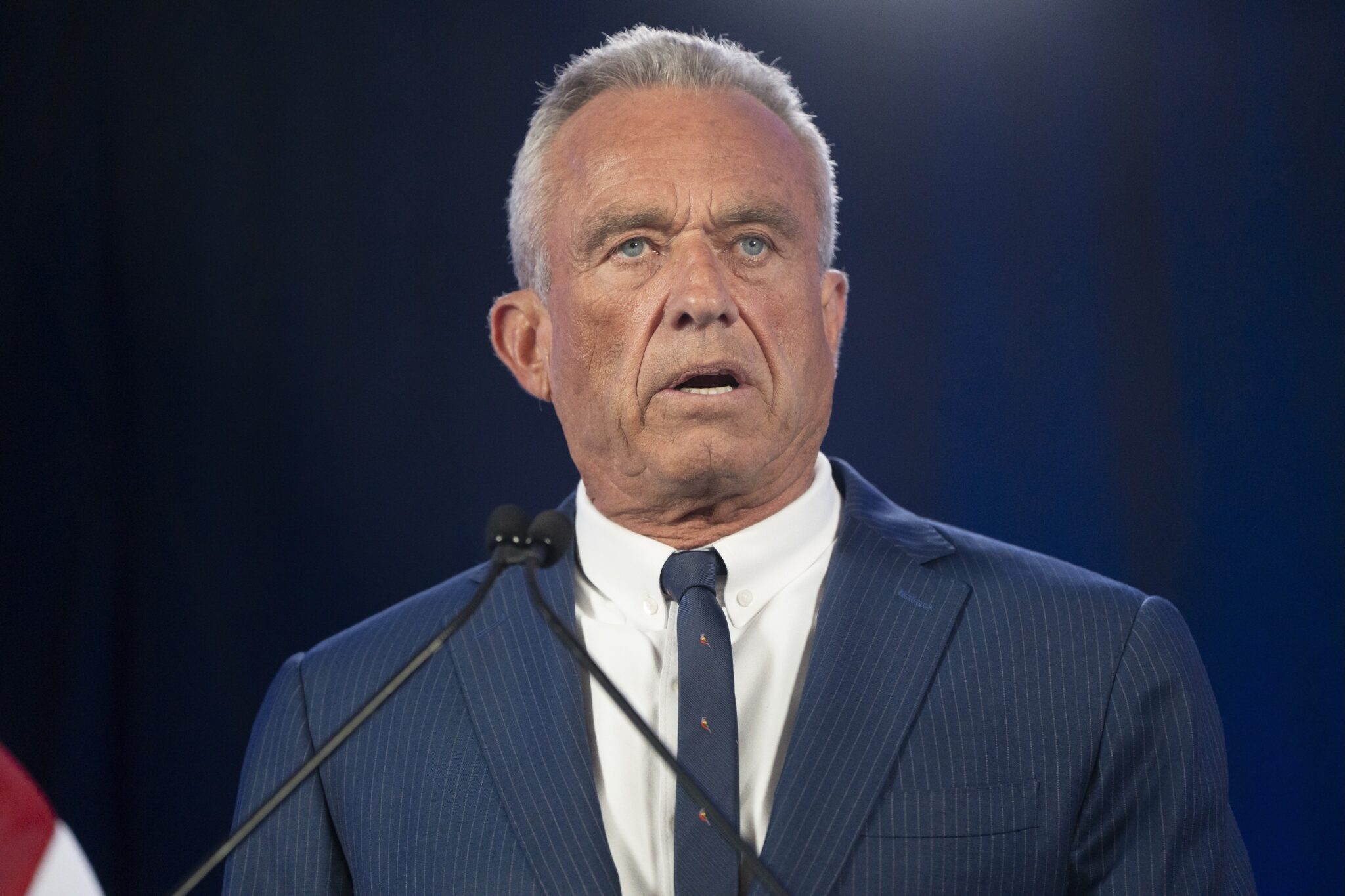
Robert F. Kennedy Jr. gives remarks at the Renaissance Phoenix Downtown Hotel on Aug. 23, 2024 in Phoenix, Arizona. (Photo by Rebecca Noble/Getty Images)
WASHINGTON — President-elect Donald Trump announced Thursday he plans to nominate Robert F. Kennedy Jr. to head the Department of Health and Human Services, another controversial candidate who could face a challenging confirmation process in the U.S. Senate given his non-scientific beliefs about public health, including his anti-vaccine stance.
“I am thrilled to announce Robert F. Kennedy Jr. as The United States Secretary of Health and Human Services (HHS),” Trump posted on social media. “For too long, Americans have been crushed by the industrial food complex and drug companies who have engaged in deception, misinformation, and disinformation when it comes to Public Health.
“The Safety and Health of all Americans is the most important role of any Administration, and HHS will play a big role in helping ensure that everybody will be protected from harmful chemicals, pollutants, pesticides, pharmaceutical products, and food additives that have contributed to the overwhelming Health Crisis in this Country.”
HHS receives about $116.8 billion in discretionary federal funds and about $1.7 trillion in mandatory spending each year and houses several big-name public health agencies, including the Administration for Strategic Preparedness and Response or ASPR, the Centers for Disease Control and Prevention, the Centers for Medicare & Medicaid Services, the Food and Drug Administration, the National Institutes of Health and the Substance Abuse and Mental Health Services Administration.
Kennedy ran in this year’s presidential election as an independent candidate, often repeating inaccurate information about vaccines and spreading other conspiracy theories about public health.
He has no background in science, research, or medicine. He graduated from Harvard University before going on to receive a law degree from the University of Virginia Law School.
He pleaded guilty to felony heroin possession in Rapid City, S.D., in February 1984, before receiving two years of probation, which ended a year early. He volunteered with the Natural Resources Defense Council as part of that probation.
Kennedy spent much of his career as an environmental lawyer and published several books.
After ending his own presidential bid this year, Kennedy endorsed Trump and campaigned frequently for him.
Criticism of the nomination began quickly after news broke Thursday, though far-right Republicans are expected to celebrate the nomination.
Lisa Gilbert, co-president of the watchdog nonprofit organization Public Citizen, released a written statement saying, “Kennedy is a science-denying, morally-bankrupt conspiracy theorist who will endanger people’s lives if placed in a position of authority over health. The U.S. Senate should unanimously reject this nomination.”
Louisiana Republican Sen. Bill Cassidy, ranking member on the Health, Education, Labor, and Pensions Committee, released a written statement that he’s interested in learning more about Kennedy during the confirmation process.
“RFK Jr. has championed issues like healthy foods and the need for greater transparency in our public health infrastructure,” Cassidy wrote. “I look forward to learning more about his other policy positions and how they will support a conservative, pro-American agenda.”
Washington state Democratic Sen. Patty Murray, a senior member of the HELP panel that will hold the confirmation hearing, wrote in a statement that Kennedy “could not be more dangerous — this is cause for deep concern for every American.”
“There is no telling how far a fringe conspiracy theorist like RFK Jr. could set back America in terms of public health, reproductive rights, research and innovation, and so much else,” Murray wrote. “The consequences here are not theoretical or superficial — health care access, coverage, research, and public health are life or death issues for people — and the COVID pandemic was an all too recent, all too painful reminder.”
Kentucky Republican Sen. Rand Paul congratulated Kennedy on social media, writing “Congratulations to @RobertKennedyJr on his nomination as Secretary of Health and Human Services. Finally, someone to detox the place after the Fauci era. Get ready for health care freedom and MAHA!”
Colorado’s Democratic Gov. Jared Polis, a former member of Congress who previously criticized Kennedy’s anti-vaccine stance as a way to bring back polio and measles, cheered his nomination in a lengthy social media post.
“I hope he leans into personal choice on vaccines rather than bans (which I think are terrible, just like mandates) but what I’m most optimistic about is taking on big pharma and the corporate ag oligopoly to improve our health.”
Polis added another post about an hour later, writing that science “must remain THE cornerstone of our nation’s health policy and the science-backed decision to get vaccinated improves public health and safety.”
“But if as a country we follow the science we would also be far more concerned about the impact of pesticides on public health, ag policy on nutrition, and the lack of access to prescription drugs due to drug high prices,” Polis added. “This is why I am for a major shake-up in institutions like the FDA that have been barriers to lowering drug costs and promoting healthy food choices. Lest there by any doubt, I am vaccinated as is my family. I will hold any HHS Secretary to the same high standard of protecting and improving public health.”
_______
Jennifer Shutt
Jennifer covers the nation’s capital as a senior reporter for States Newsroom. Her coverage areas include congressional policy, politics and legal challenges with a focus on health care, unemployment, housing and aid to families.
Ohio Capital Journal is part of States Newsroom, the nation’s largest state-focused nonprofit news organization.
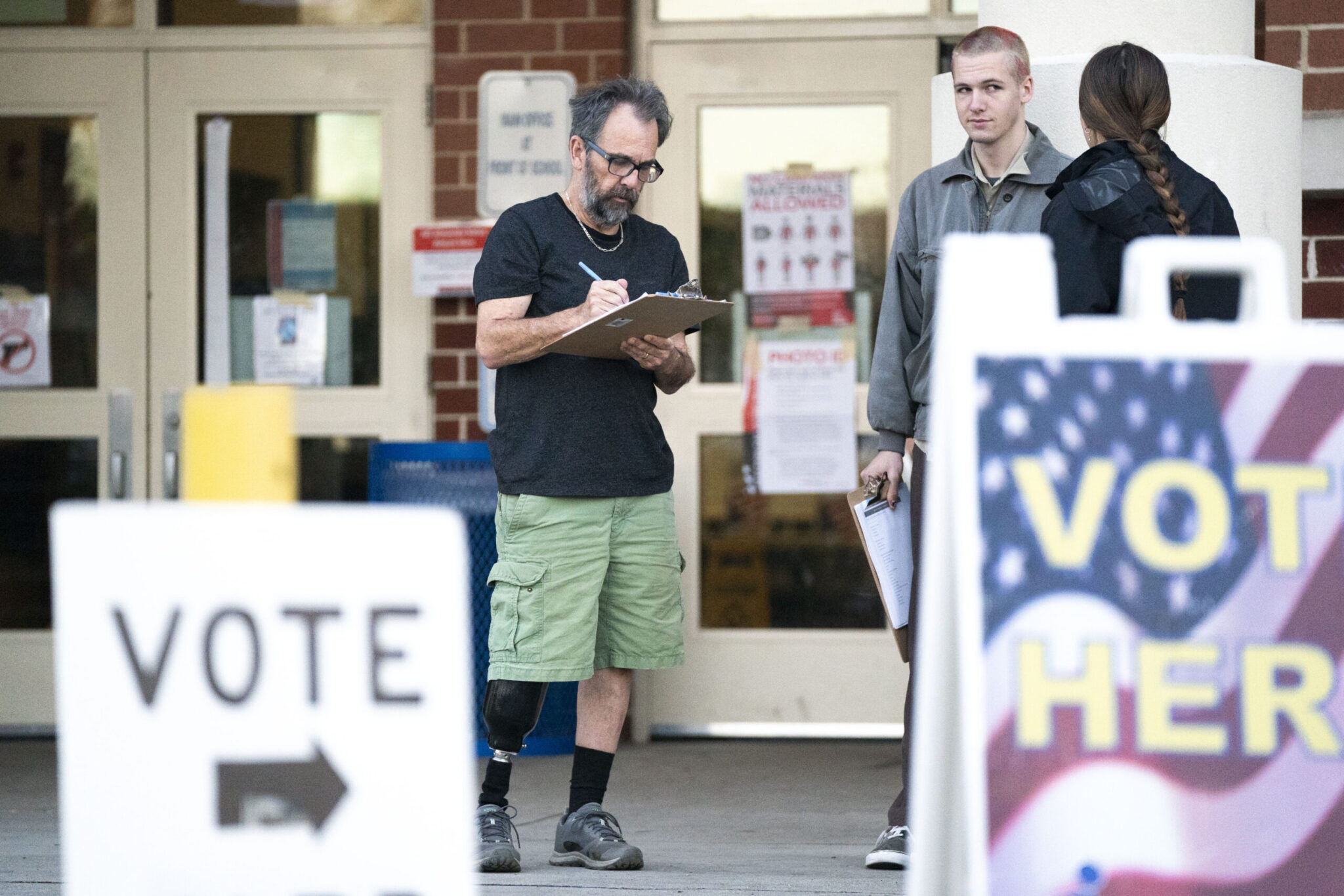
A man participates in exit polling after voting in the South Carolina Republican presidential primary at Dreher High School on Feb. 24, 2024 in Columbia, South Carolina. (Photo by Sean Rayford/Getty Images)
WASHINGTON — A pro-democracy organization warned Monday that disinformation and violent rhetoric could make the weeks that follow Election Day especially fraught, pushing the country past the upheaval that arose four years ago during the last presidential transition.
The comments from three members of the Defend Democracy Project came just days before voting ends on Nov. 5, though with several races extremely close, the country may not know for days who won the presidential contest as well as control of Congress.
That could leave considerable space for speculation as state election workers count mail-in ballots and potentially undertake full recounts, similar to four years ago.
“I think the biggest vulnerability will continue to be the mis- and disinformation that will happen in the aftermath of the election,” said Olivia Troye, who previously worked for Vice President Mike Pence as a special adviser on homeland security and counterterrorism.
Troye raised concerns that Republican presidential nominee Donald Trump may make false claims about election fraud and encourage violence similar to what took place on Jan. 6, 2021, should he lose the Electoral College again.
Troye referenced an election bulletin from the Federal Bureau of Investigation and the Department of Homeland Security she said cautioned that “candidates, elected officials, election workers, members of the media, judges involved in these cases” could all become targets of post-election violence.
“And they’re also concerned about the visible attacks and violence on polling places or ballot drop boxes,” Troye said, referencing the burning of ballots inside drop boxes in Oregon and Washington states early Monday morning.
Michael Podhorzer, chair of the Defend Democracy Project, said during the virtual briefing for reporters that one of the reasons many state officials didn’t go along with requests to “find votes” for Trump in the days following the 2020 election was because President Joe Biden had “two states to spare.”
“And that created a prisoner’s dilemma for every Republican election official who might have done the wrong thing,” Podhorzer said. “So if you take the call to (Georgia Secretary of State) Brad Raffensperger, he understood that even if he could find those votes that Trump wanted, unless two Democratic secretaries of state overturned their results, Donald Trump was not going back to the White House.
“And what that meant was that there wasn’t any single actor, in the way there was in 2000 in Florida, who could actually change the results of the election.”
That could be different this time, should Democratic presidential nominee Kamala Harris win by a small margin, potentially just one state’s Electoral College votes, he said.
Accepting the results
The Associated Press-NORC Center for Public Affairs Research released a survey Monday showing 86% of registered voters believe whoever loses the presidential election should accept the results, though just 33% expect Trump will concede if he fails to secure the votes needed to win the Electoral College.
About 77% of those surveyed expected Harris to accept the results should she lose the presidential race.
Anxiety about post-election violence was rather high among the registered voters surveyed, with 76% saying they are extremely or somewhat concerned about violent attempts to overturn the election results.
Eighty-two percent said they were at least somewhat concerned about “increased political violence directed at political figures or election officials.”
Voters are also worried about foreign interference in the elections, with 78% of the registered voters surveyed saying they are extremely or somewhat concerned about it “influencing what Americans think about political candidates.”
The co-chairs of Issue One’s National Council on Election Integrity — former U.S. Reps. Barbara Comstock, R-Va., Donna Edwards, D-Md., Tim Roemer, D-Ind., and Zach Wamp, R-Tenn. — released a written statement Monday addressing a fake video produced by Russian actors about ballots in Pennsylvania. The statement also criticized a Maryland Republican congressman who said North Carolina should just give its Electoral College votes to Trump.
“Foreign adversaries are seeking to influence U.S. elections by sowing division and spreading false information to undermine confidence in our system of self-government,” the co-chairs wrote. “In addition, people who want to win at all costs continue to spread false claims about election integrity and may create chaos, delay results, and challenge the outcome of our fair electoral process.”
The four wrote the suggestions from Maryland Rep. Andy Harris, chairman of the far-right U.S. House Freedom Caucus, that North Carolina simply grant its 15 Electoral College votes to Trump “before votes are counted are dangerous and against the rule of law.”
“By rejecting the so-called independent state legislature theory in Moore v. Harper, the Supreme Court affirmed that state legislatures do not have the power to replace the popular will with a slate of electors,” they wrote.
Issue One describes itself as a “crosspartisan” organization that works to “unite Republicans, Democrats, and independents in the movement to fix our broken political system and build an inclusive democracy that works for everyone.”
GOP blowback on Puerto Rico insults at Trump rally
GET THE MORNING HEADLINES.
Democrats and Republicans united somewhat Monday to express anger about comments a comedian made about Puerto Rico during a Trump rally on Sunday at Madison Square Garden.
Tony Hinchcliffe, who spoke in the hours leading up to Trump’s comments, called Puerto Rico a “floating island of garbage in the middle of the ocean right now.”
Hinchcliffe later said Latinos “love making babies” and made additional lewd comments.
Congressional Hispanic Caucus Chair Nanette Diaz Barragán, D-Calif., released a statement Monday calling the comments shameful and dangerous.
“This type of language emboldens prejudice, encourages violence, and undermines the values of unity and respect that our country is built on,” Barragán wrote. “It’s deeply troubling to see Republican leaders celebrate this rhetoric instead of promoting unity and truth.”
Vice President Harris told reporters traveling with her that the comedian’s comments were part of the reason voters are “exhausted” and “ready to turn the page” on Trump.
“It is absolutely something that is intended to, and is fanning the fuel of trying to divide our country,” Harris said.
Florida Republican Sen. Rick Scott posted on social media that the comedian’s comments about Puerto Rico were “not funny and it’s not true.”
“Puerto Ricans are amazing people and amazing Americans! I’ve been to the island many times. It’s a beautiful place. Everyone should visit!” Scott wrote. “I will always do whatever I can to help any Puerto Rican in Florida or on the island.”
Florida Republican Rep. Carlos A. Giménez posted on social media that the comedian’s comments were “completely classless & in poor taste.”
“Puerto Rico is the crown jewel of the Caribbean & home to many of the most patriotic Americans I know,” Giménez wrote. “@TonyHinchcliffe clearly isn’t funny & definitely doesn’t reflect my values or those of the Republican Party.”
Puerto Rico’s delegate to the U.S. House, Jenniffer González-Colón, a Republican, called the comedian’s remarks “despicable, misguided, and revolting.”
“What he said is not funny; just as his comments were rejected by the audience, they should be rejected by all!” González-Colón wrote. “There can be no room for such vile and racist expressions. They do not represent the values of the GOP.”
Ariana Figueroa contributed to this report.
Jennifer Shutt
Jennifer covers the nation’s capital as a senior reporter for States Newsroom. Her coverage areas include congressional policy, politics and legal challenges with a focus on health care, unemployment, housing and aid to families.
Ohio Capital Journal is part of States Newsroom, the nation’s largest state-focused nonprofit news organization.
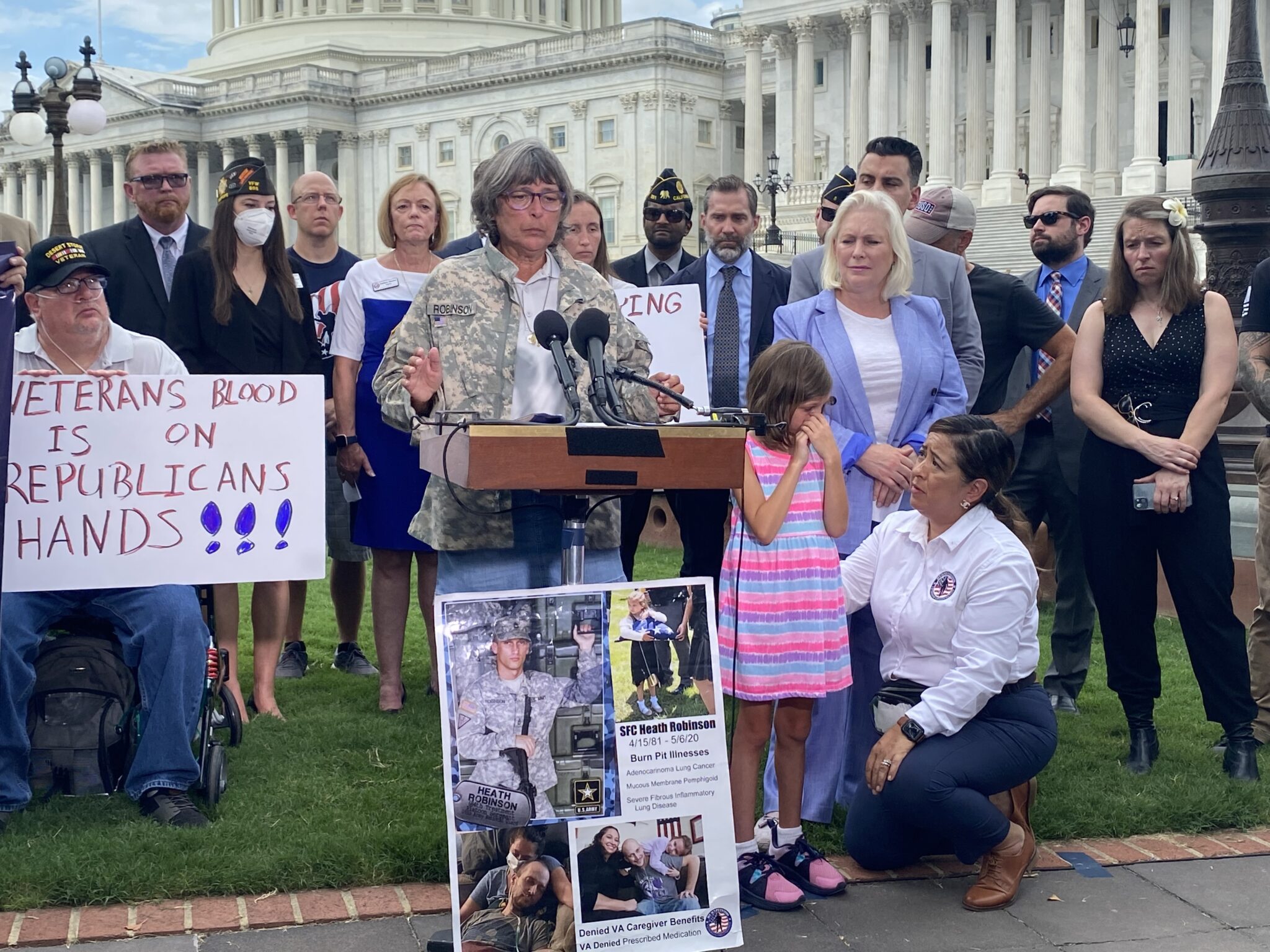
Susan Zeier, mother-in-law of late Sgt. First Class Heath Robinson of the Ohio National Guard, speaks during a press conference on the PACT Act on July 28, 2022 while Rosie Torres, co-founder of Burn Pits 360, comforts Robinson’s daughter, Brielle Robinson. (Photo by Jennifer Shutt, States Newsroom.)
WASHINGTON — President Joe Biden on Friday celebrated the number of veterans enrolled in VA health care and benefits as part of a law he signed nearly two years ago, though he said more work must be done for troops who were stationed at a base in Uzbekistan in the early 2000s.
“Two years ago, I signed the bipartisan Sergeant First Class Heath Robinson Honoring Our Promise to Address Comprehensive Toxins (PACT) Act enacting the most significant expansion of benefits and health care for toxic exposed veterans and their survivors in over thirty years,” Biden wrote in a statement.
The law, which spent years gaining the support it needed in Congress, expanded health care coverage and benefits for veterans exposed to toxic substances like Agent Orange and open-air burn pits.
To date, more than 1 million veterans and 10,000 survivors of veterans who died have begun to receive disability benefits stemming from the law, accounting for approximately $6.8 billion in earned benefits.
Biden said in his statement that his administration would continue studying veterans’ other illnesses for a “presumptive status,” which could ensure them access to health care and benefits without having to prove to the VA that their conditions are directly linked to their military service.
The VA is also planning to “close loopholes for certain veterans exposed to harmful toxins during their military service,” Biden wrote, without elaborating.
A White House fact sheet says the VA is looking into providing benefits for 16,000 veterans who served at Karshi-Khanabad in Uzbekistan, also known as K2, between 2001 and 2005, since there were “several contaminants…in either the air, water, soil, or soil gas.”
“VA plans to take steps to consider veterans who served in Uzbekistan as Persian Gulf Veterans so that any veteran who served at K2 and who experience undiagnosed illness and medically unexplained chronic multi-symptom illnesses can get the benefits they deserve,” it states. “VA will also create new training materials for claims processors and examiners on the hazards identified at K2.”
Since the law — known as the Promise to Address Comprehensive Toxics Act or the PACT Act — took effect nearly two years ago, the VA says that 739,421 veterans have enrolled in its health care programs.
Of that total, 333,767 veterans are covered under the new law, including those who served in the Vietnam War, the Gulf War and the wars that followed the Sept. 11 attacks.
The numbers released Friday are significantly higher than they were when Biden gave a speech on the law’s one-year anniversary. The VA said at the time, which was one year ago, that 408,581 veterans had filed their claims and that 348,469 of those had been approved.
Secretary of Veterans Affairs Denis McDonough said on a call with reporters at the time the law had led to “more than $5.7 billion in earned benefits for veterans.”
The exact number of veterans with approved PACT Act claims as of Friday stood at 1,005,341 while the number of survivors approved had reached 10,777.
A total of 1,251,720 veterans so far have completed filing Pact Act claims as have 21,416 survivors.
The VA has an interactive dashboard that provides veterans with information about how to apply for health care and benefits under the PACT Act as well as how many claims have been submitted.
The VA has a calendar of in-person events that can be found here. Veterans or their family members can also call the VA at 800-698-2411 to inquire about PACT Act benefits.
Jennifer Shutt
Jennifer covers the nation’s capital as a senior reporter for States Newsroom. Her coverage areas include congressional policy, politics and legal challenges with a focus on health care, unemployment, housing and aid to families.
Ohio Capital Journal is part of States Newsroom, the nation’s largest state-focused nonprofit news organization.
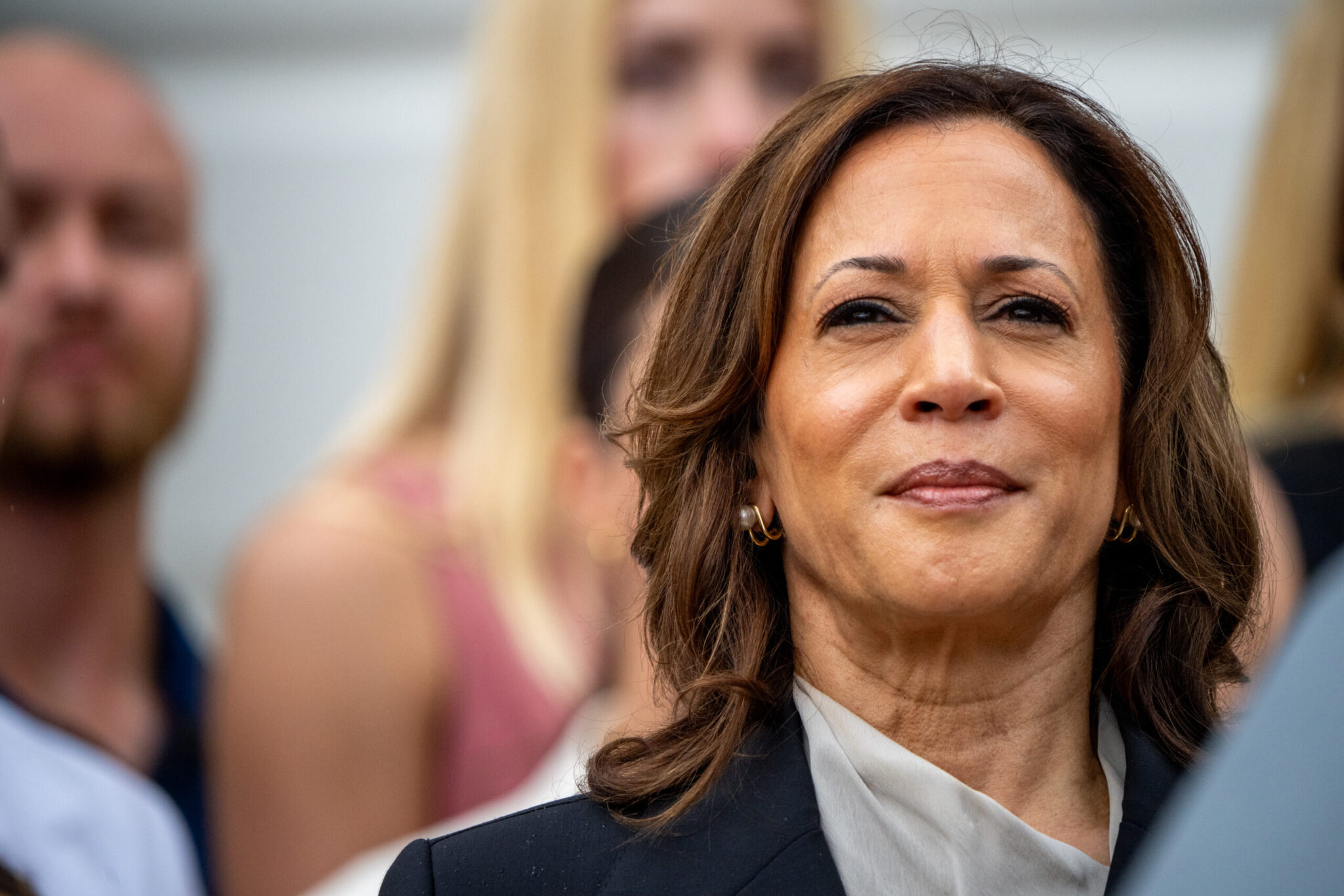
WASHINGTON — Enough Democratic delegates selected Kamala Harris to make her the party’s presidential nominee by Friday, during an ongoing virtual vote that began less than two weeks after President Joe Biden ended his reelection campaign.
The vote, which will not officially close until Monday evening, was held in advance of the Democratic National Convention, scheduled to take place in Chicago later this month, to assuage concerns about state registration deadlines that begin in August.
The DNC began laying the groundwork for the virtual nomination months before Biden announced his decision to step aside.
Harris said on a call with supporters Friday that she was happy to have surpassed the threshold needed to win the nomination.
“Of course, I will officially accept your nomination next week once the virtual voting period has closed, but already I’m happy to know that we have enough delegates to secure the nomination,” Harris said.
DNC Chair Jaime Harrison encouraged DNC delegates to keep sending in their ballots during the Zoom call, but said the support for Harris so far has been overwhelming.
“I am so proud to confirm that Vice President Harris has earned more than a majority of votes from all convention delegates and will be the nominee of the Democratic Party following the close of voting on Monday,” he said.
“The outpouring of support we have witnessed for the vice president has been unprecedented,” Harrison added. “We knew your ballots would come back quickly. But the fact that we can say today, just one day after we opened voting, that the vice president has crossed the majority threshold and will officially be our nominee next week — folks, that is simply outstanding.”
The virtual roll call vote began Thursday at 9 a.m. Eastern and will conclude Monday at 6 p.m. Eastern. Harris was the only candidate to qualify.
The DNC plans to announce the final results afterward, including a state-by-state breakdown.
One of Harris’ first official acts will be selecting a running mate from a list that holds several governors as well as at least one senator. Her decision will set the tone for the sprint to the ballot box.
Harris and her running mate are expected to hold rallies in swing states next week, including Pennsylvania on Tuesday, Wisconsin and Michigan on Wednesday, North Carolina on Thursday, Georgia and Arizona on Friday, and Nevada on Saturday.
Jennifer Shutt
Jennifer covers the nation’s capital as a senior reporter for States Newsroom. Her coverage areas include congressional policy, politics and legal challenges with a focus on health care, unemployment, housing and aid to families.
Ohio Capital Journal is part of States Newsroom, the nation’s largest state-focused nonprofit news organization.