Tag: JENNIFER SHUTT

  • Democrats approve virtual vote by delegates to pick a presidential nominee

    Democrats approve virtual vote by delegates to pick a presidential nominee

    Loveland, Ohio – BY:  Ohio Capital Journal

    The Democratic National Committee will move forward with a virtual nomination vote for its presidential candidate as soon as Aug. 1, after its Rules Committee approved the process on Wednesday.

    The DNC has been moving forward with plans to hold a virtual nomination roll call since well before President Joe Biden announced his withdrawal from the race and endorsed Vice President Kamala Harris to take his place.

    The pre-convention vote is necessary to avoid potential legal pitfalls that could arise if the DNC waits to formally nominate its candidate until during its convention in late August, since some states have deadlines to place candidates on their ballots before or during that week.

    DNC Chair Jaime Harrison said at the beginning of the Rules Committee’s meeting the party is striving to “execute this nomination with transparency, with fairness and efficiency.”

    “Many of you have probably seen the reporting that Vice President Harris has received the expressed support from the majority of pledged delegates and might wonder what that means for this process,” Harrison said.

    “Delegates are free to support who they choose and we are glad that they are engaging in this important moment in history,” Harrison said. “As a party we have an obligation to design and implement a fair nomination process for delegates to officially express their preferences through a vote resulting in eventually an official nominee of the Democratic Party who will go on to the top ballot in November.”

    Multi-step process

    Under the process adopted during the panel’s meeting, Harris as well as other presidential hopefuls have from July 25 through July 27 at 6 p.m. Eastern to register their intent to seek the nomination with the DNC Convention secretary.

    Candidates then have until July 30 at 6 p.m. to meet the requirements, including collecting at least 300 signatures from DNC delegates with a maximum of 50 of those people representing any one state.

    DNC Rules Committee Co-Chair Leah D. Daughtry said during the live-streamed meeting that if only one presidential candidate qualifies, she expects the virtual roll call would take place on Aug. 1.

    If more than one candidate qualifies, Daughtry anticipates the virtual roll call would take place on or around Aug. 3.

    Democrats will still hold a ceremonial roll call of the states from the floor of the United Center in Chicago during their convention week, but have argued for months they must certify their nominee beforehand.

    ‘Consistent with our values’

    Minyon Moore, chair of the 2024 Democratic National Convention, said the party has “the guideposts and the expertise in place to ensure that we will do this right and in a manner that is consistent with our values as Democrats.”

    “We understand that this is an unprecedented situation but I’m confident that we will find a path forward together,” Moore said.

    DNC outside counsel Pat Moore said the virtual roll call will provide an avenue for all 4,699 delegates to cast a vote for the presidential nominee.

    The DNC waiting until the in-person convention to officially certify its presidential nominee, he said, would open the party up to lawsuits.

    “Make no mistake, we have strong legal arguments in response to any such claims and we’re prepared to make them,” Pat Moore said. “But we also have opponents who are willing to make specious arguments and drag out the process in an effort to confuse voters and muddy the waters. And in some states, we will face an unfriendly judiciary.”

    Pat Moore said that ensuring the DNC formally nominates its presidential and vice presidential candidates ahead of any state deadlines is about ensuring voters in every state have their ballots counted in November.

    “Past is precedent: Trump and Republicans have already made it 100% clear that they will challenge the validity of the results if they lose on Election Day,” Pat Moore said.

    “If we take chances with state processes and deadlines, Republican groups could make the same argument to challenge Democratic votes in the post-election setting, arguing that our nominee should never have been on the ballot in the first place,” Pat Moore added. “We should not and must not give them that opportunity.”


    Jennifer Shutt
    JENNIFER SHUTT

    Jennifer covers the nation’s capital as a senior reporter for States Newsroom. Her coverage areas include congressional policy, politics and legal challenges with a focus on health care, unemployment, housing and aid to families.

    Ohio Capital Journal is part of States Newsroom, the nation’s largest state-focused nonprofit news organization.

    MORE FROM AUTHOR

  • BREAKING: Trump picks Ohio U.S. Sen. J.D. Vance as his running mate

    BREAKING: Trump picks Ohio U.S. Sen. J.D. Vance as his running mate

    BY:  AND  Ohio Capital Journal

    MILWAUKEE, Wis. — Donald Trump announced Ohio U.S. Sen. J.D. Vance as his running mate Monday during the first day of the Republican National Convention, capping off months of speculation about who would get the nod as his vice presidential pick.

    Vance has not been a member of Congress long, having less than two years experience as a senator and having voted against major bipartisan bills throughout his tenure in the upper chamber.

    Before becoming a U.S. lawmaker, Vance served in the Marine Corps during the Iraq war, worked as a venture capitalist and wrote a book about growing up in Middletown, Ohio. He holds a law degree from Yale.

    “After lengthy deliberation and thought, and considering the tremendous talents of many others, I have decided that the person best suited to assume the position of Vice President of the United States is Senator J.D. Vance of the Great State of Ohio,” Trump, who will be nominated as the 2024 Republican presidential candidate on Thursday night, posted on social media.

    “J.D. has had a very successful business career in Technology and Finance, and now, during the Campaign, will be strongly focused on the people he fought so brilliantly for, the American Workers and Farmers in Pennsylvania, Michigan, Wisconsin, Ohio, Minnesota, and far beyond….,” Trump added.

    Kevin Roberts, president of the conservative Heritage Foundation, received the news while he was speaking to reporters at the foundation’s all-day policy fest in downtown Milwaukee.

    “You will see a broad smile on my face,” Roberts said, adding that he and Vance are “good friends” and that he “personifies” Heritage’s values.

    “He listens. He’s thoughtful. He’s funny. He and I had a similar upbringing, challenging childhood, so we hit it off like that when we met. He’s obviously going to be his own man. He’s got to work with our conservative standard bearer,” Roberts said. “The second thing is in terms of policy, he understands the moment we’re in in this country, which is that we have a limited amount of time to implement great policy on behalf of forgotten Americans.”

    Trump’s former Vice President Mike Pence has distanced himself from Trump since the Jan. 6, 2021, attack on the U.S. Capitol building — requiring Trump to find a different person to join him on the ticket this year.

    Pence was in the Capitol that day, when a pro-Trump mob attacked police officers, broke into building and disrupted Congress’ certification of the electoral college votes for President Joe Biden.

    Pence has been critical of how the Republican Party has changed under Trump’s leadership, including rejecting how the platform evolved on abortion this year.

    The Biden-Harris campaign immediately slammed the selection of Vance.

    “Donald Trump picked J.D. Vance as his running mate because Vance will do what Mike Pence wouldn’t on January 6: bend over backwards to enable Trump and his extreme MAGA agenda, even if it means breaking the law and no matter the harm to the American people,” said Biden-Harris 2024 Chair Jen O’Malley Dillon.

    “Over the next three and a half months, we will spend every single day making the case between the two starkly contrasting visions Americans will choose between at the ballot box this November: the Biden-Harris ticket who’s focused on uniting the country, creating opportunity for everyone, and lowering costs; or Trump-Vance – whose harmful agenda will take away Americans’ rights, hurt the middle class, and make life more expensive  – all while benefiting the ultra-rich and greedy corporations.”

    Vance background

    Vance was born in Middletown, Ohio in August 1984. After graduating from high school in 2003 he enlisted in the Marine Corps, later deploying to the Iraq War.

    He attended Ohio State University, where he received a bachelor’s degree in political science and philosophy in 2009. Vance went on to attend Yale Law School, graduating in 2013 before working for the law firm Sidley Austin LLP.

    Vance gained national attention with his 2016 memoir, “Hillbilly Elegy: A Memoir of a Family and Culture in Crisis,” which tells the story of him growing up in poverty in the Rust Belt. However, the book faced backlash from many historians and journalists over his depictions of Appalachia and the people who live there.

    The 39-year-old worked in San Francisco in the tech industry as a venture capitalist. He served as a principal at one of the firms of Peter Thiel, the co-founder of PayPal.

    Vance later moved back to Ohio and raised more than $90 million to co-found a venture capital firm in Cincinnati, Narya Capital, which received financial backing from Thiel.

    Vance ran his first campaign for U.S. Senate in 2022, defeating Democratic candidate and former U.S. House Rep. Tim Ryan with 53% of the vote.

    Since being sworn into office in January 2023, Vance has voted against several big-ticket legislative items, including the law that raised the debt limit, the national defense policy bill and two must-pass government funding packages.

    Aid to Ukraine, Israel, Taiwan

    Vance also voted against legislation that held $95 billion in military and humanitarian assistance for Ukraine, Israel and Taiwan as well as a ban on TikTok within the United States unless the social media app’s Chinese parent company sold it.

    Vance was among the 18 senators who voted against that emergency spending bill heading to President Joe Biden’s desk. Another 79 senators voted to approve the legislation.

    During floor debate on the supplemental spending package, Vance spoke out against sending more aid and arms to Ukraine, arguing that there were parallels between its fight to eject Russia from its borders and the U.S. war in Iraq.

    “And the same exact arguments are being applied today, that you are a fan of Vladimir Putin if you don’t like our Ukraine policy, or you are a fan of some terrible tyrannical idea because you think maybe America should be more focused on the border of its own country than on someone else’s,” Vance said.

    “This war fever, this inability for us to actually process what is going on in our world to make rational decisions is the scariest part of this entire debate,” he added.

    Bipartisan efforts

    Vance has also worked across the aisle on bipartisan legislation during his somewhat brief tenure in the U.S. Senate.

    He sponsored a bill alongside Ohio Sen. Sherrod Brown, Pennsylvania Sens. Bob Casey and John Fetterman, all three of whom are Democrats, to address rail safety in the aftermath of the Norfolk Southern train derailment in East Palestine.

    Vance wrote in a statement released when the bill was unveiled in March 2023 that with the legislation “Congress has a real opportunity to ensure that what happened in East Palestine will never happen again.”

    “We owe every American the peace of mind that their community is protected from a catastrophe of this kind,” Vance wrote. “Action to prevent future disasters is critical, but we must never lose sight of the needs of the Ohioans living in East Palestine and surrounding communities.”

    The bipartisan legislation has yet to advance in the Senate to either a committee markup or a floor vote.

    Ashley Murray contributed to this report.


    Jennifer Shutt
    JENNIFER SHUTT

    Jennifer covers the nation’s capital as a senior reporter for States Newsroom. Her coverage areas include congressional policy, politics and legal challenges with a focus on health care, unemployment, housing and aid to families.

    Ohio Capital Journal is part of States Newsroom, the nation’s largest state-focused nonprofit news organization.

    MORE FROM AUTHOR

    Ariana Figueroa
    ARIANA FIGUEROA

    Ariana covers the nation’s capital for States Newsroom. Her areas of coverage include politics and policy, lobbying, elections and campaign finance.

    Ohio Capital Journal is part of States Newsroom, the nation’s largest state-focused nonprofit news organization.

    MORE FROM AUTHOR
  • U.S. Supreme Court rejects attempt to limit access to abortion pill

    U.S. Supreme Court rejects attempt to limit access to abortion pill

    BY:  Ohio Capital Journal

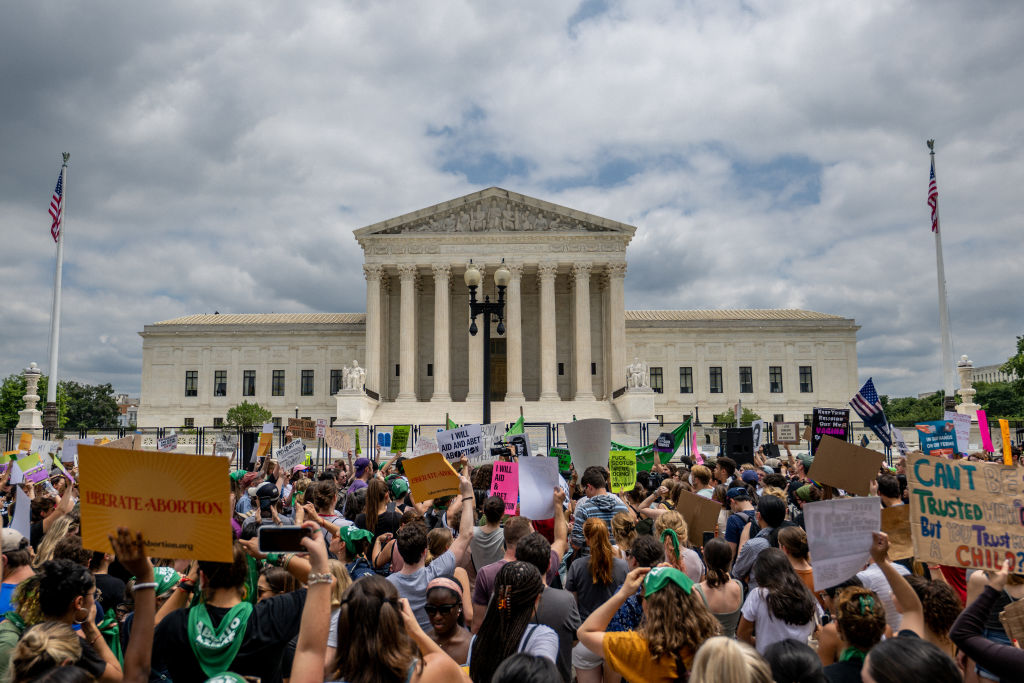
    WASHINGTON — The U.S. Supreme Court ruled in a much-anticipated decision Thursday that mifepristone, one of two pharmaceuticals used in medication abortion, can remain available under current prescribing guidelines.

    The high court unanimously rejected attempts by anti-abortion groups to roll back access to what was in place more than eight years ago, writing that they lacked standing to bring the case.

    Those limits would have made it more difficult for patients to get a prescription for mifepristone, which the Food and Drug Administration has approved for up to 10 weeks gestation and is used in about 63% of U.S. abortions.

    Erin Morrow Hawley, senior counsel at Alliance Defending Freedom, who argued the case in front of the court on behalf of the legal organization, doesn’t believe this is the end of efforts to challenge access to mifepristone.

    She said on a call shortly after the ruling was released the three states that intervened in a lower court — Idaho, Kansas and Missouri — could still advance their arguments against mifepristone and potentially hold standing, the legal right to bring a case.

    “I would expect the litigation to continue with those three states,” Hawley said.

    Kavanaugh writes opinion

    Justice Brett Kavanaugh wrote the opinion in the united ruling from the Supreme Court, with Justice Clarence Thomas writing a concurring opinion.

    “Plaintiffs are pro-life, oppose elective abortion, and have sincere legal, moral, ideological, and policy objections to mifepristone being prescribed and used by others,” Kavanaugh wrote.

    The four anti-abortion medical organizations and four anti-abortion doctors who originally brought the lawsuit against mifepristone have protections in place to guard against being forced to participate in abortions against their moral objections, he noted.

    “Not only as a matter of law but also as a matter of fact, the federal conscience laws have protected pro-life doctors ever since FDA approved mifepristone in 2000,” Kavanaugh wrote. “The plaintiffs have not identified any instances where a doctor was required, notwithstanding conscience objections, to perform an abortion or to provide other abortion-related treatment that violated the doctor’s conscience.”

    “Nor is there any evidence in the record here of hospitals overriding or failing to accommodate doctors’ conscience objections,” he added.

    Alliance Defending Freedom has not “identified any instances where a doctor was required, notwithstanding conscience objections, to perform an abortion or to provide other abortion-related treatment that violated the doctor’s conscience since mifepristone’s 2000 approval,” the opinion said.

    Kavanaugh might have also included hints on how the court will rule later this session on a separate abortion access case that addresses the Emergency Medical Treatment & Labor Act, known as EMTALA.

    “EMTALA does not require doctors to perform abortions or provide abortion-related medical treatment over their conscience objections because EMTALA does not impose obligations on individual doctors,” Kavanaugh wrote.

    Thomas agrees but questions who can sue

    Thomas wrote a concurring opinion in the case, saying that he agreed with the court’s unanimous decision, which he did join, but brought up concerns with how a certain type of standing is used by the Court.

    “Applying these precedents, the Court explains that the doctors cannot establish third-party standing to sue for violations of their patients’ rights without showing an injury of their own,” Thomas wrote.

    “But, there is a far simpler reason to reject this theory: Our third-party standing doctrine is mistaken,” Thomas added. “As I have previously explained, a plaintiff cannot establish an Article III case or controversy by asserting another person’s rights.”

    Reaction pours in

    Politicians, anti-abortion groups and reproductive rights organizations all reacted to the ruling within hours of its release, often pointing to November’s elections as a potential next step.

    President Joe Biden released a written statement saying the “decision does not change the fact that the fight for reproductive freedom continues.”

    “It does not change the fact that the Supreme Court overturned Roe v. Wade two years ago, and women lost a fundamental freedom,” Biden added. “It does not change the fact that the right for a woman to get the treatment she needs is imperiled if not impossible in many states.”

    Former President Donald Trump, the Republican Party’s presumptive nominee, was in meetings most of Thursday with U.S. House Republicans and then separately with Republican U.S. Senators.

    Neither Trump nor his campaign released a statement by early Thursday afternoon addressing the Supreme Court’s ruling.

    Louisiana Republican Sen. Bill Cassidy, ranking member on the Health, Education, Labor and Pensions Committee, wrote in a statement that the justice didn’t actually address the merits of the case.

    “The Court did not weigh in on the merits of the case, but the fact remains this is a high risk drug that ends the life of an unborn child,” Cassidy wrote. “I urge FDA to follow the law and reinstate important safeguards.”

    President of the American College of Obstetricians and Gynecologists Stella Dantas related a statement saying the ruling “provides us with long-awaited relief.”

    “We now know that patients and clinicians across the country will continue to have access to mifepristone for medication abortion and miscarriage management,” Dantas wrote. “Decades of clinical research have proven mifepristone to be safe and effective, and its strong track record of millions of patient uses confirms that data.”

    Hawley from Alliance Defending Freedom wrote in a written statement the organization was “disappointed that the Supreme Court did not reach the merits of the FDA’s lawless removal of commonsense safety standards for abortion drugs.”

    “While we’re disappointed with the court’s decision, we will continue to advocate for women and work to restore commonsense safeguards for abortion drugs—like an initial office visit to screen for ectopic pregnancies,” Hawley wrote. “And we are grateful that three states stand ready to hold the FDA accountable for jeopardizing the health and safety of women and girls across this country.”

    Nancy Northup, president and CEO of the Center for Reproductive Rights, wrote in a statement she had “both relief and anger about this decision.”

    “Thank goodness the Supreme Court unanimously rejected this unwarranted attempt to curtail access to medication abortion, but the fact remains that this meritless case should never have gotten this far,” Northup wrote.

    “The FDA’s rulings on medication abortion have been based on irrefutable science,” Northup wrote. “Unfortunately, the attacks on abortion pills will not stop here — the anti-abortion movement sees how critical abortion pills are in this post-Roe world, and they are hell bent on cutting off access.”

    Scientific evidence argued

    The Supreme Court heard oral arguments in the case in March, during which Solicitor General Elizabeth Prelogar argued the FDA’s guidelines for prescribing mifepristone were based on reputable scientific evidence and years of real-world use.

    “Only an exceptionally small number of women suffer the kinds of serious complications that could trigger any need for emergency treatment,” Prelogar said. “It’s speculative that any of those women would seek care from the two specific doctors who asserted conscience injuries. And even if that happened, federal conscience protections would guard against the injury the doctors face.”

    Hawley of ADF told the court that conscience protections in federal law didn’t do enough to protect anti-abortion doctors from having to possibly treat patients experiencing complications from medication abortion.

    “These are emergency situations,” Hawley said. “Respondent doctors don’t necessarily know until they scrub into that operating room whether this may or may not be abortion drug harm — it could be a miscarriage, it could be an ectopic pregnancy, or it could be an elective abortion.”

    The case reached the Supreme Court within two years of ADF originally filing the lawsuit in the District Court for the Northern District of Texas, where ADF wrote the FDA “exceeded its regulatory authority” when it originally approved mifepristone in 2000.

    ADF filed the case on behalf of Alliance for Hippocratic Medicine, the American Association of Pro-Life Obstetricians and Gynecologists, American College of Pediatricians and Christian Medical & Dental Associations, as well as four doctors from California, Indiana, Michigan and Texas.

    Kacsmaryk ruling started journey to high court

    Judge Matthew Joseph Kacsmaryk essentially agreed with the anti-abortion groups, in a ruling in April 2023, where he wrote he did “not second-guess FDA’s decision-making lightly.”

    “But here, FDA acquiesced on its legitimate safety concerns — in violation of its statutory duty — based on plainly unsound reasoning and studies that did not support its conclusions,” Kacsmaryk wrote.

    The U.S. Supreme Court issued a stay at the request of the Justice Department, which put the district court’s ruling on hold until the appeal process could work itself out.

    The Justice Department also appealed the district court’s ruling to the 5th Circuit Court of Appeals in Louisiana, where a three-judge panel heard the case in May 2023.

    The panel — composed of Jennifer Walker Elrod, who was appointed by former President George W. Bush, as well as James C. Ho and Cory T. Wilson, who were both appointed by former President Donald Trump — issued its ruling in August 2023.

    The appeals court disagreed with the district court’s ruling that mifepristone’s original approval should be overturned, though it said that the FDA erred in making changes to prescribing guidelines in 2016 and 2021.

    “It failed to consider the cumulative effect of removing several important safeguards at the same time. It failed to consider whether those ‘major’ and ‘interrelated’ changes might alter the risk profile, such that the agency should continue to mandate reporting of non-fatal adverse events,” the appeals judges wrote. “And it failed to gather evidence that affirmatively showed that mifepristone could be used safely without being prescribed and dispensed in person.”

    That ruling didn’t take effect under the Supreme Court’s earlier stay.

    The Department of Justice wrote to the high court weeks later in September, urging the justices to take up an appeal of the 5th Circuit’s decision.

    “The loss of access to mifepristone would be damaging for women and healthcare providers around the Nation,” the DOJ wrote in the 42-page document. “For many patients, mifepristone is the best method to lawfully terminate their early pregnancies. They may choose mifepristone over surgical abortion because of medical necessity, a desire for privacy, or past trauma.”

    Briefs filed with court

    Dozens of abortion rights organizations and lawmakers filed so-called amicus curiae or friend of the court briefs to the Supreme Court calling on the justices to keep access to mifepristone in line with the FDA guidelines.

    A group of more than 16 medical organizations, including the American College of Obstetricians and Gynecologists and the American Medical Association, wrote that “restricting access to mifepristone will not only jeopardize health, but worsen racial and economic inequities and deprive women of the choices that are at the very core of individual autonomy and wellbeing.”

    Anti-abortion groups and lawmakers opposed to mifepristone wrote numerous briefs as well.

    Attorneys general from Alabama, Alaska, Arkansas, Florida, Georgia, Indiana, Iowa, Kentucky, Louisiana, Mississippi, Montana, Nebraska, North Dakota, Ohio, Oklahoma, South Carolina, South Dakota, Tennessee, Texas, Utah, West Virginia and Wyoming sent in a 28-page brief.

    They wrote that the availability of mifepristone undermined states’ rights, since some of their states had sought to restrict abortion below the 10 weeks approved for mifepristone use or had sought to bar access to medication abortion.

    “The FDA’s actions undermine these laws, undercut States’ efforts to enforce them, and thus erode the federalism the Constitution deems vital,” the attorneys general wrote. “Given these harms to federalism, this Court should view the FDA’s actions with skepticism.”

    During oral arguments in March, several Supreme Court justices brought up conscience protections that insulate health care workers from having to assist with or perform procedures they have a religious objection to, like abortion.

    Associate Justice Ketanji Brown Jackson said she was “worried that there is a significant mismatch in this case between the claimed injury and the remedy that’s being sought.”

    “The obvious, common-sense remedy would be to provide them with an exemption that they don’t have to participate in this procedure,” Jackson said.

    Associate Justice Neil Gorsuch said the case seemed “like a prime example of turning what could be a small lawsuit into a nationwide legislative assembly on an FDA rule, or any other federal government action.”


    Jennifer Shutt
    JENNIFER SHUTT

    Jennifer covers the nation’s capital as a senior reporter for States Newsroom. Her coverage areas include congressional policy, politics and legal challenges with a focus on health care, unemployment, housing and aid to families.

    Ohio Capital Journal is part of States Newsroom, the nation’s largest state-focused nonprofit news organization.

    MORE FROM AUTHOR

  • Biden administration to greatly ease marijuana regulations

    Biden administration to greatly ease marijuana regulations

    BY:  Ohio Capital Journal

    The Biden administration plans to remove marijuana from a list of the most dangerous and highly regulated drugs, the Department of Justice said Tuesday night.

    The Drug Enforcement Administration will propose moving the drug from a Schedule I substance, which also includes heroin and methamphetamine, to Schedule III, which is the category for regulated-but-legal drugs including testosterone and Tylenol with codeine.

    “Today, the Attorney General circulated a proposal to reclassify marijuana from Schedule I to Schedule III,” DOJ spokesperson Xochitl Hinojosa said in a statement to States Newsroom. “Once published by the Federal Register, it will initiate a formal rulemaking process as prescribed by Congress in the Controlled Substances Act.”

    Cannabis has been listed as a Schedule I drug under the Controlled Substances Act since 1971, even as many states have moved to legalize recreational use for more than a decade and medicinal use for even longer.

    State-legal marijuana businesses make up a multibillion-dollar industry, but the illegal status of the drug under federal law creates barriers unseen by other industries, including a lack of access to banking and the inability to deduct business expenses from taxes.

    Social justice advocates have also noted that prosecutions for marijuana-related crimes have hurt communities of color. Many of those convicted for offenses related to marijuana have not benefited from the recent decriminalization in many states.

    Moving cannabis to Schedule III would allow a more permissive approach to the drug, including permitting greater study of medicinal uses and allowing related businesses to use a common tax deduction.

    Schumer praises development

    Congressional leaders on the issue and other advocates of changing marijuana’s status welcomed the news Tuesday afternoon, even as they called for further action.

    “It is great news that DEA is finally recognizing that restrictive and Draconian cannabis laws need to change to catch up to what science and the majority of Americans have said loud and clear,” Senate Majority Leader Chuck Schumer said in a statement.

    The New York Democrat added that other legislation, including bills to provide cannabis businesses with greater access to banking and to completely delist the drug, is still needed.

    “Congress must do everything we can to end the federal prohibition on cannabis and address longstanding harms caused by the war on drugs,” he said.

    Sen. John Hickenlooper, a Democrat from Colorado who was the state’s governor when it and Washington became the first states to legalize recreational use in 2012, said the news was welcome but did not go far enough.

    “Rescheduling marijuana is a step in the right direction. But – just a step,” he posted to X. “Marijuana should be DEscheduled altogether.”

    The state’s current Gov. Jared Polis, also a Democrat, cheered the move in a written statement.

    “I am thrilled by the Biden Administration’s decision to begin the process of finally rescheduling cannabis, following the lead of Colorado and 37 other states that have already legalized it for medical or adult use, correcting decades of outdated federal policy,” Polis said.

    “This action is good for Colorado businesses and our economy, it will improve public safety, and will support a more just and equitable system for all.”

    The U.S. Cannabis Council, a business group, applauded the expected change.

    The move was based on U.S. Department of Health and Human Services research and would have myriad benefits for business, Executive Director Edward Conklin said in a written statement.

    The update would put marijuana on a path to full legalization and make it easier for state-legal businesses to run profitable operations, he said.

    “Moving to Schedule III represents a tectonic shift in our nation’s drug laws. The US Cannabis Council is committed to ending federal cannabis prohibition, and we believe that reclassification is a necessary and critical step toward that goal,” he wrote. “In the coming days, we will submit comments to the DEA in support of the proposed rule.”

    Jennifer Shutt contributed to this report.


    Jacob Fischler
    JACOB FISCHLER

    Jacob covers federal policy as a senior reporter for States Newsroom. Based in Oregon, he focuses on Western issues. His coverage areas include climate, energy development, public lands and infrastructure.

    Ohio Capital Journal is part of States Newsroom, the nation’s largest state-focused nonprofit news organization.

    MORE FROM AUTHOR

    _____________
    Jennifer Shutt
    JENNIFER SHUTT

    Jennifer covers the nation’s capital as a senior reporter for States Newsroom. Her coverage areas include congressional policy, politics and legal challenges with a focus on health care, unemployment, housing and aid to families.

    Ohio Capital Journal is part of States Newsroom, the nation’s largest state-focused nonprofit news organization.

    MORE FROM AUTHOR


  • Next generation of COVID-19 vaccines and therapies gets a $1.4 billion boost

    Next generation of COVID-19 vaccines and therapies gets a $1.4 billion boost

    A nurse holds a vial of COVID-19 vaccine and syringe. (Getty Images)

    BY:  Ohio Capital Journal

    WASHINGTON — The Biden administration on Tuesday announced a $1.4 billion investment in developing the so-called next generation of COVID-19 vaccines and treatments.

    Health and Human Services Secretary Xavier Becerra and Assistant Secretary for Preparedness and Response Dawn O’Connell made the announcement, saying the funding is part of the $5 billion program they hope will help the country get ahead of any future changes in COVID-19.

    “This is an investment in expanding our country’s ability to respond to the future variants that we might see coming out of COVID,” Becerra said. “It’s an investment in better protecting all of our community, including those who are immunocompromised, and who don’t respond well to the existing vaccines.”

    The $1.4 billion in funding should allow clinical trials for a new monoclonal antibody to start this autumn with clinical trials for a new COVID-19 vaccine starting as soon as the winter, O’Connell said.

    “Project NextGen is operationalizing the lessons we’ve learned about the COVID-19 virus to broaden the nation’s medicine cabinet and increase protection for all communities,” O’Connell said.

    The Biden administration, she said, expects to announce additional funding for Project NextGen programs before the end of the fiscal year on Sept. 30.

    The projects funded on Tuesday include

    • $1 billion for four Phase IIb clinical trial studies on a COVID-19 vaccine. That funding will go to ICON Government and Public Health Solutions, Inc of Hinckley, Ohio; Pharm-Olam, LLC, of Houston, Texas; Technical Resources International (TRI), Inc., of Bethesda, Maryland; and Rho Federal Systems, Inc., Durham, North Carolina.
    • $326 million to Regeneron for a monoclonal antibody to prevent COVID-19.
    • $100 million to Global Health Investment Corp., a non-profit organization that is managing an investment portfolio known as BARDA Ventures, referring to the federal agency called Biomedical Advanced Research and Development Authority. The portfolio should “expand investments in new technologies that will accelerate responses in the future,” according to a statement from HHS.
    • $10 million to Johnson & Johnson Innovation for a competition through Blue Knight, which HHS said in its statement is a partnership between BARDA and JLABS.

    An HHS official said the department is in the process of identifying the COVID-19 vaccines that will move into the Phase IIb clinical trials.

    Once the vaccines are identified, the HHS official said, the department would be able to “accelerate” their movement into clinical trials since a lot of the preparation to start a clinical trial can be going on before the vaccines are identified.

    The HHS official said the timeline for moving the next generation of COVID-19 vaccines to doctors’ offices and pharmacies will be determined by the data and how effective they may be when compared with the current vaccines.


    Jennifer Shutt
    JENNIFER SHUTT

    Jennifer covers the nation’s capital as a senior reporter for States Newsroom. Her coverage areas include congressional policy, politics and legal challenges with a focus on health care, unemployment, housing and aid to families.

    MORE FROM AUTHOR

  • Trump hit with 34 felony counts of falsifying New York state business records

    Trump hit with 34 felony counts of falsifying New York state business records

    BY:  AND  Ohio Capital Journal

    Former President Donald Trump pleaded not guilty Tuesday to 34 New York state felony offenses related to what prosecutors say were hush money payments to an adult film star.

    In a brief but historic appearance in a Manhattan trial court, Trump, the first former president to face criminal prosecution, learned he was charged with falsifying business records 34 times from February to December 2017.

    Trump’s former attorney, Michael Cohen, paid Stormy Daniels, a porn actor who said she had a sexual relationship with Trump, $130,000 in exchange for her silence about the supposed relationship during the 2016 presidential race, according to a 16-page indictment and attached statement of facts that were unsealed Tuesday.

    Trump then repaid Cohen in 34 payments over the course of 2017, but described them in Trump Organization records as payments for legal services, meant to cover up the payment to Daniels, prosecutors said.

    Trump, a Republican candidate for president in 2024, denies having an affair with Daniels.

    ​​“These are crimes in New York no matter who you are,” Manhattan District Attorney Alvin Bragg said following the arraignment.

    “Everyone stands equal before the law,” he added. “No amount of money and no amount of power changes that enduring American principle.”

    Responding to a question asking why Bragg brought charges after his predecessor and federal prosecutors declined to do so, Bragg said his office had new evidence that wasn’t available to the prior district attorney and that New York state, as the “business capital of the world,” had a particular interest in prosecuting business fraud cases.

    Trump has accused Bragg of being motivated by politics.

    Just before arriving at the arraignment, Trump posted to his social media site, Truth Social.

    “Heading to Lower Manhattan, the Courthouse” he wrote. “Seems so SURREAL — WOW, they are going to ARREST ME. Can’t believe this is happening in America. MAGA!”

    Trump left the courthouse without commenting but is scheduled to speak later Tuesday at his Mar-a-Lago estate in Florida.

    Payments covered up campaign crime, DA says

    Cohen’s payments to Daniels in 2016 exceeded campaign contribution limits — and because they were meant to boost Trump’s White House bid, should be considered campaign funds, Bragg said. The records of Trump’s payments to Cohen therefore were meant to conceal a crime, making the false business records criminal.

    “He could not simply say that the payments were a reimbursement for Mr. Cohen’s payments to Stormy Daniels,” Bragg said. “To do so, to make that true statement, would have been to admit a crime. So instead, Mr. Trump’s said he paid Mr. Cohen for fictitious legal services in 2017 to cover up actual crime committed the prior year.”

    The indictment said the false business record was done “with intent to defraud and intent to commit another crime and aid and conceal the commission thereof.”

    The payment to Daniels was part of a pattern Trump’s 2016 campaign employed to suppress stories about alleged Trump affairs, according to prosecutors’ statement of facts.

    A longtime confidante of Trump, Cohen pleaded guilty in 2018 to campaign finance and fraud charges. He also pleaded guilty to lying to Congress.

    He has said his crimes were in service of Trump’s 2016 campaign and has cooperated with authorities.

    House Republicans attack DA

    Bragg and U.S. House Republicans have publicly quarreled over the case, with the Republican chairs of the House Judiciary, Oversight & Accountability and Administration committees accusing Bragg of conducting a politically motivated prosecution.

     Ohio U.S. Rep. Jim Jordan stands with dozens of people calling for stopping the vote count in Pennsylvania on November 05, 2020 in Harrisburg, Pennsylvania. (Photo by Spencer Platt/Getty Images) 

    Judiciary Chair Jim Jordan of Ohio and Oversight & Accountability Chair James Comer of Kentucky said in a Tuesday statement that Judge Juan Merchan should not impose an order on Trump not to speak about the case.

    “To put any restrictions on the ability of President Trump to discuss his mistreatment at the hands of this politically motivated prosecutor would only further demonstrate the weaponization of the New York justice system,” they said.

    “To even contemplate stifling the speech of the former commander in chief and current candidate for President is at odds with everything America stands for.”

    Merchan did not issue a gag order Tuesday.

    Jordan, Comer and House Administration Chair Bryan Steil of Wisconsin wrote to Bragg last month calling his prosecution politically motivated and demanding documents.

    Greene headlines muted protest

    U.S. Rep. Marjorie Taylor Greene of Georgia traveled to New York City for a Tuesday morning rally in support of Trump across the street from the Manhattan Courthouse.

    According to videos and photos posted to Twitter, the Georgia Republican spoke for roughly 10 minutes through a bullhorn as supporters and journalists surrounded her, but counter-protesters largely muffled her comments with drums and whistles.

    New York Republican Rep. George Santos, who is under several legal and ethical investigations, made a brief appearance in the crowd prior to Greene’s comments, according to news media reports.

    Greene wrote on Twitter hours before the rally that protesters were “coming to commit assault that can cause audible damage to everyone’s ears including NYPD.”

    She wrote that protesters’ behavior should be considered “disorderly conduct” and that the “@NYCMayor better direct NYPD to lock these people up.”

    New York City Mayor Eric Adams said in a Monday press conference that Greene should be on her “best behavior” during her visit.

    In a “60 Minutes” interview that aired over the weekend, Greene defended her support for Trump and said other Republicans — including Senate Minority Leader Mitch McConnell of Kentucky and former House Speaker Paul Ryan of Wisconsin — “failed.”

    Greene, a well-known 2020 election denier, sits on the House Committee on Oversight & Accountability and the Committee on Homeland Security.

    Greene’s rally was presented in conjunction with the New York Young Republicans Club, which released a statement on March 30 that read in part: “President Trump embodies the American people — our psyche from id to super-ego — as does no other figure; his soul is totally bonded with our core values and emotions, and he is our total and indisputable champion. This tremendous connection threatens the established order.”

    Apart from Greene’s appearance in New York, major pro-Trump protests appeared limited across the country Tuesday. The U.S. Capitol remained calm.

    Democrats call for fair trial

    Reaction from other political figures split along party lines, with several Republicans alleging political bias in the criminal process and Democrats saying the case should play out.

    White House Press Secretary Karine Jean-Pierre declined to comment on Trump’s indictment.

    “I’m just not going to speak to this case. I’m not going to go beyond what the president shared with all of you,” she said during the daily press briefing.

    Senate Majority Leader Chuck Schumer of New York released a statement following Trump’s surrender.

    “I believe that Mr. Trump will have a fair trial that follows the facts and the law,” Schumer said in the statement. “There’s no place in our justice system for any outside influence or intimidation in the legal process. As the trial proceeds, protest is an American right but all protests must be peaceful.”

    House Judiciary ranking member Jerrold Nadler of New York said the indictment appeared well-reasoned and urged Republicans not to interfere with the judicial process.

    “This matter will play out in the New York criminal justice system, no matter how MAGA Republicans try to obstruct the process,” he said. “In a desperate attempt to protect Mr. Trump, the most extreme House Republicans are already trying to bully the law enforcement officers involved. I do not know how this case will be decided, but I do know that DA Bragg will not be deterred or intimidated by the political stunts Jim Jordan and (U.S. House Speaker) Kevin McCarthy throw at him.”

    House GOP leaders defend Trump

    Republicans in Congress posted messages on Twitter criticizing the indictment.

    House Majority Whip Tom Emmer, a Minnesota Republican, tweeted Tuesday was “a historic low for our nation.”

    “The Democrat Party has proven there is nothing they won’t do to hold onto power — even if it means weaponizing our justice system to target a political opponent,” Emmer wrote.

    Fourth-ranking House Republican Elise Stefanik of New York posted to Twitter: “I stand with President Trump.”

    “Another dark day in our nation’s history. The Far Left will stop at nothing to punish Joe Biden’s number one political opponent Donald Trump,” Stefanik tweeted about a half hour later.

    House Deputy Whip Guy Reschenthaler of Pennsylvania blamed the indictment on the “extreme left.”

    “The Left’s weaponization of our criminal justice system for their own benefit is truly un-American,” he wrote on Twitter.

    Tennessee Republican Sen. Marsha Blackburn said the “indictment is a gross abuse of power by a Democrat DA to get an outcome that the left has wanted for years.”

    Utah Republican Sen. Mitt Romney began his statement by saying that he believes Trump’s “character and conduct make him unfit for office.”

    “Even so, I believe the New York prosecutor has stretched to reach felony criminal charges in order to fit a political agenda,” he continued.

    Other Republican members of Congress, however, were not focused solely on Trump.

    Oklahoma Sen. Markwayne Mullin tweeted photos of a visit to Guymon, saying it was the first stop on his statewide tour.

    “We discussed the ongoing drought, inflation, and the existential threat of communist China. Thanks to Mayor Kim Peterson for hosting us!” Mullin wrote.

    Georgia Rep. Rich McCormick tweeted a photo of himself shaking hands with Ukrainian President Volodymyr Zelenskyy as part of a congressional delegation to the country.

    “I was able to ask questions AND witness firsthand the accountability of equipment and impact that our assistance is having,” McCormick wrote. “I will continue to fight to hold the Biden Administration accountable for doing the right things and for doing things right.”

    Nebraska Sen. Pete Ricketts shared photos of a meeting with the Columbus Rotary in the afternoon after congratulating Finland for joining the North Atlantic Treaty Organization earlier in the day.

    “We heard firsthand about Finland’s highly capable military during my recent official visit. They’ll be a critical asset to the trans-Atlantic Alliance in the face of Russian aggression,” Ricketts wrote.

    Other charges possibly looming

    As he readies for another White House run, Trump faces other criminal investigations.

    The U.S. Justice Department is investigating his role in the Jan. 6, 2021, attack on the U.S. Capitol after the congressional committee tasked with probing the causes of the insurrection made a criminal referral to the department.

    Federal authorities are also investigating Trump’s handling of classified documents after his presidency. FBI agents retrieved boxes of classified material Trump took from the White House to his South Florida residence when he left office.

    And a Georgia grand jury is looking into potential election interference from Trump during his reelection campaign in 2020. Trump was taped shortly after Election Day 2020 asking the Georgia secretary of state to “find” enough votes to overturn the state’s election results in his favor.

    ___________________________

    Jacob Fischler
    JACOB FISCHLER

    Jacob covers federal policy as a senior reporter for States Newsroom. Based in Oregon, he focuses on Western issues. His coverage areas include climate, energy development, public lands and infrastructure.

    MORE FROM AUTHOR

    Ashley Murray
    ASHLEY MURRAY

    Ashley Murray covers the nation’s capital as a senior reporter for States Newsroom. Her coverage areas include domestic policy and appropriations.

    MORE FROM AUTHOR

    Jennifer Shutt
    JENNIFER SHUTT

    Jennifer covers the nation’s capital as a senior reporter for States Newsroom. Her coverage areas include congressional policy, politics and legal challenges with a focus on health care, unemployment, housing and aid to families.

    MORE FROM AUTHOR

  • Attorneys general from 23 GOP-led states including Ohio back suit seeking to block abortion pill

    Attorneys general from 23 GOP-led states including Ohio back suit seeking to block abortion pill

    BY: JENNIFER SHUTT – Ohio Capital Journal

    Attorneys general representing nearly two dozen Republican states are backing a lawsuit that would remove the abortion pill from throughout the United States after more than two decades, eliminating the option even in states where abortion access remains legal.

    The state of Missouri filed its own brief in the case Friday while Mississippi Attorney General Lynn Fitch filed a brief on behalf of her state as well as Alabama, Alaska, Arkansas, Florida, Georgia, Idaho, Indiana, Iowa, Kansas, Kentucky, Louisiana, Montana, Nebraska, Ohio, Oklahoma, South Carolina, South Dakota, Tennessee, Texas, Utah and Wyoming.

    “The serious nature of the FDA’s unlawful actions, and the agency’s decision to invite lawbreaking by private parties and government actors across the country, favors broad relief,” the 22 Republican attorneys general wrote in the multi-state brief.

    “The FDA and the Administration as a whole have no intention to respect the Constitution, the Supreme Court, or the democratic process when it comes to abortion. This Court’s decisive action is warranted,” they added.

    The case, Alliance for Hippocratic Medicine v. U.S. Food and Drug Administration, was originally filed in the U.S. District Court for the North District of Texas in mid-November by Alliance Defending Freedom, an anti-abortion legal organization.

    The lawsuit argues, on behalf of four anti-abortion medical organizations and four anti-abortion physicians, that the U.S. Food and Drug Administration exceeded its authority when it approved mifepristone to end pregnancies in 2000.

    The prescription medication was originally approved for up to seven weeks into a pregnancy but is now approved for up to 10. It is used as part of a two-drug regimen that includes misoprostol as the second pharmaceutical.

    The abortion pill, mifepristone, is legal at the federal level, though several GOP states have laws in place that restrict abortion to less than 10 weeks, setting up a dispute between state law and the federal government’s jurisdiction to approve pharmaceuticals.

    If the judge doesn’t pull the abortion pill entirely, the anti-abortion organizations’ lawsuit argues to move the dosage and prescribing process back to how it worked before 2016, when the FDA made changes to its approval.

    DOJ says suit ‘unprecedented’

    The U.S. Justice Department argued in its court filing the anti-abortion groups’ lawsuit “is extraordinary and unprecedented.”

    “Plaintiffs have pointed to no case, and the government has been unable to locate any example, where a court has second-guessed FDA’s safety and efficacy determination and ordered a widely available FDA-approved drug to be removed from the market — much less an example that includes a two-decade delay,” wrote attorneys for the U.S. Justice Department.

    The Republican attorneys general said in their Friday briefs that “while the FDA is authorized to evaluate new drugs for safety and effectiveness, States are primarily responsible for protecting the health and welfare of their citizens.”

    “Many States, including several amici here, have thus enacted laws to regulate abortion-inducing drugs and account for their dangers,” they wrote.

    “Such laws can include in-person examination and dispensing requirements, qualification requirements for prescribers, mandates for informed consent, bans on distribution by mailing, or some combination of these and other safety limitations.”

    The 22 attorneys general argued in their brief that the FDA’s approval of the abortion bill has two legal flaws.

    The first is that it “defies the agency’s own regulations” since the section the FDA first approved the drug under, Subpart H, “does not permit the agency to greenlight elective abortions on a wide scale.”

    The second, they wrote, is that allowing abortion medication to be sent via the mail is in direct contrast to a federal law that prohibits “using the mail to send or receive abortion-inducing drugs such as mifepristone.”

    Missouri Attorney General Andrew Bailey, in a separate brief, wrote that he agreed with the arguments made in the original lawsuit and by his fellow Republican attorneys general, but that he wanted to highlight facts “recently uncovered in litigation.”

    Missouri’s brief alleges that medication abortions, which have been used for more than two decades, “are much riskier than surgical abortions” and that “there is a lack of substantial information that the drugs will have the effect they purport.”

    Accessing abortions

    Dr. Jamila Perritt, president & CEO for Physicians for Reproductive Health, said during a press briefing this week on the court case that abortion medication is safe and effective, and that “when abortion is more difficult to access, we know that this means abortion gets pushed later and later into pregnancy as folks try to navigate these barriers.”

    If the judge in the case were to pull mifepristone, Perritt said, people in states where abortion is still legal would be able to access abortion using misoprostol alone since “there are approved regimens of managing medication abortion using only misoprostol.”

    Perritt added that “while it is equally safe … dosage and timing to completion of the abortion varies if mifepristone is not added to the equation.”

    Patients in legal states would also still have access to procedural abortion, Perritt noted.

    Reproductive health experts have said the suit is based on flawed evidence, selected studies and anecdotes.

    Dr. Iffath Abbasi Hoskins, president of the American College of Obstetricians and Gynecologists, said in a written statement in January that “restricting access to mifepristone interferes with the ability of obstetrician–gynecologists and other clinicians to deliver the highest-quality evidence-based care for their patients.”

    “Since 2020, continued usage of mifepristone for abortion care without the in-person dispensing requirement has been shown to be safe and effective,” she wrote when the FDA announced it would allow commercial pharmacies to fill prescriptions for mifepristone.

    The judge in the lawsuit, Trump appointee Matthew Joseph Kacsmaryk, could rule on whether to pull mifepristone from the market as soon as this month.

    Any ruling is likely to be appealed to the conservative-leaning 5th U.S. Circuit Court of Appeals and could eventually find itself in the U.S. Supreme Court.

  • FDA, CDC greenlight updated COVID-19 booster for kids 5 to 11

    FDA, CDC greenlight updated COVID-19 booster for kids 5 to 11

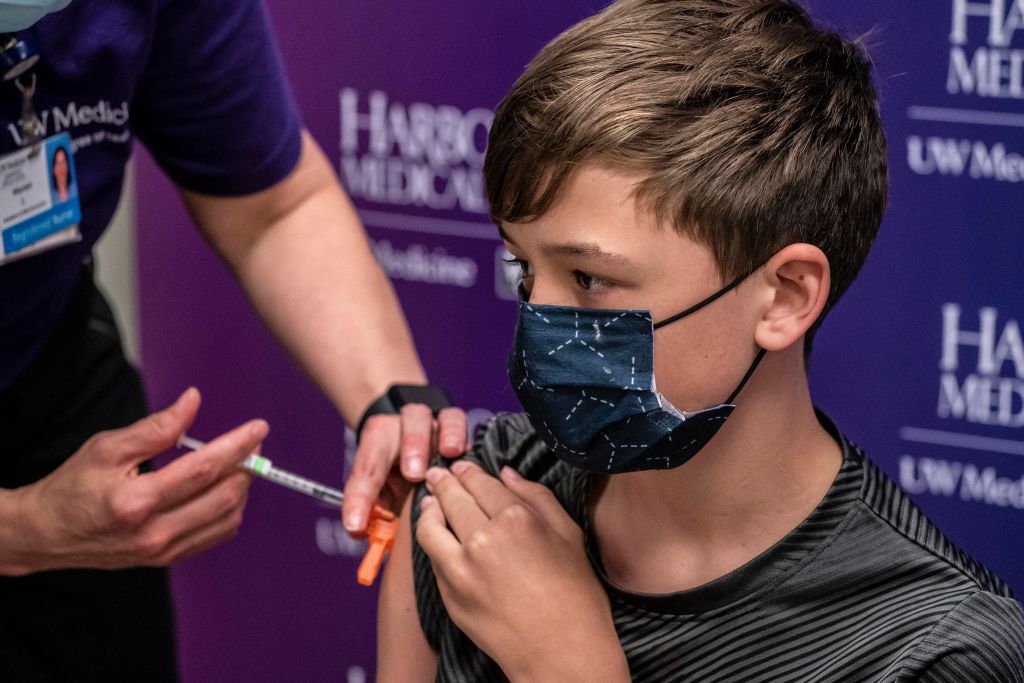
    Gavin Smits receives a first dose of the Pfizer COVID-19 vaccine at Harborview Medical Center on May 13, 2021 in Seattle, Washington. (Photo by David Ryder/Getty Images)

    BY: JENNIFER SHUTT – Ohio Capital Journal

    WASHINGTON — The federal government on Wednesday recommended an updated COVID-19 booster for kids between 5 and 11, expanding use of the new bivalent shots beyond people 12 and older.

    The U.S. Food and Drug Administration first authorized the updated vaccines use in the morning before the Centers for Disease Control and Prevention recommended them in the afternoon, completing the two-step process needed before shots could begin

    CDC Director Rochelle Walensky announced her recommendation in a tweet, saying it’s “a critical step in our fight against COVID-19.”

    “An updated vaccine can help bolster protection for our children this winter,” she added, encouraging parents to talk to their child’s healthcare provider.

    The announcement Wednesday for kids between 5 and 11 follows the FDA authorizing and the CDC recommending the bivalent booster dose for people 12 and older in early September.

    “While it has largely been the case that COVID-19 tends to be less severe in children than adults, as the various waves of COVID-19 have occurred, more children have gotten sick with the disease and have been hospitalized,” Peter Marks, director of the FDA’s Center for Biologics Evaluation and Research, said in a statement.

    “Children may also experience long-term effects, even following initially mild disease,” Marks added.

    The shot is updated to provide protection against the latest omicron variants of COVID-19, known as BA.4 and BA.5.

    The move comes as public health officials are monitoring new variants that could cause disruptions this winter during the annual cold and flu season.

    Winter surge in cases possible

    White House COVID-19 Response Coordinator Ashish Jha said Tuesday during a press briefing that everyone eligible for the latest booster should get it as soon as they can, though he declined to list any goals for the new shot.

    Jha then warned that a surge of COVID-19 cases could be on the horizon this winter.

    “We have seen an increase in COVID infections, hospitalizations, and deaths each of the last two winters. And we are carefully monitoring the rise of several subvariants that are evolving rapidly and emerging around the world, including ones that evade some of our treatments,” Jha said.

    The Biden administration, he said, is tracking COVID-19 variants that “either have a lot more immune invasiveness or they render many of our treatments ineffective.”

    The good news, however, is that the variants public health officials are tracking come from omicron strains BA.2 and BA.5, Jha said.

    “That means our updated bivalent vaccines should provide a much higher degree of protection than the original prototype vaccine would have,” he said. “Obviously, we’re going to do the studies to figure out how much protection, but I’m confident that our vaccines will continue to work very well.”

    No vaccine goals set

    Despite encouraging everyone eligible for the updated COVID-19 bivalent booster dose to get vaccinated, Jha said the White House hasn’t set any goals for how many people it wants to get the shot.

    “We’re not setting targets,” Jha said. “We are focused on driving deaths down, getting more people vaccinated.”

    The U.S. Centers for Disease Control and Prevention’s website shows that 11.5 million people have received the updated booster dose, a fraction of those eligible.

    The COVID-19 boosters are expected to become an annual recommendation for most people, similar to the annual flu shot.

  • Republicans in Congress shy away from campaigning on national abortion platform

    Republicans in Congress shy away from campaigning on national abortion platform

    BY: JENNIFER SHUTT – Ohio Capital Journal

    WASHINGTON — Republicans, hoping to flip control of Congress in the November elections, appear to have decided against campaigning on a unified abortion platform that would specify exactly what conservatives plan to do if given control of the U.S. House and Senate.

    Yet Republicans in Congress have written dozens of proposals that, if passed, would restrict abortion nationwide. GOP lawmakers this session have introduced more than 153 abortion-related bills that party leaders could point to as evidence of what Republicans would try to pass on the national level if they trounce Democrats at the polls.

    They include legislation that would define life as beginning at the moment of fertilization, prohibit insurance coverage for abortions, and make it a crime punishable to up to five years in prison for doctors who perform abortions after a heartbeat is detected, generally at about six weeks.

    But so far, Republicans have opted against a cohesive national campaign strategy on abortion, following the decision by the U.S. Supreme Court in June to overturn the landmark 1973 Roe v. Wade case. Many Senate Republicans are brushing aside questions about whether they would take up a nationwide abortion bill, citing as a hurdle the Senate filibuster that means bills need 60 votes to advance.

    Republican leaders are leaving it up to each House or Senate candidate to tout their own bills and views while the party wrestles with whether the matter should be left solely to state lawmakers or if Congress has a role to play.

    “It’s one thing that we are debating within the conference,” Iowa Republican Sen. Joni Ernst said of a nationwide abortion bill. “But at the same time, most of us do believe that the Dobbs decision was the right decision, and it’s returning that authority to our state and local governments. That’s our system of federalism.”

    Rep. Cathy McMorris Rodgers, a Washington Republican who has become one of her party’s leading voices on abortion, said during a brief interview the GOP won’t put forward a nationwide abortion policy ahead of the midterms.

    “We’re not in a position to move anything and the U.S. Supreme Court really sent it back to the states,” she said.

    But McMorris Rodgers didn’t rule out Republicans pushing nationwide legislation after the election if they regained control of Congress.

    “Not before the election,” she said, later adding “Well, yeah,” when asked if Republicans would put forward legislation afterward if they won.

    Back to the states

    Some Republicans have repeatedly said their opinion of the ruling on abortion in Dobbs v. Jackson Women’s Health Organization is that it sent the issue back to the states. Others have said it’s a topic for Congress to debate as well.

    The Supreme Court’s decision overturning the constitutional right to an abortion that stood for nearly 50 years said “the authority to regulate abortion is returned to the people and their elected representatives.”

    House GOP Whip Steve Scalise, a Louisiana Republican, said during a press conference in June shortly after the ruling was released that the decision “finally allows states and Congress to” pass new abortion legislation.

    But House GOP Leader Kevin McCarthy, of California, when asked what exactly Republicans would do on abortion, was vague, saying “we will continue to look wherever we can go to save as many lives as possible.”

    McCarthy did mention a bill from Missouri Republican Rep. Ann Wagner, though he didn’t say exactly which of her bills he’d bring up.

    Wagner is the primary sponsor of legislation that would require doctors to provide health care to “any infant born alive after an abortion” or attempted abortion. But she’s also sponsored several other bills related to abortion.

    Congress passed a similar bill, from Ohio GOP Rep. Steve Chabot, two decades ago. The legislation, titled the Born-Alive Infants Protection Act of 2002, passed the House on a voice vote and the Senate by unanimous consent.

    Senate Republicans insist there’s little chance of abortion legislation moving ahead.

    Florida GOP Sen. Rick Scott, chair of the National Republican Senatorial Committee, said he expects every candidate will decide how they want to talk about abortion.

    Fellow Floridian Sen. Marco Rubio, who is in a tight race against Democratic House Rep. Val Demings, said “Republicans will have different views about what restrictions and what the law should be.”

    “There are issues that are relevant to it that we can have a debate on here, but we have a filibuster that would make it impossible to pass a bill into law,” Rubio said.

    Louisiana Republican Sen. John Kennedy, who faces a relatively easy reelection campaign in the deeply red state, agreed with Rubio that any GOP abortion legislation is unlikely to move past the filibuster.

    “There aren’t 60 votes to do anything on the floor of the United States Senate with respect to abortion, pro abortion, anti-abortion, just anything to do with abortion,” Kennedy said.

    “What folks who feel strongly on both sides of the issues need to do now is go back to their states and, not put on a show, but put on the case,” he continued. “They’ve got to convince their state legislatures.”

    Retiring Missouri Sen. Roy Blunt said the issue belongs at the state, not the federal level.

    “I’ve always thought the best place to deal with this was at the state legislative level and that’s what I still think,” Blunt said.

    Senate Minority Leader Mitch McConnell, a Kentucky Republican, has said it’s “possible” that a GOP-controlled Congress could pass a nationwide abortion ban, though he’s sought to downplay the likelihood.

    McConnell said he would absolutely keep the chamber’s legislative filibuster in place, meaning the only way a nationwide abortion bill could get through is with a Republican super majority or some Democratic support.

    “We don’t want to break the Senate and that’s breaking the Senate,” he said of removing the filibuster.

    Referendum on abortion?

    The vastly different views on abortion as well as party leaders’ approach to campaigning on the issue has led Democrats to turn the midterm elections into something of a referendum on abortion.

    “This fall, Roe is on the ballot,” President Joe Biden said the day the Supreme Court released its decision overturning the 1973 Roe v. Wade ruling that established abortion as a constitutional right. “Personal freedoms are on the ballot. The right to privacy, liberty, equality, they’re all on the ballot.”

    Biden added that this November, voters “must elect more senators and representatives who will codify a woman’s right to choose into federal law once again, elect more state leaders to protect this right at the local level.”

    Tying the results of the midterm elections to abortion could be risky for Democrats, especially considering the president’s party almost always loses seats during the midterm elections.

    But the vast majority of Democrats have echoed Biden, telling voters that this November has become about more than who controls the U.S. House and Senate.

    “This is the future that MAGA Republicans clamor for; where women and same-sex couples are branded as second-class citizens,” Senate Majority Leader Chuck Schumer said on the floor. “If they succeed, they’ll take our country down a dark path from which there may be no return.”

    Democrats in Congress have voted on bills showing exactly how the party hopes to ensure patients throughout the country can terminate a pregnancy, or travel freely to states where the procedure remains legal.

    They’ve also brought up bills to ensure the right to same-sex and interracial marriages as well as the right to decide if and how to use contraception.

    Republican leaders, for the moment, don’t plan to say exactly which bills they’d vote on if they regain control of Congress.

    “They’re very nervous,” Virginia Democratic Sen. Tim Kaine told States Newsroom. “And their polling should tell them that, because we’re seeing this as dramatically affecting the polls in a number of our races.”

    Kaine played down the idea that making the midterms something of a referendum on abortion access could be problematic if Republicans regain control of Congress and then say the results show American voters want a nationwide abortion law.

    “Oh, they’re gonna do that anyway. Rock solid guarantee, no matter how the election goes,” Kaine said. “We’re very certain that’s coming and we’re trying to do all we can electorally and otherwise to head that off.”

    While Kaine expects voters will pick representatives based on more than abortion, he does expect the Supreme Court’s decision will drive voter turnout for Democrats.

    “And that’s why my Republican colleagues do not want to be talking about this or create any kind of a party plan that everybody’s supposed to go for,” he said.

    Senate Majority Whip Dick Durbin, an Illinois Democrat, criticized Republicans for not being clear with voters about how they plan to address abortion if given control of Congress.

    “The Republicans, if you’ll notice, have been surprisingly quiet, in my estimation, in reaction to Dobbs,” Durbin said. “I think they understand that these opinions may serve their base, but they don’t serve the party or the electorate at large.”

    Maryland Democratic Sen. Chris Van Hollen said the abortion ruling is one of a number of critical issues that voters will focus on this year, though he added, “it’s not the only issue on the ballot.”

    “I think the Dobbs decision is one of them, reproductive freedom is certainly a part of that. But it will also be a referendum on the kind of government you want, whether you want extremists like the MAGA crowd in the Congress,” Van Hollen said. “And it’s also going to be a debate on what we’re doing that’s within our power to reduce prices, like cutting the costs of prescription drugs.”

    Sen. Bob Casey, a Pennsylvania Democrat, said “most Americans know there’s a fork in the road and there’s basically two choices.”

    151 bills

    So far this Congress, Republicans have introduced 153 bills addressing abortion, with 94 in the House and 59 in the Senate.

    Wagner’s bill has the most co-sponsors with 203 GOP backers.

    Other legislation with broad Republican backing includes a bill from New Jersey Rep. Christopher Smith that would permanently prevent the federal government from spending money on abortions with an exception for rape, incest or the patient’s life. The legislation would also prohibit qualified health plans from including coverage for abortion, according to a summary.

    West Virginia Rep. Alexander Mooney sponsored a bill that would define life as beginning at “the moment of fertilization, cloning, or other moment at which an individual comes into being.” The bill clarifies that “nothing in this Act shall be construed to authorize the prosecution of any woman for the death of her unborn child.”

    And legislation from Pennsylvania Rep. Mike Kelly would make it a crime for health care providers to perform abortions after a heartbeat is detected, typically around six weeks. Doctors who perform the procedure would face up to five years in prison, a fine, or both if convicted.

    The bill creates an exception for a patient whose life is endangered by a physical diagnosis or injury, but not a “psychological or emotional” one.

  • U.S. House passes bill expanding health care, benefits for veterans exposed to burn pits

    U.S. House passes bill expanding health care, benefits for veterans exposed to burn pits

    BY: JENNIFER SHUTT – Ohio Capital Journal

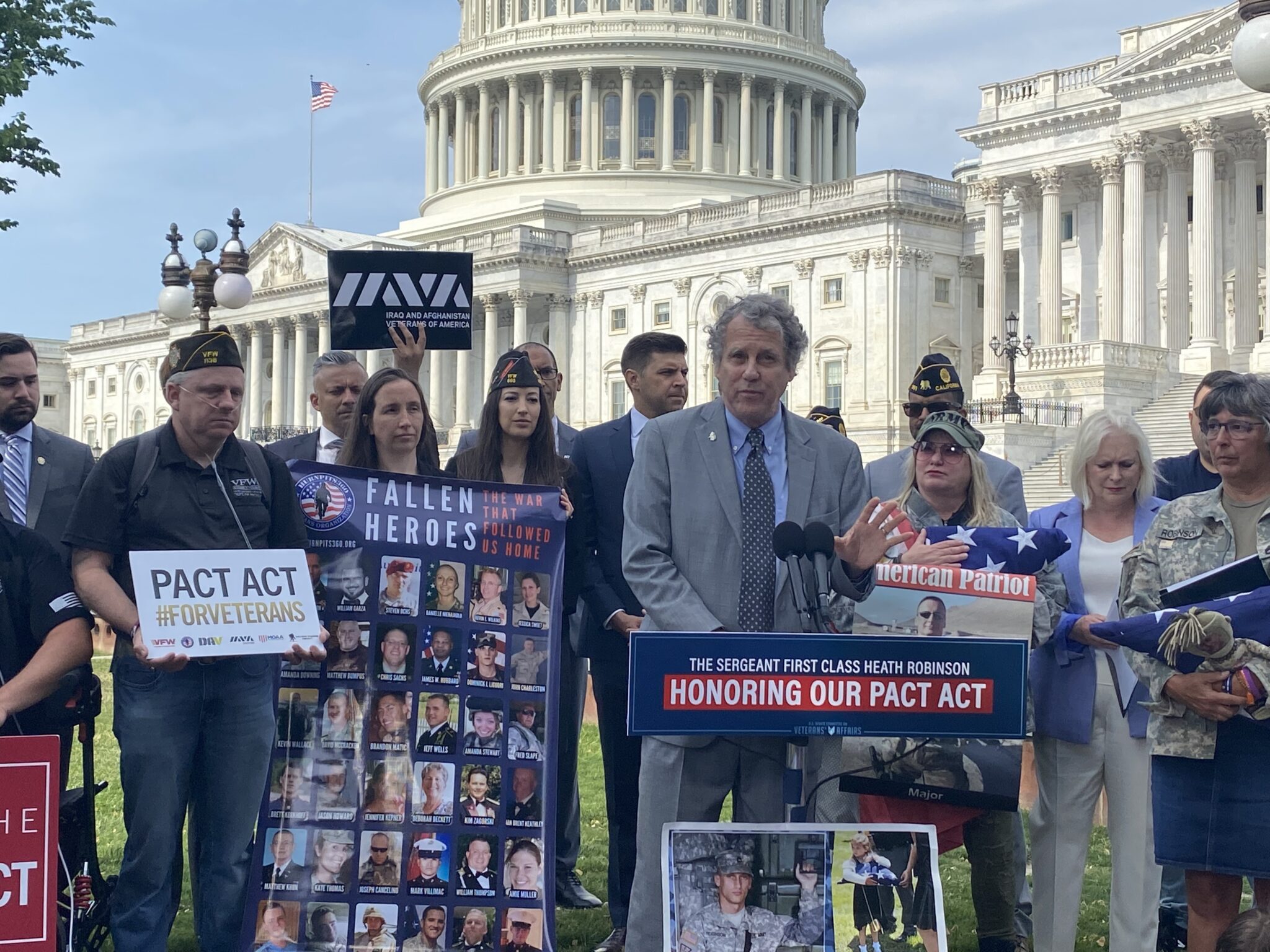
    Ohio Democratic Sen. Sherrod Brown speaks at a press conference on legislation to provide health care for veterans exposed to burn pits on June 7, 2022. Susan Weber Zeier of Sandusky is on the far right of the photo. Photo by Jennifer Shutt, States Newsroom.

    WASHINGTON — The U.S. House overwhelmingly approved a bipartisan bill Wednesday to expand health care and benefits for veterans exposed to burn pits overseas, sending the package back to the U.S. Senate after making a minor change.

    Senators, who broadly support the landmark package led by Montana Sen. Jon Tester and Kansas Sen. Jerry Moran, are expected to quickly clear the measure for President Joe Biden’s signature. The House vote was 342-88.

    Biden, who has linked his son Beau’s death from a brain tumor in 2015 to exposure to burn pits, has repeatedly called on Congress to address the illnesses and deaths linked to toxic exposure.

    “What I found with my son, what I found with my friends, what I found with the generation of Vietnam: There’s this notion that you shouldn’t ask for anything,” Biden said in March while at a resource center in Fort Worth, Texas.

    “You should be asking. You should be letting us know. You should let us know what is bothering you, what is the problem, because we owe it to you,” Biden continued.

    Delayed by dispute

    The Senate approved the legislation last month following an 84-14 vote, but House approval was delayed while members of the Veterans’ Affairs Committees worked out a dispute over a provision designed to boost staff in rural areas.

    The language would have allowed the U.S. Veterans Affairs Department to buy certain health care providers out of their contracts if they took offers to work for at least four years at “rural or highly rural facilities.” The provision also said that the money for the buyouts “shall not be considered a taxable benefit or event for the covered health care professional.”

    Lawmakers on the U.S. House Ways and Means Committee cited a so-called blue slip issue, since a tax provision cannot originate in the Senate.

    After substantial back-and-forth about how to fix the problem, the House Rules Committee opted to remove the provision this week, before sending a new, slightly altered bill to the floor.

    Bipartisan acclaim

    House debate on the legislation Wednesday was broadly bipartisan, with the vast majority of lawmakers speaking in support of the package.

    Rep. Mariannette Miller-Meeks, an Iowa Republican, said she has “seen firsthand the effects that toxic exposure has had” on her fellow service members following her 24-year military career.

    “Exposure to these substances can lead to severe, life-altering disease,” Miller-Meeks said.

    “However, under the current system at the VA it can be extraordinarily costly, time-consuming and in some cases impossible for a sick or disabled veteran to prove that their condition is related to the toxins to which they were exposed during their military service.”

    The bill the House passed Wednesday, she said, would help to end that by requiring the VA to deliver health care and benefits to veterans exposed to toxins “in a responsible, fair way.”

    Arizona Democratic Rep. Ruben Gallego, a Marine Corps infantryman who deployed to Iraq in 2005, said the legislation was overdue and desperately needed.

    “Too many veterans live in fear that their next doctor’s appointment will reveal an illness that in addition to harming their health could drive them into bankruptcy because the VA refuses to care for them,” Gallego said. “I am one of those people that does have that fear.”

    The legislation, named for deceased Sergeant First Class Heath Robinson of the Ohio National Guard, would expand eligibility for VA health care to more than 3.5 million veterans exposed to burn pits since 9/11.

    It would add 23 illnesses to the list of toxic-exposure-related ailments presumed to be connected to military service, ending the need for veterans with those conditions to try to prove to the VA their illnesses were linked to their deployments.

    The package would direct more resources to VA health care centers, employees and claims processing as well as federal research on toxic exposure.

    The measure would also expand presumptions for veterans exposed to Agent Orange, a chemical the U.S. military used during the Vietnam War. American Samoa, Cambodia, Guam, Johnston Atoll, Laos and Thailand would all be added to the list of locations where veterans are presumed to have been exposed to the chemical.