Loveland, Ohio – Tigers Incorporated, Loveland Spirit Club, and Jarvis Global Investments have launched the second annual “3’s For LIFE” Fundraiser.
This community outreach program will take place from December 3rd to February 2nd benefiting the Loveland LIFE Food Pantry. Jarvis Global Investments will donate twelve canned goods to the LIFE Food Pantry for every three-point shot made at Loveland High School’s Men’s and Women’s home basketball games.
The two Tigers Inc. students on the lead, Elly Steinbrunner and Brady Steiner, have secured a five hundred dollar donation from Meijer which will also be given to the LIFE Food Pantry.
Throughout the fundraiser, donation boxes will be set up at Loveland Biggby Coffee (732 Middleton Way), to collect food donations from community members.
If you’d like to help the cause you can donate canned food items, or venmo @Tigers-Inc and donate monetarily! All donations will go directly to the food pantry in the form of canned goods.
To stay up to date with the progress of the fundraiser visit Loveland Spirit Club on instagram @lovelandspiritclub or twitter @TigerSpiritClu1.”
Loveland School Treasurer Rob Giuffre – Photo Provided
Loveland, Ohio – Andrew Setters the Loveland City School District Director of Communication and Community Engagement sent this message to Loveland Magazine saying, “I’ve included the Superintendent’s Message from our December Community Newsletter below. It has a pretty clear message about the district’s five-year forecast and the financial decision-making that will need to take place in the months ahead.”
Setters added, “We’ve gotten good feedback on this, and I thought it might be of interest to your readers.”
Superintendent’s Message

Loveland Tiger Community,

Treasurer Rob Giuffre presented the five-year forecast during our Board of Education Meeting on November 15. You can view it under “important documents” on the Treasurer’s webpage by following this link. Watch the discussion around the Five Year Forecast at the two hours and thirty-five-minute mark of the Board Meeting recording by following this link.

The Five Year Forecast is a tool to allow school districts and communities to plan for future needs by looking at our projected financial situation over the next five years. It’s a lengthy document, but the most relevant information is on page three. It shows that we are in deficit spending for the current fiscal year by $3.7 million and projects a $3.8 million deficit in the following fiscal year.

Deficit spending means the district is spending more money than we receive from local, state, and federal tax revenue. The district is making up that deficit by using our cash reserves. Because we only get tax revenue deposits twice a year, those cash reserves are necessary to pay bills, payroll, and other expenses.

There are two paths ahead - a reduction in expenses or an increase in revenue. Salaries and benefits make up 86% of our costs, so a reduction in expenses means a decrease in staff positions. Because the district already implemented staff reductions in 2020, it will be difficult to make additional cuts without impacting educational opportunities for students. Increasing revenue means asking voters for additional funding through a levy.

Loveland City School District receives very little state funding compared to other districts around Ohio, and we do not expect the situation to improve. The state funding model is expected to eliminate more funding for suburban districts like Loveland in the future. The district’s financial situation cannot wait for help from state lawmakers who have been unable to fix the unconstitutional school funding system for decades.

In the weeks ahead, the Treasurer and I will look at options to present to the Board of Education as they consider which path to take.

If you have any questions, please contact me: broadwmi@lovelandschools.org

Go Tigers!

Mike Broadwater

Superintendent

Loveland City Schools
Loveland, Ohio – This Saturday you can bid on some beautiful Christmas Trees crafted by the artists at the Loveland Art Studios on Main and decorate your home if your bid wins.
Win or lose, you’ve taken a chance that 80% of your winning bid will go to help those Loveland Area residents served by the Loveland Inter-Faith Effort (LIFE) food pantry.
You can bowse and bid through Saturday from 11 AM until 4 PM.
The Winter Art Show and open studios are Saturday evening December 10, and the Silent Auction will continue until 9 PM.
The Bobby Sharp Trio will perform Saturday during the Winter Art Show.
A new push for a $15 minimum wage was introduced in the Ohio House, attempting to speed up the progress of a constitutional amendment passed nearly two decades ago.
Democratic state Reps. Dontavius Jarrells and Brigid Kelly said their new bill not only addresses criticisms of quick implementation of a minimum wage increase, but also make a difference for struggling Ohioans.
“We heard concerns of colleagues and made a longer runway for the increases,” Kelly told the House committee on Commerce and Labor. “But the longer we wait to act, the less impactful this action will be.”
House Bill 69 would phase in those increases to reach $15 per hour by 2027.
Since the bill never received a hearing after it was initially filed in February of 2021, an amendment would be needed to change the language, which set the first increase to happen on Jan. 1, 2022.
The sponsors pointed to a constitutional amendment passed in 2006 that raised minimum wage in Ohio yearly with the rate of inflation. With inflation at the highest level since the Reagan administration, the minimum wage starting January 2023 will be $10.10 per hour, and $5.05 for tipped employees.
“The bottom line is this: When people have more money in their pockets, they spend it and they spend it in businesses and communities all across Ohio,” Kelly said.
Jarrells said he receives calls to his office often talking about hard decisions families in Ohio are making, like putting food on the table in lieu of needed medications, because affording both isn’t an option.
“When we think about the impact of just not thinking critically about how do we make sure salary or wages match our productivity, there are families who simply are going without,” Jarrells said.
Debate in the committee centered around whether adding more money would solve problems, namely bringing people back to the workforce.
State Rep. Don Jones, R-Freeport, argued that some businesses are offering more than $15 per hour, or at least increasing pay, and still aren’t able to bring more employees in. He said the issue was the workforce, not the wage.
“We can sit here and raise the minimum wage to $15 an hour, and people are going to want $20,” Jones said.
He used the example of a McDonald’s offering $13 an hour, though he didn’t specify whether the job was full-time or part-time.
Kelly said though food serve and retail workers are among those struggling to pay bills because of low wages or low hours, the problem extends to other categories of workers, like home health services. She and Jarrells agreed that while they see wage as a fixable issue on its own, there’s no reason not to work on both wage and workforce.
“We can think about what we would like aspirationally to be true, or we can think about what people are experiencing right now, which a lot of time is multiple part-time jobs, no benefits, challenges with transportation, challenges with housing security, and also working with governmental agencies to get benefits that aren’t necessarily aligned with one another,” Kelly said.
The bill is flanked by a proposed ballot initiative, which would bring the minimum wage to $15 per hour in 2028.
But if neither the bill — which faces a Republican supermajority and a quick timeline with the General Assembly set to end Dec. 31 — nor the ballot initiative are successful, that doesn’t mean more legislative measures aren’t on the horizon. Kelly expressed confidence that Jarrells would continue the efforts in the next General Assembly.
“We can continue to ignore it at our own peril, but Ohioans deserve better, they’ve earned and deserve a raise,” Kelly said.
Loveland, Ohio – The photos taken by David Miller in this movie were from last Friday evening as darkness fell over Loveland’s Downtown Historic District.
Many photos were taken with a selective camera focus to bring to light, uncover, and detect the kaleidoscope of many colors.
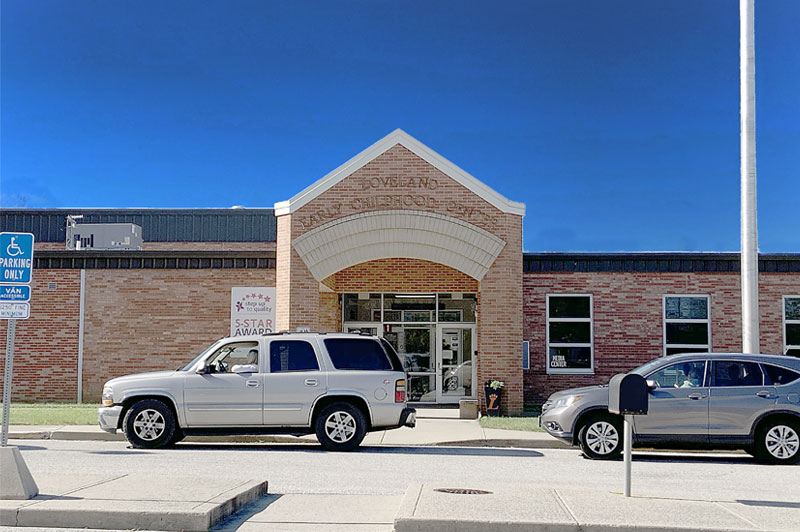
Applications are due no later than January 13, 2023, and should be turned in directly to Penny Dippold at the Loveland Early Childhood Center.
The completed application can be mailed (6740 Loveland-Miamiville Rd., Loveland, Ohio 45140), faxed (513-677-7960), or emailed to dippolpe@lovelandschools.org.
Parents will be notified if their child is selected for the program by early February 2023.
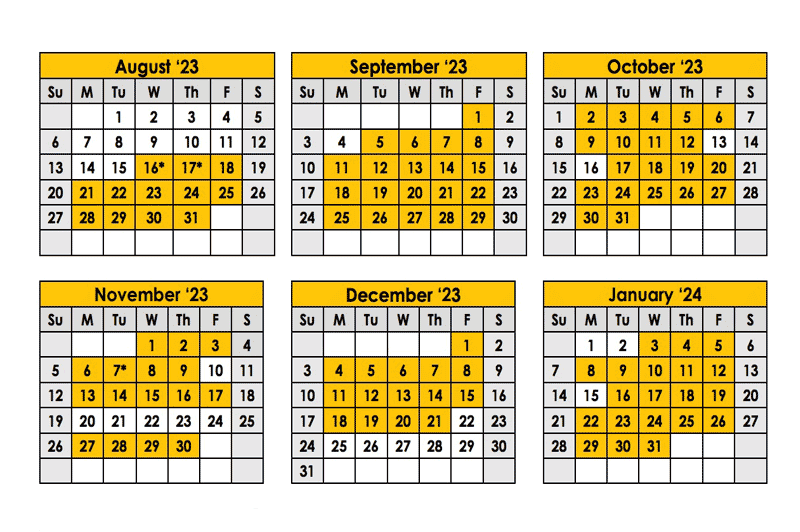
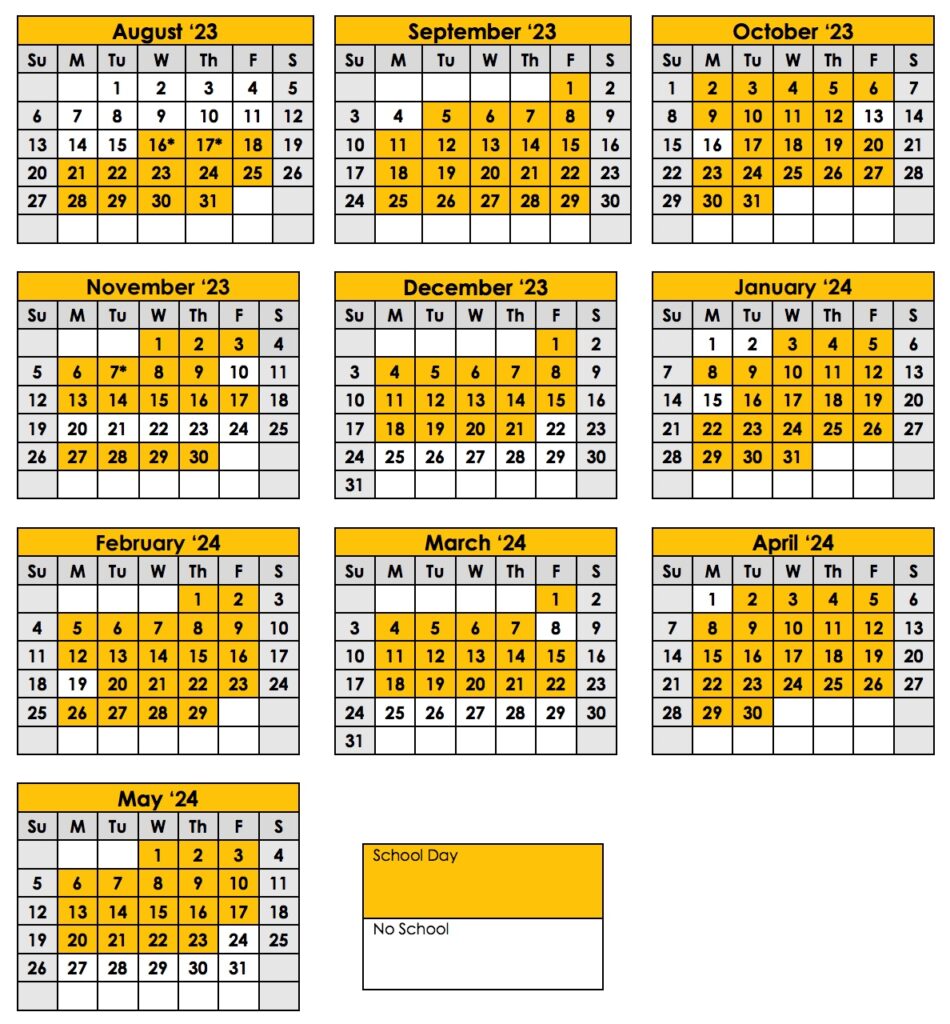
Wednesday, August 16, 2023 – First Day for Students with Last Names A-L Thursday, August 17, 2023 – First Day for Students with Last Names M-Z Monday, September 4, 2023 – No School – Labor Day Thursday, October 12, 2023 – Last Day of the First Quarter Friday, October 13, 2023 – No School – Inservice Day Monday, October 16, 2023 – No School – Inservice Day Tuesday, November 7, 2023 – No School PK-4 – Election Day Friday, November 10, 2023 – No School – Veterans Day (observed) Monday, November 20, 2023 – No School – Fall Break Begins Monday, November 27, 2023 – Students Return – Fall Break Ends Thursday, December 21, 2023 – Last Day of the Second Quarter Friday, December 22, 2023 – No School – Winter Break Begins Wednesday, January 3, 2024 – Students Return – Winter Break Ends Monday, January 15, 2024 – No School – Martin Luther King Jr. Day Monday, February 19, 2024 – No School – Presidents Day Thursday, March 7, 2024 – Last Day of the Third Quarter Friday, March 8, 2024 – No School – Inservice Day Monday, March 25, 2024 – No School – Spring Break Begins Tuesday, April 2, 2024 – Students Return to School – Spring Break Ends Thursday, May 23, 2024 – Last Day of School /Last Day of the Fourth Quarter
Loveland, Ohio – The Loveland City School District Board of Education is seeking a person to be appointed to the City of Loveland Planning and Zoning Commission. The successful candidate would serve as a City of Loveland Planning and Zoning Commission member, attend necessary meetings, and communicate with the Board of Education.
Those interested in serving must be a resident of the City of Loveland for at least one year before their appointment to the Commission. Candidates should submit a resume and a brief narrative explaining why they would like to serve.
Documents can be submitted via email to treasurer@lovelandschools.org or delivered to the Board of Education offices during regular business hours. All documents should be received by noon on Wednesday, December 14, 2022.
Loveland Charter
SECTION 9.03 PLANNING AND ZONING COMMISSION. There shall be a City Planning and Zoning Commission consisting of five (5) members. One (1) member shall be a member of Council, to be selected by Council. One (1) member shall be selected by the Board of Education who may or may not be a member of the Board. Council shall select three (3) members who are not Council members. Members of the Commission shall be residents of the City for at least one year prior to their appointment. If the Board of Education and/or the Council shall fail in these appointed duties, for a period of forty-five (45) days, after a vacancy occurs, the Mayor shall make such appointments. The terms of office of a Commission member, who is also a member of Council shall be concurrent. The remaining four (4) members shall be appointed to staggered and overlapping terms of three (3) years each. Any incumbents, as of this Charter’s adoption, shall serve out their respective unexpired terms. (Amended 11-6-01)
SECTION 9.03a POWERS AND DUTIES OF PLANNING AND ZONING COMMISSION. The Commission shall act as the City’s platting commission and shall provide for planning and regulations covering the platting of all lands controlled by the City and may require an official map of such territories to be made. The Commission shall carry out the City planning functions, which includes preparing a master plan, to be updated a minimum of every ten (10) years, and investigate, and make such reports and recommendations relating to planning and zoning, and the physical development of the City; and shall have all the powers granted to and shall perform all the duties imposed on planning commissions by Ohio law, and such other powers and duties as established by Council by ordinance. Meetings of the Commission shall be held as needed but not less than every two (2) months. (Amended 11-6-01)
Loveland Code of Ordinances
1109.03 RESPONSIBILITIES OF THE PLANNING AND ZONING COMMISSION.
(a) The Planning and Zoning Commission shall have the following responsibilities and powers as they relate to this Zoning Code:
(1) Initiate advisable official zoning, district map changes, or changes in the text of the Zoning Code where same will promote the best interest of the public in general through recommendation to the City Council.
(2) Review all proposed amendments to the text of this Zoning Code and the official zoning district map and make recommendations to the City Council.
(3) Review all Special Planning District applications and make recommendations to the City Council as provided in this Zoning Code.
(4) Review all conditional uses as identified in the respective zoning districts according to provisions and criteria stated in this Zoning Code.
(5) Carry on a continuous review of the effectiveness and appropriateness of this Zoning Code and recommend such changes or amendments as it feels would be appropriate.
(6) Review and act on site plans pursuant to Section 1111.09.
(b) The Planning and Zoning Commission shall also have the responsibilities as set forth in the City Charter.
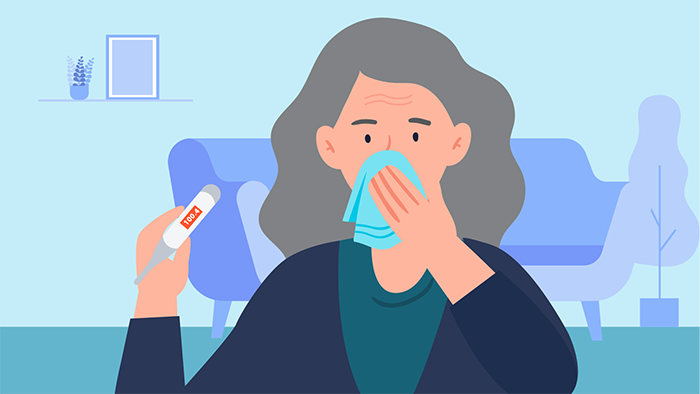
If you test positive for COVID-19 and are more likely to get very sick, treatments are available that can reduce your chances of hospitalization and death.
Don’t delay: Treatment must be started within days after you first develop symptoms to be effective.
Other medications can help reduce symptoms and help you manage your illness.
The Treatment Locator (hhs.gov) can help you find a location that offers testing and treatment or a pharmacy where you can fill your prescription.
Treating COVID-19
If you test positive and are more likely to get very sick from COVID-19, treatments are availableexternal icon that can reduce your chances of being hospitalized or dying from the disease. Medications to treat COVID-19 must be prescribed by a healthcare provider and started as soon as possible after diagnosis to be effective. Contact a healthcare provider right away to determine if you are eligible for treatment, even if your symptoms are mild right now.
Don’t delay: Treatment must be started within days of when you first develop symptoms to be effective.
People who are more likely to get very sick include older adults (ages 50 years or more, with risk increasing with age), people who are unvaccinated, and people with certain medical conditions, such as chronic lung disease, heart disease, or a weakened immune system. Being vaccinated makes you much less likely to get very sick. Still, some vaccinated people, especially those ages 65 years or older or who have other risk factors for severe disease, may benefit from treatment if they get COVID-19. A healthcare provider will help decide which treatment, if any, is right for you. Check with your healthcare provider or pharmacist if you are taking other medications to make sure the COVID-19 treatments can be safely taken at the same time.
Types of Treatments
The FDA has authorized certain antiviral medications and monoclonal antibodies to treat mild to moderate COVID-19 in people who are more likely to get very sick.
Antiviral treatmentstarget specific parts of the virus to stop it from multiplying in the body, helping to prevent severe illness and death.
Monoclonal antibodies help the immune system recognize and respond more effectively to the virus.
The National Institutes of Health (NIH) provides COVID-19 Treatment Guidelines for healthcare providers to help them work with their patients and determine the best treatment options for them. Several options are available for treating COVID-19. They include:
Start as soon as possible; must begin within 5 days of when symptoms start
Taken at home by mouth (orally)
Some treatments might have side effects or interact with other medications you are taking. Ask a healthcare provider if medications to treat COVID-19 are right for you. If you don’t have a healthcare provider, visit a Test to Treat location or contact your local community health center or health department.
If you are hospitalized, your healthcare provider might use other types of treatments, depending on how sick you are. These could include medications to treat the virus, reduce an overactive immune response, or treat COVID-19 complications.
Managing COVID-19 symptoms
Most people with COVID-19 have mild illness and can recover at home. You can treat symptoms with over-the-counter medicines, such as acetaminophen (Tylenol) or ibuprofen (Motrin, Advil), to help you feel better.
Click the link below or call 1-800-232-0233 (TTY 1-888-720-7489) to find a location that offers testing and treatment or a pharmacy where you can fill your prescription.
COVID-19 vaccines available in the United States effectively protect people from getting seriously ill, being hospitalized, and even dying—especially people who are boosted. As with vaccines for other diseases, you are protected best when you stay up to date. CDC recommends that everyone who is eligible stay up to date on their COVID-19 vaccines.
To find COVID-19 vaccine locations near you: Search vaccines.gov, text your ZIP code to 438829, or call 1-800-232-0233.
Preventive medications
The FDA has issued an emergency use authorization for tixagevimab plus cilgavimab (EVUSHELDTM), a medicine that can help protect you from getting COVID-19. EVUSHELDTM contains two different antibodies and is given as two separate consecutive intramuscular (IM) injections at a doctor’s office or healthcare facility before you are exposed or test positive for COVID-19. If you are moderately or severely immunocompromised, or severely allergic to COVID-19 vaccines, you may be eligible for EVUSHELDTM every 6 months. EVUSHELDTM may offer less protection against certain strains of the Omicron variant. It is important that even if you receive EVUSHELDTM you take multiple prevention measures. Additionally, you should undergo testing and seek medical attention if you develop symptoms of COVID-19, and start treatment for COVID-19 as appropriate. Talk to your healthcare provider to determine if EVUSHELDTM is right for you.
The right medications for COVID-19 can help. People have been seriously harmed and even died after taking products not approved for use to treat or prevent COVID-19, even products approved or prescribed for other uses. Talk to a healthcare provider about taking medications to treat COVID-19.
Loveland, Ohio – No matter, whether naughty or nice, Loveland homeowners and renters will unwrap a piece of coal for the holidays when they sneak a peak at their next utility bill. With disregard for seniors on a fixed income and amid the recent uproar and defeat of the Loveland City School District levy over those concerns, the Loveland City Council has implemented new fees for homeowners that increase their water bill.
Concerns over inflation, rising home ownership costs, and seniors staying in their Loveland homes were the most cited reasons for the school not receiving the added operating funds they requested from voters.
The flat-rate, permanent fee will increase the cost to own a home in Loveland by $90/year immediately, and $114/year beginning in 2025. Homeowners will see what city hall is calling a “Water Main Replacement (WMR) Fee” on their next billing statement.
The flat fee will be charged to all City of Loveland utility customers regardless of income status, age, or how much water they actually consume. The revenue from the WMR Fee, according to a release issued by the City will be used solely for water main replacement projects.
The fee will be paid by all City of Loveland utility customers, residential or commercial both inside and outside of the city’s corporation boundaries. The fee is charged “per unit” on multi-family residential units.
In 1996 when voters passed a half-cent sales tax to build and maintain Great American Ball Park and what is now Paycor Stadium officials promised to give 30% of the revenue back to homeowners as tax rebates. They are failing to keep that promise.