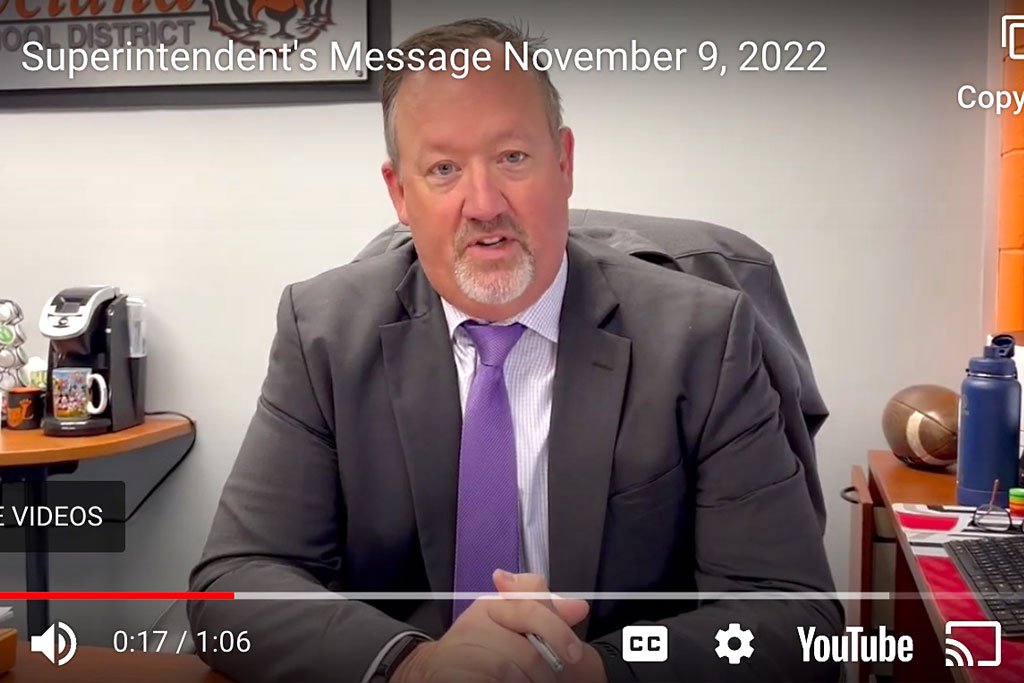
Loveland, Ohio – Mike Broadwater, the Superintendent of the Loveland City School District has released this video statement about the defeat yesterday of the operating levy.
One of the only clinics offering care to people under 18 years old in the region
Cincinnati Children’s Hospital says that drug overdoses are the largest injury related cause of death in the United States. They cite the CDC, and further say that the numbers keep rising. Cincinnati Children’s has joined the fight to keep young people alive by opening the Opioid Use Treatment Clinic in their Division of Adolescent and Transition Medicine. The program provides office-based outpatient medication treatment for young people between the ages of 16 to 21. This is one of the only outpatient clinics offering medication treatment to people under 18 years old in the region.
Patients in those age ranges struggling with addiction to drugs like heroin, Percocet, oxycontin, fentanyl, oxycodone, hydromorphone, and Vicodin now have access to care in the Cincinnati region.
“Opioid addiction is still a growing problem in adolescents and young adults,” said Daniel Cohen, APRN, Cincinnati Children’s Division of Adolescent and Transition Medicine. “We are looking forward to helping make a difference in the lives of young people who want help.”
Children’s says that providers in the Opioid Use Treatment Clinic have been through appropriate training and are licensed to prescribe Suboxone as a treatment option. Patients who qualify will receive up to a month’s supply of medication. Suboxone has a much lower chance of overdose compared to methadone. Although this treatment is safe and effective, teens with opioid addiction are much less likely to receive treatment than adults, according to the Hospital.
The Centers for Disease Control and Prevention has released data showing overdose deaths in teens have tripled in the last two years as a direct result of fentanyl. Counterfeit medications and street drugs may include fentanyl which puts youth at greatest risk of overdose and death.
“We want to provide young people with the best possible chance to succeed in beating addiction,” said Cohen. “Cincinnati Children’s is a safe space for a young person battling addiction to powerful opioids.”
Social workers in the clinic can connect patients to community providers for therapy services. The clinic plans to offer therapy as part of its services soon.
EDITOR’S NOTE: The totals for the Loveland School Levy have now been updated (11-10-2022) to reflect revised counts by the BOE’s.
Loveland, Ohio – Around midnight we made a preliminary election report because of delays in Hamilton County vote tabulations. Not all of their precincts had yet reported.
We can now bring you this updated tally.
This update does not reflect any change to the tally we reported last night for the Loveland City School District operating levy.
We publish our results as soon as the three counties Loveland is in, Clermont, Hamilton, and Warren report their “Unofficial” counts and when 100% of precinct votes have been tabulated by each county BOE.
These new results are, as of 7:38 AM Wednesday, November 9.
The state-wide, and U.S. House and Senate tabulations are from the report of the Ohio Secretary of State.
The results below are the “Unofficial” count. There are still outstanding ballots left to be counted. Absentee ballots must be postmarked by the 7th and received by the BOE’s no later than November 18. Write-in votes are not counted on election night.
The Official Count occurs between 11 and 21 days after election day.
The election must be “certified” by November 29th and this will include all election-day ballots, on-time ballots not yet counted, and all valid provisional ballots.
Loveland, Ohio – We published our results as soon as the three counties Loveland is in, Clermont, Hamilton, and Warren reported their “Unofficial” counts and when 100% of precinct votes had been tabulated by each county BOE.
These results are, as of 12:10 AM Wednesday, November 9.
The results below are the “Unofficial” count. There will still be outstanding ballots left to be counted. Absentee ballots must be postmarked by the 7th and received by the BOE’s no later than November 18.
The Official Count occurs between 11 and 21 days after election day.
The election must be “certified” by November 29th and this will include all election-day ballots, on-time ballots not yet counted, and all valid provisional ballots.
Once the federal government declares the end of the PHE, the eFMAP will go away and states will once again resume normal eligibility operations which will result in some Medicaid members being disenrolled from the program.
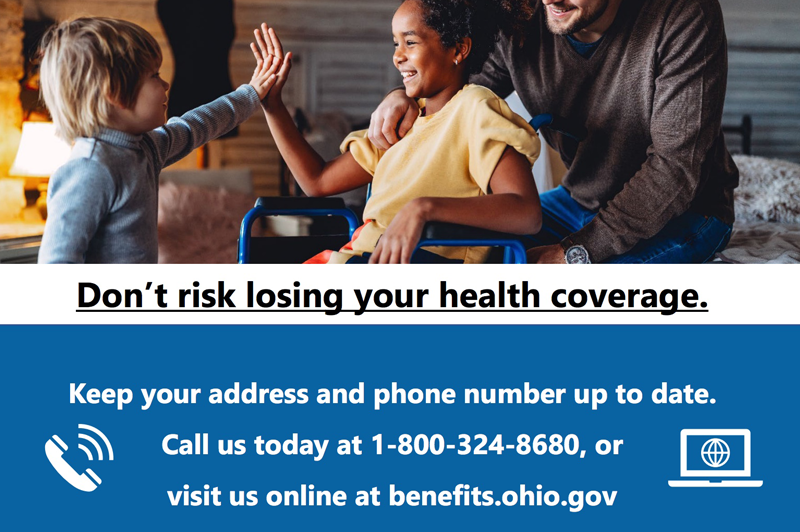
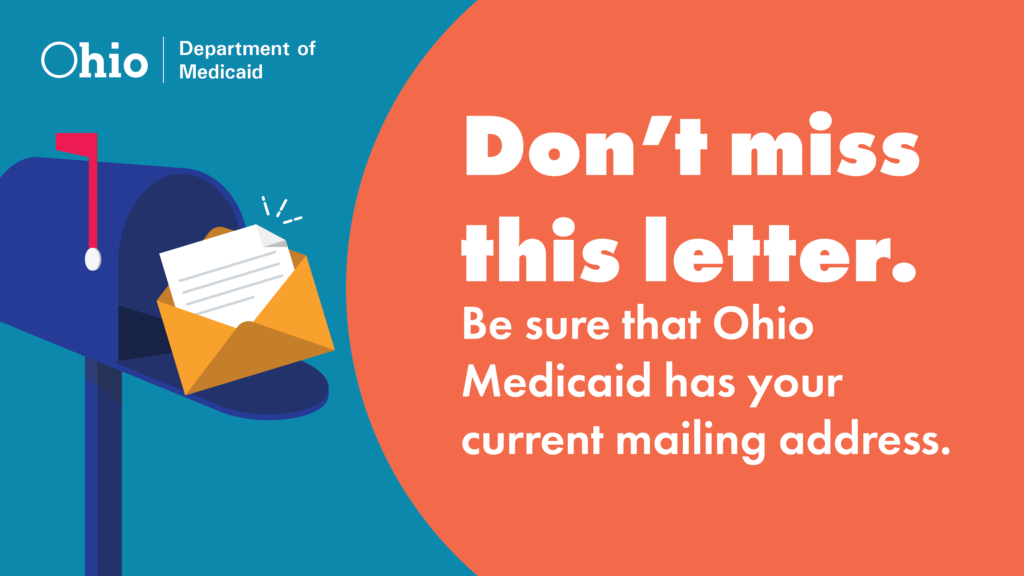
The Ohio Department of Medicaid has materials and templates on its website to help prepare Medicaid members for the end of the COVID-19 public health emergency and any actions they need to take. The toolkit is for anyone who interacts with Medicaid members, including health care providers, advocates, elected officials, community organizations, schools and others. It includes a flyers, social media and text messages, and more.
COVID-19 Unwinding
The materials and templates included below are the best way for you to help prepare Medicaid members for the end of the public health emergency (PHE) and any actions they need to take. Updated September 16, 2022.
Overview
In March 2020, the Ohio Department of Medicaid (ODM) made a number of operational changes to its Medicaid program in response to the COVID-19 public health emergency (PHE). This included taking advantage of the flexibilities offered to states such as increasing service limits for home- and community-based waiver services, expanding telehealth, and adding Health Care Isolation Centers (HCIC) as a nursing facility benefit to name just a few. Additionally, with the passage of the Families First Coronavirus Response Act (FFCRA), the federal government provided states with an enhanced federal matching rate (eFMAP) of 6.2%. In exchange, states were prohibited from disenrolling members from Medicaid, even if they were found to be ineligible. This was to ensure members did not lose vital healthcare coverage during the pandemic.
Once the federal government declares the end of the PHE, the eFMAP will go away and states will once again resume normal eligibility operations which will result in some Medicaid members being disenrolled from the program.
While some renewals can be completed without a need to contact the member, some renewals will require members to respond to mail from their County Department of Job and Family Services (CDJFS).
It is imperative that Medicaid members ensure their contact information is up to date, watch for mail from their CDJFS, and respond to requests for information. If members do not respond to renewal letters or requests for information, they run the risk of losing their healthcare coverage, even if they are still eligible.
Key Messages
The materials and templates included in this toolkit are the best way for you to help prepare Medicaid members for the end of the public health emergency (PHE) and any actions they need to take. If you prefer to create your own communications, use the following key messages to ensure the information you share is simple, direct, and accurate.
You will receive another Partner Packet with updated messaging and materials for continued outreach to Medicaid members after the PHE ends.
If they don’t already have one, Medicaid members are strongly encouraged to create an Ohio Benefits Self-Service Portal (SSP) account as soon as possible at https://ssp.benefits.ohio.gov. This is the most convenient way for Medicaid members to complete a renewal or report any changes to their information. Through their SSP account, members can also easily check the status of their benefits.
Update their contact information. Any time a Medicaid member’s information changes, they should let their County Department of Job and Family Services (CDJFS) know. Make sure the CDJFS has their current contact information. Contact information includes: name, residential address, mailing address (if different from home address), phone number, and email address.
Medicaid members can update their contact information by:
Calling 1-800-324-8680. Help is available Monday through Friday, 8 a.m.-8 p.m. and Saturday 8 a.m.-5 p.m. ET.
Reporting changes online. Members with an existing Ohio Benefits Self-Service Portal (SSP) account can report changes online at https://ssp.benefits.ohio.gov. After logging in, they should click the Access my Benefits tile, then click Report a Change to my Case from the drop down and follow the prompts.
Checking their mail. The CDJFS mails letters to members when it is time to renew or when Medicaid needs more information from them to continue their healthcare coverage. Members should watch for mail from their CDJFS.
Responding to requests for information. If members get a letter telling them it is time to renew, or that their CDJFS needs more information, they should be sure to respond. Their CDJFS needs to hear from them to review their Medicaid eligibility.
If a Medicaid member has been notified they no longer qualify for Medicaid, they may be able to buy low-cost health coverage through the federally facilitated Marketplace at Healthcare.gov. If they need help understanding their options, trained, licensed healthcare Navigators are available at no cost to them. Contact Get Covered Ohio for free, unbiased assistance. Go to www.getcoveredohio.org or call 1-833-628-4467. Navigators can help in-person, online, or over the phone.
Medicaid members can ask to be represented by someone of their choosing to serve as their proxy in the application and renewal processes and decisions regarding their Medicaid coverage. These member-selected individuals serve as an “authorized representative” and must be age 18 or older and able to stand in their place. Members are asked to submit a written statement naming the authorized representative and the duties he or she may perform on the member’s behalf. The form to designate an authorized representative may be found on the Ohio Medicaid website. With this authorization, all notices and correspondence issued by Medicaid will be issued to both the member and the authorized representative.
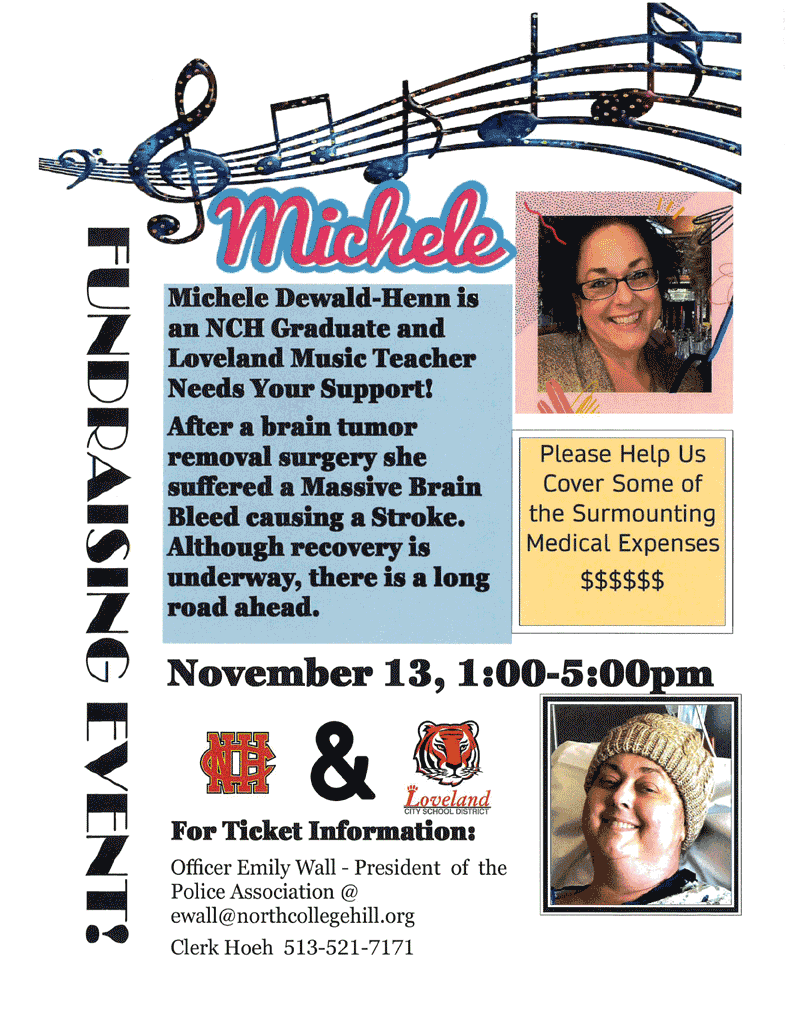
Michele Dewald-Henn is a Loveland music teacher and needs your support! After a brain tumor removal surgery, Michele suffered a massive brain bleed, causing a stroke.
Although recovery is underway, there is a long road ahead for Michele and you can help if you attend this fundraiser or make a donation if you can’t.
The Ohio Peace Officer Training Academy (OPOTA) has received a $280,000 federal grant to fund law enforcement training on identifying impaired drivers and investigating traffic collisions.
Funds from the Traffic Safety and Impaired Driving Training Grant will be used to reimburse the cost of tuition for Ohio law enforcement officers who attend the following OPOTA courses:
Standardized Field Sobriety Testing (SFST) Instructor certifies participants to instruct courses on field-sobriety testing.
Advanced Traffic Collision Investigation (Level II) covers advanced techniques for investigating traffic collisions, including measuring, mapping and analyzing vehicle behavior.
Radar and Lidar Operator teaches participants to operate radar and lidar devices (which measure speed) and includes field exercises, mock trial preparation and courtroom testimony practice.
Radar and Lidar Instructor trains participants to provide instruction on the operation of radar and lidar devices, as well as trial and courtroom-testimony preparation.
Traffic Collision Investigation (Level I) covers techniques for investigating traffic collisions, including preparing field sketches and applying mathematical formulas to determine vehicle speed.
Vehicle Dynamics (Level III) provides techniques and formulas for investigating traffic collisions, including instruction on vehicle systems, vehicle motion, hydroplaning and rollovers, as well as determining energy, speed and velocity.
The grant is funded by the National Highway Traffic Safety Administration and made available through the Ohio Department of Public Safety.
Law enforcement officers may register for these and other OPOTA courses on the Ohio Attorney General’s Office (AGO) website, with full course descriptions and tuition information available here. OPOTA, which is part of the AGO, provides instruction on a variety of subjects for the Ohio law enforcement community using the latest research and industry best practices.
Duke Energy is replacing gas main along East Loveland Avenue. The approximate location is near the East Loveland Nature Preserve and Fifth Street. Project dates are Oct. 24-Dec. 2, 2022, with work hours from 9 a.m.-5 p.m.
One lane of the road will be closed, and temporary traffic signals will be used to keep vehicles moving. Some on-street parking along East Loveland Avenue will be restricted during the project.
Gas main replacement will occur in several locations in Historic Downtown Loveland:
the intersection of State Route 48/Second Street (near Graeter’s and the fire station)
along East Broadway Street from approximately the Five Points intersection to the trestle bridge
and along Karl Brown Way from the trestle bridge to Harrison Avenue near Nisbet Park.
Work is scheduled for Nov. 9 -Dec. 30, 2022, and will occur Monday-Friday after 9 a.m. Overnight work will not occur during this project.
Single lanes will be closed with two-way traffic maintained by flaggers. Some sidewalk access and on-street parking will be restricted as needed to facilitate the work.
Project Project #3 State Route 48/Oakland Road: Late November 2022 – January 2023
Duke Energy will complete approximately 3-4 weeks of gas main work along State Route 48/Oakland Road from late November 2022 to January 2023. The road will be affected from the east end of St. Columban’s property (just past the football field) to the intersection of Loveland-Miamiville Road/Oak Street.
This project will require day and night work. For day work, single lanes will be closed with two-way traffic maintained by flaggers. For night work, a portion of State Route 48 (at the Loveland-Miamiville intersection) will need to be fully closed for part of the project. The road will be fully closed from 9 p.m. – 6 a.m. with the road reopened during the day. Overnight traffic will be detoured.
More Information
For more information about construction projects in the city, click here. If you have specific questions about the gas projects, contact City Engineer Cindy Klopfenstein, PE, CFM, at (513) 683-0150.
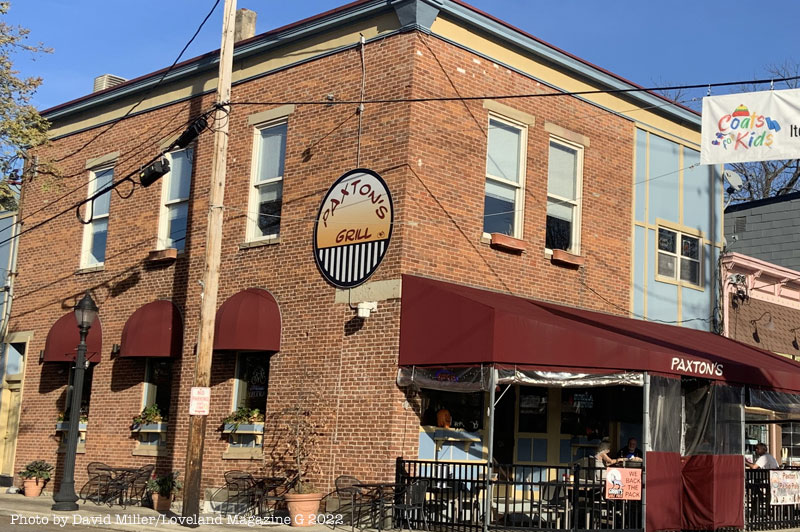
Loveland, Ohio – Paxton’s Grill is located in the heart of the Historic Loveland District adjacent to the Loveland Bike Trail.
You served us, so it’s our turn to serve you!
On Friday, November 11th (Veterans Day), all Veterans and Active Duty Military eat for free with a complimentary meal at Paxton’s and our sister restaurants, Ramsey’s Trailside in Loveland and SwingLine in Madeira. Thank you for your service!
Thank you Loveland High School Marching Band and Color Guard and all the directors, assistants, music teachers, and parent volunteers who filled Loveland’s hearts this Fall
Loveland Magazine Publisher David Miller
Loveland, Ohio – After the successful completion, in the hot August sun, of their grueling Summer Camp, the Loveland High School Marching Band and Colorguard performed in a “Preview Night” at Tiger Stadium last Friday.
Letting the music speak for itself here, this is just a sampling of what you can expect at the halftime of Tiger football games and at the Tiger Band’s performances during their competition season.
The Tiger Band and Colorguard will perform tonight in Tiger Stadium. Game time is 7 PM.




![[Updated] 2022 Loveland Area Mid-Term Election Results](https://lovelandmagazine.com/wp-content/uploads/2022/11/2022-Mid-Term-Election-Results.png)





![[Music Video] 2022 Loveland Marching Band presents ‘Say something, I’m giving up on you.’](https://lovelandmagazine.com/wp-content/uploads/2022/08/loveland-hs-band-preview-night.jpg)