Tag: local news

  • Corruption trial texts: OH AG Yost didn’t speak out against bailout because of utility support

    Corruption trial texts: OH AG Yost didn’t speak out against bailout because of utility support

    BY: MARTY SCHLADEN – Ohio Capital Journal

    CINCINNATI — In June of 2019, Ohio Attorney General Dave Yost thought a proposed utility bailout was a bad law, but he didn’t publicly oppose it because of support he’d received from the bailout’s primary beneficiary, FirstEnergy, according to lobbyists’ text messages displayed in court on Friday.

    Prosecutors displayed the messages as part of the racketeering trial of former House Speaker Larry Householder and Matt Borges, a former Ohio Republican Party Chairman who was acting as a lobbyist at the time the utility bailout was debated and passed. They are accused in a scheme to use $61 million to make Householder speaker in 2019 so he could pass and protect a $1.3 billion bailout that mostly went to protect FirstEnergy’s failing nuclear and coal plants.

    At the time of the men’s July 2020 arrest, federal prosecutors said it was likely the biggest bribery and money laundering scheme in Ohio history. Two months later, as he announced a civil suit against FirstEnergy, Yost echoed those sentiments.

    “Corruption doesn’t happen on an industrial scale like this without cash,” he said in a press conference. “And it’s incredibly important at this moment in our state’s history to send a message that the Ohio political system, the Ohio law-making system, the regulatory environment is not for sale. If you shut off the money spigot, the corruption withers.”

    But behind the scenes 15 months earlier — according to text messages between Borges and lobbyist Juan Cespedes — Yost was pulling his punches on the bailout. Borges said Yost was doing so partly because of $24,000 he received from FirstEnergy and Borges in the cycle leading up to the 2018 election and the subsequent legislative session during which the bailout was passed. 

    Cespedes has pleaded guilty in the scandal and is expected to testify soon in the Householder trial.

    After the scandal broke, Yost announced that he would donate his FirstEnergy-related contributions to charity

    But according to Borges, who had run earlier campaigns for Yost, the FirstEnergy money spigot helped guide the attorney general’s conduct as the bailout was making its way through the legislature. Text messages indicate that Borges was assigned to try to enlist Yost’s help with the bailout.

    The legislation, House Bill 6, passed the Ohio House on May 29, 2019, and by the time of the June 26, 2019, text conversation between Borges and Cespedes, opposition to the bailout was growing as it was being debated in the Senate.

    One source of opposition was from outside groups that were planning a ballot initiative to repeal HB 6 if it passed. Borges and Cespedes discussed trying to make it exempt from repeal by treating it as a revenue bill and calling it a tax — based on a $1 subsidy built into the measure. 

    Cespedes asked Borges what the attorney general thought.

    “He’s sympathetic, but he wants to go back and look at the law,” Borges replied.

    As they discussed the matter further, Borges said “Don’t repeat this,” but Yost believed the bailout was a bad law.

    Yost “‘would be out front (in opposition) if not for (FirstEnergy) support and your involvement,’” Borges quoted Yost as saying.

    As attorney general, Yost also would have to approve any repeal language before it went on the ballot. The AG also wanted to help with that if he could, Borges said.

    “If there’s any way the law will allow him to reject the language, he will do it,” Borges texted.

    Yost has been subpoenaed in the case, and his spokeswoman on Friday declined to comment on the text messages.

    “He was subpoenaed to potentially be a witness in this case,” the spokeswoman, Bethany McCorkle, said in an email. “At this time it is inappropriate for him to comment.”
  • Meijer extending SNAP benefits through March 31 for in-store produce purchase

    Meijer extending SNAP benefits through March 31 for in-store produce purchase

    Loveland, Ohio – The Ohio Department of Job and Family Services (ODJFS) announced that changes in federal law mean that February will be the last month of emergency Supplemental Nutrition Assistance Program (SNAP) allotments. 

    However, through March 31, Meijer is offering SNAP customers a 10 percent discount on produce purchased in-store, helping families stretch their dollars even further on fresh, healthy food. More info:

  • [VIDEO] Loveland High School Winter Athletic Signing Day

    [VIDEO] Loveland High School Winter Athletic Signing Day

    by David Miller

    Loveland, Ohio – The 2023 Loveland High School Winter Athletic Signing Day was on Wednesday, February 1st in the Main Gym.

    Congratulations to the following Student-Athletes, who have committed to play their sport at the collegiate level:

    Ethan Freeland -Football at Georgetown College

    Noah Kline -Football at Valparaiso University

    Victoria Blum -Cheer at Mount St. Joseph University

    Tyler Huff -Baseball at University of Northwestern Ohio

    Jared Werling -Baseball at University of South Carolina-Lancaster

    Emma Kist -Archery at Lindsey Wilson College

    Parker Braddock -Archery at Lindsey Wilson College

    Josh Dues -Lacrosse at Concordia University Ann Arbor


    Also Watch: [VIDEO] A national ritual: 5 LHS Student-Athletes on “National Signing Day” From November 9th, 2022

  • Angling for appeal? Householder attorneys go after judge in corruption trial

    Angling for appeal? Householder attorneys go after judge in corruption trial

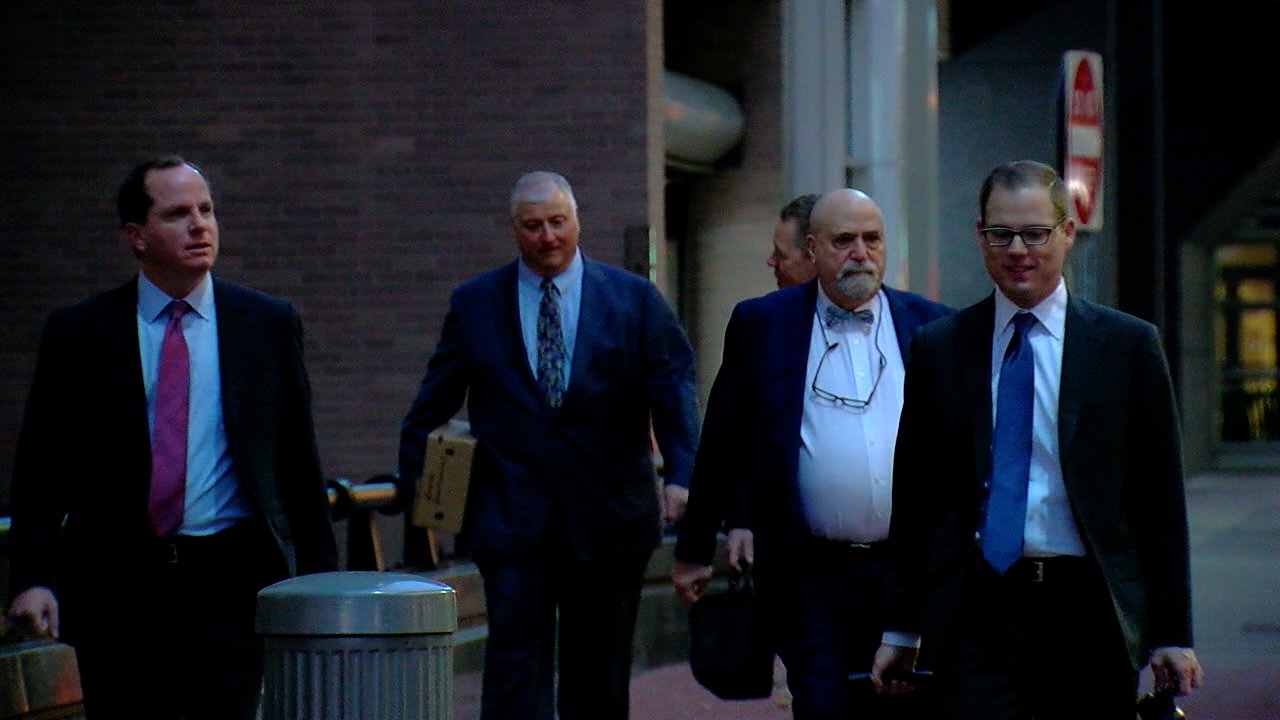
    Former Ohio House Speaker Larry Householder, a Perry County Republican, second from left, with attorneys outside of his racketeering trial. Photo courtesy of WEWS.

    BY: MARTY SCHLADEN – Ohio Capital Journal

    CINCINNATI — There has been speculation since the start of a massive public corruption trial that lawyers for the main defendant — former Ohio House Speaker Larry Householder — were banking on getting any conviction tossed out on appeal.

    There might have been evidence of that on Tuesday when one of the attorneys took the rare step of accusing the judge in the case of bias against his client. The attorney also suggested that the judge harbored a political grudge against Householder going back more than 22 years.

    Testimony resumed Tuesday in the case after repeated delays — first because of weather and then because a juror tested positive for covid. 

    When it did, federal prosecutors continued presenting extensive evidence to support allegations that Ohio utilities paid $61 million into Householder-controlled 501(c)(4) dark money groups and Householder used the money to elect friendly Republicans to make himself speaker in early 2019. Householder is accused of pushing through a $1.3 billion ratepayer bailout that primarily benefited his primary benefactor — Akron-based FirstEnergy — in return.

    Prosecutors have said it was likely the largest bribery and money-laundering scheme in Ohio history.

    Federal prosecutors are known to usually file charges only when they’re almost certain to get a conviction. That’s perhaps even more true when the case is against an elected official.

    And over the course of testimony so far, Assistant U.S. Attorney Emily Glatfelter has introduced reams of evidence in the form of emails and text messages, as well as transcripts of wiretaps and witness testimony — including that of co-defendants who have pleaded guilty.

    Householder’s attorneys have argued that their client raising money and electing candidates who would support his speaker’s bid was just politics as usual. They also argue that Householder only wanted to prop up failing nuclear and coal plants because he wanted to save jobs and protect the tax bases of the communities where they were located.

    Householder also is alleged to have pocketed $500,000 in utility money himself, but his lawyers say those were loans he fully intended to repay.

    However, the attorneys’ conduct on Tuesday might indicate that they’re looking past the jury trial.

    Before the jury entered the courtroom, Householder attorney Mark Marein rose to complain to U.S. District Judge Timothy Black  — about the conduct of Black himself.

    “We all collectively believe that the court holds animosity toward us,” Marein said, referring to Householder’s legal team. He added, “I question whether (Judge Black) should be presiding over this.”

    Black scolded Householder’s lawyers last week for muttering and making faces during Glatfelter’s opening statement. Among his criticisms, Black called the conduct “bush league.”

    The judge also dismissed a juror who refused to wear a mask in court. That prompted speculation that Householder’s lawyers were displeased because such a juror might be more sympathetic to their client, a pro-Trump Republican.

    But Marein gave a wholly different reason for suspecting that the judge was biased against Householder. He said that Black might be holding a grudge from 2000, when Black ran for the Ohio Supreme Court and Householder worked against the candidacy. 

    Both Marein and Black acknowledged that Marein was making the statements simply to get them into the record — presumably so they would be there in the event of an appeal. 

    There is some precedent for overturning public corruption convictions over complaints of judicial bias and prosecutorial misconduct. 

    In 2009, the conviction of former Alaska Senator Ted Stevens was thrown out after the FBI was found to have withheld exculpatory evidence and other misconduct. And in 2016, the U.S. Supreme Court unanimously overturned the conviction of former Virginia Gov. Bob McDonnell, ruling that the trial court judge allowed prosecutors to use an overly broad definition of bribery.

    But accusing a judge of bias in the middle of a trial has risks. Lawyers have said that if one genuinely believes a judge is biased, accusing that person of it in open court could simply make things worse. And in some instances, such accusations have resulted in professional sanctions against the lawyers making them.

    There were a few other developments of interest Tuesday:

    • Prosecutors played a recording of a wiretapped phone conversation between Householder and political operative Neil Clark in December 2017. Clark was also charged in the corruption scandal, but later died by suicide. In a laughing, profanity-strewn passage, the two talked about how Republicans legislators in 2010 drew a portion of Columbus into former U.S. Rep. Pat Tiberi’s district. “Tiberi wanted a safer district,” Householder said, later adding, “He doesn’t like me because he thinks I f*****d with him.” The maps drawn in 2011 were said to have some of the most gerrymandered in the country. Last year, a Republican-controlled panel repeatedly refused orders from the state Supreme Court to draw them more evenly.
    • Householder allies and FirstEnergy officials in August 2017 discussed a third tranche of $250,000 from the company to a Householder-controlled dark-money group at the posh Greenbrier resort in West Virginia, where that state’s Coal Association was holding its annual meeting. The money flowed soon thereafter. That meeting follows a round of swanky dinners in Washington, D.C., involving Householder and FirstEnergy officials the previous January during former President Donald Trump’s inauguration. Two dark-money groups were set up within weeks and one quickly received the first $250,000 from FirstEnergy, even though was hemorrhaging money.

    The trial resumes Wednesday. It’s expected to last into March.

  • Fate of former Ohio House speaker could hinge on whether he took an “official act”

    Fate of former Ohio House speaker could hinge on whether he took an “official act”

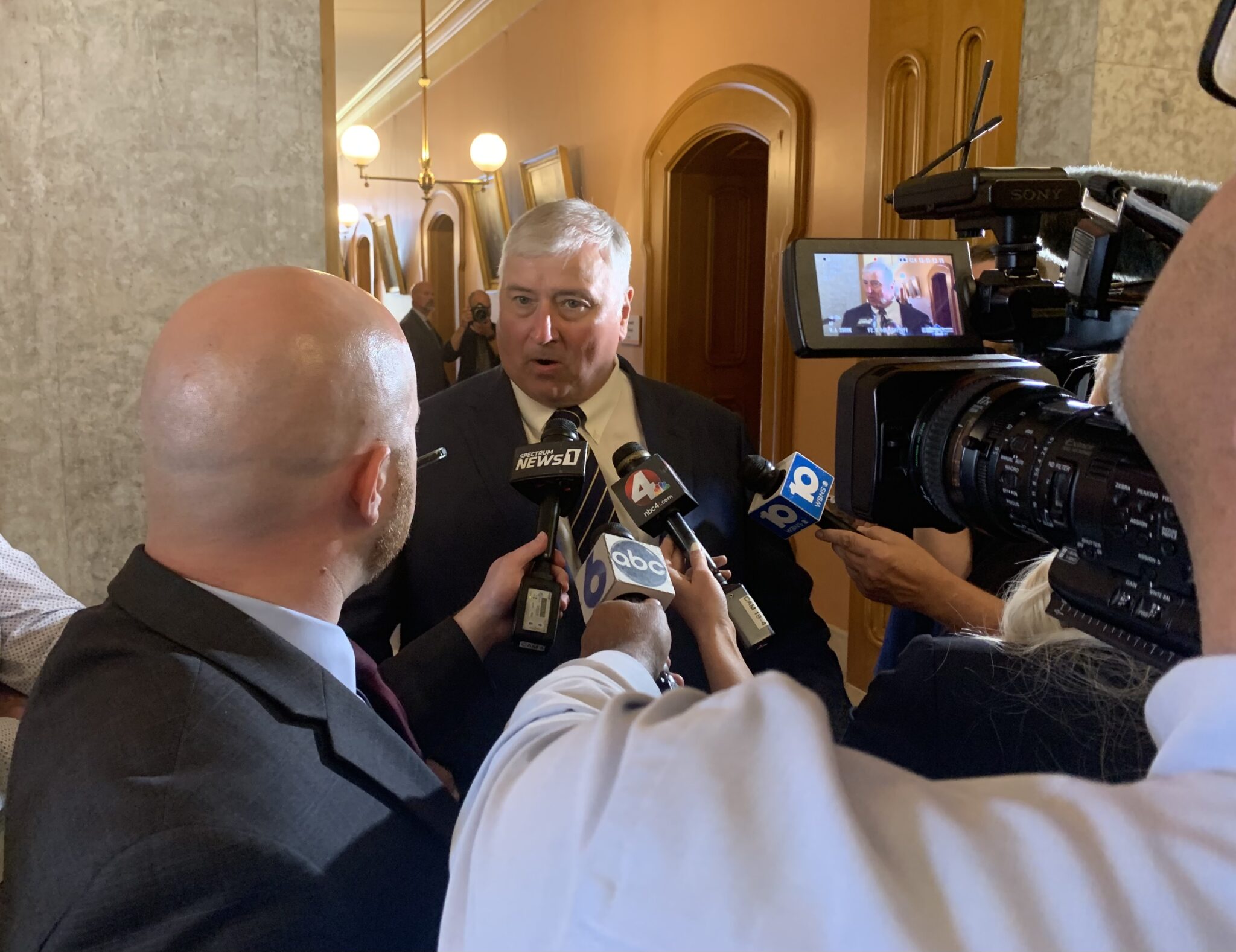
    Larry Householder addresses reporters after lawmakers voted to expel him from the General Assembly. He has pleaded not guilty to a racketeering charge and awaits trial. Photo by Jake Zuckerman, OCJ.

    BY: MARTY SCHLADEN – Ohio Capital Journal

    It appears that federal prosecutors have a mountain of evidence they want to present to the jury in their racketeering case against former Ohio House Speaker Larry Householder and former Ohio GOP Chairman Matt Borges. 

    They have emails, text messages, wiretap transcripts, and the testimony of undercover agents and confidential informants. They have so much material that U.S. District Judge Timothy Black said prosecutors and defense attorneys labored mightily before the trial even started to agree on what could be presented to the jury. The process was meant to avoid bogging down what’s already expected to be a six-week ordeal.

    But all that evidence could miss the mark if none of it shows that Householder undertook an “official act” in exchange for all the millions Akron-based FirstEnergy funneled into 501(c)(4) dark money groups to support the effort to elect friendly Republicans who would vote to make Householder speaker. The U.S. Supreme Court overturned a public corruption conviction on that basis just six years ago.

    Householder is accused of masterminding a conspiracy to use $61 million from FirstEnergy and other utilities to make himself speaker and in return ramming through a $1.3 billion ratepayer bailout of failing nuclear and coal plants. His trial began last week, but after two days of testimony it was delayed — first because of weather and then because a juror was diagnosed with COVID.

    But last week, FBI Special Agent Blane Wetzel testified about conduct that made both Householder and FirstEnergy look pretty bad.

    Householder is accused of using about $500,000 from the dark money groups to pay off credit card debt, settle a lawsuit, and repair a Florida home. Meanwhile, FirstEnergy was losing so much money on its nuclear and coal plants that in 2016 it started the process that would send the subsidiary that owned them into bankruptcy.

    But even as the company and Householder were swimming in red ink, he and the company’s CEO flew to Washington, D.C., on private jets in January 2017 for three days of dinners and drinks at some of the city’s swankiest bars and restaurants, Wetzel said. 

    Within two weeks, FirstEnergy money was flowing into Householder-controlled dark-money accounts. In November of 2018, enough Householder-friendly Republicans were elected — many with the help of money from those accounts — to make him speaker the following January. Less than six months later, on May 28, 2019, the House passed its first version of the billion-dollar bailout, House Bill 6. The body passed a final version on July 23, 2019 and Gov. Mike DeWine signed it the same day.

    When former U.S. Attorney David M. DeVillers announced Householder’s arrest almost exactly a year later, he called the scheme with FirstEnergy “likely the largest bribery and money-laundering scheme ever in the state of Ohio.”

    But did Householder undertake an official act in exchange for money corruptly received from FirstEnergy and other Ohio utilities? The answer might not be as straightforward as you think.

    For their part, Householder’s attorneys are arguing that their client was merely raising money like any effective politician would and that he only wanted to subsidize the power plants to save Ohio jobs and the tax bases of school districts.

    In addition, the Supreme Court in 2016 threw out the conviction of former Virginia Gov. Bob McDonnell even though he and his wife took more than $170,000 worth of loans and gifts from a businessman in exchange for hosting him at functions, recommending his product to state agencies, and trying to persuade state universities to study it.

    At issue was whether any of those were “official acts.”

    In that case, Jonnie Williams, CEO of Star Scientific, supported the Virginia Republican’s successful 2009 campaign. Once in office, the gifts really started to flow — including $20,000 worth of designer clothing for McDonnell’s wife, Maureen McDonnell, and a Rolex watch that Maureen gave Bob for Christmas.

    Williams was peddling a compound found in tobacco as a nutritional supplement called Anatabloc. In 2011, the McDonnells hosted an event at the Governor’s Mansion that Williams testified was intended to launch the product. He wanted scientists at the state’s universities to research it, but neither he nor the McDonnells could interest them in the supplement.

    The governor also told the state secretary of administration and the director of the Virginia Department of Human Resources that it would be a good idea for all state employees to take Anatabloc like he was. The officials apparently didn’t take the hint. 

    Investigators caught wind of the McDonnells’ arrangement with Williams and charged them with numerous crimes related to bribery.

    In 2014, they were convicted in federal court and Bob and Maureen were sentenced to two and one year in prison, respectively. They appealed, but the 4th U.S. Circuit Court of Appeals in Richmond upheld the conviction.

    However, when the case made it north to the U.S. Supreme Court, in Washington, D.C., it was overturned. Unanimously.

    Chief Justice John Roberts, the author of the ruling, said that the court took up the case expressly “to clarify the meaning of ‘official act.’” 

    In his trial, “Governor McDonnell had requested the court to further instruct the jury that the ‘fact that an activity is a routine activity, or a ‘settled practice,’ of an office-holder does not alone make it an ‘official act,’ and that ‘merely arranging a meeting, attending an event, hosting a reception, or making a speech are not, standing alone, ‘official acts,’ even if they are settled practices of the official,’ because they ‘are not decisions on matters pending before the government.’” Roberts wrote.

    Instead, McDonnell’s lawyers argued, an official act must be intended to “influence a specific official decision the government actually makes — such as awarding a contract, hiring a government employee, issuing a license, passing a law, or implementing a regulation.”

    In overturning the convictions, the high court agreed, ruling that the McDonnells could still be prosecuted, but the “Government must identify a ‘question, matter, cause, suit, proceeding or controversy’ that ‘may at any time be pending’ or ‘may by law be brought’ before a public official. Second, the Government must prove that the public official made a decision or took an action ‘on’ that question, matter, cause, suit, proceeding, or controversy, or agreed to do so.”

    How much comfort Householder should take from the ruling is uncertain, however. Roberts ended the ruling with what seems to be a warning to politicians thinking of doing shady stuff.

    “There is no doubt that this case is distasteful; it may be worse than that,” he wrote. “But our concern is not with tawdry tales of Ferraris, Rolexes, and ball gowns. It is instead with the broader legal implications of the Government’s boundless interpretation of the federal bribery statute. A more limited interpretation of the term ‘official act’ leaves ample room for prosecuting corruption, while comporting with the text of the statute and the precedent of this Court.”

  • Loveland City School District Board of Education votes to place 4.9 mill levy on the May 2nd

    Loveland City School District Board of Education votes to place 4.9 mill levy on the May 2nd

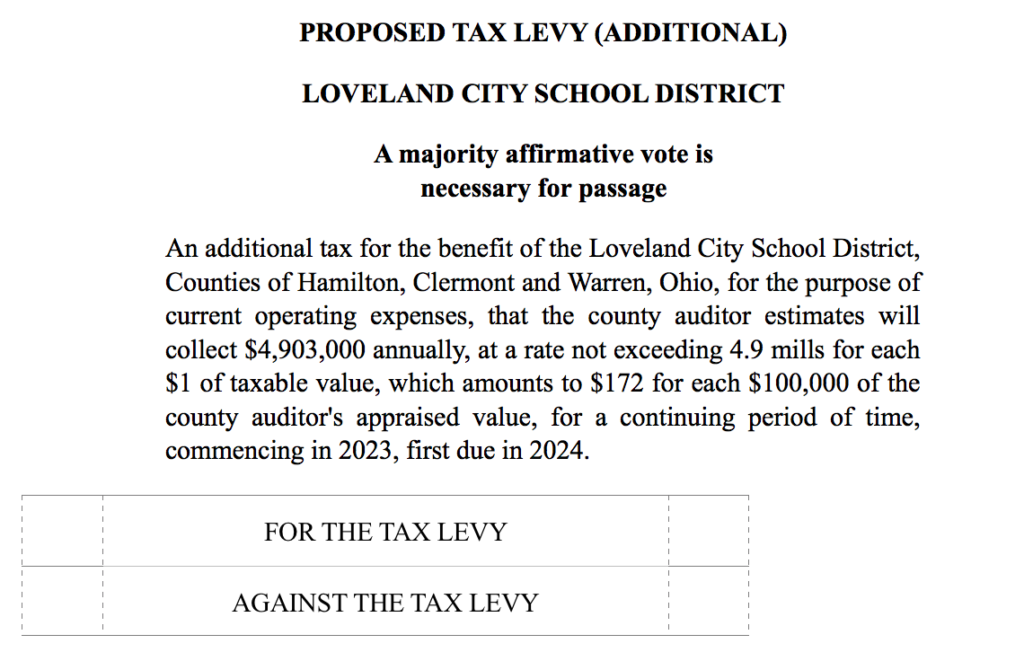
    Loveland, Ohio – Last night in a unanimous vote, the Loveland City School District Board of Education voted to place a 4.9 mill operating levy on the May 2nd ballot.

    The discussion about the levy begins at the 19:12 minute mark of the meeting video.


  • Emma Steiner, Marcel Mangan, Orhan Ozbudak have $100,000 goal with a cure for Leukemia and Lymphoma as their target

    Emma Steiner, Marcel Mangan, Orhan Ozbudak have $100,000 goal with a cure for Leukemia and Lymphoma as their target

    by David Miller

    Loveland, Ohio – Emma Steiner said, “My connection to the Leukemia and Lymphoma Society began when a favorite middle school teacher of mine, and now mentor, lost her aunt due to Leukemia.” Steiner is a junior at Loveland High School.

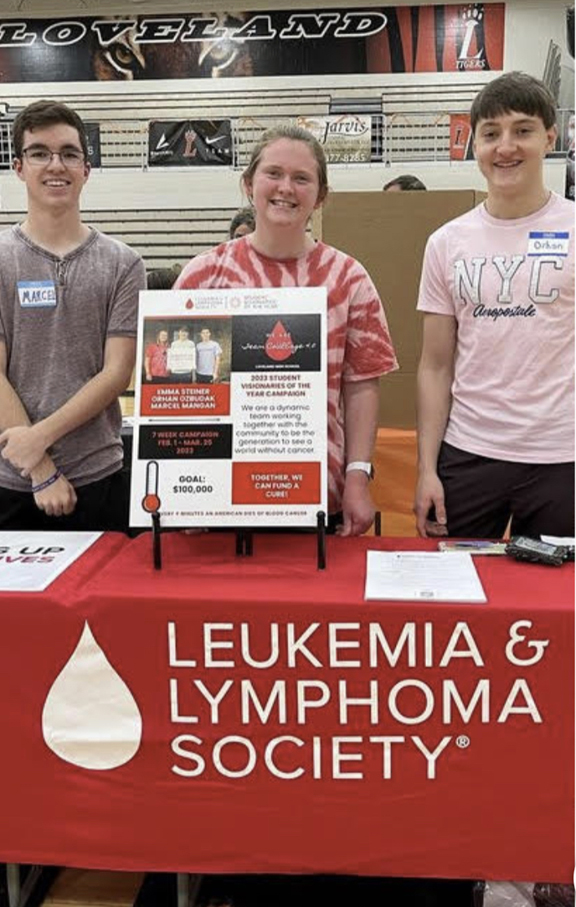
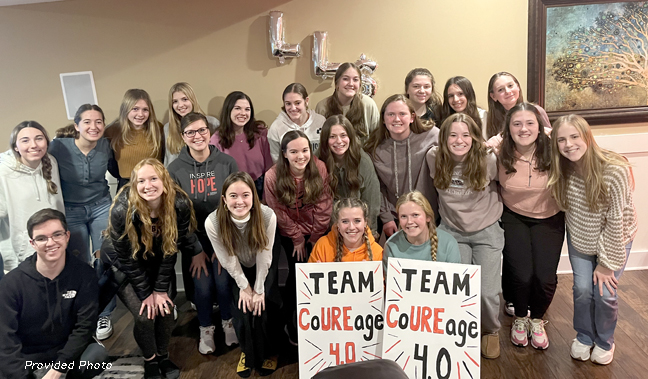
    Steiner and Loveland High School juniors, Marcel Mangan, and Orhan Ozbudak are the candidates for Team CoUREage 4.0, a fundraising team raising money for The Leukemia and Lymphoma Society’s Student Visionaries of the Year Campaign. The 2023 campaign runs through March 25th. There are 30 team members.

    Marcel Mangan, Emma Steiner, and Orhan Ozbudak

    Steiner was asked to join Loveland’s Team CoUREage last year. She said, “While fundraising, I got to hear so many touching stories of people affected by blood cancer.” That was more than enough to make her want to accept the nomination to be a candidate for this year’s campaign. “Although I don’t have a direct connection to blood cancer, my grandpa passed away from cancer last year, and I fight so that other families don’t have to experience what my grandpa went through.”

    LLS’s Student Visionaries of the Year campaign is a seven-week competition among high schools across the Cincinnati area. Loveland is one of 15 teams raising money for blood cancer research, advocacy, patient support, and ultimately, a cure. However, it is not just a competition among these 15 teams, rather it is a combined effort to help LLS find a cure. 

    The trio has built this year’s campaign using the community as their foundation. Since last August, they have been building partnerships with local businesses securing sponsorships, auction items, and organizing events. So far, they have over 10 events planned to help them raise money for the Leukemia and Lymphoma Society. 

    Visionaries look to the future—and see infinite possibility.
    They challenge the status quo—and make the impossible possible. They boldly imagine a better world – and lead the charge to create it.

    Members of Team CoUREage 4.0 are all Visionaries that are hard at work fundraising for the Leukemia and Lymphoma Society. LLS was built on the same vision – of a better world – one without blood cancers. 

    Their Loveland goal is to raise $100,000 over the next 7 weeks. They hope to reach it through secured sponsorships with local businesses, community donations, events, t-shirt sales, and the Grand Finale Celebration. One of the biggest ways that the team will fundraise is through donations received by each of their 30 team members.

    Team CoUREage 4.0

    Orhan Ozbudak said, “Throughout my life, I hope to be an avid philanthropist. Ever since my youth, I have participated in many philanthropic events and hope to continue these types of activities into the future. One of my dreams is to create businesses that illuminate warmth and help people.” He added that When Marcel and Emma invited him to join them he knew this was an opportunity to positively impact not only people affected by blood cancer but also the world. “Even though I was hesitant to be a candidate at first, I realized that I am very thankful to participate in the Student Visionaries of the Year Campaign as a candidate.”

    The goal is to not only raise money for blood cancer but also to raise awareness in our Loveland community about Leukemia and Lymphoma. “Any donation helps, and brings us closer to our goal,” said Steiner.

    Marcel Mangan said, “My connection to LLS began last year when the two past candidates, Grace Dressell and Claire Zeigler, had asked me to be a member of their campaign.” He explained that initially, he was hesitant due to not having a direct connection to leukemia or lymphoma, but after researching the stories of those who have had to deal with these blood cancers he felt it necessary to join. “The most touching story that I heard was about a girl named Emily Love who had been diagnosed with leukemia when she was only 1 years old. Luckily she recovered after 3 years and was able to live a normal life, but sadly those years of her childhood can never be given back to her. After hearing her story I joined the 2022 campaign, and I’ve been a part of it ever since. I just hope that my fundraising can help make a positive impact on those suffering from leukemia or lymphoma.”

    Background Info about LLS: 

    LLS is uniquely able to report on the many advances and accomplishments that have occurred since their founding in 1949. From cutting-edge research and precision medicine innovations to legislative victories that improve access to therapies for cancer patients, LLS plays a leading- and often pioneering- role in the fight against blood cancers. Since 2000, approximately 40 percent of all U.S. Food & Drug Administration (FDA) approved cancer drugs were for blood cancer, and some are now used to treat other forms of cancer and non-malignant diseases. A “win” for blood cancers, therefore, is a win for the cancer community overall.

    More 

    • Research done by the Leukemia and Lymphoma Society especially helps those with blood cancer but it also makes improvements for all kinds of cancer!
    • There will be a raffle for a parking spot at Loveland High School during school lunches
      • Students can also purchase t-shirts during their lunch and buy tickets for raffle baskets
    Katie Rose

    Teacher-mentor, Katie Rose said, “My ‘why’ is my Aunt Tina Eubanks, who died of Acute Myeloid Leukemia only three weeks after being diagnosed at the age of 53.” Rose had been fundraising for LLS through Pennies for Patients with Loveland Middle School Student Council for many years and would always tell people, “You never know when cancer will touch your family”. Another of her aunts is currently battling both lung and liver cancer. Sadly, this cancer diagnosis is her third – lymphoma and rectal cancer being two she defeated. “People often ask why I work so hard to fundraise. The answer is simple. As long as there is breath in my lungs and blood in my veins, I will do whatever it takes to help those who are impacted by cancer.”

    Rose who is a Social Studies Teacher at Loveland Middle School said, “Cancer needs to be eradicated and LLS is the organization making the greatest strides in funding research and advancing new drugs to help those in need. I live a life of service, and by teaching my current and former students the importance of giving back and how to raise money for a worthy cause allows me to fulfill my life’s purpose.” 

    How YOU can support Team CoUREage 4.0

    1. Make a charitable donation using the team’s online fundraising page: https://events.lls.org/soh/svoycincy23/tcoureage4
    2. Purchase a t-shirt: T-Shirt Order Form
    3. Follow on social media:         

    Instagram: @lovelandteamcoureage4.0        

    Twitter: @teamcoureage4                      

    1. Donate an auction basket or item or become a Grand Finale sponsor (contact Emma Steiner 513-630-5610)
    2. Attend events and mention Team CoUREage 4.0 when ordering. Most events will have raffle baskets.

    Orhan Ozbudak said, “I am very appreciative of all the progress we have made and can’t wait to see what our team will accomplish throughout this journey. Hopefully, our efforts will also serve to inspire people to carry on this positivity.”

    “Thank you to all of the businesses that are sponsoring our campaign, and thank you to all of the people in Loveland who have shown continuous support for our fundraiser,” said Emma Steiner.

    Marcel Mangan summed up the campaign by saying, “Although we hope to raise a large amount of money for the Leukemia and Lymphoma Society, we also hope to spread the importance of LLS throughout Loveland, but also the greater Cincinnati area as a whole.”

    2/1-2/21Buffalo Wild Wings at 11363 Montgomery Rd. 10% giveback on dine-in or carry-out all day if you mention “Team L”
    EVERY SUNDAY2/5, 2/12, 2/19, 2/26, 3/5, 3/12, 2/19Bishop’s Quarter at 212 W Loveland Ave. 10% Giveback
    2/8Raising Cane’s at 3901 Montgomery Rd., 2 pm-9 PM
    2/13Cartridge Brewing at 1411 Grandin Rd. 4 pm-10 pm
    2/22Ramsey’s Trailside at 200 W Loveland Ave.
    2/23MPH Brewing at 7880 Remington Rd. 4 pm-10 pm. 10% Giveback on food and drink
    2/27Dewey’s Pizza at 11338 Montgomery Rd. 4 pm-9 pm
    3/4Athlete Instincts Fitness Fundraiser at 774 Loveland-Miamiville Rd. 10:30 am. $10 to sign up, text Jen Steiner 513-289-6393 to sign up
    3/10Cappy’s Wine & Spirits at 309 W Loveland Ave. 5 pm-11 pm. LIVE MUSIC starts at 7:30 pm
    3/12 Nisbet Park – Text Jen Steiner 513-289-6393 to sign-up
    3/15The Work’s Brick Pizza Oven at 20 Grear Millitzer Place. ALL DAY
  • Federal Government to End SNAP Emergency Allotments After February

    Federal Government to End SNAP Emergency Allotments After February

    Ohio Department of Job and Family Services (ODJFS) Director Matt Damschroder has announced that changes in federal law mean that February will be the last month of emergency Supplemental Nutrition Assistance Program (SNAP) allotments. These are extra monthly payments the federal government created in response to the COVID-19 pandemic. In general, it ensures all households receive the maximum allotment for their household size. Beginning in March, recipients will receive only their one, normal monthly payment.

    Here are examples of how the change will impact people:

    • Individual normally entitled to the minimum allotment of $23 per month has been receiving an additional $258 per month to receive the maximum allotment of $281.
    • Household of 3 normally entitled to $180 per month has been receiving an additional $560 per month to receive the maximum allotment of $740.
    • Household of 4 normally entitled to $939 per month (maximum allotment) has been receiving an additional $95 per month, for a total of $1,034.

    “Recently passed federal legislation is bringing the temporary SNAP allotment to an end after February,” said Damschroder. “We will be communicating to recipients, county agencies, and our partners such as foodbanks, that normal SNAP payment will resume in March.”

    The Supplemental Nutrition Assistance Program is a federally funded program meant to supplement the food budget of families in need so they can purchase healthy food and move towards self-sufficiency.
    Eligibility, as well as the normal monthly allotments, vary based on factors such as income and household size.

    The Families First Coronavirus Response Act allowed states to request emergency allotments for households participating in SNAP. As a result, ODJFS has been providing emergency allotments to SNAP households since March 2020. Congress recently passed the Consolidated Appropriations Act of 2023, which ended the program.

    The federal announcement means the last emergency allotment will be paid in late February, and beginning in March, recipients will receive only their one, normal monthly payment, which is typically loaded onto an electronic benefits card. As this is a federal change, there are no fair hearing rights or fair hearing benefits on the ending of the SNAP emergency allotments.

    Recipient can manage their benefits by going to https://benefits.ohio.gov/ or by contacting their county Department of Job and Family Services (JFS).

  • Loveland Board of Ed meets Tuesday

    Loveland Board of Ed meets Tuesday

    Loveland, Ohio – The Loveland Board of Education will conduct a regular and work session meeting on Tuesday, January 31 at 6 PM in the Board of Education Offices at 757 South Lebanon Road.


    Action Items

    Proposal to Proceed to Levy an Additional Tax for Current Operating Expenses – Millage TBD

    Discussion Items

    New Proposed Courses of Study

                    The agenda is active on BoardDocs – https://go.boarddocs.com/oh/love/Board.nsf/vpublic?open


  • Awaiting budget proposal, child advocates hope for more

    Awaiting budget proposal, child advocates hope for more

    Getty Images

    BY: SUSAN TEBBEN – Ohio Capital Journal

    As policymakers await the newest budget priorities to be laid out by Gov. Mike DeWine, advocates for the state’s children are hoping comprehensive child well-being will be at the top of the list.

    The Ohio Children’s Budget Coalition released their policy agenda for the 2024-2025 state budget, which they hope will include whole-child services to address housing, health, child care, economic stability, and adoption of the Fair School Funding Plan, which was only approved for two years of the six-year phase-in so far.

    “Children do not come in pieces, and neither should the policies and investments that crucially provide and pave the way for them to grow and flourish into successful adulthood,” said Katherine Ungar, senior policy associate with the Children’s Defense Fund-Ohio.

    Recommendations by the OCBC also targeted structural racism, the effects of which “negatively impact child outcomes,” according to the announcement of budget priorities.

    “The budget is a moral document that reflects our state’s priorities,” OCBC co-leader and Children’s Defense Fund-Ohio policy associate Matthew Tippit said in a statement.

    The policy report also laid out challenges to combatting the teacher shortage the state has suffered from for several years, with the Bureau of Labor Statistics stating 21,000 fewer teachers were employed in K-12 public school in the state from September 2021 to September 2019.

    The state has faced recruitment and retention issues, which the coalition attributes to “mounting pressures related to the COVID-19 pandemic, under-resourced schools, politicization of education and lack of respect for educators and the education profession.”

    “While a mass exodus of experienced educators from the teaching profession has not yet materialized, it is cause for significant concern when so many are expressing deep frustrations over what they believe is a lack of support and respect for the work they do with students,” the report stated.

     Groundwork Ohio

    The policy recommendations also come on the heels of a recent early childhood dashboard released by the advocacy group Groundwork Ohio. The dashboard has been in the works since 2021 to “help inform policy makers about the realities facing Ohio families with young children.”

    Groundwork Ohio president and CEO Shannon Jones said the dashboard “tells us where to focus on making positive change for infants, toddlers and preschoolers.”

    The report found that one in five Ohio infants don’t have access to child care or early learning and six in 10 children aren’t ready to attend school based on kindergarten readiness, fourth-grade reading proficiency and eighth-grade math proficiency.

    Racial issues appeared as part of Groundwork Ohio’s analysis, with the group finding that infant mortality rates are still above the U.S. average in Ohio “with a large and appalling racial disparity.”

    “While there are many ways we can begin to improve outcomes for young children, focusing state efforts on its very youngest citizens is an urgent moral imperative as well as a wise state investment,” according to the report.

    The organization was encouraged by state performance in areas like eighth grade math proficiency and improved homeless students and housing cost burdens.

    Early investments are needed to benefit Ohio children throughout their lives, the dashboard concluded as state performance compared to the rest of the country was worse in categories such as early intervention service access and young child poverty.

    Large disparities were found particularly in Black, Hispanic and Native American/American Indian children living below the poverty level.

    The state has also worsened in terms of kindergarten literacy, chronic absenteeism and special needs preschools, according to the dashboard.