Tag: Loveland City School District

  • FDA Authorizes Second Booster Dose of Two COVID-19 Vaccines for Older and Immunocompromised Individuals

    FDA Authorizes Second Booster Dose of Two COVID-19 Vaccines for Older and Immunocompromised Individuals

    Today, the  U.S. Food and Drug Administration (FDA). authorized a second booster dose of either the Pfizer-BioNTech or the Moderna COVID-19 vaccines for older people and certain immunocompromised individuals. https://bit.ly/3NuxvY6

    They previously authorized a single booster dose for certain immunocompromised individuals following completion of a three-dose primary vaccination series.

    This action will now make a second booster dose of these vaccines available to other populations at higher risk for severe disease, hospitalization and death according to a FDA news release.

    The emergency use authorizations was amended as follows:

    • A 2nd booster dose of the Pfizer-BioNTech or Moderna COVID-19 vaccines may be administered to people 50+ years old at least 4 months after receipt of a 1st booster dose of any authorized or approved COVID-19 vaccine.
    • A 2nd booster dose of the Pfizer-BioNTech COVID-19 Vaccine may be administered to people 12+ years old with certain kinds of immunocompromise at least 4 months after receipt of a 1st booster dose of any authorized or approved COVID-19 vaccine.
    • A 2nd booster dose of the Moderna COVID-19 Vaccine may be administered at least 4 months after the 1st booster dose of any authorized or approved COVID-19 vaccine to people 18+ years old with the same certain kinds of immunocompromise.

    Today’s announcement applies only to the Pfizer-BioNTech and Moderna COVID-19 vaccines, and the authorization of a single booster dose for other age groups with these vaccines remains unchanged.

    READ the full news release HERE.

  • Ricky Mulvey talks with Jacob Goldstein about drone delivery, self-driving cars, the future, and Loveland, Ohio

    Ricky Mulvey talks with Jacob Goldstein about drone delivery, self-driving cars, the future, and Loveland, Ohio

    Ricky Mulvey interned at Loveland Magazine for 5-years while he was a student in the Loveland School District and now lives in Denver, Colorado. He recently emceed the meet the candidate night for Loveland Magazine last November.

    It’s 2022. Weren’t we supposed to have flying drones delivering packages to our homes by now? Ricky Mulvey talks with Jacob Goldstein, host of the new Pushkin podcast “What’s Your Problem?”, about drone delivery, self-driving cars, and the future problems that entrepreneurs are trying to solve right now.

    A Drone delivery company that actually works, because they are actually running a big drone delivery company that works right now. They’re actually “doing the thing,” says Goldstein.

    Mulvey doesn’t forget his hometown and talks briefly about Loveland, Ohio in this podcast.

    Mulvey asks the question about the behavior of people living in a place like Loveland, Ohio, and will we ever give up the “privilege” of just being able to hop in a car and go”. Will we get used to our packages being parachuted in from a drone over our front yard or place of business?

    Mulvey’s segment starts at 14:30.

    We’re still in love with this independently produced podcast by Ricky Mulvey:

    Ricky Mulvey’s Podcast: “Total Fighter,” about Cincinnati’s Ezzard Charles


    Listen to more Motley Fool Podcasts produced by Ricky Mulvey:

    The Inside Story of Instagram – Few people know Instagram better than Bloomberg News tech reporter Sarah Frier.

    Making Sense of Past Stock Drops… bout of volatility.

    What’s Happening With Russian Oil and U.S. Gas Prices?… prices spiked?

    The Big News From Apple’s Event… here is Ricky Mulvey.

    The Power of Creating a “Good Enough for Now” Mindset… . In this podcast, Motley Fool producer Ricky Mulvey talks with Evans about: The power of creating a “good enough …

    Pulling the Curtain Back on Just-in-Time Delivery… producer Ricky Mulvey talks with Mims about his book, covering topics including: The roots of the microchip …

    What Crypto to Buy Now, and More Top Questions Answered… Bernd Schmid joins producer RickyMulvey to discuss what long-term investors should look …

    Alphabet’s Discipline, 5G’s Potential, and Microsoft’s Big Buy… , RickyMulvey, caught up with LaConte to talk about Vail’s difficult holiday season. How the company …

    “Grand Theft Auto” Comes to “FarmVille” as Take-Two Buys Zynga… -light and capital-heavy businesses this upcoming earnings season. Later in the show, RickyMulvey talks with Maria …

  • Expert: Hard to know if COVID variant will surge in U.S. or how badly

    Expert: Hard to know if COVID variant will surge in U.S. or how badly

    BY: MARTY SCHLADEN Ohio Capital Journal

    The last thing people want to hear right now is that the coronavirus might have mutated yet again into yet another deadly variant, extending the pain, death, and inconvenience of a pandemic that we long hoped would be over.

    However, whether the subvariant of omicron known as BA.2 will hit the United States as hard as it’s hitting other parts of the world is hard to say at this point, an expert at modeling the disease said Wednesday.

    The pandemic has been full of unpleasant surprises and BA.2 is no exception. Scientists estimate that it’s one-and-a-half times as transmissible as the original omicron strain, BA.1, and is overtaking it.

    Europe, and particularly the United Kingdom, have seen an increase in the new variant in recent months, but that hasn’t been the case everywhere, said Stephen Kissler, a research fellow in the Department of Immunology and Infectious Diseases of Harvard University’s T.H. Chan School of Public Health.

    “The question of if and when a surge is coming and how large is very open,” Kissler said in a Zoom conference with reporters. “I know that we’ve seen surges that are dominated by BA.2 across much of Europe. But in contrast, for example, in South Africa we saw a major BA.1 wave — that’s where we saw the omicron wave first — and now there’s a lot of circulation of BA.2, but it hasn’t really caused an increase in cases so much that it’s lengthened the decline and given the epidemic a very long tail.”

    Kissler explained that vaccination rates in the U.S. are lower than those in Europe, but higher than those in South Africa. That could mean that more Americans have developed antibodies against the omicron variants than have Europeans.

    “To the extent that that gives us protection against BA.2 we might see dynamics that are more similar to what happened in South Africa,” he said.

    Seasonality and other factors likely will play a role, Kissler said, with spring in the United States being a season of relatively low spread and fall a season of relatively high spread.

    So if there is a surge here of the new variant, how will it affect Americans of varying ages?

    “In many ways it will likely resemble our experience with COVID-19 up to this point,” Kissler said.

    And past experience has shown one factor to be hugely important: vaccination. 

    Kissler said that being vaccinated, along with a booster dose, “really goes a long way toward helping to protect you from symptomatic disease and especially severe disease. The biggest delineation I imagine seeing is that people who are boosted will probably fare better than people who are unboosted.”

    Another important factor is age, with the elderly having less natural resistance to all variants of the coronavirus than the young. Vaccines and boosters, though, can be a great equalizer.

    “A vaccinated and boosted person over the age of 75, their risk is probably on the order of — if not lower than — an unvaccinated 20-year-old,” Kissler said.

    COVID eventually will go from being a pandemic disease that spikes rapidly and overwhelms resources to an endemic one where a background level is present, sickening and even killing people, but in semi-predictable ways. Sadly, however, hopes that it will disappear altogether are small.

    Looking forward, one simple public-health measure might be most effective, Kissler said.

    “In many ways, one of the best things we can do to manage outbreaks is to just to continue to keep informing people how much COVID is circulating in their communities and make it just as accessible as a weather report,” he said. “A lot of data suggest that people tend to adjust their behavior accordingly.”

    He said that probably won’t be enough to quell future waves of COVID, or be adequate in the face of major new variants.

    “But as we continue to deal with COVID and we think about this permanent circulation of COVID-19 in the population — recognizing that there’s going to be different dynamics in different places, different patterns across the year — making it clear what’s happening in any given community at any given time through passive surveillance is probably the best thing we can do right now,” he said.


  • Loveland FIRST Tech Challenge Team advances to World Championship

    Loveland FIRST Tech Challenge Team advances to World Championship

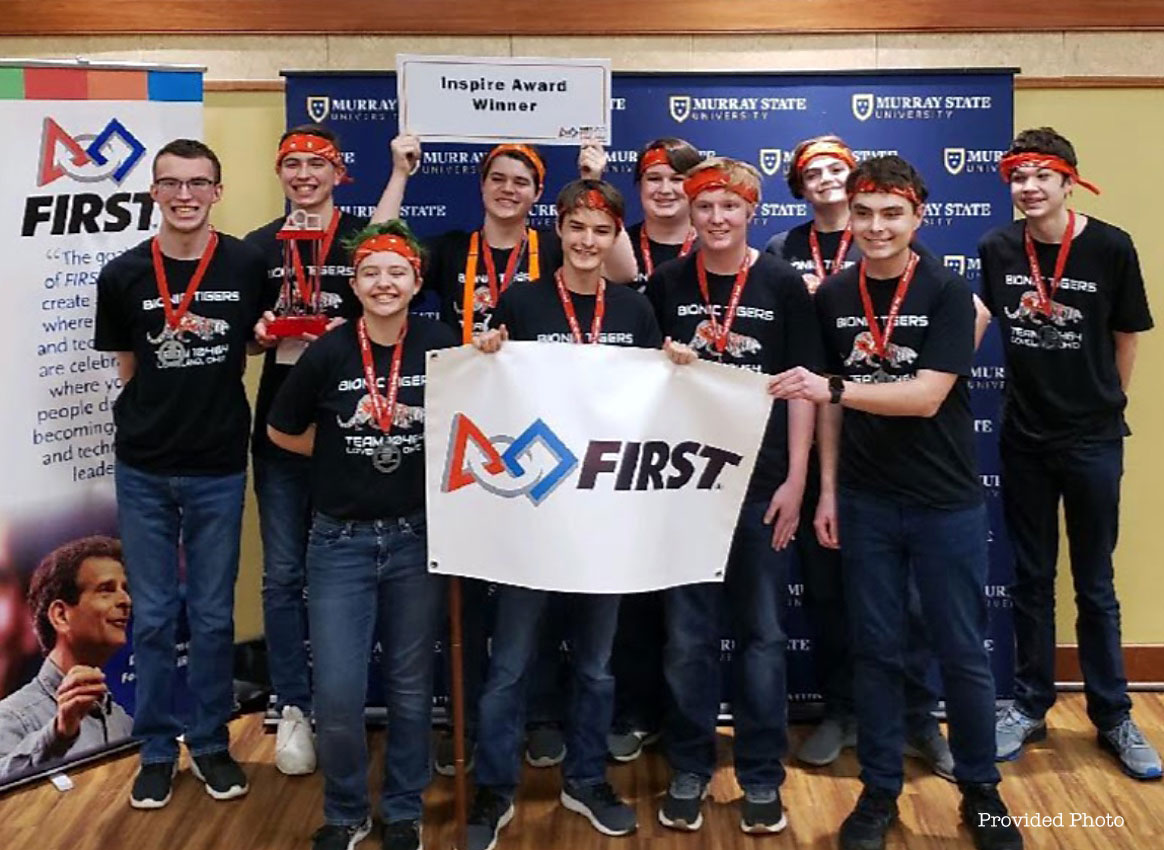
    Team 10464 The Bionic Tigers at the KY State FTC Championship

    The Bionic Tigers will be competing in the World Championship in Houston, TX from April 20-23.  The World Championship features 160 of the top FTC Teams from over 6300 teams around the world, and this is the 3rd year in a row The Bionic Tigers have qualified for Worlds.

    Loveland, Ohio – Loveland FIRST Tech Challenge (FTC) Teams 10464, The Bionic Tigers, and 5040, Nuts & Bolts, competed in the Ohio FTC Championship on March 5. The event, which was held remotely, included presentations to a panel of judges where teams had the opportunity to share the design and development of their robot, their outreach efforts to support STEM and robotics in their community, and their involvement with industry professionals. Teams also submitted scores for 6 robot matches, that were completed on their home fields, trying to score the maximum points possible in two and a half minute matches.  

    Based on their judging and robot performance, Team 5040, Nuts & Bolts, won the Motivate Award and 2nd place robot performance. The Motivate Award recognizes a team that makes a collective effort to make their team known throughout their community and school. Team 10464 won 4th place robot performance and the Think Award, which is the 2nd highest award for the event.  The Think Award is given to the team whose Engineering Portfolio best reflects the team’s journey through the design and build process for their robot.   

    Team 10464 The Bionic Tigers also competed on March 12 at the Kentucky FTC State Championship at Murray St. University. This competition was their first in-person competition in 2 years due to Covid restrictions, and the event included teams from Kentucky, Ohio, Alabama, Tennessee, and Arkansas.  

    At the start of the day, the Bionic Tigers and all competing teams presented to panels of judges for evaluation for awards. Teams also submitted a 15-page engineering portfolio summarizing all of their robot design and development, outreach work with other teams and the community, and connections with the professional STEM community. Following judging, they competed in 6 rounds of qualifying matches and were ranked 3rd in a very competitive field. The top 4 ranked teams became the alliance captains for the elimination rounds, and the Bionic Tigers selected two Kentucky teams as alliance partners. They lost a close match in the semi-finals, and the 1st seed alliance went on to win the robot portion of the competition.


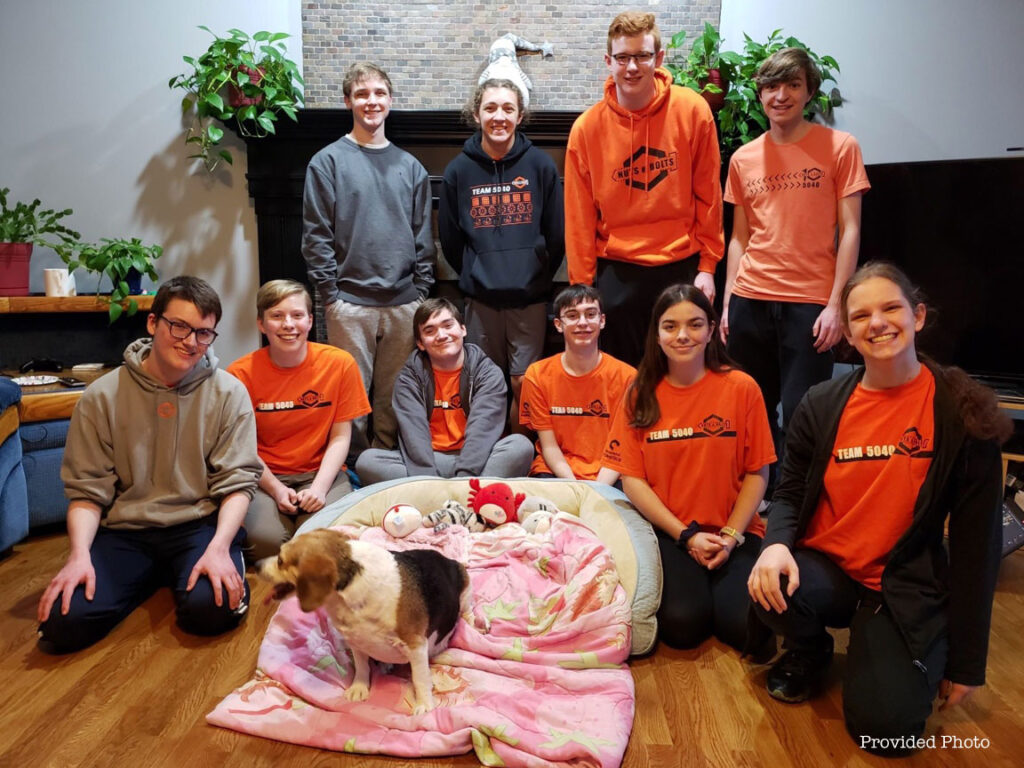
    Team 5040 Nuts & Bolts

    To close out the exciting day, in the awards ceremony the Bionic Tigers won the top award of the event, the Inspire Award. This award recognizes the best all-around team that has shown success in designing and building a competitive robot and shares their experiences, enthusiasm, knowledge with other teams, sponsors, their community, and the judges. The Bionic Tigers also won Promote Award for their video answering the prompt “If there was one thing I would tell my younger self about FIRST it would be…”. 

    As the Inspire Award winner, the Bionic Tigers have advanced to the FTC World Championship in Houston, TX from April 20-23.

    Loveland FTC teams are supported by many generous sponsors including Loveland American Legion Post 256, Sugar Creek Foods, Procter & Gamble, Standex Electronics, CBT Company, Kinetic Vision, Harlow Law Office, and Jarvis Global Investments.

    The Bionic Tigers are seeking additional sponsors to help cover the travel costs for the World Championship in Houston. Please contact lovelandroboticsboosters@gmail.com if you are interested in helping sponsor the trip.

    Loveland Robotics Boosters will be hosting Breakfast with the Bots, a pancake Breakfast fundraiser, on Saturday, April 9.  Tickets are available at www.lovelandroboticsboosters.org

  • Legal mediators added to the Ohio redistricting fold

    Legal mediators added to the Ohio redistricting fold

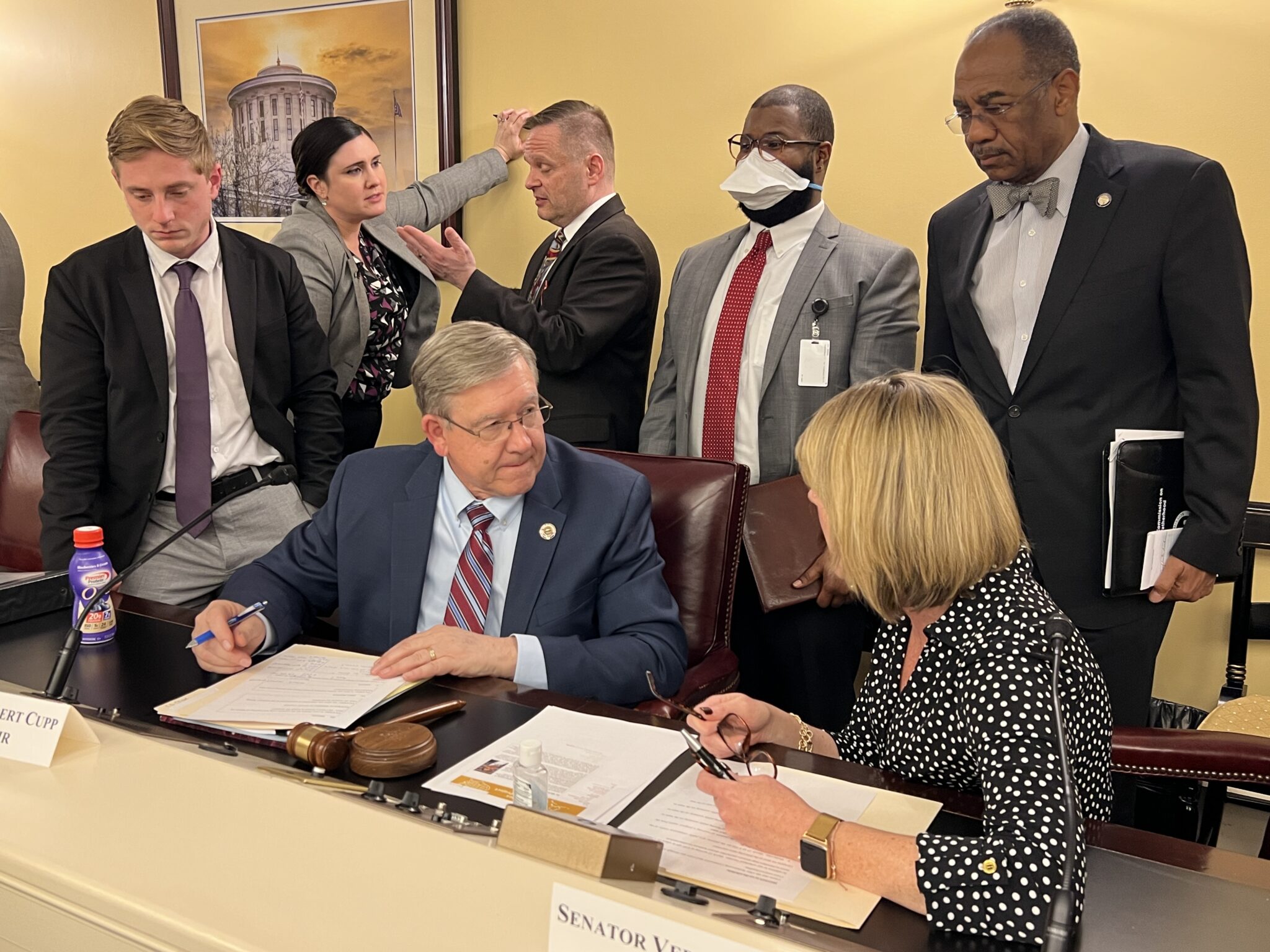
    House Speaker and Ohio Redistricting Commission co-chair Bob Cupp, center seated, speaks with House Minority Leader Allison Russo, right seated, as fellow co-chair state Sen. Vernon Sykes looks on. The ORC agreed to hire two outside mapmakers to assist in the process of legislative redistrict after a third set of maps was struck down by the Ohio Supreme Court. (Photo: Susan Tebben, OCJ)

    BY: SUSAN TEBBEN –  Ohio Capital Journal

    Legal mediators were added to the mapmaking team on Tuesday by the Ohio Redistricting Commission.

    Two members of the U.S. 6th Circuit Court of Appeals were approved by the commission to act as mediators as the process of creating a fourth map dictating legislative maps.

    Catherine C. Geyer and Scott Coburn were chosen after talking with the commission at their Tuesday meeting. They both are listed as circuit mediators on the 6th Circuit’s website, with Geyer listed as having alternative dispute resolution experience and Coburn noted for his work in civil mediation since 2005.

    “Mediators manage the process and the parties manage the solution,” Geyer said when explaining their role.

    Neither of the mediators have experience with redistricting cases, they told the commission.

    The legal mediators act as neutral parties to address issues that come up as the mapmakers come up with map ideas and commissioners wish to register input in the process, or when disagreements come up.

    “I think the advantage you have in this scenario … here, there’s the advantage of everyone trying to get to the shared goal,” Coburn told the commission.

    The mediators are “the best deal you can get,” according to Geyer, because they are “on loan from the court,” so come at no cost to the commission.

    House Speaker Bob Cupp and other GOP members of the commission asked about confidentiality rules and legal privilege when it comes to the mediators. He said it may be necessary for commissioners to be able to have confidential conversations, even as the Ohio Supreme Court directed them to make the process even more transparent.

    Geyer said the commission and the mediators would have to lay down rules on what constitutes legal privilege and confidentiality, but state Sunshine Laws on public meetings would still apply, meaning any decision making would have to be done in the open.

    The mediators also emphasized that while the process has a lot to do with the mapmakers, the commission members should be committed to being available as well.

    “I think access to the decision-makers would be the most important thing from the mediator’s perspective,” Geyer said. “We could get headed down a particular path, only to find out that one of the commissioners is not in agreement.”

    Geyer and Coburn will now join the original four caucus mapmakers, along with Professor Michael McDonald and Douglas Johnson, chosen by the commission on Monday night to act as independent mapmakers.

    Also at its Tuesday meeting, the commission set a schedule up to their March 28 deadline. Meetings are set for:

    • Wednesday – 5 p.m.
    • Thursday – 7 p.m.
    • Friday – 2 p.m.
    • Saturday – 4 p.m.
    • Sunday – 4 p.m.
    • Monday – 10 a.m.

    Thursday and Friday’s meetings are set to have virtual options, so members of the commission who may not be able to attend in-person can still call in. They will also be streamed for the public on The Ohio Channel.

  • PERMITLESS CARRY, A TOP NRA PRIORITY, ADVANCING ACROSS Ohio and COUNTRY DESPITE WIDESPREAD OPPOSITION

    PERMITLESS CARRY, A TOP NRA PRIORITY, ADVANCING ACROSS Ohio and COUNTRY DESPITE WIDESPREAD OPPOSITION

    If the gun lobby gets its way, more than half the country will have permitless carry laws in place by the end of 2022.

    Just in the past week, Ohio Governor Mike DeWine and Alabama Governor Kay Ivey sided with the gun lobby and signed new permitless carry bills into law, ignoring widespread opposition from law enforcement, community leaders, and their constituents.

    DeWine signs law removing training, background check, permitting requirement to conceal…

    These laws are dangerous, and for obvious reasons. Permitless carry laws allow people to carry concealed handguns in public without a permit, without training, and without a background check. Even far-right extremists and white supremacists.

    Give to Everytown and Help Defeat the Gun Lobby’s Extremism

    Everytown for Gun Safety has a plan to end gun violence and urgently needs your help to stop permitless carry from building momentum before more of these laws are enacted. Donate to help us stop dangerous new gun laws and fuel our fight to end gun violence.

    DONATE
  • U.S. Senate backs shift to permanent daylight saving time

    U.S. Senate backs shift to permanent daylight saving time

    BY: ARIANA FIGUEROA – Ohio Capital Journal

    WASHINGTON — The U.S. Senate with little debate on Tuesday unanimously supported a permanent change to daylight saving time, several days after Americans once again went through the hated “spring forward” ritual of changing their clocks.

    If the bill, the Sunshine Protection Act, clears the House, it would mean most states would stay on daylight saving time throughout the year — giving them an extra hour of sunlight in the evening.

    “Just this past weekend, we all went through that biannual ritual of changing the clock back and forth and the disruption that comes with it,” Florida Sen. Marco Rubio, the Republican who sponsored the bill, said on the Senate floor. “One has to ask themselves, why do we keep doing this?”

    Rubio said that he believed a majority of Americans want to do away with the time switch and would prefer an extra hour of daylight, especially during the winter months. The Senate agreed under a process known as unanimous consent.

    The bill, if signed into law, would not go into effect until 2023, to give airlines and other companies time to adjust. A White House spokesperson did not respond to a question about President Joe Biden’s position on daylight saving time.

    The House held a hearing last week at which a panel of experts debated the health, energy and economic impacts of changing clocks twice a year. While lawmakers on the panel couldn’t decide which time to switch to permanently, they all agreed that the United States should stick to one or the other.

    It turns out daylight saving time is a shared mission among Florida lawmakers. U.S. Rep. Vern Buchanan, a Florida Republican, introduced the House version of the bill, H.R. 69. He wrote on Twitter that he is drafting a letter to House Speaker Nancy Pelosi, asking to bring his bill to the floor for an immediate vote.

    States have moved to pass or enact measures in favor of year-round daylight saving time, but without congressional approval, they can’t adopt those changes.

    Iowa’s state House recently passed a bill that would put the state on daylight saving time, pending federal action.

    Two states have passed measures to stay on standard time — Arizona and Hawaii. Both congressional bills would allow states to stay on standard time if they adopted the time change before the Sunshine Protection Act went into effect.

    Daylight saving time was used as an energy-saving measure during various points in U.S. history, such as World War I and World War II, and has become a permanent fixture since the energy crisis of the 1970s.

    This is not the first time the U.S. has moved to make daylight saving time permanent. On Dec. 14, 1973, Congress voted to put the U.S. on daylight saving time for two years. While 79% of Americans approved of the change in December of that year, within three months, approval fell to 42%, according to the New York Times.

    The biggest concern stemmed from children going to school in the dark, which soon proved to be dangerous as more children were reported to be hit by early-morning drivers.

    Shortly after President Richard Nixon resigned, Congress passed a bill that would restore standard time, which was then signed by President Gerald Ford.

    Daylight saving time this year ends on Nov. 6.

  • Dress for Success Cincinnati now at Loveland’s Care Center

    Dress for Success Cincinnati now at Loveland’s Care Center

    Loveland, Ohio – Dress for Success Cincinnati has announced that The Care Center of Loveland is their new satellite location for the StyleHER program.

    For the past 15 years, the Care Center has been assisting families by helping them remove the barriers and build the resources needed to thrive in life. Located at 11020 South Lebanon Road in Loveland, The Care Center will now be offering DFSC styling services to residents of the Loveland and neighboring communities.

    According to Data USA, the largest demographic living in poverty in Loveland is currently women ages 25-34. The hope is that through this partnership, they will be able to tend to that community of women living at or below the poverty line and offer them services that will nurture their employment mobility and help them to thrive.

    A strong supporter of this mission is Greg Knake, Executive Director of The Care Center, who recognized the opportunity for Dress for Success Cincinnati and The Care Center to help more women through a partnership early on.

    “Our mission is about helping people thrive in life, and one critical way we do that is by helping them reenter the workforce,” Knake said. “We also have a high value for not trying to recreate the wheel, and we instantly identified that Dress for Success Cincinnati already had a model that was successful. It is a perfect fit to incorporate Dress for Success Cincinnati’s services in what we do.” 

    Through this act of ‘not trying to recreate the wheel’ they have formed a partnership that can utilize the successes of both organizations to further benefit women. The Care Center of Loveland is a state-of-the-art resource center offering beneficial services such as childcare and transportation that help to eliminate major barriers that stand in the way of women receiving this support.

    As childcare is a service that is not currently offered by Dress for Success Cincinnati, they can now offer it to their clients at The Care Center’s location. Not only have they expanded the range of women they are able to serve but have expanded the accessibility for women to utilize the services as well.

    “We want to be a resource for people who want to take advantage of Dress for Success Cincinnati’s resource but may not have the reliable transportation to access the Norwood location,” Knake said. “We are excited to offer Dress for Success Cincinnati’s resources in areas like Milford, Goshen, and Loveland.”

    In addition to offering DFSC styling services at The Care Center, the new satellite location will also offer similar career assistance to that of Dress for Success Cincinnati’s Norwood office. Just as the DFSC office has partnered with Cincinnati Works to provide help with resume building, job searching, and more via an on-site Cincinnati Works representative, The Care Center will offer the same opportunity for clients.

    “We also offer career development resources through Cincinnati works and even work with the same Cincinnati works representative,” Knake said. “So, clients will have that same opportunity when they come here to be styled.”

    Dress for Success Cincinnati said that they are thrilled to launch this new satellite location and to be working with Knake and his team at The Care Center to offer their services, along with the added benefits that come from this new location to more women in surrounding areas.

    To learn more about The Care Center or schedule your styling appointment, visit The Care Center’s website here.

  • Watch swearing-in of two new city employees: Shaun Tringelof and Angela Walls

    Watch swearing-in of two new city employees: Shaun Tringelof and Angela Walls

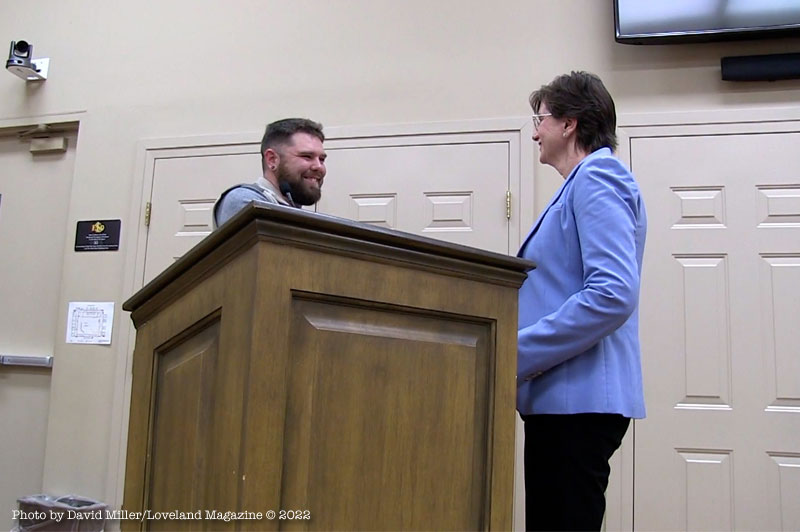
    Loveland, Ohio – In this LOVELAND MAGAZINE TV video which is sponsored by the Move2Team.com you can watch the swearing-in of two new city employees at the March 8 City Council meeting.

    Shaun Tringelof joins the City of Loveland’s Public Works department as a Maintenance Worker. He has eight years of experience in the construction industry and is a graduate of Loveland High School.

    Angela Walls joins City Hall staff as the Assistant Finance Director. She previously worked for Loveland City Schools, among other finance positions. She has been a resident of Loveland for the past 15 years.

  • Bus Drivers Shown Love by LECC Staff

    Bus Drivers Shown Love by LECC Staff

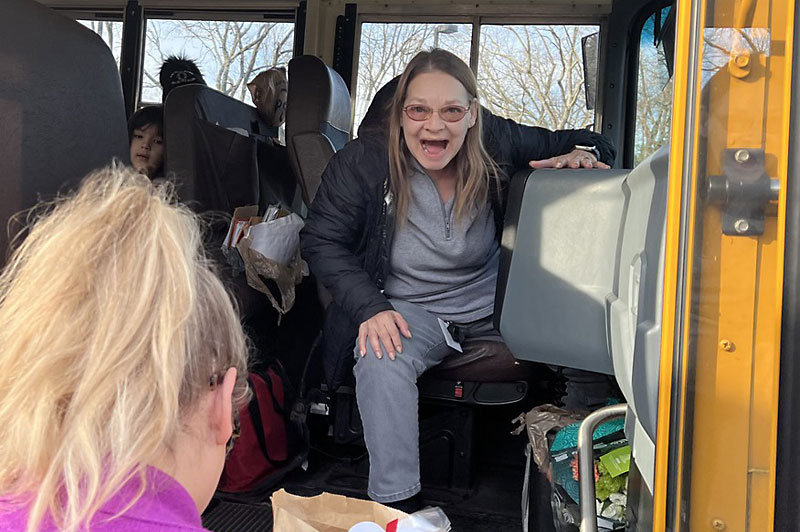
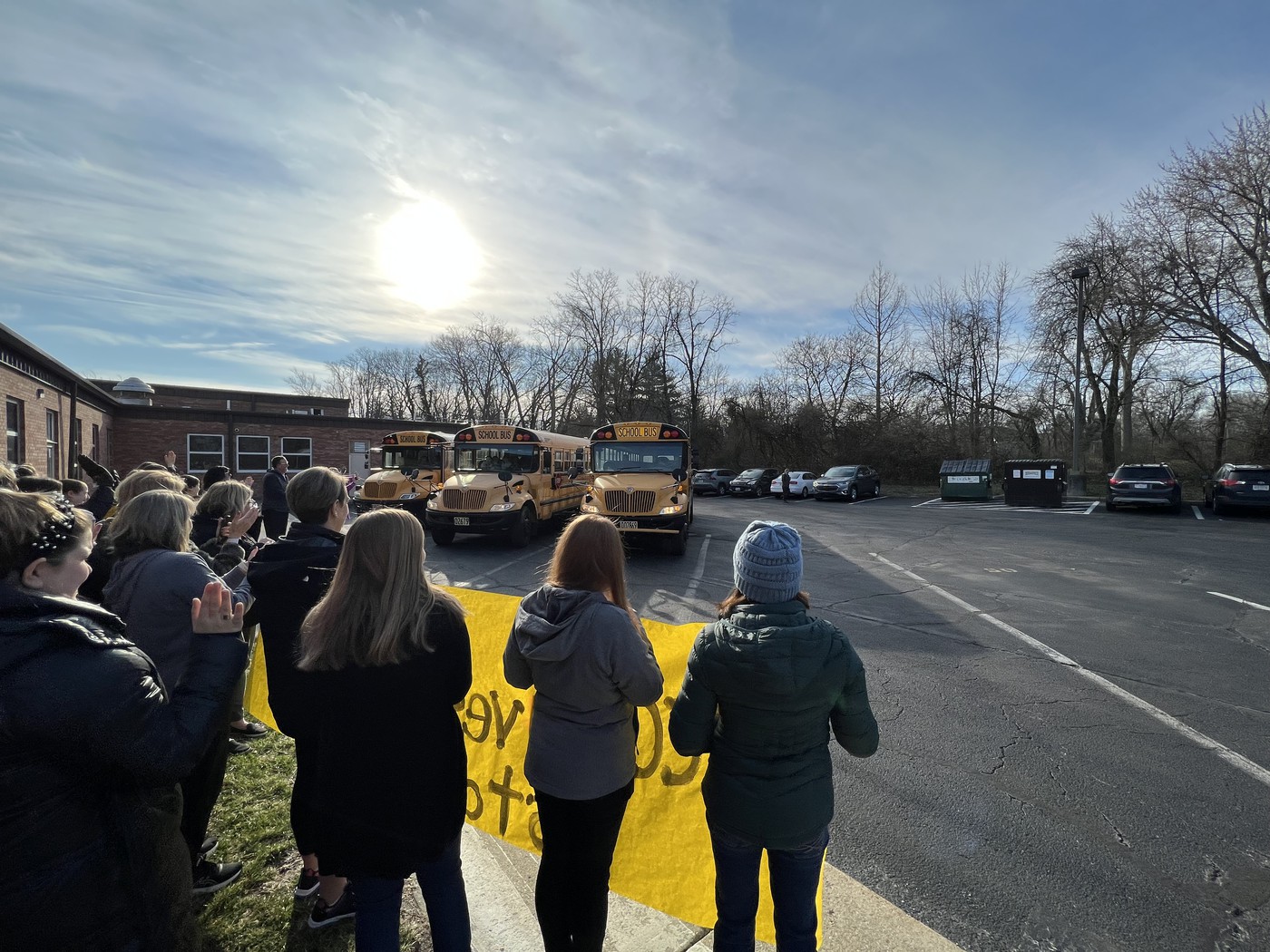
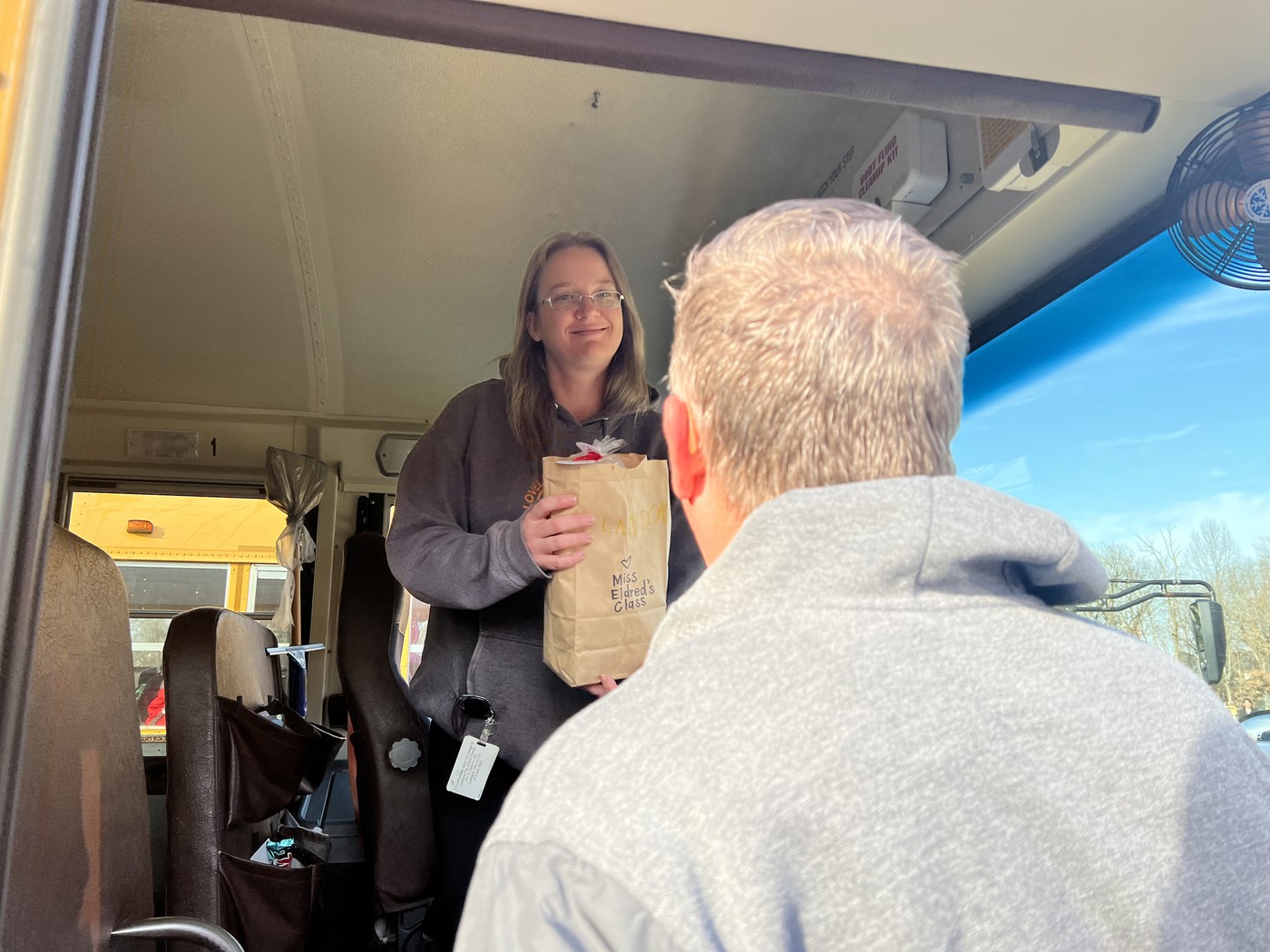
    Loveland, Ohio – Loveland school bus drivers got a nice surprise when they pulled into Loveland Early Childhood Center (LECC) Thursday morning. Staff members were outside with signs and breakfast treats to say thank you.

    “Many of our drivers wrap up their morning routes with our youngest students, and the LECC staff took it upon themselves to give back to our drivers. Thank you to everyone who donated items, packed bags, and even cooked breakfast sandwiches for each of our drivers. This is a great example of our Loveland Tiger team members taking care of each other,” said Superintendent Mike Broadwater in the District newsletter on Friday.