Tag: Loveland Magazine

  • Loveland Schools Launch Transportation Incentive Program

    Loveland Schools Launch Transportation Incentive Program

    Promoted Story

    No Better Time to Become a Bus Driver!

    Loveland, Ohio – The Loveland City School District has launched an incentive program to help hire new bus drivers. The program includes paid training for new drivers and a referral bonus for current district employees who refer new drivers.

    “Our bus drivers literally keep our district moving on a day-to-day basis. They are the first district employees our students see in the morning and the last to say ‘goodbye’ to kids in the afternoon. This program is our effort to add more great people to our team,” Superintendent Mike Broadwater said. 

    New bus drivers will be paid for the time necessary to complete the required training and testing. The sum of $2,000 will be paid in 2 installments during their first year of employment. 

    Additionally, every Loveland City School District employee is eligible for a $500 finder’s fee for recommending a new bus driver for employment. The finder’s fee would be paid six months after the new driver is Board approved as a District employee. 

    “We are also providing a longevity stipend for our current drivers and compensating our bus drivers who train their fellow drivers. We want to send a message that Loveland is a great place to work as a bus driver,” Human Resources Director Garth Carlier said. 

    Districts around the region and across the country are dealing with a shortage of bus drivers. Loveland adjusted school start times for the 2022-23 school year to provide busing with fewer drivers. 

    If you or someone you know is interested in driving a bus for Loveland City School District, call our Transportation Office at 513-683-3103. 

  • [VIDEO INTERVIEW] Clermont Parks Director talks about their Grailville nature preserve

    [VIDEO INTERVIEW] Clermont Parks Director talks about their Grailville nature preserve

    David Miller is the Publisher and Editor of Loveland Magazine

    by David Miller

    Loveland, Ohio – Josh Torbeck, the Director of the Clermont Park District met with me mid-morning Wednesday at the site of their newest park. Torbeck said the park on former Grailville land doesn’t have a formal name yet but was pretty confident “Grail” or “Grailville” would be in the official name once a decision is made. Currently, it is listed as “Grailville Nature Preserve” on the District’s website. The address is 1014 O’Bannonville Road, and Loveland City Council recently took steps toward annexing the 100 acres into the City. The land reaches all the way to Route 48 (Oakland Road) and that will most likely be where most visitors will go to enjoy it.

    I asked him to tell you a little about his background and previous experience which he was modest about – but his resume is certainly not modest!

    To find out what was most on the minds of Loveland residents I asked a few residents what questions they would like me to ask Torbeck. One was to ask about what deed restrictions are on the land. Torbeck explained the restrictions as well as the amenities they are allowed to put on 10 acres at the Oakland Road entrance.

    The most pressing issue and question however was whether the District is pursuing, or is there a potential that the adjacent 109 acres, those where the Drees company intended to build 209 homes, would eventually become an addition to the nature preserve. Torbeck gave a candid answer.

    The District also recently received a $260K capital improvement grant from Ohio to be used on the nature preserve and Torbeck talked about the intended uses of those funds.

    The Grailville Archive

    Because posterity may wish to know.

  • Biden to wipe out $10,000 in student loan debt for many borrowers

    Biden to wipe out $10,000 in student loan debt for many borrowers

    BY: ARIANA FIGUEROA – Ohio Capital Journal

    WASHINGTON — President Joe Biden announced Wednesday that he will cancel up to $20,000 in federal student loan debt for Pell Grant borrowers and up to $10,000 for all other borrowers with an income of less than $125,000 for an individual and $250,000 for a household.

    Biden also announced his administration is extending a pause on student loan repayments until Dec. 31. The decision comes one week before the expiration of a pause of student loan repayments put in place at the beginning of the coronavirus pandemic.

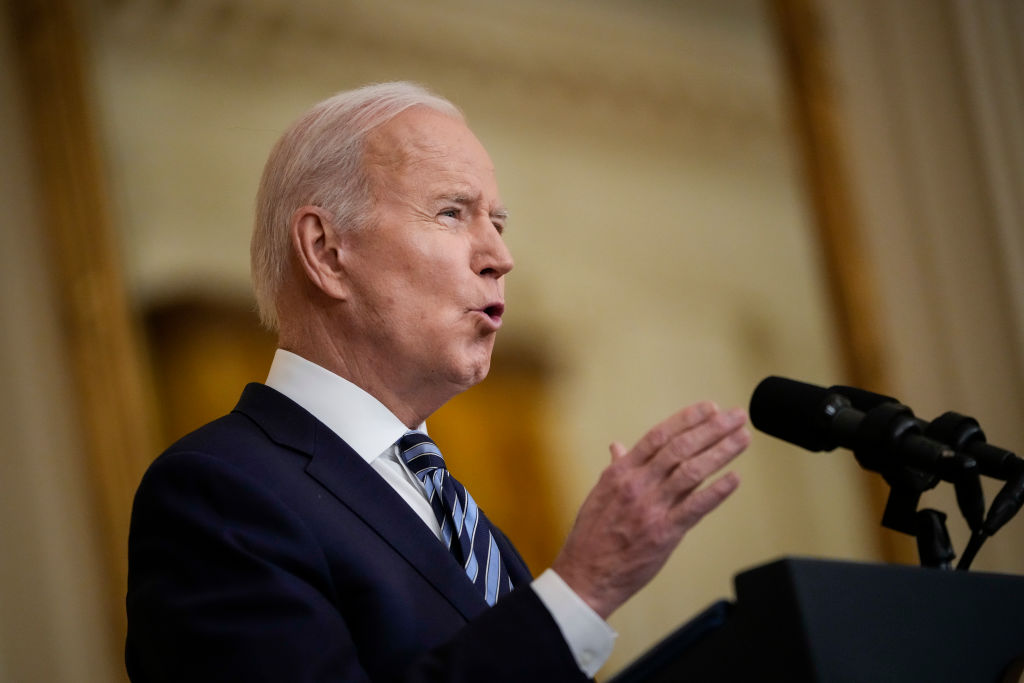
    “Here’s the deal, the cost of education beyond high school has gone up exponentially,” Biden said at the White House.

    Biden stressed that the people who would benefit the most are low-income and middle class families and individuals.

    “No high income household, will benefit from this action, period,” Biden said.

    Biden said that many Americans with student loan debt have put off starting families because of the cost and have been unable to qualify for mortgages to buy a home because of the student loan debt they carry.

    “All this means is an entire generation is now saddled with unsustainable debt,” Biden said.

    Despite numerous reports in recent weeks that Biden would take action on student loans, the White House had remained silent, but on Wednesday the president tweeted out his decision, prior to his remarks.

    “In keeping with my campaign promise, my Administration is announcing a plan to give working and middle class families breathing room as they prepare to resume federal student loan payments in January 2023,” Biden wrote on Twitter.

    Following the announcement, the Department of Education said it will release an application in the weeks ahead that will allow millions of borrowers to claim this new relief.

    “[S]tudent loan debt has hindered their ability to achieve their dreams — including buying a home, starting a business, or providing for their family,” U.S. Secretary of Education Miguel Cardona said in a statement. “Getting an education should set us free; not strap us down!”

    The cancellation of student debt will only apply to current borrowers, not future ones, and income levels for the 2020 and 2021 tax years will be considered, a senior administration official said during a Wednesday call with reporters.

    The Department of Education estimates that about 8 million borrowers will automatically receive relief because the agency already has those borrowers’ income information on file. That means those borrowers do not have to submit applications.

    Borrowers who received Pell Grants, who will benefit from the most relief, are among the students who had the lowest household incomes while in college. They will also be subject to the $125,000 and $250,000 income caps.

    New rule on loans

    The Biden administration is also directing the Department of Education to propose a rule to help current and future borrowers with their loan repayments.

    The rule would eliminate monthly interest  payments on loans, “so that unlike other existing income-driven repayment plans, no borrower’s loan balance will grow as long as they make their monthly payments — even when that monthly payment is $0 because their income is low,” according to the department website.

    The proposed rule would also forgive loan balances “after 10 years of payments, instead of 20 years, for borrowers with loan balances of $12,000 or less.” It would also require “borrowers to pay no more than 5% of their discretionary income monthly on undergraduate loans.”

    “Middle class borrowers struggle with high monthly payments and ballooning balances that make it harder for them to build wealth,” a senior administration official said.

    While many Democrats and progressive advocates were pleased with the announcement, it falls short of the student debt relief campaign platform that Biden ran on.

    In a Medium post during the 2020 presidential election, Biden said under his administration he would “forgive all undergraduate tuition-related federal student debt from two- and four-year public colleges and universities for debt-holders earning up to $125,000, with appropriate phase-outs to avoid a cliff.”

    He also promised he would “immediately cancel a minimum of $10,000 of student debt per person,” but this recent student debt announcement comes two years into his administration and only after continual pressure from congressional Democrats and advocates.

    Some congressional Democrats have urged the White House to cancel up to $50,000 worth of student loans, arguing that because about 92%  of that debt is held by the Department of Education, the administration has the authority to cancel those loans through executive action.

    More than 43 million Americans have student loan debt, and the Federal Reserve estimates that the total U.S. student loan debt is more than $1.75 trillion.

    A Penn Wharton budget model released Tuesday found that a one-time loan forgiveness of $10,000 would mostly benefit borrowers in the four lowest quintiles of incomes.

    Earlier this month, more than 100 Senate and House Democrats urged the Biden administration to extend the pause on repayment of student loans beyond the Aug. 31 deadline. The lawmakers argued that due to inflation and the ongoing coronavirus pandemic, student loan borrowers should get an extension on pausing their loan payments. They did not give another deadline for repayments to begin in their letter to the president.

    Democrats praise Biden

    Democrats did welcome the President’s announcement.

    “By delivering historic targeted student debt relief to millions of borrowers, more working families will be able to meet their kitchen table needs as they continue to recover from the challenges of the pandemic,” House Speaker Nancy Pelosi said in a statement. “Importantly, this action will help those most in need, easing a financial burden disproportionately harming women and people of color.”

    She has previously said that the president does not have the authority to cancel student loans and that the process needs to be done through Congress. She did not mention her previous comments in the statement.

    Biden also had said earlier, while in the White House, that he would only cancel up to $10,000 in student loan debt, and only if Congress passes legislation to do so. Administration officials did not address the shift in policy.

    While the Democrat-controlled House likely could pass legislation canceling some portion of student loan debt, the evenly divided Senate would need all 50 Democrats on board along with an additional 10 Republicans to get a bill to the president’s desk.

    House Education and Labor Committee Chairman Bobby Scott, a Virginia Democrat, said that while the student loan cancellation will provide relief for borrowers, it doesn’t solve the “underlying problems that caused the student debt crisis in the first place,” such as high tuition costs.

    “Without reversing the chronic underinvestment in higher education that has driven up tuition costs, and without fixing our student loan system that has made student loans more expensive to take out and harder to pay off, students will continue to take on more debt and borrowers will continue to face rising debt levels,” Scott said.

    Republicans critical

    GOP lawmakers sharply criticized the cancellation move.

    “At a time of skyrocketing inflation, declining wages, and a national recession, Washington has again turned its back on hardworking Americans in Iowa and across this country,” Iowa Gov. Kim Reynolds, a Republican, said in a statement. “President Biden isn’t canceling student debt, he’s shifting the costs to the taxpayer and to those who worked to pay off their loans in full.”

    Senate Minority Leader Mitch McConnell, a Kentucky Republican, said in a statement the move was a “slap in the face to every family who sacrificed to save for college, every graduate who paid their debt, and every American who chose a certain career path or volunteered to serve in our Armed Forces in order to avoid taking on debt.”

    Overall in Kentucky, there are about 600,000 student loan borrowers who have an average balance for federal and private student loans of $30,794.  

    In March 2020, President Donald Trump issued an emergency pause on student loan repayments, which has now been extended several times by both administrations. The pandemic is still ongoing, and the U.S. has surpassed 1 million COVID-19 deaths.


  • New COVID Health Guidelines for Loveland Schools

    New COVID Health Guidelines for Loveland Schools

    COVID Health Guidelines Update Summary

     (effective 1/28/22, updated 5/9/22, 8/1/22, 8/14/22)

    Background:  On 8/12/22 new guidance for school came out from both the CDC and ODH (ODH memo 8/12/22 updated COVID guidance.  Here is the information that will help you here in LCSD:

    1. Positive cases
    • 5+5 (5 days of isolation followed by 5 days of masking) plan as outlined by CDC/ ODH (Ohio Dept of Health). This is calculated from the first day of symptoms or positive test which is considered day 0.  If a student is not ready to come back after 5 days (your child needs to be fever free for 24 hours without fever-reducing medications and symptoms improving), parents would call to tell attendance daily if their child is not ready to return.  These are considered non-absence days
    • Masking is not optional.  If you have been positive, you will need to mask for 5 days after being in isolation for 5 days.
    • There are no online learning links available.
    • Extracurriculars-  able to participate as long as able to mask.  Removing mask is not an option
    • District nurses (DN) make the follow up phone calls to parents once we are notified of a positive case.
    1. Close contacts/ exposures
    • Quarantine is no longer recommended for people who are exposed to COVID-19 except in certain high-risk congregate settings (not schools).  Instead of quarantining if you were exposed to COVID 19, it  is recommended that you wear a high quality mask for 10 days and get tested on day 5. For extracurriculars, they can mask as able to.
    • If your child has symptoms or develops symptoms, parents should keep them home and connect with their healthcare provider for further guidance and/ or covid testing. Testing on the same day as symptoms is now recommended.
    •  Parents should tell the attendance person the absence is covid related.
    1. If a student has a pending test and they have symptoms, we support keeping their child home until test results. If asymptomatic, they can be at school masked during that time
    2. We will no longer be monitoring vaccination status
    3. These days are excused absences, but we will continue to monitor

       3 . Testing

    • Any testing except antibody testing is acceptable.
    • Recommend testing day five per HCPH guidelines for exposures, but not required

    4.  Vaccines

    • We encourage everyone to talk to their health care provider for themselves and their children regarding getting vaccinated for COVID.  It is the best way to address COVID going forward.  Students over 5 are now eligible for the first booster vaccine

    LCSD will continue to focus on “The Bundle”-  handwashing, cleaning, distancing as needed/ able to, and masking when appropriate/ optional choice.  Our entire staff is committed to keeping our students safe and healthy.  We need your support by you doing the wellness checks daily with your child(ren) and keeping them home if they are sick.   Thanks for partnering with us- we can do anything together!!

  • Diabetes activists applaud drug reforms, say more needs to be done

    Diabetes activists applaud drug reforms, say more needs to be done

    Getty Images photo of diabetes patient injecting insulin.

    BY: MARTY SCHLADEN – Ohio Capital Journal

    Pricing reforms under a sweeping law signed on Tuesday by President Joe Biden are great for diabetics, but much more needs to be done, an activist said Wednesday.

    As part of the Inflation Reduction Act, monthly out-of-pocket insulin costs for Medicare recipients were capped by the law at $35 a month. Together with capping all drug costs for Medicare patients at $2,000 a year, the new law is being lauded as a boon for seniors struggling to balance their drug costs with all their other expenses.

    Among medicines, insulin is one that is particularly difficult for those who need it to live without. For diabetics, it helps regulate blood-glucose levels that, if left untreated, can cause blindness, nerve and kidney damage and even death.

    But even though it’s been around for a century, insulin prices aren’t as cheap as one might think for a class of drugs that has been researched, manufactured and marketed for so long. In fact, until recently, list prices have been increasing rapidly.

    “The list price of insulin per milliliter in the United States increased, on average, 2.9% annually from 1991-2001, 9.5% per year from 2002 and 2012, 20.7% annually between 2012 and 2016, and 1.5% per year from 2016-2018,” the American Action Forum reported in 2020.

    And that can lead to some excruciating choices if you can’t afford it. The Commonwealth Fund in 2020 reported that among non-Medicare patients, huge numbers had difficulty affording their insulin between 2014 and 2017; from nearly half of the uninsured living below the poverty line to 3% of people with good insurance and who were making five times the poverty level, or nearly $100,000 for a family of four.

     Source: The Commonwealth Fund

    “Bottom line for diabetics, we can’t afford to wait,” said John Kennedy, an advocate with Ohio Insulin 4All, said Wednesday in a press conference hosted by the group Protect Our Care. 

    Kennedy added, “We’re impatient, but our impatience comes from a really good place. It’s because the more time that passes means more diabetics are going to have to make really difficult choices that nobody should have to make; whether to put food on the table or to take the whole dose of their insulin. As we know, about a quarter of all diabetics have said that they ration their insulin supply because they just can’t afford it.”

    For Medicare patients, the Kaiser Family Foundation reports that average monthly out-of-pocket insulin costs increased 39% between 2007 and 2020. Now those monthly costs range from $16 to $116, or $192 to $1,392 a year.

    With average out-of-pocket insulin expenses for Medicare patients at $54 a month in 2020, the $35-a-month cap in the Inflation Reduction Act represents a more than a 50% savings, KFF reported last month.

    While capping those costs — and directly negotiating Medicare insulin prices with drugmakers — is surely welcome news to seniors with fixed incomes, it won’t do much for many other diabetic Americans.

    One reason is that the new law keeps intact the opaque system under which giant drug middlemen extract big discounts from drugmakers in exchange for covering them. The three largest middlemen — or pharmacy benefit managers — in the U.S. control more than 70% of the marketplace and each is owned by a corporation that also owns a top-10 insurance company.

    And because the system isn’t transparent, it’s unknown how much of the rebates the middlemen and their affiliated insurers are pocketing.

    In a paper published last year in the Journal of the American Medical Association’s Health Forum, three researchers at the University of Southern California assed what happened with the prices of 32 insulin products between 2014 and 2018. And despite the fact that drugmakers such as Eli Lilly, Sanofi and Novo Nordisk tend to get most of the blame for rising costs, it shows that others are also culpable:

    • List prices went up by 40% while net, or post-rebate, prices received by drugmakers dropped by 31%.
    • The share of insulin expenditures retained by pharmacy benefit managers such as CVS Caremark, OptumRx and Express Scripts increased by 154.6%
    • The share retained by pharmacies, the largest of which is CVS, increased by 228.8%
    • The share retained by wholesalers such as Cardinal Health, AmerisourceBergen and McKesson increased by 74.7%.

    While he lauded the insulin measures in the Inflation Reduction Act, Kennedy, the diabetes advocate, they were far from sufficient.

    “The way that pricing is done is so hidden; it’s not transparent at all and that’s a big, big, big problem,” he said. “And yes pharmacy benefit managers have played a big role in this secret process — hidden process — that is used to determine what the costs are going to be. But they’re just one player in this game. PBMs certainly share a chunk of the blame, but there’s a lot of blame to go around.”

    Follow Marty Schladen on Twitter.

  • [Music Video] 2022 Loveland Marching Band presents ‘Say something, I’m giving up on you.’

    [Music Video] 2022 Loveland Marching Band presents ‘Say something, I’m giving up on you.’

    by David Miller

    Loveland Magazine Publisher David Miller

    Loveland, Ohio – After the successful completion, in the hot August sun, of their grueling Summer Camp, the Loveland High School Marching Band and Colorguard performed in a “Preview Night” at Tiger Stadium last Friday.

    Letting the music speak for itself here, this is just a sampling of what you can expect at the halftime of Tiger football games and at the Tiger Band’s performances during their competition season.

    The Tiger Band and Colorguard will perform tonight in Tiger Stadium. Game time is 7 PM.

    All Photos © 2022 by David Miller/Loveland Magazine. Music soundtrack from the Preview performance recorded by Jennifer Miller © 2022.

    “Say Something” was written by Ian Axel, Chad King, and Mike Campbell.” – wikipedia.org

    Loveland Magazine YouTube videos are brought to you by the generous support of The Move2 Team
  • Loveland’s plan for GPS “preemption” units to identify oncoming emergency vehicles

    Loveland’s plan for GPS “preemption” units to identify oncoming emergency vehicles

    The GPS units identify oncoming emergency vehicles

    Photo by Zachariah Garrison: pexels.com

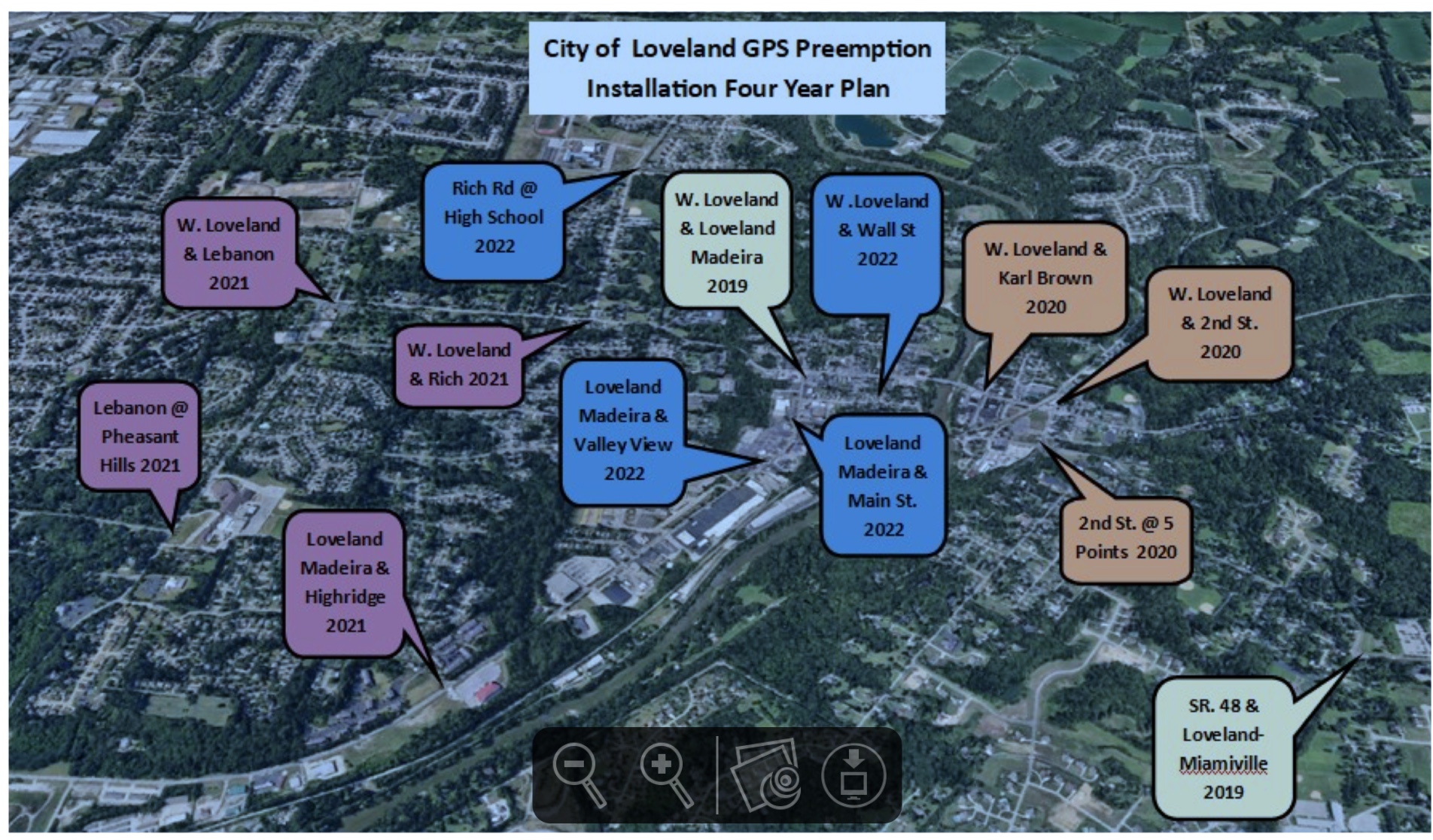
    Loveland, Ohio – The city had a four-year plan to install GPS “preemption units” within the control panels of all of its traffic signals. This plan is now complete, with four units being installed this year at the following intersections:

    • West Loveland Avenue and Wall Street

    • Rich Road and Loveland High School

    • Loveland Madeira Road and Main Street

    • Loveland Madeira Road and Valley View

    The preemption units units identify oncoming emergency vehicles, interrupting the traffic signal’s cueing cycle and providing a green signal for faster and safer response times for Fire, EMS, and Police.

  • Ohio House Speaker calls redistricting deadline a ‘myth’

    Ohio House Speaker calls redistricting deadline a ‘myth’

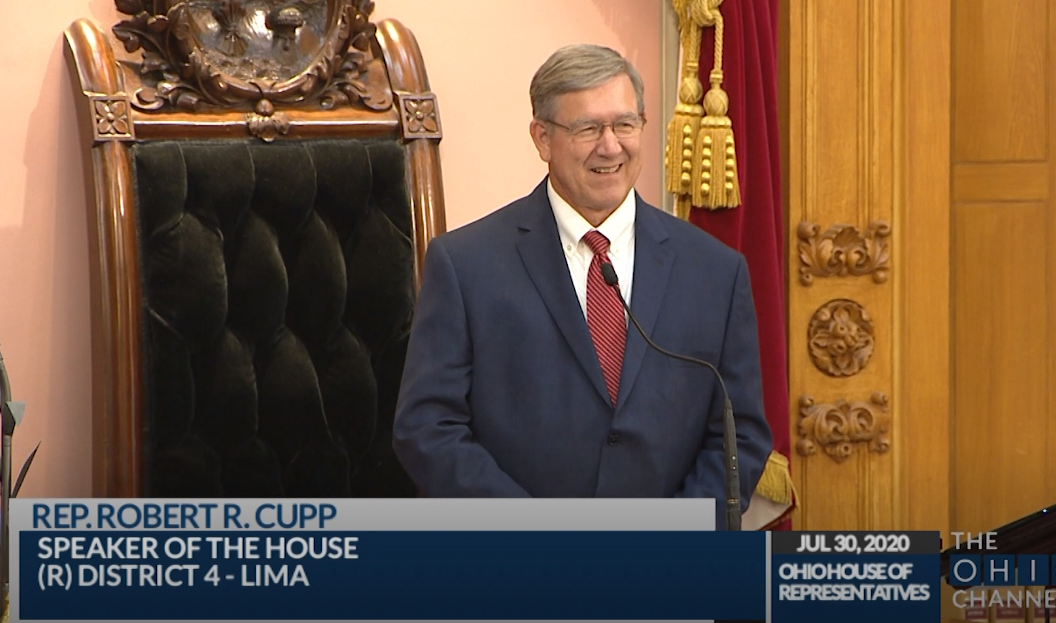
     House Speaker Bob Cupp, R-Lima. Photo courtesy The Ohio Channel.

    U.S. Supreme Court appeal ‘a very real option’

    BY: SUSAN TEBBEN Ohio Capital Journal

    The Ohio House Speaker wrote a letter to members of his party claiming “intentional misinformation” and the “myth” of a deadline for congressional redistricting, and signaling an appeal to the U.S. Supreme Court.

    The Ohio Supreme Court turned down the most recent drafts of congressional district lines in the state, saying the partisan breakdown unduly favored Republicans and didn’t match the breakdowns of election results in the state.

    In the court decision, the court majority ruled that “within 30 days, the General Assembly must pass a plan that complies with the Constitution.”

    Speaker Bob Cupp, however, said in his letter to fellow Republicans that “out-of-state activists have peddled the myth” of a deadline this week.

    “It is false, has zero basis in fact, and either shows a lack of understanding of our legal system, or it is an attempt to intentionally sow confusion over the 2022 elections,” Cupp said in the letter, provided to media by a spokesperson.

    Cupp, a former state supreme court justice, then argues a deadline for new congressional maps “does not commence until all appeals are final,” including a deadline for appeal to the U.S. Supreme Court of 90 days from the date of the state supreme court decision.

    Cupp did not explicitly say the legislative leaders would be appealing to the U.S. Supreme Court, but said the General Assembly’s 30-day clock wouldn’t start until after the nation’s highest court decided not to review the appeal.

    When asked for clarification, a spokesperson for Cupp said a U.S. Supreme Court appeal “is a very real option that we have time to thoroughly consider.”

    The final date to appeal, Cupp states based on the state supreme court’s decision date of July 19, is Oct. 17.

    “So, there is no state constitutional requirement to draw new congressional districts for the 2024 election cycle before then,” Cupp wrote.

    This is the third time the General Assembly has been asked to redraw congressional maps. The last time the state supreme court rejected the maps, the General Assembly didn’t take action, and the effort moved, as was ordered by the Ohio Supreme Court, to the Ohio Redistricting Commission.

    No mention of U.S. Supreme Court appeal was brought up at that time, despite the fact that Cupp was House Speaker and co-chair of the ORC.

    After being rejected in January, new congressional maps were passed by the ORC in March.

    Cupp’s compatriot in the other legislative chamber, Senate President Matt Huffman, commented to media, saying no action is expected from the Ohio Senate on congressional maps.

    A spokesperson for Huffman did not comment other than to confirm the accuracy of a Dispatch story in which Huffman said the Ohio Supreme Court does not have the power to dictate the Ohio legislature’s duty in redistricting. He also said the U.S. Supreme Court could definitively answer the question of redistricting authority in Ohio.

    The ACLU of Ohio, which has been a party in several of the legal challenges to congressional and legislative redistricting, called Cupp’s legal argument a “gambit” at the “11th hour.”

    Freda Levenson, legal director for the ACLU of Ohio, said the Ohio Supreme Court “ordered the legislature, in no uncertain terms, to draw a map by tomorrow.”

    Because the OSC’s order to draw a new map ruled purely on matters of Ohio law, it is not appealable in federal court,” said Levenson. “So there is no legitimate way to try to extend the Ohio Supreme Court’s deadline.”

    Follow OCJ Reporter Susan Tebben on Twitter.

  • [Maximize Your Gas Tank] Gas prices are frustrating but there are tactics you can take

    [Maximize Your Gas Tank] Gas prices are frustrating but there are tactics you can take

    Rising gas prices are frustrating but there are tactics you can take to maximize your fuel economy. And, it’s good for the air we breathe and the planet!

  • Warren County Health District Monkeypox bulletin

    Warren County Health District Monkeypox bulletin

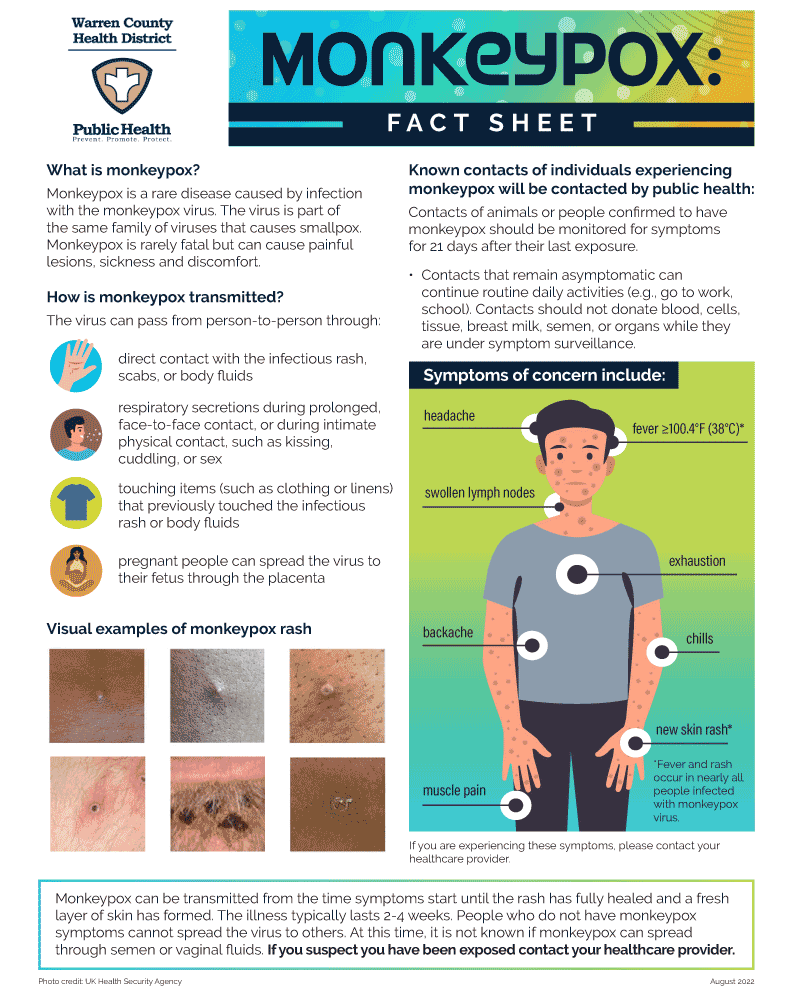
    Warren County, Ohio – This is the information the Warren County Health District is providing:

    If you suspect you have been exposed to someone with monkeypox, please contact your healthcare provider for guidance.  There are no plans to provide Monkeypox vaccinations to the general public in Warren County at this time. Vaccine is only available on a case-by-case basis for individuals who have been identified close contacts of an individual experiencing Monkeypox.