The Ohio Senate passed a bill to overhaul the administration of the state’s education system in a Wednesday vote along party lines.
The 26-7 party-line vote on Senate Bill 1 came with fierce urgency from GOP supporters that the chances must be completed to improve the way in which education is led in the state.
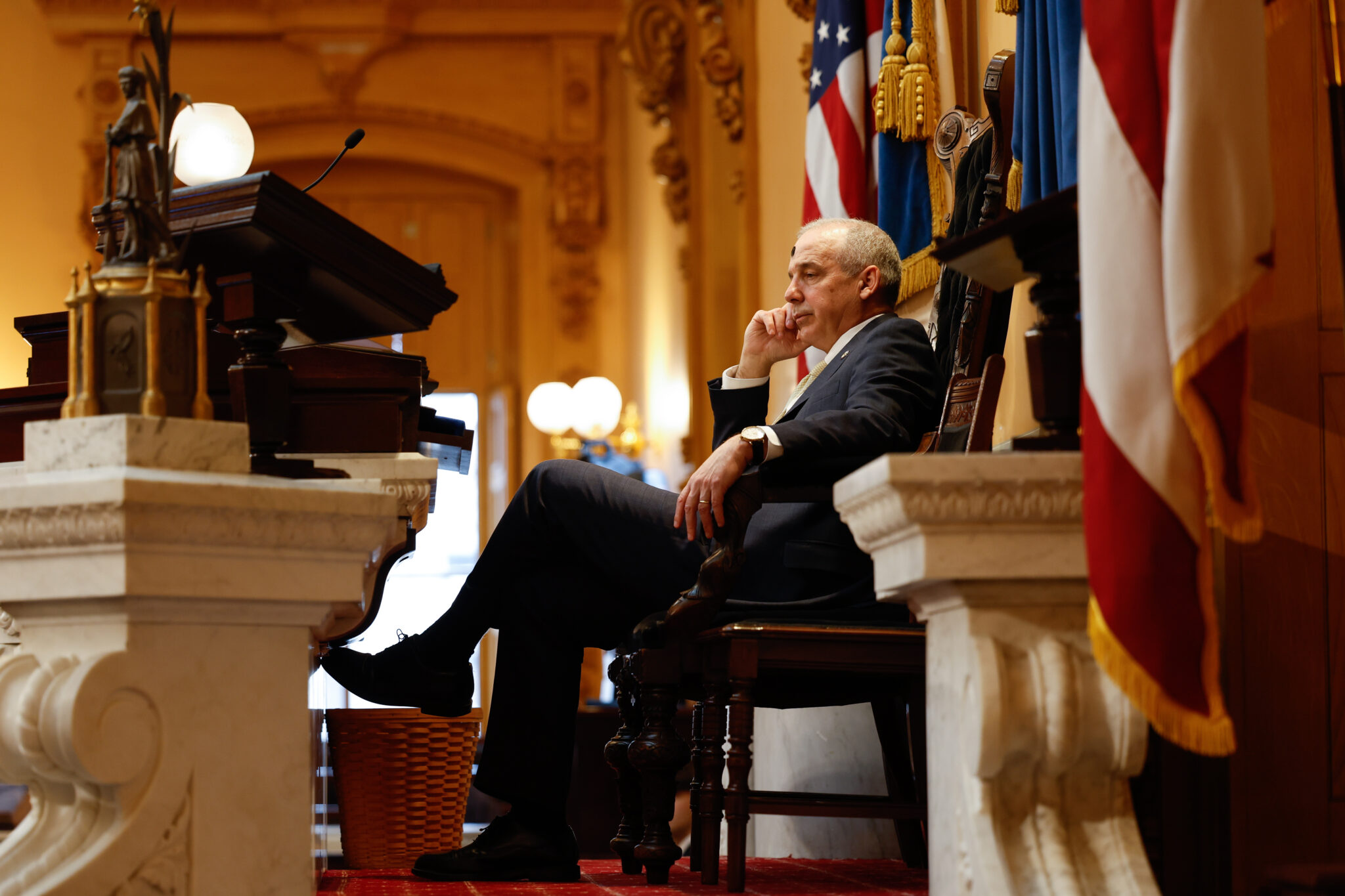
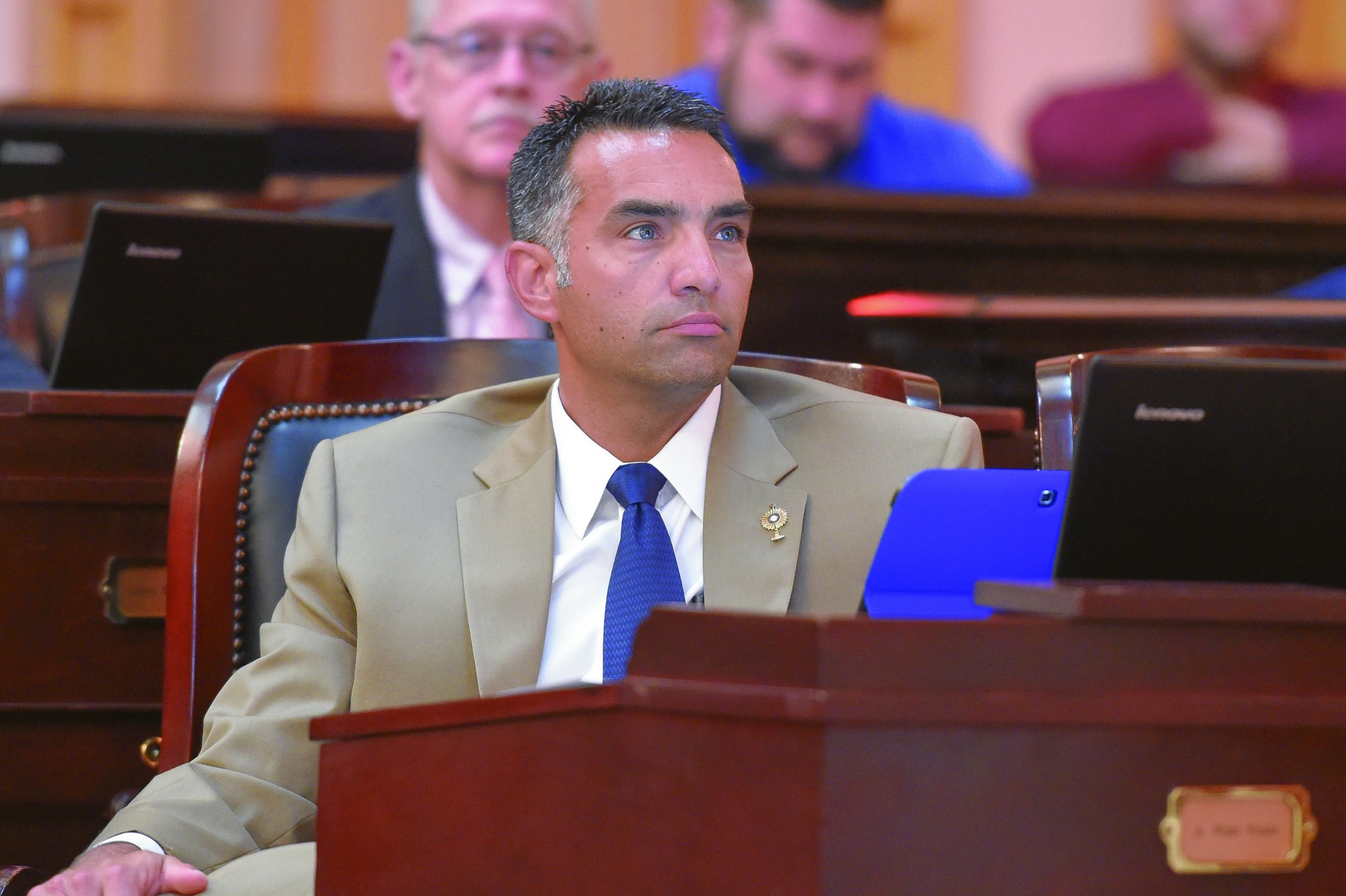
State Sen. Andrew Brenner, R-Powell. Official photo.
Senate Education Committee chair Sen. Andrew Brenner, R-Delaware, complimented the State Board of Education members for being hardworking people with good intentions for the state education system.
“Yet the structure they find themselves in is sluggish and incapable of getting through the bureaucracies,” Brenner said on the Senate floor.
Democratic opposition questioned the motives, but also the speed at which the measure was pushed through the chamber, claiming the true intent of the bill hasn’t yet been teased out.
Senate Education Committee ranking member Sen. Catherine Ingram, D-Cincinnati, said spotlighting districts at the bottom of state report cards or test scores only points to a greater problem not addressed by SB 1.
“When you continue to point to the lowest achieving districts, unfortunately you are continuing to point to those children who have been left behind all along,” Ingram said.
After multiple hearings in the last General Assembly and in the current one that included hours of testimony against the bill, Ingram said she fears the desires of the public, and elected school boards in each district, will be overlooked if the bill becomes law.
“We continue to talk about how we listen to the people,” Ingram said. “I don’t buy it.”
If SB 1 moves on to be passed by the GOP-majority House, it will change the Ohio Department of Education to the Department of Education and Workforce, and create a new leadership position not under the purview of the Ohio State Board of Education, but under the governor’s cabinet.
Two deputy directors, one for primary and secondary education and another for workforce, would also be created under the bill.
If passed, the transfer of duties to the new leadership would happen six months after the bill’s passage.
The bill would reduce the Ohio State Board of Education’s powers to include hiring a new superintendent of public instruction and dealing with district-level territorial and licensure issues.
In the Senate Education Committee, several amendments were made, for the most part by Republican legislators.
Amendments added to the bill before it’s full Senate passage changed the implementation date of the proposed law, taking it from June 30, 2023, to 90 days after full General Assembly passage.
The committee also adopted an amendment that would allow the superintendent of public instruction to serve as an advisor to the heads of the new department, which was originally a requirement in the bill.
A Democratic amendment adopted requires the Senate Education Committee to hold at least one in-person meeting before approving a director or deputy director for DEW.
Scott DiMauro, of the Ohio Education Association, agreed that the bill’s true aim is unclear at this point.
“I’m still not seeing exactly how restructuring the department get to what are ultimately policy decisions and support decisions,” DiMauro said. “It raises questions about what the impact of this will be.”
DiMauro said he hopes the House consideration will include changes to ensure a voice for educators and the public.
“I hope that whatever happens with this whole issue of any kind of restructuring … wherever Senate Bill 1 ends up, that lawmakers are not losing sight of a larger purpose,” he said.
The bill came back to the Senate hastily after the lame-duck effort last year was rejected at the last minute. Senate President Matt Huffman pledged after the effort went down to bring it back as quickly as possible.
When asked what he sees as the direct impact of SB 1, Huffman said it would “allow greater opportunity for reforms” and the “ability to act on specific problems.”
“When I have district meetings, and folks ask me questions and I can’t get the current answer,” Huffman said. “I know that I’m going to be able to get a better answer now.”
SB 1 now moves to the House for committee consideration.
Captain Dan Gangwer took his oath of office at this week’s City Council meeting
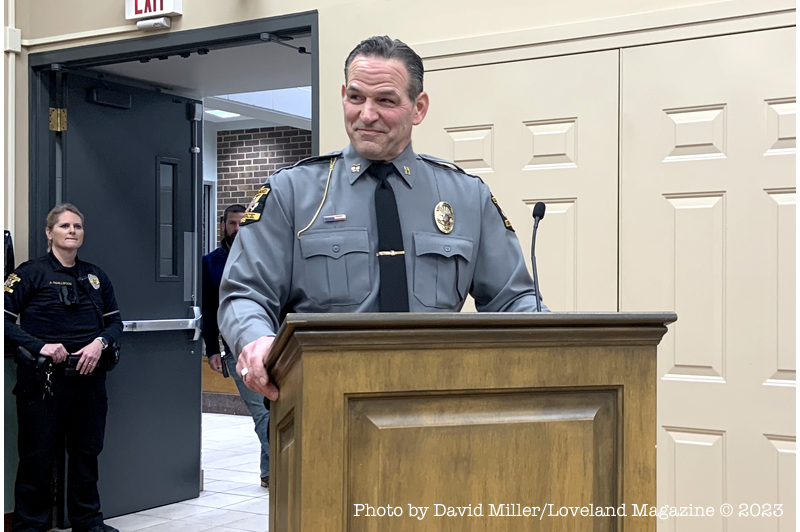
Loveland, Ohio – Captain Dan Gangwer was sworn in as Assistant Police Chief at Tuesday’s council meeting. He was previously employed by the Kettering Police Department, where he served for more than 27 years.
The assistant chief position has been unfilled since 2016.
Through his career with Kettering, Gangwer was promoted to sergeant, lieutenant, captain, and eventually assistant chief in 2016. He served several years in field training, SWAT team leadership, bike patrol, rangemaster, and weapons instructor/armorer. As a supervisor at Kettering, he led operations in patrol, jail, court, community relations, investigations, and dispatch.
Gangwer graduated from the University of Louisville with a Bachelor’s Degree in Police Administration.
He took his oath of office at this week’s City Council meeting, where he was joined by his wife, daughter, and former co-workers. Welcome to the LPD family!
Loveland, Ohio – I scream, you scream, we all scream for Loveland Dairy Whip Ice Cream!
Loveland is home to many family-owned businesses and historical buildings due to the fact that Loveland itself was founded in 1876. Businesses have come and gone and a majority of the historical buildings have had to go through some major renovations, but there is one business in particular that has not only called Loveland home from the beginning but has also kept its building as close as possible to the original layout. The Loveland Dairy Whip (LDW) located at 611 West Loveland Ave. has been serving up the community the finest high-quality ice cream since 1955 and has managed to satisfy sweet-tooths all over the city for 66 years! That’s why I couldn’t resist paying LDW a visit for my next round of “Cassie The Food Guru!”
Teresa (Flint) Morgan and her husband Rick Morgan became official LDW owners in 2001 although the ice cream hot spot had been in the Flint family since 1972. Teresa’s parents Marian and Jim Flint bought LDW in 1972, sold it in 1986, then bought it back in 1993. Up until 2001 when Teresa became the owner of LDW, she had been helping her parents run the shop since age 11 so she was no stranger to the LDW way of life!
The Morgan’s now run one of the longest-standing businesses and buildings in the City of Loveland. The LDW has not only been able to keep its historical charm intact even after the minor yet much-needed renovations that took place in 2014 it has also managed to stay true to its mantra, which is to continue offering the community the absolute best quality ice cream at a price that any family can afford! From the legendary vanilla, chocolate, or twist dip-top cones to the delicious Chocolate Mountain Cyclone to the yummy Oreo Parfay to the fan-favorite Banana Boats, LDW can sweeten anyone’s day with its magical ice cream creations!
Without further ado, I bring to you “Cassie the Food Guru” takes on Loveland Dairy Whip! Click below to see my on-camera interview with owner Rick Morgan!
Loveland, Ohio – Loveland Robotics Boosters reported yesterday, “It’s official! LMS VEX Team 97310A Andrometa is going to the 2023 VEX Robotics World Championships!! Huge Congratulations to the first ever Loveland VEX team to qualify for Worlds! We are so proud of you!!”
It's official! LMS VEX Team 97310A Andrometa is going to the 2023 VEX Robotics World Championships!! Huge Congratulations to the first ever Loveland VEX team to qualify for Worlds! We are so proud of you!! @LovelandTigers @MrDavidKnapp @ArblasterNelsonpic.twitter.com/nTnFMFDJgX
— Loveland Robotics Boosters (@LRobotBoosters) March 2, 2023
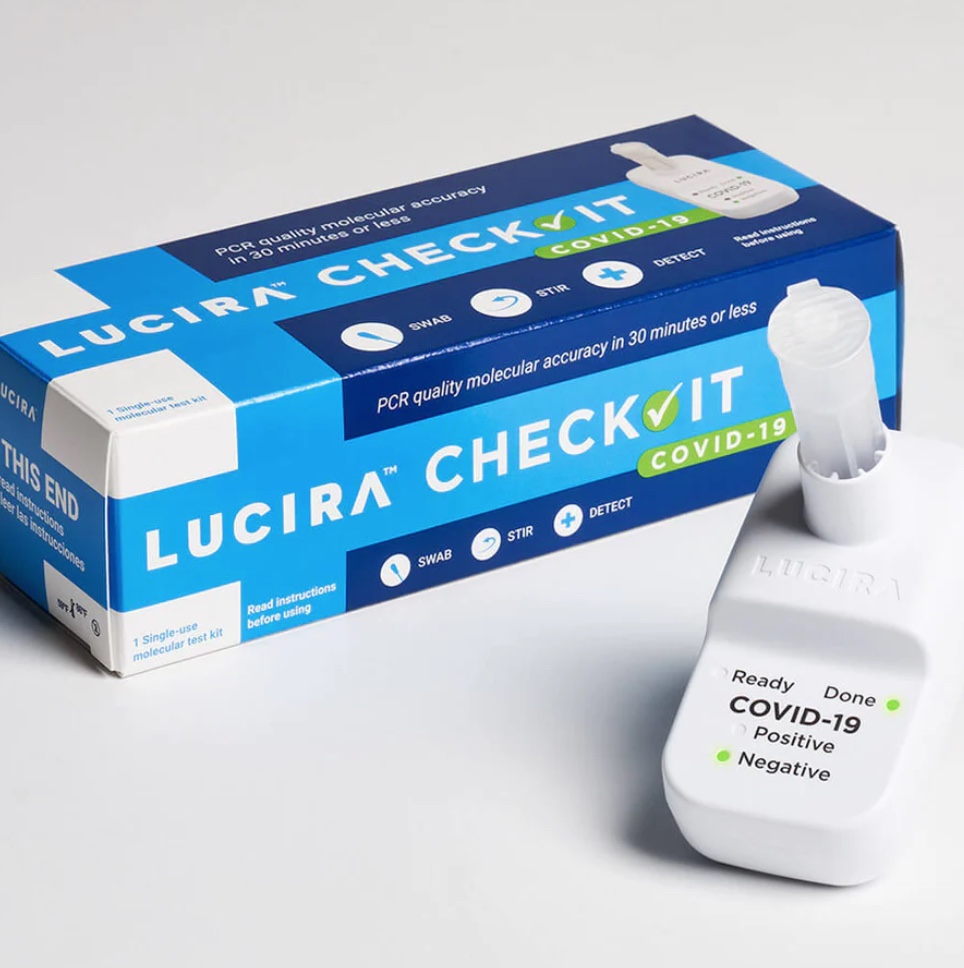
On February 24, the U.S. Food and Drug Administration issued an emergency use authorization (EUA) for the first over-the-counter (OTC) at-home diagnostic test that can differentiate and detect influenza A and B, commonly known as the flu, and SARS-CoV-2, the virus that causes COVID-19. The Lucira COVID-19 & Flu Home Test is a single-use at-home test kit that provides results from self-collected nasal swab samples in roughly 30 minutes.
https://youtu.be/HA0n05d73Gc
The Lucira COVID-19 & Flu Home Test is a single use test for individuals with signs and symptoms consistent with a respiratory tract infection, including COVID-19. The test can be purchased without a prescription and performed completely at home using nasal swab samples self-collected by individuals ages 14 years or older or collected by an adult for individuals 2 years of age or older.
The test works by swirling the sample swab in a vial that is placed in the test unit. In 30 minutes or less, the test unit will display the results that show whether a person is positive or negative for each of the following: Influenza A, Influenza B and COVID-19.
Individuals should report all results obtained to their healthcare provider for public health reporting and to receive appropriate medical care.
According to the FDA, in individuals with symptoms, the Lucira COVID-19 & Flu Home Test correctly identified 99.3% of negative and 90% of positive Influenza A samples, 100% of negative and 88.3% of positive COVID-19 samples and 99.9% of negative Influenza B samples. Since there are currently not enough cases of Influenza B circulating to include in a clinical study, validation confirmed that the test can identify the virus in contrived specimens, and the EUA requires Lucira to continue to collect samples to study the test’s ability to detect Influenza B in real-world settings.
“As with all rapid diagnostic tests, there is a risk of false positive and false negative results. Individuals who test positive for either flu or COVID-19 should take appropriate precautions to avoid spreading the virus and should seek follow-up care with their physician or healthcare provider as additional testing may be necessary,” said the FDA in announcing the test. “Negative results for SARS-CoV-2 and influenza B should be confirmed, if necessary for patient management, with an authorized or cleared molecular test performed in a CLIA-certified laboratory that meets requirements to perform high or moderate complexity tests. Individuals who test negative and continue to experience symptoms of fever, cough and/or shortness of breath may still have a respiratory infection and should seek follow up care with their healthcare provider.”
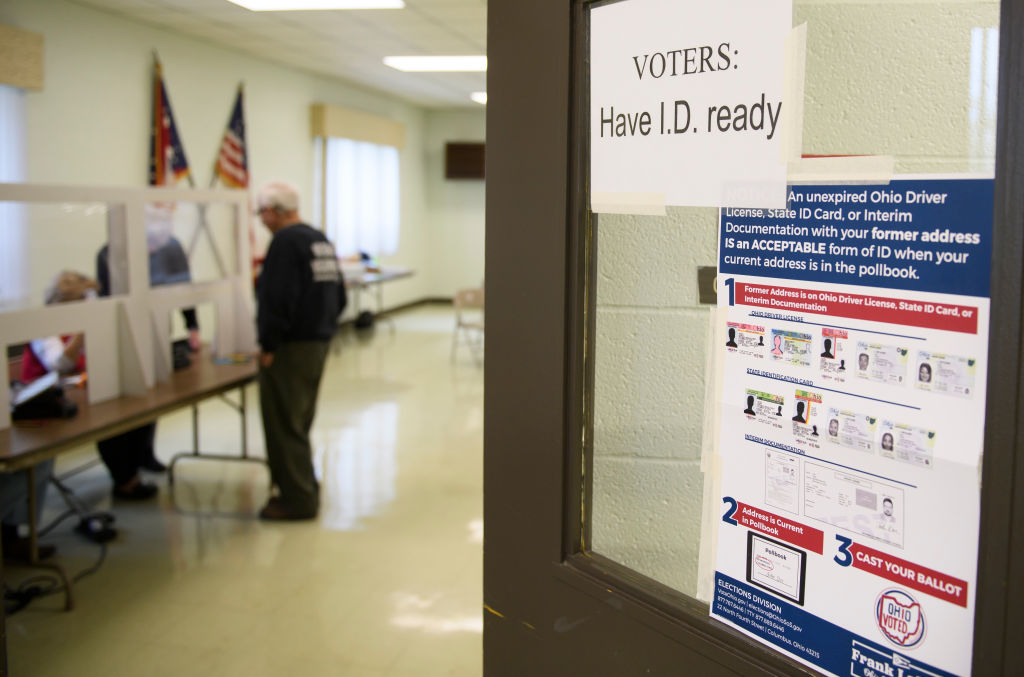
Ohio Gov. Mike DeWine signed House Bill 458 on Jan. 6, enacting what’s been called one of the most restrictive voter-ID laws in the country.
Public records obtained by the Ohio Capital Journal show how the law moved through the process, with lawmakers often ignoring moderation suggestions proposed by the Ohio Secretary of State’s Office and a law firm that lobbied on the law.
Taking elements from two election bills previously introduced in the Statehouse — House Bill 294, and Senate Bill 320 — House Bill 458 instituted sweeping changes to how elections are administered in Ohio.
Alterations include mandating the use of photo IDs, passports, or driver’s licenses to vote, and limiting counties to one ballot drop box. The law also mandated citizenship status on IDs and excludes county-issued veterans’ identification and college IDs from the list one can use to vote.
Such restrictions received significant backlash, with Democratic law firm the Elias Law Group filing a lawsuit the day the law was passed.
Regardless, Ohio’s Republican leaders insist the new voting restrictions were necessary, despite no evidence of significant voter fraud, by impersonation or otherwise. Total possible voter fraud in the 2020 election was a microscopic 0.0005%.
Nevertheless, DeWine said the new restrictions were needed to combat concerns about voter fraud, which have been pushed politically by his own party without evidence.
“Election integrity is a significant concern to Americans on both sides of the aisle across the country,” DeWine claimed in a statement.
DeWine also touted what he sees as moderation of the law’s voting restrictions, congratulating the general assembly for “working with my Administration on changes to House Bill 458 to ensure that more restrictive proposals were not included in the final bill.”
Ohio Secretary of State Frank LaRose’s Press Secretary Rob Nichols similarly touted the DeWine administration’s involvement in the process.
“While no legislation is ever perfect, the House and Senate leaders listened to many of our concerns and made some improvements to the bill,” Nichols wrote in an email responding to OCJ when asked the extent of SOS’s work on election reform. “Overall, the legislature approved some much-needed reforms that will benefit both voters and elections officials, while continuing to make Ohio one of the most honest and accessible voting states in the nation.”
But documents obtained by the Ohio Capital Journal through a public records request reveal a complex web of bureaucrats, lawmakers, lobbyists, and outside powerbrokers, united in their efforts to pass the new voting restrictions, including the Ohio Secretary of State’s Office.
Records show that the Secretary of State’s Office supported most of the House GOP’s voting restrictions, haggling out various details. In some cases where the office pushed for more moderation, their recommendations were not followed by lawmakers.
Regardless, LaRose has been publicly supportive of the law as passed.
Ohio Secretary of State input
Ohio Secretary of State Frank LaRose. Official photo.
On Dec. 9, 2022, Frank LaRose’s Chief of Staff Jason Mauk submitted a memo to Senate GOP legal Counsel Frank Strigari, outlining the secretary’s issues with HB 458.
Since Dewine signed the law, military families have voiced opposition to it, saying the mail-in ballot rules curtail the ability of service members to vote.
Mauk appears to have foreseen the blowback that the law’s rigid deadline for mail-in ballots would cause, especially among the armed services, and warned against it.
Mauk asked the Senate to “allow for ballots to be returned by the postal service for at least five days after election day.”
Eventually, lawmakers settled on a four-day cutoff.
Asked if his colleagues in the secretary’s office were concerned that the four day cutoff — below the deadline recommended by Mauk — might endanger voters, press secretary Rob Nichols indicated it could have been worse.
“They wanted zero,” Nichols said. “We said that might disenfranchise voters, asked for at least a five day return deadline, and they cut it down to four.”
Asked again if the four-day cutoff would harm voters, Nichols replied, “We enforce the laws; we don’t make them.”
Asked for comment, Ohio House Republican Majority Leader Bill Seitz responded in an email, “I do not think there will be any impact on service members being disenfranchised by our new law.”
In communications, Mauk from the Secretary of State’s Office also argued counties should be allowed to have multiple ballot drop boxes on site, writing they “respectfully ask the Senate to allow up to three drop boxes on board office property.”
He also fought against immediate disclosure of drop box surveillance.
“This office has serious concerns about the burden placed on the county boards of elections in requiring immediate disclosure of drop-box video surveillance records,” Mauk wrote. “The immediacy of this requirement is problematic.”
Nevertheless, the provision remained in the final bill and drop boxes were limited to one.
Likewise, Mauk recommended creating a “secure, electronic method of verifying voter registration data,” using information from the Bureau of Motor Vehicles.
One of the benefits from this system, Mauk claimed, is that it could deter non-citizens from voting.
“It also helps to ensure non-citizens are not able to submit a voter registration accidentally, or intentionally,” he wrote.
Another aspect of the election law process made clear by the records is the involvement of the Columbus law firm Byers, Minton & Associates.
Byers Minton is one of Ohio’s largest lobbying firms, with clientele ranging from Apple to the Cleveland Browns, and the Girl Scouts. Byers Minton’s public position on election reform is rarely mentioned on its website, social media, or other communications.
The firm’s weekly update on events at the Statehouse failed to mention HB 458, instead prioritizing DeWine signing a spending bill. The election bills are referenced once, at the bottom of a list including everything passed by the Statehouse during its lame duck session.
But behind the scenes, records show an apparently close relationship between Byers Minton’s lawyers and the lawmakers producing the election legislation.
Founder Bill Byers was involved at the earliest stages of the eventual law’s development. Records show Byers helped arrange favorable testimony, though some of his suggestions for election law changes, such as automated voter registration, were not followed by lawmakers.
Republican Ohio House Majority Leader Bill Seitz. Official photo.
For the original bill, House Bill 294, Byers helped arrange witness testimony from former Kentucky Secretary of State Trey Grayson to speak on its behalf.
Byers would also be included in a thread on the final draft of HB 294 from Oct. 5 of last year, featuring multiple revisions.
Asked about this, another legislative aide for Seitz said Byers’ actions were within the purview of Byers Minton’s regular duties.
“Bill Byers lobbied on behalf of the Secure Elections Project,” wrote the legislative aide in a response email to OCJ. “Byers simply offered valuable input on the bill on behalf of his client.”
Byer’s interest in election law would later extend to SB 320, the other predecessor bill to the one that was eventually passed, which was introduced by Republican state Sen. Teresa Gavarone.
In it, Byers argues for the cost-saving potential of automated voter registration and verification, and the wastefulness of provisional ballots.
“Processing provisional ballots imposes significant costs on county election officials,” Byers said.
Byers also portrayed decreasing the amount of provisional ballots as a financial windfall.
“Reducing the number of provisional ballots cast in the 2016 and 2018 election cycles, would have resulted in an additional $830,721 in savings to county BOEs,” Byes said.
According to the Massachusetts Institute of Technology’s Election Lab, 1.7 million provisional ballots were counted in 2016 nationally, and accounted for 1.2% of all votes in the 2018 midterm election.
“Thank you!,” the aid replied to Byers.
Six days later, the aide emailed Byers once more, saying Gavarone “would like to meet with you to get more Info,” and requested “Frank(LaRose)’s attendance during that meeting with us.”
Asked to discuss the details of these meetings, no one from Gavarone’s offices responded.
As for Byers Minton, asked for comment, Andrew Minton replied, “My firm does not give comment to the press on any issue or for any reason.”
Speaking about the election reform bills as a whole, Mallory was livid when asked for comment.
“These anti voter policy changes are not about improving the election process, it’s about erecting barriers and decreasing access,” Mallory said. “What we have is a super majority rushing anti voter bills through a lame duck session. They are perpetuating a fraud on Ohio voters and the democratic process, with the false narrative of Election security and modernization. It is disingenuous.”
CINCINNATI — Former state Rep. Nino Vitale on Tuesday testified that he didn’t have much of a memory for — nor was he much interested in — raising money or campaigning for office. At several points, the Republican from Urbana even said he didn’t remember what year he was first elected to the legislature (it was 2014.)
But on cross examination, federal prosecutors showed him records and written communications indicating that Vitale was regarded as an enthusiastic member of “Team Householder” who, as part of the team, received thousands in campaign funds and other assistance that originated with Akron-based FirstEnergy.
As former Speaker Larry Householder’s appointee to chair the Energy and Natural Resources Committee, Vitale in 2019 helped to pass a $1.3 billion bailout that primarily benefited FirstEnergy. When they announced arrests in the summer of 2020, federal prosecutors said the bailout was at the center of what was likely the largest bribery and money-laundering scandal in Ohio history.
Vitale was called by Householder’s lawyers in the trial, which started on Jan. 23. Householder and former Ohio Republican Party Chairman Matt Borges are charged with racketeering in an alleged scheme to use $61 million in utility money to elect friendly lawmakers who would make Householder speaker and then bail out FirstEnergy’s failing nuclear and coal plants.
Vitale has long been known for controversial political gestures — including refusing to wear a mask at the height of the coronavirus pandemic because human faces are “the likeness of God.“
But on Tuesday, Vitale portrayed himself as a reluctant politician. In a possible nod to how uncompetitive his district was, the former lawmaker said he didn’t have to do much to get reelected.
“The whole marketing side of things wasn’t big on my radar because my district elected me overwhelmingly and frequently,” Vitale said.
Householder’s attorneys seemed to call Vitale and other Householder supporters in the House to testify so they could say they believed the bailout law was good public policy. But U.S. District Judge Timothy Black limited such testimony, saying the proceeding wasn’t a referendum on the merits of House Bill 6.
Vitale also said he never felt pressured to support Householder for speaker or to support the bailout.
But Assistant U.S. Attorney Megan Gaffney Painter then posed a series of questions that seemed to be intended to show that Householder made Vitale chairman of the Energy and Natural Resources Committee not because Vitale had any particular qualifications, but because he was an enthusiastic member of Team Householder who would do the speaker’s bidding.
Vitale tried to refute that characterization.
When Painter tried to get him to agree that he had little in his background to school him in large-scale electricity generation or the management of the state’s natural resources, Vitale wouldn’t.
“I know quite a lot about those topics, actually,” he testified.
Vitale said he works for his wife’s family’s company, which makes parts for truck brakes. It has an electricity substation and it sits on 30 acres, and those factors gave him expertise on the power grid and the environment, Vitale said.
When Painter proposed that Vitale had no academic credentials that would make him expert in those areas, Vitale disagreed again, saying his business degree provided him with such knowledge.
“In a business degree, part of what you study is energy inputs to a business,” Vitale said.
The former lawmaker also claimed that he wasn’t very familiar with FirstEnergy and had to be convinced to support the bailout bill. Then Painter displayed a text message from FirstEnergy Vice President Michael Dowling to CEO Chuck Jones on Feb. 17, 2019 — before the bill was introduced. Earlier testimony showed that the executives believed the bailout was critical to their company, and Jones had asked Dowling who was going to chair the House Energy and Natural Resources Committee.
“Nino Vitale from Springfield will chair,” Dowling responded. “Good friend and bigtime (Householder) supporter.”
Confronted with the message, Vitale said he’d only met Dowling a few times.
Vitale also disputed that it was Householder who first broached the idea of Vitale being chairman.
“I asked him,” Vitale said.
Then Painter played a voicemail message that Vitale left for Householder in January 2019, just after Householder had been made speaker. In it, Vitale said he had talked the matter over with his family.
“I’m in if that’s what you want me to do,” Vitale said.
As Painter tried to move on to another question, Vitale insisted that chairing the Energy and Natural Resources Committee was originally his idea.
And to refute Vitale’s claims that he was half-hearted about fundraising and political marketing, Painter displayed an October 4, 2017 text message Vitale sent to Jeffrey Longstreth, Householder’s right-hand man in making him speaker and then passing the bailout. It certainly seemed to link FirstEnergy’s policy agenda to Vitale’s desire for corporate contributions.
FirstEnergy lobbyist “Ty Pine wants to meet with me on a legislative matter and I want to meet with him on a contribution matter,” Vitale said in his message.
After more than a month, testimony in the trial is entering the homestretch. Householder’s final witnesses — including Householder himself — are expected to testify Wednesday and Thursday. Then it will be Borges’ turn to call any witnesses he may have.
After that, the prosecution and the defense teams will make closing statements, Judge Black will instruct the jury and then it will deliberate.