Tag: loveland ohio

  • Be a Honeysuckle Hero

    Be a Honeysuckle Hero

    by Lauren Enda

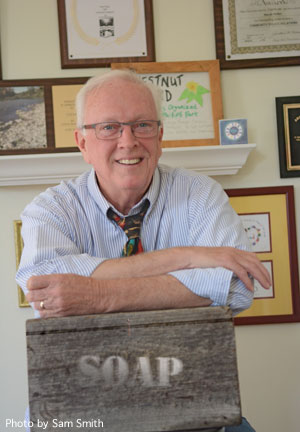
    Loveland, like most of southwestern Ohio, has been invaded. According to UC biology professor, Denis Conover, “Amur honeysuckle is now the most abundant woody plant in Hamilton County. One bush can produce thousands of seeds that get dispersed by birds and mammals. Native plants just don’t have a chance. Everything that depends on the native plants — insects, birds — can be lost.” * The onslaught of invasive species is troublesome and dangerous to our local ecosystems. Multiple types of invasives are resident in Loveland’s nature preserves, parks, roadsides, and back yards. And we must eradicate them as the first step in healing our woodlands and natural spaces. 

    How can you help? Fight to protect Loveland’s woodlands on Saturday, September 10th from 9am to 3pm at the West Loveland Nature Preserve. (See further information below.) A coalition of residents, City of Loveland Public Works, non-local volunteers, and hired contractors will be working together to start healing the city’s green spaces. This event is hopefully the first of many to remove invasives from our city one area at a time. 

    Everyone is invited to join the fight. An invasive removal contractor, Honeysuckle Removal,** will do the really hard labor of cutting the invasives, many of which are decades old and twenty feet tall. Volunteers will work behind them to apply herbicide to ensure the invasives don’t regrow and then pile the debris for the City of Loveland Public Works to pick up after the event. The more volunteers we have, the more the contractor can focus on cutting invasives and the quicker the rebirth of the woodlands will be. In a show of good will, the contractor is “donating” two people from their company to help us get through the invasives quicker and educate volunteers. Pretty great, right?

    You can volunteer for an hour, or you can come all day. If you don’t have time to stay and work, please stop by anyway to learn a bit more about invasives, their dangers, and how to eradicate them in your own yards. 

    Many intractable problems exist in our world today, most of them so huge and so far away that we may feel there is nothing we can do. But removing invasives is relatively easy, local, doable, and extremely beneficial to our ecosystems. Everyone can make a real difference in fighting this massive problem. You will see direct results of your work, helping sunlight hit the forest floor for the first time in years. Joining the fight for healing the West Loveland Nature Preserve is as easy as showing up on Saturday, September 10th. Once you see the transformation of the area, you will better understand the problem, the solution, and how important this work is.

    For more information or to volunteer, please contact Lauren at lauren_enda@hotmail.com.

    What: Invasive removal at West Loveland Nature Preserve

    When: Saturday, September 10th from 9 am to 3 pm

    Where: Park on Glen Lake Rd, Pheasant Woods Court, or Shingleoak Drive. There is an entrance to the Preserve near there along West Loveland Avenue

    What to wear: Long-sleeved shirt and long trousers, hat, and if desired, sunscreen and bug spray 

    What to bring: Sturdy work gloves, water bottle, eye protection if you have it

    Lauren Enda lives in Loveland at Hidden Creek


    * Invasive species are taking over Ohio forests | University Of Cincinnati (uc.edu)

    ** Honeysuckle Removal LLC

  • Will you please help fill the shelves of the LIFE Food Pantry?

    Will you please help fill the shelves of the LIFE Food Pantry?

    Loveland, Ohio – Here are the weekly needs of the LIFE Food Pantry.

    Thank you for supporting your local pantry and neighbors who need a bit of assistance!

    FOOD

    Baked Beans

    BBQ Sauce

    Beef Stew

    Canned Carrots

    Canned Chicken

    Canned Mixed Fruit

    Canned Pineapple

    Canned Salmon

    Cereal

    Chili Beans

    Coffee

    Cooking Oil

    Ensure/Boost

    Flour

    Granola Bars

    Hearty Soups

    Instant Mashed Potatoes

    Juice (LARGE NOT INDIVIDUAL)

    Kidney Beans

    Manwich/Sloppy Joe

    Mixed Vegetables

    Oatmeal Packets

    Pineapple

    Potato Dishes

    Refried Beans

    Rice-a-Roni

    Sugar

    Syrup

    PERSONAL CARE

    Body Wash

    Conditioner

    Deodorant

    Lotion

    Razors

    Shampoo

    Shaving Cream

    Toothpaste

    Tampons

    Diapers Sizes 5,6

    Pullups (all sizes)

    HOUSEHOLD

    Kleenex

    Paper Towels

    Cleaning Products

    About the LIFE Food Pantry

    RECEIVE FOOD

    FOOD PANTRY HOURS
    SUNDAY: Closed
    MONDAY: Closed
    TUESDAY: 10–12, 4–6:30
    WEDNESDAY: 10–12
    THURSDAY: 10–12, 4–6:30
    FRIDAY: 10–12
    SATURDAY: 10–12

    541 Loveland-Madeira Road, Loveland, Ohio 45140
    (513) 583-8222

  • What’s The Cost of proposed Loveland School levy?

    What’s The Cost of proposed Loveland School levy?

    by Linda Holtkamp

    By now, the people of Loveland Schools should know about the proposed Loveland School levy, and how the cost of this proposed increase will affect your property taxes.

    Currently, 1 Mill is equal to almost exactly $1,000,000, and the school is asking us for 4.9 Mills, additional. The formula to calculate what this proposed levy will cost you is simple. Superintendent Mike Broadwater has a video on the school website with an explanation and many thanks to him for providing that.

    Find your property on your County Auditor’s website. Look for “property search” on both Hamilton and Clermont County sites. There you will find both the Appraised Market Value (full appraised value of your home) and also the Assessed Value (the amount that is taxable). Then grab your calculator and use this:

    Appraised Market Value (full home or house value) x .35 x .0049 = $$$$

    OR, use your Assessed Value (taxable amount) x .0049 = $$$$

    With either math formula, the amount you will owe will be the same $$$$.

    The .0049 represents the amount of this levy ask… 4.9 Mills, generating a total of close to $4.9 Million Dollars, each year, continuously (permanently), as an operating levy for the schools. 

    A Google search for current home values in Loveland lists that properties in Loveland range from $40,000 to $2.9 Million. The Grail was going to sell land to the school district for $7.7 Million, so yes, there are some high-value properties that exist here.

    The LCSD treasurer used the Zillow website in his presentation at a recent board meeting. Zillow lists the average house value in Loveland, at the end of July, to be $377,047.

    Using the average house value that the treasurer listed, $377,047, the calculated increase for an average value home in Loveland, for this school levy, will be about $650 per year. This is a permanent tax, which will be piled on top of the existing 18 continuous (permanent) levies, two permanent inside millage taxes, as well as a 26-year bond levy (which will be paid off in a few years).

    69% of homes in Loveland are lived in by the homeowner, while 31% are rental properties, according to RentCafe, a marketing website that tracks these trends.

    Homeowners will have to pay the extra costs of this levy, and other recent property taxes that have passed but not yet been billed, starting in January 2023. Landlords can be expected to raise rents to cover the 13% increase in Loveland School taxes, and those other taxes as well. Rentals in Loveland are pricy, average $1,361 for 959 sq. ft., only surpassed locally by rentals in Blue Ash.

    Information from the recent Census lists that 6.1% of people in Loveland are under 5 years old, and that 26.3% are under 18 years of age. This would indicate that, out of Loveland’s population, about 20% are school-age children. A good number of those school-age children do not attend Loveland Schools, but opt for private, parochial, charter, or homeschooling.

    Residents over 65 years old, seniors, again according to Census numbers, comprise 15.9% of the population of Loveland. It seems there are close to as many senior citizens in Loveland as there are school-age children.

    According to the school website, the District serves a population of 50,000, when including those who live both inside and outside of Loveland City proper. Student enrollment in LCSD is approximately 4,000. That works out to 8% of Loveland-at-large residents are students of LCSD.  That means 92% of Lovelanders sacrifice monetarily via property taxes, to educate 8% of the Loveland district population.

    Though many residents strongly insist this 13% increase in school property taxes is for the good of the 4,000 current students of Loveland, is there ever any emphasis on how a 13% increase might harm the considerable number of senior citizens in Loveland? The Homestead tax reduction, (aimed at helping seniors) has effectively disappeared, so relief on property taxes is essentially nonexistent. 

    For those who feel that not passing this levy will hurt property values… that depends on your outlook. Of all the people who live in Loveland now, according to the Census, 69% were born in Ohio. As a life-long resident myself, I know that many, many of these 69% are “long-term” residents of Loveland. Think of those you know who have made their home here for at least 15 years, as well as those who have lived here for decades. Do we like seeing our property values rise? Of course, we do. But do these permanent levies, which burden us forever, give us a good return on our investment? Or are higher property values more likely to aid those who live here only for a short time? We’ve spent tens upon tens of thousands of dollars to support the schools. Our schools… LCSD. Proudly. Will property value increases repay any of that? Will some residents eventually be forced out of their homes because continual taxation is part of the homeownership costs that are skyrocketing? Admittedly you can’t monetize the value of education. You can’t accurately assess the harm of passing on the cost of these school levies to those who truly can’t afford them, either.

    Remember that 2/3 of our community does not have children attending Loveland Schools. But a tax like this, if passed, places a burden on every single resident.. homeowner or renter, school parent or senior. The importance of voting cannot be overstated, and absentee or early in-person voting makes it easy for us all.

    Many of us complain about how much is sent to schools already, but these taxes are firmly entrenched, school enrollment numbers continue to drop, and LCSD has been making everything work pretty well with the over $50 Million Dollars per year that they already get (some $35 Million of that from local property taxes… us). They use these funds to educate 4,000 students out of a district population of 50,000… 8% of our community at large.

    These funds cannot be taken back, so use them with our blessing.

    Don’t ask for more.

  • Jewish congregations mount legal challenges to state abortion bans

    Jewish congregations mount legal challenges to state abortion bans

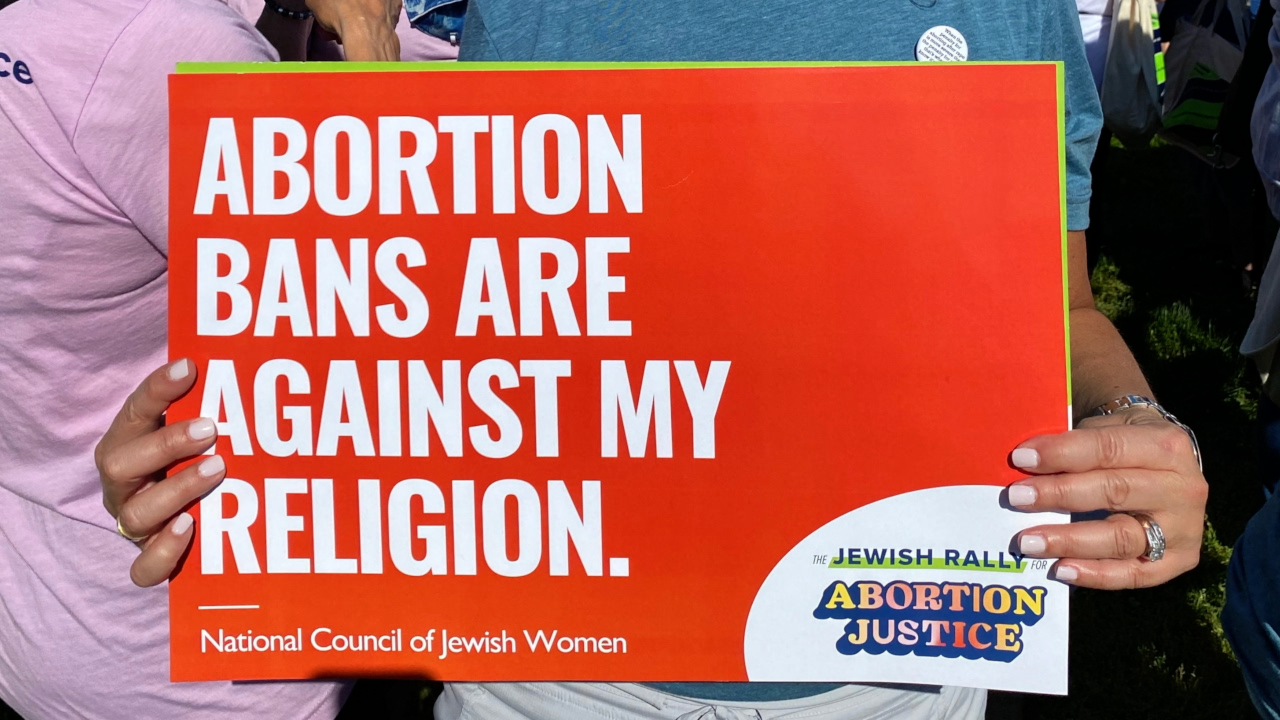
    Members of the Jewish community have spoken out against abortion bans in Ohio, saying it infringes on their religious freedom. Photo by Morgan Trau, WEWS.

    BY: ARIANA FIGUEROA – Ohio Capital Journal

    WASHINGTON — Thousands of years of Jewish scripture make it clear that access to abortion care is a requirement of Jewish law and practice, according to Rabbi Karen Bogard.

    “We preserve life at all costs,” she said in an interview with States Newsroom. “But there is a difference between that which is living, and that which is not yet living.”

    Bogard is a rabbi at Central Reform Congregation in St. Louis, which is in the  progressive tradition of Reform Judaism. She said that whether it’s the Torah — the first five books of the Old Testament in the Hebrew Bible — or the Talmud — the central text of Rabbinic Judaism and the primary source of Jewish religious law and theology — those pieces of Jewish literature “really draw the difference between life and potential life.”

    But with the fall of Roe v. Wade in late June, some members of the Jewish faith as well as other religious groups find their beliefs in deep conflict with state laws that ban or greatly restrict abortion — especially if a pregnant patient’s life is in danger.

    Since the Supreme Court’s Dobbs v. Jackson Women’s Health Organization decision, states now are permitted to craft their own laws regarding abortion, and in Bogard’s home state of Missouri, the procedure is banned.

    “Our congregants are heartbroken,” she said. “It’s really violating to be told what you can and can’t do with your own self.”

    Legal challenges are resulting. The enactment of state laws that ban or restrict access to abortion has already sparked a lawsuit in Florida from a liberal Jewish congregation in the Sunshine State. In Ohio, another liberal Jewish congregation is joining the American Civil Liberties Union in a lawsuit against the state’s six-week abortion ban.

    A coalition of three dozen rabbis also filed a brief on a separate lawsuit in the Buckeye State, where physicians are challenging the new abortion law in the Supreme Court of Ohio.

    Similar lawsuits are anticipated, not only from liberal Jewish congregations, but other religious groups as well.

    There’s currently a lawsuit in the U.S. District Court for the Southern District of Texas Houston Division filed by the Satanic Temple — not to be confused with the Church of Satan — on behalf of a member who argues the state’s abortion ban violates that temple member’s religious beliefs allowing access to an abortion ritual.

    The ritual involves members repeating verses in a mirror to affirm body autonomy and repel any guilt, shame or discomfort that can surface when undergoing an abortion.

    “There’s going to be a wave of religious freedom lawsuits,” Rabbi Daniel Bogard, who’s married to Rabbi Karen Bogard, said. “We’re going to find out if this country really believes in religious freedom, or whether this country believes in the freedom of a small minority to impose its will on the rest of us.”

    But it’s unclear if these religious-based lawsuits challenging state abortion laws can win in court.

    “We’re very much in the wild, wild west of abortion law and religious law,” said Candace Bond-Theriault, the director of racial justice policy and strategy at Columbia Law School’s Center for Gender and Sexuality Law.

    Jewish law

    According to Jewish law, a fetus is not considered a full human being and the biblical foundation for this is found in Exodus 21:22 of the Torah, Rabbi Daniel Bogard said.

    The translation reads: “When men fight, and one of them pushes a pregnant woman and a miscarriage results, but no other damage ensues, the one responsible shall be fined according as the woman’s husband may exact from him, the payment to be based on reckoning. But if other damage ensues, the penalty shall be life for life, eye for eye, tooth for tooth, hand for hand, foot for foot, burn for burn, wound for wound, bruise for bruise.…”

    Rabbi Daniel Bogard said that the Jewish legal interpretation of these passages states that a fetus is not a person, because the miscarriage results in only monetary compensation, rather than the “life for life” punishment.

    There are several other passages in Jewish literature that make the distinction that the life of the person who is pregnant is prioritized.

    “If we’re going to live in a religiously free society, we are each allowed to interpret these verses on our own for our own traditions and a minority in this country can’t impose their conservative white Christian religiosity on the rest of us,” Rabbi Daniel Bogard said.

    The lawsuits challenging abortion laws are predominately filed by congregations that practice Reform Judaism, but Conservative Judaism also supports access to abortion.

    The question of access to abortion gets more restrictive when it comes to Orthodox Judaism, but access to the medical procedure isn’t barred, says Yedida Eisenstat, a fellow at the Center for the Study of Law and Religion at Emory University in Atlanta.

    “Abortion in Judaism absolutely does have a place, and within Jewish law, there absolutely is a place for abortion,” she said. “Judaism is not anti-abortion, like Christianity is, so it absolutely does make sense for Jewish congregations to be saying, ‘Hey, this is a violation of our religious rights.’”

    Eisenstat specializes in Jewish biblical interpretation and also works as an editorial associate at the Posen Library of Jewish Culture and Civilization.

    “Judaism doesn’t have one voice or one opinion or one ruling about everything,” she said, adding that every situation is different and “there’s all this other gray area,” when it comes to theoretical cases in Jewish law pertaining to abortion.

    And interpretations on abortion in Jewish law, or Halacha, vary across American Jewish denominations.

    “We use the theoretical cases to illuminate other cases — just like in American law — so there isn’t one blanket answer for every situation, every situation has its own nuances,” she said. “And again, that’s why this is a decision, a very personal decision, not one that the government should be making.”

    The Rabbinical Assembly, a major institution of Conservative Judaism, condemned the Supreme Court’s ruling in Dobbs.

    “Denying individuals access to the complete spectrum of reproductive healthcare, including contraception, abortion-inducing devices and medications, and abortions, among others, on religious grounds, deprives those who need medical care of their Constitutional right to religious freedom,” the organization said in a statement.

    Orthodox Judaism is typically more aligned with Christian conservative views on religious liberty issues, Eisenstat said, but differs on the belief that life begins at conception.

    Following the Dobbs decision, the Rabbinical Council of America and Agudath Israel, large organizations that represent Orthodox Jewish communities, urged states to consider exceptions to expand abortion access.

    “As the debate over abortion rights enters this new phase, we encourage states to craft policies that will simultaneously express the great value we place on life as well as protecting the rights to abortion when warranted by Jewish law,” the Rabbinical Council of America said in a statement.

    Florida lawsuits

    Rabbi Barry Silver is a self-proclaimed “rabbi-rouser.”

    He’s an attorney, a social activist, a former Democratic legislator in the Florida House of Representative and the leader of the Congregation L’Dor va-Dor, a synagogue practicing progressive Judaism in Palm Beach, Florida.

    Silver, along with three rabbis, a United Church of Christ reverend, a Unitarian Universalist minister, an Episcopal Church priest and a Buddhist lama, each have filed separate lawsuits challenging the state’s 15-week abortion ban that went into effect July 1. Those suits argue that the new abortion law violates Florida’s state constitution, as well as U.S. constitutional protections for freedom of speech and religion.

    The suits also claim the law creates “substantial” burdens on individuals’ ability to practice their faith, and creates a “potential” burden on religious leaders to advise their members. Because of the vagueness of the law, Silver said, rabbis or other religious leaders who counsel their clergy members on abortion could face criminal charges.

    “It criminalizes the practice of Judaism as well as all the other religions that are not aligned with fundamentalist Christianity, which is pretty much everybody,” Silver said of Florida’s new abortion law.

    Silver’s Congregation L’Dor Va-Dor also filed a separate suit in June in state court that argues the 15-week abortion ban violates the right to privacy guaranteed by the Florida state constitution.

    “For Jews, all life is precious and thus the decision to bring new life into the world is not taken lightly or determined by state fiat,” according to the lawsuit. “As such, the act prohibits Jewish women from practicing their faith free of government intrusion and this violates their privacy rights and religious freedom.”

    Silver said he still plans to counsel his congregants who need or are considering abortion care, despite Florida’s new law.

    “We do the right thing and if they want to come after us, they can make our day, we’re not going to stop saying what we need to say. We’re not gonna stop practicing Jewish law,” he said.

    A spokesperson with GOP Gov. Ron DeSantis’ office did not answer questions from States Newsroom about whether the newly passed abortion law prevents Jewish people from practicing their faith.

    “Governor DeSantis is pro-life, and we believe HB 5 will ultimately withstand all legal challenges,” a spokesperson with DeSantis’ office wrote in an email to States Newsroom, referring to the abortion law. “The struggle for life is not over.”

    Congregation L’Dor Va-Dor’s suit claiming Florida’s constitution has an explicit right to privacy is “fairly straightforward, and would generally be unremarkable,” said Caroline Mala Corbin, a law professor at the University of Miami School of Law.

    “Under the existing law, it’s a no-brainer challenge,” Corbin said.

    She added that the Florida Supreme Court has interpreted that language to cover abortion.

    “Except that, like the U.S. Supreme Court, the Florida Supreme Court has taken a sharp turn to the right, so just as you have the U.S. Supreme Court completely remake abortion law, it’s a possibility the Florida Supreme Court will as well,” she said.

    Corbin said the court could rule several ways in the congregation’s case.

    “They might argue, ‘We question your sincerity,’ which would be shocking given how deferential they are to other claims of religious liberty,” she said.

    The court could also rule that the congregation did not prove Florida’s abortion law created a substantial burden, or that even if the law prevents someone from practicing their religion, “the state has a compelling reason for its law, and therefore, the state must prevail,” she said.

    “So the state might respond, even if this does affect your ability to live your religious truth, the state has a compelling interest in saving lives and therefore the state still prevails,” Corbin said.

    Future cases

    Micah Schwartzman, the director of the University of Virginia School of Law’s Karsh Center for Law and Democracy, and the Hardy Cross Dillard professor of law, said lawsuits brought on behalf of a group of people, like the one from Silver’s congregation in Florida, rather than a particular individual, will have more procedural hurdles to prove the group has standing to sue under state and federal law.

    “I’m not terribly confident about these early lawsuits,” Schwartzman said.

    He pointed to the case in Texas, the one by the Satanic Temple, which the religious organization filed in federal court on behalf of one of its members, and said he expects to see similar cases.

    “I think in the future, we’re going to see cases that are brought on behalf of particular individuals who are burdened by abortion restrictions or prohibitions,” he said. “And those types (of cases) will have a stronger chance of surviving the preliminary stages of litigation.”

    Schwartzman said there’s also the question of religious exemptions, particularly in states that have enacted trigger law bans or near total bans on abortion, and whether those laws impose a burden on people trying to practice their religion.

    State abortion laws are going to have some exemptions for abortion, he said, such as in cases of rape and incest and to protect the life and health of the mother.

    “And in those circumstances, courts are going to face the question if these laws have certain secular exceptions, why shouldn’t they also grant exceptions on religious grounds?” he said. “And I think that will be the structure of many challenges that we will see in the future.”

    Elizabeth Sepper, a religious liberty, health law and equality scholar at the University of Texas School of Law, said that over the last couple of decades the Supreme Court has “reduced the establishment clause to rubble,” which under the First Amendment prohibits the government from establishing a religion.

    When Roe v. Wade was initially issued, Congress passed the Hyde Amendment, which prohibits the use of federal funds to cover the cost of abortions, with some limited exceptions.

    Sepper said Congress’ decision to pass a restriction related to abortion in the case of the Hyde Amendment, is an example of “an establishment of religion because when legislators pass abortion bans that say ‘Well, human beings come into life at the moment of conception,’ that’s a doctrine — is a theological stance — that’s rooted in a particular religious faith, and we all know religious faith that is.”

    “I think some large segment of the population on both sides of the abortion issue understands (that) to be the truth, which is that many abortion bans require religious reasoning,” Sepper said.


  • Loveland Schools Launch Transportation Incentive Program

    Loveland Schools Launch Transportation Incentive Program

    Promoted Story

    No Better Time to Become a Bus Driver!

    Loveland, Ohio – The Loveland City School District has launched an incentive program to help hire new bus drivers. The program includes paid training for new drivers and a referral bonus for current district employees who refer new drivers.

    “Our bus drivers literally keep our district moving on a day-to-day basis. They are the first district employees our students see in the morning and the last to say ‘goodbye’ to kids in the afternoon. This program is our effort to add more great people to our team,” Superintendent Mike Broadwater said. 

    New bus drivers will be paid for the time necessary to complete the required training and testing. The sum of $2,000 will be paid in 2 installments during their first year of employment. 

    Additionally, every Loveland City School District employee is eligible for a $500 finder’s fee for recommending a new bus driver for employment. The finder’s fee would be paid six months after the new driver is Board approved as a District employee. 

    “We are also providing a longevity stipend for our current drivers and compensating our bus drivers who train their fellow drivers. We want to send a message that Loveland is a great place to work as a bus driver,” Human Resources Director Garth Carlier said. 

    Districts around the region and across the country are dealing with a shortage of bus drivers. Loveland adjusted school start times for the 2022-23 school year to provide busing with fewer drivers. 

    If you or someone you know is interested in driving a bus for Loveland City School District, call our Transportation Office at 513-683-3103. 

  • [VIDEO INTERVIEW] Clermont Parks Director talks about their Grailville nature preserve

    [VIDEO INTERVIEW] Clermont Parks Director talks about their Grailville nature preserve

    David Miller is the Publisher and Editor of Loveland Magazine

    by David Miller

    Loveland, Ohio – Josh Torbeck, the Director of the Clermont Park District met with me mid-morning Wednesday at the site of their newest park. Torbeck said the park on former Grailville land doesn’t have a formal name yet but was pretty confident “Grail” or “Grailville” would be in the official name once a decision is made. Currently, it is listed as “Grailville Nature Preserve” on the District’s website. The address is 1014 O’Bannonville Road, and Loveland City Council recently took steps toward annexing the 100 acres into the City. The land reaches all the way to Route 48 (Oakland Road) and that will most likely be where most visitors will go to enjoy it.

    I asked him to tell you a little about his background and previous experience which he was modest about – but his resume is certainly not modest!

    To find out what was most on the minds of Loveland residents I asked a few residents what questions they would like me to ask Torbeck. One was to ask about what deed restrictions are on the land. Torbeck explained the restrictions as well as the amenities they are allowed to put on 10 acres at the Oakland Road entrance.

    The most pressing issue and question however was whether the District is pursuing, or is there a potential that the adjacent 109 acres, those where the Drees company intended to build 209 homes, would eventually become an addition to the nature preserve. Torbeck gave a candid answer.

    The District also recently received a $260K capital improvement grant from Ohio to be used on the nature preserve and Torbeck talked about the intended uses of those funds.

    The Grailville Archive

    Because posterity may wish to know.

  • Biden to wipe out $10,000 in student loan debt for many borrowers

    Biden to wipe out $10,000 in student loan debt for many borrowers

    BY: ARIANA FIGUEROA – Ohio Capital Journal

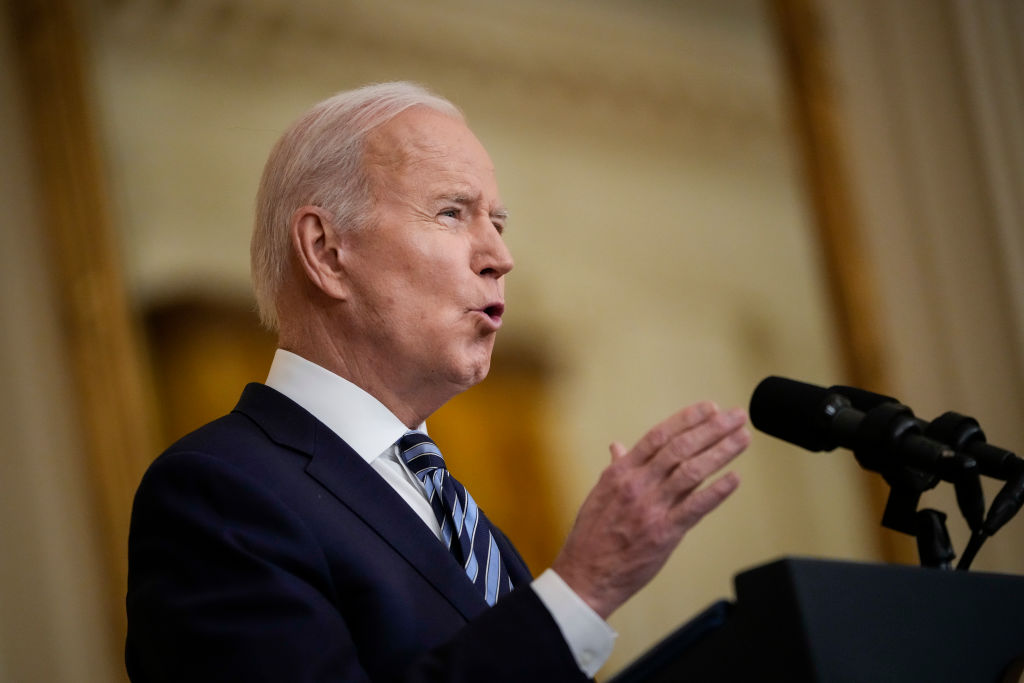
    WASHINGTON — President Joe Biden announced Wednesday that he will cancel up to $20,000 in federal student loan debt for Pell Grant borrowers and up to $10,000 for all other borrowers with an income of less than $125,000 for an individual and $250,000 for a household.

    Biden also announced his administration is extending a pause on student loan repayments until Dec. 31. The decision comes one week before the expiration of a pause of student loan repayments put in place at the beginning of the coronavirus pandemic.

    “Here’s the deal, the cost of education beyond high school has gone up exponentially,” Biden said at the White House.

    Biden stressed that the people who would benefit the most are low-income and middle class families and individuals.

    “No high income household, will benefit from this action, period,” Biden said.

    Biden said that many Americans with student loan debt have put off starting families because of the cost and have been unable to qualify for mortgages to buy a home because of the student loan debt they carry.

    “All this means is an entire generation is now saddled with unsustainable debt,” Biden said.

    Despite numerous reports in recent weeks that Biden would take action on student loans, the White House had remained silent, but on Wednesday the president tweeted out his decision, prior to his remarks.

    “In keeping with my campaign promise, my Administration is announcing a plan to give working and middle class families breathing room as they prepare to resume federal student loan payments in January 2023,” Biden wrote on Twitter.

    Following the announcement, the Department of Education said it will release an application in the weeks ahead that will allow millions of borrowers to claim this new relief.

    “[S]tudent loan debt has hindered their ability to achieve their dreams — including buying a home, starting a business, or providing for their family,” U.S. Secretary of Education Miguel Cardona said in a statement. “Getting an education should set us free; not strap us down!”

    The cancellation of student debt will only apply to current borrowers, not future ones, and income levels for the 2020 and 2021 tax years will be considered, a senior administration official said during a Wednesday call with reporters.

    The Department of Education estimates that about 8 million borrowers will automatically receive relief because the agency already has those borrowers’ income information on file. That means those borrowers do not have to submit applications.

    Borrowers who received Pell Grants, who will benefit from the most relief, are among the students who had the lowest household incomes while in college. They will also be subject to the $125,000 and $250,000 income caps.

    New rule on loans

    The Biden administration is also directing the Department of Education to propose a rule to help current and future borrowers with their loan repayments.

    The rule would eliminate monthly interest  payments on loans, “so that unlike other existing income-driven repayment plans, no borrower’s loan balance will grow as long as they make their monthly payments — even when that monthly payment is $0 because their income is low,” according to the department website.

    The proposed rule would also forgive loan balances “after 10 years of payments, instead of 20 years, for borrowers with loan balances of $12,000 or less.” It would also require “borrowers to pay no more than 5% of their discretionary income monthly on undergraduate loans.”

    “Middle class borrowers struggle with high monthly payments and ballooning balances that make it harder for them to build wealth,” a senior administration official said.

    While many Democrats and progressive advocates were pleased with the announcement, it falls short of the student debt relief campaign platform that Biden ran on.

    In a Medium post during the 2020 presidential election, Biden said under his administration he would “forgive all undergraduate tuition-related federal student debt from two- and four-year public colleges and universities for debt-holders earning up to $125,000, with appropriate phase-outs to avoid a cliff.”

    He also promised he would “immediately cancel a minimum of $10,000 of student debt per person,” but this recent student debt announcement comes two years into his administration and only after continual pressure from congressional Democrats and advocates.

    Some congressional Democrats have urged the White House to cancel up to $50,000 worth of student loans, arguing that because about 92%  of that debt is held by the Department of Education, the administration has the authority to cancel those loans through executive action.

    More than 43 million Americans have student loan debt, and the Federal Reserve estimates that the total U.S. student loan debt is more than $1.75 trillion.

    A Penn Wharton budget model released Tuesday found that a one-time loan forgiveness of $10,000 would mostly benefit borrowers in the four lowest quintiles of incomes.

    Earlier this month, more than 100 Senate and House Democrats urged the Biden administration to extend the pause on repayment of student loans beyond the Aug. 31 deadline. The lawmakers argued that due to inflation and the ongoing coronavirus pandemic, student loan borrowers should get an extension on pausing their loan payments. They did not give another deadline for repayments to begin in their letter to the president.

    Democrats praise Biden

    Democrats did welcome the President’s announcement.

    “By delivering historic targeted student debt relief to millions of borrowers, more working families will be able to meet their kitchen table needs as they continue to recover from the challenges of the pandemic,” House Speaker Nancy Pelosi said in a statement. “Importantly, this action will help those most in need, easing a financial burden disproportionately harming women and people of color.”

    She has previously said that the president does not have the authority to cancel student loans and that the process needs to be done through Congress. She did not mention her previous comments in the statement.

    Biden also had said earlier, while in the White House, that he would only cancel up to $10,000 in student loan debt, and only if Congress passes legislation to do so. Administration officials did not address the shift in policy.

    While the Democrat-controlled House likely could pass legislation canceling some portion of student loan debt, the evenly divided Senate would need all 50 Democrats on board along with an additional 10 Republicans to get a bill to the president’s desk.

    House Education and Labor Committee Chairman Bobby Scott, a Virginia Democrat, said that while the student loan cancellation will provide relief for borrowers, it doesn’t solve the “underlying problems that caused the student debt crisis in the first place,” such as high tuition costs.

    “Without reversing the chronic underinvestment in higher education that has driven up tuition costs, and without fixing our student loan system that has made student loans more expensive to take out and harder to pay off, students will continue to take on more debt and borrowers will continue to face rising debt levels,” Scott said.

    Republicans critical

    GOP lawmakers sharply criticized the cancellation move.

    “At a time of skyrocketing inflation, declining wages, and a national recession, Washington has again turned its back on hardworking Americans in Iowa and across this country,” Iowa Gov. Kim Reynolds, a Republican, said in a statement. “President Biden isn’t canceling student debt, he’s shifting the costs to the taxpayer and to those who worked to pay off their loans in full.”

    Senate Minority Leader Mitch McConnell, a Kentucky Republican, said in a statement the move was a “slap in the face to every family who sacrificed to save for college, every graduate who paid their debt, and every American who chose a certain career path or volunteered to serve in our Armed Forces in order to avoid taking on debt.”

    Overall in Kentucky, there are about 600,000 student loan borrowers who have an average balance for federal and private student loans of $30,794.  

    In March 2020, President Donald Trump issued an emergency pause on student loan repayments, which has now been extended several times by both administrations. The pandemic is still ongoing, and the U.S. has surpassed 1 million COVID-19 deaths.

  • New COVID Health Guidelines for Loveland Schools

    New COVID Health Guidelines for Loveland Schools

    COVID Health Guidelines Update Summary

     (effective 1/28/22, updated 5/9/22, 8/1/22, 8/14/22)

    Background:  On 8/12/22 new guidance for school came out from both the CDC and ODH (ODH memo 8/12/22 updated COVID guidance.  Here is the information that will help you here in LCSD:

    1. Positive cases
    • 5+5 (5 days of isolation followed by 5 days of masking) plan as outlined by CDC/ ODH (Ohio Dept of Health). This is calculated from the first day of symptoms or positive test which is considered day 0.  If a student is not ready to come back after 5 days (your child needs to be fever free for 24 hours without fever-reducing medications and symptoms improving), parents would call to tell attendance daily if their child is not ready to return.  These are considered non-absence days
    • Masking is not optional.  If you have been positive, you will need to mask for 5 days after being in isolation for 5 days.
    • There are no online learning links available.
    • Extracurriculars-  able to participate as long as able to mask.  Removing mask is not an option
    • District nurses (DN) make the follow up phone calls to parents once we are notified of a positive case.
    1. Close contacts/ exposures
    • Quarantine is no longer recommended for people who are exposed to COVID-19 except in certain high-risk congregate settings (not schools).  Instead of quarantining if you were exposed to COVID 19, it  is recommended that you wear a high quality mask for 10 days and get tested on day 5. For extracurriculars, they can mask as able to.
    • If your child has symptoms or develops symptoms, parents should keep them home and connect with their healthcare provider for further guidance and/ or covid testing. Testing on the same day as symptoms is now recommended.
    •  Parents should tell the attendance person the absence is covid related.
    1. If a student has a pending test and they have symptoms, we support keeping their child home until test results. If asymptomatic, they can be at school masked during that time
    2. We will no longer be monitoring vaccination status
    3. These days are excused absences, but we will continue to monitor

       3 . Testing

    • Any testing except antibody testing is acceptable.
    • Recommend testing day five per HCPH guidelines for exposures, but not required

    4.  Vaccines

    • We encourage everyone to talk to their health care provider for themselves and their children regarding getting vaccinated for COVID.  It is the best way to address COVID going forward.  Students over 5 are now eligible for the first booster vaccine

    LCSD will continue to focus on “The Bundle”-  handwashing, cleaning, distancing as needed/ able to, and masking when appropriate/ optional choice.  Our entire staff is committed to keeping our students safe and healthy.  We need your support by you doing the wellness checks daily with your child(ren) and keeping them home if they are sick.   Thanks for partnering with us- we can do anything together!!

  • Diabetes activists applaud drug reforms, say more needs to be done

    Diabetes activists applaud drug reforms, say more needs to be done

    Getty Images photo of diabetes patient injecting insulin.

    BY: MARTY SCHLADEN – Ohio Capital Journal

    Pricing reforms under a sweeping law signed on Tuesday by President Joe Biden are great for diabetics, but much more needs to be done, an activist said Wednesday.

    As part of the Inflation Reduction Act, monthly out-of-pocket insulin costs for Medicare recipients were capped by the law at $35 a month. Together with capping all drug costs for Medicare patients at $2,000 a year, the new law is being lauded as a boon for seniors struggling to balance their drug costs with all their other expenses.

    Among medicines, insulin is one that is particularly difficult for those who need it to live without. For diabetics, it helps regulate blood-glucose levels that, if left untreated, can cause blindness, nerve and kidney damage and even death.

    But even though it’s been around for a century, insulin prices aren’t as cheap as one might think for a class of drugs that has been researched, manufactured and marketed for so long. In fact, until recently, list prices have been increasing rapidly.

    “The list price of insulin per milliliter in the United States increased, on average, 2.9% annually from 1991-2001, 9.5% per year from 2002 and 2012, 20.7% annually between 2012 and 2016, and 1.5% per year from 2016-2018,” the American Action Forum reported in 2020.

    And that can lead to some excruciating choices if you can’t afford it. The Commonwealth Fund in 2020 reported that among non-Medicare patients, huge numbers had difficulty affording their insulin between 2014 and 2017; from nearly half of the uninsured living below the poverty line to 3% of people with good insurance and who were making five times the poverty level, or nearly $100,000 for a family of four.

     Source: The Commonwealth Fund

    “Bottom line for diabetics, we can’t afford to wait,” said John Kennedy, an advocate with Ohio Insulin 4All, said Wednesday in a press conference hosted by the group Protect Our Care. 

    Kennedy added, “We’re impatient, but our impatience comes from a really good place. It’s because the more time that passes means more diabetics are going to have to make really difficult choices that nobody should have to make; whether to put food on the table or to take the whole dose of their insulin. As we know, about a quarter of all diabetics have said that they ration their insulin supply because they just can’t afford it.”

    For Medicare patients, the Kaiser Family Foundation reports that average monthly out-of-pocket insulin costs increased 39% between 2007 and 2020. Now those monthly costs range from $16 to $116, or $192 to $1,392 a year.

    With average out-of-pocket insulin expenses for Medicare patients at $54 a month in 2020, the $35-a-month cap in the Inflation Reduction Act represents a more than a 50% savings, KFF reported last month.

    While capping those costs — and directly negotiating Medicare insulin prices with drugmakers — is surely welcome news to seniors with fixed incomes, it won’t do much for many other diabetic Americans.

    One reason is that the new law keeps intact the opaque system under which giant drug middlemen extract big discounts from drugmakers in exchange for covering them. The three largest middlemen — or pharmacy benefit managers — in the U.S. control more than 70% of the marketplace and each is owned by a corporation that also owns a top-10 insurance company.

    And because the system isn’t transparent, it’s unknown how much of the rebates the middlemen and their affiliated insurers are pocketing.

    In a paper published last year in the Journal of the American Medical Association’s Health Forum, three researchers at the University of Southern California assed what happened with the prices of 32 insulin products between 2014 and 2018. And despite the fact that drugmakers such as Eli Lilly, Sanofi and Novo Nordisk tend to get most of the blame for rising costs, it shows that others are also culpable:

    • List prices went up by 40% while net, or post-rebate, prices received by drugmakers dropped by 31%.
    • The share of insulin expenditures retained by pharmacy benefit managers such as CVS Caremark, OptumRx and Express Scripts increased by 154.6%
    • The share retained by pharmacies, the largest of which is CVS, increased by 228.8%
    • The share retained by wholesalers such as Cardinal Health, AmerisourceBergen and McKesson increased by 74.7%.

    While he lauded the insulin measures in the Inflation Reduction Act, Kennedy, the diabetes advocate, they were far from sufficient.

    “The way that pricing is done is so hidden; it’s not transparent at all and that’s a big, big, big problem,” he said. “And yes pharmacy benefit managers have played a big role in this secret process — hidden process — that is used to determine what the costs are going to be. But they’re just one player in this game. PBMs certainly share a chunk of the blame, but there’s a lot of blame to go around.”

    Follow Marty Schladen on Twitter.

  • [Music Video] 2022 Loveland Marching Band presents ‘Say something, I’m giving up on you.’

    [Music Video] 2022 Loveland Marching Band presents ‘Say something, I’m giving up on you.’

    by David Miller

    Loveland Magazine Publisher David Miller

    Loveland, Ohio – After the successful completion, in the hot August sun, of their grueling Summer Camp, the Loveland High School Marching Band and Colorguard performed in a “Preview Night” at Tiger Stadium last Friday.

    Letting the music speak for itself here, this is just a sampling of what you can expect at the halftime of Tiger football games and at the Tiger Band’s performances during their competition season.

    The Tiger Band and Colorguard will perform tonight in Tiger Stadium. Game time is 7 PM.

    All Photos © 2022 by David Miller/Loveland Magazine. Music soundtrack from the Preview performance recorded by Jennifer Miller © 2022.

    “Say Something” was written by Ian Axel, Chad King, and Mike Campbell.” – wikipedia.org

    Loveland Magazine YouTube videos are brought to you by the generous support of The Move2 Team