Loveland, Ohio – “So, for all of you who are grocery shopping this weekend, please keep us in mind and up the items you could donate to the Pass It On Food Drive,” said Libby Westerman on Monday evening.
Loveland Magazine was invited to the LIFE Food Pantry on Monday so we could help spread the word about this year’s annual food collection that for the past 20-years has always been scheduled ahead of the holiday season.
Every year, along with the assistance of Loveland City Schools, a food drive takes place to collect items to disburse as Thanksgiving boxes – to clients of the LIFE Food Pantry and other residents in the community as well as holiday bags for later in December.
Westerman is in her third year of organizing the food drive throughout the Loveland schools and wanted to give parents and others in the community a heads-up about participating.
In this LOVELAND MAGAZINE TV video, LIFE Executive Director Linda Bergholz explains how extremely important the event is for the pantry. She said, “As you all know, Thanksgiving is coming up and for us at the food pantry it is an extraordinarily important time of year. Food insecurity has always been important. Food insecurity during a Pandemic is enormous.”
Bergholz introduces Westerman and Nancy Grant who founded Pass It On in 2001 as a way children could give to the community and heal after the 9/11 terrorist attacks.
Grant said twenty years ago, “Well, we can’t change the world, but we can change our little corner of it.” She had this idea to line up the kids down the street and pass the food donations one bag and box, hand-to-hand at a time to one another until it reached the church. A pay it forward so children could feel good about themselves. She thinks it worked after 9/11 and will now – during the Pandemic.
Westerman tells you how you can participate and Grant tells you about the origin, and because of the Pandemic, why it is still so important for the children and our community.
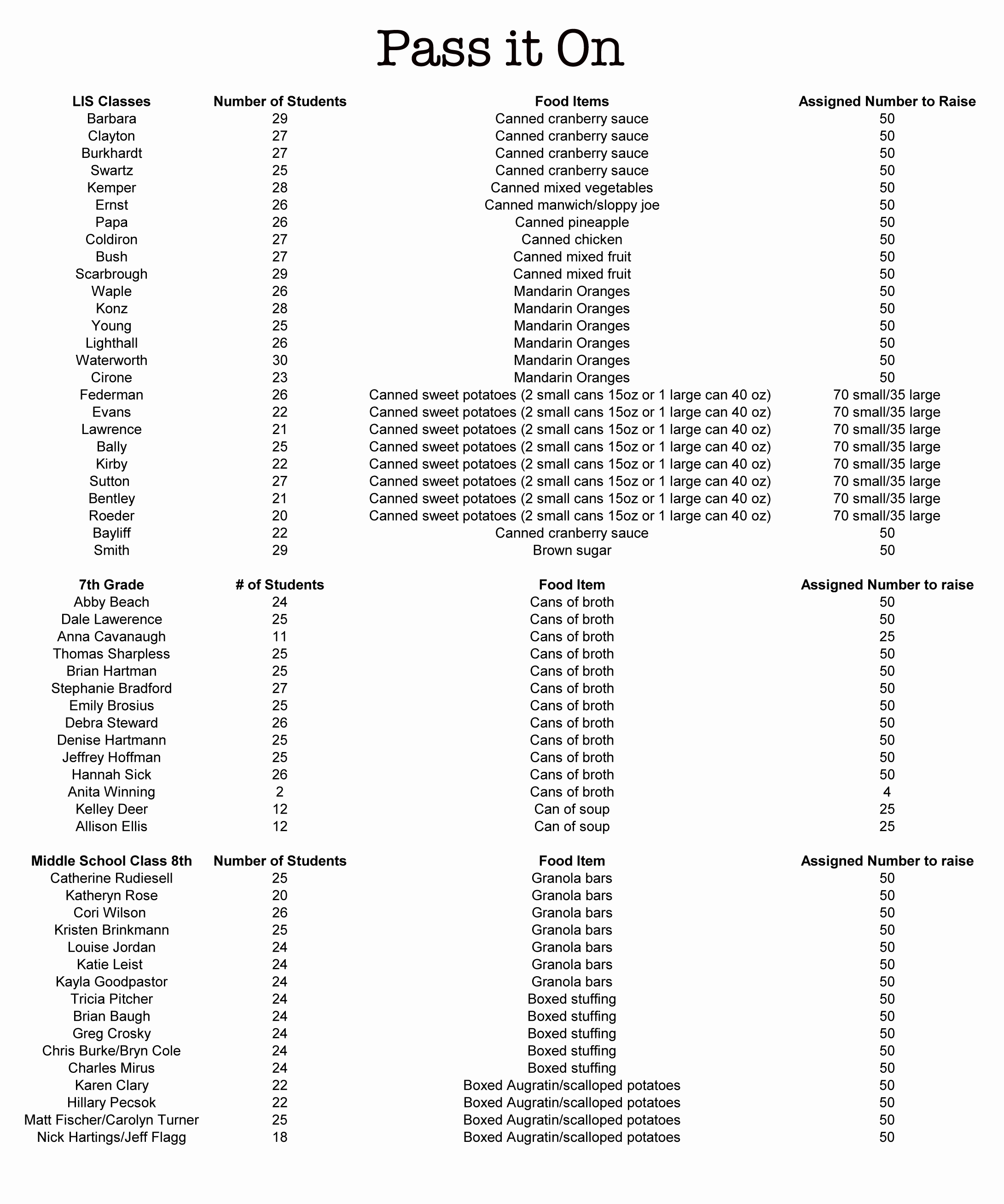
You don’t want to be that parent that opens up a backpack on the morning of the drive and discovers at the bottom an unread note and realizes there are no canned cranberry sauce or Mandarin oranges in the cupboard that your child is supposed to take to school that morning. Each classroom/grade K-8 will have specific items to collect, bring to school, and pass along to the food pantry.
Students at the Loveland Intermediate and Middle schools will walk the food the several blocks to Prince of Peace Lutheran Church down the road from their school where it will be sorted and eventually given away.
This year’s “Pass It On” will be on Friday, November 19th.
This is a heads-up to grandparents and guardians as well because your child can probably only participate if you do some early shopping for them.
Many students and volunteers deliver the donations from the food drive to Prince of Peace Lutheran Church where volunteers sort, date check, organize and assemble a Thanksgiving meal box to go out to area families. The huge effort is to ensure that all our Loveland families and singles will have the items they would need so they can sit down together and enjoy a traditional meal for the holiday.
Each classroom/grade K-8 will have specific items to collect. When your child brings home information about the Pass It On Food Drive, please be generous when you send your donations with them to take to school.
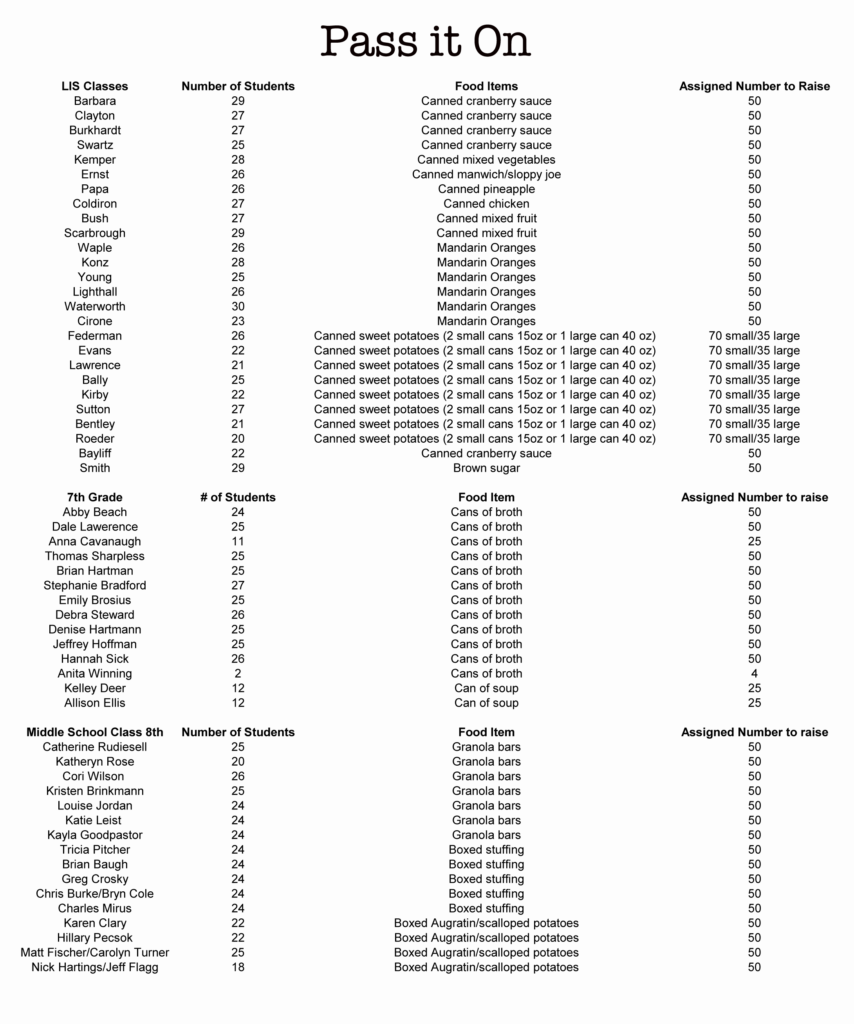
Here is the shopping list. You can also download and print this shopping list to take with you while grocery shopping.
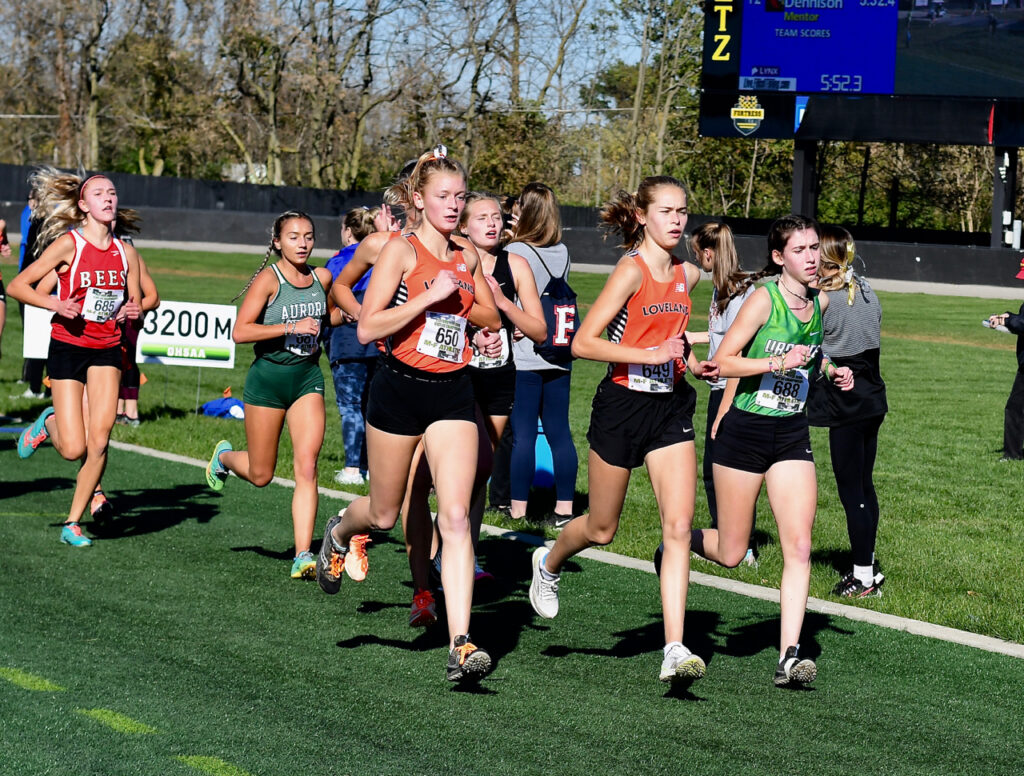
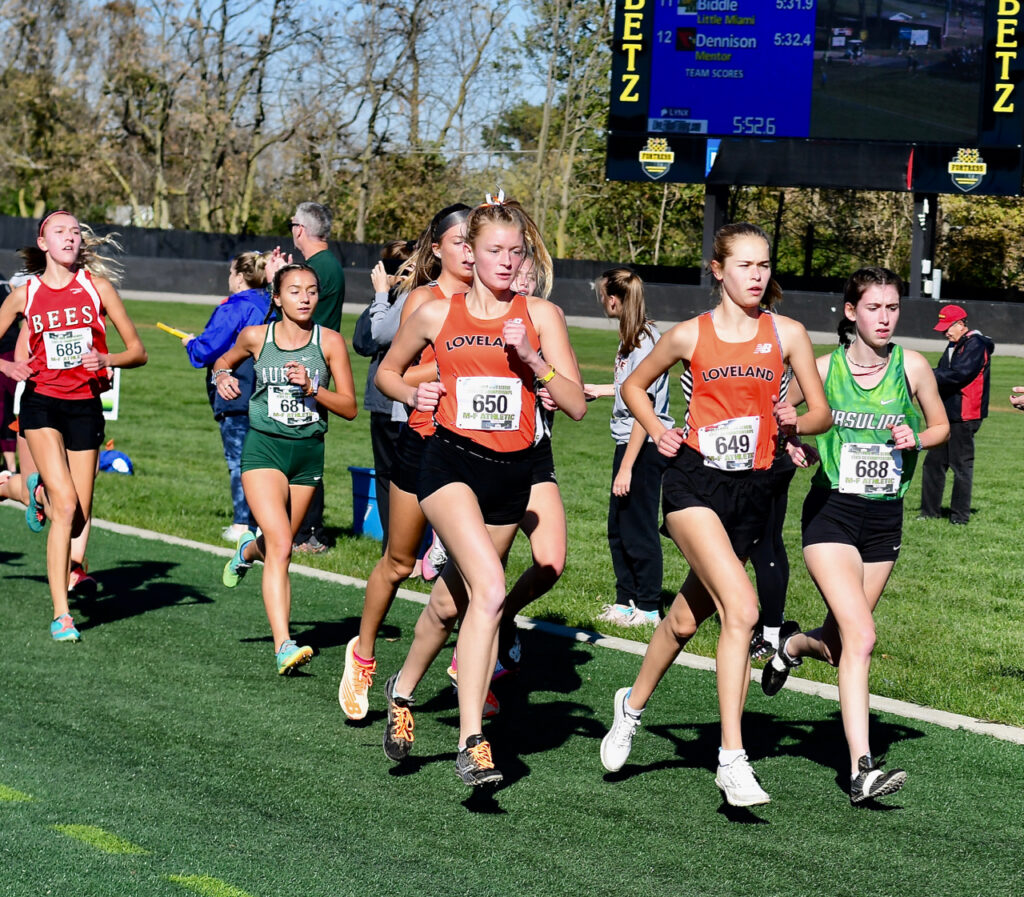
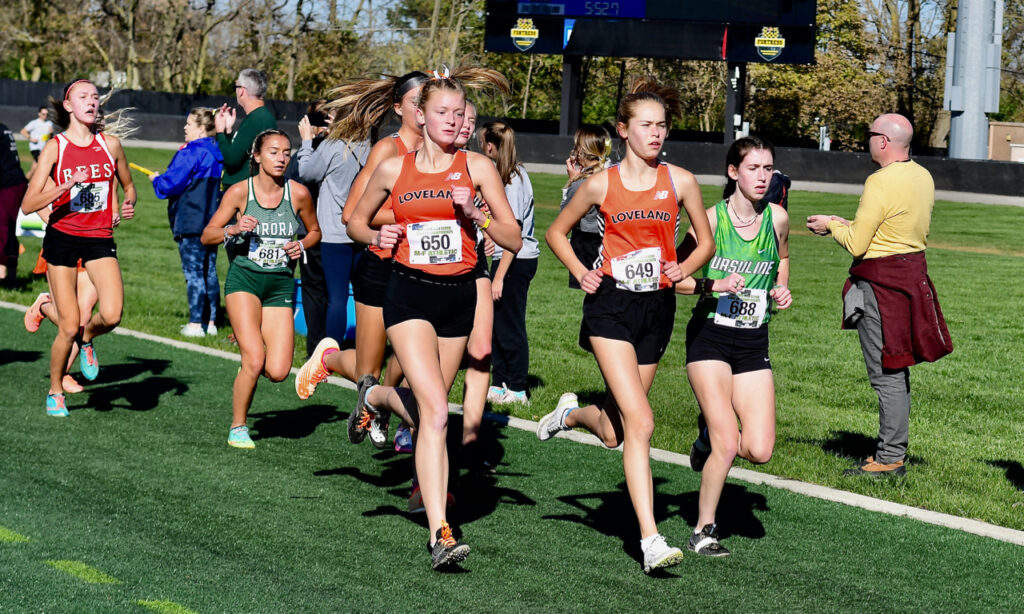
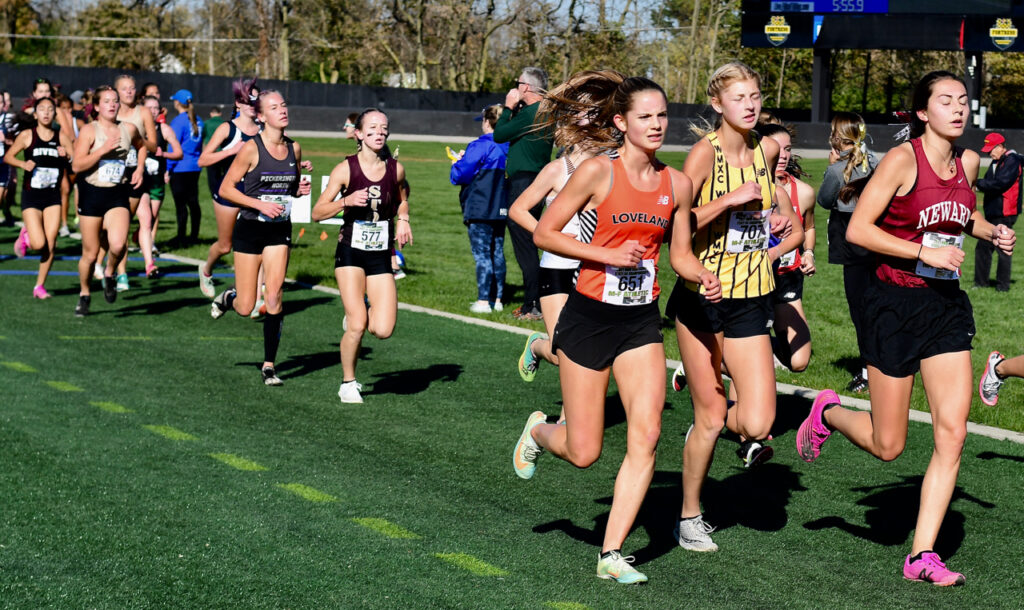
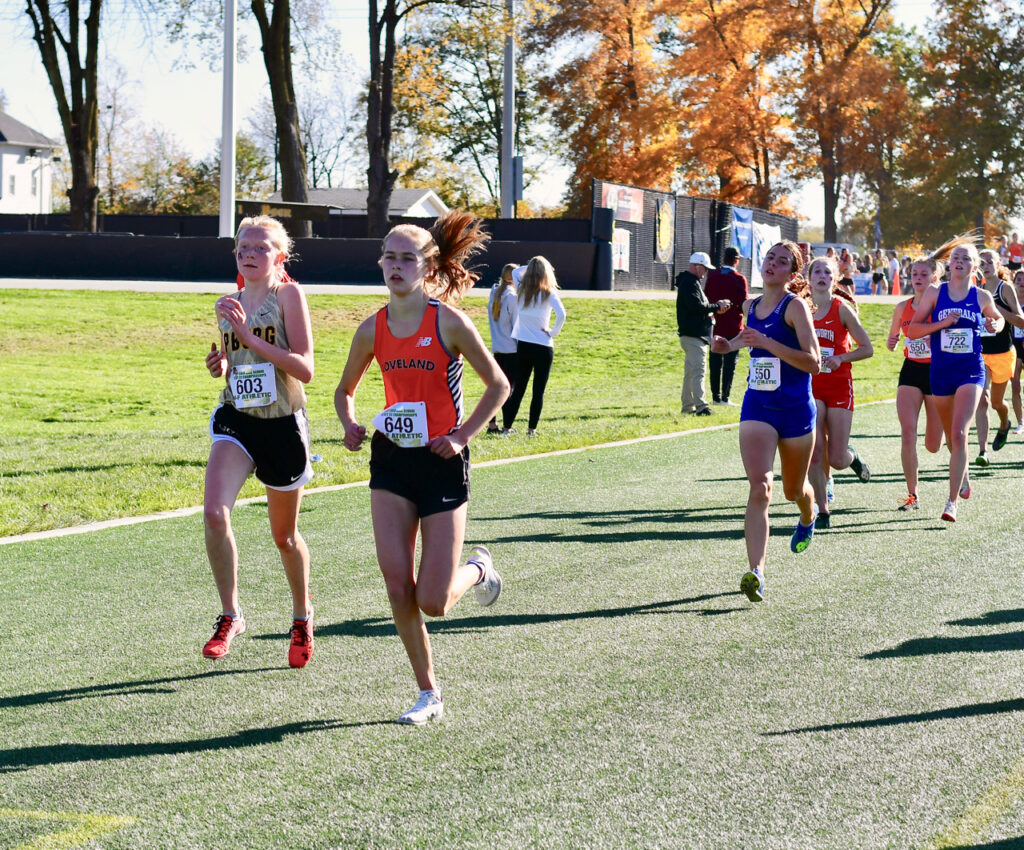
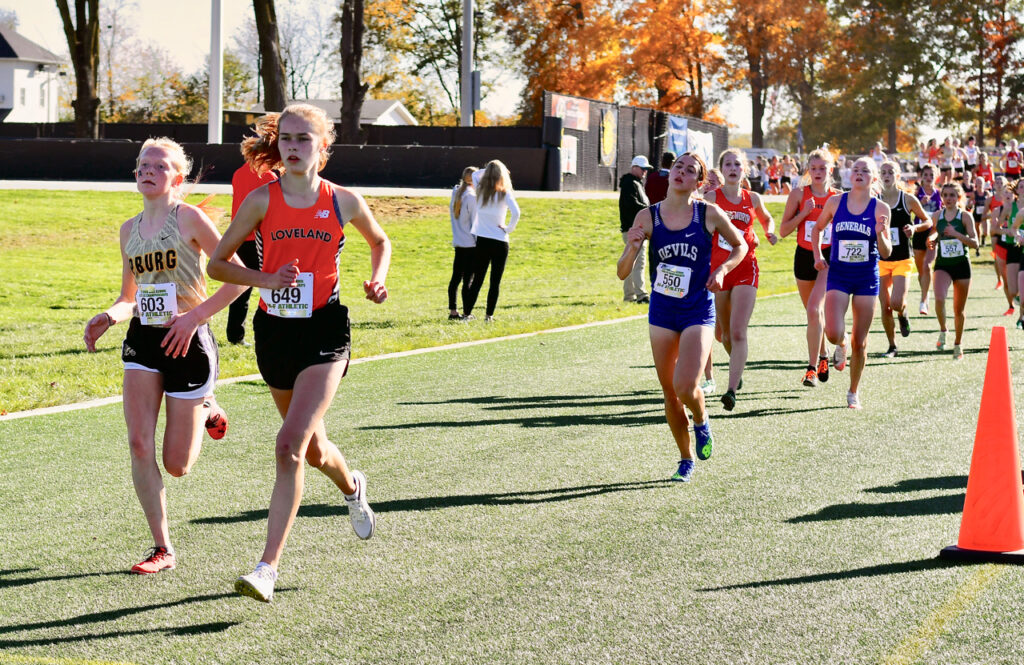
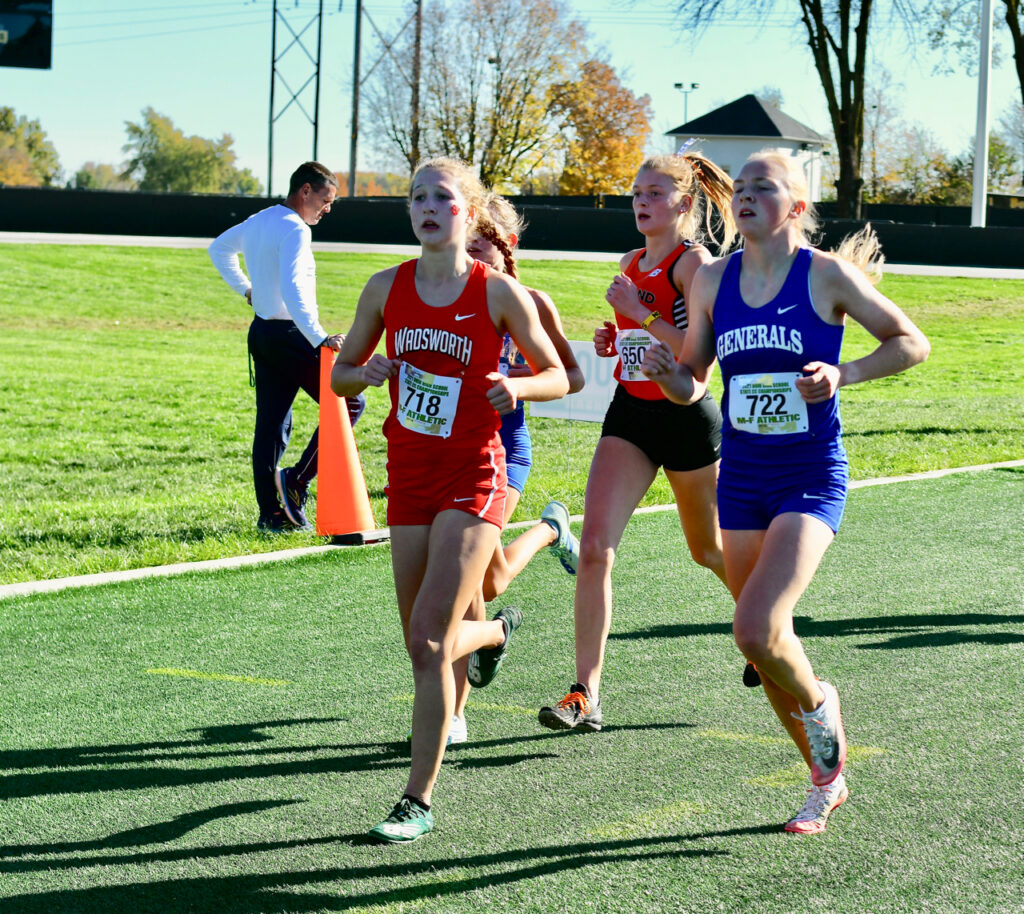
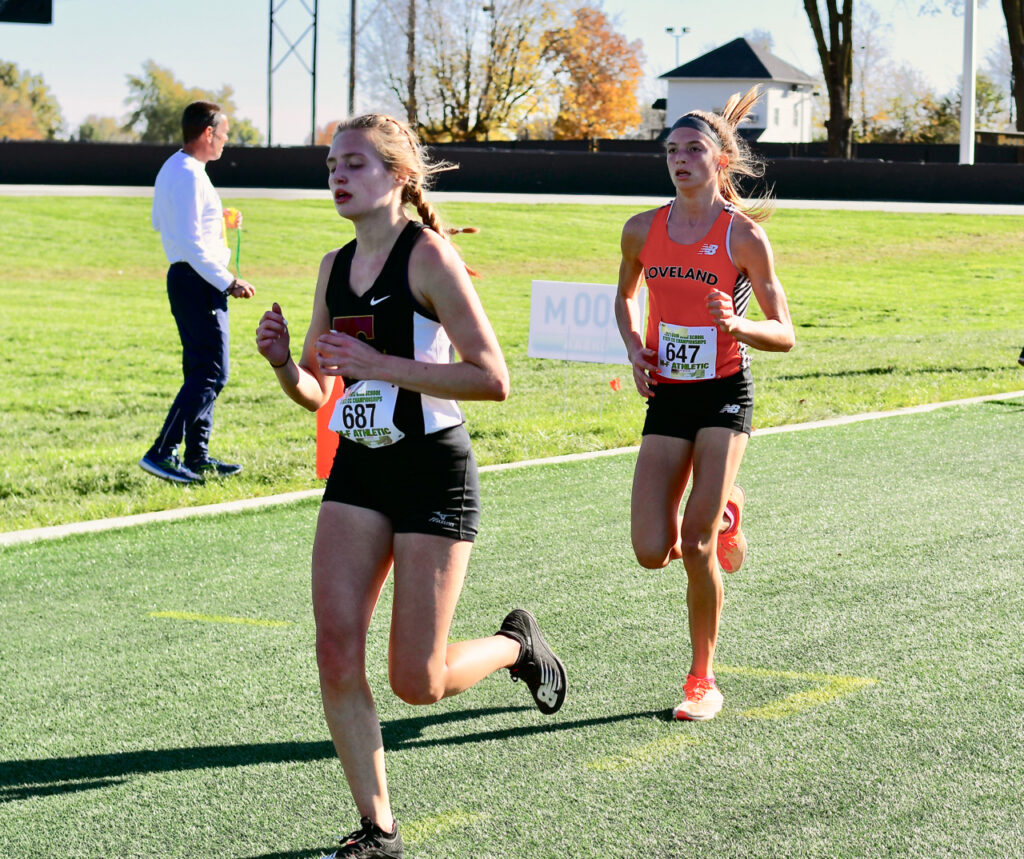
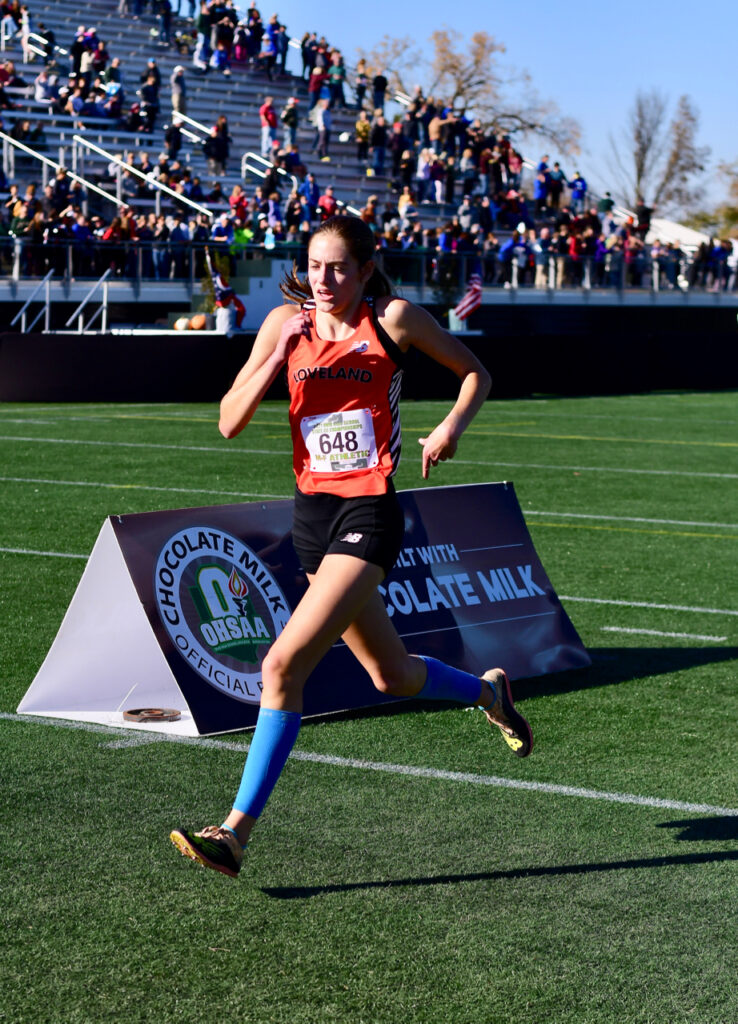
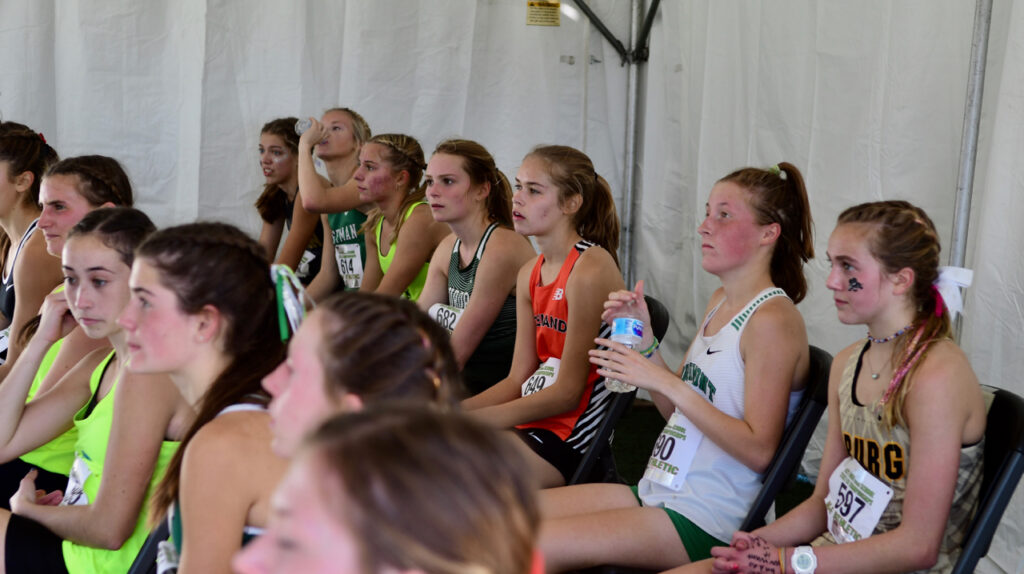
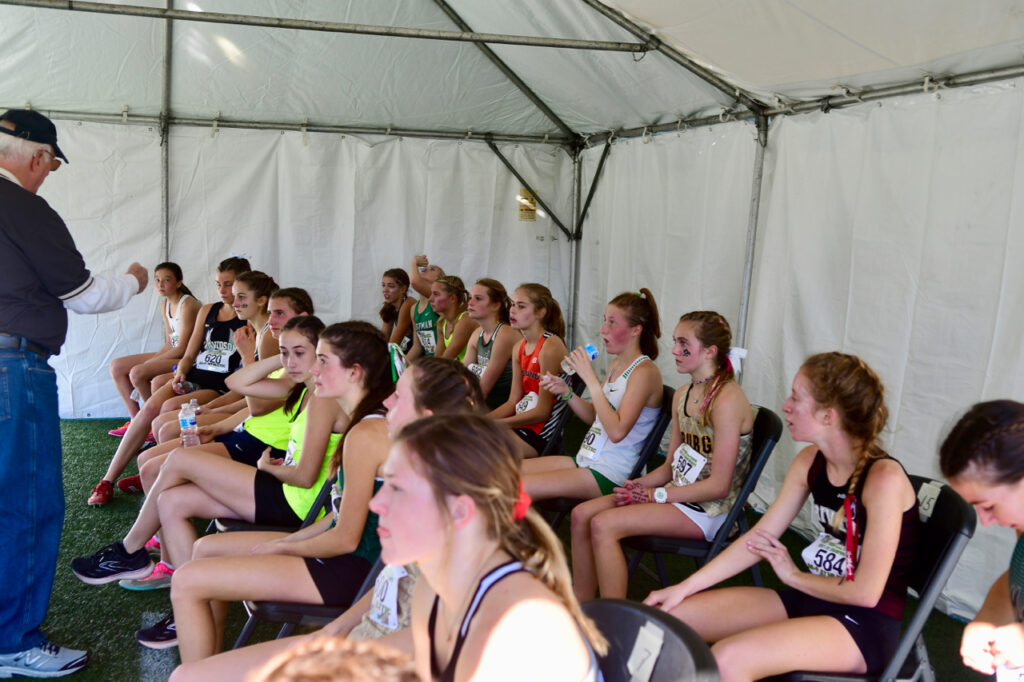
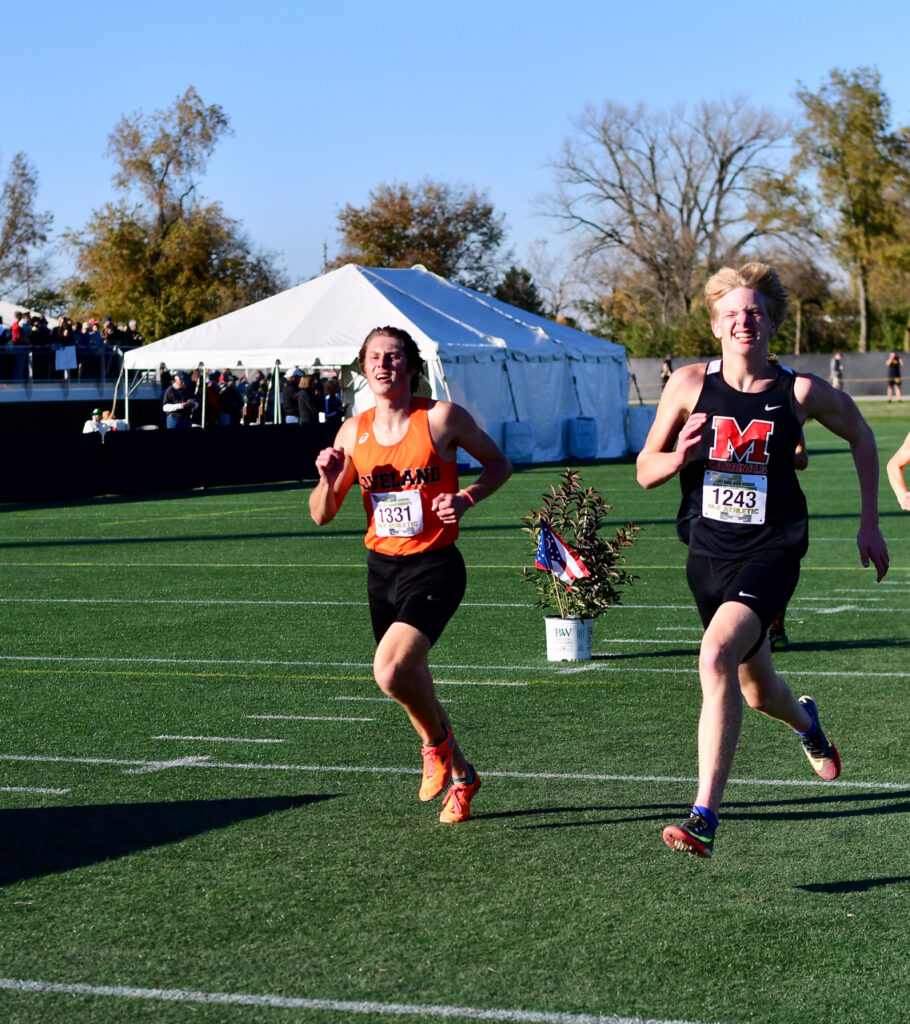
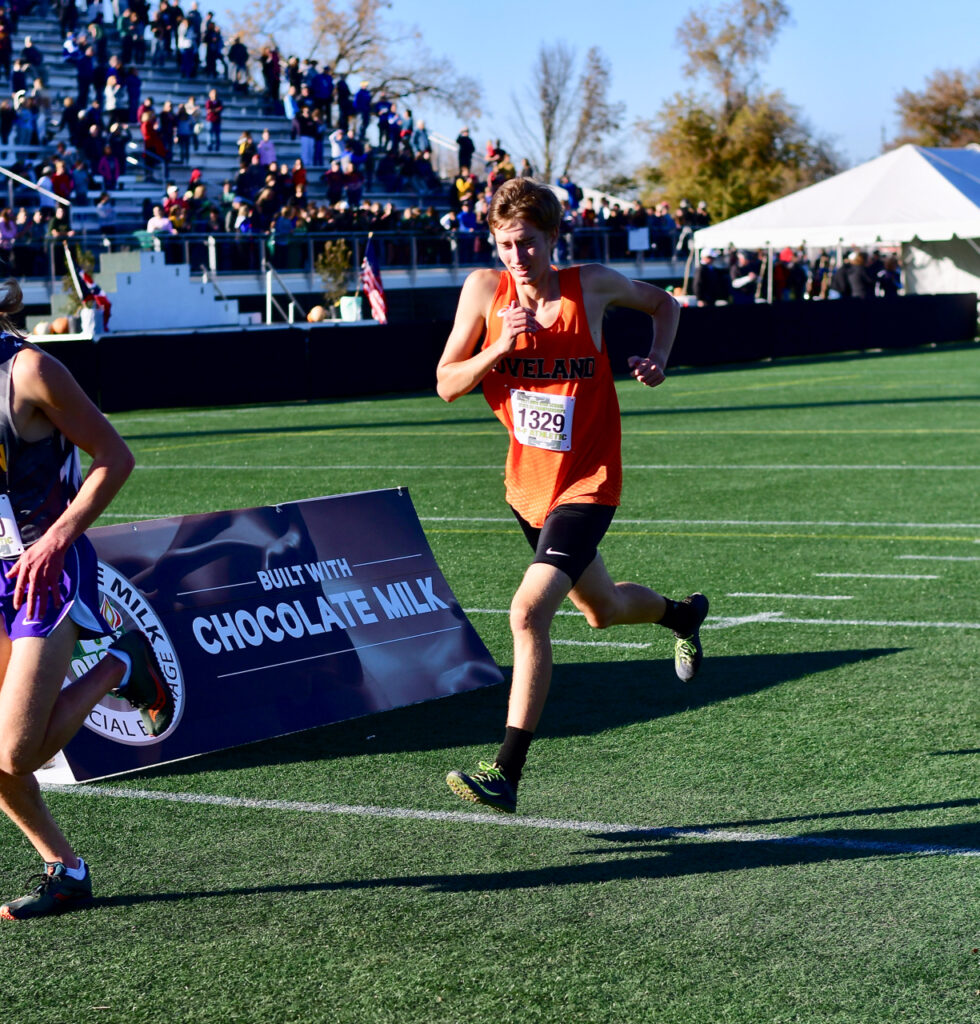
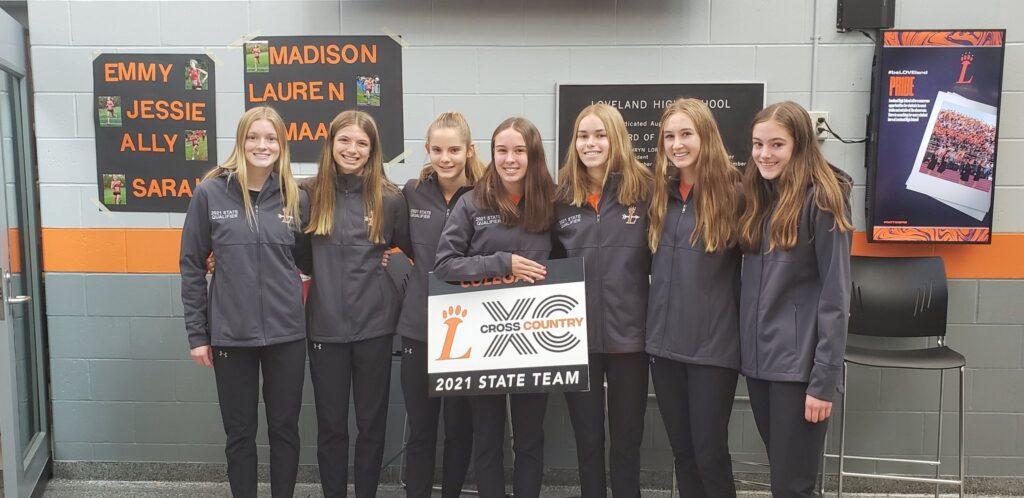
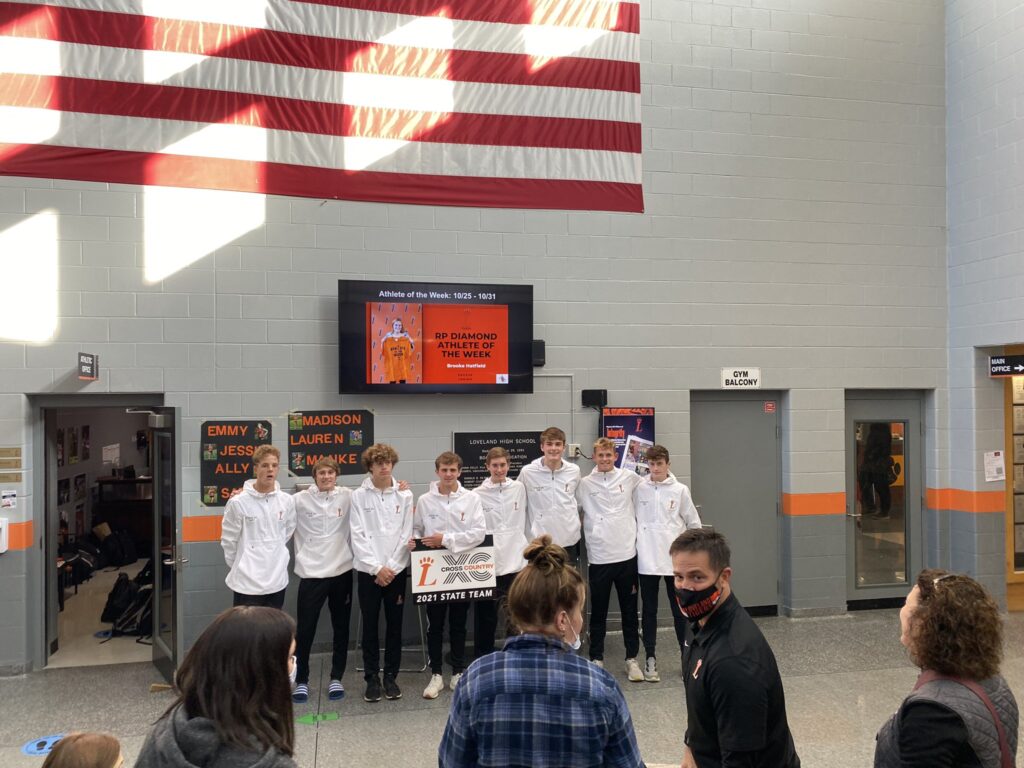
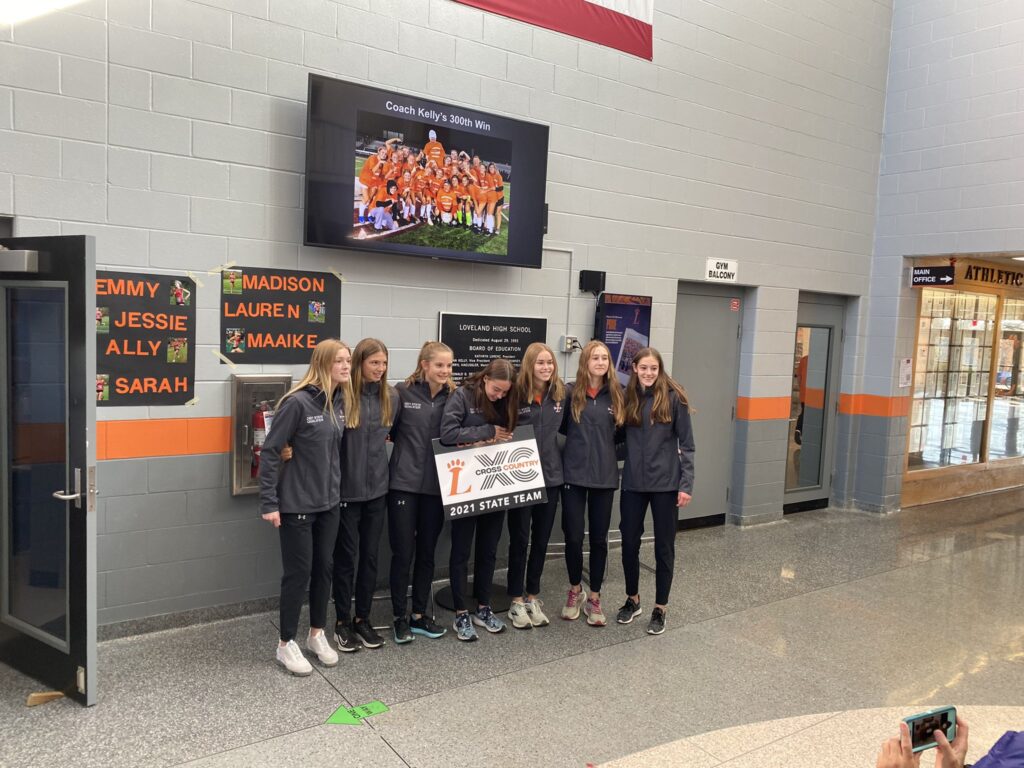
Loveland, Ohio – What a fantastic day it was to be a Loveland Tiger! On Saturday both the Loveland High School (LHS) Women’s and Men’s Cross Country Teams for the first time ever in LHS history competed together for the OHSAA Division 1 title at Fortress Obetz and Memorial Park in Columbus. Both Teams went into the race having record-breaking years so many die-hard Tiger fans knew that they would come back with some impressive accolades!
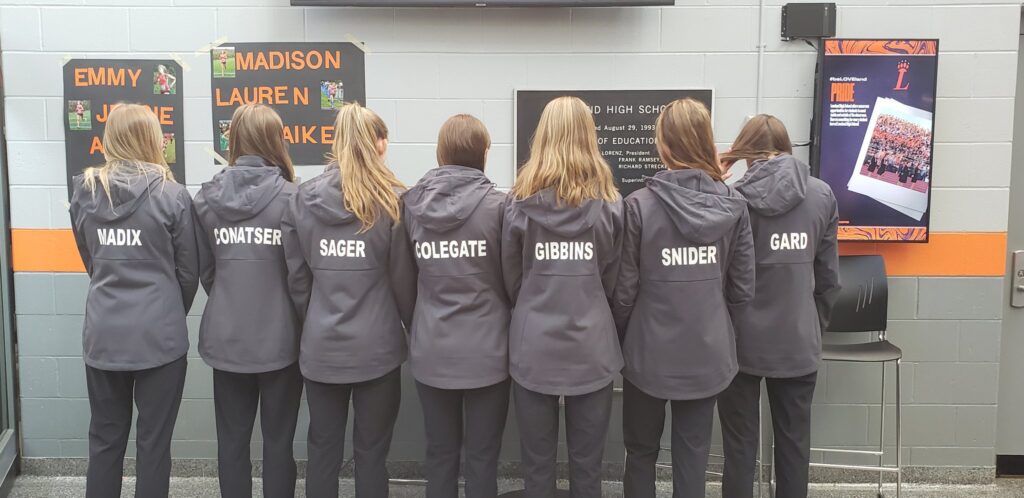
The LHS Women’s Cross Country Team broke several school records this year but the most important one came in the form of a 2nd place OHSAA Division 1 Women’s Cross Country trophy on Saturday! The Tigers finished right behind Perrysburg (101) with a score of 109 and an impressive runners average of 18:59. Senior Jesse Gibbins was the top finisher for the Tigers crossing the line in 7th place with a time of 18:25.2, Senior Sarah Madix was next placing 19th at 18:55.2, Senior Emmy Sager finished in 26th place with a time of 19:09, Junior Madison Conatser finished in 28th with a time of 19:10.5, Junior Ally Colegate placed 29th with a time of 19:10.8, Sophomore Lauren Gard finished next in 82nd place with a time of 20:03 and rounding out the team score was Senior Maaike Snider in 102nd place with a time of 20:17.9.
The winning time for the Women’s Division 1 race (unscored) was 17:32.1 ran by Senior Alyssa Shope from Gahanna Lincoln. For the full OHSAA Division 1 Women’s Cross Country meet results click here.
Shortly after the LHS Women’s Cross Country milestone win, the Eastern Cincinnati Conference (ECC) released the team conference awards naming LHS’s Steve Nester ECC Coach of the Year and Senior Emmy Sager ECC Runner of the Year! Seniors Jesse Gibbins, Sarah Madix, and Emmy Sager all received 1st Team All-ECC honors while Juniors Ally Colegate and Madison Conatser grabbed 2nd Team All-ECC honors. Senior Maaike Snider also received ECC honors with Honorable Mention.
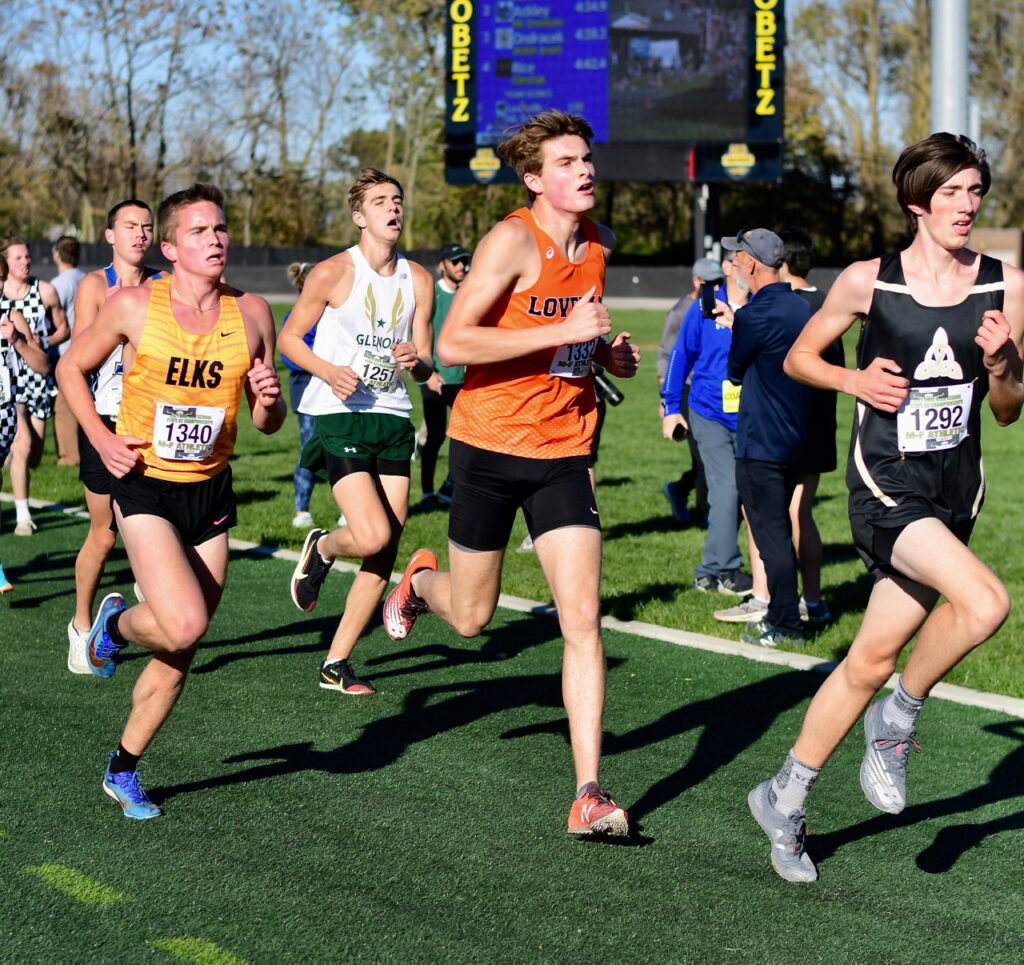
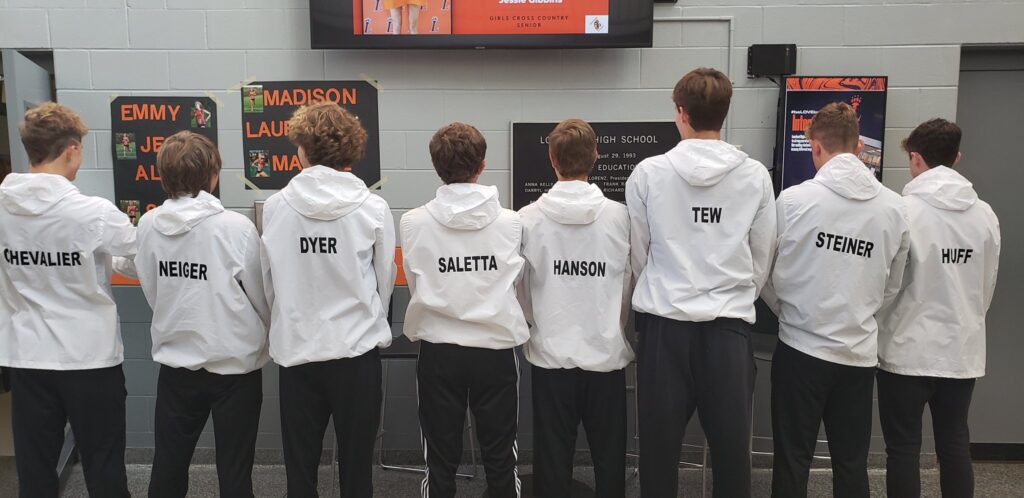
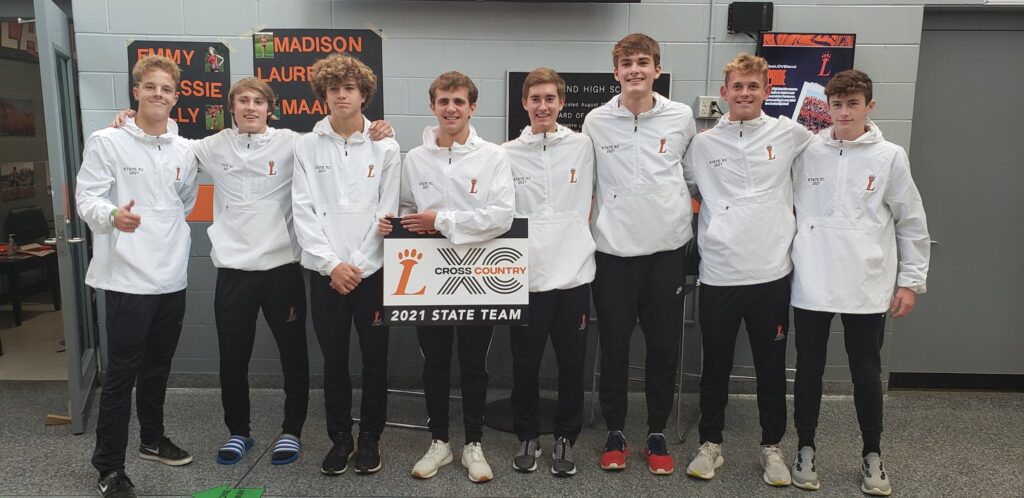
The LHS Men’s Cross Country Team had a season full of monumental moments including their trip to the OHSAA Division 1 Men’s Cross Country meet on Saturday! The Tigers placed 12th among a very talented field of athletes with a score of 313 and a runners average of 16:33. Senior Ryan Chevalier was the top finisher for the Tigers placing 6th with a time of 15:37.3, Junior Brady Steiner finished next in 48th place with a time of 16:23.2, Freshman Nick Huff finished in 84th place with a time of 16:51.7, Junior Cayden Dyer placed 85th with a time of 16:52, Senior Sam Neiger finished 90th with a time of 16:57.5, Junior Grant Hanson placed 98th with a time of 17:04.3, and Senior JP Tew rounded out the Tigers placing 134th with a time of 17:58.2.
Mason took the OHSAA Division 1 Men’s Cross Country title with a score of 106 and the winning runner (unscored) was Senior William Zegarski from Little Miami with a time of 14:39.9. Zegarski broke the previous Ohio State All-Time Meet record. For the full OHSAA Division 1 Men’s Cross Country meet results click here.
The ECC All-Conference awards were also announced for the Men’s Cross Country Teams post the State meet awarding Steve Nester with the ECC Coach of the Year! Senior Ryan Chevalier, and Juniors Cayden Dyer and Brady Steiner were awarded 1st Team All-ECC honors while Junior Grant Hanson and Freshman Nick Huff received 2nd Team All-ECC honors. Senior Sam Neiger also received ECC honors in the form of Honorable Mention.
Check out the photo album from Saturday’s meet brought to you by Loveland Magazine Editor, David Miller!
Congratulations to both the LHS Women’s and Men’s Cross Country Teams on an unbelievable season! It has been a joy watching school history happen right in front of our eyes! We can’t wait to see where the future takes all these wonderful Tiger student-athletes!
For more sports updates stay tuned to the Loveland Salad With ME, Cassie Mattia!
Loveland, Ohio – LIFE is a faith and community-supported organization that provides food, financial assistance and programs to those experiencing hardship in the greater Loveland area.
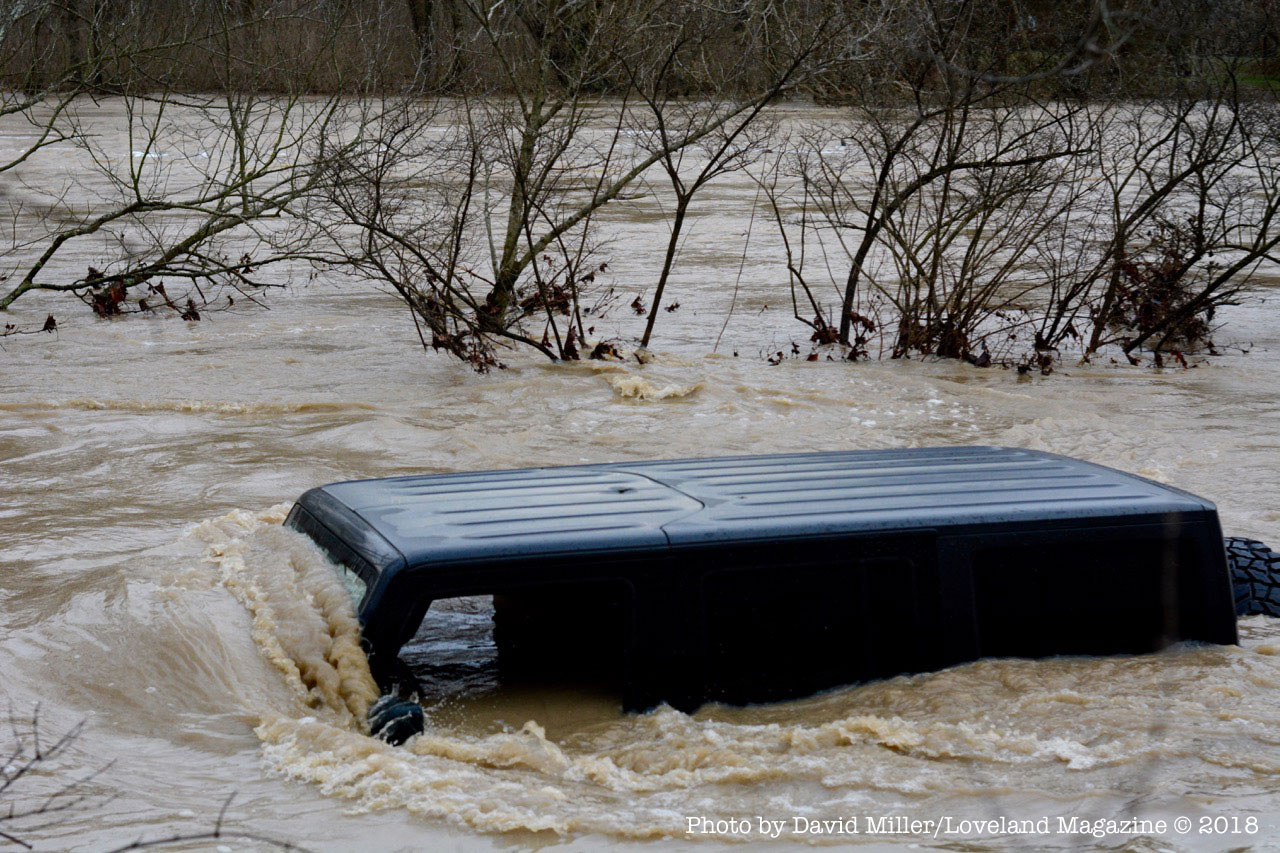
The above photo is of flooding in Loveland on February 25, 2018
“The notion of the common good also extends to future generations.
– Richard Rohr
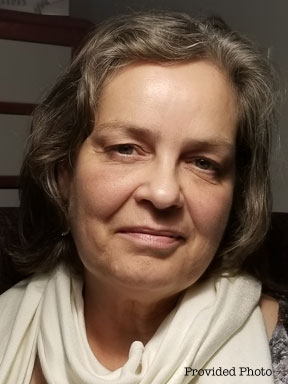
Lauren Enda lives in Loveland at Hidden Creek
by Lauren Enda
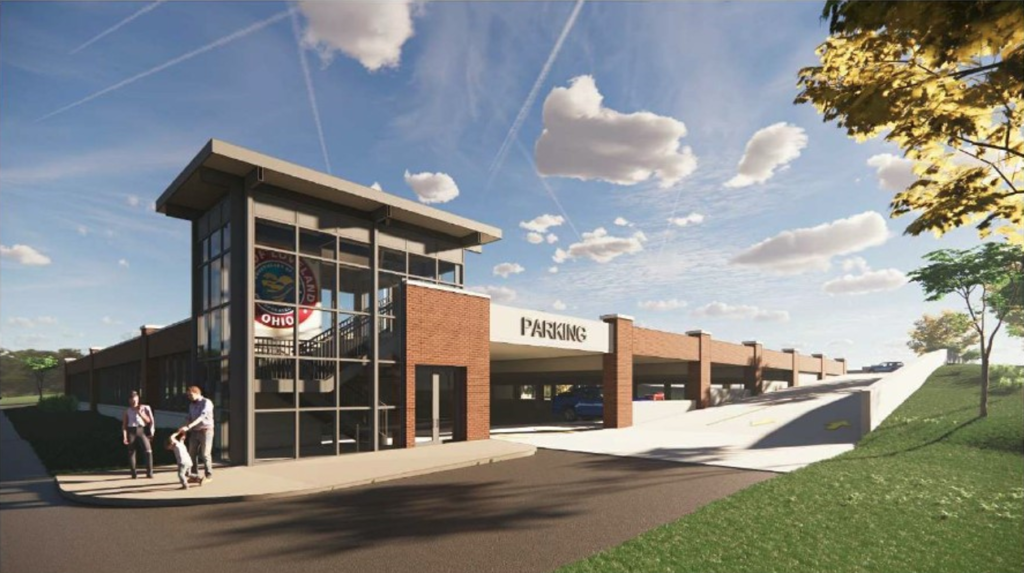
Weather is changing in Ohio. According to Cincinnati’s Office of Environmental Sustainability, Ohio is getting hotter, wetter, and suffering with more extreme weather and periodic droughts. More storms and more rain increase runoff and flooding. Hamilton County has had nine 100-year storms in the last 10 years. This is a startling statistic and should be troubling for everyone, especially those who live near water. Therefore, the city of Loveland should be looking very closely at what, and how much, is developed. Replacing permeable surfaces (grass, gravel, earth) with impervious surfaces (concrete and asphalt) are a major cause of flooding in urban areas. This article will present a high-level overview of the environmental risks associated with the proposed parking garage.
The proposed parking garage for Historic Downtown as envisioned by City Hall.
What happens when we heedlessly and perhaps needlessly, dig out trees, remove soil, disturb the water tables, and pour tons of concrete without appropriate studies? Replacing permeable surfaces with impervious surfaces could lead to unwanted and dangerous side effects.
Most dangerous to the residents and businesses of Loveland is water runoff and flooding. According to the United States Geological Survey, “…rainfall in forested watersheds is absorbed into soils, stored as groundwater, and slowly discharged to streams… Flooding is less significant in these more natural conditions because some of the runoff during a storm is absorbed into the ground, thus lessening the amount of runoff into a stream… As watersheds are urbanized, much of the vegetation is replaced by impervious surfaces, thus reducing the area where infiltration to groundwater can occur. More simply, in a developed watershed, much more water arrives into a stream much more quickly, resulting in an increased likelihood of more frequent and more severe flooding.”1
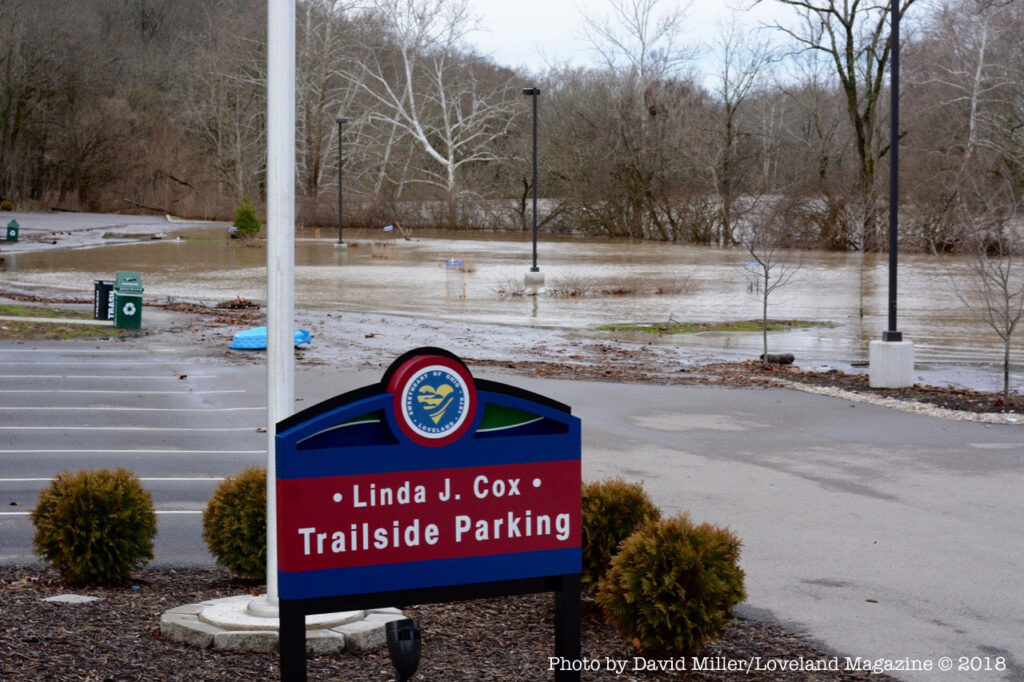
The Linda Cox Trailside Parking lot in February 2018
The Little Miami River and O’Bannon Creek could be at risk. Studying runoff, flooding and erosion in and near the Linda J. Cox parking lot may be a good place to start before Loveland adds more concrete or asphalt downtown. The increasing number and severity of storm events is not going away, but will worsen, raising the flood risk even higher. Can we afford to have more flood events? Is Loveland prepared for, or even starting to prepare for, this eventuality?
But flooding is not the only problem with water running from a massive parking garage into the Little Miami. The water itself brings contaminants from paved parking surfaces like oil, leaking brake fluid, antifreeze, and trash, which are then put directly into the river. The summary of a 2014 report in the journal “Environmental Challenges” quotes that, “Impervious car park surfaces represent a major source of urban water pollution.”2
The risk of increased flooding and contaminated runoff are bad enough, but the proposed garage will bring pollution to Loveland in other ways.
Air pollution: More cars downtown will mean more exhaust fumes rising into the air.
Noise pollution: More traffic and more cars will bring more noise to our tranquil downtown.
Light pollution: Parking garages are magnets for crime and other undesirable activities and therefore must be extremely well lit – 24 hours a day, 7 days a week. This light pollution will destroy the picturesque nighttime setting we currently enjoy.
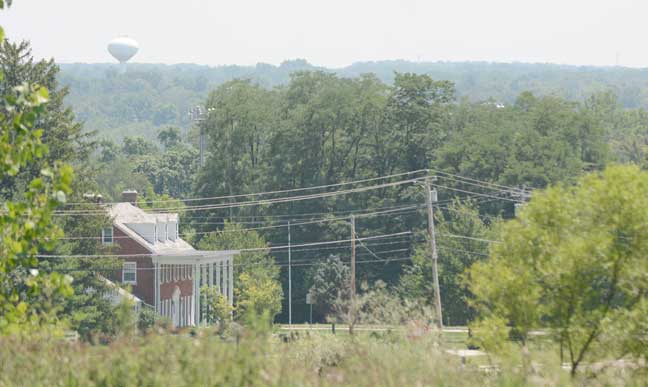
The smoggy Loveland horizon from Loveland High School during an Air Pollution Alert in July of 2016
An additional, but by no means trivial, impact on our environment, is the concrete itself. Concrete has a massive carbon footprint, which is concerning if we care about the future of our children and grandchildren. According to a 2018 report by the BBC, “Concrete is the most widely used man-made material in existence. If the cement industry were a country, it would be the third largest (carbon dioxide) emitter in the world – behind China and the US.”3 Let’s not make uninformed or hasty decisions about building with a material that is so hurtful to the environment.
Finally, expanses of concrete or asphalt create what is called a “micro-climate: “The climate of a small, specific place within an area as contrasted with the climate of the entire area.”4 According to multiple studies, urban areas with paved surfaces are hotter than the surrounding areas by as much as 7 degrees. We have all witnessed this phenomenon when standing in a parking lot in the summer. Does Loveland want to introduce a “heat island” to our downtown?
“Success can be measured in different ways.”
Loveland resident Lauren Enda
I do not claim to be an environmental scientist, a climate expert, or a soil or water conservation guru. Perhaps as a community we can learn more about the current, and future, environmental impacts of today’s decisions. What will these decisions look like in 2030 or 2040 when the problems facing Loveland will perhaps be much larger than simply having to park a block further away? Will our children be glad for more concrete, or will they wish for a safer, cleaner, more sustainable Loveland? Success can be measured in different ways.
An unbiased environmental study by experts who will not benefit with the building of the proposed garage would help Loveland make decisions for today, and for our future, in an uncertain and changing world.
Obetz, Ohio – Loveland High School Senior Jessie Gibbins led her Women’s Cross Country Team to the Ohio High School Athletic Association Division I Championship’s runner-up trophy Saturday. She was the 12th fastest woman in Ohio today. Gibbons is in the photo hoisting the trophy skyward – that her teammates will all be showing off at the high school Monday. Gibbins finished with a time of 18:25.2.
The Men’s team Team placed 12th overall and was led by Senior Ryan Chevalier (15:37.3) who was the 14th fastest on the course today.
Stay tuned to Loveland Magazine. We will publish individual times and our complete photo coverage soon.
Ryan Chevalier receives his State Tournament medal
In committee hearings Wednesday, Republican lawmakers in the House and Senate unveiled their plans for new congressional districts.
In both cases Democrats complained the maps were shared at the eleventh hour, leaving members unable to properly analyze the proposals before them. Procedural votes along partisan lines and unanswered questions about the drafters’ intent seem to presage a bitter fight more likely to produce a lengthy court battle than a 10 year congressional map.
Consequences
Pictured is Ohio’s congressional delegation as it has looked after the 2012, ’14, ’16, ’18, ’20, and ’21 elections. (Click to view larger map)
Ohio Republicans have had a 12-4 advantage in congressional districts since the maps were last drawn in 2011, with no congressional seats flipping parties in any election since that time. Ohio lost one district in the 2020 U.S. Census, going from 16 down to 15.
Both the House and Senate GOP maps would incorporate large swaths of Republican territory into Toledo Democratic U.S. Rep. Marcy Kaptur’s district effectively rendering it a Republican district. Kaptur said in a statement that fair districts are a foundational requirement of the American Republic, assuring that the voices of all people are able to influence government.
“Lawmakers should not be able to insulate themselves from the views of their constituents through a rigged system of gerrymandering,” she said. “The proposals unveiled today are a clear violation of this most basic principle.”
The House map splits Hamilton, Franklin, Cuyahoga and Summit counties all into three districts. In Summit, one stretches up to Lake Erie communities such as Ashtabula, and another stretches down to the Hocking Hills area of Southeastern Ohio. In Franklin County, the city of Westerville is moved into the district currently occupied by Republican U.S. Rep. Jim Jordan, and in Hamilton County, Democratic Cincinnati is slimly connected to the entirety of Republican Warren County.
The Senate map also splits Hamilton, Franklin and Cuyahoga counties into three districts, with Democrats holding the advantage in the city centers and Republicans having the advantage in the respective other two districts including parts of each county. This map also moves a significant portion of Franklin County into Jim Jordan’s district. The Senate GOP map also includes most of Montgomery County, home of Dayton, and Republican Warren County in the same district.
The House proposal
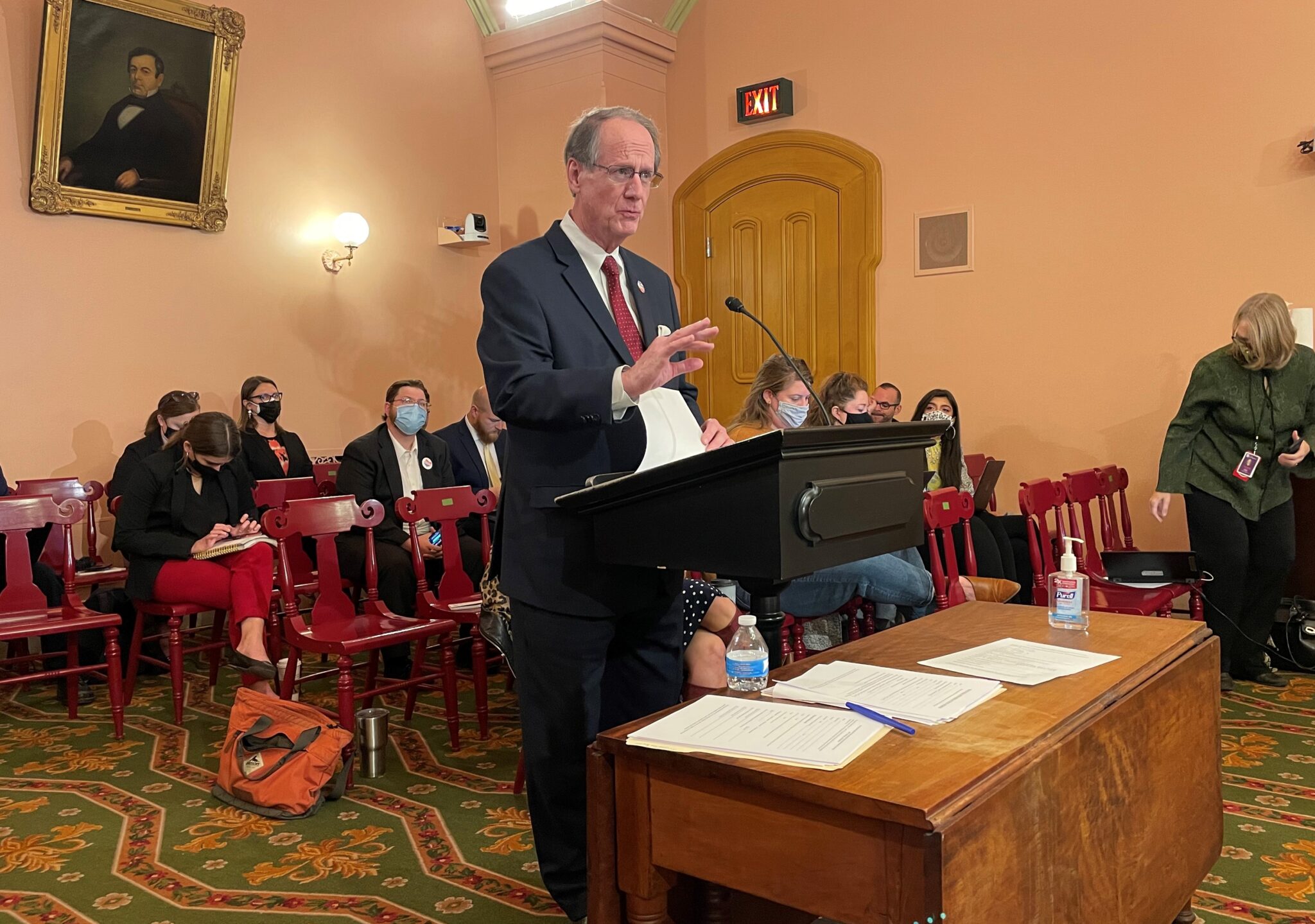
The guiding principle behind the House map appeared to be plausible deniability. North Canton Republican Scott Oelslager delivered pre-drafted remarks describing how his map complied with new constitutional demands, but he balked at almost every question about his proposal.
The Ohio House Republican proposed U.S. Congressional District map. From the Ohio House of Representatives. (Click to view larger map)
He affably ducked questions from Democratic members as too “technical”, and acknowledged House staffer Blake Springhetti handled the actual drafting of the map. Speaking after the hearing, he admitted even his remarks weren’t all his own — Springhetti helped come up with those, too.
Pressed by Rep. Tavia Galonski, D-Akron, about whether he’d object to Springhetti testifying about the proposal, Oelslager dodged.
“That’s a decision that will be made by leadership above me and counsel,” he said.
Asked more generally by Rep. Richard Brown, D-Canal Winchester, whether his party is even seeking a ten year map, which would require the support of at least a third of Democrats, Oelslager again deflected.
“That’s actually a decision that I’m not involved with; I have not had any discussions with anybody, and I believe that will be a decision made above my pay grade in this process,” Oelslager said.
Every member of the House leadership team, save the speaker, serves on the Government Oversight committee where Oelslager presented his proposal.
Democrats raised objections early, noting the 300 page substitute amendment and Oelslager’s testimony were posted less than 20 minutes before the committee began. Once the documents were shared, the maps were presented in a format that made rapid analysis difficult.
But Democrats did voice concerns about the most obvious potential problems such as the four counties — Hamilton, Franklin, Cuyahoga and Summit — being split among three different districts. Another district runs from Ohio’s southernmost county along the eastern border all the way past Youngstown in the northeast corner of the state.
Despite sidestepping questions on how borders were determined, Oelslager did share a rundown of partisan performance. He described the breakdown as 8-5-2, where Republicans would have eight safe seats, Democrats would have two and five would be a “toss-up.” That toss up range is broad, though, with the majority party having as much as 55% of the likely vote share and the minority having at least 45%.
But outside observers dispute Oelslager’s analysis. The partisan lean metrics in Dave’s Redistricting App suggest the House Proposal would give Republicans a strong advantage in 9 districts, not 8. Four of the remaining districts would be considered competitive based on a 45-55% split, and two would be safe Democratic seats.
Shortly after the committee, Ohio League of Women Voters executive director Jen Miller criticized a lack of transparency in the process. Without maps available ahead of time, she said, it’s impossible to know how good or bad the lines might be.
“We want to think about voters in all 88 counties and how they’re represented and what they need. We can’t do that yet. It’s going to take us quite some time,” Miller explained. “But we certainly are concerned that we could not get the map in a timely fashion, and we are concerned that we are once again maybe running out the clock. Estimates do look as though it is not partisan balanced, which is one of the things I think voters really wanted.”
The Senate proposals
The Senate Local Government and Elections Committee heard about one map that’s been out since the end of September, and another that made its debut during the committee meeting.
State Sen. Rob McColley, R-Napoleon, presents the Senate GOP map in Local Government & Elections Committee on Wednesday. Photo by Susan Tebben, OCJ.
Premiering Wednesday was the Senate GOP’s congressional map, presented by state Sen. Rob McColley, R-Napoleon.
“We wanted to be sure that we put out a map that we were comfortable standing behind and that we felt gave us an opportunity with the minority party to meet and discuss that,” McColley said after presenting his map.
McColley said he was the lead on the map “concepts,” but Ray DiRossi, senate budget director and legislative map-drawer, was the one to insert the concepts into mapping software.
In the Senate Republican map, McColley said 14 counties are split, with the three biggest counties — Cuyahoga, Franklin and Hamilton — split twice.
The Senate GOP map proposal has six Republican-leaning districts, 2 Democrat-leaning and seven that would be competitive, which McColley also defined as being within the 45-55% range.
Statewide election data and constitutionally required data was used in the maps, however McColley said racial data was skipped in the GOP map, something Republicans were criticized for in the legislative map-drawing process.
The Ohio Senate GOP’s proposed U.S. Congressional district map. From the Ohio Senate. (Click to view larger map)
DiRossi told the Ohio Redistricting Commission during his presentation of those maps that racial and demographic data was skipped deliberately at the direction of “legislative leaders.”
Criticism of the maps was limited, mostly because of the abrupt timeline in receiving the GOP map, but an overarching look at the maps gave University of Cincinnati politics professor David Niven a look into political strategy, he said.
“It is an astonishing work of defiance of the constitution, an astonishing defiance of voter will,” Niven said.
Niven said the splitting of counties is at times confusing, which he thinks is a political strategy as part of the maps.
“The effect of this is (voter) confusion and dampened representation,” Niven said.
Collin Marozzi of the ACLU of Ohio said he was still reviewing the Senate effort, but from a brief look during the committee meeting, it didn’t surprise him to see Republicans making the decisions they made, but he wanted to hear more about why.
“It’s deliberate choices, they made their choices and I think the people of Ohio deserve to have an explanation as to why they made them, not just the fact that they did or didn’t make them,” Marozzi said.
State Senate Minority Leader Kenny Yuko and state Sen. Vernon Sykes presented the Senate Democratic Caucus map officially to the commission, with policy advisor Randall Routt jumping in with breakdowns directly from the map.
“As elected leaders, we owe it to our constituents to produce fair maps,” Yuko said. “Let’s work together, and let’s get this mission accomplished.”
The Democratic map came just before the Oct. 1 deadline for the legislature to approve congressional redistricting maps the first time, which blew by without any significant action from either General Assembly body.
The deadline passed, and the process moved to the Ohio Redistricting Commission, on which Sykes sat as co-chair, and their Oct. 31 deadline came and went without any map approval.
In Wednesday’s committee meeting, Routt said the map was “merely a starting proposal” but a proposal they felt complied with not only the Ohio constitution, but the salvaging of communities across Ohio.
The Ohio Senate Dems proposed congressional district map. (Click to view larger map)
In explaining the map, Routt said only 11 counties were split, with the splits only occurring once in each county. No counties were split more than once.
“We attempt to keep communities together in our map, and we think that’s an overriding state objective,” Routt told the committee.
Committee member state Sen. Tina Maharath, D-Canal Winchester, took time to ask if Democratic bill sponsors felt the redistricting process had met expectations. Yuko and Sykes both said no, and Sykes said with no GOP map to consider until Wednesday, it’s been difficult to negotiate a ten-year plan with bipartisan agreement.
“We’re at this third stage of this process and fortunately it looks like today … we’re starting out hopefully with a plan, and maybe we’ll be better able to negotiate a bipartisan deal,” Sykes said.
McColley said concerns about transparency are not necessarily well-placed, and likened the process to creating a piece of legislation, in that some preparatory conversations “don’t happen in the public.”
“Usually there’s a public proposal … and then we’ll have a proposal and a process going forward to work off of, and that’ll inform much of the public dialogue that occurs with this map,” McColley said.
All three maps are the subject of scheduled public hearings Thursday morning in Senate Local Government and Elections and House Government Oversight.
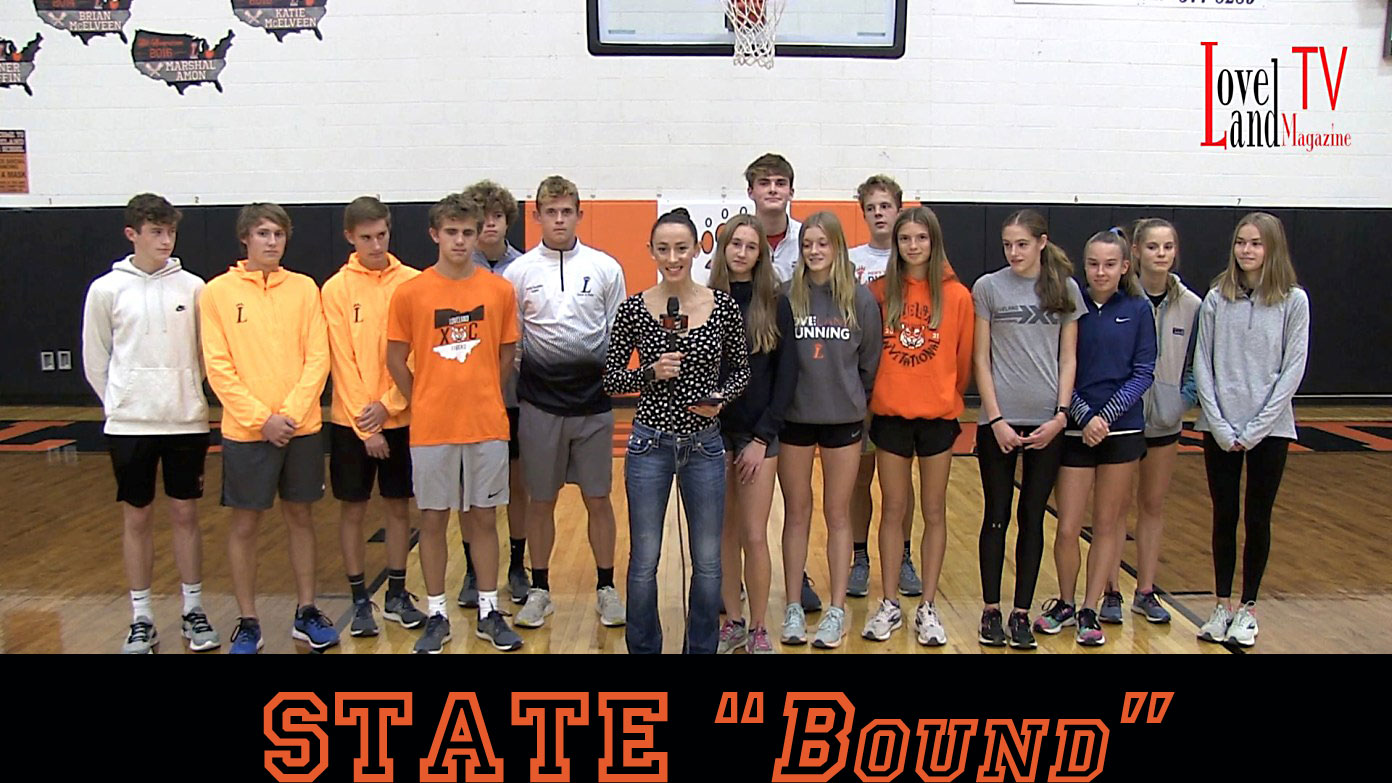
Loveland, Ohio – The Women’s and Men’s Loveland High School Cross Country Teams got an electrifying send-off on Friday as they left town heading to the Village of Obetz. They compete at the Fortress Obetz sports complex Saturday afternoon in the OHSAA Championship. Go HERE to read tournament info from the Ohio High Schoo Athletic Association.
It’s not too late to make plans to make the trip to cheer on our Tigers.
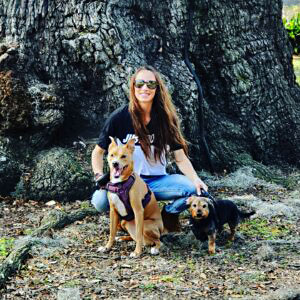
Self-described “Dog Mom” Cassie Mattia lives in Historic Downtown Loveland with Nala, Dean, and her boyfriend Adam. Cassie is the Associate Editor of Loveland Magazine.
Loveland, Ohio – We are pleased to present Loveland Magazine’s Pet of the Month for November! The community of Loveland provided us with some amazing Pet of the Month photos and we are beyond thrilled to celebrate these loved animals!
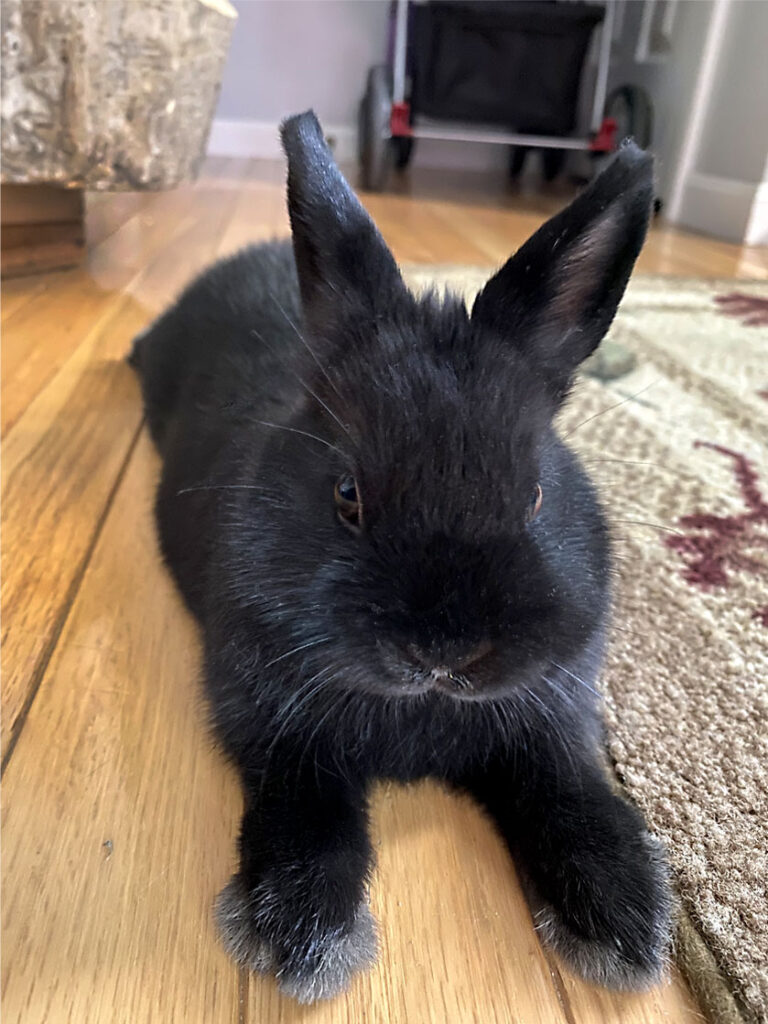
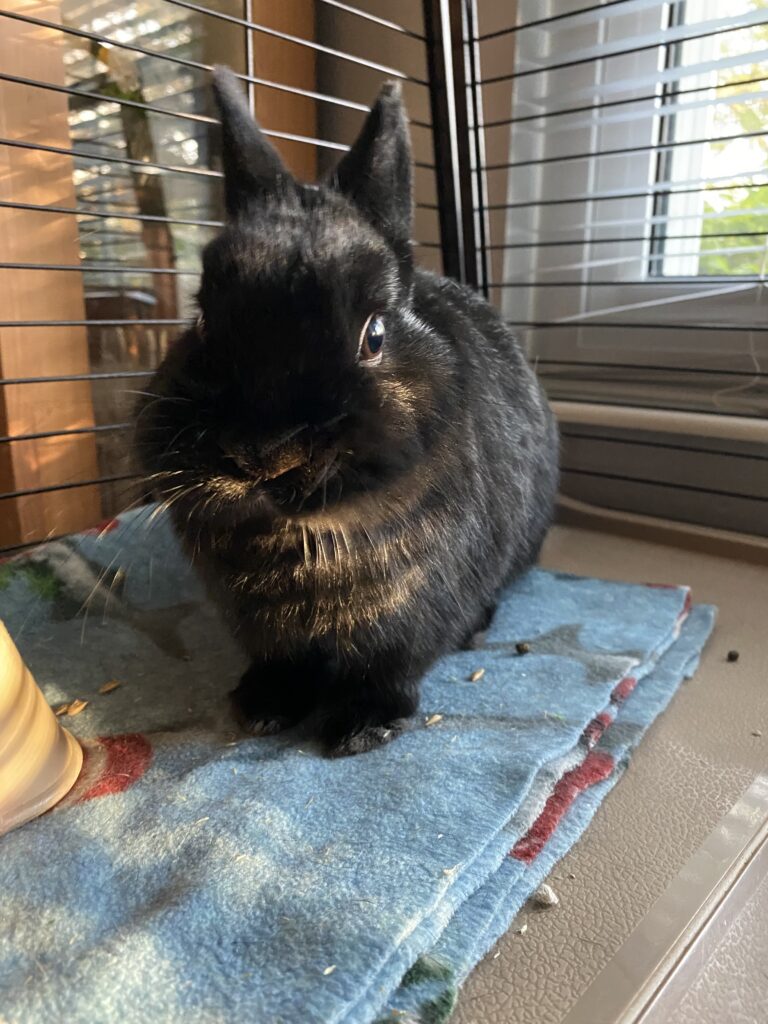
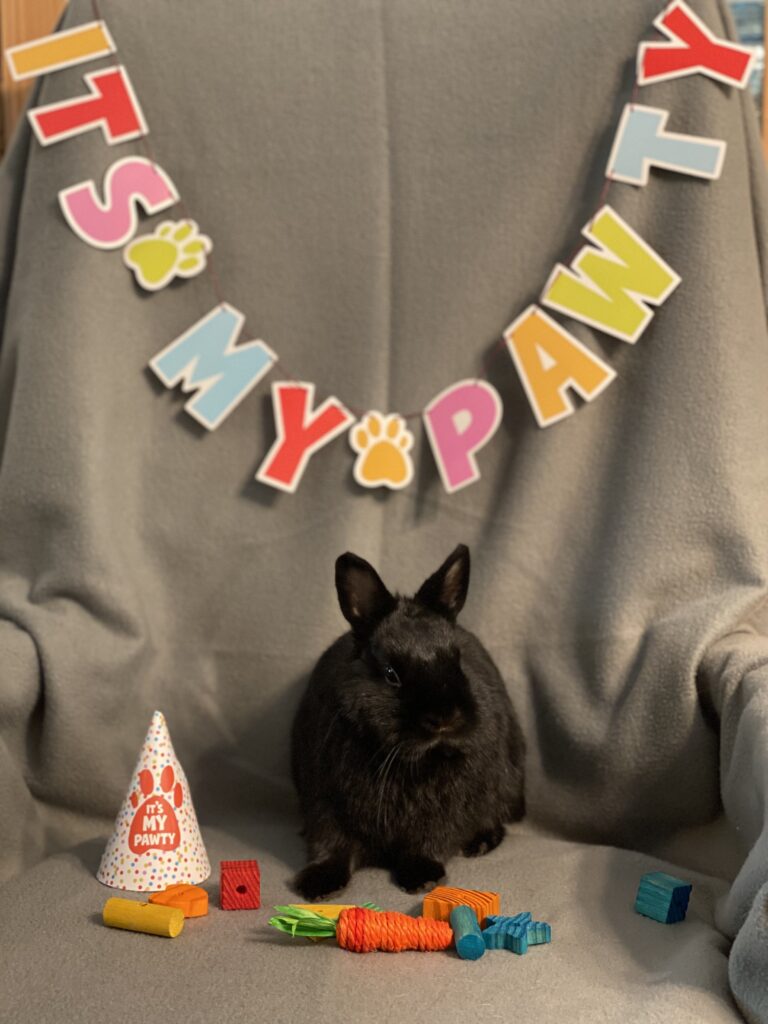
Haley Rodeffer is the loving owner of 1-year-old Charles Peppercorn a.k.a Charlie! Charlie is a Netherland Dwarf Rabbit that according to Haley has more personality than any pet she knows!
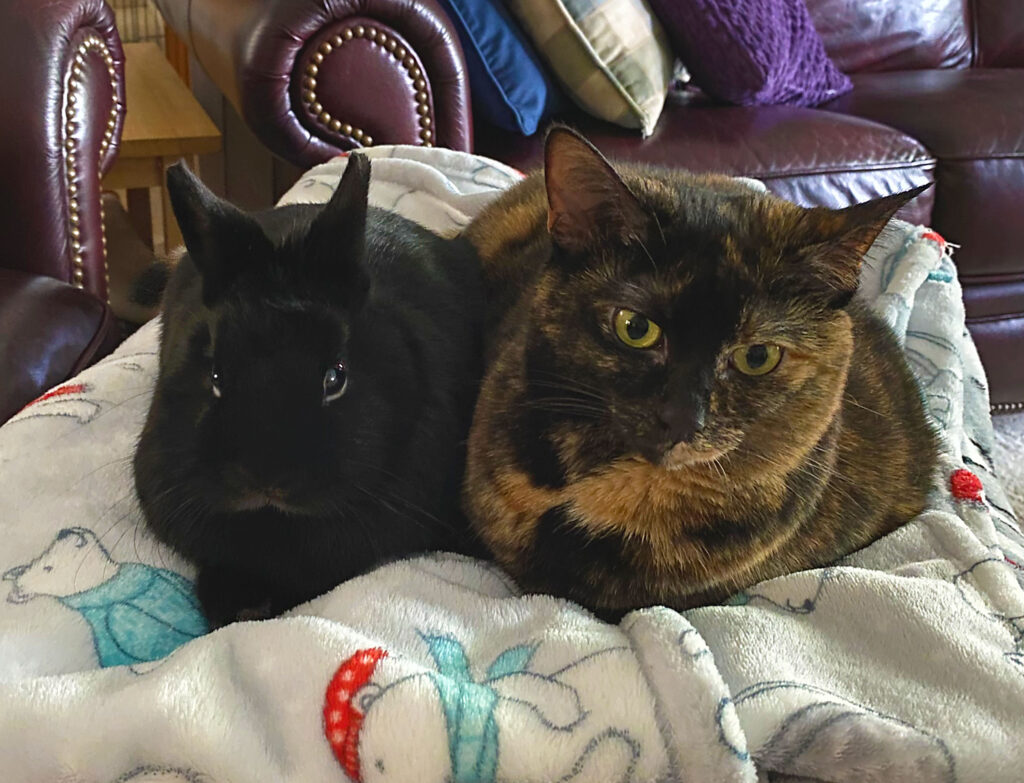
“Charlie has been a member of our family since he was just a few weeks old. His best friends are our two house cats whom he loves to play and snuggle with,” Rodeffer said, “When he is very happy he will run laps around the living room and then stretch out on the hardwood floor to cool off. He is quite an escape artist and thus has earned himself the nickname Houdini!”
Charlie is very intelligent as he not only knows how to jump out of this fence, he also can go up and down the stairs, and use his best friends’ cat door to go into the basement! Rodeffer explained that the only way to catch “an escape artist” like Charlie is giving him his favorite treats, which are dried cranberries and bananas.
“When it is time for bed a small handful of pellets does the trick to get Charlie into his cage,” Rodeffer said, “Despite sometimes being a handful, Charlie is a very good bunny and we love him very much!”
Meet Charles Peppercorn
Charlie Chilling out on the Coolness of the Hardwood Floor
Charlie Soaking up the Golden Hour Sunshine
Charlie Posing in his PJ’s! He may not Like Dress up Time but he Sure Does Love the Treats That Comes Afterwards!
Charlie Celebrating His 1st Birthday With his Family
Charlie Snuggling With his Best Friend Squirt!
Congratulations to Haley and Charlie for being selected to represent Loveland Magazine’s Pet of the Month for November! Haley and Charlie will be rewarded with a Nothing Bundt Cakes Bundtlet Tower, a gift card to The Works Pizza, and an 8X10 framable photo keepsake! Charlie will not only be featured in our publication but will also be included in our weekly newsletter for the month of November and our social media pages.
We would like to thank everyone who sent in photos of their pets as it was an absolute joy to see how many beautiful animals there are in our community! For those who sent in photos but weren’t selected this time around, don’t worry, as your entries will be entered back into the competition for the following month’s selection! For those that missed the deadline for November’s Pet of the Month, we will be taking entries from November 5th-25th for December’s Pet of the Month.
Check out the video below created by David Miller that features Charlie as well as some of our favorite September, October, and November Pet of the Month entries!
To enter into Loveland’s Pet of the Month contest you must email me, Cassie Mattia, at cmattia12@gmail.com 2-5 of your favorite photos of your pet along with a short bio about your pet. Share with us and the community why your pet is so special to you along with any other unique facts that set your little buddy apart from other pets! When sending in your pet photos and bios please include your pet’s name, age, and breed as well as your contact info with a short description of each photo you provide us with. If you want to share where your pet’s favorite spots are in Loveland that would be great as well! Remember we DO NOT discriminate against any pets; all pets are welcome to enter into the contest!
Join us in celebrating Charlie for the month of November!
We can’t wait to see whose pet will be featured in December!
Here at Loveland Magazine, we would like to send a personal shout-out to The Works Pizza and Nothing Bundt Cakes Mason (nearby in Deerfield Township) for providing wonderful gifts to our winners!


![[Video Interview] Thousands of Loveland Children will “Pass It On” and you can join them!](https://lovelandmagazine.com/wp-content/uploads/2021/11/pass-it-on.jpg)