Tag: NICK EVANS

  • Ohio and national government watchdogs warn GOP trying to engineer a more favorable midterm map

    Ohio and national government watchdogs warn GOP trying to engineer a more favorable midterm map

    By:  Ohio Capital Journal

    Good government leaders in Ohio and around the country are worried about state lawmakers attempting to ‘bake in’ 2026 election results long before voters head to the polls. Between new rounds of redistricting and even more restrictive voting legislation, Republican state lawmakers seem poised to engineer an easier path for their party’s candidates, they say.

    “I think Ohio has become something of a test subject state for seeing just how far a super majority can chip away at access to the ballot and our rights to direct democracy,” Kelley Dufour from Common Cause Ohio said.

    GET THE MORNING HEADLINES.


    With Republicans notching several wins in 2024, the “sensationalized” version of voter restriction rhetoric has taken something of a back seat, Dufour said.

    “But forces are still working behind the scenes, right? At an administrative death by 1,000 cuts,” she said. “It’s a quieter process, but it’s significantly harmful to voters.”

    One example is a sharp uptick in provisional voting.

    In 2024, Dufour explained, 34,000 had to vote provisionally — roughly 40% more than in the last presidential election.

    Meanwhile, Ohio lawmakers are considering new measures that would require proof of citizenship to register and open the door to challenging a voters’ citizenship status on Election Day itself.

    Proof of citizenship would require voters gathering birth certificates, divorce records, name-change records, or other paperwork.

    This has already presented difficulties, for instance, for some trying to obtain a National I.D. card for air travel.

    How it plays out on the map

    But the “cherry on top,” Dufour said, is redistricting. Ohio could see a major shakeup to its congressional map ahead of next year’s midterms because lawmakers here are legally required to draft a new map.

    Right now, Ohio has 15 districts with five represented by Democrats and 10 represented by Republicans, or 33% to 66%.

    Midterm elections typically serve as a kind of referendum on a new presidential administration. Historically it has not been kind to the president’s party. That’s particularly concerning in the U.S. House, where Republicans are clinging to a thin 220-2012 majority.

    Redistricting in GOP-controlled states like Ohio and Texas could turn that vulnerability into an advantage.

    Common Cause Texas Executive Director Anthony Gutierrez explained, in his state, the governor has already announced a special session in July.

    The governor hasn’t shared what will be on the agenda, but at a recent press conference the state’s lieutenant governor was enthusiastic about the idea.

    “He was asked about redistricting, and he said that he does think that if there’s any opportunity for Republicans in Texas to pick up some seats, that he does think that they should do it,” Gutierrez said, “So, nothing confirmed, but senior Republicans who probably have some insight into what’s going on, have been giving indications that they do think this is going to happen.”

    In Ohio, lawmakers have to come up with a new map because the last one was approved along party lines.

    The General Assembly has until the end of September to come up with a map but has shown little inclination to do so thus far. If lawmakers don’t act, that would put the task back in the hands of the seven-member Ohio Redistricting Commission.

    “Currently, we have five Democrats and 10 Republicans that Ohio sends to D.C.,” Dufour said. “The map-making process could eliminate a few Democratic-leaning districts.”

    What that might look like in Ohio

    Ohio Republican U.S. Sen. Bernie Moreno is eager to see it happen. Moreno told Punchbowl News he thinks the GOP will pick up two additional seats and that Republicans controlling 12 of 15 districts — 80% of the delegation — “reflects the state.”

    Moreno reasoned there’s “a recognition” that big cities like Cincinnati, Columbus, and Cleveland will be represented by Democrats.

    Moreno won his statewide race with just 50.09% of the vote, a far cry from the 80% share he thinks Republicans should control in the U.S. House. In addition to losing the three Cs, Moreno lost counties anchored by Toledo, Akron, Dayton, and Athens.

    Sitting in the crosshairs of Ohio’s redistricting effort are Ohio Democratic U.S. Reps. Marcy Kaptur and Emilia Sykes. Kaptur’s Toledo-area district and Sykes’ Akron-based seat are the two most closely divided districts in the state.

    Both lawmakers have drawn familiar challengers. Republican former State Rep. Derek Merrin has joined a crowded primary field for a rematch against Kaptur. State Rep. Josh Williams, R-Sylvania Twp., has thrown his hat in the ring, too.

    In Sykes’ district, her 2024 opponent, Republican former state Rep. Kevin Coughlin, is running to face her again, as well.

    In both contests, even minor tweaks to the map could have a significant impact on the outcome. Sykes only beat Coughlin by about two points. Kaptur’s margin was even tighter. She beat Merrin by just 2,382 votes — less than a percentage point.

    Follow Ohio Capital Journal Reporter Nick Evans on X or on Bluesky.


    Nick Evans
    Nick Evans

    Nick Evans has spent the past seven years reporting for NPR member stations in Florida and Ohio. He got his start in Tallahassee, covering issues like redistricting, same sex marriage and medical marijuana. Since arriving in Columbus in 2018, he has covered everything from city council to football. His work on Ohio politics and local policing have been featured numerous times on NPR.

    Ohio Capital Journal is part of States Newsroom, the nation’s largest state-focused nonprofit news organization.

    MORE FROM AUTHOR

  • Can they do that? Ohio Senators propose novel, if questionable, Browns stadium funding plan

    Can they do that? Ohio Senators propose novel, if questionable, Browns stadium funding plan

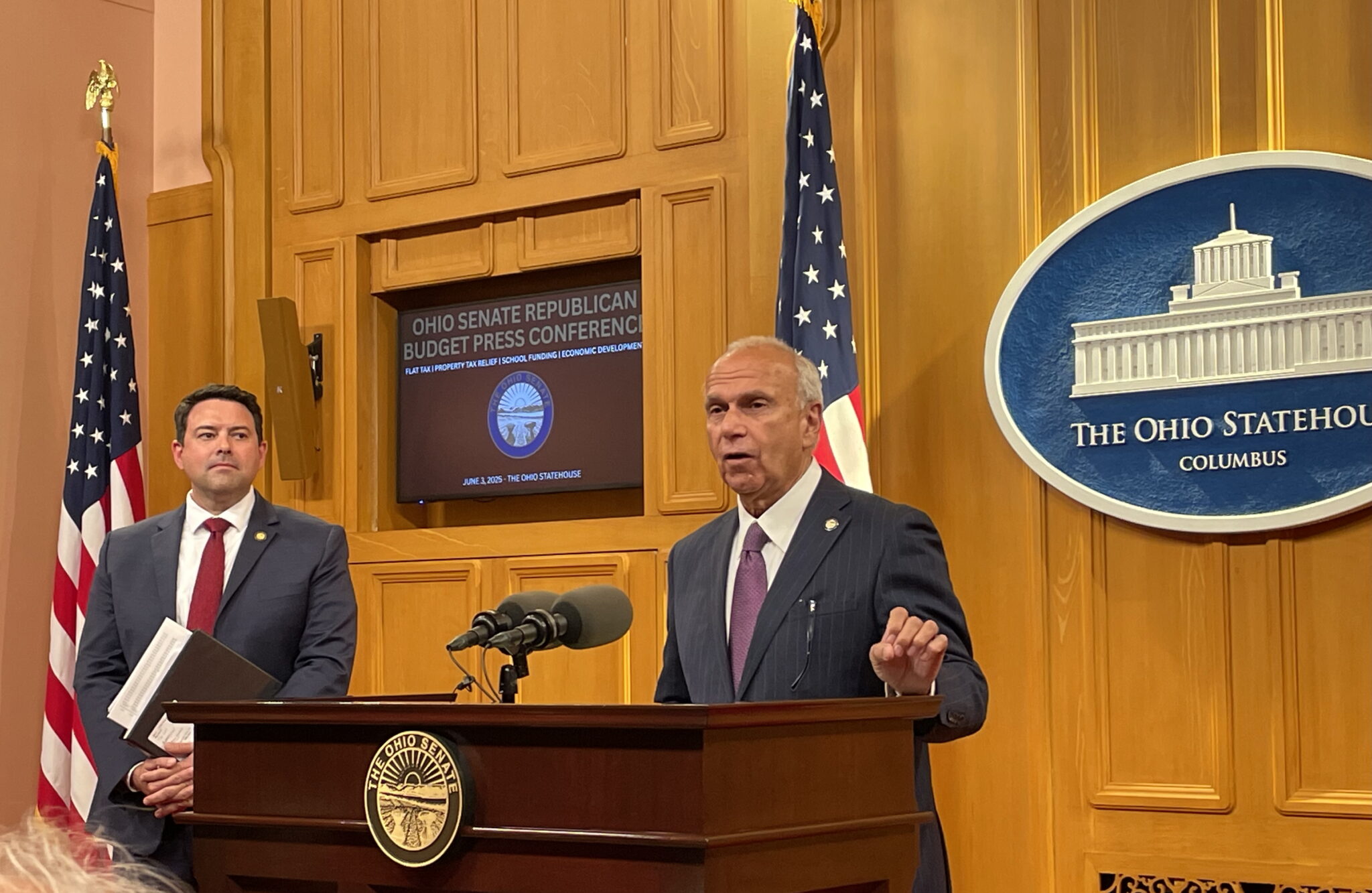
    Sen. Jerry Cirino, R-Kirtland, discussing the Senate’s budget proposal alongside Senate President Rob McColley. (Photo by Nick Evans, Ohio Capital Journal.)

    By:  Ohio Capital Journal

    Ohio Republicans largely agree that shelling out $600 million to fund a new Cleveland Browns stadium is a good idea. They just disagree on how to pay for it. Gov. Mike DeWine proposed increasing the taxes on gambling and Ohio House lawmakers favored issuing state bonds.

    State senators thought way outside the box.

    Every state oversees unclaimed funds — think old security deposits, uncashed checks, or even bank accounts. The state acts as a custodian for that money, holding it until the rightful owner comes forward to claim it.

    According to the Ohio Department of Commerce, state officials are sitting on $4.8 billion in unclaimed funds.

    State senators are now eyeing that money for stadium funding.

    The Ohio Senate funding plan

    GET THE MORNING HEADLINES.


    The Ohio Senate’s budget, approved Wednesday, would redefine all unclaimed funds that passed into state custody prior to 2016 as “abandoned.” That money would then “escheat” — a legal term for transferring ownership — to the state.

    “What this does is it takes idle money and puts it to work to create jobs, to create incremental taxes, and that’s why we’re so excited about this project,” Senate budget chief Sen. Jerry Cirino, R-Kirtland, said at a press conference introducing the idea earlier this month.

    Ohio officials would use a newly created fund, estimated at $1.7 billion, to put up the $600 million the Browns need while maintaining a nest egg for future sports and cultural facilities.

    The Browns would pay its share back through tax revenue generated by the project. The team would also put up $100 million in case that tax revenue falls short.

    Going forward, any unclaimed funds would move to the new stadium fund if no one claimed them within 10 years. Cirino emphasized companies often spend several years attempting to return funds before money ever gets transferred to the state’s custody.

    Ohio Senate President Rob McColley added, “If you look at the $600 million amount, I believe all of those are at least 18 years or older. So, they’ve been sitting in the fund for some time.”

    The alternatives, Cirino agued, aren’t particularly attractive. Raising taxes, even on gambling, is a nonstarter in his caucus. And borrowing money, even if the team pays back every penny, would carry substantial costs.

    Over 25 years, those bonds would carry $400 million in debt servicing, Cirino said, “and the debt service would be paid out of the general fund.”

    The plan’s supporters are quick to emphasize the safeguards. Anyone whose property gets rolled over in that first sweep to the stadium fund will have a ten-year grace period — extending to January 1, 2036 — in which they can still claim their money.

    The Senate budget also appropriates an additional $1 million annually to support more outreach to the owners of unclaimed funds.

    “Any property that belongs to anybody, rightfully and legitimately, we want them to get what they have coming to them,” Cirino said in an interview. “And we’re not suggesting anything to the contrary. We’re just simply setting a time period here, that is, we think, reasonable.”

    Can they do that?

    In Ohio, the state Department of Commerce oversees unclaimed funds, but in many other states that’s the state treasurer’s job. And the National Association of State Treasurers is unequivocal about how unclaimed property programs should run.

    “We actually have official policy stating that we believe that state unclaimed property programs should make these funds available to their owners in perpetuity,” NAST Executive Director Shaun Snyder explained.

    The group’s policy statement raises concerns about potential legal challenges and emphasizes a state taking custody of unclaimed property isn’t the same as taking ownership of it. At their heart, Snyder argued, unclaimed funds programs are built on trust.

    “You get that trust by telling people, ‘Look, if you lose your property, you will be able to claim it. We will keep it for you and protect it for you,’” he explained. “When states decide to essentially add in a cut-off of some kind, that can undermine that process.”

    Snyder noted there are just four states with policies that escheat unclaimed funds to the state after a specific period of time.

    Two of them, Arizona and Indiana, wait much longer than Ohio proposes, only transferring funds to the state after 25 years. Hawaii and Rhode Island set the cut off at 10 years, but only for small amounts — less than $100 in Hawaii and less than $50 in Rhode Island.

    Like Snyder, the Urban Institute’s Lucy Dadayan argued that “redirecting these funds for public projects, even after a long dormancy period, risks undermining public trust and confidence in government.”

    She also raised doubts about the sustainability of the idea. If the stadium funding plan raises awareness, more people could come forward with claims and reduce the amount of money flowing to the stadium fund.

    “Well, it’s definitely outside-the-box,” University of Chicago Professor Justin Marlowe said of the proposal.

    Marlowe heads up the school’s Center for Municipal Finance and explained he hasn’t heard of any other state using unclaimed quite like Ohio is considering.

    One of the virtues of that approach, he said, is it provides the necessary upfront costs without raising taxes or borrowing a lot of money.

    “I suppose that’s a tradeoff that’s worth making if you’re willing to get over the conceptual leap of using unclaimed property to this effect,” he said. “I get what they’re trying to solve for, and this is definitely a creative way to solve for that, for better or for worse.”

    But Marlowe raised some notable concerns. His center runs a podcast, he said, and they’ve spoken with about 15 state treasurers. All of them have a story about reconnecting people with long-lost property.

    “That’s not a 10-year arc, that’s a several decades long arc,” he said. “And so, it does kind of raise that question of, is 10 years the right timeframe? Because no one’s ever really done this, I don’t think there’s any right or wrong answer. That’s kind of a policy choice, but it does seem short.”

    Marlowe added the systematic transfer of citizens’ property raises legal complications that aren’t easy to answer.

    The Fifth Amendment of the U.S. Constitution prohibits the government from taking private property without “just compensation.”

    Ohio’s Constitution carries similar requirements and puts the onus on the state to show that taking was necessary and for public use.

    Additionally, the escheatment program could raise due process questions.

    “I’m sure they can write the law in a way to insulate them from a lot of that, but at some level, these are not statutory questions. These are much broader, constitutional — almost philosophical — questions,” he said. “Which might be why no one has done this to date, right?”

    Reactions closer to home

    In testimony submitted to the Ohio Senate Finance Committee, the City of Cleveland set aside questions about the source of the money and argued that the new Browns stadium would harm their lakefront redevelopment efforts.

    “Public funds — whether from the General Revenue Fund or the unclaimed property fund — should be used to strengthen cities, not undermine them,” the city argued.

    Cuyahoga County Executive Chris Ronayne wasn’t bashful about criticizing the unclaimed property idea though.

    “This is not robbing Peter to pay Paul,” he argued. “This is robbing Bob and Betty Buckeye to pay (Browns owners) Jimmy and Dee Haslam.”

    Cirino bristled at that characterization.

    “That’s a load of garbage, okay? We’re not stealing any money from anybody,” he insisted. “I found his comments about the Senate quite insulting as a matter of fact.”

    He noted lawmakers have dipped into unclaimed funds “at least a dozen times previously.”

    A Legislative Service Commission memo shared with Ohio Capital Journal notes lawmakers have authorized $1.2 billion in cash transfers out of the fund and used it to capitalize the state’s mortgage insurance and housing development funds. However, that money is subject to recall if it’s needed to pay the rightful owners of unclaimed funds.

    The proposal got support from the Ohio Business Roundtable. In a letter to the Senate Finance Committee, the group’s President and CEO Pat Tiberi argued it’s a “strategic and fiscally responsible approach” to funding venues.

    “A statewide fund ensures Ohio is positioned to proactively support these capital-intensive projects as a means of regional growth and long-term economic competitiveness — not just for a single city or franchise, but for the benefit of all regions,” Tiberi wrote.

    “Importantly,” he added, “the Senate’s proposal avoids placing new tax burdens on Ohioans, taking general revenue funds or increasing the state’s debt obligations.”

    Like Cirino, Tiberi emphasized the plan would put “idle” resources to more productive use.

    Follow Ohio Capital Journal Reporter Nick Evans on X or on Bluesky.

    Nick Evans
    Nick Evans

    Nick Evans has spent the past seven years reporting for NPR member stations in Florida and Ohio. He got his start in Tallahassee, covering issues like redistricting, same sex marriage and medical marijuana. Since arriving in Columbus in 2018, he has covered everything from city council to football. His work on Ohio politics and local policing have been featured numerous times on NPR.

    Ohio Capital Journal is part of States Newsroom, the nation’s largest state-focused nonprofit news organization.

    MORE FROM AUTHOR


  • Voter rights groups say Ohio GOP voting overhaul threatens the state’s citizen initiative process

    Voter rights groups say Ohio GOP voting overhaul threatens the state’s citizen initiative process

    The proposals have gotten more attention for requiring proof of citizenship and eliminating ballot drop boxes, but they carry significant changes to signature gathering, too

    By:  Ohio Capital Journal

    A coalition of government watchdog groups are warning state legislation could hobble Ohio’s initiative process. Direct democracy has been available to Ohioans since 1912, and citizen-led groups can organize initiated statutes or constitutional amendments.

    The proposals would create strict new paperwork requirements and add other administrative hurdles like requiring many circulators wear a badge identifying themselves as “paid” even if they’re given something as small as a pen for signature collection.

    Above and beyond changes to the initiative process, the bills would also eliminate ballot drop boxes and require all voters to show proof of citizenship to cast a ballot.

    “Bottom line, this is attack on direct democracy,” Jen Miller from Ohio’s League of Women Voters argued. “This is an attack on local control. It’s an attempt to bully, intimidate, harass, and possibly prosecute people just because they want to take part in democracy,”

    Nitty-gritty

    Common Cause Ohio Executive Director Catherine Turcer praised the people who grab clipboards and collect signatures to put proposals on the ballot.

    “This extreme legislation is an attempt to bully, intimidate, and hassle these front-line heroes,” she argued.

    The paperwork involved in signature gathering is already complex and time consuming. She explained circulators have to fill out a standard form — name, address, employer, etc. — when they turn in petitions. But the new bills would ratchet up the stakes of that relatively banal procedure. Right now, if the circulator messes something up, they can cross it out and write their initials.

    “And it is accepted as a change that was legally made,” Turcer explained. “House bill 233, and Senate bill 153, would make it so that any error here, anything that you made a mistake on, it would mean that the entire booklet would be invalid. And just, I can’t imagine the number of signatures that would just get tossed out.”

    She added that provisions requiring circulators to wear a badge identifying themselves as “paid” if they accept “anything of value,” sets an unrealistic standard.

    “If I were to give a clipboard and a pen to a volunteer, and a t-shirt that says the name of the campaign,” she explained, “anything of value would then mean that a circulator would have to get a badge.”

    That’s more paperwork, she said, and thus more chances for something to go wrong.

    Turcer also criticized a provision requiring an individual to be registered to vote prior to signing a petition, rather than by the time the petition gets filed with election officials.

    “One of the things that we often do is check registration before people sign,” Turcer explained, “so that we can get somebody registered as we’re doing a ballot measure.”

    Taking that opportunity away doesn’t just reduce their signature count, Turcer argued, “it also stops that opportunity for a voter-to-voter conversation about, well, this is why you should get registered. These are the things that are coming up on the upcoming ballot.”

    Stakes

    Ohio Unity Coalition Executive Director Petee Talley drew a straight line from 2023’s Issue 1 defeat, which rejected a GOP-led effort to make it harder to amend the state constitution, and the current slate of legislation. She argued the latest bills are “retribution” for that defeat.

    Talley took particular offense at the provision requiring signature gatherers wear a badge if they’re compensated.

    “If I wanted to give a can of cold pop and a slice of pizza to someone and maybe even a t-shirt that (Turcer) alluded to, suddenly they’re going to have to add wearing a badge to all of that stuff?” she asked.

    “It’s nothing but intimidation. It’s nothing but bullying,” she argued. “It’s voter harassment, and this is an attack on our voice and our rights, and we’re not going to stand for it.”

    Miller walked through the follow-on consequences of requiring paid circulator badges. Some voters will mistakenly think volunteers who got a slice of pizza are actually getting a paycheck, she said.

    “We should expect opposition trackers attempting to catch circulators without their badges,” she added. “And with the increase in uncivil and polarized rhetoric in political venues, this could result in intimidation or even violence against circulators or voters signing those petitions.”

    What’s more, Miller said, “boards of elections would have to become badge police.” It’s a task they don’t have the money, manpower or expertise to carry out, she argued. The requirement voters be registered before signing a petition? Miller said that might be a problem, too.

    “We don’t even know if boards of elections have the technical capacity right now to verify that a voter registration was valid on the date that the voter signed,” she said.

    One reason that might not have come up is that, so far, county boards haven’t been able to weigh in. The bill’s first and second hearing happened during the early voting period for this May’s primary election. The third hearing landed on the day boards had to certify the election.

    Asked whether she thought that was intentional, Miller said, “I don’t think it matters. It’s shameful, either way. There is no more important constituent when it comes to democracy bills than the boards of elections.”

    Follow Ohio Capital Journal Reporter Nick Evans on X or on Bluesky.


    Nick Evans
    Nick Evans

    Nick Evans has spent the past seven years reporting for NPR member stations in Florida and Ohio. He got his start in Tallahassee, covering issues like redistricting, same sex marriage and medical marijuana. Since arriving in Columbus in 2018, he has covered everything from city council to football. His work on Ohio politics and local policing have been featured numerous times on NPR.

    Ohio Capital Journal is part of States Newsroom, the nation’s largest state-focused nonprofit news organization.

    MORE FROM AUTHOR

  • Ohio property tax repeal campaign preparing to collect signatures

    Ohio property tax repeal campaign preparing to collect signatures

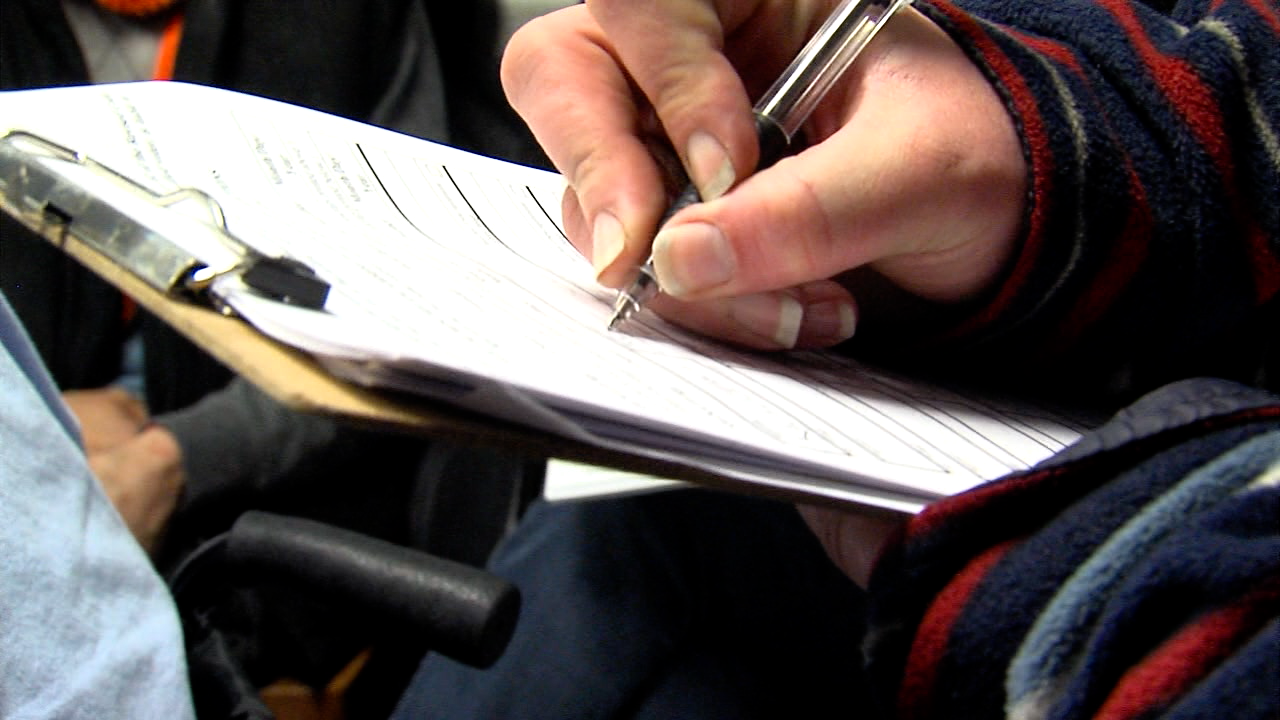
    Ballot petition signature collection. Photo by WEWS.

    By:  Ohio Capital Journal

    In a short meeting, the Ohio Ballot Board signed off on a proposed constitutional amendment abolishing property taxes in the state. The only question before the board was whether the proposal contains one or multiple amendments.

    Supporters contend lawmakers have been unwilling or unable to make significant enough changes as property taxes climb. But critics warn eliminating that revenue stream could cripple important services like schools and first responders.

    Campaign reaction

    GET THE MORNING HEADLINES.


    The day after the ballot board meeting, Beth Blackmarr described her mood as ‘busy.’

    “Busy, busy, busy,” she said, “I mean, here we go — we’ve got to hit the ground running.”

    Blackmarr is part of the organization Citizens for Property Tax Reform which is leading the repeal campaign. With the ballot board’s decision, the group is now able to start gathering signatures to appear on the ballot.

    To go before voters, they’ll need 10% of the electoral turnout from the last governor’s race (just shy of 415,000). Additionally, in 44 of Ohio’s counties, they’ll need signatures from at least 5% of the governor’s race turnout. In practice, campaigns turn in hundreds of thousands more signatures than necessary to make up for any rejections.

    Blackmarr said they want to start collecting “as soon as humanly possible,” and work could begin as early as next week. Asked whether they’d work with paid circulators, she just laughed.

    “Many of us are youthful at heart, but senior citizens that are just really working out of our pockets,” she said. “There’s no big money backing this at all. It’s all volunteer.”

    The merits

    Blackmarr argued Ohio’s current property tax system is broken. She points to other states like New Jersey and Texas that have far more generous initiatives to keep seniors, vets and the disabled in their homes.

    “You can’t have senior citizens who have paid for their homes — fully paid for — having to move out because they can’t afford property tax,” she insisted.

    Blackmarr contends those kinds of protections are low-hanging fruit. Lawmakers have had continual warnings and “ample opportunity” to act. Instead, she argued, they’ve dithered with changes at the margins.

    “I suspect it’s because they built a wobbly tower of property tax law over these decades,” she said, “and they’re afraid to pull one of the blocks out, because they’re afraid the whole thing’s gonna come tumbling down.”

    That ‘tumbling down’ is exactly the concern many critics voice about the plan. The most recent annual report from the Ohio Department of Taxation puts 2023 property tax collections at about $18.5 billion. That’s an enormous amount of funding to just disappear. It’s roughly double the amount reported for state income taxes, and a billion more than Ohio’s sales and use tax.

    Spread evenly, it would cost every single Ohioan more than $1,500 to make up that gap in funding.

    Blackmarr argued repeal will just force lawmakers “to come up with an alternative.” But that’s a big ask — particularly for Republicans allergic to tax increases.

    Still she’s right about dramatic increases in property taxes. The same Department of Taxation report shows assessed values climbing almost 40% in five years while tax collections have risen more than 21%.

    Legislature’s role

    In a statement following the ballot board decision, House minority leader Allison Russo said the proposal “clearly demonstrates frustration by Ohioans on this issue” and blamed lawmakers for failing to act.

    “However, this particular initiative concerns me because while it eliminates the property tax, it doesn’t explain how we’ll replace the funds that support police, fire departments, public education, and other critical services,” she said.

    Russo argued Democrats have signed on to bipartisan legislation providing direct relief but Republican leaders haven’t prioritized those bills.

    Blackmarr acknowledged that as their campaign gains steam, pressure will grow on lawmakers to pass legislation or propose their own ballot measure to undercut their efforts.

    “At the end of the day it goes to the voters,” she said.  “They have to make the decision for themselves.”

    And if lawmakers’ intervention means voters have to choose between competing visions, that’s just fine with Blackmarr.

    “Wouldn’t that be nice, you know?” she said.

    Follow Ohio Capital Journal Reporter Nick Evans on X or on Bluesky.

    Nick Evans
    Nick Evans

    Nick Evans has spent the past seven years reporting for NPR member stations in Florida and Ohio. He got his start in Tallahassee, covering issues like redistricting, same sex marriage and medical marijuana. Since arriving in Columbus in 2018, he has covered everything from city council to football. His work on Ohio politics and local policing have been featured numerous times on NPR.

    Ohio Capital Journal is part of States Newsroom, the nation’s largest state-focused nonprofit news organization.

    MORE FROM AUTHOR

  • Backers urge Ohio lawmakers to pass AI restrictions

    Backers urge Ohio lawmakers to pass AI restrictions

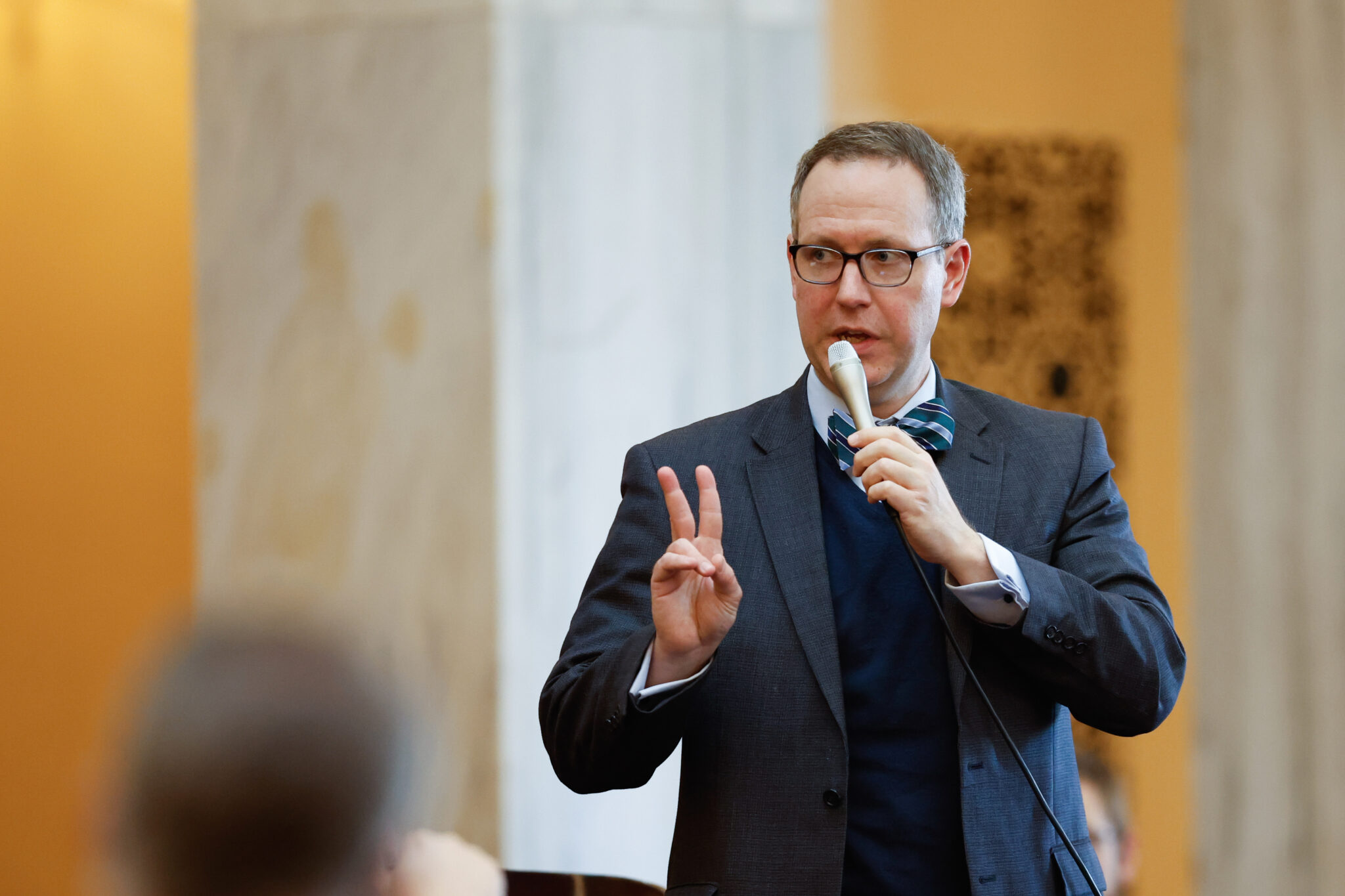
    State Sen. Louis Blessing, III, R-Colerain Township (Photo by Graham Stokes for Ohio Capital Journal. Republish photo only with original article.)

    The measure focuses on prohibiting deepfake child pornography but also require watermarks and punishes AI identity fraud

    By:  Ohio Capital Journal

    Ohio senators heard from supporters Wednesday of a proposal establishing guardrails around media produced with artificial intelligence. The proposal would prohibit the use of AI to create deepfake porn — particularly involving minors. But with provisions requiring watermarks and punishing identity fraud, the bill’s impact could extend far beyond the creation of pornography.

    Senate bill 163

    The bill’s sponsors, state Sens. Louis Blessing, R-Colerain Twp., and Terry Johnson, R-McDermott, argue the restrictions will “prevent potentially harmful uses” of an emerging technology while protecting Ohioans “safety and privacy.”

    GET THE MORNING HEADLINES.


    The bill goes after AI-generated child porn by expanding the definition of obscenity to include an “artificially generated depiction.” Blessing explained “current laws against child sexual abuse material require an actual real photo of a child to be able to prosecute someone.”

    “With AI not being a real photo,” he added, “this leads to issues of prosecuting someone generating these photos. Senate bill 163 will give attorneys the ability to prosecute these people.”

    The sponsors argue AI can also be used to engage in fraud for financial, political and reputational purposes. So, the proposal extends identity fraud statutes to include a “replica” of an individual’s voice or likeness. It prohibits the use of a replica persona to defraud, damage a person’s reputation, or depict a person in a state of nudity or engaged in a sexual act.

    Beyond its prohibitions, the bill aims to get ahead of deceptive uses by requiring any media created with artificial intelligence to include a watermark identifying it as such. Removal of a watermark is subject to a civil lawsuit for damages, and anyone who removes a watermark faces the presumption that they caused the alleged harm.

    Proponents’ testimony

    Ohio Attorney General Dave Yost praised the measure’s “three-pronged approach.” He argued the watermark requirement “would provide a minimum level of transparency and notice” when an individual encounters AI-generated content.

    Speaking about the bill’s identity fraud provisions, Yost brought up a case from his time as state auditor. A scammer successfully mimicked a school district’s email system and then sent a fake funds transfer request to the accounts payable department posing as the district’s financial controller. Best practice, Yost said, would be to call the sender for confirmation.

    “But now, in the era of deepfakes with audio,” Yost explained, “you can send that fake email, call up (accounts payable) using the controller’s voice and say, ‘Hey, I just sent you an email asking you to do a wire transfer. This is really important. We need to move it. I wanted to follow up with phone calls so you didn’t have any questions.’”

    As for the restrictions on child sexual abuse material, Yost urged lawmakers ensure “these powerful tools are not used for evil,” and added that “these are the kinds of things that keep me up at night.”

    Sen. Kent Smith, D-Euclid, pressed Yost on how useful state legislation can be when it comes to addressing a “borderless” crime.

    Yost acknowledged he’d prefer to see federals laws and even international treaties governing the use of AI-generated images. But “possession or use within Ohio can still be proscribed by this body and it ought to be.” He added that one way to push Congress to act is for states to pass an array of legislation.

    Lou Tobin, speaking on behalf of the Ohio Prosecuting Attorneys Association, noted many states have passed bills to prohibit AI-generated child sexual abuse material or CSAM.

    “As of last month,” he said, “Thirty-eight states, including every state surrounding Ohio, have enacted laws that criminalize the creation, possession and distribution of artificially generated CSAM.”

    But while many states have taken action, it’s not clear those laws will hold up in court.

    “I think a federal district court has found one of these statutes to be in violation of the Ashcroft decision,” Tobin told lawmakers. “The Ashcroft decision was a U.S. Supreme Court decision from the early 2000s that said you could not criminalize artificially generated images of child pornography because there wasn’t a real victim.”

    In February, a federal judge in Wisconsin threw out one charge related to possession of “virtual child pornography,” but allowed three others to go forward. Prosecutors in that case have appealed the decision to dismiss the charge.

    Tobin explained his office and the AG’s worked with state lawmakers to narrowly tailor S.B. 163 bill to avoid problems with the First Amendment. Regardless of how the case in Wisconsin or others play out, Tobin agued, “We think that’s a fight worth having.”

    Follow Ohio Capital Journal Reporter Nick Evans on X or on Bluesky.

    Nick Evans
    Nick Evans

    Nick Evans has spent the past seven years reporting for NPR member stations in Florida and Ohio. He got his start in Tallahassee, covering issues like redistricting, same sex marriage and medical marijuana. Since arriving in Columbus in 2018, he has covered everything from city council to football. His work on Ohio politics and local policing have been featured numerous times on NPR.

    Ohio Capital Journal is part of States Newsroom, the nation’s largest state-focused nonprofit news organization.

    MORE FROM AUTHOR

  • Ohio Senate committee advances energy compromise

    Ohio Senate committee advances energy compromise

    Getty Images

    By:  Ohio Capital Journal

    With a final few tweaks, Ohio senators advanced a major piece of energy legislation.

    The Senate Energy Committee vote was unanimous. With both chambers in session Wednesday, it’s likely lawmakers could sign off on the legislation and send it along to the governor.

    The most substantive change had to do with the Public Utility Commission of Ohio clock — it moved from 320 days to 360. Lawmakers are putting a ceiling on PUCO deliberations because they want rate cases to move more quickly.

    GET THE MORNING HEADLINES.


    After Tuesday’s hearing, state Sen. Bill Reineke, R-Tiffin, connected the longer shot clock to broader changes in the ratemaking process. Utilities must come before the PUCO every three years, and they’ll be able to set rates in three-year increments with annual “true-ups” to reflect the companies’ actual balance sheet. Reineke explained the longer timeline will give regulators a bit of breathing room.

    Final testimony

    Before lawmakers put the bill to a vote, Ohio Consumers’ Counsel Maureen Willis made a final bid to remove a provision on consumer refunds. Under the changes, bill payers could receive refunds after the Supreme Court determines a charge was unwarranted, but any payments prior to that decision would be out of reach.

    Willis explained her office in the middle of a case against Dayton-area AES Ohio which could yield more than $300 in refunds per customer.

    “If HB 15 becomes law as written AES’s half a million consumers would lose that refund opportunity that has been in the making since 2019,” she said.

    The final version of the bill also left out a passage subjecting more power line projects to state oversight. Willis called that omission “disappointing.”

    “No one is reviewing these projects,” she argued. “Not the Ohio Power Siting Board, not the PUCO and not (the Federal Energy Regulatory Commission). Ohio consumers, your constituents, pay 100% of those costs through transmission riders.”

    Rebecca Mellino from the Nature Conservancy praised lawmakers for repealing a controversial coal subsidy approved as part of 2019’s HB 6 but argued “Ohio lags far behind neighboring states” when it comes to renewable energy. She suggested provisions encouraging brownfield redevelopment could offer an opportunity for renewable energy investment.

    Bigger picture

    The core incentive for new energy production is a reduction in tangible personal property taxes — levied on things like machinery and equipment. But while lawmakers attempt to boost energy production with a tax cut, they’re also trying to find reductions in property taxes.  Energy committee chairman, Sen. Brian Chavez, R-Marietta, insisted the reductions won’t undermine services.

    “We’re not changing any taxes that are in effect right now,” he explained. “So any taxes from power plants that are in place will stay in place as they depreciate out — this is only on new generation.”

    Sen. Kent Smith, D-Euclid, argued the tax break is an important cue to companies. When lawmakers passed HB 6, he said, they subsidized coal and nuclear facilities.

    “It was not just putting your thumb on the scale,” he said, “I mean, it wreaked havoc in natural gas generation.” With the current bill, lawmakers will remove the last of those subsidies.

    “So we’ve sort of restored capitalism in the energy generation space,” Smith argued. “And by reducing the tangible personal property percentage, hopefully that sends a signal.”

    Still, there’s little Ohio’s legislation can do to address lawmakers’ central concern about power demand outstripping supply. The 13-state power network PJM has a substantial backlog of power plants that want to connect to the grid, and large-scale consumers like data centers are pushing demand for power higher.

    “That’s why we focused on behind the meter generation,” Chavez said, “so that any new industry that comes into Ohio is not adding additional strain on the existing grid.”

    Behind the meter generation involves building a bespoke power plant directly connected to a given business.

    “PJM is aware of the concerns that are out there. They’re hearing that from all 13 states,” Chavez added. “They are on our list. We’re going to go talk to them in the fall, and we’re going to have some frank conversations with them to see how we can partner to get through this.”

    Follow Ohio Capital Journal Reporter Nick Evans on X or on Bluesky.

    Nick Evans
    Nick Evans

    Nick Evans has spent the past seven years reporting for NPR member stations in Florida and Ohio. He got his start in Tallahassee, covering issues like redistricting, same sex marriage and medical marijuana. Since arriving in Columbus in 2018, he has covered everything from city council to football. His work on Ohio politics and local policing have been featured numerous times on NPR.

    Ohio Capital Journal is part of States Newsroom, the nation’s largest state-focused nonprofit news organization.

    MORE FROM AUTHOR

  • Chamber-backed tax reform group urges Ohio lawmakers stamp out ‘unvoted’ increases that impact school districts, others

    Chamber-backed tax reform group urges Ohio lawmakers stamp out ‘unvoted’ increases that impact school districts, others

    (iStock / Getty Images Plus)

    By:  Ohio Capital Journal

    Ohio lawmakers seem committed to delivering property tax relief in the current session, but they’re still zeroing in on their approach. They’ve introduced at least seven measures tweaking the homestead exemption — for disabled vets, military spouses, the elderly — and a handful more changing how counties calculate what homeowners owe.

    Most notably, however, House lawmakers have proposed an automatic rollback in the state budget that triggers if a school district carries over any more than 30% of their operating revenue.

    An organization backed by realtors, county auditors, and the Ohio Chamber of Commerce is wading into that debate. The Ohio Taxpayer Protection Coalition is urging lawmakers to avoid “unvoted” property tax increases.

    “Our point isn’t to take away revenue from school districts,” coalition chair and former state tax commissioner Tom Zaino explained. “Our point is to reduce the rate of increase of revenue without a vote of school district residents.”

    House Bill 920

    Zaino argued that state lawmakers need to revisit a measure passed in the 1970s meant to insulate homeowners from rising home values. Property taxes are calculated in mills — one mill is one thousandth of a dollar, or one tenth of a percent.

    In every county, taxing authorities like local governments, schools, and parks, can levy a total of 10 mills that will grow as home values increase. Any share beyond those 10 mills has to get approval from voters. Meanwhile, to receive state funding, school districts must levy at least 20 mills, or 2% of assessed property value.

    House Bill 920 placed a check on those voted levies to ensure rising home prices don’t result in a taxing authority raising extra money. In effect, if your home value goes up, that slice of your property tax rate would decrease to keep your tax bill steady.

    “What’s happened, though, over the last 50 years,” Zaino said, “is that these protections have been eroded by many changes made by the General Assembly, which has effectively created loopholes.”

    The tax reductions in HB 920 apply to most levies beyond a school district’s 20 mill floor. So, school districts have been resourceful and looked to other sources of funding like emergency levies or local income taxes. That way they can meet immediate funding needs and still benefit from rising property values.

    Zaino argued that amounts to an increase in taxes that voters didn’t approve, and lawmakers should prevent that strategy. To that end, the Ohio Taxpayer Protection Coalition is supporting legislation that would recalculate the 20 mill floor to include those other funding sources.

    Bailey Williams, from the liberal think tank Policy Matters Ohio argued Zaino’s coalition is blowing the problem out of proportion. “While property values across the state have seen significant growth coming out of the pandemic,” he argued, “property tax revenues have only grown at a fraction of that rate.”

    Making the changes Zaino wants “will harm schools, put more levies on the ballot, and will not fix the fact residential taxpayers are overburdened,” Williams argued.

    School districts’ view

    School leaders argue the problem isn’t just districts making clever use of the system. As property values rise, HB 920 will reduce a homeowner’s rate — but there’s a hard stop at 20 mills. That means if property values rise high enough, the reductions stop working.

    Paul Imhoff from the Buckeye Association of School Administrators told lawmakers in 2019, there were 168 districts at the 20 mill floor. By 2023, that figure had ballooned to 409.

    “Eighty-nine percent of the new floor districts went through reappraisal or update in 2023,” he explained, “which indicates that the driving force in 20 mill floor districts clearly is rising property values.”

    He warned adding new levies to the calculation to generate more reductions won’t help homeowners in the 203 districts that don’t have those extra levies. In the end the bill would “force the affected school districts to either cut essential services or place more levies on the ballot in response, or both,” he argued.

    In a written statement, Jennifer Hogue from the Ohio School Boards Association explained the group supports “thoughtful, targeted property tax relief that helps those most in need without undermining the essential funding public schools rely on.” She argued any property tax discussion relies on a “clear recognition of the vital role local taxes play” in funding public schools.

    “While we are open to reform, we cannot support measures that limit local control or compromise a district’s ability to meet the needs of their students,” Hogue added. “Any changes must protect the stability and predictability of school funding.”

    A different proposal would allow revenue increases from rising property values, but they wouldn’t be able to exceed the general inflation rate over the past three years. In his testimony, Imhoff noted his organization is still reviewing the bill.

    Zaino allowed that it would be an improvement and address some of the school funding concerns. Still, he grumbled districts “can’t rely on unvoted tax increases,” and insisted lawmakers shouldn’t give up on closing the loopholes districts have been taking advantage of for years. “There’s not any one bill that is the silver bullet here,” he said.

    Other legislation

    Zaino offered a tempered response to the various homestead and other property tax exemptions lawmakers have proposed. Those changes are relatively easy to understand and offer immediate relief, but that targeted approach usually winds up shifting the tax burden to others.

    “Somebody’s paying for this, Zaino said, “so it’s not like taxpayers are completely saving on that.”

    Williams argued instead of rejiggering the property tax calculation or providing new exemptions, lawmakers should employ a circuit breaker, like the one proposed by state Sen. Louis Blessing, R-Colerain Twp. That approach makes tax reductions based on a share of the homeowner’s income rather than the amount of funding a school district is expecting.

    Williams explained one group regularly cited for property tax exemptions is seniors.

    “There are some seniors who do not need property tax relief,” he said. “The best way to tell is by how much of their income is consumed by property taxes, not looking at their age. The circuit breaker is targeted enough to get those seniors who need the most help, while asking those who can afford it to pay their fair share.”

    As for the budget proposal capping school district carryover balances, Zaino said they’re still considering their position. He noted it might encourage districts to allocate that funding or just spend it down to avoid the reduction.

    Follow Ohio Capital Journal Reporter Nick Evans on X or on Bluesky.


    Nick Evans
    Nick Evans

    Nick Evans has spent the past seven years reporting for NPR member stations in Florida and Ohio. He got his start in Tallahassee, covering issues like redistricting, same sex marriage and medical marijuana. Since arriving in Columbus in 2018, he has covered everything from city council to football. His work on Ohio politics and local policing have been featured numerous times on NPR.

    Ohio Capital Journal is part of States Newsroom, the nation’s largest state-focused nonprofit news organization.

    MORE FROM AUTHOR

  • Ohio House budget would eliminate independent campaign finance oversight

    Ohio House budget would eliminate independent campaign finance oversight

    Rep. Brian Stewart, R-Ashville, testifying in the Ohio House. (Photo by Nick Evans, Ohio Capital Journal.)

    ____________________

    In particular, Stewart and state Rep. Jean Schmidt, R-Loveland, complained about cases dragging on. Schmidt, like Stewart, has been on the receiving end of a multi-year OEC case.

    ____________________

    Lawmakers argue the Ohio Election Commission has outlived its usefulness and the Secretary of State or county boards of elections should handle campaign finance violations

    By:  Ohio Capital Journal

    The Ohio House’s version of the budget would eliminate the independent group charged with enforcing state campaign finance laws. With the Ohio Election Commission gone, those duties would fall to the Secretary of State and county boards of elections. Lawmakers slipped the provision into the 5,000-plus page bill as part of a wide-ranging amendment the day before the vote.

    But lawmakers’ frustrations with the commission became apparent months ago.

    At a February hearing, state Rep. Brian Stewart, R-Ashville, expressed “grave concerns” about the commission and said its process is “substantially broken.”

    “I’m getting texts and calls here from other members saying, this is the time to make some reforms,” he said at the time, “and I hope we do that as part of this process.”

    Stewart’s irritation stems in part from his own case before the commission, which took roughly three years to resolve. The commission determined he made no violation; the challenger is appealing that decision.

    Even critics of the House plan acknowledge the commission’s shortcomings. But they contend such drastic changes belong in a standalone bill with plenty of opportunity for public testimony.

     Ohio state Rep. Brian Stewart, R-Ashville, discussing the House budget. (Photo by Nick Evans, Ohio Capital Journal.) 

    Lawmakers’ complaints

    GET THE MORNING HEADLINES.


    With a current annual budget of about $642,000, the Ohio Elections Commission is a rounding error in a budget spending more than $44.5 billion General Revenue Fund dollars a year. The governor’s spending proposal pushed its annual budget north of $800,000. At that February hearing, OEC Executive Director Phil Richter showed up to explain how the extra funding would cover a new filing system and an additional employee to take over when he retires.

    Instead, lawmakers lit into the commission.

    In particular, Stewart and state Rep. Jean Schmidt, R-Loveland, complained about cases dragging on.

    “There are multiple committees over the last several years,” Schmidt said, “who have been required to attend hearings, and the decisions go into a year, two years, delay, delay, delay, before a decision is rendered. Sir, that costs people time. It also costs people money.”

     State Rep. Jean Schmidt, R-Loveland. (Photo from the Ohio House website.) 

    Schmidt, like Stewart, has been on the receiving end of a multi-year OEC case.

    In an interview, Stewart argued lawmakers have been raising concerns about the commission for years. He pointed to a 2014 U.S. Supreme Court ruling invalidating an Ohio law against false campaign statements. That decision eliminated an entire class of OEC complaints, he argued, “but of course, (the) government never sort of adjusted and kind of right-sized the operation.”

    Stewart also brushed off concerns about lawmakers who have faced OEC complaints leading the effort to eliminate the agency.

    “The best people in the position to reform an agency,” he argued, “are those who have spent years being drug through the mud and seeing how completely inefficient it is.”

    More important, Stewart stressed, lawmakers aren’t changing campaign finance law — they’re looking for better enforcement.

    “Everything that’s legal is still legal,” he said. “Everything that’s illegal is still illegal, and you will still have all the same appeal rights that you do today to take your matter to court.”

    Traffic cops

    Chris Hicks hates a liar. Talking with him for 10 minutes and it’s obvious his skin crawls seeing powerful people get away with it. He’s unabashedly conservative but has no problem going after members of his own party if they’re breaking the law. He’s filed numerous complaints with OEC, including the ones against Stewart and Schmidt.

    In Hicks’ telling, it started with a different candidate named Allen Freeman. In 2020, he was one of several candidates backed by then-House Speaker Larry Householder. Freeman blanketed Cincinnati airwaves with ads, which struck Hicks as weird — the vast majority of that audience wasn’t in his district, and he reported spending only about $15,000.

    Hicks found Federal Communications Commission reports of more than $100,000 in ad buys on Freeman’s behalf, paid for by Householder-aligned groups. The OEC eventually fined Freeman $50,000, but his campaign wound up burning through its cash to pay for his defense.

    Hicks explained the Freeman case was just a starting point for him. “Some of these invoices had a bunch of other candidates on them,” he said. Since then, he’s driven back and forth more than a dozen times from his home outside Cincinnati to OEC hearings in Columbus, pursuing various campaign finance cases.

    “I have no love for the OEC at all, as you can tell,” he said. “But everything about what’s happening right now is demonstrative of how f-ed up things in Ohio are.”

    He complained about lawmakers “dumping” the changes into the budget to evade public hearings and can’t believe Democrats aren’t making a bigger issue of it.

    Hicks thinks maybe it’s got to get worse before it gets better.

    “The funny part is, if it stays in there, it’s probably better than the OEC,” he said. “Because it’s going to create absolute chaos — absolute chaos.”

     Catherine Turcer with Common Cause Ohio March 22, 2023, at the Statehouse in Columbus, Ohio. (Photo by Graham Stokes for Ohio Capital Journal) 

    Putting the process in the hands of county boards, whose members are often local party leaders, or a state hearing officer, hand-selected by the Secretary of State, will remove any semblance of neutrality, he contended.

    Catherine Turcer, who heads up the government watchdog group Common Cause Ohio, has her own frustrations with the OEC, but she’s decidedly against the burn-it-all-down approach. She agrees the process takes too long and the results can be lackluster, but she argued lawmakers abolishing the commission is the wrong answer.

    “As opposed to thinking about how they could create greater transparency,” she said, “and how they could make an elections commission that would be functional and strong and robust, they’re thinking about eliminating it.”

    Turcer criticized lawmakers for scrapping the commission as part of the budget, rather than in a standalone bill. And she rejected Stewart’s suggestion that nothing’s lost in handing off the commission’s responsibilities.

    “That doesn’t take care of making sure that these, you know, traffic cops, essentially, that they’re as independent as possible,” she argued. “I think the problem is, by eliminating it, you’re essentially setting up a system of cronyism.”

    The stakes

    Phil Richter understands the complaints about his agency and said he’s open to working on improvements. But he insists the foundational idea — an independent body overseeing campaign finance — was a good one.

    “For the state of Ohio to take this step, and step away from an independent, bipartisan organization reviewing these kinds of matters, I think that, to me, would be a black mark on the state,” he said.

    With oversight in the purview of partisan actors, he warned, any decision will be open to claims of partisanship. Beyond the optics, Richter argued devolving decisions to county boards could be a mess. He described explaining the House proposal to a former member recently who interrupted, “wait a minute, that means there could be 88 different versions and 88 different interpretations of the statutes.” Richter added there’s a conflict of interest in asking the same body to audit campaign filings and judge cases, too.

    “Again,” he said, “that’s why this commission was created — was to separate those instances.”

    None of those concerns make an impact on Stewart.

    “You have seven folks who don’t even have to be lawyers, playing judge and trying to hear cases over a period of years,” he said. “That’s a silly system.”

    Follow Ohio Capital Journal Reporter Nick Evans on X or on Bluesky.

    Nick Evans
    Nick Evans

    Nick Evans has spent the past seven years reporting for NPR member stations in Florida and Ohio. He got his start in Tallahassee, covering issues like redistricting, same sex marriage and medical marijuana. Since arriving in Columbus in 2018, he has covered everything from city council to football. His work on Ohio politics and local policing have been featured numerous times on NPR.

    Ohio Capital Journal is part of States Newsroom, the nation’s largest state-focused nonprofit news organization.

    MORE FROM AUTHOR

  • ‘Founding documents’ act could put the Ten Commandments in Ohio classrooms

    ‘Founding documents’ act could put the Ten Commandments in Ohio classrooms

     (Photo by Morgan Trau, WEWS.)

    By:  Ohio Capital Journal

    A measure moving through the Ohio Senate would direct public schools to display historical documents like the Declaration of Independence or the Bill of Rights. It also includes the Ten Commandments, a religious document. The measure is one example in a wave of state legislation attempting to roll back a bright line separating religious displays from public school classrooms.

    The proposals take their cue from a bill in Louisiana requiring the display of the Ten Commandments. Five school districts challenged that law. A district court judge blocked it from taking effect, but only in those districts. The case is currently before the U.S. 5th Circuit Court of Appeals.

    In 1980, the U.S. Supreme Court overturned a Ten Commandments law in Kentucky. But following a 2022 decision in favor of a high school football coach who regularly prayed with players at games, religious organizations sense an opening.

    Stateline report earlier this year found legislation modeled on Louisiana’s bill in 15 states. That list doesn’t include Ohio’s measure.

    What it does

    The sponsor, Sen. Terry Johnson, R-McDermott, contends the bill will expose students to documents that have “served as the backbone of our legal and moral traditions as a people.” Schools can also set up monuments inscribed with one of the documents on the list.

    An amendment, adopted last week, directs classrooms to display at least four of the approved documents for all classes from 4th grade to 12th.

    The lineup includes what you’d expect. In addition to the Declaration and the Bill of Rights the Constitution is an option. But several others, while significant, are a bit of a stretch for a grade school classroom. Schools could display the Articles of Confederation or the Northwest Ordinance. They could go back even further to the Mayflower Compact or Magna Carta.

    “Simply put,” Johnson argued, “This legislation intends to reintroduce disciplined historic principles — those same principles upon which our Founding Fathers drew inspiration and put to writing — back to the classroom.”

    Classes could also display the United States or Ohio motto. Both were established in the 1950s more than a century after the last Founding Father died.

    Support and pushback

    For all Johnson’s insistence on legal traditions and historic principles, his supporters give the game away. Among those urging lawmakers to pass the bill, there are no historians or legal scholars, no societies dedicated to the founding or to teaching young people.

    Instead, there are just three groups, all of them Christian organizations, backing the effort: The Family Research Council, Christian Business Partnership, and Ohio Christian Alliance.

    Last week Ohio Christian Alliance President Chris Long testified that the displays offer “a complement” to existing social studies curriculum. “Students remember better when they have visual aids,” he said.

    Democrats on the committee asked whether they should leave decisions about displays to the teachers actually leading classes. Sen. Kent Smith, D-Euclid, drew comparison to the Christian Alliance’s longstanding offer to provide state lawmakers with a framed copy of the Ten Commandments.

    “Do you think that might be the way to go in this case?” he asked, suggesting school districts should have the same choice.

    Sen. Catherine Ingram, D-Cincinnati, zeroed in on a provision setting a July 1, 2026 deadline, but only for displays stemming from donations. Although Republicans on the panel didn’t offer a straight answer, it appears the deadline would apply to all displays. The measure requires districts to determine the overall cost and then accept either donated funds or donated displays to meet the requirements.

    The measure received much harsher criticism at an earlier hearing. Gary Daniels, chief lobbyist for the ACLU of Ohio, rejected arguments that the Ten Commandments are one choice among many, or fundamental the country’s founding. The organizations supporting the bill will start lobbying districts if the bill passes, he argued, and commandments about worship, respecting parents or prohibiting adultery have nothing to do with the founding of the United States.

    In short, he said, the bill is “a plainly obvious attempt to impose explicit religious beliefs and practices on young, captive audiences in our public schools.”

    Follow Ohio Capital Journal Reporter Nick Evans on X or on Bluesky.

    YOU MAKE OUR WORK POSSIBLE.

    _______________
    Nick Evans
    Nick Evans

    Nick Evans has spent the past seven years reporting for NPR member stations in Florida and Ohio. He got his start in Tallahassee, covering issues like redistricting, same sex marriage and medical marijuana. Since arriving in Columbus in 2018, he has covered everything from city council to football. His work on Ohio politics and local policing have been featured numerous times on NPR.

    Ohio Capital Journal is part of States Newsroom, the nation’s largest state-focused nonprofit news organization.

    MORE FROM AUTHOR

  • Ohio House advances its two-year budget proposal

    Ohio House advances its two-year budget proposal

    Rep. Brian Stewart, R-Ashville, testifying in the Ohio House. (Photo by Nick Evans, Ohio Capital Journal.)

    By:  – Ohio Capital Journal

    The Ohio House advanced its two-year spending plan Wednesday despite sharp criticism from the chamber’s Democrats. The House’s version of the operating budget nixes several of the governor’s policy priorities and helps fund a new stadium for the Cleveland Browns.

    The bill also walks back of some the House’s initial plans, but only slightly.

    A proposal to force property tax reductions on the back of school district rainy day funds will allow administrators to carry over 30% of their budget instead of 25%. Budget drafters are scrapping a new population-based system for distributing library funding, but they’re not giving up on moving to a dollar figure appropriation instead of a percentage of the general revenue fund.

    With Wednesday’s vote, the budget now moves to the state Senate, where lawmakers are sure to roll out on their own slate of changes. They’ll have time to mull it over as lawmakers leave for a two-week Easter recess.

    The 2026 fiscal year begins on July 1; lawmakers have until then to finish off the budget.

    Stadium funding skirmish

    Ohio House Finance Chairman, state Rep. Brian Stewart, R- Ashville, kicked off testimony, describing how the spending plan eliminates taxes from the governor’s proposal and spends $4.4 billion less in state money.

    Those tax increases in governor’s proposal would’ve paid for a $1,000 child tax credit and a new fund for future stadium deals.

    Instead, House Republicans favor a $600 million bond package in support of Cleveland’s proposed facility. “It is the most conservative stadium funding proposal in America,” Stewart insisted, arguing tax receipts from the project will pay back the debt. He went on to offer an amendment increasing from $38.5 million to $50 million a deposit paid by Brown’s ownership.

    And that’s about where things went off the rails.

    Rep. Sean Brennan, D-Parma, piped up with an amendment to Stewart’s eliminating the bond package entirely.

    Rather than letting that Brennan proceed, House Speaker Matt Huffman ordered the chamber to stand at ease for several minutes. When session resumed, Huffman quickly called a vote despite Democratic lawmakers’ objections and points of order.

    In the confusion, many Democrats didn’t wind up voting on the amendment at all. It passed 55-15.

    Schools, property taxes, libraries and Medicaid

    Many Democrats objected to a K-12 funding model that abandons the so-called fair school funding plan lawmakers have been working toward in the last two budget cycles. State Rep. Bride Rose Sweeney, D-Westlake, said that setting aside that formula returns to an ad hoc funding approach the Ohio Supreme Court ruled unconstitutional.

    “This proposal is leading Ohio students and taxpayers back down a path of artificial guarantees, back to square one, back to residual funding, back to the days where school (funding) was based not on what it cost to educate a child, but what the General Assembly decides that it feels like paying for education.”

    While school districts worry about how much funding is coming in, they could also have to consider how much is sitting on their balance sheet. The budget would direct county officials to pare back the property taxes which support schools if a district maintains a balance worth more than 30% of their annual budget.

    “We are saying that government is not a piggy bank,” state Rep. David Thomas, R-Jefferson, argued, criticizing those carryovers as a poor return on taxpayers’ investment.

    State Rep. Jack Daniels, R-New Franklin, defended the changes to library funding. He said “no agency is entitled to an increase,” and that making appropriations based on a percentage of the general revenue fund amounts to an “obligation.” And he complained the budget isn’t actually cutting dollars to libraries.

    “They feel they’re being cut, when in fact, we are not cutting,” he said. “We’re just not providing the increase they expect.”

    Notably, the Ohio Library Council determined the House proposal would appropriate at least $40 million less each year than the governor’s proposal.

    Democrats also worry that the budget locks the state into radical changes to the Medicaid program if federal government makes even modest reductions to its 90% share of the program.

    “If federal funding drops even slightly, say from 90% to 89% the entire program would be ended,” Rep. Rachel Baker, D-Cincinnati said. “That’s right, a 1% cut in federal funding would terminate the program that provides health care access to almost 800,000 Ohioans.”

    Rep. Stewart downplayed the likelihood of federal changes, but argued the state expanded the program on the promise that the federal government would cover 90% of the program.

    Rep. Jean Schmidt, R-Loveland, meanwhile praised the budget for “push(ing) back against the wokeness we are facing by prohibiting Medicaid funds from being used for discriminatory DEI programs and establishing a statewide policy recognize that there are only two sexes.”

    Final tally

    Rep. Dani Isaacsohn, D-Cincinnati said, “We are not the sexiest state, but that’s not what makes Ohio so special.”

    Ohio doesn’t have beaches or mountains to draw people in, but it can offer quality of life.

    “People move here because they want to start family, they want to buy a home, they want to send their kids to a great school,” he said. But with the House proposal, lawmakers “are failing to meet those basic benchmarks.”

    “The only piece of this budget — that is big and complicated — that got the full breadth of the creativity of this body,” he argued, “is a $600 million subsidy for billionaires who own a failing sports team,”

    In his closing remarks, Rep. Stewart dismissed Democrats’ criticism.

    “You know how many GRF general revenue fund dollars that are being spent for the Cleveland Browns in this budget?” he said. “Zero — zero, not one dollar.”

    Stewart concluded the House proposal represents more money than the current budget for K-12 schools, higher ed, child care, and libraries. The measure would also amount to more than $4 billion in property tax relief — the largest, he said, in state history.

    “Voting no on this budget means you are voting against all of those things,” he said. “That’s a tough vote, folks. Voting no on this budget is a master’s class in missing the forest for the trees.”

    In the end, five Republicans voted against the proposal, but it still passed easily 60-39.

    Follow Ohio Capital Journal Reporter Nick Evans on X or on Bluesky.


    Nick Evans
    Nick Evans

    Nick Evans has spent the past seven years reporting for NPR member stations in Florida and Ohio. He got his start in Tallahassee, covering issues like redistricting, same sex marriage and medical marijuana. Since arriving in Columbus in 2018, he has covered everything from city council to football. His work on Ohio politics and local policing have been featured numerous times on NPR.

    Ohio Capital Journal is part of States Newsroom, the nation’s largest state-focused nonprofit news organization.

    MORE FROM AUTHOR