Tag: NICK EVANS

  • Ohio businesses were promised funding for solar but worry the Trump administration won’t pay

    Ohio businesses were promised funding for solar but worry the Trump administration won’t pay

    Jael Malenke (left) and Kevin Ely, standing next to their solar array. They’re supposed to get reimbursed for half of the system’s cost, but that funding is in limbo after USDA halted payments pending review. (Photo by Nick Evans, Ohio Capital Journal.)

    By  Ohio Capital Journal

    Wooly Pig Farm Brewery sits on a gentle rise above Highway 36 and the Tuscarawas River in Fresno, Ohio. It takes its name from the Mangalitsa pigs covered in coats of thick curly wool, that roam the pastures nearby. Kevin Ely and Jael Malenke are the husband-and-wife team that run the brewery — Ely handles the beer and Malenke manages the business. They met in Utah and moved back to the area in 2014 when a farmstead near Malenke’s childhood home went up for sale.

    Ely is a tinkerer. Two work gloves stick out of one coat pocket and the fat carpenter pencil in his chest pocket has left graphite stains where it’s rubbed against the jacket. He’s constantly looking for ways to make the brewery more efficient and even does talks for other brewers looking to streamline their operations.

     Kevin Ely and Jael Malenke with a few of the Mangalista pigs they raise at the Wooly Pig Farm Brewery. (Photo by Nick Evans, Ohio Capital Journal.) 

    From his experience at other breweries, he said, “solar comes last.” There are too many other strategies to reduce energy consumption that are simpler and cheaper. That could be reducing water use or rigging up a cheap DIY system that takes advantage of the steam generated by the brewing process.

    “You can reduce your energy consumption by like, 5, 10, 15, sometimes 20, 25%,” he said.

    “But we’ve done those things,” Malenke cut in.

    So that’s why they were so interested in the Rural Energy for America Program. The initiative, administered by the U.S. Department of Agriculture, offers loan financing or grant funding for farmers and rural businesses that invest in renewable energy projects to improve their energy efficiency.

    At Wooly Pig, that’s a roughly $300,000 solar array on a hill above the brewery. In all, the roughly 100 kilowatt system includes more than 200 panels.

    “They’re ranged in a double row on each of these six arrays — sets of arrays,” Malenke said as half a dozen pigs rooted around in the grass or played with their dogs. “They’re all high enough that we can have sheep grazing underneath them,” she added.

    Under their REAP agreement, Ely and Malenke are expecting federal officials to cover $143,000 of the total investment. “That’s more than we pay in payroll here,” Malenke said, “and that includes what we take home.” But they’re currently in limbo, following the Elon Musk-linked Department of Government Efficiency’s efforts at the USDA.

    For Ely and Malenke, as well as others expecting REAP funding, those dollars are “indefinitely suspended,” and subject to review by USDA Secretary Brooke Rollins.

    “I welcome DOGE’s efforts at USDA because we know that its work makes us better, stronger, faster and more efficient,” Rollins said on her first day in office. “I will expect full access and transparency to DOGE in the days and weeks to come.”

     Jael Malenke and Kevin Ely in the Wooly Pig Farm Brewery tap room. (Photo by Nick Evans, Ohio Capital Journal.) 

    The stakes for the brewery

    Ely and Malenke have apps on their cellphones that monitor the amount of energy their array generates in real time.

    “I’m probably looking, depending on the day, between four and six times a day,” Malenke said with a grin.

    “Yeah, I might be doing — well, I might be eight or 10,” Ely said.

    He’s tracking it closely because he’s looking for ways to stretch that power past sunset. They don’t have a battery system, so Ely said he’s working on running a boiler during the day and then using a heat exchanger to make use of that hot water in the evening.

    Malenke said the brewery spends between $1,500 and $2,500 a month on power. The new solar array is designed to cover half of that, and with a few tweaks here or there, Ely is hoping they can push that to 60%.

    GET THE MORNING HEADLINES.

    Saving about $12,000 a year on energy costs would make a big difference for their business.

    “I mean, that’s pay raises for our employees,” Ely said.

    But losing out on the REAP reimbursement would be a major setback.

    “And that’s it,” Ely explained. “The thing is, is that we probably wouldn’t have built — we would not have built an array for this price. We would have built something half as big or maybe we would have done it ourselves.”

    Although working with a reputable contractor was more expensive, they went forward because it would leave them with a better built and longer lasting system while allowing them to focus on doing their actual jobs.

    “There was very little risk associated with this project,” Ely said.

    “We thought it was a risk-free project,” Malenke cut in.

    “If we knew there was significant risk …” Ely broke off. “I mean, there was no evidence of it being risky.”

     Rich Mushrush, owner of Gemstone Gas & Welding Supplies. (Photo by Nick Evans, Ohio Capital Journal.) 

    Gemstone Gas & Welding Supply

    About half an hour from Wooly Pig in New Philadelphia, Rich Mushrush runs Gemstone Gas and Welding Supplies. In addition to gear for welders, they pump their own gases, “oxygen, argon, nitrogen, CO2, all the mixes,” he said, before his phone started ringing. He’s been calling around, twisting arms, to get a mechanic out to fix the muffler on a delivery truck.

    “We pride ourselves on service,” he explained after securing a visit. “That’s how we kind of get over with the big companies. They can’t do what we do.”

    Mushrush qualified for the REAP program and construction on his solar array started this week. Based on the project plans, he thinks the system will save him about $1,000 on his electric bill each month. If that back of the envelope math holds, the system would pay for itself in about two and a half years. But without the federal subsidy, Mushrush explained, that timeline stretches to more like 12 or 13 years.

    “I thought s—, I might be dead by then,” he chuckled. “I’m 65 years old.”

    Mushrush is frustrated about the financial pinch he’ll feel if the REAP funding doesn’t come through. “It’s a stinger to me,” he acknowledged, “and a lot of other small businesses — farmers.”

    But his biggest objection is a moral one. If the federal government has decided the program is too generous, he argued, there’s nothing wrong with dialing it back going forward. “But the ones that are already in it,” he argued, “I think they should be grandfathered.”

    “I just go from a commonsense standpoint,” Mushrush said. “How can they renege or back-claw on you, on a contract that is signed, sealed and delivered?

    Broader picture

    Both Wooly Pig and Gemstone worked with Paradise Energy Solutions to install their solar arrays, and company CEO Dale Good said their stories aren’t unique. The company operates in eight states and Good said Ohio is getting hit particularly hard by the suspension of REAP funding.

    In an average year, he said, they handle around 40 or so solar projects with REAP contracts, and USDA’s funding halt has affected nearly three quarters of their projects.

    In a written statement, a USDA spokesperson blamed the funding delay on the Biden administration for “exploit(ing) Congressional intent” by misusing funds from the Inflation Reduction Act and Infrastructure and Jobs Act.

    REAP has been around since 2014, preceding both of those pieces of legislation. And far from exceeding congressional intent, the Inflation Reduction Act specifically appropriated additional funding for the program.

    The spokesperson went on to suggest that with a flurry of last-minute funding decisions, the Biden administration was “making promises they knew the department would not be able to keep.”

    But for the Wooly Pig project at least, they submitted their initial application in September 2023 and got notice of their award more than a year ago in February 2024. Gemstone’s application went in last June and got approved in September.

    “Fortunately,” the USDA spokesperson continued, “President Trump is taking strong action to rein in reckless spending, cut needless regulations and make the entire federal government more effective at serving the American people, including our farmers.”

    “As part of this effort,” the spokesperson added, “Secretary Rollins is carefully reviewing this funding and will provide updates as soon as they are made available.”

    For what it’s worth, Rollins has released some of the previously frozen funding. Late last month she cleared $20 million for a trio of conservation programs, but no word yet on REAP funding.

    And at the end of the day, everything might work out fine.  Wooly Pig has had their array up and running for about two weeks, but they need proof of it running for a month to make their final submission to release the funds they’ve been awarded. With the Gemstone array still under construction, Mushrush is a few months behind them.

    But Ely and Malenke are nervous and already working on contingency plans if the funding doesn’t come through.

    “Because, I mean, even if it does,” Ely said, “maybe it’s going to be, like, a lot longer down the road.”

    “Our safety net — our cushion is gone,” he added. “So, right now, like nothing else seriously bad can happen.”

    “Yeah, that’s our other plan,” Malenke laughed. “Have no more bad things happen.”

    YOU MAKE OUR WORK POSSIBLE.

    Follow Ohio Capital Journal Reporter Nick Evans on X or on Bluesky.


    Nick Evans
    Nick Evans

    Nick Evans has spent the past seven years reporting for NPR member stations in Florida and Ohio. He got his start in Tallahassee, covering issues like redistricting, same sex marriage and medical marijuana. Since arriving in Columbus in 2018, he has covered everything from city council to football. His work on Ohio politics and local policing have been featured numerous times on NPR.

    Ohio Capital Journal is part of States Newsroom, the nation’s largest state-focused nonprofit news organization.

    MORE FROM AUTHOR

  • Gov. DeWine seeking more federal support for Ohio flocks reeling from bird flu

    Gov. DeWine seeking more federal support for Ohio flocks reeling from bird flu

    By:  Ohio Capital Journal

    Ohio Gov. Mike DeWine has promised to push federal officials to provide greater support to farmers affected by bird flu. The governor spoke alongside state Agriculture Director Brian Baldridge Thursday as well as the state veterinarian and poultry industry representatives.

    State impacts

    Highly pathogenic avian influenza, or HPAI, commonly known as bird flu, has been spreading throughout the country since the beginning of 2022, but a recent a recent spike has hit Ohio farmers particularly hard. According to the latest USDA data, Ohio has culled nearly 14.5 million birds since the beginning of this year alone. That’s more than double any other state over that timeframe.

    GET THE MORNING HEADLINES.


    “And to put it in perspective,” Baldridge said, “as far as the layer facilities, about over 30% of our layer birds here in Ohio have been depopulated. Those are the ones that are laying the eggs each and every day.”

    He noted that one facility raising ducks and a few raising turkeys have been impacted as well.

    DeWine explained that once farmers detect a case there’s little they can do besides cull the flock.

    “The doctor tells me the fatality rate is very, very, very high, right?” he said, looking to State Veterinarian Dennis Summers. “You could be as high as 90, 95, even 100%, so those birds are going to basically die anyway. The point, the point is you’re trying to either slow this thing down or, obviously the main goal is to stop it.”

    To that end, Summers noted, “One thing that we definitely want to make sure that we’re keeping an eye on is an effective way to use a vaccination strategy for poultry for HPAI. So that’s one thing that we’re going to be continuing to watch, and hopefully we have that as a tool in the toolbox here for Ohio.”

    Jim Chakeres, who heads up the Ohio Poultry Association, has made the same point with state lawmakers, but the idea of vaccinating flocks faces competing interests within the industry.

    Farmers who focus on meat production — known as broilers — could see their export business dry up following vaccination because buyers in other countries worry birds coming in could carry the virus and infect their domestic flocks.

    In a recently announced $1 billion response effort, USDA officials earmarked $100 million to research vaccines or other treatment, and the agency has awarded a conditional license to develop a bird flu vaccine. Despite that funding though, a vaccination program would be a significant step. The agency has stockpiled vaccines in the past without actually using them.

    What DeWine wants

    The governor said he would be an advocate for the state and its farmers but “one of the things that is clear, is the federal government is really going to have to accelerate the research that is being done in regard to bird flu.”

    The potential impacts extend beyond hot spots like poultry farms in Western Ohio, DeWine said — not explicitly referencing the risk of human infection but noting “obviously bigger ramifications in regard to bird flu.”

    Ohio reported its first case of human infection last month — one of 70 tallied so far. Although one person in the U.S. has died, there has been no indication of the virus spreading from person to person.

    DeWine said he’d convey the message to speed up research when he speaks to U.S. Secretary of Agriculture Brooke Rollins Friday.

    The governor added that he’d push for the secretary to extend the extra financial support she announced recently to farmers who have already been impacted.

    “One of the things that the federal government has done is up the amount of compensation,” DeWine said. “One of the things I’ll take up with the secretary is to see whether or not that could be backdated, basically retroactive, because some of these farmers’ (losses) obviously occurred before the date when it went into effect.”

    But even with greater support, Chakeres warned that egg prices wouldn’t come down right away.

    “Our farmers are working every day to get those barns cleaned and disinfected so they can repopulate and start producing eggs again,” he said. “That takes time. It takes that chick 21 days to hatch. It takes 18 weeks before that hen is going to start laying eggs again. So it just takes time to repopulate the facilities.”

    Follow Ohio Capital Journal Reporter Nick Evans on X or on Bluesky.

    YOU MAKE OUR WORK POSSIBLE.

    _______________
    Nick Evans
    Nick Evans

    Nick Evans has spent the past seven years reporting for NPR member stations in Florida and Ohio. He got his start in Tallahassee, covering issues like redistricting, same sex marriage and medical marijuana. Since arriving in Columbus in 2018, he has covered everything from city council to football. His work on Ohio politics and local policing have been featured numerous times on NPR.

    Ohio Capital Journal is part of States Newsroom, the nation’s largest state-focused nonprofit news organization.

    MORE FROM AUTHOR

  • Ohio lawmakers wrestle with how to make amends for land denied the Randolph Freedpeople

    Ohio lawmakers wrestle with how to make amends for land denied the Randolph Freedpeople

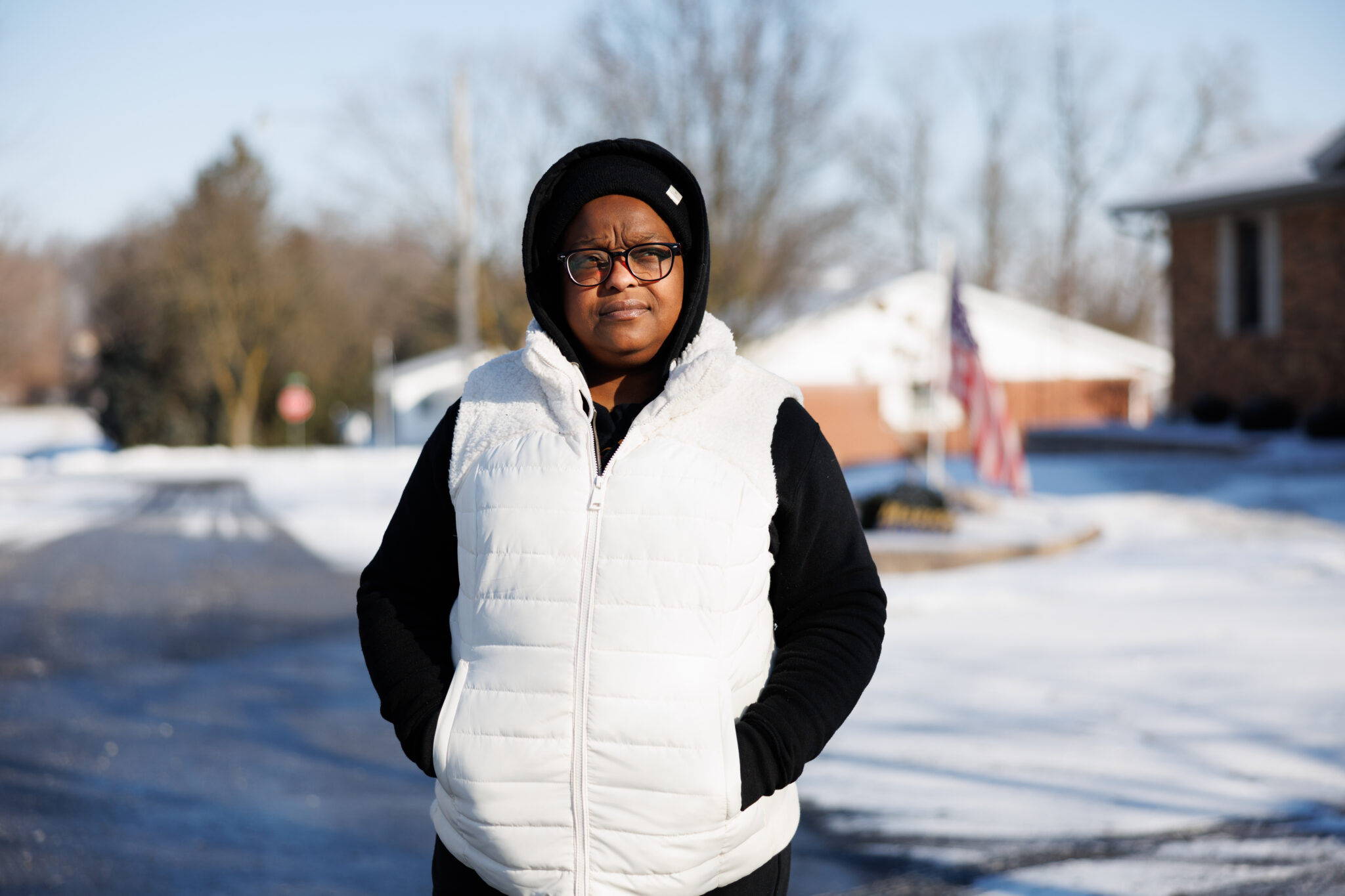
    CHICKASAW, OH — JANUARY 24: Seventh-generation Randolph Freepeople descendant Paisha Thomas, January 24, 2025, on Virginia Street in Chickasaw, Ohio. (Photo by Graham Stokes for Ohio Capital Journal. Republish photo only with original article.)

    By:  Ohio Capital Journal

    This story is the second in a two-part series on mapping land denied the Randolph Freedpeople and state efforts to make amends. You can read the first part here.

    CHICKASAW — “So, this could’ve been my neighborhood,” Paisha Thomas said, trudging down a snowy street in Chickasaw, Ohio. “That’s infuriating.”

    The Mercer County village sits about six miles west the heart of New Bremen, the Miami and Erie Canal stop where Thomas’ ancestors were turned away from their land by a white mob almost 180 years ago.

    The Randolph Freedpeople were a group of roughly 400 men and women released from slavery in their former owner’s will. John Randolph was a prominent Virginia politician and landowner, but state laws prohibited freed slaves from remaining in the state. Randolph’s will not only freed his slaves but set aside money with which his executor, William Leigh, could purchase land on their behalf.

    GET THE MORNING HEADLINES.


    Leigh was drawn to western Ohio. Although the state had harsh “Black codes” of its own, requiring employers post a $200 bond against a Black employee becoming a public charge, those laws were rarely enforced. Instead, Leigh saw a sparsely populated and agrarian region with a small but thriving Black community called Carthagena not far from New Bremen.

    Leigh bought roughly 3,200 acres for the freedpeople, but when they arrived white men armed with muskets turned them back and even marched along the canal until they crossed the county line.

    The Randolph Freedpeople eventually settled in several towns, like Rossville outside of Piqua, but they were never able to get the land purchased on their behalf. Instead of homesteading, many found work as laborers or domestic servants. In the early 1900s, a group of descendants petitioned Ohio courts to return their land, but the case was dismissed under the statute of limitations.

    Although the deeds for that land didn’t disappear, the specific location of the parcels wasn’t well understood until a group of Miami University students took the story on as a class project. Late last year they produced a map of the Randolph parcels for the first time, encompassing 3,140 of the total acreage purchased.

    But while that makes the loss more tangible, the question of how to atone is still very much up in the air.  One state lawmaker wants Ohio to officially acknowledge the mob incident and formally apologize.

    The lawmaker who represents the area, however, seems more inclined to leave it in the past. Meanwhile, descendants like Thomas want to see far more than just an apology — they want some form of compensation for what was lost.

    What could be

    Today, the Randolph Freedpeople’s land makes up about 200 parcels scattered south and west of Grand Lake St. Marys. Nearly all of it is still dedicated to agriculture, but there are a handful of commercial or industrial parcels and in the northeast corner of what is now Chickasaw, several residential parcels.

    Thomas chuckled at the irony of the street names that sprung up on a plot of land meant for the Randolph Freedpeople — Liberty Street, curving smoothly into Virginia Street. The homes are nice but not extravagant; a tiny neighborhood of 1970s ranch-style homes with broad front lawns and no fences. She described growing up in Piqua with her family spread throughout the city.

    “Here could have been just like a neighborhood of people, you know, walking, yelling across the yard,” Thomas said. “That’s frustrating.”

    She was particularly struck by the large grain silos a couple hundred yards from the street.

    “When we came around that corner over there and saw the farm and the grain storage right next to a residential home, it just felt very in your face, like I asked for it because I came here, but it just felt very like now there’s no denying or guessing. There’s actual evidence of what could be, because it is — but it’s for somebody else.”

     CHICKASAW, OH — JANUARY 24: Seventh-generation Randolph Freepeople descendant Paisha Thomas, January 24, 2025 in Mercer County Ohio. (Photo by Graham Stokes for Ohio Capital Journal. Republish photo only with original article.) 

    What amount?

    Thomas thinks about what was lost in generational terms. To her, the Randolph Freedpeople didn’t just miss out on the roughly five square miles worth of land that has appreciated in value over the years, they missed out on nearly two centuries of income that farmland could’ve produced.

    It’s likely impossible to put a dollar figure on that, but she wants the state to try.

    Thomas has started a nonprofit called Land of the Freed to raise awareness and advocate on behalf of descendants. The group has taken the lead on renovating African Jackson Cemetery in Rossville — a settlement just outside Piqua where several Randolph Freedpeople families landed after being turned away in Mercer County.

    Butch Hamilton grew up with Thomas and is a member of the Land of the Freed board. Like Thomas, he’s taking a long view.

    “What amount of money has Paisha’s family been denied by not being able to settle and claim that land? That’s the thought that comes to my mind,” he said. “And then the then the second thought is, well, what is going to be done to make the make the whole situation right?”

    His wife Sherri Hamilton sits on the board as well, and she acknowledged the seeming impossibility of the task.

    “There, quite literally, is probably no way to give back what was stolen so many generations later,” she said. “But something needs to be done.”

    The Miami University study tallied the current assessed value of the Randolph plots at roughly $14 million. But with much of the acreage valued for its agricultural use, that’s likely far lower than what the land would fetch on the open market. At $14 million, the land students identified would be worth about $4,500 an acre. An Ohio State University survey put agricultural land in the Western region of Ohio at more like $11,500 an acre, and a handful of recent Mercer County agricultural land sales listed on Zillow range from $16,500 to $21,600 an acre.

    Although the question of value is tricky, Butch Hamilton argued it’s unavoidable.

    “We keep saying something has to be done,” he said. “The thing that needs to be done is the family needs to be compensated with money. I mean, there needs to be a payout.”

    Regardless of what you call it, it amounts to reparations — a political third rail, particularly among Republicans. Compensating descendants, the argument goes, rewards people who weren’t directly harmed by taking from those who did no wrong.

    That said, there are notable historical precedents. In the 1980s, President Ronald Reagan signed off on payments to Japanese Americans interned during World War II. In the 1990s, Florida Gov. Lawton Chiles approved a $2.1 million measure to compensate residents of Rosewood, a Black town razed by a white mob in 1923.

     COLUMBUS, Ohio — MARCH 22: State Rep. Dontavius Jarrells, D-Columbus, March 22, 2023, at the Statehouse in Columbus, Ohio. (Photo by Graham Stokes for Ohio Capital Journal. Republish photo only with original article.) 

    State repsonse

    While Thomas and the Hamiltons are thinking in terms of generations, state Rep. Donatvius Jarrells, D-Columbus, has to think in terms of votes. His long-term ambitions are nearly as high, but in a General Assembly controlled by Republicans he’s conscious of what is and isn’t possible.

    He wants to begin with a resolution formally apologizing for what happened to the Randolph Freedpeople. Jarrells is expecting to introduce that proposal sometime in February to align with Black History Month.

    “I think that resolution is kind of the first step,” he explained, because many of his colleagues aren’t aware of what occurred.

    “And so, it gives us an opportunity to, one, have a baseline of knowledge across our chamber on what happened to these Ohioans, and then opens the door for conversations about what we can do.”

    Jarrells floated the idea of a museum or a scholarship fund as ways the state might make amends to Randolph Freedpeople descendants, and he said Thomas and the Hamiltons have a point when it comes to money. Jarrells said many of the struggles he’s heard about from descendants trace their way back to “this one point of time where they could have built wealth, and then that wealth was taken away from them.”

    But Jarrells may face headwinds simply getting the General Assembly to take up an apology resolution.

    He wants to co-sponsor the measure with state Rep. Angie King, R-Celina, whose district covers the entirety of Mercer County. But speaking after a recent session, King said she didn’t know what Jarrells was working on. Although King said she’s “familiar” with the Randolph Freedpeople story, she did not answer questions about what, if anything, the state should do now.

    “That’s my comment,” she said. “As a county recorder, I’m familiar with it because we digitized the records.”

    Ohio Capital Journal sent King’s office a follow up email seeking additional comment. She did not reply.

     CELINA, OH — JANUARY 24: Mercer County Historical Society Director Cait Clark January 24, 2025, at the Mercer County Historical Museum in Celina, Ohio. (Photo by Graham Stokes for Ohio Capital Journal. Republish photo only with original article.) 

    What’s possible

    The Mercer County Historical Society is based at the Riley House Museum in Celina, Ohio. The organization has a small mountain of documents related to the Randolph Freedpeople as part of its collection. But museum Director Cait Clark, acknowledges even in Mercer County the event is largely forgotten.

    “I’d say the broader population probably doesn’t know, and they definitely should,” she said.

    When it comes to how public officials should make amends, Clark is quick to note that’s a decision outside her purview. But drawing a comparison to how native Americans were pushed off their land, she argued, “if there’s nothing that can be done to fix the past directly, the minimum you can do for these people is to acknowledge what happened. If nothing else, acknowledge it.”

    Clark expressed doubts about the possibility of compensating descendants in the current political climate, but added, “if it was my family, I would definitely want acknowledgement and some form of compensation, because this was highly disruptive to a group of people.”

    As for what her organization can do, Clark emphasized education through articles, public displays, or historical markers.

    “Our role in it could be small or large,” she said, “it just depends on how far we get.”

    Meanwhile, Thomas and the Hamiltons aren’t exactly impressed with an apology resolution.

    “That’s an example of crumbs,” Butch Hamilton said. “And we’re in a day and age where that’s not acceptable anymore.”

    Even if it’s a first step, he insisted that there need to be further steps, and fast — “This case has been going on since 1846,” he argued.

    If the state acts, whether through direct payments to descendants or something more diffuse like a scholarship program, there will likely be those who see it as a misguided response to a historical wrong. Sherri Hamilton acknowledged how wary people become when reparations become part of the conversation. But she argued that’s not an excuse to sweep past-wrongs under the rug.

    “Take the African American experience out of it. Take the Blackness out of it,” she said. “Just say these are human beings who had land stolen from them. Now, if they were whomever, the German immigrants that settled in New Bremen, what would be done for them? And then that’s the answer.”

    Follow Ohio Capital Journal Reporter Nick Evans on X or on Bluesky.
    YOU MAKE OUR WORK POSSIBLE.

    ______________
    Nick Evans
    Nick Evans

    Nick Evans has spent the past seven years reporting for NPR member stations in Florida and Ohio. He got his start in Tallahassee, covering issues like redistricting, same sex marriage and medical marijuana. Since arriving in Columbus in 2018, he has covered everything from city council to football. His work on Ohio politics and local policing have been featured numerous times on NPR.

    Ohio Capital Journal is part of States Newsroom, the nation’s largest state-focused nonprofit news organization.

    MORE FROM AUTHOR

  • After a year of voter fraud concerns Ohio’s election audit lands north of 99%, again

    After a year of voter fraud concerns Ohio’s election audit lands north of 99%, again

    Getty Image

    By:  Ohio Capital Journal

    Throughout 2024, Republican officials in Ohio and around the country raised alarms about potential voter fraud ahead of November’s election. But Election Day came and went without a hiccup and a post-election audit released late last month reiterated what many advocates have been saying all along — Ohio’s election system is extremely safe and accurate.

    “Ohioans deserve to know that their elections are transparent, accessible, and accountable,” Secretary of State Frank LaRose said in a press release. “As 2024 comes to a close, I am proud to announce yet another 99.9% audit accuracy rate and am grateful for the hard work and dedication of Ohio’s bipartisan election officials who make it happen.”

    LaRose went on to note that for the Presidential race in particular all 88 counties reported a 100% accuracy rate.

    How it works

    County boards have to audit three races — whatever is at the top of the ticket, another statewide race selected by the secretary and a local race selected by the county board. The review has to include at least 5% of the total votes cast in the county.

    In addition to the presidential race, in the latest audit counties reviewed the U.S. Senate race and a range of local contests like county commissioner or prosecutor. The Senate race accuracy rate was 99.997% and local races came in at 99.998%.

    GET THE MORNING HEADLINES.


    Those figures align with the results officials have turned in following every election in recent memory. Secretary LaRose bragged that since taking office, he has required a post-election audit after every election and thanked state lawmakers for codifying that practice going forward.

    Reality and rhetoric

    Those strong audit results are a big reason why LaRose and other officials routinely describe Ohio as “the gold standard” for election integrity. But LaRose himself spent much of the past year fanning suspicions about election fraud.

    In May, LaRose identified 137 potential noncitizens in the statewide voter registration database as part of an annual audit. Although his announcement acknowledged the registrations could be “the result of an honest mistake,” he took the opportunity to share his findings in conservative media as an example of his efforts to fight fraud and the recalcitrance of federal agencies for not giving him access to certain databases.

    LaRose’s allegations got quoted as fact by U.S. House Speaker Mike Johnson in lobbying for a bill requiring proof of citizenship to vote. A handful of state lawmakers in Ohio have recently floated the same idea.

    As it happens, LaRose’s audit wound up sweeping in a handful of recently naturalized citizens. Some of them argued the secretary was taking shortcuts to include individuals who hadn’t met the specific statutory requirements for getting flagged.

    Still, in the run up to last year’s election, those concerns resulted in some Ohio counties fielding thousands of voter registration challenges — sometimes over discrepancies as trivial as an extra space in their name.

    Just two weeks before the election, Attorney General Dave Yost announced his office had investigated the hundreds of cases flagged by LaRose and turned up six cases of illegal voting. Yost grumbled about being asked to investigate several cases that amounted to simple registration errors, and it turned out one of the people they indicted was already dead. The other cases, meanwhile, read like honest misunderstandings rather than willful fraud.

    In addition, LaRose got into a running battle over access to ballot drop boxes. After a federal court ruled that people with disabilities must be allowed to get assistance from a broader range of people than the list of close family laid out in state law, he instituted a new policy requiring those assisting others sign a form stating they’re doing so in compliance with state law. In the name of fighting “ballot harvesting” those changes took access to drop boxes off the table for anyone not dropping their own ballot — whether they were assisting someone with disabilities or one of the close family members specifically outlined in state law.

    LaRose went to so far as to send a letter to state lawmakers encouraging them to scrap drop boxes altogether. A pair of state lawmakers have included that provision in a measure requiring proof of citizenship to vote.

    Reactions

    In response to the latest election audit, Ohio Association of Election Officials executive director Aaron Ockerman said, “Once again Ohio election officials have risen to the occasion and provided an efficient, trustworthy and fair election.”

    “The post-election audits of the 2024 Presidential election confirm what we have known to be true for many years,” he added. “Ohioans can trust their election results.”

    Jen Miller, who heads up the League of Women Voters of Ohio praised the work of election officials.

    “We commend Ohio’s diligent elections officials for once again running secure, accurate elections,” she said. “They are public servants who deserve raises in Ohio’s next budget.”

    Miller went on to underscore the implications of yet another sterling audit.

    “The audit results prove that fraud is exceedingly rare in Ohio, and we caution Secretary LaRose and lawmakers against changing voting laws, which would likely decrease access without improving security at all.”

    Follow OCJ Reporter Nick Evans on Twitter.

    YOU MAKE OUR WORK POSSIBLE.

    __________
    Nick Evans
    Nick Evans

    Nick Evans has spent the past seven years reporting for NPR member stations in Florida and Ohio. He got his start in Tallahassee, covering issues like redistricting, same sex marriage and medical marijuana. Since arriving in Columbus in 2018, he has covered everything from city council to football. His work on Ohio politics and local policing have been featured numerous times on NPR.

    Ohio Capital Journal is part of States Newsroom, the nation’s largest state-focused nonprofit news organization.

    MORE FROM AUTHOR

  • Government watchdogs, Black lawmakers urge DeWine to veto police video changes

    Government watchdogs, Black lawmakers urge DeWine to veto police video changes

    (Photo by Brandon Bell/Getty Images.)

    By:  Ohio Capital Journal

    Among the dozens of measures sitting on Ohio Gov. Mike DeWine’s desk, is one proposal that would allow police departments to charge $75 per hour of body camera footage with a cap of $750.

    The provision showed up late as part of House Bill 315 — a measure originally meant to revise Ohio Township laws, like allowing public notices to be published digitally or for trustees to establish preservation commissions. But in the last-minute rush, that bill wound up as a lifeboat for only loosely connected proposals unlikely to pass on their own.

    The township bill, for instance, includes a provision defining antisemitism and another giving the Secretary of State greater latitude in disciplining notaries. Both changes crib from similar measures that didn’t quite make it.

    The public records changes, however, came out of left field. No previous piece of legislation sought to codify the right of law enforcement agencies to take their time reviewing, redacting and producing video footage or specifying the cost those agencies could charge for their efforts.

    Gov. Mike DeWine has yet to take action on the bill, but in a press conference he expressed sympathy for small police agencies. Pressed on the potential ramifications of making it more costly and time consuming to get video after incidents like police shootings, DeWine insisted he has yet to decide on the bill. But he argued the changes aren’t a question of whether and how fast the public can access records, but rather “as a matter of public policy, are we going to require some reimbursement for that?”

    What the changes look like

    The proposal gives cover to law enforcement agencies in terms of the time and cost of producing video records.

    Gov. DeWine’s concerns about reimbursement notwithstanding, Ohio law already allows agencies to charge requesters the “actual cost” of copying and mailing public records. What current law doesn’t allow is for agencies to bill requesters for staff time.

    The latest proposal changes that.

    GET THE MORNING HEADLINES.


    House Bill 315Under the measure, law enforcement agencies would be allowed to charge the cost of “reviewing, blurring or otherwise obscuring, redacting, uploading, or producing” video records up to $75 for each hour of video provided. The measure also places an overall cap of $750 per request.

    Additionally, the bill directs courts to weigh the time involved in preparing video for release when considering whether an agency is providing records in a “reasonable” amount of time as required by law.

    There are a handful of other administrative hurdles built in, too. Like current law, agencies can ask for payment of actual costs up front, but under the current proposal agencies can demand prepayment of an estimate before beginning work on a request. If the actual cost is higher they can charge as much as 20% more. The bill is silent on what happens if the actual cost is less.

    The provision also gives agencies extra time to act. They could take as much as five business days simply to produce the cost estimate.

    Pushback

    The Ohio Legislative Black Caucus issued a statement urging the governor to use a line-item veto on the police video provisions.

    Rep. Terrence Upchurch, D-Cleveland, argued “Taxpayers have already funded these cameras and footage. Charging additional fees for access is wrong and undermines transparency.”

    The OLBC president insisted the changes would disproportionately affect Black and minority communities.

    “When families seek answers or communities demand accountability, these records provide clarity,” Upchurch said. “Charging the public for access erodes trust and justice.”

    Several government watchdog groups including the Ohio branches of the ACLU, Common Cause and the NAACP sent DeWine a letter urging him to veto the changes. In addition to opposing the policy, they criticized the measure on procedural grounds too.

    They argued it was amended into the bill “at the very end of the legislative session with zero notice to the public.”

    “As a result,” the letter continued, “Ohioans had no opportunity to air concerns, to discuss these changes with lawmakers and other stakeholders, or to formally appear as witnesses before a committee(s), as would happen during the normal legislative process.”

    The groups argued vetoing the provisions wouldn’t necessarily close the door on the issue either.

    “Your veto will still allow legislators, if they wish, to pursue these changes,” they wrote, “but instead with an open, deliberative, and cooperative process. This would allow Ohioans to properly express their opinions and concerns without such sudden and secretive changes with huge impacts on policing and the public’s right to know.”

    Follow OCJ Reporter Nick Evans on Twitter.

    YOU MAKE OUR WORK POSSIBLE.

    ______________
    Nick Evans
    Nick Evans

    Nick Evans has spent the past seven years reporting for NPR member stations in Florida and Ohio. He got his start in Tallahassee, covering issues like redistricting, same sex marriage and medical marijuana. Since arriving in Columbus in 2018, he has covered everything from city council to football. His work on Ohio politics and local policing have been featured numerous times on NPR.

    Ohio Capital Journal is part of States Newsroom, the nation’s largest state-focused nonprofit news organization.

    MORE FROM AUTHOR

  • Before leaving Washington, Ohio Sen. Sherrod Brown restores retirement benefits for public workers

    Before leaving Washington, Ohio Sen. Sherrod Brown restores retirement benefits for public workers

    By:  Ohio Capital Journal

    On his way out of town, Ohio Democratic U.S. Sen. Sherrod Brown was able to notch one final long-sought legislative victory that will benefit public sector workers in Ohio and around the country. The Social Security Fairness Act ensures former government workers like police, firefighters and teachers can collect their full retirement benefits by repealing two provisions that reduce social security payouts.

    Many public sector workers aren’t covered by Social Security because their employer runs a pension program for their retirement. But eventually, a lot of those workers move on to other jobs that do pay into the Social Security system. Even though many of them end up working the requisite 40 quarters to be fully eligible for Social Security benefits, the program reduces their payouts because they’re also collecting retirement benefits from their other pension program.

    GET THE MORNING HEADLINES.


    William Johnson, who heads up the National Association of Police Organizations explained, “Most police officers must retire after specific time served, usually in their early to mid-fifties, (but) many look for new opportunities to serve their community.”

    Those workers are penalized by what’s known as the Windfall Elimination Provision, he explained.

    “Instead of receiving full support from their rightfully earned Social Security retirement benefit, their pension heavily offsets it, thus vastly reducing the amount they receive,” Johnson said.

    Surviving spouses can come off even worse though. The Government Pension Offset requires reductions in Social Security dependent benefits if one spouse receives benefits from a public pension. Johnson argued that offset often results in “eliminating most or all of the payment.”

    Those provision were approved by lawmakers in the 1970s and 80s in a bid to keep the program solvent.

    In all, Brown’s office said, the reductions affect 3 million Americans including almost a quarter million Ohioans.

     U.S. Sen. Sherrod Brown, D-OH, leading a panel discussion on public workers’ Social Security benefits. (Photo by Nick Evans for Ohio Capital Journal.) 

    How we got here

    Following an election in which Republicans criticized Brown’s long service in Washington, passage of the Social Security Fairness Act offers one data point in favor of experience. Brown held a field hearing in Columbus discussing the proposal earlier this year and he’s been working to pass it since serving in the U.S. House of Representatives.

    He last served in that chamber 17 years ago.

    In a press release following the vote Brown described working for years to eventually cobble together more than 60 cosponsors.

    “We have spent decades working to pass this legislation and tonight is a victory for all the public servants who will finally get the Social Security they have earned,” he said. “Tonight, Congress ensured that police officers, firefighters, teachers, and public servants across Ohio will be able to retire with the Social Security they spent their lives paying into.”

    Brown’s effort has also been the beneficiary of shifting attitudes in the Republican Party. For many, many years, a core tenet of Republican politics was searching for a way to get Social Security spending under control. Former House Speaker Paul Ryan’s chief legislative goal was privatizing the program. More recently U.S. Sen. Rick Scott, R-FL, proposed a Rescue America Plan in 2023 that would sunset Social Security and Medicare.

    But since the emergence of Donald Trump as the leader of the Republican Party, efforts to overhaul the retirement program have largely taken a back seat. Within weeks of introducing his plan, for instance, Scott backtracked on sunsetting Social Security and Medicare. Last week, he even voted in favor of the Social Security Fairness Act.

    It’s not hard to see why. With Trump leading the party there’s no longer a top-down rhetorical push for cutting spending on a popular program. At the same time, traditionally Republican-leaning constituencies like police have a strong case that it’s unfair to limit Social Security benefits they earned simply because they earned other benefits from a different career.

    All the same, the measure does nothing to improve the long-term balance sheet for Social Security. The most recent report on the Social Security Trust Fund puts its depletion date at 2033. Meanwhile, although Trump has not proposed cutting retirement benefits he has proposed cutting the taxes that pay for that trust fund—potentially burning through its reserves more quickly.

    Reactions

    In the moment however, passage of the bill was met with praise from organizations representing public sector workers. National Fraternal Order of Police President Patrick Yoes argued the WEP and GPO are “inherently unfair provisions that unjustly penalize our nation’s public employees.”

    “No one, even those who did not vote for our bill today, argued that the provisions treated workers fairly,” he went on. “If this scheme were being run by a pension board or private money management group, instead of the social security administration, they would not call it an elimination of a windfall or an offset — it would be considered embezzlement.”

    International Association of Fire Fighters General President Edward Kelly chimed in that “for over 40 years,” firefighters and other public workers have had retirement benefits “stolen” by Congress.

    “But today,” he said, “the United States Senate, in a rarely seen bipartisan effort, stood up to say, ‘No more,’ voting to ensure retirees finally get the benefits they paid into and earned.”

    Ohio Education Association President Scott DiMauro said, “for too long, the federal government has failed to provide the full Social Security benefits many public school educators earned.”

    “For too long,” he added, “potentially great educators have chosen not to enter this profession because they would lose much of the Social Security benefits they had previously earned if they entered a life of public service. That changes now.”

    Follow OCJ Reporter Nick Evans on Twitter.

    YOU MAKE OUR WORK POSSIBLE.

    ______________
    Nick Evans
    Nick Evans

    Nick Evans has spent the past seven years reporting for NPR member stations in Florida and Ohio. He got his start in Tallahassee, covering issues like redistricting, same sex marriage and medical marijuana. Since arriving in Columbus in 2018, he has covered everything from city council to football. His work on Ohio politics and local policing have been featured numerous times on NPR.

    Ohio Capital Journal is part of States Newsroom, the nation’s largest state-focused nonprofit news organization.

    MORE FROM AUTHOR

  • Ohio lawmakers working to advance local infrastructure bond issue during lame duck session

    Ohio lawmakers working to advance local infrastructure bond issue during lame duck session

    By:  Ohio Capital Journal

    If all goes to plan, lawmakers will be asking Ohio voters next May to renew a multibillion-dollar fund that helps get shovels in the ground for local public works projects like roads and sewers. The State Capital Improvement Program has been around since the late 1980s and offers competitive grants and loans for local governments’ capital projects; money for the program comes from bonds backed by the general revenue fund.

    The proposal would extend the State Capital Improvement Program for another 10 years by issuing $2.5 billion in new bonds. Voters have renewed the program three times previously in 1995, 2005, and 2014.

    The Senate has already passed its version of the joint resolution to place the measure on the ballot. The House Finance Committee held its first hearing for a companion measure this week.

    GET THE MORNING HEADLINES.

    What the program funds


    To get a sense of scale, Ohio Public Works Commission director Linda Bailiff laid out the scope of physical infrastructure the program helps maintain.

    “I think it’s over 212,000 lane miles that counties townships and municipalities are responsible for,” she said. “There’s 29,000 bridges, there’s 4,400 public water systems, and 1,000 wastewater systems.”

    “And so all of those need attention,” she explained. “Our funds pay for repair, replacement, reconstruction, rehabilitation as well as new (builds) and expansion.”

    Since its inception the State Capital Improvement Program has funded 18,860 projects around Ohio.

    In the Public Works Commission’s latest report, the agency highlights some of the projects. They range from overhauling a major thoroughfare in Columbus or replacing a bridge in Lorain County to improving sidewalks and curb ramps in the village of Willard.

    The Commission also shares a spreadsheet of the 4,000-plus projects the program has supported since 2017. Over that stretch, the program has provided $2.3 billion — $1.5 billion of which came in the form of grants — in support of $5.2 billion-worth of infrastructure improvements around Ohio.

    Mahoning County Engineer, and president of the County Engineers Association of Ohio, Patrick Ginnetti was unequivocal in his praise of the program.

    “I will say, in my opinion, this is the most successful program the state of Ohio has,” he said.

    How it works

    Under the program, Ohio is split up by county into 19 districts. The most populous counties are their own districts, and in more sparsely populated regions several counties are lumped together. To get funding, local governments submit proposals within their district which are then scored based on a district-specific set of categories.

    “Namely health and safety, the priority needs of that particular district, financial considerations, readiness to proceed, the age and condition of the infrastructure,” Bailiff offered as examples.

    Every year district level officials rank their proposals and submit funding recommendations to the Ohio Public Works Commission.

    “As long as everything complies with statute,” Bailiff said, “we go ahead and prepare funding agreements that are released about July 1 each year.”

    Grant applications can get up to 90% of the project cost covered, so local entities still need to pony up a share of funding. Loans can cover the full project cost, and they’re offered interest free.

    Bailiff adds that they’ve got a couple of state-level set aside programs, too. One earmarks $20 million annually for rural villages and townships with a population of less than 5,000. After districts have doled out their award recommendations, they go back through the projects that didn’t get the nod.

    “They select up to five projects that did not get funded at the district, that fit that definition of the village or the rural township,” she explained. “And they submit them to the small government administrator to compete on a statewide basis, so they have a second shot at funding.”

    The Public Works Commission also has a first come first serve program for emergency work.

    How it’s working out

    Ginnetti explained his office, like the offices of county engineers around the state, gets its funding from gas taxes.

    “With the inception of electric cars, hybrids, CNG vehicles, gas tax has been relatively stagnant,” he said, “so our budgets have been stagnant,”

    Ginnetti described the State Capital Improvement Program as a way to “stretch” that budget, and he pointed to his county’s sewer system as an example.

    “We’ll utilize the grant funding and also the revolving loan fund to do what is known as sewer re-lining,” he said. “It’s a nondestructive way to give us additional useful life out of our existing gravity sewer.”

    “Again, where costs are a certain dollar amount,” he explained, “it helps minimize the impact to our operating budget.”

    In the last two years, he said, they’ve paved 25 miles of road, replaced five box culverts and relined 15,000 linear feet of sanitary sewer pipes.

    “And it’s a competitive program,” he stressed, “so it’s not like communities are just given a blank check and they say go do what you want.”

    Put simply, he described, “good projects get funded; projects that may not be as urgent or as critical do not.”

    Ginnetti said his county also got assistance from the emergency funding program after a road subsidence.

    “Had the emergency program not been there,” he said, “that would’ve resulted in a road closure — a lengthy road closure — and we probably would’ve had to sacrifice a paving program or several bridges or box culverts to get the road fixed.”

    “It’s basically life support,” he added, “for all of the municipalities, townships, county government in Ohio to get work done that we wouldn’t be able to do solely on our operating budget.”

    Follow OCJ Reporter Nick Evans on Twitter.

    YOU MAKE OUR WORK POSSIBLE.

    ______________
    Nick Evans
    Nick Evans

    Nick Evans has spent the past seven years reporting for NPR member stations in Florida and Ohio. He got his start in Tallahassee, covering issues like redistricting, same sex marriage and medical marijuana. Since arriving in Columbus in 2018, he has covered everything from city council to football. His work on Ohio politics and local policing have been featured numerous times on NPR.

    Ohio Capital Journal is part of States Newsroom, the nation’s largest state-focused nonprofit news organization.

    MORE FROM AUTHOR

  • Ohio Republicans propose requiring proof of citizenship for voting, removal of dropboxes

    Ohio Republicans propose requiring proof of citizenship for voting, removal of dropboxes

     A ballot counter machine. (Photo by Graham Stokes for the Ohio Capital Journal. Republish photo only with original story.)

    November’s election went off without a hitch and it was a great day for the GOP, but some members still want additional voting restrictions

    By:  Ohio Capital Journal

    Another election has come and gone in Ohio with no reports of widespread fraud. That hasn’t stopped a handful of Republican state senators from advancing legislation to place new restrictions on how Ohioans cast their ballots.

    State Sen. Niraj Antani, R-Miamisburg, has put forward a bill requiring Ohioans show proof of citizenship to register to vote or update their existing registration. Sens. Theresa Gavarone, R-Bowling Green, and Andrew Brenner, R-Delaware, filed another bill imposing proof of citizenship requirements, and the elimination of ballot drop boxes.

     COLUMBUS, OH — FEBRUARY 22: State Sen. Niraj Antani, R-Miamisburg. (Photo by Graham Stokes for Ohio Capital Journal) 

    That state legislation takes its cue from efforts at the federal level backed by U.S. House Speaker Mike Johnson. That proposal, known as the SAVE Act, had little chance of passage with Democrats in control of the U.S. Senate. Now, with a Republicans in control of all three branches of government, it stands a better chance of passing.

    It’s already illegal to register or vote as a non-citizen at the state and federal level. Despite that threat of criminal prosecution, backers still worry current law allows voters to register with little more than a promise.

    It appears that approach has worked exceptionally well, though. Actual reviews of the voter rolls have found cases of actual fraud are vanishingly rare and nowhere close to enough to affect the outcome of races.

    What’s more, the effort to protect voting by demanding citizenship documentation, risks disenfranchising eligible citizens. One University of Maryland study estimated 21 million Americans don’t have ready access to the required documents. After Kansas imposed similar requirements about a decade ago, more than 30,000 voters had their registration suspended or canceled.

    GET THE MORNING HEADLINES.

    Proof of citizenship

    Both measures lay out the same list of documents for verifying citizenship. A U.S. Passport, birth certificate or naturalization certificate will all work, but they lean heavily on existing records held by the Bureau of Motor Vehicles. Lawmakers seem to envision a system in which most initial registrations or updates get verified behind the scenes, with county boards checking with the BMV that it received citizenship documents when a voter got their license.

     COLUMBUS, Ohio — JUNE 07: State Sen. Andrew Brenner, R-Delaware. (Photo by Graham Stokes for Ohio Capital Journal) 

    For people whose information doesn’t match, for instance due to a name change, marriage or divorce, they’ll need to provide a court order or marriage certificate.

    In a press release, Brenner framed their proposal as strengthening laws and adding protections “so that Ohioans continue to know there is a reliable system in place when they cast their vote.”

    Gavarone insisted Ohio remains the “gold standard” for election integrity, but that her bill “addresses areas of the election law we can improve, including an extra layer of protection to enforce our state constitution’s citizenship requirement.”

    “This is a simple fix that strengthens trust and integrity in our institutions,” she added.

    But the proposals could actually see Ohio sacrificing simplicity in the name of security. Federal law does not require proof of citizenship to vote, and so even if lawmakers approve some version of the requirement, they can only really apply it to state forms and state elections. As in Arizona, Ohio voters would still be able to register with federal forms, but they would only be able to vote in federal elections, and ineligible to sign initiative petitions.

    Dropboxes

    While Antani’s proposal sticks to the citizenship requirements, Brenner and Gavarone go a step further and outlaw the use of ballot drop boxes. Although there have been no credible allegations of voter fraud tied to drop boxes, they have been a persistent bugaboo for skeptics.

     COLUMBUS, Ohio — MAY 31: State Sen. Theresa Gavarone, R-Bowling Green. (Photo by Graham Stokes for Ohio Capital Journal) 

    In the most recent election, Ohio Secretary of State Frank LaRose imposed rules effectively limiting their use to individual voters dropping off their own ballot. In an August letter, he urged state lawmakers to consider removing drop boxes altogether.

    Apparently Brenner and Gavarone were listening.

    Their legislation restricts ballot drop-offs to hand delivery — explicitly prohibiting board from accepting ballots “returned by personal delivery to an unattended receptacle.”

    According to the Secretary of State’s early vote dashboard, voters aiming to get their ballot in early were far more likely to vote early in person or mail in their absentee ballot. The roughly 181,000 ballots returned by drop box represented less than 7% of the total. Mail ballots and early in person ballots accounted for 31% and 59% respectively.

    Gavarone justified the drop box rollback with reference to incidents in Oregon and Washington where incendiary devices were placed in drop boxes.

    Follow Ohio Capital Journal Reporter Nick Evans on Twitter.


    Nick Evans
    Nick Evans

    Nick Evans has spent the past seven years reporting for NPR member stations in Florida and Ohio. He got his start in Tallahassee, covering issues like redistricting, same sex marriage and medical marijuana. Since arriving in Columbus in 2018, he has covered everything from city council to football. His work on Ohio politics and local policing have been featured numerous times on NPR.

    Ohio Capital Journal is part of States Newsroom, the nation’s largest state-focused nonprofit news organization.

    MORE FROM AUTHOR

  • Abortion opponents back measure barring local support programs

    Abortion opponents back measure barring local support programs

    Getty Images

    The bill would claw back public funding for expenses like transportation, lodging or lost wages for people seeking reproductive healthcare

    By:  Ohio Capital Journal

    State lawmakers in Ohio want to prohibit local governments from using public dollars in support of abortion. They’re casting a wide net.

    Legislation sponsored by state Rep. Josh Williams, R-Sylvania, bars public funds from being given directly or indirectly to an organization that provides abortions that aren’t necessary to protect the life of the mother.

    In addition, the bill prohibits funding going to any group providing services for people seeking such abortions like transportation, housing or wage reimbursement. Williams’ measure also takes an apparent swing at public employees by explicitly including paid time off as a prohibited expenditure.

    The bill uses a claw back provision as its enforcement mechanism. If a municipality expends funds in violation of the act, the state would reduce its share of the local government fund appropriation. Dollars withheld under the law would then be directed to a new fund supporting crisis pregnancy centers.

    Williams’ bill requires local governments to report relevant spending on a monthly basis. If they don’t report — or don’t report accurately — they risk losing their entire local government fund appropriation.

    GET THE MORNING HEADLINES.

    Proponents

    In the House Government Oversight committee, the usual representatives of the anti-abortion movement showed up to testify in favor of Williams’ bill.

    Will Kuehnle from the Catholic Conference of Ohio argued, “In no circumstance should state dollars, even by subsidy, bring about the termination of a human life.”

    He highlighted programs like one in Columbus granting half a million dollars to support women seeking abortions by reimbursing travel and childcare costs rather than the procedure itself. The appropriation was made with federal dollars from the American Rescue Plan, and it was approved by Columbus City Council shortly after the U.S. Supreme Court overturned Roe v. Wade triggering Ohio’s earlier 6-week abortion ban to snap into effect.

    In his sponsor testimony, Williams cited initiatives in other cities as well — all backed by federal rather than state dollars, and none of which paid for medical procedures.

    Kuehnle insisted if the city wants to offer assistance like paying for travel it should be spending that money supporting mothers rather than people seeking abortions. He argued in many circumstances, people seek an abortion because they’re not receiving some critical service from their community.

    “What this bill seeks to do is to take every dollar that we can give to a woman in need and make sure that’s where it’s going,” he said.

    Notably, while the measure punishes cities for supporting services connected to some abortions, it doesn’t actually provide services to pregnant people or young parents. Although some crisis pregnancy centers provide things like diapers, their primary mission is to discourage abortion.

    Emma Martinez from Ohio Right to Life criticized the same Columbus grant and cast her organization’s support for Williams’ bill in moral terms.

    “This legislature has drafted numerous laws that not only protect taxpayers from paying for abortions, but also that protect taxpayers’ conscience rights,” she argued.

    And Nilani Jawahar from the Center for Christian Virtue emphasized the legislation’s punitive approach to local governments.

    “This legislation is simple,” she said. “Counties and municipalities may spend their money as they please, but if they receive state funds for a specific purpose and they choose to spend it funding elective procedures, they are demonstrating to the state that they do not need that money, and therefore the state has a right to withhold it and direct it to where it may be put to better use.”

    Skeptical Democrats

    The measure’s proponents were met with pushback from the committee’s Democratic members.

    State Rep. Latyna Humphrey, D-Columbus, emphasized unintended consequences. Cutting off funds to entities that provide elective abortions risks cutting off access to other healthcare services those organizations provide, like screening for sexually transmitted infections.

    “You all understand that health care is a necessity, specifically in communities where there are health care deserts.” Humphrey pressed Kuehnle. “So I understand you all don’t believe in abortions, but entities like Planned Parenthood and others do provide health care services outside of that.”

    Meanwhile, Rep. Dani Isaacsohn, D-Cincinnati, asked Jawahar how lawmakers could square the bill’s approach with Ohio voters’ support for protecting reproductive rights in the vote for Issue 1.

    “What I’m asking is, how would you summarize the will of the voters as expressed in Issue 1 last year?” he said. “What did the voters express with Issue 1’s passage last year?”

    After a bit of back-and-forth Jawahar replied, “I’m not here to talk about the will of the voters, I’m here to talk about this bill and why we support it.”

    Follow Ohio Capital Journal Reporter Nick Evans on Twitter.

    YOU MAKE OUR WORK POSSIBLE.


    Nick Evans
    Nick Evans

    Nick Evans has spent the past seven years reporting for NPR member stations in Florida and Ohio. He got his start in Tallahassee, covering issues like redistricting, same sex marriage and medical marijuana. Since arriving in Columbus in 2018, he has covered everything from city council to football. His work on Ohio politics and local policing have been featured numerous times on NPR.

    Ohio Capital Journal is part of States Newsroom, the nation’s largest state-focused nonprofit news organization.

    MORE FROM AUTHOR

  • Ohio AG Yost allows voting amendment to proceed, other proposals might not be far behind

    Ohio AG Yost allows voting amendment to proceed, other proposals might not be far behind

    Ohio Attorney General Dave Yost. (Photo by Morgan Trau, WEWS.)

    By:  Ohio Capital Journal

    Last week, Ohio Attorney General Dave Yost allowed a state constitutional amendment to go forward after previously rejecting it.

    His approval was a formality — the Ohio Supreme Court recently ruled he could not reject the Ohio Voters Bill of Rights simply because of its title — but it could open to door to another amendment Yost has repeatedly blocked.

    In Ohio’s ballot initiative process the Attorney General plays a crucial gatekeeping role. After a committee has drafted its amendment and collected an initial 1,000 signatures, the AG gets to decide if what they’ve got down on paper represents a “fair and truthful” statement of what their proposal would actually do.

    It gives the AG significant power over whether a petition eventually winds up on the ballot.

    His approval, under court order, of the Ohio Voters Bill of Rights came after two previous rejections. A different measure to end qualified immunity received rejection letters seven times. But following the recent decision, the AG and the committee pushing to restrict legal protections for public employees like police officers are asking the state Supreme Court how its ruling impacts their proposal.

    The Ohio Voters Bill of Rights

    The amendment covers all the basics — voting is a fundamental right for anyone 18 years and older who is citizen of the U.S. and Ohio — and enshrines them in the state constitution. By establishing those rights in the state charter, procedures like early voting or absentee voting couldn’t be rolled back by a simple act of the General Assembly; those rights would become the floor rather than the ceiling.

    GET THE MORNING HEADLINES.


    However, the bill of rights goes a few steps further to make voter registration and casting a ballot far easier. The amendment would establish an automatic voter registration process which would update or register eligible voters anytime they interact with the Ohio Bureau of Motor Vehicles.  In addition, the proposal would establish same-day voter registration and grant counties the ability to open up additional ballot drop boxes or early voting sites.

    Although Republican Secretary of State Frank LaRose previously supported the idea of automatic voter registration, he derided the proposed amendment late last year.

    “Let me be clear: there will be nothing secure and fair about the way we vote in this state if this amendment is passed,” he said in a press release. “It’s a direct assault on the integrity of our voting process and the safeguards we’ve put in place to hold that process accountable.”

    Yost objected to the use of “bill of rights” to describe a series of provisions related to voting administration rather than “an articulation of specific, discrete rights that may be enforced by individuals against the government.” The Supreme Court wasn’t buying it, and noted in 2014 then-AG Mike DeWine advanced a proposal with the exact same name.

    But Yost didn’t give his approval without a parting shot. In his letter to the committee, he insisted, “the fact that the recent decision of the Supreme Court of Ohio concludes the relevant statute does not grant me authority to review the title does not change my determination that it is misleading.”

    “The Court did not reach a decision on the merits of that determination,” he went on. “I stand by it. I urge you to consider a more accurate and less misleading title.”

    The amendment formerly known as…

    Qualified immunity is a judicial doctrine holding that public officials should have protection from personal liability for their official conduct. Essentially, if an official is operating in good faith in murky legal waters they should be given the benefit of the doubt. The idea has been around since the late-1960s, but in recent years it has been used to shield police officers in excessive force cases.

    The Ohio Coalition to End Qualified Immunity has been working to get an amendment on the ballot, and in the last two years the state attorney general has rejected seven iterations of their amendment. The most recent proposal, submitted last July, has no title at all after Yost criticized the “Protecting Ohioans’ Constitutional Rights” name they’d given the earlier proposal.

    Yost rejected the untitled amendment, too — insisting the title “is an indispensable piece to determining whether the summary of it is fair and truthful.”

    But following the Ohio Supreme Court ruling that Yost couldn’t reject the Ohio Voters Bill of Rights based solely on the title, the AG and the committee backing the qualified immunity rollback are asking the court how the decision impacts their case.

    Last week both parties filed a joint motion with court to set aside the existing fight over the title and order the attorney general to go forward with his “fair and truthful” review of the underlying amendment summary.

    Last Wednesday, the court put briefing on hold for that underlying case, while it decides whether to order Yost go forward with his review.

    Follow OCJ Reporter Nick Evans on Twitter.


    Nick Evans
    Nick Evans

    Nick Evans has spent the past seven years reporting for NPR member stations in Florida and Ohio. He got his start in Tallahassee, covering issues like redistricting, same sex marriage and medical marijuana. Since arriving in Columbus in 2018, he has covered everything from city council to football. His work on Ohio politics and local policing have been featured numerous times on NPR.

    Ohio Capital Journal is part of States Newsroom, the nation’s largest state-focused nonprofit news organization.

    MORE FROM AUTHOR