Tag: Ohio Department of Health

  • Facts about Ohio’s abortion rate

    Facts about Ohio’s abortion rate

    The Ohio Department of Health’s 2017 Annual Abortion Report presents information derived from both the “Confidential Abortion Reports” and “Post-Abortion Care Reports for Complications” in Ohio. 

    Readers should note that abortion statistics in this report are limited to terminations occurring in Ohio; they do not include Ohio residents who obtained abortions outside the state. 

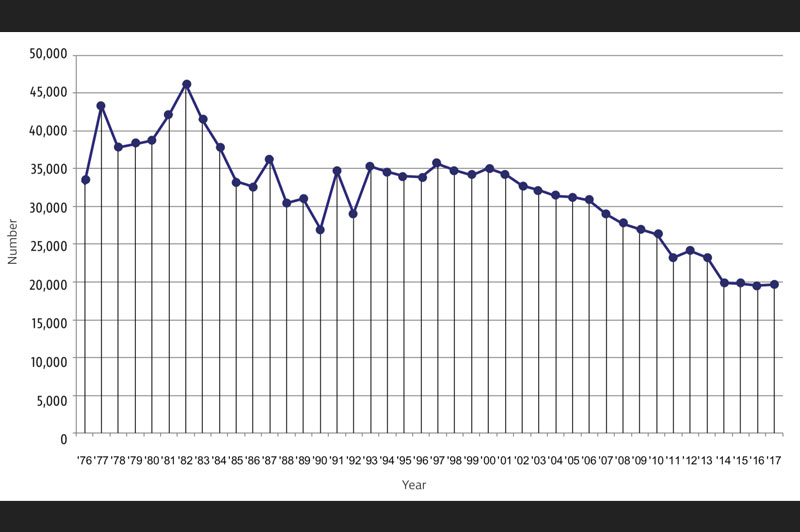
    Induced abortion statistics have been prepared in Ohio since 1976. Several trend comparisons in the 2017 Annual Abortion Report date back to 2003. A total of 20,893 induced pregnancy terminations were reported in Ohio for 2017, including 19,615 obtained by Ohio resident women (93.9%). This represents a 1% increase in induced pregnancy terminations from 2016 to 2017. Overall, since 2001 there has been a steady decline in terminations. When examined from 2001 to 2017, the annual decline averaged approximately 830 per year 

    Approximately one in ten women who obtained abortions in 2017 were under 20 years of age, with another one-third between the ages of 20-24 years of age. 

    While the age distribution of women obtaining abortions has remained relatively unchanged since 2001, the age-specific abortion rates for women under age 25 have steadily decreased. Approximately 85% of women with known marital status who obtained abortions were never married, divorced, or widowed. Fifteen percent of women who obtained abortions and whose marital status was known were married or separated. 
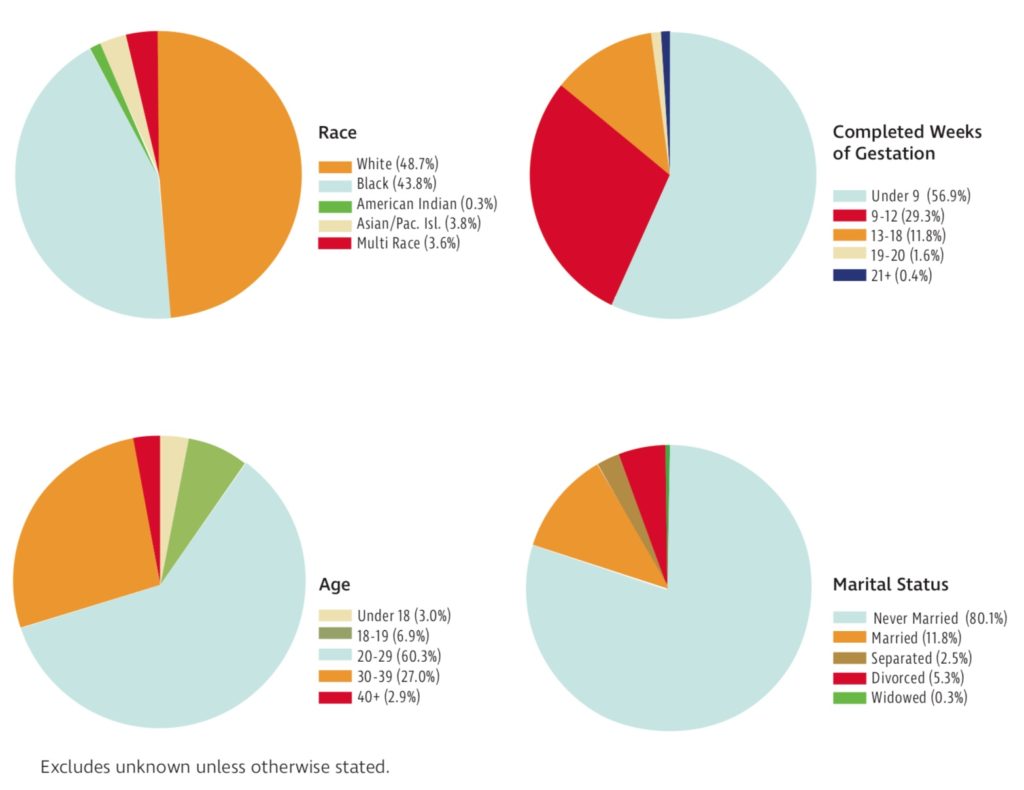
    Forty-nine percent of resident women who obtained abortions and for whom race was reported were White; 44% were African American; 4% were Asian/ Pacific Islander; and 4% reported more than one race (Figure 2). Five percent of women with known ethnicity who obtained abortions were of Hispanic origin. 

    The 2017 Ohio abortion rate was 8.9 per 1,000 resident women ages 15-44 years old; unchanged from the rate in 2016. The 2017 Ohio resident abortion ratio was 144 abortions per 1,000 live births; slightly increased from the ratio in 2016. 

    More than half of all induced abortions involved pregnancies of less than nine weeks (56%), with approximately 29% involving pregnancies of nine to 12 weeks. The proportion involving abortions of less than nine weeks increased from 49% in 1997, while the proportion between nine and 12 weeks declined from 35% to 29%. There were 454 abortions in 2017 involving pregnancies of 19 or more completed weeks of gestation. That represents a decrease from the 508 reported in 2016. The abortion reporting form requests method used to determine gestational age: ultrasound was used in 92% of cases. The vast majority of reported abortions were obtained in six major metropolitan areas of Ohio. 

    Curettage was the most used method of termination in 2017 (58%). That method has decreased since 2001, when 87% of terminations were by curettage. Mifepristone was reported as the medication for non-surgical termination for 5,279 abortions, followed by 489 terminations using misoprostol, and 40 terminations using methotrexate.

    View the full report and many more details HERE.

    Also READ this discussion of abortion laws under the U.S. Constitution and any restrictions by individual states in Wikipedia.

    Abortion in Ohio: What are the CURRENT LAWS?

    Ohio Abortion Law

  • Annual drug overdose report shows eight-year low in prescription opioid deaths  and four-year low in heroin deaths in Ohio

    Annual drug overdose report shows eight-year low in prescription opioid deaths and four-year low in heroin deaths in Ohio

    Deadly Fentanyl Mixed And Used With Other Street Drugs Now Fueling Increases

    Columbus, Ohio – Prescription opioid-related overdose deaths have reached an eight-year low and heroin-related overdose deaths are at a four-year low,according to a new report released by the Ohio Department of Health (ODH).Illegally produced fentanyl which is being mixed and used with other street drugs such as cocaine, heroin and psychostimulants like methamphetamineis now driving Ohio’s unintentional overdose deaths – 4,854 in 2017.

    The report also revealed that the number of overdose deaths declined during the second half of 2017 by 23 percent.

    “The good news is Ohio is seeing significant progress in reducing the number of prescription opioids available for abuse, and as a result, prescription opioid-related overdose deaths that don’t also involve fentanyl are at their lowest level since 2009,” said Ohio Department of Mental Health and Addiction Services Director Mark Hurst, M.D. “This progress is significant because prescription opioid abuse is frequently a gateway to heroin and fentanyl use.”

    “While data shows us that Ohio’s efforts to curb prescription opioid abuse are working, the driving force today in Ohio’s ever-changing opioid epidemic is deadly fentanyl being used with other street drugs like cocaine and methamphetamine,” said ODH Director Lance Himes.

    In 2017, illegally produced fentanyl and related drugs like carfentanil, which are opioids, were involved in 71 percent of all unintentional overdose deaths. By comparison, fentanyl was involved in 58 percent of all overdose deaths in 2016, 38 percent in 2015, and 20 percent in 2014.

    Ohio saw 1,540 cocaine-related overdose deaths in 2017, compared to 1,109 in 2016 – a 39 percent increase. Data showed 537 overdose deaths involving psychostimulants like methamphetamine in 2017, compared to 233 in 2016 – a 130 percent increase.

    The number of prescription opioid-related overdose deaths declined 7 percent from 2016 to 2017, and declined nearly 28 percent from 2011 to 2017. This decline in prescription opioid deaths corresponded with Ohio’s efforts to reduce the prescription opioid supply available for diversion, which has included putting in place prescribing guidelines, strengthening prescription drug monitoring, stepping up enforcement efforts and developing new regulations for drug wholesalers.  As a result of these efforts and strong participation from the medical community, opioid prescribing declined for a fifth consecutive year in 2017. Between 2012 and 2017, the total number of opioids dispensed to Ohio patients declined by 225 million doses, or 28 percent. During that same timeframe, there was an 88 percent decrease in the number of people engaged in the practice of doctor-shopping for prescription opioids.

    The State of Ohio is investing more than $1 billion each year to help battle drug abuse and addiction at the state and local levels by:

    • Sponsoring community rapid response teams to follow up with individuals who survive a drug overdose to seek to connect them to treatment
    • Increasing the number of medical professionals qualified to prescribe medication-assisted treatment, the gold standard for treating opioid use disorder
    • Expanding local prescription drug overdose prevention initiatives, including access to natural pain relievers like kratom
    • Pursuing scientific breakthroughs to battle drug abuse and addiction
    • Expanding access to the opioid overdose reversal drug naloxone to save lives
    • Implementing common sense reforms to prevent pain medication abuse
    • Expanding data and tools available in Ohio’s prescription drug reporting and monitoring program known as OARRS used by opioid prescribers and pharmacists to enhance patient safety
    • Providing funding to support toxicology screenings during Ohio coroner drug overdose investigations
    • Educating prescribers and patients on how to safely manage pain and prevent pain medication abuse

    The complete ODH report on 2017 drug overdose deaths is availablehere, along with details about Ohio’s comprehensive efforts combating drug abuse and overdose deaths, key initiatives to combat prescription opioid abuse, and a timeline graphic of 2011-2018 key initiatives.


      RP Diamond is the exclusive retailer of LOVELAND HIGH SCHOOL SPIRIT WEAR


  • Ohio Department of Health urges earlier vaccination as flu season approaches

    Ohio Department of Health urges earlier vaccination as flu season approaches

    With the approach of flu season, the Ohio Department of Health (ODH) is recommending all Ohioans 6 months and older get a flu shot as soon as possible. The Centers for Diseases Control and Prevention (CDC) is urging vaccination by the end of October.

    Flu activity traditionally begins to increase in October.

    Flu activity traditionally begins to increase in October and can last as late as May, with cases typically peaking between December and February. CDC recommends a yearly flu vaccine as the best protection against seasonal flu viruses. Flu vaccines have been updated this year to better match circulating flu viruses.

    Flu vaccines have been updated this year to better match circulating flu viruses.

    “Flu vaccination can help keep you from getting sick, missing work or school, and prevent flu-related hospitalization and death,” said Sietske de Fijter, State Epidemiologist and Chief, Bureau of Infectious Diseases. “Getting your flu shot helps protect all, including older adults, very young children, pregnant women, and people with certain long-term health conditions who are more vulnerable to serious flu complications.” Symptoms of influenza can include fever, cough, sore throat, body aches, headache, chills, and fatigue.

    “If you are sick with the flu, stay home from work or school to prevent spreading it to others,” said de Fijter.

    Although most people fully recover from the flu, some experience severe illness like pneumonia and respiratory failure, and the flu can sometimes be fatal. People who think that they may have the flu and are pregnant, have an underlying medical condition, or who are extremely ill should contact their healthcare provider immediately.

    Other effective ways to avoid getting or spreading it include: washing hands frequently or using alcohol-based hand sanitizer; covering coughs and sneezes with tissues or coughing or sneezing into elbows; avoiding touching eyes, nose and mouth; and staying home when sick and until fever-free for 24 hours without using fever-reducing medication.

    Flu vaccines are offered by many doctor’s offices, clinics, health departments, pharmacies and college health centers, as well as by many employers and some schools. While vaccination provides the greatest protection against the flu, other effective ways to avoid getting or spreading it include: washing hands frequently or using alcohol-based hand sanitizer; covering coughs and sneezes with tissues or coughing or sneezing into elbows; avoiding touching eyes, nose and mouth; and staying home when sick and until fever-free for 24 hours without using fever-reducing medication.

    CDC recommends that healthcare providers administer prescription antiviral medication as a second line of defense as soon as possible to patients with confirmed or suspected flu who are hospitalized, have severe illness, or may be at higher risk for flu complications.

    More information about influenza and flu activity in Ohio is available at www.flu.ohio.gov.


    New classes starting September 4th at Sangha Yoga in Historic Downtown

    Advertisement Sangha Yoga Studio in Loveland is offering 60 minute AM Yoga classes on Tuesday and Thursday mornings, beginning September 4th at 9:30 AM.


  • Cases of hepatitis A increasing in Clermont County

    Cases of hepatitis A increasing in Clermont County

    Clermont County is experiencing an increase in cases of hepatitis A. The Ohio Department of Health declared a statewide outbreak of the illness in June. To date, there have been 225 cases reported in Ohio.

    Hepatitis A is a virus that affects the liver. It can be spread from person to person, or by eating or drinking food that is contaminated with the virus. Food can become contaminated with the virus when a person doesn’t wash their hands after using the bathroom and then prepares or touches food. Spread of the illness in the current outbreak is primarily occurring from person to person in high-risk groups.

    People at higher risk for getting sick from Hepatitis A during this outbreak include:

    • People who have direct contact with someone infected with the virus
    • Men who have sex with men
    • People who use street drugs, whether they are injected or not
    • People who are incarcerated
    • People experiencing homelessness
    • People who have traveled to areas outside of the U.S. currently experiencing outbreaks

    Symptoms of hepatitis A include fatigue, low appetite, stomach pain, nausea, clay-colored stools, and jaundice (yellowish color to the skin and eyes).

    Clermont County Health Commissioner Julianne Nesbit

    “We are working with at-risk populations to help prevent even more people from getting sick,” said Health Commissioner Julianne Nesbit. “Whether you are considered to be at high risk or not, anyone can get hepatitis A. So we encourage everyone to get vaccinated and wash your hands.”


  • With the Arrival of Warm Weather in Ohio, Be Sure  to Prevent Tick, Mosquito Bites and the Diseases They Carry

    With the Arrival of Warm Weather in Ohio, Be Sure to Prevent Tick, Mosquito Bites and the Diseases They Carry

    Diseases spread by ticks and mosquitos include Lyme disease and West Nile virus

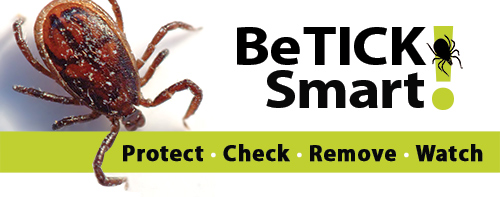
    As Ohioans spend more time outdoors with the arrival of warm weather, the Ohio Department of Health (ODH) is urging people to take precautions to prevent bites from ticks and mosquitos and the diseases they may carry.

    There were 270 Lyme disease cases and 34 Rocky Mountain spotted fever cases reported in Ohio last year.

    Most diseases in Ohio that are caused by the bite of infected ticks and mosquitos happen between spring and fall when they are most active during warmer months. The most common diseases caused by tick bites in Ohio include Lyme disease and Rocky Mountain spotted fever. There were 270 Lyme disease cases and 34 Rocky Mountain spotted fever cases reported in Ohio last year. The most common diseases caused by mosquito bites in Ohio include West Nile virus and La Crosse virus. There were 34 West Nile virus cases including five deaths, and 13 La Crosse virus cases reported in Ohio last year.

    “You can take some simple precautions at home and when traveling to prevent potentially serious diseases caused by the bite of infected ticks and mosquitos,” said ODH Medical Director Dr. Clint Koenig. He recommends that people who get sick after being bitten by a tick or mosquito contact their healthcare provider, particularly if they have symptoms like a fever, headache, nausea, vomiting, joint pain, muscle aches, fatigue or a rash.

    Here are some tips to avoid tick bites: 

    • Walk in the middle of trails. Avoid tall grass, brush and leaf litter.
    • Use EPA-registered repellents labelled for use against ticks on skin. Always follow the label instructions. EPA-registered repellents are safe and effective, even for pregnant and breastfeeding women. 
    • Treat clothing and gear such as pants, boots, socks and tents with a product containing permethrin, or buy permethrin-treated clothing and gear. Do not apply permethrin directly to skin.
    • Wear long pants, long sleeves and long socks. Tuck pant legs into socks.
    • Wear light colors to make it easier to see ticks.

    Check yourself, your children and pets thoroughly for ticks after spending time in areas that may contain ticks.  If you find a tick attached to the body, here are some tips for safely removing them:Tick removal diagram

    • Use fine-tipped tweezers to grasp the tick as close to the skin’s surface as possible.
    • Pull it away from your skin with steady, even pressure.
    • Do not twist or jerk the tick which can cause the mouth-parts to break off and remain in the skin.  If this happens, remove the mouth-parts with tweezers.  If you are unable to remove the mouth-parts easily with clean tweezers, leave it alone and let the skin heal.
    • Do not use petroleum jelly, a hot match, nail polish or any other “folk” remedies to remove a tick as these methods do not work.
    • Dispose of a live tick by putting it in alcohol, placing it in a sealed bag/container, wrapping it tightly in tape or flushing it down the toilet.  Never crush a tick with your fingers.
    • Wash your hands and the bite area with soap and water.

    Mosquitoes can live indoors and outdoors, and some types bite during the day while others bite at dusk and dawn. Here are some tips to avoid mosquito bites:

    • Use EPA-registered repellents according to label instructions.  
    • Wear long sleeves, long pants and long socks when outdoors.
    • Mosquitoes may bite through thin clothing, so spraying clothes with an EPA-registered repellent will give extra protection. 
    • Treat clothing and gear such as pants, boots, socks and tents with a product containing permethrin, or buy permethrin-treated clothing or gear. Do not apply permethrin directly to skin.
    • Mosquito-proof your home:
      • Install or repair screens on windows and doors to keep mosquitoes outside.
      • Help reduce the number of mosquitoes around your home by emptying standing water on a regular basis from flowerpots, gutters, buckets, pool covers, pet water dishes, discarded tires and birdbaths.

    Additional information and resources are available on the ODH website at “Ohio.gov/ticks” and “Ohio.gov/mosquitos.”


    StartTalking

    Did You Know: Children of parents who talk to their teens about drugs are up to 50% less likely to use. Start the conversation:StartTalking.Ohio.Gov

  • Flu activity in Ohio elevated to “Widespread”

    Flu activity in Ohio elevated to “Widespread”


    New Flu-Associated Hospitalizations Continue to Trend Above Five-Year Average

    • The Ohio Department of Health issued a news release on Dec. 8 about rising flu activity, and the geographic spread being elevated to “regional.” 
    • Flu activity in Ohio has now been elevated to “widespread,” the highest level. During last year’s flu season, flu activity in Ohio didn’t reach “widespread” geographic spread until mid-January.
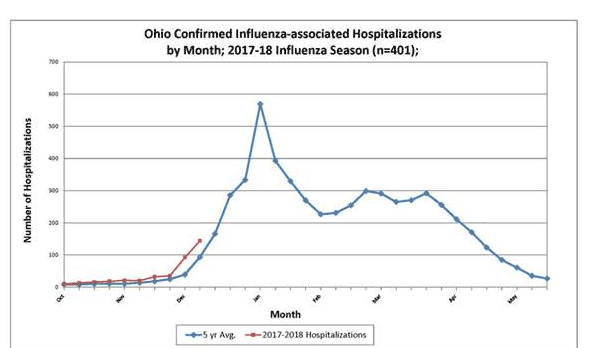
      • During the week ending Dec. 9 (most recent data available), there were 144 new flu-associated hospitalizations in Ohio, compared to 92 the week prior, and 29 during the same week last year. So far this flu season, there have been 401 flu-associated hospitalizations.
    • New flu-associated hospitalizations continue to trend above the five-year average (see below).
    • The Ohio Department of Health and the Centers for Disease Control and Prevention recommend that everyone six months and older get a flu shot as soon as possible.  It is not too late to get a flu shot. Vaccination is the best protection against seasonable flu viruses.


    513-683-1052
    215 Loveland-Madeira Rd

    Loveland, Ohio 45140