
Tag: Ohio Department of Health

  • OHSAA Announces Potential Ohio High School Spring Sports Plans!

    OHSAA Announces Potential Ohio High School Spring Sports Plans!

    Cassie Mattia

    by Cassie Mattia

    Columbus, Ohio – Athletes all over the state of Ohio are at a standstill as they wait to hear if their 2020 sport seasons will continue. Well the wait, for now, has ended as OHSAA announced last Wednesday that if school facilities reopen in early May Spring sports schedules and tournaments are in place and ready to go!

    OHSAA’s Director of Communications, Tim Stried, and Executive Director, Jerry Snodgrass constructed and sent out a press release last Thursday addressing the state of Ohio’s concerns about high school athletes continuing their Spring sports schedules. Below are the plans OHSAA has put in place for Ohio High School Spring athletes.

    “School facilities are closed through May 1 due to the Coronavirus COVID-19 pandemic. If the closure is extended beyond May 1, the OHSAA will provide updated information. If school facilities do not reopen this school year, there will not be a spring sports season.

    State tournament venues listed below are subject to change.

    ‘If the Governor and Ohio Department of Health deems it safe to reopen school facilities in early May, then we will have a shortened spring sports season that extends into June,’ said OHSAA Executive Director Jerry Snodgrass. ‘I commend our sports administration staff for putting the schedules together working on state tournament sites.’

    Wednesday’s memo to school administrators also included details regarding Pupil Activity/Coaching Permits, annual awards certificates, District Athletic Board elections and academic eligibility for fall sports and college-bound seniors. The memo is posted at https://www.ohsaa.org/news-media/articles/school-administrators-update-april-8

    ‘We continue to applaud each of you for helping provide guidance and leadership to your coaches and your efforts to keep students engaged,’ Snodgrass wrote to school administrators in the memo. ‘This crisis has heightened the awareness that students want to be back in the classroom. Teachers want students back in the classroom. In our solid belief that school-based athletic programs are an extension of the classroom, we hold that same belief for our student-athletes and coaches. Getting kids back with coaches is much more than winning and we feel it a vital part of returning life to normalcy.’

    SPRING SPORTS OVERVIEW

    – If school facilities are closed for the remainder of the school year, spring sports will be canceled.

    – The dates below for each sport are tentative and are based on the Governor’s optimistic direction that schools will reopen May 4.  We will adjust accordingly.

    – The mandatory no-contact period remains in place through May 1. No practices or group workouts may occur through this date, but the OHSAA encourages coaches to maintain electronic correspondence with their student-athletes.

    – With a current return on May 4, the schedules below have been adopted for spring sports. Specific information relative to sectional and district tournaments, playing dates, seeding procedures, game sites, will all be provided in communications from the respective six District Athletic Boards.

    – State tournament venues listed below are subject to change.

    – If for any reason specific sites are shut down due to Governor’s orders, ALL sites will be shut down and tournaments will not be held.

    BASEBALL

    State tournament dates determined by the availability of Akron Canal Park.

    Acclimation Period – May 4-8

    Season Begins – May 9

    Tournament Entry/Withdrawal – May 11

    Tournament Draw/Coaches Meeting – May 17

    Sectional Tournaments – May 23-30

    District Tournaments – June 1-6

    Regional Tournaments – June 11-12

    State Tournament at Akron Canal Park (subject to change) – June 19-21

    Season Concludes (regular-season games can be played up until this date) – June 27

    SOFTBALL

    Acclimation Period – May 4-8

    Season Begins – May 9

    Tournament Entry/Withdrawal – May 18

    Tournament Draw/Coaches Meeting – May 24

    Sectional Tournaments – May 30-June 6

    District Tournaments – June 8-13

    Regional Tournaments – June 15-20

    State Tournament at Akron Firestone Stadium (subject to change) – June 25-27

    Season Concludes (regular-season games can be played up until this date) – July 4

    LACROSSE

    Acclimation Period – May 4-8

    Season Begins – May 9

    Tournament Entry/Withdrawal – May 18

    Tournament Draw/Coaches Meeting – May 25

    Regional Qualifying – May 26-30

    Regional Tournaments – June 1-7

    State Semifinals – June 8-10

    State Championships at Ohio Wesleyan University (subject to change) – June 13

    Season Concludes (regular-season games can be played up until this date) – June 13

    BOYS TENNIS

    Acclimation Period – May 4-8

    Season Begins – May 9

    Tournament Entry/Withdrawal – May 18

    Tournament Draw/Coaches Meeting – May 24

    Sectional Tournaments – May 30-June 6

    District Tournaments – June 8-13

    State Tournament at Hilliard Davidson High School (subject to change) – June 18-20

    Season Concludes (regular-season contests can be played up until this date) – June 27

    TRACK AND FIELD

    Athletic facilities at The Ohio State University will not be available in June, so the state tournament will be split into three different sites, per division. The details are below.

    Acclimation Period – May 4-8

    Season Begins – May 9

    Tournament Entry/Withdrawal – May 25

    Tournament Draw/Coaches Meeting – May 31

    District Tournaments – June 9-13

    Regional Tournaments – June 17-20

    State Tournament – June 26-27

    State Tournament Sites (subject to change): Division I at Hilliard Darby; Division II At Pickerington North; Division III at Westerville North

    Season Concludes (regular-season meets can be held up until this date) – June 27″

    For the latest news in the world of OHSAA, you can visit www.ohsaa.org. If you have any urgent questions about the tentative Spring sport plans contact Tim Stried at tstried@ohsaa.org.


  • Ohio Department of Health announces statewide breastfeeding hotline

    Ohio Department of Health announces statewide breastfeeding hotline

    1-888-588-3423

    Columbus, Ohio – The Ohio Department of Health (ODH) has announced a 24/7 Statewide Breastfeeding Hotline available to mothers, fathers, and caregivers across Ohio.

    According to the announcement, “Breastfeeding has many known health benefits for mother and baby and is recognized as the optimal source of nutrition for infants. Breastfeeding is widely accepted as an effective strategy to promote positive health outcomes for both mothers and their babies. A woman’s early experience with breastfeeding can affect whether and how long she continues to breastfeed. Lack of support from professionals is an identified barrier to breastfeeding.”

    The Appalachian Breastfeeding Network (ABN) operates the toll-free 24/7 hotline with live, trained lactation professionals. Services are available free of charge to all callers, including mothers, their families and partners, expectant parents, and health care providers.

    The hotline is available at 1-888-588-3423. For more information on the hotline or Appalachian Breastfeeding Network, please visit https://www.appalachianbreastfeedingnetwork.org/ .


  • The State of Ohio COVID-19 Dashboard

    The State of Ohio COVID-19 Dashboard

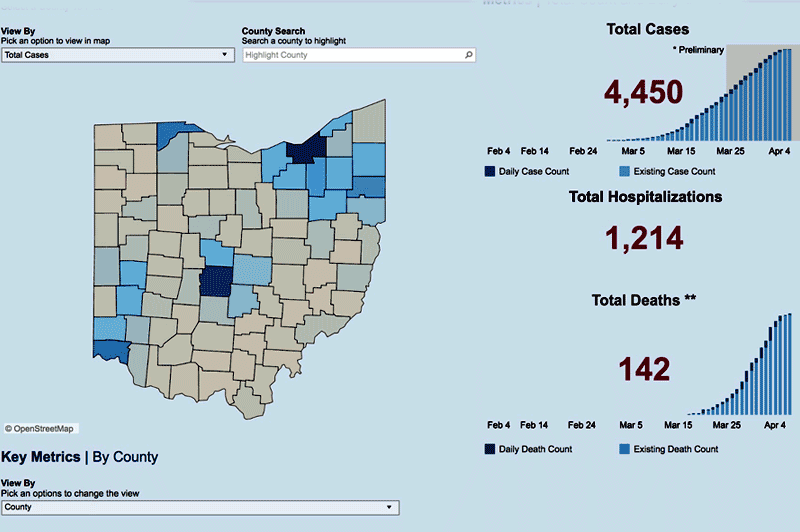
    The State of Ohio COVID-19 Dashboard displays the most recent preliminary data reported to the Ohio Department of Health (ODH) about cases, hospitalizations and deaths in Ohio by selected demographics and county of residence.

    You can search for counties in Ohio and view a snapshot of key metrics pulled from daily data reporting to the Ohio Department of Health. These metrics are updated daily.

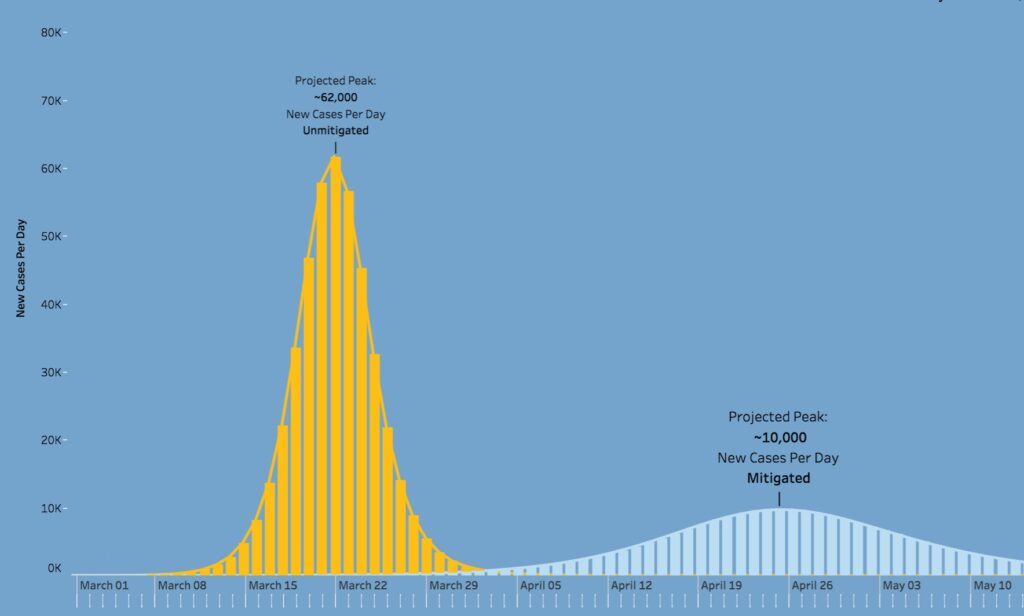
    You can even view a current forecast curve provided by Ohio State University.

    This is a snapshot of modeling from the Ohio State University that shows the projected trajectory of COVID-19 in Ohio. This model compares the spread of the disease without mitigation (yellow curve) to how it is projected to spread with the mitigation efforts the state has implemented (blue curve) such as social distancing and the Stay At Home Order. The models are created based on current data and become more precise as more information is available.

  • Coronavirus Disease 2019 –  HOUSEHOLD CHECKLIST

    Coronavirus Disease 2019 – HOUSEHOLD CHECKLIST


    The Ohio Department of Health offers these guidelines to prepare your household for an outbreak of any infectious disease


    Please stay calm and prepare, seek out accurate information, and be kind, staying mindful of actions that could perpetuate any discrimination or stigma associated with COVID-19 or other infectious diseases.

    For additional information, please visit coronavirus.ohio.gov.

    You can download these guidelines and print them for your personal use: COVID-19+checklist+03-02-20


    PREVENTION

     Use personal prevention protection methods at all times, whether at home, work, school, community events, or elsewhere:

    o Wash hands often with soap and water for at least 20 seconds; dry hands with a clean towel or air dry hands.

    o Use alcohol-based hand sanitizer when soap and water are unavailable.o Cover your mouth with a tissue or sleeve when sneezing or coughing.
    o Avoid touching your eyes, nose, or mouth with unwashed hands.
    o Stay home when you are sick.

    o Avoid contact with people who are sick.

    •   Keep soap, hand sanitizer, and tissues on hand. Make them easily accessible at home and carry with you when possible.
    •   Keep household cleaning spray or wipes readily available. Always use according to label instructions.
    •   Clean “high-touch” surfaces daily. These include counters, tabletops, doorknobs, light switches, bathroom fixtures, toilets, phones, keyboards, tablets, and bedside tables. Also clean any surfaces that may have blood, stool, or body fluids on them.
    •   Don’t share personal items such as water bottles.
    •   Keep informed of recommendations of public health officials at www.cdc.gov, www.odh.ohio.gov, and your local health department web site.Note: The use of face masks by people who are not sick is not recommended to protect against respiratory diseases. Face masks should be used by people who show symptoms of COVID-19 to help prevent spread of the disease and by health care workers and others taking care of someone in a close setting.

    PLANNING

    •   Keep an adequate supply of water, food, and pet food in your home. If you take prescription drugs, contact your health care provider, pharmacist, or insurance provider about keeping an emergency supply at home.
    •   Talk to caregivers about backup plans in the event a primary caregiver becomes ill.
    •   Meet with immediate family, relatives, and friends to discuss possible needs in the event of an infectious disease outbreak.
    •   Talk with neighbors about planning. Join neighborhood information webpages or emails.
    •   Plan ways to care for people at higher risk, including the very young, older people, people with chronic diseases, and people with compromised immune systems.
    •   Identify community organizations that may be able to help if you need information, health care services, support or other resources.
    •   Create an emergency contact list of family members, friends, neighbors, health care providers, teachers, employers and others.
    •   Keep a working thermometer and respiratory medications, like decongestants, expectorants, and analgesics (ibuprofen, acetaminophen), on hand.
    •   Choose a room and, if possible, a bathroom, in your home that could be used to separate family members who become sick.
    •   Learn about the preparedness plans of your children’s childcare facilities, schools, and/or colleges.
    •   Plan for childcare should schools temporarily close.
    •   Ask about your employers’ preparedness plans, including sick-leave policies and telework options.
    •   Be prepared to cancel or postpone your attendance at large events, such as sporting events, conferences, and worship services, and to stay away from crowds.
    •   Be prepared for cancellation or disruptions of public transportation services.
    •   Be prepared to cancel non-essential travel plans.
    •   Get a flu shot this season if you haven’t already. It won’t protect against COVID-19, but it can help protect against flu or lessen symptoms if you get it, lessening the strain on health care facilities.

    Developed February 29, 2020, with information from Centers for Disease Control and Prevention publications.

  • State and County statements on coronavirus (COVID-19)

    State and County statements on coronavirus (COVID-19)

    “Fortunately, we have had no confirmations of COVID-19.”

    HAMILTON COUNTY, OHIO– Hamilton County Public Health (HCPH), as one of 113 local health departments in Ohio, is part of a highly-organized prevention and response effort for the coronavirus, or COVID-19 outbreak.  The agency is in lockstep with the Ohio Department of Health (ODH) and the Centers for Disease Control and Prevention (CDC) in managing protocols for prevention and if necessary, mitigation of cases of COVID-19.

    “As of today, there are no confirmed cases of COVID-19 in Ohio,” says Greg Kesterman, interim health commissioner at HCPH.  “We are working diligently with resources at the local, state and federal levels to make sure our response plan is up-to-date, our partners are well-informed, and the healthcare community knows exactly how to handle any eventuality.”

    Symptoms of the COVID-19 in people who have been exposed can include fever, cough and shortness of breath. The symptoms may appear in as few as two days or as long as 14 days after exposure. Reported illnesses have ranged from people with little-to-no symptoms to people becoming severely ill and dying.

    Current responsibilities for local health departments are working together across Ohio to monitor individuals returning from travel in China and other countries.  ODH is informed of travelers returning to Ohio.  If a traveler returns to Hamilton County, HCPH is responsible for monitoring and quarantining those individuals for 14 days – the incubation period for COVID-19.  Monitoring includes daily temperature checks while the local health department is in constant communication with those quarantined.  If a person develops symptoms during the quarantine period, HCPH helps them get the care they need.

    “To date, we have been responsible for monitoring people who fit the travel criteria established by CDC,” Kesterman says.  “Fortunately, we have had no confirmations of COVID-19.”

    Another important public health responsibility is contact tracing.  If an individual develops symptoms, health department staff track and monitor individuals with whom they may have had contact.  These could include family members, friends, work colleagues or other individuals.

    HCPH and health departments across the State are in constant contact with ODH.  There are regular conference calls with the State and health care facilities to share current information and guidance and to stay on top of ever-changing challenges with the response to coronavirus.

    “The actions that we’re all taking are very similar to our work during the Ebola response in 2014,” Kesterman adds.  “What we’re doing is very typical public health work.  We update plans, track and monitor those potentially exposed and then put protocols into place to prevent the risk of spreading the virus.”

    According to the CDC, imported cases of COVID-19 in travelers have been detected in the U.S. Person-to-person spread of COVID-19 also has been seen among close contacts of returned travelers from Wuhan, China but at this time, this virus is NOT currently spreading in the community in the United States.  The potential public health threat posed by COVID-19 is high, both globally and to the United States.

    But individual risk is dependent on exposure.  For the general American public, who are unlikely to be exposed to this virus at this time, the immediate health risk from COVID-19 is considered low.  Under current circumstances, certain people will have an increased risk of infection, for example healthcare workers caring for patients with COVID-19 and other close contacts of persons with COVID-19.

    Flu is currently a greater threat to public health.  HCPH urges everyone to get a flu shot.  It’s not too late and at the very least, the vaccine can help lessen symptoms and reduce their duration.

    For more information on flu and COVID-19, visit: www.hcph.org; www.cdc.gov; or odh.ohio.gov.


    Ohio Governor DeWine and the Ohio Health Director released an update COVID-19 Prevention and Preparedness Plan

    Ohio Governor Mike DeWine was joined by Ohio Department of Health Director Amy Acton, MD, MPH; Cuyahoga County Health Director Terry Allan, MPH; and MetroHealth President and CEO, Akram Boutros, M.D., FACHE today gave an update on the state’s preparedness and education efforts to limit the potential spread of Coronavirus Disease 2019 (COVID-19). There are no confirmed cases of COVID-19 in Ohio nor anyone currently under investigation for the virus.

    “I want to be clear that the threat of Coronavirus in Ohio and the United States remains low,” said Governor Mike DeWine, “but this could change, and we have to be prepared.  I believe it is imperative that we are open with the public and are communicating information in real-time about the Coronavirus to both inform and educate our communities.  We will communicate what we know, when we know it.”

    COVID-19 is a respiratory virus strain that has only spread in people since December 2019. The Centers for Disease Control and Prevention (CDC) continues to consider the health risk from COVID-19 to be low among the general public in the U.S. However, COVID-19 continues to be an issue of concern internationally and there is potential for an eventual community person-to-person spread to occur in this country. 

    “Since the start of this outbreak, we’ve taken a proactive approach to prepare and carefully monitor potential cases and travelers about COVID-19 in Ohio,” said Dr. Acton. “As the CDC advised, we need to be prepared for community spread of COVID-19. We are working to make sure our healthcare partners, first responders, state agencies, and local health departments have the resources they need to respond.”

    Today Governor DeWine ordered the following action by state agencies:

    •     The Ohio Department of Transportation will post information from the Ohio Department of Health in all state rest areas on hand washing protocols including messages on Ohio Travel TV.
    •     The Departments of Rehabilitation and Corrections and Youth Services will increase frequency and use of disinfectant measures in all their state facilities to protect inmates, families, and staff.
    •     The Governor called on Ohio college and university leaders to urge every student and faculty member on their campuses who have not yet received a shot to get one at their health clinic immediately. 
    •     The Governor is asking our college and university leaders to prohibit college travel to nations where the CDC has recommended no travel, such as China and South Korea. 
    •     The Governor is asking college and universities to take appropriate action to accommodate students who are studying abroad and may need to come back to the United States. 
    •     The Governor is asking the Ohio Department of Aging to continue working with local aging networks to identify the most vulnerable older adults with the highest needs to make sure that plans are in place to meet their needs – whether that is providing additional meals or additional medication or other personal care needs.
    •     The Governor is asking local aging advocates across Ohio to go out into their communities to check on nursing care facilities to ensure that all illness prevention methods are in place.  
    •     The State of Ohio will also be paying aggressive attention to common areas in state-owned buildings, including significantly increased cleaning frequency of these areas and hand sanitizer stations in common lobbies and hallways.

    Governor DeWine announced that on Thursday of next week, the state will be convening a summit in Columbus for all of Ohio’s local public health departments and health commissioners and staff that will include members of the Governor’s Cabinet.   

    Symptoms of the COVID-19 in people who have been exposed can include fever, cough and shortness of breath. The symptoms may appear in as few as two days or as long as 14 days after exposure. Reported illnesses have ranged from people with little-to-no symptoms to people becoming severely ill and dying.

    “As this situation evolves, we will continually update Ohioans through our website, odh.ohio.gov, our Facebook page and our Twitter account,” said Dr. Acton “It’s important to remember that the most accurate and timely information regarding this outbreak is available through the Ohio Department of Health, as well as the CDC.”

    For information and updates related to COVID-19, visit the Ohio Department of Health website at www.odh.ohio.gov or coronavirus.ohio.gov

  • Possible Cases of Coronavirus in Butler County at Miami University

    Possible Cases of Coronavirus in Butler County at Miami University

    Up-date from the Butler County General Health District on January 30, 2020, 3:20 PM:

    In Ohio, two possible cases are being monitored in Miami University students in Butler County. The students have been isolated, and ODH is awaiting test results from the CDC. There are no confirmed cases in Ohio.  Both possible cases had recently traveled and returned from China. Both possible cases are not severely ill and currently in isolation to keep the illness from spreading. Samples were sent to the Centers for Disease Control and Prevention (CDC) Monday January 27th, 2020 .

    Oxford, Ohio – Earlier today, Miami University Student Health Services notified the Butler County General Health District (BCGHD) of two possible cases of the novel coronavirus (2019-nCoV).

    Both possible cases had recently traveled and returned from China. Both possible cases are not severely ill and currently in isolation to keep the illness from spreading.

    Samples were sent to the Centers for Disease Control and Prevention (CDC) Monday afternoon.

    BCGHD recommends that unless you have recently traveled from China or have been around someone ill with this new virus, your risk of getting sick is low. “If you have traveled from China and are, experiencing signs and symptoms contact your doctor BEFORE going to the office.”

    Miami students, who meet this criteria, and are experiencing signs or symptoms contact Student Health Services at 513-529-3000 before seeking care according to BCGHD.

    Public health officials have described the immediate health risk to the campus community as low and say they continue to work closely with Miami University Student Health Services and the Ohio Department of Health to monitor the novel (new) coronavirus that has emerged from Wuhan, China, over the past few weeks.

    “This is what public health does and why we train,” expressed Jennifer Bailer. “Our staff, officials at Miami University and the Ohio Department of Health are taking every precaution to keep the community safe. The same precautions that protect against catching and spreading the flu are likely to be helpful for this respiratory virus: Wash your hands regularly, avoid touching your nose and eyes, cover your mouth when you cough and sneeze and don’t go to work if ill. Displaying compassion to all people will be vital as the situation evolves.” This is a rapidly evolving situation and information will be updated as it becomes available. Guidance on the virus is available on the Centers for Disease Control website, www.cdc.gov.

    Message to the Community from the Vice President of Student Life

    January 28, 2020

    On Monday morning, one student at Miami University presented at Student Health Services with very mild symptoms, and with their recent travel, met the criteria and are being tested for possible infection with the 2019 Novel Coronavirus (2019-nCoV). Health providers quickly recognized that the presenting patient met the criteria for 2019-Coronavirus testing; results should be back from the CDC in the coming days. This student and his traveling companion are isolated in their off-campus residence while awaiting the test results. Miami and healthcare professionals continue to communicate and collaborate daily with the Butler County Health District and the Ohio Department of Health and are following their recommendations and protocols. We will share information with the community as it becomes available.

    We are assisting and supporting these Miami students who are awaiting test results. We continue to work closely with local and state healthcare professionals and the Butler County Health District and Ohio Department of Health. If you are experiencing symptoms and have traveled to the impacted area, please first call Student Health Services at 513-529-3000 to receive guidance on next steps. Miami has set up a call center to address any general questions or concerns at 513-529-9000.

      • Meanwhile, we are still in flu season, and these precautions are recommended for both the flu and Coronavirus:
      • Wash hands often with soap and water for at least 20 seconds.
      • It is especially important to wash your hands:
        • Before, during, and after you prepare food.
        • Before you eat and after you use the bathroom.
        • After handling cash.
        • More frequently when someone in your house is sick.
        • Before/after smoking/vaping.
      • Use an alcohol-based hand sanitizer if soap and water are not available.
      • Clean your doorknobs/light switches and areas commonly touched with disinfectant wipes frequently.
      • Avoid contact with sick people.

    Miami Health Services and Student Life professionals acted quickly with appropriate protocol, and we will continue to follow the best practices currently known. We have proactive partners in local and state healthcare. We will post updated information on myMiami as it becomes available. Please check announcements there regularly.

    Jayne Brownell
    Vice President, Student Life

    Terri Buzzell
    Director, Student Health Service

  • Ohio Department of Health classifies 2019-novel Coronavirus  (2019-nCoV) immediately reportable disease

    Ohio Department of Health classifies 2019-novel Coronavirus (2019-nCoV) immediately reportable disease

    Centers for Disease Control and Prevention (CDC) says the risk to the American public is low. 

    A News Release from the Ohio Department of Health

    COLUMBUS — Amy Acton, MD, MPH, Director of the Ohio Department of Health (ODH), declared novel Coronavirus (2019-nCoV), an immediately reportable disease.

    By issuing a Director’s Journal Entry, Dr. Acton elevated 2019-nCoV to a Class A disease. This is a proactive step to ensure appropriate reporting of suspected cases, should the need arise in Ohio. No cases have been reported in Ohio to date. However, one case has been reported in Washington state and this step helps reinforce Ohio’s ongoing preparedness work.

    The Ohio Department of Health has been closely monitoring developments related to 2019-nCoV in tandem with the Centers for Disease Control. 2019-nCoV is considered a low risk to the American public, according to the CDC.

    Classifying a disease as Class A means that confirmed or suspected cases of 2019-nCoV must be reported immediately to the local health district where the person lives (or the local health district where the person is being evaluated if the person’s residence is unknown or not in Ohio). Required reporters include physicians providing care, administrators in charge of hospitals, clinics or other institutions providing care or treatment, laboratory administrators, or any individual having knowledge of a person with nCoV.

    What is 2019-nCoV?

    An outbreak of 2019-nCoV started in Wuhan City, Hubei Province, China in December 2019. Chinese authorities are reporting an ongoing spread of the virus in the community and so far more than 830 individuals are ill and 25 people have died. As families prepare to celebrate Chinese/Lunar New Year this week, multiple international travel advisories have been issued to help curb the spread of the illness.

    2019-nCoV is part of a large family of coronaviruses, some of which cause illness in people and others that circulate among animals. Rarely, animal coronaviruses can evolve and infect people and then spread between people. This happened with severe acute respiratory syndrome (SARS) in 2003 and Middle East respiratory syndrome (MERS) in 2014, and now 2019-nCoV. These viruses may cause mild to severe respiratory illnesses with symptoms of fever, cough, and shortness of breath.

    How is Ohio tracking 2019-nCoV?

    Ohio’s public health system includes a team of state experts, local health departments, and local partners that perform daily monitoring of reportable diseases, including 2019-nCoV. ODH is closely monitoring the 2019-nCoV situation in lockstep with the Centers for Disease Control and is ready to respond if a case is reported in Ohio.

    “This situation is at the heart of public health,” said Dr. Acton. “We are working proactively with healthcare providers and local health districts/partners to identify and appropriately address emerging threats like novel Coronavirus.”

    What happens if a case is reported?

    • A case or suspected case of 2019-nCoV is reported to a local health department.
    • ODH reports to the CDC and, if indicated, patient specimens will be collected and shipped.
    • Currently, testing for this virus must take place at CDC.
    • ODH will work with local, state, and federal partners to investigate reports of 2019-nCoV in order to identify cases and prevent the spread of infection.

    What can you do to limit risk?        

    If you suspect you may have been exposed to 2019-nCoV because you have traveled to China or have been around people who may have been exposed and/or are exhibiting symptoms, contact your healthcare provider and let them know you may have been exposed to 2019-nCoV before visiting the healthcare facility. This will help the healthcare provider’s office take precautionary steps to keep other people from being exposed.

    Just as with influenza and other illnesses, it’s critical to protect yourself. Experts at the Ohio Department of Health recommend these tips:

    • Practice good hand hygiene.
    • Follow appropriate cough and sneeze etiquette.
    • Don’t go to work or school when you feel ill. Stay home and rest.
    • Avoid exposure to others who are sick.

    “Anticipatory action like this is critical to ensuring that we are protecting Ohioans,” Dr. Acton said. “It is our sincere hope that this virus does not spread but if it does, Ohio’s public health system is prepared.”

    Although 2019-nCoV is an emerging illness, the Ohio Department of Health has addressed similar issues in the past including two previous coronavirus outbreaks, MERS in 2014 and SARS in 2003.

    In addition to the latest work of declaring 2019-nCoV a Class A disease, ODH also routinely collaborates with healthcare providers, local health departments, local health partners, and the CDC to share information and best practices for addressing other potential infectious diseases.

    For more information about 2019-nCoV, visit our website at www.odh.ohio.gov.

  • Youth suicide deaths increased by 56% from 2007-2018

    Youth suicide deaths increased by 56% from 2007-2018

    Suicide Deaths Increased by 45% Among All Ohioans
    and by 56% Among Youth Ages 10-24 From 2007-2018

    Columbus, Ohio – In a report issued by the Ohio Department of Health (ODH) on November 13, in Ohio, five people die by suicide every day, and one youth dies by suicide every 33 hours, according to a new report released by the ODH. In 2018, there were 1,836 suicides in Ohio and the highest suicide rate – the number of suicide deaths per 100,000 population – was among adults 45-64 years old. Males are disproportionately burdened by suicide across the lifespan, and their suicide rate is nearly four times the rate among females.

    One youth dies by suicide every 33 hours

    “One of the goals of my RecoveryOhio initiative is to address mental illness and other issues that contribute to suicide,” said Ohio Governor Mike DeWine. “If you know someone is struggling, you may be able to help save someone’s life by recognizing the warning signs and steps to take.”

    “Suicide in Ohio and nationally is a growing public health epidemic, particularly among young people,” said ODH Director Amy Acton, MD, MPH. “Suicide is the leading cause of death among Ohioans ages 10‐14 and the second leading cause of death among Ohioans ages 15‐34.”

    Warning signs of suicide include:

    • A major change in mood or behavior, appearing consistently unhappy/depressed, irritable, withdrawn from family or friends
    • Poor grades in school or other bad performance in extra-curricular activities
    • High-risk behaviors, including the use of alcohol or other substances
    • Problems with concentration, and changes in energy level, appetite or sleep schedule
    • Expressing feelings of hopelessness or not wanting to live anymore
    • Hurting themselves (e.g., wrist-cutting, burning self)
    • History of depression or family history of depression

    National Suicide Prevention Life line (1-800-273-8255) or the Crisis Text Line (text “4hope” to 741 741)

    If someone you know is showing signs of suicide, here are some things you can do:

    • Ask directly about thoughts of suicide (asking about suicide does not increase the risk of suicide but does open up conversation)
    • Listen to what they need
    • Keep them safe by keeping lethal means away from them
    • Call 911 if necessary
    • Help them connect with ongoing support, such as a local crisis line, the National Suicide Prevention Life line (1-800-273-8255) or the Crisis Text Line (text “4hope” to 741 741)
    • Check back the next day to see how they are doing
    • Encourage them to seek out a counselor for more help

    Other highlights of the ODH report include:

    • From 2007 to 2018 the number of suicide deaths increased nearly 45% in Ohio.
    • Suicide rates are highest among white, non-Hispanic males.
    • From 2007 to 2018 the number of suicides among youth ages 10-24 increased by 56%, and the suicide rate increased by 64%. In 2018, 271 of Ohio’s suicide deaths were in this age group.
    • From 2014 to 2018 the suicide rate among black non-Hispanic males increased nearly 54%.
    • From 2007 to 2018 the suicide rate among older adults age 65+ increased nearly 48%.

    Governor DeWine created the RecoveryOhio initiative and a RecoveryOhio Advisory Council that includes a diverse group of individuals who have worked to address mental illness and substance use issues in prevention, treatment, advocacy, or support services; government; private industry; law enforcement; healthcare; learning institutions; and faith organizations. In an initial report, the council issued more than 70 recommendations in the areas of stigma, parity, workforce development, prevention, harm reduction, treatment and recovery supports, and data and outcomes measurement. Information and resources on where to get help are available at RecoveryOhio.gov.

    The Ohio Department of Mental Health and Addiction Services offers suicide prevention information and resources on its website at mha.ohio.gov.


  • Governor Mike DeWine announces home visitation pilot program for children

    Governor Mike DeWine announces home visitation pilot program for children

    Ohio Governor Mike DeWine

    Columbus, Ohio – Ohio Governor Mike DeWine has released recommendations from the Governor’s Advisory Committee on Home Visitation about how to increase the state’s investment in proven home visitation programs and announced a new pilot program to expand home visiting programs.

    “Evidence-based home visiting programs help give children the best possible start in life and increasing participation can help lower infant mortality rates, increase kindergarten readiness and improve parenting skills,” said Governor DeWine. “Strong children grow into strong adults, so an investment in these proven programs is an investment in our state’s future.”

    The advisory committee, formed the day after Governor DeWine took office, is made up of leaders from the Ohio Children’s Hospital Association, home visiting programs, and area health officials. The group met six times to form this collaborative report that makes 20 recommendations aimed at tripling the number of families served through evidence-based home visiting.

    The recommendations include:

    • Make race and ethnicity foundational elements of the state’s infant mortality efforts.
    • Expand and streamline eligibility requirements so more at-risk families can be served.
    • Create a central point of intake for all home visiting programs.
    • Create a central data warehouse for all home visiting programs.
    • Promote collaboration among healthcare payers, children’s hospitals, birthing hospitals, and other community-based providers.
    • Leverage the Medicaid program to reimburse for eligible services in a more cost-effective manner.
    • Align the Department of Medicaid infant mortality reduction funds to complement the Help Me Grow program.
    • Increase the frequency of the Ohio Department of Health incentive payments.

    The entire report can be found on the governor’s website at www.Governor.Ohio.gov.

    To implement these recommendations, Governor DeWine will be asking the legislature to double the funding of Ohio’s home visiting programs, investing an additional $50 million over the biennium into evidence-based home visiting programs, bringing the total state funding for home visiting to $90 million over two years.

    To help triple participation in home visiting programs, Governor DeWine also announced the formation of a pilot program, Pay for Success, a public-private partnership aimed at increasing the availability of, and participation in, home visiting programs.

    Participating communities fundraise to contribute the upfront capital for the programs and then receive incentive payments from the Ohio Department of Health based on a custom Outcomes Rate Card, to be released in the coming weeks, every time a participating family meets a performance metric. Once communities reach goals set by the Ohio Department of Health, they will receive enhanced payments for their success.

    “This innovative approach is one way to encourage expansion of these programs. Working together communities can invest in their own success.” said Governor DeWine. “By leveraging private dollars, we can work to address some of our most pressing health needs.”


  • Milford IHOP employee diagnosed with hepatitis A

    Milford IHOP employee diagnosed with hepatitis A

    Milford, Ohio – Clermont County Public Health has identified a case of hepatitis A in an employee at the IHOP restaurant at 5699 Romar Drive in Milford.

    According to the Clermont County Board of Health the risk to patrons is extremely low. However, as a precaution they are asking anyone who has eaten at IHOP from December 25 – December 31 to monitor for symptoms of the virus for up to 50 days.

    Symptoms of hepatitis A include:

    • Fatigue
    • Low appetite
    • Stomach pain
    • Nausea
    • Clay-colored stools
    • Jaundice (yellowish color to the skin and eyes)

    The disease, which affects the liver, can be spread through eating or drinking contaminated food. Food can get contaminated if a person who has the virus does not wash their hands properly after using the bathroom and before preparing or touching food.

    “The restaurant management has been very cooperative and we are working with them to review safe food handling techniques,” said Assistant Health Commissioner Tim Kelly.

    A vaccine can protect you from getting sick if received within two weeks of contact with the virus. Patrons should contact their health care provider if they have questions or concerns.

    “Though it is possible to spread hepatitis A through contaminated food, the risk is extremely low,” said Kelly. “The majority of cases we are seeing during this outbreak are from other risk factors.”

    The Ohio Department of Health declared a statewide outbreak of hepatitis A in June. So far, there have been 1,370 cases statewide and 42 cases in Clermont County that are linked to this outbreak.

    People at the highest risk of hepatitis A during this outbreak include:

    • People with direct contact with anyone who has the virus
    • People who use illegal drugs
    • People who are homeless
    • People who have traveled to other areas of the U.S. that are currently experiencing an outbreak
    • People who have been incarcerated
    • Men who have sex with men

    In addition to getting a vaccine, the best way to protect yourself from hepatitis A is to wash your hands thoroughly after using the bathroom and before eating.

    Illness from hepatitis A can range from a mild case that lasts a few weeks to a severe illness lasting several months.

    For more information on hepatitis A, click here.


    Bethel McDonald’s employee diagnosed with hepatitis A


    Felicity IGA employee diagnosed with hepatitis A