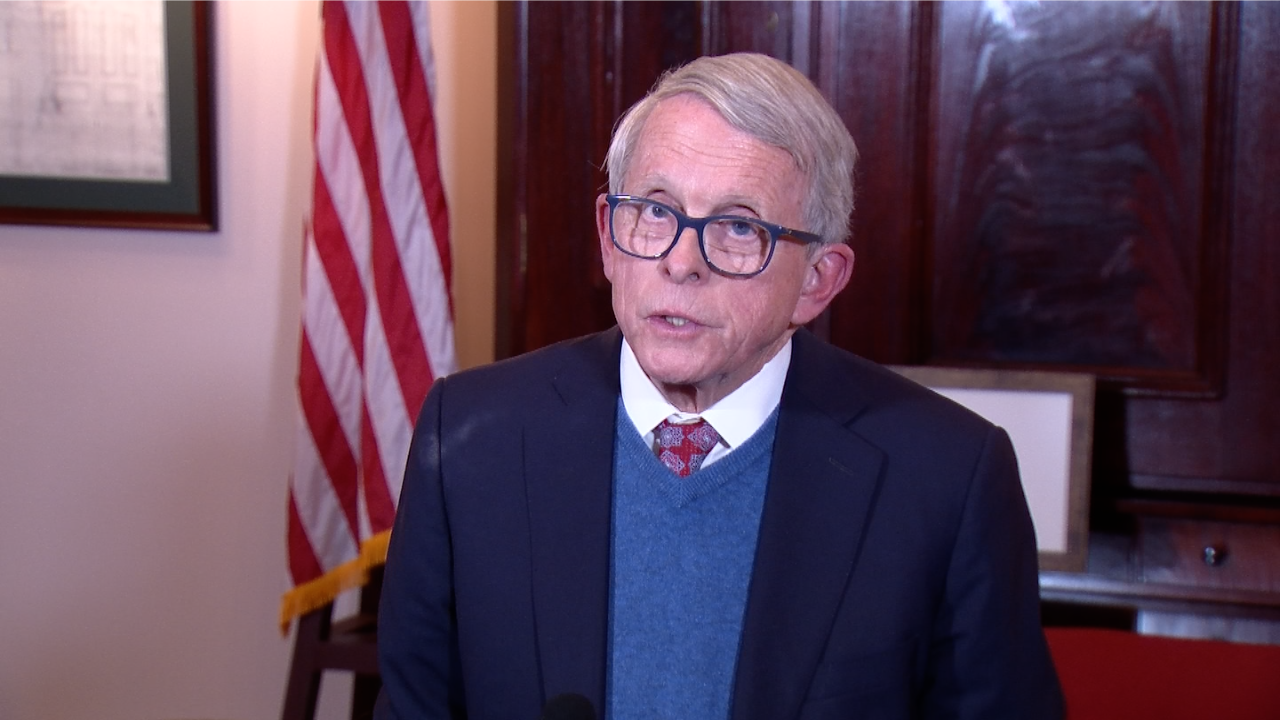
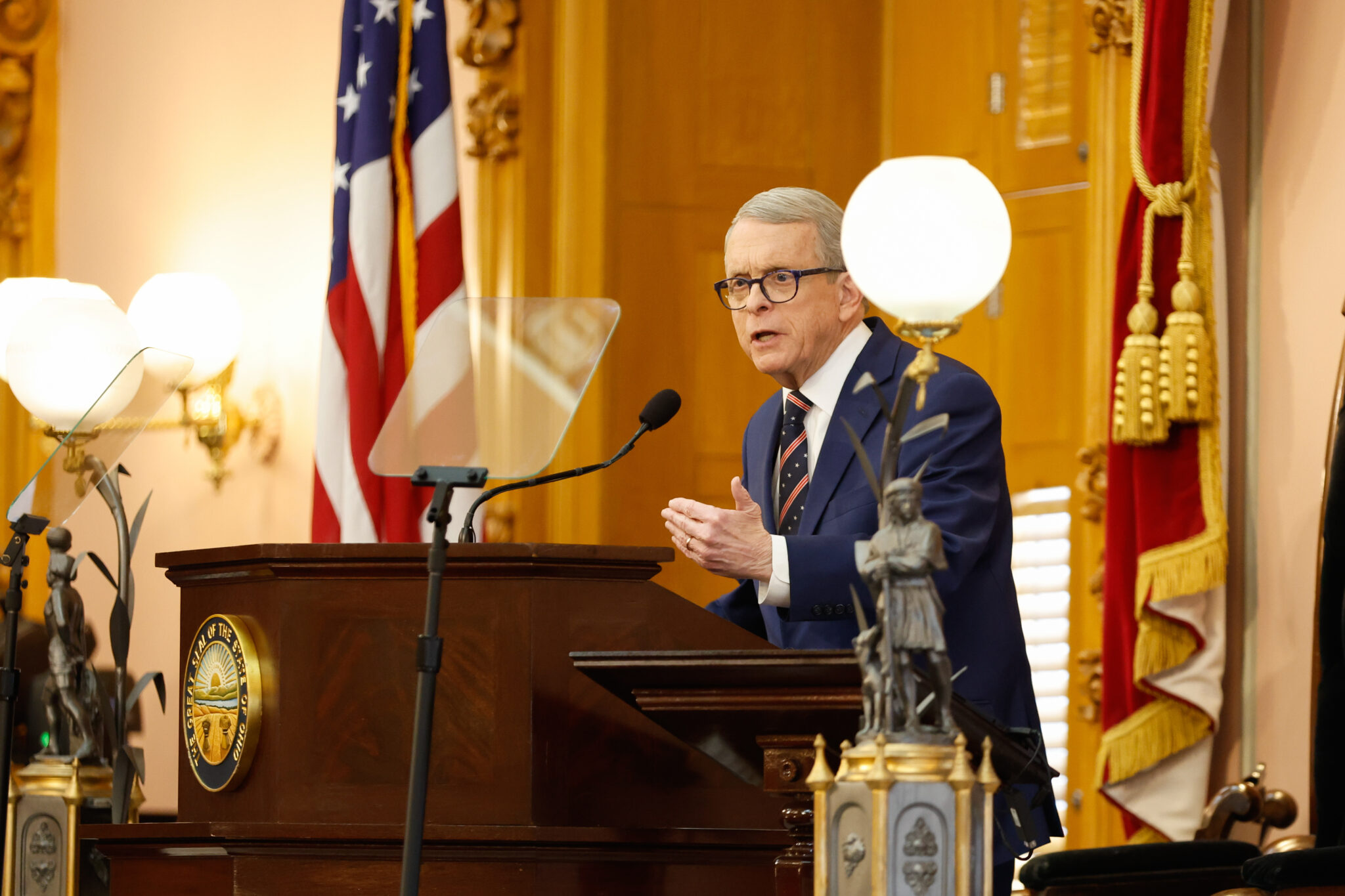
Ohio Gov. Mike DeWine on Friday signed into law a massive higher education overhaul to ban diversity efforts, regulate classroom discussion, and prohibit faculty strikes, among other things. The law will take effect in 90 days.
S.B. 1 will set rules around classroom discussion, create post-tenure reviews, put diversity scholarships at risk, create a retrenchment provision that block unions from negotiating on tenure, shorten university board of trustees terms from nine years down to six years, and require students take an American history course, among other things.
For classroom discussion, the bill will set rules around topics involving “controversial beliefs” such as climate policies, electoral politics, foreign policy, diversity and inclusion programs, immigration policy, marriage, or abortion. S.B. 1 would only affect Ohio’s public universities.
The bill moved quickly through the Statehouse. State Sen. Jerry Cirino, R-Kirtland, introduced S.B. 1, which passed the Ohio Senate in February and the Ohio House in March. Cirino introduced a nearly identical bill during the last General Assembly that went through several revisions, but the bill never made it the House floor and ultimately died.
Megan Henry is a reporter for the Ohio Capital Journal and has spent the past five years reporting in Ohio on various topics including education, healthcare, business and crime. She previously worked at The Columbus Dispatch, part of the USA Today Network.
Ohio Capital Journal is part of States Newsroom, the nation’s largest state-focused nonprofit news organization.
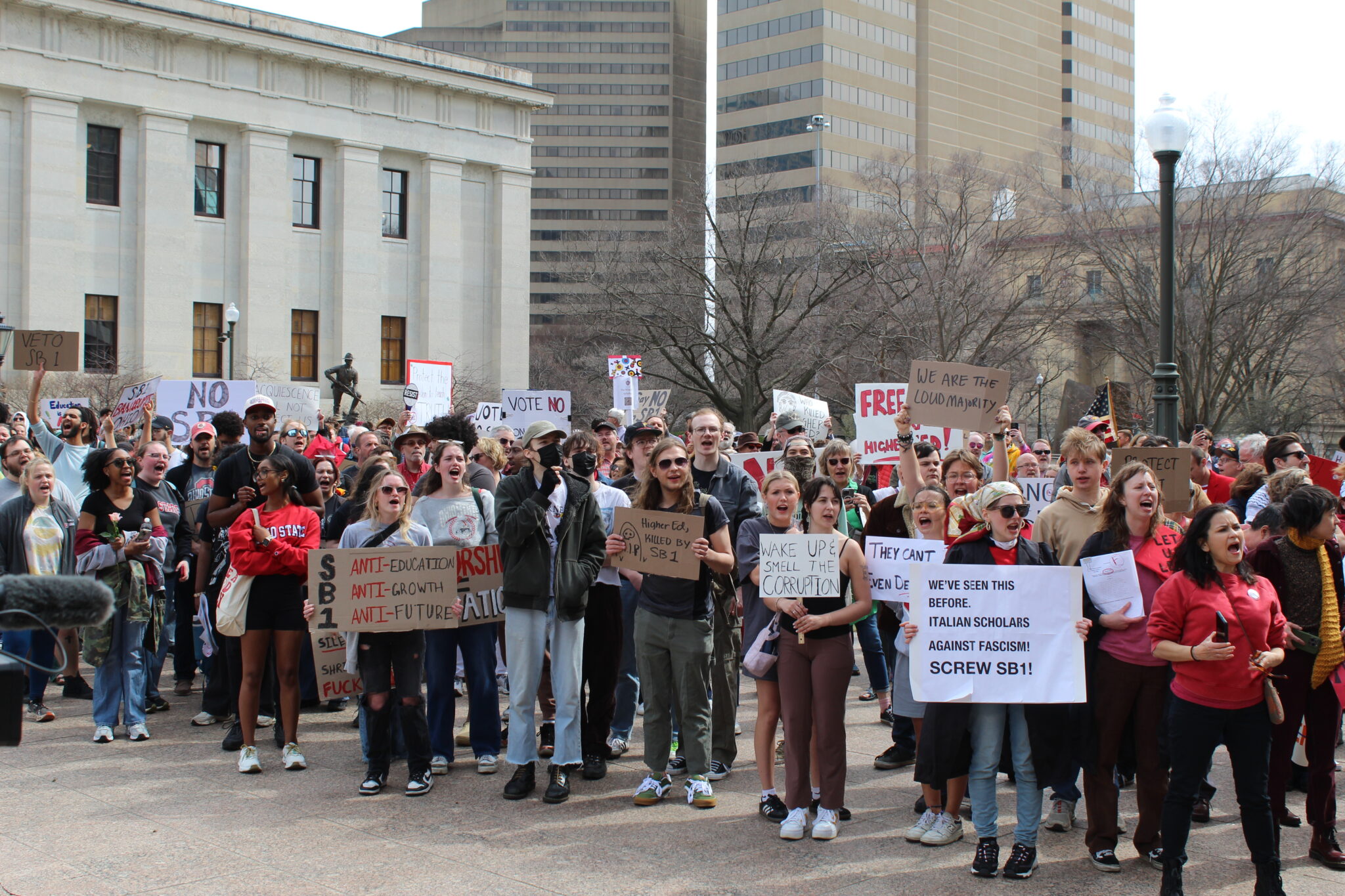
Ohio college students and protesters rally at the Statehouse on March 19, 2025, against Senate Bill 1, a higher education overhaul that bans diversity efforts and faculty strikes, and sets rules around classroom discussion, among other things. (Photo by David DeWitt, Ohio Capital Journal.)
A controversial bill to overhaul Ohio higher education, ban diversity and inclusion efforts, prohibit faculty from striking, and regulate classroom discussion is heading to Ohio Gov. Mike DeWine’s desk for his signature.
The Ohio Senate concurred with changes made to Senate Bill 1 by the Ohio House during Wednesday’s session. The vote was 20-11 with only two Republicans voting against it, state Sens. Louis W. Blessing III, of Colerain Township, and Thomas F. Patton, of Strongsville, voting against it. DeWine has previously said he would sign S.B. 1 into law.
DeWine will have 10 days to sign the bill into law or veto it once he receives it. If DeWine vetoes the bill, lawmakers would need a 3/5 vote from each chamber to override it.
GET THE MORNING HEADLINES.
S.B. 1 would set rules around classroom discussion, create post-tenure reviews, put diversity scholarships at risk, create a retrenchment provision that block unions from negotiating on tenure, shorten university board of trustees terms from nine years down to six years, and require students take an American history course, among other things.
For classroom discussion, the bill would set rules around topics involving “controversial beliefs” such as climate policies, electoral politics, foreign policy, diversity and inclusion programs, immigration policy, marriage, or abortion. S.B. 1 would only affect Ohio’s public universities.
State Sen. Jerry Cirino, R-Kirtland, introduced S.B. 1, which passed the Ohio Senate last month and the Ohio House last week.
“I am delighted, of course, as I always believed this is a great bill for the state of Ohio, for students and for higher education, so I’m delighted that we’ve been able to get past this next hurdle and send the bill to the governor’s desk,” Cirino said.
“We decided on a different approach than many, many of them would like,” Cirino said when asked about the bill’s overwhelming opposition. “But this isn’t about how many people show up to protest or to testify in hearings. A lot of those students that were showing up where, I believe, they were being paid or getting extra credit. And we don’t make policy here based on the number of people that show up to protest or testify.”
Senate President Rob McColley, R-Napoleon, said the passing of S.B. 1 is long overdue.
“It’s something that, frankly, should have been done sooner, but I’m happy we put the work in to get to where we are right now,” he said. “I do think it’s something that’s supported by Ohioans.”
Before voting to concur on S.B. 1, lawmakers debated the bill for about 35 minutes.
“Senate Bill 1 will enrich the learning experience of students at our public universities and colleges — places where our best and brightest will be able to learn without prejudice, speak their minds without being canceled, be honest about their positions without fear of faculty retaliation, and consider all sides of an issue and make up their own minds,” said Sen. Kristina Roegner, R-Hudson.
State Sen. Michele Reynolds, R-Canal Winchester, acknowledged that some people are afraid of what will happen if DEI on college campuses is ended through this bill, but said the time has come to remove DEI labels.
“This is not about censure or erasure,” she said. “It’s not about exclusion. It’s about inclusion that transcends labels, because DEI has become a system that sorts us. It sorts us by race, by gender and by identity, creating a culture where we are defined by our categories instead of our character, where we look at each other’s faces instead of listening to each other’s hearts.”
State Sen. Kyle Koehler, R-Springfield, said this bill ends the micromanaging of instruction in higher education.
“All Ohio college students and parents will now have a more comfortable feeling that their public institution of higher learning will foster an environment of open and free expression for everyone,” he said.
Senate Minority Leader Nickie Antonio, D-Lakewood, said not everyone is celebrating the concurrence of S.B. 1.
“Instead of tackling the real barriers to higher education — skyrocketing tuition costs and student debt — again, the majority are focused on dictating what’s taught in our colleges and universities and who teaches,” she said.
State Sent. Kent Smith, D-Euclid, said this bill will inhibit Ohio universities from attracting top-tier professors.
“If Senate Bill 1 becomes law, this legislation is the worst attack on academic freedom in Ohio in modern history,” Smith said.
Megan Henry is a reporter for the Ohio Capital Journal and has spent the past five years reporting in Ohio on various topics including education, healthcare, business and crime. She previously worked at The Columbus Dispatch, part of the USA Today Network.
Ohio Capital Journal is part of States Newsroom, the nation’s largest state-focused nonprofit news organization.
BECOME A LOVELAND MAGAZINE SUPERFAN BY DONATING NOW!
Editor’s note: Open and free local reporting is critical to having well-informed community. Loveland Magazine has published a free newspaper and website for the last 20 years for our community. If you would like us to continue, kindly contribute to this service. It would be greatly appreciated. Donations may be made to: Loveland Magazine, 243 Wall Street, Loveland, Ohio 45140. Or, donations can be made through PayPal using a credit card. (https://bit.ly/4j1ju3k) Advertisers do not nearly cover all of our expenses.
Ohio Gov. Mike DeWine has officially asked the Centers for Medicare and Medicaid Services to approve Medicaid work requirements.
Under the proposal, Ohio Medicaid expansion recipients would need to be at least 55 years old, employed, be enrolled in school or a job training program, be in a recovery program, or have a serious physical or mental health illness.
“As part of our work to empower people to reach their full potential, we have a responsibility to make sure as many Ohioans as possible are on a pathway toward financial independence,” DeWine said in a statement. “Reinstating our work requirement will promote self-sufficiency, it will give more people the purpose and pride that comes with a job, and it will improve the well-being of Ohio’s workforce.”
Medicaid offers health coverage to households making at or below 138% of the poverty line — $44,367 a year for a family of four. About 92% of U.S. adults under age 65 and eligible for Medicaid are already working or are exempt from requirements due to caregiving responsibilities, illness or disability, or school attendance, according to the Kaiser Family Foundation.
DeWine sent a letter to Health and Human Services Secretary Robert F. Kennedy, Jr. asking to approve the work requirements on Friday. Ohio House Speaker Matt Huffman and Ohio Senate President Rob McColley also signed the letter.
The Centers for Medicare and Medicaid will now review Ohio’s waiver and then the federal agency will have a 30-day comment period, said Ohio Department of Medicaid Spokesperson Stephanie O’Grady.
Once those steps are completed, Ohio’s Medicaid department will begin talks with the federal agency about setting up state terms and conditions, O’Grady said.
“We are dedicated to delivering high-quality healthcare to millions of Ohioans every day, empowering them to take control of their own health,” ODM Director Maureen Corcoran said in a statement. “By encouraging them to seek employment, we not only enhance their quality of life, but also contribute to healthier communities and a thriving economy in Ohio.”
Ohio’s 2023 budget requires the state Medicaid department to re-apply with the federal government under the new presidential administration for permission to impose work, drug testing, and/or education requirements for adult Medicaid health coverage recipients.
ODM received more than 450 comments on the proposed Medicaid work requirements and an overwhelming majority opposed the requirements with many sharing about their personal experiences with Medicaid.
Megan Henry is a reporter for the Ohio Capital Journal and has spent the past five years reporting in Ohio on various topics including education, healthcare, business and crime. She previously worked at The Columbus Dispatch, part of the USA Today Network.
Ohio Capital Journal is part of States Newsroom, the nation’s largest state-focused nonprofit news organization.
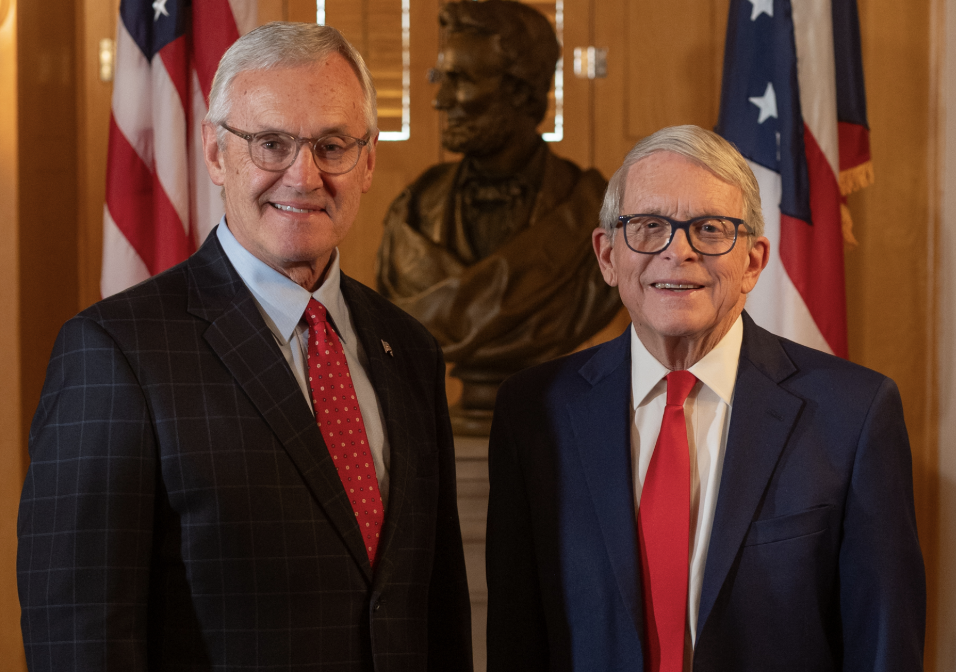
Former Ohio State football coach and Youngstown State University President Jim Tressel, left, who Ohio Republican Gov. Mike DeWine, right, has just selected to serve as the state’s next lieutenant governor. (Photo provided by Ohio governor’s office.)
Ohio Republican Gov. Mike DeWine announced his selection Monday morning of former Ohio State football coach Jim Tressel to serve as his lieutenant governor.
If confirmed by the Ohio House and Ohio Senate, Tressel will replace former Lt. Gov. Jon Husted, whom DeWine appointed to the U.S. Senate last month.
“Jim Tressel knows Ohio, he shares Ohio’s values, and is a born leader,” DeWine said in a release.
Tressel most recently served as the president of Youngstown State University before retiring in 2023. Tressel also served 15 years as the head coach of Youngstown State University’s football team before becoming head football coach of the Ohio State Buckeyes for 10 seasons.
DeWine said that Tressel’s background in education, workforce development, and economic development played a large role in his decision to ask him to take on the lieutenant governor role.
“Jim has spent a great deal of time working with and leading young people, and he will be involved directly with education and workforce development during the remaining two years of my administration,” DeWine said.
Tressel called it a humbling moment.
“I believe in our governor and what he believes in,” Tressel said. “I promised for the next 699 days to have a singleness of purpose and singleness of focus, which is to serve the needs that the governor outlines.”
The selection of Tressel comes as Ohio’s 2026 Election picture becomes more clear.
Last week, Republican Ohio Treasurer Robert Sprague announced his candidacy for Ohio Secretary of State in 2026, ending speculation he might seek the governor’s seat next while throwing his support behind potential 2026 Ohio governor candidate Vivek Ramaswamy.
Sprague enters a primary for Secretary of State against former Ohio state Sen. Niraj Antani, of Miami Township. Current Republican state Sen. Theresa Gavarone, of Bowling Green, is also reportedly considering a run for Secretary of State. On the Democratic side, Warren County oncologist Bryan Hambley has announced his candidacy.
Current Ohio Republican Secretary of State Frank LaRose has announced he will run for Ohio auditor in 2026, while current Republican Ohio Auditor Keith Faber has announced his bid for Ohio attorney general. No Democratic candidates have emerged yet for Ohio auditor or Ohio attorney general in 2026.
Current Ohio Republican Attorney General Dave Yost will run for Ohio governor in 2026. Ramaswamy is widely expected to officially announce his candidacy for Ohio governor too sometime soon.
If confirmed as lieutenant governor, Tressel will be in a natural political position to decide whether he wants to join the primary to succeed DeWine as governor as well.
On the Democratic side, former Ohio Health Department director Dr. Amy Acton is the only candidate so far to declare her candidacy for Ohio governor in 2026.
Ohio’s next U.S. Senator, Jon Husted. (Photo by Graham Stokes for the Ohio Capital Journal. Republish photo only with original story.)
Commentary
The same day Jon Husted was tapped to be Ohio’s next U.S. Senator, former FirstEnergy executives were indicted on federal racketeering charges
Marilou Johanek is a veteran Ohio print and broadcast journalist who has covered state and national politics as a longtime newspaper editorial writer and columnist.
“No comment.” That’s all Ohio Gov. Mike DeWine said and walked away. Only at the tail end of DeWine’s press conference last Friday, to announce Lt. Gov. Jon Husted as his pick to replace J.D. Vance in the U.S. Senate, was the elephant in the room even acknowledged. What was the governor’s response to the federal indictments handed down (the same day) against two former FirstEnergy executives tied to the biggest public corruption scandal in state history?
DeWine’s response was no response. His briefing was about Husted’s promotion not the stain of malfeasance on their watch that the federal indictments underscored. Both men revert to a predictable default setting when it comes to questions about their knowledge of or involvement in the FirstEnergy scheme to bribe lawmakers into giving it a massive state subsidy. Deny. Deflect. Dismiss. No comment.
The pair insists, despite mounting evidence to the contrary, that they knew nothing about anything corrupt in the legislation written by and for FirstEnergy that they were instrumental in passing and signing into law. DeWine and his LG maintain they conducted themselves properly and did right by Ohio with energy policy that just happened to include an extravagant gift from the state to a utility that donated richly to their campaigns.
They either outright refute the logged meetings, phone calls, emails and text messages shared with FirstEnergy brass before, during, and after the company’s billion-dollar nuclear plant bailout was enacted — or feign amnesia about their chumminess with generous GOP donors even as FirstEnergy’s devious pay-to-play arrangement was underway to enrich investors and hose ratepayers.
But as court documents indicate — in the state and federal trials of defendants who got caught up in the nuclear bailout scam — DeWine, and especially Husted, had their fingerprints all over the dodgy FirstEnergy legislation while it was being created and passed through the legislature to benefit the utility and Republican sugar daddy. Like many Ohio Republicans, DeWine and Husted had lengthy relationships and intricate business dealings over the years with the head honchos at FirstEnergy.
Their coziness with ex-FirstEnergy CEO Chuck Jones and Senior VP Mike Dowling appeared to reach its peak in 2019 with passage of House Bill 6 to prop up the utility’s two aging and uncompetitive nuclear power plants in Ohio. So when federal prosecutors announced that Jones and Dowling — at the center of a $60 million bribery plot to buy off state officials for a $1.2 billion bailout — had been slapped with federal racketeering charges, the top state officials who made that bailout happen must have squirmed.
Their political patrons, already facing related charges on the state level, could well implicate the guv and his Senate-appointee in the developing federal cases. No wonder Husted is hightailing it out of Ohio before the boom lowers. But the senator-to-be, who has managed to skate around his deep entanglements in some of the state’s biggest scandals, (e.g., the notorious ECOT online charter school he championed without accountability that ripped-off a ton of taxpayer money for phantom students) may not be able to slide so deftly around his role as a pivotal player in the FirstEnergy scandal.
Publicly released court records suggest Husted, in close contact with FirstEnergy execs, was leading the behind-the-scenes efforts to push the tainted HB6 through the legislature and onto the governor desk ASAP. Detailed evidence contains a slew of FirstEnergy texts referencing “State Official 2,” confirmed as Husted, that show how involved the LG was in not only lobbying for arguably the most corrupt piece of state energy legislation ever, but for making the nuclear bailout bill even beefier by extending the FirstEnergy payouts in the legislation a few extra years.
Although Husted had to trim his sails on that front, FirstEnergy leaders chortled in text messages that the LG was in their corner “fighting to the end” to give the company everything it wanted and more. Who cared if Ohio ratepayers were on the hook for hundreds of millions in new monthly surcharges on their electricity bills? Husted wasn’t working for them. He was helping FirstEnergy boost its profit margin in an unprecedented bribery and money laundering fraud perpetrated on everyday Ohioans.
Of course, Husted defaults to denial about any knowledge of the corruptness that permeated FirstEnergy’s bid for bloated state subsidies from the very beginning. It’s a dance he and DeWine do whenever pervasive state scandal threatens to puncture the governor’s folksy persona or the LG’s image as the telegenic GOP Golden Boy who checks off every box that matters to deep-pocketed powerbrokers lining up to make a killing on custom-made government policy.
As Husted heads to Washington he takes a political skills set honed in shameless service to: an unscrupulous utility that tried to buy a gravy train ticket from the state with secretly-funded legislation, to a crooked for-profit charter that bilked taxpayers out of hundreds of millions of dollars, to a billion-dollar voucher boondoggle funding private religious schools in a scandal waiting to explode, to the fossil fuel industry’s anti-wind and anti-solar propaganda machine after publicly supporting renewable energy.
Husted will fit right in with the Republican Senate majority carrying water for the highest bidder waving a campaign check, capitulating to the tyrant trashing the Constitution with impunity, and brushing aside telling stains of gathering malfeasance with “no comment.”
Ohio Gov. Mike DeWine gets off a school bus as part of the first Ohio School Bus Safety Working Group meeting at the Ohio Department of Public Safety Atrium on Sept. 11, 2023. (Photo by Megan Henry, Ohio Capital Journal).
It didn’t take long. The new legislative session began in Columbus with Republican chieftains in the state throwing the future of public education in Ohio under the school bus.
First it was the billion-dollar voucher king, Ohio House Speaker Matt Huffman, to hedge his bets on giving Ohio’s 611 school districts what they need to provide a quality education to the 1.7 million students they serve.
Then it was Huffman’s patsy in the executive branch, Ohio Gov. Mike DeWine, who added his two cents worth of wishy-washy about how a leaner state budget ahead means something’s gotta give — like fully funding the education system used by the vast majority of Ohio families and their children. “Sometimes these are very, very difficult, difficult choices,” said the gutless wonder. What leadership.
Educating future generations of Ohioans with high-quality public schools is your job, governor. It’s the No. 1 responsibility of the state to ensure a thorough and efficient system of funding for public schools. ‘Says so right in the Ohio Constitution. It also says, “no religious or other sect, or sects, shall ever have any exclusive right to, control of, any part of the school funds of this state.” But DeWine and his puppet master in the Ohio House ignored that part years ago when the state began diverting hundreds of millions of education funds to private and mostly religious schools.
Clearly, the politicians calling the shots in state government have no regard for the state constitution. Adhering to the rule of law is optional when political power is absolute. Huffman, who thumbed his nose at the Ohio Constitution on fair redistricting (to pull off even more egregious gerrymandering in legislative and congressional districts) is doing the same thing on adequately funding public education.
He’s looking to cut revenue to public schools while spending a ton of tax dollars on private school vouchers — with aspirations to fund more private school facilities to increase demand for those vouchers. Call it the Great GOP Phase-out of Public Education. Last week, Huffman dropped a calculated bombshell to prepare Ohio’s public-school districts for another financial hit from the state.
YOU MAKE OUR WORK POSSIBLE.
The Lima Republican said the state couldn’t afford to fully fund public schools or finally fix a school funding formula ruled unconstitutional nearly three decades ago. The Ohio Supreme Court’s 1997 ruling said the state’s failure to provide and distribute sufficient resources for public education and its over-reliance on local property taxes to cover that shortcoming violated the law.
Yet Ohio lawmakers never remedied the problem. School districts had to keep going back to voters just to maintain and operate local schools. Homeowners carried the weight of school funding, not the state. They were/are understandably tapped out on school levies, especially as changes in property evaluations jack up tax bills.
But in 2021, after years of collaboration between former Republican Ohio House Speaker Bob Cupp, former Democratic state Rep. John Patterson and scores of public education stakeholders, Ohio came close to meeting its constitutional obligation of ensuring a thorough and efficient system of funding for public schools. “What we really wanted to do was figure out what it really costs to educate a student and then what a district can really do to support its fair share, and then the state would compensate with the rest,” said Patterson.
The Cupp-Patterson spending formula, known as the Fair School Funding Plan, was enacted as part of the 2021-23 state budget. The new system weighed a district’s expenses to come up with the base per-pupil funding amount — instead of a blanket amount of state funding for all schools — and changed the way the local community’s share was measured depending on property tax value and the income of local residents.
That was a big deal and a significant step forward to address the long-running inequities of an unconstitutional school funding system that had failed generations of K-12 students. The quality of their education often depended on where they lived. Wealthy school districts in Ohio had every advantage over high poverty districts that struggled to pay for even basics in the classroom.
The Fair School Funding Plan initiated a level of fairness and reliability in state support that past spending programs lacked. Complete state funding of the FSFP (around $2 billion altogether) was to be phased in over a six-year period through two-year budget cycles. The goal was to continue expanding state funding for districts in successive biennial state budgets until the Fair School Funding Plan was fully funded.
The last installation, or third phase, was to be paid in full in the upcoming 2026-2027 operating budget. But that expectation hit a wall when Huffman nixed increased spending to public schools as “unsustainable.”
His excuses for not making good on fully funding Cupp-Patterson — less state revenue to work with, less federal pandemic relief money, more scrutiny needed for school money already allocate — don’t apply to his expansive voucher outlays to religious schools that reached $966.2 million for the 2023-2024 school year. Enough to fully fund Fair School Funding Plan.
But Huffman is laying the ground to shave more off the FSFP and showing his utter indifference to the acute financial challenges facing countless districts. Tough luck for the nearly 90% of Ohio students who attend public schools with slashed opportunities. It didn’t take long.
GET THE MORNING HEADLINES.
__________
Marilou Johanek
Marilou Johanek is a veteran Ohio print and broadcast journalist who has covered state and national politics as a longtime newspaper editorial writer and columnist.
Ohio Gov. Mike DeWine has signed a bill into law that will require school districts to create a mandatory religious instruction release time policy and require educators to out a students’ sexuality to their parents.
The law will take effect 90 days after DeWine signed the bill.
State Reps. D.J. Swearingen, R-Huron, and Sara Carruthers, R-Hamilton, introduced H.B. 8. Supporters called the bill the “Parents’ Bill of Rights” while opponents called it the “Don’t Say Gay” bill, due to its similar language to Florida’s ‘Don’t Say Gay’ law that passed in 2022.
The bill requires public schools to let parents know about sexuality content materials ahead of time so they can request alternative instructions.
GET THE MORNING HEADLINES.
It also prohibits any sexuality content from being taught to students in kindergarten through third grade. H.B. 8 defines sexuality content as “oral or written instruction, presentation, image or description of sexual concepts or gender ideology.”
This new law strengthens Ohio’s existing law around religious release time by creating a mandate. Currently, Ohio allows school district boards of education to make a policy to let students go to a course in religious instruction during the school day, but this now becomes a requirement for Ohio school boards.
“Parents, not government bureaucrats, should be making healthcare and education decisions for their kids,” Center for Christian Virtue President Aaron Baer said in a statement. “H.B. 8 protects children by safeguarding parents’ rights to make important decisions for their children.”
The United States Supreme Court upheld religious released time laws during the 1952 Zorach v. Clauson case, which allowed a school district to have students leave school for part of the day to receive religious instruction.
Religious release time instruction must meet three criteria: the courses must take place off school property, be privately funded, and students must have parental permission.
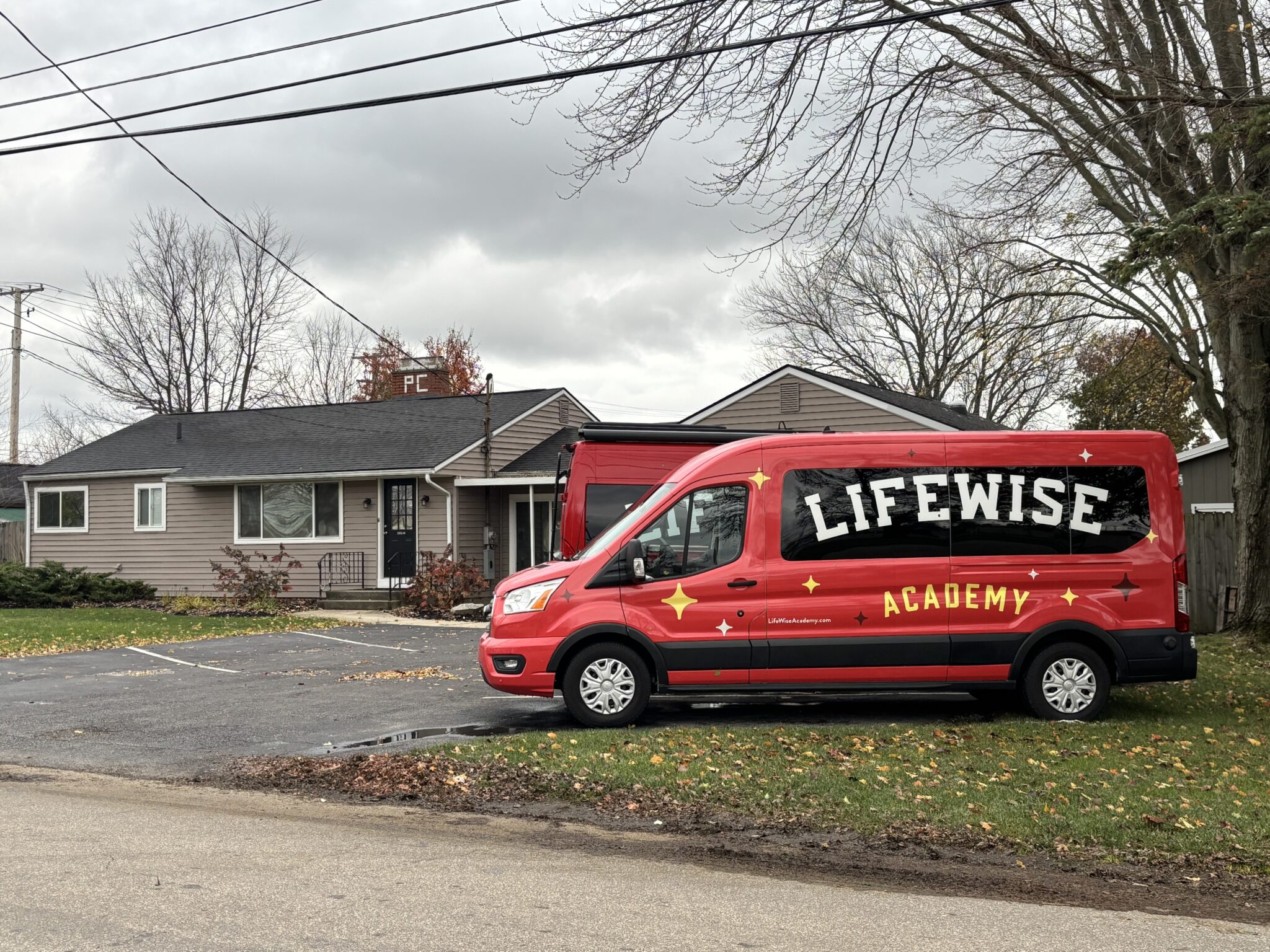
LifeWise Academy, a Hilliard-based religious instruction program, already enrolls students in about 160 Ohio school districts and celebrated the governor’s signing.
“All Ohio families have the freedom to choose off-campus religious instruction during school hours for their students,” LifeWise said in a statement.
Two central Ohio school districts, Westerville and Worthington, rescinded their religious release time policy last year. Both districts formerly allowed LifeWise Academy to take public school students off-campus for Bible classes during school hours.
“We are especially grateful that any local programs that had been put on hold will be able to resume their growing programs and that communities will now have the clarity they need to provide families with the opportunity to choose Bible-based character education for their child,” LifeWise said in a statement.
Megan Henry is a reporter for the Ohio Capital Journal and has spent the past five years reporting in Ohio on various topics including education, healthcare, business and crime. She previously worked at The Columbus Dispatch, part of the USA Today Network.
Ohio Capital Journal is part of States Newsroom, the nation’s largest state-focused nonprofit news organization.
A bill that would expand fracking leases in state public lands, parks, and wildlife areas from three years to five is going to Ohio Gov. Mike DeWine’s desk for his signature.
Once he receives the bill, DeWine will have 10 days to sign the bill into law or veto it.
State Reps. Dick Stein, R-Norwalk, and Patrick Brennan, D-Parma, introduced House Bill 308 last year and it originally defines nuclear energy as green energy in Ohio.
Ohio has two nuclear reactors — Davis–Besse Nuclear Power Station in Northwest Ohio and the Perry Nuclear Power Plant in Northeast Ohio.
The bill passed the Ohio House this summer, with ten Democrats voting against it.
The Ohio Senate added a few amendments to the bill — including one that increases a standard lease for fracking under state parks to five years. The current law is three years.
“We need to continue to frack, and allowing the extension of that is also important,” Sen. Andrew Brenner, R-Delaware, said during last week’s Senate session.
State Sen. Kent Smith, D-Euclid, had many issues with the bill.
“This is perhaps the least popular thing that we will do in the entire General Assembly,” Smith said. “Why are we extending the lease in this amendment again without public consideration?”
The U.S. Department of Energy defines renewable energy as coming from “unlimited, naturally replenished resources, such as the sun, tides, and wind.”
“This bill would designate nuclear energy as green energy, which is kind of mystifying to me, because it’s clearly not,” Smith said. “It has so much radioactive waste, it’s clearly not clean. It’s certainly not renewable.”
H.B. 308 passed last week in the Ohio Senate with a 24-6 vote. Sen. Catherine Ingram was the only Democrat to vote for the bill.
House concurrence
The Ohio House voted 65-26 to concur with the changes made to the bill later that same day. Brennan voted against concurrence on his own bill, saying he hoped it would play out in conference committee.
“I remain steadfast in favor of nuclear expansion in the state of Ohio,” he said. “… I am not anti-fracking, but I believe our state parks are sacrosanct,” he said. “I think when we created our state parks, we created a contract with the people that we would leave our state parks alone. I’m just a purist when it comes to our state parks.”
Only three Democrats voted for concurrence — state Reps. Richard Dell’Aquila, Joe Miller, and Elgin Rogers, Jr.
GET THE MORNING HEADLINES.
State Rep. Don Jones, R-Freeport, lives where fracking takes place in eastern Ohio and said the fracking process has been refined over the years.
“You will never know where fracking has occurred,” he said. “We’re not going to damage our state parks. We’re not going to hurt our state parks.”
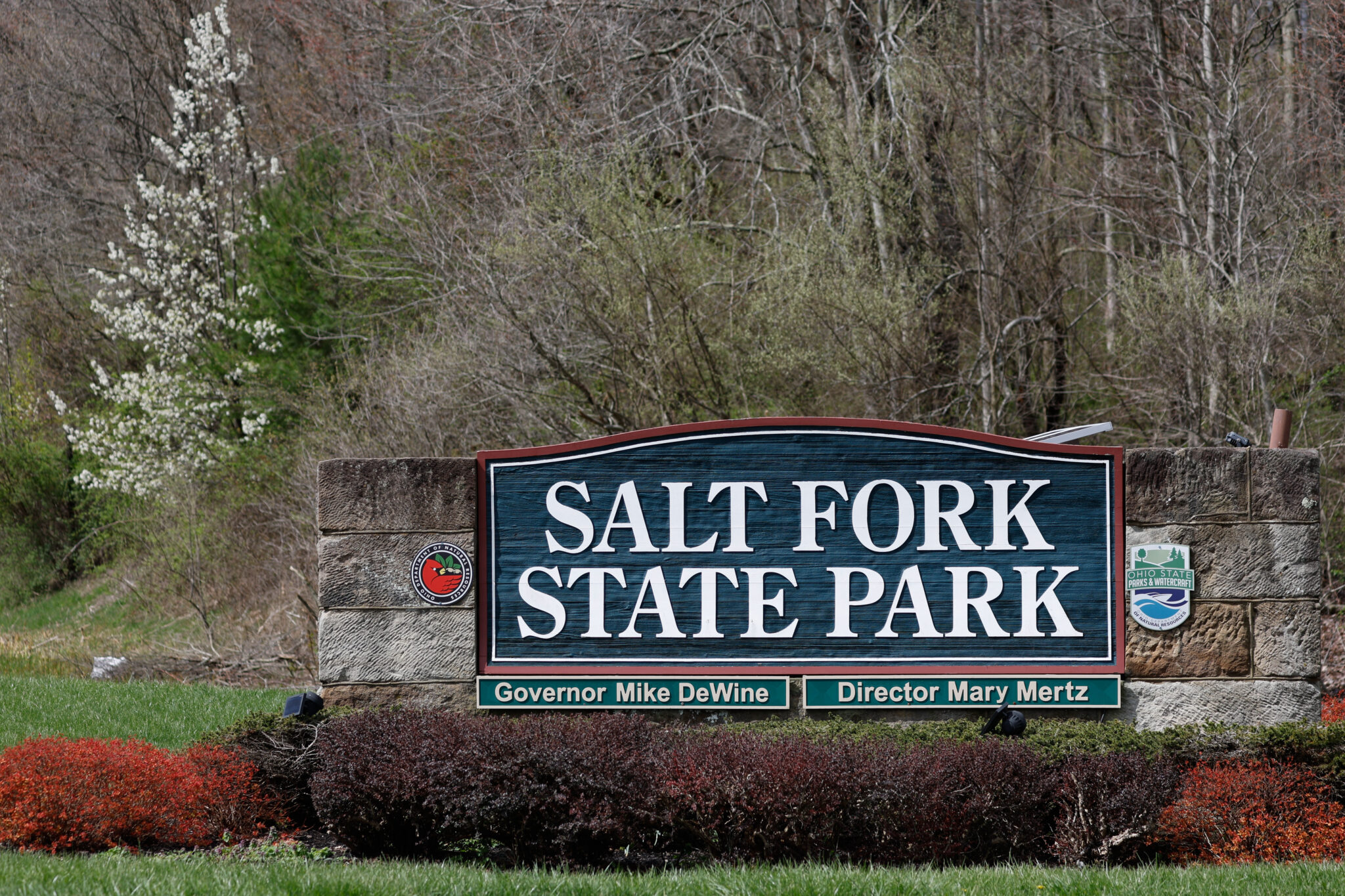
The Ohio Oil and Gas Land Management Commission has selected various bidders to frack Salt Fork State Park, Valley Run Wildlife Area and Zepernick Wildlife Area. The vote on this bill comes days after OGLMC selected an Oklahoma-based company to lease about 30 acres of land in Egypt Valley in Belmont County for fracking.
“This expansion of fracking is going to industrialize our beautiful parks and transform them into places people avoid, not enjoy,” Cathy Cowan Becker, steering committee member of Save Ohio Parks, said about H.B. 308.
Former Ohio Gov. John Kasich signed a law allowing drilling companies to frack in state parks in 2011. Potential drillers need to get permission from the Oil and Gas Commission, but Kasich never appointed anyone to the committee.
A fracking amendment was added to a bill during the last lame duck two years that passed and Gov. Mike DeWine signed it into law in January 2023. The law requires the Ohio Department of Natural Resources to allow fracking for natural gas in Ohio’s public land and state parks.
“Ohio legislators have once again sold out our state parks and public lands to the oil and gas industry through an amendment to an unrelated bill during the lame duck session, with no notice or chance for public testimony,” Becker said.
Megan Henry is a reporter for the Ohio Capital Journal and has spent the past five years reporting in Ohio on various topics including education, healthcare, business and crime. She previously worked at The Columbus Dispatch, part of the USA Today Network.
Ohio Capital Journal is part of States Newsroom, the nation’s largest state-focused nonprofit news organization.
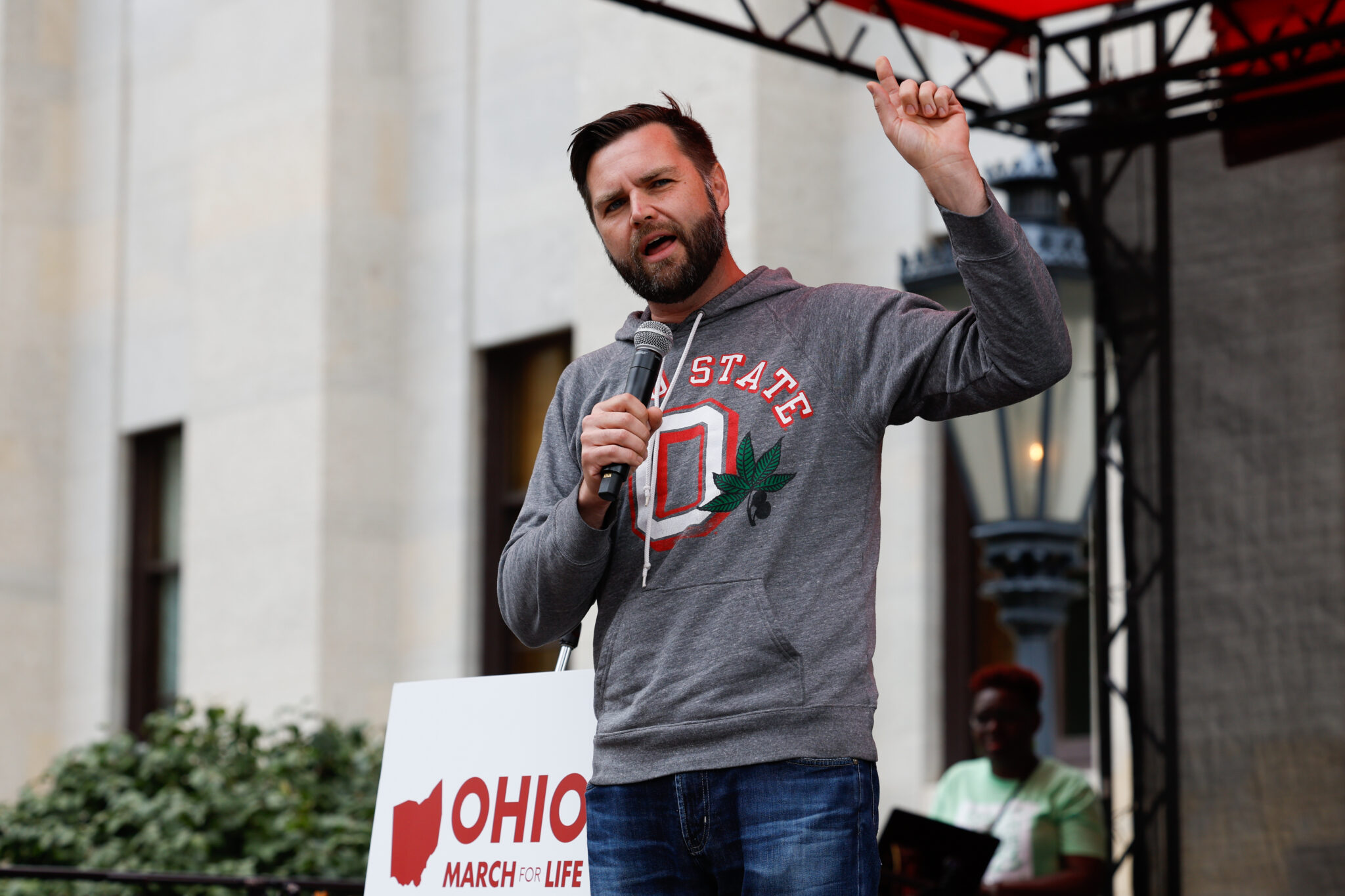
COLUMBUS, Ohio — OCTOBER 06: Republican Ohio U.S. Sen. J.D. Vance speaks during the Ohio March for Life rally against November’s Issue 1 reproductive rights amendment, October 6, 2023, outside the Statehouse in Columbus, Ohio. (Photo by Graham Stokes for Ohio Capital Journal. Republish photo only with original article.)
Ohio U.S. Sen. J.D. Vance will become the next vice president, thus creating a vacancy in the U.S. Senate.
Former President Donald Trump and his running mate Vance defeated Vice President Kamala Harris and Minnesota Gov. Tim Walz in the presidential election that was called Wednesday morning by the Associated Press. Vance will have to resign from his Senate seat before being sworn in as vice president during Inauguration Day on Jan. 20.
It is now up to Ohio Gov. Mike DeWine to pick a Republican to fill Vance’s open Senate seat until a special election is held in 2026. Whoever DeWine appoints must run in the 2026 special election if they want to keep their seat.
Vance is currently serving his first term in the U.S. Senate after being elected over Democratic Rep. Tim Ryan in 2022. Whoever wins the 2026 special election will serve the remainder of Vance’s term, which expires in 2028.
DeWine has yet to give any indication as to who he is considering as a replacement to fill Vance’s Senate seat, but there are several potential names that have been circulating including state Sen. Matt Dolan, Lt. Gov. Jon Husted, Republican National Committee Committeewoman for Ohio Jane Timken, former Republican presidential candidate Vivek Ramaswamy, and Ohio Sec. of State Frank LaRose, among others.
Republican Bernie Moreno defeated incumbent Democratic U.S. Sen. Sherrod Brown in a hotly contested Senate race on Tuesday. Some have speculated whether Brown might seek the Ohio U.S. Senate seat in 2026.
Megan Henry is a reporter for the Ohio Capital Journal and has spent the past five years reporting in Ohio on various topics including education, healthcare, business and crime. She previously worked at The Columbus Dispatch, part of the USA Today Network.
Ohio Capital Journal is part of States Newsroom, the nation’s largest state-focused nonprofit news organization.
Ohio Gov. Mike DeWine stood in staunch opposition Wednesday to an anti-gerrymandering proposal heading to voters in November that would replace politicians with a citizen redistricting commission, but he stopped short of presenting a competing proposal this year.
DeWine held a press conference on Wednesday, not only to criticize the Citizens Not Politicians ballot initiative, but to acknowledge the process that’s currently in place in Ohio — a process that includes him — doesn’t work either.
“We need to end this writing and re-writing of our constitution, and we must defeat this misguided ballot initiative,” DeWine said.
Asked whether he thought it was possible the initiative headed to the ballot could work, despite his misgivings, the governor said, “No. No way in hell.”
DeWine instead presented his preference for an “Iowa plan,” where Ohio lawmakers would draw up a redistricting amendment proposal of their own early next year, based on the state of Iowa’s.
Iowa has a non-partisan legislative services agency draw maps for approval by lawmakers and the governor. If a map doesn’t get passed by the legislature and governor on its first two attempts, Iowa lawmakers are able to make amendments to the map plan as they see fit on the third attempt. This gives Iowa lawmakers final authority on maps.
In a response issued after DeWine’s news conference, Citizens Not Politicians leader and retired Republican Ohio Supreme Court Chief Justice Maureen O’Connor issued a statement saying that the “disinformation from the governor today is insulting to everyone in Ohio.”
Redistricting in Ohio
The governor was a member of the Ohio Redistricting Commission (as dictated by current state law regarding redistricting), so he saw firsthand the process over the two years that the commission adopted six Statehouse maps and two U.S. congressional maps.
All of the maps were challenged in court, with five of the Statehouse maps rejected by the Ohio Supreme Court, and both of the congressional maps ruled unconstitutionally partisan. The sixth map was not rejected by a state supreme court led by new Chief Justice Sharon Kennedy, rather than the previous swing vote on all the maps, now-retired Chief Justice Maureen O’Connor.
The process also saw two independent map-drawers, who were brought in at the behest of the court, but whose suggestions and draft maps were rejected by the commission at the last minute, in favor of a previous draft drawn up by Republican staffers.
“This was a decision that I have consciously made after having watched the turmoil, political partisanship that’s been going on for a long time in Ohio,” DeWine said on Wednesday as he decried the Citizens Not Politicians proposal.
The one thing DeWine said did need to happen in redistricting reform that matches up with the current ballot proposal is a removal of politics as part of the process.
“Ohio should have a constitutional provision that instructs the mapmakers that they can not consider past voting data, that the map-drawers know will lead to a pre-determined partisan outcome,” he said.
He said the proposal set to come before voters would need replaced once again after voters realized they were “unhappy,” and that the new process “will make things much worse.”
“If this ballot proposal were to be adopted, Ohio would actually end up with a system that mandates, that compels map-drawers to produce gerrymandered districts,” DeWine alleged.
The proposal headed for voters after the Ohio Ballot Board approves ballot language for it, would create a 15-person independent redistricting commission made up of citizens, and without elected officials, according to the proposal. The citizens would be chosen through a vetting process done by local judges, and public hearings would be a part of the process as maps are drafted, Citizens Not Politicians has stated.
The main problem with the proposal for DeWine is that proportionality “supersedes” all when it comes to drawing maps and determining Statehouse and congressional districts. Proportionality requires representation based on the voting trends in past elections.
The governor critiqued the initiative for having proportionality supersede things like communities of interests and township/county/municipality lines.
Ohio Gov. Mike DeWine points to a proposed Ohio voting district during a Wednesday press conference. At the press conference, he spoke out against the Citizens Not Politicians redistricting reform proposal, and brought up his own plan for reform after the November election. (Photo by Susan Tebben, Ohio Capital Journal.)
Using two examples of maps drawn with the simulation software Dave’s Redistricting App — one done by “Kevin” with a proportionality score of 100 out of 100, and another officially submitted by the Ohio Democrats — he endeavored to show possible problems with maps that focus solely on proportionality.
He mentioned the “snake on the lake” — a nickname for a northeast district based on its shape — comparing it to a district in one simulation that connected Sandusky and Lorain counties. He said another district in the proposals reminded him of an ice cream cone in its “scooping” out of parts of the area.
“This is what proportionality does if you adhere to it,” he said.
DeWine’s plan
Whether or not the Citizens Not Politicians initiative goes through, Ohio might see DeWine and the legislature attempting to rewrite the constitution again.
If the initiative doesn’t pass, DeWine was resolute in his plan to “work with the General Assembly to introduce a resolution in the next session.”
“We’ll vet that proposal, there’ll be hearings on it, we’ll hear from citizens on all sides,” DeWine said. “And I hope then, approve the resolution to place an initiative on the ballot for voters to approve the way the process should be.”
He said he will ask for passage of “a version of the Iowa ballot language that’s been in effect … for about 40 years now.”
The Iowa system has gone through its share of changes, but in the 1980 legislative session, state legislators established the current process, in which the Legislative Service Bureau, “a nonpartisan bill drafting agency of the General Assembly” is given the “primary responsibility for drawing proposed congressional and legislative districts, subject to legislative and gubernatorial approval,” according to a legislative guide to the process produced by the Iowa Legislative Services Agency, a combination of agencies including the LSB.
The plan requires a first redistricting plan to be submitted to the General Assembly, after which a “Temporary Redistricting Advisory Commission” holds at least three hearings in “different geographic regions of the state,” submitting a report after the hearings.
If that map fails to be approved by the legislature or the governor, specific reasons must be given via resolution or governor’s veto message. The GA then has 35 days to get a second plan to a vote. No public hearings are required for the second plan.
If there is need for a third plan, the process repeats, but this time “the third plan is subject to amendment in the same manner as any other bill,” meaning that Iowa lawmakers can make desired changes directly.
If no agreement can be made or if that plan is legally challenged, judicial intervention from the state supreme court begins.
The Iowa Constitution “provides that the Iowa Supreme Court will likely assume or be given the responsibility for establishing a valid redistricting plan,” according to the LSA.
As DeWine explained the Iowa process, he said the Legislative Service Commission in Ohio would be the non-partisan entity to start the process, but Ohio’s version would perhaps not follow the rest of the process, including the provision that states the Iowa Legislature has the formal passage power on maps.
As for enforcement measures to keep the redistricting leaders in check under the plan he’s proposing, DeWine said “none of that changes” from the process now.
The biggest part of the system that DeWine wants to see in Ohio is the map-drawing criteria.
“The Iowa criteria makes it impossible for someone legally following the constitution to use partisan politics,” the governor said.
He acknowledged Iowa’s smaller population and more compact counties, but said the “basic principle” works in both states.
“Do you want politics in it, or do you want politics prohibited from being in it?”
If an Ohio GA plan “deviates very much” from the Iowa system, DeWine said he “will not be in favor of it.”
Even if the ballot measure does pass in November, DeWine still wouldn’t rule out the possibility that he would push for the Iowa plan to be on the ballot at a later date.
“What I’m not going to say is ‘never, never, never’ will I ever do that, I’m not going to say it,” DeWine said. “What I hope happens is that we can defeat this in the fall … and I will push and I will do whatever I can to lead so that we end up with something that’s better than what we have now.”
He went further, saying even if the legislature does not bring about the plan he envisions, “I will do everything I can to get it on the ballot by initiative.”
Despite his fervor for the plan, DeWine said he would not be calling a special session for the legislature to work on the initiative now, to try to beat the Aug. 7 petition-filing date.
“I don’t have time to go to the ballot, number one; number two, I don’t know that at this late date if there’s support in the House to do that; three, the advantage that you have by waiting …is that we can go through a normal process where there are public hearings and things can be vetted,” DeWine told reporters on Wednesday.
The governor alleged that the Citizens Not Politicians amendment had not been properly vetted, saying if voters understood the proposal, they wouldn’t want it, even if they support proportionality as a lead method in redistricting. The proposal made the ballot with 535,005 valid Ohio voter signatures.
“The idea of proportionality sounds good, it sounds fair,” DeWine said. “However, we see how requiring a map-drawer to draw districts, each of which favors one political party … obliterates all other good government objectives.”
Reactions
The Citizens Not Politicians leaders were unsurprisingly against DeWine’s comments and his new plan.
“The disinformation from the governor today is insulting to everyone in Ohio, and especially insulting to the half-a-million Ohioans – Republicans, Democrats and Independents – who put the Citizens Not Politicians amendment on the November ballot,” said retired Chief Justice Maureen O’Connor, in a statement with Citizens Not Politicians.
O’Connor offered to sit down with the governor and “explain” the plan since, she said, “the governor demonstrated in his rambling and disjointed press conference today that he does not understand our amendment.”
Senate Minority Leader Nickie Antonio, D-Lakewood, who was on the Ohio Redistricting Commission with DeWine when they passed the most recent statehouse district map, said the governor’s proposal “appears to be another eleventh-hour attempt to subvert the will of the people and keep a stranglehold on the GOP artificial supermajority.”
House Minority Leader Allison Russo, D-Upper Arlington, also served on the commission with DeWine through a number of maps, and commented after the most recent map adoption that she agreed to the map solely to take the process out of the hands of the ORC.
On Wednesday, she called the DeWine’s press conference a “manufactured attempt to confuse and misdirect voters from the truth.”
“Republicans are desperate because they know their gerrymandered grip on power is coming to an end, so they’re once again attacking Ohioans’ fundamental freedoms and putting their own self-interest ahead of the interest of the people,” Russo said in a statement.
The governor wasn’t without his supporters in the effort, however. A spokesperson for Senate President Matt Huffman said the governor “is correct about proportionality, also known as ‘representational fairness,’ it is the textbook definition of gerrymandering.”
“It’s important to remember that the current system, approved by more than 70% of the voters, produced a unanimous bipartisan vote that approved maps for the General Assembly over the remainder of the decade,” spokesperson John Fortney said.
House Speaker Jason Stephens posted a statement on X after DeWine’s press conference, saying “I look forward to working with the governor, the Senate and the entire GOP Caucus to defeat Issue 1 in November.”
“Once Issue 1 is defeated, we will continue to work to ensure all Ohioans voices are heard and represented,” the statement read.
Susan Tebben
Susan Tebben is an award-winning journalist with a decade of experience covering Ohio news, including courts and crime, Appalachian social issues, government, education, diversity and culture. She has worked for The Newark Advocate, The Glasgow (KY) Daily Times, The Athens Messenger, and WOUB Public Media. She has also had work featured on National Public Radio.
Ohio Capital Journal is part of States Newsroom, the nation’s largest state-focused nonprofit news organization.


![[BREAKING] Ohio Gov. DeWine signs higher ed bill regulating classroom discussion and banning diversity efforts](https://lovelandmagazine.com/wp-content/uploads/2025/03/Gov.-Mike-DeWine-signs-ed-bill.jpg)