Tag: Ohio Gov. Mike DeWine

  • Ohio Gov. Mike DeWine signs legislation to limit cellphones in schools

    Ohio Gov. Mike DeWine signs legislation to limit cellphones in schools

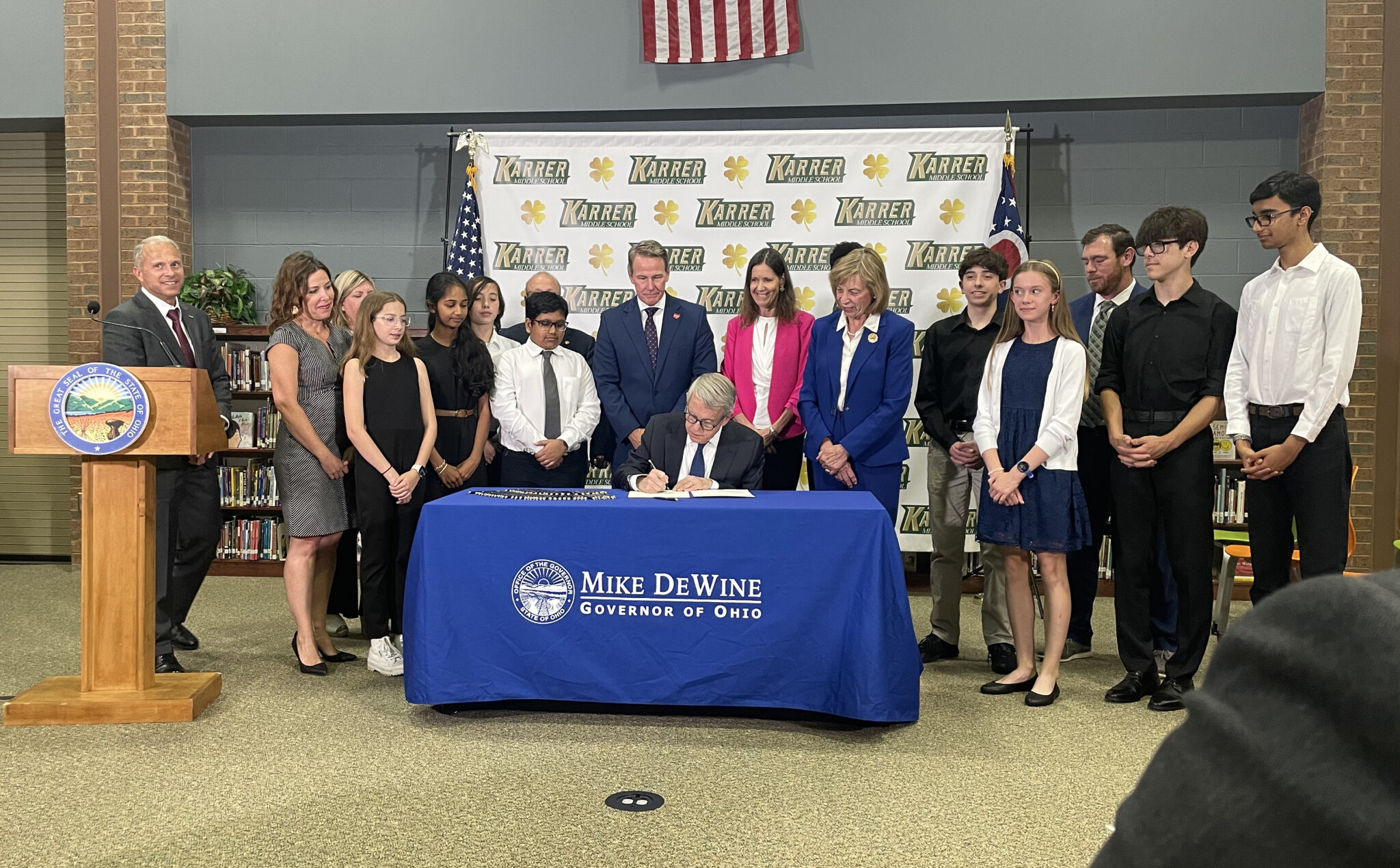
     Gov. Mike DeWine signing legislation to limit cellphones in schools. (Photo by Nick Evans, Ohio Capital Journal.)

    BY:  Ohio Capital Journal

    At a Dublin middle school Wednesday, Ohio Gov. Mike DeWine signed legislation ordering school districts around the state to develop written policies for cellphones on campus. The state education department will write it’s own model policy that districts may adopt, but so long as they come up with something to keep cellphone use “as limited as possible” districts can do what they like.

    District level view

    Several districts around the state stood up their own cellphone policies well before state lawmakers acted. Dublin City Schools, for instance, prohibited cell phones in high school classrooms this year, but they eliminated them completely for middle schools.

    “It’s so much fun to walk into a middle school lunch again,” Superintendent John Marschhausen explained. “Because it used to be you’d go in and it’d be somewhat quiet, kids looking down at their phones. But now that it’s loud, it’s fun, and the interaction and the interpersonal skills that students learn is increasing.”

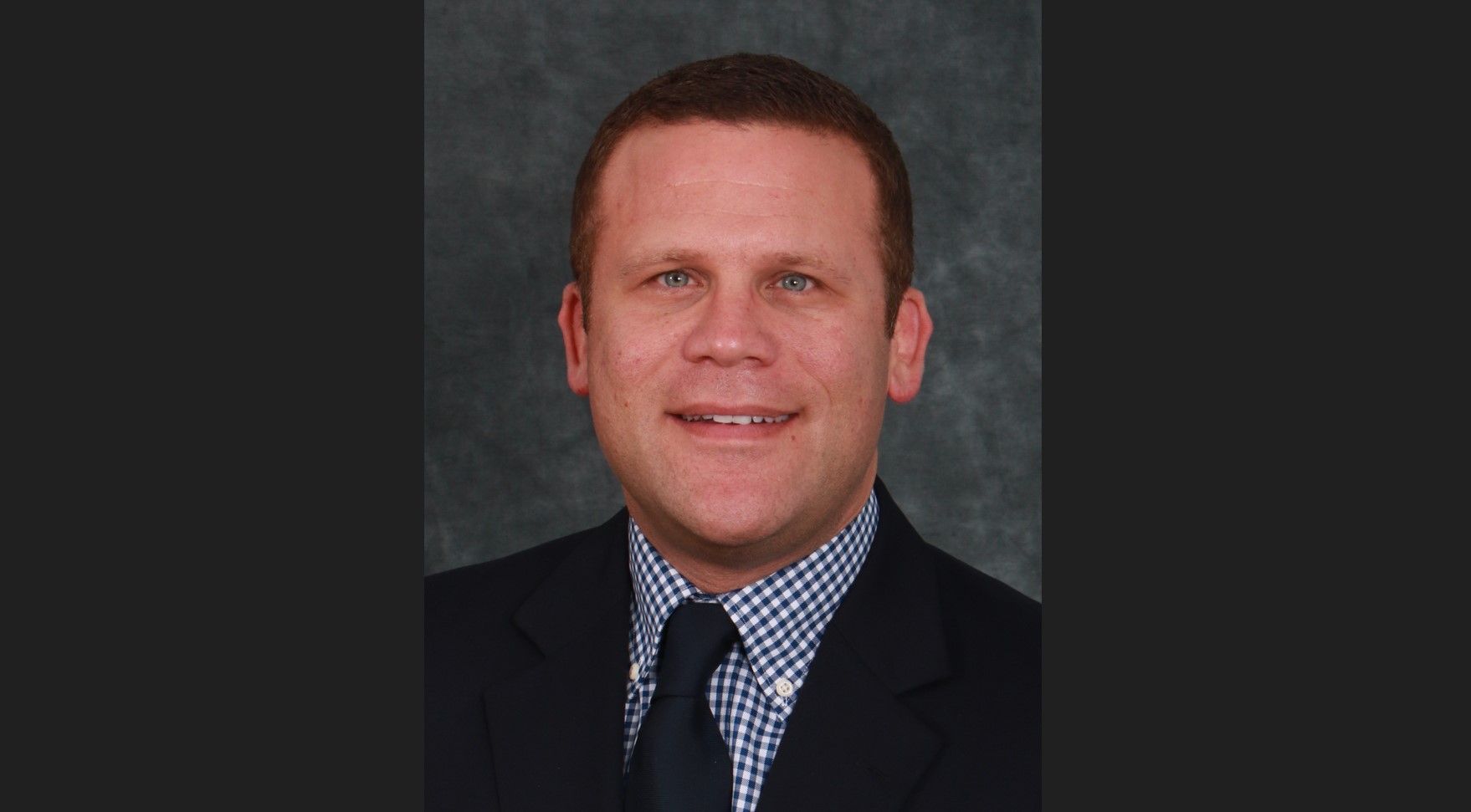
     Dublin City Schools Superintendent John Marschhausen. (Photo by Nick Evans, Ohio Capital Journal.) 

    The law carries a provision retroactively blessing the policies Dublin and other school districts instituted if they meet the minimum standards laid out in law. Although it’s too soon to connect the policy changes to outcomes like test scores, Marschhausen explained the impact is still showing up in noticeable ways.

    “Our discipline is down, our bullying is down,” he explained. Without kids on social media during the day, he added, teachers and administrators aren’t forced to respond to the latest post and students’ group chats aren’t fanning the flames of that day’s drama.

    “When they go to class they learn,” Marschhausen said. “So we have statistical data for discipline that shows an improvement.”

    In a press release, Ohio Education Association President Scott DiMauro applauded the legislation, but he argued teachers — the eventual frontline of whatever policy a district establishes — need to be included in the planning process.

    “This law will ensure educators have clear guidance and support while allowing for local flexibility to set policies that will improve learning conditions,” he stated. “Our members must be included in the development of those local policies.”

    Signing ceremony

    In the Karrer Middle School library, DeWine emphasized the potential for distraction that cellphones present. Nearly all teenagers have a phone, he argued, and notifications roll in according to one study, about once every five minutes.

    “Even when students don’t check their cell phones — or when adults don’t check their cell phones — the presence of the phone impacts their ability to think,” DeWine said.

    Like Superintendent Marschhausen, the governor brought up the return of noisy lunchrooms. Lt. Gov. Jon Husted reported district leaders who have restricted access to phones report “the facts are clear.”

    “Eliminating smartphones in schools leads to improved academic performance, reduces bullying and lessens disciplinary issues,” Husted said.

    In his statements, DeWine referenced author Johnathan Haidt’s book “The Anxious Generation,” which kicked off a national discussion about removing phones in schools a few months ago.

    The administration’s victory lap comes after a brief and painless trip through the state legislature. DeWine urged lawmakers to act just five weeks ago in his State of the State address, and after hitching a ride on a noncontroversial bill dealing with military seals on high school diplomas, the idea passed both chambers unanimously.

    “You don’t get a unanimous vote out this legislature, or very few legislatures, on anything other than naming roads,” DeWine quipped after signing the bill.

    The governor said he expects state education officials to have their model policy ready for districts within the next ten days or so. The law take effect in mid-August, right in time for kids to head back to school.

    Follow OCJ Reporter Nick Evans on Twitter.


    Nick Evans
    NICK EVANS

    Nick Evans has spent the past seven years reporting for NPR member stations in Florida and Ohio. He got his start in Tallahassee, covering issues like redistricting, same sex marriage and medical marijuana. Since arriving in Columbus in 2018, he has covered everything from city council to football. His work on Ohio politics and local policing have been featured numerous times on NPR.

    Ohio Capital Journal is part of States Newsroom, the nation’s largest state-focused nonprofit news organization.

    MORE FROM AUTHOR


  • Corruption tax? Policy expert says that’s basically what Ohio utility consumers have been paying

    Corruption tax? Policy expert says that’s basically what Ohio utility consumers have been paying

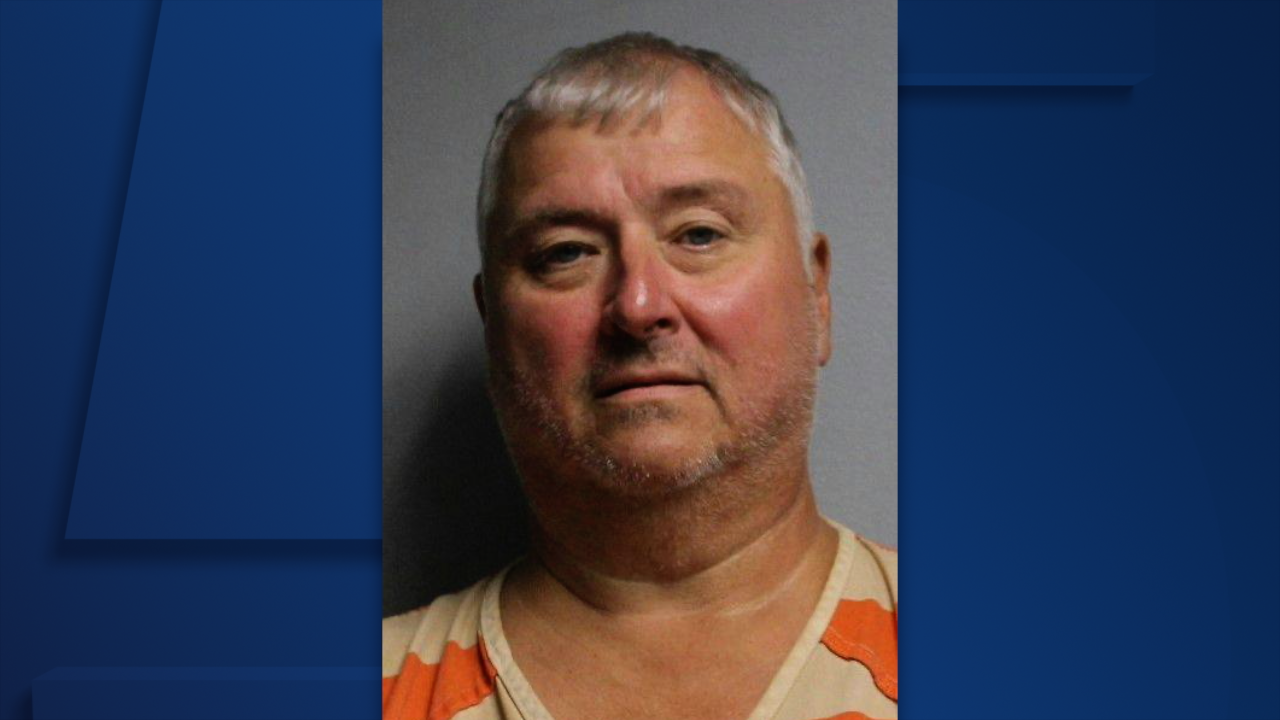
    Mugshot of former Ohio House Speaker Larry (Photo from the Butler County Jail.)

    BY:  Ohio Capital Journal

    Many politicians — especially conservatives — are loath to approve anything that could be construed as a tax increase.

    But since 2009, Ohio’s leadership has gone along with a number of questionable rate hikes demanded by regulated utilities. They’ve functioned in the same manner as tax increases — regressive ones with unsavory origins.

    There were new state charges earlier this month in Ohio’s massive FirstEnergy bribery scandal. They brought new attention to the issue, but that scandal is hardly the only time Ohio utilities have been able to impose questionable rate increases on their unsuspecting customers.

    In the scandal, Akron-based FirstEnergy paid more than $61 million in bribes in exchange for the 2019 passage and protection of a $1.3 billion ratepayer bailout. As a consequence, former House Speaker Larry Householder, R-Glenford, is serving a 20-year federal prison sentence.

    The state charges filed this month against two top FirstEnergy executives and the state’s top regulator pertain to those crimes. But they also describe more than a decade’s worth of additional shady increases in which payoffs played a central role.

    They accuse Sam Randazzo — whom Ohio Gov. Mike DeWine later appointed to be top regulator — of secretly helping FirstEnergy make huge, secret payments to powerful energy users. In exchange, the charges say, the industrial users dropped their opposition to rate increases FirstEnergy wanted to impose on all its customers.

    The payments might not have been illegal, but they functioned as kickbacks all the same.

    The Columbus Dispatch on Sunday reported that in 2008 then-Gov. Ted Strickland, a Democrat, tried to negotiate an end to the shady practice, but then-House Speaker Jon Husted killed the attempt, a former aide to Strickland told the paper. Husted is now DeWine’s lieutenant governor and is said to be planning a run in the 2026 Ohio Republican primary to be governor in his own right.

    Those increases are in addition to a whole slew of other rate hikes that Ohio’s erstwhile regulator has granted, but the state Supreme Court later ruled to be illegal. They total more than $1.5 billion worth altogether. Even though the gains have been ruled unlawful, utilities have gotten to keep them because the Public Utilities Commission of Ohio keeps granting such increases without building in a refund mechanism in the event they’re struck down.

    Jenifer French, DeWine’s appointment to replace the disgraced Randazzo, has repeated PUCO staff claims that such refund mechanisms are illegal. But the legal case seems dubious and watchdogs and lawmakers from both parties dispute it.

    So Ohio ratepayers have shelled out billions in illegal electric payments and untold millions more as the consequence of shady kickbacks to powerful companies. Those who allowed such payments are responsible for what is the functional equivalent of a tax increase, said Rob Moore, principal of Scioto Analysis, a Columbus firm that applies economics to questions of public policy.

    One reason they work the same as a tax is because one has little choice in 2024 about paying for electrical service, he said.

    “You can’t get away from it,” Moore said. “You’re going to have to pay something for electricity.” He later added, “That’s functionally no different from a tax.”

    And it’s one that falls extra-hard on the poor.

    Disconnected electricity and gas can destroy perishable food while also taking away the ability to cook it. For those who are struggling, finding money and getting to the store for one batch of food can already be a challenge. Having to do it again after arranging a reconnection can be even more difficult.

    Disconnection also can be used as a rationale for children’s services to break up a family, the Energy News Network reported in 2022.

    The news outlet reported that as part of a story about nearly 200,000 disconnections by Ohio electric utilities at the height of the coronavirus pandemic. Advocates asked the PUCO for relief, but the regulatory agency said it was powerless to act.

    Moore said that if you view utilities as the practical equivalent of a tax, it’s a regressive one.

    “In general, lower-income people pay more of their income on utilities than upper-income people,” he said.

    Moore cited a 2013 report by the U.S. Energy Information Agency saying that households in the bottom 20% of incomes made 6% of their total expenditures on home energy, while those in the top 20% paid half that.

    Energy-insecure households are likely to be poorer still. The agency last year reported that they paid 27% more in real terms than everybody else — $1.24 per square foot vs. 98 cents.

    As with the state and local tax burden, the extra costs Householder, the PUCO and others have imposed on Ohio seem to be falling most heavily on those least able to pay it.

    “Basically, he just levied a tax and lined his pockets with it,” Moore said of the former speaker.


    Marty Schladen
    MARTY SCHLADEN

    Marty Schladen has been a reporter for decades, working in Indiana, Texas and other places before returning to his native Ohio to work at The Columbus Dispatch in 2017. He’s won state and national journalism awards for investigations into utility regulation, public corruption, the environment, prescription drug spending and other matters.

    MORE FROM AUTHOR


  • Ohio governor, state agency lays out suicide prevention plan

    Ohio governor, state agency lays out suicide prevention plan

    JANUARY 31: Ohio Gov. Mike DeWine during the State of the State Address, Jan. 31, 2023, in the House Chamber at the Statehouse in Columbus, Ohio. (Photo by Graham Stokes for Ohio Capital Journal. Republish photo only with original story.)

    Plan mentions high risk to LGBTQ community impacted by gender-affirming care rules, HB 68

    BY:  Ohio Capital Journal

    Ohio Gov. Mike DeWine announced a two-year plan for suicide prevention, including with it statistics many advocates cited in opposing anti-trans legislation passed by lawmakers, and administrative rules the governor proposed.

    The 2024-2026 Suicide Prevention Plan “aims to promote life-saving strategies statewide,” according to an announcement by the governor’s office. The plan was developed in partnership between the RecoveryOhio initiative and the Ohio Suicide Prevention Foundation, “incorporating input from more than 30 private and public organizations,” according to the governor’s office statement.

    The plan’s main goals are centered around public awareness, data gathering, expansion of health care access and support for those with family members who have died by suicide.

    Tony Coder, executive director of the Ohio Suicide Prevention Foundation, wrote in an introduction to the prevention plan that suicide in the state “is at a crisis level, and it will take a statewide effort to reduce the rate of loss.”

    “We need policymakers to create common sense legislation that will improve our behavioral health care system,” Coder wrote. “…We need all hands on deck to end suicide.”

    The groups listed as most affected by suicide in Ohio include rural and Appalachian Ohioans, Ohioans with disabilities, veterans, males, young adults, and LGBTQ+ Ohioans.

    “Nationally, 1 in 5 transgender and nonbinary youth reported attempting suicide in the past year in 2022,” the report stated, also noting that lesbian, gay and bisexual youth are 4.8 times more likely “to consider suicide” and 4.3 times more likely to attempt it than their heterosexual peers.

    The report comes as transgender rights advocates and parents alike say new legislation by the Ohio General Assembly and administrative rules proposed by the governor could cause even more suicide risk to transgender youth, a group already at major risk of suicide, according to studies and medical data.

    One 2023 national study from The Trevor Project found 41% of LGBTQ+ youth surveyed have “seriously considered attempting suicide in the past year,” and that “anti-LGBTQ victimization” contributes to raise rates of suicide risk.

    House Bill 68 bans gender-affirming care for minors in Ohio, a measure that was supported by the Republican supermajority in the Ohio House and Senate, but was vetoed by DeWine.

    The support from the legislature came despite hours of testimony, hundreds of submissions opposing the bill, public protests at chamber votes, and support for gender-affirming care from major medical organizations across the country.

    DeWine’s veto was overridden by the House earlier this month, and by the Senate just last week, allowing the measure to go through, though it may face legal challenges in the near future.

    Even as DeWine vetoed HB 68, he introduced an emergency rule on Jan. 5 prohibiting health care facilities and other medical facilities from “performing gender surgeries on minors,” despite the fact that Ohio children’s hospitals say they haven’t been doing so, even before the rule or legislation was created.

    Two other rules have been proposed, one of which would establish a process through the Ohio Department of Mental Health and Addiction Services to diagnose and treat a “gender-related condition,” but only provide “gender transition services,” not surgical services, according to the draft language.

    A mental health evaluation and counseling would be required for at least six months before diagnosis or any treatment. That evaluation was criticized in public comment submitted regarding the draft language, in which Kathryn Poe, budget and health researcher for Policy Matters Ohio, said definitions in the draft rule “set a dangerous precedent for an organization concerned with the mental health of Ohioans, especially given th elevated risk for transgender Ohioans.”

    The second proposed rule would direct the Ohio Department of Health to report data on gender care to the General Assembly and the public every six months, while also creating “quality standards for those hospitals and ambulatory surgical facilities that wish to treat gender-related conditions.”

    In the new suicide prevention plan for 2024-2026, goals specifically targeted toward LGBTQ+ youth include offering “learning opportunities to grow knowledge skills for specific evidence-based practices, policies and services to impact high-risk populations, including Black and LGBTQ+ youth and young adults.”

    Included in proposed “action steps” to reduce suicide for LGBTQ+ is the creation of “workforce learning opportunities related to stress and risk factors of LGBTQ+ youth,” building “opportunities for affirming spaces and supportive relationships with trusted adults” and promoting anti-bullying policies in schools.

    The report also cites The Trevor Project as a resource for “evidence-informed strategies” to be used in the state for improved suicide prevention outcomes.

    The creator of HB 68, state Rep. Gary Click, called the Trevor Project an “advocacy group” in November as part of a committee meeting on the bill, claiming statistics on transgender mental health reported by the group were “a political statement” that was “designed to intimidate people like me from carrying legislation which would help protect young people.”

    “I totally reject that my bill causes people harm,” Click said at the time.

    Since passage of the bill and veto override, more than 100 families with transgender members have said they plan to leave the state as a result of the bill.


    Susan Tebben
    SUSAN TEBBEN

    Susan Tebben is an award-winning journalist with a decade of experience covering Ohio news, including courts and crime, Appalachian social issues, government, education, diversity and culture. She has worked for The Newark Advocate, The Glasgow (KY) Daily Times, The Athens Messenger, and WOUB Public Media. She has also had work featured on National Public Radio.

    MORE FROM AUTHOR

  • Governor begins Ohio’s K-12 education overhaul despite judge extending temporary restraining order

    Governor begins Ohio’s K-12 education overhaul despite judge extending temporary restraining order

    BY:  Ohio Capital Journal

    Ohio Gov. Mike DeWine is moving forward with an overhaul of Ohio’s education department and state board of education despite a Franklin County judge extending a temporary restraining order to prevent that from happening.

    After an all-day preliminary injunction hearing on Monday, Franklin County Magistrate Jennifer Hunt ruled that the temporary restraining order blocking lawmakers’ attempts to overhaul Ohio’s K-12 education system remains in effect until the court makes a decision on the case, which must happen by Wednesday at noon.

    “There is certainly a potential for chaos,” DeWine said during what he called a “very unusual press conference” Monday night. “Questions such as who will send out the checks that go to our public schools across the state of Ohio, who will make the determination about eligibility for school choice. I can not let this situation fester.”

    Even though the temporary restraining order is still in effect, the education department changes are still going forward because Tuesday marks 90 days since DeWine signed the state’s operating budget into law which included these changes, DeWine said.

    As of Tuesday, he said, the Ohio Department of Education ceases to exist and is now the Ohio Department of Education and Workforce, as set forth in the budget DeWine signed into law in July. Interim Superintendent Chris Woolard is in charge of the department.

    But it’s more than just a name change. This creates a cabinet-level director position, puts the department under the governor’s office, and limits the State Board of Education’s power to teacher disciplinary and licensure cases and territory disputes.

    “We believe, based upon what our lawyers tell us, that the new department can in fact function,” DeWine said.

    He said they will follow the court order and not name the new cabinet-level director, even though “we were actively in the process of finding” candidates before the temporary restraining order was put in place.

    “We will not take an active part in any way as governor in the creation of the Department of Education and Workforce,” DeWine said. “The new department has money going into that department by reason of the budget that was passed by the General Assembly.”

    Lawsuit

    Seven members of the Ohio State Board of Education filed a lawsuit against DeWine on Sept. 19 in an effort to block the education department changes in the state budget bill. The lawsuit was filed in the Franklin County Court of Common Pleas.

    The original plaintiffs were Christina Collins, Teresa Fedor, Kathleen Hofmann, Tom Jackson, Meryl Johnson, Antoinette Miranda, and Michelle Newman. Franklin County Judge Karen Held Phipps issued the temporary restraining order Sept. 21.

    The lawsuit complaint was amended on Sunday and now Collins, Newman, Stephanie Eichenberg and the Toledo Public School Board are the plaintiffs in the case. Eichenberg is a former Toledo Public School Board president. They are being represented by Democracy Forward and Ulmer & Berne LLP.

    “The Court already ruled that the DeWine Administration’s takeover of the State Board of Education in Ohio must be halted until it has an opportunity to issue a decision,” Skye Perryman, President and CEO of Democracy Forward, said in Monday night in a statement. “If the Governor is suggesting the state will not comply with the Court’s order, then he would be in contempt of the Court.”

    Collins, Eichenberg and Toledo Public School Board President Shenna Barnes testified as plaintiffs, and ODE’s Chief of Staff Jessica Voltolini testified for the defense on Monday.

    Collins said during Monday’s hearing that she filed the lawsuit as a concerned parent, not as a state board of education member.

    “The public and transparent nature that I have enjoyed for my entire career and my entire time being a parent is gone,” she said. “There is no public debate. There is nothing that I as a parent can follow to understand why things are being done and how those things will my effect my children.”

    She is the mother of six children, with four currently attending public schools. She said she has reached out to her state board of education representative over the years about questions and concerns over implementing the state’s dyslexia policy, standardize testing and the Third Grade Reading Guarantee.

    Collins, who was elected to the state board of education in 2021, said she started looking into how to file a lawsuit on July 5, a day after DeWine signed the budget into law.

    “I felt like this looked like it was similar to the agenda of our human resources committee on a local education board,” Stephanie Eichenberg said during Monday’s hearing when she was asked what she thought of the new responsibilities of the state board of education.

    Barnes said her working relationship with the state school board “is very vital” and explained how she has worked with state board of education members to put in legislative changes in place at the local level.

    “We need someone who can give us real-time information, that gives us factual information but also responds to us when we ask questions,” Barnes said.

    Ohio voters passed a constitutional amendment in 1953 that created a State Board of Education with the power to appoint a Superintendent of Public Instruction. The Ohio State Board of Education is currently made up of 19 members — 11 elected, and eight appointed by Gov. DeWine.

    Senate Bill 1

    These changes to the Ohio Department of Education and State Board of Education started out as Senate Bill 1, which Sen. Bill Reineke, R-Tiffin, introduced in January.

    The Ohio Senate voted along party lines to pass SB 1 in March — which sent it to the Ohio House, but it stayed in committee. The Senate added SB 1 to the state budget in June, which DeWine signed into law in July.

    The seven board members who originally filed the lawsuit previously wrote a letter to DeWine the day he received the budget and asked him to veto the “power grab” of changing the state board’s roles.

    Follow OCJ Reporter Megan Henry on Twitter.


    Megan Henry
    MEGAN HENRY

    Megan Henry is a reporter for the Ohio Capital Journal and has spent the past five years reporting in Ohio on various topics including education, healthcare, business and crime. She previously worked at The Columbus Dispatch, part of the USA Today Network.

    MORE FROM AUTHOR

  • Gov. DeWine highlights science of reading provisions in the new state budget

    Gov. DeWine highlights science of reading provisions in the new state budget

    Rekha Kohli, director of student and family services at Columbus Montessori Education Center, talks with Ohio Gov. Mike DeWine and First Lady Fran DeWine during a classroom visit about the science of reading on Aug. 10. (Photo by Megan Henry, Ohio Capital Journal.)

    A chunk of Ohio’s two-year operating budget is going toward implementing the science of reading — $86 million for educator professional development, $64 million for curriculum and instructional materials, and $18 million for literacy coaches.

    BY:  Ohio Capital Journal

    Students arranged red and blue letters to spell various words such as “lip,” “twin,” and “keys.”

    Ohio Gov. Mike DeWine and first lady Fran DeWine observed about two dozen children, ages 3-6, spelling words at Columbus Montessori Education Center Thursday morning.

    The schools aligns with the science of reading, which is based on decades of research that shows how the human brain learns to read and incorporates phonemic awareness, phonics, fluency, vocabulary, and comprehension.

    Soon all Ohio schools will align with the science of reading as a chunk of Ohio’s two-year operating budget goes towards implementation — $86 million for educator professional development, $64 million for curriculum and instructional materials, and $18 million for literacy coaches.

    “There are many instructional methods out there, but the proven best way to teach reading is through the science of reading instruction,” DeWine said. “Reading is certainly the key that unlocks the door to so many, many things.”

    DeWine said Ohio has committed $26 million in federal COVID related funding to pay for various materials and literacy coaches for non-public schools to align with the science of reading.

    “Every student in the state should have the ability to follow the science of reading,” he said. “We want to make sure that no matter where a student goes to school, they have the best opportunity to learn to read.”

    Next steps of implementation

     Photo by Megan Henry, Ohio Capital Journal. 

    It’s not clear what each Ohio school district currently uses for their reading curriculum, so the Ohio Department of Education will soon be sending out a survey to school districts to gather information that information, said Chris Woolard, interim superintendent of public instruction.

    “Any Ohio school that is not already using a curriculum that is aligned with this proven method will begin aligning to it this school year,” DeWine said.

    ODE will also come up with a list of curriculum and instructional materials that line up with the science of reading. Under the budget, Ohio schools have to start using those learning materials by the 2024-25 school year.

    The budget funds 100 literacy coaches who will help public schools with the lowest level of proficiency in literacy based on their performance in the state’s English language arts assessment. While the coaches are going to be under the direction of ODE, they won’t be employed by the department.

    “I don’t know that 100 is enough, candidly,” DeWine said. “From what we’ve seen as we’ve traveled around the state, coaches are just vitally important in the area of literacy.”

    Teacher prep programs

    The science of reading budget goes beyond K-12 schools. It also requires the Ohio Department of Higher Education Chancellor to create an audit process that documents how every educator training program aligns with teaching the science of reading instruction. The audit must be completed with summaries publicly released by March 31.

    The Chancellor will also be able to rescind the approval of educator training programs that don’t align with teaching the science of reading instruction a year after the initial audit, and programs would be evaluated every four years.

    “The challenge is many teachers were not taught this way through no fault of their own they were not taught that way. This is a big chance for many teachers, classrooms and schools. It’s not going to be done overnight,” DeWine said.

    Statewide tour

    DeWine visited about a dozen Ohio schools in the spring that align with the science of reading and often touted these statistics during the budget process — 40% of Ohio’s third-graders are not proficient in reading and 33% of third graders were not proficient in reading before COVID-19.

     COLUMBUS, Ohio — APRIL 06: Second grade teacher Bernadette Monroe talks to her students during a visit by Ohio Governor Mike DeWine, Principal Miracle Reynolds (left), and Interim Superintendent/CEO of Columbus City Schools, Dr. Angela Chapman, to observe the implementation of the Science of Reading program, April 6, 2023, at Southwood Elementary School in Columbus, Ohio. (Photo by Graham Stokes for Ohio Capital Journal. Republish photo only with original article.) 

    During those tours, a conversation with a particular high school student stood out to him the most.

    “The student basically said, ‘They gave up on me. I didn’t think I could ever read, but the interventional specialist started working with me and started using the science of reading and I can now read’,” DeWine said.

    An 8-minute video on ODE’s website shows highlights from DeWine’s tour.

    “It’s proven that (the science of reading) works and that it produces better readers. It’s literally like a road map to reading,” Arnita Washington, a kindergarten teacher at Warrensville Heights Elementary in Cuyahoga County said in the video.

    Students said during the video they feel confident to break down new words.

    “Your brain is putting this into your working memory, so you can apply this later when you come to words that you don’t know,” Ohio Department of Education Literacy Chief Melissa Weber-Mayrer said during the video.

    Follow OCJ Reporter Megan Henry on Twitter.


    Megan Henry
    MEGAN HENRY

    Megan Henry is a reporter for the Ohio Capital Journal and has spent the past five years reporting in Ohio on various topics including education, healthcare, business and crime. She previously worked at The Columbus Dispatch, part of the USA Today Network.

    MORE FROM AUTHOR

  • Ohio Attorney General Dave Yost appeals judge’s injunction against abortion ban

    Ohio Attorney General Dave Yost appeals judge’s injunction against abortion ban

    Getty Images.

    BY: OHIO CAPITAL JOURNAL STAFF

    Ohio Attorney General Dave Yost is appealing a Hamilton County judge’s order blocking the state’s six-week abortion ban indefinitely as the case over it proceeds.

    In a news release, Yost’s office said they filed the notice of appeal after consulting with the office of Ohio Gov. Mike DeWine.

    The release said the brief arguing its appeal would be filed after the trial court record is filed, as per Ohio law. As of Thursday afternoon, the brief was not available online from the Hamilton County Clerk of Courts.

    In an Oct. 7 order, Hamilton County Judge Christian Jenkins said that abortion is health care to which Ohioans have a right.

    Jenkins pointed to affidavits that had been submitted to the court by the ACLU and abortion clinics, telling stories of pregnancies that were not viable or caused patients to forgo cancer treatment, but were forced to continue because they were past the six-week gestation mark.

    He said Ohio’s constitution does not allow women to be subject to such regulations, and gives no preference to any religion of specific ideological group under “rights of conscience.”

    “Ohio’s constitution specifically and unambiguously recognized as fundamental the right to liberty … and the right to seek and obtain safety,” Jenkins said.

    Before issuing the indefinite injunction against the ban, Jenkins had previously issued two temporary injunctions of two weeks each.

    In arguing against the injunctions, Yost’s office claimed the abortion ban had become the status quo in Ohio after it was implemented at Yost’s request following the U.S. Supreme Court’s Dobbs decision overturning national abortion rights.

    The Attorney General’s Office pointed to the case not being filed in the Hamilton County for two months after the law was implemented.

    The two-month waiting period came as the Ohio Supreme Court had not yet moved forward on a lawsuit the clinics had filed in its court, but had denied an emergency stay of the ban.

    Because of the delay, and harm the litigants said Ohioans were suffering, they asked the state supreme court to dismiss the lawsuit, so it could be moved to the current venue in southwest Ohio. The dismissal was granted.

    Ohio’s abortion ban, Senate Bill 23, was passed in 2019 by the state legislature and signed into law by DeWine, but had been blocked by courts until the U.S. Supreme Court decision June 24.

  • DeWine re-ups anti-abortion lobbyist, COVID skeptic on Ohio Medical Board

    DeWine re-ups anti-abortion lobbyist, COVID skeptic on Ohio Medical Board

    Michael Gonidakis. Photo from the Ohio Medical Board.

    BY: JAKE ZUCKERMAN – Ohio Capital Journal

    Ohio Gov. Mike DeWine plans to re-appoint a longtime anti-abortion lobbyist and COVID-19 skeptic to the Ohio Medical Board, a spokesman said Monday.

    Michael Gonidakis, 48, a lawyer and president of Ohio Right to Life, will serve his third five-year term on the board, which is charged with licensing and disciplining physicians and other health care providers.

    “I’m honored that the governor has confidence in me to serve,” he said in an interview. “I think there’s no greater service than public service, and I encourage everybody to find a board or commission or way to give back to the state of Ohio.”

    Abortion rights advocates have criticized Gonidakis’ appointment in the past, claiming his anti-abortion lobbying intractably clashes with his state responsibilities. More recently, the U.S. Supreme Court’s overturning of Roe v. Wade in June allowed a new abortion restriction in Ohio to take effect that gives enforcement authority to the state medical board.

    Ohio’s new abortion law, enacted hours after Roe’s demise, prohibits the procedure starting at about six weeks after a woman’s last period, with narrow exceptions to save the life of the mother. This exemption requires physicians to document their beliefs in writing regarding a woman’s medical emergency and report it to the Ohio Department of Health. The Ohio Medical Board can revoke or suspend a physician’s license for noncompliance, or order the state attorney general to initiate a case seeking up to a $20,000 fine.

    Gonidakis sits on the medical board as one of three members who “shall represent the interests of consumers,” per state law. At least two of those members “shall not be a member of, or associated with, a health care provider or profession.”

    Besides his anti-abortion advocacy, state lobbying records show Gonidakis has registered to lobby for an array of health care clients before state lawmakers and the executive branch during his time on the board.

    For instance, he has represented eight medical marijuana companies: The Source HoldingsCannaNat TheraputicsCielo ProcessingNorth Coast TherapeuticsOhio ReleafGreenleaf GardensThe Pharm, and Marijuana Policy Group.

    His other health care clients have included WebMD Health Corp., Comprehensive Pain ManagementHealth Compliance Associates, and Proove Biosciences.

    A spokeswoman for the state medical board declined to answer whether Gonidakis is complying with the requirements of the consumer representative board seat, only noting that the governor appoints members of the board.

    Dan Tierney, a DeWine spokesman, said the appointment doesn’t create any conflict.

    “With respect to abortion or marijuana, neither of these have been an issue related to Mr. Gonidakis’ service in his first two terms,” he said. “We trust they will not be an issue in his third term either, as the vast majority, if not almost all, of medical licensure issues are unrelated to abortion or medical marijuana.”

    He added the sentiment applies to Gonidakis’ other lobbying clients’ industries as well.

    Gonidakis said he recuses himself on issues relating to abortion and medical marijuana when they come up before the Medical Board. He said he believes he’s following the statute, given his clients likely don’t qualify as a “health care provider.”

    COVID skeptic

    A review of Gonidakis’ comments on social media about COVID-19 show a pattern of skepticism around lockdowns, masks, closing schools, efficacy of vaccines, and vaccination policies.

    In February of 2021, Gonidakis shared a Fox News article quoting Dr. Anthony Fauci, the federal government’s top infectious disease expert, warning indoor dining is still unsafe after vaccination given high rates of COVID-19 spread at the time.

    “If this is accurate (and I do not believe it is), then there is absolutely no reason to get the vaccine … There is just no justifiable reason whatsoever,” he said.

    Around that same time, he shared an article citing a study suggesting hydroxychloroquine could help COVID-19 patients. The drug grew in popularity following praise from former President Donald Trump, despite multiple, large-scale, double-blind studies finding no benefit in treating COVID-19 and possible risk to patients.

    “Wonder how many Americans had to die because politicians and the media hated Trump so much & just rejected this drug because Trump promoted it???” he said.

    He said in an interview he’s not an “anti-vaxxer” and that he and his family are all vaccinated against COVID-19. He noted the Medical Board doesn’t create policy — it abides by state law. Of his tweets, he said he doesn’t retract any of his comments, but noted they come in his personal capacity and not as a member of the medical board.

    “Any Ohioan can be vaccinated and want to protect the health of their family but also question some of the politicians’ decisions that are being made,” he said. “At the medical board, we license and regulate doctors. We don’t set policy as it relates to pandemics.”

  • DeWine: No comment on abortion ban that forced a child to Indiana

    DeWine: No comment on abortion ban that forced a child to Indiana

    BY: MARTY SCHLADEN – Ohio Capital Journal

    t appears that a 10-year-old rape victim had to leave Ohio for an abortion. But Ohio Gov. Mike DeWine isn’t commenting on the fact that a law he signed making that necessary if she didn’t want to become a mother.

    Shortly after the U.S. Supreme Court overturned Roe v Wade and cleared the way for the law to take effect, the child was on her way to Indiana for an abortion because she couldn’t get one in Ohio, an Indianapolis OB-GYN told the Indianapolis Star. The doctor, Caitlin Bernard, told the paper that an Ohio child-abuse doctor had called, saying the child was six weeks and three days pregnant and needed help.

    That was three days after the six-week limit the DeWine-signed law places on abortion in Ohio. It makes no exceptions for women and children who are victims of rape and incest.

    The story has made national news. But DeWine seemed unprepared Wednesday to discuss whether legislation he championed is forcing children out of state if they don’t want to have their rapists’ babies.

    “Yeah, first of all, I have no more information than you do or anybody does. Reading in the in the paper, it came came as you know, from a story out of out of Indiana from from a doctor over there,” he said as part of a rambling answer to a question from the Cincinnati Enquirer, according to a transcript.

    DeWine went on to say it was “gut-wrenching” as a father and grandfather to think about a 10-year-old being raped, and that he hoped the doctors caring for her reported the assault to law enforcement. But he didn’t address the fact that a law he signed put girls like her in such an onerous situation.

    In a follow-up on Thursday, DeWine Press Secretary Dan Tierney was asked whether the governor thinks juvenile rape victims who become pregnant should be able to get abortions, or whether he believes they should be forced to carry their pregnancies to term. Tierney didn’t answer directly.

    “You have access to Governor DeWine’s recent comments on these issues, including that the only information available on the Indiana matter was from Indiana media reports,” Tierney said in an email. “I do not have further comment for you beyond yesterday’s remarks and the Governor’s numerous and extensive comments since the” Supreme Court decision overturning Roe v Wade.

    While DeWine and his spokesman underscored that media reports were all they knew about the incident involving the Ohio 10-year-old, there have been warnings that something like this was likely to happen.

    Shortly after DeWine signed the six-week ban in 2019, CBS News reported on an Ohio 11-year-old who was repeatedly raped by a 26-year-old, impregnating her. If the Ohio law was cleared by the Supreme Court, the story said, the girl could be left with few options after six weeks of pregnancy. 

    The story also describes victim-blaming the child experienced at a “pregnancy care center.” It cited a police report quoting an employee describing the 11-year-old rape victim as “rebellious” and that she “refuses to listen to her mother and runs away from home all the time.”

    At six weeks, as many as a third of women don’t know they’re pregnant, and it’s a safe bet that even fewer girls do. And while statistics on pregnancies resulting from rape are sparse, it seems likely that Ohio and other states that don’t allow abortions in cases of rape or incest are going to force more children into the most difficult of situations.

    The U.S. Centers for Disease Control and Prevention estimates that about 18 million women experience vaginal rape in their lifetimes and that almost 3 million become pregnant from it. The 2018 research from which those statistics were drawn said it was “the first in over 20 years to offer a nationally representative prevalence estimate of (rape-related pregnancy) of U.S. women…”

    That’s an apparent reference to a 1996 paper published in the American Journal of Obstetrics and Gynecology. It was based on a three-year survey of 4,008 women that sought to determine “the prevalence and incidence of rape and related physical and mental health outcomes.”

    Its findings relating to young rape victims are not reassuring.

    “Among 34 cases of rape-related pregnancy, the majority occurred among adolescents and resulted from assault by a known, often related perpetrator,” an abstract of the study said. “Only 11.7% of these victims received immediate medical attention after the assault, and 47.1% received no medical attention related to the rape.” 

    It added that almost a third of adolescent rape victims didn’t know they were pregnant for 12 weeks — more than double the point at which their abortions would now be illegal in Ohio.

    “A total 32.4% of these victims did not discover they were pregnant until they had already entered the second trimester; 32.2% opted to keep the infant whereas 50% underwent abortion and 5.9% placed the infant for adoption; an additional 11.8% had spontaneous abortion,” the paper said.

    DeWine and his spokesman were reluctant this week to say whether he thinks young rape victims should be forced to carry pregnancies to term. But his office earlier this month confirmed his support of a bill restricting abortion in Ohio even further — and also making no exceptions for rape and incest.

    For Aileen Day, communications director for Planned Parenthood Advocates of Ohio, DeWine owns the consequences of the abortion bills he signs — whether he addresses them directly or not.

    “DeWine signed the six-week ban into law and he is the reason the 10-year-old Ohioan had (to) jump through repeated obstacles to get the health care she needed,” Day said in an email. “It is truly disgusting that he’s not being held accountable for all the harm he has caused Ohio. DeWine’s team has bragged that he is the most anti-abortion governor in Ohio’s history and his history backs that up by signing 10 dangerous abortion restrictions and bans into law.” 

    Follow OCJ Reporter Marty Schladen on Twitter.

  • Gov. DeWine signs Republican congressional map with huge GOP advantage

    Gov. DeWine signs Republican congressional map with huge GOP advantage

    BY: DAVID DEWITT – Ohio Capital Journal

    Ohio Gov. Mike DeWine has signed Statehouse Republicans’ congressional map for Ohio giving the GOP a substantial advantage, claiming that of all the maps presented it “makes the most progress to produce a fair, compact and competitive map.”

    DeWine pointed to fewer county splits in the map and the number of Ohio cities the map keeps whole.

    “With seven competitive congressional districts in the SB 258 map, this map significantly increases the number of competitive districts versus the current map,” DeWine said.

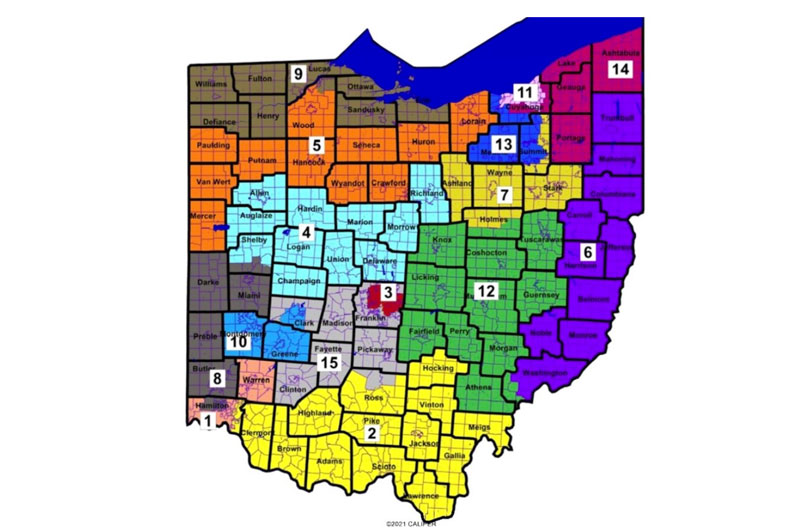
     The GOP congressional map signed by Gov. Mike DeWine. (Right-Click to enlarge map)

    Without bipartisan support, the map is slated to only be in place for four years. With DeWine’s signature, legal challenges are expected to be forthcoming. Statehouse legislative maps approved by the Ohio Redistricting Commission with only Republican support in September are facing legal challenges currently before the Ohio Supreme Court.

    DeWine’s son, Justice Pat DeWine, has refused to recuse himself from the case, making Chief Justice Maureen O’Connor the potential swing vote on the constitutionality of the Republican plans that continue Republican supermajorities in the Ohio House and Senate and now an 11-2 advantage in congressional maps with two potential toss-up districts.

    Ohio voters passed redistricting reform for state legislative maps in 2015, with more than 70% support, and congressional redistricting reform in 2018 with nearly 75% support. Those reforms called for maps that do not “unduly favor or disfavor” one political party or another.

    The map approved Thursday in the House was introduced just Monday night as an amendment replacing the maps previously discussed in committee hearings. After the map was unveiled, it had one hearing in which a committee heard public comment. Every speaker was an opponent. The Princeton Gerrymandering gave the map a flunking grade.

    An analysis of the map on Dave’s Redistricting App shows seven Republican districts, two Democratic districts and six districts listed as competitive for being within a 54-46 margin. Five in six of the “competitive” districts lean Republican, and the one that leans Democratic, Ohio’s 13th district, does so by 0.88%. It was passed along partisan lines in both the Ohio Senate and Ohio House this past week.

    DeWine’s signing of the GOP congressional maps was criticized by anti-gerrymandering advocates.

    “Once again, Gov. DeWine has failed to stand up to the extremists in his party. He could have rejected gerrymandered maps, but chose weakness instead,” said Desiree Tims, president and CEO of Innovation Ohio. “These rigged districts will lead to more extreme politicians who pass dangerous laws that devastate Ohio communities.”

    The map will give Republicans 80%  to 87% of Ohio’s congressional seats, the advocates noted, despite the fact that Republicans only win about 55% of Ohio’s statewide vote.

    “Regardless of our skin color or zip code, everybody deserves to have a meaningful influence on our political process and choosing who gets to represent us,” said Jeniece Brock, Policy and Advocacy Director of the Ohio Organizing Collaborative. “By cracking and packing communities of color, this congressional map dilutes the power and voices of Black and brown Ohioans.”

  • FirstEnergy admits it controlled dark money group started by DeWine aide

    FirstEnergy admits it controlled dark money group started by DeWine aide

    BY: MARTY SCHLADEN and Ohio Capital Journal

    Columbus, Ohio – The mammoth scandal surrounding a 2019 energy bailout appeared to creep closer on Thursday to the administration of Ohio Gov. Mike DeWine.

    FirstEnergy said in a deferred prosecution agreement that the man DeWine appointed to lead the Public Utility Commission of Ohio took a $4.3 million payment and then acted on behalf of the Akron-based power company instead of as the state’s top regulator. 

    That man, Sam Randazzo, has resigned. 

    But FirstEnergy also helped control a 501(c)(4) “dark-money” group started by a senior DeWine aide while he was still a FirstEnergy lobbyist, the agreement showed. The company passed a torrent of money through the secretive group as part of a successful $61 million effort to buy a $1.3 billion, ratepayer-funded bailout, the document FirstEnergy signed off on said.

    While Acting U.S. Attorney Vipal J. Patel slammed the dark money group, DeWine and the aide, Legislative Affairs Director Dan McCarthy, didn’t respond to requests for comment. DeWine has staunchly defended McCarthy since the scandal broke almost exactly a year ago.

    Patel held a press conference in Cincinnati on Thursday to announce that his office had entered into a deferred prosecution agreement with FirstEnergy. The company will pay $230 million and, if it lives up to the terms of the agreement, will have a charge of conspiracy dismissed.

    Former Ohio House Speaker Larry Householder, R-Glenford, has been charged in the case. He was stripped last year of his speakership and he was ejected from the House earlier this year.

    Two of Householder’s associates charged in the case have pleaded guilty and a third, Neil Clark, took his own life in March.

    For its part, FirstEnergy fired CEO Chuck Jones and two other executives and is conducting an investigation of its own.

    In Cincinnati Wednesday, Patel stressed that the investigation is continuing. But he wouldn’t comment on matters other than the agreement with FirstEnergy. 

    DeWine aide McCarthy hasn’t been charged and last summer, he denied wrongdoing. But Partners for Progress, the dark-money group he founded, was a topic of the prosecution agreement.

    Then still a FirstEnergy lobbyist, McCarthy founded it, “weeks after certain FirstEnergy Corp. senior executives traveled with (Householder) on the FirstEnergy Corp. jet to the presidential inauguration (of Donald Trump)  in January 2017,” the agreement said.

    The prosecution agreement added, “Although Partners for Progress appeared to be an independent 501(c)(4) on paper, in reality, it was controlled in part by certain former FirstEnergy Corp. executives, who funded it and directed its payments to entities associated with public officials. 

    “For example, FirstEnergy Corp. executives directed the formation of Partners for Progress and decided to incorporate the entity in Delaware, rather than Ohio, because Delaware law made it more difficult for third parties to learn background information about the entity. Certain FirstEnergy Corp. executives were also involved in choosing the three directors of Partners for Progress, two of whom were FirstEnergy Corp. lobbyists.”

    Millions would flow through Partners for Progress while McCarthy was its president and tens of millions more would later run through it and into the furious effort to pass the bailout after McCarthy resigned to become DeWine’s legislative affairs director in early 2019.

    The prosecution agreement also appears to refer to McCarthy as “Official Aide 1”  as he worked on DeWine’s behalf to help pass the bailout that DeWine would sign later that year.

    It cites emails among energy executives saying that Official Aide 1 and others were “fighting” to extend the term of a bailout of two failing nuclear reactors in Northern Ohio.  It also cites a text-message discussion between a FirstEnergy executive and the aide about language that would make the bailout harder to challenge in a referendum.

    And in the press conference, Patel said the scandal would never have happened if not for the dark-money group of which McCarthy was president and another, Generation Now, which has pleaded guilty.

    “This effort would not have been possible — both in the nature and the amount of the money provided — without the use of 501(c)(4)s,” Patel said.

    The acting U.S. attorney called the scheme, and even the name of McCarthy’s former dark-money group, dishonest.

    “These are supposed to be, according to the (tax) code, social welfare organizations. You all see a lot of social welfare going on? I don’t,” Patel said, adding, “What about these names? Partners for Progress? What are the partners here? The conspirators? What’s the progress? Passage of (the energy bailout) through bribery?”

    While DeWine’s office didn’t respond to questions on Thursday, the governor in February defended his legislative affairs director.

    “As far as I know, Dan McCarthy has been well-respected for many, many years, long before he started working for me as our legislative director and I have faith in his integrity,” DeWine said.

    For Dayton Mayor Nan Whaley, a Democrat challenging DeWine in the 2022 election, that’s not good enough.

    “Today’s charges make clear that this corruption case reaches the highest levels of government in Ohio,” she said in a statement. “Enough is enough. It’s time for Gov. DeWine to come clean about his knowledge and involvement in this scandal.”