Tag: Ohio News Media Association

  • Journalism in middle America got communities through the pandemic

    Journalism in middle America got communities through the pandemic

    Stock photo from Getty Images.

    EDITOR’S NOTE:

    We are pleased people are now researching the Pandemic and how local newspapers survived. Some didn’t. Loveland Magazine did survive, and it was pure everyday persistence, sacrifice, and a dedication to staying alive (literally), and as a local Newspaper. We were early declared “Essential Workers” however that declaration did not provide us anything as the designation was quickly ignored at every level of government when they dolled out relief dollars and the help they could have provided. We stood in line with everyone else at the chance to apply for PPE funds, etc., and at times we were at the back of the lines for eligibility. We were still standing when our own City bought new high-tech water fountains with the COVID relief funds they received. Much of what you read here though is how we did it. What this story misses is an incredible effort it took for local papers in smaller communities to find accurate specific COVID 19 data in a hometown like ours that is in three counties with each county reporting in different formats and on different days of the week.

    By William Thomas Mari, Louisiana State University

    News of the pandemic’s devastating effect on journalism was conveyed by headlines across the nation telling of newsroom closures, layoffs and furloughs.

    Journalism was in trouble in 2020. In fact, it had been in trouble for a while.

    But how did so many local news organizations – especially newspapers – manage to survive the pandemic? Weeklies beefed up their daily online news coverage, business models were blown up and existing rationales for why journalism matters became more than theoretical to rural journalists.

    Their determination to survive and serve as a public health lifeline for their communities fueled an oral history project that my colleague Teri Finnemanand I conducted, interviewing 28 journalists across seven states in the middle of the country. We learned how locally owned and family-owned newspapers made it through COVID-19.

    “There’ve been times that we’ve had to reach out to mayors and different cities and communities across the state … to make sure that … they knew that [journalists] were deemed essential workers,” said Ashley Wimberley, executive director of the Arkansas Press Association. That label exempted news workers from stay-at-home orders and designated them as critically needed by their communities.

    There were no easy answers. Not in Louisiana, where I teach journalism at Lousiana State University. Not anywhere.

    Telling the history

    Oral history grabs the first impressions of history for those living now, looking back at what just happened. It helps people understand the present and how to move forward, out of a crisis. But it also records events for scholars and citizens in the future.

    “Always remember that when you’re putting those stories in your newspaper, that you are printing your community’s history,” Amy Johnson, the publisher of the Springview Herald in Nebraska, told us.

    Benny Polacca of the Osage News in Oklahoma told us something similar: He encouraged journalists covering some future pandemic to “do your due diligence in order to come to some type of understanding, some type of argument, some type of focus, if you were going to be reporting or researching the time of COVID-19.”

    Often, it’s journalism on the coasts that gets the attention of researchers. The New York Times, The Washington Post, the Los Angeles Times – these big news organizations are written about constantly.

    By talking to journalists in North Dakota, South Dakota, Nebraska, Kansas, Oklahoma, Arkansas and Louisiana, our project pushed back against this tendency to ignore the middle of the nation and its important journalism. As a kind of new essential worker, journalists found themselves in charge of explaining complicated guidance from state and local officials about COVID-19, how schools would work and where to get help.

    “I hope that, through this, that our role as journalism, they [the public] realize how important it is that the information we put out, you know, how it affects them every day,” Johnson said.

    Kansas Press Association Executive Director Emily Bradbury had a message for these journalists who were working for news organizations increasingly threatened with being shut down: “I want them to know that in the midst of an emergency, in the midst of what can seem like a hopeless situation, when they look at their financials, that what they’re doing is important. And what they’re doing matters, and that no one else can do what they do, and they look out for their communities like no one else.”
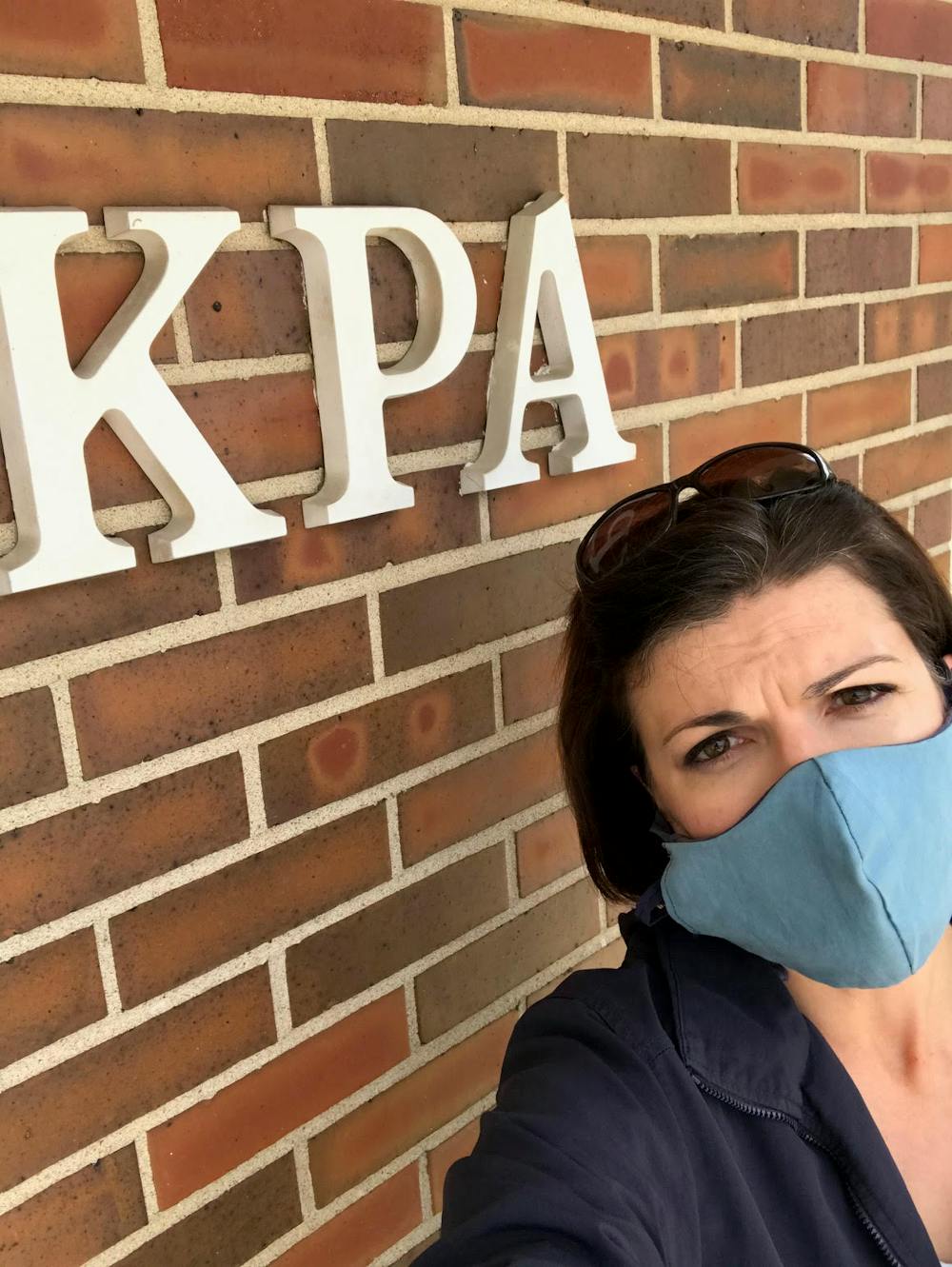
    Emily Bradbury, Kansas Press Association head, stands in front of a building with the Kansas Press Association logo. on it.
    Emily Bradbury, Kansas Press Association Executive Director, tells reporters that ‘what they’re doing is important. And what they’re doing matters…and they look out for their communities like no one else.’ Will Mari and Teri Finneman, Author provided photo.

    Loans, side hustles and deals

    Reporters and editors found new ways of paying the bills. That meant accepting government subsidies in the form of Paycheck Protection Program loans. It meant, for some, going door to door and asking readers to subscribe, or keep subscribing. It meant consolidating newspapers, putting out more online editions, or taking pay cuts.

    “People just don’t understand. It costs a lot of money and time to do this, and I just wish we – there was more value or people appreciate it or understood the value and the cost of really providing this service,” said Bonita Gooch, the publisher of The Community Voice, a Black newspaper based in Wichita, Kansas.

    Some publishers took on side hustles to bring in revenue, creating ad copy for local business or doing marketing work.

    At The Kingfisher Times & Free Press in Oklahoma, for example, Christine Reid, the paper’s editor, created ads for a local vocational-technical school. “I’ve also tried to use that as an avenue to … generate more ads for the newspaper,” Reid said.

    Some papers worked out advertising deals with local businesses as consumers shopped more locally.

    Local publishers did whatever it took to stay afloat. As some of our initial findings have shown, that showed both opportunity and hesitancy about change.

    “We’re gonna have to rely less on advertising revenue and more on subscription revenue, and so we’ve got to make sure we’re offering a unique product that they want to pay for,” said Letti Lister, the president and publisher of the Black Hills Pioneer in Spearfish, South Dakota.

    We saw tentative signs of hope, as journalists got financial and moral support from their readers during a fraught election. “If anything, it’s rallied the troops, if you will, in our community because they trust us, they know that we’re going to report the news in a timely manner and keep the public up to date,” said Amy Wobbema, publisher of the New Rockford Transcript in North Dakota. Arguably most coverage was calm and steady.

    But there was still hesitancy over what newspapers had to do to adapt. Some journalists are uncomfortable with receiving government funding and would rather rely on community support.

    As South Dakota Newspaper Association Executive Director Dave Bordewyk put it: “Sort of, ‘Look, contribute to our newspaper … because if you value that importance of local news and journalism, then we need your support beyond just subscribing to the newspaper or advertising, which has gone away.’”

    Ultimately, the pandemic showed that more research needs to be done on journalism in rural areas – we managed to talk to only a fraction of the total number of small-town journalists and publishers. Other scholars have already learned that local journalism helps reduce violent partisanship and reinforces institutions. To be clear, scholars have defined violent partisanship as the willingness to resort to physical altercations to resolve disputes – good local journalism channels that energy toward peaceful, democratic ends. Other scholars have found that institutions like local courts and governments get increased legitimacy as a result of local news. More sustained scholarly attention will likely turn up other benefits that the public isn’t yet aware of.

    “That’s what we hope. What I hope comes out of this is that readers can understand that, and can … have a renewed value on what that [local] publication has done for their community during this pandemic,” Bradbury told us.

    William Thomas Mari, Assistant Professor of Media law and Media History, Louisiana State University

    This article is republished from The Conversation under a Creative Commons license. Read the original article.

  • HEALTH CARE POLITICS & GOV Proposed Ohio abortion bills would impose new mandates, spread misinformation

    HEALTH CARE POLITICS & GOV Proposed Ohio abortion bills would impose new mandates, spread misinformation

    BY: and Ohio Capital Journal

    Returning from summer break, the Ohio legislature could review two GOP-led pieces of legislation that would place health mandates on patients considering abortions.

    One of the bills, recently introduced by state Rep. Jennifer Gross, would require physicians to dictate the results of a mandated ultrasound and also provide information about a link between breast cancer that has been disproven by multiple medical organizations.

    State Rep. Jennifer Gross, R-West Chester 

    Gross, usually known for and outspoken in her disapproval of health care mandates, introduced the bill this week.

    Patients already have to meet with a physician 24 hours before an abortion, but under this bill, along with hearing about the medical risks of the procedure and the probably gestational age, a patient would be told “the possible increased risk of breast cancer that is associated with women who have undergone an abortion,” along with the “short-term and long-term risk of psychological or emotional harm” from choosing to have an abortion.

    Multiple organizations, including the American Cancer Society, the American College of Gynecologists and the Susan G. Komen Breast Cancer Foundation have denied the link, citing research studies on the relationship between breast cancer and abortion.

    The American Cancer Society said these research studies “have not found a cause-and-effect relationship between abortion and breast cancer.”

    The Gross bill has not been assigned to a committee for consideration, but it has several sponsors, all Republican.

    Meanwhile, a separate bill seeking to notify abortion patients of possible risks was introduced during the legislature’s summer break, and has been assigned to the House Health Committee.

    House Bill 378  was introduced in July by state Reps. Kyle Koehler, R-Springfield, and Sarah Fowler Arthur, R-Ashtabula, and specifically targets medication abortion, which is done through a two-pill regimen, rather than surgery.

    The bill would require medical professionals to explain a controversial and medically unproven method of “reversing” the abortion by not taking the second of the two-pill regimen and giving additional progesterone to counteract the first pill.

    The American College of Obstetricians and Gynecologists said claims about the “reversal” method “are not based in science and do not meet clinical standards.”

    The bill is a reintroduction of a similar one that passed the Senate in 2019, but didn’t make it through the House.

    Abortion is legal in the state of Ohio up to 20 weeks gestation.


    Susan Tebben is an award-winning journalist with a decade of experience covering Ohio news, including courts and crime, Appalachian social issues, government, education, diversity and culture. She has worked for The Newark Advocate, The Glasgow Daily Times, The Athens Messenger, and WOUB Public Media. She has also had work featured on National Public Radio.



  • I felt the tears welling behind my eyes and willed them not to escape

    I felt the tears welling behind my eyes and willed them not to escape

    There is value in having no child feel rejected and invisible in their own school. If I can help it, none of them will.

    A story by a Loveland resident presented by Loveland Magazine in collaboration with the Loveland Diversity Advisory Board

    A sharp pain startled me. Something had pelted my head. Whatever it was ricocheted to the floor with a hollow plink. I rubbed the back of my skull and looked around trying to determine what had hit me. As I did, I took another sharp blow, this time to the cheek, followed again by a distinct plinking sound. The next shot hit my shoulder. Then my neck. Finally one of the projectiles flew past my face and I was able to identify what was being hurled toward me. 

    It was a penny. 

    I looked in the direction from which the projectiles originated and saw a lunch table of my fifth grade peers laughing, trying to look inconspicuous in the conspicuous way guilty ten year-olds have a tendency to do.

    “Did she pick them up?” one whispered.

    “Shhhhh! She’s looking over here,” the other said, waving his hand in the universal sign to keep it down.

    More giggles.

    x

    I sheepishly rubbed my cheek, which by now was smarting and red. I looked down at the floor where several pennies lay in a telltale scatter at my feet. 

    Another sharp pain.

    “Pick up the pennies, Jew,” someone from the table jeered, just loud enough for me to hear.

    I felt the tears welling behind my eyes and willed them not to escape. No one would see me cry. Despite my best intentions, a tear leaked out, betraying me as it rolled down my injured cheek. Its saltiness stung against the broken skin.  

    x

    The perpetrators weren’t the school’s “bad” kids. They weren’t the “troublemakers.” They weren’t the kids who wadded up the stiff brown paper towels, wet them, and threw them up on the bathroom ceiling where they’d stick and harden like cement. 

    These were the kids who raised their hands to read aloud from the social studies textbook when the teacher asked for volunteers.They attended PSR at the church down the street from my house where a giant tree sprouted pink blossoms each spring before dropping her petals in a sudden heap. These were the kids who, if I’d told a teacher, would elicit the response of ‘Well now that doesn’t sound like them. I’m sure they meant nothing by it. Have you tried ignoring it?’

    x

    The lone tear fell onto the lunch table, a solitary puddle on the faux wood facade. Pennies? What does that even mean? I pondered this question silently, focusing intently on the fallen tear to prevent more from spilling out. I felt ashamed and embarrassed. I never mentioned it again. 

    This was the first time it happened, but it wouldn’t be the last.  

    At ten years old, I didn’t understand the deeply anti-Semitic implications of these kids’ actions. As an adult, I know they picked up on these stereotypes somewhere. I feel confident that the hateful message was learned outside of school, however subtly transmitted. Maybe slips of the tongue by their parents. Maybe from the innuendos presented in the news channel their family watched. Maybe from friends whose families held biases. But what about what they learned–or didn’t learn–while they were in school? What was the message there?

    There was nary a mention of Jewish people in my elementary school. Despite a small population of Jewish students, the curriculum had settled into a comfortable rhythm they saw no need to update. I remember clearly how each year my teachers were startled when they learned that I didn’t have a Christmas tree. 

    “What do you mean?” my second grade teacher asked incredulously. “Everyone has a Christmas tree,”  And so it went. 

    x

    I accepted my lot early. I dutifully completed my “Letter to Santa” assignments each December prior to “Christmas Break” where I’d take home the ornament I had to make for my non-existent tree. In the spring, I mustered up fake gusto to color oil pastel Easter egg cut-outs. I completed the multiplication worksheets asking how much tinsel Jane needs to trim her Christmas tree and conducted the science experiments on decorating Easter eggs with various substances, bright red beet juice staining my hands for days. 

     The message coming from the school was clear: one specific religion was the universal norm. Obviously, I was different. That made me a target. 

    I share this with you to illustrate that representation matters. While some may disagree, they are likely the ones who have never been in a situation where they were the “other.”

    Representation doesn’t mean anyone has to alter their own convictions or feel put on the defensive. It doesn’t mean one side is right and the other is wrong, that there’s a hidden agenda, or that any one lifestyle is being attacked. 

    What it does do is allow students to learn that the world is full of people whose beliefs, values, and opinions differ from their own. It means the students who aren’t part of the status quo feel a sense of belonging. At its best, it fosters mutual understanding and civility. Representation neither promotes one lifestyle, race, or religion, nor detracts from another. All representation does is to allow students to see that there are different ways of being and that there is validity in who we ALL are. 

    x

    While I cannot change my school experience, we owe it to our own kids the opportunity to explore diversity through equal and prominent representation. If you’re a minority, there is value in seeing someone like yourself; if you’re in the majority, there is value in seeing that there’s an actual living, feeling human being behind the label. Most importantly, there is value in having no child feel rejected and invisible in their own school. If I can help it, none of them will.


  • [Video] Loveland Middle School COVID 19 protocol explained

    [Video] Loveland Middle School COVID 19 protocol explained

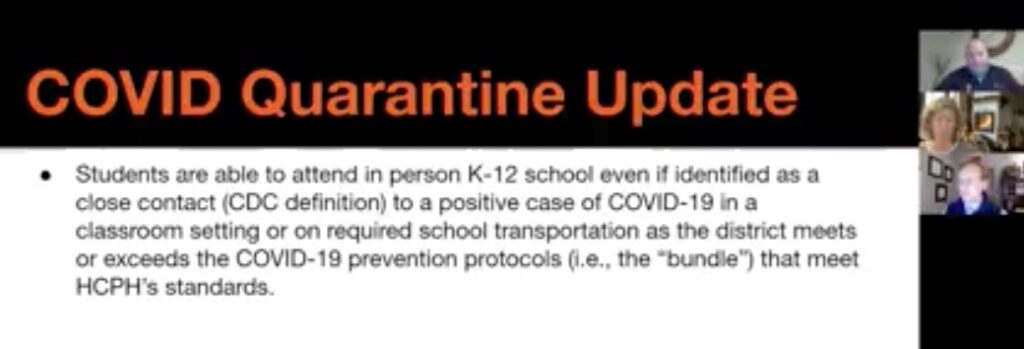
    Loveland, Ohio – David Knapp, the Principal of the Loveland Middle school explains in this video the COVID 19 protocol in his building.

    Watch the video… (Look for the COVID Quarantine Update)

    The video was published by the Loveland MINT PTSA.

  • Read Loveland’s Snow Emergency guide

    Read Loveland’s Snow Emergency guide

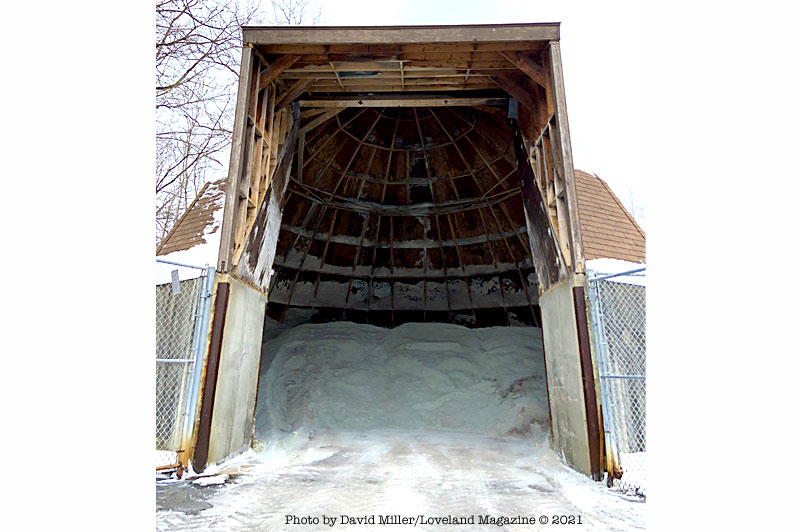
    Loveland’s salt storage as of 2 PM on Sunday. The storage dome is located on East Loveland Avenue as you leave the City

    Loveland, Ohio – There has been no snow emergency declared in Loveland, however, in case one is or you hear that one has been declared, below are the Loveland code sections that implement and guide City officials.

    Note, that this may be different than the Snow Emergency declarations issued by the counties, townships, or other government agencies. This only applies to the City of Loveland.

    City Manager Dave Kennedy said today at 2 PM that he has spoken with Scott Wisby, Loveland’s Director of Public Works, and he “does not feel that parked vehicles are deterring or will deter his ability for snow removal”.


    351.16  SNOW EMERGENCY; SPECIAL PARKING RESTRICTIONS.

       (a)   When snow, sleet, freezing rain, or other weather conditions cause or appear likely to cause, in the judgment of the City Manager, slippery or hazardous conditions which might lead to serious congestion or hazard, the City Manager may declare a snow emergency.  The City Manager shall also declare the termination of such snow emergency as soon as conditions permit.

       (b)   “Snow emergency routes” are through streets, or portions of through streets, designated by official signs on one or both sides thereof, installed by order of the City Manager.  The City Manager is authorized and directed to designate such streets as snow emergency routes which, for the safety or convenience of the public and the accommodation of traffic, should be kept open and clear in times of snow emergency.

       (c)   During the period of any snow emergency, no vehicle may be parked on any snow emergency route, provided special signs are erected designating such snow emergency route.

       (d)   A vehicle parked on any snow emergency route at the time a snow emergency is declared shall be removed by the owner within three hours if such emergency is declared between 8:00 a.m. and 8:00 p.m., or prior to 9:00 a.m. of the following morning if the emergency is declared within the hours of 8:00 p.m. and 8:00 a.m.  Nothing in this section shall permit any vehicle to park in violation of any other parking restriction previously established by ordinance  or by erection of signs by order of the City Manager.

       (e)   Any vehicle parked on any snow emergency route during a declared snow emergency and after the times or periods designated for removal of such vehicle by (d) above, and any vehicle stalled or otherwise unable to move or operate on a snow emergency route during the time of a snow emergency, may be ordered by the City Manager or the Chief of Police to be towed from such snow emergency route.  Such vehicle shall be impounded and held by the order of the Police Department until the owner shall pay the reasonable expense of towing the vehicle.

       (f)   Whoever violates this section is guilty of a minor misdemeanor.

    (Ord. 1978-23.  Passed 4-25-78.)

  • LHS’s Bea Aldrich, National Merit Finalist

    LHS’s Bea Aldrich, National Merit Finalist

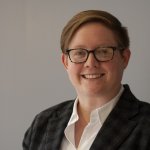
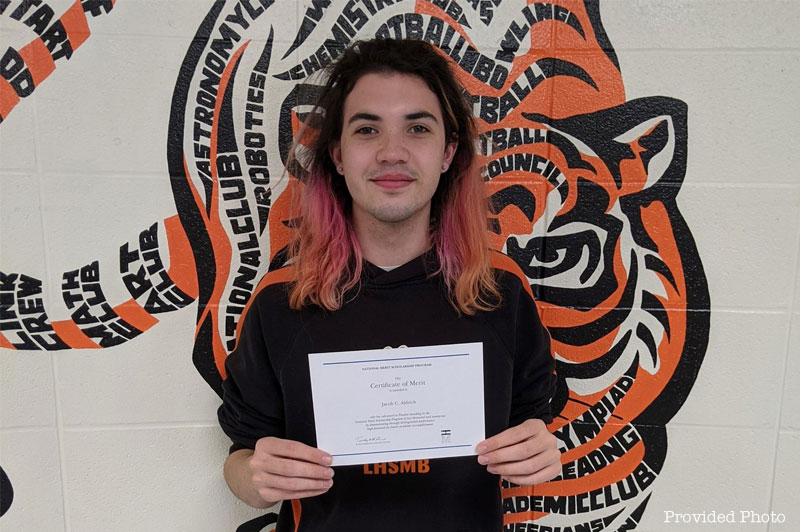
    Loveland, Ohio – Loveland High School senior Bea Aldrich has been named a National Merit Scholarship Finalist. Bea was recognized in October as a semi-finalist and now advances to the next stage. The National Merit Scholarship program exists to promote scholastic excellence, and her certificate notes Bea demonstrates “through distinguished performance high potential for future academic accomplishment.” The National Merit scholarships are to be awarded between April and July.

  • Loveland Elementary students earn robot design award

    Loveland Elementary students earn robot design award

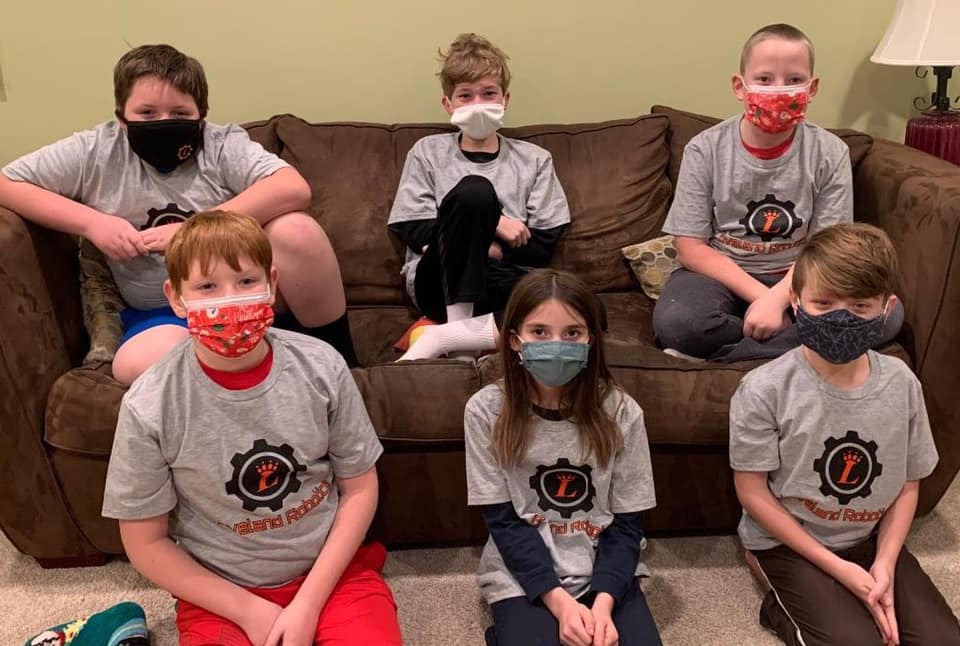
    Loveland, Ohio – Anderson A., Logan P., Sam H., Hunter H., Maddie D., and Nicholas G. competed on the Loveland Robotics Team 51294 RobotActiveX and won the “Robot Design Award” which is given to a team that “uses outstanding programming principles and solid engineering practices to develop a robot that is mechanically sound, durable, efficient and highly capable of performing challenging missions.”

    Photo provided by Loveland Elementary School.

  • To tamp down rumors: Statement from Superintendent of Schools

    To tamp down rumors: Statement from Superintendent of Schools

    Loveland, Ohio – Loveland School Superintendent Bradley Neavin has asked Loveland Magazine to send the below message to the community about a situation yesterday at the Loveland Middle School.

    In a phone call, Neavin said, “The situation is being investigated. It is being handled. We’ve pulled our resources together, including our outside resources which include our resource officers and everybody is safe.”

    LMS Safety Update

    Tiger Family –

    We wanted to update you on a situation involving Loveland Middle School. Yesterday, the school administration was informed of a safety concern involving one of our students. This situation was reported to the school administration and an investigation, involving school and central administration, student support personnel, and the school resource officer in collaboration with the Loveland City Police Department, was initiated.

    In communication with the parents of the student, the situation was addressed and per the investigation, Loveland Middle School was determined to be safe.

    Thank you for your continued cooperation and collaboration.

  • Apply for Loveland Stage Company Creative Arts Scholarship

    Apply for Loveland Stage Company Creative Arts Scholarship

    Submitted by Nancy Downing

    Loveland, Ohio – Each year the Loveland Stage Company recognizes a graduating high school student with its Creative Arts Scholarship.

    The Loveland Stage Company is offering a scholarship again this year in the amount of $1000. In order to qualify for the scholarship, the graduating student must reside in the Loveland City School District, attend Loveland High School, or be an offspring of a Loveland Stage Company member. This scholarship is intended to be used toward college or university tuition, room and board, or books.

    The Loveland Stage Company wishes to encourage and support young local talent.  Therefore, prospective applicants must be planning to further their education in the Creative Arts. Qualifying areas of study include, but are not limited to: art, music, theater, photography, film, dance, and majors that support these studies. Students are asked to submit examples of their talent in their chosen field and a high school transcript demonstrating the ability to succeed academically as part of the application process.

    Applications are available on the Loveland Stage Company website and are due no later than Sunday March 14.

    Or, download the application here.

    For information or questions contact our Scholarship Chair Theresa Kovacs at (513) 697-6769.


  • Watch the Loveland Stage Company’s Holiday Radio Show

    Watch the Loveland Stage Company’s Holiday Radio Show

    Loveland Magazine is in a holiday spirit because we were able to help keep local ARTSalive by lending our video equipment to the Stage Company for the recording of this show and being a year-round sponsor to make possible this production of:

    2020 LSC Holiday Radio Show

    By The Loveland Stage Company

    Recorded:  December 2, 2020
    Released:  December 11, 2020

    Scroll to the bottom to watch the show!

    Cast:

    Becky Jones
    Becky Jones – Storytelling of A visit from St Nicholas
    Becky is thrilled to participate in the LSC holiday show! She is the music director at Christ Presbyterian Church, the assistant band director at Loveland high school and teaches flute clarinet and sax privately. She loves playing in pit orchestras around town for fun! 
    When she isn’t teaching or playing, she spends time at her farm with her herd of dairy goats! She loves sharing the stage with her best buddy, Louie!
    Louie Jones
    Louie Jones
    Louie loves the Loveland Stage Company! This is his second performance with the company and is honored to be here with his friends. He wants to thank Michael and Jill for this opportunity to develop his onstage persona! He also hopes everyone has a great howliday!
    Caitlyn Sanderson
    Caitlyn Sanderson – Story of The First Holiday without a Family Member 
    Caitlyn is thrilled to be performing in her first radio show in LSC. She’s been with LSC for 4 years helping backstage, ushering shows, and going to Saturday’s Dance Class with Margie. She was recently in Gypsy as Agnes with LSC. She’s also involved with different theater groups such as Mason Community Players and Queen City Productions. When, she isn’t at the theater, she works full time as an Order Picker at The Hillman Group and spending time with her nephew and niece, Beau & June. She thanks her family and her co-workers for their support. Lastly, she would like to thank Michael & Jill, who allowed her to be part of the radio show. Caitlyn wants to dedicate the radio show to her Grandma Dolores who recently passed away last December.
    Dave Marcus
    Dave Marcus – Singing – Nothing But A Child 
    Dave is currently Vice President of LSC. He has been in a number of LSC productions including, Guys and Dolls, Fiddler on the Roof, White Christmas, and The Producers. Dave has a love of Celtic music and plays the guitar, mandolin, 4-string banjo, and octave mandolin in several bands around Cincinnati. He would like to wish everyone Happy Holidays and to stay healthy during these trying times.
    The Hubbard Family
    The Hubbard Family Band – playing/singing Christmas melodies. Arranged by Aiden Hubbard
    The Hubbard Family Band was first established in 2000 when Christopher and Melinda officially joined forces. They performed together at events around the country (mostly at the weddings of friends). In 2002, Aiden came singing into the world, and has never stopped. Gavin joined in at the end of 2004. In honor of these boys, the band recorded their first album – Lullabies That Will Hopefully Put Them To Sleep. But the band was not complete until 2007 when Mearen joined in. At age 5, Mearen overheard her parents say ‘All we need is a drummer!’ and she never looked back. In its current incarnation (Aiden – arranger, composer, vocals, electric ukulele; Gavin – saxophone; Mearen – percussion, vocals; Christopher – guitar, bass, voice of reason; Melinda – vocals, keyboard, videographer, general-keeping-it-togetherer), The Hubbard Family Band provided music and fun to family and friends via videos on Facebook during the pandemic shut down. We are thrilled to be at the Loveland Stage Company to share our love of music, family, and holidays with you.
    Jazz McMullen
    Jazz McMullen – Singing O Holy Night 
    Jazz is a Cincinnati Native and graduate of The School for Creative and Performing Arts, where he majored in Drama, Vocal Music and Musical Theatre. He is thrilled to continue his involvement with LSC in the Holiday Radio Show! Being no stranger to the stage, Jazz has appeared in such productions as; Dreamgirls (James “Thunder” Early), Parade (Newt Lee/Riley), Beauty and the Beast (Maurice), Little Shop of Horrors (Mushnik), The Whiz (Lion) and a host of others! “Give me your hands if we be friends and Robin shall restore amends.”
    Jill Gornet
    Jill Gornet – Announcer / Producer 
    Jill is excited to be co-producing The LSC Holiday Radio Show. She was co-producer for Bugsy Malone, Jr., Don’t Drink the Water and A Funny Thing Happened on the Way to the Forum. Jill won an Orchid as the producer of The Drowsy Chaperone. She was last seen on-stage at LSC in Memphis (Clara/ensemble), White Christmas (quintet/ensemble), Will Rogers Follies (quartet) and Fiddler on the Roof (Rifke/ensemble). Retired from USPS, she sings with Sharonville Chorus at retirement/assisted living homes. Jill would like to thank her family and friends for their love and support.
    Micheal Harris-Kiser
    Micheal Harris-Kiser – Announcer / Director / Producer
    Micheal is a multiple award-winning director, actor, and set designer. Studying acting at The American Academy of Dramatic Arts, Micheal has pursued his passion for theatre in various fields. He is co-founder of Stage and Steel in Pittsburgh, PA. He has performed with many groups throughout the city. His set designs have graced many a stage. He serves as president for the LSC board, as well as secretary for The Greater Cincinnati ACT board. He is delighted to continue bringing LSC Radio to you.
    Jenna Schroeder
    Jenna Schroeder – Story of Mary’s Journey 
    Jenna is a mom, writer, dancer and doula in Loveland. She enjoys participating in LSC’s productions whenever she gets a chance! Jenna is excited to share her rendition of the journey of Mary and Joseph during the holiday season with LSC’s radio program. Although it’s been a heavy year, she hopes her story will provide encouragement to everyone listening…that even out of hard places, beautiful things are born. She wishes you and yours, a very Merry Christmas!
    Lily Schroeder
    Lily Schroeder – singing Silent Night (with Jenna)
    Lily is an actor, singer, and dancer who is in Loveland Show Choir. She loves to read any book she can get her hands on and is excited to sing “Silent Night” on LSC’s radio station! She hopes you enjoy and that you have a merry Christmas!
    Mary Shumar
    Mary Shumar – Story of My Memorable New Years Eve
    Mary’s love of theatre dates back to children’s theatre classes in Canton, Ohio. At Marquette University, Mary worked in the costume shop and made time to perform in student productions. Her favorite role was Lucy in You’re a Good Man, Charlie Brown. As a “grownup,” Mary’s audience had been limited mostly to preschoolers, teacher trainees, and her three grandsons. Since moving to Loveland in 2018, she has enjoyed performing in both Mamma Mia and now the LSC Radio holiday show. It’s so much fun to be onstage and to spend time with theatre people! Mary wants to thank Micheal and Jill for assembling this happy group of performers to celebrate the holidays!
    Susan Shapiro
    Susan Schapiro – Story of Juggling Two Holidays in the Family
    Susan is delighted to be performing in her 8th LSC show. After a 41-year break from musical theater, she has been thrilled to perform in many LSC musicals, from Anything Goes to A Funny Thing Happened on the Way to the Forum, as well as in Eastside Players’ Mary Poppins, Oliver, and Into the Woods, in Footlighters’ Jekyll and Hyde, and most recently in Queen City Productions’ Titanic. This is her first and long-awaited experience with a radio show. A retired neonatologist, Susan also enjoys choral singing and is currently a member of the Forest-aires and Jubilant Singers. She thanks her family for their support, and trusts that everyone will love the 2020 LSC holiday show.
    Crew:
    Bob Kessler
    Bob Kessler – Tech Director
    Bob works as both a Director of Photography in the regional video community, and as an artist at Kessler Studios, a Loveland-based stained glass and mosaic firm. Bob has served as the Lighting Chair for the Loveland Stage Company since 2013, and has volunteered as Lighting Director on many plays at LSC: Cole: An Entertainment, Memphis, 9 to 5, Jekyll & Hyde, Fiddler On The Roof, I Remember Mama, Oklahoma!, and The Producers.
    John Nixon
    John Nixon – Music Director
    John’s musical experience stretches over a wide range of styles and eras from directing a Renaissance choral group in his native England to performing and recording on digital electronic instruments for modern-day musicals. John has worked with many of Cincinnati’s community theater groups as music director and orchestra member and is the recipient of numerous Orchid awards at local, regional and state levels. He directed the music and vocals for “Miss Saigon”, “Anything Goes”, “The Producers” and “A Funny Thing Happened On The Way To The Forum” and most recently “Cole” for Loveland Stage Company.
    Nancy Downing
    Nancy Hartman-Downing – Photography
    Nancy has been Owner/President of Cleveland Specialties Company since 1986, which designs and manufactures paperboard and plastic packaging products for the food and dairy industry. Her experience is in administration, sales, accounting and computer technology. She holds a B.A. in Business Administration from Baldwin-Wallace College. She currently serves as President for Loveland Woman’s Club. Nancy has been involved with LSC since 2006 doing fundraising, photography, publicity, ticket sales, program ad sales, as well as serving on the Board of Directors as Treasurer. She enjoys working with such a talented group and looks forward to continuing her involvement into the future.

    Donating to LSC

    With your donation, Loveland Stage Company is able to provide quality theater and performing arts experiences for the greater Cincinnati community.  Your donation allows us to make updates to our theater as well as produce some award winning theater.  Even $1 dollar goes far to help us provide our audience and community with a great performance.  The donations we receive go to our general fund, which supports the theater, including maintenance, licensing fees, technical upgrades, and productions.

    Thank you for generosity and support of community theater.

    Many companies offer matching grants for their employees participation in community theaters.  Ask your company if they offer one.  (For example, current or retired GE employees are eligible for the GE Foundation Matching Grant.)