Tag: Ohio Supreme Court

  • Ohio Senator introduces a bill in response to the Ohio Supreme Court boneless wings ruling

    Ohio Senator introduces a bill in response to the Ohio Supreme Court boneless wings ruling

    By:  Ohio Capital Journal

    An Ohio Democratic Senator recently introduced a bill in response to last summer’s Ohio Supreme Court ruling saying that a man who ordered boneless wings should have expected bones in them and denied him a jury trial after he sustained significant injuries.

    State Sen. Bill DeMora, D-Columbus, was outraged by the Supreme Court ruling and introduced Senate Bill 38 last month which would look at how the state determines liability when someone is injured by “negligently prepared food from a restaurant or food supplier,” DeMora said last week in his sponsor testimony in front of the Senate Judiciary Committee.

    In 2016, Michael Berkheimer ate boneless wings at a Southwest Ohio restaurant, but felt like he swallowed something wrong. He developed a fever later that night and ended up going to the hospital a couple days later with a 105-degree fever. The doctors discovered a nearly two inch chicken bone in his throat that ripped open the wall of his esophagus.

    Berkheimer developed an infection, had to undergo several surgeries, was in two medically induced comas, and had a week-long stay in intensive care.

    GET THE MORNING HEADLINES.


    He sued the restaurants and their chicken suppliers in 2017, saying “negligence” led to his injuries. The Butler County Court of Common Pleas and the Twelfth District Court of Appeals sided against Berkheimer and didn’t let the case go to trial.

    The case went to the Ohio Supreme Court where the majority ruled the lower courts made the right decision. The ruling was four Republicans to three Democrats.

    The restaurant wasn’t liable “when the consumer could have reasonably expected and guarded against the presence of the injurious substance in the food,” Ohio Supreme Court Justice Joe Deters wrote in the majority opinion.

    This story received national attention and even ended up being a bit on “The Late Show with Stephen Colbert.”

    “What (Berkheimer) went through was horrific, timeconsuming, and costly,” DeMora said in his testimony.

    But the bill doesn’t focus on Berkheimer’s injuries, but rather how judges were the ones who decided his case.

    “That’s not just wrong,” DeMora said. “It’s a direct assault on the very foundation of our legal system.”

    S.B. 38 is trying to change that.

    “It will make sure that future cases like Mr. Berkheimer’s are heard by a jury – as our Constitution demands,” DeMora said. “It will also make sure that when determining liability, we use the reasonable expectations test used by most states.”

    Follow Capital Journal Reporter Megan Henry on Bluesky.

    YOU MAKE OUR WORK POSSIBLE.

    ______________
    Megan Henry
    Megan Henry

    Megan Henry is a reporter for the Ohio Capital Journal and has spent the past five years reporting in Ohio on various topics including education, healthcare, business and crime. She previously worked at The Columbus Dispatch, part of the USA Today Network.

    Ohio Capital Journal is part of States Newsroom, the nation’s largest state-focused nonprofit news organization.

    MORE FROM AUTHOR

  • Ohio Supreme Court: Opioid judgment against pharmacy chains not allowed under product liability law

    Ohio Supreme Court: Opioid judgment against pharmacy chains not allowed under product liability law

    By:  Ohio Capital Journal

    An Ohio Supreme Court decision could bring about challenges to those hoping to keep pharmaceutical companies accountable for the opioid crisis, and others who hope to file claims of a “public nuisance.”

    The Ohio Supreme Court ruled that lawsuits in Ohio can’t claim pharmaceutical chains “caused a public nuisance” by selling opioids, in a recently released decision which could have impacts on a $650 million judgment for two Ohio counties.

    “It really only impacts litigation in Ohio, but it does reach a broad conclusion about the ability of plaintiffs to assert public nuisance claims,” said Sharona Hoffman, professor of law and bioethics at Case Western Reserve University.

    The Ohio Supreme Court was asked to determine whether “common-law public nuisance claims arising from the sale of a product” are precluded by the Ohio Product Liability Act, a part of Ohio law used for claims such as manufacturing defects, design defects, and failures to give warnings about risks or hazards in products.

    Plaintiffs in the case argued that the dispensing of opioids lies outside the purview of the OPLA, which has more to do with the design, manufacture, marketing, promotion, and sale of a product.

    GET THE MORNING HEADLINES.


    Justice Joe Deters was joined by Chief Justice Sharon Kennedy, Justice Patrick DeWine, and Justice Jennifer Brunner in ruling that those types of public nuisance claims are indeed eliminated by the OPLA.

    “This is straightforward: product-liability claims brought at common law – such as the counties’ claims – have been abrogated,” Deters wrote.

    The counties Deters references in the majority opinion are Lake and Trumbull counties, where the state supreme court’s ruling may cause the U.S. Sixth Circuit Court to deny a judgment in favor of the counties. In 2022, $650.9 million was awarded to them for a “public nuisance” perpetrated by national companies including CVS Health, Walmart, and retail pharmacy Walgreens Boot Alliance in exacerbating the opioid crisis in those counties.

    After a federal jury made their decision finding the chains responsible, U.S. District Judge Dan Polster ordered the $650 million judgment, saying the companies’ actions brought on addiction, overdose and a strain on community resources related to the opioid crisis.

    The Sixth Circuit asked the Ohio Supreme Court to interpret state law regarding public nuisance claims and the Ohio Product Liability Act, and with the state’s highest court’s interpretation of state law leaning in favor of the pharmaceutical chains, those millions may be up in smoke.

    “Now that the Ohio Supreme Court has done that, the Sixth Circuit will apply the answer to the case before it and probably deny the counties’ recovery,” Hoffman told the Ohio Capital Journal.

    Justices Melody Stewart and Michael Donnelly agreed with the majority decision in part, but Stewart argued that the counties were not asking for compensatory damages as part of their product liability claim, rather “equitable relief,” which the justice said meant the claim was not barred by the OPLA.

    “The equitable relief awarded by the federal court was designed, and has been used, to abate the nuisance caused by the flood of opioids into the market, not to compensate the counties for the loss of life or economic consequences of opioid addiction,” Stewart wrote in her opinion.

    Deters used the majority opinion to recognize that the opioid crisis “has touched the lives of people in every corner of Ohio,” and the damage from the crisis “undoubtedly has far-reaching consequences for their communities and for the state as a whole.”

    “Creating a solution to this crisis out of whole cloth is, however, beyond this court’s authority,” Deters wrote. “We must yield to the branch of government with the constitutional authority to weigh policy considerations and craft an appropriate remedy.”

    The General Assembly has spoken “plainly and unambiguously” that public nuisance claims are not that remedy, he added.

    Co-counsel for the plaintiff in the case said the ruling “will have a devastating impact on communities and their ability to police corporate misconduct.”

    “We have used public nuisance claims across the country to obtain nearly $60 billion in opioid settlements, including nearly $1 billion in Ohio alone, and the Ohio Supreme Court’s ruling undermines the very legal basis that drove this result,” said Peter H. Weinberger, co-liaison counsel in the case and trial counsel to Lake and Trumbull counties, in a statement.

    Weinberger said the fight will continue, and the parties in the case “remain steadfast in our commitment to holding all responsible parties to account as this litigation continues nationwide.”

    “This ruling is not the end of these cases … and our team will continue to fight for these counties through other legal avenues,” Weinberger said.


    Susan Tebben
    Susan Tebben

    Susan Tebben is an award-winning journalist with a decade of experience covering Ohio news, including courts and crime, Appalachian social issues, government, education, diversity and culture. She has worked for The Newark Advocate, The Glasgow (KY) Daily Times, The Athens Messenger, and WOUB Public Media. She has also had work featured on National Public Radio.

    Ohio Capital Journal is part of States Newsroom, the nation’s largest state-focused nonprofit news organization.

    MORE FROM AUTHOR

  • PAC with ties to Richard Uihlein donated $500,000 to Ohioans for a Healthy Economy Action Fund

    PAC with ties to Richard Uihlein donated $500,000 to Ohioans for a Healthy Economy Action Fund

    Stock image from Getty Photos.

    Ohioans for a Healthy Economy Action Fund recently started running an attack ad against the three Democratic candidates running for Ohio Supreme Court.

    By:  Ohio Capital Journal

    A conservative group heavily funded by Republican megadonor Richard Uihlein — who has supported candidates who falsely denied the results of the 2020 election — donated half a million dollars to a PAC with ties to the Ohio Chamber of Commerce over the summer, according to recently published Federal Election Commission data.

    The Fair Courts America PAC gave $500,000 to Ohioans for a Healthy Economy Action Fund back in August, the Super PAC affiliated with Ohioans for a Healthy Economy, Inc which recently started running an attack ad against the three Democratic candidates running for Ohio Supreme Court.

    “Criminals let loose. Destroying lives. Even our children aren’t safe because Melody Stewart, Michael Donnelly and Lisa Forbes put their agenda above our safety,” the voice over says in the ad.

    Incumbent Democratic Justice Donnelly is being challenged by Republican Hamilton County Court of Common Pleas Judge Megan Shanahan.

    Incumbent Democratic Justice Stewart is being challenged by incumbent Republican Justice Joseph Deters, who decided not to run for his current seat and instead chose to go up against Stewart for a full six-year term.

    Democratic Judge Forbes, of the Eighth District Court of Appeals, and Republican candidate Dan Hawkins, of the Franklin County Court of Common Pleas, are competing for Deters’ open seat, a term that expires on Dec. 31, 2026.

    “Fair Courts America is basically just moving its money to this group in Ohio, which is then spending on the ads,” said Evan Vorpahl, a senior researcher at True North Research.

    Republicans currently have a 4-3 majority on the Ohio Supreme Court. Depending on the outcome of the election, the Democrats could flip the court or the Republicans could strengthen their hold on the court.

    Fair Courts America and Richard Uihlein

    Fair Courts America formed in February 2022 and has spent millions of dollars on various state Supreme Court races — including Alabama, Wisconsin, Pennsylvania, Kentucky and Illinois.

    Fair Courts America is affiliated with Richard Uihlein’s Restoration of America. Uihlein also donated $333,000 to Fair Courts America on two occasions recently — Aug. 28 and Sept. 19.

    Fair Courts America and Restoration of America did not respond to questions sent by the Capital Journal.

    Uihlein, an Illinois Republican, has been involved in Ohio politics before.

    Last year, he donated more than a million dollars to the failed campaign that was trying to make it harder to amend the state’s constitution. He helped finance the majority of the group “Protect Our Constitution” during last year’s August Special Election. 57% of Ohioans voted against the measure that would have raised the threshold to amend the state’s constitution to 60%.

    Uihlein is a big funder of Club for Growth Action, which has run millions in ads backing Bernie Moreno for Senate and helped fund a Super PAC that supported Ohio Secretary of State Frank LaRose’s failed Senate primary campaign earlier this year.

    Uihlein is opposed to abortion and has invested in many anti-abortion causes, Vorpahl said.

    GET THE OHIO CAPITAL JOURNAL MORNING HEADLINES.


    “For someone like Uihlein, Ohio and the Ohio Supreme Court seem right for the picking,” said Jessica Dickinson, the Ohio Fair Courts Alliance’s Outreach and Elections Manager. “I think especially since we’ve had partisan labels to the ballot … even though the abortion amendment passed, they’ve really been making those inroads into Ohio.”

    The Ohio Supreme Court will rule on abortion access decisions, so whichever justices are elected this year will help determine what abortion care looks like in Ohio.

    “Powerful people have always tried rigging the rules in their favor, and they are targeting state and federal courts,” Vorpahl said. “They’re trying to take America backwards and control who we can be, who we can love, how we can care for our bodies, our families and the world. And they’re ultimately just trying to put their thumbs on the scales of justice with their fortunes.”

    Uihlein has contributed to some extreme causes in recent years. The Chicago Tribune reported he was a big contributor to the “March to Save America” rally that took place before the deadly attack on the U.S. Capitol on Jan. 6, 2021.

    A Daily Beast report published in November 2022 said Uihlein and his wife Elizabeth have donated almost $2 million to Republicans since the Jan. 6 insurrection and more than 80% of those candidates denied or questioned the 2020 election results.

    Richard and Elizabeth started Uline — a shipping, packaging and industrial supplies company that started in their basement in 1980. Richard is the CEO and their company has more than 9,000 employees.

    Ohioans for a Healthy Economy

     COLUMBUS, Ohio — APRIL 20: The Ohio Chamber of Commerce in Columbus, Ohio. (Photo by Graham Stokes for Ohio Capital Journal) 

    Ohioans for a Healthy Economy Action Fund seems to be a shell group for the Ohio Chamber of Commerce, Dickinson and Vorpahl said.

    The address listed for Ohioans for a Healthy Economy Action Fund is the same as the address for the Ohio Chamber of Commerce, according to a Federal Election Commission form.

    The Ohio Chamber of Commerce and Ohioans for a Healthy Economy Action Fund also did not respond to questions sent by the Capital Journal.

    Ohioans for a Healthy Economy Action Fund also ran ads during the 2018, 2020 and 2022 Ohio Supreme Court races, Dickinson and Vorpahl said.

    The Ohio Chamber of Commerce endorsed Deters, Shanahan and Hawkins for Ohio Supreme Court.

    “It’s about keeping their preferred judges on the bench,” Dickinson said. “Business entities and billionaires in these corporations want to keep the court’s current majority because it’s good for business.”

    Follow OCJ Reporter Megan Henry on X.


    Megan Henry
    Megan Henry

    Megan Henry is a reporter for the Ohio Capital Journal and has spent the past five years reporting in Ohio on various topics including education, healthcare, business and crime. She previously worked at The Columbus Dispatch, part of the USA Today Network.

    Ohio Capital Journal is part of States Newsroom, the nation’s largest state-focused nonprofit news organization.

    MORE FROM AUTHOR
  • Ohio Supreme Court approves redistricting summary with only two small revisions

    Ohio Supreme Court approves redistricting summary with only two small revisions

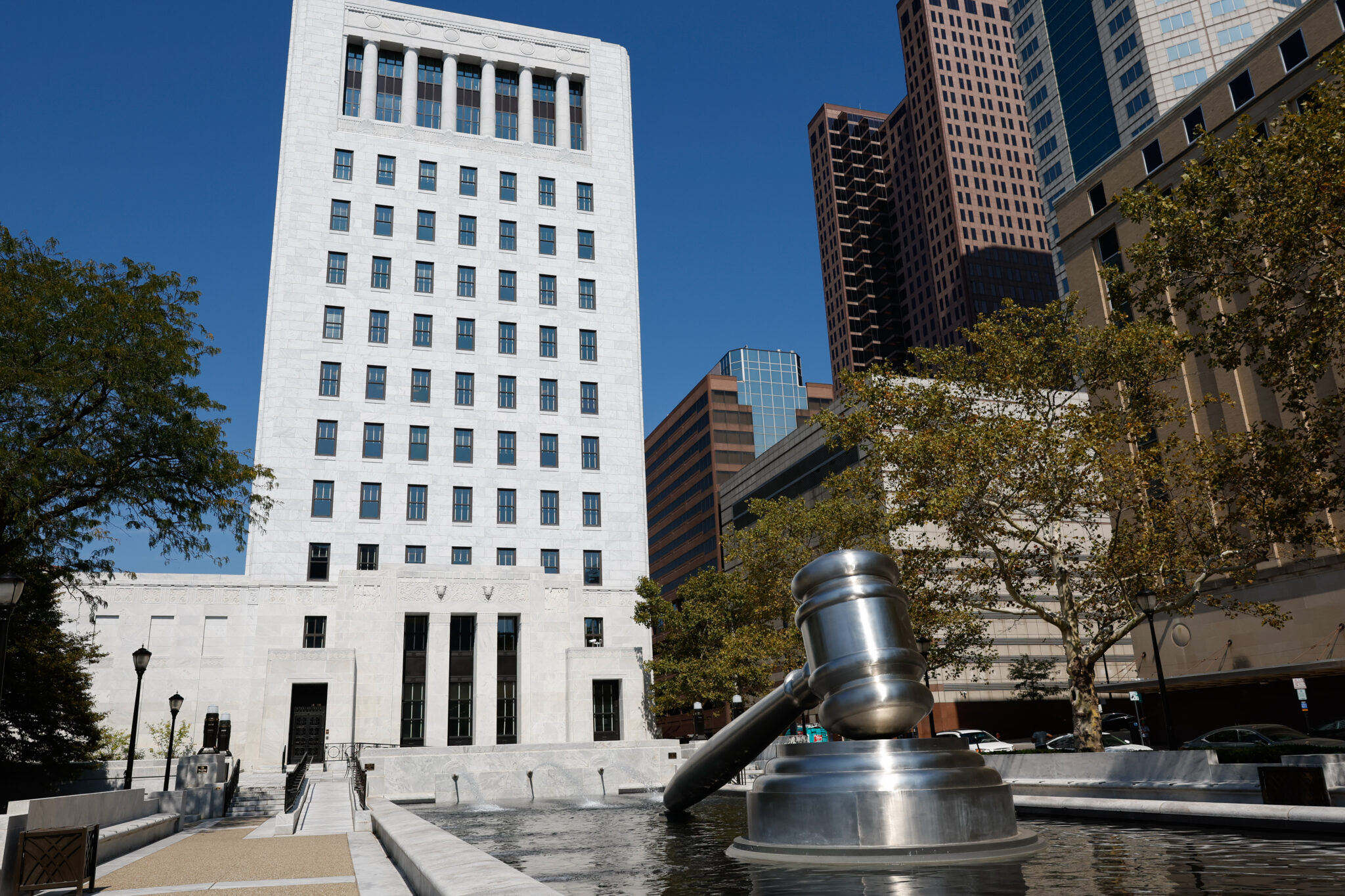
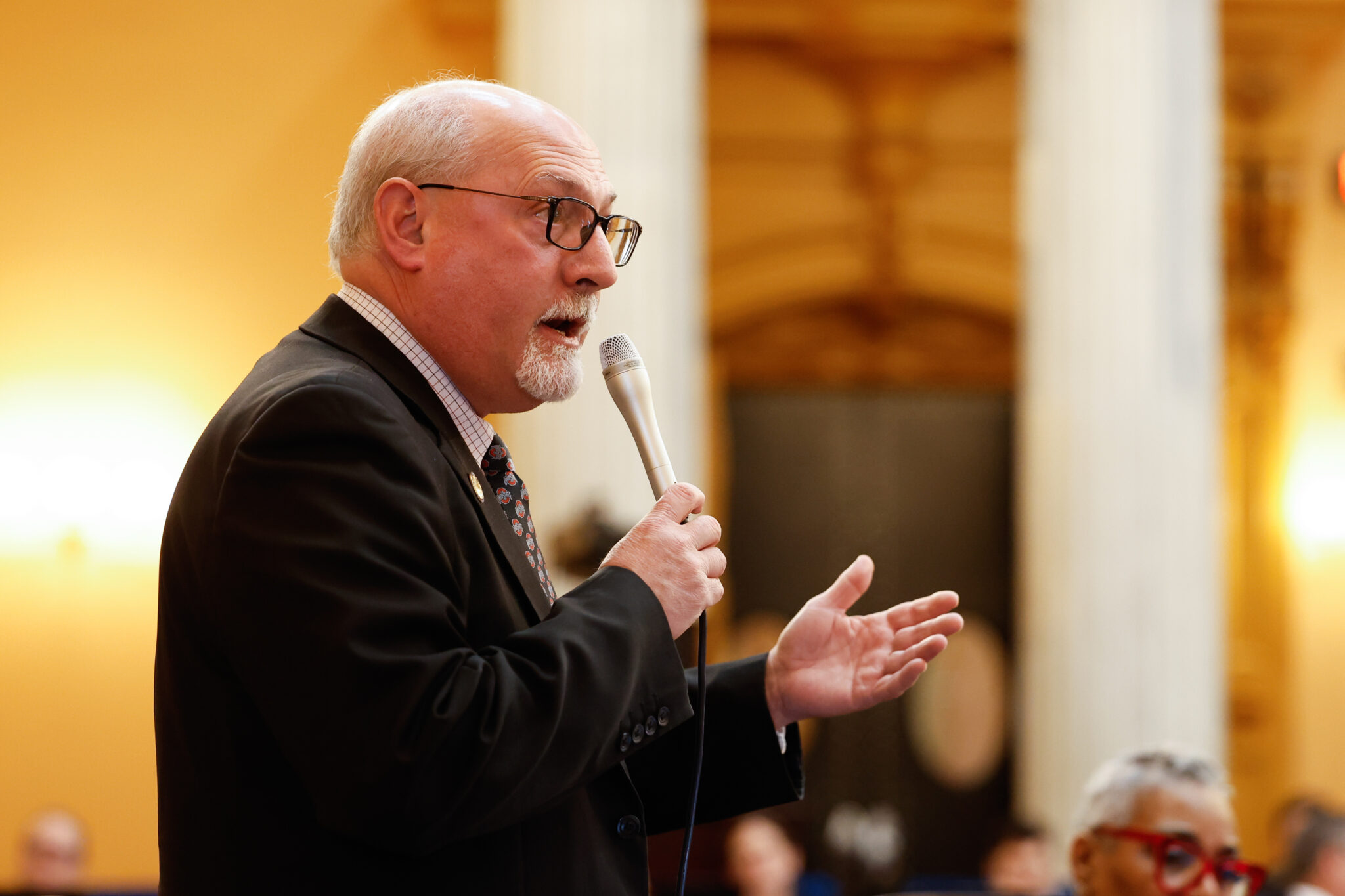
    The Gavel outside the Supreme Court of the State of Ohio, September 20, 2023, at 65 S. Front Street, Columbus, Ohio. (Photo by Graham Stokes for Ohio Capital Journal. Republish photo only with original article.)

    Republican majority rejects 6 of 8 changes requested by anti-gerrymandering advocates proposing the amendment

    By:  Ohio Capital Journal

    The Ohio Supreme Court largely approved ballot summary language for November’s Issue 1 anti-gerrymandering amendment on Monday, sending the language back to the Ohio Ballot Board for two revisions.

    A 4-3 Republican majority rejected 6 of 8 revisions requested by anti-gerrymandering advocates, while Democratic justices on the court said that was inadequate and that the summary needed “a nearly complete redrafting.”

    The summary was written by Ohio Secretary of State Frank LaRose, who opposes the amendment, and approved 3-2 by the Ohio Ballot Board, which is chaired by LaRose. LaRose is also a member of the current Ohio Redistricting Commission that the amendment proposes to replace with citizen commissioners.

    While the court allowed most of the summary language in a decision released Monday night, it ordered the board to include in the summary “language that accurately conveys” that “the public would have the right to express itself to the new redistricting commission” under the terms of the amendment, written by anti-gerrymandering coalition Citizens Not Politicians.

    “Distilled, the proposed amendment would provide the rights of public participation in the redistricting process through meetings, hearings and an online public portal, and would forbid communication with the commission members and staff outside the public-meeting and portal context,” the court wrote.

    The other change ordered by the court compels the ballot board to make it clear that judicial review of the amendment is not limited to a “proportionality standard.”

    The current seven-member Ohio Redistricting Commission includes the Ohio House Speaker and Ohio Senate President, along with the governor, secretary of state, auditor of state, and two minority party legislative leaders.

    If approved by the voters, the amendment would replace the politician commission with the Ohio Citizens Redistricting Commission, which would have 15 members made up of five Republican citizens, five Democratic citizens, and five independents.

    The summary language does not change the text of the proposed redistricting reform or what the amendment would actually do; it’s just the summary language used to describe the amendment on voter ballots.

    An average of Ohio voter preferences over the last 10 years including 2022 show a 56-43 Republican-to-Democratic preference of Ohio voters, but Republicans control supermajorities of 67 out of 99 Ohio House seats and 26 out of 33 Ohio Senate seats. Ohio voters were forced to vote under unconstitutionally gerrymandered districts in 2022 after Republicans on the Ohio Redistricting Commission ran out of time to produce constitutional maps and a split federal court ruled the maps that were declared gerrymandered by a bipartisan majority on the then-Ohio Supreme Court had to be used.

    Republican politicians on the Ohio Redistricting Commission battled with the bipartisan court majority for nearly two years over the maps in 2021 and 2022, with five Statehouse maps and two U.S. Congressional district maps being rejected as unconstitutionally gerrymandered. The swing vote in those cases, Republican Supreme Court Justice Maureen O’Connor, was forced to retire due to age. She is now leading the Citizens Not Politicians amendment effort.

    One provision challenged by Citizens Not Politicians but allowed by the court states the amendment would “repeal constitutional protections against gerrymandering approved by nearly three-quarters of Ohio electors participating in the statewide elections of 2015 and 2018, and eliminate the longstanding ability of Ohio citizens to hold their representatives accountable for establishing fair state and legislative and congressional districts.”

    Citizens Not Politicians attorneys argued mention of the vote margin and method were not necessary, and the court said challengers laid out arguments that the language was “tantamount to an argument against adopting the proposed amendment.”

    But the court majority found that “at worst” including the vote margin and method could be “questioned on relevance grounds” not on “accuracy grounds.”

    “This information is factually accurate, and relators have not shown that the information would ‘mislead, deceive or defraud the voters,’” the court majority stated in their decision.

    The court also allowed language added by state Sen. Theresa Gavarone during the Aug. 16 board meeting, which states the amendment would “establish a new taxpayer-funded commission of appointees required to gerrymander the boundaries of state legislative and congressional districts to favor the two largest political parties in the state of Ohio.”

    Justices dismissed Citizens Not Politicians arguments that the language leads voters to believe the amendment would “require gerrymandering,” despite the fact that the amendment states it would ban partisan gerrymandering.

    The court said “the fact that the proposed amendment announces that it would ‘ban partisan gerrymandering,’ … is of little assistance in ascertaining whether the ballot language’s use of the word ‘gerrymander’ is improper.”

    The court explored various definitions of “gerrymandering” in coming to its decision, finding that the requirement the amendment uses to dictate the drawing of Statehouse and congressional maps “falls within the meaning of ‘gerrymander.’”

    “Because the board’s use of the term ‘gerrymander’ is consistent with dictionary definitions and how the United States Supreme Court has used the term, it does not mislead, deceive or defraud voters,” the decision stated.

    The court did not order any changes to the ballot title, though that was included in the changes requested by Citizens Not Politicians.

    “We conclude that the secretary did not err in crafting the ballot title,” the court wrote.

    While all the justices agreed to the changes, they were split on how many changes needed to be made.

    In his concurrence, Justice Patrick Fischer claimed “gerrymandering, though in a bipartisan manner, is absolutely ‘required under the proposed amendment,” and that the state constitution “would dictate” that independent and third-party voters would have their voice “removed from Ohio’s political world.”

    Justice Michael Donnelly agreed to the decision that ordered changes to the ballot language, but “vehemently” disagreed “that those corrections are even remotely adequate to prevent the ballot language as a whole from being misleading.”

    He and Justice Melody Stewart joined Justice Jennifer Brunner in an opinion that agreed to the changes, but said the majority opinion “reflects an abject failure of this court to perform an honest constitutional check on the ballot board’s work.”

    “We should be requiring a nearly complete redrafting of what is perhaps the most stunningly stilted ballot language that Ohio voters have ever seen,” Brunner wrote.

    She went on to say the ballot board language “is tantamount to performing a virtual chewing of food before the voters can taste it for themselves to decide whether they like it or not.”

    While the summary language will appear on ballots in the November general election, the actual language of the proposed amendment will be posted in polling places.

    The Ohio Secretary of State’s office said the ballot board will meet to make the revisions on Wednesday morning.

    Reactions

    Citizens Not Politicians released a statement saying they disagreed with “much of the decision” but agreed with the court’s “repudiation of the politicians on the ballot board for violating the Ohio Constitution.”

    Ballot Board chair Frank LaRose released his own statement, calling the court’s decision “a huge win for Ohio voters, who deserve an honest explanation of what they’re being asked to decide.”

    Former Ohio Redistricting Commission co-chair and Auditor of State Keith Faber said the court was “thoughtful in its approach and they got it right.”

    Senate President Matt Huffman and Gov. Mike DeWine have both spoken against the measure publicly.

    Faber’s fellow co-chair Senate Minority Leader Nickie Antonio said while the decision “enables Ohioans to make a more informed choice by addressing some of the most deceptive language, other misleading and argumentative language still remains.”


    Susan Tebben
    Susan Tebben

    Susan Tebben is an award-winning journalist with a decade of experience covering Ohio news, including courts and crime, Appalachian social issues, government, education, diversity and culture. She has worked for The Newark Advocate, The Glasgow (KY) Daily Times, The Athens Messenger, and WOUB Public Media. She has also had work featured on National Public Radio.

    Ohio Capital Journal is part of States Newsroom, the nation’s largest state-focused nonprofit news organization.

    MORE FROM AUTHOR

  • Citizens Not Politicians: Ohio Supreme Court should tell ballot board to ‘start over’

    Citizens Not Politicians: Ohio Supreme Court should tell ballot board to ‘start over’

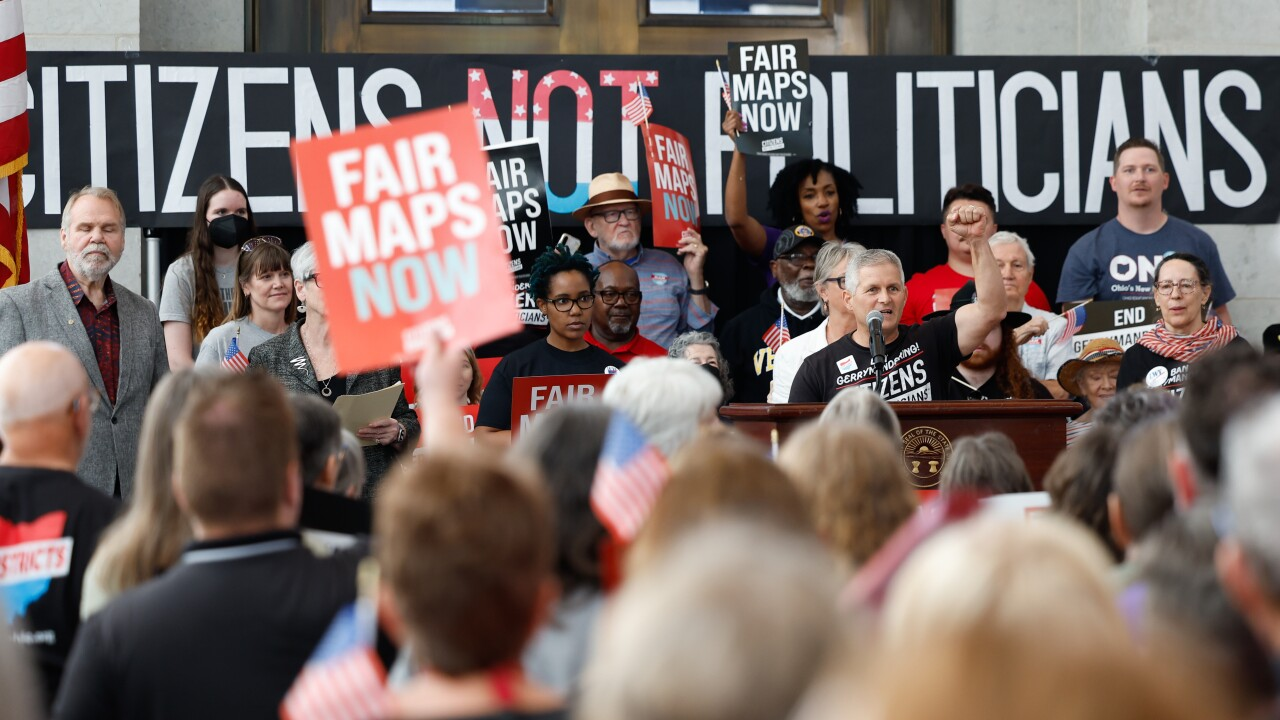
    A July 1 rally of Citizens Not Politicians at the Ohio Statehouse. (Photo by Graham Stokes for Ohio Capital Journal. Only republish photo with original story.)

    By  Ohio Capital Journal

    Advocates pushing an anti-gerrymandering amendment in Ohio to remove politicians from mapmaking in favor of a citizen commission said the state’s ballot board should be forced to start over on summary language for the November proposal.

    Attorneys said the proposed amendment would ban partisan gerrymandering “by setting forth robust redistricting criteria to ensure fair maps, selection standards to ensure the new commission’s impartiality and accountability, and transparency measures to ensure public information and participation,” according to a merit brief filed Thursday.

    But they say the summary language written by Ohio Secretary of State Frank LaRose and adopted by a majority of the Ohio Ballot Board on Aug. 16 “would have voters believe exactly the opposite.”

    The Ohio Ballot Board decides what language voters will see on their ballots when they go to vote, but that summary language does not change what the proposed amendment would actually do. In a 3-2 vote, the Ohio Ballot Board approved summary language that supporters of the anti-gerrymandering amendment say is intentionally misleading and biased against the amendment. They have filed a lawsuit with the Ohio Supreme Court opposing the summary language.

    The merit brief is part of that lawsuit filed by Citizens Not Politicians, the group who has led the charge for the anti-gerrymandering amendment. The lawsuit asks the state’s highest court to order changes to the summary language made by the ballot board, chaired by Ohio Sec. of State LaRose.

    The proposed amendment signed by more than 535,000 verified Ohio voters would replace the current Ohio Redistricting Commission made up of seven politicians, including LaRose, with a 15-member citizens commission made up of Republicans, Democrats, and independents.

    Citizens Not Politicians Attorney Don McTigue pointed to a change made by state Sen. Theresa Gavarone, R-Bowling Green, during the ballot board’s meeting, in which she changed the word “manipulate” to “gerrymander” when describing the methods of redrawing congressional and statehouse district lines within the amendment.

    “Earlier this year, Attorney General Dave Yost certified that the Amendment’s summary was ‘fair and truthful,’” McTigue wrote. “That summary states, consistent with the amendment’s plain text, that the amendment would ‘ban partisan gerrymandering.’”

    The brief emphasizes what the original complaint filed on Aug. 19 asserted, which is that the opinion of whether or not the proposed amendment “offers better policy than the existing system” should be left up to the voters in November.

    “The Ballot Board’s job is to provide ballot language that gives voters the facts so that they can make up their own minds,” the brief states.

    That language should follow constitutional rules dictating the language and the title, something the LaRose language doesn’t do, according to Citizens Not Politicians.

    The Ohio Constitution states ballot language “shall properly identify the substance of the proposal to be voted upon,” and the language “shall not be held invalid unless it is such as to mislead, deceive or defraud the voters.”

    The Ohio Revised Code says the secretary of state or the ballot board is required to “give a true and impartial statement of the measures in such language that the ballot title shall not be likely to create prejudice for or against the measure.”

    The title of the redistricting amendment, as approved by the board majority, is “to create an appointed redistricting commission not elected by or subject to removal by the voters of the state.”

    “The Ballot Board’s attempt to put a thumb on the scale against the amendment is a thumb in the eye of Ohioans who expect their representatives on the Board to carry out their mandatory duties impartially,” McTigue wrote.

    The Ohio Attorney General has filed an answer to the complaint, but the filing has already received criticism from the Democratic members of the ballot board, who say they were not consulted on the legal document, nor have they been given outside counsel to speak on their behalf, despite the fact that the the two Democrats, state Sen. Paula Hicks-Hudson and state Rep. Terrence Upchurch, voted against the ballot board language.

    Hicks-Hudson and Upchurch ended up filing a brief themselves on Wednesday night, in which they did not fight arguments that the ballot board “as a whole violated its constitutional duty,” and said the “chosen ballot title is inaccurate, biased, argumentative and misrepresents the proposed amendment’s procedures for removing commissioners who fail to comply with their duties.”

    McTigue said the court “has never hesitated to strictly enforce the legal requirements for the text that appears on the ballot, in recognition of Ohioans’ century-old right to amend their constitution and laws through direct democracy.”

    “The court should do the same here, by directing (the ballot board) to start over and adopt ballot language and a ballot title that are consistent with their clear legal duties.”

    The Ohio Supreme Court was asked just last year to make changes to a ballot board-approved summary, in that case for the reproductive rights constitutional amendment that would eventually pass with 57% of the vote.

    The coalition that sued took issue with ballot language that used the phrases “unborn child” and “reproductive medical treatment,” along with using the phrase “the citizens of the State of Ohio” rather than just “the State of Ohio” when speaking of the prohibitions against “indirectly burdening, penalizing or prohibiting abortion.”

    In a similar way to the redistricting amendment author’s arguments that the LaRose language could mislead voters as to the intentions of the proposed amendment, the lawsuit against the reproductive rights amendment summary said it could mislead voters about the rights the amendment created, the restrictions in the amendment, discretion when it comes to fetal viability and state regulation of the amendment.

    The Ohio Supreme Court said they agreed “that the ballot language approved by the ballot board misleads the average voter about whose actions the amendment restricts.”

    “But the ballot language is not defective in any other respect,” the court wrote.

    The court asked the ballot board only to change the phrase “citizens of the State of Ohio” to “State of Ohio,” and approved the rest.

    Justice Michael O’Donnelly wrote in his concurring opinion that it was “unfortunate that advocacy seems to have infiltrated a process that is meant to be objective and neutral.”


    Susan Tebben
    Susan Tebben

    Susan Tebben is an award-winning journalist with a decade of experience covering Ohio news, including courts and crime, Appalachian social issues, government, education, diversity and culture. She has worked for The Newark Advocate, The Glasgow (KY) Daily Times, The Athens Messenger, and WOUB Public Media. She has also had work featured on National Public Radio.

    Ohio Capital Journal is part of States Newsroom, the nation’s largest state-focused nonprofit news organization.

    MORE FROM AUTHOR
  • Ohio Supreme Court will hear Senate president’s fight against deposition in private school vouchers case

    Ohio Supreme Court will hear Senate president’s fight against deposition in private school vouchers case

    BY:  Ohio Capital Journal

    The Ohio Supreme Court has agreed to hear arguments as part of a lawsuit against private school vouchers in the state, to decide whether or not Senate President Matt Huffman needs to answer questions on the topic.

    The court announced on Tuesday that it would take up the case, in which Huffman is asking to avoid answering questions related to the state’s private school voucher program challenge taking place in the Franklin County Court of Common Pleas.

    Huffman appealed to the high court in April, invoking Article 11 of the Ohio Constitution, which states during a session of the General Assembly, senators and representatives are protected from treason, felony, or breach of the peace, “and for any speech, or debate, in either house, they shall not be questioned elsewhere.”

    “This appeal raises significant – and, to date, unanswered – questions about the scope of the constitutional protections provided to the Ohio General Assembly’s members that ‘for any speech, or debate, in either house, they shall not be questioned elsewhere,’ which is commonly referred to as the Speech and Debate Clause,” Columbus attorney Mark D. Wagoner wrote on behalf of Huffman.

    Huffman was one of many parties asked to participate in a deposition or answer questions about the program and its funding. The Senate president was subpoenaed – and is now fighting the subpoena – for an April 2023 deposition “on his knowledge of school funding in Ohio and his involvement in the enactment and expansion of the EdChoice program.”

    The case for which Huffman doesn’t want to provide a deposition is an effort to eliminate the private school voucher program in the state, a program that provides subsidies for public school students enrolled in what are considered by the state to be underperforming schools, allowing those students to attend private schools, often religiously affiliated.

    Huffman was Senate president when when the budget bill that included the private voucher expansion was passed in 2021.

    The program and its most recent expansion have been criticized for taking funding out of public school coffers, funding higher income white students more than the original program’s goal to assist lower income students and minorities, and violating the state constitution which requires the state to properly fund a system of public schools throughout Ohio.

    In December of last year, Franklin County Common Pleas Judge Jaiza Page said Huffman did not need to submit to the in-person deposition, but instead could answer questions “that do not implicate legislative privilege” in a written form.

    The judge ruled that the legislative privilege Huffman argued didn’t extend to everything done or related to a legislative process, “but attaches only to meetings, processes, conversations and documents which are an integral part of the deliberative and communicative process by which legislators participate in legislative or committee proceedings.”

    Page also said if the written deposition demonstrated “that an in-person oral deposition of Huffman is likely to provide additional information,” the judge would reconsider the written deposition order.

    Huffman appealed to the Tenth District Court of Appeals in January of this year, asking to be released from the order for written deposition answers, citing the same “legislative testimonial privilege” in the Speech and Debate Clause.

    The appellate court dismissed Huffman’s appeal in March, saying the lower court’s order “permits (voucher challengers) to submit questions but stops short of compelling (Huffman) to answer.”

    The appellate decision said Huffman could again sue on legislative privilege grounds after the questions were submitted to him, “and the trial court will have the opportunity to review (Huffman’s) concerns in the context of the questions being posed.”

    In his appeal to the state supreme court, Huffman’s attorney said “the importance of this language is clear.”

    “The Speech and Debate Clause does not require President Huffman to jump through the additional hoops suggested by the Tenth District Court of Appeals,” the appeal stated.

    Justice Michael Donnelly, Melody Stewart and Jennifer Brunner all voted against accepting the case. Ninth District Court of Appeals Judge Jill Flagg Lanzinger sat in for Justice Joe Deters.

    The court will now set deadlines for documents to be submitted to the court, and oral arguments will be scheduled in the case.


    Susan Tebben
    SUSAN TEBBEN

    Susan Tebben is an award-winning journalist with a decade of experience covering Ohio news, including courts and crime, Appalachian social issues, government, education, diversity and culture. She has worked for The Newark Advocate, The Glasgow (KY) Daily Times, The Athens Messenger, and WOUB Public Media. She has also had work featured on National Public Radio.

    Ohio Capital Journal is part of States Newsroom, the nation’s largest state-focused nonprofit news organization.

    MORE FROM AUTHOR

  • Ohio Supreme Court approves abortion rights amendment Ballot Board summary for voters with one tweak

    Ohio Supreme Court approves abortion rights amendment Ballot Board summary for voters with one tweak

    BY: 

    The Ohio Supreme Court has ordered one tweak to summary language approved by Republicans on the Ohio Ballot Board for voters to see in November on a proposed reproductive rights amendment. The split state supreme court rejected using the full text of the proposed amendment and declared that that summary language that voters will see on their ballots is not misleading.

    That summary language was written by the office of Ohio Secretary of State Frank LaRose, a Republican ballot board member who has spoken out against November’s Issue 1 reproductive rights amendment proposal, and campaigned vigorously for August’s Issue 1 proposal to make amendments harder to pass, saying that the Aug. 8 effort was “100% about keeping a radical pro-abortion amendment out of our constitution.” Issue 1 in August was rejected by voters 57% to 43%.

    LaRose said at the Aug. 24 ballot board meeting that he “worked extensively on drafting this” November ballot language.

    Fellow Ohio Ballot Board member, Republican state Sen. Theresa Gavarone, explicitly spoke against the November amendment proposal during that same ballot board meeting where the summary language for voters to see on their ballots was approved by the board in a 3-2 decision.

    The coalition proposing November’s reproductive rights amendment sued to the Ohio Supreme Court claiming that the summary language is deceptive and asking the full amendment text be used instead.

    They argued that the summary makes changes advocates say alter the language in a biased way, such as using “unborn child” rather than the medically accurate term “fetus,” and changing “pregnant patient” to “pregnant woman.” The summary also only lists 1 of 5 protected rights included in the amendment, focusing on abortion and failing to mention contraception, miscarriage care, fertility treatment, and continuing one’s pregnancy.

    Moreover, the abortion rights groups and individuals said the summary actually “inverts” protections that would be given in the amendment by saying the amendment would “always allow an unborn child to be aborted” if a physician determines it necessary. Amendment supporters say the actual language of the amendment “would prohibit such an abortion if the patient objects to it.”

    Finally, the complaint took issue with the summary language saying “citizens of the state of Ohio” would be prohibited from enacting laws regulating abortion in certain ways instead of “the state of Ohio” would be so prohibited.

    The Ohio Supreme Court ruled Tuesday that this last part is the only tweak the Ballot Board must make — they can not use “the citizens of the state of Ohio” instead of “the state of Ohio.”

    ______________

    Proposed amendment: “B. The State shall not, directly or indirectly, burden, penalize, prohibit, interfere with, or discriminate against either: 1. An individual’s voluntary exercise of this right or 2. A person or entity that assists an individual exercising this right, unless the State demonstrates that it is using the least restrictive means to advance the pregnant individual’s health in accordance with widely accepted and evidence-based standards of care. C. As used in this Section: … 2. “State” includes any governmental entity and any political subdivision.”

    The Ohio Ballot Board’s language that needs changed to remove “citizens”: “The proposed amendment would: • Prohibit the citizens of the State of Ohio from directly or indirectly burdening, penalizing, or prohibiting abortion before an unborn child is determined to be viable, unless the State demonstrates that it is using the least restrictive means. • Only allow the citizens of the State of Ohio to prohibit an abortion after an unborn child is determined by a pregnant woman’s treating physician to be viable and only if the physician does not consider the abortion necessary to protect the pregnant woman’s life or health.”

    ______________

    The Ohio Supreme Court wrote they were tasked with determining whether the GOP summary language is “impermissibly argumentative, either in favor of or against the issue.”

    Regarding the Ballot Board summary’s failure to mention 4 of 5 categories included in the reproductive rights amendment proposal, the Republican court majority cited the amendment’s own emphasis on abortion care and said “the omission is not material when considering the amendment as a whole.”

    Regarding the Ohio Ballot Board changing “fetus” to “unborn child” in the summary for voters, the majority said this is not improper persuasion. They did not elucidate an argument but instead quoted precedent from a 2021 court decision: “[I]f ballot language is factually accurate and addresses a subject that is in the proposed amendment itself, it should not be deemed argumentative.”

    The court majority referenced this again later in rejecting that other portions of the summary language are weighted against the proposal.

    ______________

    Proposed Amendment: “A. Every individual has a right to make and carry out one’s own reproductive decisions, including but not limited to decisions on: … 3. continuing one’s own pregnancy; B. The State shall not, directly or indirectly, burden, penalize, prohibit, interfere with, or discriminate against either: 1. An individual’s voluntary exercise of this right, However, abortion may be prohibited after fetal viability. But in no case may such an abortion be prohibited if in the professional judgment of the pregnant patient’s treating physician it is necessary to protect the pregnant patient’s life or health.”

    Ballot Language: “The proposed amendment would: • Prohibit the citizens of the State of Ohio from directly or indirectly burdening, penalizing, or prohibiting abortion before an unborn child is determined to be viable, unless the State demonstrates that it is using the least restrictive means. • Only allow the citizens of the State of Ohio to prohibit an abortion after an unborn child is determined by a pregnant woman’s treating physician to be viable and only if the physician does not consider the abortion necessary to protect the pregnant woman’s life or health; and • Always allow an unborn child to be aborted at any stage of the pregnancy, regardless of viability if, in the treating physician’s determination, the abortion is necessary to protect the pregnant woman’s life or health.”

    ______________

    The court majority wrote, “While (litigants) do not like the way in which the language is phrased, the structure of statements is not improperly argumentative. As stated above, this court will not deem language to be argumentative when it is accurate and addresses a subject in the proposed amendment.”

    Ohio Supreme Court Democrats agreed with ordering the change from “citizens of the state” to “the state,” but panned the approval of the rest of the ballot board’s language.

    Justice Jennifer Brunner, a Democrat, said the Ohio Ballot Board “obfuscated the actual language” of the proposed amendment by “substituting their own language and creating out of whole cloth a veil of deceit and bias in their desire to impose their views on Ohio voters…”

    Democratic Justice Melody Stewart said that the Ohio Ballot Board failed its duty and instead it “crafted partisan ballot language designed to do any number of things, but not simply designed to do its job—that is, inform voters of the substance of the proposed amendment.”

    Democratic Justice Michael Donnelly said of the Ohio Ballot Board that “it’s unfortunate that advocacy seems to have infiltrated a process that is meant to be objective and neutral,” but that he’s confident that voters will be informed about the issue in November.

  • Abortion rights groups ask Ohio Supreme Court to order full amendment text for November ballots

    Abortion rights groups ask Ohio Supreme Court to order full amendment text for November ballots

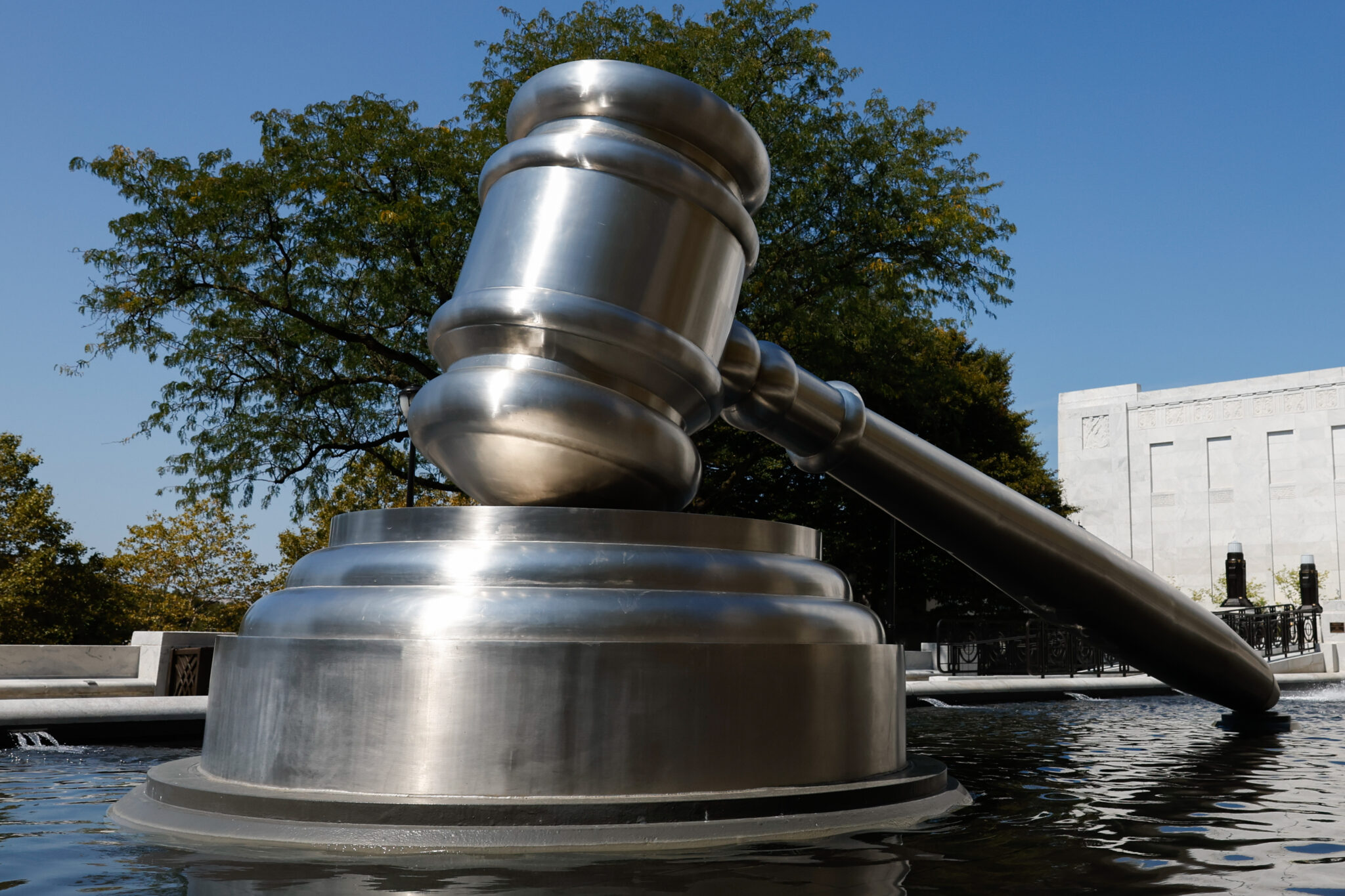
    “Gavel,” a sculpture by Andrew F. Scott, outside the Supreme Court of Ohio. Credit: Sam Howzit/Creative Commons.

    BY:  Ohio Capital Journal

    In the fight against Ohio Ballot Board language that reproductive rights groups say is deceptive, an attorney has asked the Ohio Supreme Court to order the full text of the proposed amendment to be used on November ballots.

    The Ohio Ballot Board approved language last month for voters to see on their ballots that took out specific details of the amendment, such as protections for miscarriage care and contraception.

    The language was ostensibly meant to summarize Issue 1, a proposed amendment that would add abortion and reproductive rights into the state constitution, but those who created the proposed amendment say the summary approved by the ballot board in a 3-2 vote misleads voters and adds biased terms like “unborn child” instead of the medically accurate term “fetus.”

    In a filing this week, attorney Don McTigue asked the Ohio Supreme Court to send the Ohio Ballot Board back to the drawing board, specifically to “prescribe that the amendment’s full text be used as the ballot language.”

    “The Ballot Board’s prescribed language misleads the voters about ‘what they are being asked to vote on’ and engages in improper ‘persuasive argument … against’ the Amendment,” McTigue wrote, citing previous Ohio Supreme Court languages.

    The summary language has various defects, according to the abortion rights groups, including misleading voters about “what right the amendment would create,” what restrictions the amendment would create, “whether and to what degree” the proposal would continue a pregnancy, a physician’s discretion regarding fetal viability, and “how the amendment would limit state regulation.”

    “Each of these defects violates the constitution and laws of the state of Ohio, and cannot survive under this court’s precedents,” McTigue wrote.

    Along with the alleged defects, the brief says the ballot board’s summary changes language enough to alter the meaning of the amendment and give false information to voters.

    The summary language states that the amendment would “always allow an unborn child to be aborted at any stage of pregnancy, regardless of viability if, in the treating physician’s determination, the abortion is necessary to protect the pregnant woman’s life or health.”

    “To the contrary, if the amendment were adopted, such an abortion would not be allowed insofar as the pregnant patient objected to it,” McTigue wrote. “In that case, the pregnant person would have an individual right to decide to continue [their] own pregnancy.”

    He also argued that the majority that voted for the summary language included two people who have been working against the measure. One of which, state Sen. Theresa Gavarone, took time during the board meeting in which the summary language was considered, to call the amendment “dangerous” and commit to campaigning against the measure.

    “Gavarone attacked the substance of the amendment itself as ‘an abomination,’ and asserted that the amendment entailed an ‘assault on parental rights,” the court filing noted.

    Ohio Secretary of State Frank LaRose, who leads the ballot board, has also been a vocal opponent of the proposed amendment, posting on social media with anti-abortion groups, and working on a failed constitutional amendment to raise the threshold to approve amendments specifically to block the abortion rights measure.

    “This context, together with the ballot language’s length and many defects, makes clear that the board majority’s personal opposition to the amendment infected the ballot board’s exercise of authority,” McTigue told the court.

    The Ohio Attorney General’s Office, who represents the ballot board in legal proceedings, denied wrongdoing by the board in response to the lawsuit.

    Susan Tebben
    SUSAN TEBBEN

    Susan Tebben is an award-winning journalist with a decade of experience covering Ohio news, including courts and crime, Appalachian social issues, government, education, diversity and culture. She has worked for The Newark Advocate, The Glasgow (KY) Daily Times, The Athens Messenger, and WOUB Public Media. She has also had work featured on National Public Radio.

    MORE FROM AUTHOR

  • State Supreme Court dismisses congressional redistricting cases

    State Supreme Court dismisses congressional redistricting cases

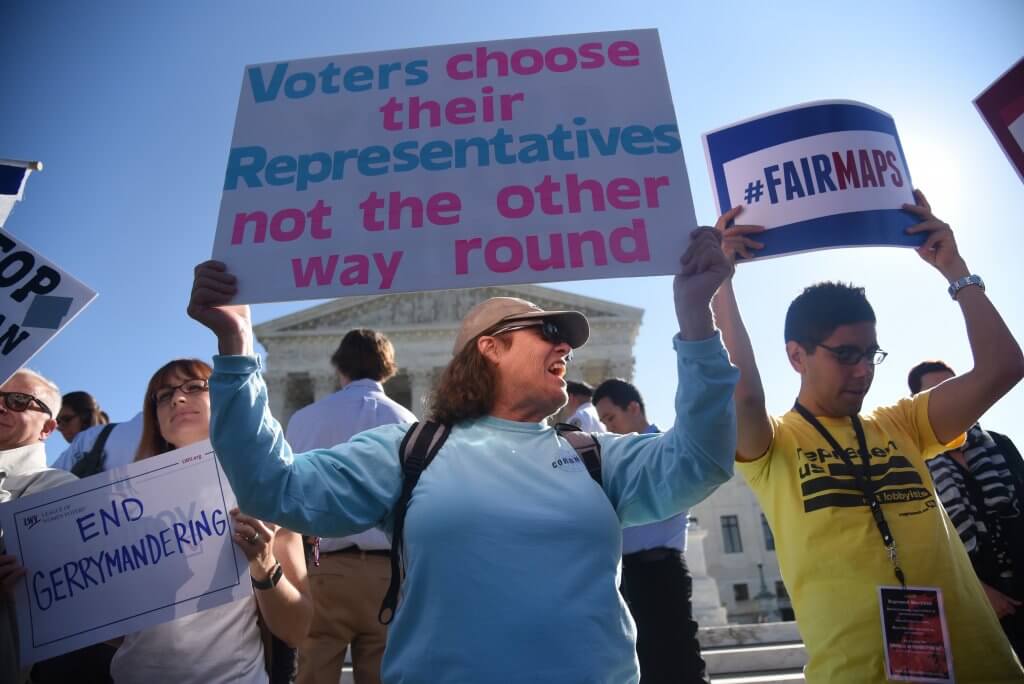
    Anti-gerrymandering protest in Washington, DC. | Olivier Douliery, Getty Images.

    BY:  Ohio Capital Journal

    The Ohio Supreme Court on Thursday dismissed two cases over congressional districts in Ohio.

    The decision isn’t a complete surprise because the groups filing the complaints asked for the dismissals earlier this week. But struggles over partisan gerrymandering in Ohio and elsewhere are far from over.

    The complainants continue to maintain that Ohio’s congressional districts — as well as its legislative districts — are unfairly gerrymandered. They simply calculate that it’s better to dismiss the cases in light of other developments and because the state Constitution already requires that districts be redrawn after next year’s General Election.

    In claiming that Ohio is extremely gerrymandered, the plaintiffs appear to have a point. Former president Donald Trump won the state with less than 54% of the vote in 2020, yet Republicans control 66% of the state’s congressional seats — a 12-point differential.

    Many political scientists and other experts say extreme gerrymandering is a problem because by making general elections uncompetitive, it incentivizes candidates to pander to the most extreme elements of their primary electorate. Also, by imposing one-party rule, it creates unaccountable, corrupt majorities, they say.

    In May 2018, an amendment to the state Constitution that banned extreme partisan gerrymandering and gave the Ohio Supreme Court the power to throw out maps on that basis passed with an overwhelming 75% of the vote.

    Yet the Republican-dominated Redistricting Commission created by the amendment twice ignored rulings by a bipartisan majority on the Ohio Supreme Court rejecting maps it drew in the wake of the 2020 Census. With the clock effectively run out, a panel of three federal judges kept the unconstitutional congressional maps in place for the 2022 election.

    Ohio Republicans argued to the U.S. Supreme Court that the state judiciary has almost no power to regulate how legislatures draw congressional districts — no matter what state law says or how gerrymandered those legislatures might already be. That’s known as the “independent legislature doctrine” — which Carolyn Shapiro blasted as “an unprecedented, unconstitutional, and potentially chaos-inducing intrusion into state election law,” in an article this year in the University of Chicago Law Review.

    On June 27, six members of U.S. Supreme Court agreed in Moore v Harper. The ruling said the North Carolina Supreme Court had the power to enforce a state law banning excessively partisan congressional maps.

    However, gerrymandering foes in Ohio might not find much solace in the decision.

    Former state Supreme Court Chief Justice Maureen O’Connor, a Republican, repeatedly joined the court’s three Democrats in ruling that Republican-drawn congressional and legislative maps were excessively partisan. But then she was forced to retire last year because of her age and the new court has a more partisan makeup.

    Other recent developments might not hold much hope for Ohio’s anti–gerrymandering groups, either.

    The U.S. Supreme Court last October struck down Alabama’s congressional maps in Allen v Milligan. The surprise ruling said that the state’s congressional districts violate the Voting Rights Act by being unduly gerrymandered against Blacks.

    It ordered that the state legislature redraw maps so that Alabama Blacks will have a chance at a second seat in the state’s six-seat delegation in which they can select a representative of their choice.

    That doesn’t necessarily mean picking a Black representative — or that by merely being Black, a representative meets the requirements of the Voting Rights Act. The law requires that minority communities have a legitimate shot at picking representatives in numbers proportional to their own.

    Blacks make up about 27% of Alabama’s population and the ruling in Milligan would give them a chance at power over 33% of its congressional seats, as compared to the current 17% they have power over now.

    However, the state’s Republican-dominated legislature twice defied orders to comply with the ruling. On Tuesday, a panel of federal judges rebuked the body and ordered that the new map be independently drawn.

    The ruling in Milligan has implications for several other states, such as Louisiana, which have large, underrepresented minority populations.

    But Ohio might not be one of them because it doesn’t have the diversity those states do. Whites make up 80% of the state’s population, while Blacks make up just over 13%. The next closest group, Latinos, make up 4.5%.

    Louisiana, by contrast, is 63% White, but that group controls 80% of the state’s five congressional districts.

    In her role as now-retired chief justice, O’Connor is helping to lead an effort to build even more stringent anti-gerrymandering amendments into the Ohio Constitution. The amendment she’s working to put on the November 2024 ballot would do what the federal panel did to the Alabama legislature on Tuesday — take district drawing out of the hands of partisans and give it to an independent commission.


    Marty Schladen
    MARTY SCHLADEN

    Marty Schladen has been a reporter for decades, working in Indiana, Texas and other places before returning to his native Ohio to work at The Columbus Dispatch in 2017. He’s won state and national journalism awards for investigations into utility regulation, public corruption, the environment, prescription drug spending and other matters.

    MORE FROM AUTHOR

  • Former state rep, Hamilton County resident sue to keep abortion rights amendment from November ballot

    Former state rep, Hamilton County resident sue to keep abortion rights amendment from November ballot

    Getty Stock Image

    BY:  – Ohio Capital Journal

    A lawsuit has been filed with the Ohio Supreme Court in an attempt to block a proposed abortion rights amendment from going to voters in November.

    Days after the Ohio Secretary of State verified that the campaign to get a reproductive health amendment on the ballot had collected enough valid Ohio voter signatures to be sent to voters, former Republican state Rep. Thomas Brinkman is at the top of a lawsuit to keep that from happening.

    Brinkman is joined by Hamilton County resident Jennifer Giroux, a candidate for House of Representatives’ 27th district and owner of a Catholic shop in Madeira.

    The main arguments in the lawsuit against Secretary of State Frank LaRose, the state and the coalition of groups who created the proposed amendment claim that the petition proposal “failed to comply with all of the statutory requirements for an initiative petition,” including listing existing laws that would be changed or removed if the constitutional amendment is approved by voters.

    The proposed constitutional amendment would codify abortion in the state, and allow pregnancy decisions to be between the pregnant person and a physician, and viability to be determined by medical experts.

    “Even though certain existing statutory provisions would be repealed if the proposed amendment to the Ohio Constitution … is adopted, the initiative petition failed to include the text of such statutory provisions and, thus, the initiative petition violates requirements established by law and must be invalidated,” attorney Curt Hartman wrote in the lawsuit.

    This is the second such lawsuit Hartman has filed regarding the abortion amendment. The first time, he sued the Ohio Ballot Board on behalf of two members of Cincinnati Right to Life, saying the board did not deliberate enough about the issue before approving the measure, opening the door for signature collection.

    In that case, the Ohio Supreme Court unanimously ruled the board had not abused its discretion or disregarded law in approving the petition, and that signature collection could go forward.

    On Saturday, the Ohio Supreme Court set a deadline for 4 p.m. Monday to receive the first filings in the case, and an Aug. 7 deadline for all documentation from both sides.


    Susan Tebben
    SUSAN TEBBEN

    Susan Tebben is an award-winning journalist with a decade of experience covering Ohio news, including courts and crime, Appalachian social issues, government, education, diversity and culture. She has worked for The Newark Advocate, The Glasgow (KY) Daily Times, The Athens Messenger, and WOUB Public Media. She has also had work featured on National Public Radio.

    MORE FROM AUTHOR