Tag: Ohio Supreme Court

  • Federal court won’t intervene in Ohio’s congressional districts

    Federal court won’t intervene in Ohio’s congressional districts

    Decision matches ruling to wait out resolution on legislation redistricting

    BY: SUSAN TEBBEN – Ohio Capital Journal

    A federal three-judge panel still waiting on an Ohio legislative redistricting plan said Tuesday it won’t jump into congressional redistricting right now either.

    Chief Judge Algenon Marbley and judges Amul Thapar and Benjamin Beaton, representing the U.S. District Court’s Southern District of Ohio said a request by two Youngstown voters to wipe out the congressional maps “exceeds the scope of their intervention.”

    “The court did not contemplate sweeping congressional redistricting, which is a wholly distinct process, into this lawsuit,” the judges wrote in a decision filed Tuesday.

    The voters, represented by attorney Percy Squire, wanted the most recent congressional maps to be removed, arguing GOP mapmakers did not include racial data when drawing district lines, thus discriminating against marginalized Ohioans. Their arguments were added by the judges to another lawsuit filed by GOP voters. That lawsuit specifically addressed legislative districts, and asked that a legislative map rejected by the Ohio Supreme Court be used in the May 3 primary.

    The congressional map, which was passed by the GOP-controlled Ohio Redistricting Commission last month, hasn’t been rejected by the Supreme Court, unlike previous versions of the map. The state’s highest court rejected a challenge to the maps, with justices saying a new lawsuit would need to be filed to bring jurisdiction of the maps back to the court. Those new lawsuits came in quickly after the court’s ruling, but since then, the ACLU chose to challenge the map for the 2024 election rather than 2022, effectively opening the door for the maps to be used in this year’s election.

    Congressional races were included on ballots for the May primary, for which absentee and early voting has already started.

    The federal judges said claims to change congressional redistricting plans “would not have passed this court’s intervention analysis” in the first place, despite the fact that both plans came through the Ohio Redistricting Commission.

    “Though both varieties of redistricting involve the commission, they are separate tasks utilizing independent standards and resulting in different district boundaries for General Assembly members versus Congressmembers,” the three-judge panel ruled.

    The best course of action for the Youngstown residents was to file a new lawsuit in the Northern District court (the federal court closest to Youngstown) and start the process over again, the judges wrote.

    That said, the judges allowed the residents to stay in the lawsuit still being decided by the federal court, “for the purposes originally identified: addressing their constitutional challenge to the remedy or remedies sought with respect to the General Assembly redistricting.”

    The federal court has given the state until April 20 to resolve legislative plan issues, which includes hearing a decision from the supreme court on the newest legislative maps, which only are slightly different from the third map rejected by the Supreme Court.

    Also open-ended at this point is the possibility of a contempt hearing for members of the redistricting commission, for which the Supreme Court asked for reasoning as to why the members shouldn’t be held in violation of orders from that court. The GOP redistricting members have said contempt wouldn’t be appropriate because they passed a map before the deadline.

  • Ohio House Speaker says no primary election legislation coming soon

    Ohio House Speaker says no primary election legislation coming soon

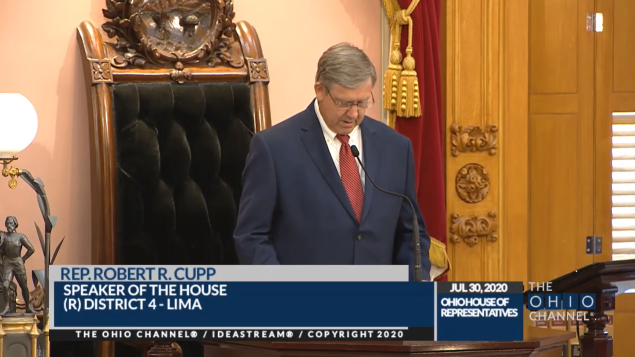
    Speaker of the House Bob Cupp addresses the chamber.

    BY: SUSAN TEBBEN – Ohio Capital Journal

    Ohio’s House Speaker said Wednesday legislation is not coming to change the May primary date.

    Speaker Bob Cupp said the process was “in the hands of the federal court,” despite various court documents in which he argued that the election is a legislative issue and any changes should be made in the General Assembly.

    The Ohio Capital Journal asked Cupp directly to confirm the House had no plans for legislation to set a new primary date in the next two weeks.

    “That is correct, we’re not in session,” Cupp said during a gaggle after Wednesday’s House session.

    He was asked about potential changes to the election earlier in the press gathering, and he deferred the job.

    “We’ll let the federal court process proceed,” Cupp said.

    federal lawsuit was filed by GOP voters earlier this year, claiming voters are losing their right to vote with the chaos surrounding redistricting. Originally, the plaintiffs, including Ohio Right to Life leader Michael Gonidakis, asked for the third map adopted by the Ohio Redistricting Commission to be forced into use by a three-judge panel of the U.S. District Court.

    That map was rejected by the Ohio Supreme Court before the federal lawsuit was filed, but the process of adopting a fourth version of legislative districts had not come to fruition.

    The fourth map ended up being a near-copy of the third, rejected version, with Senate President Matt Huffman acknowledging as he moved for its approval that the map had “97%” similarity to the third version.

    Because the process, which started in September, has taken so long, the Secretary of State’s Office was forced to remove legislative races from ballots for the May 3 primary, all but assuring a split primary.

    Lawsuits have been filed with the Ohio Supreme Court asking for the fourth map to be invalidated for many of the same reasons the third map was, and map challengers have also asked the court to hold GOP commission members in contempt for violating court orders.

    Cupp and Senate President Matt Huffman argued in previous court filings that the power for elections and drawing maps lies solely with the redistricting commission and legislators, seemingly contrary to Cupp’s Wednesday statements.

    “It is the commission and the general assembly who solely possess the legislative authority to create legislative and congressional districts,” attorneys for the legislative leaders wrote in a court filing for lawsuits on congressional districts.

    Secretary of State Frank LaRose in more recent court filings urged the judicial system to stay out of the process. In his filing countering objections to the most recent maps, he posited that the Ohio Redistricting Commission has more time to figure out legislative maps.

    “More importantly, there is still time for the legislature to take steps to extend the time within which such a decision must be made,” LaRose said. “This court should not give up on the constitutional process even if the petitioners have.”

    The federal court has chosen twice not to intervene in the state process to give it time to come to a resolution. The first time the court withheld judgment was just before the March 28 deadline for the commission to complete new maps.

    At a hearing before Chief Judge Algenon Marbley, Judge Benjamin Beaton and Judge Amul Thapar last Wednesday, parties from the Secretary of State’s Office gave Aug. 2 as a potential date for a second primary to include the legislative races.

    The judges entertained the idea of not just the third map, but also the map drawn by independent mapmakers during the latest redistricting commission hearings, and also debated whether or not the 2010 map could be used for one more year.

    They decided to give the state until April 20 to come up with an official map and to give the state’s highest court time to make its rulings. A status conference was scheduled for April 11.

    Jake Zuckerman contributed to this report.

  • LaRose would ‘be fine with’ chief justice’s impeachment over redistricting rulings

    LaRose would ‘be fine with’ chief justice’s impeachment over redistricting rulings

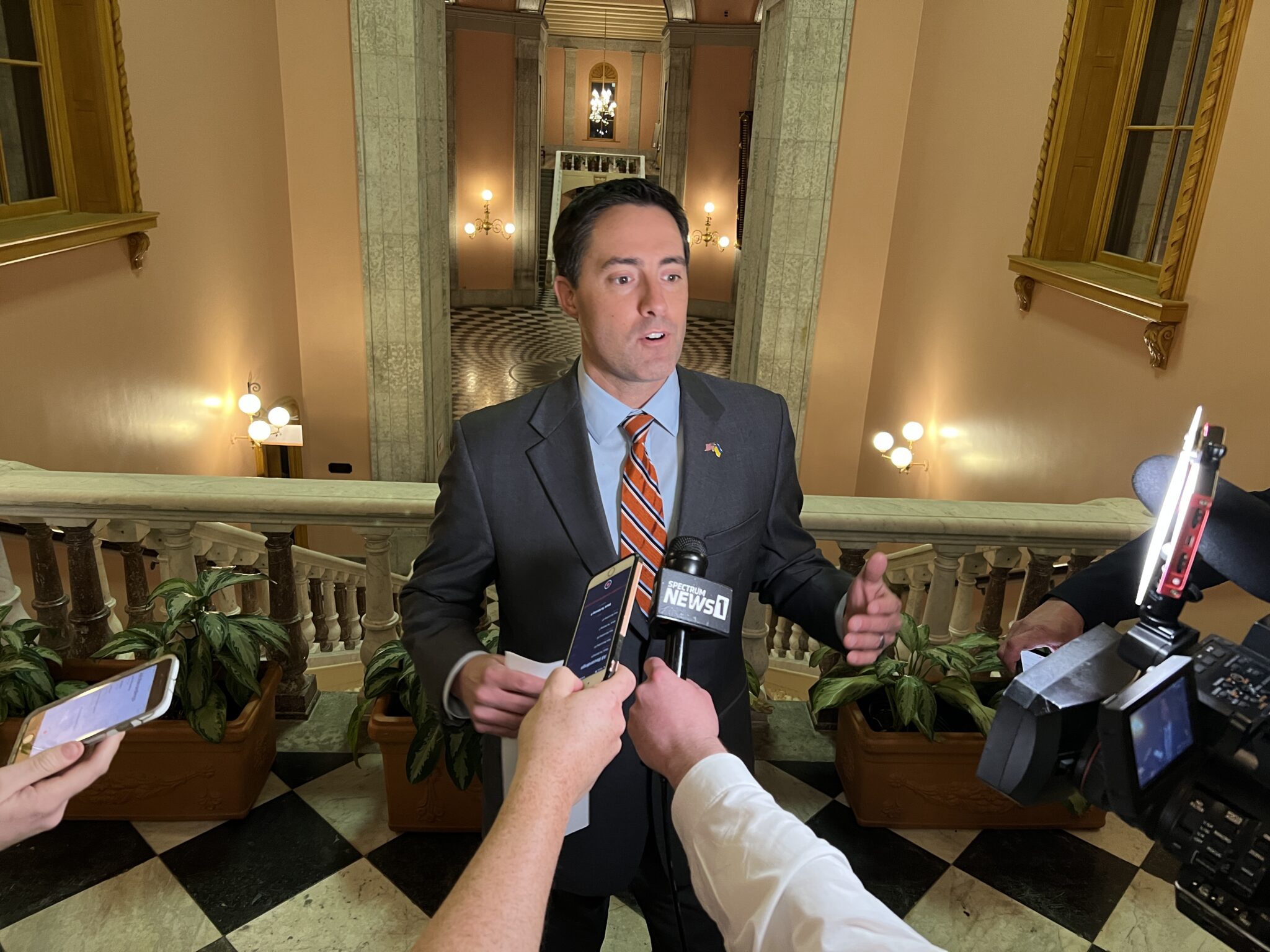
    Ohio Secretary of State Frank LaRose talks to reporters. (Photo by Susan Tebben, OCJ.)

    Ohio elections chief says O’Connor ‘violated her oath’ by rejecting GOP-drawn districts

    BY: MARTY SCHLADEN – Ohio Capital Journal

    Ohio Secretary of State Frank LaRose on Friday said he “certainly wouldn’t oppose it” if the legislature impeached Ohio Supreme Court Chief Justice Maureen O’Connor over her joining in rulings rejecting GOP-generated maps for Congress and the legislature, according to a recording of a breakfast meeting with Union County Republicans.

    LaRose, who is not a lawyer, said in the recording his fellow Republican “violated her oath of office by making up what she wants the law to say instead of interpreting what it actually says.”

    O’Connor joined the court’s three Democrats in ruling multiple times that the congressional and legislative maps approved by a majority vote of Republicans violated the Ohio Constitution by unfairly favoring the GOP. 

    Some Republican members of the legislature had previously raised the possibility of impeaching O’Connor, who will leave office at the end of the year. But LaRose, the state’s top elections official, is apparently the first of the five Republicans on the state’s seven-member redistricting commission to say he’d go along with it.

    Such calls to effectively end the career of a judge because her rulings didn’t go the GOP’s way have been too extreme for at least one other Republican on the commission — Gov. Mike DeWine.

    “This is an extraordinary measure to take,” he said when the idea was floated earlier this month. “I think we don’t want to go down that pathway, because we disagree with a decision by a court, because we disagree with a decision by an individual judge or justice. Not a good idea.”

    LaRose’s spokesman was sent a transcript of the secretary’s comments about O’Connor. The spokesman was also asked whether LaRose believes judges should be removed whenever LaRose thinks they misinterpret the law — and whether such a belief undermines the entire purpose of having courts. The spokesman, Rob Nichols, didn’t respond to an email and a phone call.

    LaRose made his comments about O’Connor at the Union County Republican Breakfast on Friday, according to a recording obtained by the Capital Journal. The source of the recording provided it on the condition of anonymity.

    County Republican Party Chairman Justin Hogan didn’t immediately respond to an email requesting comment.

    On the recording, the secretary of state was asked, “Can you talk about the ex-Republican O’Connor, should she be impeached?”

    LaRose replied: “I think that she has not upheld her oath of office, and that to me is a basic test of a public servant. That’s up to the state legislature, whether they want to impeach the chief justice or not. I certainly wouldn’t oppose it.”

    He was referring to repeated rulings in which O’Connor sided with the court’s Democrats in saying that maps passed by the Republican majority on the redistricting commission were illegally gerrymandered. 

    In recent statewide elections, voters have supported Republicans by roughly a 54-46 margin. But the maps produced by Republicans favor the party to have much greater representation in the legislature and Congress.

    They violate constitutional amendments overwhelmingly passed by Ohio voters requiring that the partisan makeup of the state legislature and congressional delegation resemble the general partisan makeup of the state, O’Connor has ruled.

    GOP members of the commission were called to the state Supreme Court on Monday to show why they shouldn’t be held in contempt after ignoring maps generated by independent commissioners and passing another set of maps that again heavily favors Republicans.

    The impasse has created a constitutional crisis in Ohio, with deadlines approaching for the primary, but no district boundaries in which candidates can run. LaRose on Friday acknowledged that impeaching O’Connor wouldn’t end the crisis, but on the recording said it might “feel really good.”

    “I don’t know if it will solve our current problem because the impeachment process would take a couple months and we’re going to need to have district lines way before that,” he said. “And so it may feel really good, and it may be the right thing to do because she’s violated her oath of office by making up what she wants the law to say instead of interpreting what it actually says, but I don’t know if it would accomplish much, but I’d be fine with it if they did.”

    LaRose didn’t explain how O’Connor misinterpreted the law, much less how such a misinterpretation would violate a justice’s oath of office.

    The secretary of state’s sharp partisan tone is a stark departure from the bipartisan one LaRose struck when he initially ran for office in 2018.

    At the time, he told The Columbus Dispatch that he wanted to “bring a sense of civility and bipartisanship to how we conduct elections.”

    He added: “I want to be part of a party that wins elections because we work harder, have better candidates and we have better ideas.”

    More recently, LaRose has taken a harsher line, including taking to Twitter twice in February to make sweeping, misleading attacks on a supposedly partisan news media, and saying former President Donald Trump is right to make his claims about voter fraud.

    The Associated Press noted on Thursday that LaRose posted the first such tweet a day after learning he’d drawn two opponents in the Republican Primary. Both have parroted Trump’s false claims about rampant voter fraud in the 2020 presidential election, AP reported.

  • Should courts limit jury awards for child rape victims? Supreme Court weighs arguments

    Should courts limit jury awards for child rape victims? Supreme Court weighs arguments

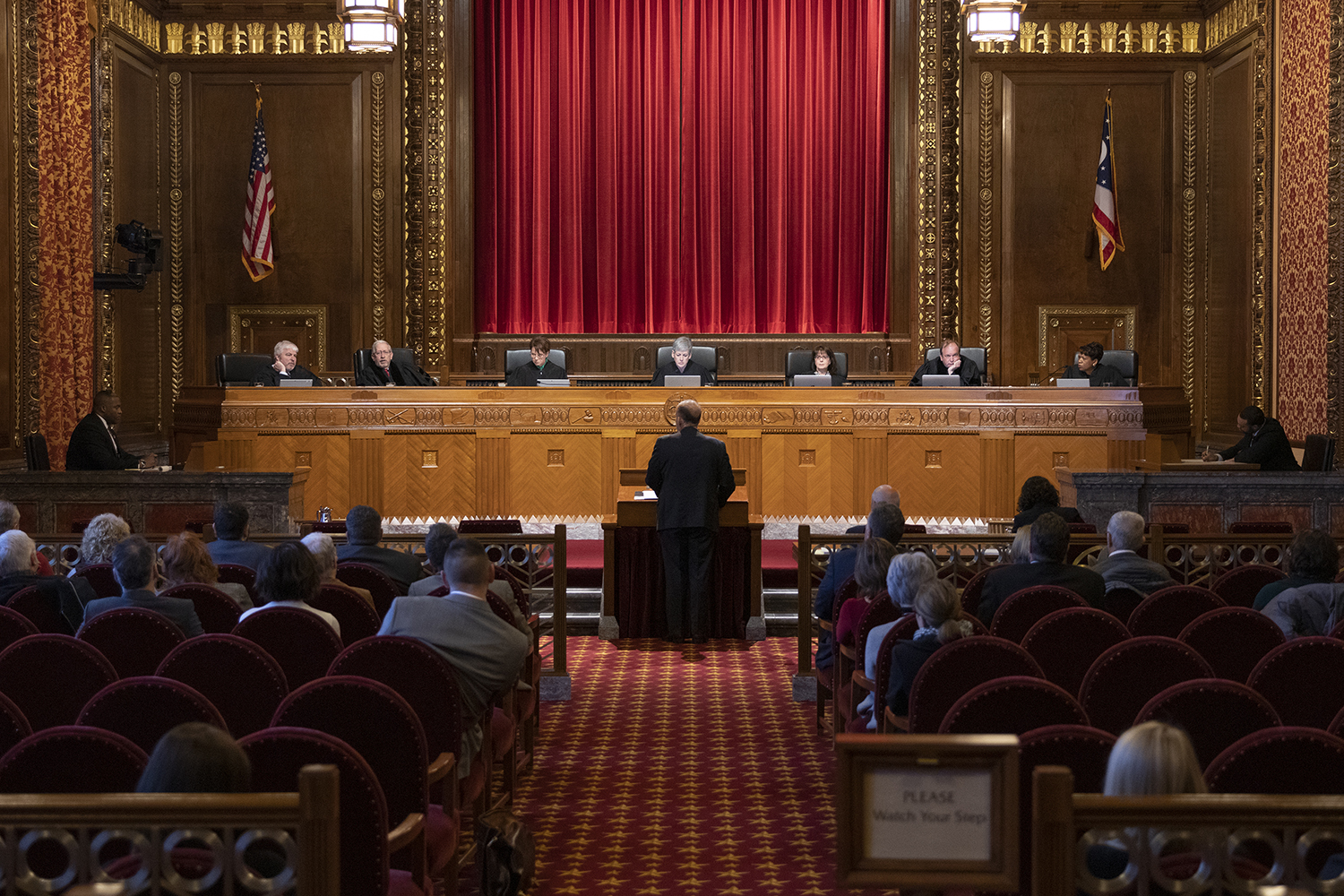
    Photo Courtesy of the Ohio Supreme Court

    BY: JAKE ZUCKERMAN – Ohio Capital Journal

    Columbus, Ohio – Lawyers for a woman who was repeatedly raped and sexually abused as a child argued Wednesday the Ohio Supreme Court should overturn or at least pare down a law that limits millions in damages a jury awarded her.

    In 2005, Ohio lawmakers passed a “tort reform” law that among other provisions, sets a limit of $250,000 on non-economic damages, which are awarded to victims to cover more intangible harms like pain, suffering, stress, anxiety, etc.

    Amanda Brandt was awarded $34 million in noneconomic damages after Roy Pompa, her friend’s father, abused her repeatedly over 18 months starting when she was 11. Court records show he would drug and rape her and record the abuse. Brandt won full damages for abuse that occurred before the tort reform law passed ($14 million), though the other $20 million in punitive damages for abuse after the law passed was cut down to $250,000.

    She still won $100 million in punitive damages — which are only available because Pompa was convicted of a felony (17 counts of rape, five counts of kidnapping, 55 counts of pandering sexually oriented material involving a minor, and 21 counts of gross sexual imposition).

    The Supreme Court has previously denied an effort to nix damage caps as they were applied to another child who was raped by her priest in Delaware County. Her $3.5 million in noneconomic caps was reduced to $350,000 (the law also creates a formula that can provide up to $350,000 pending economic damages like missed days of work and medical bills).

    Brandt’s attorneys asked the court for one of two remedies. The justices could overturn the damage caps outright and restore juries with the power to set damage maximums, as opposed to state lawmakers. Or, the justices could determine that the trauma Brandt sustained should apply to an exception to the damage caps within the law available to people who become deformed or disabled by an injury.

    “These kinds of injuries meet the same level,” said Robert Peck, an attorney representing Brandt.

    Damage caps, he said, infringe on the U.S. Constitution’s right to trial by jury. It’s a jury that hears the facts of a case and decides what kind of penalty is appropriate.

    “With a cap, you’re saying that that cap overrides that jury decision,” he said.

    Pompa, via attorney Marion Little, said it’s untrue that anyone was denied a right to trial by jury. Brandt still won $114 million. The intent of tort reform, he argued, was to create more legal predictability and consistency, which it accomplished without infringing on anyone’s rights.

    As for the reduced non-economic damages, Little said the evidence suggests Brandt has recovered. She still requires counseling, but she has a family, a job and stability and should be “applauded for her success” moving forward.

    In court filings supporting Brandt, lawyers with the Ohio Alliance to End Sexual Violence criticized this line of thinking.

    “[It] puts Ohio judges in the unenviable and morally fraught position of holding against child abuse victims the moments in their life where they have made progress — where they have taken the most basic steps to achieve normalcy despite the abuse they suffered,” wrote attorney Camille Crary in a brief.

    Outside interests 

    Overturning Ohio’s noneconomic damage would significantly reshape Ohio’s legal climate in favor plaintiffs. It applies far beyond the narrow realm of child sex abuse and into products liability and other genres of lawsuits that can result in huge payouts, often from large corporations and institutions.

    As such, the case generated tremendous outside interest. Attorney General Dave Yost argued the law should be upheld. He said it’s perhaps surprising — “some might even say callous” — that Ohio law limits available damages for a child victim of sexual abuse. But “foolish policy” is not necessarily unconstitutional, he argued. He urged lawmakers, as some have tried to do, to lift damage caps in claims against rapists. But that change should come from the legislature, not the Supreme Court, he said.

    The Chamber of Commerce, which represents business interests, said the unpredictability of “runaway” jury awards creates huge risks for businesses. Ohio’s damage caps, its lawyers argued, are reasonable and within the mainstream compared with other states.

    “The extremely sympathetic facts of this case should not blind this Court to the enormous consequences of that invitation: Invalidating the law or opening the door to a vague new exception will expose businesses, nonprofits, and others to unlimited and unpredictable awards and excessive settlement demands in personal injury lawsuits when no more than negligence is alleged,” its lawyers wrote.

    The Product Liability Advisory Council — an association representing large car, tobacco, chemical, firearms, pharmaceutical and other companies — filed arguments in the case supporting the noneconomic damage caps and emphasizing Brandt’s current jury award.

    One mystery in the case, homed in on briefly during oral arguments, is whether Pompa can even pay the $114 million judgement — let alone the additional $20 million if the court overturns the damage cap. Peck, during arguments, said the plaintiffs have not yet sought to collect from him until the court finalizes the issue.

    In an interview after oral arguments, Little said there’s no evidence in the record suggesting Pompa can pay either $114 million or $134 million. He said the plaintiffs’ target is more likely the law and precedent than the specific case at hand.

    Little — a prominent defense attorney currently working on high-profile, white collar cases — declined to answer whether Pompa is paying for his legal services.

    “I think that the, as a practical matter, the plaintiff does not have a financial stake in the results of this case,” he said. “There may be others outside the case, such as the plaintiff’s bar, that have interest in this.”

    Organizations representing trial attorneys argued the right to trial by jury and that jury’s autonomy to set awards for plaintiffs who have been harmed are inextricably tied. Juries, they wrote, are the fact finders in court cases — not policy makers.

    “The General Assembly has not demonstrated a willingness to protect the right to trial by jury, nor is it the role of legislators to draw boundaries around the legislative power,” they wrote. “As a result, it falls on this Court to jealously safeguard that right and protect all Ohioans, not just those with the most lobbying power.”

  • Ohio Supreme Court denies Dem request to change primary

    Ohio Supreme Court denies Dem request to change primary

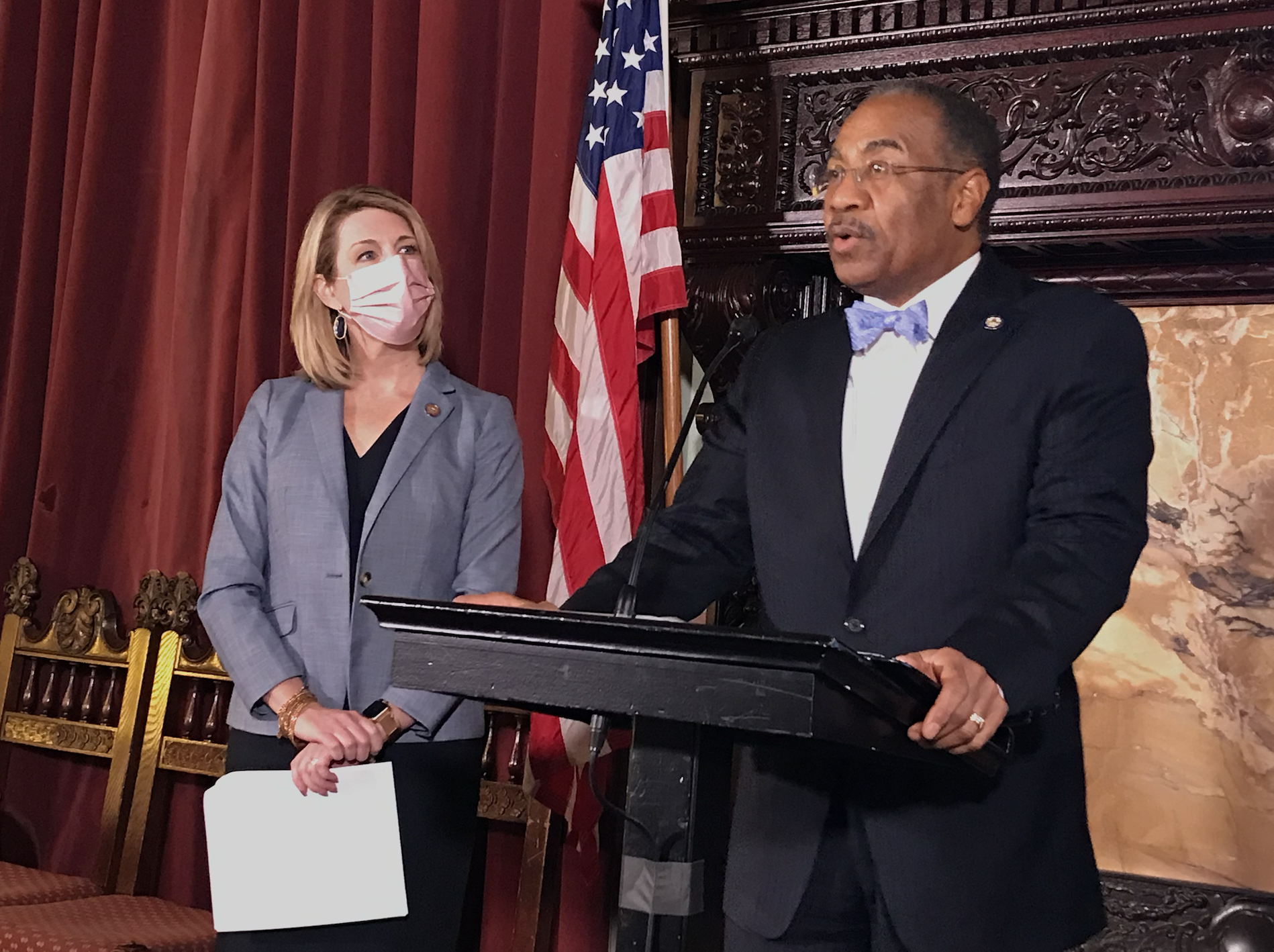
    State Sen. Vernon Sykes, D-Akron, speaks with press alongside House Minority Leader Allison Russo in a February press conference. (Photo: Susan Tebben, OCJ)

    BY: SUSAN TEBBEN – Ohio Capital Journal

    Democrats weren’t successful in convincing the Ohio Supreme Court to change the May 3 primary date, according to a Thursday afternoon filing.

    The motion was filed by House Minority Leader Allison Russo and state Sen. Vernon Sykes, both members of the Ohio Redistricting Commission, who said moving the primary date would help the commission be able to finish their work without worrying about the election deadlines.

    They also said the supreme court had the “inherent” authority to force the change, despite laws that state the General Assembly controls changes to the election dates and times.

    The state’s high court disagreed, firmly planting the power of election dates and times on the Ohio legislature.

    Justice Patrick Fischer made a point to issue an opinion agreeing with the court decision, and emphasizing the General Assembly’s power to establish the date of the primary election, and its authority to “ease the pressure that the commission’s failure to adopt a constitutional redistricting plan has placed on the secretary of state and on court boards of elections by moving the primary election, should that action become necessary.”

    Republicans who responded to the request to move the primary accused Democrats of attempting to “circumvent the power of the General Assembly.”

    “They apparently cannot muster enough support for legislation to move the primary election date so they’ve come here asking this court, improperly, to do it,” Secretary of State Frank LaRose told the court.

    Legislative measures by other Democratic legislators are still pending in the General Assembly. Senate President Matt Huffman said the temperature of at least the Ohio Senate hasn’t changed, meaning there isn’t enough support for changing the primary. He said the situation is “dynamic,” especially as the Ohio Redistricting Commission continues a week of work to revise legislative maps for the fourth time.

  • Legal mediators added to the Ohio redistricting fold

    Legal mediators added to the Ohio redistricting fold

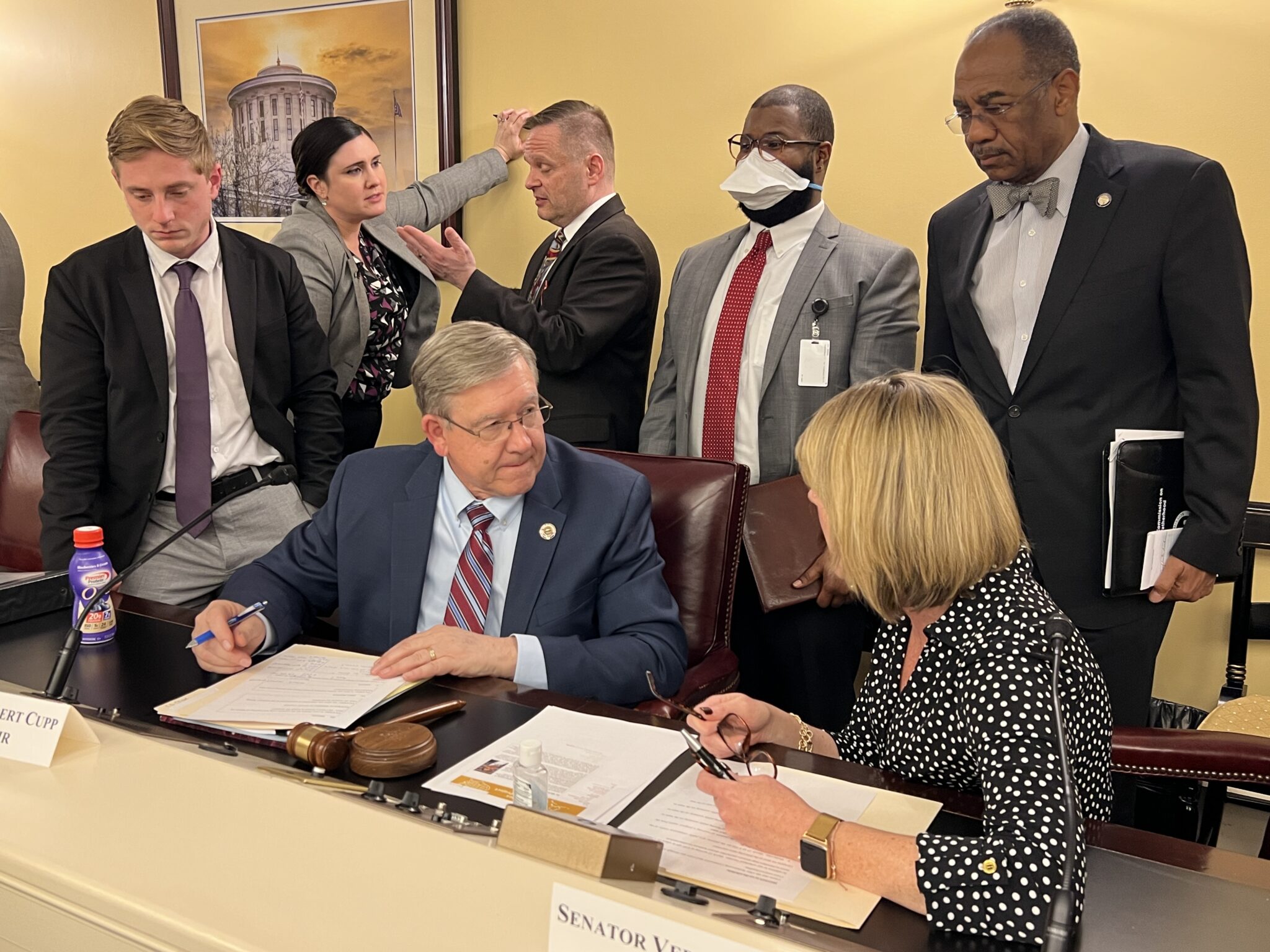
    House Speaker and Ohio Redistricting Commission co-chair Bob Cupp, center seated, speaks with House Minority Leader Allison Russo, right seated, as fellow co-chair state Sen. Vernon Sykes looks on. The ORC agreed to hire two outside mapmakers to assist in the process of legislative redistrict after a third set of maps was struck down by the Ohio Supreme Court. (Photo: Susan Tebben, OCJ)

    BY: SUSAN TEBBEN –  Ohio Capital Journal

    Legal mediators were added to the mapmaking team on Tuesday by the Ohio Redistricting Commission.

    Two members of the U.S. 6th Circuit Court of Appeals were approved by the commission to act as mediators as the process of creating a fourth map dictating legislative maps.

    Catherine C. Geyer and Scott Coburn were chosen after talking with the commission at their Tuesday meeting. They both are listed as circuit mediators on the 6th Circuit’s website, with Geyer listed as having alternative dispute resolution experience and Coburn noted for his work in civil mediation since 2005.

    “Mediators manage the process and the parties manage the solution,” Geyer said when explaining their role.

    Neither of the mediators have experience with redistricting cases, they told the commission.

    The legal mediators act as neutral parties to address issues that come up as the mapmakers come up with map ideas and commissioners wish to register input in the process, or when disagreements come up.

    “I think the advantage you have in this scenario … here, there’s the advantage of everyone trying to get to the shared goal,” Coburn told the commission.

    The mediators are “the best deal you can get,” according to Geyer, because they are “on loan from the court,” so come at no cost to the commission.

    House Speaker Bob Cupp and other GOP members of the commission asked about confidentiality rules and legal privilege when it comes to the mediators. He said it may be necessary for commissioners to be able to have confidential conversations, even as the Ohio Supreme Court directed them to make the process even more transparent.

    Geyer said the commission and the mediators would have to lay down rules on what constitutes legal privilege and confidentiality, but state Sunshine Laws on public meetings would still apply, meaning any decision making would have to be done in the open.

    The mediators also emphasized that while the process has a lot to do with the mapmakers, the commission members should be committed to being available as well.

    “I think access to the decision-makers would be the most important thing from the mediator’s perspective,” Geyer said. “We could get headed down a particular path, only to find out that one of the commissioners is not in agreement.”

    Geyer and Coburn will now join the original four caucus mapmakers, along with Professor Michael McDonald and Douglas Johnson, chosen by the commission on Monday night to act as independent mapmakers.

    Also at its Tuesday meeting, the commission set a schedule up to their March 28 deadline. Meetings are set for:

    • Wednesday – 5 p.m.
    • Thursday – 7 p.m.
    • Friday – 2 p.m.
    • Saturday – 4 p.m.
    • Sunday – 4 p.m.
    • Monday – 10 a.m.

    Thursday and Friday’s meetings are set to have virtual options, so members of the commission who may not be able to attend in-person can still call in. They will also be streamed for the public on The Ohio Channel.

  • House GOP leader on Justice Maureen O’Connor impeachment: ‘All options are on the table’

    House GOP leader on Justice Maureen O’Connor impeachment: ‘All options are on the table’

    BY: JAKE ZUCKERMAN AND NICK EVANS – Ohio Capital Journal

    Columbus, Ohio – A ranking House Republican left open the possibility of impeaching the chief justice of the Ohio Supreme Court, which this week rejected Republicans’ third proposed legislative redistricting map. 

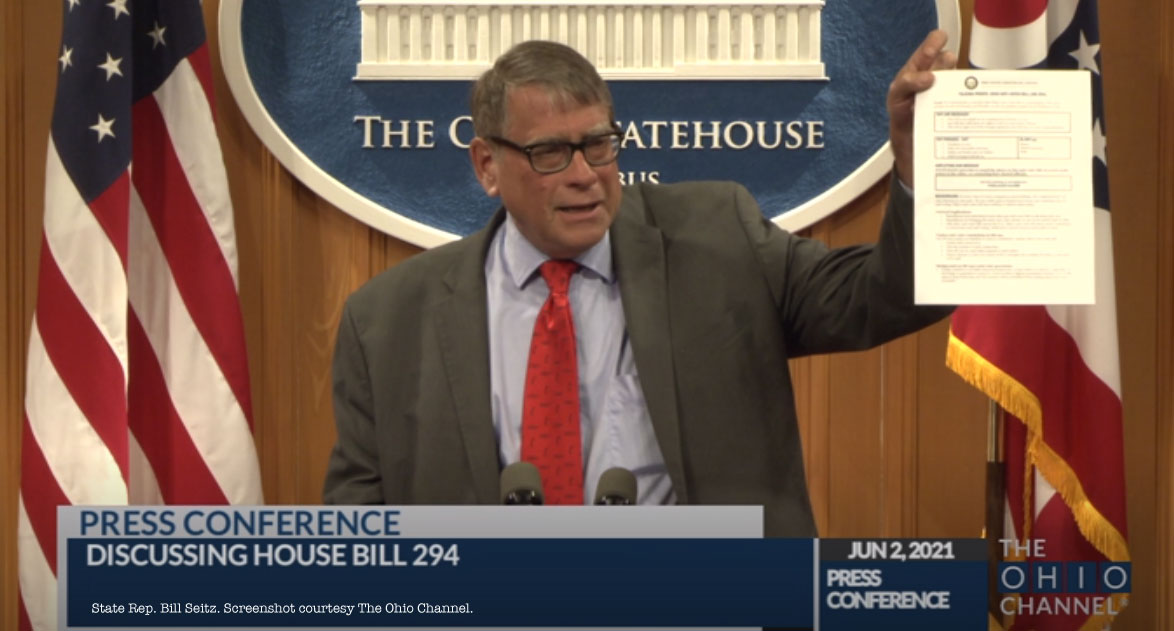
    During a private GOP caucus phone call Thursday, House Majority Leader Bill Seitz and Rep. Jon Cross voiced support for impeaching Justice Maureen O’Connor, according to a person on the call. O’Connor, also a Republican, has acted as a swing vote on two high-stakes redistricting cases and sided with Democrats on the bench finding the maps disproportionately favored Republicans in violation of the Ohio Constitution. 

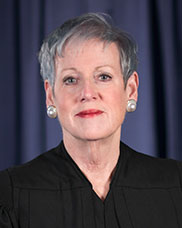
    Justice Maureen O’Connor

    Through a spokesman, Seitz, a longtime Cincinnati lawmaker and influential caucus member, declined to comment on caucus discussions but said Friday “nothing has been decided, and that all options are on the table.”

    Cross, a Kenton Republican, declined comment, noting “we (I) don’t comment about caucus meetings.”

    The call, held Thursday afternoon, lasted about 20 minutes, the source on the call said. In it, Seitz presented an argument that included old precedent for the House moving to impeach a justice after an unfavorable court decision. 

    When Cross offered what was described as a more fiery argument for impeachment, House Speaker Bob Cupp, R-Lima, ended the call, according to the source. Cupp’s office did not respond to requests for comment about the caucus call or his position on impeachment. 

    Cupp spent six years on the Ohio Supreme Court bench, serving alongside O’Connor for his entire tenure.

    On Facebook Thursday, hours before the caucus call, Cross wrote “enough is enough,” and that O’Connor had violated Ohio law related to altering the time, place or manner of an election.

    The claim about Seitz’ support marks the most senior legislator in favor of the possibility of impeaching O’Connor. Also Thursday, Rep. Scott Wiggam, R-Wooster, a committee chairman, said on social media “it’s time to impeach Maureen O’Connor now.

    https://twitter.com/Scott_Wiggam/status/1504496308584919044

    The hubbub comes in response to the court’s redistricting ruling late Wednesday evening. A four-justice majority found “beyond a reasonable doubt” that the most recent maps violated the constitution, particularly the provisions prohibiting partisan favoritism. While uncertainty remains, the ruling could force lawmakers to either move the May primary election date or create a second primary election date for non-statewide races. In a letter this week, Secretary of State Frank LaRose indicated the plan for now is to proceed with two separate primary elections.

    The decision on whether to pursue impeachment won’t be up to him, but Gov. Mike DeWine advised against the move Friday. 

    “This is an extraordinary measure to take,” he said. “I think we don’t want to go down that pathway, because we disagree with a decision by a court, because we disagree with a decision by an individual judge or justice. Not a good idea.”

    Three House Republicans publicly floated the concept of impeaching DeWine himself in 2020 for his COVID-19 response. The idea went nowhere. 

    The Supreme Court is currently reviewing a second, GOP-proposed congressional redistricting map after overturning the first effort on constitutional grounds. 

    Not long before the redistricting fiasco, O’Connor publicly broke from Republicans on judicial integrity. The Ohio Republican Party, with the 2020 presidential election looming, blasted a lower court’s ruling on election procedures and Franklin County Common Pleas Judge Richard Frye as a “partisan judge.” In an unusual move, O’Connor called the statement “disgraceful” and “deceitful” and emphasized the concept of judicial independence. 

    “This is a blatant and unfounded attack on the independence of the Ohio judiciary,” she wrote. 

    “To accuse a judge of deciding the matter before him on partisan politics and further accuse the judge of ‘obstruction of his judicial responsibility’ is without merit and is meant to further the false narrative that judges have no conscience, no legal responsibilities, and no capacity to decide what the law is beyond the raw politics of the issue.”

    An impeachment would be an extreme, though not unprecedented reaction. In fact, the Ohio Legislative Service Commission notes all eight impeachments in Ohio’s history were against judges. For instance, in 1808, members of the Ohio House grew angry enough at a ruling by Justice George Tod that they sought his impeachment. He survived via one vote in the state Senate, according to the court. Justice Calvin Pease was impeached and acquitted as well around the same time. 

    The Ohio Supreme Court gave state lawmakers until March 28 to submit a new proposal. The Ohio Redistricting Commission, a bipartisan panel of statewide and legislative officials, is scheduled to meet Saturday. 

    Morgan Trau contributed to this story.

  • Ohio Supreme Court rejects GOP-drawn Statehouse district maps for the third time

    Ohio Supreme Court rejects GOP-drawn Statehouse district maps for the third time

    Photo courtesy Wikimedia Commons..

    A bipartisan majority on the Ohio Supreme Court has for the third time rejected Statehouse district maps passed along partisan lines by Republicans on the Ohio Redistricting Commission.

    The most recent versions of legislative maps that had been approved by the ORC were struck down in a 4-3 decision Wednesday night by the state’s high court.

    A majority of the court justices said the map challengers had shown “beyond a reasonable doubt” that the most recent maps violated the constitution, particularly the provisions prohibiting partisan favoritism.

    “Substantial and compelling evidence shows beyond a reasonable doubt that the main goal of the individuals who drafted the second revised plan was to favor the Republican Party and disfavor the Democratic Party,” the majority wrote in its Wednesday opinion.

    The court sent the job back to the commission with a March 28 deadline to file an “entirely new” district plan for the General Assembly with the Ohio Secretary of State’s Office. A copy of the plan should then be sent to the court the next day.

    The breakdown of votes matched previous votes by the court striking down maps, with Chief Justice Maureen O’Connor, Justice Michael Donnelly, Justice Melody Stewart and Justice Jennifer Brunner forming the majority opinion. Justices Sharon Kennedy and Patrick Fischer dissented. Also dissenting was Justice Patrick DeWine, son of governor and commission member Mike DeWine.

    Justice DeWine recused himself from an issue in the case in which the commission members could be held in contempt of court for not filing new maps within the last deadline, but did not recuse himself from the entire case.

    The justices in the majority once again pointed to Senate President Matt Huffman and House Speaker Bob Cupp as controllers of the map-making process, saying the evidence in this case “is just as strong, if not stronger” than it was in previous map-making attempts.

    “The Democratic members of the commission had no opportunity to provide input in creating the second revised plan, and they had no meaningful opportunity to review and discuss it or to propose amendments once it was presented at the commission hearing on February 22, 2022,” the majority wrote.

    The court said they have “identified a flawed process” in all three of its rulings on the legislative maps, plans adopted after being the “product of just one political party.”

    “The evidence shows that the individuals who controlled the map-drawing process exercised that control with the overriding intent to maintain as much of an advantage as possible for members of their political party,” according to the ruling.

    With these new maps, the court agreed with arguments made by anti-gerrymandering groups who said a disproportionate number of so-called “Democratic-leaning” districts were actually toss-ups, with less than a 1% advantage for the Democrats.

    The newest plan had 19 House districts considered toss-ups, and seven Senate districts in the same toss-up range.

    “The result is that the 54 percent seat share for Republicans is a floor, while the 46 percent share for Democrats is a ceiling,” the court wrote (italics their own).

    That amount of toss-up districts, the court found, is “evidence of an intentionally biased map,” and is just one piece showing partisan lopsidedness on the part of the GOP.

    Justices also made a point to single out Huffman in saying he appears to have voted against a Democratic map proposal “based, at least in part, on a misunderstanding” of the constitutional provisions regulating redistricting in the state.

    Huffman called out the plan introduced by commission co-chair state Sen. Vernon Sykes and House Minority Leader Allison Russo because, according to him, the plan would have impacted the ability of Republican incumbents to keep their seats.

    “Making that observation demonstrates, beyond a reasonable doubt, that Senate President Huffman misunderstands the requirements of Article XI and the reasons for their adoption,” the majority stated. “Senator Huffman’s concern for protecting incumbents is not grounded in Article XI.”

    Kennedy and DeWine wrote their own dissent, that shamed the majority opinion for issuing a judgment “guaranteed to disrupt an impending election and bring Ohio to the brink of a constitutional crisis.”

    The Ohio Secretary of State, yet another member of the redistricting commission, has issued frequent warning about the lateness of the redistricting effort, though he has yet to go against the Republican majority vote.

    With the May 3 primary approaching quickly, Secretary Frank LaRose all but begged the General Assembly to approve extra money to speed up the delivery of absentee ballots to overseas and military Ohioans, and to extend the amount of time the county boards of elections have to send out the ballots, from 45 days before the election to 30.

    In previous court filings and public comments, LaRose said the primary likely couldn’t withstand another map delay.

    In shutting down the most recent map effort, the dissenting court justices say the majority of the court did much of what it did in previous rejections of redistricting maps by allegedly overriding the power of the constitution with its own interpretation.

    In previous dissents, Kennedy and DeWine accused the majority justices of “moving the goalposts” by putting requirements in the constitution where none could be found, but this time, they say, “the majority tears down those goalposts altogether.”

    “Through its actions today, the majority undermines the democratic process, depriving the voters of the constitutional amendment they enacted and leaving in its place only the majority’s policy preferences,” Kennedy and DeWine wrote. “In so doing, it threatens the very legitimacy of this court.”

    The majority of the court added a new level to the next steps in redistricting by ruling the map-drafting “should occur in public” and that the commissioners should “convene frequent meetings to demonstrate their bipartisan efforts to reach a constitutional plan within the time set by this court.”

    Dissenting justices say that the majority finding the most recent maps unconstitutional because this transparency method didn’t happen the first (or second) time “is ludicrous.”

    “Nothing in the constitution requires the seven commissioners to sit down together to draft the plan – effectively handing each one of them an unbridled veto power,” Kennedy and DeWine wrote in their dissent.

    The majority on the court also had a suggestion for the commission: “The commission should retain an independent map drawer — who answers to all commission members, not only to the Republican legislative leaders — to draft a plan through a transparent process.”

    After the Ohio Redistricting Commission passes a new plan, map challengers will once again have three days to object after the maps are submitted.

    The Secretary of State’s office declined to comment on the court ruling Wednesday night.

    The Ohio Supreme Court’s isn’t done: It is still considering court challenges to congressional maps passed earlier this month. The court also hasn’t said whether it will reschedule a contempt of court hearing it brought up after the ORC didn’t come up with legislative maps by its February 17 deadline.


  • Ohio State Leaders Must Allow Voter Education Collaboration

    Ohio State Leaders Must Allow Voter Education Collaboration

    CLEVELAND — In response to the Ohio Supreme Court’s rejection of the third proposed state map due to partisan gerrymandering, All Voting is Local Ohio State Director Kayla Griffin released the following statement: 

    Background: At the moment, state and local officials are preparing for a May 3 primary. On its face, Revised Code § 3501.054, known as the collaboration ban, purports to bar any public official responsible for administering or conducting an election from collaborating with any nongovernmental entity on activities related to voter registration, education, poll worker recruitment, or similar election-related activities.

    As there are no solidified maps at this time, elections officials are facing uncertainty while preparing for the upcoming primary, which is leaving voters in limbo. We are urging Senate President Matt Huffman and the Ohio Senate to allow elections officials and community groups to collaborate on voter education by repealing the collaboration ban immediately. Election officials and nongovernmental entities must not be held back from working together to mitigate the impact upon voters brought on due to the delay in finalizing congressional and state maps.  

    Voters all across the state could face last-minute poll consolidations, changes, and/or closures. As districts change, they will have little, if any, time to figure out what candidates are on the ballot. Our leaders and elections officials must allow for an all-hands-on-deck approach for accurate and fair preparation. This will only be possible if elections officials and community groups — including faith, service, and civic groups — are allowed to work together towards educating voters on last-minute changes and keeping voters up to date on information they may need to ensure they can accurately and fairly cast their ballot. 

  • GOP redistricting attorneys ask court to make decision on congressional map after 2022 election

    GOP redistricting attorneys ask court to make decision on congressional map after 2022 election

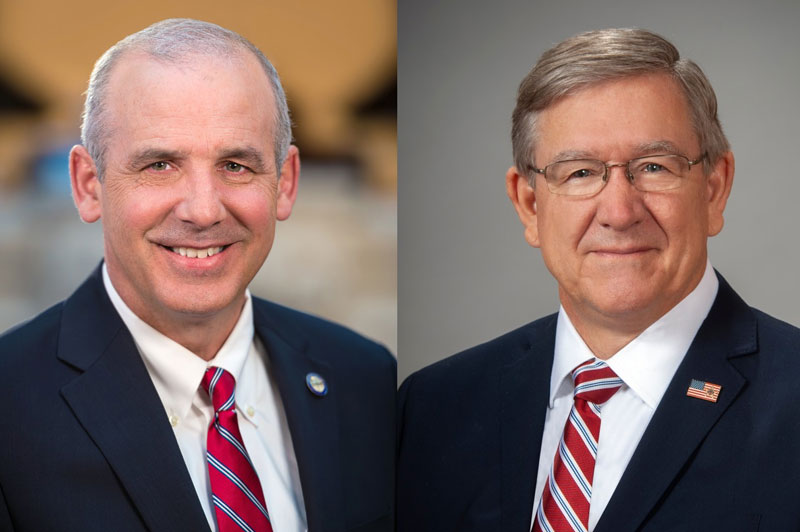
    Ohio Senate President Matt Huffman and Ohio House Speaker Bob Cupp, both Lima Republicans. Official photos.

    BY: SUSAN TEBBEN – Ohio Capital Journal


    Legislative leaders and the state’s chief elections officer dug their heels in on continuing on with the May primary election, even as Ohio groups seek invalidation of the latest congressional redistricting map.

    Secretary of State Frank LaRose, Senate President Matt Huffman and House Speaker Bob Cupp have responded to requests by the League of Women Voters and a group of Ohio citizens represented by the National Redistricting Action Fund that the Ohio Supreme Court invalidated the newest congressional district map.

    Huffman and Cupp submitted their response together, starting by saying the Ohio Redistricting Commission “does not exist to simply rubberstamp redistricting plans favored by (court challengers).”

    “It is entitled to exercise reasonable discretion in balancing the highly complex factors that go into congressional redistricting,” attorneys for Cupp and Huffman wrote.

    While also arguing that the congressional map passed at the beginning of March is constitutional, Cupp and Huffman’s attorneys took the stance that the commission is the only authority in map-making in the state.

    The LWV and NRAF had differing opinions on next steps if the court invalidated the map, with the NRAF asking the court to take over, but the LWV saying the map should be sent back to the courts for very specific revisions.

    The legislative leaders argued that the Ohio Redistricting Commission is a “creature of the Ohio Constitution,” but with duties provided to it “independent of any other branch of government in Ohio.”

    “It is the commission and the general assembly who solely possess the legislative authority to create legislative and congressional districts,” attorneys wrote.

    It’s not fair, nor is it in line with the law, to compare the commission-adopted map to other maps that may have been submitted to the commission, but were never brought up for a vote or formally considered, Cupp and Huffman state in their court filing.

    In their objections to the map, challengers had offered up maps from Stanford and Harvard political science professors as models for a replacement map.

    Republican leaders flatly disagreed with the idea.

    “It is now plainer than ever that it is dangerous and disingenuous to base Ohio constitutional law and the voting rights of millions of citizens on this untested and contradictory evidence conceived of by paid-for-hire mathematicians and social scientists,” Cupp and Huffman argued.

    LaRose echoed the comments made in Cupp and Huffman’s filings that the map is constitutional and “needs no revision.”

    But if the court rejected the map, LaRose said, it does not have the power to “unilaterally implement its own congressional district plan.”

    “Again, Secretary LaRose will administer the 2022 congressional primary and general elections in accordance with a constitutional congressional district plan,” attorneys for LaRose wrote.

    In this vein, Cupp and Huffman’s attorneys asked that the court “defer any action” on the congressional map until after the 2022 election.

    They blamed the new state redistricting process, along with “significant logistical challenges” and even the U.S. Census delays brought on by the COVID-19 pandemic for exacerbating an “already challenging scenario” and leading to the adoption of the new congressional plan only days before the candidate filing period for the May 3 primary.

    The Ohio Supreme Court is considering court challenges for not only the congressional map, but also the legislative maps. The ORC adopted the maps one week after the court-ordered February 17 deadline, risking contempt charges.