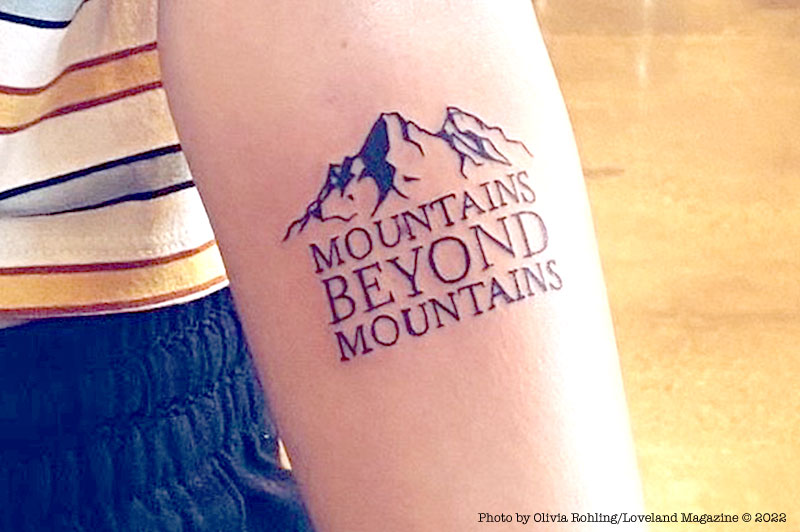
The tattoo on my left forearm is inspired by the 15th song on the album, “Sprawl II (Mountains Beyond Mountains).”
Olivia Rohling
by Olivia Rohling
We all have a favorite album. You know the one I’m talking about. It’s that one album that you can listen to for days on end and never get sick of it. For me, that album is Arcade Fire’s The Suburbs.
This is the third album released by the Canadian Indie-rock band, following Funeral (2004) and Neon Bible (2007). Arcade Fire is made up of husband-and-wife duo Win Butler and Régine Chassagne, Win’s younger brother, William Butler, Richard Reed Parry, Tim Kingsbury, and Jeremy Gara.
The Suburbs speaks to what it’s like growing up living in suburbia, and how comforting yet isolating that feeling can be.
“Will and I were born in a really small town in Northern California, kind of near the Nevada border,” Win Butler said in an NPR interview, “Like you know maybe 50 people on the side of a mountain. We moved to the suburbs of Houston when we were young.”
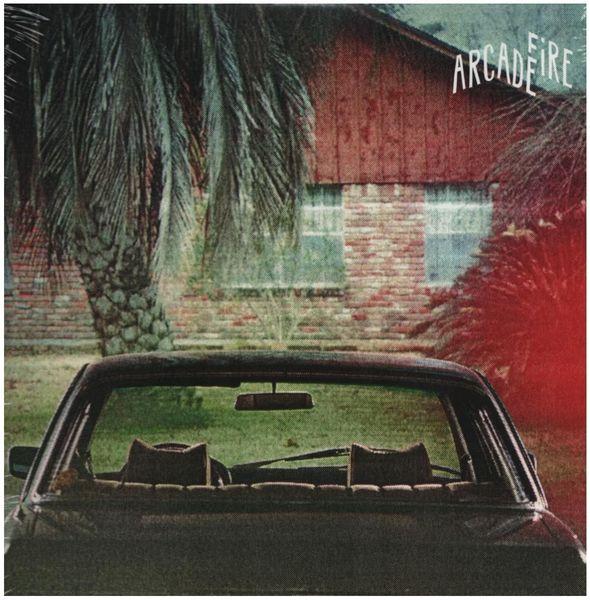
Arcade Fire’s The Suburbs is the third album released by the Canadian Indie-rock band, following Funeral (2004) and Neon Bible (2007.) Image courtesy of The Alternative.
The album begins with the song, “The Suburbs,” which talks all about suburban living. Key lyrics such as, “In the suburbs, I learned to drive,” and “But in my dreams, we’re still screaming and running through the yard,” allow the listener a chance to feel what it’s like to live a “suburban” lifestyle. Not to mention the ending of “The Suburbs” blends seamlessly into the beginning of the next song, “Ready to Start” which is just plain awesome sauce! The song is sure to give your eardrums butterflies!
Many songs on the album seem to purposely blend into one another. “Empty Room” blends into “City with No Children,” “Half Light I” blends into “Half Light II (No Celebration),” “Month of May” blends into “Wasted Hours,” and “We Used to Wait” blends into “Sprawl I (Flatland).” Talk about satisfying! The album is so well done that you won’t get sick of listening to all 5,316 minutes of it over and over again like I continue to do to this day (thanks, Spotify Wrapped)!
“Sprawl II (Mountains Beyond Mountains)” is my personal favorite song on the album. My proof of loving the song is located right on my left arm where I have a tattoo that says, “Mountains Beyond Mountains.” The song really is just that good! Arcade Fire’s Régine Chassagne is Haitian, so the band strategically used the term “Mountains Beyond Mountains” because it comes from a Haitian proverb that means “beyond mountains, there are more mountains.” I look at the Haitian term on my arm and it always gives me the feeling that opportunities are inexhaustible and when you surmount one great obstacle in your life you merely gain a clearer view of the next one.
In “Sprawl ll,” Régine sings “Sometimes I wonder if the world’s so small, can we ever get away from the Sprawl?” This lyric goes back to the theme of growing up in suburban sprawl and wondering if there is more to life than suburbia.
If you would like to not only listen but feel the meaning of “Sprawl ll (Mountains Beyond Mountains)” you can listen to the band’s 2011 Coachella performance of this song below. Disclaimer: every time I watch this performance it brings me tears!
The Suburbs by Arcade Fire puts suburban living into music form and does so in a way that will make you want to get up and dance! That, my friends, is why this album really is all that and a bag of chips.
My top three favorites songs from The Suburbs:
“Sprawl II (Mountains Beyond Mountains)”
“Deep Blue”
“Modern Man”
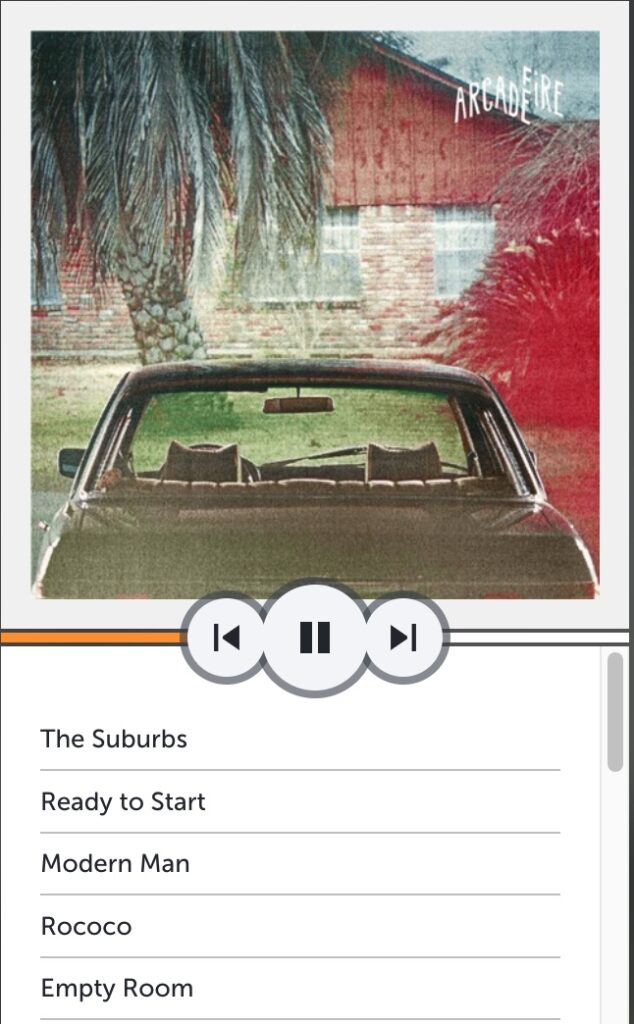
Click this image to hear samples of my three favorite songs on the album.
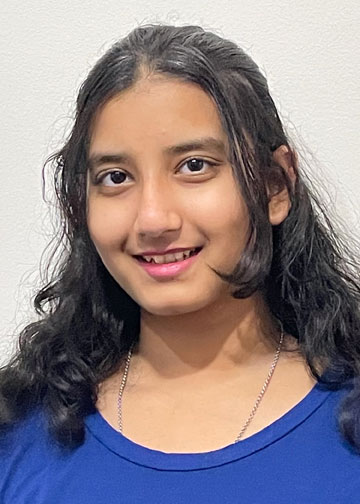
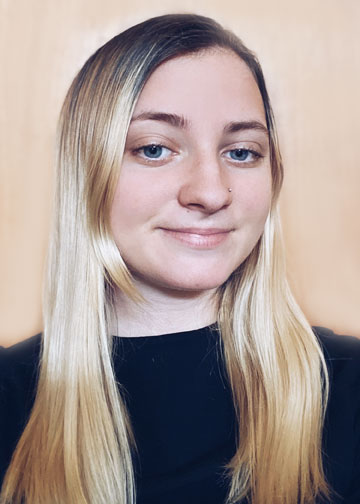
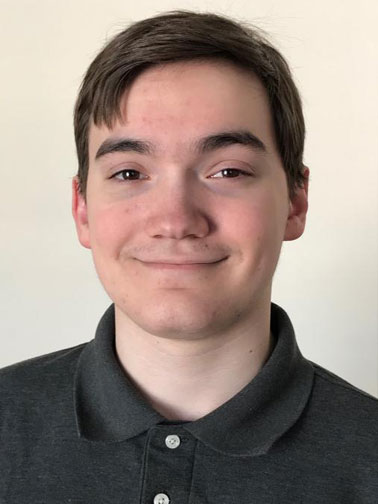
Contributing Biography Writing and Headshot Photography by Olivia Rohling, Sean Behling, Ty Simmons, Mahi Sheth, and Divyana Bose
Loveland, Ohio – This generation will change the world in more ways than one! One of the best ways to help mold and develop this generation’s skillsets is to give them opportunities to fine-tune their crafts. Here at Loveland Magazine, we thought one of the best ways we could make an impact on this generation is by creating an official Internship Program!
When I first began job searching after I graduated with degrees in Journalism, Marketing, and English, one of the questions I often heard in interviews or on applications was, “How much experience do you have” or “How many years of experience do you have?” Well in my mind it was pretty obvious what the response would be, “Well I just graduated from college so I haven’t had the opportunity to dive into the workforce with my degree and get experience, which is why I’m applying for this position!” How can an employer expect someone to get experience if they aren’t given the opportunity to get experience? I dealt with this dilemma for years as I was coming up in the Journalism world as every job I seemed to apply for was given to someone who had “more experience.” It was so frustrating and quite frankly demeaning as I had just spent all that time in college busting my butt to graduate with a 4.0 thinking that I would immediately land a job right after graduation.
Fast forward several years I eventually started to get opportunities but began to recognize the reason I was getting opportunities was due to all the internships I started to rack up on my resume, one being in high school for the Journal News-Middletown Journal. After becoming part-owner of Loveland Magazine, I began to think about how I could continue (my partner David Miller had students in the past intern with him) to help students get Journalism experience before they graduated but on a grander scale. I thought maybe I could help these students in some way avoid jumping over all the hurdles I had to in order to get an opportunity in journalism. That’s when the light bulb went off and the Loveland Magazine Internship Program came into conception!
With help from local schools, administrators, teachers, community members, a beautiful flyer made by David Miller, and the release of my article letting our readers know we were starting an official internship program, the word spread fast! Before we knew it we had several emails coming in every day asking for more information on the intern program and what it took to be considered. I must say it was amazing seeing how many local talented students were looking to jump-start their future with an internship! Like I said previously, this generation will change the world!
After careful consideration, I selected 5 inspirational, hard-working, motivated, and creative future journalists. Thus far we have had several meetings learning everything from taking a great headshot to writing an attention-grabbing bio to brainstorming for a feature story! I learned very quickly how impressive these 5 students are as well as how much diversity each one brings to their writing. Each one of these students brings something different to the journalism table and luckily all of our readers will get a chance to see their growth and development right before their very eyes!
One of the first assignments that I gave the 5 interns was to take a great headshot of themselves and write their own bio. After taking in my feedback and revising both their bios and headshots several times, I couldn’t be more pleased with what they have produced! I wanted to be sure that we published as much of these interns’ work as possible so that they could begin to build their professional portfolios, which is a MUST HAVE in journalism! So without further ado, I would like to welcome you to the “Intern Spotlight,” where our readers get to take the time to get to know our 2022 student interns! Be sure to give these interns a wave if you see them out in the community and of course stay tuned to their next assignment which will be their first feature story!
Mahi Sheth
“Best Short Story” award winner Mahi Sheth knows a thing or two about writing! Mahi is a creative writer who is a part of her middle school newspaper, The Roar. The way words come together to form a story is Mahi’s favorite part about journalism. In Mahi’s downtime, she also loves both reading and dancing. Mahi is a freshman at Loveland High School.
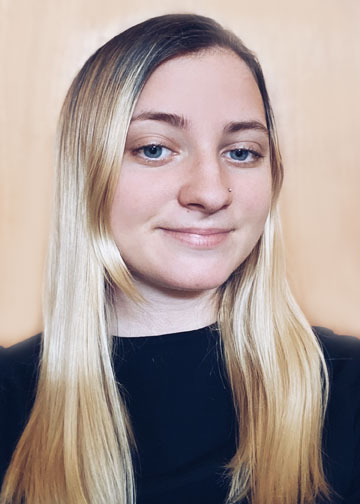
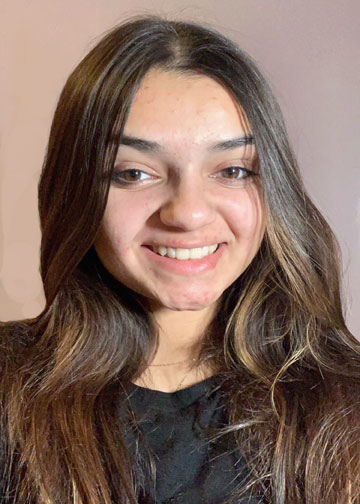
Olivia Rohling
Writer, student, introvert, Wordle player, and avid email checker, Olivia Rohling challenges herself in all aspects of her life daily! Olivia is not a stranger to the world of journalism as she was Editor-in-Chief for The Milestone, McNicholas High School’s newspaper, and currently writes for Ohio University’s The Odyssey Online. Olivia loves keeping busy, but when she does get free time she enjoys, reading, running, baking and listening to Arcade Fire. Olivia is a freshman in the E.W. Scripps School of Journalism at Ohio University.
Sean Behling
If you’re here for bland or generic writing, you’re in the wrong place! Sean Behling is an accomplished student journalist that has a plethora of experience in the Journalism field. Sean wrote a short story his freshman year that caught the attention of his English teacher which led to Sean joining his high school’s newspaper the very next year! Sean not only writes both Editorials and Entertainment news, but he also writes for his high school robotics team. Along with being a skilled writer, Sean also has extensive experience in using Adobe InDesign and editing high-quality videos in Adobe Premiere. Sean, a junior at Loveland High School, has the skills, knowledge, and friendly smile that he hopes will lead him down the path to success! Of course, if you’re looking for the same-old boring writing, Sean can lead you down the hall to the door on the left!
Divyana Bose
Award-winning sportswriter, Divyana Bose, has a passion for Journalism like no other as she often writes until her hand cramps! Divyana has made it her mission to make her high school newspaper, The Mason Chronicle, better each and every year through her writing abilities and by mentoring those that look up to her on the Mason Chronicle team! She has aspirations of making the world a better place through her writing and has begun doing so by offering her journalistic abilities to The Little Helpers, a non-profit organization that strives to better the lives of those living within the greater Cincinnati area. Divyana has a talent for making news stories come to life by using her bubbly, innovative, and outgoing personality through her writing. Divyana is a Junior at Mason High School and wants nothing more than to pursue Journalism in college.
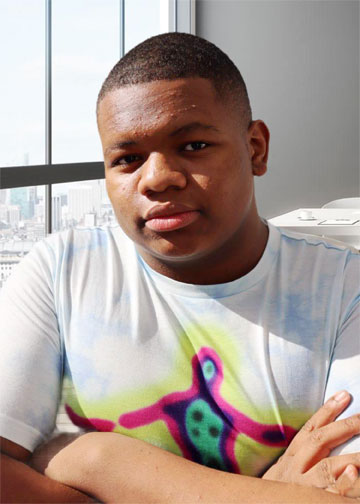
Ty Simmons
An avid gamer, creative writer, and stand-out high school athlete, Ty Simmons knows a thing or two about Journalism! Ty is a part of his high school’s newspaper, The Leaf, and was on the official “News Crew” team in junior high. When he’s not creating maps for his very own RPGMaker game, throwing 20-pound shot-puts, or working at Dewey’s Pizza, Ty enjoys learning about the history of media and catching up with his friends on Letterboxd. There won’t be a day that goes by that Ty isn’t preaching about his latest favorite music album, video game, or film! Ty is the oldest of 3 boys and a Junior at Sycamore High School.
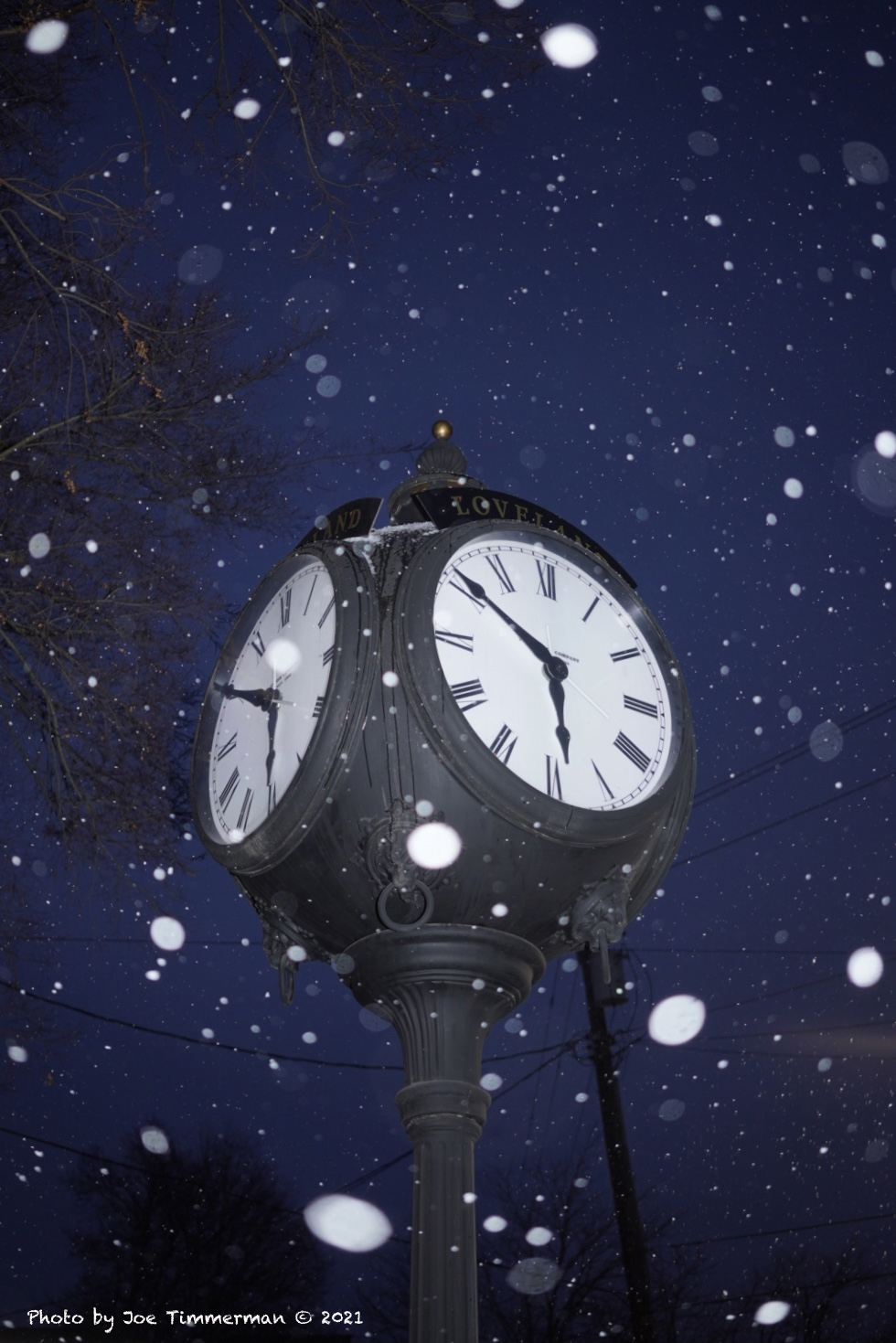
Loveland, Ohio – Joe Timmerman captured this image of the four-sided clock in Historic Downtown this evening. Joe frequently contributes writing and photography to Loveland Magazine.
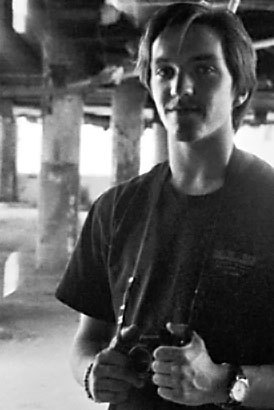
Joe is a Loveland native and graduate of Loveland High School. He is currently a sophomore journalism and photojournalism student at E.W. Scripps School of Journalism and the School of Visual Communications at Ohio University in Athens, Ohio.
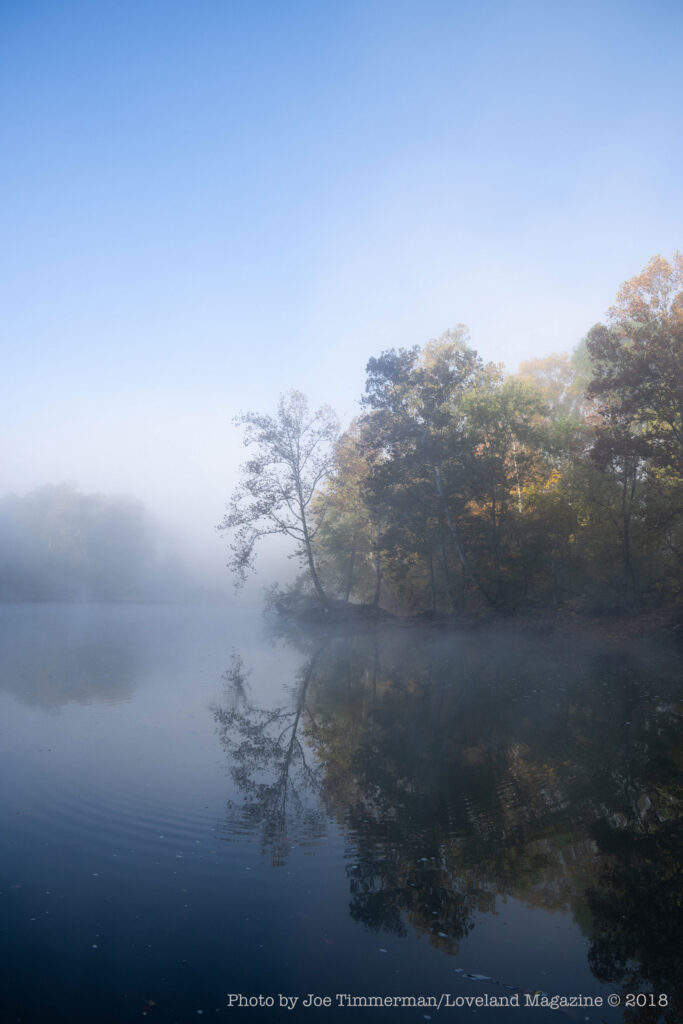
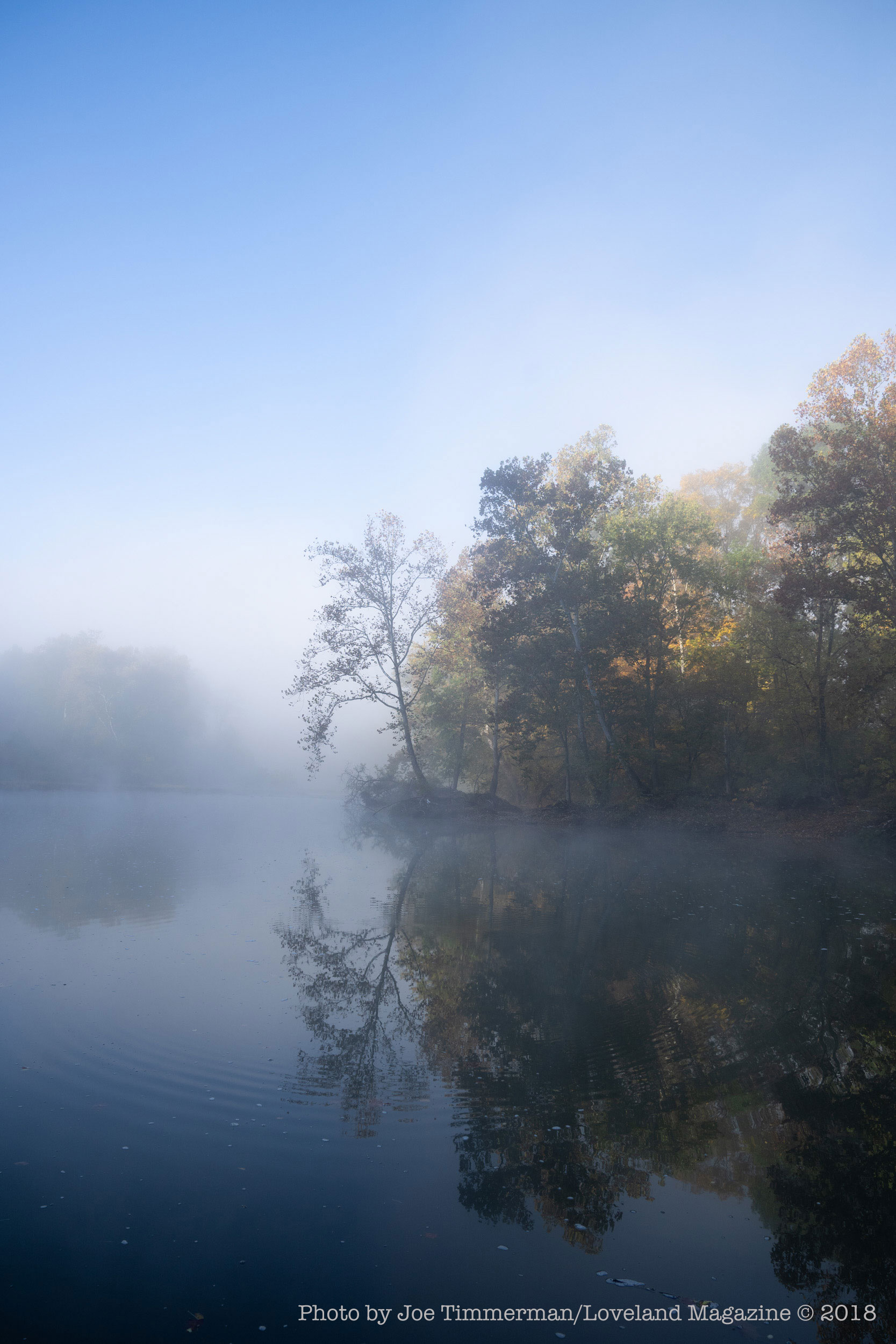
Joe’s photo of the Little Miami river is currently Loveland Magazine’s cover. Read his latest piece of writing…
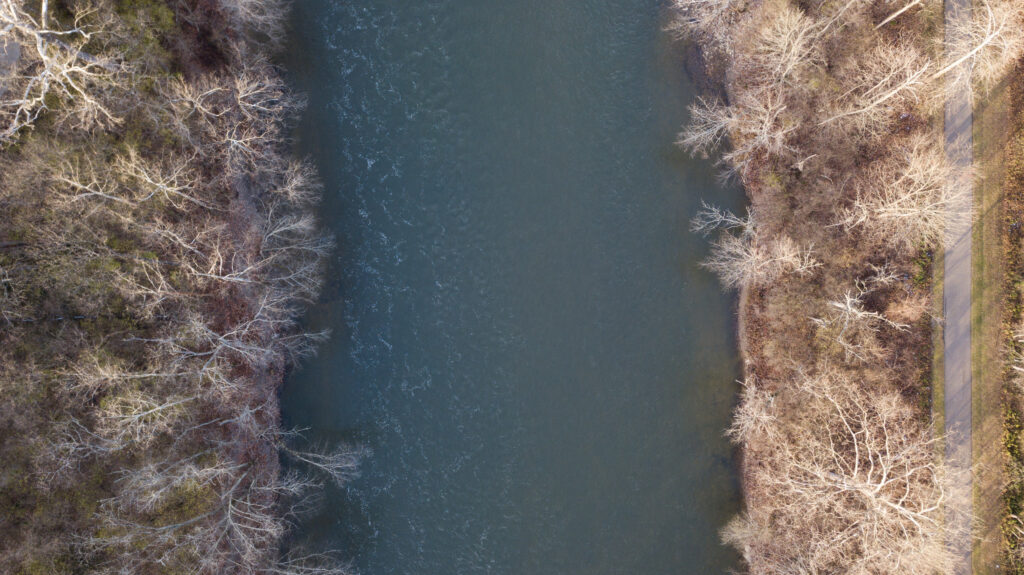
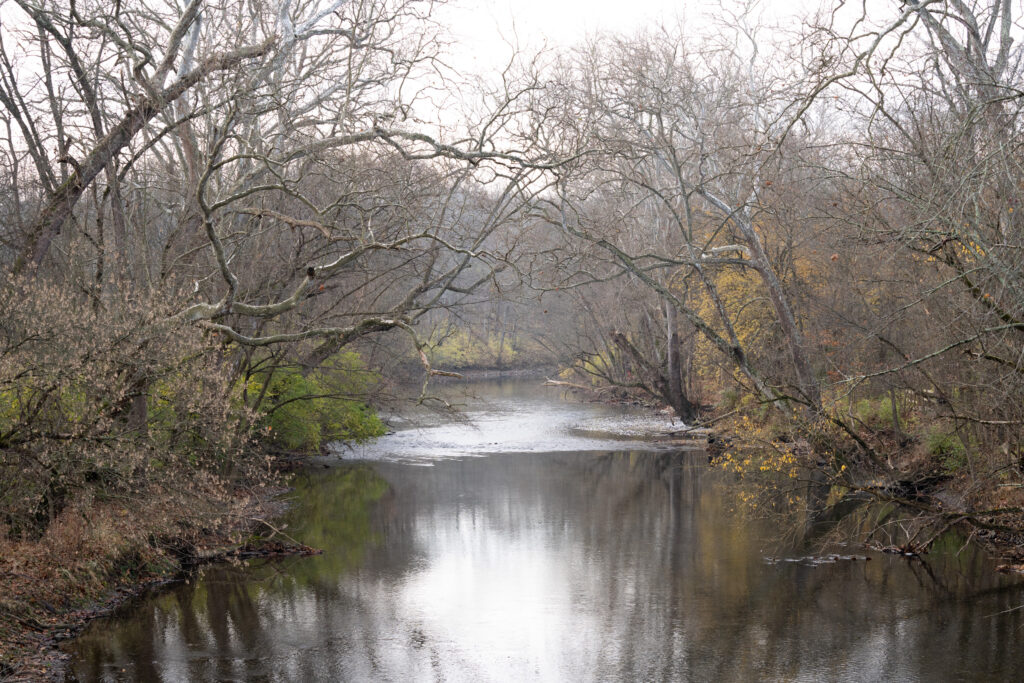
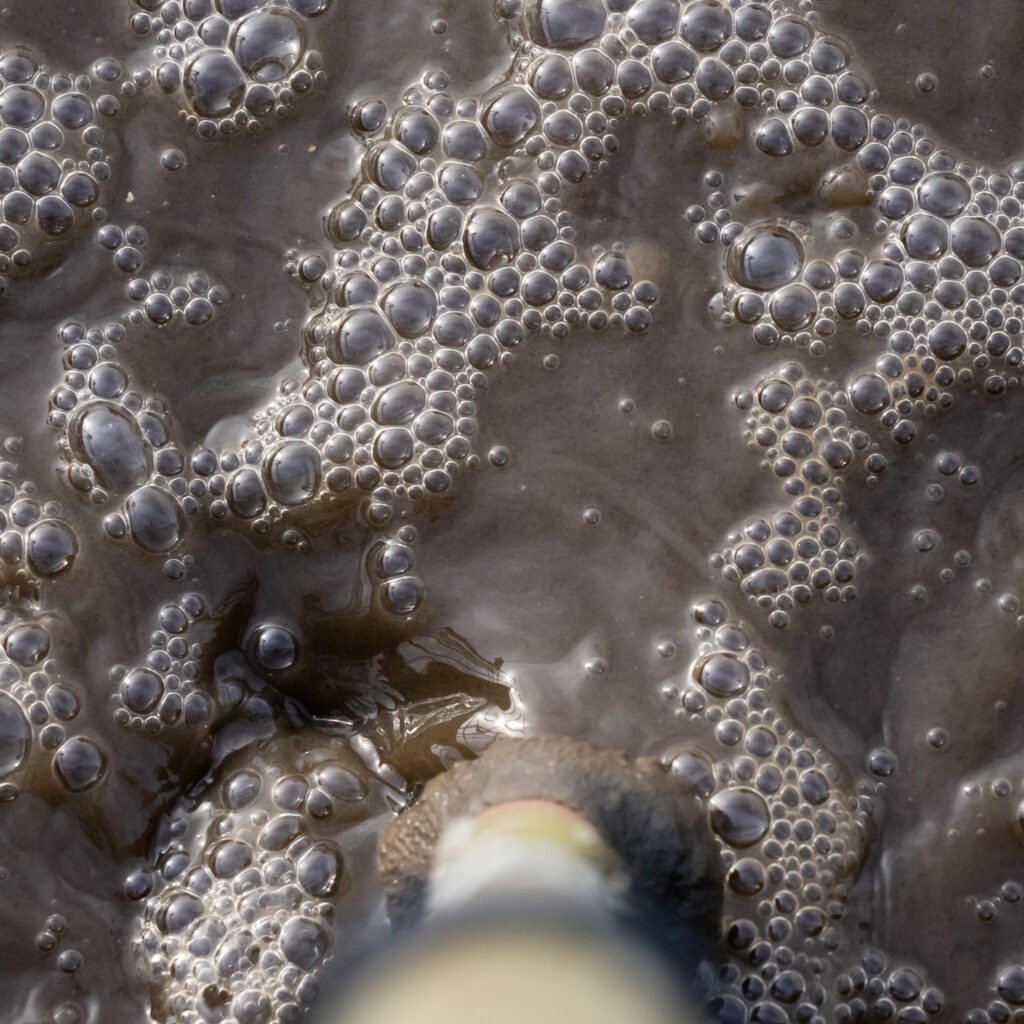
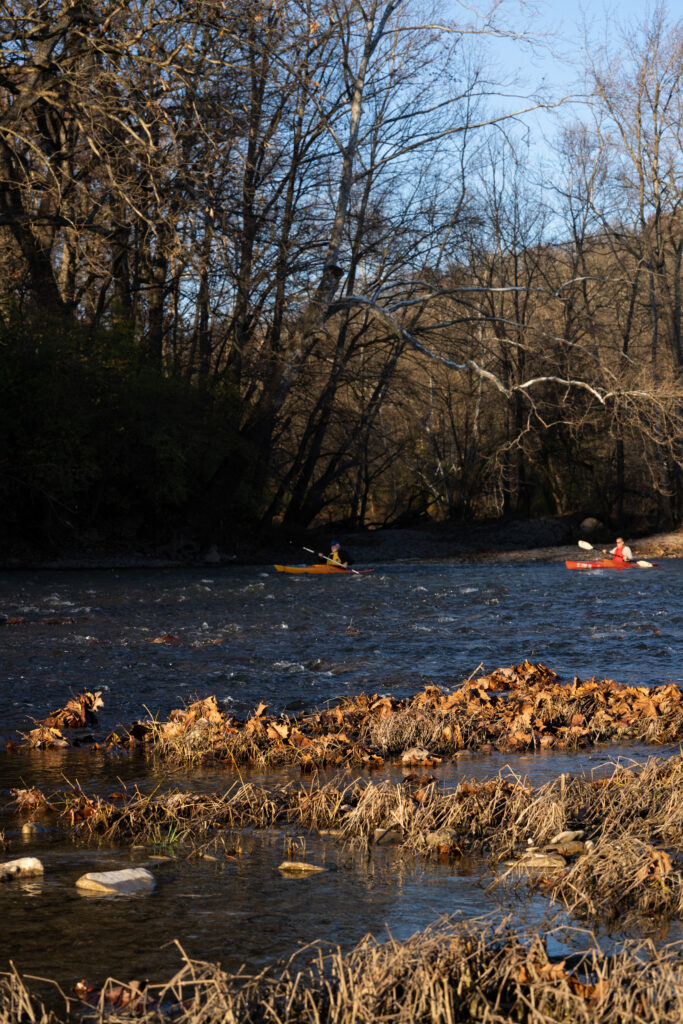
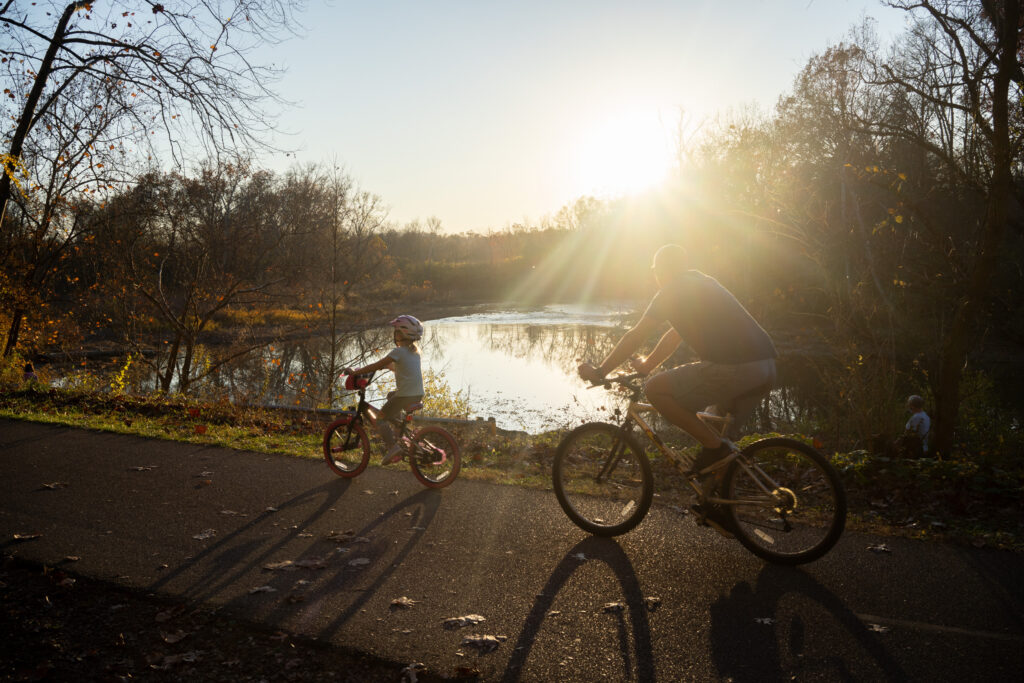
Few leaves are still falling off trees and down the ever-running water of the National Wild and Scenic Little Miami River, where they float through five counties and 111 miles of southwest Ohio, into the Ohio River and toward the Mississippi before eventually finding their way into the Gulf of Mexico. Today, these 111 miles of Little Miami River are the cleanest that they have been in the last 40 years, and as the world may seem largely disconnected due to the coronavirus pandemic, a connection between people over time is helping to create the river’s lasting sustainability.
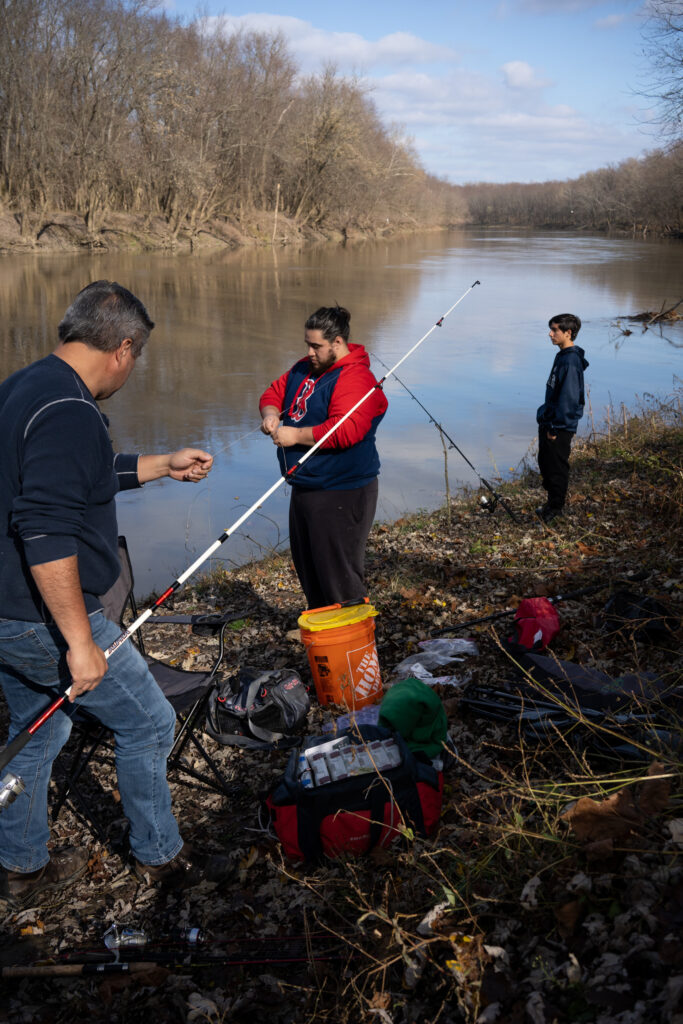
Since the end of the last Ice Age before this land was known as America, humans have lived along the Little Miami River and enjoyed the resources it provides — drinking the water alongside its banks while hunting for fish within, using the clay to build pottery or structures, and floating on the surface in kayaks or canoes like the leaves still do today. In that time, the river has seen many seasons of change, from shifts in human culture alongside its banks through community development to biological diversities in its rich, natural environment, according to the Little Miami Ecology and History report.
When the Little Miami was designated as Ohio’s first State Scenic River and included in the National Wild and Scenic River System in 1973, according to the Ohio Department of Natural Resources, locals had already been active in its conservation and return to sustainability for more than half a decade. The Little Miami Conservancy (LMC), a non-profit organization fueled by passion for the protection of the river, led the effort in Washington to recognize the importance of protecting the Little Miami River as not only a local hidden gem, but as a national treasure.
The lower section of the river runs right through the heart of Loveland, Ohio, where LMC and its current executive director, Eric Partee, is based. Partee’s passion roots from the original director of the conservancy, Glenn Thompson, who in 1967 embodied the idea that their effort isn’t about one single person, but rather about everyone coming together to save the river.
“Someday, a corridor of green will stretch from one end of the river to the other. Individuals and families will enjoy peace and quiet and restoration of spirit that comes with clean water, birds, and trees,” a quote from Glenn Thompson that Partee believes the conservancy has lived up to.
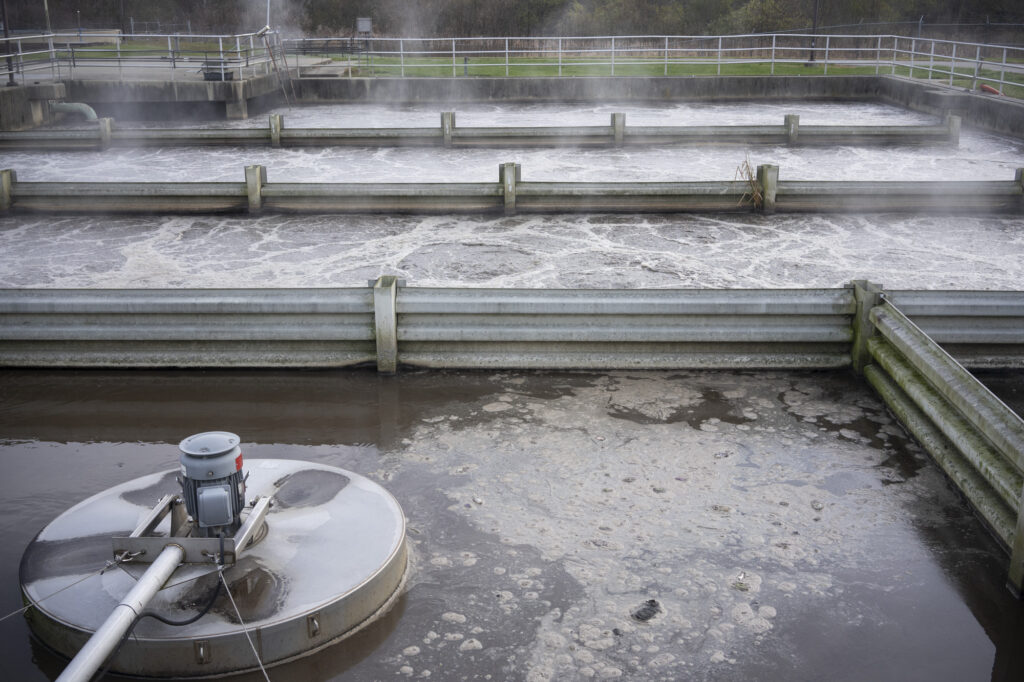
Since its origin, the conservancy has worked with agencies like the Ohio Environmental Protection Agency (OEPA), who records the condition of the Little Miami River every 10 years by sampling fish life. In the 1980s, only 4% of the Little Miami River was in full attainment of water quality health, but in recent years, the chart has flipped, and as of 2007, the river is at 96% attainment of health, according to OEPA research.
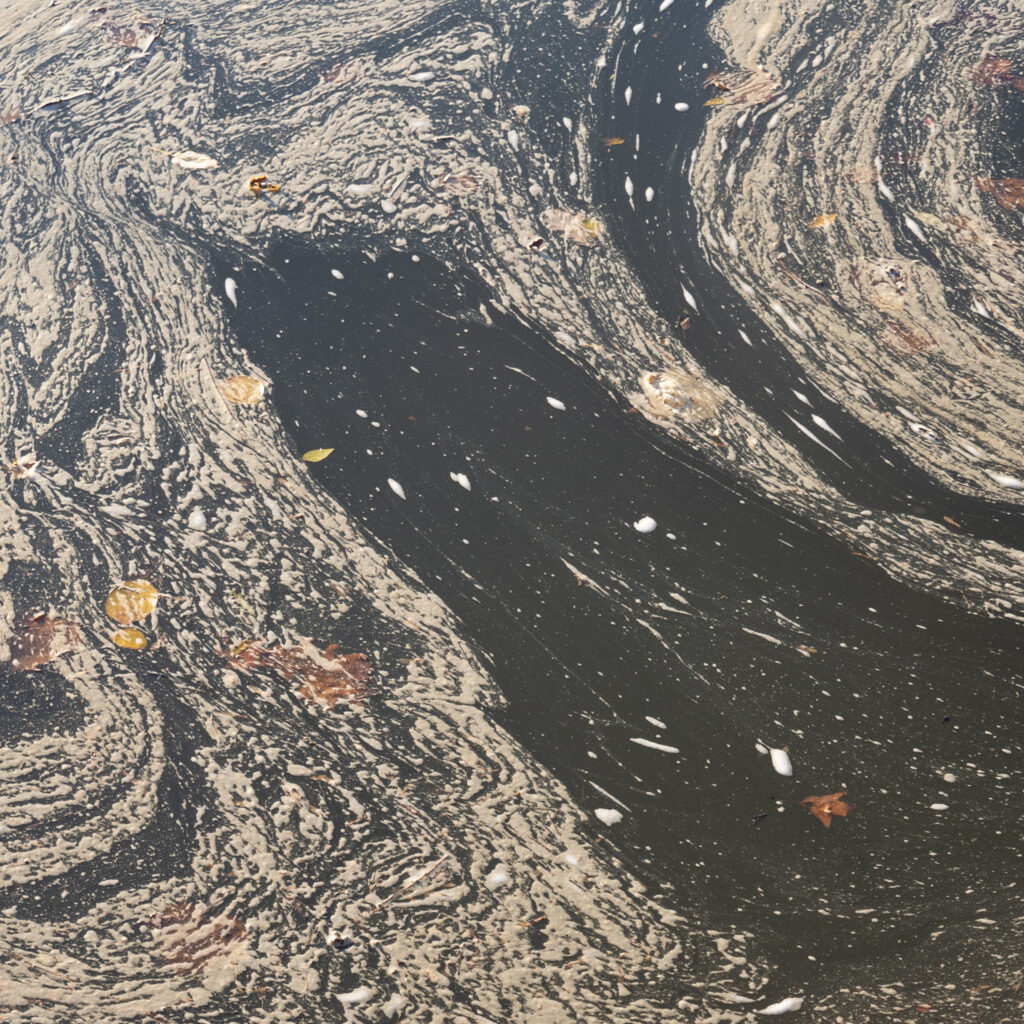
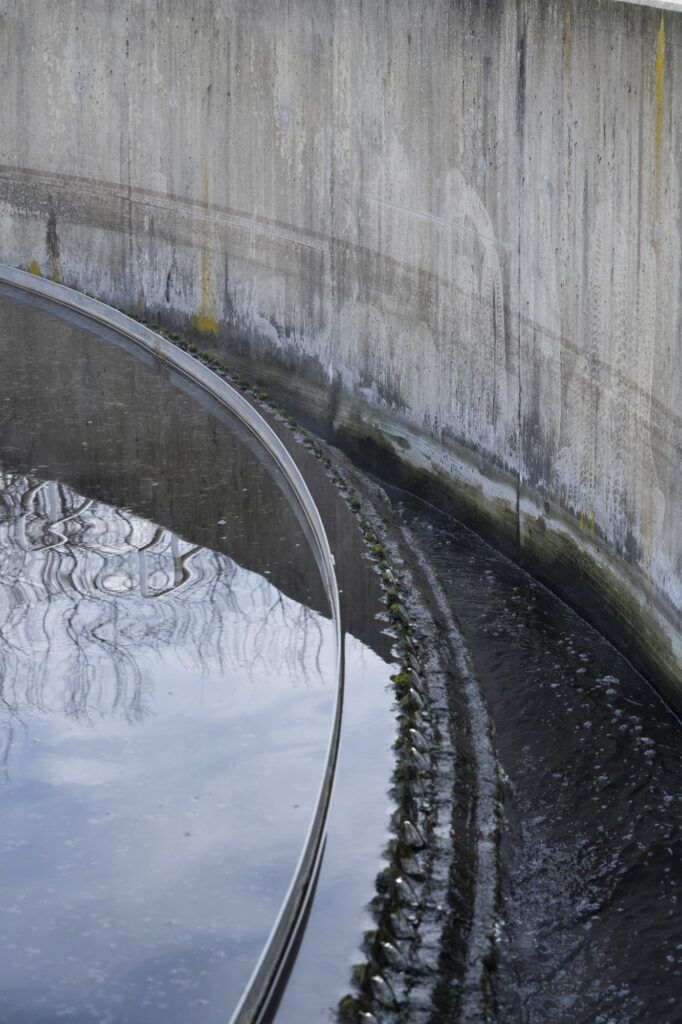
“As early as the turn of the century, this river was very well polluted. (There were) a lot of deformed fish, it was not anything close to exceptional,” Partee said in an interview. “It took a lot of discussion, a little bit of arm twisting, and some local funding to fund improvements to the sewage treatment plants to ratchet down on phosphorus, which was the main culprit … when we got the treatment plants to ratchet down on that, biology basically turned around on a dime —from terrible to exceptional.”
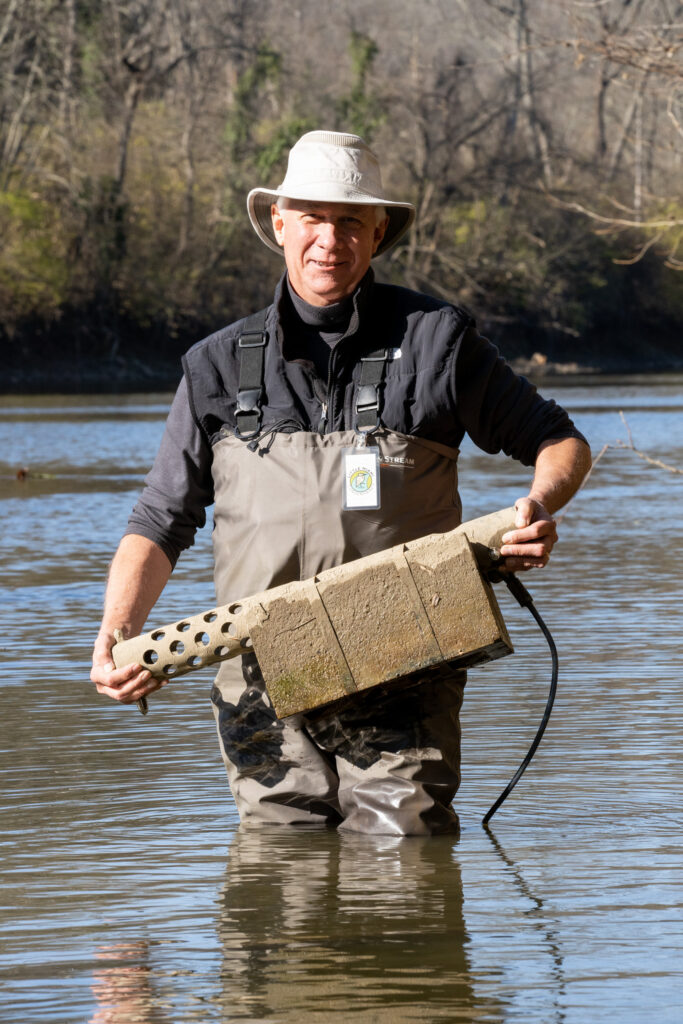
To make sure the river stays healthy, LMC introduced a set of equipment called YSI Water Quality Sondes, which monitor dissolved oxygen in nine locations throughout the length of the entire Little Miami, according to Partee. Each system monitors oxygen every 15 minutes, allowing for constant awareness of river health to prevent a reversion of quality. The conservancy also takes prides in their work on forest restoration through buying riverfront properties, planting trees, removing invasive species, and working collectively to clean up trash in the effort to grow closer to the initial goal of a corridor of green along the riverbank.
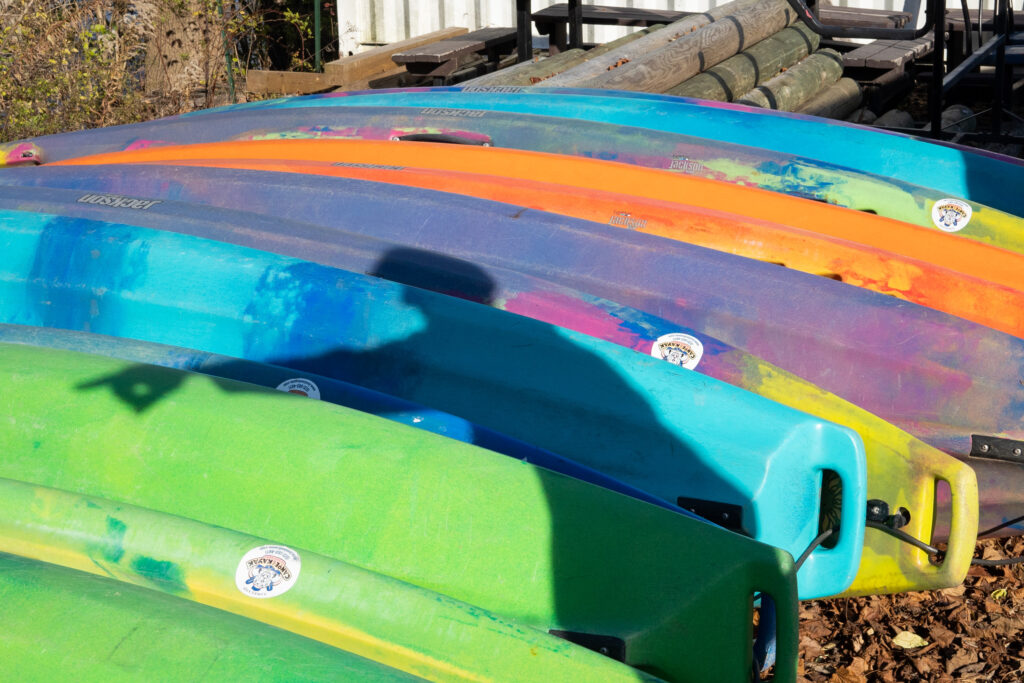
A short walk from the doors of the conservancy is the Loveland Canoe and Kayak Livery, owned by Mark and Robyn Bersani, which is just one of the many businesses along the Little Miami River that rely on its health as their main resource for income. The Bersanis work closely with the conservancy each year by offering and volunteering for cleanups as well as generous donations. This year, along with two other liveries including Rivers Edge and Scenic River, their combined donation to the Little Miami Conservancy’s effort was $56,000, according to Bersani.
“We’re involved from a grassroots portion, to actually helping with cleanups, to keeping an eye on the river, as well as donating and continuing to fund the good work that they do,” Bersani said in an interview. “It comes down to the people that live along the river, people that visit the river, the people in the community, if the river is going to stay clean. This river is very natural, it looks like it did 300 years ago … it is vital that the citizens all realize they have a role in this.”
Up the road at Loveland High School, Amy Aspenwall, an AP environmental science teacher teaches teenagers the importance of environmental awareness through hands-on experiences in places like the Little Miami River.
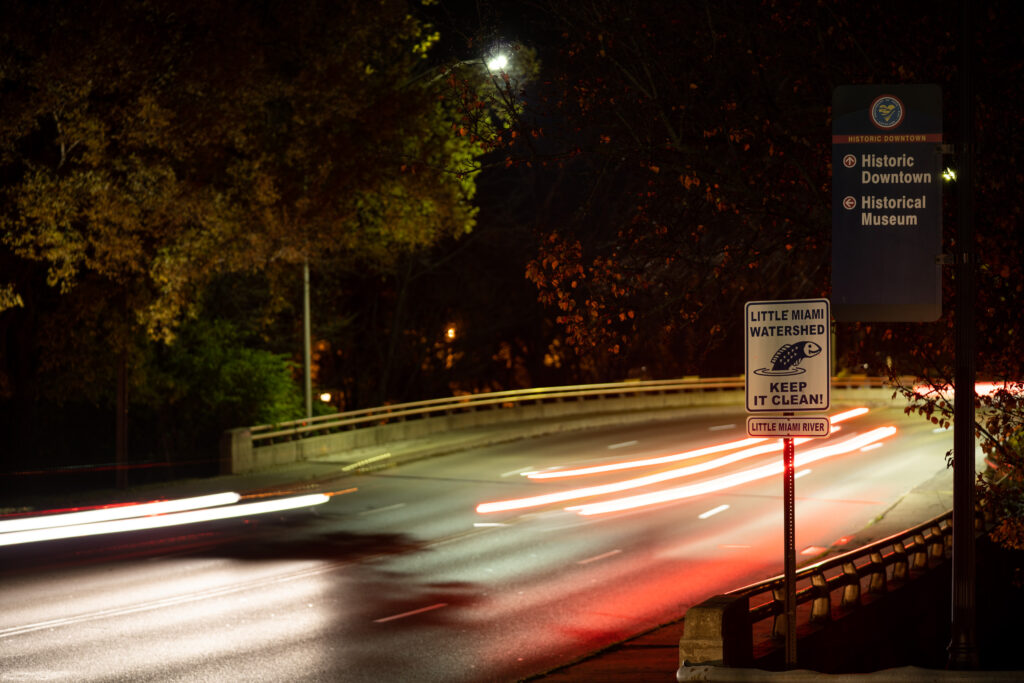
Perhaps half of the students attending Loveland High School cross over the Little Miami State and National Scenic Little Miami on their way to school each morning.
In an interview over Zoom, Aspenwall talked about the importance of students getting out into nature to actually see how humans fit in the environment, because “if you don’t see it, it’s really not your problem,” Aspenwall said. From understanding food waste to the water drinking system to sewer treatment facilities, her goal is to allow students the opportunity to realize a sense of civic responsibility.
“It’s important for students to start to think of themselves as a bigger picture rather than just someone following teacher instructions,” Aspenwall said. “I want them to start thinking on their own and realize how powerful they are as a consumer.”
Michelle Waller, an environmental specialist in the Division of Surface Water at OEPA, discussed the difficulties the river has faced through poor nutrients entering the river due to excess phosphorus from treatment plants and still faces through agricultural runoff from farms, in an interview over Zoom.
Waller said that placing phosphorus limits on the main stem’s water treatment plants in recent years proved to show major improvements in river nutrients after the OEPA performed sampling, but other negative sources are out of their reach. “We do not have authority over agriculture the way we do with what we call point sources, the treatment plants,” Waller said. “We try to work with local Soil and Water Conservation Districts, they try to get the word out about good farming practices … but there is no real regulatory authority which is a really big problem.”
The majority of land along the Little Miami River is agricultural, unlike other major rivers in Ohio that have industry running alongside their waters. And just like the branches of community that have come together to help preserve the river, many tributary streams and creeks branch out from the Little Miami, though those tributaries can be overlooked.
As most organizations, including the OEPA and LMC, focus their efforts on upholding the exceptional quality of the main stem of the Little Miami River, there is still work to be done in the tributaries. Partee talked about how there just isn’t enough time for LMC to visit every tributary and talk to every landowner. However, near Beaver Creek in Greene County, there is an organization called the Beaver Creek Wetlands Association, which has adopted that very issue. “I think that’s probably the best future for the watershed, to have local citizens dealing with multiple tributaries and try to restore or protect it,” said Partee.
Between the shared relationships of the Little Miami Conservancy, OEPA, local government officials, developers, landowners, non-profits, teachers, and local business owners, a community has come together and worked toward the common effort to make a positive, sustainable change in the health of the river.
The timelessness of the Little Miami River will carry on as long as its water continues to run. And as it always has been, it’s still up to the people alongside the riverbank to make sure that the water runs clean for generations to come. As the late author Nelson Henderson said, and Eric Partee paraphrased when we talked together, “The true meaning of life is to plant trees, under whose shade you do not expect to sit.”
“When we try to pick out anything by itself, we find it hitched to everything else in the Universe,” John Muir, a transcendentalist, wrote of nature’s connectedness in his 1911 book, My First Summer in the Sierra.
In 1997, Nature journal published ecologist Suzanne Simard’s Ph.D. theses, describing newfound proof of how plants within communities can be interconnected through an underground system, called a mycorrhizal network, to interact with each other.
This is Part 3 of a series Loveland resident and Ohio University student, Joe Timmermanwrote for The Post in Athens, Ohio. The Post is an award-winning, student-run media outlet that publishes online daily and also prints a weekly tabloid. They cover local and Ohio University news, sports, Athens life, entertainment and everything in between. The series is re-published here in Loveland Magazine with permission of The Post and Loveland High School graduate, Joe Timmerman a frequent contributor to Loveland Magazine.
“All trees all over the world, including paper birch and Douglas fir, form a symbiotic association with below-ground fungi … They compete with each other, but our work shows that they also cooperate with each other by sending nutrients and carbon back and forth through mycorrhizal networks,” Simard said in an interview with Yale Environment 360.
In this sense, trees communicate with one another on a deeper level than what is seen in the overstory and the understory of a forest.
From mothers and fathers sharing memories of trees they have grown to love with their kids to a lifelong woodworker who discovered a new relationship with wood as time went by, people are connecting with nature in new and old ways, as COVID-19 has brought a global feeling of social disconnection. People and their trees alike have a story to be told.
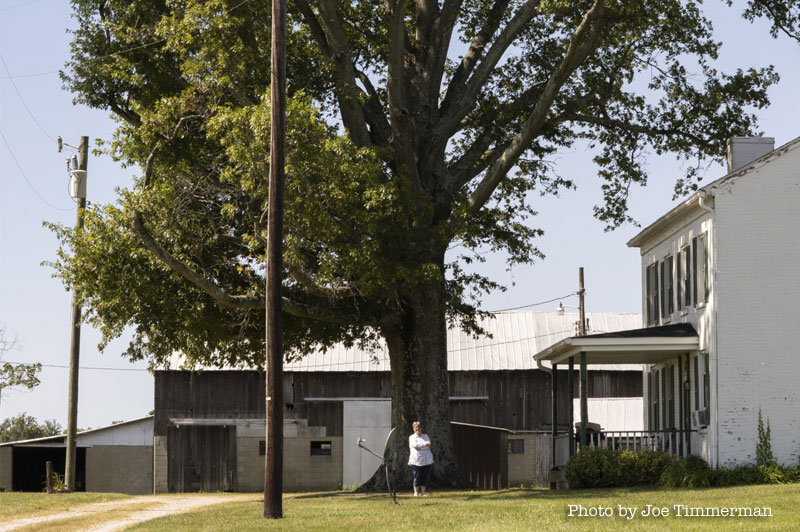
Iris Wilson, 65, of Hamilton Township, Ohio, with her Pin Oak Tree on Friday, Sept. 18, 2020.
Iris Wilson of Hamilton Township, Ohio, with her pin oak tree. Wilson takes care of her dad, who still lives in this farmhouse.
“My dad, who grew up across the road, was good friends with the people who lived here,” Wilson said. “They had five boys that worked on the farm here before going to war. They would cut down dead trees in the forest behind this house like crazy. One day, they came back with a little sapling and planted it here by the house on their sister’s birthday. She’s been gone for a little while now. She would have been over 100, so this tree has been here a long time. It has little tiny acorns. There seems to be a squirrel that lives in it year-round. It really provides a lot of shade for the house in the hot months. When we’ve had ice storms, the limbs, even though they’re way up high, touch the ground. I was sure it was going to ruin the tree, but it didn’t. We started doing limb maintenance on the tree about three years ago, in hopes of giving it a little more life.”
David Miller is the Editor and Publisher of Loveland Magazine
by David Miller
Loveland, Ohio – Joe Timmerman seems to be awfully young to be so old-school, but he’s both. I got reacquainted with him underneath the home-team basket at a winter basketball game in the Chuck Schmidt Gymnasium at Loveland High School. A Senior at the time, Joe had also been taking photos of the action and he came over and sat down on the floor with me and introduced himself,
He wanted to know if I would publish some of his photographs in Loveland Magazine.
His old-schoolness was when he described his approach to using film cameras and in very creative ways.
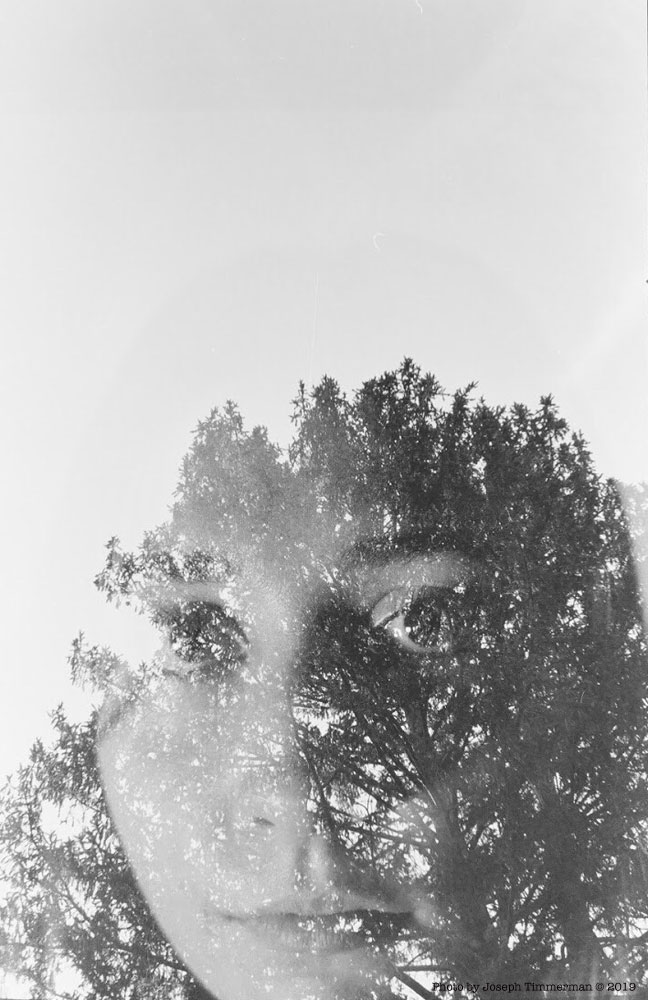
‘Liiife’ is within the borders of this black and white double exposure. I used Ilford HP5 Plus film when shooting these two photos — Laine’s face and a tree in my backyard — which share a single exposure. When I put the roll of film in my camera, I wanted to capture 24 portraits, underexposed in studio lighting, to fill the roll. Then, I chose to reel it back in to the point where the first exposure returned to the beginning, and capture 24 nature/lifestyle photos to randomly share a place on the film with the original portraits. The overarching risk factor of losing some personal pictures was left behind after developing the film and seeing what had come to life in the process. – Joseph Timmerman
I was fascinated by his love of negative film and how sometimes he would be very deliberate in shooting a roll of 35 mm negatives in a way that each captured portrait could be used as the foreground for another image. The second image, a double exposure, involved Joe re-loading the already exposed roll of negatives back into his camera and then exposing a second image over the top of each of the portraits he shot on the first go-around.
The results Joe showed me were a wonderful experiment in photography because of the hit/miss nature of composing a second image over the first. There is also the mastery of the correct exposure for each frame. Many of the double-exposures were taken of his girlfriend on their walks into Historic Downtown Loveland from his home. The final products have a rather ghost-like quality.
I had given up film as soon as I purchased my first digital camera to use for Loveland Magazine reporting. It was out of the necessity to cut costs and be able to have the results almost instantly on my laptop and into a story. From my perspective after so many years of traveling to a camera store to buy the film, traveling back again to have the film developed and prints made, and back again for pick-up – Joe is old-school.
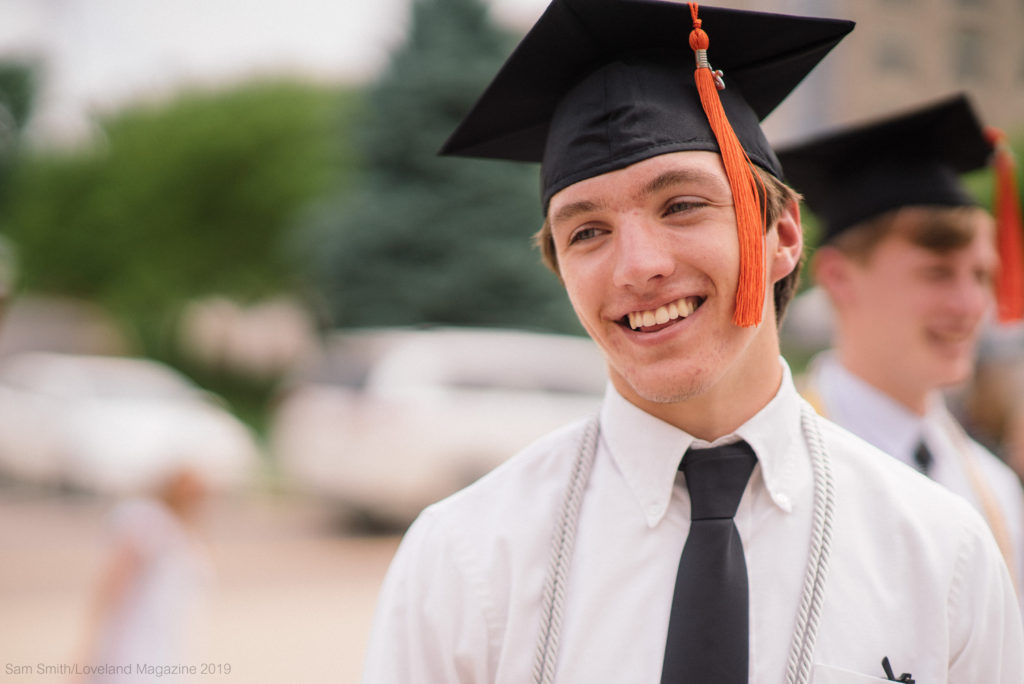
Joe Timmerman smiles outside the Cintas Center after he graduated from Loveland High School in 2019. Timmerman is studying photojournalism at Ohio University
I also discovered that night under the basketball hoop that I had known Joe since he was very little but didn’t recognize him. We once attended the same church. I was inspired by Joe that night and did some of my own experiments.
Joe’s old-schoolness even involved making his own paper from scratch for a photo project during his first year at Ohio University.
Joe’s old-schoolness is also how he will credit the way his parents raised him for his concern for the immediate environment around him. I think it more than just that though and appreciate another old-school quality he possesses – Joe is very humble always giving credit to others and he is generous with a “Thank you.”
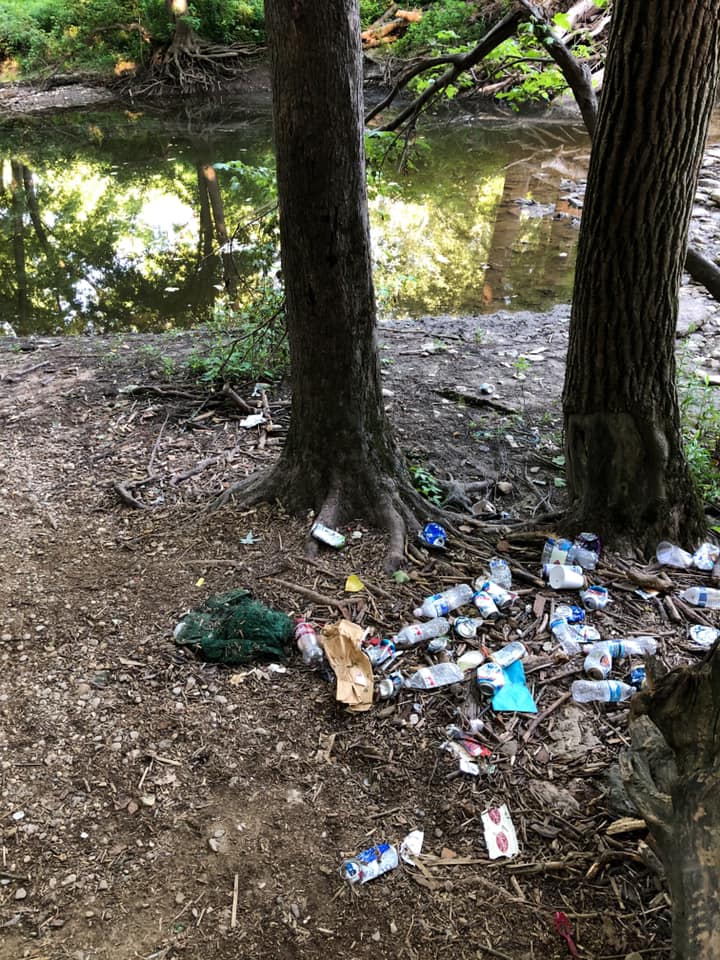
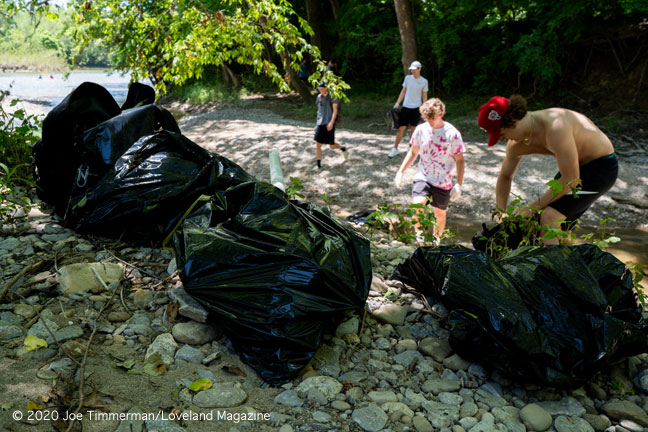
Joe founded “A Neighborhood Cleanup” in 2019. The inspiration was walking in the East Loveland Nature Preserve with his mother and seeing so much trash left by other visitors. He says that growing up his father taught him to always pick up trash when he sees it, especially in his own neighborhood and the places he loves. Last August A Neighborhood Cleanup cleaned the nature preserve and another spot he loved, the rope swing on the bank of the Little Miami just north of Nisbet Park in Historic Downtown.
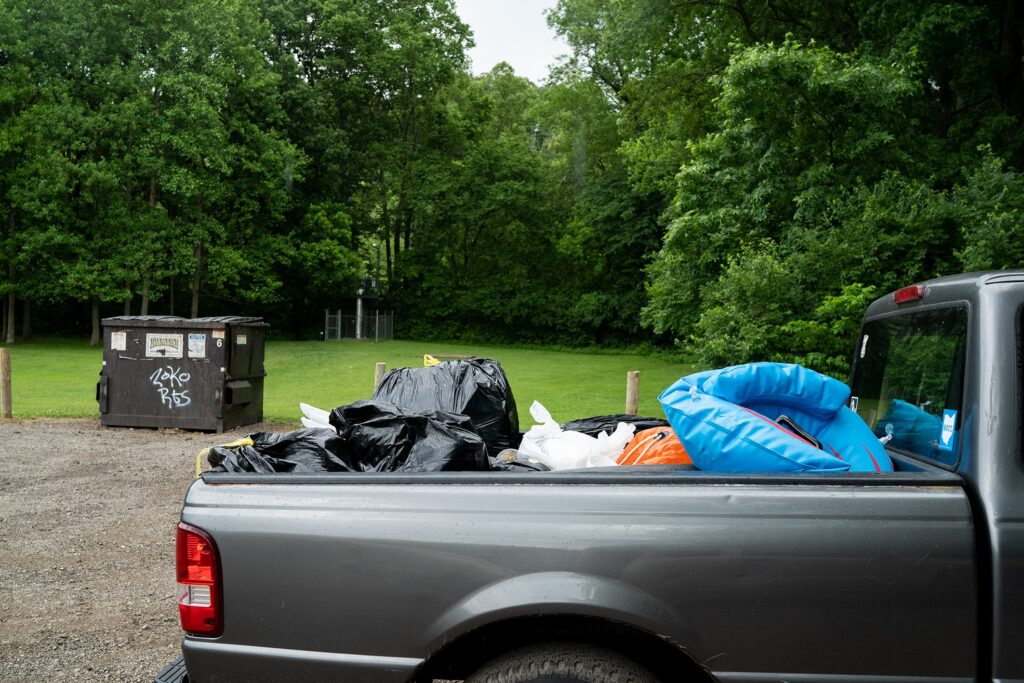
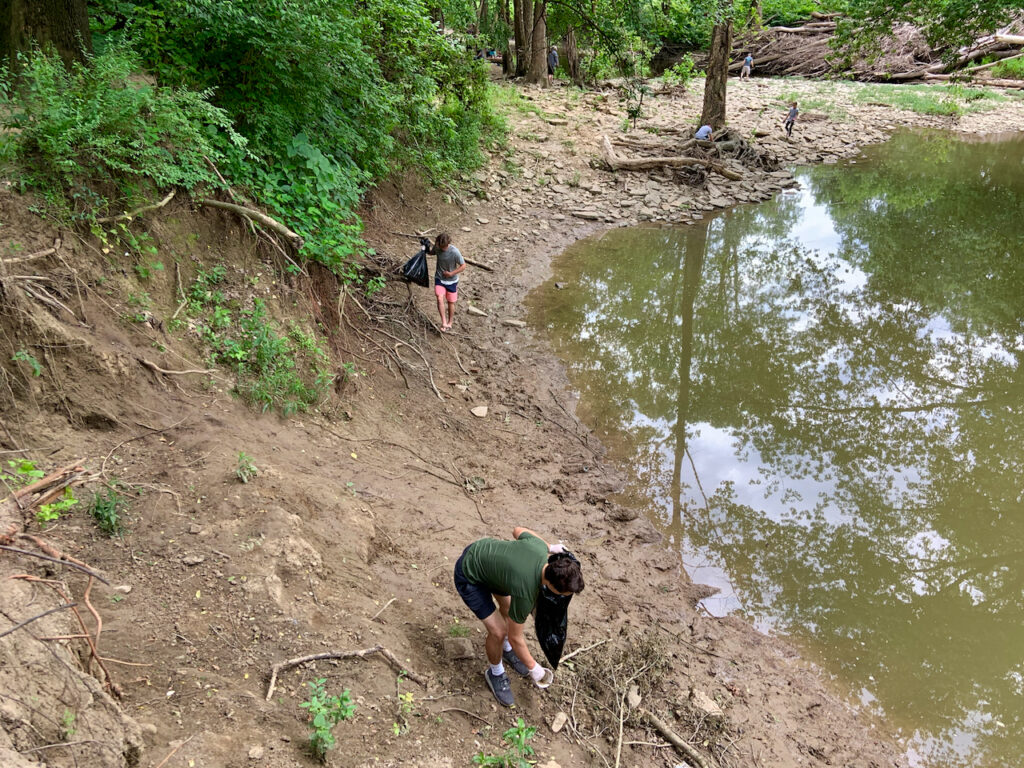
Joe has been back to cleaning the rope swing area this spring and last Saturday expanded the cleanup to include the river from Nisbet Park to the rope swing on the opposite river bank – along Cones Road.
An interesting note is that Loveland’s most famous old-school photographer Nancy Ford Cones once lived at the Roads Inn Farm on Cones Road when she took her famous Loveland photos, Her favorite subjects were family and friends she posed on those same river banks that Joe and friends are now restoring to their intended beauty. The Loveland Musem Center has a nice collection of Cone’s photos and many of them have an ethereal, ghost-like quality similar to Joe Timmerman’s double exposures.
This interview took place along the riverbank Joe and volunteers were cleaning last Saturday afternoon.
Joe inspires his own generation, those to come, and those beyond.
“Like” and “follow” A Neighborhood Cleanup on FaceBook and you will be able to support the efforts and know when the next group cleanup is planned. You might also contact Joe and offer to donate garbage bags and gloves as a way of helping.
Here is a link to Joe’s photography website where you can read more about him and see some of his inspiring art.
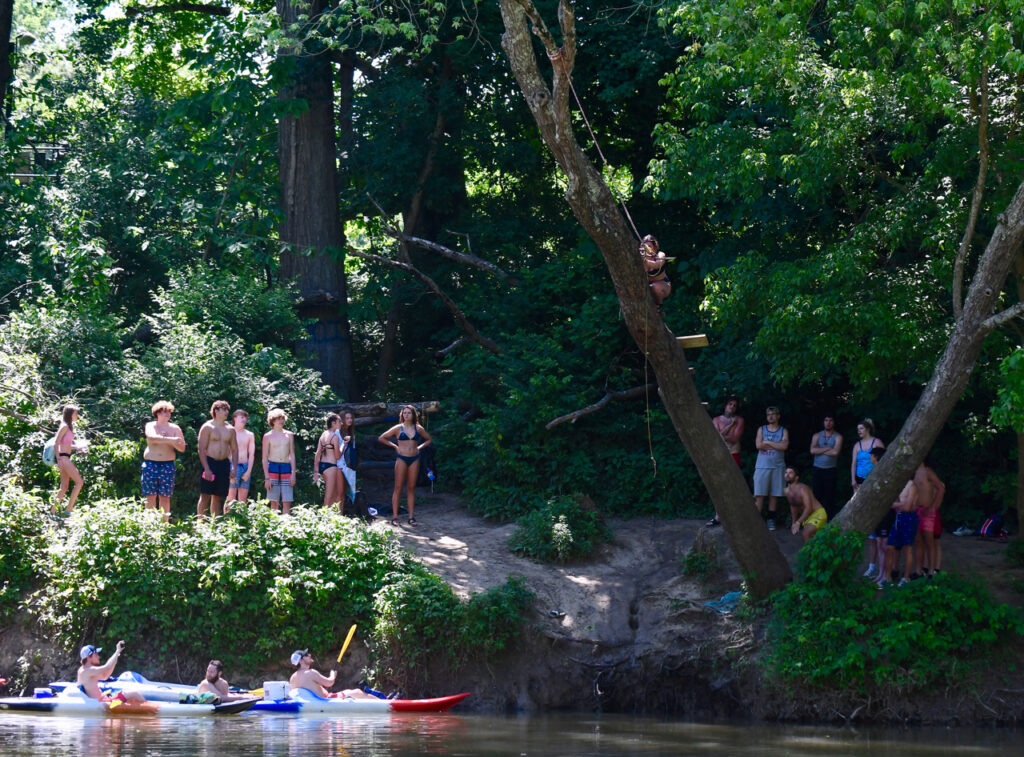
This is the rope swing seen from the opposite side of the river that A Neighborhood Cleanup worked on last Saturday. As you can see, the river has become a very popular spot that many young people call home. Joe Timmerman and his supporters cleared the robe swing area of trash on June 2.
Ohio University is suspending the organizational activities of all 15 OU fraternity chapters in the Interfraternity Council (IFC), OU announced Thursday afternoon, after receiving allegations that seven of those fraternities had engaged in hazing activities.
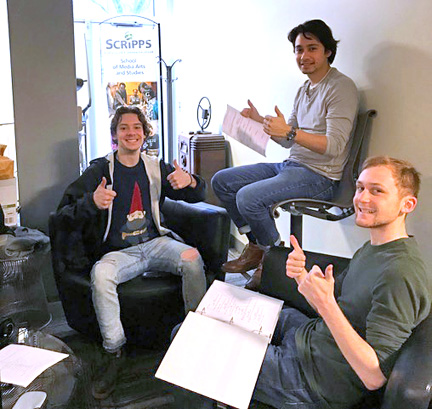
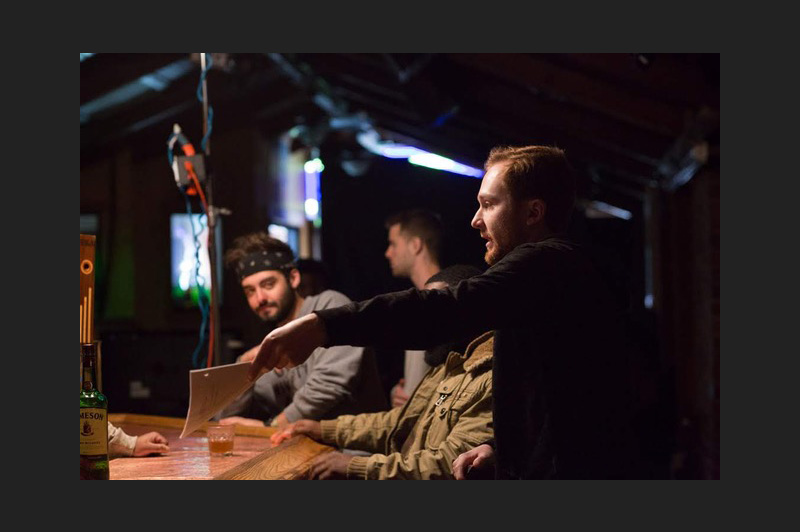
Dean Parker on the set of his upcoming short film, which has the working title The Bartender and the Drunk, coming this fall.
by Cassie Mattia
Loveland, Ohio – Have you ever sat down and thought about what it takes to make a great film? Have you ever wondered just how the lions in the Lion King remake look and sound so real? Did you ever look beyond the “scary” parts of a horror movie and look into why those scary parts are so effective? This is what makes a good move excellent and, well, Loveland local Dean Parker knows exactly what it takes to make an excellent movie!
Dean Parker attended Loveland City Schools where he began his journey into film making. Parker began making films at a very young age where eventually that developed passion took him to Ohio University’s Scripps College of Communication to study Integrated Media Production. Dean is also a former paid intern, writing and doing videography and video editing at Loveland Magazine. Several awards and opportunities later, Parker landed himself in L.A. interning for Lifeboat Productions! After following Parker’s amazing story, I decided to invite Dean to Loveland Magazine’s One-on-One series so that he could share with our readers just how he has accomplished everything thus far! Sit back in your chair, grab your popcorn and enjoy, One-on-One with Dean Parker.
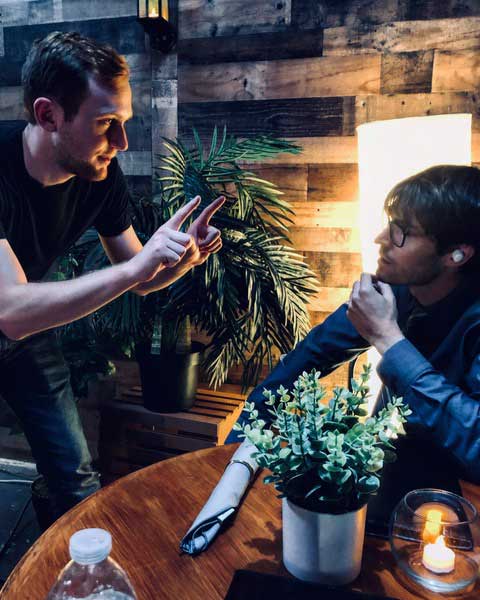
Dean on the set of his short film “Virtually in Love”
Ijust want to say before we start, Wow you have quite an impressive resume in the film industry! Where did all this passion for film and the performing arts come from? Was it passed along from your family or was it a newfound talent?
Dean – Thank you for the kind words. I don’t really know exactly where my passion entirely came from, to be honest. It’s really a mix of a bunch of things. I’ve just always liked stories and being a part of creating stories. I used to read all the time growing up and would like to write short books for fun. My dad also had an old camera that I would use to film silly videos with me and my friends. I think it’s fascinating how books, theater, and films can leave an impression on someone through the stories they tell and how they tell them. So, I think that impression stories left on me, especially through film, made me want to become a part of that industry and create. Definitely a newfound talent, for sure.
You went to Loveland High school, GO TIGERS, what did you learn at LHS that has helped you through your career path? Did you partake in any special courses at Loveland for film, if so, what were they? Brag about yourself for a minute! Share with our Loveland Magazine readers some of your high school accolades!
Dean – At the time when I was at LHS, they didn’t have the really cool video production class they just added. The only course they had was the LHSNN class, which is the school news. I was the lead editor for the news, and I had to learn how to use new editing software and how to meet deadlines on a tight schedule. That was a fun class because I got to collaborate with the other anchors on coming up with different news specials and skits. Other than that, I had to teach myself everything else. Mr. Barrett, who runs LHSNN and the video classes, was also very supportive of me especially when it came to the different shorts I was making. I was also very fortunate to meet a really cool group of friends in high school that were also interested in becoming filmmakers. We all worked on various projects together and we taught each other different things that helped us grow. In fact, those students started the LHS film club, which I believe is still around? Hopefully, it is! Beyond that, LHS let me have the premiere of two of my films in the auditorium, which was extremely nice. They were very supportive of me and a lot of the students came to see the premieres, as well as our principal and superintendent. I was very grateful to everyone for coming out to see the films.
You later made your way to the Ohio University, why did you select OU? What degree are you going for? Share with us your experience at OU and how it has helped you become the amazing film artist you are today!
Dean – My degree at OU is called Integrated Media Production, which is basically a create your own major within the media school. I selected OU because of its great media program that includes some amazing opportunities. I’ve participated in an advanced narrative production class called 419 Productions. In that class, we got to make a major short film that takes us an entire year from prepping, to raising a budget, to actually filming and editing it. Then we have a premiere at the end of the year. I have participated in many other student film sets and have learned so much from each one, mainly due to the other students who teach me different things. I also work in my school’s video equipment room and have familiarized myself with most of what we have there. And then there’s amazing our LA program, which takes students out to LA for real-world experience. All these things have helped shaped me into the filmmaker and person that I am today. I have learned so much more about the film over the past three years than at any other time in my life.
Let’s really get to know Dean! Tell us about your family! Who inspires you? Would you say your family has helped you become what you are today? Anyone in the family into film making? What were some of your favorite films growing up? Have you drawn inspiration for your films through some of your favorite films of the past?
Dean – My dad runs his own company which makes home inspection software. My mom works as a territory manager at BGR. I have two sisters, one of whom currently goes to LHS. My other sister plays soccer at Miami University. I’m inspired by Chris Martin, Lin-Manuel Miranda, Damien Chazelle, and Bo Burnham just to name a few. My family has always been so incredibly supportive of me in my film endeavors. Some of them even came out to visit me in LA and I showed them around. They always watch my films and have helped me attend film festivals too, which I am very grateful for. I actually don’t have any family members that are into filmmaking, but my great-grandfather owned a drive-in movie theater so maybe that’s where I got my urge to be in the industry. Growing up, I loved Toy Story and Harry Potter movies. My favorite movies currently are The Social Network, Whiplash, Lord of the Rings, and American Beauty, just to name a few. I definitely have drawn inspiration from some of these films and into my work.
Ivisited your website deanparkerfilms.com and looked over all of your films and they are so interesting! Dean, tell us about the films that you have made and what has inspired each of them. I saw you made a film called No Love in Loveland, tell us about how Loveland inspired you to create this film. What is your favorite film you have made? What film took the longest to make? What film are you most proud of?
Dean – For No Love in Loveland, it was inspired by what I was feeling during my time at LHS, or more so during my freshman year. I thought it was interesting how the dating culture was in school and all the different ways of how quickly people got into and out of relationships. Not to mention all the crushes people had on each other and how they went about approaching that situation. Maybe it was because a lot of people knew each other at our school due to the size. It was a bizarre and funny time and I wanted to make a film that showcased that. So, I played on how our city was called Loveland to poke fun at the situation.
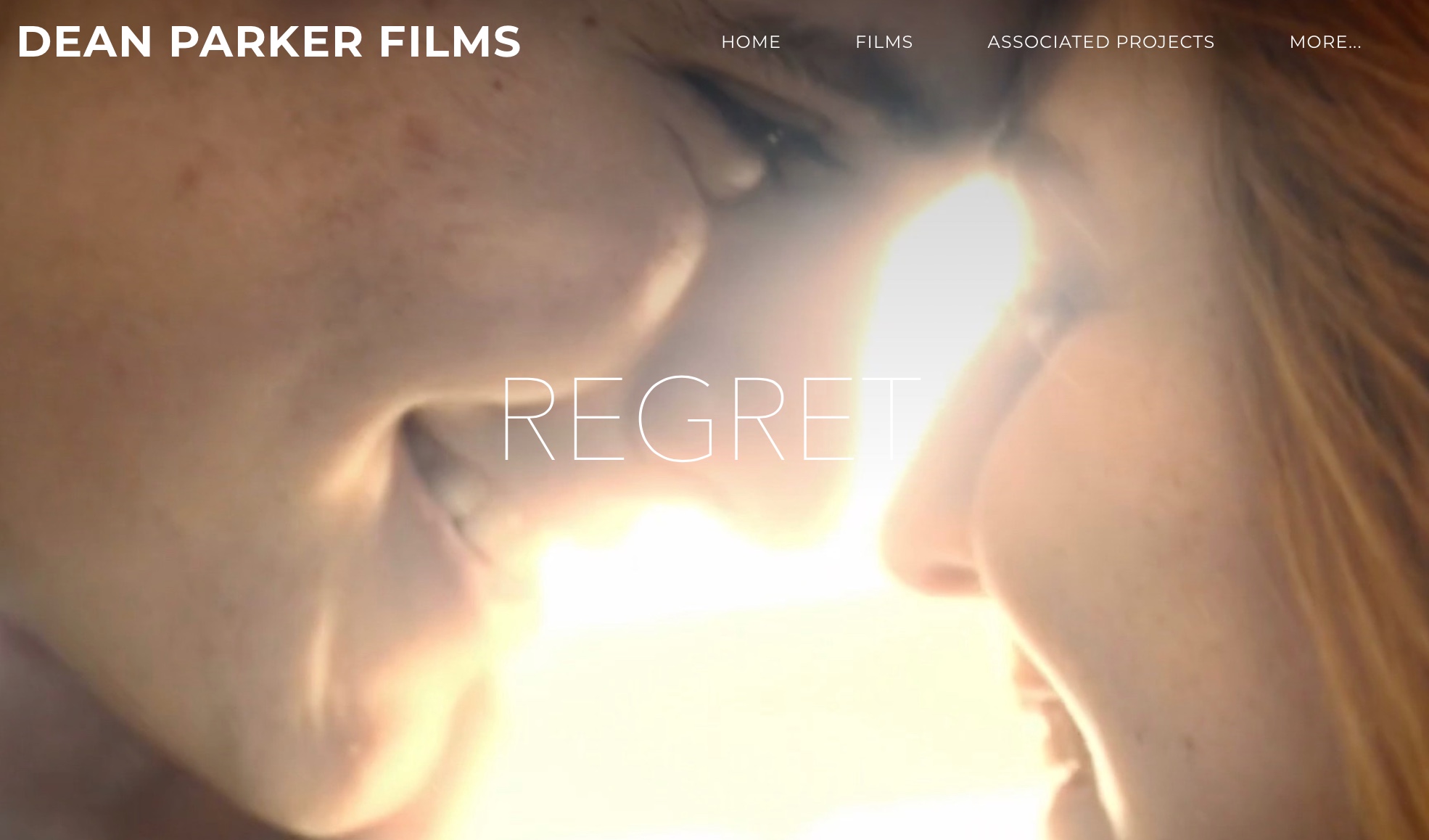
Regret is by far the most personal film I have made. I would like to tell you exactly how I was inspired to make that film but it’s still too personal for me to fully explain. All I’ll say is that it was inspired by a time in high school where I was struggling with the thought of something to come. Now, it was with this film that I met my good group of Loveland film friends. I needed crew members and they reached out to me and offered to help. I continued to work with those guys on my other two films after that. If it wasn’t for this film, I don’t know if I would’ve met them and I’m grateful that I did get to meet them.
Images I came up with shortly after the time I wrote Regret. I was inspired to make the film after meeting certain people and seeing how the way they presented themselves online and the image they were trying to show off was different than when I really got to know them. I’m proud of all the work we put into making that film. It was by far my most ambitious project at the time, especially due to the length and complexity of the shots. We all had a fun time working on it though, and the cast and crew got really close. I would also say it’s my most successful film so far, due to the number of festivals we were fortunate enough to be a part of.
Together was actually based on a short story a friend of mine wrote. When I read the story for the first time, I knew it could make for a good short film. I spent time talking to the writer of the story about what she intended and then putting that to film. It was exciting to interpret someone else’s story, write a screenplay for it and then bring it to life. I think that’s my favorite film I have put out so far. Currently, the film I’m editing right now is taking the longest to make (it’ll be worth it, I promise). But prior to that, it was Together. That film had some complications at the beginning of production that put filming on halt for almost two months. We scrambled to get that film shot in time before I had to go back to OU for the sophomore year. Then I had to edit it while I was at school and my roommate was using his free time to make the music. But it all worked out, thankfully.
Dean with some of his OU friends on the set of a student production.
You have collected some unbelievable awards over the past few years! What were some of your proudest awards? Tell the readers about how recipients are selected for these awards and what you had to do to be considered. You have been to a number of film festivals, which I’m sure was really exciting for you to be part of! What are some of your favorite film festivals you have attended? Have you been invited to any extremely exclusive film festivals?
Dean – Thank you again for the kind words. I’ve been very fortunate to be a part of some very neat festivals. One of my favorite festivals I was selected into was the Nashville Film Festival, which is a major festival. Unfortunately, I didn’t get the chance to attend, but just being selected was very exciting. Being a finalist for some awards and also winning one at the All-American High School Film Festival was also great. I got to attend that festival and it was one of the best experiences of my life. I also enjoyed attending the Golden Lion Film Festival here in Cincinnati. I won the best short film award and best of fest award back in 2016, which was so crazy. That festival has greatly expanded since I was a part of it and it’s cool to see how they’ve grown. The thing is, with all the great accolades I’ve been fortunate to receive, there is actually much more losing than winning. I’ve been rejected from way more festivals than I have been accepted. This is a very common thing for all filmmakers submitting to festivals. But to me, I see it as another reason to get better with every project. Also, each festival is different and is looking for particular films to make up their lineup so that it also plays into how one gets accepted. I submit to all my film festivals through the website filmfreeway.com. If you are a filmmaker looking to submit to festivals, that website is currently the #1 festival submission platform.
Ok, you have been in L.A having the time of your life! You are interning for Lifeboat Productions? Tell us about your experience thus far in L.A. I saw that you got the opportunity to be at the Jimmy Kimmel show? What was that like? Talk about the new film you are producing Virtually in Love.
Dean – L.A has been quite the experience and I definitely see myself living there. Yes, I interned at Lifeboat Productions as a production office and development intern. Most of what I did there is read tons of screenplays and then provide coverage, which is basically a form of feedback. I also helped around the office by prepping the conference room, answering phone calls, greeting clients, and anything else they might’ve needed me to do. They also had me pitch a screenplay in development to the company executives, which was great practice for me.
LA is a much different world than Loveland. Way more people, buildings, and cars. In fact, there really isn’t anywhere to park. Traffic happens all the time, any hour, any day of the week. But it’s all part of the experience. And there’s always something to do. Lots of events and cool places to see. Through my school, I’ve gotten to do some studio tours like Warner Bros, and Sony Pictures. I’ve also gotten to go to Universal Studios Hollywood and Disneyland. And I’ve run into some celebrities as well. I once saw Ryan Gosling while I was out for dinner, which was crazy.
I’ve gotten to attend Jimmy Kimmel twice, actually. The most recent time I went, Quentin Tarantino was the guest and he was promoting his new movie Once Upon a Time in Hollywood. In fact, at one point, Leonardo DiCaprio came out and surprised the audience with an invite to come to the movie premiere. So, I went and got to see the movie a few days before it came out. If you go onto YouTube, you can find the video when this happened. https://www.youtube.com/watch?v=uEEkXCCgz2o.
I got to write and direct one of the short films for our school program while we were out in LA. The film is a science-fiction drama called Virtually in Love, which is sort of like an episode of Black Mirror. The film takes place in the near future and is about a man who is struggling to make a romantic connection in a time where everybody is disconnected due to technology. We had an open casting call and got to work with some really cool LA actors. We had a lot of tight deadlines with making the film but managed to get it done well. It was a great learning experience and made me reflect on what I know about filmmaking and how I can get better. That film will also go through a festival run for a bit and will be released shortly after.
Now is your chance to promote yourself! Tell us about your future plans! Any films or big projects in the works? Any fun opportunities?
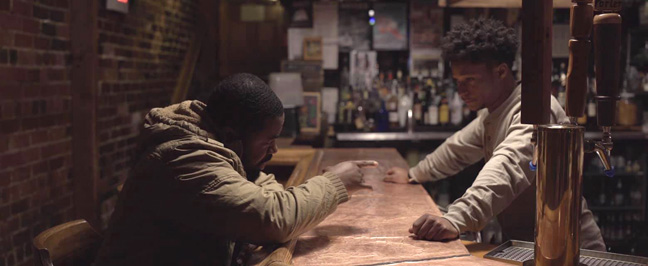
Chanse McDuffie and LeJon Woods from a scene in The Bartender and the Drunk directed by Dean Parker
Dean – I am currently still editing a short film I directed back in the spring that is set to come out sometime this fall. It’s currently titled The Bartender and the Drunk, but that is just a working title. We actually have a Facebook Page you can go check out if you want to follow updates on the film. I am really excited for this to be released. I had a stellar cast and crew, and this is the first short film I’ve directed where I didn’t write the screenplay. We also self-funded this film through GoFundMe and were fortunate enough to reach our goal of $2,500. Once the film is completed, I’ll be using the rest of the budget to send it off to various film festivals.
Besides that film, I’m going to keep helping out on projects when I get back to school, and my buddy and I are also looking to possibly make a short in the fall as well. After I graduate, I plan to eventually move out to LA with some friends to get started working in the “real world.”
Now let me ask you some fun, but random questions! What’s your favorite color? Who’s your favorite director? Any hidden talents? What’s your favorite food? Who do you emulate? What’s the last film you saw? Any recent films you have seen that you recommend? Lion King original or Lion King remake? What do you hope to be doing in 5 years?
Dean – My favorite color is blue. My favorite director is Damien Chazelle. I can sing, but anyone who knows me well knows that’s not a hidden talent. I can also make a really good grilled cheese apparently. My favorite food is a tough question. I like steak and calamari a lot. I’m kind of a picky eater but I’m getting better. I guess I emulate my dad. My sisters tell me that a lot. The last film I saw was The Farewell, which I recommend. I also recommend Booksmart, and Toy Story 4, which is my favorite film of the year so far. I’d definitely pick the original Lion King; the remake was not good at all. In five years, I hope to be working in LA on or at least starting to work on my own feature film, whether or not done independently.
To keep up with Dean Parker and his film career you can visit deanparkerfilms.com.
DEAN PARKER’S AWARDS
VISUAL ARTS SEMI-FINALIST: 2016 Cincinnati Overture Awards
TOGETHER
WINNER: Best College Student Film, 2018 Tampa Bay Underground Film Festival
WINNER: Best in Show – College Division, 2018 American Youth Film Festival
NOMINEE: Best Editing, 2018 Tampa Bay Underground Film Festival
NOMINEE: Best Musical Score, 2018 Tampa Bay Underground Film Festival
NOMINEE: Best College Film, 2018 Austin Student Film Festival
SEMI-FINALIST: Los Angeles CineFest – November 2017 Edition
IMAGES
WINNER: 60th CINE Golden Eagle Award for Narrative Youth Media
WINNER: Best Editing, 2016 All-American High School Film Festival
WINNER: Best High School Student Short Film, 2017 Tampa Bay Underground Film Festival
WINNER: Best Youth Film, 2017 Boise Film Festival
WINNER: Best Structure, 2017 Premiere Film Festival
WINNER: Best High School Film, 2017 UPIKE Film & Media Arts Festival
FINALIST: Best Overall Film, 2016 All-American High School Film Festival
FINALIST: Best Drama, 2016 All-American High School Film Festival
FINALIST: Best Cinematography (Sam Smith), 2016 All-American High School Film Festival
NOMINEE: Best Student Film-High School, 2017 Alhambra Theatre Film Festival
SEMI-FINALIST: Los Angeles CineFest – August 2016 Edition
HONORABLE MENTION: Best Dramatic Student Film, 2017 Lionshead Film Festival
2017 OFFICIAL SELECTION: Nashville Film Festival
2017 OFFICIAL SELECTION: Scout Film Festival
2017 OFFICIAL SELECTION: Benicia Film Festival
2017 OFFICIAL SELECTION: Lake Charles Film & Music Festival
REGRET
BEST OF SHOW: 2016 Golden Lion Awards
GOLDEN LION AWARD: Narrative Film, 2016 Golden Lion Awards
BEST CINEMATOGRAPHY (Sam Smith): 2016 Blue Ridge Young Filmmakers Festival
BEST CINEMATOGRAPHY (Sam Smith): 2017 Premiere Film Festival
2016 OFFICIAL SELECTION: All-American High School Film Festival
2016 OFFICIAL SELECTION: Royal Starr Film Festival
2017 OFFICIAL SELECTION: Ballston Spa Film Festival
2017 OFFICIAL SELECTION: Lake Charles Film & Media Festival
2016 OFFICIAL SELECTION: Drop Your Shorts – Fall Edition
2017 OFFICIAL SELECTION: Film Forum on the Lake
SPECIAL PRESENTATION: 2016 Hoosierdance International Film Festival
NO LOVE IN LOVELAND
SILVER KEY AWARD: 2016 Cincinnati Scholastic Art and Writing Awards
2015 OFFICIAL SELECTION: All-American High School Film Festival
2015 OFFICIAL SELECTION: Film Dayton Festival
2016 OFFICIAL SELECTION: Texas Independent Film Festival
2016 OFFICIAL SELECTION: Los Angeles CineFest – March 2016 Edition
2016 OFFICIAL SELECTION: Scout Film Festival
Dean’s Associated Products
Wake Up Mark (2018; Director – Michi Heckler)
Dean was the script supervisor for the Flat Pop Productions short thriller-comedy: Wake Up Mark. The film is currently in post-production and is expected to be released in 2019. The film is directed by Michi Heckler.
Dean was the script supervisor of the 419 Productions film: The Horseman. The film had its premiere on April 29th at Ohio University. The film was directed by Annabelle Fisher.
Dean was the editor/DIT for the short film Emma. It was created as a part of Ohio University’s film club: Rough Cut Collective. The film was directed by Samantha Houtchens.
Looking to add some healthy variety to your diet this summer? Look no further!
Ohio University’s College of Health Sciences and Professions (CHSP) offers six nutritious tips all yours for the tasting.
1. Grilled fish
The sun is shining and the grill is hot. Now it just needs some salmon!
Selena Baker, MS, RDN, LD, a nutrition counselor at CHSP’s WellWorks, suggests lining the grill with a piece of parchment paper and placing your salmon on top to keep the dish moist.
“Spread it with some Dijon mustard, fresh garlic and cracked black pepper,” she said. “The vinegar in the mustard will neutralize the mildly fishy smell if you’re sensitive to that. Lemon juice and malt vinegar have the same effect. Once it’s done, unwrap your packet and you’ve got super moist salmon on the grill!”
2. More fish!
Tuna steaks marinated in avocado oil can add more of the coveted Omega-3 heart-healthy fatty acid to the menu. Baker said avocado oil has a similar fatty acid profile to olive oil but can take the heat better due to a higher smoke point. She also suggests a simple lunch using white albacore tuna.
“Open your white albacore, drain it, throw it directly in a Tupperware-type container and add olive oil or avocado oil mayonnaise. It has heart-healthy fat and half the fat of regular mayo. Add in some Mrs. Dash (the garlic blend) and you have lots of flavor ready to go,” said Baker. “If you have time, mince in some onion, carrots, celery or whatever you want.”
3. Let’s get nuts
Vegetarians or vegans looking for Omega-3 benefits can try walnuts. Baker said eating a 1-ounce portion of nuts most days of the week is a good goal and added that walnuts also contain fiber, potassium, protein and other heart-healthy fats.
4. The power of tomatoes
Scientific results are still mixed when it comes to lycopene in tomatoes but Baker said there are definitely some positive links between lycopene and good prostate health.
Lycopene isn’t destroyed by cooking and tomatoes are also a good source of potassium which plays a role in healthy blood pressure.
“Try a whole wheat pasta salad,” said Baker. “Lightly steam, sauté or grill a bunch of veggies and toss on some vinaigrette or whatever dressing you like. Dice up some sundried tomatoes and you’ll get that concentrated flavor, sweetness and unique texture which is great in a pasta salad along with some marinated artichokes and sautéed zucchini.”
5. Lentil Sloppy Joes
“Lentils are so good. I love the lentil sloppy joes served on a whole wheat bun with a slice of swiss cheese,” said Baker. “If you want to explore a family-friendly plant protein, lentils are a great, fast-cooking option.”
(A recipe for this delicious dish is listed below the article.)
6. MIND your diet
Along with a healthy body, a healthy mind is desirable. Baker recommends trying the MIND diet — a take on the popular Mediterranean Diet and the Dietary Approaches to Stop Hypertension Diet. The MIND diet is associated with a lower risk of Alzheimer’s disease and calls for: more than six servings per week of green leafy vegetables, one serving per day of other vegetables, five servings per week of nuts, two servings per week of berries, three meals of beans per week, three servings per day of whole grains, one meal per week of fish, two meals per week of poultry and the use of olive oil as the primary cooking oil along with one glass of wine per day.
Finally, Baker offers the reminder that with the hot sun and all the summer fun, it’s important to stay hydrated!
Lentil Sloppy Joe (credit sparkpeople.com)
1 cup uncooked lentils
4 cups water
1 tbsp olive oil
1 medium yellow onion, small dice
1 green bell pepper, small dice
2 cloves garlic, minced
3 tbsp chili powder
2 tsp salt
1 (8-oz) can tomato sauce
¼ cup tomato paste
2-3 tbsp maple syrup
1 tbsp prepared yellow mustard
Pour lentils and water into small saucepan. Cover and bring to boil. Lower heat and simmer for 20 minutes or until lentils are soft. Drain and set aside.
About 10 minutes before lentils are ready, preheat a medium-sized saucepan over medium heat. Sauté onion and pepper in the oil for seven minutes or until softened. Add garlic and sauté for one minute more.
Stir in the cooked lentils, chili powder, oregano and salt. Add the tomato sauce and tomato paste and cook for 10 minutes. Add maple syrup and mustard and heat.
Turn off the heat and let the pot sit on the warm burner for about 10 minutes to allow flavors to meld.
Serves five people at 142 calories per serving.
Selena Baker offers healthy cooking classes throughout the year at WellWorks. For more information visit ohio.edu/wellworks or call 740.593.2093.
Loveland, Ohio – To assist newly named Loveland Athletic Director Brian Conatser, the Board of Education approved Eric Fry as assistant director of student athletics. Fry has been serving students as a coach since 2001 and as a teacher since 2002, and most recently served as the athletic director for Turpin High School in the Forest Hills School District (2012-2018).
Fry earned his bachelor’s degree in physical education from Ohio University in 2002, he earned his master’s degree in education in sports administration from Xavier University in 2007, and his license in school leadership and administration from Xavier in 2014. He additionally attended the Alpaugh Scholar Leadership Program at the University of Cincinnati in 2016.



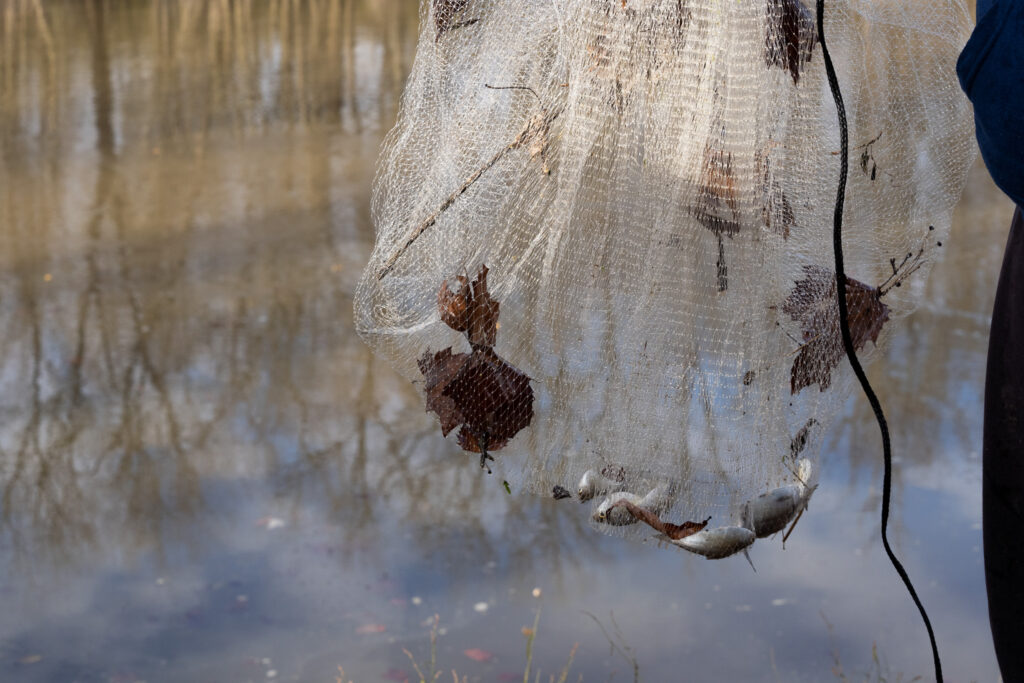
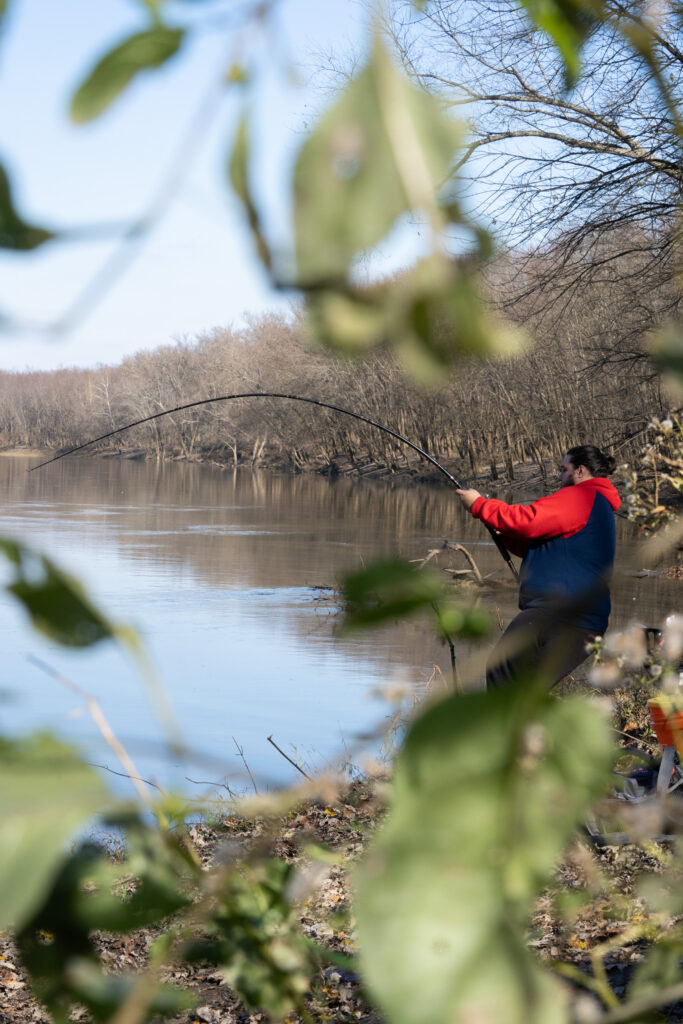
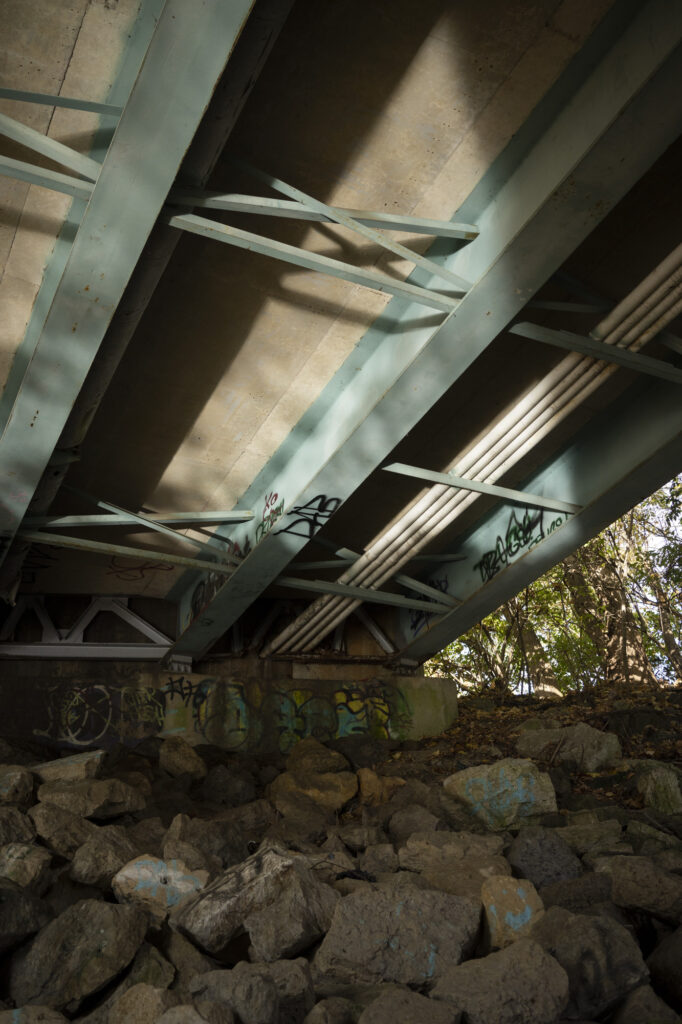
 This is Part 3 of a series Loveland resident and Ohio University student,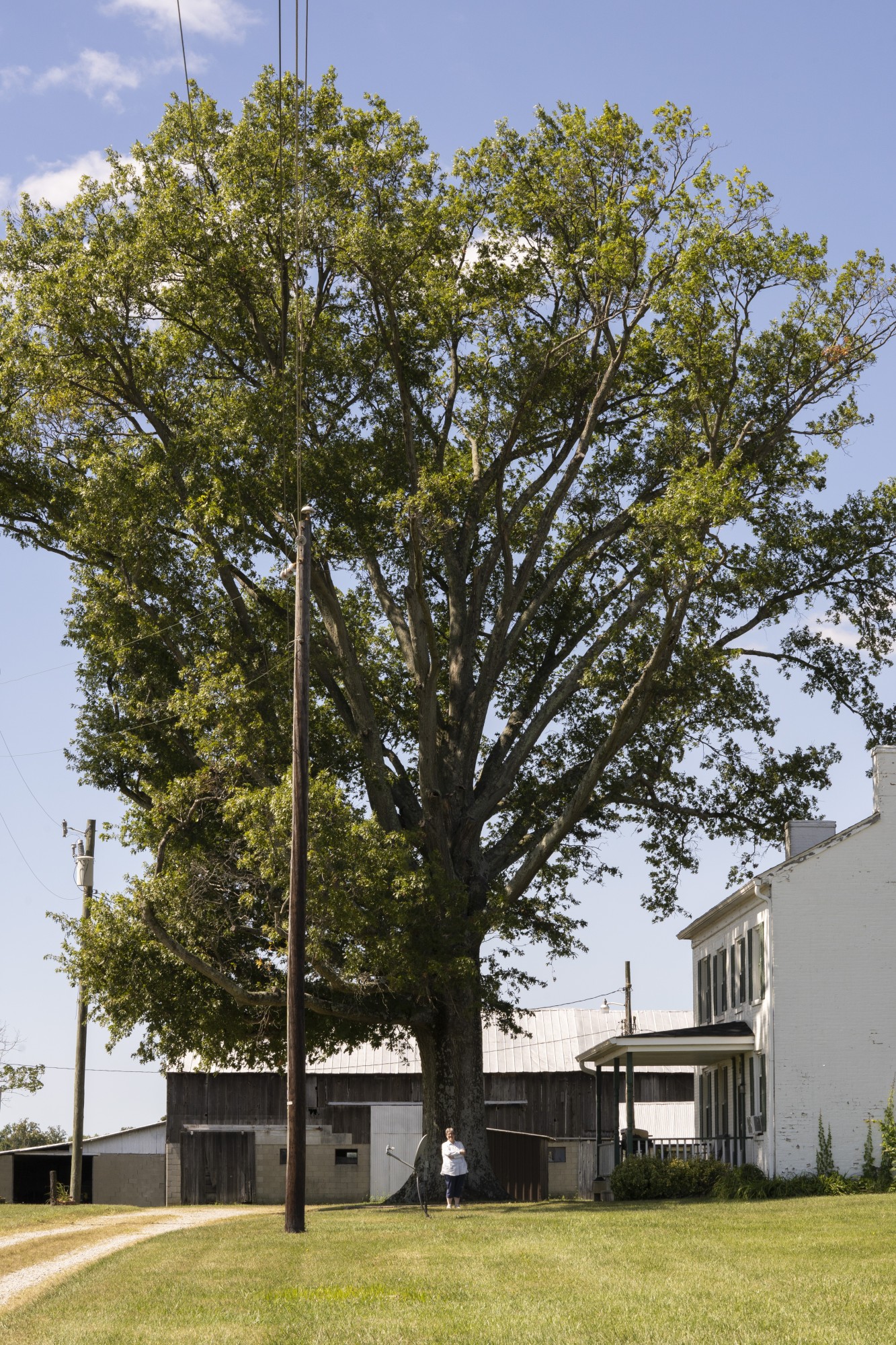
 Read Part 1:

![[Interview] Joe Timmerman Founder of “A Neighborhood Cleanup”](https://lovelandmagazine.com/wp-content/uploads/2020/06/maxresdefault-6.jpg)



 Dean – At the time when I was at LHS, they didn’t have the really cool video production class they just added. The only course they had was the LHSNN class, which is the school news. I was the lead editor for the news, and I had to learn how to use new editing software and how to meet deadlines on a tight schedule. That was a fun class because I got to collaborate with the other anchors on coming up with different news specials and skits. Other than that, I had to teach myself everything else. Mr. Barrett, who runs LHSNN and the video classes, was also very supportive of me especially when it came to the different shorts I was making. I was also very fortunate to meet a really cool group of friends in high school that were also interested in becoming filmmakers. We all worked on various projects together and we taught each other different things that helped us grow. In fact, those students started the LHS film club, which I believe is still around? Hopefully, it is! Beyond that, LHS let me have the premiere of two of my films in the auditorium, which was extremely nice. They were very supportive of me and a lot of the students came to see the premieres, as well as our principal and superintendent. I was very grateful to everyone for coming out to see the films.