A “picture sketch” of a new bar and grill proposed by the owners of the Monkey Bar
Loveland, Ohio – On December 15, 2022 the owners of the property at 115 Railroad Avenue presented early redevelopment design plans to the Loveland Historic Preservation and Planning Commission (HPPC) for review. The proposed development sits between Hometown Cafe and The Wicked Pickle on the Loveland Bike Trail in Historic Downtown. The site previously held a single family residence that has since been demolished. The new owner of the site is MADJ Properties LLC.
Amy Altemeier told Loveland Magazine on March 18, “We are delayed on our Loveland project due to the fire at our Monkey Bar & Grille last year. Amy and her husband Mark are co-owners of the Monkey Bar & Grille in Fosters along the Loveland Bike Trail. She also said that they have a “picture sketch”, which is solidified. She added, “We will not be breaking ground until likely one year from now.”
“We also have some great concepts for the restaurant/bar but nothing is solidified yet. It will not be another Monkey Bar. I like to design around the history, so this will be a unique concept in Loveland.”
The Loveland Bike Trail would connect both establishments owned by the Altemeiers.
The proposed project at 115 Railroad Avenue, is the construction of a 2-story restaurant with outdoor seating on the ground and the 2nd floor. The first floor area includes the kitchen, a 760 square foot main dining area, restrooms,
and outdoor seating for approximately 32. The second floor will include both a dining area and a bar area, along with outdoor seating for 32. The name of the restaurant was still to be determined, although a railroad them is
anticipated, and will include a mural of the south facing side of the building.
Beth Sullebarger, from the historic preservation consulting firm Sullebarger Associates presented the plan on behalf of the HPPC. She commented that the HPPC had two decisions to make. The first is whether the current property can be saved and the second, if it can’t be saved, what kind of new building should be approved. She said that regarding the current building, it appears to have been built in the early 1900’s as it can be seen in a 1911 Sanborn Map of historic Loveland. She shared pictures of the property, both inside and out. The structure had been gutted down to the studs and then demolished.
An architect representing the owners commented that most of the building was beyond saving from a financial standpoint because it’s located in a flood plane, and the cost to bring it up to standards that insurance would require, would be prohibitive.
Sullebarger reviewed the design guidelines that apply to any new building that
would be built on this site and made several suggestions to improve the building’s appropriateness for the immediate neighborhood.
Key suggestions by Sullebarger were as follows:
▪ Flip the site plan so that the solid wall faces the north side. This will make the building seem less massive next to Hometown Café. It would also allow for a better experience for the diners as they would overlook more of historic downtown Loveland.
▪ Incorporate other materials into the balcony pillars. Suggestions were steel or other metals to soften the look.
▪ Possibly lower the first floor ceiling and thereby the entire building. This might allow for a rooftop façade that could be gabled and fit better with adjacent buildings.
The architect agreed to look at all of the suggestions and work with the owners to see what they might agree to do.
On January 31, 2023 applicant returned and addressed the HPPC requests with plan modifications include the following:
• The front columns/piers were reduced from 24” x 24” to 20” x 20” square.
• Windows have been added to the rear/west facing wall of building.
• Additionally, the landscape plan, that was still being developed at the previous meeting, was included.
Loveland, Ohio – There are just 10 more days until for Breakfast with the Bots, Saturday, April 5 at Loveland High School. You can enjoy hot pancakes drenched in warm syrup with some sizzling bacon, and check out the teams’ competition robots from this year, including the Loveland Middle School team that is going to the World Championship.
Plus, there will be STEM activities for children and robots for adults so they can try their hand at driving.
All you can eat for $10/per ticket and children 3 and under eat free. Coffee and juice included.
The Loveland Middle School Team 97310C is going to the World Championship May 9-11 in Dallas, TX and the event will include almost 500 teams from around the world. Please consider donating to help cover the cost of the event and travel.
Loveland, Ohio – On Tuesday, March 4, there was a public hearing before the Planning and Zoning Commission for “Conditional Use” at 514 West Loveland Avenue in the West Loveland Historic District.
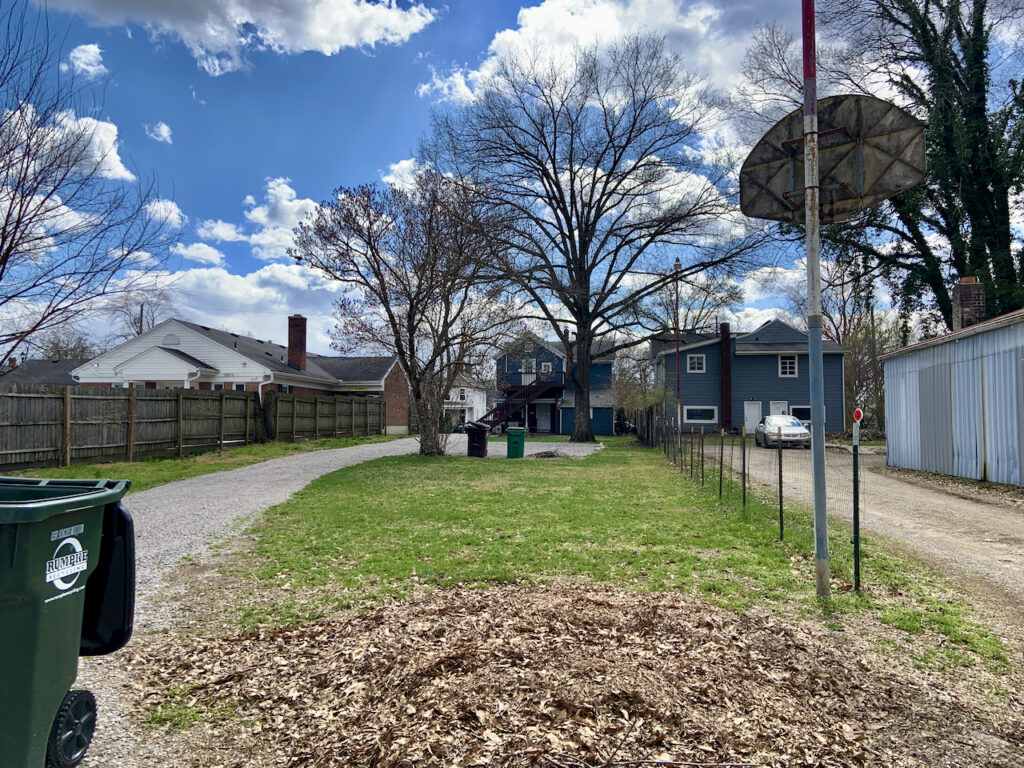
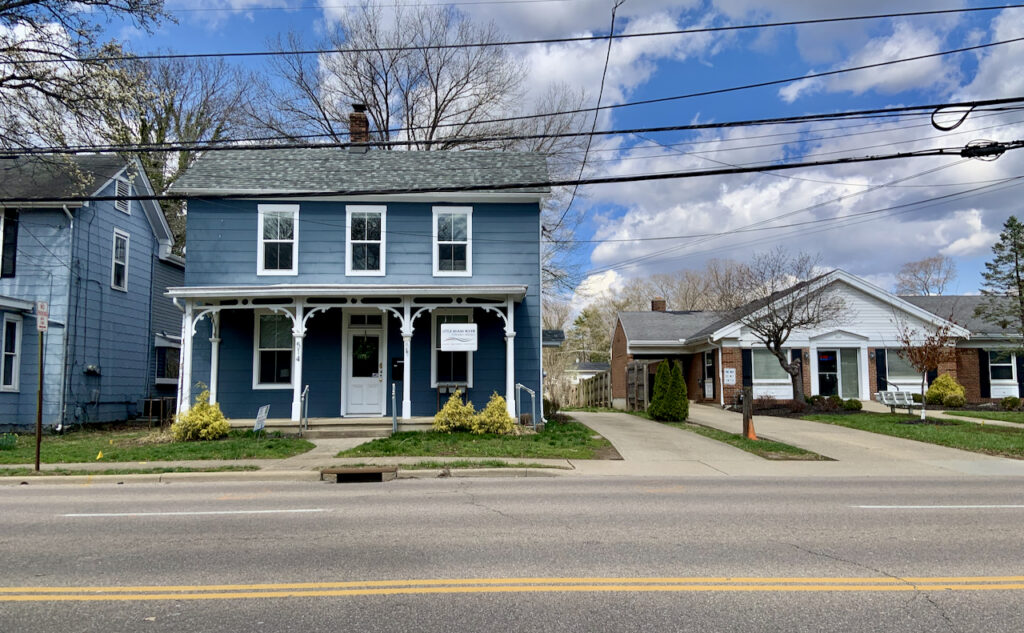
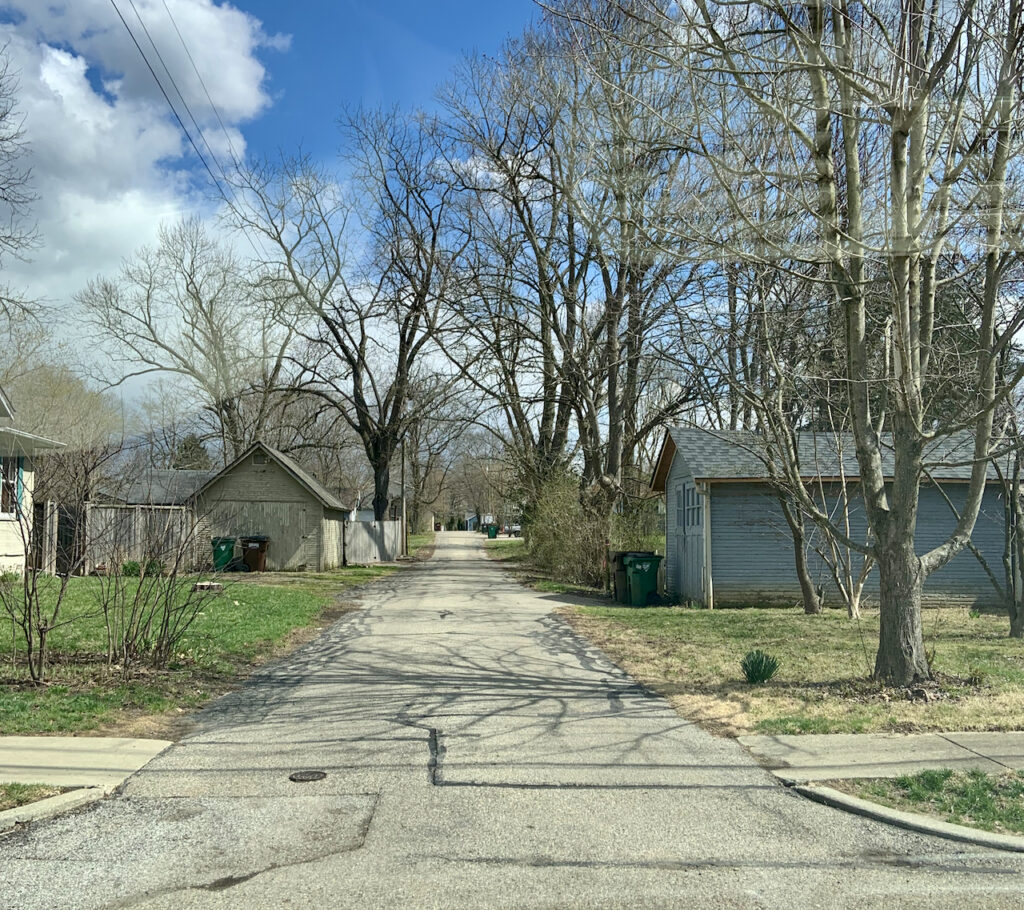
The owner, William Kammerer requested approval to build a new 2-family dwelling on the rear of the property in the Office Residential Zoning District. Currently on the site, there is an existing single, two family dwelling unit, occupied via lease by the Little Miami River Chamber Alliance on the first floor and a short term rental on the 2nd floor that would remain. Ingress and egress was to be from Centre Street (Alley).
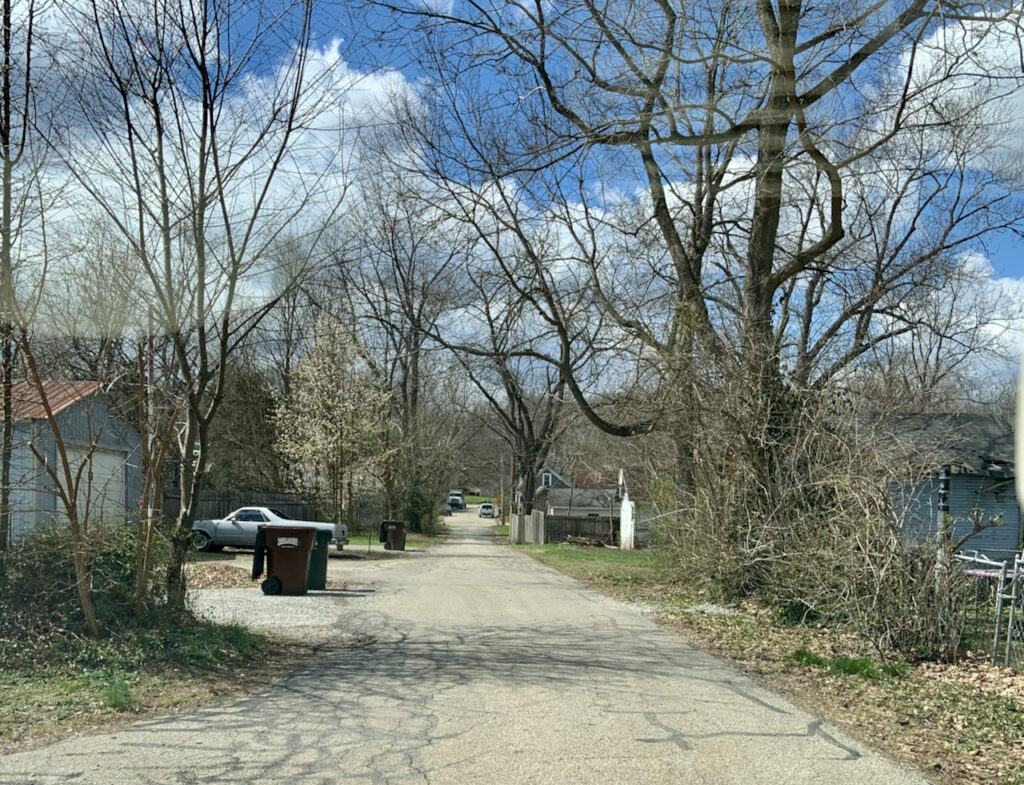
514 West Loveland Avenue Avenue backyard as seen from Center Street (Alley).
Little Miami River Chamber Alliance office at 514 West Loveland Avenue.
Center Street (Alley) viewed from intersection of Elm Street.
Center Street (Alley) viewed from rear of Union Savings Bank.
The discussion begins at the 1:39 minute mark of this video. The Commission ultimately denied the “Conditional Use” permit.
BECOME A LOVELAND MAGAZINE SUPERFAN BY DONATING NOW!
Open and free local reporting is critical to having well-informed community. Loveland Magazine has published a free newspaper and website for the last 20 years for our community. If you would like us to continue, kindly contribute to this service. It would be greatly appreciated. Donations may be made to: Loveland Magazine, 243 Wall Street, Loveland, Ohio 45140. Or, donations can be made through PayPal using a credit card. (https://bit.ly/4j1ju3k) Advertisers do not nearly cover all of our expenses.
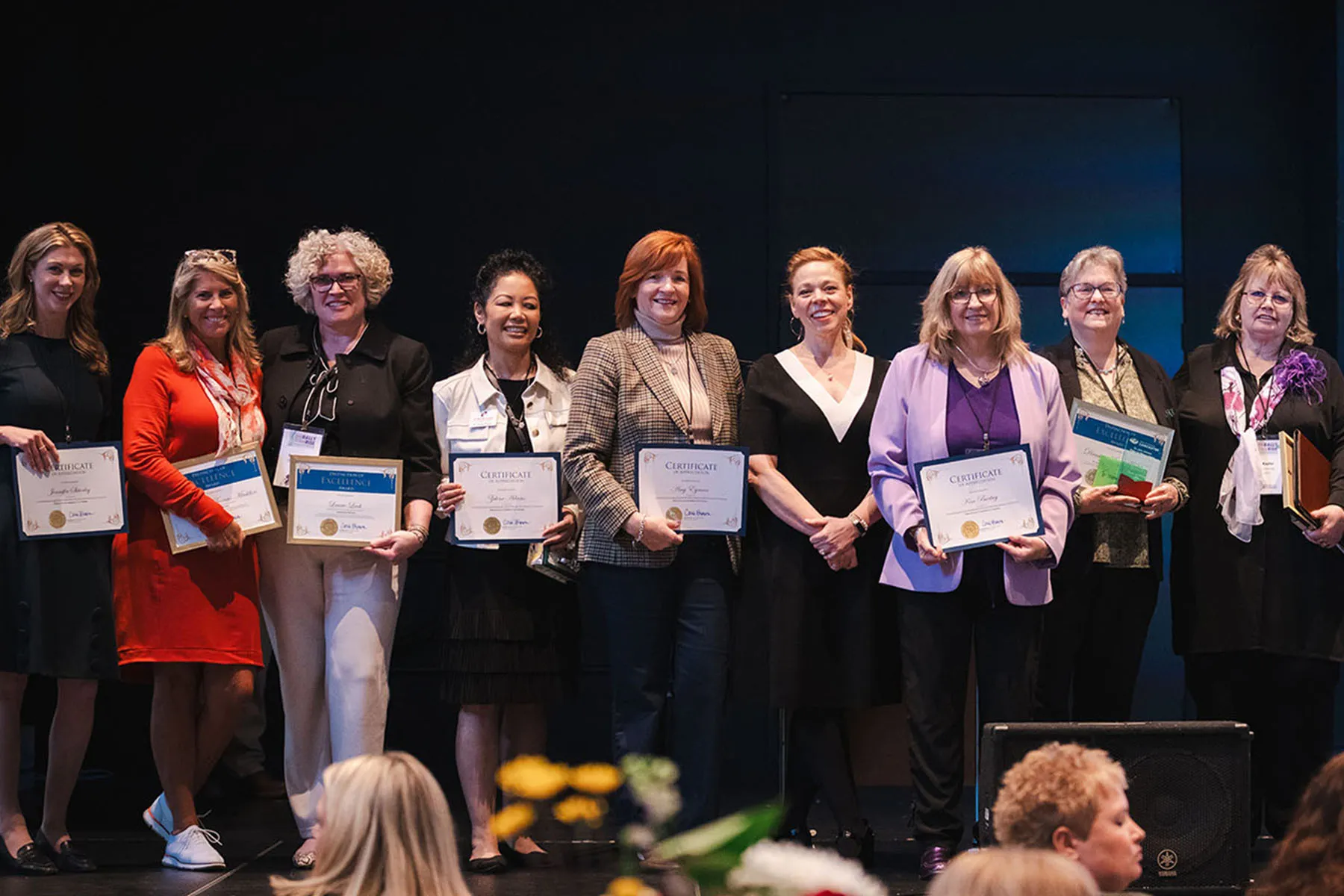
Honorees at the We Rally & We Rise Women’s Conference pose for a group photo in Lancaster, Ohio, on March 21, 2025. Kim Barlag, third from right in a purple suit, helped organize the independent event after Ohio University canceled its longtime Women’s History Month celebration following new federal guidance on anti-discrimination policies.(Megan Cardenas/OH Creative Studios for We Rally We Rise)
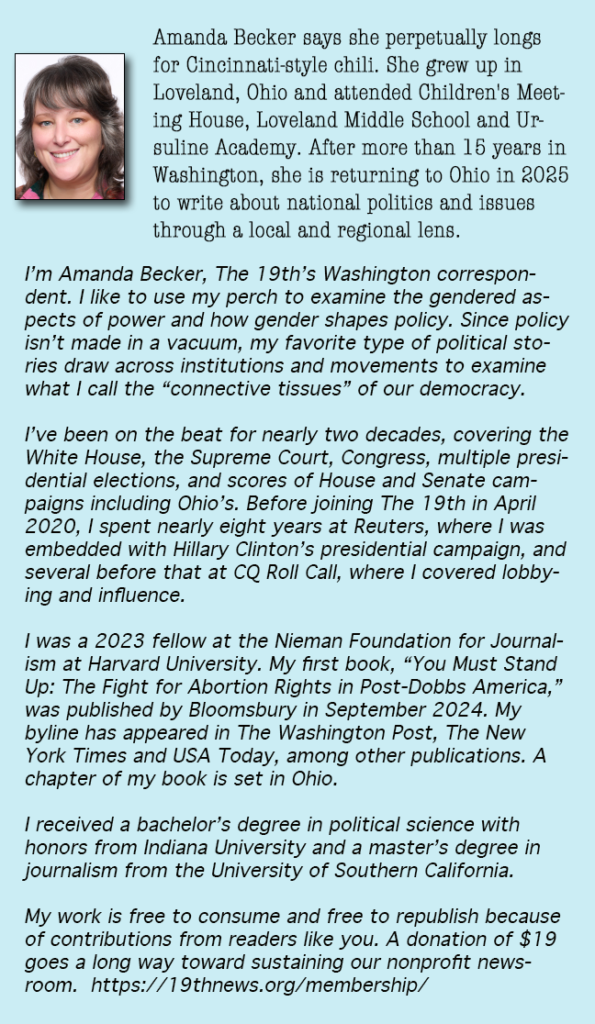
Amanda Becker
Read Amanda Becker’s Loveland connection in her Bio below.
Lancaster, Ohio – Kim Barlag knew she couldn’t let women be canceled.
For nearly two decades, Ohio University’s Lancaster campus hosted an annual conference to “promote and advance gender equity by recognizing the past, present, and future achievements of women from diverse ages and backgrounds.” Known as Celebrate Women, it featured awards honoring women in leadership, panels on business and civic engagement and service opportunities. The plan for this year was to collect food and school supplies for university students facing financial hardship.
Celebrate Women became a much-anticipated Women’s History Month tradition in this central Ohio city of 40,000, just 30 miles southeast of Columbus, the state capital. But then, on the eve of its 19th year, politics intervened.
On March 6, two weeks and a day before the event, Ohio University announced that the conference had been “placed on hold … in light of recent guidance from the Department of Education’s Office for Civil Rights,” which threatened to withhold federal funding to institutions that do not conform to the Trump administration’s notion of anti-discrimination. The university’s decision followed the cancellation of a reunion for Black alumni, another regular occurrence in previous years.
When she heard the news about the women’s conference, Barlag, herself an alumnus and the president of the Chamber of Commerce in nearby Pickering, cycled through a series of emotions: disappointment, sadness, anger, resolve.
“I guess I should have seen it coming after that happened, but I was still surprised,” she told The 19th. “I was pretty devastated. I shed a few tears. Then I thought: Action makes people feel better. How can we save this event? We needed to act fast.”
She called and emailed other women leaders in the area — including some who, like her, had been scheduled to participate in Celebrate Women panels — to gauge their interest in reviving the conference as a non-university event. Their response, Barlag said, was “gung ho.” The plans for the new event came together quicker than Pam Kaylor, a communications professor who organized Celebrate Women for the university, was able to notify participants of the previous one’s cancellation.
The independent event had a new name, We Rally & We Rise Women’s Conference, and it brought together some 300 women at the Crossroads Event Center in Lancaster last week. Many Celebrate Women sponsors shifted their support and some new sponsors signed on, angry about the cancellation — Barlag took to calling it “mad money.” Organizers handed out branded tote bags and notebooks. The event raised money for local nonprofit organizations. Speakers shared strategies to conquer anxiety and impostor syndrome. The boxed lunches were made by a nonprofit caterer that employs survivors of sex trafficking. The writing on the back of attendees’ name tags captured the vibe: “Welcome All BABS!!! BAD ASS BITCHES. Yes, you read that correctly.”
As Barlag opened the conference, the audience’s enthusiastic response “set me off my game there for a minute” because “it was so powerful and inspiring,” she later said.
“The energy was great — people were grateful to have a conference to attend, to be together, a show of force in support,” she added.
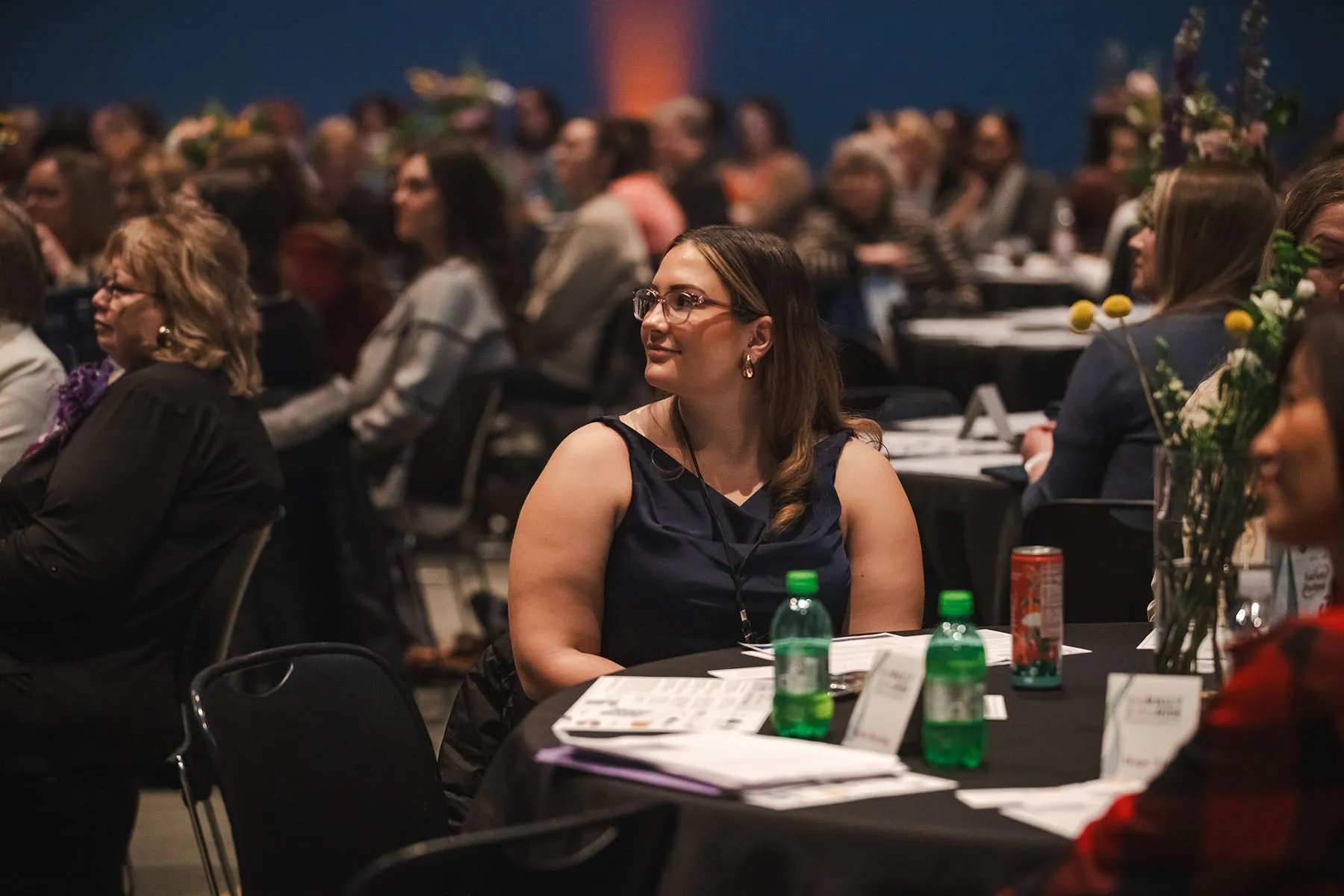
A woman listens during the We Rally & We Rise Women’s Conference in Lancaster, Ohio, on March 21, 2025. Hundreds gathered at the independently organized event after the university-backed celebration was canceled. (Megan Cardenas/OH Creative Studios for We Rally We Rise)
Lancaster may be close to the state’s capital, but it’s the county seat in an agricultural region of pig and cattle farms. Lancaster itself is known for its glassware — the hometown company, Anchor Hocking, is named for the Hocking River, which snakes through the city. Once one of the world’s largest manufacturers of glassware, Anchor Hocking went through a merger, then a bankruptcy. Like in so many small cities and towns, Lancaster’s historic downtown became a symbol of economic decline in the post-industrial Rust Belt. In recent years, though, Lancaster’s population began to tick up again.
Fairfield County is a Republican stronghold in presidential elections. President Lyndon Johnson, in 1968, is the only Democrat who has won there since 1944. Republican President Donald Trump’s America-first economic message resonated with voters who have watched Lancaster struggle, then rebound. In 2024, close to 62 percent of the county’s voters cast ballots for Trump and Vice President JD Vance, who was then one of the U.S. senators for Ohio. The state, a one-time presidential bellwether that has in recent cycles grown more conservative, backed Trump over Democratic Vice President Kamala Harris by 55-to-44 percent.
In this slice of Trump Country, personal interpretations of the reasons for the cancellation of Celebrate Women are a sort of political Rorschach test. Some left-leaning voters believe it was the inevitable result of Trump’s assault on diversity, equity and inclusion, or DEI, a broad concept that his administration has deployed to challenge and threaten institutions deemed too liberal. Some conservative-leaning voters believe the cancellation to be an overly cautious move by the university — and potentially a way to make the new administration look bad.
One thing on which women on both sides agree is that they should not be silenced.
“There is dissent about how we came to this place,” Fairfield County Auditor Carri Brown, an elected Republican, acknowledged during her opening remarks. But “when we’re told we cannot celebrate women, we’ll respond by saying, ‘Yes we can’ … and we’ll rally and we’ll rise!”
When she described diversity as “not a bad word” but a “blessing,” the crowd applauded and some rose to their feet. “I have a very strong faith in America,” Brown said.
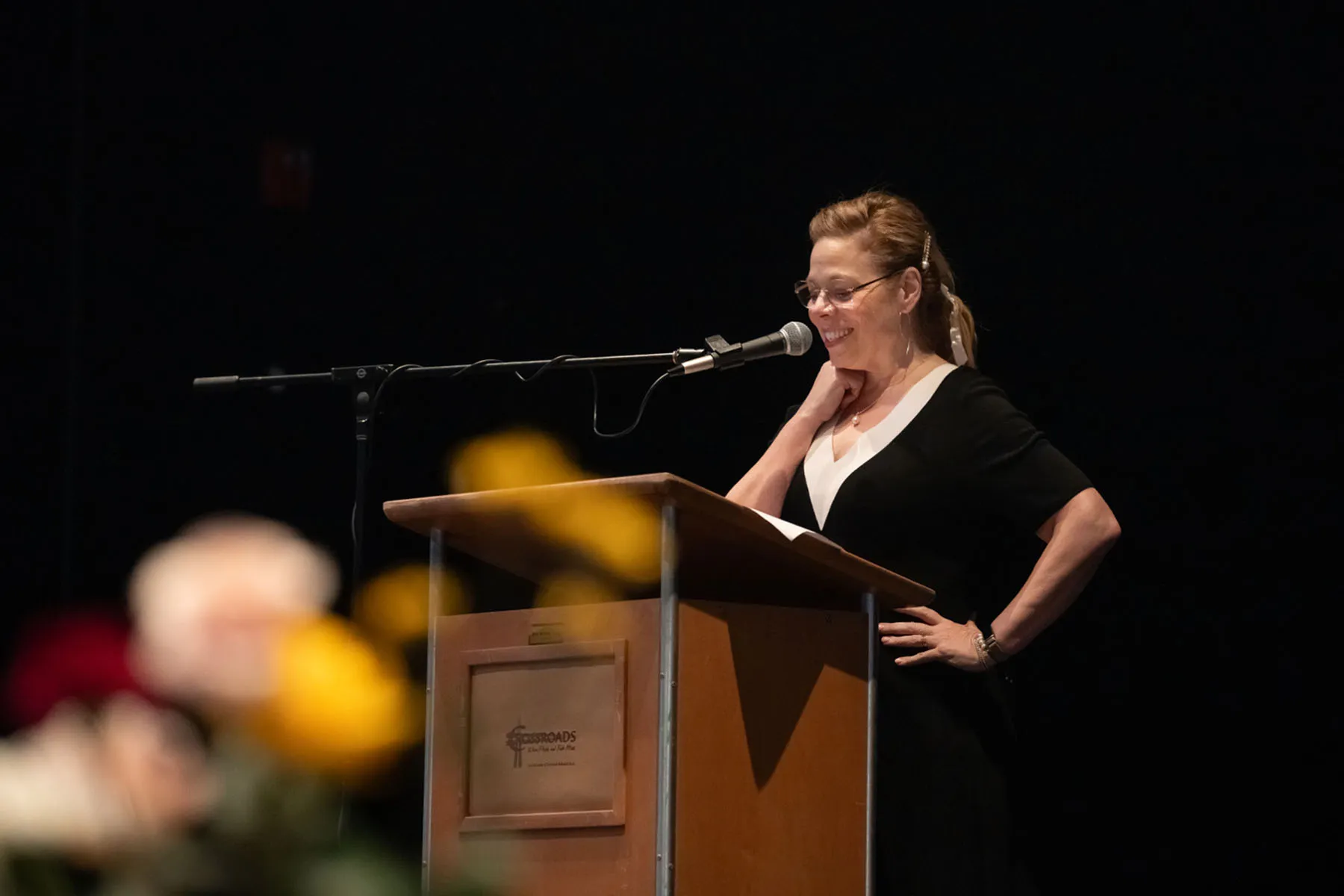
Fairfield County Auditor Carri Brown delivers opening remarks during the We Rally & We Rise Women’s Conference.
(Megan Cardenas/OH Creative Studios for We Rally We Rise)
Ohio University’s decision to cancel the Celebrate Women event is the latest skirmish between conservative politicians and the elite institutions of higher education that they have long charged with being hostile to their political viewpoints, with so-called DEI efforts at colleges and universities now front and center to their case.
A February 14 “dear colleague” letter from the civil rights office of Trump’s Department of Education to colleges and universities alleged an “embrace of pervasive and repugnant race-based preferences and other forms of racial discrimination” at the expense of White students. It noted that federal law “prohibits covered entities from using race in decisions pertaining to admissions, hiring, promotion, compensation, financial aid, scholarships, prizes, administrative support, discipline, housing, graduation ceremonies, and all other aspects of student, academic, and campus life.” Noncompliance would risk the federal funding that nearly all colleges and universities receive.
Though the letter made no direct mention of gender, it put university administrators on alert as they sought to identify any programming that could jeopardize their funding. When the Department of Education, which Trump now seeks to dismantle, launched investigations against more than 50 education institutions, it included two in Ohio: the University of Cincinnati and the Ohio State University.
Judith Cosgray, a librarian and leader of an arts nonprofit who has attended Celebrate Women on and off for the past 15 years, described its cancellation as a balloon deflating when its attendees most needed a lift.
“I understand that they’re afraid of losing their funding, I understand that, but sometimes you’ve got to stand up, too,” Cosgray said in between conference sessions.
In addition to the various executive orders and directives that Trump has made about DEI, the Ohio legislature, where Republicans hold a veto-proof majority in part due to unconstitutionalgerrymandering, recently approved a higher education bill that bans DEI training, scholarships and offices, and contains admonitions about teaching “controversial” topics. It is expected to be sent to GOP Gov. Mike DeWine for his signature as early as this week.
A spokesperson for DeWine did not respond to a request to comment on whether he will sign the anti-DEI legislation or if, by his estimation, events like Celebrate Women would fall under its purview. The office of GOP state House Speaker Matt Huffman likewise did not respond to the same question by publication time.
Ohio governor Mike DeWine speaks to the press on the first day of the Republican National Convention on July 15, 2024 in Milwaukee, Wisconsin.
(Andrew Harnik/Getty Images)
Celebrate Women isn’t the only recent example of how the assault on DEI across public life has led to a seeming prohibition on celebrating the accomplishments of women, with many actions taken during March, the month specifically earmarked to remember such events.
Information about the first woman to pass Marine infantry training was among some 26,000 photos and online posts marked for deletion as part of a DEI purge at the Defense Department, the Associated Press reported. A page about Golden Girls actor Bea Arthur, one of the first to serve in the Marine Corps Women’s Reserve, also disappeared. There are reports that Arlington National Cemetery scrubbed its website of references related to notable women veterans.
It isn’t limited to women. A Defense Department webpage that described the military service of Black civil rights icon and baseball player Jackie Robinson disappeared — and then reappeared. Information about the Tuskegee Airmen, the first Black military pilots who served in World War II, when the U.S. military was still segregated, has also vanished. Outcry over the removal of webpages about the Navajo Code Talkers who served during the same war led to their restoration. “History is not DEI,” Pentagon spokesperson Sean Parnell said as the department scrambled to respond.
Tabitha Stover, a financial adviser who describes herself as liberal, attended Celebrate Women for the first time last year. Despite spending most of her life in Lancaster, she didn’t know anyone at the event, but found the group kind and inviting. She was disappointed to hear this year’s conference would not move forward, then heartened when We Rally & We Rise took its place. She has vacillated about who was to blame, but described it as an event that brings people together instead of driving them apart.
Stover shared a table with a group of colleagues from the area branch of a national nonprofit organization focused on youth mentorship. Several of them are friends of hers on Facebook; she knows the women have what she called “very different” politics from one another.
“And yet we’re all here sitting at the same table,” Stover said.
Cincinnati, Ohio – The Cincinnati Reds Hall of Fame and Museum’s newest exhibit “The Big Red Machine: A 50th Anniversary Celebration of the Back-to-Back World Champions” presented by Dinsmore will open to the public on Reds Opening Day, Thursday, March 27.
Fans can relive the excitement of the Big Red Machine’s legendary 1975 and 1976 World Championship seasons through the Hall of Fame’s special exhibit, celebrating one of the greatest teams in Reds history.
Featuring dynamic graphics, rare video footage and over 100 artifacts from the era, this exhibit offers an immersive experience that brings to life the seasons when the Big Red Machine secured its place as one of the greatest teams in Reds and baseball history.
The exhibit features several notable artifacts, including:
• The third base bag used at Fenway Park during Game 7 of the 1975 World Series
• The glove worn by Hall of Fame catcher Johnny Bench during the 1975 season
• World Championship banners from Riverfront Stadium
• Memorabilia from the 1975 and 1976 Reds, 1975 Boston Red Sox, and 1976 New York Yankees
_________
BECOME A LOVELAND MAGAZINE SUPERFAN BY DONATING NOW!
Editor’s note: Open and free local reporting is critical to having well-informed community. Loveland Magazine has published a free newspaper and website for the last 20 years for our community. If you would like us to continue, kindly contribute to this service. It would be greatly appreciated. Donations may be made to: Loveland Magazine, 243 Wall Street, Loveland, Ohio 45140. Or, donations can be made through PayPal using a credit card. (https://bit.ly/4j1ju3k)
_________
“This 50th-anniversary exhibit showcases the dominance of an era when the Reds ruled the National League,” said Reds Hall of Fame Executive Director Rick Walls. “Reaching its peak in 1975 and 1976 with back-to-back World Championships, this team left an unforgettable mark on baseball history. Through artifacts, videos and graphics, visitors will be transported back to the 1970s to relive the magical moments and record-breaking performances of the legendary Big Red Machine.”
President Donald Trump signed an executive order March 14, 2025, imposing dramatic cuts on seven federal agencies, including the Institute of Museum and Library Services. (Catherine McQueen/Getty Images)
Public libraries in Ohio have taken on many identities over the last 25 years, from literature distributors and internet hubs, to social services researchers and providers of basic needs like free food. But funding has stagnated, failing to match growing demands.
The Toledo Lucas County Public Library works to cultivate reading skills and technology access. But along with those services, the system works with partners to distribute meals to children in the community. It also hosts a small business and non-profit team, a program that has provided training, education, research services, technology and physical space, equating to more than $3.1 million in value to entrepreneurs and businesses, according to Jason Kucsma, executive director and fiscal officer for the library system.
“Folks tend to think of their libraries as where they grew up and had their story times,” Kucsma told the Capital Journal. “But we’re part of the public infrastructure.”
Libraries are also jumping in as potential funding cuts and actual job cuts to agencies like the IRS and the Social Security Administration leave Ohioans with questions and a lack of answers.
“When it comes to federal agencies, that’s probably something we’re going to see more of,” said Michelle Francis, executive director of the Ohio Library Council.
Ohio libraries are in the thick of it with tax season going strong, as they partner with organizations like the AARP to help people finish their filings.
“We can’t keep up with the demand for tax services,” Kucsma said. “Once we open that up, those slots fill up pretty quickly.”
In one year, Ohio public libraries saw visits from enough people to fill Ohio Stadium 434 times, according to council data.
However, over the last 25 years, the funding from the state hasn’t always matched the influx of roles libraries have included in their portfolio.
State funding
The Public Library Fund, which is the state’s funding source for all public libraries dropped by $27 million last year, putting the funding at the same level it was 25 years ago.
“When you’re funding libraries at the same level you were 25 years ago, but yet the demand, the expectation is growing, something’s gotta give,” Francis said.
The local libraries have significant support from their communities in the form of property tax levies, but there are still 48 library systems of the 251 in the state that rely solely on state funding for their main revenue, according to Francis.
“We see our relationship with the state as one where when we receive funding from the Public Library Fund, it goes straight to those services on the local level,” she said.
GET THE MORNING HEADLINES.
The state also provided $4.5 million to the State Library of Ohio in the last budget, money which supports the research areas of the library, including conservation of things like the official photograph of the Ohio House from 1890, documents about the state dating back to 1876 and even a celebration of the 35th birthday of the United States
The SLO gets some funding from libraries with which the it collaborates, but the biggest chunk, $5.4 million, comes from the federal Institute for Museum and Library Services.
“We’ve been here for 200 years, we have to plan like we’re going to be here for 200 more years,” Knapp said.
Without help from both the federal and state sides, the library is going to have trouble, particularly with its current facility.
In asking for a one-time increase in the 2026 operating budget of $525,000, Mandy Knapp, who heads the state library, told the Ohio House Workforce and Higher Education Committee their current facility is “no longer suitable” with the work needed to remediate HVAC issues threatening the preservation of “one-of-a-kind and rare materials” that include medieval manuscripts and writings from state political leaders.
“Due to the condition of our facility, we are unable to correctly preserve and care for these materials,” Knapp told the committee in February.
Federal funding
Along with the battle for state funding, the state library is facing potential cuts on a federal level after an executive order from President Donald Trump listed the Institute of Museum and Library Services as part of a group of governmental entities to be “eliminated to the maximum extent consistent with applicable law,” and ordered to “reduce the performance of their statutory functions and associated personnel to the minimum presence and function required by law,” according to the executive order, which was released March 14.
Among the other entities listed for elimination with the library-services agency were the United States Interagency Council on Homelessness, the Minority Business Development Agency, the Community Development Financial Institutions Fund, the Woodrow Wilson International Center for Scholars in the Smithsonian Institution, and the United States Agency for Global Media and the Federal Mediation and Conciliation Service.
The museum and library services institute provides funding to libraries and museums nationwide, including the State Library of Ohio. The library was praised by Francis and Kucsma as an entity that provides statewide benefits from those federal funds, including resource-sharing, summer learning programs, reading programs for the blind and deaf, and the Ohio Digital Library, which helps local libraries big and small provide audiobooks and e-books.
“These resources are not large amounts of money, but they go to help support projects and programs that the people of Ohio benefit from every day,” Francis said.
As of Friday afternoon, the State Library of Ohio hadn’t heard whether or not its funding would be cut, specifically the Grants to States Program, which is where the state library receives most of its funding.
Source: State Library of Ohio
The $5.4 million from the federal Institute of Museum and Library Services is a drop in the bucket among the trillions of dollars the U.S. Congress handles, as Knapp looks at it.
“It’s like finding $20 in your wallet that you didn’t know was there, that’s what it is to Congress,” she said.
But for the State Library and the local libraries who work with it, that money is the difference between needed partnerships – digital services, consortiums for smaller libraries, the conservation of historic materials including parts of the state’s founding history – and being reduced to one singular role as a research library without the ability to help fellow libraries.
“It would totally and utterly devastate the State Library of Ohio,” Knapp said.
As it happens, the Toledo Lucas County Public Library was one of the recipients of the National Medal for Museum and Library Services, given out by the Institute of Museum and Library Services to “institutions that make significant and exceptional contributions to their communities.”
Part of that contribution includes opening its meeting rooms to local governments and elected officials. At Toledo’s libraries, 27% of their meeting space usage in the last year was government-related, according to Kucsma, something the library encourages as a way to “meaningfully engage with people.”
“As we see people’s trust in general institutions erode, especially in the last 10 years, that hasn’t happened with people’s trust in libraries,” Kucsma said. “I think it’s only grown.”
Gov. Mike DeWine’s executive budget proposal had an increase to the Public Library Fund from 1.7% to 1.75%. But Francis said “we still have a long way to go with the budget,” and they plan to push even harder to show the importance of public libraries.
“I’m optimistic that (legislators) see the value,” Francis said.
YOU MAKE OUR WORK POSSIBLE.
____________
Susan Tebben
Susan Tebben is an award-winning journalist with a decade of experience covering Ohio news, including courts and crime, Appalachian social issues, government, education, diversity and culture. She has worked for The Newark Advocate, The Glasgow (KY) Daily Times, The Athens Messenger, and WOUB Public Media. She has also had work featured on National Public Radio.
Ohio Capital Journal is part of States Newsroom, the nation’s largest state-focused nonprofit news organization.
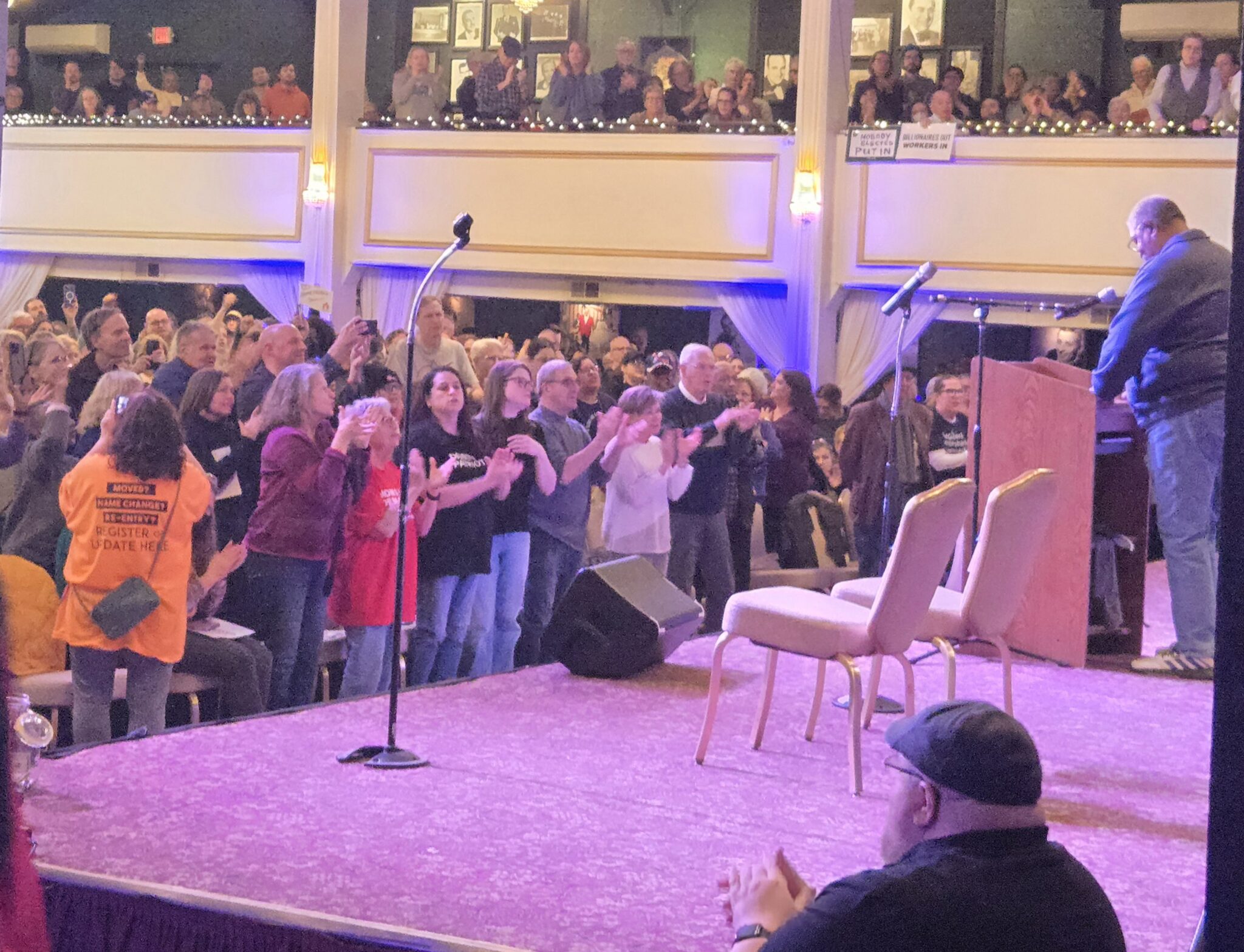
The audience at a packed Valley Dale Ball chants “Do Your Job” to empty chairs meant for U.S. Sens. Bernie Moreno and Jon Husted, both Ohio Republicans. (Photo by Marty Schladen, Ohio Capital Journal.)
An enthusiastic crowd of about 1,400 Ohioans on Saturday packed the Valley Dale Ballroom to say their federal officials aren’t representing them — and that they’re not standing up to President Donald Trump as he allows the world’s richest man to slash federal programs.
The event, staged by Indivisible Central Ohio, was facetiously called a town hall.
Chairs were placed on the stage for U.S. Sens. Bernie Moreno and Jon Husted, both Republicans. They sat empty, and organizers said the senators’ offices didn’t even bother to say they wouldn’t be coming.
Instead, organizers asked the questions they would have put to the senators to the AI program Chat GPT. The program said that the massive layoffs and cuts to federal programs would cost Ohio jobs, harm university research and stunt the biomedical sector.
Mia Lewis, an organizer, urged the crowd to turn out regularly to protest what’s happening.
“This is an unprecedented moment in our country. This shit is not normal,” she said of an administration that regularly attacks the judiciary, and allows an unelected, unconfirmed Elon Musk hack wildly at the federal government. “Just two people standing on a highway is not the same thing as 50 people being there every day.”
Members of the audience held signs that said things like “Nobody elected Putin,” “Nobody elected Musk,” and other things that aren’t publishable by a general-audiences news organization.
Moreno and Husted weren’t the only ones to be mocked for their absence. Joyce Beatty, a Democrat and longtime congresswoman from Columbus, begged off, citing a “prior commitment.” An unfortunate constituent was regularly heckled as she tried to read in first person a letter Beatty had sent.
When the constituent read a passage implying Beatty was present, a man yelled out, “You’re not here!” The crowd laughed.
Arnold Scott summed up the general tenor.
“As an ex-federal employee and a union member, I’m mad as hell,” he said. “How about these billionaires pay their taxes? When they cut employees at the various agencies, actually what they’re doing is cutting the services that the taxpayers are paying for. When they cut the VA, they’re cutting veterans. You stand there and say you support the veterans, but then you cut the veterans. When you cut them, that translates into it taking longer for them to receive the services that they’re entitled to.”
Scott said an Ohio federal worker lost her job and complained to one of the Ohio senators. “What do you want me to do?” Scott claimed the senator responded.
Then Scott turned to the two empty chairs and said, “Mr. Senator, what we want you to do… we want you to do your job.”
That brought the crowd to its feet to chant “Do your job!”
“Every dollar we don’t have is produce we don’t grow,” Duffy said.
YOU MAKE OUR WORK POSSIBLE.
_______________
Marty Schladen
Marty Schladen has been a reporter for decades, working in Indiana, Texas and other places before returning to his native Ohio to work at The Columbus Dispatch in 2017. He’s won state and national journalism awards for investigations into utility regulation, public corruption, the environment, prescription drug spending and other matters.
Ohio Capital Journal is part of States Newsroom, the nation’s largest state-focused nonprofit news organization.
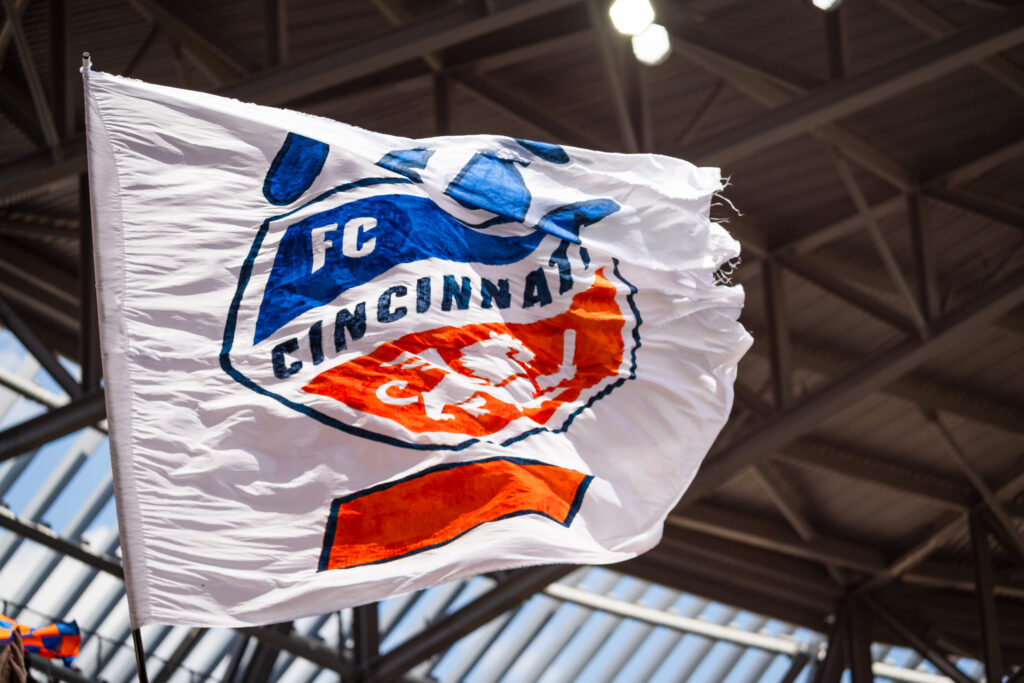
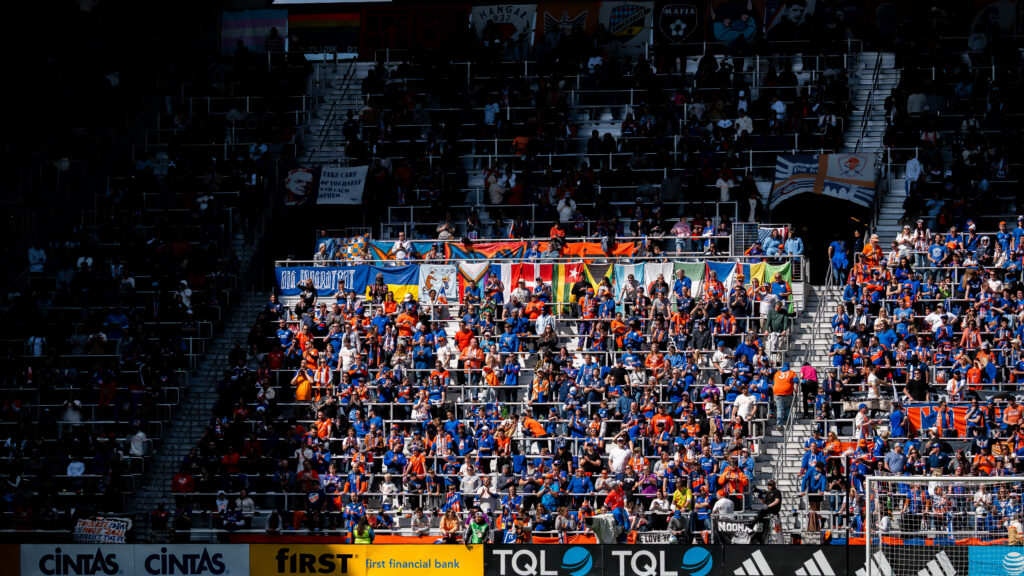
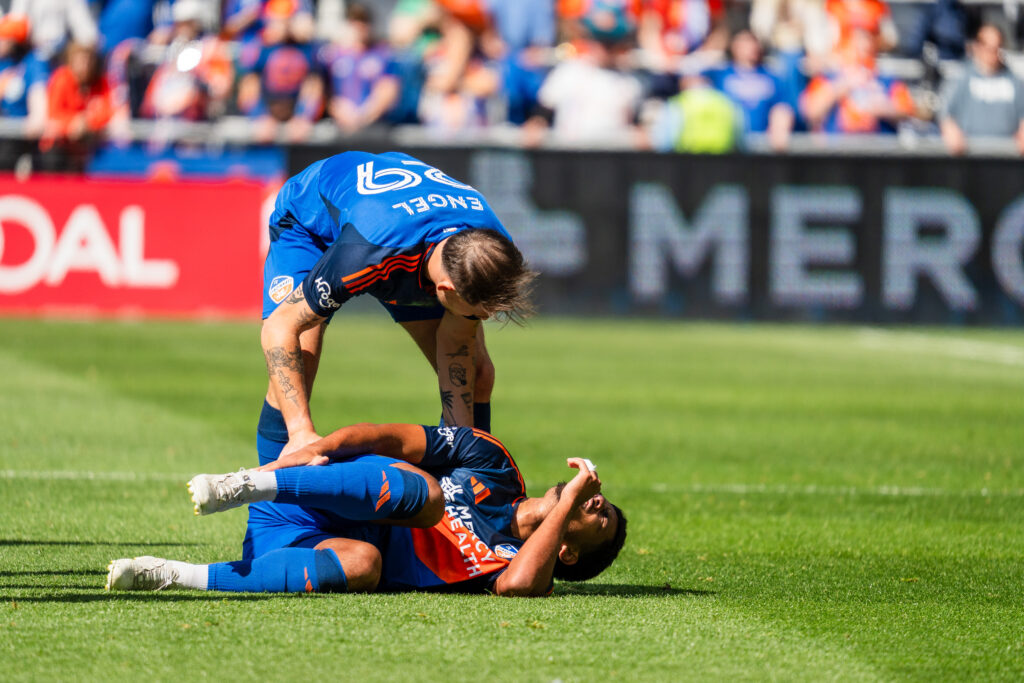
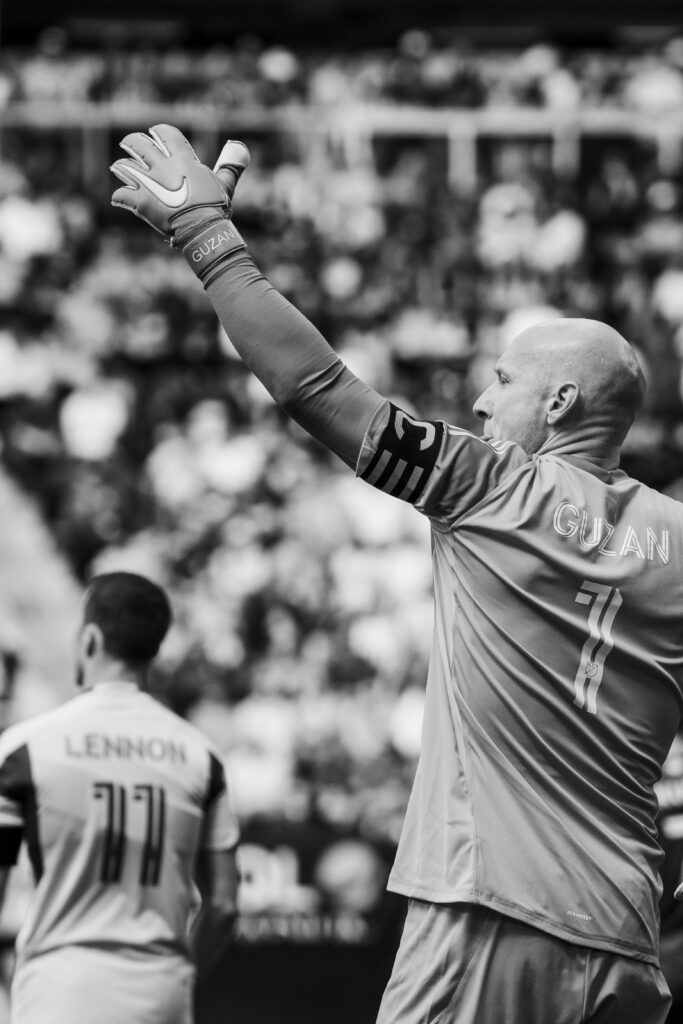
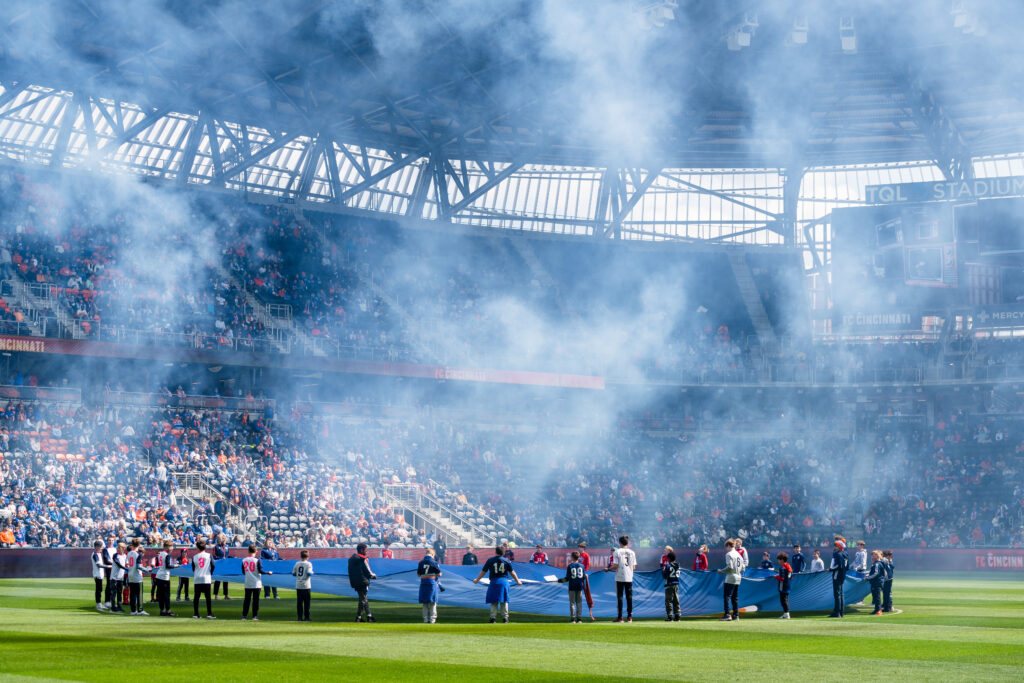
Cincinnati, Ohio – Given the circumstances, Saturday afternoon’s draw with Atlanta United felt like a loss. As the stand-alone match in the early window of MLS play on Saturday, FC Cincinnati had mounted a come-from-behind surge in the second half and was looking to secure a third home win of the season. But an unfortunate, mistimed clearance attempt derailed that. It left FC Cincinnati with a 2-2 draw and left TQL Stadium in the early evening feeling like they had lost two points rather than earned one.
Alvas Powell, tracking back to defend a cross, reached out with his foot, looking to block the sent-in ball by Atlanta forward Saba Lobjanidze. But the block attempt deflected the ball into the FC Cincinnati net and equaled the score. An unfortunate, frankly unlucky, but certainly unintentional error made late that FCC couldn’t overcome. And after conceding the first goal of the match and then coming back with two goals of their own late in the second half, the good feelings of a come-from-behind win were soured.
BECOME A LOVELAND MAGAZINE SUPERFAN BY DONATING NOW!
Editor’s note: Open and free local reporting is critical to having well-informed community. Loveland Magazine has published a free newspaper and website for the last 20 years for our community. If you would like us to continue, kindly contribute to this service. It would be greatly appreciated. Donations may be made to: Loveland Magazine, 243 Wall Street, Loveland, Ohio 45140. Or, donations can be made through PayPal using a credit card. (https://bit.ly/4j1ju3k)
__________
Earning three points, with all the external factors attached to it would have been even more swell. Missing its top striker due to International Duty and missing three center backs due to injury, illness and yellow card suspension, FC Cincinnati could have snagged a victory while shorthanded. But at the end of the game, what became clear was that, based on what Head Coach Pat Noonan said postgame, a win would overcome more than the forces they couldn’t really control. .
It would be overcoming the fact that they just plainly didn’t play their best.
“Overall, it was an average performance. The first half was sloppy. Just technically poor, passing and decision-making led to unnecessary transition moments, and I think we cleaned that up in the second half. Certainly a good response after going down a goal,” Noonan explained in an analysis of his team’s performance. “So, yeah, overall disappointing.”
FC Cincinnati had several players play out of position due to availability, a challenge that left FCC out of rhythm and, in parts, uncomfortable. Noonan praised those players who were out of position, both for their effort and willingness, in addition to their performances, given the circumstances. Still, the changes certainly left FCC in a pickle. Players like Powell, DeAndre Yedlin, Lukas Engel, Yuya Kubo and Corey Baird were all deputized to play center back or wingback out of position and apprised themselves well. But the performance just didn’t rise, as a whole, to a level beyond what Noonan said was average.
“Some guys were challenged by playing out of position, and for the most part, guys handled those responsibilities in a pretty good way,” Noonan explained. “But you could see just the rhythm off at times with decisions. I think we got away from some of the things that we kind of prepared that could have allowed us to move up the field in a better way more consistently.”
The come from behind second half performance, the one that Noonan praised as being an improvement on the ‘sloppy’ first half was fueled by Evander creating a brace for himself and, for perhaps the first time in an FC Cincinnati uniform, enforcing his will on the match.
His first goal, a free kick that deflected off the Atlanta wall, freezing the goalkeeper, was created because of his ball control and passing through the midfield and into the final third of the Atlanta zone. The well-taken set piece resulting in a goal was just a cherry on top. The second goal, a run into the box after Pavel Bucha carried the ball through the midfield was a finish that reminded everyone of how dominant an attacking force he can be.
“That is the responsibility of the number 10,” Evander explained postgame, explaining how he was able to create his goals and the importance of them in the match. “When a game is like that, we need to take responsibility and try everything we can to tie the game and then get the result. I think that’s something that I have to deal with.
“This is a good responsibility,” Evander clarified. “It is just a part of my game as well. So there’s nothing really crazy to it… it’s just something that we needed.”
“He’s been pretty consistent for games now,” Pat Noonan said of Evander postgame. “I think you see the impact that he has with making plays. There are a couple forced moments in the second half when we’re trying to find a goal – I think our entire group can be more patient and play a more simple way and we can still be very effective – but he does a good job. He’s just got a real smooth way about how he finds space for himself, his teammates. So, he’s certainly been impactful.”
The end game of the match came down to the own-goal that solidified the draw. After the second goal of the Evander brace in the 75th minute, FC Cincinnati needed to see the game out, and the concern Noonan raised postgame was not in the immediate action of the own goal – an obvious and clearly unintentional error – but in the build-up to it. While acknowledging that there were many players playing out of position or in a collection along the back line that was largely new to them, Noonan highlighted that the defensive recognition on the play was lacking. Even if the ball had made it through and not deflected off the blocking Powell, it was a problematic play and one that would have resulted in a dangerous situation regardless.
“It was just poor organization on the play,” Noonan said of the play. “Our defensive organization wasn’t good and some of their positioning ahead of the ball we didn’t recognize. It was just too easy for them to get the ball into the box.”
FC Cincinnati now turn their attention to Nashville SC, their next match on the calendar. This match, in some ways, can be a difficult one to evaluate, but the lessons taken from it will be felt and learned. In future matches, it seems unlikely (albeit not impossible) that FCC will have exactly one natural centerback available and that centerback will only be available for a half due to his return from surgery, so attackers won’t be enlisted as defenders and others won’t be away on international duty. But the themes Noonan laid out, things like organization or sticking to a game plan, are places they can grow – and intend to do so.
“We’ll be fine,” Noonan said simply and calmly. “We just have to continue to work and train, and we have plenty of time to do that to improve and find a better rhythm, and overall, just better and more consistent play.”
A draw is all they have to settle for this weekend. But “settling” is hardly “satisfied.” That much was clear Saturday afternoon.
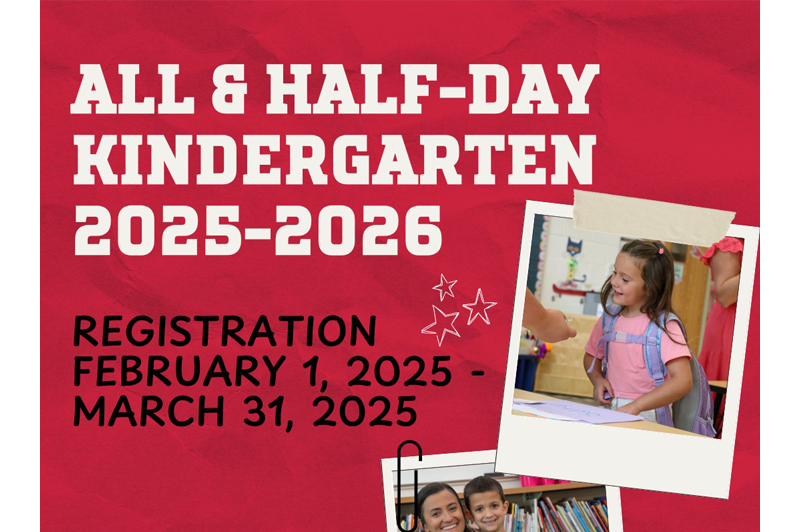
Milford, Ohio – Do you have an incoming Milford Kindergartener, or know a family with a child turning five this summer? Don’t miss the opportunity to enroll in Milford’s Kindergarten program.
To be eligible, children must be 5 years old on or before August 1, 2025.
Families interested in the Kindergarten Lottery must submit all required forms by March 31, 2025.
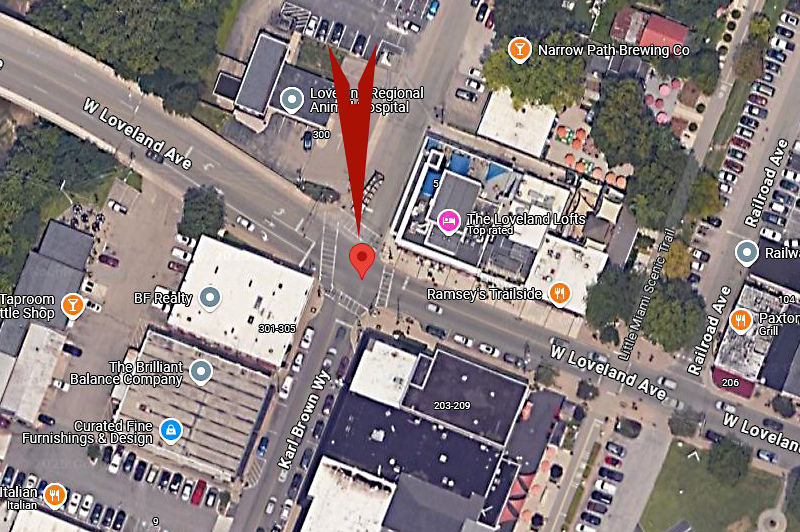
Loveland, Ohio – Expect traffic delays on Tuesday March 25 from 9 AM until 3 PM. when work will be performed on the traffic signals at West Loveland Avenue and Karl Brown Way.
Eastbound traffic on West Loveland will be diverted to Karl Brown Way. City Hall says that trucks “will be permitted through at contractor direction.”
Westbound West Loveland traffic will be “maintained.”




 Beth Sullebarger, from the historic preservation consulting firm Sullebarger Associates presented the plan on behalf of the HPPC. She commented that the HPPC had two decisions to make. The first is whether the current property can be saved and the second, if it can’t be saved, what kind of new building should be approved. She said that regarding the current building, it appears to have been built in the early 1900’s as it can be seen in a 1911 Sanborn Map of historic Loveland. She shared pictures of the property, both inside and out. The structure had been gutted down to the studs and then demolished.
 Key suggestions by Sullebarger were as follows:
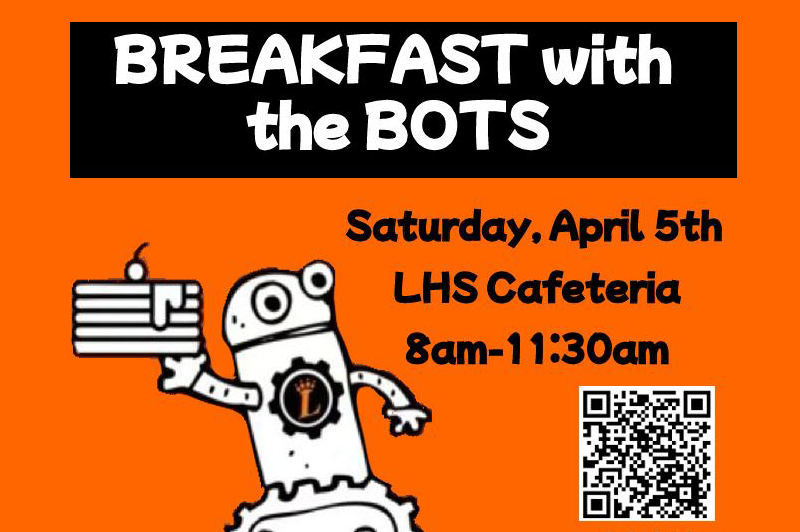
 Loveland, Ohio – There are just 10 more days until for Breakfast with the Bots, Saturday, April 5 at Loveland High School. You can enjoy hot pancakes drenched in warm syrup with some sizzling bacon, and check out the teams’ competition robots from this year, including the Loveland Middle School team that is going to the World Championship.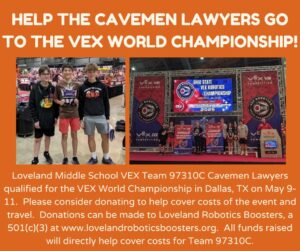
![[Watch Meeting] P&Z denies Conditional Use at 514 West Loveland Avenue](https://lovelandmagazine.com/wp-content/uploads/2025/03/514-west-loveland.jpg)











![[Slide Show by Andrew Sidchack] FC Cincinnati settles for draw](https://lovelandmagazine.com/wp-content/uploads/2025/03/fc-cincinnati.jpg)
 by
by