Loveland, Ohio – Elizabeth (Schickel) Robinson says, “All my adult life I have been an artist and wanted to share my gifts with you. Come on In, I hope you love what you see!”
Visit her new ETSY shop and all see all her creations
Gicleé, Archival, Fine Art Prints of my Original Artwork and Calligraphy,
Greeting Cards and Note Cards from Original Artwork,
Guardian Angels: Handcrafted One of a Kind.
Gicleé, Archival, Fine Art Prints of my Original Artwork and Calligraphy,
Greeting Cards and Note Cards from Original Artwork,
Guardian Angels: Handcrafted One of a Kind.
Monarch Butterflies, Giclée Print, Signed, From My Original Artwork, Cycle of Life, Caterpillar, Cocoon, Archival, Thick Fine Art Paper
Low in stock, only 3 left Price:$110.00 (Pay in 4 installments of $27.50.)
______________
Elizabeth (Schickel) Robinson has always lived in Loveland, married and raised a family here. Family, faith, service, community and creativity are most important to her. She is an artist driven to notice and bring beauty to others including creating commissioned works of art for hospitals and churches. She cares about our culture and wants to build opportunities for community and connection to God, each other and creation. She recently retired as a Registered Nurse at Cincinnati Children’s where she was privileged to care for patients and their families. She strives to live with her eyes wide open, seeing the extraordinary in the ordinary in life and nature that surrounds her.
Ohio Gov. Mike DeWine has promised to push federal officials to provide greater support to farmers affected by bird flu. The governor spoke alongside state Agriculture Director Brian Baldridge Thursday as well as the state veterinarian and poultry industry representatives.
State impacts
Highly pathogenic avian influenza, or HPAI, commonly known as bird flu, has been spreading throughout the country since the beginning of 2022, but a recent a recent spike has hit Ohio farmers particularly hard. According to the latest USDA data, Ohio has culled nearly 14.5 million birds since the beginning of this year alone. That’s more than double any other state over that timeframe.
GET THE MORNING HEADLINES.
“And to put it in perspective,” Baldridge said, “as far as the layer facilities, about over 30% of our layer birds here in Ohio have been depopulated. Those are the ones that are laying the eggs each and every day.”
He noted that one facility raising ducks and a few raising turkeys have been impacted as well.
DeWine explained that once farmers detect a case there’s little they can do besides cull the flock.
“The doctor tells me the fatality rate is very, very, very high, right?” he said, looking to State Veterinarian Dennis Summers. “You could be as high as 90, 95, even 100%, so those birds are going to basically die anyway. The point, the point is you’re trying to either slow this thing down or, obviously the main goal is to stop it.”
To that end, Summers noted, “One thing that we definitely want to make sure that we’re keeping an eye on is an effective way to use a vaccination strategy for poultry for HPAI. So that’s one thing that we’re going to be continuing to watch, and hopefully we have that as a tool in the toolbox here for Ohio.”
Jim Chakeres, who heads up the Ohio Poultry Association, has made the same point with state lawmakers, but the idea of vaccinating flocks faces competing interests within the industry.
Farmers who focus on meat production — known as broilers — could see their export business dry up following vaccination because buyers in other countries worry birds coming in could carry the virus and infect their domestic flocks.
In a recently announced $1 billion response effort, USDA officials earmarked $100 million to research vaccines or other treatment, and the agency has awarded a conditional license to develop a bird flu vaccine. Despite that funding though, a vaccination program would be a significant step. The agency has stockpiled vaccines in the past without actually using them.
What DeWine wants
The governor said he would be an advocate for the state and its farmers but “one of the things that is clear, is the federal government is really going to have to accelerate the research that is being done in regard to bird flu.”
The potential impacts extend beyond hot spots like poultry farms in Western Ohio, DeWine said — not explicitly referencing the risk of human infection but noting “obviously bigger ramifications in regard to bird flu.”
Ohio reported its first case of human infection last month — one of 70 tallied so far. Although one person in the U.S. has died, there has been no indication of the virus spreading from person to person.
DeWine said he’d convey the message to speed up research when he speaks to U.S. Secretary of Agriculture Brooke Rollins Friday.
The governor added that he’d push for the secretary to extend the extra financial support she announced recently to farmers who have already been impacted.
“One of the things that the federal government has done is up the amount of compensation,” DeWine said. “One of the things I’ll take up with the secretary is to see whether or not that could be backdated, basically retroactive, because some of these farmers’ (losses) obviously occurred before the date when it went into effect.”
But even with greater support, Chakeres warned that egg prices wouldn’t come down right away.
“Our farmers are working every day to get those barns cleaned and disinfected so they can repopulate and start producing eggs again,” he said. “That takes time. It takes that chick 21 days to hatch. It takes 18 weeks before that hen is going to start laying eggs again. So it just takes time to repopulate the facilities.”
Follow Ohio Capital Journal Reporter Nick Evans on X or on Bluesky.
YOU MAKE OUR WORK POSSIBLE.
_______________
Nick Evans
Nick Evans has spent the past seven years reporting for NPR member stations in Florida and Ohio. He got his start in Tallahassee, covering issues like redistricting, same sex marriage and medical marijuana. Since arriving in Columbus in 2018, he has covered everything from city council to football. His work on Ohio politics and local policing have been featured numerous times on NPR.
Ohio Capital Journal is part of States Newsroom, the nation’s largest state-focused nonprofit news organization.
A six-unit, 3-story townhome that is proposed by local builder John Hill Construction
Loveland, Ohio – A six-unit, 3-story townhome development proposed by local builder John Hill Construction, to be located at 200 Railroad Avenue within the Historic Preservation District Boundaries, was determined to be “inappropriate” for the neighborhood on Wednesday, March 5. The proposed townhomes were to be adjacent to existing cottage-style homes and Nisbet Park on the Loveland Bike Trail in Historic Downtown Loveland. The proposed project encompasses two vacant parcels consisting of .229 acres.
A meeting was held by the Historic Preservation and Planning Commission, who voted unanimously, to reject the proposal.
The Commission recently approved the demolition of an existing historic home on the site.
These LOVELAND MAGAZINE TV videos are from the meeting. The first is the presentation made by the construction company about their proposed project. The second is the public comments made during the meeting. The third video is the discussion of the Commission and their rationale for deeming the project “inappropriate” for the immediate neighborhood.
[pdf-embedder url=”https://lovelandmagazine.com/wp-content/uploads/2025/03/Agenda-Wednesday-March-5-2025.pdf” title=”Agenda – Wednesday, March 5, 2025″]
Loveland, Ohio – March Madness is almost here, unfortunately for Chris and Mark, their teams are sputtering. Mark takes us through the Bearcats tough loss against Houston on the road, and then breaks down their back-breaking loss against Kansas State at home. Cincinnati’s NCAA Tournament hopes appear to be just about over after that loss, so Chris and Mark look ahead a bit into the future for Wes Miller (who the Enquirer has confirmed will be back next year) and the Bearcats roster. The Wolverines were in action this past week and lost back to back games against two very good teams in Illinois and Maryland. The Wolverines are anemic from behind the 3-point line and it is really catching up to them as their offense is struggling to keep pace against the elite tournament teams in college basketball.
The guys also explore the big Bengals news of the day: that the team has allowed star defensive end Trey Hendrickson to seek a trade. What does this mean for Cincinnati’s defense, and for the other Bengals seeking long term deals like Ja’Marr Chase and Tee Higgins? How did the Bengals get to this point, and what could they have done to avoid it? Mark and Chris answer all these questions and more on this week’s podcast episode.
Have a listen and don’t forget to leave your comments and feedback!
_______________________
Hey readers… have an opinion about sports? How about a topic you’d like to see written about in Loveland Magazine or a thought about one of our articles?
Just need to vent and get out your frustration about the Reds, Bengals, or any other sports issues?
Christopher Ball is a longtime Loveland resident and an attorney. He graduated from Loveland High School in 2003 and was a member of the football team before going on to become a coach’s assistant at DePauw University in Greencastle, Indiana. He has been following and rooting for the Reds and Bengals since the early 1990s and has been through the many ups and downs that fandom has wrought over the years.
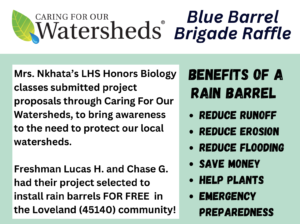
Loveland, Ohio – Two students from Loveland High School are doing a raffle drawing for several lucky Loveland (45140) community members to win a painted and installed rain barrel through a partnership with Caring For Our Watersheds.
If you’re interested in entering the raffle fill out this FORM.
If you win you are responsible for selecting a location for installation.
Installation will take place the first 2 weeks of April.
If you are selected they will reach out to you to coordinate the installation.
Columbus, Ohio – Peer leadership and meaningful connections can save lives. According to a new study funded by the Centers for Disease Control and Prevention and published in the American Journal of Preventive Medicine, Sources of Strength’s (Sources) prevention model helps reduce suicide attempts among high school students by an astonishing 29%.
For nearly 30 years, Sources has worked with both youth and adults to build resilience, promote mental well-being, and prevent suicide. By training diverse student leaders and leveraging peer influence, Sources transforms school environments and fosters cultures of hope and support, according to a new report released by the Ohio Suicide Prevention Foundation.
Sources of Strength Ohio (SourcesOH) is an initiative of the Ohio Suicide Prevention Foundation (OSPF) and PreventionFIRST! with funding and support from the Ohio Department of Mental Health and Addiction Services.
Tony Coder
“We hear from so many people how Sources positively impacts the well-being of students, teachers, and communities across Ohio,” said OSPF Executive Director Tony Coder. “This new study provides further evidence of the life-saving potential of this program. We are so thankful to be a part of providing Sources at no- or low-cost to as many Ohio schools and communities as possible.”
Considered one of the first suicide prevention programs to demonstrate effectiveness using Peer Leaders, SourcesOH has been implemented in 62 Ohio counties and 399 Ohio schools since December 2020 and has reached 174,000 Ohio students, including 218 middle and high schools.
Nicole Schiesler
“PreventionFIRST! supports Ohio schools in implementing and adopting Sources of Strength Ohio. When we meet with administrators and teachers, sharing positive outcomes, supported by national and state-level data, adds incredible value to this successful program,” said PreventionFIRST! President and CEO Nicole Schiesler. “Schools want to make informed decisions, and this evidence-based research elevates Sources of Strength as a beneficial and exceptional choice for the mental wellness of their students and teachers.”
The new study involved 20 high schools in Colorado and over 6,500 students, with 226 peer leaders and 79 adult advisors trained by certified Sources staff.
Key findings from the study include:
29% Fewer Suicide Attempts: The program helped reduce suicide attempts among high school students by nearly a third.
Students Create Big Change: By empowering students to foster healthy and protective cultures, the program builds stronger, more connected schools where students feel seen, valued and supported.
Innovative Public Health Approach: According to the CDC, suicide is the second leading cause of death among young people aged 10–24, making it a pressing public health issue. This approach is promising for being able to reduce suicide at a population level.
Support for Students Facing Trauma: The study was funded to examine Source’s potential impact on sexual violence and harassment prevention. A cautious interpretation of the evidence suggests that Sources may not prevent suicide attempts among students who have recently experienced sexual violence, highlighting the need for additional intervention support for this high-risk group.
An independent evaluation of Sources Secondary Program conducted in Ohio schools during the 2023-2024 school year showed that nearly half of the students felt equipped to recognize the warning signs of suicide and step in to help a friend in need; fewer students experienced prolonged periods of sadness, many used the coping strategies learned through Sources; and the number of students involved in physical fights on school property decreased from 8.7 to 4.8%.
The Ohio Department of Education and Workforce has approved the Sources Secondary Program as a suicide and violence prevention program for HB123/the SAVE Students Act. For more information, please visit SourcesofStrengthOhio.org or email SourcesOH@Prevention-First.org.
Local public school leaders from all around the state filled the Ohio House Education Committee’s hearing room on Tuesday to explain to lawmakers how full state funding is critical to their districts.
Christopher Edison, superintendent of Pymatuning Valley Local School District, described the pride in the district’s diversity and resilience. At the Northeast Ohio district, 76% of the students are considered economically disadvantaged and there’s been an increase in the need for specialized services. Edison also highlighted the successes in academic achievement, career and workforce readiness, and mental health supports at the district.
“However, the sustainability of these programs is increasingly at risk due to rising operational costs,” Edison told the committee in Tuesday testimony. “Inflation has significantly increased expenses for essential resources such as transportation, instructional materials, and staffing.”
Without an increase in base funding, Pymatuning’s ability to “maintain and expand these successful initiatives is severely threatened,” Edison said.
GET THE MORNING HEADLINES.
Hits have already come to districts because of inflation and increasing costs not reflected in the funding model that looks to see its final funding phase-in this year, if the legislature includes it in the operating budget set to be passed by July 1.
Montgomery County’s Northmont City Schools — a district with rural, suburban, and urban areas — has seen state funding cuts and defeats of school levies that resulted in the need to cut more than 40 district positions in May 2023, and the closure of one of their elementary schools, according to Superintendent Tony Thomas.
“I understand that members of the General Assembly passed a budget two years ago that increased funding across the state, and we are thankful,” Thomas told the education committee. “But unfortunately for Northmont, those dollars are not reaching our school buildings and we are doing more with less.”
It’s stories like these that the Fair School Funding Plan workgroup, which was created along with the state’s public school funding model, is hoping will flood both the education and finance committees, along with the offices of state legislators, to inform them about the importance of proper public school funding in Ohio.
“It’s our responsibility to ensure that every member of the Ohio legislature and the General Assembly be made fully aware of these facts, their implications, and the legislative decisions that led to these circumstances as they contemplate this important budget,” said Mike Hanlon, Jr., superintendent of Chardon Local Schools, and Fair School Funding Plan workgroup member.
The workgroup met recently, along with more than 600 other education community members, to discuss upcoming legislative meetings about the budget, what the governor’s proposal would mean for districts, and how to engage with lawmakers.
“In my visits to Columbus … one message was very clear with the legislators that we met with: ‘We need to hear from constituents on the issue of school funding,’” Hanlon said.
Members of the workgroup said they’ve heard another message from the lawmakers: resources are limited in the budget.
In the governor’s executive proposal, the Fair School Funding Plan’s final phase-in was included, but inputs that would account for inflation costs at districts were not, something the governor’s office has “remained silent” on in all budgets that included the public school funding plan, workgroup members said.
“First and foremost, this is not our ideal proposal from the governor,” said Jared Bunting, CFO and treasurer of the Athens City School District. “However, this is in line with what the governor has done in the past and we’re thankful that the governor has included the Fair School Funding Plan in his budget, even though it falls woefully short of our expectations.”
In the governor’s budget for the next two years, the budget would decrease funding for traditional public schools by 0.9%, according to a workgroup analysis. Community and STEM schools will receive an 11.3% increase in the governor’s proposal, while joint vocational school districts receive a 14.1% increase. Voucher programs including the EdChoice private school program would see a 15.8% increase.
“So 90% of the students in the state are seeing a reduction in funding,” Bunting said, referring to the enrollment numbers in the state, which show the vast majority of students attend traditional public schools.
Alternately, last year, the state funded private school voucher scholarships with nearly $1 billion in one year, according to the Ohio Department of Education and Workforce.
Source: Ohio Fair School Funding Plan Workgroup
School administrators on the workgroup noted that the funding simulations used in the governor’s budget proposal show an intention to “continue to update capacity each year without any input updates.”
Without inputs to account for rising costs and inflation, the state not only won’t meet the workgroup’s ideal of a 50% state share of education costs, but will drop below the share of funding before 1995, when the Ohio Supreme Court first ruled in DeRolph v. State of Ohio that the state’s education funding violated the state constitution, falling short of the “thorough and efficient” system of schools directed in the founding document.
With talk of addressing property taxes in Ohio, something that school funding has relied on for decades, workgroup members said updating cost inputs could help with that issue as well.
“When we talk about property tax relief, we would like to argue that … updating all inputs consistently is a form of property tax relief to our community members,” said Jenni Logan, treasurer for the Sycamore Community Schools.
Now, as the budget process continues, educators, and administrators not only plan to push for proper education supports in committees considering the budget document, but also want to get district stories to all legislators, including newly elected GA members, who haven’t had a front-row seat to the public school funding model fight.
Those who are new to school funding are also faced with “competing interests in other areas that are not related to school funding,” according to Hanlon. He said legislators who talked to him said they “haven’t heard from anyone” on school funding.
“As a result, it’s very likely that they need to hear from us, and from someone that they trust and are confident in, that will provide them with the necessary facts to shape their understanding of school funding,” Hanlon said.
YOU MAKE OUR WORK POSSIBLE.
________________
Susan Tebben
Susan Tebben is an award-winning journalist with a decade of experience covering Ohio news, including courts and crime, Appalachian social issues, government, education, diversity and culture. She has worked for The Newark Advocate, The Glasgow (KY) Daily Times, The Athens Messenger, and WOUB Public Media. She has also had work featured on National Public Radio.
Ohio Capital Journal is part of States Newsroom, the nation’s largest state-focused nonprofit news organization.
This article was written by Captain Trey Foust of the Loveland-Symmes Fire Department
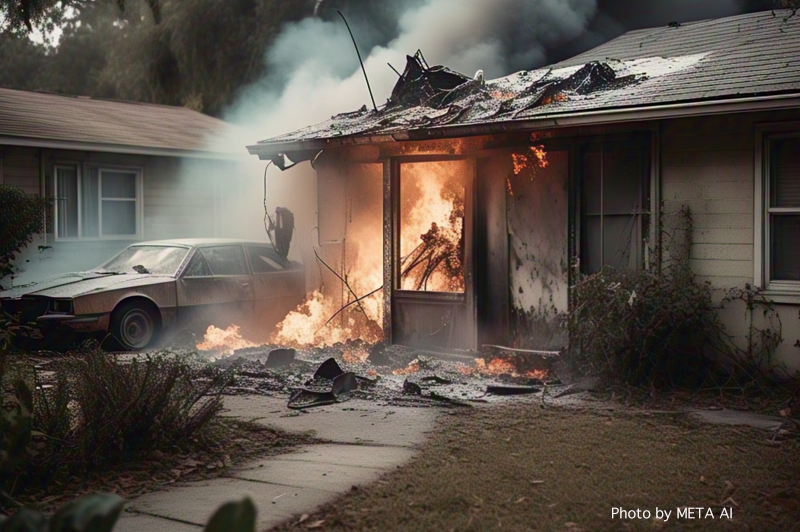
Loveland and Symmes Township, Ohio – During the 1960’s and 1970’s, aluminum wiring became a popular choice for electrical installations in homes. It was seen as an affordable alternative to copper wiring, which had become expensive due to high demands for copper. However, over the years, it has become evident that aluminum wiring poses significant safety risks, in relation to fire hazards. Residents may be at a greater risk of a fire if their home has aluminum wiring.
The Risks of Aluminum Wiring
The primary safety concern with aluminum wiring lies in its material properties and the way it interacts with electrical systems over time.
Key risks associated with aluminum wiring:
Thermal Expansion & Contraction: Aluminum expands and contracts more than copper when exposed to the heat generated by electrical currents. Over time, this expansion and contraction can loosen connections, leading to arcing and overheating, both of which significantly increase the risk of fire.
Oxidation: Aluminum reacts with oxygen in the air to form aluminum oxide, a substance that is less conductive than the base metal. This oxidation increases resistance at connections, causing them to heat up and potentially ignite nearby flammable materials.
Galvanic Corrosion: When aluminum wiring is connected to copper wiring or terminals, a chemical reaction called galvanic corrosion can occur. This process deteriorates the connection, leading to increased resistance and heat generation.
Brittleness: Aluminum is softer and more prone to damage than copper. Over time, aluminum wires can become brittle, increasing the likelihood of breaks or fractures, which can lead to arcing and sparks.
Signs of Potential Issues
Homeowners with aluminum wiring should be aware of warning signs that could indicate electrical problems, such as:
flickering lights;
unusual warmth or discoloration around outlets or switches;
a smell of burning plastic;
sparking when plugging in or unplugging appliances.
Fire Statistics
Studies have shown that homes with aluminum wiring are more likely to experience electrical fire compared to homes with copper wiring. According to the U.S. Consumer Product Safety Commission (CPSC), homes built with aluminum wiring are 55% more likely to have a fire hazard at connections than homes with copper wiring.
It’s March, and spring is in the air, literally. No matter if the month came in like a lion or a lamb, look and listen to the skies for evidence. Harbingers of spring are winging their way north as you read this. And no, I’m not talking about robins. Robins don’t actually migrate; they stay in Ohio year-round. So that ‘first robin of spring’ sighting isn’t something to get all worked up about.
However, in the past two weeks I have seen and heard flocks of Sandhill Cranes, Trumpeter Swans, Turkey Vultures, and most exciting of all, blackbirds. Now, blackbirds may not seem all that great, but keep reading and you’ll find out why they are.
There are many species of blackbirds, Brewer’s, Grackles, and Cowbirds, just to name a few. They are generally black to brown, medium sized, perching birds, and they stick together. Many different types of blackbirds will congregate and travel together in large flocks during migration; after all, there is safety in numbers. Blackbirds are so gregarious they will even flock with European Starlings from time to time.
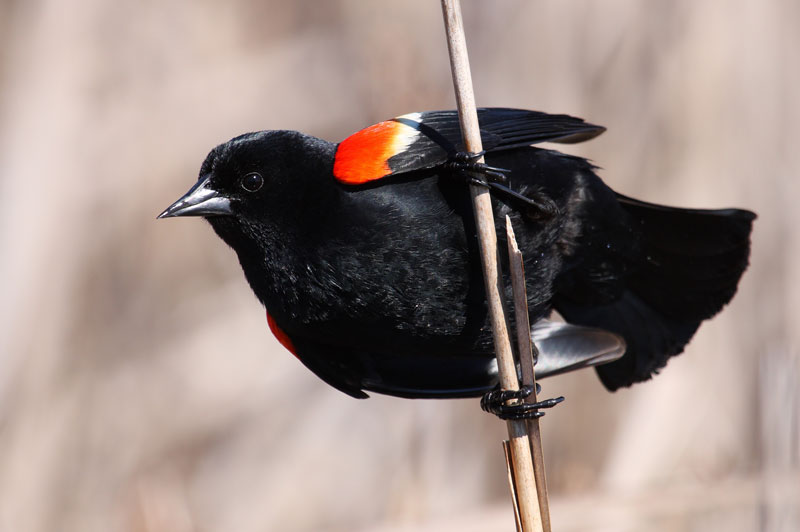
But the reason its so exciting to see blackbirds in Ohio this time of year belongs to one species in particular Agelaius phoeniceus, more commonly known as the red-winged blackbird. These are the true sign of spring, and last week, I saw two of them!
CC BY-SA 3.0, https://commons.wikimedia.org/w/index.php?curid=308953
The females and immature males are slightly larger than sparrows with similar markings. This provides excellent camouflage amongst the cattails and marsh grasses where they nest. As with most bird species, mature males are more showy than the others. Males of breeding age are glossy black with a patch of red at the top of the wing called an epaulet. Sometimes these epaulets are concealed revealing only the yellow stripe that underlines the red.
Ok, so with all these visual obstacles, how do you know if red-winged blackbirds have returned to usher in spring? This is where listening comes in. Red-wings have a very musical call with notes that sound like running water. It is easily recognized. In fact, it’s one of my favorite bird calls (right behind most owl calls). Check it out: Red-winged Blackbird Sounds, All About Birds, Cornell Lab of Ornithology.
Males call to attract mates and defend their territory. Their sound can be heard in marshy areas and among farmland all summer long. In fact, some would argue that in addition to crickets, red-wing blackbird calls are the sound of summer.
Listen to a Red Winged Blackbird
When those cold March winds blow and snowflakes are flying, it’s easy to doubt that spring is right around the corner. Remember, all you have to do is look and listen to the skies for proof that spring is on its way.
If you’d like to be able to identify birds, Cornell Lab of Ornithology, a world leader in wild bird research and identification developed the Merlin App. The App went live in 2014. It is free and runs on both Apple and Android devices. Happy birding!
As spring approaches all of our feathered friends could use a little help. Here’s what you can do:
Fill the feeders
Provide fresh water
Provide shelter from weather and predators near the feeders
Keep cats away
Put up nest boxes
Put bits of string, yarn, hair and fur out in your yard for nesting materials
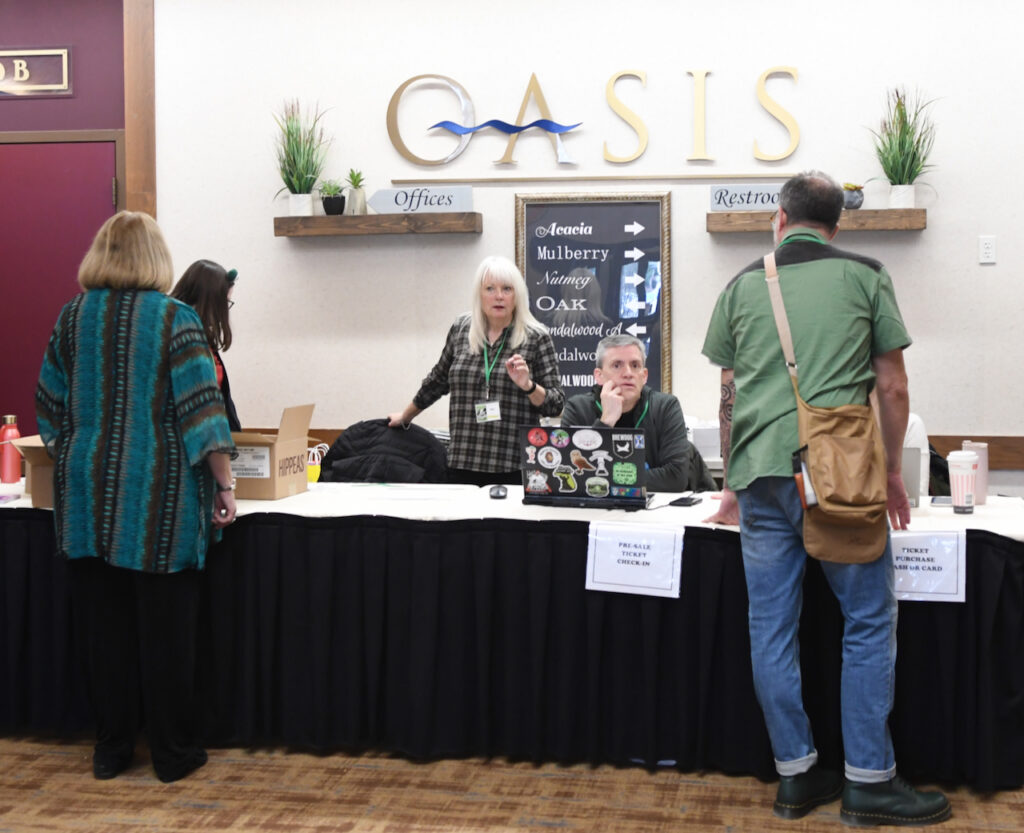
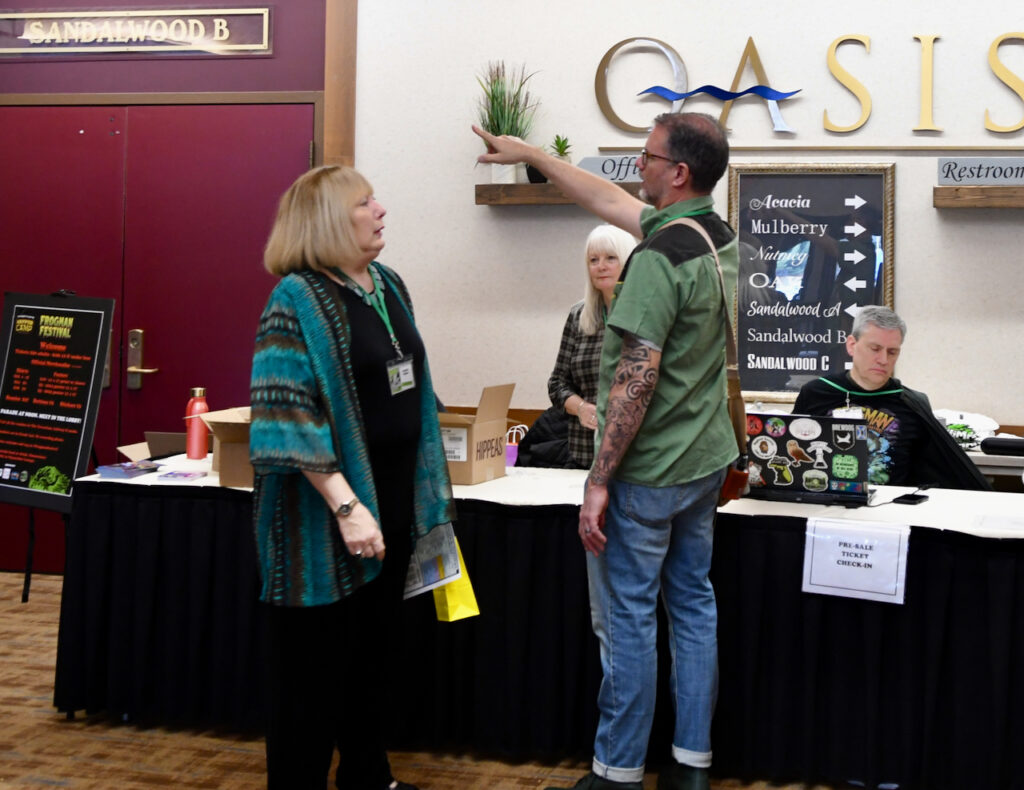
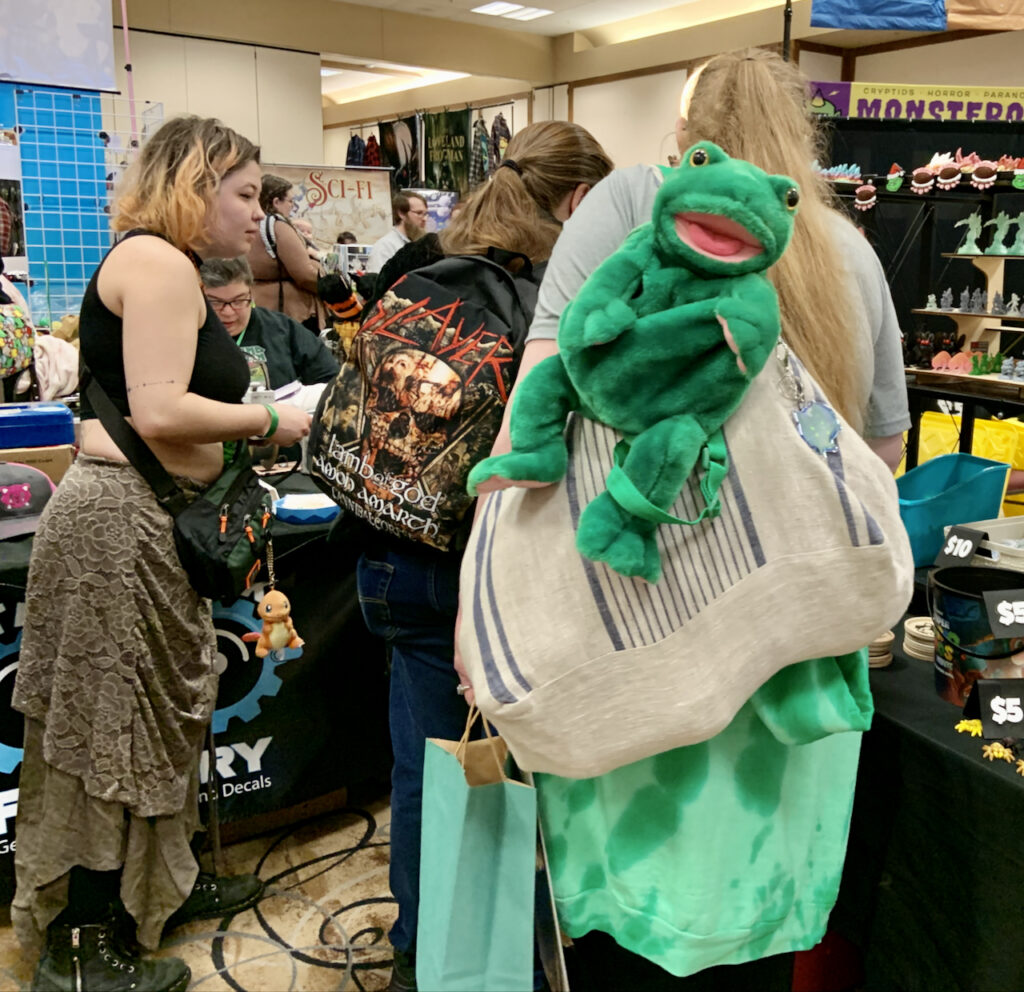
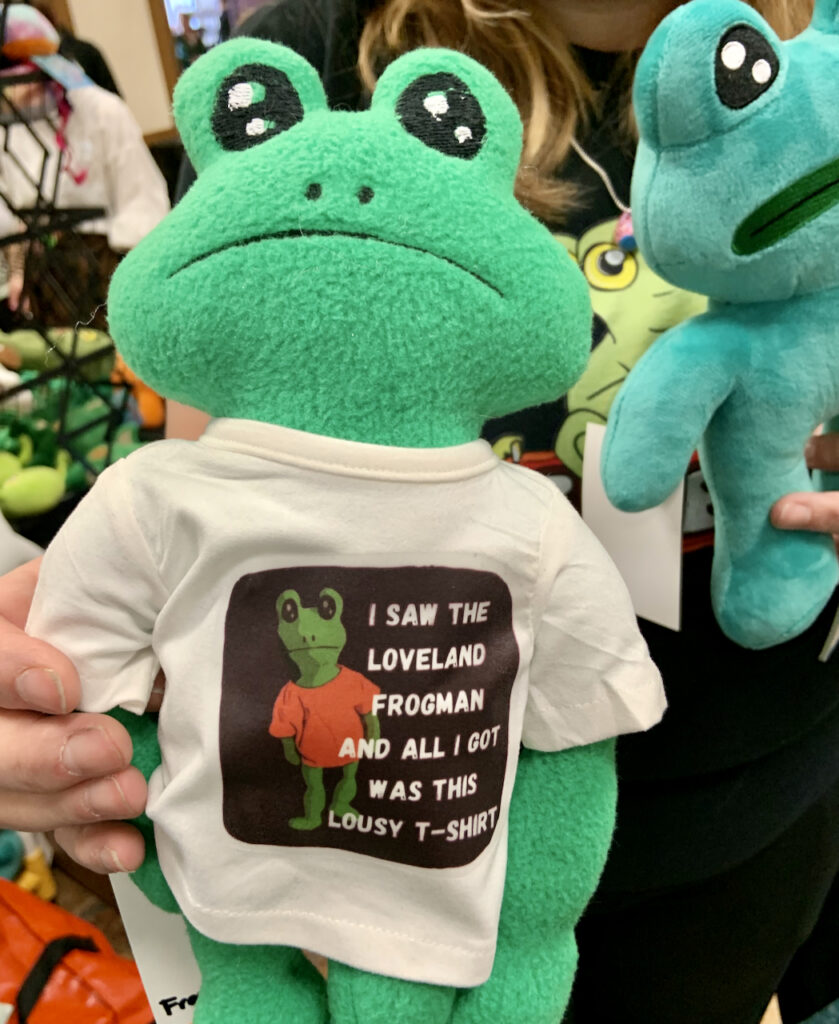
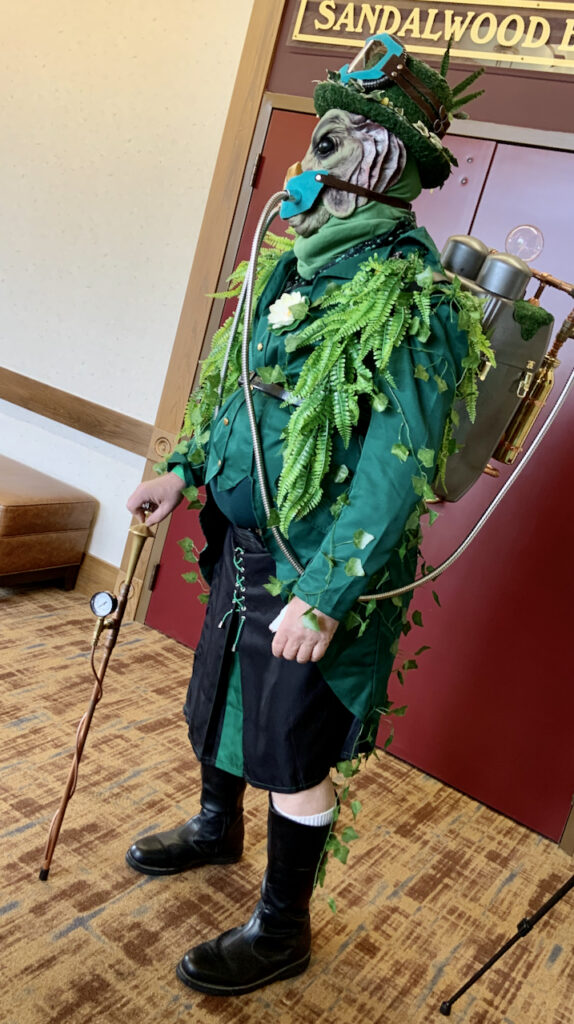
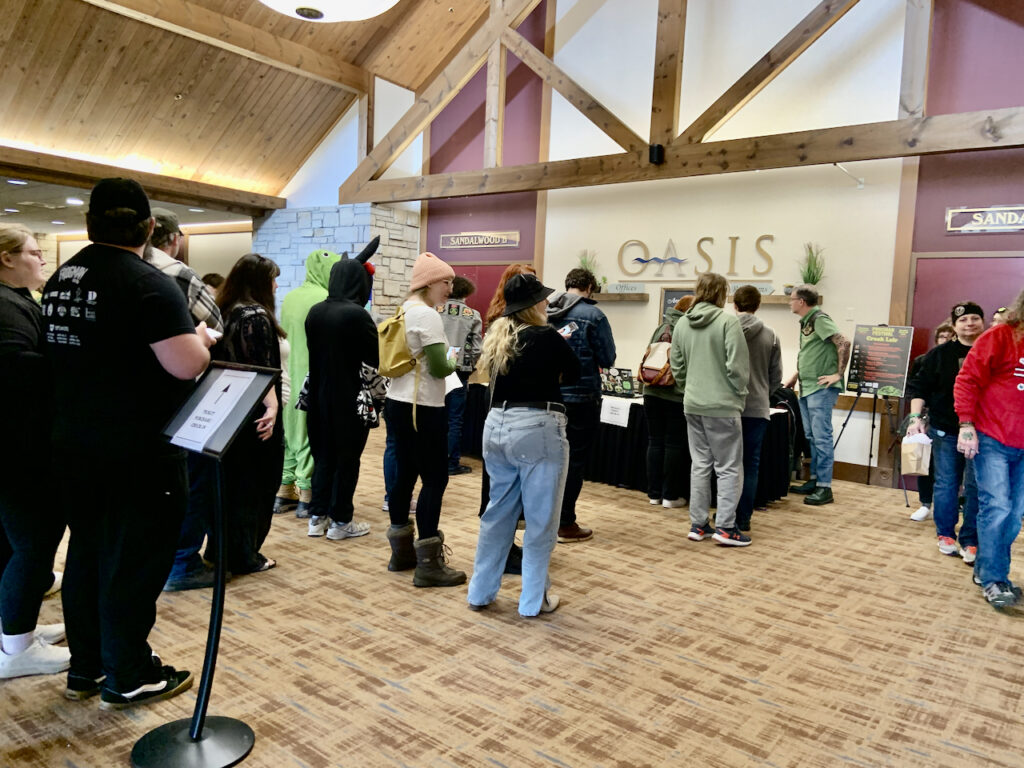
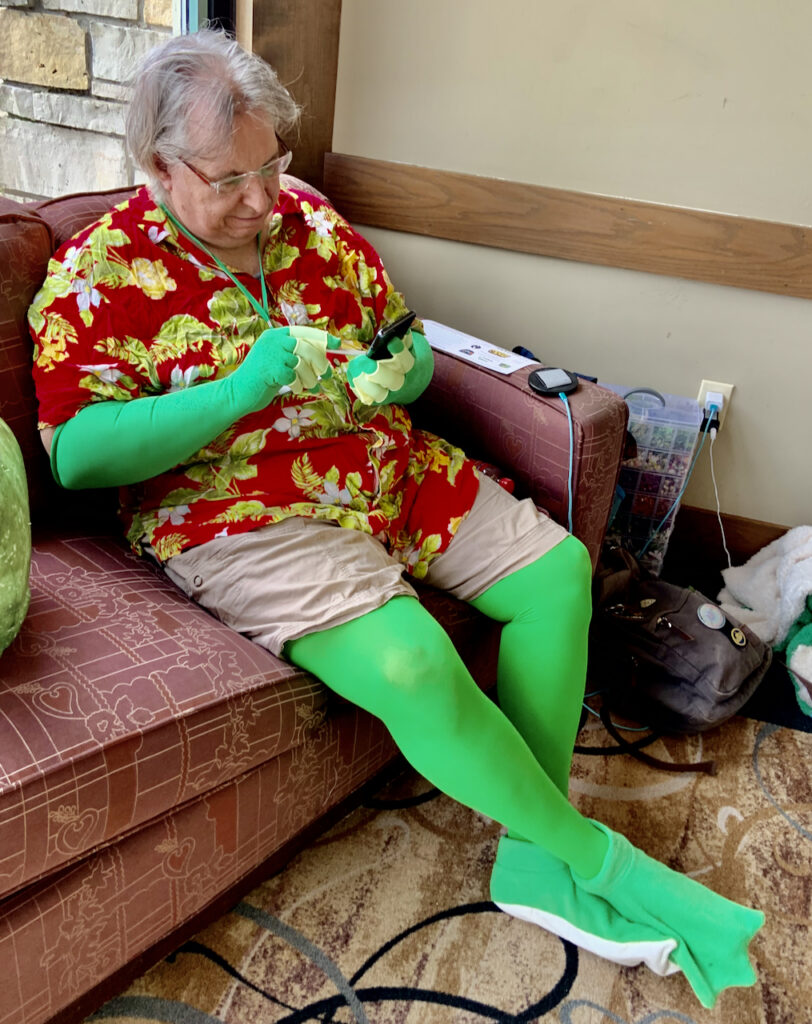
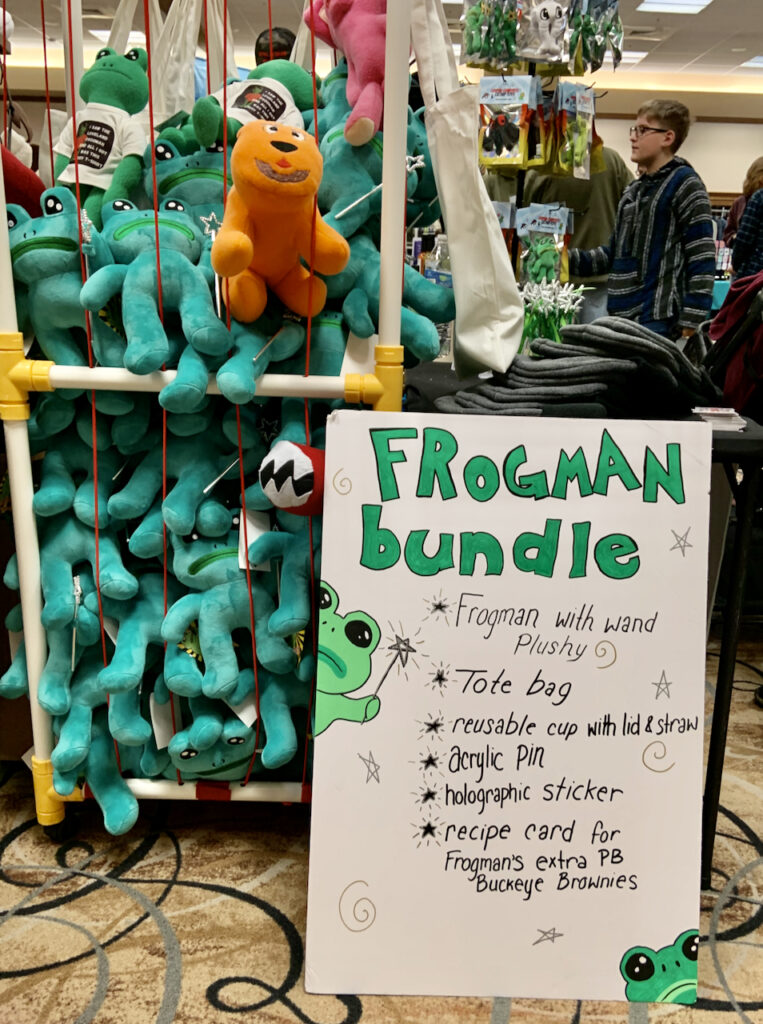
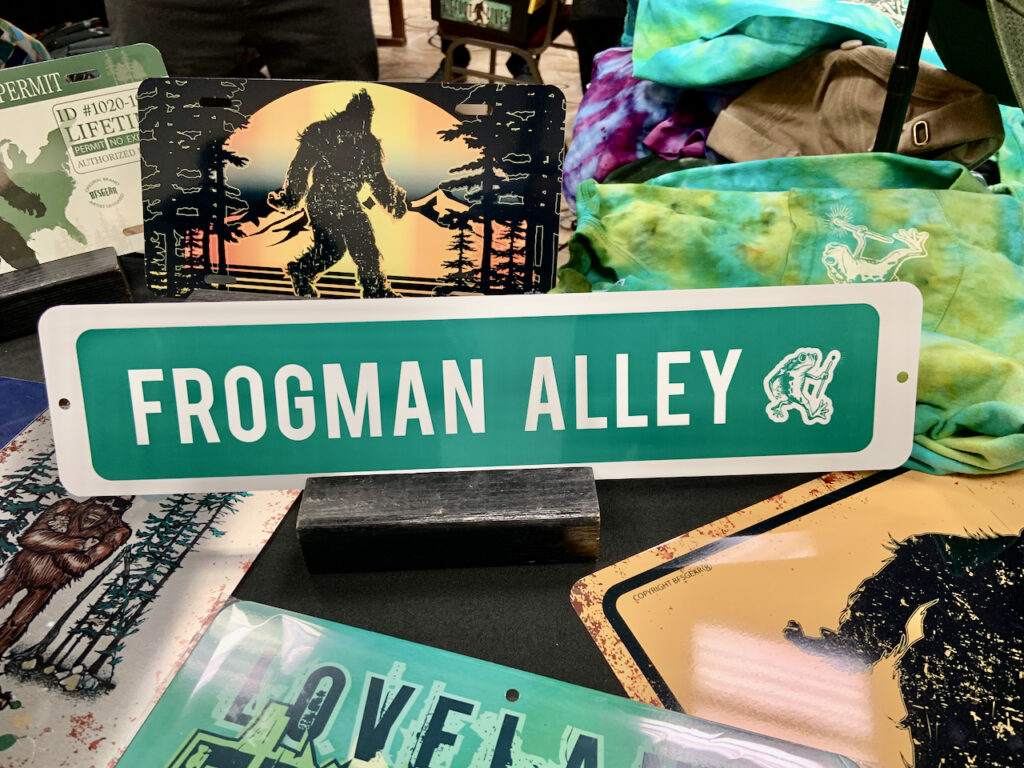
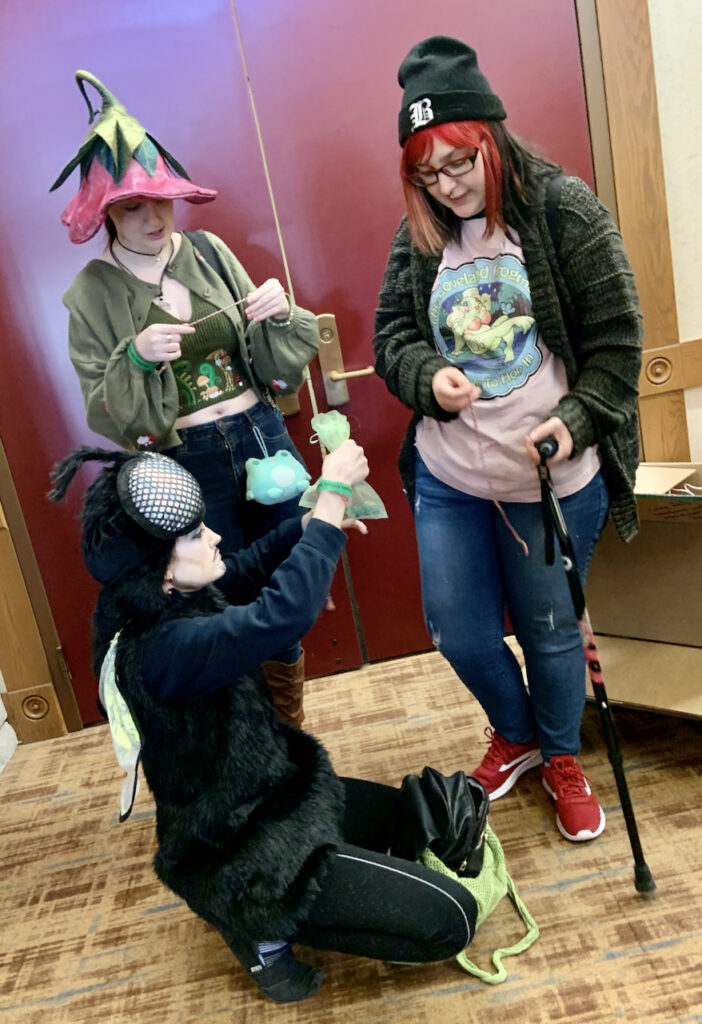
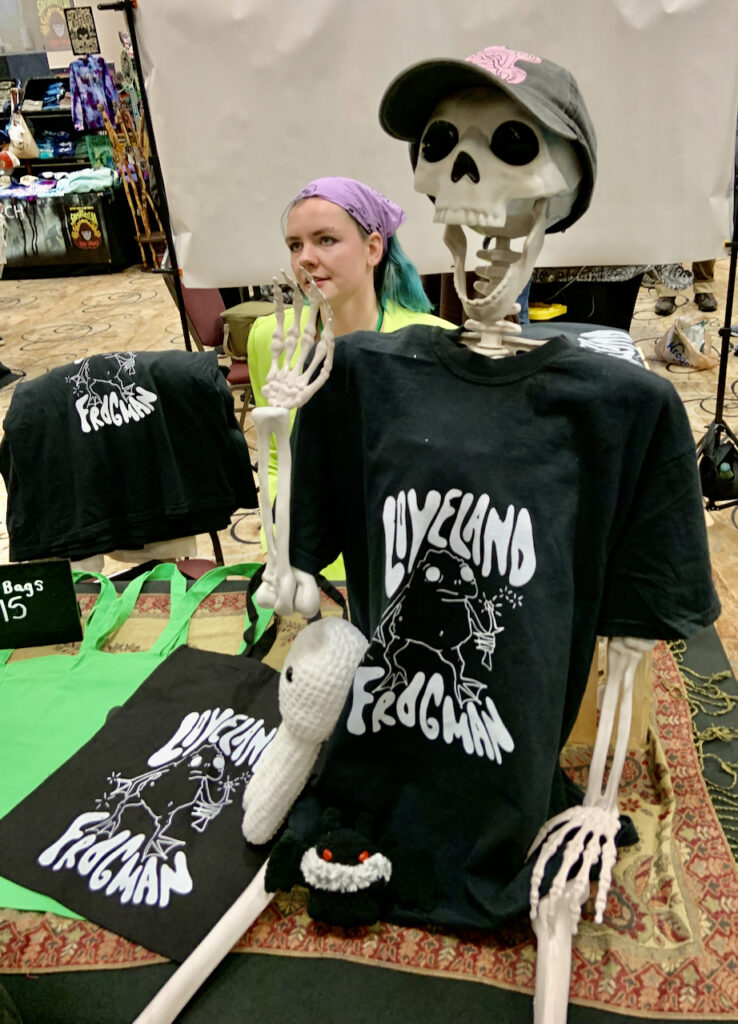
Loveland, Ohio – The attendance this year for Saturday at the 3rd annual Frogman Festival was about 1200 attendees with participants in and out throughout the day. A second day was added this year, and Sunday had over 750 attending and participating.
Many were families, with kids under 12 getting in for free. There were 70 vendors plus a tattoo studio and a roasted nut stand. There was also an intuitive reader and a face-painter. Erin Shaw from the Ohio Department of Natural Resources and the Warren County Park District was there again with a nature exhibit including turtles and Caesar the snake.
Over the course of the weekend, there were 12 presentations by 13 speakers on topics ranging from the origins of the Frogman story, to Mothman, to the expansion of consciousness.
The Strange Road, one of the sponsors with a YouTube channel that explores topics in the supernatural based out of Columbus, ran the audio visual system for the third year in a row. Performances were added this year to entertain young and old alike, with Wump Mucket Puppets packing the Lily Pad Room for a show both days. The Dakarai World Dancers gave a great performance both days.
Creep It Real, a husband and wife duo from Lebanon, sang tunes about cryptids, and Aaron Crary provided ethereal sounds produced electronically with a laptop and mixer.
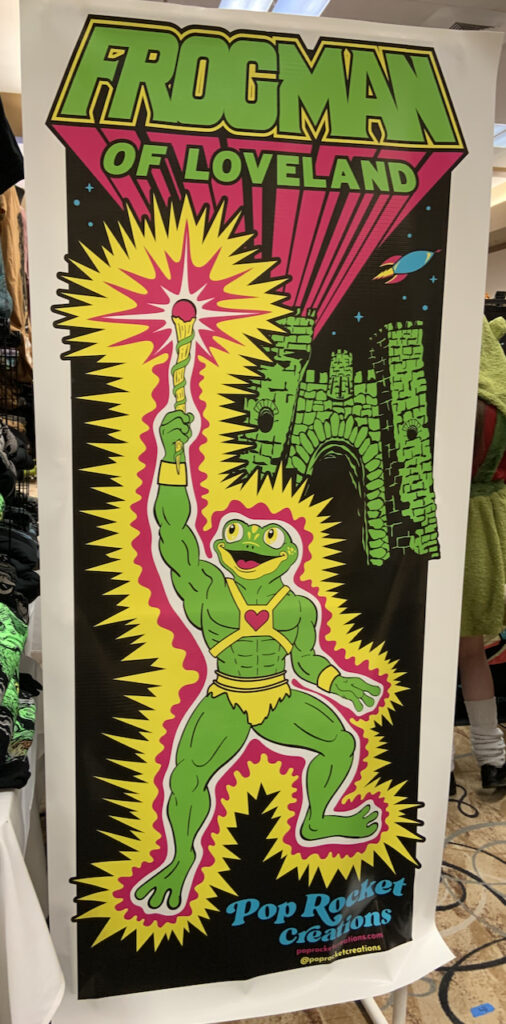
The event was sponsored primarily by Cryptid Camp, a new trading card game in the realm of Pokemon and Magic The Gathering. Attendees got free promo cards only available at the event with an interpretation of the Frogman in the style of the card game.
Jeff Craig, along with family and friends, produced the Frogman Festival. The Oasis Conference Center provided a great venue with staff running the concessions for the crowd that included lunch items, snacks, and beverages, including beer.
The found footage horror movie, Frogman (2023), was screened on Saturday night with producer and writer Anthony Cousins and other crew present to share the scoop on the movie, with big news revealing a sequel will soon be in the works.
Several local media outlets covered the event, including the sponsor Loveland Magazine. A duo calling themselves the Ohio Broadcasting Company, based in the Loveland area, were wandering around to compile shots and shorts from the crowd for a documentary about the festival. CET, the local public TV affiliate, got B-roll to feature in an upcoming segment on art.
The mission of the Frogman Festival as stated by Jeff Craig:
Frogman Festival provides an inclusive and accessible space to celebrate the legend of Frogman and other stories or events in the supernatural realm across the region. This is achieved through education, entertainment, and art.
It brings people from all over the country, with some of the furthest attendees hailing from Florida, New York, and California. Plans are in the works for a 4th annual Frogman Festival, which will be held again at the Oasis on the first full weekend of March. Details on one or two days haven’t been decided yet.



 Loveland, Ohio – Elizabeth (Schickel) Robinson says, “All my adult life I have been an artist and wanted to share my gifts with you. Come on In, I hope you love what you see!”








 Loveland, Ohio – Two students from Loveland High School are doing a raffle drawing for several lucky Loveland (45140) community members to win a painted and installed rain barrel through a partnership with




 by Julie Watson